Czech
Czech French
 German
 Hebrew
 Noruegan
 Russian
 Spanish
 Swedish
 Polish
 Portuguese



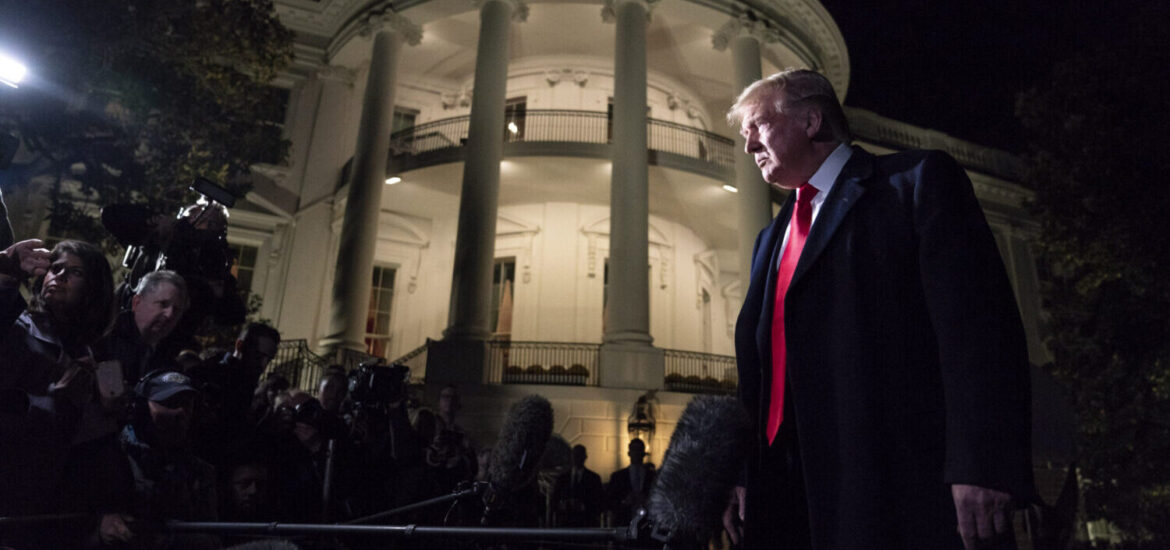
Early Saturday morning U.S. East Coast time, the United States and Israel launched a major combined air operation against Iran to, in President Donald Trump’s words, “prevent this very wicked, radical dictatorship from threatening America and our core national security interests.” Within hours, Iran’s 86-year-old supreme leader, Ayatollah Ali Khamenei, was dead, as was much of the country’s senior leadership. Many Americans, meanwhile, found themselves asking, Why?
There is still a lot we don’t know about the immediate prelude to the attack. Questions abound about whether the United States really had intelligence that Iran was “two weeks” away from a nuclear weapon and when and how the decision to attack was made. But the short answer to the question of why is that Trump is making a long-overdue correction to decades of a flawed U.S. Iran policy instigated by Barack Obama that transformed the globe into a more dangerous and more unstable place than it has to be.
Since its inception in 1979, the Islamic Republic of Iran has been, both in ideology and in action, an enemy of the United States. Its founding act was the kidnapping of hundreds of Americans, and since then, it has killed Americans and sought to subvert U.S. interests whenever and however it can. Washington tolerated these provocations for a mixture of good and bad reasons. Policymakers had other priorities; they feared regional instability or a military quagmire, or they convinced themselves that the Iranians, despite their fanatical rhetoric about the United States as “the Great Satan,” were rational actors who could be bargained with. Especially after the failure of U.S. nation-building efforts in Iraq and Afghanistan, which inadvertently strengthened Tehran’s hand in the region, Iran came to be seen as a problem the United States would have to live with, for good and for ill.
Trump assessed that the United States’ tolerance of the regime’s bad behavior was creating danger that America, and the globe, could no longer afford.
Under Obama, however, the United States conceived of a far more ambitious solution to the Iran question. In that administration’s view, Iran was not in fact an enemy of the United States—it was a potential partner that had been misunderstood. The United States, according to this view, had long acted as a high-handed “imperialist” power in the Middle East, aligning itself with the forces of “reaction” in the region, including the Gulf monarchies and Israel, which inflamed Muslim opinion through its oppression of the Palestinians. The original sin of U.S. imperialism was seen as the root cause of the region’s instability.
To fix this, the theory went, Washington should recognize Iran’s aspirations as legitimate so that the mullahs would come to feel they had a stake in maintaining the regional order. American allies, in turn, would have to learn to “share the neighborhood” with Iran. This was the basic logic of the 2015 Iran nuclear deal and the Middle East “realignment.” The central conceit was that if the United States could put the issue of Iran’s nuclear weapons program to one side, then it could move forward with transforming Iran into America’s partner in administering the Middle East.
Theoretically, this meant that Washington would strike the pose of a neutral mediator between Iran and America’s allies. In reality, however, the United States and its allies were much stronger than Iran. Engineering a stable balance thus required tilting toward Tehran—propping it up with financial resources while restraining U.S. allies from taking their own steps to check Iran’s growing regional power.
As Michael Doran and Tony Badran wrote at the time, the scheme was “just clever enough to be stupid on a grand scale.” Its fatal flaw was in misunderstanding Iran’s motivations. The mullah’s terror regime had no interest in becoming a responsible junior partner in a U.S.-led regional condominium; rather, it wanted what it had always wanted and had said it wanted over and over, which was to destroy the U.S.-led order in the region, wipe Israel off the map, and overthrow the Gulf Arab states in a global Islamic revolution to be headquartered in Tehran. When the United States offered it financial inducements and diplomatic and military breathing room, Iran simply pocketed these concessions and used the proceeds to build out its regional terror empire and push its advantage wherever it could. The wages of this policy, in Obama’s first term, were the brutal civil war in Syria and the rise of ISIS, which was motivated in part by radical Sunni fear of rising Iranian power.
Trump attempted to reverse this policy during his first term with his campaign of “maximum pressure” against Iran, which, combined with his efforts to formalize the Israeli-Sunni alliance via the Abraham Accords, largely succeeded in quieting the Middle East and rolling back the Iranian advance. When Biden entered the White House in 2021, however, he restored the Obama policy of Iran realignment—which became even more dangerous as Iran integrated itself into an axis alongside the United States’ other major adversaries, China and Russia, which shared Tehran’s goal of breaking the U.S. position in the Middle East. Iranian power reached its high-water mark on Oct. 6, 2023, when Iranian proxies stretched from Iraq to the Red Sea and hemmed Israel in on all sides through what had come to be known as the “Ring of Fire.”
In the sort of irony common to history, the United States’ accommodating policy allowed Iran to build a fearsome regional empire. This made the Oct. 7 attacks possible, which in turn is what ultimately resulted in the regime’s downfall.
Tehran’s Palestinian proxy, Hamas, launched what it thought would be the final battle to drive the Jews into the sea. Instead, Israel destroyed the main elements of Iran’s empire one by one, even as the Biden administration sought to end the fighting in a doomed effort to put Humpty Dumpty back together again. Finally, last June, Israel turned to Iran itself—this time joined by the United States. But Trump, wary of a prolonged war and still hopeful that military pressure might bring Iran to the negotiating table, kept U.S. participation to a minimum and called an end to the Israeli campaign before the job could be finished.
Over the past nine months, the administration tried and failed again to convince the Iranian regime to negotiate a peaceful surrender. In mid-February, Trump issued a two-week deadline to reach an agreement—which loomed overhead this past week. “Trump got on the phone Thursday with his two envoys, Steve Witkoff and Jared Kushner,” according to The Washington Post this morning. “They told him the talks had gone badly: Tehran wasn’t willing to end its nuclear enrichment or dismantle its missile program.” According to other accounts, the United States offered Iran “free nuclear fuel forever.” The Iranians said no. The deadline arrived and the strikes began.
We do not yet know about the larger aims of the operation, what’s next for Iran and the broader Middle East, or how, if at all, the attack on Iran fits into a broader U.S. global strategy. What seems clear is that Trump had assessed that the United States’ tolerance of the regime’s bad behavior was creating danger that America, and the globe, could no longer afford. “America’s prosperity—the dollar’s status as a reserve currency, US stewardship of the productive sectors of the global economic system, etc etc—depends on effective power projection,” as Lee Smith explained it on X. “Letting a group of weak thugs take Americans hostage, kill American soldiers, fire rockets at aircraft carriers, and us not doing much of anything about it—let alone letting them get nuclear weapons—sure makes it look like we can’t project power very effectively.”
It’s a handicap of this moment that very dramatic events happen in a landscape of disaggregated, often untrustworthy media, both from the decrepit old legacy space as well as the new “Wild West” of conspiracy-brained independent media—making it unusually hard for people to understand what they’re looking at. Viewers of Rachel Maddow, for example, were treated to hair-on-fire hysterics. “In terms of pure rational deduction of what he’s doing here, we can basically rule out all of the reasons he has said he’s doing it,” she intoned, appearing on the verge of tears. Meanwhile, The New York Times was busy outperforming what its best satirists predicted, by publishing a respectful, almost admiring obituary for Khamenei—a man who butchered 30,000 of his own people just last month.
At the same time, so-called independent voices spent the day whipping up their own fever dreams about how this all clearly reflects nefarious Jewish control of the world’s richest and most powerful country, rather than the patently obvious opposite idea (namely, that “it’s actually pretty good to have an ally that has the best intelligence in the world, is able to win their own wars, and regularly takes out anti-American terrorists.”) Add social media on top of this, and the whole situation grows even worse: Since one’s feed is determined by what and who one already follows, it’s virtually impossible for a civilian to get historically informed, rational views on what’s happening.
All of which is to say, proceed with caution when imbibing the news this week. We’ll be here to help as much as we can.
Park MacDougald is senior writer of The Scroll, Tablet’s daily afternoon newsletter.