Czech
Czech French
 German
 Hebrew
 Noruegan
 Russian
 Spanish
 Swedish
 Polish
 Portuguese




The Case Against Another Iran Deal
The fragile ceasefire that took hold in April 2026 after weeks of intense U.S. and Israeli strikes has already revealed its limits, further tested by the recent downing of a U.S. Apache helicopter and subsequent American counterstrikes. Iran has continued intermittent missile and drone attacks against Israel — including as recently as early June — as well as against U.S. vessels and Gulf targets. At the same time, Tehran has maintained restrictions on shipping through the Strait of Hormuz. These actions show that the regime is treating the pause as a tactical breathing space rather than a strategic shift. While a possible agreement is reportedly on the table, negotiations for an extended truce and new nuclear framework continue in fits and starts, but the underlying dynamics that have undermined every previous agreement remain firmly in place.
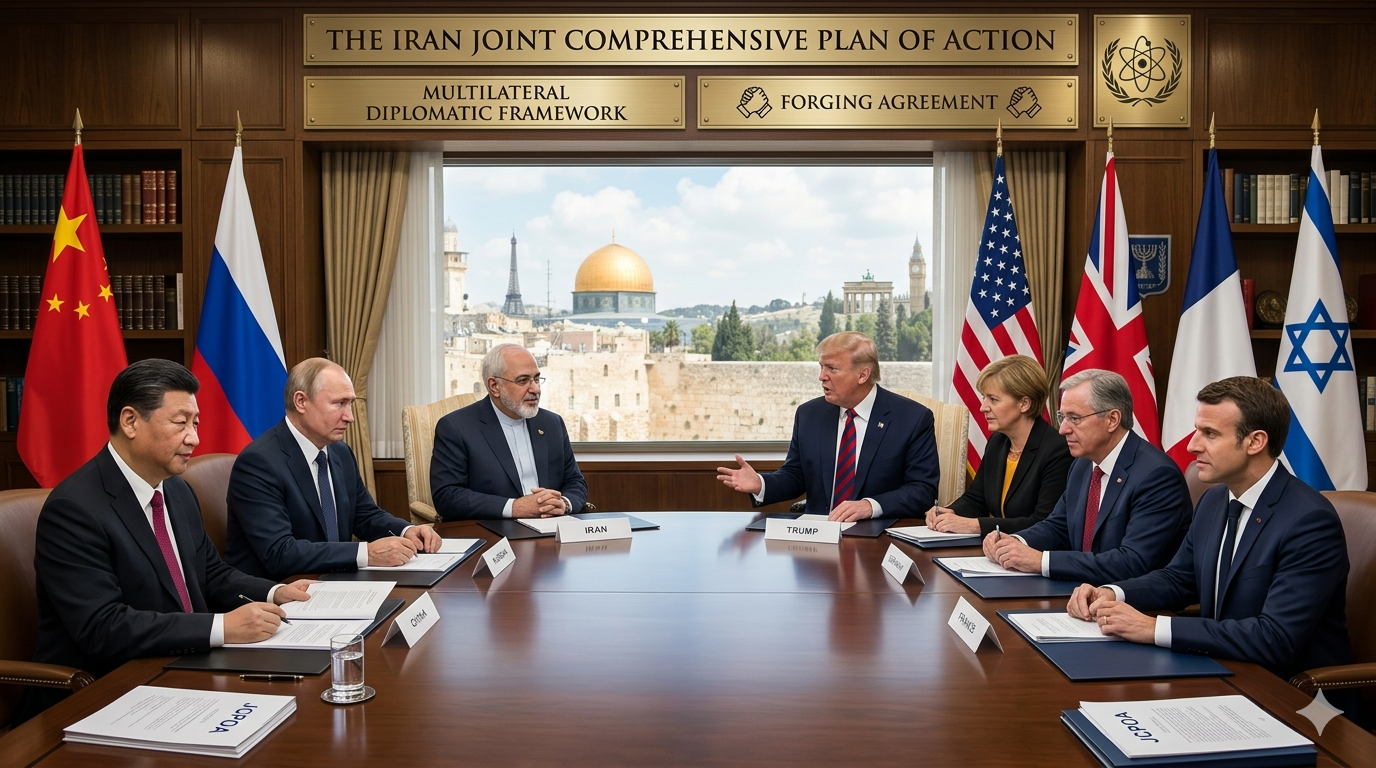
For years, U.S. policy toward Iran has oscillated between maximum pressure and diplomatic engagement. Each approach has produced temporary effects followed by Iranian adaptation and renewed challenge. The 2015 Joint Comprehensive Plan of Action (JCPOA), once hailed as a breakthrough, saw Iran systematically breach its core limits starting in 2019—expanding its enriched uranium stockpile far beyond agreed caps, raising enrichment levels to 60 percent, amassing stockpiles of highly enriched uranium dozens of times larger than JCPOA limits as repeatedly documented in IAEA reports, deploying advanced centrifuges, and curtailing IAEA access. These were not minor technical deviations. They reflected a deliberate decision to accelerate a nuclear program the deal was meant to constrain. Sanctions evasion through sophisticated shadow fleets has meanwhile sustained regime revenue, neutralizing Western economic pressure.
The events of 2026 have not altered this pattern. The assassination of Supreme Leader Ali Khamenei and the rapid installation of his son Mojtaba—backed by the Revolutionary Guards and widely viewed as a hardliner—produced continuity rather than moderation. Mojtaba’s early public statements have emphasized revenge, resistance, and the continued utility of leverage such as the Strait of Hormuz. The regime demonstrated resilience under decapitation strikes, maintaining control and showing no internal collapse or ideological pivot. Iranian forces and proxies have continued limited escalations even during the current ceasefire window. This is the leadership the United States would be negotiating with in any revived or new agreement.
History offers little grounds for optimism that a fresh deal would prove more durable. Iran has treated international commitments as instruments of convenience, complying when under acute pressure and accelerating forbidden activities when that pressure eases. Verification has always been the Achilles’ heel. Iran’s territory, history of undeclared facilities—including those exposed in the 2018 Israeli nuclear archive revealing a structured pre-JCPOA weaponization program—and demonstrated ability to delay or obstruct inspectors make robust, real-time monitoring extraordinarily difficult. Even the JCPOA’s relatively intrusive provisions proved insufficient once political will in key capitals wavered. Enforcement mechanisms, whether snapback sanctions or military consequences, have depended on sustained U.S. and allied commitment—something that has proven elusive across administrations.
External actors further complicate the picture. China and Russia have clear incentives to see a revisionist, anti-American Iran persist. China has served as the primary destination for Iranian oil through evasion networks that have weathered sanctions and even wartime disruptions, continuing large-scale purchases even amid strikes. Russia has engaged in military-technical cooperation—including support for Iranian drone and air-defense capabilities—that bolsters Iranian asymmetric capabilities. While both powers publicly advocate diplomacy and restraint to avoid uncontrolled escalation, their material and diplomatic support has repeatedly provided Tehran with lifelines. Any new agreement would face the same external backstop: patrons willing to help Iran absorb costs and rebuild capabilities on the margins. This does not require overt alliance. Calibrated, deniable assistance is enough to undermine enforcement over time.
Military pressure alone, even at the scale of Operation Epic Fury and subsequent strikes, has produced measurable degradation of Iranian nuclear and missile infrastructure. Yet it has not transformed the regime’s ideology or behavior. The Islamic Republic’s core drivers—opposition to U.S. influence, support for regional proxies, and pursuit of nuclear hedging as both deterrent and prestige asset—have survived leadership losses and battlefield setbacks. Mojtaba Khamenei’s rhetoric suggests hardening rather than softening. The regime has used external conflict to rally domestic control and justify repression. Past experience indicates that conventional military degradation raises costs and buys time but does not produce lasting ideological change in a system built on revolutionary resistance.
This brings us to the most underappreciated obstacle: the United States itself. Long-term strategy against Iran has repeatedly foundered on domestic political shifts. One administration pursues maximum pressure and military action; the next explores diplomatic revival. Recent public opinion polls during the 2026 conflict showed clear partisan and broader wariness of prolonged engagement, with majorities favoring quicker resolution even at the expense of full objectives. Elections and congressional dynamics determine whether pressure can be sustained or whether sanctions relief becomes a bargaining chip. Iran’s leadership has learned to play for time, calculating that U.S. policy coherence rarely survives a single presidential term. Any agreement that depends on consistent enforcement across future administrations asks for something the American political system has not delivered on Iran policy in decades—particularly once the current administration concludes.
The current posture—sustained but episodic pressure combined with openness to a possible new deal reportedly on the table—therefore carries a structural flaw. It assumes that a verifiable and enforceable agreement is achievable with a leadership whose ideology prioritizes resistance and whose external patrons have incentives to help it evade constraints. It further assumes that U.S. domestic politics will permit the multi-year, multi-administration consistency required to make enforcement credible. Neither assumption has held in the past. There is little reason to expect they will hold now, even after the significant but incomplete effects of 2026 military operations.
A decisive and overt regime change campaign represents the alternative that confronts these realities directly. It does not rely on persuading Iran’s current leadership to abandon core strategic assets or on maintaining perfect verification against a determined cheater. It does not hinge on the hope that external patrons will suddenly lose interest in weakening U.S. positions. And it does not require the United States to maintain flawless policy continuity across partisan divides. Instead, it targets the source of the problem: a regime whose ideology and institutional structure make durable accommodation with the United States and its partners incompatible with its survival.
The case for this approach rests on the accumulated evidence that lesser measures have repeatedly fallen short. Limited strikes and sanctions have degraded capabilities without eliminating the threat. Deals have delivered temporary limits followed by accelerated violations. Leadership targeting has produced succession by harder-line figures without internal transformation. Each cycle has imposed costs on the United States and the region while allowing Iran to adapt and persist. A strategy that accepts these recurring outcomes as the best available result accepts a permanent state of managed confrontation rather than resolution.
Critics will rightly ask how such a campaign could be executed. While I have outlined detailed operational approaches in prior op-eds, the core strategic argument here is straightforward: we must weigh the risks of action against the mounting, compounding perils of inaction. History contains examples of unintended consequences and difficult post-conflict transitions. Those risks are real and cannot be ignored. Yet the status quo and the deal-making alternative carry their own accumulating costs: repeated cycles of escalation, sustained support for proxy networks that attack U.S. interests and partners, a nuclear program that inches closer to weapons capability during periods of relaxed pressure, and the steady erosion of U.S. credibility as Iran learns that American commitments are time-limited. The question is not whether action carries risk, but whether the risks of continued half-measures are lower or higher over time.
A decisive regime change approach would break this pattern. As I have argued previously, such a campaign must be executed with overwhelming speed and finality rather than incremental pressure. Unlike in Iraq, where regime change was pursued largely as a means to eliminate weapons of mass destruction, or in Afghanistan, where it followed from the primary goal of destroying Al Qaeda’s sanctuary, preventing a nuclear-armed Iran may require regime change as the central objective rather than a secondary consequence. Only by removing the current regime can the United States eliminate the actor that has consistently chosen confrontation over integration, end the need for perpetual verification against a party with every incentive to cheat, reduce the leverage that China and Russia gain from an anti-American Iran, and free U.S. policy from the requirement of perfect consistency across administrations.
The choice is not between perfect outcomes and imperfect ones. It is between a strategy that has repeatedly produced recurring crises and one that confronts the fundamental driver of those crises. The evidence from decades of engagement, pressure, and limited military action points to the same conclusion: as long as the Islamic Republic in its current ideological form remains in power in Tehran, the United States will face the same choices, the same violations, and the same external complications. Only by changing the regime can the cycle itself be broken. While there is hope that any agreement now under discussion could mark the beginning of a new era in the Middle East, history suggests that durable progress will require addressing the regime itself rather than relying on another temporary framework.
Stephen D. Cook is a retired U.S. Army Special Forces Lieutenant Colonel with 25 years of service. A combat veteran decorated for both heroism and valor, he is the author of the field manuals When We’re Finished and Choose the Heavier Ruck, and the techno-thriller In the Shadows of the Sky. His work explores the intersection of elite military decision-making, intuition, and disruptive leadership. He is based in St. Augustine, Florida.