In the Saudi Arabia–UAE Rivalry, the Saudis Are Wrong

On Dec. 30, 2025, Saudi Arabian jets bombed southern Yemeni forces at the port city of Mukalla. Saudi officials said they sought to destroy arms that the United Arab Emirates sent to its allies in southern Yemen. Saudi authorities were upset that the Emirati-backed Southern Transitional Council recently consolidated its control over the Hadramawt, never mind that it did so to close off a smuggling route benefiting the Houthis.

The Emiratis had had enough. They entered Yemen alongside Saudi Arabia as the Houthis and al Qaeda in the Arabian Peninsula had overrun the country. The Emiratis and their Yemeni partners defeated al Qaeda and began building a functional state.

What the Saudis lacked in success, they made up for in jealousy. The Emiratis pulled out, allowing the Saudis to take responsibility for everything. Within days, al Qaeda returned to areas the Emiratis evacuated, the power went out, and the most secure regions of Yemen teetered on a return to chaos they had not seen in a decade.

In Washington, diplomats, analysts, and journalists framed the Yemen fiasco as the latest manifestation of the Saudi-Emirati rivalry. While true, stating the obvious misses the point. Lots of countries have rivalries: Australia and New Zealand, France and the United Kingdom, Brazil and Argentina, Japan and Taiwan. None of these rivalries endangers regional security or U.S. national interests.

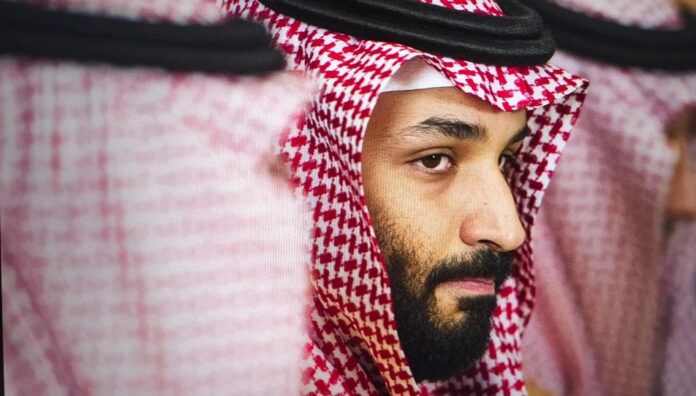
The Saudi-Emirati rivalry does for one reason. As Saudi Crown Prince Muhammad bin Salman competes with Emirati leader Muhammad bin Zayed, bin Salman remains unconstrained by any principle.

Take Yemen. Both Saudi Arabia and the UAE outlawed the Muslim Brotherhood domestically, for the same reason President Donald Trump and Secretary of State Marco Rubio designated many Muslim Brotherhood affiliates as a terrorist entity: The group is intolerant toward competitors and sanctions terrorist violence against both non-Muslims and Muslims who do not subscribe to its narrow, extremist, and cultish views. Yet, to undermine the Emiratis in Yemen, bin Salman partnered with Islah, the Muslim Brotherhood affiliate in Yemen, despite that group’s links to both al Qaeda and the Houthis.

The same holds true in Sudan. There are no angels in that country’s civil war, a conflict far bloodier than the wars in Gaza or Ukraine. Both Gen. Abdel Fattah al Burhan’s Sudanese Armed Forces and Gen. Mohamed Hamdan Dagalo’s (also known as Hemedti) Rapid Support Forces care little about collateral civilian casualties. The Emiratis support Hemedti, reportedly because he can better guarantee their commercial interests in Sudan and the routes the country opens into the interior of Africa. The Saudis join with Iran, Russia, Qatar, and Turkey to support al Burhan. Allying with the Islamic Republic of Iran should be a red line for any U.S. ally, but bin Salman does not care so long as he can play spoiler to the Emirates.

The same Saudi-Emirati rivalry plays out in Somalia, Libya, and Syria. In each case, Riyadh backs Islamist extremists, the Muslim Brotherhood, and al Qaeda affiliates, while Abu Dhabi supports more moderate, pro-Western leaders.

In Somalia, Saudi Arabia sides with Qatar and Turkey to prop up a corrupt, terrorist-riddled regime in Somalia instead of democratic Somaliland. In Libya, Saudi Arabia undermines Emirati support for secularists and instead empowers Islamist groups that cheered the murder of the U.S. ambassador in 2012. In Syria, the Saudi crown prince supports the thinly veiled al Qaeda groups at the heart of President Ahmed al Sharaa’s regime, while the Emiratis seek to limit the influence of these extremists.

Middle East analysts may pour forth rivalries to explain Saudi actions. They may also spread calumnies about the UAE supporting an “Axis of Secession” because of its support for Somaliland and southern Yemen. This misses the point.

The problem is not that the rivalry exists, but that Saudi Arabia supports the wrong side. During the Cold War, the United States and the Soviet Union had a rivalry, but Washington was right, and Moscow was wrong. There is no moral equivalence today between Abu Dhabi and Riyadh. If Muhammad bin Salman does not grow up, Rubio and Congress should consider sanctions or even a terrorist designation.

Trump’s Gaza vision: Luxury resorts or jihad’s next launchpad?

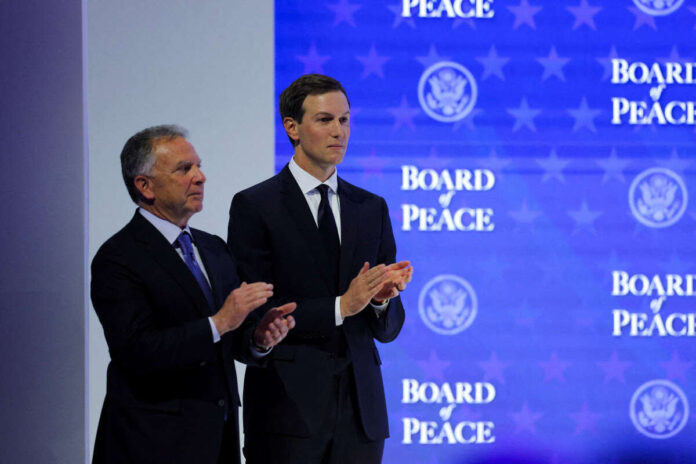
US President Donald Trump's son-in-law, Jared Kushner, and US Special Envoy Steve Witkoff take part in a charter announcement for U.S. President Donald Trump's Board of Peace initiative aimed at resolving global conflicts, alongside the 56th annual World Economic Forum (WEF), in Davos, Switzerland, January 22, 2026 (Photo: Reuters/Denis Balibouse)

At the World Economic Forum in Davos, President Donald Trump’s son-in-law and former senior advisor Jared Kushner presented a vision for what Gaza would look like. The vision was presented under the title “Empowering Gazans with Jobs, Training, and Services.”

The planning includes extensive tourism zones with “180 mixed-use towers,” green parks, sports and agriculture complexes, brown zones with industrial complexes, data centers, and “advanced manufacturing” facilities. Additionally, there would be more than 180 cultural and vocational training centers and more than 75 medical centers.

The vision, which sounds remarkably logical to Western ears, sounds to sober Israeli ears like a painful echo from the past. This vision, which integrates well with Donald Trump’s business approach, is based on real estate deal logic: property improvement, value creation, and bringing prosperity. But beneath this glittering wrapper lies a dangerous, almost tragic return to the “economic peace” concept – the same concept that shattered on the morning of October 7.

The foundational assumption of Trump and Kushner, as well as many in the West and even in Israel in the past, is that humans are first and foremost “homo economicus” – rational economic creatures. According to this view, the root of the conflict lies in poverty, despair, and lack of employment prospects. The conclusion they draw is that if we just provide Gazans good livelihoods, luxury hotels, a port, and factories – the motivation for terror will decrease until it disappears. After all, who would want to risk a seaside villa and high salary for a military adventure? This is precisely the concept that enabled bringing workers from Gaza and Qatari cash suitcases, based on the belief that Gaza residents have “something to lose.”

US President Donald Trump’s son-in-law, Jared Kushner, and US Special Envoy Steve Witkoff take part in a charter announcement for U.S. President Donald Trump’s Board of Peace initiative aimed at resolving global conflicts, alongside the 56th annual World Economic Forum (WEF), in Davos, Switzerland, January 22, 2026 (Photo: Reuters/Denis Balibouse)


But Middle Eastern reality, and Palestinian reality in particular, proves again and again that the struggle is not about quality of life, but about national life itself in this land. The critical mistake of the Trump-Kushner approach is the attempt to reduce a deep national, religious, and identity conflict to a cash-flow and urban-development problem. The Palestinian national movement, and especially its extremist branches controlling Gaza, have never placed economic welfare at the top of their priorities. If they had wanted that, Gaza could have become the Singapore of the Middle East a decade ago, with the billions of dollars that flowed to it. But that money didn’t go to building hotels, as in Kushner’s vision – it went to building terror tunnels, rockets, and death machines.

The insistence on seeing the solution through an economic prism reveals a deep Western blindness to the ideological character of the enemy. Hamas, the Palestinian Islamic Jihad, and other Palestinian movements are driven by an ideology that sees eliminating Jewish sovereignty in the Land of Israel as a lofty goal, sanctifying any sacrifice – including poverty and hunger of their own people. For them, the land is not real estate waiting for a developer, but waqf land that must be liberated. When offered prosperity in exchange for giving up the dream of return and Israel’s destruction – they see it as humiliating bribery, not an opportunity.

Moreover, history teaches that terror is not the exclusive domain of the poor. Many terror leaders came from established backgrounds, and jihadist ideology flourishes even in places not suffering from dire hunger. The thought that money will buy quiet is an optical illusion. Trump and Kushner’s vision – with all the good intentions and desire to see a more stable world – ignores the most basic component: this is a national struggle. The other side is not seeking a business partnership, but historical victory.

The return to discourse about “the day after” in terms of economic development and real estate, without first neutralizing the nationalist-religious aspiration to destroy Israel, is a recipe for repeated disaster. As long as there is no clear decision and understanding on the other side that the dream of eliminating Israel has been crushed – no luxury hotel on Gaza’s coast will prevent the next massacre. Quiet will be achieved only through security deterrence and national victory, not through checkbooks, however fat they may be.

Dr. Nissim Katz is an expert in communications and politics.

Lessons from Clausewitz about the Information War against Israel

During the war that was launched against Israel on October 7, 2023, it became commonplace for those following events closely to speak of an “eighth front.” While the IDF was fighting enemies in Gaza, the West Bank, Syria, and Lebanon, and responding to missile and drone attacks from Yemen, Iraq, and Iran, this eighth front was located in the realm of international opinion and public perception. The weapons used weren’t rifles and rockets, but images, social media, and press releases. Here Israel’s enemies fought not to kill and maim, but to demoralize and to break spirits. This unconventional war for hearts and minds directly shaped Israel’s ability to fight on all other fronts and proved itself just as lethal.

While this kind of warfare is accelerated in a digital age where propaganda can travel across the world in a matter of seconds, there is nothing new about it. It would have been familiar to the great Prussian military theorist Carl von Clausewitz, who, 200 years ago, understood that this front can be decisive. To Clausewitz, war is never only about the clash of forces. It is a contest of wills. When the will of a people collapses, the war is already lost, regardless of battlefield outcomes. Clausewitz can serve as our guide to understanding the challenges this kind of war poses.

After repeated conventional wars failed to destroy Israel, its enemies adapted. Clausewitz wrote that the aim of war is to compel the enemy to do one’s will. When military compulsion failed, countries like Egypt and Jordan decided to seek peace with Israel. But others, like Syria, the Palestine Liberation Organization, and later Iran, shifted to legal, moral, and political compulsion, using propaganda and perverse moral reasoning to convince the world that Israel is always the aggressor, and any attempt it makes at self-defense is illegitimate. Clausewitz famously taught that war is the pursuit of politics by other means. Today, Israel’s enemies use politics to pursue war by other means.

Aiding these efforts is a powerful tool not available to many practitioners of political warfare: anti-Semitism. Anti-Semitism is not mere prejudice, but a way of seeing malign Jewish influence behind all the world’s ills. This ancient, ever-mutating hatred latches on to the guiding social constructs of each era—religion, with deep roots in both Christian and Muslim culture; science, with the Nazis depicting Jews as an inferior race that must be destroyed; modern politics, in the Protocols of Elders of Zion and Soviet propaganda; and the “secular religion” of human rights in a post-World War II international rules-based order—conditioning people to believe and to peddle blood libels about “the Jew” as all that is evil, employing lies that are often both vicious and absurd. Today, in its modern strain of anti-Zionism, these irrational beliefs have been transferred to Israel, the Jew among the nations.

It was the response to the war crimes and crimes against humanity perpetrated by Hamas on October 7 that exposed the success of this strategy. Hours after the massacres began, there was a rush to paint Israel as the aggressor. Justifications of Hamas (Gaza was an open-air concentration campPalestinians have a right to resist) and denial of the atrocities soon followed. But the most effective tool may have been silence about Hamas’s depredations: speaking constantly about imaginary Israeli war crimes in order to drown out any mention of actual Palestinian ones. Even the targeting and murder of Jews worldwide was excused or downplayed: the Bondi Beach Hanukkah party was hosted by Chabad, an organization that supports right wing-Zioniststhat synagogue was selling stolen Palestinian land. Through a kind of moral alchemy, evil was proclaimed good and good evil.

In a digital age, algorithm-driven social media has become the decisive terrain of this conflict. Here expressions of outrage count for more than does evidence; videos and images can circulate without context; lies and falsehoods have more cachet than truth; and people unthinkingly believe and spread further anything that confirms their preconceived notions. Clausewitz might have been bewildered if he could see our online world, but his doctrines still apply: war, he wrote, tends to the extremes when unchecked. Today, those extremes manifest not only in violence, but in the collapse of shared reality and morality.

Anti-Semitism, with its ability to mutate, has hijacked, redefined, and inverted international law and organizations ostensibly dedicated to human rights—turning them into unconventional weapons on this eighth front. Fitted with new meanings, such terms as racism, apartheid, and genocide are now used to demonize, delegitimize, and apply double standards to the Jewish state, following the pattern employed by anti-Semites from time immemorial. Those entrusted to uphold and protect international law have time and again been willing to twist or ignore it in order to condemn Israel—including in the UN Human Rights Council, the International Criminal Court, and the International Court of Justice.

All the more so, commentators, journalists, and politicians with minimal knowledge of either the law or the nature of modern warfare make absurd proclamations about the IDF’s conduct that are all too readily believed. Add to this the numerous NGOs, like Human Rights Watch or Doctors Without Borders, that have been completely hijacked by anti-Israel, anti-human rights, and anti-Western fanatics. Principles designed to restrain violence, and moderate the horrors of war, are thus inverted to restrain democracies and excuse genocidal terrorists. The very institutions meant to protect all who cherish life and liberty are now enemies of both.

In the short term, this information warfare aims to turn popular opinion in the West against the Jewish state, influencing governments to isolate Israel and pressure it to show restraint. A sufficient quantity of such pressure can stop the fighting and leave Hamas, Hizballah, and their allies intact. But there is also a strategic, longer-term goal: to fracture Western societies from within and undermine their moral confidence. Clausewitz emphasized that the strength of a state rests on the unity of its people, government, and armed forces. Already, anti-Israel protests have brought disorder to American cities and constant controversy to university campuses, while corroding politics with accusations that U.S. support for Israel is tantamount to support for genocide. But that’s only the beginning.

For years, enormous sums have been invested in the UN and its agencies, universities, K-12 education, media outlets, cultural institutions, and sports diplomacy to shape narratives and normalize extremist worldviews, with anti-Semitism as both symptom and weapon. This is how modern ideological warfare is waged: slowly, legally, and largely unnoticed until its effects are irreversible. In New York City, more than two years after October 7, children as young as six are taught about “Palestinian resistance” during civic commemorations. Leading feminists publicly rationalize rape as “armed resistance.” These are the fruits of patient and effective propaganda operations.

October 7 was not only an act of mass terror against Israeli civilians. Like September 11, it was a barbaric attack on civilization. It was an act of war against the possibility of peace itself, and against the paradigm shift represented by the Abraham Accords. Too much of the international conversation continues to frame the conflict narrowly as Israel versus Hamas. The multifront war to annihilate Israel exposed this framing as strategically blind. Hamas is a proxy; Gaza is but one arena. The war is waged by a broader totalitarian axis intent on destroying the very ideas of freedom, democracy, and coexistence, of which Israel (and the Jews) have become a symbol.

This totalitarian axis is already deploying the same methods of information warfare against the U.S., and will do so more as conflict escalates. Simply by unleashing anti-Semitism, this axis undermines America, since, as the late Rabbi Jonathan Sacks warned, anti-Semitism is almost always coupled with civilizational rot. If the distortions of the laws of war employed against Israel become accepted interpretations, ruthless terrorists will have a permanent advantage over law-abiding Western militaries. Future enemies will copy the strategies of Hamas, knowing that they can justify mass rape and deliberate murder, turn civilian populations into human shields, and then win global sympathy.

America must begin studying and learning from Israel’s eighth front, and applying what it learns. Too often, the distorting lens of anti-Semitism has prevented those who cherish life and liberty from learning the hard lessons Israel has paid for in blood, lessons about conventional warfare, civil resilience, emergency medicine, education, and the defense of democratic societies under sustained attack.

Let us then return one last time to Clausewitz, who taught that the first task in war is to understand the kind of war one is in. Israel’s experience shows us the war we are already fighting. Any Western democracy that fails to recognize this reality risks defeat in the next war, possibly before the first rounds are fired. The battle for will, legitimacy, and truth is well underway.

Overhauling the Palestinian education system is key to peace

According to terms set up by U.S. President Donald Trump on Oct. 9 as part of his 20-point plan for revitalization of the Middle East after Israel’s two-year war with Hamas in Gaza, the terrorist organization must disarm in the Strip completely for the agreement to move forward.

Total and absolute demilitarization is required. Trump has said, “Hamas was born with rifles in their hands.”

This begins to focus on one of the major problems that Israel faces. Hamas, and I might add the Palestinian Authority, continue to churn out textbooks for Palestinian Arab for as young as first-graders that call for the killing and murder of Jews.

Since the Oslo Accords were signed on Sept. 13, 1993, the educational system in Ramallah and Gaza has persistently called for the destruction of the State of Israel, and has glorified the stabbing and shooting of Jews. Children go to summer camps to learn military training.

Although many U.S. politicians have tried to change this, little has actually happened in 30-plus years. If a culture of peace is truly to be achieved, Hamas and the P.A. must not only disarm people but also their textbooks.

The savagery, butchery, rape, torture and murder by Hamas and Palestinian operatives against Jewish communities in southern Israel that took place on Oct. 7, 2023, was the direct result of the inculcation of Gaza youth to do precisely what they did.

Disarming Hamas militarily is a first step. Disarming their educational system is equally important. It is not only the textbooks that need to be corrected, but the teachers themselves who need a massive overhaul. Most are aligned and affiliated with Hamas.

Education is a path to success. Before you can build skyscrapers, you must get your schools right. Hamas is already not only breaking the ceasefire daily but has started to make outrageous demands, including integrating hundreds of its terrorists into the security apparatus and lobbying to preserve its status as a political faction in the P.A. elections. This is exactly how they took over total control of Gaza in 2007.

No doubt, the leaders of Turkey and Qatar are lobbying for such conditions. They are Hamas’s biggest backers. They should be working to improve the education of the Gaza youth rather than pushing for Hamas to recover from its degraded status.

If the education of the Gazans remains the same, then they will aim for another Oct. 7 again and again. Trump is the only leader they fear and respect. He has a historic opportunity to change Gaza into a success story. I know that he badly wants that to happen.

The key is not to pump money into the coastal enclave simply to rebuild it. It is to revamp and redesign the entire educational system of both Hamas and the P.A. If the teaching system and materials can be fixed, then peace is a possibility.

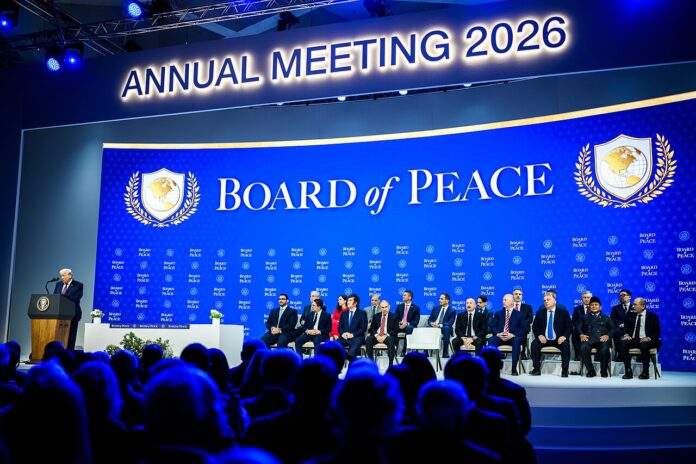
Board of Peace sets 3–5 month timeline for Gaza disarmament

President Donald Trump participates in the Board of Peace Charter Announcement and Signing ceremony during the World Economic Forum, Thursday, January 22, 2026, at the Davos Congress Center in Davos, Switzerland. (Official White House Photo by Daniel Torok)

International bodies set to administer the Gaza Strip expect to complete its disarmament within three to five months. As first reported by Israel Hayom, the “Board of Peace” led by President Donald Trump is expected to present Hamas with an ultimatum demanding that it agrees to disarm in the coming days.

The ultimatum will include an explicit requirement for Hamas to hand over all types of weapons in its possession, not merely as a symbolic gesture. Hamas will be given a short period of time to respond on whether it accepts the demand.

If the response is positive, the policing forces operating on behalf of the “technocratic committee” that is to run Gaza would be responsible for collecting all weapons held by Hamas, including rifles, rockets, explosive devices and other arms. In other words, neither the IDF nor the International Stabilization Force (ISF) would carry out the collection. Instead, it would be handled by a Palestinian police force that has been trained in recent months in Egypt. The assessment is that this process would take between three and five months.

Senior officials familiar with the details stressed in conversations with Israel Hayom that all parties understand full disarmament of the Gaza Strip and the stripping of Hamas of its weapons are an essential and critical condition for implementing the peace plan. Without this, there will be no progress in Gaza’s reconstruction, and the international community will not transfer funds for that purpose.

According to the officials, this is a fundamental principle agreed upon by all parties, including Arab states. They added that skepticism is understandable, but assessed that just as diplomatic pressure led Hamas to release the hostages and agree to an end to the war, it is possible that Hamas will also cooperate in this case. If the optimistic scenario does not materialize, the officials added that there is also agreement among the international bodies that Israel would receive authorization to disarm Hamas by force.

Why Media and Human-Rights Activists Abandon Iranians Murdered in the Streets

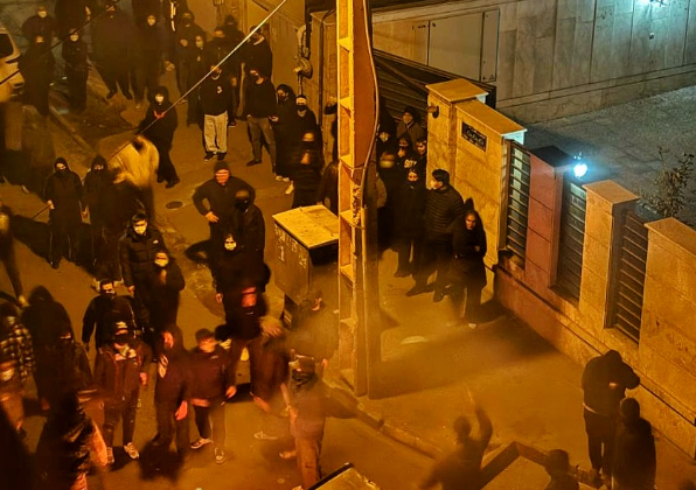
The muffled response of legacy media and so-called human-rights groups to the massive, momentous Iranian uprising, especially in comparison to their hysterical activism during the Gaza war, exposes profound hypocrisy.

Media coverage of Iran has been paltry by comparison to daily front-page coverage of the Israel-Hamas war in Gaza. Data show that whereas news about the Gaza war regularly made the front pages, legacy media have seldom regarded the protests in Iran as equally important.

The media has downplayed the importance of unrest in Iran, attributing it merely to cost-of-living issues. Thus, headlines like NBC’s “Protests in Iran over economy turn deadly” omit the fact that Iranian protesters don’t just want better economic conditions. They want to depose the regime that oppresses them.

Legacy media have also declined to cite death tolls, hiding behind “need to verify” policies, which were blithely ignored when publishing fake Hamas fatality figures. Indeed, during the Gaza war, media outlets such as the BBC often produced headlines like, “More than 25,000 now killed in Gaza since Israel offensive began, Hamas-run health ministry says,” without a hint of doubt as to the credibility of the terrorists’ numbers.

These double standards exemplify anti-Israel bias on the part of legacy media—not surprising, since surveys show these journalists are overwhelmingly left-leaning and Democratic Party members.

Likewise, political groups so passionate about “freeing” Palestinians have made no declarations and have not organized any significant events to support millions of Iranians seeking freedom.

While true liberation movements should transcend geopolitics, neither legacy media nor anti-Israel activists demonstrate sympathy for those suffering under Islamist autocracies. Rather, their agenda is focused on ushering in a new world order, based on the destruction of Western democracies, crushing capitalism and supporting those they deem “oppressed” by designated “oppressors”—to which latter category, apparently, Iran’s mullahs do not belong.

Legacy media provide little coverage of the Iranian protests. During Israel’s war with Hamas in Gaza, daily front-page stories covered all aspects of the conflict. War coverage comprised 20% to 30% of content during peak news cycles. In contrast, the protests in Iran merited just five to 10 articles a week in legacy media outlets, with no front-page dominance for the first seven to 10 days of the demonstrations. Articles on the protests consisted of just 2% to 5% of news cycles.

Legacy media try to justify meagre coverage of the Iran protests, citing lack of independent journalists, dangers to journalists, and the internet and telecommunications blackout in Iran. For instance, CNN stated: “The countrywide communications shutdown makes it difficult to assess what is happening on the ground.” But these same conditions existed in Gaza during the media’s blistering—and fact-free—criticism of Israel during its war against Hamas. Shame obviously does not inhibit such hypocrisy.

Legacy media downplays Iran protests, attributing them to socio-economic conditions. In fact, the demonstrators’ real objective is to topple Iran’s Islamist regime. Protesters regularly chant “Death to the dictator!” and “Death to Khamenei!” and burn pictures, symbols and buildings associated with the Islamist regime. Nevertheless, weeks into the protests, headlines in The New York Times still asserted that “Severe Inflation and a Currency Crisis Provoke Protests in Iran’s Biggest Cities,” and ABC insisted that “Protests in Iran sparked by economic woes now nationwide.” As Iranian activist Mahtab Gholizadeh said “Separating these protests into ‘political’ or ‘economic’ is misleading. Almost everyone understands that the political structure of the Islamic Republic has produced the economic collapse.”

Why do legacy media insist on “verifying” data in Iran, but not in Gaza? For instance, BBC world affairs editor John Simpson claimed social-media footage must be carefully verified before reputable outlets can use it. But lack of verification never stopped the BBC and other legacy media from regularly publishing misleading casualty figures from Hamas during the war. Indeed, according to a study by the Centre for Media Monitoring, which analyzed BBC coverage from October 2023 to October 2024, the network attached the phrase “Hamas-run” to the terrorists’ casualty figures in 1,155 articles—almost as often as casualty mentions appeared.

Leftists with an anti-Israel bias control mainstream media reporting. Surveys in the United States have shown that journalists lean left ideologically compared to the general public. U.S. journalists are three to five times more likely to call themselves liberal than conservative and 10 times more likely to identify as Democrats than Republicans. A study of NPR staff revealed 86 of their journalists to be registered Democrats with no Republicans.

Clearly, such a tilt explains the tendency to criticize Israel rather than support it. Thus, it’s no surprise that left-leaning journalists skewed coverage on the Gaza war to overlook “liberator” Hamas’s daily war crimes, while refusing to refute blatant lies of genocide and starvation tactics by the alleged “oppressor”: Israel.

Why do “pro-Palestinian” political groups show no interest in a free Iran? Organizations like Students for Justice in Palestine, the BDS movement, Palestine Solidarity Campaign and similar campus groups have remained silent on the Iran protests. Accordingly, no widespread university campus protests have condemned the Islamist autocracy or throngs of students or celebrities championing the demonstrators.

Iranians’ struggle for freedom doesn’t fit the radical leftist narrative. According to leftist doctrine, liberation struggles are only legitimate when it’s “oppressed” peoples, such as people of color, fighting white, Western “oppressors.” Hence, the Palestinian cause is legitimate and worth defending because it is “oppressed” Arabs—1.2 billion strong—fighting tiny “white-colonial-oppressor” Israel. The oppressed Iranian protesters’ quest for freedom doesn’t merit attention because their ruthless, autocratic Islamist regime is apparently even more oppressive.

The struggle for freedom is universal. These are not issues of superficial racial “identity” or fake definitions of “oppressors” or “oppressed.” Israel is by no factual reality a colonizer, oppressor or majority white—quite the contrary on all three counts. Some 90 million Iranians are trying to liberate themselves from one of the world’s most brutal dictatorships, and they’re being murdered on their streets in cold blood. They are surely worthy of attention and support from the media and champions of human rights.

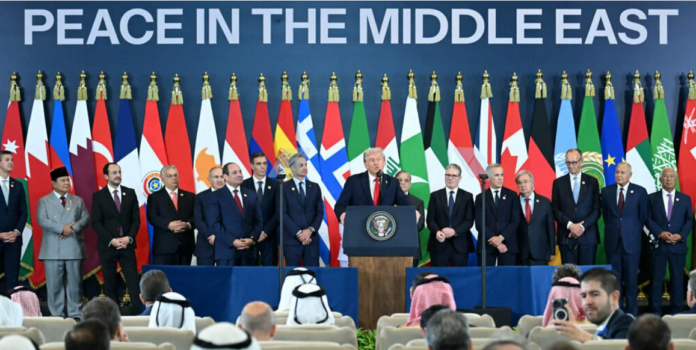
Full text: Charter of Trump’s Board of Peace

The following is the full text of the charter of the Board of Peace, the international body headed by US President Donald Trump.

This charter was attached to the invitations sent out to dozens of world leaders who were asked to join Trump on the panel tasked with overseeing the postwar management of Gaza.

The text of the charter was obtained and verified by The Times of Israel.

The following is the full text of the charter of the Board of Peace, the international body headed by US President Donald Trump.

This charter was attached to the invitations sent out to dozens of world leaders who were asked to join Trump on the panel tasked with overseeing the postwar management of Gaza.

It notably makes no mention of Gaza, bolstering The Times of Israel’s reporting that the US wants the Board of Peace to assist in the resolution of other conflicts around the globe. However, the mandate of the board approved in November by the Security Council is limited to Gaza and only until the end of 2027.

CHARTER OF THE BOARD OF PEACE

PREAMBLE

Declaring that durable peace requires pragmatic judgment, common-sense solutions, and the courage to depart from approaches and institutions that have too often failed;

Recognizing that lasting peace takes root when people are empowered to take ownership and responsibility over their future;

Affirming that only sustained, results-oriented partnership, grounded in shared burdens and commitments, can secure peace in places where it has for too long proven elusive;

Lamenting that too many approaches to peace-building foster perpetual dependency, and institutionalize crisis rather than leading people beyond it;

Emphasizing the need for a more nimble and effective international peace-building body; and

Resolving to assemble a coalition of willing States committed to practical cooperation and effective action,

Judgment guided and justice honored, the Parties hereby adopt the Charter for the Board of Peace.

Article 1: Mission

CHAPTER I-PURPOSES AND FUNCTIONS

The Board of Peace is an international organization that seeks to promote stability, restore dependable and lawful governance, and secure enduring peace in areas affected or threatened by conflict. The Board of Peace shall undertake such peace-building functions in accordance with international law and as may be approved in accordance with this Charter, including the development and dissemination of best practices capable of being applied by all nations and communities seeking peace.

CHAPTER II

MEMBERSHIP

Article 2.1: Member States
Membership in the Board of Peace is limited to States invited to participate by the Chairman, and commences upon notification that the State has consented to be bound by this Charter, in accordance with Chapter XI.

Article 2.2: Member State Responsibilities

(a) Each Member State shall be represented on the Board of Peace by its Head of State or Government.

(b) Each Member State shall support and assist with Board of Peace operations consistent with their respective domestic legal authorities. Nothing in this Charter shall be construed to give the Board of Peace jurisdiction within the territory of Member States, or require Member States to participate in a particular peace-building mission, without their consent.

(c) Each Member State shall serve a term of no more than three years from this Charter’s entry into force, subject to renewal by the Chairman. The three-year membership term shall not apply to Member States that contribute more than USD $1,000,000,000 in cash funds to the Board of Peace within the first year of the Charter’s entry into force.

Article 2.3: Termination of Membership

Membership shall terminate upon the earlier of: (i) expiration of a three-year term, subject to Article 2.2(c) and renewal by the Chairman; (ii) withdrawal, consistent with Article 2.4; (iii) a removal decision by the Chairman, subject to a veto by a two-thirds majority of Member States: or (iv) dissolution of the Board of Peace pursuant to Chapter X. A Member State whose membership terminates shall also cease to be a Party to the Charter, but such State may be invited again to become a Member State, in accordance with Article 2.1.

Article 2.4: Withdrawal

Any Member State may withdraw from the Board of Peace with immediate effect by providing written notice to the Chairman.

CHAPTER III-GOVERNANCE

Article 3.1: The Board of Peace

(a) The Board of Peace consists of its Member States.

(b) The Board of Peace shall vote on all proposals on its agenda, including with respect to the annual budgets, the establishment of subsidiary entities, the appointment of senior executive officers, and major policy determinations, such as the approval of international agreements and the pursuit of new peace-building initiatives.

(c) The Board of Peace shall convene voting meetings at least annually and at such additional times and locations as the Chairman deems appropriate. The agenda at such meetings shall be set by the Executive Board, subject to notice and comment by Member States and approval by the Chairman.

(d) Each Member State shall have one vote on the Board of Peace.

(e) Decisions shall be made by a majority of the Member States present and voting, subject to the approval of the Chairman, who may also cast a vote in his capacity as Chairman in the event of a tie.

(f) The Board of Peace shall also hold regular non-voting meetings with its Executive Board at which Member States may submit recommendations and guidance with respect to the Executive Board’s activities, and at which the Executive Board shall report to the Board of Peace on the Executive Board’s operations and decisions. Such meetings shall be convened on at least a quarterly basis, with the time and place of said meetings determined by the Chief Executive of the Executive Board.

(g) Member States may elect to be represented by an alternate high-ranking official at all meetings, subject to approval by the Chairman.

(h) The Chairman may issue invitations to relevant regional economic integration organizations to participate in the proceedings of the Board of Peace under such terms and conditions as he deems appropriate.

Article 3.2: Chairman

(a) Donald J. Trump shall serve as inaugural Chairman of the Board of Peace, and he shall separately serve as inaugural representative of the United States of America, subject only to the provisions of Chapter III.

(b) The Chairman shall have exclusive authority to create, modify, or dissolve subsidiary entities as necessary or appropriate to fulfill the Board of Peace’s mission.

Article 3.3: Succession and Replacement

The Chairman shall at all times designate a successor for the role of Chairman. Replacement of the Chairman may occur only following voluntary resignation or as a result of incapacity, as determined by a unanimous vote of the Executive Board, at which time the Chairman’s designated successor shall immediately assume the position of the Chairman and all associated duties and authorities of the Chairman.

Article 3.4: Subcommittees

The Chairman may establish subcommittees as necessary or appropriate and shall set the mandate, structure, and governance rules for each such subcommittee.

CHAPTER IV-EXECUTIVE BOARD

Article 4.1: Executive Board Composition and Representation

(a) The Executive Board shall be selected by the Chairman and consist of leaders of global stature.

(b) Members of the Executive Board shall serve two-year terms, subject to removal by the Chairman and renewable at his discretion.

(c) The Executive Board shall be led by a Chief Executive nominated by the Chairman and confirmed by a majority vote of the Executive Board.

(d) The Chief Executive shall convene the Executive Board every two weeks for the first three months following its establishment and on a monthly basis thereafter, with additional meetings convened as the Chief Executive deems appropriate.

(e) Decisions of the Executive Board shall be made by a majority of its members present and voting, including the Chief Executive. Such decisions shall go into effect immediately, subject to veto by the Chairman at any time thereafter.

(f) The Executive Board shall determine its own rules of procedure.

Article 4.2: Executive Board Mandate

The Executive Board shall:

(a) Exercise powers necessary and appropriate to implement the Board of Peace’s mission, consistent with this Charter;

(b) Report to the Board of Peace on its activities and decisions on a quarterly basis, consistent with Article 3.1(f), and at additional times as the Chairman may determine.

Article 5.1: Expenses

CHAPTER V-FINANCIAL PROVISIONS

Funding for the expenses of the Board of Peace shall be through voluntary funding from Member States, other States, organizations, or other sources.

Article 5.2: Accounts

The Board of Peace may authorize the establishment of accounts as necessary to carry out its mission. The Executive Board shall authorize the institution of controls and oversight mechanisms with respect to budgets, financial accounts, and disbursements, as necessary or appropriate to ensure their integrity.

CHAPTER VI LEGAL STATUS

Article 6

(a) The Board of Peace and its subsidiary entities possess international legal personality. They shall have such legal capacity as may be necessary to the pursuit of their mission (including, but not limited to, the capacity to enter into contracts, acquire and dispose of immovable and movable property, institute legal proceedings, open bank accounts, receive and disburse private and public funds, and employ staff).

(b) The Board of Peace shall ensure the provision of such privileges and immunities as are necessary for the exercise of the functions of the Board of Peace and its subsidiary entities and personnel, to be established in agreements with the States in which the Board of Peace and its subsidiary entities operate or through such other measures as may be taken by those States consistent with their domestic legal requirements. The Board may delegate authority to negotiate and conclude such agreements or arrangements to designated officials within the Board of Peace and/or its subsidiary entities.

Article 7

CHAPTER VII-INTERPRETATION AND DISPUTE RESOLUTION

Internal disputes between and among Board of Peace Members, entities, and personnel with respect to matters related to the Board of Peace should be resolved through amicable collaboration, consistent with the organizational authorities established by the Charter, and for such purposes, the Chairman is the final authority regarding the meaning, interpretation, and application of this Charter.

CHAPTER VIII-CHARTER AMENDMENTS

Article 8

Amendments to the Charter may be proposed by the Executive Board or at least one-third of the Member States of the Board of Peace acting together. Proposed amendments shall be circulated to all Member States at least thirty (30) days before being voted on. Such amendments shall be adopted upon approval by a two-thirds majority of the Board of Peace and confirmation by the Chairman. Amendments to Chapters II, III, IV, V, VIII, and X require unanimous approval of the Board of Peace and confirmation by the Chairman. Upon satisfaction of the relevant requirements, amendments shall enter into force on such date as specified in the amendment resolution or immediately if no date is specified.

Article 9

CHAPTER IX-RESOLUTIONS OR OTHER DIRECTIVES

The Chairman, acting on behalf of the Board of Peace, is authorized to adopt resolutions or other directives, consistent with this Charter, to implement the Board of Peace’s mission.

CHAPTER X-DURATION, DISSOLUTION AND TRANSITION

Article 10.1: Duration

The Board of Peace continues until dissolved in accordance with this Chapter, at which time this Charter will also terminate.

Article 10.2: Conditions for Dissolution

The Board of Peace shall dissolve at such time as the Chairman considers necessary or appropriate, or at the end of every odd-numbered calendar year, unless renewed by the Chairman no later than November 21 of such odd-numbered calendar year. The Executive Board shall provide for the rules and procedures with respect to the settling of all assets, liabilities, and obligations upon dissolution.

CHAPTER XI-ENTRY INTO FORCE

Article 11.1: Entry into Force and Provisional Application

(a) This Charter shall enter into force upon expression of consent to be bound by three States. (b) States required to ratify, accept, or approve this Charter through domestic procedures agree to provisionally apply the terms of this Charter, unless such States have informed the Chairman at the time of their signature that they are unable to do so. Such States that do not provisionally apply this Charter may participate as Non-Voting Members in Board of Peace proceedings pending ratification, acceptance, or approval of the Charter consistent with their domestic legal requirements, subject to approval by the Chairman.

Article 11.2: Depositary

The original text of this Charter, and any amendment thereto shall be deposited with the United States of America, which is hereby designated as the Depositary of this Charter. The Depositary shall promptly provide a certified copy of the original text of this Charter, and any amendment or additional protocols thereto, to all signatories to this Charter.

CHAPTER XII RESERVATIONS

Article 12

No reservations may be made to this Charter.

CHAPTER XIII-GENERAL PROVISIONS

Article 13.1: Official Language

The official language of the Board of Peace shall be English

Article 13.2: Headquarters

The Board of Peace and its subsidiary entities may, in accordance with the Charter, establish a headquarters and field offices. The Board of Peace will negotiate a headquarters agreement and agreements governing field offices with the host State or States, as necessary.

Article 13.3: Seal

The Board of Peace will have an official seal, which shall be approved by the Chairman.

IN WITNESS WHEREOF, the undersigned, being duly authorized, have signed this Charter.

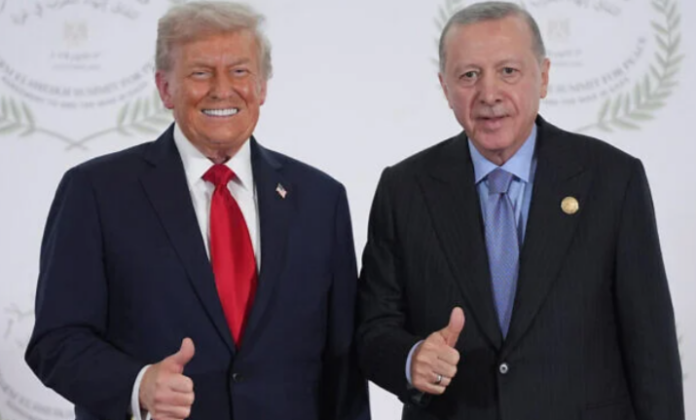
Netanyahu fumes at Gaza oversight panel makeup as Trump invites Erdogan to peace board

Prime Minister Benjamin Netanyahu’s office said Saturday that the White House’s unveiling of a key international oversight panel for Gaza “was not coordinated with Israel and contradicts its policy,” in a rare break with US President Donald Trump’s administration that was met with a sharp rebuke from a senior US official.

Netanyahu appeared to be taking issue with the makeup of a new body called the executive board, which will include senior officials from Qatar and Turkey — two countries that have been highly critical of Israel’s prosecution of the war in Gaza.

While it will technically operate beneath the Board of Peace — which is headed by Trump and made up of world leaders — the executive board will be more directly involved in overseeing the postwar management of Gaza, playing a critical role as opposed to the more symbolic Board of Peace.

Netanyahu’s office said in a statement that the premier had instructed Foreign Minister Gideon Sa’ar to raise Israeli opposition to the executive board’s makeup with his US counterpart, Marco Rubio. Sa’ar has largely been kept away from direct involvement in Israel-US relations, which have run through Netanyahu’s office and his top advisers.

After Netanyahu’s statement, an unnamed senior American official was quoted by the Axios outlet as lashing out at the Israeli leader.

“This is our show, not his show,” the official reportedly said. “We managed to do things in Gaza in recent months nobody thought was possible, and we are going to continue moving. If he wants us to deal with Gaza, it will have to be our way. We worked over him. Let him focus on Iran and let us deal with Gaza. We are not going to argue with him. He will do his politics and we will keep moving forward with our plan. He can’t really go against us.”

Added the official: “We are doing him a favor. If this fails he can say, ‘I told you so.’ We know that if it succeeds he will claim credit.”

The White House unveiled the makeup of the executive board on Friday, with Turkey to be represented by its Foreign Minister Hakan Fidan and Qatar to be represented by its senior diplomat Ali Thawadi. They will be joined by Egyptian intelligence chief Hassan Rashad, UAE International Cooperation Minister Reem Al-Hashimy, former UK prime minister Tony Blair, US special envoy Steve Witkoff, top Trump aide Jared Kushner, Apollo Global Management CEO Marc Rowan, Israeli-Cypriot businessman Yakir Gabay, former UN humanitarian coordinator Sigrid Kaag, and former UN envoy to the Mideast Nickolay Mladenov.

Mladenov, who will effectively head the panel, was given the title of high representative for Gaza, and will act as the on-the-ground link between the Board of Peace and the panel of Palestinian technocrats running daily affairs in the Strip.

The White House has dubbed that Palestinian body the National Committee for the Administration of Gaza (NCAG), and it will effectively be subservient to the Board of Peace and the mid-tier executive board.

The 15-member NCAG is headed by former Palestinian Authority deputy planning minister Ali Shaath, and held its first meeting in Cairo with Mladenov on Saturday.

As for the Board of Peace, the panel of leaders has not yet been unveiled, but invitations to potential members went out on Friday. By Saturday, the leaders of Turkey, Canada and Argentina publicly confirmed receipt — a move that likely indicates their plans to accept the offer.

A source familiar with the matter said Israel did not aggressively push back against Turkish President Recep Tayyip Erdogan’s inclusion on the Board of Peace, recognizing that the more consequential panel is the executive board.

Jerusalem had sought to prevent the inclusion of a Turkish representative on the latter body, but apparently lost that battle in what demonstrated Ankara’s perceived utility in the eyes of Trump, who has repeatedly praised Erdogan — including in front of Netanyahu — and has hailed both Turkey and Qatar’s success in coaxing Hamas to accept his ceasefire deal in October.

Canadian Prime Minister Mark Carney said he intended to accept Trump’s invitation to the Board of Peace, while in Turkey, a spokesman for Erdogan sufficed with confirming that he had been asked to become a “founding member” of the board.

Egypt’s Foreign Minister Badr Abdelatty said Cairo was “studying” a request for President Abdel Fattah al-Sisi to join the panel. And sharing an image of the invitation letter, Argentine President Javier Milei wrote on X that it would be “an honor” to participate in the initiative.

Attached to the letter is the charter for the Board of Peace, which notably does not include the word “Gaza.” The charter indicates a desire for the body to at least partially replace the UN, emphasizing the need for “a more nimble and effective international peace-building body,” adding that durable peace requires “the courage to depart from… institutions that have too often failed.”

Earlier this month, The Times of Israel reported that the US wants the Board of Peace to be used to assist in the resolution of other conflicts around the globe as well.

The US is aiming to hold the first Board of Peace meeting on the sidelines of the World Economic Forum in Davos, Switzerland, on Wednesday, officials familiar with the matter have told The Times of Israel.

While the charter speaks of a desire for involvement beyond Gaza, the Security Council resolution pertaining to the Board of Peace that was passed last month restricts its mandate to the Strip, and only until the end of 2027.

Joining Netanyahu in lashing out over the makeup of the various Gaza oversight panels on Saturday were both far-right National Security Minister Itamar Ben Gvir and the Palestinian Islamic Jihad (PIJ) terror group.

“I commend the prime minister for his important statement. The Gaza Strip does not need any ‘governing council’ to oversee its ‘rehabilitation’ — it needs to be cleared of Hamas terrorists, who must be eliminated, alongside the encouragement of large-scale voluntary emigration, in accordance with President Trump’s original plan,” wrote Ben Gvir on X, referring to a February 2025 proposal to permanently relocate Gaza’s entire population that Washington has since abandoned.

Ben Gvir called on Netanyahu “to instruct the IDF to prepare to return to the fighting in the Strip with overwhelming force, in order to achieve the central objective of the war: the destruction of Hamas.”

For its part, PIJ said it was “surprised by the composition of the so-called Board of Peace,” adding that the members chosen are “in line with Israeli specifications and serve the occupation’s interests.”

PA ‘education reform’ exposed as empty promise

The Ramallah office of Palestinian Authority Vice President Hussein al-Sheikh is constantly hosting visits of Western diplomats and heads of state, as political moves are being prepared toward ending the war in Gaza.

Al-Sheikh, a kind of crown prince to Mahmoud Abbas, the aging and almost perpetually ruling P.A. president, is firmly managing efforts to bring the P.A. into control of the Strip and, beyond that, to advance the establishment of a Palestinian state.

The horizon for such a state was set out in President Donald Trump’s 20-point peace plan, that was endorsed by the U.N. Security Council and which Israel did not oppose.

There is, however, a crucial caveat—reforms within the Palestinian Authority, including the end of payments to terrorists that continue even now, and the critical reform of the P.A. education system.

The Oslo Accords themselves included the requirement to instill content of peace, acceptance of the other and tolerance within the Palestinian education system.

Yet no one, including all Israeli governments to date, ensured that any of this was implemented. The European Union, the main funder of this education system, has repeatedly rejected Israeli demands to condition its funding on the necessary changes.

The required change is dramatic—from kindergarten onward, Palestinians undergo an educational indoctrination that teaches them to hate Israel, Zionists and, above all, Jews, with antisemitic motifs and direct incitement to terrorism.

Every few years, under international pressure, the P.A. announces changes, but those made are cosmetic in nature.

In his talks in Ramallah and meetings in Gulf states, Al-Sheikh has been trying to argue that over the past year there has also been a change in this area and that education officials are working on a new program.

Last week, Israel Hayom reported on the Saudi move to assume supervisory responsibility over these reforms, in exchange for the release of tax revenues that Israel is withholding.

Israeli and international leftist groups, such as J Street and Peace Now, are also helping the P.A. market the story of educational reform, even though the lie is a massive obstacle to genuine peace.

The reforms, in fact, never occurred. Israel Hayom has learned that during Al-Sheikh’s visit to the United Arab Emirates, examples of incitement in current textbooks were presented to him, and his request for financial assistance for the P.A. was rejected.

During 2025, Abbas’s office examined the possibility of a comprehensive change in the education system and sought assistance from international organizations involved in such efforts, even receiving examples of textbooks. Abbas, however, demanded that changes be introduced into those books that ran counter to principles of tolerance and the aspiration for peace, and the initiative did not move forward.

Arnon Groiss, who has been researching attitudes toward Israel, Jews and peace in P.A. textbooks for a quarter of a century, found that even now, in the current textbooks that were supposedly revised, their principles are indistinguishable from those of the Hamas terrorist organization.

Groiss, an associate at the Nahum Bedein Center for Near East Policy Research in Jerusalem, said that the treatment of the conflict in these textbooks is based on three core principles—opposition to the existence of the State of Israel anywhere in the land and to the very presence of its seven million Jewish citizens; harsh demonization of Israel and of Jews, including on religious grounds; and a call for violent struggle for total “liberation,” which at times hints at the need for their destruction.

“The State of Palestine” is presented as the sovereign over the entire land in place of Israel, both in text and on maps, and the name Israel is replaced with the term “the Zionist occupation.”

According to Groiss, there is a complete denial of Jewish history in the land and of the existence of Judaism’s holy sites, foremost among them the Western Wall.

Demonization is carried out by portraying Jews as “infidels, helpers of Satan and enemies of God’s prophets,” who in the past betrayed Muhammad and who today pose an existential threat to the Palestinians. Jews are also accused of being driven by Jewish religious thought to commit massacres with the intention of exterminating Palestinians.

The educational ideals promoted are jihad and istishhad (martyrdom for the nation and Islam) in order to “liberate” the land.

In Palestinian textbooks, including the current ones, terrorism—illustrated by examples such as the 1978 Coastal Road bus attack—is presented as an integral part of the “struggle for liberation”, as is the “return of refugees.”

The P.A.’s textbooks are mandatory in all schools in Judea and Samaria and Gaza, including UNRWA schools and private schools. Many schools in eastern Jerusalem also use these books.

A pilot for change

Ironically, it is precisely the education system in the Gaza Strip that could serve as a pilot for the change so desperately needed in the education of Palestinian youth and in halting the institutionalized incitement of the Palestinian education system.

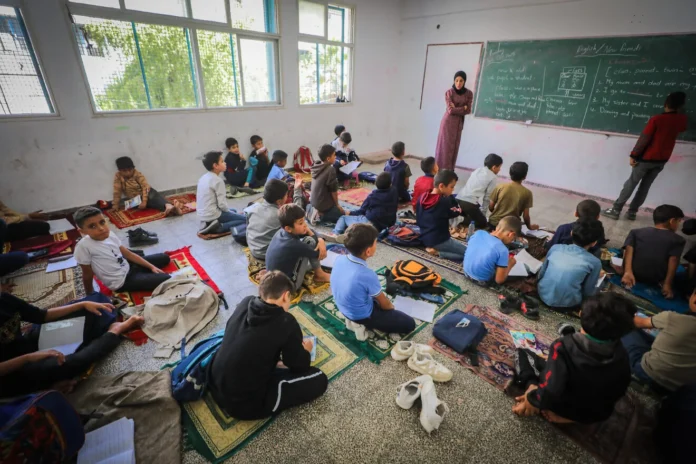
Since the start of the Israel-Hamas ceasefire in October, various bodies have been trying to renew schooling in the Strip. Most schools were destroyed during the war, and international organizations are organizing makeshift classrooms. In the absence of a functioning governing authority, most of the material is not based on the P.A. curriculum with its Hamas flavor, as it was previously.

At the U.S. headquarters in Kiryat Gat that is preparing for “the day after” in Gaza, there is an entire department dealing with the rehabilitation of education infrastructure, including future curricula.

Two countries stand out in these preparations: the United Arab Emirates and Morocco. Innovative curricula that omit the familiar incitement against Israel and Jews are being prepared, ahead of the establishment of a governing body that will take responsibility from Hamas, if and when that happens.

In the meantime, in areas controlled by clans opposed to Hamas, makeshift schools have been established that require curricula, textbooks and other materials.

The most prominent is in the territory of the Al-Shabab clan in the southern Strip, where several hundred children are studying in temporary structures according to an advanced education program run by one of the international organizations operating in the area. The program was written by education experts from across the Arab world and is now being examined by additional clans seeking to adopt it.

It’s elementary

It is amazing how something that is simple, basic, fundamental and easy to understand can frequently be made complicated and complex.

Politicians and political commentators are experts at transforming perfectly clear challenges into double speak, confusing and hypocritical hypotheses.

Every Shabbat, I read a publication issued by the Orthodox Union (OU) that contains a wide selection of commentaries, explanations, and thoughts on the week’s parsha (portion of the Torah).

There is always something worthwhile to learn, and this week’s issue, coinciding with the beginning of the Book of Exodus, was no exception.

It recounts the advent of a new Pharaoh in Egypt “who knew not Joseph.” In plain, simple language, the text reveals what commentators have described as the first recorded instance of official Jew hate. Joseph had saved Egypt from economic catastrophe and prevented a mass starvation. His family and descendants had been granted permanent residence in the country. However, all this subsequently meant nothing as a new administration now deemed the Hebrews as a potential threat to Egyptian security. It was thus necessary to curtail their freedom and introduce discriminatory edicts.

In his commentary, the late Rabbi Moshe Hauer, a past Executive President of the OU, wrote these very perceptive words:

“Antisemitism has never been just about physical attacks on Jews. It is the great conspiracy theory, in which a narrative is generated about the Jewish People, portraying us as all-powerful and utterly disloyal, a combination of factors that create a climate of hatred and resentment towards us. Demonisation creates space for physical attack.”

“This was a critical stage in the process of our Egyptian experience – the demonisation of the Jews. Before a taskmaster had cracked his whip or thrown a Jewish baby into the Nile, a narrative had to be constructed to recast the Jews as the Egyptians’ oppressors.”

These two short paragraphs sum up the Jewish experience over the last three millennia so succinctly and clearly.

They also explain unambiguously how the demonisation of Israel, Jews and Zionists has fallen on such fertile ground in every continent.

Concurrently, I took the opportunity to catch up on the drama in Australia over the establishment of a Royal Commission to investigate the Bondi pogrom and its associated causes and effects.

It has been a sordid spectacle watching the Prime Minister and his colleagues being dragged reluctantly to make a U-turn on the subject. Public pressure from across society finally compelled the politicians to fold.

Although a Royal Commission is now being launched, one has to wonder whether it will be worth the effort, time and expense.

The 12-month timeframe is questionable.

How long can it take to hear submissions?

The events leading up to the massacre need to be thoroughly researched, but the evidence is already clearly recorded. Warnings from Jewish and security spokespersons over a long period of time are available for scrutiny.

The toxic atmosphere generated over several years, which laid the groundwork for subsequent violence, graffiti and arson, is no mystery except to those who prefer to shut their ears and close their eyes.

Since October 2023 and indeed well before that infamous Hamas murderous event, swathes of Australians participated in boycotts, marches, demonstrations and riots against Israel, Zionists and Jews. Slogans and chants of the vilest kind have been heard in the capital cities of every state. Weekends have seen central business districts taken over by mobs screaming obscene invective as well as calling for the death of Israelis and supporters of Israel. The Sydney Opera House and Harbour Bridge were hijacked, with politicians and others enthusiastically participating in the widespread mayhem and incitement.

The roles of the Federal Government and law enforcement authorities in caving in to mob violence, physical and verbal, are clearly documented.

The recorded demonisation of Israel by the Government, Greens and other assorted officials is no mystery. The almost daily denunciations of Israel and its democratically elected officials in the aftermath of October 2023 obviously fell on very fertile ground.

Accusations of genocide, deliberate mass starvation policies and repeated lies about the IDF all had their poisonous aftermaths.

It doesn’t take a genius to discover where the demands for “death to the IDF”, “from the river to the sea,” and “globalise the intifada” originated from. They all sprang from the fetid minds and brain-addled ignoramuses and bigots who parroted the rhetoric already articulated by their political representatives and social media.

None of these facts is a mystery. They are all on record and easily accessible.

Why does it need a year to dig up and consider?

Is it hoped that somehow the Royal Commission will exonerate the clearly guilty parties just in time for the 2028 elections?

One of the principal tasks of this review supposedly is the question of “what drives antisemitism” and how hate speech contributes to this plague.

One would think the answer is very clear and elementary, especially given the abundant evidence available.
Jew hate has always been present, albeit in relatively small pockets of the Australian population. Jews have contributed to Australian society out of all proportion to their small numbers and generally speaking have found a welcoming home in the “lucky country.”

This has changed dramatically over the last few decades, and one should ask what has precipitated this evolution.

Some extreme left-wing commentators and self-loathers will maintain that the rise of Jew hate is a result of the fanatical right-wing fundamentalists governing Israel. Blaming Jews for being hated and hounded is, of course, a very old strategy going back all the way to Pharaoh.

It’s not the small white supremacist groups of neo-Nazis who, while more visible, remain a fringe group shunned by most.

Jew hate has mutated into hate against the resurrected nation-state of the Jewish People and is being promoted and sustained by alliances between mainstream political and social groups.

A coalition between the far left, democratic socialists, communists, radicalised academics and university faculty and students provides a potent core for disseminating lies and slanders.

Add in a rising number of jihadist advocates who use these useful idiots as cannon fodder, and you have a lethal army of haters and inciters.

Those who are being infected with a virulent hate of jihadist ideology now constitute a growing army of followers in Europe, the UK, Scandinavia and Australia.

Those who preach, advocate and educate jihadist doctrines should be denied citizenship and, if necessary, deported. This is not a campaign against Islam but a necessary defence against fanaticism and rhetoric that leads to terror.

If the Royal Commission tackles these topics, it will prove worthwhile.

If, however, it ignores the obvious in the interest of so-called “social cohesion”, it will be a colossal waste of time and will not solve or even come close to solving the tsunami of Jew hate now threatening to engulf everyone.

It’s elementary.