Israel’s protesters are enemies, not heroes, of democracy

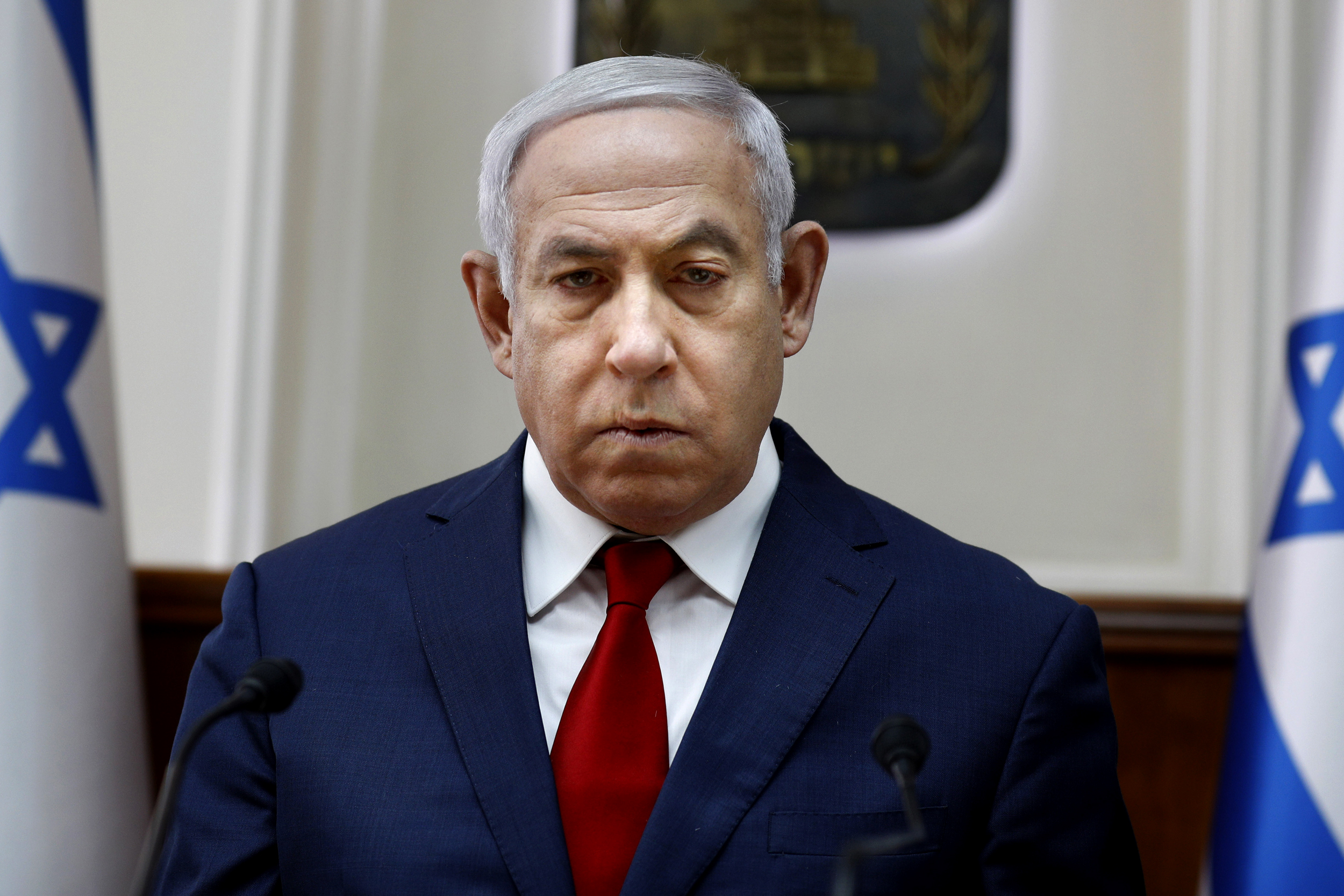
Israeli Prime Minister Benjamin Netanyahu opens the weekly cabinet meeting at his Jerusalem office on February 10, 2019. - Nudged by rightwing political rivals after a deadly Palestinian attack on a young Israeli woman, Netanyahu who seeks re-election pledged today to freeze money transfers to the Palestinian Authority. (Photo by GALI TIBBON / POOL / AFP) (Photo credit should read GALI TIBBON/AFP/Getty Images)

Israeli Prime Minister Benjamin “Bibi” Netanyahu announced Monday night he was temporarily pausing his government’s judicial-reform efforts in the face of strikes by key industries, insubordination in some parts of the military and huge protests.

While many within the international community, as well as on the Israeli left, will attempt to portray the announcement as a triumph of democracy, it is anything but.

The reforms seek to introduce a modicum of checks and balances into Israel’s political system, where the “court” sits as a de facto unelected supreme legislative chamber that can exercise veto power over every single government action.

The assault on the proposals, apart from the telegenic protesters, was actually rooted in the state’s bureaucracy, which remains highly sympathetic to the judiciary.

For 25 years, Israel’s Supreme Court has operated entirely without democratic constraints.

Not only does the court remain unfettered by any written constitution when evaluating a law — it is guided by such nebulous principles as “human dignity” and “liberty” — it’s also seized the ability to block any government act it deems “unreasonable.”

Activists assembled from around the country demonstrate
Activists assembled from around the country demonstrate outside the Knesset in Jerusalem against the new Israeli government.
ZUMAPRESS.com/Nir Alon

Perhaps most confounding, judges exercise veto power over the selection of their successors, resulting in an ideologically homogenous judiciary.

To top it off, what little power the court has not assumed for itself, it has delegated to the attorney general, who can veto any government action or policy by his or her own discretion.

In the United States, presidents can and do fire their AGs. In Israel, it is closer to the opposite.

As soon as Israel’s AG Gali Baharav-Miara learned of the proposed reforms, she issued Bibi a directive ordering him to halt any involvement in or discussion of the proposals — a strategic decapitation strike on the reform movement’s leadership.

She claimed Bibi had a “conflict of interest” due to the criminal charges he faces in a case that’s dragged on for years.

Never mind the fact the presiding judge has already been selected for Bibi’s case, rendering the conflict-of-interest accusation speculative at best.

Some of the reforms would check the AG’s power.

Ironically, this interplay amounted to a genuine conflict of interest that did not give Baharav-Miara pause when rebuking Netanyahu.

Protesters attend a demonstration after Israeli Prime Minister Benjamin Netanyahu
The reforms seek to introduce a modicum of checks and balances into Israel’s political system.
REUTERS/Ammar Awad

What makes the situation even more peculiar is that Israel is supposed to be a parliamentary-sovereignty system — like many countries with roots in British law — in which the legislature is granted the last word.

For years, that simply has not been the case. The court has weighed in on everything from the appointment of ministers to the conditions attached to welfare transfers to the location of Israel’s West Bank separation fence.

Netanyahu’s most recent efforts to enact reforms are the culmination of nearly a decade of campaign promises.

As early as 2015, Netanyahu had proposed two of the more controversial reforms: the override clause, which would allow the Knesset (Israel’s legislature) to override a court ruling via a simple majority, and changing the composition of the Judicial Selection Committee to ensure the court doesn’t squash the Knesset’s voice.

Despite Netanyahu’s decision last week to whittle down his reform ambitions to just eliminating judges’ veto over their own colleagues on the Selection Committee, the demonstrations continued unabated. That’s telling.

The protests’ persistence suggests that for many protesters, it is not about the reforms but about “resisting” the newly elected government, even if doing so would disenfranchise millions of Israeli voters.

democratic constraints
For 25 years, Israel’s Supreme Court has operated entirely without democratic constraints.
ZUMAPRESS.com/ Chris Emil

It also reveals the pro-reformers’ diagnosis was largely correct.

It is precisely because the court wields vast, self-judging and self-perpetuating power that ideologically sympathetic elites have been willing to foment chaos and even threaten civil war to preserve that power.

Contrast the Israeli reaction to reform discussion with the American reaction to the Supreme Court’s Dobbs decision.

The case was highly contentious, but no one blocked highways for months or closed national airports. That Israeli anti-reformers would shut down the country rather than let rotating elected governments fill judicial vacancies reveals the court is no so much a court as a Supreme Governing Council.

What is unfolding in Israel is not a Bibi problem — it is a democracy problem. And those portraying themselves as heroes of democracy may actually be hurting it.

Erielle Davidson is an attorney in New York City. Eugene Kontorovich is a professor at George Mason University’s Scalia Law School and director of its Center for the Middle East and International Law.


Four questions about the opponents of judicial reform

There is no reason to impugn the integrity of the vast majority of those who demonstrated against reforms to the Israeli Supreme Court.

At the same time, most people do not know that there are four issues on which Supreme Court reform would have a very positive impact, and certain interested parties do not want that to happen.

The Palestinian Authority and its allies in Israel

The Israeli Supreme Court has issued a series of inappropriate rulings over the last 30 years that approved Israeli government agreements with the Palestine Liberation Organization. It did so even though the PLO’s ruling party Fatah never ratified the Oslo Accords’ core document—the Declaration of Principles.

The Court even ruled that Israel should be allowed to supply weapons and military training to the Palestinian Authority’s security forces, as they could be relied upon to protect the lives of Jews. The Court would not accept the premise that the P.A. remains at war with the Jews and Israel.

Supreme Court reform could upset the Israel government’s courtship of the P.A. and the PLO and reverse blind Israeli support for the P.A. as a “peace partner.”

Families whose loved ones were murdered, only to witness the release of their killers

During what was described as peace negotiations with the PLO, the Supreme Court allowed as many as 9,000 convicted Arab felons to walk the streets, on condition that they sign a statement that they supported peace.

These felons included convicted murderers released in exchange for Israeli POW Gilad Shalit. Some 40% of these felons have returned to terror.

Supreme Court reform could introduce normative standards of release, which would require an evaluation of each case on the basis of recidivism—the probability that the released felon might repeat his crime.

Israeli contractors who import migrant workers

Over the past decade, the Supreme Court has turned a blind eye to Israel contractors who have imported as many as a quarter-million migrant workers to perform menial labor.

These contractors, working with the Israel Hotel Association and other employers ready to hire workers for below the minimum wage and without social benefits or medical care, hire PR professionals to tell the public that these migrant workers are innocuous asylum seekers.

Migrant workers have run rampant and ransacked neighborhoods in south Tel Aviv, yet the Supreme Court prefers to believe that they are innocent asylum seekers with nowhere else to go.

Supreme Court reform would be a nightmare for these unscrupulous contractors.

The Israeli high-tech industry illegally importing workers

Israel’s booming high-tech industry now recruits workers from abroad, ignoring local high-tech professionals who are seeking employment.

Many of these high-tech companies do not allow their imported workers a day of rest or apply for work visas on their behalf, both of which are mandated by Israeli labor law. The Supreme Court regularly turns a blind eye to these abuses.

Supreme Court reform could hold these companies to account and prevent the further importation of foreign high-tech workers.

On the seder night next week, four questions should be asked about four issues and why some of the parties involved are such strong opponents of judicial reform.

David Bedein is director of the Nahum Bedein Center for Near East Policy Research.

Strategic Minute: America’s Rag Doll

A Word First

We take a look at a man who’s been in the news nearly every hour in the Middle East — Israeli Prime Minister Binyamin Netanyahu. Forget the heap of criticism coming from Washington, this man is America’s best asset in the region.

Click here to read full article. 

Exposing the vile UNRWA Palestinian Education System

Join Simon as he interviews Angela Oakley on how British taxpayers are funding the UNRWA Palestinian education that is inciting Palestinian children to hate and glory terrorism. 😔

👉 Click here for more: https://revelationtv.com/news/Exposing-the-vile-UNRWA-Palestinian-Education-System

Israel Judicial Reform Crisis

JNS Jerusalem Bureau Chief Alex Traiman sorts out the details of Israel’s Judicial Reform Crisis. What are the reforms? Why are there protests? Why are there counter-protests? Will embattled Prime Minister Benjamin Netanyahu be able to save his coalition? What is at stake for the Jewish State

https://www.facebook.com/watch/live/?extid=NS-UNK-UNK-UNK-IOS_GK0T-GK1C&mibextid=1YhcI9R&ref=watch_permalink&v=140613612286298

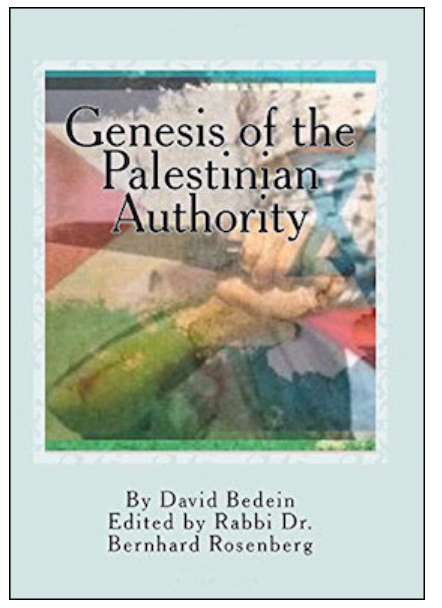
Genesis of the Palestinian Authority

Genesis of the Palestinian Authority collects articles and policy papers by Bedein, director of The Center for Near East Policy Research and founder of the Israel Resource News Agency. The author has covered the Palestinian Authority (PA) from its inception in 1994 and documents how the United Nations and Western countries working with organizations such as the U.N. Relief and Works Agency (UNRWA) have artificially created and sustained the Palestinian Authority using revisionist history and lies.

For years, Bedein’s main focus has been exposing UNRWA, established as a relief agency for Palestinian refugees. He demonstrates how UNRWA has exacerbated the Israeli-Palestinian conflict and created new generations of “refugees” who demand the “right of return” and advocate for the destruction of Israel.

One section of the book is devoted to portraits of terrorists who were educated in UNRWA schools where a toxic curriculum of anti-Semitic and pro-jihad incitement is taught daily. UNRWA textbooks incite students to violence and are condoned by the Palestinian Authority and, not astonishingly, by the United Nations itself. In a list of questions, which Bedein suggests the media put to PA officials, he includes, “Will you remove from all Palestinian Authority schools and libraries the Protocols of the Elders of Zion as well as the doctoral thesis written by Abbas that asserts that Zionists worked with the Nazis to conduct mass murder of Jews in World War II?”

Bedein explains how both the Oslo accords (1993-95) and the dismantling of Jewish communities in Gaza in 2005 were disastrous blunders that emboldened the Palestinian Authority and Hamas to continue their jihad for the destruction of Israel and the murder of Jews. He warns that the “peace process” is merely the continuation of the war against Israel by political means. A case in point is the training of Palestinian Authority policemen that took place in conjunction with the Philadelphia Police Department in 1995. Despite the good intentions of those who envisioned this program, it in fact helped create an armed militia for the Palestinian Authority that ultimately was responsible for the deaths of more than a thousand Israelis.

The book is a treasure trove of documentation exposing how the Palestinian Authority has morphed into a terrorist entity while successfully presenting a façade of reason and moderation to Western governments that continue to fund its deadly activities.

Reviewed by Beila Rabinowitz
Militant Islam Monitor

Who stands to lose if the Israel High Court of Justice is not reformed?

There is no reason to impugn the integrity of vast majority those who demonstrate in Israel against judicial reforms of the High Court of Israel. At the same time, most people have no idea that there is reason to doubt the integrity of some who lead the efforts to squelch these reforms:  

​​

*​The Palestinian Authority and its allies in Israel. 

The Israel High Court of Justice  issued a series of  inappropriate rulings over the last 30 years ​which approved​  Israel government agreements with the Palestine ​ ​Liberation Organization, overlooking the fact that ​the ​key constituent of the PLO , the Fatah, ​never  ratified  the DOP, the Declaration of Principles​, the core  document of the Oslo  peace accords​. 


In that context, the High Court even ruled that Israel should be allowed to supply weapons and military training to the PSF, The Palestinian Security Force,  a​s if  ​the PSF could be relied upon to protect the lives of Jews.

The Israel High Court of Justice simply does recognize the fact that the PLO and its proxy, the PA, remain at war with the Jews.


The Israel High Court of Justice would ​​not ​take into ​consider​ation the fact that the PLO will not change its covenant of war with the Jews​, a written requirement of the accord with the PLO.

​​A new make-up of the Israel high court of justice could upset the Israel government courtship of the PLO  and reve​r​se the blind ​I​srael support for the PLO as a ​”​peace partner​”​.

​​*Families whose loved ones were  murdered –  only to witness the release of their killers.
​​

During what was described as peace negotiations with the PLO, the Israel High Court of Justice has allowed ​as many as ​9,000 convicted Arab felons to walk the streets, if they would  sign a statement that they support peace.  

These felons include convicted murderers released in exchange for Israel POW Gilad Shalit. 

40% of the felons released in exchange for Shalit have returned to terror.


​​A new make-up of the Israel High Court of Justice could introduce normative  standards of release, which would require an evaluation of each case on the basis of recidivism- the probability that the ​released ​felon might repeat his crime. 


​​

* Israel contractors who import migrant workers to work under minimum wage​,​  without ​ ​social benefits​ or proper medical care​

Over the past decade , the Israel High Court of Justice has turned a blind eye to Israel con​t​ractors who  imported as many as a quarter million migrant workers for menial labor. 

These contractors, working with the Israel Hotel Association and other employers ready to engage workers below the minimum wage and without social benefits or medical care, hire PR professionals to ​inform the public ​ that  ​these ​migrant workers are  innocuous  asylum seekers. 

Yet migrant workers have run rampant and ransacked ​​neighborhoods in south Tel Aviv.

 
The Israel High Court of Justice preferred to believe that the​se were innocuous migrant workers who ​​ had nowhere else to go to.
​​

A new make-up of the Israel High Court of Justice would be a nightmare to Israel contractors who might no longer get away with importing migrant workers ever again. 


​​​​*Israel high tech industry who import high techies from around the world
​​

Israel​’s booming  high tech industry now recruit​s​ high tech professionals from abroad, 

ignor​ing local high tech professionals who seek work. 

Many of these high tech companies do not allow their imported workers a day of ​rest,  mandated by Israel labor law which ​​requires ​a day of rest for all employees.


​Many of these high tech companies do not apply for work visas for visiting workers, as required by Israel labor​ law.

Hence, Israel high tech personnel demonstrate in the front lines of vigils  against the Israel High Court of Justice, which turns a blind eye to ​illegal import of high tech​ personnel​.​​
​​

​​A new make-up of the Israel High Court of Justice might ​stifle illegal import of  high ​​tech​ workers  from abroad.

March Madness

As explained by Wikipedia, “mad as a March hare” is a common British English phrase, both today and in Lewis Carroll’s time in the 1800s.

This March seems no exception as far as Israel is concerned. In fact it qualifies as yet another vintage example of lunacy exceeding anything written by Lewis’s “Alice in Wonderland.”

Any month of the year is open season for Israel phobic individuals and groups but this current month has attracted a record number. With Passover and Ramadan coinciding, the stage is set for an orchestrated symphony of mayhem. Ramadan is supposed to be a month of fasting, prayer, reflection and community.

No amount of hypocritical exhortations by international and local politicians will avert the annual hate festival generated by Islamic extremists at this particular time. Any gestures Israel will make in a misguided attempt to avert violence will fail as it has done in the past.

As most Israelis know from past bitter experience, Islamic religious observances are inevitably the perfect occasion for incitement and terror. The tragedy is that instead of tackling the root problem it is usually the victims who get the blame especially if they retaliate.

When masses are brainwashed and historical truths are inverted and most critically when the next generation is educated with lies it is certain that the problem will never be rectified. UNRWA schools controlled by Hamas and the PA continue to use textbooks which preach delegitimisation of Israel and Jews. Despite this, international aid continues to flow. No wonder increasing numbers of teenage Palestinian Arabs find it legitimate to murder Israeli men, women and children.

A perfect example of how this plays out is illustrated by a speech given a few days ago by the PA Prime Minister on behalf of Abbas, President for Life and internationally anointed saint of democratic values.

“This land has been ours since the time of the Canaanites. We do not need to provide proof that we are the original owners of the land.” 

The land he is talking about is all of Israel including Judea, Samaria and Jerusalem. Note that he claims that no proof is necessary to validate their fantasy. The reason of course is that there is no proof to back up these claims. That is why the PA frantically disposes of all evidence validating the presence of Jews here well before the advent of Islam and the fake Palestinians.

Wouldn’t you think that following this fictional historical connection to the Canaanites there might be some sort of rebuttal from our own Government as well as from overseas officials, commentators and academics? Unfortunately this is not the case. Our own politicians are either too busy attacking each other or have abandoned the fight in the name of woke political correctness. As the international community remains mute the lies and fables manufactured by so called peace partners multiply and become the accepted gospel. My guess is that the garbage spewed forth from Ramallah is deliberately ignored in world capitals because it suits the nauseous narrative that Israel must surrender parts of its homeland in exchange for genuine peace.

Continuing the March hare madness theme one must hand out prizes for “chumps of the month” to the following (in no particular order of insanity).

It has been reported by several news media sources that the Biden Administration proposes to provide five thousand Palestinian Arabs with commando training in Jordan. These commandos in training who will be provided with 5,000 rifles and presumably enough ammunition will in effect join the thousands of Fatah and Hamas supporters who already are in possession of illegal weapons. Does anyone in their right mind actually believe that these enforcers (many of whom may already have carried out terror attacks) will fight the terror groups now running rampant in the PA territories?

This hare-brained scheme which could only have been hatched in the warped minds of totally detached progressive officials ought to be literally shot down before it can gain traction and menace every single Israeli. So far, there has been silence and as we all know where there is silence acquiescence follows.

Meanwhile, the annual Jerusalem marathon has taken place with participants from all over Israel and also from abroad. Many ran as part of groups raising money for various worthy charitable causes.

Not by chance, but by deliberate design, the PA decided to organise their own marathon event in Bethlehem. Organised by the PA Olympic Committee whose head is a well-known inciter of anti-Israel rhetoric (Jibril Rajoub) this event should normally elicit no criticism. The only problem however is that like everything else Abbas and his cohorts are involved with, it has been used as a means to once again delegitimise Israel. The T-shirts worn by the runners displayed a map of Palestine which unsurprisingly encompassed all of present-day Israel. Anyone with even a superficial understanding of the way the warped minds of our “peace partners” work will have received the message loud and clear. The marathon uniform made the ultimate objective of the PA perfectly unambiguous.

Pretending that this plain message is really a harbinger of peace remains the prevalent default position for hallucinatory progressives and UN members. Proof of this assertion was provided by the staff members of the UK Consulate to the PA. They participated as Team UK and proudly posed for photos wearing the T-shirts which wiped Israel off the map.

Apologists for this blatant display of perfidious British hypocrisy will excuse it by suggesting that either the Consulate representatives did not understand the logo or they did not notice it. Both excuses, of course, are rubbish.

Confirmation that this shameful episode was no accidental lapse of Foreign Office protocol was subsequently revealed.

The UK Consul General to the PA based in “occupied” Jerusalem has met with a senior PA cleric (Mahmoud al – Habbash) who also happens to be an advisor to President Abbas. Sounds innocent enough, doesn’t it? Well, this Islamic man of the cloth has claimed on TV that “Jews are cursed by Allah and are like apes and pigs.” In case this message was not clear enough, he also stated that “the Temple Mount must be returned, liberated, defended and purified from the defilement of the occupation (i.e. Jews) and theft.” This was reported by PMW and the UK Jewish Chronicle.

Think about this for a moment. An official UK diplomatic representative meets a PA official who is on record spouting this sort of incitement. Is this another case of “we didn’t know” or rather a deliberate display of what the UK really thinks about Israel and its citizens?

It should not be too difficult to arrive at an answer, especially when you take the reaction of the UK Foreign Office into consideration. After being challenged by the JC to explain this miserable piece of British diplomacy, the Foreign Office completely ignored the questions and responded that “British policy is to support a 2 State solution.” If that does not clarify exactly where the UK stands, then nothing else does. With proclaimed “friends” like these, who needs enemies?

Proof that drippy diplomats are not confined to the Court of St. James is provided by the incredible response of the German Ambassador to the attempted lynching of two German tourists who drove in their Israeli rental car into Nablus. They wished to purchase some coffee and were attacked by mobs of Palestinian Arabs convinced that the tourists were Jews. Shaken and one hopes now wiser as to the realities of the situation here, they were rescued.

Incredibly the German Ambassador’s subsequent reaction included these words: “we know the pain of the Palestinians. We support their peaceful aspirations towards a State.”

These totally inane sentiments explain why level-headed sane Israelis have long since lost any respect for those who burble such unhinged tripe.

I mentioned that this March was madder than usual.

One wonders how loonier it can get.

Michael Kuttner is a Jewish New Zealander who for many years was actively involved with various communal organisations connected to Judaism and Israel. He now lives in Israel and is J-Wire’s correspondent in the region.

Harvard’s Hijacked Center for Middle Eastern Studies

The Center for Middle Eastern Studies (CMES) at Harvard University will host on March 30, 2023, Prof. Nadera Shalhoub-Kevorkian, chair in Law, Institute of Criminology-Faculty of Law, The Hebrew University; and Chair in Global Law, Queen Mary University of London.

The invitation states, “Her research focuses on trauma, state crimes and criminology, surveillance, gender violence, law and society. She studies the crime of femicide and other forms of gendered based violence, violence against children in conflict ridden areas, crimes of abuse of power in settler colonial contexts, surveillance, securitization and social control. As a resident of the old city of Jerusalem, Shalhoub-Kevorkian is a prominent local activist. She engages in direct actions and critical dialogue to end the inscription of power over Palestinian children’s lives, spaces of death, and women’s birthing bodies and lives.”

The CMES homepage directs the reader to “Readings and Digital Resources on Palestine,” a list of readings on Palestine gathered by Rosie Bsheer and Cemal Kafadar, CMES core faculty members. The reading list aims to “contextualize current events in Palestine,” offering “analyses and histories of expulsion, occupation, settler colonialism, forced evictions, home demolitions, and annexation that situate the current struggle as part of the ongoing Nakba of 1948 and in relation to the Naksa of 1967. These resources also point to the myriad attempts to control knowledge production on Palestine and to silence critical speech that attempts to humanize Palestinians.”

The Center’s one-sided list of readings includes: “Fayez Abdullah Sayegh, Zionist Colonialism in Palestine, Vol. 1 (Beirut, Lebanon: Research Center, Palestine Liberation Organization, 1965). Walid Khalidi, From Haven to Conquest: Readings in Zionism and the Palestine Problem Until 1948 (Institute for Palestine Studies, 1971). Fouzi Al-Asmar, To Be an Arab in Israel (Institute for Palestine Studies, 1978). Rosemary Sayigh, The Palestinians: From Peasants to Revolutionaries (Zed Press, 1979). Edward W. Said, The Question of Palestine (Vintage, 1992). Nadia Abu El-Haj, Facts on the Ground: Archaeological Practice and Territorial Self-Fashioning in Israeli Society (University of Chicago Press, 2002). Rafi Segal and Eyal Weizman, A Civilian Occupation: The Politics of Israeli Architecture (Verso, 2003). Sara Roy, Failing Peace: Gaza and the Israeli-Palestinian Conflict (Pluto Press, 2006). Ussama Makdisi and Paul A. Silverstein, Memory and Violence in the Middle East and North Africa (Indiana University Press, 2006). Omar Jabary Salamanca, Mezna Qato, Kareem Rabie, and Sobhi Samour, “Past is Present: Settler Colonialism in Palestine,” Settler Colonial Studies 2.1 (2012). Shira Robinson, Citizen Strangers: Palestinians and the Birth of Israel’s Liberal Settler State (Stanford University Press, 2013). Jasbir Puar, “Rethinking Homonationalism,” International Journal of Middle East Studies 45.2 (2013), 336-39. Ella Shohat, On the Arab-Jew, Palestine, and Other Displacements (Pluto Press, 2017). Tareq Baconi, Hamas Contained: The Rise and Pacification of Palestinian Resistance (Stanford University Press, 2018). Rana Barakat, “Lifta, the Nakba, and the Museumification of Palestine’s History,” Native American and Indigenous Studies 5.2 (Fall 2018), pp. 1-15. Sherene Seikaly, “How I Met My Great-Grandfather: Archives and the Writing of History,” Comparative Studies of South Asia, Africa, and the Middle East 38.1 (May 2018), p. 6-20. Ussama Makdisi, Age of Coexistence: The Ecumenical Frame and the Making of the Modern Arab World (University of California Press, 2019). Matthew Hughes, Britain’s Pacification of Palestine: The British Army, the Colonial State, and the Arab Revolt, 1936–1939 (Cambridge University Press, 2019). Noura Erakat, Justice for Some: Law and the Question of Palestine (Stanford University Press, 2019). Rashid Khalidi, The Hundred Years’ War on Palestine: A History of Settler Colonialism and Resistance, 1917–2017 (Metropolitan Books, 2020). Seth Anziska, Preventing Palestine: A Political History from Camp David to Oslo (Princeton University Press, 2020).”

Clearly, Harvard’s Center for Middle Eastern Studies was hijacked by Palestinian and pro-Palestinian advocates, providing anti-Israel bias. As can be seen, the first monograph on the reading list is Zionist Colonialism in Palestinepublished by the Palestinian Liberation Organization research center in Beirut. The author, Fayez Abdullah Sayegh, was born in 1922 in Kharaba, Mandatory Syria; as a child, the family moved to Tiberias, and he went to school in Safed. He joined the Syrian Social Nationalist Party in 1938 and was later expelled. In 1949, he earned his Ph.D. in philosophy, with a minor in political science, from Georgetown University. Sayegh worked for the Lebanese Embassy in Washington, DC and at the United Nations. He taught at several universities, including Yale, Stanford, and Macalester College, as well as at The American University of Beirut – his alma mater and the University of Oxford. Sayegh founded the Palestine Research Center in Beirut in 1965. That year, the Center published his historical study entitled Zionist Colonialism in Palestine.

Nothing on the CMES reading list acknowledges that the Palestinians and their Arab allies were belligerent and attacked the Jewish Yishuv. They lost the war between November 30, 1947, and July 20, 1949, which they started. As a result, the Palestinian Nakba in 1948 and Naksa in 1967 were the outcomes of their own making. Moreover, during this period, both Jordan, which occupied the West Bank, and Egypt, which occupied the Gaza Strip, did not find the Palestinians meritorious for independence.

Shalhoub-Kevorkian, who wrote in the past about the “Honor Killing” in Palestinian society, where family members kill the daughter of the family because she is independent, switched her focus to blaming Israel for the “unchilding” (that is, “the authorized eviction of children from childhood for political goals”) of Palestinian children, who are fighting against the Israeli security forces. Stone-throwing, knifing, and shooting are among the Palestinian children’s methods.

Equally important, her switch to writing on settler colonialism is equally egregious. The settler colonialism in Palestine began during the Ottoman Empire era and lasted 402 years.

Contrary to Shalhoub-Kevorkian and CMES assertion, the Jews received the right to establish their national home in their ancestral homeland in Palestine from the League of Nations in 1922. Britain was appointed the executor of this decision. At this time, Transjordan was created for the Arabs in Palestine. The CMES at Harvard University should teach facts, not false.

The CMES has a long history of catering to Palestinians. In one infamous case, it received a donation from the Alawi Foundation, a regime’s charity that specialized in tarnishing Israel in American universities. In return, it hosted as a visiting scholar Ali Akbar Alikhani from the Faculty of Worlds Studies at the University of Tehran, an anti-Semite and a propagandist for the regime. Alikhani suggested that criticisms of the modern Israeli state are immaterial given the “historical violence of Zionism… Israel is a country that from its inception was based on force, coercion and oppression of others.” Among Alikhani’s “academic” sources was the notorious Holocaust denier Roger Garaudy.

An Ivy League University such as Harvard should provide its students with a marketplace of ideas, not one-sided propaganda.

References:

Jerusalem: Examining Settler Colonialism and Undoing Colonial Knowledge Production

Date:

Thursday, March 30, 2023, 4:30pm to 6:00pm

 Location:

CGIS Knafel 262, 1737 Cambridge St, Cambridge, MA 02138

The WCFIA/CMES Middle East Seminar is pleased to present

Nadera Shalhoub-Kevorkian 
Lawrence D Biele Chair in Law, Institute of Criminology-Faculty of Law, The Hebrew University of Jerusalem; and Chair in Global Law, Queen Mary University of London

Discussant: M. Brinton Lykes, PhD, Professor of Community-Cultural Psychology and Co-Director of the Center for Human Rights and International Justice, Boston College

Nadera Shalhoub-Kevorkian is the Lawrence D. Biele Chair in Law at the Faculty of Law-Institute of Criminology and the School of Social Work and Public Welfare at the Hebrew University of Jerusalem and the Global Chair in Law- Queen Mary University of London. Her research focuses on trauma, state crimes and criminology, surveillance, gender violence, law and society. She studies the crime of femicide and other forms of gendered based violence, violence against children in conflict ridden areas, crimes of abuse of power in settler colonial contexts, surveillance, securitization and social control.

Shalhoub-Kevorkian is the author of numerous books among them “Militarization and Violence Against Women in Conflict Zones in the Middle East: The Palestinian Case Study” published in 2010;  “Security Theology, Surveillance and the Politics of Fear”, published by Cambridge University Press, 2015.  She just published a new book examining Palestinian childhood entitled: “Incarcerated Childhood and the Politics of Unchilding”, and a new edited book entitled: Understanding Campus-Community Partnerships in Conflict Zones”, and is currently co-editing two new book on the sacralization of politics and its effect on human suffering, and Islam and gender based violence.

She has published articles in multi-disciplinary fields including British Journal of Criminology, Feminist Studies, Ethnic and Racial Studies, State Crime, Violence Against Women, Social Science and Medicine, Signs, Law & Society Review, International Journal of Applied Psychoanalytic Studies.  As a resident of the old city of Jerusalem, Shalhoub-Kevorkian is a prominent local activist.  She engages in direct actions and critical dialogue to end the inscription of power over Palestinian children’s lives, spaces of death, and women’s birthing bodies and lives

Contact: Liz Flanagan

===========================================
CMES.png

Readings and Digital Resources on Palestine

May 21, 2021

Rosie Bsheer, Assistant Professor of History, and Cemal Kafadar, Vehbi Koç Professor of Turkish Studies, both core faculty members of the Center for Middle Eastern Studies, recommend the following English-language materials and resources to contextualize current events in Palestine. These resources offer analyses and histories of expulsion, occupation, settler colonialism, forced evictions, home demolitions, and annexation that situate the current struggle as part of the ongoing Nakba of 1948 and in relation to the Naksa of 1967. These resources also point to the myriad attempts to control knowledge production on Palestine and to silence critical speech that attempts to humanize Palestinians.

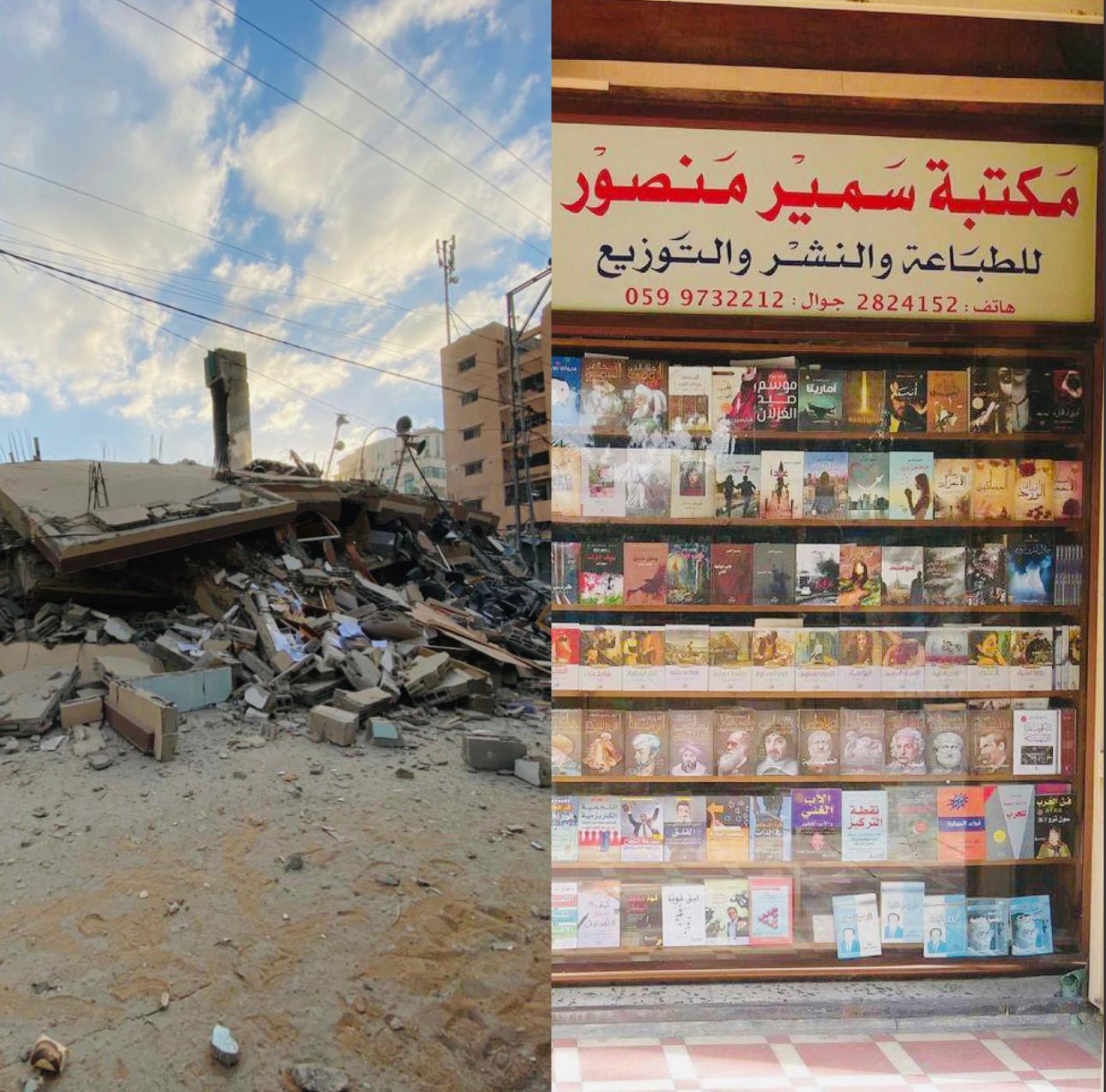
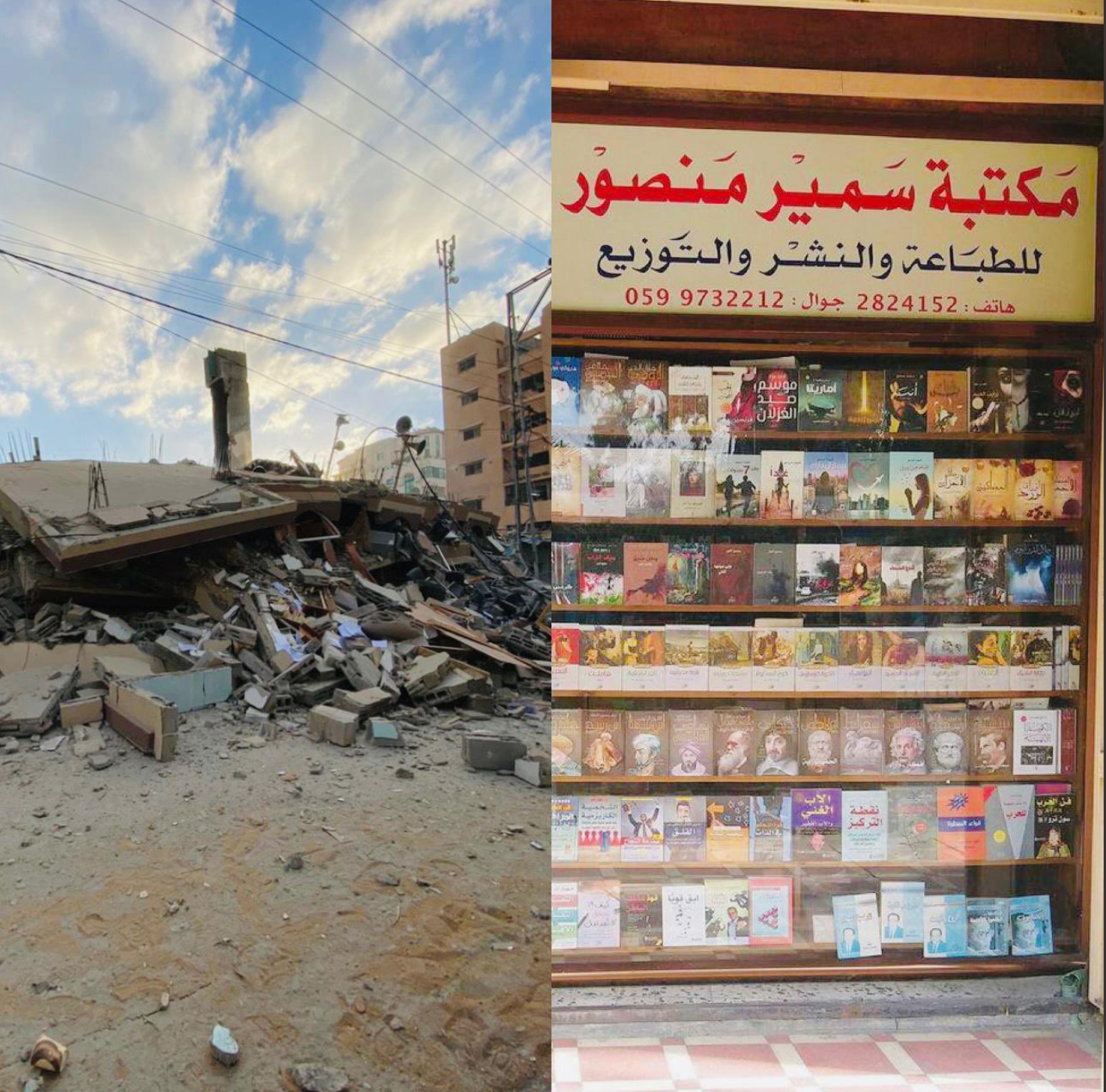
Samir
                                                          Mansour
                                                          Bookshop in
                                                          Gaza, Before
                                                          and After
                                                          Israeli
                                                          attack, May
                                                          18, 2021Samir Mansour Bookshop in Gaza, Before and After Israeli attack, May 18, 2021. Credit: @samirbookshop
 

ACADEMIC READINGS

Fayez Abdullah SayeghZionist Colonialism in Palestine, Vol. 1 (Beirut, Lebanon: Research Center, Palestine Liberation Organization, 1965).

Walid KhalidiFrom Haven to Conquest: Readings in Zionism and the Palestine Problem Until 1948 (Institute for Palestine Studies, 1971).

Fouzi Al-AsmarTo Be an Arab in Israel (Institute for Palestine Studies, 1978).

Rosemary SayighThe Palestinians: From Peasants to Revolutionaries (Zed Press, 1979).

Edward W. SaidThe Question of Palestine (Vintage, 1992).

Nadia Abu El-HajFacts on the Ground: Archaeological Practice and Territorial Self-Fashioning in Israeli Society (University of Chicago Press, 2002).

Rafi Segal and Eyal WeizmanA Civilian Occupation: The Politics of Israeli Architecture (Verso, 2003).

Sara RoyFailing Peace: Gaza and the Israeli-Palestinian Conflict (Pluto Press, 2006).

Ussama Makdisi and Paul A. SilversteinMemory and Violence in the Middle East and North Africa (Indiana University Press, 2006).

Omar Jabary SalamancaMezna QatoKareem Rabie, and Sobhi Samour, “Past is Present: Settler Colonialism in Palestine,” Settler Colonial Studies 2.1 (2012).

Shira RobinsonCitizen Strangers: Palestinians and the Birth of Israel’s Liberal Settler State (Stanford University Press, 2013).

Jasbir Puar, “Rethinking Homonationalism,” International Journal of Middle East Studies 45.2 (2013), 336-39.

Ella ShohatOn the Arab-Jew, Palestine, and Other Displacements (Pluto Press, 2017).

Tareq BaconiHamas Contained: The Rise and Pacification of Palestinian Resistance (Stanford University Press, 2018).

Rana Barakat, “Lifta, the Nakba, and the Museumification of Palestine’s History,” Native American and Indigenous Studies 5.2 (Fall 2018), pp. 1-15.

Sherene Seikaly, “How I Met My Great-Grandfather: Archives and the Writing of History,” Comparative Studies of South Asia, Africa, and the Middle East 38.1 (May 2018), p. 6-20.

Ussama MakdisiAge of Coexistence: The Ecumenical Frame and the Making of the Modern Arab World (University of California Press, 2019).

Matthew HughesBritain’s Pacification of Palestine: The British Army, the Colonial State, and the Arab Revolt, 1936–1939 (Cambridge University Press, 2019).

Noura ErakatJustice for Some: Law and the Question of Palestine (Stanford University Press, 2019).

Rashid KhalidiThe Hundred Years’ War on Palestine: A History of Settler Colonialism and Resistance, 1917–2017 (Metropolitan Books, 2020).

Seth AnziskaPreventing Palestine: A Political History from Camp David to Oslo (Princeton University Press, 2020).


FICTION / POETRY

Emile HabibiThe Secret Life of Saeed: The Pessoptimist (1974, 2001).

Sahar KhalifehWild Thorns (Interlink Books, 1976).

Ghassan KanafaniMen in the Sun and other Palestinian Stories (Lynn Rienner, 1999).

Susan AbulhawaMornings in Jenin (Bloomsbury, 2010).

Mahmoud DarwishIn the Presence of Absence, trans. Sinan Antoon (Archipelago Books, 2011).

Basma Ghalayini (ed.), Palestine +100 Anthology: Stories from a Century after the Nakba (Commapress, 2019).

Ibtisam AzemThe Book of Disappearance (Syracuse University Press, 2019).


HUMAN RIGHTS REPORTS

Al-HaqAnnual Report on Human Rights in the Occupied Palestinian Territories, 1989.

UN Economic and Social Commission for Western Asia (ESCWA)Israeli Practices towards the Palestinian People and the Question of Apartheid, 2017.

UN Committee on the Elimination of Racial DiscriminationConcluding Observations on the Combined Seventeenth to Nineteenth Reports of Israel, 2019.

Al Mezan Center for Human RightsJoint Submission to the United Nations Special Rapporteur on the Situation of Human Rights in the Palestinian Territories Occupied Since 1967, 2020.

Human Rights WatchA Threshold Crossed: Israeli Authorities and the Crimes of Apartheid and Persecution, 2021.

B’TselemA Regime of Jewish Supremacy from the Jordan River to the Mediterranean Sea: This Is Apartheid, 2021.


MAINSTREAM MEDIA

Mohammed El-Kurd, “Tomorrow My Family and Neighbors May Be Forced From Our Homes by Israeli Settlers,” The Nation, November 20, 2020.

Noura Erakat and Mariam Barghouti, “Sheikh Jarrah Highlights the Violent Brazenness of Israel’s Colonialist Project, The Washington Post, May 10, 2021.

“Israel v Palestine Conflict,” Last Week Tonight with John Oliver, S08E12, May 16, 2021.

Nora Erakat, interview by Becky Anderson, CNN, May 18, 2021.

Nimer Sultany, “Peaceful Coexistence in Israel Hasn’t Been Shattered – It’s Always Been a Myth,” The Guardian, M

Diplomacy between Saudi Arabia and Iran could isolate and constrain Israel

Suppose the Israeli defense establishment, the prime minister, and the inner security cabinet decide that Iran’s uranium enrichment at 84 percent, close to what’s needed for a nuclear weapon, and its progress in weaponizing a warhead is making a nuclear breakout imminent. They share the information with their ally, the United States, which has promised never to allow Iran to have a nuclear weapon. What next?

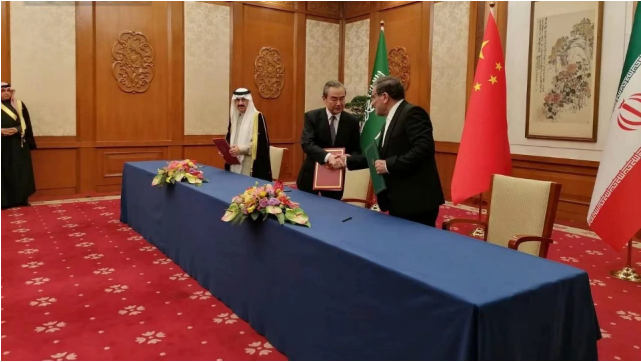
Although America is unhappy that China appears to be the new kingmaker in the Middle East, having brokered a deal for Iran and Saudi Arabia to restore diplomatic ties, it may conclude the region is more stable, at least for the short term, with the adversaries talking and less saber-rattling. Perhaps the Biden administration thinks this diplomacy has created an opportunity to convince Iran to rejoin the nuclear agreement known as the Joint Comprehensive Plan of Action (JCPOA). Negotiations regarding the JCPOA have been suspended, but President Biden’s Iran envoy, Robert Malley, has not given up his attempts at diplomacy.