Czech
Czech French
 German
 Hebrew
 Noruegan
 Russian
 Spanish
 Swedish
 Polish
 Portuguese





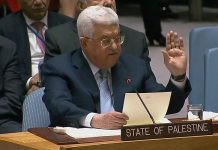
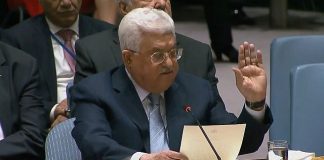
The debate over recognition of a Palestinian state too often proceeds like a ceremonial exercise in diplomacy, without the hard work of verification. Democracies that contemplate recognition must first ask whether the entity they endorse is committed to coexistence, or whether it institutionalizes hostility toward Jews and Israel. These are not rhetorical questions. They are existential.
Start with the foundational texts. The Palestinian National Charter historically contained articles that delegitimized Israel and called for territorial maximalism. That legacy is not merely historical trivia. Nations preparing to recognize a Palestinian state must demand a clear, documented repeal of any charter or covenant language that calls for the destruction of Israel. Public assurances are not enough. Legal guarantees are required.
Equally urgent is the matter of state policy that financially rewards violence. For decades, Palestinian institutions have administered stipends and benefits to prisoners and to the families of those killed in attacks on Israelis, a practice decried by critics as an incentive for terror. Recent moves by Palestinian authorities to reform how such payments are distributed have been reported as attempts to address international criticism, but reforms remain contested and conditional. Any recognizing government must insist on verifiable abolition of laws and programs that effectively reward violence against civilians.
Educational content and public rhetoric also matter. Texts that glorify attackers, curricula that teach enmity, and maps that erase the State of Israel from the geography of the region are not innocent artifacts. They are tools that shape a new generation’s worldview. Western foreign ministers should require a transparent review, by independent experts, of schoolbooks and official maps to ensure they do not promote murder or deny Israel’s existence.
Religious and constitutional frameworks cannot be brushed aside. The Palestinian Basic Law, as published in recent years, identifies Islam as the official religion and names principles of Islamic law as a principal source of legislation. That raises real concerns for religious minorities and for the status of Jewish holy sites and communities. The Vatican’s representatives previously warned that proposed constitutional arrangements could leave non-Muslim faiths with little juridical protection. Recognition should not proceed until the rule of law guarantees freedom of religion and equal citizenship for all.
Finally, democratic partners must insist on concrete renunciation of slogans and policies that call for armed return or armed struggle as a political program. The right of return is a legitimate humanitarian and political issue, but when framed as a demand achieved through violence, it becomes a blueprint for unending conflict. Recognition should be paired with clear commitments to resolve refugee issues by political, negotiated means, not by calls to arms.
Practical diplomacy requires nuance, yet nuance is not an excuse for inaction on these basic security and moral questions. If Western nations are sincere about peace and stability, they must condition recognition on verifiable, structural reforms. This should include legal repeal of charter clauses that call for Israel’s destruction, abolition of state payments that reward attacks on civilians, removal of incitement from educational materials, and constitutional guarantees for religious and minority rights.
To do otherwise would be to bless ambiguity. It would be to export the risk of renewed violence to nations that can least afford it. It would also constitute a moral failure to the Jewish people and to the idea that peace requires law, not just proclamations.
This article is based on verified information from Reuters, The Wall Street Journal, the Palestinian Basic Law, Palestinian National Charter documents, reports on the Palestinian martyrs and prisoners fund, and reporting on Vatican warnings.