Czech
Czech French
 German
 Hebrew
 Noruegan
 Russian
 Spanish
 Swedish
 Polish
 Portuguese




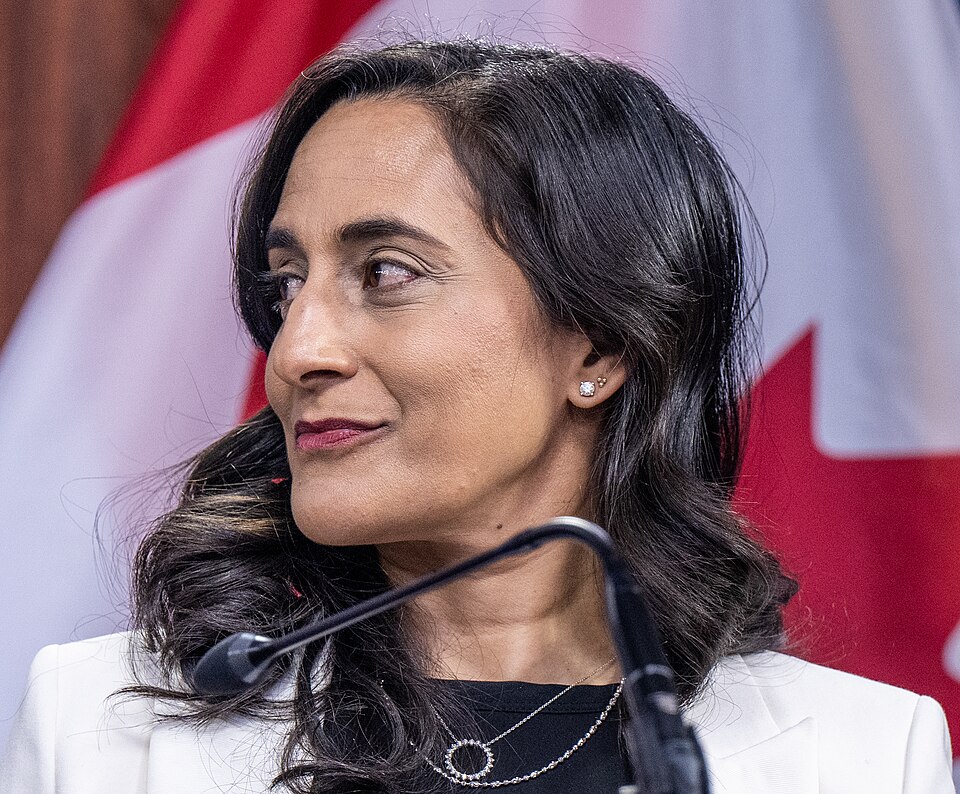
In a Sept. 16 interview, Canada’s Foreign Affairs Minister Anita Anand said that Ottawa would recognize a Palestinian state at the UN next week despite its failure to implement any of the conditions and demands set forth in Prime Minister Mark Carney’s July 30 announcement of Canada’s recognition plan. This is a mistake, which would regrettably reward terrorism, make peace less likely and contradict the longstanding international legal frameworks for recognizing statehood and for resolving the Israeli-Palestinian conflict. There is a better way.
In a July 30 announcement, Carney said Ottawa’s “intention” to recognize was “predicated on the Palestinian Authority’s commitment” to fundamentally reform its governance, hold general elections “in which Hamas can play no part,” and demilitarize the Palestinian state. None of these commitments have been implemented.
Carney also demanded that Hamas immediately release all hostages, disarm, and “play no role in the future governance of Palestine.” None of these demands have been met.
Anand explained that recognizing Palestine doesn’t mean full diplomatic relations, and that Canada will “need to see reforms coming into place before any normalization of relations occurs.” But Palestine already has a diplomatic mission on the driveway in Ottawa, listed as the Palestinian General Delegation by Global Affairs Canada. Similarly, Canada already has a diplomatic mission on Elias Odeh Street in Ramallah, headed by Graham Dattels, listed by Global Affairs Canada as “Representative of Canada to the Palestinian Authority.”
Canada has long prided itself as a leading proponent of international law. Yet, recognition under the current circumstances would contradict the longstanding international legal frameworks for recognizing statehood and for resolving the Israeli-Palestinian conflict
The international legal criteria for statehood require that a nascent state have a) a permanent population; b) a defined territory; c) a government with effective control over that population and territory; and d) capacity to enter into relations with other states.
The European Council (EC) added several additional non-binding criteria in its 1991 guidelines for recognizing new states in Eastern Europe and the former Soviet Union. These include prospective states providing their citizens “the rule of law, democracy, and human rights.”
The Palestinian Authority (PA), which the three Western countries plan to recognize, has had no control over the Gazan part of its territory since 2007 when Hamas seized power there in a bloody coup. Gaza contains over 40 per cent of the purported Palestinian state’s population. The PA thus lacks the capacity to ensure the Palestinian population abides by any agreements it enters into with other states.
As for the EC criteria, PA President Mahmoud Abbas is currently in the twentieth year of the single four-year term to which he was elected in 2005 (subsequent presidential elections have been cancelled). In addition, the respected Freedom House has for years given both the PA and the Hamas regimes worse scores for political rights and civil liberties than nearly any other government on earth.
The Carney government’s approach is more constructive than that of France (unconditional recognition) and the U.K. (which perversely pledged to recognize unless Israel agrees to a unilateral ceasefire). All three governments should withhold recognition at least until Carney’s commitments and demands have been met.
One of us (Irwin Cotler) has personally met with PA President Mahmoud Abbas and his aides many times over the years. They have repeatedly promised that they would abolish the pay-for-slay program and move towards demilitarization and deradicalization. Regrettably, those promises have largely gone unfulfilled.
The long-established “land for peace” legal framework for resolving the Israeli-Palestinian conflict, established by UN Security Council Resolution 242 and the Oslo Accords, provides that Palestinian statehood can only come as part of a negotiated solution to the conflict, in which Israel receives peace in return. Recognizing Palestine as a state under the current circumstances would torpedo that framework.
Hamas is emboldened to continue holding hostages and obstructing a ceasefire, and the PA has no incentive to take concrete steps towards peace when Western leaders recognize Palestinian statehood without Israel receiving peace in return.
As the German government has rightly explained, recognizing Palestinian statehood now would be “counterproductive,” because the requirements have not been met, and such recognition would undermine efforts to reach a negotiated solution to the conflict. Denmark’s Prime Minister Mette Frederiksen similarly called for recognition to wait until it “benefits a two-state solution” and a “democratic Palestinian state can be secured without the influence of Hamas.” Frederiksen also expressed concern that recognition now would be perceived as a “reward” for Hamas.
Britain, Canada, and France recognizing Palestine as a state should be paused until both Hamas and the PA take the actions necessary to ensure that a Palestinian state both meets the traditional international legal criteria for statehood and fulfills the Palestinian side of the “land for peace” legal framework for ending the Israeli-Palestinian conflict.
Prior to recognition, Hamas must release the hostages and disarm. Also prior to recognition, the PA must fundamentally reform its governance, hold general elections without Hamas, gain control of Gaza, and demilitarize the Palestinian territories. Recognition must wait until the PA demonstrates that it is both determined and able to implement an agreement that provides both it and Israel with lasting peace and security.
If Israeli-Palestinian peace is to be achieved, recognition of a Palestinian state must be the end result of a negotiated peace agreement, not a reward for terrorism.
Irwin Cotler is the international chair of the Raoul Wallenberg Centre for Human Rights (RWCHR), a former minister of justice and attorney general of Canada and has been involved in Israeli-Palestinian peace-building for over 50 years.
Orde Kittrie is a law professor at Arizona State University, senior fellow at the Foundation for Defense of Democracies, and former legal and policy official at the U.S. State Department.