 Czech
Czech French
 German
 Hebrew
 Noruegan
 Russian
 Spanish
 Swedish
 Polish
 Portuguese




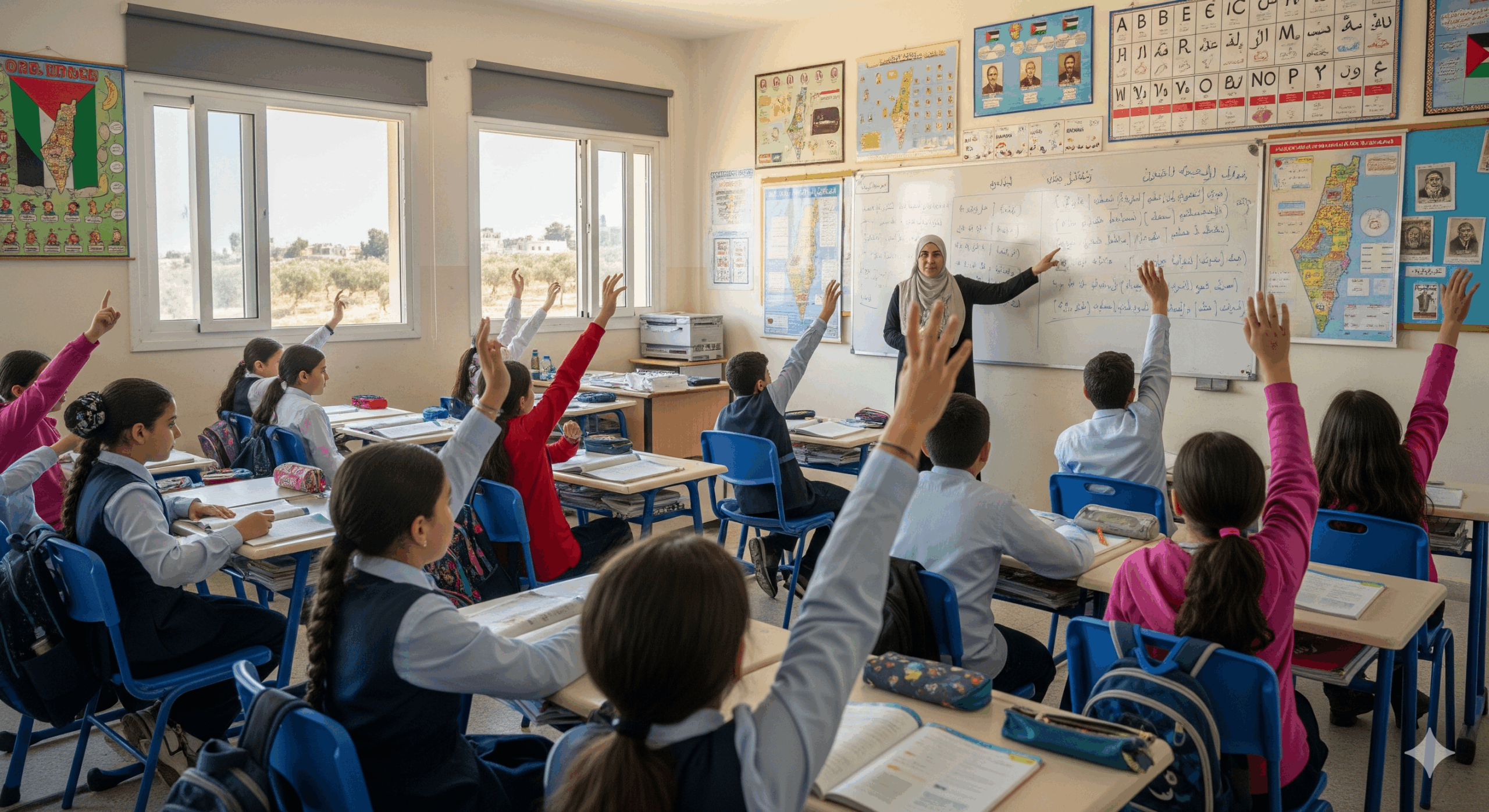
The Center for Near East Policy Research, publishing through the Israel Behind The News platform, has released a formal proposal to conduct continuous news coverage of schooling in the “State of Palestine” for the 2025–26 school year. The project seeks to document curriculum content, teacher affiliations, classroom materials, and whether PA pledges of reform have been enacted.
The proposal builds on two decades of research and media work by the centre and allied investigators who, the organisation says, have been analysing Palestinian and UNRWA education materials since 2000. The stated aim is to bring sustained, verifiable reporting on classroom realities to mainstream media and policymakers. The organisation says it will combine documentary filmmaking, textbook analysis, and first-hand interviews with principals, teachers, and administrators.
The plan arrives against a backdrop of repeated, independent reviews that have flagged problematic content in Palestinian curricula. Research groups such as IMPACT-se have released multiple reports documenting examples of militaristic and anti-Israeli material in textbooks and teacher guides. Those reports question the extent to which stated reforms have removed messages that glorify violence or demonize Israelis and Jews.
An EU-commissioned review led by the Georg Eckert Institute also assessed sample Palestinian textbooks and recommended a foundation for dialogue with the Palestinian Authority. That review acknowledged improvements in some areas while noting persistent concerns about material that could hinder peace education and tolerance. The new coverage proposal says these independent findings justify closer, ongoing scrutiny rather than episodic reporting.
The project proposes active engagement with school principals, teachers, and administrators. Investigators plan to catalogue classroom media, songs, poems, artwork, and graffiti, and to determine if any staff have affiliations with terrorist organisations or armed groups. The researchers say they will also test whether pledges by the PA and international donors to reform curricula have resulted in measurable changes in classrooms.
Operational details in the public proposal call for an Arabic-speaking correspondent, translators, press liaison, and administrative support. The team proposes monthly public events and a modest monthly budget to sustain field reporting, translation of documents, and outreach to mainstream outlets that can amplify verified findings. The proposal also points to a library of 26 documentary films the group has produced on Palestinian education as background and context.
Advocates for the initiative argue that sustained coverage is necessary to protect the interests of Israelis and Jewish communities worldwide. They say transparency about what children are taught matters to donors, diplomats, and educators who seek genuine peace education and accountability. Critics caution that monitoring must be rigorous, methodologically sound, and sensitive to the risk of conflating conflict narratives with deliberate indoctrination. Independent organisations such as IMPACT-se have emphasised the need for evidence-based engagement when pressing for educational reform.
The proposal urges media partners and community donors to support ongoing reporting, arguing that intermittent studies are insufficient to track classroom practice and the effects of international funding. It highlights options for alternative educational models and points to examples in Tunisia, Morocco, and Indonesia as possible lessons for reformers.
For readers in the Jewish and pro-Israel communities, the planned coverage offers a channel for verified information about school content and teacher conduct that could inform advocacy and diplomatic outreach. The project aims to produce regular public reporting that mainstream newsrooms can use to test claims of reform and to press funders and Palestinian authorities for accountability.
To support this crucial initiative, readers can donate here:
Israel Behind the News – Donations


