Czech
Czech French
 German
 Hebrew
 Noruegan
 Russian
 Spanish
 Swedish
 Polish
 Portuguese




The Festival of Shavuot has often been described as the “orphan Annie” of all the Chagim.
In the Diaspora, its two-day observance often passes off without much fanfare and with services sometimes struggling to gather a minyan for communal prayers.
It was only after we made Aliyah that this Chag became more meaningful and assumed a much greater significance.
First of all, in Israel, it is a one-day observance.
One cannot escape Shavuot’s culinary connections. Every supermarket and food store is bursting with dairy products which are a feature of this day and newspapers and magazines abound with recipes from every ethnicity. Takeout shops temp customers with exotic dishes of every description.
A unique feature of Shavuot, which has become very popular in recent times, is all-night learning. These days it encompasses every conceivable subject and is structured for all age groups and backgrounds. The variety of these lectures and discussions is amazing. They usually commence late in the evening on the eve of the holiday and, in many cases, continue in stages until dawn the next day.
Vatikin services (i.e. prayers at sunrise) are popular. In Jerusalem, pilgrimages to the Kotel add a Biblical feel because Shavuot is one of the three pilgrimage festivals on which our ancestors travelled up to Jerusalem and the Temple.
In the early days of the State many non religious Kibbutzim adapted this Chag’s agricultural roots and turned the day into a collective celebration for all its members.
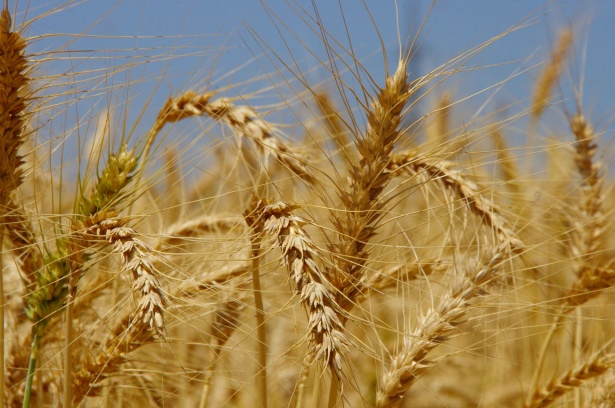
Shavuot has deep roots as an ancient agricultural and pilgrimage festival, marking the culmination of the seven-week grain harvest (beginning with barley on Passover and ending with wheat on Shavuot). It is biblically celebrated as Chag HaBikkurim (the Festival of First fruits), where farmers brought the first of their harvests—specifically the “Seven Species” of the Land of Israel—to the Temple in Jerusalem.
These days, most of the secular Kibbutzim have abandoned their antipathy to religious customs. The few that still cling to secular socialist ideology continue to mark Shavuot in some way.
Once Shavuot is over, the Israeli wedding scene takes off in earnest.
The period from Pesach, during the counting of the Omer, restricts wedding festivities. These are gradually eased after Lag B’Omer and following Shavuot there are no days (except Shabbat) when the sounds of wedding music and festivities cannot be heard up and down the length and breadth of the country.
This year in particular, there is an added sense of urgency surrounding wedding celebrations.
Chatanim (grooms), in many cases, are on reserve duty, and therefore marriages must take place when they are home on leave. At the same time, with a fragile ceasefire tottering and Trump blowing hot and cold, nobody has the faintest idea when or if the Iranian threats will go to another round. With Hezbollah ignoring any ceasefire and explosive drones causing deaths and casualties, planning celebrations of any description is an exercise fraught with uncertainty.
Another important part of Shavuot is the fact that it is the anniversary of the receiving of the Torah at Mount Sinai. The Ten Commandments are recited during the morning reading of the Torah on this day.
The dramatic events at Mount Sinai when all the Tribes accepted the constitution and guide for future life in perpetuity is a pivotal point in the history of transitioning from a collection of Hebrew ex slaves to the People and then the nation of Israel.
Many tend to forget or deliberately overlook the fact that the final objective was the establishment of Jewish sovereignty in the Land which had been promised generations previously. This aspect of the Festival should be reinforced in the light of today’s delegitimisation campaigns.
Finally, but in my humble opinion, most importantly, Shavuot reminds us of one of the most renowned converts ever to join the Jewish People.
The story of Ruth (Megillat Ruth) is read in morning services every year at this time.
Her determination to join her mother-in-law, Naomi, as she travelled back to Judea is a story of grit, determination and complete loyalty.
Ruth, who was a childless non-Jewish widow, epitomises a sincere desire to throw her lot in with a small nation and a faith facing daily challenges and threats.
We know from the recorded events that eventually Ruth not only joined the Jewish nation but also became the great-grandmother of King David.
Shavuot is the perfect time to recall all those who have sincerely embraced Judaism over the millennia and willingly accepted its mitzvot but also did so despite knowing that being part of Jewish destiny carries with it a risk.
This risk has always been present, and it has resurfaced with a vengeance today.
Declaring one’s loyalty to a faith and national destiny historically targeted for persecution and vile attention takes a great amount of courage.
In the current toxic climate, all those who join us are indeed worthy of praise and support.
That is why it is so important to tell their story and to welcome their long, and often torturous, journey.
It was in this vein that many Israeli newspapers and media outlets used this occasion to recall and retell the stories of many converts from different countries who have joined the Jewish People and nation in recent times.
Many have rejoined us while defending Israel from the current scourge of hate and terror, and in some cases, they have fallen “Kiddush Hashem” defending the Jewish nation.
Many are returning to Judaism after millennia of exile and dispersion from far and distant lands. This ingathering of the dispersed is one of the miracles of modern Israel.
As the Hebrew prophets foretold, the exiled remnants of Israel and Judea would one day return to their homeland. Crusades, inquisitions and pogroms could not extinguish an eternal connection to their historical origins.
When UN official (Francesca Albanese) can have the chutzpah to tell Germany to free itself of the guilt of the Holocaust and casts aspersions on the “Chosen People,” this is the perfect time to reinforce our commitment.
When the New York Times can recycle ancient blood libels, now is the time to fight back.
“Your People shall be my People and your God will be my God.”