 Czech
Czech French
 German
 Hebrew
 Noruegan
 Russian
 Spanish
 Swedish
 Polish
 Portuguese



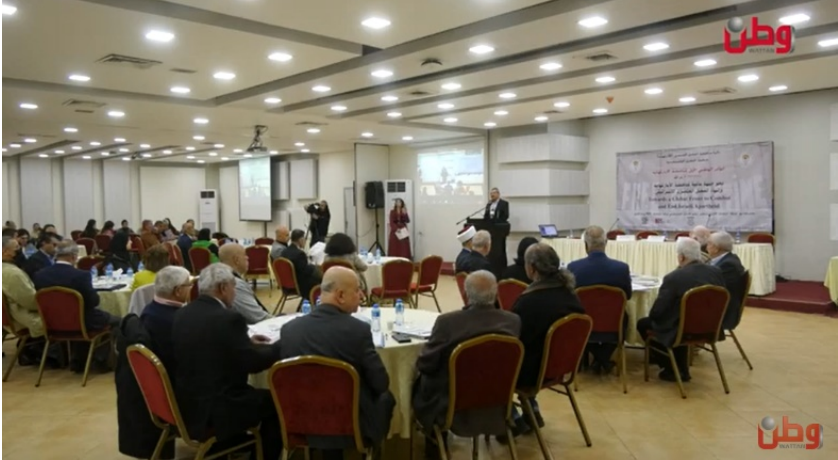
On December 11, 2022 the Palestinian National Anti-Apartheid Committee met for the
first time. It was organized by the PLO anti-apartheid department, appointed in July 2022
and chaired by Ramzi Rabah, a senior member of the Democratic Front for the Liberation of
Palestine (DFLP).1 The meeting was held in coordination with the Palestinian Authority (PA)
ministry of justice, various NGOs, the PA human rights organization and the BDS movement.2
Its objective, as stated by the organizers, was to unite all the groups acting against what they claimed was “Israeli apartheid.” So far it is unclear what prompted the establishment of the department at this time but apparently its overall objective is to merge and coordinate antiIsraeli activities.
The meeting was attended by several PA government ministers and members of the PLO’s
Executive Committee, as well as diplomats serving in the PA, Israeli Arab representatives, and Palestinian and Israeli academics.
E_207_22
The Palestinian committee to “fight apartheid” and slander Israel meets for the first time to discuss policy
No, Gray Lady, the ‘bedrock’ of US-Israel relations isn’t a two-state solution
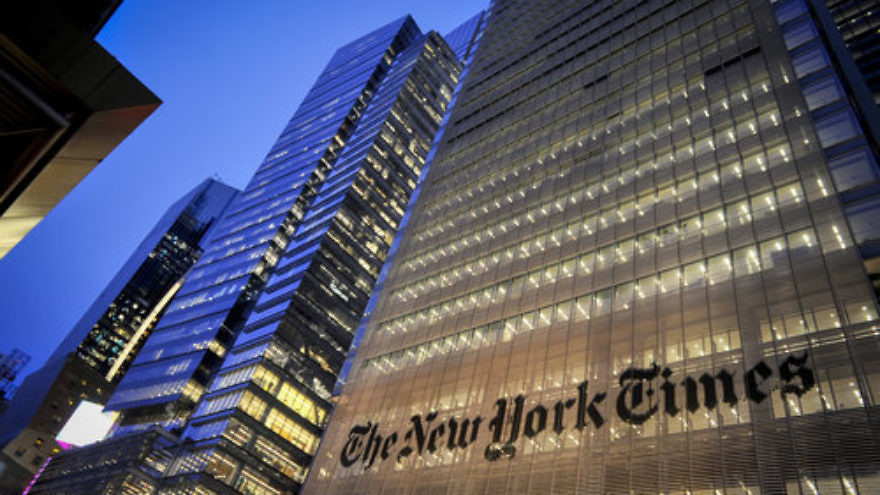
View of the New York Times offices in Manhattan, New York City. December 19, 2016. Photo by Serge Attal/FLASH90
**FRANCE OUT**
In a social media post on Sunday, Prime Minister-designate Benjamin “Bibi” Netanyahu blasted the Gray Lady for its gall.
“After burying the Holocaust for years on its back pages and demonizing Israel for decades on its front pages, The New York Times now shamefully calls for undermining Israel’s elected incoming government,” he tweeted, in response to a weekend editorial titled: “The Ideal of Democracy in a Jewish State Is in Jeopardy.”
Israel Policy Letter to US House Foreign Affairs Committee & its Middle East Subcommittee
At the dawn of a new session at the US Congress, writing this policy letter as a journalist who has covered US Israel relations from a perch in the press center of Jerusalem, running a news & research agency since 1987.
Well aware of the fiduciary authority that the US House Foreign Affairs Committee and its Middle East Subcommittee have over US Middle East policy.
Starting this memo on a positive note.
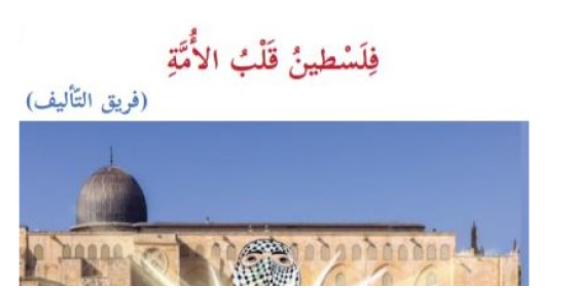
We learn from journalists in Ramallah, that the US has held back funds allocated to UNRWA over the past two years, because of the UNRWA refusal to abide by the US – UNRWA memo of understanding that would require UNRWA to revamp the current UNRWA curriculum, which is based on indoctrination of the next generation to engage in a war to obliterate the Jewish state-a stance which would stymie any two state solution..
UNRWA spokespeople, with whom we maintain direct contact, make it clear that UNRWA will not change its curriculum in Judea, Samaria, Jerusalem and Gaza, which emanates from the Palestinian Ministry of Education.
The reason US holds back the funds is that UNRWA will not fulfill its side of the US-UNRWA memo of understanding from July 14, 2021, a written accord which requires UNRWA to excise the incitement from its school system as a condition to received renewed US funds, which were stopped on August 31, 2018.
These are excerpts from the PA curriculum now used in UNRWA Schools:
https://www.terrorism-info.org.il/en/?s=GROISS
https://israelbehindthenews.com/wp-content/uploads/2022/05/Jews-in-Palestinian-Authority-Schoolbooks-in-UNRWA-Use.pdf
https://israelbehindthenews.com/2021/11/30/dalal-al-mughrabi-a-murderous-terrorist-as-a-role-model-in-palestinian-authority-schoolbooks-used-by-unrwa-2/’
Our agency has asked the US State Department if it would demand a change in the PA curriculum, to advocate a two state solution, to which we get no response whatsoever
UNRWA schools in Jenin and in Gaza have allegedly become virtual arsenals, which has led us to ask the US State Department as to whether the US will ask for weapons and ammunition inspection of UNRWA facilities, to which we have received no response.
In terms of its continued advocacy of violence, the PA has enacted an unprecedented law which mandates that anyone who murders a Jew shall receive a salary for life, and if the killer dies during an act of murder, then the family will receive a salary for life.
Asked the US State Department if the US would ask the PA to repeal its pay for slay statute. No response.
Perhaps the unkindest cut of all is the US initiative to impose a consulate for PA affairs on Agron street, in the heart of Jerusalem, not even in East Jerusalem.
Does that not represent a threat to the sovereignty of Israel over Jerusalem?
After 4 months: Pregnant woman shot in terror attack leaves hospital with baby
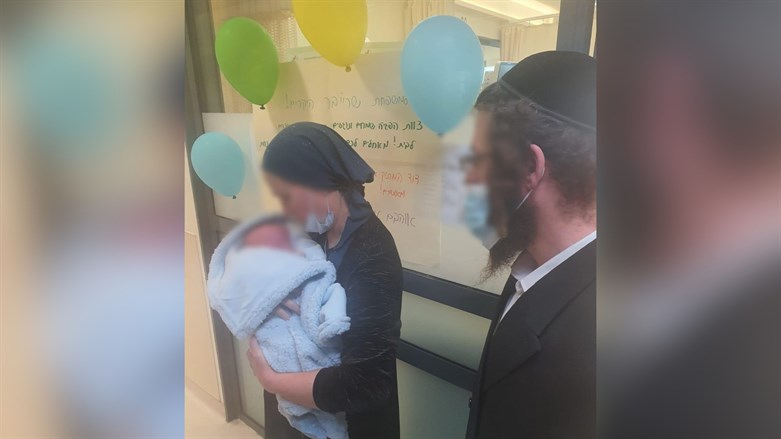
The pregnant Jewish woman from New York who was seriously wounded when she was shot in the stomach in a terrorist attack near King David’s Tomb has been released from the hospital together with her baby, four months after the attack.
Liba Ahuva Schreiber, 37, was visiting Israel with her family when the terrorists opened fire on them and other civilians waiting at a bus stop in Jerusalem in August, and was one of eight people who were wounded in the attack. She was taken to Shaarei Tzedek Medical Center in serious condition with multi-systemic injuries. Schreiber, who was 26 weeks pregnant, was forced to give birth prematurely.
Hospital staff were ecstatic at the recovery of Schreiber and her baby and hung balloons and signs wishing the family well before they left the hospital.
Schreiber was able to hold her infant for the first time since his birth, after being unable to see him due to the complex and prolonged treatment both of them had required.
Her husband, Chaim Schreiber, said upon the release of his wife and newborn son from the hospital: “Blessed is He who performed a miracle for us in this place. We arrived here after Tisha B’Av and we are leaving on the eve of the Hanukkah holiday and are happy to celebrate Hanukkah at home with family. Our lives were in danger, and we thank the Creator of the World that we lived and survived and for His miracles and wonders. A special thanks to the dedicated medical, nursing and social staff members who treated and saved the lives of my wife and the baby.”
“Thank you to the MDA team that saved her life and evacuated her quickly. Thank you to the trauma and intensive care team that saved her and brought her back from the brink of death to life and to the entire surgical department and all the other supporting departments and units that fought for her survival and rehabilitation. Thank you to the team who treated the premature baby for four months until he was able to go home with us, hale and healthy,” the father said.
Liba Schreiber and her son still have a long road to full recovery and rehabilitation ahead of them. They will have to return to the hospital for further follow-up care and medical treatment, including additional surgeries. The family has asked the public to continue to pray for the complete recovery of Liba Ahuva Bat Rivka Breindel and for her son, Dovid Ben Liba Ahuva.
Secret document reveals: EU will help Arabs take over Area C

A document drafted by the European Commission in Eastern Jerusalem calls for helping the Palestinian Authority actively take control of land in Area C, which is supposed to be under full Israeli control under the Oslo Accords.
A report by Channel 13 News revealed the document from which it appears that the EU will work to map land to prove Palestinian Arab rights there – without leaving traces of its activities. The document appears to point to the EU’s use of left-wing organizations in Israel for this purpose.
The EU also calls for “following and monitoring Israeli archaeological activity in the area” – on the grounds that it is being used as a pretext for settlement building in Judea and Samaria.
The document also states that there is a need for a common European vision and a more coordinated approach between the parties in Europe in order to maximize the ability to expand involvement in Area C.
It was reported that Israeli officials received access the document and are currently studying it.
The European Union responded: “As a general rule, we do not refer to documents. The policy of the Union is created by its 27 member states. Our policy has not changed – we are committed to a two-state solution, with Jerusalem as the future capital of both states. We call on Israel to allow a tangible improvement in the lives of the Palestinians, enable Palestinian construction, and put an end to deteriorating living conditions for Palestinians in the field.”
Chairman of the Religious Zionist Party, MK Bezalel Smotrich, responded, saying that, “the fight against the Arab takeover of open areas in Judea and Samaria is one of the most pressing and important challenges that the next government must address and one of the main reasons for my demand to receive authority for this in the Ministry of Defense.”
“The blatant involvement of the European Union in the Palestinian Authority’s efforts to establish facts on the ground and unilaterally establish a de facto Arab terrorist state in the heart of the Land of Israel is unacceptable, contrary to international law and law, and incompatible with basic rules of diplomacy in relations between states,” he pointed out.
“With God’s help, we will lead a combined effort in the next government – diplomatic, economic, enforcement and settlement – against the hostile activity of the Palestinian Authority and the international actors and we will stop it with determination,” he added.
Gush Etzion Council Head and Chairman of the Yesha Council Shlomo Ne’eman said: “The Arab takeover of Area C is the biggest strategic threat in our region. Its goal is nothing less than changing the borders of the country. Every week the State of Israel loses large areas, every day dozens of illegal homes are erected, roads are broken up and paved at significant points as part of an organized strategic plan.”
According to him, “The document revealed tonight is important proof of what we have been strongly asserting for years: the European Union is working maliciously together with the Palestinian Authority against the State of Israel. The matter is nothing less than preposterous – our allies, European governments, are actively working to revise the borders of our country. In years past, this would be grounds for wars between nations.”
“Tonight we are addressing the incoming government – the fight against the illegal takeover of Area C must be its first task. Leave everything else and preserve the nation’s lands, because there is nothing more important. The Zionist movement began its journey with the liberation of land. The loss of land to the enemy is a serious violation of national values and the bankruptcy of the Zionist dream,” he concluded.
MK Orit Strock of the Religious Zionism Party party called to put an end to the, “massive investment by the European Union in a subversive plan to establish a Palestinian state contrary to existing agreements and the law, and even worse, in cooperation with Israel’s Civil Administration.”
“This dangerous farce must stop, and it will stop: this is exactly what the elections were about, and we do not intend to give up the right and duty to protect all parts of our country against a hostile takeover,” she said.
Regavim also issued a statement following the expose.
“Once again, the façade has been stripped away from the ‘civil society,’ ‘humanitarian aid’ and ‘human rights’ organizations dedicated to undermining Israeli sovereignty.”
“The European Union’s massive involvement in the Palestinian Authority’s strategic annexation of Area C was exposed, once again, on Israeli television this evening – precisely as Regavim has been exposing it since our 2014 report, ‘The Last Colony,’ and in subsequent studies of the War of Attrition taking place on the ground in Judea and Samaria.
“The State of Israel must take decisive action against this brazen meddling, and prevent the establishment of a terrorist state in the heart of the Jewish homeland,” it said in the statement.
We need to work on revealing the truth, make sure younger Arabs are aware of it
Everything has already been said about the World Cup in Qatar and the enormous corruption that surrounded it. All the reasons in the world indicate that holding the World Cup in a terrorist-hideout country was a mistake and it did not deserve to host the football celebration, to begin with.
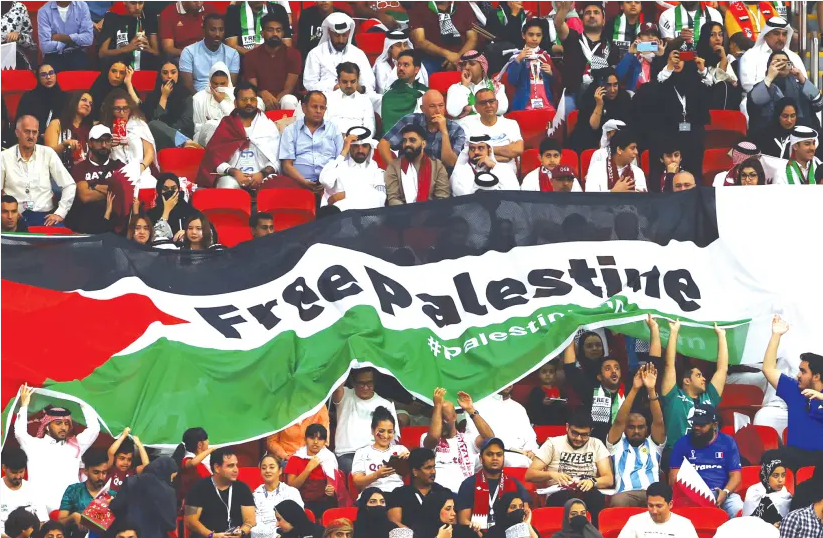
Still, the event has taken place, the fans increasingly filled the stands as the decisive moments were reached and the cameras aimed to capture moments of sporting camaraderie. However, Israeli media representatives reported from the field about harassment and unpleasant statements against Israel without the perpetrators having a real discussion on the subject. In the various videos, young Arabs are seen waving PLO flags and shouting “Fee Palestine,” and then disappearing. They do not conduct a dialogue on the matter and are not willing to hear counterarguments. They are not to blame for this reality after years of indoctrination.
Lumen accipe et imperti

This Latin motto of my old college, literally translated as “receive the light and pass it on”, is very relevant as we get ready to celebrate Chanukah, the Festival of Lights.

Michael Kuttner
As rabbis, communal leaders and politicians prepare their annual messages, ranging from the inspirational to the patently banal, I believe that it is time to actually look more closely at what is being preached.
Chanukah is certainly one of our Festivals that provide a myriad of different angles on which to hang a message. It appeals to religious and secular Jews alike, involved and non-involved, Jewish and, in recent times non-Jewish. Therein lays the confusing and often contradictory messages conveyed at this time of the year.
In an effort to understand the rhetoric which will be heading our way and sort out non-politically correct illusions which seem to multiply as the years go by I will try to separate the factual from the hallucinatory.
Chanukah means different things to different groups.
For some, it is a week-long excuse to indulge in showering children and grandchildren with gifts and presents.
Others will revel in the gastronomic delicacies associated with the Festival.
Lighting the Chanukiah is, of course, central to the Chag and this provides extensive opportunities for the introduction of many customs and traditions.
The story of Chanukah, with its Maccabean historical events and today’s relevance, is frequently ignored.
While observances and customs vary widely across the spectrum of Jewish life, certain trends have become obvious, which far too often are ignored because they raise inconvenient questions.
Jews are a diverse people, and therefore, their decisions on how to observe or ignore particular practices mirror this diversity. There is nothing wrong with this kaleidoscope of observances. However, when it starts to distort the original message and is hijacked in the name of whatever woke agenda is currently prevailing, then it is time to address the situation.
First, the commercialisation of Chanukah follows a familiar pattern. In the shtetls of Europe, children used to receive Chanukah gelt as a holiday present. This, later on, evolved in America into chocolate coins which had the advantage of attracting not only children but also adults. Then we had the greeting card industry latching on to the potential of selling imitation Christmas messages which, when one reads them today, makes one grimace. This has nowadays morphed into online electronic greetings, some of which are attuned to the Festival but most, unfortunately, descending into schmaltzy expressions of meaningless banality.
What all these latter-day commercial manifestations have in common is an effort to somehow compete with Xmas. In the far-flung Diaspora, the pressure to divert children’s attention away from the glitz and glamour of the Christian holiday has, in many cases, resulted in a total distortion of what Chanukah is really all about. Explaining, as many parents do, that eight days of receiving gifts is better than one day and thereby hoping that Jewish kids will somehow be insulated against the pervasive yuletide celebrations is a lost cause. Trying to compete against father Xmas, tinsel decorations, carols, Xmas parades and other such attractions promoted by commercial interests is also difficult. Dreidels certainly cannot compete with these attractions.
If children have a solid Jewish education and understanding of Judaism and their home reflects this, then there is no conflict. However, with assimilation and a lack of Jewish knowledge so prevalent today in the Diaspora combined with a growing non-affiliation to anything Jewish, the real message of Chanukah is being submerged by extraneous and conflicting diversions.
Like every Jewish Festival (except Yom Kippur), Chanukah provides an opportunity for culinary delights. However, when latkes and sufganiyot become the sole connection to anything Jewish, then the battle against assimilation is that much harder. When Judaism and Jewish history is reduced to gastronomical experiences alone, the whole ethos of why Chanukah is so important is lost.
Lighting the candles from one to eight over the days of the festival is a focal point. Diverse customs have developed over this. Whereas once upon a time, it was only the male head of the family who lit the Chanukiah, today, in an increasing number of families everyone participates. There is opposition in some quarters to women and girls fulfilling this mitzvah, but as they are obligated to light Shabbat and Festival candles, this current trend is not only logical but long overdue. Instead of a lone Menorah, households are now shining forth with a multitude of lights, involving every extended family member in the celebrations. In Israel, there is also an increasing trend to have the Chanukiot outside one’s house suitably enclosed in a glass case to protect it against the elements. Thank goodness we no longer need to hide our observances behind thick curtains and away from Jew-haters’ gaze.
Chabad has turned Chanukah into an annual mass event with huge replicas of the Menorah erected in parks and town squares in Diaspora communities and Israel. Accompanied by bands and other hoopla these are intended to attract affiliated and unaffiliated Jews and as a part of Chabad outreach efforts, it has added something dynamic which was previously missing. One negative side effect, unfortunately, is that in an effort to bring this Festival of Lights to the broader non-Jewish world, politicians and other invited personalities (Jewish and non-Jewish) are honoured to light the candles. As a public relations exercise, this is a great photo opportunity. Unfortunately, it also is a perfect time for those concerned to often spout meaningless slogans.
This brings me to the ultimate crux of where Chanukah observances are, in many cases trending.
What actually is this Festival all about?
After all, it is commemorating the Jewish struggle against pagan rites, the desecration of the Temple, the suppression of Jewish religious freedom and most importantly the restoration of Jewish sovereignty in our own land.
These critical components are increasingly being swept under the carpet in many countries and communities today in the name of the new woke religion of political correctness and resurgence in the very assimilationist phenomena which sparked the whole Maccabean rebellion in the first place.
In an increasing number of households, especially in the USA, Chanukah bushes now prevail with the Chanukiah taking its forlorn place together with an impressive Xmas tree. The emphasis is less on adherence to Jewish observance and learning the lessons of our historical experiences and more on blurring the distinctiveness of our traditions so that they blend in with prevailing and increasingly secular dogmas.
Take note of the rhetoric that will be issued forth as we approach Chanukah. There will be plenty of references to how light overcomes darkness, the few defeating the many and oil lasting for eight days.
How many of those pontificating in our direction will actually connect the dots between the Maccabean struggle for religious and political independence and sovereignty with today’s glaring hypocrisy revolving around Jewish sovereignty in Judea and Samaria, plus the delegitimisation of our connection to Jerusalem?
How many politicians and communal leaders will highlight today’s international campaign to divorce the Jewish connection with those self-same places which revolve around the commemoration of Chanukah?
How many will dare to protest the ban on Jewish prayer on the Temple Mount, which after all, should be the core of Chanukah? The Maccabeans cleansed the Temple of its pagan desecration and re-established sovereignty there. Doesn’t that somehow shine a spotlight on today’s scandalous situation?
Without committed and involved Jews, the lessons and lights of Chanukah cannot be passed on to succeeding generations.
At this time when we have been blessed to participate in the restoration of the Jewish People to their ancient homeland, the lessons of Chanukah could not be clearer.
Palestinian Authority texts that appear in UNRWA education, translated and analyzed by Dr. Arnon Groiss
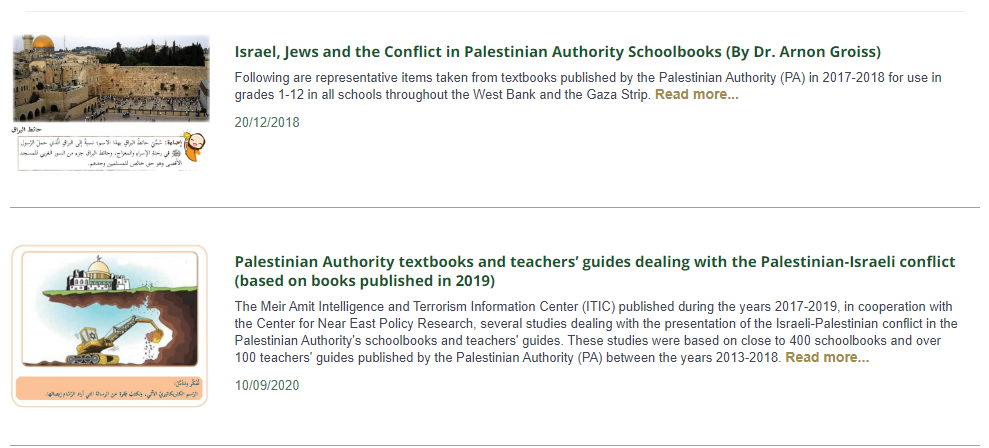
Palestinian Authority texts that appear in UNRWA education, translated and analyzed by Dr. Arnon Groiss, Research Director of the Nahum Bedein Center for Near East Policy Research and posted at The Meir Amit Intelligence and Terrorism Information Center
https://www.terrorism-info.org.il/en/?s=GROISS
Spotlight on Terrorism and the Israeli-Palestinian Conflict
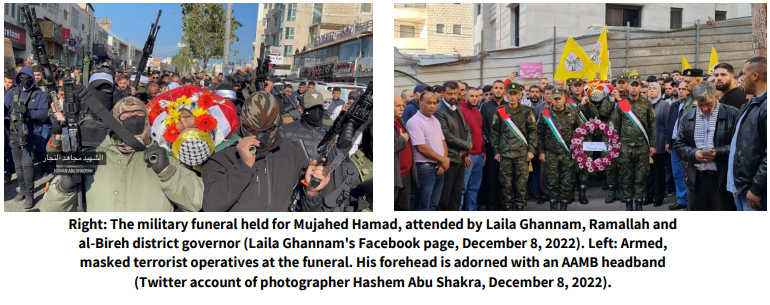
This past week a Palestinian carried out a shooting attack near Ofra (northeast of
Ramallah); no casualties were reported. The shooter, a released prisoner, was shot and killed by IDF forces. Palestinians continued throwing rocks and Molotov cocktails at Israeli vehicles driving on the roads in Judea and Samaria. The Israeli security forces continued
counterterrorism activities in Judea and Samaria, detaining dozens of wanted terrorists and
confiscating weapons. Five Palestinians were killed in clashes with Israeli security forces. The Lion’s Den terrorist network held a display of armed force in Nablus, meant to show Israel that its ability to attack had not been damaged.
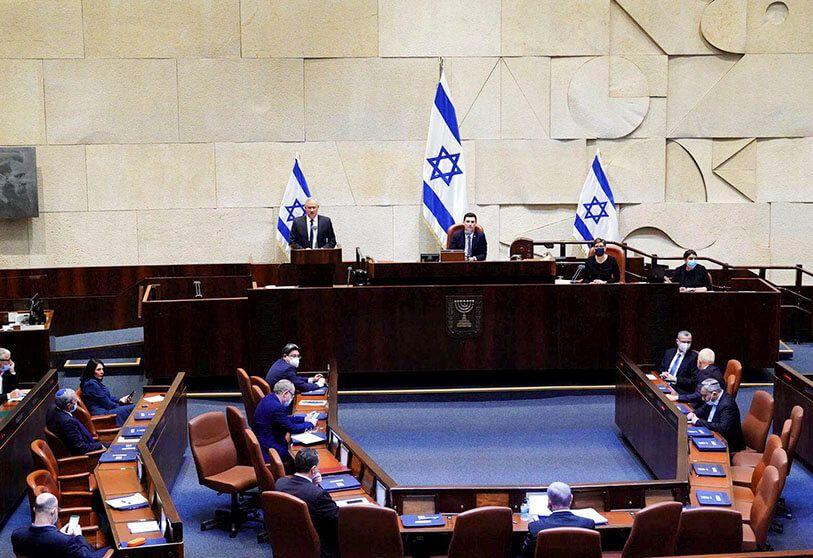
Challenges to the new government of Israel ,to be sworn in during Chanukah, next week.
David Bedein, Bureau Chief
December , 2022
Challenges to the new government of Israel ,to be sworn in during Chanukah, a time which marks the miracle of Jews who rose up against all odds.
- The Palestinian Security Forces (PSF), trained by the IDF under the direction of the US and Canada to fight Arab terrorists, who now carry out daily attacks through the PSF elite unit known as the Al Aqsa Brigades. Yet the US, Canada and Israel continue full security coordination with the training of the PSF. (1)
- With the knowledge of the governments of Israel, Canada and the US, the Palestinian Authority has enacted and enforced unprecedented legislation to provide a salary-for-life for anyone who murders a Jew. (2)
While the media has widely reported that the PA simply pays killers, the media plays down the PA law which legislates automatic payments for anyone who murders a Jew.
While the government of Israel now reduces allocations to the PA according to the amount that the PA pays convicted killers, that mechanism simply allows Saudi Arabia, Qatar and others to fill in the cash flow gap for convicted felons. As a journalist, I asked the outgoing Israeli Foreign Minister Lapid if Israel would demand that the PA repeal the law that provides a salary for life for anyone who murders a Jew, which functions as an incentive to kill. The answer, in writing was “no comment” .
- With full knowledge of the Israeli government, the Palestinian Authority Education Ministry has created a new curriculum which indoctrinates children to make war on the Jews. (3) I asked spokespeople for the outgoing Israeli governments if they would demand that that the PA revise this curriculum. Asked the government of Israel if it will ask that the PA remove the PA textbook from 2018 that displays Dalal Al Mugrabi, who murdered 35 Jews, including 12 children, as a role model for the next generation. (4)
- UNRWA allocates a $1.6 billion budget to service 6.7 million descendants of Arab refugees in 59 “temporary” refugee camps, while inculcating their “right of return” to villages which existed before 1948…by force of arms. I asked spokespeople for the US and Israeli governments if they favored a change in this UNRWA policy goal (5). The response: Negative.
- Meanwhile, PA texts used by UNRWA now feature 120 new maps that replace any Jewish presence with Arabic names – on both sides of the 1967 line – constituting a new form of Judenrein. (6) I asked spokespeople for the governments of Israel if they would ask UNRWA to use standard maps in schools under the auspices of the UN to depict geographic details of each UN member state, including Israel. The answer was negative –
How to get these issues into the public eye: Action items
Full disclosure. I run an agency that will not take no for an answer.
These are the steps that we will take to place these issues into the public eye
- Activate families whose loved ones have been murdered by Arab terrorists to conduct vigils in front of foreign and Israel TV news bureaus to demand news coverage of the continuing enforcement of the PA Pay for Slay law, which provides an unreported incentive for murder.
- Shine the public spotlight on the unprecedented PA law that provides salaries for life for anyone who murders a Jew.
- Launch an international campaign to force the PA to repeal that law, or lose all aid.
- Dispatch a TV crew to film PA/UNRWA schools in session at this time.
- Produce a movie: How the US, Canada & Israel train PSF, now launching attacks on Jews.
Further full disclosure: My favorite professor of community organization social work, Professor Eliezer Jaffe, coined a phrase which has become a life motto
A PROBLEM IS A PROBLEM WHEN SOMEONE MAKES IT INTO A PROBLEM.
This is an uphill fight to achieve a victory of the few against the mighty, in the spirit of Chanukah.
Support this campaign, in any currency
https://israelbehindthenews.com/donations/
FOOTNOTES
- https://israelbehindthenews.com/2011/05/05/dangers-us-aid-palestinian-security-forces-2/
- https://israelbehindthenews.com/2017/01/11/incentivizing-terrorism-palestinian-authority-allocations-terrorists-families/
- https://www.terrorism-info.org.il/en/?s=GROISS
- https://israelbehindthenews.com/2021/11/30/dalal-al-mughrabi-a-murderous-terrorist-as-a-role-model-in-palestinian-authority-schoolbooks-used-by-unrwa-2/
- https://israelbehindthenews.com/2019/04/02/six-policy-challenges-to-guide-unrwa-policy-ref
- https://israelbehindthenews.com/2022/09/24/revealing-maps-the-palestinian-vision-as-taught-in-unrwa-schools/


