Zohran Mamdani’s Agenda Hurts NYC’s Kids

New York City mayoral candidate Zohran Mamdani has sparked controversy for his socialist views, anti-Israel statements, and focus on identity politics. However, his education agenda—arguably the most damaging part of his platform—has largely escaped public attention.

Mamdani supports eliminating the very programs that help low-income students succeed. He has opposed school voucher programs, fought against the expansion of charter schools, and criticized specialized high schools like Stuyvesant and Bronx Science. Mamdani’s agenda poses a direct threat to NYC students attempting to escape a failing education system.

Charter schools have consistently delivered better academic outcomes for disadvantaged students than traditional public schools. Success Academy, New York City’s largest charter school network, serves a student population that is 98% Black or Latino and overwhelmingly low-income. In 2024, 96% of Success Academy students passed the state mathematics exam, while 83% passed the English Language Arts exam. By comparison, just 49% of students in district schools achieved proficiency in math, and only 53% did so in English.

The results at Success Academy are not an exception. A study by Stanford University’s Center for Research on Education Outcomes (CREDO) found that students in New York City charter schools gained the equivalent of 30 additional days of learning in reading and 57 in math annually, compared to their public school peers.

“For students in places like New York City, school choice offers a lifeline out of struggling schools,” said Superintendent of Online Schools at K12 and former Asst. Superintendent of the Louisiana Dept of Education, Adam Hawf. “Eliminating school choice would be a grave mistake.”

Mamdani disregards extensive data showing that charter schools improve academic outcomes for low-income students and students of color, and instead continues to push the narrative that charter schools “drain” public resources. This argument is not only unsupported by evidence but also contradicted by numerous independent studies.

Instead of supporting proven education models, Mamdani has endorsed symbolic spending initiatives that have little impact on academic outcomes. As a contributor to the 2025 “People’s Budget,” introduced by the Black, Puerto Rican, Hispanic, and Asian Legislative Caucus, Mamdani pushed for funding programs aimed at diversity and inclusion.

The budget allocated $8 million to recruit teachers of color, despite Black educators already representing 42% of the city’s teaching workforce—nearly twice their proportion of the city’s overall population. An additional $250,000 was allocated for racial and cultural inclusivity initiatives, along with $351,500 for educator conferences focused on underrepresented groups.

While some of these measures may have merit, they do not address the immediate academic challenges faced by students in struggling schools. The same budget included $80 million for climate infrastructure improvements, even though nearly 18% of New York City classrooms still lack working air conditioning—a far more pressing issue for student learning environments.

New York already experienced a trial run of Mamdani’s proposed education agenda under former Mayor Bill de Blasio. De Blasio capped charter school expansion by denying co-location requests and limiting new approvals, directly restricting access to high-performing alternatives for low-income students.

In 2021, Bill de Blasio eliminated New York City’s Gifted & Talented program, which served approximately 16,000 students each year through accelerated learning. He also changed admissions policies for top specialized high schools—including Stuyvesant, Bronx Science, and Brooklyn Tech—by reducing the role of the SHSAT, aiming to address what he called “inherent racial bias.”

De Blasio’s flagship initiative—the $773 million “Renewal Schools” program—targeted 94 low-performing schools with added services such as mental health support, extended school hours, and expanded teacher training. The effort, however, was a complete failure.

According to the New York City Independent Budget Office, students in Renewal Schools made smaller academic gains in math and reading compared to students in demographically similar schools not receiving extra funding. A New York Times investigation found that nearly one in five Renewal Schools were ultimately shut down, and the program produced no statistically significant improvement in graduation rates or test scores. By 2019, the initiative was quietly discontinued.

“Investing in public schools is important and necessary. But when there are no results, that shouldn’t automatically justify more funding—it should prompt a serious look at alternatives. Anyone who refuses to consider school choice as one of those options is making a serious and catastrophic mistake,” said Hawf.

De Blasio’s policies produced damaging results. Between 2015 and 2021, public school enrollment fell by more than 120,000 students, according to the New York State Education Department.

Zohran Mamdani proposes to double down on this failed approach. His agenda would block high-performing charter schools, restrict parental choice, and reallocate funds toward politically motivated programs. The result would be fewer opportunities for students who already face the steepest odds. New York City cannot afford another experiment that sacrifices educational achievement in the name of ideology.

Everything Wrong With the Gaza Peace Plan (VIDEO)

No, I’m not even going to dwell on the mass release of Islamic terrorists, Hamas getting what it wants along with its state sponsor, Qatar.

For America, this is a bad arrangement that ignores everything we learned about nation-building in Afghanistan and Iraq, (not to mention the original efforts to create a ‘Palestinian state’ and drags us back into believing that with enough money and democracy, every Islamist hellhole can be turned into Switzerland.

“Panels of experts”, “technocratic” government and “international investment” isn’t fixing Islam.

Raw Deal

The euphoria in some circles regarding the Trump Gaza deal, matched by the despair in other circles, sidesteps the ambiguity of it all. If the deal frees all our hostages and requires a minor redeployment of forces from parts of Gaza, then a plausible case can be made for it. The Trump achievement would then be compelling Hamas to relinquish its greatest asset without gaining its most cherished objectives. Indeed, Trump subtly signaled this by changing the preamble of his rambling boast to “the first phase” of the deal. That implies there will be other phases, and if no agreement is reached on those other phases, then Trump gets the signing ceremony and adoration he craves, and Israel will have a free hand in pursuing its other war objectives: dismantling Hamas, disarming that genocidal death cult, and ensuring that Gaza no longer poses a security threat to Israel. The war can then be waged without Israel being encumbered by the presence of hostages.

That is a best-case scenario.

The worst-case scenarios are that we are being lied to (it has happened before), that there are secret agreements that have not yet been shared with the public that will undermine our security in the future, or there will be intense international and domestic pressure on Israel’s government to maintain the cease fire even if that guarantees Hamas’ survival and rebuilding. The fog of modern diplomacy is as opaque as the fog of war.

And yet, even this short-term agreement – a cease fire and partial withdrawal in exchange for the return of our hostages – leaves a bitter taste and reflects poorly on Israeli society – the people and the politicians – because it requires the release of thousands of murderers and terrorists. That has endangered us in the past and will do so again in the future. The problem is that we only rhetorically reckon with the real price we are paying and mollify ourselves by declaiming how “painful” it is. But it cannot be that painful if we keep paying that price.

When did it become so obvious to the world – so obvious that it is assumed and not worthy of much discussion – that Arabs can gleefully murder Jews and then be released to freedom because their supporters took innocent civilians captive? Why does the world assume that we will engage in such disproportionate and demoralizing barter – one thousand Arabs or more for one Jew? The Entebbe rescue was the last time that Israel could present itself to the world as a nation that does not kowtow to terrorists, and that was almost fifty years ago. Since then, we have become among the world’s most courageous fighters against terror, as well as one of the most craven appeasers of terror in the world. We know it, the enemy knows it, and the enemy knows it so well that he will repeat this tactic when it suits him and then repeat it again.

It is good that Nazi sympathizers were unaware of this in the early 1960’s or they would have simply kidnapped one hundred Jews and demanded the release of Adolf Eichmann in return.

It is hard to conceive of another country in the world doing this. The five Taliban leaders released by Obama’s government to win freedom for the US Army deserter Bowe Bergdahl were described as “very dangerous” – but none had ever murdered an American. If our enemies demanded the release of Yigal Amir for whatever reason, would Israelis approve, because they are willing to pay any price? Can anyone imagine a situation in which the US would exchange convicted Trump attempted assassin Ryan Routh under any circumstances? Of course not; only we do that.

Despite the obscenity, Israel is contemplating the release of hundreds of murderers of Jews – those who killed an Israeli cabinet minister, those who blew up the Sbarro restaurant murdering sixteen people, including seven children, and maiming more than a hundred others, those who butchered the Fogel children, etc.

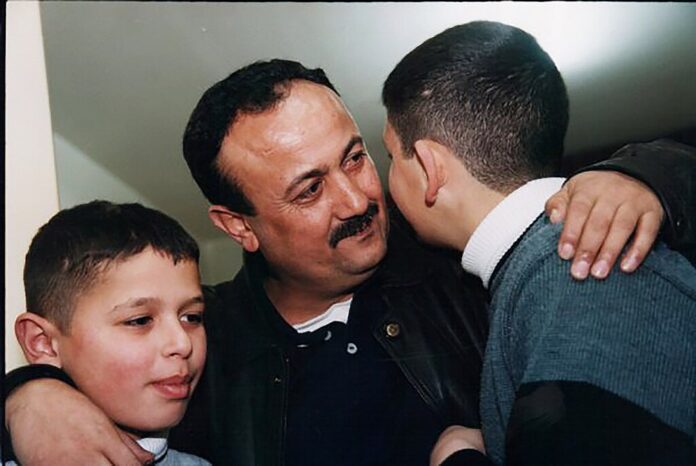
What is wrong with us? We console ourselves that this weakness shows our compassion and concern for life but true compassion and concern for life also demands deterring future murders and kidnappings. Instead, we are encouraging it, even incentivizing it. We can pat ourselves on the back that we are not releasing “that guy,” whoever he is, or Nukhba this or that, but eventually we will. We know it, and certainly they know it, so who are we fooling, and why are we inciting our enemy to do whatever it takes to free Barghouti and other assorted terrorists, rapists, murderers, and kidnappers, in the next round? Why play that macabre game when we know we will lose?

We have repeatedly announced to the world that Jewish blood is cheap. We are among those who cheapen it, if this is the best strategy we have. PM Netanyahu has successes on his ledger but among his most compelling failures is being the prime minister who negotiated the Sinwar deal (freeing 1200 terrorists including the October 7 mastermind in exchange for one soldier) and then freeing thousands more in the deals of the last two years. The Arabs will kidnap and murder again; it is not a question of if but when. The only real question is how many and, of course, who? Who will be the next Jewish victims of Arab terror and kidnapping?

If Netanyahu once (1987) authored a book entitled, “Terrorism: How the West Can Win,” he could now write the sequel, “Terrorism: How it Got the Better of Israel.” For that alone – the failure to deter this tactic and instead habituate the world to expect this Israeli capitulation to terror – he should be driven from political life. This does not come from any anti-Netanyahu bias; I respect what he has achieved as I can criticize what he has failed to achieve. Note that the Midrash (Breisheet Raba 55:8) teaches that just as hatred distorts a person’s view of reality, so does love. Those who hate whatever Netanyahu does simply because he does it are psychologically similar to those who love whatever Netanyahu does simply because he does it. Neither are thinking that much.

For our own sanity, we must look away from the jubilation in the Arab world we will again engender when these mass murderers go free. Look away, because it is the face of our defeat, our degradation, our disgrace, and no spin cycle can wash that away. We are awarding our enemy one of its primary objectives in attacking us in the first place! And have we ever stopped to consider why would any decent society want to welcome back and celebrate murderers? It is because that segment of Arab society approves and endorses such conduct; that we indulge them is a sad commentary on us.

In this and in too many other areas of statecraft, we ignore the Torah’s directives. One such directive: “You shall not pollute the land in which you live, for (unrequited) blood pollutes the land; there will be no expiation for the land for the blood that is shed therein, but by the blood of him who shed it” (Bamidbar 35:33). It desecrates G-d’s name to have His land inhabited by murderers of His people who go unpunished for their crimes – and yet we convince ourselves of our wisdom and righteousness.

Worse, after going to great lengths to destroy the leadership of Hamas, freeing these terrorists provides Hamas with new and immediate leaders, reinvigorated by their time in Israeli prison, emboldened by our fecklessness, and ready to struggle on. We have and will pay a heavy price for that. (It is worth noting that just nine years after they own the release from US custody of five high profile terrorists, the Taliban drove the US from Afghanistan and reclaimed its caliphate.) We have so few current leaders, unfortunately, who are willing to challenge the “freedom for hostages at any price” policy, excepting the leaders of the Religious Zionist parties. (The Haredi parties have compromised their ability to weigh in on the propriety of these matters because of their general rejection of IDF service.) Releasing these murderers is the “any price” we feared – and if this is the best that an “all-right wing” government can accomplish, then do not be surprised if it suffers in the next election, to the detriment of us all. We should remind ourselves that a government of people of faith, grounded in the values of Torah, is more important than a government of “all right-wing.” The fact that this is the best of what secular Israel has to offer – right and left – is sobering.

We see today that in a war between the civilized and the savage, the civilized can never win. They can at most stalemate because at a certain point – sometimes earlier, sometimes later – the denizens of the civilized society turn against the war, preferring the soothing fantasies of peaceniks to the harsh facts of real life. Similarly, in negotiations between the civilized and the savage, the savage will always win because he is unencumbered by any moral notions. Witness this oddity, a first in history: those who claim to be victims of “genocide” have stridently and consistently opposed an end to that “genocide,” and instead are driving a very hard bargain against the alleged perpetrators of the genocide. That is unprecedented; all prior victims of genocide just wanted it to stop, and quickly. It makes one wonder….

Then again, the truthteller is always at a disadvantage versus the liar; the truthteller has but one narrative to offer while the liar has an infinite number of lies that he can promote.

How can this travesty be averted in the future, especially now that the world and our enemies are conditioned to expect from us this recurring surrender?

–  We must pass a law – declaring it non-justiciable so the Supreme Court does not overturn it – mandating the death penalty for any Arab terrorist murder or attempted murder.

–  We must pass a law banning the exchange of terrorists for innocent hostages except under these conditions:

– Any government that proposes an exchange of terrorists for innocent hostages is automatically dissolved and new elections must be held within 90 days, just as if the government failed to pass a budget on time. Just as a government that cannot pass a budget is inherently dysfunctional and has lost its right to govern, so too a government that repeatedly submits to terror and thereby cheapens Jewish life is inherently dysfunctional and has no right to govern.

– The only way new elections would be averted is if a Knesset supermajority of ninety MK’s votes to approve the terrorist for hostage exchange.

For the government in power, this would test their sincerity in pursuing such a deal knowing that it leads to their demise, as it would also test the opposition’s customary ardor in doing anything to topple the government.

And it would be better if it was banned outright. These nauseating swaps are classic examples of stage-one thinking, in which people do not think of consequences beyond the immediate. It is one of the greatest weaknesses of modern man and we succumb to it again and again. And there are too many Jews who are eerily comforted whenever Jews get to be victims, tortured, abused, murdered, and kidnapped, reveling in our helplessness, as if we were still dwelling in the exile without a living Torah and without having returned to G-d’s land. They prefer wallowing in self-pity more than a forcible and conclusive self-defense.

Those Jews add to our suffering and prolong our agony. Sometimes I fear that they may constitute a majority of Israeli society – I don’t think so but I do fear so. If that is the case, when the next massacre of Jews takes place, G-d forbid, and settlements in Judea and Samaria, or Kfar Saba and environs, are attacked October 7 style, they will be tempted again to blame the government, the army, the politicians, and maybe their grandmothers. It is as if a person continually injects poison into their bloodstream and then blames the doctors for not saving them.

Perhaps the blame can be found more easily, past and present, if we just look in the mirror. It is why we should focus less on congratulating ourselves for faux victories and diplomatic pretenses and more on appealing to the mercies of the Lord, on whom we will once again rely to save us from our follies.

How Trump Trapped Netanyahu

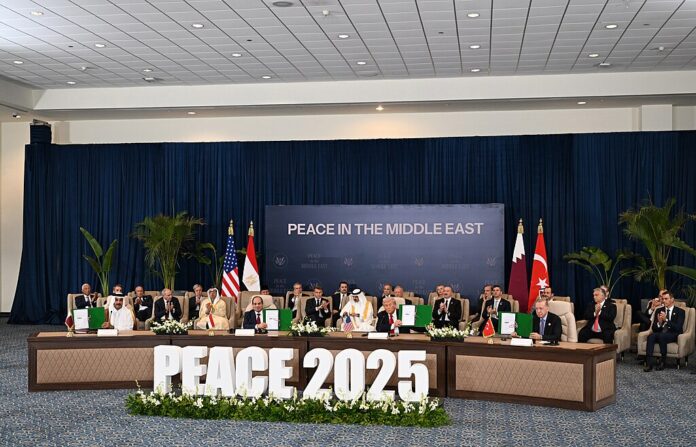
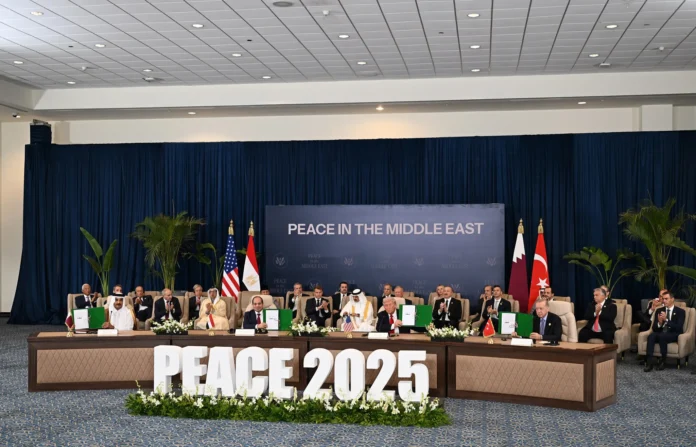
he Israeli cabinet voted early Friday morning in favor of United States President Donald Trump‘s ceasefire deal that will see Israeli hostages freed by Hamas in exchange for Palestinian security prisoners, as well as a halt to the fighting in Gaza.According to the deal, Israeli forces will withdraw to new lines inside Gaza and Hamas must then release all living hostages within a 72 hour period.

Feelings of intense euphoria, and even some spontaneous street celebrations, have been sweeping across Israel in response to the news. But not everyone has boughten into the narrative that this agreement benefits Israel.

Israeli Perspectives on the Deal

While most of the Israeli media has been promoting the deal as a great triumph for the nation, Channel 12 journalist Amit Segal took a more nuanced approach on Thursday, stating that this agreement is simply a hostage deal with none of the broader issues from the new Trump plan appearing in the text.

Segal acted to reassure those nervous about the deal that it won’t likely move passed the first phase, stressing that this is purely about hostages and a temporary ceasefire and that all talk about “international oversight” and “Tony Blair running Gaza” is absent from the agreement.

Most local journalists have put an even more positive – even celebratory – spin on the agreement, centering the fact that the hostages will return and that two difficult years of war will finally end with Israel appearing to achieve its official war aims.

But Arab affairs commentator Zvi Yeḥezkeli warned Friday morning that while the return of hostages provides Israel with great joy and relief, this first phase of the Trump plan has already given substantial advantages to Hamas at Israel’s expense.

“This morning we were informed that the hostages are returning and there is no greater joy,” he said.

“Now we need to view the agreement from the enemies’ perspective. What are its implications? The first stage is clear: the release of all our hostages and the bodies of the fallen, two years after they were abducted — and, on the other hand, a massive exchange: 250 prisoners serving life sentences and another 1,700 detainees. That is a critical boost to terrorism.”

Yeḥezkeli emphasized that Hamas is now able to claim that it “freed the maximum number of prisoners, stopped the war, remains armed and remains the authority in Gaza,” which were its core objectives.

He further noted that Hamas didn’t surrender, didn’t disarm, and will likely continue to rule Gaza even if Trump’s International Stabilization Force (ISF) is deployed to the strip.

Other critics of the deal, especially those who had hoped to see the war end with Hamas completely dismantled and Gaza under permanent Israeli control, are lamenting not only the fact that Hamas will remain in control of Gaza but also that Israel is being forced to withdraw from much of the territory regained through so much sacrifice.

Many trace the catastrophic Hamas attacks of October 7, 2023 to not only the failed “konceptsia” that dominated the thinking of Israel’s security establishment for over two decades, but also the 2005 Gaza Disengagement, in which US President George W. Bush forced Israel to surrender Gaza and destroy the over 20 Jewish communities in the strip (plus four in the northern West Bank).

From this perspective, Israel must retain control over Gaza – not only as the surest means to secure Israel’s south but also to correct the injustice of the Disengagement policy. Trump now forcing Israel to once again surrender Gaza, while leaving Hamas intact, is causing a significant number of Israelis – especially the sector that’s shouldered the brunt of this war – to feel that their sacrifices have been in vain.

But despite the many problematic elements of the agreement, it’s easy for most Israelis to see it in a positive light – especially given the fact that we’re being told to assume that Trump’s plan will end after the completion of phase one. From this perspective, Israel gets the hostages back, depriving Hamas of its primary leverage, while maintaining military control over more than half of Gaza.

While it’s true that Israel must release battle-hardened Hamas commanders in the process, this could matter less than many fear if Trump’s plan stops after the first phase and Israeli forces continue to operate in Gaza. In such a scenario, Israel would likely eliminate those released commanders at some point in the near future.

But this is of course based on the assumption that Trump won’t pressure Israel to advance to the second phase of his plan – an assumption that shouldn’t be taken for granted.

Netanyahu’s Ambiguous Intensions

The deal signed Friday morning also call into question Prime Minister Binyamin Netanyahu’s true intentions throughout the war.

Vision Magazine has maintained the position that Netanyahu had for a long time avoided a “day after” plan because he truly intended for Israel to permanently retake Gaza and reverse the Disengagement.

Does the prime minister touting this deal as an Israeli victory and using it to strengthen his own domestic political position undermine this analysis? Or is he simply making the best of a bad situation after being strong armed by Trump to accept a deal he didn’t want?

While it’s clear that Netanyahu aimed to incapacitate Hamas and to prevent the Fatah-led Palestinian Authority from ruling Gaza, his actual intentions regarding Israel retaking the strip has been ambiguous.

While an argument can be made that the prime minister’s strategy has been to avoid personally stating this goal while creating the conditions for permanent Israeli control of Gaza to become the war’s easiest “unintentional” default result and allowing senior ministers in his coalition to speak openly about reversing the Disengagement, one could counter this line of thinking by pointing out that Netanyahu has neglected to create the conditions that would make such a policy viable and internationally viable.

Had the prime minister truly intended to maintain control over Gaza, he would have likely taken the initiative on issues that serve as key points of leverage for Washington to weaponize against a permanent Israeli presence in the strip. If Netanyahu would have been serious about Israel keeping Gaza, he should have taken direct responsibility for the distribution of food and medicine, presented a plan for rebuilding Gaza after the war, and put greater effort into separating Hamas from the broader Gazan population.

Prime Minister Netanyahu should have enough wisdom and experience to know that Israel retaking Gaza requires him to present an independent strategic initiative that addresses all key issues pertaining to security, rebuilding, and the humanitarian needs of the local population.

There is some indication that this was attempted – especially in regards to empowering select Palestinian clans and militias against Hamas. But these efforts ultimately failed, either because Netanyahu lacked a clear vision for where they should lead or because Israel’s top military brass constantly undermined them.

Assuming that Netanyahu has in fact sought for Israel to retake Gaza but didn’t take the necessary steps to create the conditions to make this viable (thus leaving Israel exposed to the Trump plan), there are two likely obstacles that the prime minister may have seen to be preventing such initiatives:
1. He doesn’t believe any US president – including Trump – would agree to permanent Israeli control over Gaza (but thinks the Americans could passively accept such an outcome it if it were to gradually develop “unintentionally” over time).
2. He knows that his coalition partners most enthusiastic about Gaza being restored to Israel and rebuilding the Jewish communities destroyed in 2005 are also the partners most vehemently opposed to any moves that would benefit or aid a population that they identify as a bitter enemy (grossly mistreating the Israeli hostages held in Gaza). Entertaining fantasies about getting rid of Palestinians instead of taking responsibility for providing them with a better future is arguably the second greatest obstacle (after US pressure) to Israel applying full sovereignty over not only Gaza but also the West Bank.

Regardless of the reason (both of the above can be true), Netanyahu did not create a viable plan for retaking Gaza and has now been forced to sign onto Trump’s plan.

The Next Move

Trump is expected to arrive in Israel early next week.

With significant support from the international and Israeli press, the president is presenting his plan as an Israeli victory that he’s gifting Jerusalem. And he’s attaching increased regional cooperation and integration as a natural outgrowth of his initiative – even suggesting the expansion of the Abraham Accords to include Iran.

The danger of this expanded Abraham Accords – a regional architecture for West Asia built around Washington’s imperialist interests – is that it forces Israel to share space with existential enemies under the threat of losing US support instead of allowing Israel to naturally emerge as a leader in the region that can function independently of the Americans.

While it appears that this first phase of the Trump plan is a done deal and that we should anticipate the return of our hostages before the second anniversary of their abduction (according to our calendar), we should also hope that our prime minister is already cooking up ideas for outmaneuvering Trump, stopping this plan from reaching its second phase, and shaking Israel free from the Abraham Accords.

Congressman Slams Mamdani’s Oct. 7 Message: ‘He’s Nothing More Than A Muslim Terrorist’

Republican Congressman Randy Fine harshly attacked New York City mayoral candidate Zohran Mamdani on Tuesday, after Mamdani posted a statement on social media marking the second memorial of the October 7 massacre. Fine called him “nothing more than a Muslim terrorist” and claimed his citizenship should be revoked and he should be deported.

The congressman posted on his X account:

“This is nauseating. Mamdani is nothing more than a Muslim terrorist. It’s a disgrace that he was ever granted citizenship. It should be stripped, and he should be deported  to the Ugandan shithole he came from.”

In his statement, Mamdani did begin by saying that “Hamas committed a horrific war crime,” but he then went on to claim that Prime Minister Benjamin Netanyahu and the Israeli government launched a ‘murderous war.’ He added that the U.S. government was complicit in all of it.

Online reactions to Mamdani’s post quickly followed.
One user wrote:“Wow, I can’t believe he had the nerve to use this anniversary to blame the victim.

Another shared a picture of the candidate’s electoral district and commented:“I used to live in New York. What the hell is this?”

Mamdani was born in Uganda and moved with his family to New York at the age of seven. He received U.S. citizenship in 2018. Another X user wrote that his legal status in the U.S. was only formalized a few years ago, stating:

“He committed a federal offense by holding a green card for more than 7 years before applying. How did Zohran become a U.S. citizen in 2018, Congressman?”

In his X profile biography, Mamdani describes himself as a “Democratic Socialist”, and states that he is “running to freeze rent, make buses faster and free, and provide universal early childhood education.”

Psychological Asymmetry Post October 7: The Palestinian Perceptual War Strategy Against Israel

  • Israel has had undisputed military victories against Hizbullah and Iran but has yet to achieve total success against Hamas.
  • Hamas, and the Palestinian movement, have employed psychological strategies to embolden anti-Israel feelings, limit damage to their own image and to create and take advantage of internal dissent within Israel.
  • This was largely achieved outside Israel by exploiting social change movements into accepting pro-Palestinian arguments as consistent with general human rights.
  • Within Israel, the strategy of kidnapping Israelis and waging “tunnel warfare” enabled Hamas to remain relevant.
  • Conventional military strategy that fails to consider perceptual and psychological aspects of war will not succeed in achieving war goals.

The Military Gain and the Psychological Loss

The past two years have seen Israel engaged in three wars within a war. First, the initial war against Hamas in Gaza. Second, the war against Hizbullah in Lebanon, and third, the “12-day war” against Iran. Alongside these major wars, Israel also experienced an ongoing battle against Judea and Samaria-based terror, Houthi ballistic missile attacks, and attacks emanating from Syria and Iraq.1

In military terms, Israel certainly seems to have damaged the enemy more than the enemy has managed to damage Israel. In two of the wars, against Hizbullah and Iran, Israel emerged as a clear “winner.” But perhaps the most significant war faced by Israel was not a strictly military one, but rather a more cognitive, perceptual, or psychological one. That war continues to be waged not against a physical target but rather against a “narrative,” the story of what is actually happening between Israel and those who wish to destroy it. That is a war where Israel’s enemies have gained the upper hand.

The evidence is quite clear. More countries are declaring their support to recognize “Palestine,”2 more Israelis feel unwelcome around the world,3 and more internal dissent has been sown within Israel around what is undoubtedly the key issue in the conflict with Gaza, the continuing captivity of kidnapped Israelis.4

How It All Began

While October 7, 2023, is considered the start of the “war,” the psychological war between Israel and the Palestinians started long before that. In fact, the military success of the October 7 war serves to reinforce and expand an already present anti-Israel narrative promoted by none other than the United Nations that focused on Palestinian dispossession known as the “Nakba” which began in 1948.5 Even the “genocide” libel, which became a central mantra in the Palestinian psychological armamentarium, started long before October 2023, as highlighted in a paper by the Center for Constitutional Rights (CCR) on the genocide of the Palestinian people.6

The strategy for Hamas comes straight out of the playbook for social change, as noted by the CCR:

Narrative shifting: We use media and thought leadership to challenge dominant narratives and make space for the voices and experiences of those who have been pushed to the margins. These tactics allow us to shape public opinion about the issues we fight, which can initially be seen as controversial, and create opportunities to dismantle institutionalized power while building the power of social movements.7

The CCR goes on to succinctly state “why we win,” as follows:

We partner with social movements because true social change does not come out of a courtroom, although legal and advocacy work can be a powerful tool to demand accountability that can lead to social change. We win because our ‘client’ is ultimately social change, not the law itself.8

In partnering with or piggybacking on social change movements, Palestinian narratives have gained not only prominence but cultural acceptance. This, in turn, has fueled political acceptance, leading to the psychological success Palestinian nationalism has had despite, and perhaps due to, its military failure.

The Palestinian Strategy

The presence of kidnapped Israeli hostages in Gaza and the use of a massive system of subterranean tunnels has separated the Palestinian conflict from the other military successes Israel has had over the last two years and allowed the narrative-building strategy to take hold.

While Gaza was destroyed physically, the images of destruction and the rising death toll of undifferentiated Gazans allowed the narrative of genocide and ethnic cleansing to spread. It is the presence of hostages in urban areas, areas that Hamas operates out of, that has limited Israeli activity and hindered any military efforts to achieve the war’s goals, namely, to dismantle Hamas and free the hostages.9 The tunnel system has allowed Hamas to continue guerilla-type operations despite being decimated as an organized fighting force.10 Both these elements have resulted in continued Israeli military action, thus allowing the unconventional Palestinian strategy of building on their victim status to be reinforced. The bind for Israel in ending the war and possibly limiting ammunition for the Palestinian psychological war effort is that there has been no guarantee for either a full release of hostages held or a functional end to Hamas rule and possible future rearming.11

Added to this backdrop is the state of domestic Israeli tensions, which preceded October 7, that morphed into an anti-government policy movement with respect to the hostages. The hostage situation created a social movement that strongly opposed Hamas but unintentionally contributed to the Palestinian war strategy. This, by consistent pressure that began soon after the start of the war to effect a hostage-prisoner exchange,12 with many saying that dismantling Hamas should and could wait until after a hostage deal.13

The focus on social movements by pro-Palestinians is linked to the popular appeal of their message. Instead of terrorism, we get victimhood, and instead of blame, we get pity and compassion. Vivid images and articles claiming a starving Gazan population14 serve to strengthen these messages and paint Israel as responsible for what is being pushed as war crimes.15 This focus creates separation between Hamas as a terror group and a civilian population whose connection to Hamas is never mentioned. Ironically, the emphasis in Israel on clearly suffering hostages creates additional empathy with their fate but also has led to targeting the same alleged guilty party, namely those leading the Israeli war effort, enabling the pro-Palestinian allegation of Israeli war crimes.16

Lessons Learned

Consistent with the concept of “psychological asymmetry,”17 the last two years have demonstrated that military goals need to consider psychological objectives. A militarily defeated enemy that feels they have won is not really defeated. Sun Tzu, in “the Art of War,” says, “If you know the enemy and know yourself, you need not fear the result of a hundred battles. If you know yourself but not the enemy, for every victory gained you will also suffer a defeat. If you know neither the enemy nor yourself, you will succumb in every battle.”18 Hamas has learned that lesson well and has managed to turn defeat into success by manipulating a gullible, naïve, and partially antisemitic world and, in the process, damaging Israel’s image, achieving recognition for Palestinian goals and maintaining its aura as a resistance force. As noted by Mordechai Kedar, “Even if only one of Hamas remained, with a severed leg and hand, he would stand on the remains of a destroyed mosque and raise his two fingers in a victory sign.”19

For Hamas and many Palestinian Arabs, October 7, 2023, remains a day they are proud of.

* * *

Notes

  1. https://www.newsweek.com/israels-war-iran-seven-fronts-1920862↩︎
  2. https://www.nytimes.com/2025/07/30/world/middleeast/palestinian-state-recognition-maps.html↩︎
  3. https://english.almayadeen.net/news/politics/israelis-increasingly–unwelcome–in-europe–signaling-8th-f↩︎
  4. https://www.timesofisrael.com/large-protests-expected-across-israel-as-national-strike-for-hostages-gets-underway/↩︎
  5. https://www.un.org/unispal/about-the-nakba/↩︎
  6. https://ccrjustice.org/sites/default/files/attach/2016/10/Background%20on%20the%20term%20genocide%20in%20Israel%20Palestine%20Context.pdf↩︎
  7. https://ccrjustice.org/home/who-we-are/mission-and-vision↩︎
  8. Ibid.↩︎
  9. https://www.nytimes.com/2024/01/20/world/middleeast/israel-hamas-hostages-strategy.html↩︎
  10. https://www.tandfonline.com/doi/full/10.1080/1057610X.2024.2347843#d1e144↩︎
  11. https://www.timesofisrael.com/hamas-vows-not-to-lay-down-arms-after-witkoff-reportedly-says-its-ready-to-demilitarize/↩︎
  12. https://www.ynet.co.il/news/article/syafteagp↩︎
  13. https://www.israelhayom.co.il/news/local/article/18622488↩︎
  14. https://www.nytimes.com/2025/07/24/world/middleeast/gaza-starvation.html↩︎
  15. https://www.dw.com/en/starvation-is-a-war-crime-but-will-justice-ever-be-done/a-73656993↩︎
  16. https://www.nytimes.com/2025/07/28/world/middleeast/israel-dissent-war-gaza.html↩︎
  17. https://jcpa.org/article/psychological-asymmetry-understanding-the-gaza-return-demonstrations/↩︎
  18. https://www.goodreads.com/quotes/17976-if-you-know-the-enemy-and-know-yourself-you-need#:~:text=If%20you%20know%20the%20enemy%20and%20know%20yourself%2C%20you%20need,will%20succumb%20in%20every%20battle.↩︎
  19. https://www.instagram.com/reel/C03nr3FIVWB/↩︎

President Trump: We Accepted & Your Arab Partners Endorsed The Plan As Is – No Changes Now

Dear President Trump,

It was not easy for our Prime Minister to agree to your plan.

But he did.

And after he accepted the deal and the TEXT of the deal was published the
leaders of the Arab world ENDORSED THE DEAL ISRAEL ACCEPTED.

Now Hamas is trying to CHANGE the deal and there’s talk that you will
pressure BOTH sides to compromise.

We compromised by ACCEPTING the deal.

The ball is in Hamas’s court to ACCEPT THE DEAL AS IT IS.

If you truly want to bring an end to a conflict which you believe started
3,000 years ago when Saul became the first king of the Jewish People then
there’s a lot of deals to make after this one.

Don’t set the precedent now that when you get us to make compromises to
agree to a deal that this becomes no more than the opening offer for
negotiations with the other side.

The extraordinary anti-Israel propaganda machine set in motion on Oct 7

On Oct 7 2023, even as Hamas terrorists were still rampaging their way around southern Israel, murdering, raping and taking civilians hostage, plans were already afoot in the UK to rally support for the attacks in Britain.

Radical preacher Haitham al-Haddad, later described by the BBC as a “highly respected imam”, put out a video on YouTube saying of the fighters: “We urge you to stay updated with the news and think of various ways to support them, whether politically or through lobbying and media exposure. Be prepared for mass demonstrations to support them.”

Al-Haddad’s words turned out to be somewhat prophetic.

Granting Qatar a Security Guarantee Is a Strategic Mistake

President Donald Trump’s September 29, 2025, executive order granting Qatar a NATO-style security guarantee is a strategic blunder built on a foundation of fantasy. The order cites the need to protect Qatar from “continuing threats … posed by foreign aggression.” The question is, what threats? What foreign aggression? The State of Qatar is not a victim in the Middle East; it is a source of the instability that plagues the region. The only “foreign aggression” it should fear is the consequence of its own policies.

The Qatari regime has perfected a cynical and dangerous double game.

For decades, the Qatari regime has perfected a cynical and dangerous double game. It hosts the Al Udeid Air Base, giving it the veneer of being a Western ally while it serves as the world’s most significant financier of the Muslim Brotherhood and its terrorist offshoots. The leaders of Hamas, the perpetrators of the October 7, 2023, massacre, do not hide in caves; they hold press conferences from the lobbies of luxurious Doha hotels, their lifestyles and operations underwritten by the same monarchy the United States now swears to protect. This security pact creates the possibility that an Israeli operation to eliminate a Hamas leader in Doha could be officially regarded as “a threat to the peace and security of the United States.” It is a strategic absurdity of the highest order.

Qatar’s aggression is not limited to terror financing. It has waged a patient, multibillion-dollar war of ideas against the West, using its state-funded narrative machine Al Jazeera to spread antisemitic and anti-American propaganda. It has poured billions of dollars into universities in a campaign of ideological subversion, poisoning the well of our public discourse and creating the campus environment where genocidal chants now become “social justice.”

This executive order cannot stand. The path to its revocation requires a new, coordinated campaign, a coalition of the aggrieved led by the victims of Qatari statecraft. This fight must be waged not with arms, but with the potent, democratic weapons of truth, law, and political pressure.

First, the broad coalition of nations that have suffered from Qatar’s destabilizing influence—including Israel, Saudi Arabia, the United Arab Emirates, Bahrain, and Egypt—must form a diplomatic front. They must jointly lobby the U.S. Congress, presenting a case, backed by intelligence, that this executive order does not enhance regional stability but, rather, shields the primary source of its decay.

Jerusalem should immediately take a series of nonviolent, democratic steps to expose and counter the Qatari regime.

Second, Israel, as the primary target of Qatar’s Hamas proxies, must move from a defensive posture to a proactive, political offense. The time for quiet diplomacy is over. Jerusalem should immediately take a series of nonviolent, democratic steps to expose and counter the Qatari regime. It should, for example, formally recognize and host an office for the Qatari opposition. Granting a platform and a voice to the dissidents and democrats silenced by the monarchy would be a powerful act of political jujitsu, highlighting the hypocrisy of a regime that funds Islamist movements abroad while crushing dissent at home.

Furthermore, Israel should launch a global public information campaign, complete with the names, dates, and financial records, that meticulously documents the flow of Qatari funds to the terror groups that have murdered its citizens. This is not about winning a public relations battle; it is about providing the evidence necessary for legal action against Qatari assets and for Congress to act.

Finally, the non-state victims of Qatar’s policies must be empowered. The families of those murdered by Hamas, the journalists imprisoned by Qatar’s allies, the moderate Muslims silenced by its extremist proxies—their stories are powerful weapons. Congress and courts must give them a platform to make the case that America has allied itself not with a partner for peace, but an agent for instability.

This executive order is a sorrowful chapter in American foreign policy, the result of a successful and cynical influence campaign. But it is not the final chapter.