Eulogies

The accepted protocol when speaking at a funeral is to praise the deceased’s achievements and overlook any negative traits.

However, what should one do when the deeds of the deceased are so horrendous that there are no redeeming features that can honestly be recounted?

Additionally, when faced with delivering a political “eulogy” on the retirement or resignation of a politician and political leader, can one honestly extol the virtues of the individual when everyone knows that his/her accomplishments have been disastrous?

What are we to make of eulogies recited for the Jewish People collectively over the millennia and right up to this current time?

These questions take on an added significance as we survey the unfolding dramas from near and far and as we prepare to face the latest machinations of today’s Jew/Israel/Zionist haters.

When the late Iranian President was killed in a helicopter crash, the eulogies flowed thick and fast. One could safely ignore the tributes emanating from fellow terror allies as standard hypocritical utterances. It was the tear-jerking sycophantic expressions of grief from the likes of the EU and representatives of democratic countries that gained first prize for double standards.

Here was a politician responsible for carrying out the worst crimes on behalf of his glorious leader, being eulogized as though he was some sort of saint.

It naturally followed therefore that when his successor was “elected” or should we say “anointed” the world media and the same international hypocrites would once again break into hymns of praise. Describing the new President as a “moderate” when he clearly endorsed the genocidal aims of his spiritual superior is the height of absurdity. The fact that most of the international community can willingly endorse this farce shows how low matters have fallen.

The EU sent a representative to the swearing-in ceremony in Tehran. No doubt he issued expressions of admiration as he hobnobbed with representatives of such enlightened human rights champions as Hamas, Hezbollah, Islamic Jihad, Palestinian Authority, Russia, China and North Korea. Trying to escape obvious embarrassment, the EU issued a statement saying that its representation was not political but only diplomatic. This pathetic distinction only fooled those gullible enough to be oblivious of reality.

Once again, the Irish managed to prove that they are the gold medal winners of stupidity. The Irish President forwarded a gushing letter to the new Iranian President praising Iran’s role in the “struggle for peace.” Where he got this piece of fiction from is anyone’s guess but perhaps after a few bottles of Guinness his faculties became befuddled.

The big news, of course, was the dispatch of Hamas’s leader to martyrs’ heaven, where virgins await. Speculation will percolate for a long time as to how this was achieved and exactly by whom. Various theories abound, and no doubt, one day, all might be revealed in either a biographical revelation or a blockbuster movie.

Anyone associated with the murder and kidnapping of Israeli men, women, children and babies is guaranteed to have an early expiry date. It should, therefore, not have come as a surprise that a premature retirement occurred. The real embarrassment for the Iranians is that it happened while they hosted this arch-terrorist and just after he paid his respects to the new President and the “Supreme leader.”

Adding to this early exit was the news that other top terrorists, including the second in command of Hezbollah, were likewise eliminated in Beirut.

What followed was entirely predictable.

Eulogies for the deceased terror masterminds poured forth in tsunami-like torrents. The usual suspects excelled in their rhetoric concerning the saint-like attributes of the departed. No surprises about that. The media excelled in reporting the “pragmatic” and “moderate” qualities of individuals whose hands were tainted with the blood of murdered Israeli civilians and who plotted every hour of their miserable lives on how to murder even more.

Equally nauseous have been the forked tongue pronouncements of representatives from democratic nations.

The Guardian reported that Penny Wong, Australia’s Foreign Minister, stated that “the Australian Government is increasingly alarmed at Israel’s troubling pattern of behaviour.”  Meanwhile, Biden is upset that removing terror instigators complicates his “peace” efforts. His ambassador to Qatar praised its “role in maintaining peace and security.” It was reported by JNS that a Qatari official told the Arab League, “Jewish People are slayers of prophets and Judaism only accepts one thing – killing.” Qatar is the safe haven for Hamas as is Turkey.

Joe Biden’s decision to “retire” has unleashed “eulogies” from Israeli leaders and media.

President Herzog described Biden as the symbol of the unbreakable bond between the USA and Israel and the best friend Israel ever had.

PM Netanyahu embraced him as an “Irish Zionist.”

The Jerusalem Post editorialized that Biden is a Zionist at heart and that his support of Israel will never be forgotten.

Denying Israel weapons and telling our PM not to speak “bullshit” is not exactly a sign of friendship and solidarity. According to news reports, the US Administration has warned Israel that the (non-existent) coalition demands that any response to an Iranian missile barrage be limited in scope. In their words “don’t push it.”  In plain English this clearly means that the USA has no intention of tackling Iranian genocidal ambitions and will not back Israel when it retaliates.

Are these manifestations of a best friend?

I wish that we had another Menachem Begin who in 1972 responded to Senator Biden when he threatened to cut off aid to Israel.

“Don’t threaten us with cutting off your aid. It will not work. I am not a Jew with trembling knees. I am a proud Jew with 3,700 years of civilized history. Nobody came to our aid when we were dying in the gas chambers and ovens. Nobody came to our aid when were striving to create our country. We paid for it. We fought for it. We died for it. We will stand by our principles. We will defend them. When necessary we will die for them again, with or without your aid.”

 Biden banged on the table with his fist. Begin retorted:

“This desk is designed for writing not fists. Don’t threaten us with slashing aid. We are grateful for the assistance we have received but we are not to be threatened.”

 Instead of sycophantic eulogies we could do with some honest rhetoric instead.         

The Iranian Ambassador to Australia revealed his country’s true agenda in a tweet in which he proclaimed: “wipe out the Zionists from Palestinian holy lands. I am looking forward to such a heavenly and divine promise.”  The Australian Government’s response was to call in the ambassador for a reprimand with a slap on the wrist with a wet rag. Penny Wong said that his remarks “do not represent Australia.” Of course they don’t – they represent Iran’s ambitions. How about sending the ambassador packing or is that too provocative?

Over the long and tortuous course of Jewish history, there have been many occasions when the rest of the world has issued eulogies for murdered Jews. In fact, eulogizing dead Jews has become a fashionable pastime. It followed the destruction of both Temples and exile after inquisitions, pogroms, expulsions, exclusions, theological revisionist denials of Judaism’s authenticity and, of course, the Shoah. In each situation, Jews as a people and faith were written off as eternal victims, unworthy of being saved and beyond redemption. In more recent times those who could have prevented tragedy and didn’t, assuage their guilty feelings by engaging in eulogies at ceremonial gatherings.

As we currently face another existential threat to our existence, there are some who are already preparing to eulogize us. Instead of helping to crush those planning another round of genocidal terror, Jew haters and self loathers alike are busy undermining Israel.

Haman of ancient Persia tried this once before. He and his supporters were dispatched before they could carry out their nefarious plans.

The same fate awaits today’s plotters.

The time is long overdue when politically correct apologetics are replaced by forthright articulation of truths.

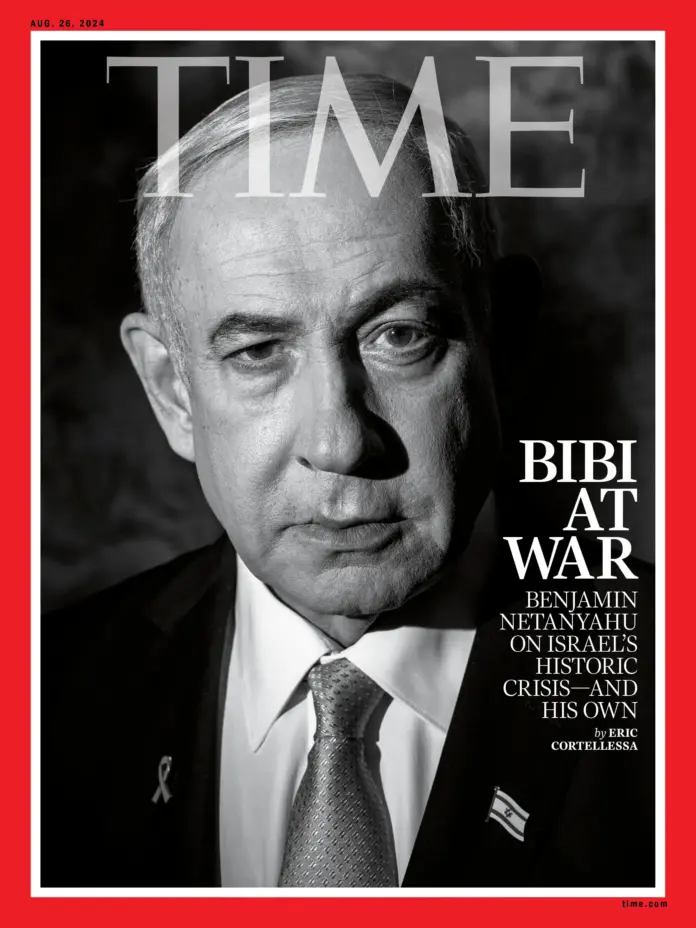
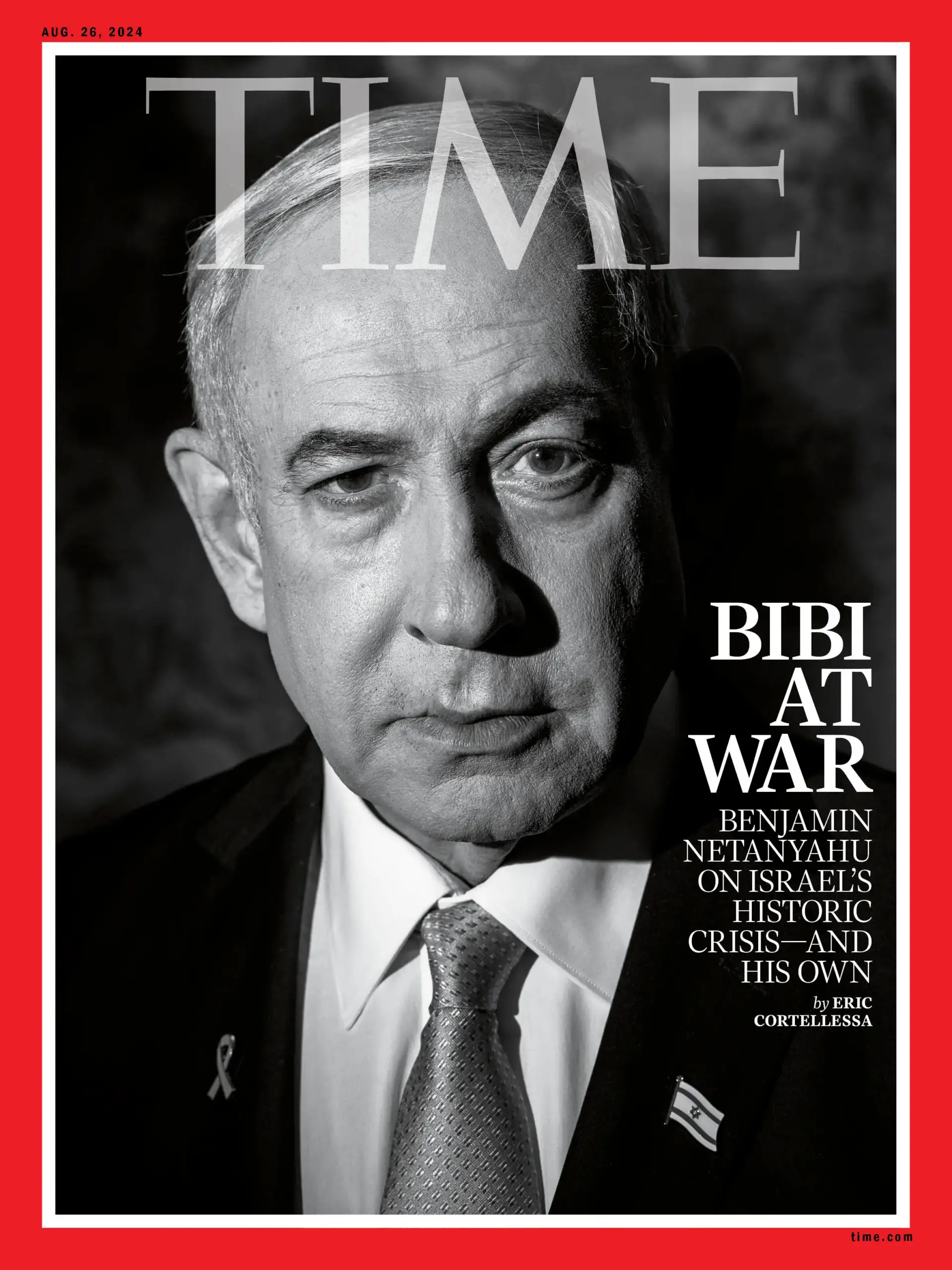
TIME Cover: Exclusive Interview – Bibi at War

In an exclusive interview with TIME, Israel’s Prime Minister Benjamin Netanyahu explains how he sees the Gaza war and mounting regional threats.

For the cover story, TIME’s Eric Cortellessa—who interviewed Netanyahu for 66 minutes in his Kaplan Street offices on August 4, 2024—writes: “Through a combination of electoral vicissitudes, sweeping regional changes, and his own political gifts, his almost 17-year cumulative tenure is longer than that of anyone else who has led Israel, a country only two years older than he is. Over that span, Netanyahu’s political endurance has been built around one consistent argument: that he’s the only leader who can ensure Israel’s safety.”


Cortellessa continues: “But in the wake of the worst slaughter of Jews since the Holocaust, with more than 40,000 Gazans dead in the ensuing conflict, Israel under Netanyahu is not blessed with peace but besieged by war. As we speak, the country is on edge for an expected aerial attack from Iran, the second in four months…The fighting is ongoing in Gaza, with more than 100 hostages still held by Hamas. Much to the frustration of the Biden Administration, Netanyahu still has not articulated a credible plan to end the war or a vision for how the Israelis and the Palestinians can peacefully coexist.”

– Credit: Photograph by Paolo Pellegrin—Magnum Photos for TIME

– Read the full cover story: here

– Read the full transcript of TIME’s interview with Benjamin Netanyahu: here

HIGHLIGHTS FROM TIME’S EXCLUSIVE INTERVIEW WITH BENJAMIN NETANYAHU:

On whether he would make an apology for the Oct. 7 attack on Israel, Benjamin Netanyahu tells TIME: “Apologize?…Of course, of course. I am sorry, deeply, that something like this happened. And you always look back and you say, Could we have done things that would have prevented it?”

On how he’s bracing for escalating conflict on even more fronts: “We’re facing not merely Hamas…We’re facing a full-fledged Iranian axis, and we understand that we have to organize ourselves for broader defense.”

On how his approval of Qatari cash infusions was humanitarian: “We wanted to make sure that Gaza has a functioning civilian administration to avoid humanitarian collapse.”

On how he claims the money didn’t form the basis of Hamas’ eventual threat to Israel and his primary mistake, he says, was acceding to his security committee’s reluctance to wage full-on war: “The main issue was the transfer of weapons and ammunition from the Sinai into Gaza…Oct. 7 showed that those who said that Hamas was deterred were wrong…If anything, I didn’t challenge enough the assumption that was common to all the security agencies.”


On how a visit intended to showcase solidarity with Israel’s most essential ally instead deepened what was for Israel a growing and dangerous partisan divide: “I don’t think that the much reported erosion of support among some quarters of the American public is related to Israel…It’s more related to America.”


On how once Hamas is out of power, he wants to recruit Arab countries to help install a civilian Palestinian governing entity that wouldn’t pose a threat to Israel: “I’d like to see a civilian administration run by Gazans, perhaps with the support of regional partners…Demilitarization by Israel, civilian administration by Gaza.”

On how his vision of allowing only limited pockets of autonomy in Palestinian areas where Israel maintains overriding security control: “That’s a detraction of sovereign powers…There’s no question about it…I agree we should maintain a Jewish majority, but I think we should do it in democratic means…That’s why I don’t want to incorporate the Palestinians in Judea and Samaria as citizens of Israel [referring to the biblical name of the West Bank] It means that they should run their own lives. They should vote for their own institutions. They should have their own self-governance. But they should not have the power to threaten us.”

On Zionism surviving the war: “It will, if we win…And if we don’t, our future will be in great jeopardy.”


On whether he intends to remain Prime Minister: “I will stay in office as long as I believe I can help lead Israel to a future of security, enduring security and prosperity.”

On whether he would say an opposition leader who presided over Israel’s worst security failure should stay in power: “It depends what they do…What do they do? Are they capable of leading the country in war? Can they lead it to victory? Can they assure that the postwar situation will be one of peace and security? If the answer is yes, they should stay in power. In any case…that’s the decision of the people.”

The cover story also features conversations with Israeli officials, including former Israeli Prime Minister Ehud Barak who tells TIME:

On how Netanyahu is in his psychological elements: “He genuinely believes that he’s saving Israel…Not that he’s responsible for one of the worst events in its history.”


On the claim that Netanyahu is drawing out the Gaza campaign for personal political reasons: “Netanyahu is focused on his longevity in power more than the interests of the Israeli people or the State of Israel…It will take half a generation to repair the damage that Netanyahu has caused in the last year.”

On Netanyahu deepening divisions between Palestinians in the West Bank and Gaza: “He saw Hamas as an asset and the [West Bank–based] Palestinian Authority as a liability…As long as he can hold Hamas alive and kicking and being a threat to Israel, he can easily protect himself against demands from America and from the rest of the world who argued that Israel should look for a way to achieve a breakthrough with the Palestinians.”

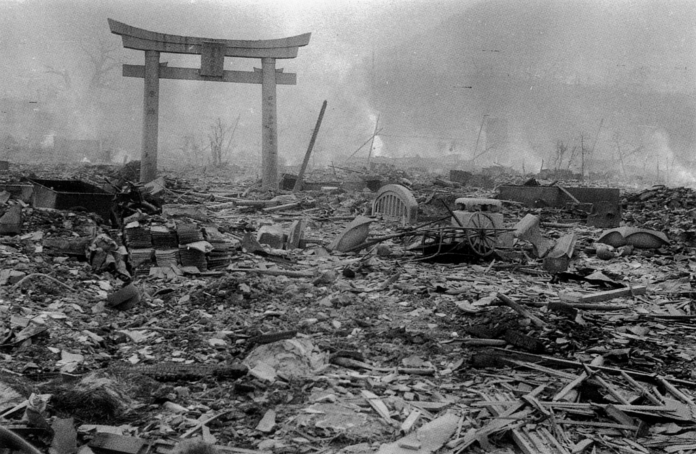
SWC Statement on the City of Nagasaki’s Decision to Selectively Not Invite Israel to Anniversary of Atomic Bombing

July 31, 2024


Rabbi Abraham Cooper, Associate Dean and Director for Global Social Action of the Simon Wiesenthal Center, issued the following statement on a recent decision by the City of Nagasaki to selectively not invite Israel to its ceremony commemorating the dropping of the Atomic bomb in 1945.

“The Nagasaki Mayor’s immoral decision not to invite Israel to the Atomic-bomb Memorial debases the memory of innocent Japanese who perished that day and insults the memory of 1,200 Israelis mass murdered on Oct 7th by Iran-backed Hamas terrorists—the largest single-day killing of Jews since the Nazi Holocaust. Adding insult to injury the local mayor did invite a Palestinian representative to attend, a decision that will only embolden terrorists everywhere to conclude that mass violence works to advance their agendas.”

 Rabbi Cooper also noted that “the Atomic bomb dropped on Nagasaki finally ended World War II, a war which saw Japan allied with Nazi Germany.  For decades, people of goodwill in Japan, the US, and among world Jewry have labored to forge new trusts, friendships, and alliances as we all struggled to absorb difficult lessons from the past.  While the mayor of Hiroshima did invite the Israelis to attend, the mayor of Nagasaki’s insulting refusal has harmed that trust.”


For further information, please email Michele Alkin, Director of Global Communications at malkin@wiesenthal.com or Erik Simon at esimon@wiesenthal.com, join the Center on Facebook, or follow @simonwiesenthal for news updates sent directly to your Twitter feed.

The Simon Wiesenthal Center is an international Jewish human rights organization. It holds consultative status at the United Nations, UNESCO, the OSCE, the Council of Europe, the OAS, and the Latin American Parliament (PARLATINO).

‘”Gog” and “Agag”, and the Pale of Settlement – A Morphological Comparison and Contemporary Example’ (Short Excerpt), by Awal Akhar – January 2024.

I am a former graduate and have an interest in theology, history and anthropology, with a particular interest in the diverse biblical identities that were said to have populated the Black Sea and Caspian Sea regions, and their tribal dynamics and migrations.

I have written a paper on the above subject matter, which is a textual comparative analysis that explores the theological, historical and ethnographic parallels, which existed between these tribal identities, that had once resided on either side of the Caucasus.  Thus, please find my paper attached as an article submission, for your kind attention, in ‘TXT’ format.

Furthermore, this essay is an excerpt from the revised version of a study paper, which I originally wrote a year ago titled, ‘The Semantics, Phonetics and Etymology of the Terms, Indigenous, Native and Aboriginal, Re-Examined and Placed into Historical Context’.  Recently, I found cause to review and enhance much of its contents, and thus I felt it was a good time to promote it again, as a valued piece of academic research. 


‘Gog’ and ‘Agag’, and the Pale of Settlement – A Morphological Comparison and Contemporary Example’ (Short Excerpt), by Awal Akhar – January 2024.

AWAL AKHAR, BSc (Hons)
JANUARY 2024
29.01.2024; Ver 1
Copyright © 2024, Awal Akhar

“GOG” AND “AGAG” – A MORPHOLOGICAL COMPARISON

In this respect, it is incredibly ironic and uncanny, how the historical geographical maps, which depict the ancient migration routes of the Hittite-Amorite hordes, that ‘snaked’ its way from the Nordic peninsula (proto-Scandinavian) and Baltic Sea (“Mare Suevicum”) towards the Black Sea (“Pontus Euxinus”), in the early-2nd millennium BCE, exactly matches the geographical maps that pictorialized the Pale of Settlement, in Eastern Europe, during the 18th to 20th centuries CE.  This important observation may not be a mere coincidence, but may instead prove to be of a great significance.  Puzzlingly, recent translations and commentaries of biblical texts have marked out the people of this particular region through a tit-for-tat, inescapable association, with the religious stories that narrate the, “grudge of Cain”, “drudgery of Ham”, and “trial of Job”!  If that wasn’t enough to condemn an entire population, this same setting around the Pale of Settlement has also been conveniently associated with a later biblical identity, that of the infamous people of “Gog and Magog”!
However, in the earlier story line of scriptural events, this particular biblical identity has not been described as having any negative characteristics, but instead belongs to the genealogy of the sons of Noah, i.e. Shem, Ham and Japheth (Gen. x. 2-5, I Chron. i. 5-7).  This is in total contrast to later theological literature!  So why was the variant term “Gog” later paired up with “Magog”?  Further, why was this term, “Gog and Magog”, subsequently demonized in later literature?  The first unique term, “Gog”, is found very sparsely in the Tanakh (Hebrew Bible), and only in two places as, “Gog, chief prince of Meshech and Tubal” (Ezek. xxxviii. 2-3, 14, 16, 18, ib. xxxix. 1, 6, 11, 15; ‘G-V-G’, “גּוֹג”), and “Gog”, a son of Joel a Reubenite (I Chron. v. 4; ‘G-V-G’, “גּוֹג”).  Here, a serious consideration must be given by the conscientious reader, that this particular biblical identity may have been conflated for geopolitical purposes, with a more sinister, biblical identity, which has been repeatedly warned against, in a number of places in biblical scripture.  At first glance, this has been crudely done to deliberately conflate the biblical identity ‘Magog’, with a conflicting identity associated with ‘Amalek’, ‘Agag’, ‘Agagites’ and ‘Haman’.  Here, there seems to be a chronological mistake in relation to this setting (anachronism), together with a subtle difference in the spelling of these proper nouns (orthographical error).  However, even this unfriendly identity, as found in biblical scripture, to begin with was rather middle-of-the-road, having neutral associations with neighbouring tribal groups, such as the ‘Hivites’ (Shechem, son of Hamor), ‘Ammonites’, ‘Moabites’, ‘Hittites’, ‘Mount Ephraim’, ‘Horites’, and even the ‘Edomites’.  Later, the Amalekites are mentioned in the Book of Exodus, battling against the Israelites in the desert (Ex. xvii. 8-16).  A further reference is made in relation to the Israelites encounter with Balak and Balaam, the son of Beor, after they had confronted the Amalekites, in the Book of Numbers (Num. xxiv. 7, “מֵאֲגַג”).  They are then mentioned again in the Books of Samuel, during another battle with the Israelites, where their king was mentioned as, “Agag” (I Sam. xv. 8-9, 20, 32-33).  Their last appearance occurs in the Book of Esther during the exile of the Israelites, and the episode with ‘Haman the Agagite’ (Est. iii. 1, 10, ib. viii. 3, 5, ib. ix. 24).
Furthermore, this incorrect association has somehow crept into the extra-scriptural texts of neighbouring religious books, namely the Qur’an, and has been reinforced in its writings, in both the translations and commentaries, i.e. ‘The Cave’ [Al-Kahf] 18:95, and ‘The Prophet’ [AL-ANBIYA’] 21:97.  For example, some of the groups mentioned above, have been oddly associated with the generations of Ham by some commentators, presumably for self-serving purposes, which are based on personal interests and political bias.  However, when analysing the orthography of these identities, through a comparison between the Hebrew and Arabic textual sources, this confusion can be explained and possibly reconciled with the original meaning, e.g. as mentioned above in, Num. xxiv. 1-25.  Obviously, this confusion was allowed to perpetuate itself through an ignorance to Near and Middle Eastern languages, and thus the inability to critically reappraise the text within biblical translations of the Hebrew Bible, e.g. ‘The Septuagint’ (3rd-2nd cent. BCE, Alexandria), ‘Targum Onḳelos’ (1st cent. CE, ‘Aḳylas’, Aquila), and Vulgate (4th cent. CE, St. Jerome).
Pointedly, the above description plainly contradicts an implied biblical reference to it made in ‘Mic. v. 5’, where it states that, “seven shepherds”, arose against the Assyrians.  The “seven shepherds” are commonly associated with the seven “sons of Japheth”, as mentioned in ‘Gen. x. 2’ and ‘I Chron. i. 5’, which included, “Gomer, … Magog, … Madai, … Javan, … Tubal, … Meshech, and Tiras”.  Here, the biblical proper nouns, ‘Madai’ and ‘Javan’, are usually, phonetically associated, with the ancient ‘Medes’ and ‘Ionians’, respectively.  Importantly, these verses clearly define the lineage of ancient ‘Magog’ (‘M-G-V-G’, “מָגוֹג”), as originating from ‘Japheth’, rather than ‘Shem’ or ‘Ham’.  What’s more, some linguists are of the opinion that the proper noun, “Gomer” (“גֹּמֶר”), contains an orthographic error, in respect of its middle character (grapheme)!  This can be appreciated by comparing the Hebrew letters, ‘MEM’ (“מ”, in Hebrew), and, ‘SAMEKH’ (“ס”, in Hebrew), which both have very similar geometric shapes.  Thus, the ethnonym, “Gomer”, may have an alternative spelling, “Göçer” (“גֹּסר”).  Furthermore, some historical academics have gone as far as attempting to link this tribal identity with the ‘Göktürks’ of Central Asia (“Gök” + “türks”).  Apart from being mentioned twice, in both the Books of Genesis and Chronicles, amongst the ‘Table of Nations’, Gomer is mentioned in two other places, once in the Book of Ezekiel (Ezek. xxxviii. 6), and once in the Book of Hosea (Hos. i. 3), but here as, “the daughter of Diblaim”!
Similarly, another example that clearly illustrates this common muddling-up of Hebrew letters, in repeatedly used words (proper nouns), can be observed from a set of two, identical, biblical verses, found in the Books of Genesis and Chronicles.  Surprisingly, these verses also describe the early genealogy of this very same branch of Noah, i.e. the sons of Japheth.  Here it can be seen that the beginning Hebrew letter(s) of two separate, proper names (ethnonyms, toponyms), have been transcribed and spelled differently for a son of Gomer as, “Riphath” (“רִיפַת”; Gen. 10. 3), or as, “Diphath” (“דִיפַת”; I Chron. 1. 6), and for a son of Javan as, “Dodanim” (“דֹדָנִים”; Gen. 10. 4), or as, “Rodanim” (“רוֹדָנִים”; I Chron. 1. 7), using either a, ‘RESH’ (“ר”), or a, ‘DALET’ (“ד”), which again have very similar shapes.  Maybe something is being hinted at or emphasized here!  Otherwise, both of these examples serve to illustrate that orthographical errors (spelling mistakes) do occur in Hebrew words that have similarly shaped character symbols, contained within biblical scripture, which may have crept in during the transcription stage.
As a comparison, the classical, Jewish historian, Flavius Josephus (c. 37 – 100 CE, ‘Antiquities of the Jews’), described the loose, historical link, that existed between ancient ‘Gomer’ and the recent inhabitants of ‘Galatia’, in the quote, “For Gomer founded those whom the Greeks now call Galatians (‘Galls’ or ‘Gallograeci’), but were then called Gomerites”.  However, in this particular example, this historical reference can easily be taken to mean, that at that time this toponym was simply a past eponym derived from ‘Gomer’, rather than an existing ethnonym.  Crucially, the misinterpretation of this ‘quote’, could serve the purpose to alter the historical record, with regards to past military alliances, that had fought together during the Trojan Wars (1260 – 1180 BCE), and many centuries later, during the Battle of Nineveh (612 BCE).  This example, may help to explain why some contemporary historians have attempted to promote the “Cimmerii” (8th-7th cent. BCE), as the rightful descendants of the biblical identity, “Gomer”.  However, this arguable assertion could be interpreted as a classic example of sycophancy or self-aggrandizement by members of the ‘pro-Galatian’ camp, which was promoted only recently, after WWI.
Furthermore, in some theological discussions, these ethnic groups have been mistakenly associated with the noble, historical, tribal identity, known as the, ‘Scythians’, and their correlated tribe the, ‘Sakas’, that once resided in the northern regions of the Black and Caspian Seas, in the Eurasian Steppes (comp. Jer. iv. 5-31, vi. 23).  These people had a rich and legendary past history, having a Shamanistic, animistic belief system, leading both a nomadic and pastoral, agrarian and transhumant lifestyle, herding oxen, goats, sheep, and other ruminants, living in “tepee” style tents (“wigwam”), and having kurgan style burials.  They were said to have been correlated to a later mentioned and well-known, historical, tribal identity, named as the, ‘Goths’, i.e. ‘Visigoths’, ‘Ostrogoths’.  Surprisingly, this latter identity may be found in the ‘Table of Nations’ in the Book of Genesis, which unexpectedly places it within the genealogy of Shem.  Moreover, the remnants of these particular, historical identities, are sometimes associated with later, renowned, historical groups, e.g. the Parthians, other Turanians, and certain Altaic or Sino-Tibetan groups.  Consequently, it is not surprising that some questionable, contemporary, religious groups, and their suspect sponsors, have laid a false claim to this historical identity, for the sole purpose of making a dishonest, personal gain, from its ‘glorious past’ (comp. Getae, Thraco-Phrygians; Hittites, Cimmerians, Galatians).
Likewise, this questionable translation, and resulting interpretation of the Hebrew Bible, has deliberately allowed a further, flagrant misrepresentation, of the scriptural narrative to perpetuate itself, in subsequent biblical texts, i.e. in the Book of Galatians (NT; ‘Gal. iii-iv’), compare Colossiums (NT; ‘Col. iii’)!  Here, a comparative example has been provided in relation to the Galatians, in letter form (epistle), through a biblical reference to “Hagar” (Gen. 16. 3; comp. ‘Hagarites’), the second wife of “Abram” (Abraham), the handmaid of his first wife, “Sarai” (Sarah), who had given birth to “Ishmael”, the patriarch of the Ishmaelites.  This has been done within a narrative that discusses the status of Jerusalem, and thus the ‘City of David’ (“Zion”, II Sam. v. 7), which was once the capital of the Southern Kingdom of Judah, prior to the Assyrian and Babylonian Exiles (comp. ‘King Pul of Assyria’, I Chron. v. 26).  Obviously, this biblical translation may have served a geopolitical agenda, that provided theological, or biblical justification, to stir up restless, ‘mercenary’ groups, that had daring ambitions and were ready to take off on campaign, to plunder and pillage the rich lands of the Middle East (Crusades, 11th – 13th century CE).  However, one can’t help but ponder, that in recent centuries, this was taken to new levels of conquest, assimilation and annihilation, when comparing the ABO and Rh blood group distribution maps of the O-type and Rh-negative gene frequencies, with the historical record from the past 450 years of colonialism (Age of Discovery, 15th – 19th century CE; Bay of Biscay, Conquistadors, Jesuits).
These hordes of mercenaries were said to have originated from the fabled lands of perpetual darkness, beyond the ‘Underworld’ (comp. Hades and Tartarus), that once echoed from prehistory, “… Cimmeria … Cimmeria” (comp. “Ultima Thule”, Lapland, Laptev Sea; falling, “lapsus”, fall, “labi”, in Latin; flank, “lapara”, in Greek).  This region was described as the ‘cursed’ lands of the north (north, northwards, “צָפֹנָה”, in Hebrew; comp. “The Tree of Zaqqūm”, ‘The Lines’ [As-Sāffāt] 37:63-75), where the ground was frozen so hard, that it was harder than horn (“keras”, in Greek; “קֶרֶן”, in Hebrew), and where only hard-nosed hunter-gatherers could survive!  Here, there is a natural linguistic continuity that can be observed between the ethnonyms “[K]Hatti” and “Cimme[r]ii” (ref.: Hittites of Hattusa; “חִתִּי”, in Hebrew).  This can be readily observed from a simple phonetic transition of the Hebrew letter (phoneme), ‘TAV’ (“תּ”), to, ‘TET’ (“ט”), and then to the similar, shaped, geometric letter (grapheme), ‘MEM’ (“ם”), which may have occurred through an orthographical error, possibly during transcription.
Furthermore, this reference to the “Cimmerii” (ref.: Herodotus, ‘Histories’; Homer, ‘Iliad’, ‘Odyssey’, 8th century BCE; comp. Hittites, Cimmerians, Galatians), could also include their neighouring tribes, the “Suevi” (~”Suebi”) from the Baltic Sea (“Mar Suevecum”, in Latin), and the “Cimbri” from the Jutland Peninsula (Jylland, Sjælland, Kattegat Straits [Denmark], Baltic Sea; comp. “Cymru” of Wales), i.e. Norse and Gael tribes (comp. berserker, galloglass; wiccan, witches, häxan; familiars, minions).  Curiously, with reference to the “Cymru” of Wales, history academics from neighbouring countries in Western Europe, have provided a further description, that oddly compares them to “chimera” (comp. ‘Chimera’, in Greek mythology)!  This may well be a tongue-in-cheek response to what they view is an overly pretentious, religious fervor, exhibited by the Welsh (‘foreigner’, “Wealh”, in Old English)!  Thus, in mockery, this may be a suggestion to the biblical allusion (or interpretation) regarding the ‘vision’ of Abraham and the division of the heifer, she-goat, ram, turtle-dove, and pigeon (Gen. xv. 9-10; i.e. ‘hybrid vigor’, ‘heterosis’).  Furthermore, this particular ethnic group has been infamously known for holding gatherings, where they psych themselves up into a frenzy of passions, leading up to a crescendo of melodic voices!  Some have suggested, that this is their personal attempt to re-create the ‘illusion’, which is described in biblical scripture, where David and the Israelites brought the “Arch of the Lord” into “Zion”, with great effort (City of David; II Sam. vi. 1-17, I Chron. xiii. 5-14, xv. 25-28, xvi. 1-2).  What is more, this is a classic example of a cultural trait, or restless tendency, within the documented ethnography, typical of the Norse and Gael people, exhibited over many centuries.

THE PALE OF SETTLEMENT – A CONTEMPORARY EXAMPLE

On a more serious note, this ‘sinister’ propaganda may have been promoted to cruelly justify the pogroms that occurred in the Pale of Settlement, during the last century (1859, 1871, 1881, and 1886), and particularly the “Shoah” during WWII.  Coincidently, this is the very same location where many diverse and diligent farming communities had settled down, over the past centuries.  During this era of industrial and technological revolution, many scientific advancements were made, through a systematic and methodical approach in the research and development of new inventions, which allowed complex machines and engines to be manufactured.  These complex machines then gradually replaced the menial and manual tasks that had once been performed by lesser groups in society (comp. II Chron. xxvi. 15, Eccl. vii. 25-29).  Supposedly, these lesser groups were freed up from the burden of their hard physical labour to pursue more refined, cultured and educated tasks in society.  In spite of this, bigotry still pervaded the fabric of society, no doubt due to misplaced superstitious beliefs and religious dogmatism, which then fell prey to the schemings of charismatic and dark influences.  The bigoted tribal behaviour displayed during this period, seems to be in total contradiction to what one would have expected was the innate objective and intended outcome of rolling out this industrial model (machines, engines), and the benefits that it was meant to have provided to society as a whole, as opposed to the mass disenfranchisement of these lesser groups!
It is possible that through biblical eisegesis, and even scriptural interpolation, that theological justification was obtained, to orchestrate the mass genocide of these non-aligned groups, that no longer ‘belonged’ to humanity … as if a part of a wider conspiracy!  In the short term, most of these groups, had become redundant due to the relentless march towards industrialization of all parts of society, particularly in the rural, farming communities.  Thus, there was a problem and need to manage this now unwanted, or less valuable, part of society.  In the long term, this would have meant that an intelligent process was needed to manage the demographics of these populations by implementing political policies to ‘sift’ these sands of humanity, that were from the lower classes of society.  Obviously, if that didn’t work, a ‘final solution’ could have necessitated the declaration of “war”, and thereby the chattelling of these unwanted groups, into the meat grinder of the industrialized war machine!  Thus, in these circumstances, mass migration may have been the only choice of survival left, for many of these groups.
As a background, the Pale of Settlement was formed in 1791 by the Russian Imperial powers of that time.  It was a vast area in Eastern Europe, stretching northwestward, from the northwestern coast of the Black Sea (Odessa), to the central-southern shore of the Baltic Sea (Kaliningrad).  Historically, this area was well known as arable land, which was very suitable for agriculture.  At its height it was home to many different, Eastern European, ethnic groups, which included Slavic, Germanic, Tataric, Turkic, Armenian, Jewish, and Roma communities.  At that time, the Jewish population in the Pale of Settlement numbered 5 million people, which represented the largest group of this kind in the world.  However, during the end of the 19th century, many families were compelled to leave this place, as there were rising intercommunal tensions, caused by ruthless and competitive interests, which made life to become very hard, impoverished and oppressive, for other, more peaceable groups.  Thus there was a huge exodus of many people groupings from the Pale of Settlement after 1880, during WWI, the Russian Revolution (1917), and the Russian Civil War (1918 – 1922), prior to the mass murders of WWII, that had been orchestrated by bands of thugs affiliated to the Nazis.
In this respect, it may be important to remember that serfdom had continued in many parts of Europe, well beyond the 15th century CE, including in France, Germany and Switzerland.  In France alone, it is estimated that there were well over 700,000 serfs, whose serfdom was derived from tenure, in the regions of Burgundy and Franche-Comté, during 1789 CE.  It was only abolished in the aftermath of the French Revolution (1789 – 99 CE), which saw the ‘Emancipation of the Serfs’, and the gradual end of feudal society, with the violent end of the two hundred year old Bourbon-Capetian dynasty of Navarre (1589 – 1793 CE).  Notably, it was only thereafter, that the ‘Abolition of Slavery’ in the British Territories occurred, with the ending of the slave trade, in 1807.  This was finalised by the ending of slavery in 1833, through the dedicated campaigning of such individuals as William Wilberforce.  Later, the United States would follow suit, and emancipate their slaves with the ‘Emancipation Proclamation’ in 1863, which was ratified in 1885.
Similarly, the Russian Emperor, Tsar Alexander II, decided to set the serfs free in the ‘Pale of Settlement’, as part of a modernization plan, to bring the Russian Empire into line with Western powers, in 1856.  This decision had been precipitated by failures during the Crimean War (1853 – 1856 CE), and by social unrest that had accompanied this period.  Thus, the abolition of serfdom had become a priority for the Russian Tsar, and a committee was formed for its emancipation, in 1857.  Eventually, the ‘Emancipation Manifesto’ (Edict and Acts) was finalised, in 1861.  However, this was a tenuous comprise between the self-interests of the nobility, government bureaucrats, merchant classes, and landed gentry, with the peasants being passive onlookers, during this whole deliberation!  The emancipation edict, along with its legislative acts, granted the serfs, who made up ~38% of the population, the freedoms and liberties of a citizen.  This would include the right to land and property, and the right to trade in goods and services, assisted by government loans and gradual land redistribution, through a ‘right-to-buy’ agreement with their landlords.  By 1881, 85% of the peasant population had become small landowners, but were still hugely burdened by redemption payments.  It was only after the Revolution of 1905, that all overdue redemptive payments were eventually nullified.
This occurrence coincided with the Industrial Revolution, which was a period of great economic and social change, in which methods of production underwent a massive overhaul, from small-scale manual-labour, to large-scale manufacturing, using machinery, centred around the production of coal, iron, steel, and textiles.  The Industrial Revolution started in Britain (1760 – 1830 CE), and its ideas were soon exported to Flanders, France, Germany, the North Americas, Japan and Russia, during the latter 18th to 19th centuries.  However, many agrarian occupations became redundant as a direct result of industrialisation, which freed up manual-labour resources, causing a mass exodus of the peasantry from rural communities to the mining communities, or the sweatshops of the growing urban centres.  This led to a rapid growth of populations in cities, due to mass urbanization, and the creation of new socio-political systems and powerful corporate structures, and thereby an increasingly fervent nationalistic consciousness.
However, these various groups from the Pale of Settlement, were later vilified as the so called ‘Red Hordes’ (Freemasons, Marxists, Communists and Socialists), through media propaganda, during the Spanish Civil War (1936 – 1939 CE; Falangists vs. Republic).  Thereafter, the Spanish Blue Division (“División Azul”), which was made up of Spanish volunteers (conscripts), would fight for the Nazi-German army on the Eastern Front, in the Pale of Settlement.  Notably, they included men from the Portuguese Legion and Portuguese Estado Novo, who had gained previous military experience whilst fighting under the Spanish flag, during the Spanish Civil War.
Notably, it was Portugal that had initiated the European slave trade, when Prince Henry the Navigator sent a trading expedition to Africa, in 1441 CE.  By 1444 CE, they had brought back 235 African slaves to Lagos, in Portugal, and by 1460 CE, Portuguese plantations off the west coast of Africa, had created the demand for more slaves.  This led to the establishment of Elmina Castle on the Gold Coast (now Ghana), the first slave fort of the Portuguese slave trade, in 1481 CE.  By the 17th century CE, Portugal was a major trader in African slaves, and was now supplying the newly created Spanish plantation colonies of the emerging Spanish Empire.  It is estimated that the Portuguese trafficked in excess of 4.5 million slaves in total, during this time.
Importantly, this subject matter is relevant when reflecting upon the past 450 to 550 years of recent human history, and the great upheavals that have taken place during that time.  That is to say, the cause and effect of industrialization and urbanization upon ‘rural’ populations, and all the major world conflicts that followed, which also included mass genocides.  There is no doubt, that this occurred as a direct consequence of the mechanization of all means of production, distribution, manufacture, and trade, which came hand in hand with (un)conventional warfare, and the industrialized war machine (comp. essentialism, causality, teleology).  With that most recent point in mind, one is always naturally moved to a deep place of emotional anguish and grief for all of the victims, and their families, that had experienced the trauma of uninhibited cruelty, gratuitous violence, and premeditated mass murder, which had been directed against them, as unarmed civilian populations.  One also naturally wonders, what were the reasons provided in justification for such inhuman, cold-blooded, and brutal acts of violence.  Was the mass slaughter of innocent civilian lives justified, simply on the basis of racial intolerance due to ethnic and tribal differences, or was it due to revenge and a past vendetta, or was there a geo-political reason, or even a theological justification, for such outright cruelty and violence?  No doubt, these events were also hugely motivated by greed and the frantic ‘land grab’ that characterized those times.

CLOSING

Having observed news stories from the recent past, within newspaper articles, documentaries, and a plethora of essays on history, one is left greatly bewildered as to how tragic events in human history were allowed to have occurred.  But the fact of the matter is, that they did occur, in spite of all the advances that had been made, up to those moments in time.  Moreover, these were not a set of historical events that could have been simply brushed aside, as if they were a natural disaster, but can be wholly defined as manmade in character.
These closing words may seem somewhat simplistic, but if we strive to cultivate a love for the natural world, and attempt to understand the fundamentals of existence, and thus learn to appreciate its diversity, we may be able to arrive at a better understanding of our own lives.  Thereby, we can learn to be more fair-minded and just in accepting, respecting and valuing, all the other ethnicities, languages, cultures and religions, that exist on our planet, in this emerging global village with its various people groupings.

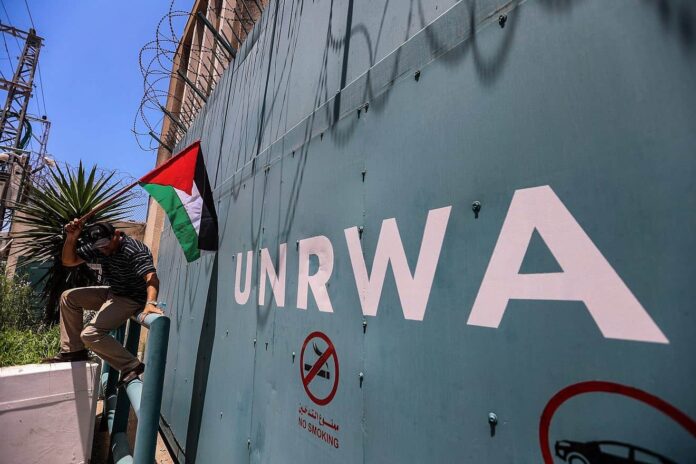
SWC Calls for UNRWA to be Replaced with Alternative Agency in Response to UN Findings of UNRWA Complicity in October 7th Attacks

In response to findings of the UN Office of Internal Oversight Services (OIOS) that 9 UNRWA employees were involved in the crimes of the October 7th attacks on Israel which resulted in the deaths of more than 1,100 Israelis, the Simon Wiesenthal Center has reiterated its call for the closure of UNRWA and the creation of a new agency to provide for the humanitarian and educational needs of the Palestinian people, free from complicity in anti-Semitic activity.

Rabbi Abraham Cooper, SWC Associate Dean, and Global Social Action Director stated, “Now, the UN’s own Inspector General has acknowledged what Israel and others have long known, that UNRWA’s own staff participated in the October 7th attacks on Israel.  It is long overdue that the 60+ countries that finance UNRWA defund this agency that actively foments anti-Semitic hate and violence and replace it with a new agency that can address the educational and humanitarian needs of the Palestinian people without the hate.”

Rabbi Cooper noted that OIOS only investigated nineteen UNRWA staff members, and still found 9 as having participated in the crimes of October 7th; a rate of 47%. “There is credible evidence that the moral rot of UNRWA extends to hundreds of other employees, as well as its deeply anti-Semitic and inciteful educational content.  We call on those countries that still finance UNRWA to take a hard look at its toxic culture and pursue alternative vehicles for Palestinian humanitarian assistance.”


For further information, please email Michele Alkin, Director of Global Communications at malkin@wiesenthal.com or Erik Simon at esimon@wiesenthal.com, join the Center on Facebook, or follow @simonwiesenthal for news updates sent directly to your Twitter feed. 

The Simon Wiesenthal Center is an international Jewish human rights organization. It holds consultative status at the United Nations, UNESCO, the OSCE, the Council of Europe, the OAS, and the Latin American Parliament (PARLATINO).   

Israel UN forced to fire 9 employees over likely involvement in Hamas massacre: ‘Tip of the iceberg’

JERUSALEM — The United Nations said on Monday that nine employees from the United Nations Relief and Works Agency for Palestine Refugees in the Near East (UNRWA) likely participated in the Hamas slaughter of 1,200 people, including more than 30 Americans, on Oct. 7 in southern Israel.

“For nine people, the evidence was sufficient to conclude that they may have been involved in the 7th of October attacks,” Farhan Haq, spokesperson for the U.N. secretary general said during a press briefing.

The U.N. announced that the world body will sever its employment from UNRWA, an agency that supports the relief and human development of Palestinian refugees.

In January, U.N. Secretary General António Guterres tasked the U.N.’s investigative arm, the Office of Internal Oversight Services, to investigate allegations that UNRWA staff took part in the Oct. 7 massacre.

Reuters reported that 19 staff members were investigated, but apart from the nine dismissed, the other cases lacked evidence to support their involvement.

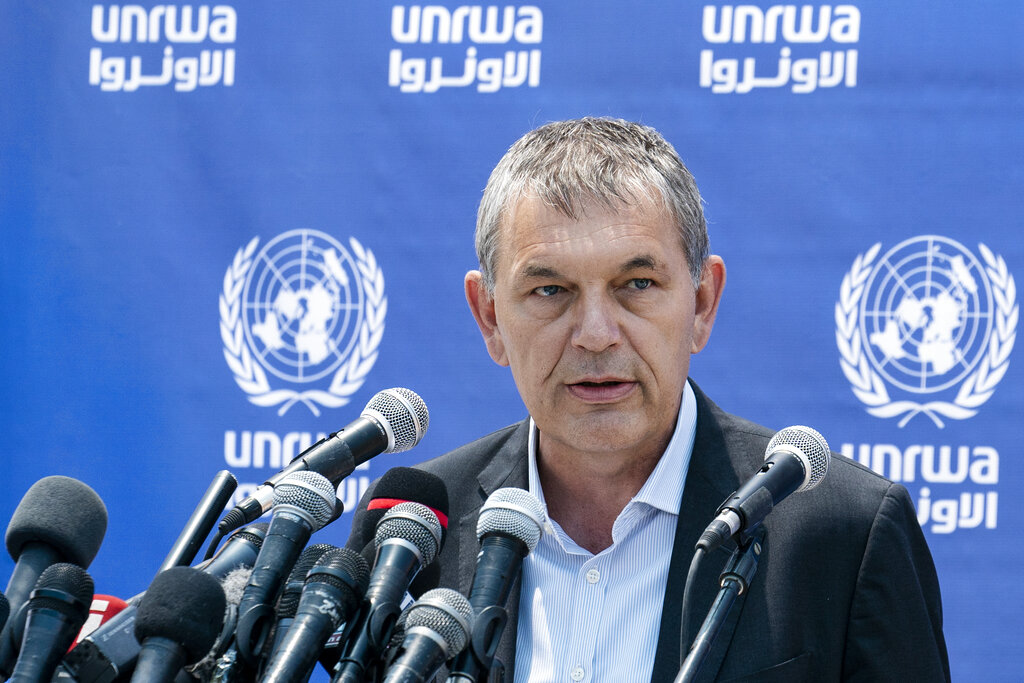
The head of UNRWA, Philippe Lazzarini, wrote in a statement posted on the agency’s website that “I have decided that in the case of these remaining nine staff members, they cannot work for UNRWA. All contracts of these staff members will be terminated in the interest of the Agency.”

The criticism of UNRWA’s criminal misconduct was swift. Rabbi Abraham Cooper, the associate dean of the Los Angeles-based Simon Wiesenthal Center, told Fox News Digital, “Now is the time for major donor nations to UNRWA to end funding for this corrupted pro-Hamas anti-peace entity. UNRWA is part of the problem for Palestinians, not part of any peaceful solution.”

UNRWA Commissioner-General Philippe Lazzarini

IDF spokesperson Nadav Shoshani criticized the agency on X, noting in part that “A UN investigation (yes, UN as in the first two letters of UNRWA) has concluded that 9 of your workers might have taken part in the raping, killing and slaughtering of Israelis and Israeli communities during the Oct. 7 massacre. Your ‘relief’ agency has officially stooped to a new level of low, and it is time that the world sees your true face.”

David Bedein, the director of the Center for Near East Policy Research in Jerusalem, told Fox News Digital the investigation was just “the tip of the iceberg.”

Bedein, who has published numerous reports on UNRWA’s curriculum that documented pro-terrorism and antisemitic teaching, added, “UNRWA is coming out of October 7 strengthened and there is no supervision and there is no demand from Israel and donor countries that there be inspections of UNRWA facilities for weapons.”

He said he recommended to the Israeli security establishment in September 2023 that there be “close supervision of UNRWA.”

Fox News Digital reported in late July that Israeli lawmakers approved the first reading of a bill that would cut ties with the controversial U.N. agency and declare it a terrorist entity. Speaking in the Knesset in July, Yulia Malinovsky, the bill’s sponsor, called UNRWA “a fifth column within the State of Israel” and said it was high time that the agency was outlawed in the country.

The House Foreign Affairs Committee also passed initial legislation that would build on an already existing funding freeze for the multimillion-dollar organization and direct the State Department to recover previously donated monies.

The U.S. suspended funding for UNRWA after Israeli allegations over its members taking part in the attack on Israel. However, many countries, including Germany, Austria, Japan and also the European Union have restarted their funding to the organization.

A State Department spokesperson told Fox News Digital that they had not yet reviewed the report’s findings.

Fox News’ Yonat Friling, Ruth Marks Eglash and Reuters contributed to this report.

Warding Off Eicha with Ayeka

Our custom is to read Parshat Devarim right before Tisha B’av. One of the reasons for this custom can be seen through the word “Eicha” which is used sparingly throughout the Tanach. The Book of Lamentations which is read on Tisha B’av begins with this word. “Eicha Yashva Badad”, how has she (i.e. Jerusalem) sat alone, and is thus known as Megillat Eicha. The first time this word is used in the Chumash is found in our Parsha (Devarim 1:12) as Moshe expresses doubt in his ability to lead the nation: “Eicha Esa L’vadi”, how can I bear the burden alone.

We continue this linguistic connection with our choice of HafTorah, Divrei Yeshayahua (Isaiah 1:21), where we meet up with this expression once again. We echo the words of the prophet, as in response to the rampant corruption of his time, Yesha’ayahu bitterly laments: “Eicha Hai’ta L’zona Kirya Ne’emana”, how has this loyal city become like a harlot.

Rav Soloveitchik (M’Pninei HaRav pg. 316) points out that this same word, albeit with a different pronunciation, can be found in the Torah in one previous location.

In Parshat Bereishit, after Adam and Eve had partaken from the tree of knowledge and hidden themselves in shame, the Almighty calls out saying: “Ayeka- where art thou?” (Bereishit 3:8).

The Rav made the following comment: If the hopeful call of Ayeka is not heeded, it then has the potential of becoming transformed into the bitter lamentation of Eicha.

The verse describes how G-d calls out to Adam as he walked in the garden “Leruach Hayom”, and the Midrash (Bereishit Rabba 19:6) discusses whether this takes place at sunrise or sunset. Demonstrating his homiletic prowess, the Rav explained that Ruach Ha’yom, the Zeitgeist surrounding us, can be interpreted as G-d calling out to man- Ayeka! This can take place at either sunrise or sunset, at a time of new beginnings and of hope, or else of failure and despair.

Towards the beginning of the Emancipation, as freedom was extended to all, liberalization was the call of the hour. It was as if a new light had begun to shine on Jewry. And yet, when G-d appeared to ask “Ayeka”, Jews hid from Him – after all, they were now emancipated. Later on, during the period of World War II, a bleak sunset of darkness and calamity, G-d’s cry to mankind was heard again: Ayeka – where art thou. Again, there was no response to G-d’s call, and in lieu of Ayeka the terrible ramifications of “Eicha” were experienced.

Wanting to give this Midrash an Eretz Yisrael spin, we might say the following:

On the eve of the 9th of Av as the spies instilled fear in the hearts of the People of Israel, they began to sob bitterly. Our Sages (Taanit 29a) say that the nation cried that night. The Almighty then had occasion to say, “You cry for naught; needlessly. The time will come when you will have a good reason to cry… (this will be as you witness) the destruction of the Temple”. Night and darkness befell the Jewish people then, just as it did in the 1930’s and 40’s. Did not the expulsion from Spain occur around the 9th of Av? Did not the first World War commence on this day? The Almighty was crying out to the Jewish People: “Ayeka- I am waiting for you in Eretz Yisrael”. Alas, most of the Jewish people were hiding in the Diaspora, refusing to leave.

Rav Teichtel in his “Eim Habanim Semaicha” perceived a direct link between the peoples’ refusal to leave to Eretz Yisrael and the imminent Holocaust. The Ayeka was tragically transformed into Eicha. Now, seventy years later, we are experiencing a period of sunrise as we bask in the light of Hashem’s Chesed. A younger generation has arisen in the Diaspora- a generation who knew not the trauma of the Holocaust. In our Parsha, Moshe stands before such a younger generation, far removed from their parents’ aversion to Eretz Yisrael. Moshe reminds them of the sins of their fathers, beseeching them to not repeat their elders’ mistakes: “Yet you would not go up, but rebelled against the Commandment of the Lord your G-d”, Devarim 1:26-27.

Our present generation is being beckoned as well, we too are being beseeched: “Come home and atone for the sins of your forefathers – Ayeka – where are you?” They couldn’t, or wouldn’t, make Aliyah; you can and should!  We must not rebel, we must go up!


RABBI YERACHMIEL RONESS was born and raised in Montreal, Canada. After serving as a congregational Rabbi and as a Hillel Director in New York City, he made Aliyah in 1983 with his wife Dina and their five young children.

Ever since, Rabbi Roness has dedicated his life to promoting Aliyah. First, as Rabbi of the Jewish Agency’s Absorption Centers, and subsequently as the executive director of the Aloh-Naaleh organization.

This article was taken from Rabbi Roness’s new book: Aloh Na’aleh – Eretz Yisrael and Aliyah in the Weekly Parshah.

 The book is for sale on Amazon.

Honenu to State Attorney: “Reopen the case”

Honenu Attorney Chayim Bleicher wrote a letter to the Appeals Department of the State Attorney’s office demanding that they order the reopening of an assault case and indict three Arabs who attacked a Jewish youth two years ago. In the letter, he described how a 15-year-old youth with an obviously Jewish appearance was chased by Arabs in a car after he, unknowingly, may have slightly delayed them while riding an electric bicycle in the Ramat Shlomo neighborhood of Jerusalem.

Honenu Attorney Chayim Bleicher commented on the case: “Examination of the investigative material and the video clips paints a very disturbing picture. A number of violent Arabs in a car chased a Jewish cyclist and brutally attacked him for, in their opinion, insulting their ‘honor’. As good citizens came to his aid, they attacked them and other passers-by with iron rods and rocks. … The police appropriately detained the attackers and interrogated them over several days. They changed their testimonies from interrogation to interrogation and in the end were forced to confess that their only motive was to defend their ‘honor’. To our shock, the Police Prosecution Department closed the case despite the serious violations.

“Closing the case sends a dangerous message to potential attackers to the detriment of public security. Moreover, from our experience, it is possible that the case was closed because the attackers filed a complaint with the police demanding to know why the Jews who helped the victim were not detained. The time has come for an unequivocal statement. Jews have the right to defend themselves and their fellow Jews from violent attackers. The prosecution’s rationale that citizens should expect to be assaulted without any intervention is a dangerous conception that could lead to the murder of Jews. The Jews who intervened should be praised for their assistance. Attempts to equate a brawl between two fighters, with an attack on an innocent citizen such as in this case, are catastrophic and should be eradicated. We demand that the authorities prosecute the attackers to the full extent of the law and stop discouraging Jews from defending themselves.”

Maon resident accused by foreign anarchist exonerated

The Be’er Sheva District Court exonerated a Havat Maon resident accused of assaulting foreign left-wing activists near his community in the Southern Har Hevron region. The resident was detained a year and a half ago and indicted for aggravated assault. Honenu Attorney Avihai Hajbi is representing the resident.

Honenu Attorney Avichai Hajbi welcomed the verdict and said, “The court ruled that during cross-examination, it was revealed that the State wanted to convict my client on the basis of unreliable testimony from the complainant – a foreign anarchist and manipulative liar. The court also ruled that the Israel Police tried to incriminate my client by deceptive means. I am pleased that the court did not submit to pressures from either the State Attorney’s office or the US Embassy and exonerated my client.

Three detained at protest over Arab workers at Bruchin

Screenshot, the protest in Emanuel; Photo credit: Free use

In June, demonstrators in Efrat protested against the decision to allow the entrance of Arab workers to their communities. Demonstrators protested twice in Emanuel; please click here and here.

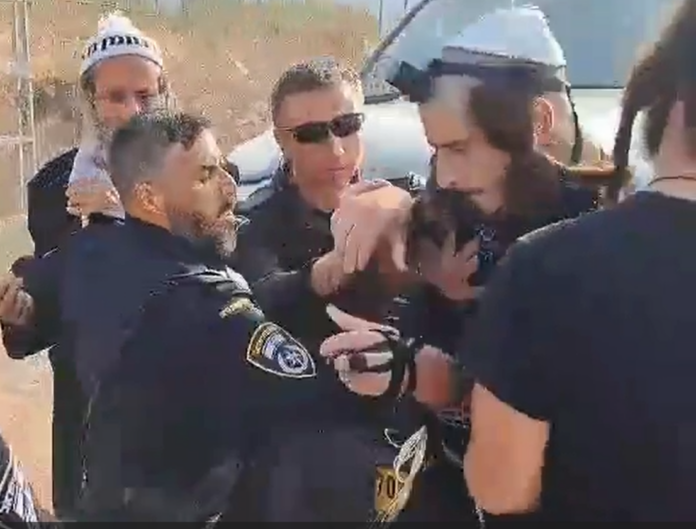
On July 28, dozens of Yehuda and Shomron residents protested against the entrance of Arab workers to the community of Bruchin in the Shomron. Three protesters were detained and taken to the Ariel Police Station. Honenu Attorney Daniel Shimshilashvili provided the detainees with legal counsel. They were released after interrogation.

Honenu Attorney Daniel Shimshilashvili: “These groundless detentions should not have taken place, particularly since there have been many examples recently where demonstrators who commit violence against and throw lit torches at police officers were released within a short time. The protesters at Bruchin wanted to support the State and highlight the foolishness regarding the potential dangers of bringing Arab workers into Jewish communities. Instead of the police authorities supporting this position they silenced protesters who were expressing a legitimate fear. They detained protesters, treating them as criminals, even though they had not violated any law. The police treat protesting Yehuda and Shomron residents with an iron fist, but anarchists protesting and causing disturbances on Kaplan Street are treated with kid gloves. This discrimination must stop. We will act with all available means to that end.”