 Czech
Czech French
 German
 Hebrew
 Noruegan
 Russian
 Spanish
 Swedish
 Polish
 Portuguese




Plagues – past, present and future

Why was this night different from all other nights?
Instead of a restful and peaceful night’s sleep, we were roused from our slumber at approximately 1.30am by a series of loud explosions. Looking out from our bedroom window, we beheld an eerie sight reminiscent of a Star Wars movie. Streaking across the night sky were innumerable illuminated orange objects which all seemed to disintegrate and explode. I guessed that they were the Iranian drones which had been launched from Iran. There had been reports earlier in the evening of a possible drone strike.
Within a few minutes, the air raid sirens wailed, and unaware whether missiles were heading in our direction, it was a mad dash for our local communal air raid shelter only about 30 seconds from our home. The sirens ceased almost immediately which indicated that nothing was heading our way. Drones were still flying but obviously posed no lethal threat.
By this time, everyone in the country was up and monitoring the news, and needless to say, mobile phones were being used to check up on family and friends. Getting back to sleep proved to be a difficult exercise especially for those glued to the breaking news developments.
It was only the next day that one had time to think about the unfolding events and draw some conclusions.
I predicted that it would take no more than a couple of hours for all the usual crowd to warn Israel not to retaliate, to show restraint and allow “diplomacy” to deal with the terrorist regime in Iran.
Pesach (Passover) is, therefore, an ideal time to remember how our ancestors dealt with past tyrants whose agenda included ethnic cleansing, murder, enslavement, kidnapping and murder. The exodus from Egyptian bondage only occurred after an escalating series of plagues and diplomatic negotiations with Pharaoh. His attempt to kill all Hebrew male babies at birth failed thanks to the heroic efforts of the midwives who thwarted this pogrom. Moses and Aaron did try to negotiate an exit strategy but this failed in the face of a stubborn refusal to agree on the part of the Egyptian leader.
A series of afflictions still made no impression and it was therefore only after the final plague that the Hebrews were allowed to depart. They had hardly left when Pharaoh regretted his decision and pursued them with his entire army determined to finally wipe them all out. This of course ended in spectacular failure at the sea of reeds.
The lessons we should be able to draw are that negotiating with and appeasing dictators, tyrants and Jew haters is a lost cause and only results in worse disasters. So, it has been proven throughout Jewish history and is especially relevant in our time. Unfortunately, the rest of the world refuses to learn and still stubbornly clings to the illusion that kowtowing to thugs and bullies will buy peace.
The one plague that has survived millennia of mutations is hate for the Jewish People and its promised homeland. The Babylonians and the Romans did their level best to not only destroy Judea and Israel and exile its Jewish inhabitants but also to ensure that the very idea of Jewish sovereignty should be eradicated. Today’s anti-Israel/Zionist haters have the same agenda as recent events and realities have so dramatically demonstrated.
This brings us back to current developments and their potential outcomes.
Without a shadow of a doubt, Iran has been emboldened by the reluctance and refusal of the democracies to make it accountable and pay a heavy price for its headlong rush towards nuclear weapons. Despite a clear and unambiguous message of its intentions to destroy Israel, the international community led by the Biden Administration has engaged in appeasement mode policies.
Much is being made of the fact that the USA and UK joined Israel in helping to repel the drone and missile barrages. However, overlooked is the fact that this apparent act of solidarity carried with it a subsequent caveat. Listening to the frantic chorus of admonitions issuing forth from Western capitals, the unmistakable conclusion is one of terrified appeasers frenetically trying to distance themselves from any remote involvement in taking firm action to punish Iran.
What other conclusion can one reach when almost every leader of the democratic world warns Israel in the sternest language not to retaliate because by doing so world peace will be in peril? The delusion that so-called diplomacy will deter Iran from further terror attacks and halt its stampede to nuclear capabilities is so firmly embedded in foreign policy appeasers’ minds that no amount of proof to the contrary will alter their hallucinations.
Biden insists that the US does not want conflict with Iran and to prove this he showers the mullahs with billions of unfrozen funds. In case Tehran still does not get the message his Government makes it clear that Washington will not back any Israeli response. The Lord Cameron wags his fingers and warns Israel not to respond as do the French and others. For good measure, the UN Secretary General declaimed that “acts of reprisal involving force are barred under international law.” Not to be left out of the international chorus of the Munich appeasers’ chorus is the NZ Foreign Minister who piously declared that he expected both sides to now refrain from fuelling tensions.
The reaction to the Iranian attack by China and Russia is predictable especially as they are long time supporters of the Iranian Mullah regime and its evil intentions. It is nothing short of an amazing and delusionary act of craven moral cowardice that those who should be thwarting Iranian genocidal ambitions are instead running to the UN. This corrupted body has neither the will nor the ability to sanction Iran. Proof of this is the fact that Iran is currently chair of the UN Conference on Disarmament. What more glaring farce can one encounter?
Israel needs to ask Cameron if he would have demanded from Churchill that the UK not retaliate for the German blitz on the UK. When the Japanese attacked Pearl Harbour would those who today demand Israel not retaliate have told Roosevelt the same? When Margaret Thatcher retaliated against the Argentinean invasion of the Falkland Islands did the UN convulse and was the UK dragged in front of the ICJ at The Hague?
In the face of a demand that Iran’s Islamic Revolutionary Guard Corps be banned the UK Prime Minister reportedly has dismissed this because “it would sever diplomatic ties with Tehran.” Will Australia use this same specious and cowardly excuse instead of actually having a moral backbone?
If all this sounds eerily reminiscent of the years leading up to the Shoah you would be right. Add in the convulsive tsunami of Jew/Israel hate now enveloping all parts of the world and you have a perfect brew for what lies ahead thanks to the craven cowardice of the morally bankrupt.
Every year there is a ceremony in Germany to commemorate the liberation of the Bergen Belsen concentration camp. This year it has been delayed until a later date and Israeli representatives have been uninvited to speak. It is the height of irony but indicative of the way things are headed that Germany, of all countries, should surrender in the face of Nazi-type mobs.
This brings us back to the topic of plagues.
It was only after a series of escalating disasters that our ancestors were let go. The final humiliation for the Egyptians followed at the Reed Sea.
Every Seder, we remember how, in every generation, there are those who rise up to destroy us.
This Pesach, therefore, as our hostages remain captive and we face threats to our very right to live, we need to resolve to do what needs to be done in order to thwart and defeat the nefarious designs of our enemies.
May this year’s celebrations herald the beginning of our redemption and the fulfilment for more Jews of the pledge to be next year in a fully restored and united Jerusalem, our eternal Capital.
Michael Kuttner is a Jewish New Zealander who for many years was actively involved with various communal organisations connected to Judaism and Israel. He now lives in Israel and is J-Wire’s correspondent in the region.
Behind the Scenes with David Bedein The Kenneth Timmerman Interview
incisive VIDEO interview with Iran expert Kenneth Timmerman
Following Senator Warren’s assertion that the term “genocide” should be applied to the current war in Gaza

Senator Elizabeth Warren, D-Mass, recently became the first US politician to declare that it is appropriate to use the term “genocide” when referring to the current war in Gaza.
Having covered Hamas since its founding in 1988, I would venture to agree with Senator Warren’s observation. However, I would stress that the observation rightly pertains to the actions of Hamas – not to those of the Israel Defence Forces.
In this regard, note that the murderous October 7th attack on 22 Jewish communities was — amongst other obvious characterizations — illogical.
No nationalistic, political or military aspiration could be served by the random killing, torture, rape and kidnapping of Jewish men, women, children, babies and old people.
Senator Warren would do well to look at US law (Title 18 of the USC, Part I, chapter 50A), which defines genocide as:
“Whoever, whether in time of peace or in time of war and with the specific intent to destroy, in whole or in substantial part, a national, ethnic, racial, or religious group.”
As the Arab attack deliberately targeted Jews of all ages, the Oct. 7 act qualifies as “genocidal” in intent.
The Israeli military operation in Gaza, regardless of the civilian death toll, cannot be defined as genocidal because there is no genocidal intent. The Israeli government’s goals for the war are the following:
1. Release the hostages.
2. Eradicate the Hamas terror organization.
As such, from a legal point of view, the Israeli war in Gaza is not genocide.
Apparently, Senator Warren failed to read the definition of genocide in US law.
The time has come for Senator Warren to learn about real genocide. Perhaps the quarter-million Jews who live in her state will involve themselves in the education of their Senator, to acquaint her with the lesson recited each Passover: “In every generation, an adversary arises to eradicate our people, yet God saves us them from their hands.”
A case in point; on Friday April 12, a 14-year-old unarmed Jewish shepherd, Binyamin Ahimeir went missing. When his sheep came home before Shabbat without Binyamin, his mother appeared on Israel radio and appealed for everyone to pray for her son. A few hours later, Binyamin was found dead, stabbed in all parts of his body. PBC radio, the VOICE OF PALESTINE, announced the execution of a Jew who intruded into Palestinian grazing land. If Binyamin’s kiĺlers are apprehended, PA law provides a salary for life for anyone who kills a Jew. That law was passed by the PA in August, 2015. This is that law:
Incentivizing Terrorism: Palestinian Authority Allocations to Terrorists and their Families
135 nations fund the PA, as does Israel. THERE IS NO RECORD OF ANY NATION THAT DEMANDS THAT THE PA CANCEL THAT UNPRECEDENTED LEGISLATED GENOCIDAL INCENTIVE TO MURDER JEWS.
The Dead Sea at the crossroads of war: Reflecting on Iran’s recent missile strike

On April 13 and 14, Iran executed its first direct attack on Israel amid the current conflict, starkly underscoring the fragile security environment that surrounds us. This very date marks a personal and poignant anniversary for me as well; eight years prior, I embarked on my first journey to the Dead Sea, drawn by its haunting beauty and environmental plight, aboard a unique boat excursion at the earth’s lowest point.
In my role as a foreign relations manager at ISRAEL-is, aimed at improving Israel’s global image post-October 7 atrocities, the sight of an intercepted Iranian missile plunging into the Dead Sea reignited my dedication to addressing both environmental and security challenges in our region. This 750 kg. warhead missile, a vivid symbol of aggression, not only opens a new drastic chapter in the Middle East conflict, but also strikes a body of water that symbolizes both natural wonder and ecological fragility.
Following the tumultuous aftermath of the Gaza war, the October 7 atrocities and Iran’s latest provocation, the security challenges facing Israel and its neighbors have only deepened. A significant display of regional dynamics unfolded as Jordan decisively intercepted several missiles from Iran aimed at Israel and Gulf states, including Saudi Arabia, and provided intelligence on the Iranian attack. This act of cooperation amidst conflict underscores the complex interplay of antagonism and alliance that characterizes our regional relations.
We need a dual strategy: environmental preservation and coexistence
Recalling the days leading up to October 7, there was a fleeting optimism about regional partnerships underpinning a brighter future. During this period, I walked the corridors of Capitol Hill with a delegation from the Middle East and North Africa, championing the third year of the Abraham Accords. My role then as the director of the Dead Sea Revival Project involved advocating for water diplomacy and the development of environmental tourism—a dual strategy aimed at environmental preservation and fostering coexistence and unity among the peoples connected by shared ecological and cultural narratives, particularly focusing on water sustainability in one of the world’s driest regions.
Today, as the shadow of escalating conflicts looms larger, the necessity for a regional security alliance against Iran becomes increasingly imperative. Yet, within these brewing tensions lies a critical opportunity for cooperation centered around our mutual environmental concerns. The declining waters of the Dead Sea serve as a stark reminder of the broader environmental challenges that defy political borders and demand collaborative action.
Looking ahead, our focus must evolve from mere survival and tactical maneuvers to fostering sustainable cooperation. We are reminded that our shared water resources and environmental challenges could be the cornerstone of a robust regional alliance. Such cooperation does not merely address immediate ecological needs but also establishes the groundwork for a more stable and secure future.
As we navigate these complex times, our unwavering commitment to environmental diplomacy and regional cooperation continues to strengthen. The stories of resilience from the Dead Sea to the diplomatic corridors illuminate the pressing need for a unified approach to both security and sustainability. These narratives reinforce the importance of leveraging shared environmental interests to bridge divides and forge lasting peace in the region.
The success of diplomatic efforts like the Abraham Accords highlights the potent impact of cooperative strategies and underscores the critical need to engage communities and nations in dialogues about mutual interests and shared destinies. This comprehensive approach will not only counter the destructive ideologies of Iran and its proxies but also pave the way for a sustainable and peaceful future for all involved.
The writer is foreign affairs manager for ISRAEL-is, and formerly served as director of the Dead Sea Revival Project.
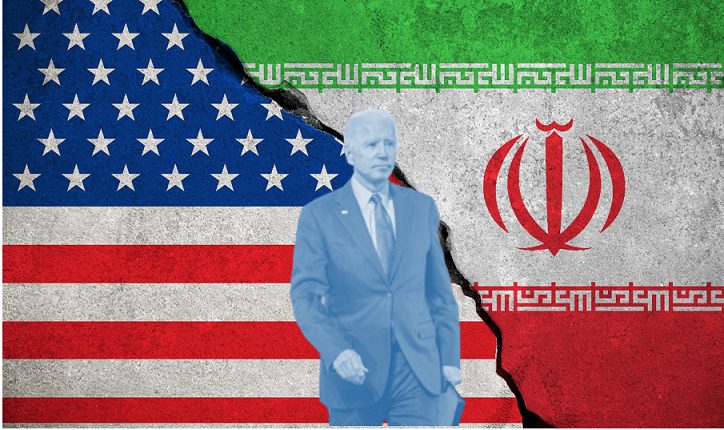
Did Iran attack Israel with assurances from Biden?
Normally I don’t cover breaking news, but this is too important.
I was wrong.
I believed the Iranians would not attack Israel directly as they had been threatening, because such an attack would green-light an Israeli response on the Iranian homeland that would be devastating for the Islamic regime.
I reasoned that the extraordinary coordination among U.S. and Israeli officials late last week signaled a potential joint U.S.-Israeli counterstrike should Iran’s leaders be so reckless as to attack Israel.
I said that publicly in my regular newsletter on April 5. A few days later, Israeli minister without portfolio, Benny Ganz, said it on Israeli TV. (In case you missed it, Benny Ganz is the “moderate” Israeli politician Biden & Co. are trying to maneuver into position to replace Bibi.)
Both of us were wrong.
I believed that Israel would strike back against Iran with such devastating force – potentially, in a joint counter-strike with the U.S. against Iranian nuclear facilities – that it would reveal the regime’s weakness.
Iranian air defenses would show themselves incapable of shooting down a single U.S. or Israeli plane, a fact that would become immediately obvious. An Israeli counterstrike would make the regime appear weak in the eyes of the Iranian people.
And that is something regime leaders cannot allow to happen. They cannot appear weak, because then they will fall.
On Sunday morning, I woke up in the south of France to the extraordinary news that Iran had defied all expectations and launched 170 drones, 30 cruise missiles, and more than 100 ballistic missiles against Israel.
Even more extraordinary were the results: Israel announced that along with its allies, it had knocked out all 170 drones and 30 cruise missiles before they even reached Israeli airspace, and intercepted 99% of the ballistic missiles, many of them in exo-atmospheric kills that showered shrapnel across the Negev desert, severely wounding a 7-year Bedouin girl who lived near the Netarim Air Force base, where Israel’s fleet of F-35 fighters is based.
But here is the key: Israel alone did not thwart the Iranian attack. The United States, the UK, Jordan, and even France sent their pilots aloft to intercept incoming drones and cruise missiles before they reached Israel, with the U.S. Central Command coordinating that response.
And that international assistance appears to have a come at a price: President Biden publicly warned Prime Minister Netanyahu on Sunday that the thwarted Iranian attack on Israel was it. The U.S. would not support an Israeli strike against Iran in response.
Israel took out Iranian military commanders illicitly using a diplomatic facility in Damascus on April 1; Iran retaliated against Israeli territory in a strike that killed no Israeli two weeks later. Strike, counter-strike. Game over.
As the former U.S. National Intelligence Officer for Iran, Norman Roule, told CNN on Sunday, the Iranian attack on Israel “erased all the red lines.”
Extraordinary.
I have many questions. We know Biden’s sympathies for the Iranian regime. As soon as he took office, he quietly removed sanctions on Iranian oil sales, allowing them to go from exporting 400,000 barrels/day during the final days of the Trump administration to nearly 2,000,000 b/d today, most of it to China.
We know that he paid a $6b billion ransom for five U.S.-Iranian dual-nationals held hostage by the Tehran regime.
We know that until late last year, Biden was seeking to revive the 2015 nuclear deal with Iran, which Trump for good reason called “the worst deal ever negotiated.” Trump withdrew US participation in the deal in 2018.
There is much more we don’t know, at least not publicly. For example, what back-channel discussions did the Biden White House conduct with Iranian officials over the past two weeks, in Turkey, Iraq, or elsewhere? Did the White House provide assurances to Iran that the U.S. would intervene to prevent an Israeli counterstrike, thereby green-lighting the Iranian strike on Israel, which the Ayatollah needed to placate his own hardline supporters?
I can find no other explanation for the otherwise irrational behavior of the Islamic state of Iran’s leaders. Above all else, they value regime survival. Without a green light from Biden for their attack on Israel, they risked regime extinction – by Israel, and by their own people.
But with assurances from Biden, they felt secure.
I think we will know the answer soon.
Biden ‘knowingly and unlawfully’ gave $1.5B that helped fund Hamas, other terror groups: suit
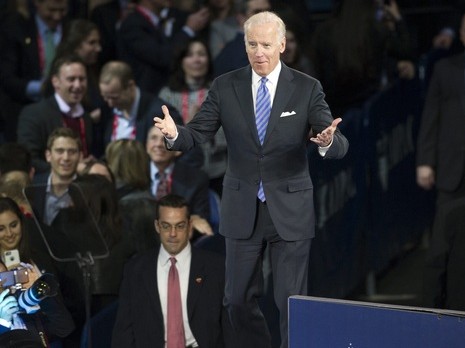
The Biden administration has “knowingly and unlawfully” provided more than $1.5 billion in aid to Gaza and the West Bank, allowing US tax dollars to “subsidize” Palestinian terror groups like Hamas, according to a lawsuit brought by Rep. Ronny Jackson and victims of past terror attacks in Israel.
President Biden and Secretary of State Antony Blinken have “known for years” that the US aid is providing “material support” for Hamas’ “tunnels, rockets, weapon procurement, and command and control infrastructure,” among other terror structures, an amended complaint filed March 25 states.
But since taking office, Biden and his officials have still pushed for the funding to the UN Relief and Works Agency (UNRWA) and other groups in the West Bank and Gaza — despite internal warnings about the “high risk” of the cash falling into the hands of terror groups in direct violation of the Taylor Force Act, signed into law in 2018 by President Donald Trump.
The aid for meant social services, education and infrastructure allowed the Palestinian Authority — which is barred by the Taylor Force Act from receiving US funding — to funnel its own assets to terrorism, the complaint argues.
The complaint, first filed last year by the conservative group America First Legal, was amended to include new emails obtained through Freedom of Information Act (FOIA) requests that also reveal the administration’s attempts to undermine Israel.
“It’s pretty clear that they came in with an intent and a policy to overturn what the Trump [administration] had done with respect to Israeli sovereignty over Jerusalem,” Reed Rubinstein, a lawyer for America First and a former US Deputy Associate Attorney General during the Trump administration, told The Post Monday.
“They knew that by increasing the money, we were going to see increased terror attacks. … And they did it anyway,” he said. “These folks came in with an absolute agenda to empower the Palestinians [and] flood money into Gaza and the West Bank.”
One March 1, 2021, email cited in the filing was sent by Hady Amr, the special representative for Palestinian Affairs, to George Noll, the chief of the US Office of Palestinian Affairs, and discusses the “progress” they had been making ahead of Israel’s parliamentary elections later that month
“Got the memo on elections,” Amr told Noll, in a heavily redacted message. “We are making progress. This is great.”
Another exchange, on May 24, 2021, following Hamas’ 11-day conflict with Israel, discusses “humanitarian response and reconstruction” efforts in the Gaza Strip, which Rubinstein said would have provided cement and other materials that could have been “diverted” to the terror group’s more than 350-mile-long tunnel system.
“The idea that they didn’t know that they were subsidizing these activities is fantasy,” Rubinstein added, saying that the complaint will dig up the extent to which US government funding was “subsidizing Hamas’ tunnels” soon after the May 2021 fighting.
“You can see from these emails, it gives you a real sense of where senior decision-makers were at … the policy tools of the US government [and] how they should be used,” he said. “I don’t know how you get anything other than then a sense that there was very deep hostility to the Jewish state.”
The Biden administration moved to dismiss the case last year, but a federal judge denied the motion on Oct. 9, two days after Hamas terrorists rampaged across southern Israel, killing an estimated 1,200 people — including 33 Americans.
The suit is meant to stop any further funding of Palestinian terror operations that lead to killings, such as the 2016 stabbing of Taylor Force, a US Army veteran of the Iraq and Afghanistan wars, in Tel Aviv — and the near-death of New Jersey native Sarri Singer in a 2003 suicide bombing attack in Jerusalem.
The Biden administration contributed more than $1 billion to the Palestinian refugee organization UNRWA before cutting off the money following reports that its employees participated in the Oct. 7 terror attack.
A March 2021 waiver that the State Department obtained from the US Treasury had admitted that American aid funding was at “high risk” of being obtained by Hamas, as well as other terror groups like Palestinian Islamic Jihad, the Washington Free Beacon first reported.
That waiver is included in the lawsuit’s exhibits, along with a State Department Office of Inspector General report in November 2023 that also confirmed the same “high risk” of aid funding being diverted to terrorism.
The Palestinian Authority is also slated to contribute at least $97 million to more than 13,000 Hamas terrorists that participated in the Oct. 7 attacks, according to a Free Beacon report also cited in last month’s filing.
“We are currently witnessing the devastating effects of the Biden administration knowingly breaking the Taylor Force Act, which President Trump signed into law,” Jackson (R-Texas) told The Post. “There is no doubt that the world is less safe now under the failed leadership of Biden and Secretary Blinken compared to four years ago under President Trump.
“Biden and Blinken have blood on their hands, and sending millions of fungible American taxpayer dollars to UNRWA has directly led to Palestinian terror against Israel. The Middle East is getting less stable by the minute due to the foolishness and weakness of the Biden administration, and I will not stand by while things continue to deteriorate!”
Rubinstein said the plaintiffs, who filed their complaint in US District Court for the Northern District of Texas, are expecting a response from the government next month.
“As a general matter, we do not comment on ongoing or pending litigation,” a State Department spokesperson told The Post.
The PLO-PA-Iranian Terror Alliance

The silence of the Palestinian leadership in the face of the Iranian missile attack on Israel is further proof that the Palestine Liberation Organization (PLO) is again aligning itself with the enemies of Israel and the West. Even as Israel was joined by an international coalition, including the United States, the United Kingdom, Jordan, and others, to repel the attack, the Palestinian leadership chose to remain quiet. There was no condemnation of the attack that could have just as easily killed Palestinians as it could Jews. There was even no condemnation of the missiles fired toward Jerusalem and the Temple Mount.
In 1991, when Saddam Hussein invaded Kuwait and attacked Israel, Yasser Arafat and the PLO cheered him on. Initially, the result was disastrous for the Palestinian cause. The PLO had reinforced its image as a terrorist organization, and Yasser Arafat became an international pariah. In the aftermath, when Kuwait was liberated, the Kuwaitis expelled hundreds of thousands of Palestinians. Then, deus ex machina, along came Ron Pundak, Yair Hirschfeld, Yossi Beilin, and their patron, Shimon Peres, to pull the terrorists from the depths of despair with their new Oslo process.
The PLO was meant to renounce terror and accept Israel’s right to exist. But in truth, having been thrown a lifeline, the PLO leadership used the Oslo Accords as a means to establish a forward beachhead west of the Jordan River from which they would continue their terror attacks.
Warring Sunni and Shiite Islam Unite on One Thing
Within Islam, the Sunnis and the Shiites have been killing each other for 1,400 years. But when it came to the destruction of Israel, even these fundamental gaps were bridged when the Shiite Ayatollahs adopted the deceptive approach of the Sunni PLO.
One of the most significant expressions of that partnership was the 2002 Karine A affair, a ship full of weapons intercepted by the IDF. At the time, the PLO and the PA were at the height of the terror war initiated by Arafat after he rejected the Clinton-Barak peace deal. To wage the war, the Palestinians needed weapons. Arafat sent his long-time confidant, Fouad Shubaki, to Tehran to secure support. The Iranians donated 50 tons of weapons. All Arafat had to do was purchase the ship – the Karine A – to transport the arsenal. When IDF commandoes boarded the ship in the Red Sea, the Ramallah-Tehran connection was exposed for all to see.

In 2014, the IDF intercepted yet another huge Iranian shipment of arms and two million kilograms of cement on board the Klos-C, this time destined for Hamas in Gaza.


October 7 Alliance of Terror
Fast forward to the October 7, 2023, massacre when Hamas terrorists from Gaza launched the deadliest assault on the Jewish people since the Holocaust. Terrorists belonging to PA Chairman’s Fatah were also involved in the October 7 attack, as shown in this screen grab from the attack on Kibbutz Nahal Oz. Note the yellow Fatah headband.

Israel responded with crushing force not only in Gaza but also against the resurgent Palestinian terrorists in Judea and Samaria. Iran responded by activating its proxies in Lebanon (Hizbullah) and Yemen (the Houthis), attacking Israel from the north and the south.
As the fighting raged on different fronts, in March 2024, the IDF intercepted yet another substantial Iranian weapons cache destined for the Fatah – i.e., PLO/PA – terrorists in Judea and Samaria. Officials affiliated with Iran’s Islamic Revolutionary Guard Corps, linked to the Quds Force in Syria, were the masterminds of the operation.
Shortly after, Israel targeted and killed the IRGC Quds Force commander, Mohammad Reza Zahedi, who was reportedly responsible for the unit’s operations in Syria and Lebanon. Glorifying their dead commander, a mouthpiece for the Iranian regime added that Zahedi had been involved in the planning and execution of the October 7 massacre.1
In response to the assassination, on the evening of April 13, Iran launched an unprecedented attack, firing 185 drones, 36 cruise missiles and 110 surface-to-surface missiles at Israel.
The Iranian attack put the PLO/PA in an awkward position.
On the one hand, the longstanding PLO/PA/Hamas relationship with the Iranian Ayatollahs, who have devotedly supplied the terrorists with weapons and training, meant that the PLO/PA leadership would not join the international coalition fighting the Iranian axis of terror for fear of annoying their terror patrons.
On the other hand, the PLO/PA is trying to prove (without any factual basis) that it has embarked on the revitalization process required by the Biden administration.
While the PLO/PA wants to enjoy U.S. legitimacy, the fact of the matter is that they support the Iranian aggression. The PLO/PA, on this issue, is no different from Hamas and the other Palestinian terror groups, all of whom, like Iran, seek Israel’s destruction.
As in the first Gulf War, the Iranian attack should be a watershed moment for the PLO/PA. Either the Palestinian leadership stands with the international coalition, or it stands with the axis of evil. There is no middle ground. In the same way, as the PLO/PA has never condemned the October 7 massacre, the PLO/PA’s failure to condemn the Iranian attack is not indicative of indifference but instead of real, palpable support that should carry real consequences.
The writer is the Director of the Initiative for Palestinian Authority Accountability and Reform in the Jerusalem Center for Public Affairs and served for 19 years in the IDF Military Advocate-General Corps. In his last position, he served as director of the Military Prosecution in Judea and Samaria.
Note
- https://jcpa.org.il/article/%d7%9e%d7%9b%d7%95%d7%9f-%d7%9e%d7%97%d7%a7%d7%a8-%d7%94%d7%91%d7%9b%d7%99%d7%a8-%d7%94%d7%90%d7%99%d7%a8%d7%90%d7%a0%d7%99-%d7%a9%d7%97%d7%95%d7%a1%d7%9c-%d7%91%d7%93%d7%9e%d7%a9%d7%a7-%d7%94%d7%99/↩︎
Iran’s attack on Israel stirs admiration among Gaza Palestinians
NATURAL RIGHT
The Reuters Daily Briefing newsletter provides all the news you need to start your day. Sign up here.
Reporting by Nidal al-Mughrabi; Editing by David Holmes and William Maclean
American calls for Israeli restraint won’t make either nation safer

In the view of the Biden administration, restraint, like virtue, is its own reward. Having helped Israel fend off an unprecedented Iranian missile and drone attack on Saturday night, President Joe Biden reportedly told Israeli Prime Minister Benjamin Netanyahu that he should consider the successful interdiction of almost every one of the projectiles hurled at the Jewish state to be enough of a victory to satisfy his country and made it clear that Israel should refrain from ordering a retaliatory strike on the Islamist regime. Those calls were echoed by America’s European allies and others in the region.
Much like the world’s reaction to the atrocities perpetrated by Iran’s terrorist proxy Hamas in southern Israel on Oct. 7, the international community firmly believes that the best thing for Israel to do is exercise restraint.
There are reasonable arguments to be made for Israel to think carefully about the kind of response to Iran’s decision to escalate the ongoing conflict between the two countries. But the notion that Israeli security is best served by doing nothing or as little as possible—always Washington’s advice whenever Israel is attacked—is not as reasonable as both Biden’s apologists and Netanyahu’s critics seem to think.
More importantly, the assumption that needs to be rethought is that the most serious issue facing Israel and the United States in the Middle East right now is the danger of escalating the conflict with Iran. The relief felt by Israelis and those who care about the Jewish state the day after the Iranian attacks should not obscure the real problem behind this incident, as well as the ongoing war against Hamas in Gaza. It’s not that Israel has been too aggressive in seeking to force Iran to scale back its support for its terrorist allies and auxiliaries. It’s that years of Biden administration appeasement of Iran have led that rogue regime to believe that it can act with relative impunity. Requiring Israel to stand down merely grants an unearned and dangerous victory to Tehran.
Perceiving American weakness
Biden’s weakness and the clear evidence of the growing distance between Israel and the United States encouraged Iran and its allies to believe that attacks on the Jewish state—whether Hamas’s cross-border attacks on Oct. 7 or the weekend missile launches—would not merely be tolerated but also further expose Washington’s fecklessness.
Biden’s attempt to revive former President Barack Obama’s misguided diplomatic efforts to effect a rapprochement with Iran has, like the disastrous 2015 nuclear deal, enriched and empowered Iran. They also convinced many in the region that Tehran is the “strong horse,” rather than the alliance of Israel, the United States and Arab states like Saudi Arabia. Having gone a long way towards achieving its long-term goal of regional hegemony by exercising decisive influence, if not control, over Iraq, Syria and Lebanon along with its Hamas client in Gaza, Iran has engaged in a pattern of consistently aggressive behavior. That has not only strengthened its hold on these countries but also helped it deal with a restive population at home that longs to overthrow the abusive and corrupt theocratic regime.
There is a kernel of truth in the spin that some who want to downplay the Iranian attacks on Israel have been putting out since they failed to do any real damage or cause massive Israeli casualties. It’s not true that Iran hoped that they would fail. Iran remains the leading state sponsor of terrorism in the world, and as such, aims to intimidate and kill its opponents—be they Israelis, Jews, Americans, Europeans or Arabs.
But it is true that the regime’s Hezbollah auxiliaries in Lebanon—with a massive arsenal of missiles and rockets pointed at Israel—pose a far greater threat to the Jewish state than anything that could be launched from Iranian soil. The sheer volume of Hezbollah’s weaponry would overwhelm Israel’s air defense, causing grievous casualties and damage.
Iran’s decision not to give the orders to their Lebanese henchmen to open fire on Israel—both after Oct. 7 and now—is not a sign of goodwill or an attempt to de-escalate the conflict. Rather, it is more evidence that Tehran’s leaders regard Hezbollah as their last recourse of defense against an Israeli or American attack on their country or nuclear facilities. Their reasoning is if such an arsenal is used against Israel now, then they won’t be able to employ it if and when the survival of their tyrannical regime is at stake.
It’s also not true that Jerusalem escalated the conflict with its recent successful attack on the Iranian embassy in Damascus that supposedly precipitated Tehran’s firing of all those missiles. Iran has been attacking Israel continuously by one means or another for years, especially since its intervention in the Syrian civil war to save the Bashar Assad regime that was enabled by Obama backing down on his “red line” threat to the barbarous leader.
And since Oct. 7, Iran’s Hezbollah terrorists have been firing at northern Israel, rendering communities on the border uninhabitable and adding to the number of Jews who have been made refugees in their own country since the war with Hamas began. That is a problem that was created by Biden’s insistence on appeasing Iran—and by forcing the Israeli government led by Naftali Bennett and Yair Lapid to cede some of its natural-gas fields in the Mediterranean to Lebanon. Washington has also been seeking to prevent Israel from doing much to alleviate the threat from the north so as to avoid annoying Tehran.
Don’t expect sympathy
But even if there are strong reasons for Israel to avoid another exchange with the Islamic Republic while still fighting Hamas in Gaza, there are two widely prevalent misconceptions about this subject that need to be unwrapped.
The first is the belief that Israel gains diplomatically when it doesn’t strike back at its foes after it has been attacked.
Many on the Israeli left and elsewhere are now claiming that the current priority is to take advantage of the sympathy Israel is getting from being the intended victim of the Iranian attack. They believe that striking back will cost the Jewish state vital political support it would otherwise receive in the coming months from Americans and Europeans, who have been reminded about the dangerous neighborhood that surrounds it. By placidly standing down and closing this chapter, it will, we are told, earn Biden’s gratitude and regain some of the international goodwill it has lost because of the war against Hamas and the ensuing hardships caused to Palestinians in Gaza.
It is a mistake to think that Israel gains anything by allowing itself to play the victim or the role of the pliant American client state. To the contrary, any perception of Israeli weakness or a belief on the part of its foes that it can be held in check by American advice or threats is merely an invitation to up the ante and increase attacks, whether by terrorist forces or other means. The sight of dead Israelis and Jews inflames antisemitism rather than marginalizes it.
Israelis are grateful for the help that they received from the United States and other nations in defeating the Iranian attacks. However, the foreign assistance it got was not an act of philanthropy. Successful Iranian strikes on Israel endanger the entire region and make it even harder to achieve Biden’s goal of engaging with Tehran.
Nor should anyone believe that Iranian attacks will increase sympathy for Israel in its war in Gaza. If the Hamas Oct. 7 massacre—the worst mass slaughter of Jews since the Holocaust—did nothing to make Israel more loved around the world, then Iranian missile strikes weren’t going to change anyone’s opinion. In the aftermath of those unspeakable acts, the media and anti-Israel activists were already condemning the Jewish state even before it began its counteroffensive against the terrorists. International opinion may mourn dead Jews, whether in the Holocaust or today, but it doesn’t have much sympathy for live ones, especially when they are armed and can defend themselves. While other wars, such as Iran’s in Syria, were ignored or tolerated, Israeli efforts at self-defense are always called disproportionate or wrong no matter how justified.
Israel won’t gain a single friend for not sending a strong message to Iran that the price of harming Jews will be more than it wants to pay. On the flip side, the spectacle of Israel meekly obeying American orders and holding its fire will only encourage Tehran to continue provoking the Israelis and undermining the strategic interests of the West in the region.
Biden’s political interests
Equally obvious is that American calls for restraint have far more to do with Biden’s political interests than U.S. security.
The president is convinced that the main obstacle to his re-election this year stems from anger in the left wing of the Democratic Party about his initial support for Israel after Oct. 7. He believes that intersectional activists, as well as Arab-American or Muslim voters, will abandon him if he doesn’t prevent Israel from completing the job of destroying Hamas. That’s a mistake since his problems stem from the widespread perception of his weakness and failed economic policies that led to inflation and the opening of the southern border that encouraged a massive wave of illegal immigration.
As a result, the administration is determined to end the war against Hamas, even if it means a genocidal terrorist group allied with Iran is allowed to get away with mass murder. And those who agree with the false premise that Israel is at fault in the war or the big lie that it is committing genocide won’t like its leadership more if it doesn’t punish Iran. Biden’s eagerness to appease Iran is only matched by his desperate efforts to bend the knee to the extremists in his own party. That’s why he wants no further military action.
An American president who was serious about deterring an enemy and halting global terrorism wouldn’t be counseling restraint. He would be actively seeking to aid Israeli efforts to combat Iran and its allies, including supporting the eradication of Hamas. Biden should be ramping up sanctions on Tehran to force its economy to its knees, rather than continuing to try to seduce it with bribes, like the $10 billion in frozen funds it recently freed up for them.
Instead, Biden is—as he has done since taking office—continuing to send mixed messages that have only encouraged Iranian adventurism in the region. Israel should do what it needs to do in its own way and at a time of its choosing to make Iran back down. But the more we hear talk of American pressure for Jerusalem to exercise restraint, the more certain it is that the long-term result will only be more bloodshed and Iranian-backed terror.
Jonathan S. Tobin is editor-in-chief of JNS (Jewish News Syndicate). Follow him: @jonathans_tobin.


