Despite warning signs, the US-Israel alliance is still solid

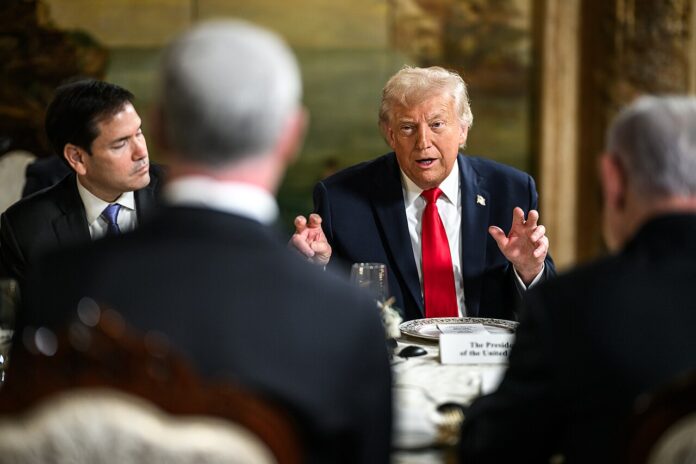
President Donald Trump hosts a bilateral meeting with Israeli Prime Minister Benjamin Netanyahu, Monday, December 29, 2025, at the Mar-a-Lago Club in Palm Beach, Florida. (Official White House Photo by Daniel Torok)

Optimism about Jewish life is in short supply these days. All over the globe, antisemitism is surging. In the United States, the political left has largely been captured by anti-Zionist and antisemitic ideologues. On the right, where support for Israel had seemed to be nearly unanimous not long ago, Jew-hatred and hostility to the Jewish state are also rising. And in Israel itself, the list of problems afflicting the country is long, with no solutions in sight.

After the last two millennia of persecution and suffering, pessimism regarding the present and future is second-nature to most Jews. And if you’re looking for reasons to feel down about the state of the world and that of the Jewish people, there’s no shortage of grounds for arguments about the prospects of a catastrophe in the long or even short term.

Amid the doom and gloom of Jewish commentary at the end of 2025, however, it’s important to place all that in perspective. The meetings held in Florida this week between U.S. President Donald Trump and other members of his administration with Israeli Prime Minister Benjamin Netanyahu are a reminder that not only is the world not about to end, but that there is reason for optimism.

Trump embraces Israel

The president’s support for Netanyahu, his threats aimed at Hamas and Iran, and the general tone of the summit should be a tonic for both Israelis and those Americans who value the U.S.-Israel alliance.

To pretend that there aren’t problems would be foolish; plenty of obstacles will need to be faced in the coming year.

But an accurate evaluation of the current situation doesn’t justify pessimism. The relationship between the two nations remains close and forward-thinking. More than that, as the calendar year comes to a close, there’s no avoiding the fact that during the last 12 months, the forces seeking Israel’s destruction in the Middle East and elsewhere can definitively be described as the losers. Israel and the Jewish people—though besieged and the targets of an international campaign of delegitimization and demonization—remain stronger than at any other point in memory.

That’s not the tone of most of the coverage of Israel and its ties with its sole superpower ally. For months, the constant drumbeat of stories being sounded has attempted to make the case that Trump and Netanyahu are on a certain collision course about the next steps with respect to conflicts in Gaza, Lebanon, Syria and Iran. The notion that Trump is angry or impatient with the Israeli leader is conventional wisdom among Washington correspondents in mainstream media, for both secular and even liberal Jewish and Israeli outlets.

Israel-bashers’ wishful thinking

Some of this is clearly the product of anti-Israel or anti-Netanyahu bias among liberal journalists, who are always predicting that Washington’s patience with Jerusalem is about to run out. It’s also the product of leaks within the Trump administration from a far from inconsiderable faction of staffers who seem to be more in tune with the anti-Israel and anti-Jewish opinions of former Fox News host Tucker Carlson than with the president. Stories like the Vanity Fair profile of White House chief of staff Susie Wiles make it clear that some of those in the administration seem to share the negative view of Israel that predominates among their left-wing antagonists. Even some in Trump’s inner circle (a group that may well include Vice President JD Vance) think the president’s continued strong backing for Israeli efforts to defeat Hamas, Hezbollah and other Iranian terror proxies is a misreading of public opinion.

There is good reason to worry about whether the vice president would continue Trump’s pro-Israel policies or be as tough on antisemitism should he be elected to the country’s top job. And it’s likely that any of the most plausible Democratic candidates in 2028, including the alleged moderates like California Gov. Gavin Newsom or even Pennsylvania Gov. Josh Shapiro, would also be as influenced by their party’s anti-Israel base along the same lines Vance is by his friend Carlson and the growing cache of political antisemites on the right.

But for now, claims that the alliance is about to crack up are not only wrong. They’re obviously a product of wishful thinking on the part of journalists who buy into the intersectional left’s mischaracterization of Israel as a “settler-colonialist” and “apartheid” state that ought not to exist. Or they continue to push the false narrative that Netanyahu and Trump are both “authoritarian” leaders who want to destroy democracy in their respective nations.

Trump’s statements about what would happen to Hamas if it didn’t disarm—as it agreed to do in the October ceasefire-hostage release deal brokered by the president—give the lie to the expectation among Israel-bashers that he was going to allow the terrorists to fully rearm and hold onto power. The same is true of his comments about the prospect of Tehran rebuilding its missile and nuclear programs; Trump has expressed a willingness to support or join in another campaign of Israeli strikes on Iran.

By now, the terrorists in the Gaza Strip (and their leaders dwelling in safety in Qatar), and their funders and sponsors in Iran, should have learned to take the threats of the U.S. president seriously.

Still, it’s just as important for those who care about Israel to take a dispassionate look at the strategic situation and acknowledge that the Jewish state is in a much stronger position than it was in December 2024 and even on Oct. 6, 2023, before the Hamas-led Palestinian attacks on southern Israeli communities.

The results of the two-year war against Hamas in Gaza were not as conclusive as they could have been. The Biden administration’s determination not to let Israel fully prosecute the conflict against genocidal terrorists gave Hamas a lifeline that allowed it to survive. So did Trump’s desire to play the peacemaker and to free the remaining 20 living Israeli hostages. That gave the terrorists leverage they used to get terms in the ceasefire agreement to pause the fighting that they have been ruthlessly exploiting to reinforce their grip on the portion of the Strip they still hold.

Nevertheless, there is also no doubt that Hamas is far weaker now than when it started the war, with no immediate prospect of becoming as dangerous as it was back in October 2023. And as both Trump and Netanyahu have made clear, the Islamist group’s belief that they can continue to stall when it comes to fulfilling their promise to disarm and give up power without consequences is mistaken.

Iran’s defeats

To look beyond Gaza is also to see a Middle East in which Israel’s main antagonist—Iran—has suffered defeat after defeat since its leaders set in motion a multifront war against the Jewish state.

Israel’s 12-day campaign against Iran in mid-June—which the U.S. eventually joined—did enormous damage to its military, in addition to significantly setting back its nuclear program. The assumption that it is a threshold nuclear power no longer holds true.

On top of that, its Hezbollah auxiliaries in Lebanon suffered a humiliating and catastrophic defeat as a result of Israel’s 2024 campaign against them. That also led to the collapse of the Bashar Assad regime in Syria. The hopes of hegemony over the Middle East that the Tehran government dreamed of are gone. So, too, is the land bridge to the Mediterranean—composed of its allies in Iraq, Syria and Lebanon—with which they sought to encircle Israel.

Still, Israel faces serious challenges in Gaza with the painful likelihood that fighting against Hamas will have to resume sometime during the next year. And the battle against Iran’s missile and nuclear threats isn’t over either.

But Trump’s stand also undermines the belief that the cracks in the pro-Israel consensus among Republicans that have become especially evident in recent months will doom the U.S.-Israel alliance. It’s true that the chattering classes, antisemitic right-wing podcasters like Carlson and similarly minded left-wing journalists, academics and politicians like New York City mayor-elect Zohran Mamdani and members of the left-wing congressional “Squad” may hate Israel and all it stands for. The diminished support for the Jewish state among young people, whether on the right or left, who have been indoctrinated by woke educators is much lower than middle age or older Americans is also a problem.

But here’s what’s also true: The naysayers about Israel are not taking into account the fact that Israel’s startup, First World economy has remained solid and steady, despite the enormous hit it took from two years of war. The Israeli people are divided politically, but there’s no reason to believe they won’t be ready to do what is necessary to finish off Hamas or to further degrade the Iranian threat.

Israel is not alone

Will U.S.-Israel relations be as strong as they are now in one, two, three or four years? Maybe not. But the prophets of doom that were predicting the collapse of the alliance or worse in the wake of Oct. 7 and the surge of antisemitism that arose after that were wrong. The same has been true of most of those who prognosticate about Israel’s prospects over the last 77 years.

To acknowledge Israel’s strength or the preservation of the bond between it and the majority of Americans is not to deny the problems or that the growth of antisemitism on both ends of the political spectrum is not deeply troubling. Trump’s successors may not be friendly to the Jewish state, but to face those problems requires a sober assessment of more than just the reasons for pessimism.

It may be in the Jewish DNA to cry out in despair about the persistence of antisemitism, and the way it fuels the ongoing war against Israel and the Jewish people. Yet countless generations of Jews who endured persecution, hardships and even attempts at their genocide have only dreamed of a situation as positive for Jewish life as the one that exists today despite all the sorrow that contemporary Jewry has endured since Oct. 7. This should encourage those now alive not merely to cheer up, but to have faith that Israel and the Jewish people will continue to live and thrive. That will require the continued heroism of the Israeli people, bolstered by Diaspora Jewry, to have the courage to stand up for their rights and bear witness against hatred and bigotry, wherever it is to be found.

So, as we head into 2026 and all the unresolved questions that a new year always brings with it, it’s time for Jews to look ahead and take heart. Thanks to Trump and many other people of goodwill, the Jews and their state are not alone or fated for destruction.

Jonathan S. Tobin is editor-in-chief of JNS (Jewish News Syndicate). Follow him: @jonathans_tobin.
UNRWA Education and the Responsibility of Donor Nations/The Palestinian Authority’s financial support of families of terrorists

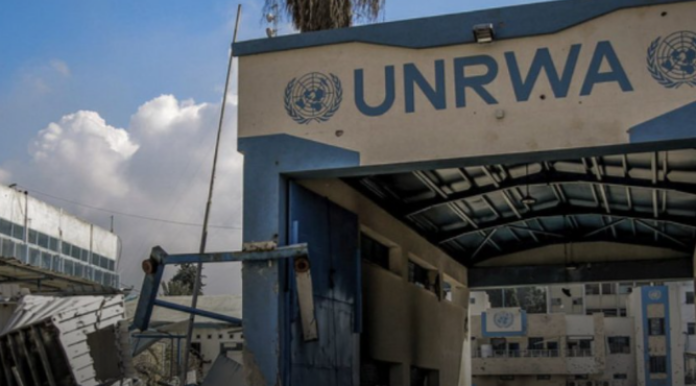
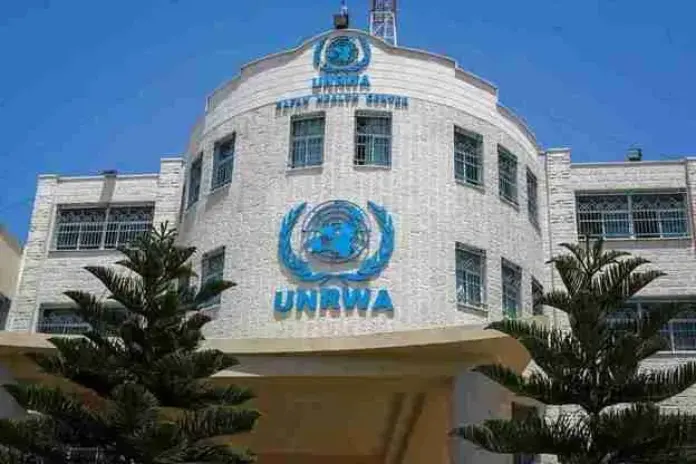
Despite Canada’s temporary withdrawal of funding from UNRWA between 2011 and 2015, recent developments have seen Canada resume its role as one of the top funders of UNRWA. (Photo: JNS.org)

Despite Canada’s temporary withdrawal of funding from UNRWA between 2011 and 2015, recent developments have seen Canada resume its role as one of the top funders of UNRWA. (Photo: JNS.org)

Dear Ambassador,

The international community has repeatedly called upon the Palestinian Authority to abandon policies that condone terrorism and, instead, to promote an approach centered on peace and coexistence.

While leaders of the Palestinian Authority have at times paid lip service to these expectations, in practice the ongoing policy of indoctrination in pursuit of national objectives through the use of force and the glorification of “martyrdom” continues in a variety of forms, as we will demonstrate in this letter.

We wish to address two specific issues: the role of UNRWA education in Palestinian schools, and the financial support extended by the Palestinian Authority to the families of terrorists who have carried out horrific acts of violence.

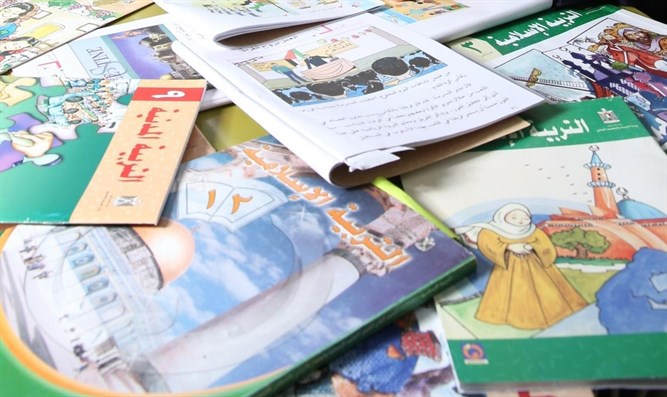
The Center for Near East Policy Research has recently completed a new study of textbooks used in UNRWA schools. This research complements a series of documentary films produced by our Center on location in UNRWA schools between 2004 and 2024.

The findings of this extensive research indicate that UNRWA’s curriculum continues to promote the so-called “Right of Return” through the use of armed force—an approach that we believe is incompatible with the principles and responsibilities of a United Nations educational framework.

We would be pleased to arrange a briefing by Dr. Arnon Groiss, author of the most recent research report, to provide your staff with detailed findings and concrete policy recommendations.

In 2024 the Netherlands donated $ 20,810,515 to UNWRA.
Given that approximately 58 percent of UNRWA’s annual budget of USD 1.6 billion is allocated to education (UNRWA 2024 Annual Operational Report, p. 25), we respectfully ask whether your government would consider advocating for a meaningful policy change within UNRWA’s educational system, so that it genuinely promotes peace and coexistence.

The Palestinian Authority’s Policy of Financial Support to Families of “Martyrs”

Publicly, leaders of the Palestinian Authority occasionally issue carefully worded and diplomatically phrased “condemnations” following brutal terrorist attacks carried out by Palestinians against Israeli civilians. In practice, however, the Palestinian Authority actively endorses and rewards such acts of terrorism by providing generous monthly stipends to the families of so-called “martyrs”—that is, terrorists who have murdered innocent civilians. Similar monthly payments are also provided to Palestinians imprisoned in Israel for committing comparable acts of violence. The Palestinian Authority even endeavoured to establish a special bank for that particular purpose.

This policy sends a clear and troubling message to the Palestinian public: that acts of violence are not only tolerated, but rewarded and encouraged. Such a policy inevitably creates incentives for further violence. If the Palestinian Authority wishes to convince the international community that it genuinely opposes terrorism, it cannot continue practices that directly contradict such claims.

We believe that your government is committed to achieving a peaceful resolution of the Middle East conflict, and we therefore respectfully urge your government to act within the international arena to ensure that the Palestinian Authority ceases its financial support for perpetrators of violence and their families.

Respectfully yours,
Yossi Beck, BSW, MBA, MA (Political Science).
Senior consultant,
Center for Near East Policy research

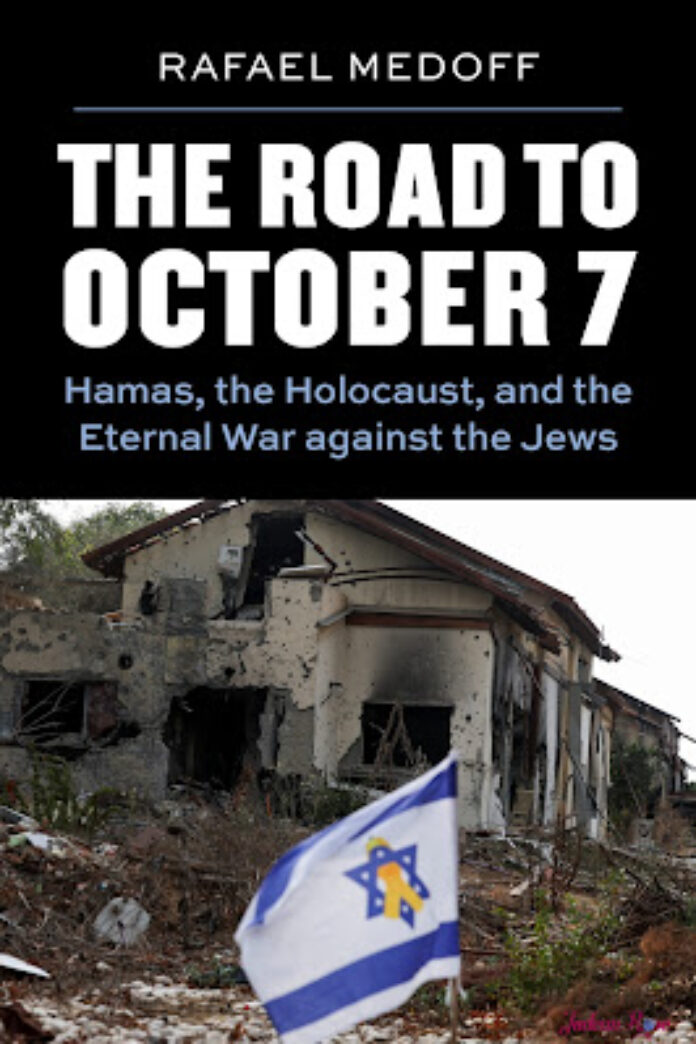
The Road to October 7: A Conversation with Rafael Medoff (Judean Rose)

The October 7 massacre did not emerge from a vacuum—and historian Rafael Medoff’s new book traces the long ideological road that led to it.

Medoff, a prodigious scholar of Jewish history and a prolific writer, is the founding director of The David Wyman Institute for Holocaust Studies and the author of more than twenty books on Jewish history, Zionism, and the Holocaust. His latest, The Road to October 7: Hamas, the Holocaust, and the Eternal War against the Jews, is a grim but important read—one that places the October 7, 2023 massacre within a wider historical context and shows how it echoes the long, tragic history of the oldest hatred: antisemitism.

The Road to October 7 is a two-part book. In Part 1, The Present: Understanding October 7 and Its Aftermath, Medoff offers a detailed account of that black day and what happened in its wake. He traces the rise of Hamas and the sickening ideology that underpins its hatred and bloodlust—including its affinity for Mein Kampf. Medoff shows how Arab children are taught to hate and kill Jews through what he describes as “jihad education.” He also examines the campus protests, along with the blind eye turned toward them by university boards, administrators, and presidents. The book explores the recent history of terror, and the ways in which anti-Jewish libels are propagated and mainstreamed.

Part 2, The Past: Tracing the Echoes of History, highlights unsettling similarities between the atrocities of October 7 and earlier pogroms in medieval Europe, Czarist Russia, and Ukraine. Medoff examines both the Holocaust and a century of Arab terror—and how each contributed to what happened on that black Sabbath: October 7, 2023. This section is particularly illuminating for its documentation of how American universities cultivated alliances with Nazi Germany during the 1930s—an echo of the same institutions that later tolerated pro-Hamas protests on campus.

In the interview that follows, Medoff discusses the long ideological road to October 7—how antisemitic education and radical Islamic theology shape violence, why so many Western institutions minimized or rationalized the massacre, and why the events of that day cannot be understood in isolation. He also reflects on the historical echoes that make October 7 so uniquely haunting—and on what compelled him to write this book now.

Varda Epstein: You mention the close cooperation and coordination between the Hamas terrorists and the Gaza civilians who infiltrated southern Israel on October 7, citing Kibbutz Nirim Security Chief Daniel Meir who saw 50 armed and uniformed Hamas terrorists along with “dozens of ordinary Gazans.” Meir described “complete cooperation between the two groups: Hamas did most of the fighting while “the civilians went into houses and turned them upside down. They took phones, computers, jewelry, whatever they could find. From what I know, they also took most of the hostages.”

How should we respond to claims that “most” Gaza civilians are peaceful in light of testimony like this? Why do you think this assertion continues to circulate so widely, often without close scrutiny or independent verification?

Rafael Medoff: There’s significant evidence of widespread support for Hamas among the population of Gaza. Remember that in the elections to the Palestinian Legislative Council in 2006, Hamas won 74 of the 132 seats. During the two decades that followed, there wasn’t a single uprising against the Hamas regime. There’s never even been a serious opposition party or movement of any kind there. You noted that thousands of Gazan civilians took part in the October 7 invasion. In addition, there’s no evidence that any Gazans tried to help any of the Israeli hostages escape. In fact, some of the hostages were kept as slaves by civilians. It stands to reason that there must be some Gazans who are dissatisfied with Hamas—not because they sympathize with Israel, but because Hamas has made their personal lives miserable. Unfortunately, those dissidents seem to be a very small minority.

Varda Epstein: You write: “Previous Palestinian Arab terrorist attacks had never triggered such reactions abroad. Nor had previous Arab-Israeli wars. The vehemence and in many instances, sheer irrationality, of the reactions to October 7 raised important questions. How could so many people accept as fact assertions about Israel and Gaza that were unsupported by evidence? What caused people who are sincerely concerned about sexual violence to consciously look away from sexual violence against Israeli Jewish women? What was it about this particular terrorist attack that induced such a uniquely massive and extreme response?”

Since your book was published, Prime Minister Netanyahu, in his most recent address to Congress, wore a lapel pin with a QR code linking to photos and footage from October 7. Yet there has been remarkably little visible public engagement with that material in mainstream media or public discourse. There have been no widespread claims that the images were fabricated, nor serious allegations of a false-flag operation—just an apparent absence of response.

How does this indifference to direct visual evidence fit into the pattern you describe? Why does proof itself seem to matter so little to so many?

Rafael Medoff: The same question often is asked about the international community’s response to news of the Holocaust—and the answer, sadly, is similar. Most of the world is indifferent to Jewish suffering. Some of that is because of antisemitism, some of it because of political or diplomatic considerations, and some of it because of simple, selfish apathy.

The response of many prominent feminist groups to the sexual violence perpetrated by the October 7 invaders has been particularly appalling because their hypocrisy is so blatant. They speak out against sexual atrocities committed everywhere else in the world—but when Palestinian Arabs are the perpetrators and Israeli Jews are the victims, many feminists choose to look away.

Varda Epstein: At Harvard, some three weeks after October 7, you write that “Board member Penny Pritzker wrote President Gay that a ‘river to the sea’ placard at a recent protest was ‘clearly an antisemitic sign which calls for the annihilation of the Jewish state and Jews.’ Pritzker added that she was ‘being asked by some why we would tolerate that and not signage calling for lynchings by the K.K.K.’ Gay consulted with Provost Garber, who commented that the slogan’s ‘genocidal implications when used by Hamas supporters seem clear enough to me, but that’s not always the same as saying that there is a consensus that the phrase itself is always “antisemitic.”’ Gay, for her part, worried that calling the phrase ‘antisemitic’ would ‘prompt [people to ask] what we’re doing about it, i.e. discipline.’”

What does this episode reveal about how university leaders understood the slogan—and, more importantly, about what they feared would follow if they named it as antisemitic? Why did something that seemed morally clear become such a bureaucratic and rhetorical minefield?

Rafael Medoff: The internal Harvard correspondence goes straight to the heart of the problem. Provost Garber knew the slogans were antisemitic, but he was worried about whether there was a “consensus” among his colleagues about it. He should have been able to tell right from wrong, whether or not others agreed with him. That’s one kind of timidity. For President Gay, the problem was that if she acknowledged the truth, she would have felt pressure to do something about it, and she didn’t want to do anything about it. That’s another kind of timidity. Both kinds are morally reckless. Would Garber or Gay ever have taken such positions if a different minority group was being targeted on their campus? I doubt it.

Varda Epstein: As you document in your book, the campus protests have died down to a large extent. What do you think accounts for that shift? Was it a matter of administrative pressure, waning public interest, internal fractures within the protest movement, or something else entirely?

Rafael Medoff: The protests fizzled out due to a combination of reasons. First, some universities feared they would lose federal funding or private donations, so they belatedly cracked down on illegal protests by imposing curfews and other steps that they should have taken from the start. Second, many of the protesters never were really committed—they were just hangers-on who knew little about the issue; they soon got bored with it and moved on to more interesting things. Third, some of the leaders of the protests were foreigners who were violating the conditions of their visas, and when they faced the prospect of deportation, they dropped out.

Varda Epstein: The Road to October 7 offers the reader historical precedent and context for the events of the October 7 massacre. To many of us, the horrors of October 7 seemed somehow worse than anything we’d heard about in the long, sad history of the Jewish people. Yet you document some obscene atrocities committed against Jews during, for example, the Crusader period—acts that in many ways rival those of Hamas on and in the wake of October 7.

Why isn’t rape and murder enough for terrorists? What explains the apparent investment of imagination and effort in devising ever more elaborate forms of cruelty, rather than channeling that same human capacity for creativity toward education, innovation, or improving life for their own people?

Rafael Medoff: Every human being has the capacity for good or evil. Some have the potential to take it to unusual extremes, depending on circumstances and opportunities—so why do they? What I show in The Road to October 7 is that the key factor is education—at home, at school, and in the public arena. If children hear at their breakfast table, and in their classrooms, and in their houses of worship, that Jews are evil and deserve to be killed, then some of them eventually will act on those beliefs. That has been the common denominator in antisemitic violence from the Crusades to the Czarist Russian pogroms, the Holocaust, and Palestinian Arab terrorism.

Varda Epstein: Much of the public and academic discussion of October 7 continues to frame the massacre primarily in political, territorial, or socioeconomic terms. Yet Hamas itself is explicit that its actions are rooted in radical Islamic theology and a religiously grounded hatred of Jews. Why do you think so many commentators persist in sidelining or denying the centrality of theology in explaining both the massacre itself and the moral worldview that celebrates or excuses it? And how does that same theological framework help explain the language and behavior of some of the protesters who have justified or minimized the violence?

Rafael Medoff: The reason apologists are so reluctant to acknowledge the Islamist theological dimension of Palestinian Arab terrorism is that it’s incredibly difficult to persuade religious fanatics to change their beliefs. So rather than admit that making peace with such people is impossible, it’s easier to blame Israel and to claim that Israeli territorial concessions are the answer to everything.

In this context, we shouldn’t ignore the Islamist component in some of the pro-Hamas rallies on campuses. We’ve heard demonstrators chanting slogans calling for “another Khaybar.” That’s a reference to a 7th century massacre of Jews by Muhammad, the founder of Islam. That’s not a historical event with which the average American college student is familiar; but the campus extremists who organized the rallies know it well because they learned it from their parents and their religious teachers.

Varda Epstein: Regarding the protesters and the violence, do you think some participants failed to grasp the full moral enormity of their actions—simply following the behavior of others rather than reflecting independently on what they were doing? Take, for example, those who tore down posters of Israeli hostages. Did some do this out of a kind of “monkey see, monkey do” conformity—seeing others do it and joining in without stopping to consider the implications?

But even allowing for ignorance or social pressure, how does a person arrive at a point where ripping down a poster of a beautiful red-haired infant like Kfir Bibas can be justified? What does it take, psychologically or ideologically, to see a baby as unworthy of notice or concern?

Rafael Medoff: Yes, that does require a certain level of moral degeneracy. But think of all the previous Palestinian Arab terrorist attacks in which Jewish babies and children were slaughtered—and yet for many years, legions of academics, pundits, and Jewish anti-Zionists have been demanding that the killers be given a sovereign state in Israel’s back yard. So in many ways, the responses to October 7 simply mirrored, on a larger scale, the depraved responses of apologists to earlier attacks.

Varda Epstein: You write that “President Biden and Vice President Kamala Harris broke important new ground—on both sides of the debate. On the one hand, each made statements implying a measure of understanding for the anti-Israel extremists. President Biden, addressing a Democratic National Convention on August 19, 2024, said of the anti-Israel demonstrators outside the arena, ‘Those protesters out in the street, they have a point.’ The previous month, Vice President Harris told The Nation that the demonstrators were ‘showing exactly what the human emotion should be’ in response to Gaza. However, in what were arguably more consequential, albeit less publicized remarks, both Biden and Harris in effect labeled large sections of the protest movement antisemitic.”

In what ways—and for whom—were those less publicized remarks more consequential than the sympathetic ones? And politically speaking, did this attempt to balance moral clarity with electoral caution ultimately help or hurt Biden and Harris? In trying to please everyone, did they end up pleasing no one?

Rafael Medoff: President Biden and Vice President Harris both acknowledged that celebrating Hamas is antisemitic. Their words are a matter of record. But they made a political decision to refrain from making a big issue of it, most of the news media went along with that. This is where Jewish organizations need to step in. They have the funds, staff, and other resources to bring that important information to light. How many full-page ads have been placed in the New York Times or Washington Post by pro-Israel groups over the past two years? They can probably be counted on one’s hands.

Varda Epstein: Your book is about “Hamas, the Holocaust, and the Eternal War against the Jews.” In public discourse, October 7 is often described as the worst massacre of Jews since the Holocaust—a formulation that some readers struggle to understand given that more than six million Jews were murdered in the Holocaust and “only” some 1,200 were murdered on October 7. Why do you think the Holocaust comparison arises so frequently, and what kind of comparison is actually being made? Is it primarily about scale, or about intent, symbolism, and historical continuity?

Rafael Medoff: The similarity lies in the intent, the ideology, and the methods. The intent of both the Nazis and the 10/7 perpetrators was to kill as many Jews as possible. As for ideology, the beliefs of Hamas and its allies are essentially religious, while the Nazis’ beliefs were essentially secular; but antisemitism is the core principle of both groups. There is a significant similarity in their methodology, as well. During the first nine months of the Holocaust, in 1941-1942, most of the killing was done up close—by bullets, not gas chambers. The same is true of October 7. The comparison is important because it illustrates the savagery and utter depravity of the perpetrators.

Varda Epstein: Did you write “The Road to October 7” for a particular audience? Who do you imagine reading your book? Do you have hopes that your work will persuade some of those who continue to deny the truth of what happened on that black day?

Rafael Medoff: October 7 deniers can never be persuaded, just as Holocaust-deniers can never be persuaded, because they’re not motivated by the search for truth. They’re motivated by hatred of Jews. No matter how many facts are presented, they will try to explain them away or distort them to fit their preconceived narrative. So I don’t expect them to read The Road to October 7. It needs to be read by those who care about the subject but aren’t familiar with the historical precedents. It’s especially important to get this book into the hands of college students. On campuses across the country, anti-Israel forces are trying to win over the hearts and minds of young Jews. This book will help them fight back with the one weapon that matters most—the truth.

Varda Epstein: What compelled you to write The Road to October 7—and what did you hope readers would take away from it?

Rafael Medoff: As the details of the October 7 atrocities emerged, I was struck by how similar they were to descriptions of antisemitic violence going all the way back to the Middle Ages. I realized this information needs to reach a wider audience. October 7 was the product of the same kinds of educational and religious forces that have incited violence against Jews for more than 1,500 years. A very long road led to October 7.

New Evidence Shows UNRWA Working Closely with Hamas; Report Reveals Tension Between Trump, Saudi Prince

The United Nations Relief and Works Agency, known as UNRWA, detailed the scope of its work in Gaza on Tuesday. Evidence has emerged that the organization works closely with the Hamas terror group.

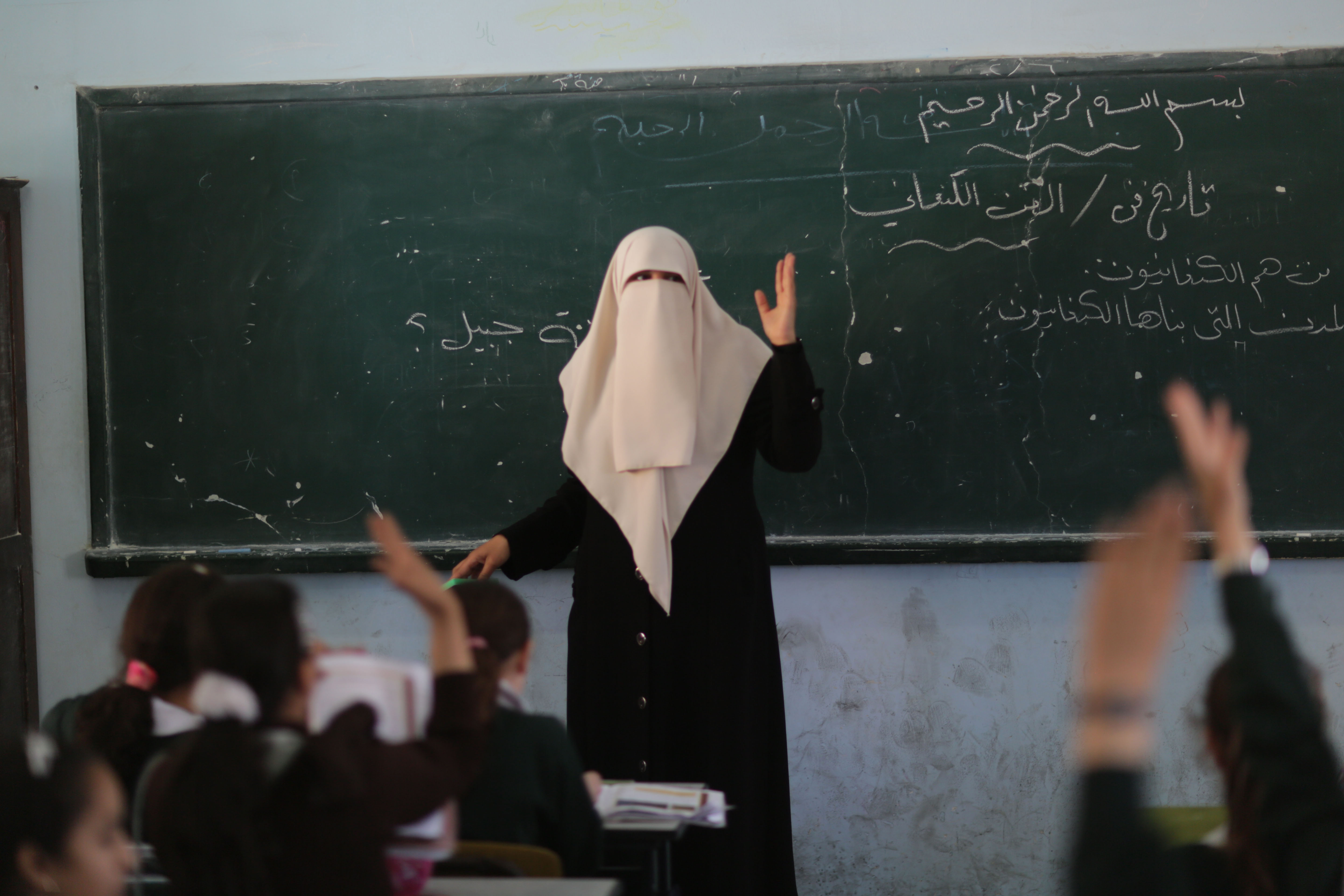
UNRWA’s report claims that it has rehabilitated its education system and now serves nearly 50,000 children in its schools inside Gaza.

David Bedein, founder of the Near East Center for Policy Research, recently made a presentation to the newly formed U.S. CENTCOM Command Center. He told CBN News what is inside the agency’s core doctrines.

“I told them about the curriculum,” Bedein told CBN News. “The first curriculum ever to promote first-degree murder as the focus, and the delegitimization of the Jews in the land of Israel – the importance of getting rid of them. And this all in their textbooks.”

Bedein also asserts that UNRWA and Hamas have an incestuous relationship.

“I’m saying that they’re the one and the same – UNWRA and Hamas are one and the same, with the knowledge of everyone,” Bedein stated.

On the regional front, Axios reported on Tuesday that the recent meeting between President Trump and Saudi Crown Prince Mohammed bin Salman was “difficult” and “tense” behind the scenes.

While the two leaders flattered each other in public, the report revealed that the president was angry and disappointed with the crown prince over the issue of normalization with Israel.

Trump pushed Saudi Arabia to join the Abraham Accords, but bin Salman insists that normalization with Israel must come, along with an irreversible path to a Palestinian state with a hard deadline.

However, after October 7th, 2023, Israeli leaders have said the two-state solution is a non-starter.

Bin Salman also argued that Saudi public opinion is overwhelmingly anti-Israel after the two-year war in Gaza. President Trump promised to sell F-35 jets to the Saudis, made it a non-NATO ally, and agreed to help with a civilian nuclear program.

Meanwhile, Israeli Prime Minister Benjamin Netanyahu’s office announced Wednesday that officials have identified the latest hostage remains from Gaza. Terrorists killed Dror Or on October 7th in Kibbutz Be’eri, one of the hardest-hit Israeli communities. The terrorists also killed his wife, Yonat, and kidnapped two of his children, Alma and Noam.

The return of Or’s body leaves the remains of just two more hostages inside Gaza.

Israel, Juden und Frieden in Schulbüchern und Lehrerhandbüchern der Palästinensischen Autonomiebehörde

von

Dr. Arnon Groiss

(DeZember 2025)

Einleitung

  • Die Ergebnisse basieren auf einer Studie von über zweihundert Lehrbüchern und Lehrerhandbüchern der Palästinensischen Autonomiebehörde (PA) (Klassen 1–12), die größtenteils an UNRWA-Schulen (Klassen 1–10) in Judäa, Samaria, dem Gazastreifen und Ostjerusalem verwendet werden.
  • Diese Bücher sind Pflichtlektüre an allen Schulen in den genannten Gebieten, unabhängig davon, ob es sich um staatliche, kommunale oder private Schulen handelt, sowie an Schulen, die von UNRWA, islamischen Hilfsorganisationen und christlichen Kirchen betrieben werden (mit Ausnahme einiger weniger Schulen in Ostjerusalem).
  • Alle Bücher sind von den neuesten Ausgaben. Die meisten wurden 2020 (Lehrbücher) bzw. 2018 (Lehrerhandbücher) verö Einige wenige erschienen in früheren Jahren, aber alle werden im laufenden Schuljahr verwendet.
  • Untersucht wurden Bücher aller Fächer: Arabisch, Englisch, Mathematik, Islamkunde, christliche Erziehung (für christliche Schüler im PA-Schulsystem), Staatskunde, Sozialkunde, Geschichte, Geographie, Naturwissenschaften, Technik, Kunst und Handwerk, sowie Berufsbildung. Jedes Buch wurde Seite für Seite von Anfang bis Ende gelesen.
  • Die Studie umfasste Textmaterial (einschließlich Übungen, Wiederholungsfragen und Fußnoten), Fotografien, Illustrationen, Karten, Tabellen, Diagramme und Cartoons. Besonderes Augenmerk wurde auf fehlende Bezüge zu konfliktrelevanten Themen gelegt, basierend auf der Kenntnis vergleichbarer Studien – beispielsweise zu israelischen Schulbü
  • Drei Grundprinzipien kennzeichnen die Art und Weise, wie die Schulbücher der Palästinensischen Autonomiebehörde, einschließlich der vom UNRWA verwendeten, den Konflikt den Schülern vermitteln:
    1. Die Delegitimierung der Existenz des Staates Israel sowie der Anwesenheit seiner jüdischen Bevölkerung im Land, einschließlich der Leugnung ihrer Geschichte und der Existenz ihrer heiligen Stätten.
    2. Die monisierung Israels und der Juden. Juden werden auch in religiöser Hinsicht verurteilt, was schwerwiegende Folgen für ihr Bild in den Augen palästinensischer Kinder hat, die zumeist aus einer traditionellen Gesellschaft stammen.
    3. Das Fehlen eines Eintretens für eine friedliche Lösung des Konflikts mit Israel. Stattdessen rufen die Bücher zu einem gewaltsamen Kampf zur Befreiung des gesamten Landes auf, einschließlich des israelischen Territoriums von vor 1967. Diesem Kampf wird einen religiöser Charakter verliehen, wobei Terror ein untrennbarer Bestandteil ist und implizit zur Tötung von Juden aufruft.

Delegitimierung

  • Die Karten zeigen Israel nicht, sondern stellen stattdessen Palästina als souveränen Staat dar.
  • Palästina wird als „arabisch und muslimisch“ und vollständig im Besitz der Palästinenser befindlich erklärt.
  • Es wird als seit 1948, nicht seit 1967, „unter israelischer Besatzung“
  • Israel wird als „die 1948 besetzten Gebiete“ oder „zionistische Besatzung“
  • Die PA bezeichnet sich selbst als „Staat Palästina“ und betrachtet sich als vollwertigen Staat unter Fremdherrschaft, der nicht auf die Grenzen von 1967 beschränkt ist.
  • Israel und seine jüdischen Einwohner werden als fremde Kolonialmacht betrachtet.
  • Juden werden nicht zu den Einwohnern des Landes gezählt, und ihre Städte werden nicht auf den Karten verzeichnet. Hebräisch wird getilgt, und die jüdische Geschichte des Landes wird explizit geleugnet; die Existenz jüdischer heiliger Stätten wird ignoriert, ebenso wie der Name „Jerusalem“.
  • Juden werden gierige Ambitionen in Bezug auf Palästina unterstellt.

Dämonisierung

  • Sowohl Israel als auch die Juden werden als bösartig dargestellt.
  • Im Laufe der Recherche wurden über vierzig Anschuldigungen gegen Israel und die Juden in verschiedenen Bereichen gefunden, angefangen bei der Aneignung des Landes, dem Massaker an seinen Einwohnern und der Tötung von Kindern bis hin zum Aussetzen von Wildschweinen, um die Ernte der Palästinenser zu zerstören.
  • Besonders alarmierend sind die Anschuldigungen im Zusammenhang mit religiösen Fragen und jene, die Juden und Zionisten als existenzielle Bedrohung für die Palästinenser darstellen.
  • Die Schuld am Konflikt wird allein den Juden zugeschrieben; ihnen werden unerbittliche Kriegsverbrechen und Angriffe auf Kinder vorgeworfen.
  • Israel wird dämonisiert, während die Palästinenser als Opfer dargestellt werden.
  • Die Dämonisierung Israels findet sogar Eingang in konfliktfremde Fächer wie Mathematikaufgaben.
  • Der Konflikt zwischen Israel und Palästina wird mit Reichen wie Rom gegen Karthago oder den Mongolen im Nahen Osten verglichen.
  • Laut den Lehrbüchern der PA ist Israels Bosheit eine Folge von Rassismus, der aus der jüdischen Vorstellung vom auserwählten Volk resultiert.
  • Im religiösen Kontext wird Israel beschuldigt, die Al-Aqsa-Moschee zerstören zu wollen, und die Juden werden in diesem Zusammenhang als „Ungläubige“ und „Helfer des Teufels“ bezeichnet.
  • Juden werden als Feinde der Propheten Gottes und damit implizit auch Gottes selbst dargestellt, wodurch sie zur Zielscheibe jedes muslimischen Gläubigen werden.
  • Massaker an Palästinensern werden besonders hervorgehoben: Lehrer werden angewiesen, diese Massaker mit jüdischen religiösen Vorstellungen in Verbindung zu bringen.

Friede?

  • Der einzige Hinweis auf Frieden mit Israel findet sich in einem Geschichtsbuch, in dem Arafats Brief an Rabin vor der Unterzeichnung der Oslo-Abkommen 1993 abgedruckt ist.
  • Frieden und Koexistenz mit Israel werden jedoch in keinem einzigen Schulbuch des gesamten Lehrplans befü
  • Stattdessen rufen die Schulbücher der Palästinensischen Autonomiebehörde zu einem gewaltsamen Kampf zur vollständigen Befreiung Palästinas auf.
  • Lieder besingen Rache, Waffengewalt und den Wunsch nach dem Märtyrertod für die Rückkehr ins Land.
  • Lehrer werden angewiesen, den „Dschihad für Gottes Sache zur Befreiung der Heimatländer von der Verseuchung durch die Besatzung“ zu lehren und zu preisen.
  • Die Schüler lernen und werden zur Recherche ermutigt über die Bedeutung des Märtyrertums (Schahada) und den Status des Märtyrers (Schahid)
  • Städte wie Haifa, Akko und Jaffa sollen befreit werden.
  • In einem „freien Palästina“ ist kein Platz für Israel; die palästinensische Flagge erstreckt sich über ganz Israel und die palästinensischen Gebiete.
  • Die Rückkehr der Flüchtlinge von 1948 in das Israel vor 1967 soll als integraler Bestandteil des gewaltsamen Kampfes für die vollständige Befreiung Palästinas erfolgen.
  • Terror ist ein wesentlicher Bestandteil des Befreiungskampfes; Terroristen werden verherrlicht.
  • Das Endziel des Befreiungskampfes wird in einem der Lehrerhandbücher angedeutet: „Zionisten sind die Terroristen der Neuzeit. Ihr Schicksal ist es, auszusterben.“
  • Der gewaltsame Kampf wird in emotional aufgeladenen Liedern und Gedichten wie den folgenden beschworen

Wir werden singen und auswendig lernen: Das Land der Edlen

               Ich schwöre! Ich werde mein Blut opfern, um das Land der Edlen zu bewässern

               Und den Usurpator [Israel] aus meinem Land vertreiben und die besiegten Überreste der Fremden                                         ausrotten [arabisch: ubid fulul al-ghuraba]

               O Land der Al-Aqsa und der heiligen Stätte [haram], o Wiege des Stolzes und des Adels

               Geduld, Geduld, denn der Sieg ist unser und die Morgendämmerung bricht aus der Dunkelheit hervor.[1]

Ein religiöses Schulbuch bringt in diesem Kontext einen traditionellen Text ein, der von der endgültigen Vernichtung aller Juden durch die Muslime spricht.

[1] Dieses Gedicht ist aus der 2020-Ausgabe des Buches gestrichen worden, möglicherweise in Folge unserer Kritik. Aber es ist fragwürdig, ob die Schüler es auch tatsächlich nicht mehr singen, wie hier zu sehen: https://vimeo.com/390503872

Israel, Jews and Peace In Schoolbooks and Teachers’ Manuals Of the Palestinian Authority

Introduction

  • The following presentation is based on a study of over two hundred Palestinian Authority (PA) textbooks and teachers’ manuals, most of which are used in UNRWA schools (grades 1-10) in Judea, Samaria, the Gaza Strip and East Jerusalem. A number of items from grades 11 and 12 were also included in the presentation to make the picture more complete.
  • These are mandatory books taught in all schools in the above-mentioned areas, whether government, municipal and private schools, as well as those run by UNRWA, Islamic charitable associations, and Christian churches (with the exception of a limited number of schools in East Jerusalem that have adopted the Israeli curriculum, or that use PA books that have been “censored” by the Jerusalem Municipality). All books are from the latest editions. Most were published in 2020 (textbooks) and 2018 (teachers’ manuals). A few were published in earlier years, but all are in use in the current school year.
  • This is a comprehensive study that examined books of all subjects: Arabic, English, mathematics, Islamic education, Christian education (for Christian students in the PA education system), national education, social studies, history, geography, science, technology, arts and crafts, and vocational education. Each of the books was read page by page from beginning to end.
  • The study included textual material (including exercises, review questions, and footnotes), photographs, illustrations, maps, tables, diagrams, and cartoons. Attention was also paid to lack of references to subjects relevant to the conflict on the basis of the researcher’s familiarity with parallel studies – of Israeli schoolbooks, for example (They contain expressions that are missing from their Palestinian counterparts, such as advocating a peaceful resolution of the conflict, providing objective information about the opponent alongside the details of the conflict with him, positive reference to individual members of the opposing side and self-criticism).

Click here to read the full document: PA and UNRWA Schoolbooks Dec 25.pptx


Hamas Has Two Godfathers-Iran and the Muslim Brotherhood: An Illustrated Analysis

Table of Contents

  1. Iran Is Hamas’s Second Godfather; How Does that Work?
  2. The Close Relations between the Heads of Iran and Hamas
  3. Conclusion

Considerable attention today is concentrated on Qatar’s relationship with Hamas – how much money has Qatar provided the Palestinian terrorist organization, why do Hamas’s leaders reside in luxury in Doha, and what role does Qatar play in supporting the anti-Israel student campaign on U.S. and European campuses? Another critical question is the alliance between Qatar’s leadership and the hydra-like radical jihadi Muslim Brotherhood?

suitcases from Qatar filled with $30 million in cash
“These are suitcases from Qatar filled with $30 million in cash, transferred to Hamas EVERY MONTH since 2018.” (Elad Simchayoff, X)

One of Hamas’s two godfathers is the royal family in Qatar. Actually, Doha is also the residence of Hamas’s “Godmother,” Sheikha Moza, the mother of Qatar’s Emir. She sponsors and shelters the leaders of the Muslim Brotherhood, as described in the picture and caption below.

Sheikh Qaradawi and the Qatari Sheikha Mozah, and Tariq Ramadan
Screenshot from a video of the inauguration in 2012 of the Sharia Research Center headed by Prof. Tariq Ramadan (right) in Qatar. The Ramadan Center is affiliated with the Qatar Foundation, headed by Sheikha Moza, the foundation’s president. On the left is the late Youssef, the spiritual leader of the Muslim Brotherhood and president of the World Union of Muslim Scholars, to which Ramadan announced his admission. Ramadan is the grandson of the founder of the Muslim Brotherhood, Hassan al-Banna. He is standing trial for a series of rapes in France and Switzerland. (Screen capture, YouTube, 2012)

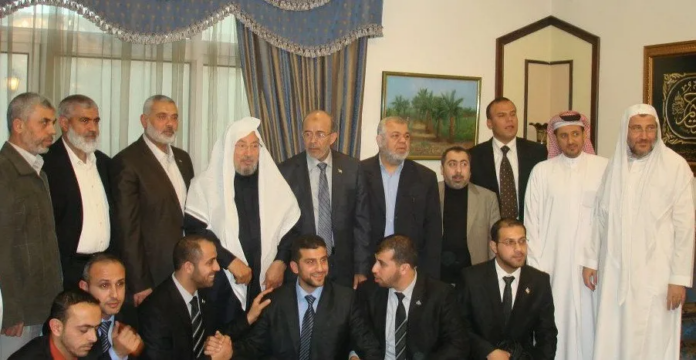
Youssef Qaradawi served as Hamas’s spiritual guide, and the organization’s leadership made frequent pilgrimages to seek his counsel and approval. The following picture appeared on Qaradawi’s website and shows Hamas’s Ismail Haniyeh and military commander Yahya Sinwar.

Sheikh Qaradawi, under his white shawl, welcomed a Hamas delegation in Qatar in 2012. He stands next to Ismail Haniyeh, the “Prime Minister of the Gaza Government.” On the left margin stands Yahya Sinwar. (www.al-qaradawi.net)

Qaradawi with a Hamas delegation in Qatar in 2012
Sheikh Qaradawi, under his white shawl, welcomed a Hamas delegation in Qatar in 2012. He stands next to Ismail Haniyeh, the “Prime Minister of the Gaza Government.” On the left margin stands Yahya Sinwar. (al-qaradawi.net)

The Sheikh’s website reported:

Mr. Haniyeh praised Qatar’s significant role in supporting the Palestinian cause and Gaza. Among the topics discussed with His Eminence, the Sheikh, was the material, political, media, and psychological support provided by the State of Qatar to the Palestinian cause. Haniyeh informed His Eminence the Sheikh that His Highness the Prince [of Qatar] had confirmed to him the provision of financial support for the reconstruction of everything destroyed by the war in the Gaza Strip, and assistance in solving the electricity problem and the problems of unemployment and production.

After the deaths of Hamas leaders Haniyeh and Sinwar, Khaled Mashal resumed leadership in the organization, serving as chairman of the political bureau.

Mashal also paid homage to Qaradawi, who died in Qatar in 2022 at the age of 96.

Khaled Mashaal pays tribute to Sheikh Yusuf al-Qaradawi
Mashal kisses Qaradawi in Qatar. (Hamas’s Al-Majd Security websitewww.paldf.net

Iran Is Hamas’s Second Godfather; How Does that Work?

The PLO’s Yasser Arafat greets Ayatollah Khomeini in Tehran in 1979.
Yasser Arafat meeting with Ruhollah Khomeini in 1979. (AP photo)

Since Yasser Arafat’s rush to Iran to embrace Ayatollah Khomeini in 1979, the Revolutionary Iranian state has been the Palestinian terrorist organizations’ strongest sponsor.

The Iranian Revolutionary Guards’ Al Quds Force conducted terrorist operations against Israeli and Jewish targets around the world. Qassem Soleimani, the commander of the Quds Force, designed a policy called the “Circle of Fire” of Iranian proxies to attack and suffocate Israel from all directions. Hamas was a principal client. For 20 years, Iran attempted to ship tons of weaponry to Hamas, including long-range missiles, mortars, rockets, explosives, guns, and ammunition. Some weapons were unloaded in Sudan and Egypt and entered Gaza through tunnels from Sinai. Barrels or flotation devices filled with weapons may have been shipped on Iranian boats for pick-up off of Gaza’s coast. This author has written about the likelihood of a “blue tunnel” on Gaza’s coast through which Hamas frogmen transferred weapons dropped offshore in sealed containers.

Excavating the remains of a “blue tunnel” into the Mediterranean Sea at Gaza.
Excavating the remains of a “blue tunnel” into the Mediterranean Sea at Gaza. (WAFA News Agency, Facebook)

A long list of Iranian/Palestinian ships intercepted by the Israeli navy in the Red Sea and Mediterranean includes the Santori (2001), the Karine A (2003), the Francop (2009), the Victoria (2011), and the Klos-C (2014).

The list begs the questions:

  1. How many ships slipped through and were not blocked?
  2. What essential strategic cargo did the IDF not discover on the ship?
Iranian anti-ship C-704 missiles discovered on theVictoria. (IDF Spokesperson) (Mehr News)  
(YouTube screenshot)
The weapons from the Karine A on display on an Israeli dock
Iranian-supplied weapons seized on the Karine A. (IDF Spokesperson)
On March 5, 2014 an Israeli Navy task force seized the Iranian-owned merchant vessel Klos-C that had set sail from Iran, heading for Port Sudan via Iraq. On board, the commandos found long-range missiles concealed in containers full of Iranian bags marked as Portland cement. (Photo credit: the IDF Spokesman)
Iranian long-range rockets discovered on the Klos-C displayed on the dock in Eilat. (IDF Spokesperson)

However, the IDF missed something on the ships—an essential element in the Iranian-Hamas strategy to defeat Israel—CEMENT, vital for the construction of tunnels.

In an inventory of weapons and contraband on the 2014 Klos-C, an IDF official wrote: “Several bags of cement, clearly marked coming from Iran, concealed the contents of the weapons shipment.”

Weapons and cement in the cargo hold of the Klos-C. (IDF Spokesperson)

The cargo did not contain several bags; the 100 containers held more than two million kilograms of Iranian cement, as listed on the ship’s manifest. It was as if the weaponry was hiding the cement!

What was the strategic importance of a tanker filled with cement? According to one AI analysis, “with 2,000,129 kilograms of cement, approximately 2.5 kilometers of Hamas tunnel could be constructed, assuming standard tunnel dimensions and concrete composition.”

Klos-C ship manifest, proof that weapons and cement came from Iran
The manifest of the Klos C listed the cargo as 100 containers carrying more than 2,000,000 kilograms of cement. The ship departed from Bandar Abbas, Iran, and was supposedly bound for a port in Iraq.

The Close Relations between the Heads of Iran and Hamas

Hamas leaders were frequent visitors to Tehran. Indeed, Ismail Haniyeh was assassinated there in July 2024 when a bomb blew up his lodgings in an official Iranian guesthouse.

Iran’s Supreme Leader Khamenei embraces Hamas leader Ismail Haniyeh
Ismail Haniyeh, the Chair of Hamas’s Political Bureau, was warmly received by Iran’s leader Ali Khamenei in 2019. (Tasnim News)
Yahya Sinwar, with Iran’s Leader, Ali Khamenei
Hamas’s commander in Gaza, Yahya Sinwar, meeting Iran’s Leader, Ali Khamenei. (Khamenei.ir)

When Iranian Quds Force commander Qassam Soleimani was assassinated, Hamas and Palestinian Islamic Jihad leaders were prominently seated in the row immediately behind Iran’s leadership (do not count the accompanying bodyguards). Ismail Haniyeh even presented a eulogy (apparently in Arabic to the Persian-speaking Iranian audience).

Ismail Haniyeh and Ziad al-Nakhala
Hamas’s Ismail Haniyeh and the head of the Palestinian Islamic Jihad, Ziad Nakhalah (encircled), attend Qassam Soleimani’s funeral, sitting behind Iran’s leadership. (Palestine Chronicle)
Ismail Haniyeh eulogizes Soleimani in Tehran
Haniyeh’s eulogy at Soleimani’s funeral in 2020. (Al Jazeera)
Iran’s leader eulogized Ismail Haniyeh at his funeral in Tehran
Iran’s leader eulogized Ismail Haniyeh at his funeral in Tehran on August 1, 2024. (Al Jazeera)

Conclusion

Any connection or alliance between the two Muslim camps should be impossible, considering the centuries of violent religious strife between the Brotherhood’s fundamentalist Sunni Muslim doctrine and Iran’s Shiite brand of Islam. Iran and Saudi Arabia are the strongest representatives of the two camps, and their proxies’ conflicts can be detected in Yemen, Bahrain, Lebanon, Syria, and Iraq.

This author wrote Sunni and Terrorist Networks: Competition or Collusion in December 2002, and he asserted: “The Palestinian assertion that Sunni and Shiite terrorist groups do not cooperate is baseless and historically wrong. Recent history has demonstrated that there are few religious-ideological barriers in the world of international terrorism.” Especially when it comes to Israel.

Battle of Karbala by Persian painter Abbas Al-Musavi
Battle of Karbala by Persian painter Abbas Al-Musavi. (Brooklyn Museum)

The depiction of the Battle of Karbala in 681 CE marked a pivotal event in Islamic history, igniting the Muslim civil war over leadership succession following the death of Muhammad. This conflict has persisted through centuries, primarily dividing followers into two main sects: the Shiites, who regard Husayn ibn Ali, Muhammad’s nephew, as the rightful leader, and the Sunnis, who prioritize leadership based on the individual’s power, competence, and ability to govern effectively. The Battle of Karbala not only symbolized the struggle for political and spiritual authority but also embodied the deep-rooted theological and cultural differences that continue to influence the Muslim world today. Understanding this historical event is essential for comprehending the ongoing sectarian dynamics and the broader implications for Islamic unity and diversity.