How Arafat saved Israel from Ehud Barak

Former Israeli Prime Minister Ehud Barak addresses the Chatham House think tank in London, March 27, 2023. Source: YouTube.

On June 19, the Israel State Archives released material showing that during Dec. 2000 negotiations, then-Prime Minister Ehud Barak was prepared to give up Israeli sovereignty over parts of the Old City of Jerusalem and the Temple Mount.

At the Camp David talks five months earlier, Barak had already offered the Palestinian Authority control over territories that went far beyond what most Israeli military strategists believed the nation could give up and still retain defensible borders.

U.S. envoy Dennis Ross, who was involved in all the relevant discussions, later stated, “Barak’s government … formally accepted ideas that would effectively divide East Jerusalem, end the IDF’s presence in the Jordan Valley, and produce a Palestinian state in roughly 97 percent of the West Bank [as well as all of Gaza].” Ross added that Barak agreed to give up the Temple Mount as well.

In contrast, Barak’s predecessor Yitzhak Rabin, even as he pursued the Oslo process, had insisted that Israel hold on to parts of Judea and Samaria in order to block traditional invasion routes and protect both Jerusalem and the low-lying coastal plain, home to some 70% of Israel’s population.

In his last speech to the Knesset before his assassination, Rabin declared, “The borders of the State of Israel, during the permanent solution, will be beyond the lines which existed before the Six-Day War. We will not return to the 4 June 1967 lines.”

“These are the main changes, not all of them, which we envision and want in the permanent solution,” he said. “First and foremost, united Jerusalem, which will include both Ma’ale Adumim and Givat Ze’ev, as the capital of Israel, under Israeli sovereignty.”

Rabin further stated that “the security border of the State of Israel will be located in the Jordan Valley, in the broadest meaning of that term” and spoke of “changes which will include the addition of Gush Etzion, Efrat, Beitar and other communities, most of which are in the area east of what was the ‘Green Line,’ prior to the Six Day War” and “the establishment of blocs of settlements in Judea and Samaria.”

The factors that shaped Rabin’s strategic considerations did not change between his speech and Barak’s concessions. Yet Barak tossed Rabin’s considerations aside essentially on his own.

P.A. and PLO chief Yasser Arafat, having rejected Israeli and American proposals at Camp David and offered no counter-proposals, launched a terror war in Sept. 2000. But even before Camp David, as reports of what Barak was prepared to concede leaked out, elements of Barak’s coalition began to abandon the government.

When Arafat initiated his terror war and Barak failed to respond strongly, public opinion turned definitively against Barak. He retained the support of less than a third of the Knesset, with no mandate to pursue negotiations. Yet he did so nonetheless, offering Arafat further concessions.

In early Dec. 2000, it became clear that Barak’s government was about to fall. Rather than face a vote of no confidence, he resigned. A date was set for new elections, but in the interim Barak would serve as head of a caretaker government. While it is not enshrined in law, caretaker governments are not supposed to make major policy decisions. Yet Barak pressed on with negotiations until a week before the elections.

Arafat had made clear even on the day the initial Oslo Accords were signed at a White House Rose Garden ceremony in 1993 that he saw the accords as a stage in the process of Israel’s destruction. On the evening of the ceremony, he appeared on Jordanian television explaining that the accords were the first step in the PLO’s 1974 “plan of phases.”

According to this plan, the PLO would acquire whatever territory it could through negotiations and use it as a base to annihilate the Jewish state. Indeed, some years before the phased plan was adopted, Arafat explicitly stated that a terror war prosecuted from bases in the West Bank and Gaza could fatally undermine Israel. It was clear that once Arafat had exhausted his acquisition of territory by negotiations, he would launch an armed conflict.

Barak, however, offered much more territory than Arafat could have hoped for. The terrible costs to Israel of Arafat’s terror war are well known, but those costs would have been much higher if Arafat had agreed to Barak’s offers and then initiated his terror war.

The current understanding of Arafat’s refusal is that he would have been required to sign an end-of-conflict agreement in return for Israel’s concessions. He was not prepared to do so because it would inhibit his freedom of action against Israel as he pursued his ultimate goal.

There are problems with this explanation, however. Arafat had a long history of reneging on agreements with Arab leaders. He did so many times with Jordan’s King Hussein prior to Arafat’s attempted coup in Jordan in Sept. 1970. He did the same in regard to the Lebanese government after he and the PLO relocated to southern Lebanon. He had forgone all his obligations under the Oslo Accords to end his support for terror and anti-Israel incitement.

Thus, the question remains: Why did Arafat refuse to sign a final status agreement, pocket Barak’s concessions and breach the agreement after having gained the territorial advantage?

It may be that Arafat was concerned about the optics of such an agreement and what it would convey to his followers.

More likely, however, Arafat knew that he was already very ill. Taking control of the territories Barak conceded would take several years. This meant his terror war would not be launched immediately. He could not tolerate the thought that he might die before he had his chance to attempt to destroy Israel. If he had, the final status agreement would be his legacy, while his heirs would reap the glory of casting it aside.

Whatever the details of Arafat’s calculations, his rejection of Barak’s concessions and launching his terror war without the advantage of the additional territories ultimately saved Israel from a war that would have been far more costly.

As to Barak’s proffered concessions, it is an obvious understatement that leaders who pursue self-deluding, potentially suicidal policies and render their nation dependent on the missteps of its enemies are courting national disaster. To say that Israel needs to eschew such leaders is another understatement.
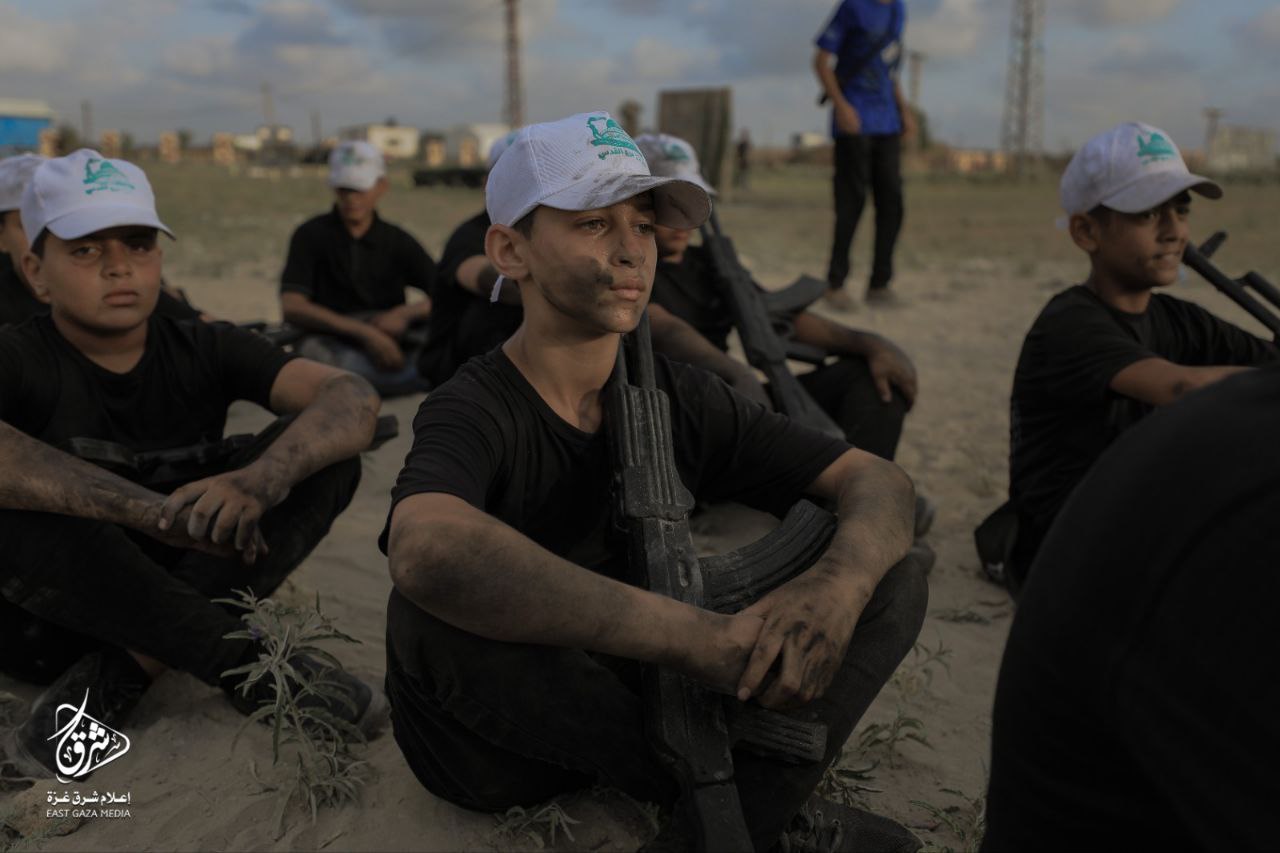
In Gaza, Hamas-run summer camp has started

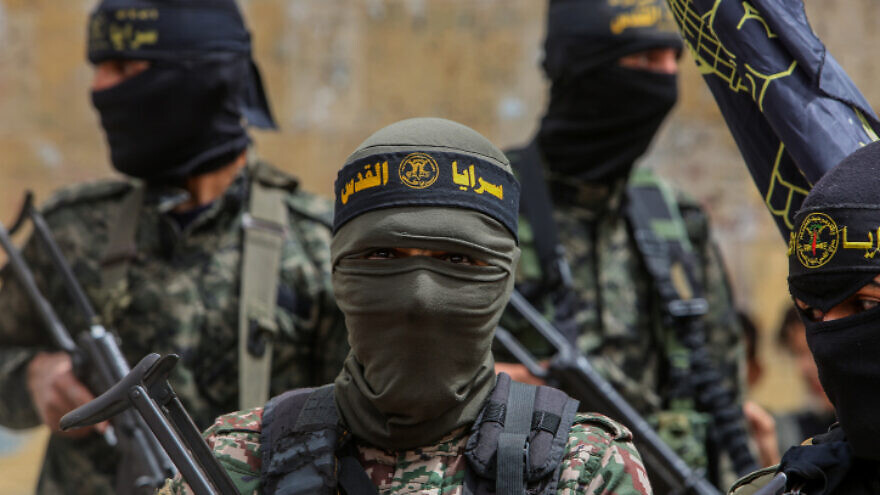
Islamic Jihad: We must use crisis in Israel for war against it

Dalit Halevi(A7)

Nasser Abu Sharif, a member of the Islamic Jihad terror group’s political wing, has called on the Palestinian Arab groups to unite in a war against Israel.

Abu Sharif stressed, “The Zionist entity is also facing real crises and suffering from significant internal disagreements. Therefore, the Palestinian nation is facing a new stage, and standing before a historic opportunity which it must utilize for fighting and the conflict for the sake of the Palestinian problem, and to achieve victory and remove the occupation from the Palestinian land.”

Speaking to Al-Quds Radio, which is affiliated with the Islamic Jihad, Abu Sharif said that the Palestinian struggle is continuing and even intensifying in Judea, Samaria and Jerusalem, because the Palestinian people see the struggle as the proper way to fight the Zionist operation which executes policy of “Judaizing” the land.

“We are facing a dilemma and a great danger. We have no solution other than battle and conflict. We are also facing a historic moment in which we need to unite behind this path. Unfortunately, the internal disagreements between us and the internal problems we have still exist, since the Palestinian Authority continues to repress, bring to trial, and stop the fighters of the Palestinian opposition, while using its old tactics.”

He also called on the Palestinian Authority to stand by the “Palestinian nation” in its conflict against Israel, and provide it with everything necessary to manage the war against the “Zionist occupation, the plans of Judaizing, and the settlers’ herds.”

“We are standing before a historical moment which we must utilize for war against the Zionist entity, which is facing real and large crises,” Abu Sharif emphasized.

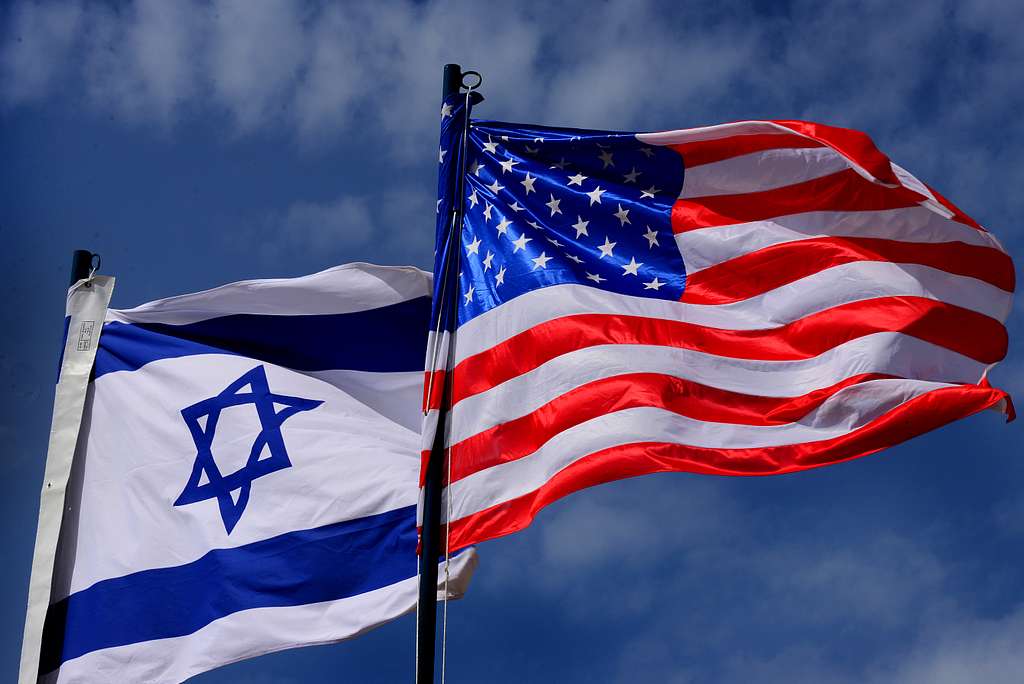
The US-Israel fantasy world

Picture this new world:

  • Israel’s prime minister doesn’t visit Washington for a year, and no one notices.
  • Israel adopts another outrageous domestic policy, and there’s no acid-dripping comment from the US.
  • Israel informs the US that its latest fighter aircraft isn’t suitable for Israel’s needs, and it will either look elsewhere or build its own.
  • Israel invites Chinese leaders for an official visit, and the requisite bilateral agreements are signed.

Why is all this in the realm of wild fantasy? After all, many other countries could take one or more of the above steps, and you wouldn’t hear a threat to “reassess relations,” as we heard from Washington toward Israel in recent days.

That’s because you don’t have to reassess relations when relations are already on a logical, realistic level, which the Israel-US relationship is most decidedly not.

The problem is that we’ve outgrown our classic “special relationship” with the US, yet we’re still defining our ties with that relationship as yardstick.

Worse, American Jews are caught in a never-ending spin cycle of loyalty to a candidate based either on the politician’s perceived support of Israel or on sensible domestic policies. Often those two considerations conflict.

The US-Israel “special relationship,” in its simplest form, means that the US will have Israel’s back with it comes to regional threats, and Israel will take care not to undermine US policy anywhere or, heaven forfend, undertake policies that appear wrong in the eyes of the State Department.

For the first 30 years or so of Israel’s existence, the “special relationship” made sense. Israel was struggling to build a viable economy, and it did not have the resources to maintain sufficient military strength to fend off its enemies.

The 1973 war highlighted that reality. After a surprise attack on two fronts, Israel’s ammunition and spare parts were close to running out. The US agreed to a last-minute airlift of hardware and munitions, without which Israel could well have been overrun, and I wouldn’t be writing about this today.

But here we are, half a century later, and the situation is radically different. Israel no longer needs that safety net.

Israel of 2023 features the region’s leading military and leading economy. Most of its problems are what they call “first world”—insufficient affordable housing, expensive milk products, overcrowded classrooms, and so on.

Even though things look bleak here with the standoff over judicial reform and religious extremism, there is no fear that Israel’s army cannot defend the country against enemy attack, or that the economy will collapse in a heap if someone in Washington says “boo.”

Indeed, Israel weathered the 2008 economic collapse better than the US.

The centerpiece of the outdated “special relationship” is American aid to Israel. It’s why there is a perception that Israel must do what Washington says, “or else.” It’s why Israel’s Jewish supporters in the US over the White House’s relates to Israel.

But what if the “or else,” meaning cutting American aid to Israel, would actually benefit all sides?

First, a quick look at the aid itself. It’s all military aid, and we’re halfway through a 10-year, $3.8 billion a year plan approved by then-US President Barack Obama.

Here’s the catch—almost every dollar must be spent in the US. So not only is it a backhanded subsidy to US defense industries, it actively harms Israel’s economy by moving jobs overseas.

That’s to say nothing of the sophisticated weaponry that Israel can and does produce by itself, but not for itself. It’s well known that significant parts of the flying white elephant known as the F-35 fighter plane are made in Israel.

Stopping American aid, gradually through negotiations and agreements, would cut about 10 percent out of Israel’s defense budget. That’s a significant hit, to be sure, but here’s what it would mean:

  • Israel would be free to sell weapons without the threat of an American veto, like killing the 2000 sale of surveillance planes to China, while at the same time taking American policies into account as others do. New sales could make up the shortfall in a period of a few years. Yes, some of the customers would not make it onto the “World’s Nicest Guy” list, but small countries have to do business differently from large countries. For example, some take issues like human rights into account, some don’t.
  • Israel could negotiate for weapons and supplies from the US and other nations, getting what it really needs, sometimes in exchange for Israeli technology.
  • And most significantly—ending US aid to Israel would remove the already artificial club critics bash Israel with, and supporters fear the most.

Canceling the aid would allow Israel and the US to reconfigure their relationship along logical lines of shared interests, not emotions and outdated perceptions. Objectively, Israel and the US are natural allies for geographical, strategic and societal reasons. There’s no reason to distort that with a layer of artificial guilt and fear over aid.

And then there’s China. The US is big and strong enough to confront China any way it wants. Israel, plain and simple, isn’t. China is an up-and-coming power in the Middle East, and Israel’s interests are to get in line with that. It doesn’t mean that Israel becomes a satellite of China and paints its flag red. It means that Israel builds relations with China based on shared or intersecting interests, just as it would with the United States under the new relationship.

The region is already trending in that multilateral direction. With the Abraham Accords, Israel has forged ties with Arab nations after decades of hostility. Militant, extreme Iran is more and more an outlier, to be confronted by the region as a whole. Likewise the Palestinians.

Israel can confront them by itself, but it doesn’t have to. Instead, Israel and the US can face the shifting future together as partners, not as overseer and underling.

— — —

Correspondent MARK LAVIE has been covering Israel and the Mideast since 1972. His second book, “Why Are We Still Afraid?” recaps his career and comes to a surprising conclusion.

Unhinged

29/07/2014 Montaje de banderas palestinas e israelíes
POLITICA INTERNACIONAL
EUROPA PRESS/REUTERS

I am not sure what is actually causing the insanity currently being displayed internationally and domestically.

Perhaps it is climate change that has addled the brains and common sense of so many or something in the water. Whatever the reason might be, mass hysteria on the part of sections of the population and an equal dose of lunacy by politicians of all persuasions is resulting in anarchy and unhinged behaviour.

Needless to say, Israel is unsurprisingly again the target of international hysteria, while domestically, those who don’t like the results of the last elections are endeavouring to impose their will by causing chaos.

Those disrupting the lives and freedom of movement of thousands of citizens by blocking motorways and other places scream that it is all being done to protect democracyThe irony is, of course, that their own actions are effectively sending a message that when the result of democratic elections is not to your liking, all you need to do to safeguard democracy is to cause mass riots and civil mayhem.

If those elected to govern introduce legislation that you oppose, then by all means, use all legal means to thwart it but breaking the law and interfering with the democratic rights of the rest of the population is not the way.

In Israel, general elections occur with monotonous regularity and very rarely do any coalitions last more than two or three years. Changing the Government, therefore, in a free and democratic country like Israel is as simple as casting one’s ballot.

One of the worst examples of the current turmoil is the rhetoric of two former failed Prime Ministers, one of whom served time in jail, who are so bitter and twisted that they are advocating civil disobedience and pressuring the US Administration to reduce its support of the country. Frustrated former leftist retired IDF officers, together with others of a similar ilk, are all lining up to vent their collective spleen at the fact that those who they oppose politically are actually in power as a result of an election.

It all started out originally over the intended reform of the justice system and the Supreme Court. The coalition has already watered down much of its intended reforms, and as a result, the protesters have now latched on to other perceived threats. Thus, some doctors are striking and warning that the proposed reforms will seriously impact the health system, although how exactly this will occur, nobody can rationally explain. Likewise, frenzied feminist groups are barricading the Rabbinical Courts, and other embittered leftists are disrupting train services and public transportation.

Making daily commutes a nightmare is hardly the best way to recruit support for one’s cause of overturning the democratically elected Government of the country. It is a sign of how unhinged certain people have become that no rational discussions are even possible.

In the international arena, the same insane phenomenon prevails.

After the burning of a Koran, the Swedish authorities threw their collective hands up in horror and then piously proclaimed that they wouldn’t do anything that infringes on freedom of expression. This prompted an Islamic protester to announce that he would be burning a Christian Bible and a Torah in retaliation. Needless to say, this intended bonfire caused a reaction of revulsion and, in the end, resulted in the event being called off.

The spectacle of burning holy books, reminiscent of nightmare scenes from the recent Jewish past, however, still did not propel the Swedish authorities actually to take a stand. The police declared that their hands were tied, and the Foreign Minister issued this pearl of a statement: “The Government is not authorised to infringe upon its citizens’ constitutional rights of free speech. At the same time, it emphasised the country’s efforts in combating antisemitism.”  This classic piece of political double speak should fool nobody, especially the country’s embattled Jews, who face increasing danger from Islamic extremists and right-wing fascists alike.

Sweden already bans shechita, and Brit Mila is also under threat which makes future meaningful Jewish life there untenable. This trend in the rest of the Nordic countries and Europe should be making Jews wary, but as usual, it might very well be a case of too little too late. This fatal mentality of minimising dangers and hoping that it will all blow over is still alive and well.

Meanwhile, in the United Kingdom, an interesting development occurred which seems to have sunk beneath the waves of political correctness.

It has been reported by the Jewish Chronicle and the Jerusalem Post, amongst othersthat last month B’nai B’rith UK together with another NGO contacted the Information Commissioner’s Office with a request to look into why the Foreign, Commonwealth & Development Office has not responded to a very important question. The query (under the Freedom of Information Act) wanted clarification on how British aid to the Palestinian Authority is being audited. The objective is to establish whether or not British taxpayers’ money is being used to support, facilitate or incentivise terrorism.

The UK Foreign Office refuses to disclose how Palestinian aid is audited, claiming that it would not be in the public interest to do so.”

If that reply does not ring warning bells, it definitely should yet this scandalous situation does not seem to have generated any outrage. It is well known that the PA pays stipends to murderers of Israelis and their families. As the PA cries poverty every Monday and Thursday and international aid keeps flowing, there should be no mystery as to how this generous remuneration is funded.

The same evasive fobbing has been expressed by New Zealand and Australian officials who claim that their aid is used only for humanitarian purposes. No hard proof has been provided despite ample evidence that school textbooks continue to teach hate and delegitimisation of Jews and that the PA proudly trumpets its support of “martyrs.”

As EU diplomats and representatives express their fervent solidarity with the terrorists eliminated in Jenin and the EU envoy to the PA paraglides over Gaza in a gesture to support a “free Palestine and Gaza”, it is no wonder that the kleptocracy in Ramallah seeks more money.

The EU Parliament has endorsed a resolution backing an International Criminal Court’s probe of “Israeli war crimes.”

The best proof that insanity has fatally infected the international community is provided by the reaction of the PA to Israel’s recent offer to prevent its collapse. Israel offered a series of measures, with conditions, designed to alleviate the alleged dire financial situation of the PA. One would logically think that if the situation were so critical, Abbas and the cronies would grasp the opportunity of Israeli assistance.

No such logic, however, prevails in the twisted thinking of those in charge in Ramallah.

Spurning all Israeli offers and declaring that funding of terrorist families is the top priority exposes the real agenda.

The fact that the international media and the UN remain mute in the face of this insanity is proof of exactly how “farkakte” (Yiddish for messed up) the world has become.

An IDF surgical operation which worked: UNRWA Jenin refugee facility, July 2023

While Israel’s adversaries have been used to providing illustrations  of civilian casualties and damage to private property after almost  every IDF action since 1987, this time things were different.
 
 The IDF strartegy .which focused on surgical targeting of terrorists and terrorist assets ,bore fruit this time.
 
Exactly 12 people were killed by the IDF, each of whom was an armed combatant, with the UNRWA facility of 12,000 residents suffering not even one fatality. 
 
Meanwhile, IDF shared pictures of capture munitions which were stored in UNRWA schools and UNRWA medical clinics, for the world to see.

The question that I had asked of UNRWA and UNRWA donors thoughout May and June of 2023 seems all the more pertinent in the wake of the IDF operation in the UNRWA refugee camp:
 
When will UNRWA conduct an inspection to look for hidden weapons in their facilities?
 
Pix taken from the UNRWA Jenin refugee camp after the Israel army withdrew from UNRWA, where  IDF  seized caches of weapons and ammunitio
 
Source:


Palestinians’ Summer Camps To Kill Jews

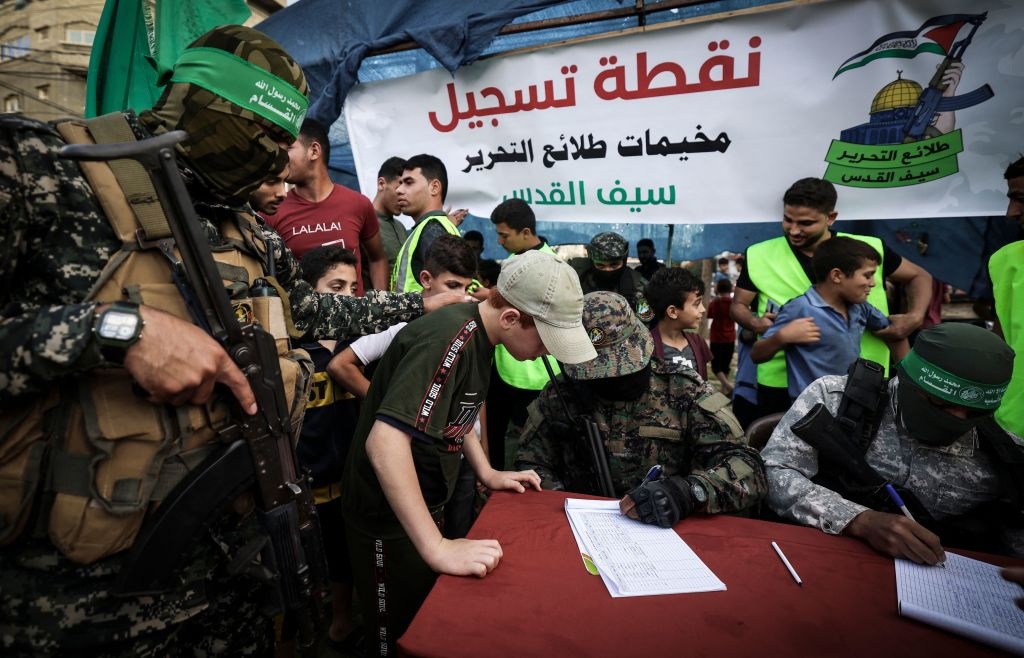
Palestinian boys register in a summer camp organised by the Ezz-Al Din Al-Qassam Brigades in Gaza City on June 14, 2021. (Photo by MAHMUD HAMS / AFP) (Photo by MAHMUD HAMS/AFP via Getty Images)

  • For more than a decade, the Iranian-backed Palestinian Islamic Jihad and Hamas terror groups have been holding summer camps for thousands of schoolchildren throughout the Gaza Strip. These camps have served as a framework for inculcating an extreme ideology that glorifies Jihad (holy war), terrorism, and armed struggle against Israel with the aim of “liberating Palestine from the [Jordan] River to the [Mediterranean] Sea.”
  • The camps also provide military training, such as practice with knives and firearms; hand-to-hand combat, and marching and foot drills. The children also stage plays and enact scenes of fighting and capturing Israeli soldiers or firing rockets at Israel.
  • Click here to rad full article. 

Urge California Legislative Jewish Caucus to Clarify Status of Ethnic Studies Bill and Help Stop Widespread Adoption of Antisemitic “Liberated” Curriculum

Despite “guardrail” amendments that were added to the California ethnic studies high school graduation requirement bill (AB 101) to ensure that required classes would not promote “bias, bigotry and discrimination,” since the bill’s passage in 2021 a growing number of school districts have adopted ethnic studies curricular materials with anti-Jewish and anti-Zionist biases or have contracted with consulting groups that promote an antisemitic “liberated” version of ethnic studies.

Last month, a Jewish Public Affairs Committee of California (JPAC) letter was sent to state officials underscoring the Jewish community’s fear that many school districts throughout the state will opt to teach a version of ethnic studies that promotes antisemitic stereotypes of Jews and Israel.

However, a recently published memorandum makes a compelling case that the state-mandated ethnic studies graduation requirement may not yet be operative, allowing school districts and the state time to re-evaluate whether and how to move forward with the requirement. 

A last-minute amendment to AB 101, apparently added by legislators who worried that the guardrails would not be able to prevent antisemitic “liberated” curricula from being adopted in many school districts, stipulated that the bill is “operative only upon an appropriation of funds by the Legislature.” Yet since the passage of AB 101, no such funds have been allocated.

The stakes are too high to get this wrong. 

An AMCHA-drafted letter calls on members of the  California Legislative Jewish Caucus to:

  1. Clarify for the Jewish community whether the ethnic studies graduation requirement mandated by AB 101 is operative or not;
  2. If the bill is not currently operative, ensure that the bill will not be funded until the serious problems with the AB 101-mandated requirement – especially the likelihood that many schools will adopt an antisemitic “liberated” curriculum – are adequately addressed by the Legislature.
Please read the full letter to the Jewish Caucus (here) and sign in support.