 Czech
Czech French
 German
 Hebrew
 Noruegan
 Russian
 Spanish
 Swedish
 Polish
 Portuguese




Israel Intel. Reports that the PA , at war with Israel since October 2023, prepares to take over Gaza
Overview[1]
- Hamas’ violent takeover of the Gaza Strip in 2007 created a schism, the first of its kind, between the Palestinian Authority (PA) government in Judea and Samaria and the Hamas government in the Strip, initiating a continuing hostility between the sides despite attempts at reconciliation.
- The war that broke out with Hamas’ attack and massacre of Israelis on October 7, 2023 provided the PA with an opportunity to reiterate its position that after the war, it should regain control of the Strip to create a geographic and political unity with Judea and Samaria ahead of the establishment of a Palestinian state. Senior PA figures stressed the position anew after the ceasefire that went into effect in the Gaza Strip in October 2025, and presented their own plans for the reconstruction of the Strip. Egypt and Qatar expressed support for the PA’s position.
- Hamas voiced its reservations about the PA’s return to the Gaza Strip, despite the movement’s declaration that it would relinquish control of the Strip. However, after talks between senior Hamas and PA figures in Cairo, Hamas began to moderate its position and publicly support the appointment of a PA government minister to head the future Palestinian committee to administer the Strip. The most-heard name to head the committee is Dr. Amjad Abu Ramadan, the PA minister of health and former mayor of Gaza.
- In ITIC assessment, the PA can be expected to play a significant role in the committee for administering the Strip, despite Israel’s public opposition and American ambiguity, as part of the understanding being formed by Fatah and Hamas, which seeks to demonstrate that it complies with the ceasefire terms. However, in all probability the dispute over the disarmament of Hamas and other “resistance” factions will continue, given Hamas’ refusal to disarm, directly opposed to the PA position that it should hold a monopoly on weapons. Therefore, in ITIC assessment, the tension between Hamas and the PA will most likely persist and make it difficult to find a political solution which would enable progress in the efforts to rehabilitate the Strip.
Background
- In June 2007, after Hamas’ violent takeover of the Gaza Strip, Mahmoud Abbas, the PA chairman, dissolved the Fatah-Hamas unity government and established an emergency government in Ramallah, while Hamas was left with its own government in the Gaza Strip. Thus, for the first time since the establishment of the PA in 1994, there were two separate governments, the PA government in Ramallah, which exercised control over territories in Judea and Samaria, and the Hamas government which controlled the Gaza Strip. Despite attempts to promote reconciliation between the rival sides, the schism continues.[2]
- The war which followed Hamas’ terrorist attack and massacre of Israelis on October 7, 2023 gave the PA leadership an opportunity to bring to the fore its position that the PA and the PLO were the official representatives of the Palestinians, and therefore the most appropriate bodies to administer the Strip after the war. Senior PA figures promoted the issue with Arab and international parties, emphasizing that the PA, which had always viewed the Gaza Strip as an integral part of a future Palestinian state, opposed the Israeli government’s plan to isolate Gaza, and regarded it as a deliberate Israeli measure to prevent the establishment of a Palestinian state and perpetuate the “Israeli occupation.”[3]
- To strengthen the PA’s standing with the Palestinian public and the international community, especially with the United States and the European Union, which demanded comprehensive reforms in the Authority’s conduct, Mahmoud Abbas appointed Muhammad Mustafa to head a technocratic government in March 2024. According to its founding principles, the government regarded Judea and Samaria, east Jerusalem and the Gaza Strip as one political and geographic unit, with the PLO as its source of authority.[4]
- Throughout the war, and especially given the American administration’s efforts to promote a ceasefire agreement to end the war, Mahmoud Abbas and senior PA figures reiterated their readiness to assume responsibility for the Gaza Strip:
- At the end of the Arab emergency meeting on the reconstruction of the Gaza Strip, held in Cairo on March 4, 2025, Muhammad Mustafa, PA prime minister, said the reconstruction of the Strip would be completed in cooperation with all the parties involved, and noted the need [sic] to unify the Gaza Strip, Judea and Samaria. He said reconstruction would be carried out through an independent governmental system (Wafa, March 4, 2025). Hussein al-Sheikh, secretary of the PLO Executive Committee, said that during the transition period, until the PA assumed control over the Gaza Strip, a committee would be established, headed by a minister in the Palestinian government and the deputy prime minister (Mohamed Alghorani’s Facebook page, March 4, 2025).
- Mundhir al-Hayek, Fatah spokesperson in the Gaza Strip, said that only national unity under the PA could restore political legitimacy to the Palestinians and oblige the international community to recognize the Palestinian National Authority as the sole sovereign and legal entity. He said that Fatah had submitted a detailed proposal to Egypt consisting of three stages: the return of PA civil and security control over the Gaza Strip according to the governance model in Judea and Samaria; the activation of aid, reconstruction and rehabilitation mechanisms as part of the restoration of civil and humanitarian order; and holding general elections in which the Palestinian people would democratically elect their leadership, thereby closing the chapter on Palestinian schism (Radio Alam, July 9, 2025).
- On September 22, 2025, Mahmoud Abbas gave a speech at the conference in New York in support of the two-state solution, in which he outlined his “day after” vision for the Gaza Strip. He said the “State of Palestine” was the only source of governance and security in the Strip, and administration of the Strip should take place through a temporary administrative committee subordinate to the government in Ramallah, operating with Arab and international support and participation. He claimed Hamas would have no role in governance and it and other “factions”[5] had to hand over their weapons to the PA, in the pursuit of one state, one law and one security. He said governance in the Gaza Strip after the war would adhere to the PLO’s political line and international commitments and would no longer rely on “militia organizations”[6] (Wafa, September 22, 2025).
- Speaking before the UN General Assembly, Mahmoud Abbas reiterated his statement that the PA was the only body authorized to bear full responsibility for governance and security through a temporary administrative committee headed by a PA minister, with Arab and international support and in coordination with the UN. At the same time, he promised internal PA and Gaza reforms, holding presidential and parliamentary elections within a year after the end of the war, drafting a temporary constitution within three months, and establishing a unified Palestinian state government (Wafa, September 25, 2025).

Mahmoud Abbas at the UN (Wafa, September 25, 2025)
- The mediators also supported the PA’s position. Badr Abdelatty, the Egyptian foreign minister, said the Gaza Strip would be administered by 15 Palestinian technocrats under PA supervision for six months, noting the “unity” between the Gaza Strip, Judea and Samaria (Sky News Arabia, August 12, 2025). He said his country had begun training 5,000 Palestinian police officers, in coordination with Jordan and the PA, to fill the security vacuum in the Gaza Strip after the end of the war. He added that the plan included deploying 5,000 more police officers on behalf of the PA (al-Sharq al-Awsat, August 13, 2025). Sheikh Mohammed bin Abdulrahman al-Thani, the prime minister of Qatar, said his country supported the PA’s being the sole body responsible for the Gaza Strip, Judea and Samaria (CNN, November 4, 2025).
PA Activity after The Ceasefire
- According to the American “20-point plan” for the future of the Gaza Strip, a temporary transitional government based on a non-political Palestinian technocratic committee would administer the Strip’s day-to-day affairs after the war, with Hamas excluded from governance and required to disarm (White House, October 9, 2025). However, in the first stage of the ceasefire agreement between Israel and Hamas, which went into effect on October 10, 2025, there was no specification of who would rule the Gaza Strip, an issue belonging only to the second stage of the agreement, which had not yet been negotiated.
- Immediately after the ceasefire went into effect, senior PA and PLO figures called for the PA to be granted responsibility for the Strip and for the technocratic committee which would administer the Gaza Strip during the interim period to be placed under its authority:
- “Fatah figures” said the movement supported the establishment of a “professional administrative committee” for the Gaza Strip only if it was subordinate to the government of the “State of Palestine.” They warned against moves which would separate the Gaza Strip, Judea and Samaria, and east Jerusalem, and against any attempt to impose foreign guardianship or mandate over the Palestinian people (Wafa, October 25, 2025).
- Muhammad Mustafa, PA prime minister, said there was no need to look for alternatives to governance in the Strip: the basic principle was that the PA’s institutions should return to administer it. He said the Gaza Strip had to be fully managed by the PA, and any international force present had to be temporary and approved solely by the PA, with the foreign troops serving a complementary role (al-Arabiya, October 28, 2025). On another occasion, Mustafa said that some countries had made the ceasefire in the Gaza Strip a precondition for recognizing a Palestinian state, in reference to the fact that the main role in managing the Strip’s affairs would fall to the PA (al-Sharq al-Awsat, October 28, 2025).
- Abdallah Kamil, a member of Fatah’s Revolutionary Council, said the PLO was the legitimate and sole representative of the Palestinian people, and any attempt to bypass the PLO or establish alternative frameworks would weaken the Palestinian position in the international arena. He claimed that Israel was working to separte the Palestinian space between the Gaza Strip, Judea and Samaria, and east Jerusalem to widen division and eliminate the “national project.” He therefore called on Hamas to join the Palestinian national system and recognize the PLO and its political and legal commitments (Wafa, October 26, 2025).
- Farsin Shahin, Palestinian foreign minister, said that currently the main challenge was to define the mandate and composition of the committee for administering the Gaza Strip, and expressed confidence that it would be headed by a representative of the PA, since the PLO held authority over the “occupied territories” (al-Arabiya, November 5, 2025).
- Hussein al-Sheikh, PA deputy chairman, said the PA had full authority over the Gaza Strip, even if it was a transitional phase which to a political process preserving the two-state solution. He said they were coordinating with Arab and Islamic bodies to promote amendments to the American plan to ensure the geographic and political connection between the Gaza Strip, Judea and Samaria. He added that they had proposed to Hamas that it hand over its weapons to the PA, as that was the only way to end the schism, but no agreement had yet been reached (Sky News Arabia, November 8, 2025).
- Alongside the declarations of intent to take control of the Gaza Strip, the PA also presented its own plans for the Strip’s reconstruction as part of its desire to be the leading power on the day after the war:
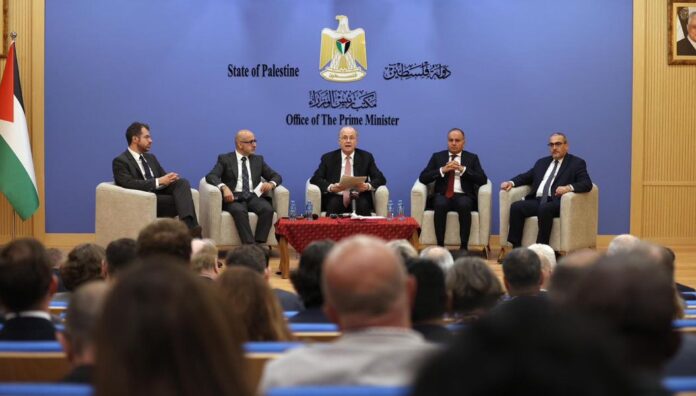
- On October 16, 2025, Muhammad Mustafa, PA prime minister, hosted a meeting attended by about one hundred representatives of international institutions and UN bodies, members of the diplomatic corps and several ministers, during which the PA’s plan for the reconstruction of the Gaza Strip was presented. The plan, to be implemented with Arab support and international assistance, is estimated to cost $67 billion and has 56 subprograms in 18 sectors, including housing, infrastructure, economy, social services and governance. The plan has three stages: an early recovery phase lasting six months at a cost of $3.5 billion, which will focus on debris removal and the restoration of basic infrastructure, temporary housing, economic support, revival of livelihoods for small businesses and agriculture, reactivation of the banking system, psychological and social support, education and health; a rehabilitation and sectoral recovery phase lasting three years and costing $30 billion; and a long-term construction phase. It was also noted that training programs for Palestinian police forces were continuing in cooperation with Egypt and Jordan. The PA government said it wanted to strengthen unified systems in the Gaza Strip and Judea and Samaria with transparency and institutional accountability, and to allow for a temporary international or regional presence approved by the UN Security Council. Muhammad Mustafa called on the international community to enable the plan, restore hope, dignity and stability to the Palestinian people (Wafa, October 16, 2025).

Muhammad Mustafa, PA prime minister, presents the plan for reconstructing the Gaza Strip (Wafa, October 16, 2025)
-
- Ahed Beseiso, PA minister of public works and housing, presented a plan for an island off the coast of the Gaza Strip. He said the it would be constructed by recycling 60 million tons of debris created by the war to fill an area of 14 kilometers in the middle of the sea. He said the objective was to create a developed area for leisure tourism and employment opportunities for the Strip’s residents to support the local economy (Aram News, October 23, 2025).
- The PA ministry of labor presented three new projects in the southern Gaza Strip, costing about €3.1 million, intended for approximately 1,082 beneficiaries among adults and skilled and unskilled workers in the private sector. Inas al-Atari, minister of labor, said the objective was to strengthen Gazan resilience by creating temporary and permanent employment opportunities and supporting the Palestinian economy. The three projects are a “decent jobs” facility in the Gaza Strip in cooperation with the UN Development Programme (UNDP), costing about $673,000; the Pathways to Employment in “Palestine” project funded by the Belgian agency Enabel at a cost of about €1.06 million, for 442 young men and women in education, health, and infrastructure sectors until March 2026; and a business recovery initiative funded by the International Labour Organization (ILO), costing about $1.34 million, providing support for 60 small businesses until June 2026 (Wafa, October 26, 2025).
Hamas’ Position
- Throughout the war, although Hamas claimed it was ready to relinquish control of the Gaza Strip, it has reservations about transferring responsibility for the Strip to the PA. For example, Bassem Na’im, a member of the Hamas political bureau, said the PA was unable to govern the Palestinian people in Judea and Samaria and was therefore too weak to take on that role in the Gaza Strip after the war (aljazeera.net, May 13, 2024).
- In October 2024, Fatah and Hamas, through Egyptian mediation, agreed to establish the Community Support Committee, a technocratic committee to administer the Gaza Strip composed of individuals unaffiliated with Palestinian “factions.” However, the talks on establishing the committee reportedly stalled because Hamas demanded that the committee be administratively and economically independent from the PA, a demand Fatah opposed (Sky News Arabia, October 9–11, 2024).
- After the ceasefire in the Gaza Strip went into effect, Hamas began taking steps to restore its civil and security governance, exploiting the governmental vacuum until the establishment of the technocratic committee.[7] Hazem Qassem, Hamas spokesperson in the Gaza Strip, said the movement was not seeking to participate in administrative arrangements for governance after the fighting ended, and had agreed to the establishment of a community support and collection committee that would take the reins. He said the formation of the temporary committee should be expedited until an agreed administrative committee for the Strip was established, claiming that government bodies in Gaza continued to take steps to prevent “a dangerous vacuum” (al-Zuwaida Now Telegram channel, October 18, 2025).
- A meeting of Palestinian “factions” was held in Cairo, without Fatah (the main and leading force in the PLO and the PA), to discuss the “day after.” The sides supported transferring the administration of the Gaza Strip to a temporary Palestinian committee of independent technocrats from the Strip, which would be responsible for managing daily life and services in cooperation with Arab entities and international institutions. They also called on all factions to work together to unify their positions in order to agree on a national Palestinian strategy. However, the statement did not include any reference to the role of the PA in administering the Strip. “Palestinian sources” said the reason Fatah refused to participate in the Cairo meetings was its position that the PA was the sole legitimate representative of the Palestinian people, and therefore called on all factions and parties to take responsibility and end the schism.[8]
- Although Fatah did not attend the meeting of the “factions,” there was in fact a meeting of a Hamas delegation led by Khalil al-Hayya, the head of its Political Bureau in the Gaza Strip; a PA delegation led by Hussein al-Sheikh, the deputy chairman of the PA and the PLO Executive Committee: and Majed Faraj, the head of Palestinian General Intelligence. A “Palestinian source familiar with the matter” said the meeting was positive and agreements were reached on certain issues, primarily the issue of administering the Gaza Strip and transferring its responsibilities to the PA (al-Sharq al-Awsat, October 24, 2025).
- Al-Sheikh said a basic agreement had been reached in the talks with Hamas in Cairo, according to which the administrative committee would be entirely Palestinian, regardless of whether it was composed of technocrats or independent figures without political affiliation. He added that they had also agreed that the committee would be headed by a minister from the PA government to preserve the geographic, demographic and political connection between Judea and Samaria and the Gaza Strip (Sky News Arabia, November 8, 2025).
- Confirmation of the above came from Hamas, as its senior figures publicly expressed willingness for the PA’s direct involvement in managing the Strip’s affairs:
- Khalil al-Hayya, head of the Hamas political bureau, said Hamas had agreed with the “factions” and Fatah on the establishment of the committee and on the list of names presented by the mediators. He said the movement had told the mediators it was giving them the freedom to choose from among the Palestinian people those best suited to administer the Strip. He added that Hamas had no objection to any national figure residing in the Gaza Strip taking responsibility for its administration (Al Jazeera Mubasher, October 26, 2025).
- Taher al-Nunu, adviser to the head the Hamas political bureau, said the movement had accepted Fatah’s proposal that the head of the committee be a minister from the PA, and the list of names had been submitted to the Egyptian leadership, which had the authority to select the committee members (al-Sharq al-Awsat, November 3, 2025).
- Musa Abu Marzouq, deputy head for external relations, said Hamas had agreed that a minister from the PA would administer the Strip “for the benefit of the Palestinian people.” He added that all security arrangements in the Gaza Strip had to be exclusively Palestinian, under the leadership of a security mechanism managed by the Strip’s administrative council, adding there was a Palestinian consensus on the matter (al-Akhbar, November 4, 2025).
PA Candidates for Administering the Strip
- While forming the committee to administer the Gaza Strip continues, and in light of the apparent agreement between Hamas and Fatah that it would be headed by a minister from the PA, the leading candidate is Dr. Majed Abu Ramadan, the PA’s minister of health, who was mayor of Gaza from 2005 to 2008 and also headed the Association of Palestinian Local Authorities.[9] An “official source in the Fatah movement” confirmed that one of the prominent candidates to head the committee was Abu Ramadan because he is a minister in the Palestinian government, a native of the Gaza Strip, and a national figure with high qualifications and experience (al-Sharq al-Awsat, November 3, 2025).

Majed Abu Ramadan (Abu Ramadan’s Facebook page, October 21, 2025)
- Other names mentioned as possible candidates, although not members of the Palestinian government, were Faten Harb, the first woman in the Gaza Strip recognized as a mukhtar, a mother of four, an academic engaged in mediation initiatives on inheritance, divorce and family issues; Nasser al-Qudwa, former PA representative to the UN and foreign minister of the PA, and nephew of the late PA chairman Yasser Arafat; and Amjad al-Shawa, a human rights activist heading the Palestinian NGO Network. Al-Shawa denied having received an official approach to head the committee and said he was unaware of any such appointment, though he added he would be willing to take the position if Arab and Palestinian consensus were achieved (BBC Arabic, October 27, 2025).
- In August 2025, former senior PA official Samir Halayleh said that discussions had taken place to appoint him as governor of the Strip, and claimed that the proposal had been on the table for a year and a half. He said he had presented the proposal to Mahmoud Abbas and Muhammad Mustafa, and discussions were now taking place within the Palestinian leadership. He claimed Hamas had agreed to the proposal (Ma’an News Agency, August 12, 2025). However, an “official source in Mahmoud Abbas’s office” denied the reports of Halayleh’s appointment. He said the only body authorized to administer the Strip is the “State of Palestine,” represented by the government or by an administrative committee headed by a government minister. According to the “source,” any other approach deviated from the national line and aligned with the “occupation’s” intention to separate the Gaza Strip from Judea and Samaria and cause the “displacement” of its population (Wafa, August 12, 2025). As a result, Halayleh said he would not accept the role of administering the Strip if the PA opposed it, since it was “the body holding sovereignty and legitimacy” (al-Arabiya, August 12, 2025). It was reported later that the PA’s preventive security service had arrested Halayleh. “Legal sources” noted that the charges mainly concerned “incitement to conflicts,” in light of his statements regarding the possibility of assuming the role of governor (al-Sharq al-Awsat, September 11, 2025).
[1] Click https://www.terrorism-info.org.il/en to subscribe and receive the ITIC’s daily updates as well as its other publications.
[2] For further information, see the Jue 2007 ITIC report, After Hamas took over the Gaza Strip, Abu Mazen dissolved the Palestinian national unity government and established an emergency Fatah-affiliated government.
[3] For further information, see the March 2024 ITIC report, The Palestinian perspective on alternatives for managing the Gaza Strip “the day after”
[4] For further information, see the April 2024 ITIC report, The New Palestinian Authority Government
[5] Terrorist organizations operating in the Gaza Strip.
[6] Terrorist organizations.
[7] For further information, see the October 2025 ITIC report, Hamas Activity to Restore Security Governance in the Gaza Strip after the Ceasefire and the November 2025 report, Hamas activity to restore its civilian governance In the Gaza Strip after the ceasefire
[8] For further information, see the October 2025 ITIC report, Preparations for “the Day After” in the Gaza Strip: The Palestinian Organizations Meet in Cairo
[9] For further information, see the April 2024 ITIC report, The New Palestinian Authority Government
U.S. steps up Gaza aid role to support fragile ceasefire
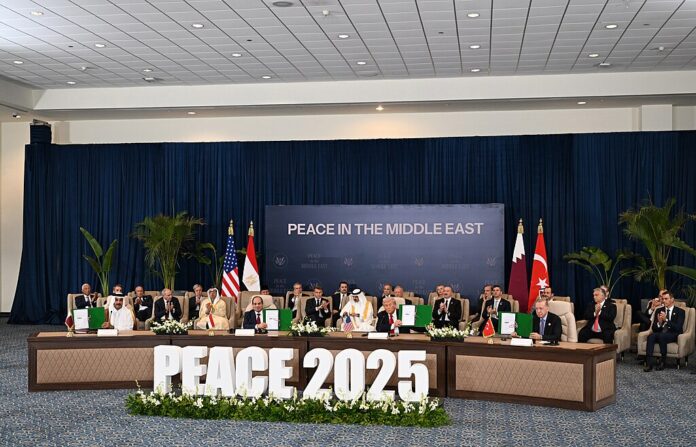
The U.S. military-led “coordination center” charged with implementing President Donald Trump’s peace plan in the Gaza Strip is replacing Israel as the overseer of humanitarian aid to the enclave, even as multiple people familiar with the center’s first weeks of operations have described it as chaotic and indecisive.
In a transition that was completed Friday, the Israelis are still “part of the conversation,” but decisions will be taken by the wider body, a U.S. official said, referencing the shift from COGAT, the unit within the Israel Defense Forces responsible for regulating and facilitating aid in Gaza, to the Civil-Military Coordination Center set up in southern Israel near the Gaza border.
Several people familiar with the transition said the move relegates Israel to a secondary role in determining how and what humanitarian relief can enter Gaza as CMCC takes the lead. Since the Gaza ceasefire began last month, humanitarian aid, while improved, has remained significantly restricted by Israel.
More than 40 countries and organizations are represented in the U.S.-led center, and “one of the benefits … of bringing them all together is that enables you to really sort through fact from fiction and get a clearer understanding of what is happening on the ground, where the needs lie,” Navy Capt. Tim Hawkins, a spokesperson for the U.S. Central Command, said in an interview.
Until now, the IDF has opened only two entryways for aid into Gaza, with the vast majority of aid coming through Kerem Shalom in the south. There have been no direct deliveries to northern Gaza since early September. Many of the trucks allowed to enter, according to the United Nations, are commercial shipments of goods offered for sale in Gaza markets that few have money to buy.
The transit point between Jordan, where large quantities of aid are waiting, and Israel over the Allenby Bridge on the Jordan River has been closed for much of the year. The majority of international aid organizations have largely been barred from bringing food into Gaza for months since Israel imposed intrusive new registration rules they have refused to sign.
Aid organizations long have complained of Israel’s restrictions on “dual-use items” that it deems capable of being turned into weapons, which have included tent poles, medical scalpels and ointment to treat skin infections.
“Israel is blocking the Trump plan’s humanitarian clauses,” Jan Egeland, secretary general of the Norwegian Refugee Council, said Thursday in anticipation of the transition to CMCC control. “For us, to have the U.S. actively engaged is very good news.”
Although the Trump peace plan includes a massive increase in the amount of assistance, the United States has not said which, if any, of the Israeli restrictions might now be lifted, how the CMCC plans to manage the massive aid project and whether new rules would be acceptable to aid organizations wary of any kind of military control.
“Our appeal is make the plan a reality,” Egeland said. “Of course, the credibility of the United States is at stake here.”
COGAT did not initially respond to questions about its role.
A COGAT statement sent to The Post after publication of this article said, “The Americans will be integrated into the formulation and implementation of coordination, supervision, and control mechanisms in the context of humanitarian aid, in full cooperation with the Israeli security services.”
An additional statement, attributed to unnamed “Israeli officials,” said that while “the Americans will take the lead in engaging with the international community on humanitarian matters. … It should be emphasized that this does not constitute a transfer of authority or responsibility from COGAT to the Americans.” There was “no change in policy,” Israeli authorities said, governing aid inspection or dual-use items, and aid entry “will be carried out solely by [Israeli] approved international organizations.”
A watchful eye
Trump has acknowledged that he pressured Israeli Prime Minister Benjamin Netanyahu to accept the peace agreement, but it’s unclear how far he is willing to go in ensuring that Israel comports with all elements of his 20-point plan.
As part of the implementation, the U.S. Central Command, which is responsible for planning and coordinating the U.S. military in the region, has also stepped up its own surveillance of Gaza, including with drones to monitor both aid distribution and the Israel-Hamas ceasefire.
Last week, Centcom posted a video taken from an MQ-9 Reaper drone of what it said were Hamas “operatives” looting a heavily laden aid truck in Khan Younis, in southern Gaza.
A second U.S. official said publication of the video was part of an effort to pressure Hamas, whose militants have emerged to control parts of Gaza where, as part of the ceasefire, Israel has withdrawn. The official is one of at least a dozen people familiar with CMCC operations interviewed for this report, most of whom discussed its progress and difficulties on the condition of anonymity.
Despite the official ceasefire, Israel has reserved the right to respond to anything it determines is a threat to its own security, and it has continued occasional airstrikes in Gaza and fired on civilians who approach territory controlled by the IDF.
“As long as Centcom is activated and operating there, and as long as the U.S. is sort of putting its reputation on the line, so to speak, I think you’re going to see a lot more U.S. assets and U.S.-military run operations,” said an aid worker who recently returned to Washington from the CMCC. Publicly announcing the drone overflights “was a signal that we’re not relying on IDF intelligence or IDF drones. … We have our own assets that we are operating.”
Even as the U.S. continues monitoring Hamas activities, its continued pressure on Israel is considered critical to moving the peace plan forward and ensuring ongoing support from governments in Europe and the Middle East, and nongovernmental organizations, all of whose buy-in is deemed vital.
Israel has pushed back forcefully against any suggestion that it is under the U.S.’s thumb and that Centcom is collecting its own intelligence to verify Israel’s compliance with the agreement.
“The whole activity of the Americans operating in Gaza is something new,” said Yossi Kuperwasser, a former IDF general who served as director general of the Ministry of Strategic Affairs. “But the rules, in my mind, of sharing information are the same. Whatever is valuable for Israel is shared.”
With Trump having claimed that Gaza is now on the path to a peaceful, prosperous future, “the one vital, strategic mission” for the U.S. is now “to babysit Bibi … to make sure there is no return to fighting,” one person familiar with White House thinking said, using Netanyahu’s nickname.
In the weeks since the ceasefire, the administration has sent a steady stream of high-level minders to visit the CMCC and Netanyahu’s government, including Vice President JD Vance, Secretary of State Marco Rubio, Joint Chiefs of Staff Chairman Dan Caine and, last weekend, Director of National Intelligence Tulsi Gabbard.
Trump has outlined a grand post-ceasefire vision, describing his Gaza initiative as a “historic dawn of a new Middle East” that includes the expansion of the Abraham Accords, the diplomatic normalization agreement he brokered during his first term between Israel and four Arab states.
But many regional leaders, including Saudi Arabian Crown Prince Mohammed bin Salman, who will visit the White House in mid-November, are waiting for assurances that the war is truly over and that Israel will relinquish control over the enclave. On Monday, Trump will host President Ahmed al-Sharaa of Syria, with whom he *hopes to expand U.S. security relations.
Ignorance of the Law is no excuse

A few weeks ago, President Trump made a bombastic declaration that he would not allow Israel to annex the “West Bank“. He later explained that his imperial diktat was based on a promise he’d allegedly made to several unnamed Arab leaders, whose friendship he apparently valued more than his adherence to American law.
When I pointed this fact out to several Foreign Ministry officials, the look of incomprehension on the faces of these bureaucrats told me all I needed to know about their total ignorance of what I was talking about.
Few people are aware of the fact that the San Remo Agreement granted our people sovereign rights over Judaea, Samaria and Jerusalem.
Fewer people, unfortunately, are aware of the fact that this agreement was accepted by the League of Nations as the law that governed Britain’s handling of its Palestine Mandate.
Not surprisingly, hardly anyone realizes that this law was subsequently accepted by the United Nations as binding international law.
What absolutely astounds me, though, is that absolutely no one within the Israeli diplomatic corps seems to be aware of the fact that the 1924 Anglo American Treaty legally bound the American government to honor San Remo’s recognition of Jewish ownership of both the Territories and Jerusalem. Since Washington had not joined the League of Nations, Great Britain decided to sign a separate treaty with the U.S. committing the latter to honoring San Remo’s recognition of Jewish sovereignty over the Territories. The eventual treaty was later confirmed by the U.S. Senate and signed into law by President Calvin Coolidge.
In other words, President Trump actually broke American law when he arbitrarily threatened to punish us if we dared to annex the “West Bank”. I guess the fact that we wouldn’t be annexing land that legally belonged to us in the first place went straight over the President’s head. Of course, if President Trump wants to void the 1924 Treaty, all he has to do is to get two thirds of the Senate to abrogate it. And that, simply put, isn’t going to happen. So the 1924 Anglo American Treaty stands as U.S. law – and Trump, in his ignorance, broke it.
There’s an old expression that ignorance of the law is no excuse for having committed a crime. I think that best describes President Trump’s violation of the Anglo American Treaty of 1924. Clearly, he had absolutely no right to promise his Arab friends something that he had no legal right to offer. On the other hand, Bibi’s “crime” is that he hasn’t summoned the courage to act on this Treaty by officially announcing the application of Israeli sovereignty over Judaea and Samaria as per our right under the 1924 Anglo American Treaty.
Luckily, there is still time, though, for him to do so. He just has to start acting like the leader of an independent country and not a servile doormat for President Trump.
Flow chart; about Palestiinian texts used in a;ll PA and UNRWA schools
Our agency has access to all texts used in all UNRWA and PA schools since the PA established its own school system on August 1, 2000. That access was facilitated by Yassir Arafat, head of the PLO who died in 2004. That access continues to this day.
On behalf of our news and research agency, Dr. Arnon Groiss has reviewed all PA texts used in UNRWA school books since August 1, 2000 and shared that research with The Meir Amit Intelligence and Terrorism Information Center.
These are our reports on PA/UNRWA education and posted at The Meir Amit Intelligence and Terrorism Information Center
https://www.terrorism-info.org.il/en/?s=groiss
A senior Israel government official asked to share our research
with US officials arriving to discuss “Gaza stabilization” efforts at the new improvised
Centcom HQ in Kiryat Malachi. I readily agreed
A senior IDF official asked me to travel to Kiryat Gat to present our research to the Centcom staff.
However, both Israel and US official made it clear that policy officials had no intent to stop the incitement and indoctrination to war which characterize all UNRWA and PA schools education in all Palestinian schools
.
Neither the US or Israel express any interest in removing Hamas teachers who dominate UNRWA schools.
BBC forced to correct two Gaza stories a week
The BBC has been forced to correct two stories a week about the Gaza conflict since the Oct 7 attacks on Israel, The Telegraph can reveal.
BBC Arabic has had to make 215 corrections and clarifications over the past two years on stories that were found to be biased, inaccurate or misleading.
The figures follow a week of revelations by The Telegraph of one-sided reporting at the BBC, disclosed in an 8,000-word dossier compiled by a whistleblower, which also accused BBC Arabic of choosing to “minimise Israeli suffering” in the war in Gaza to “paint Israel as the aggressor”.
On Monday, the BBC is also expected to apologise for the misleading editing of a Donald Trump speech in a Panorama documentary, putting further pressure on Tim Davie, the BBC’s director general, to quit.
The media bias campaign group Committee for Accuracy in Middle East Reporting and Analysis (Camera) obtained the corrections after more than 100 of its complaints over BBC Arabic’s coverage were upheld. They work out as an average of two stories a week.
One of its complaints involved a BBC Arabic report in January this year about the treatment of hostages by the Al-Qassam Brigade, in which the Hamas unit was described as “guarding” the hostages and being “responsible for securing the hostages”, rather than holding them captive.
BBC Arabic – which is part of the World Service and is funded mainly through the licence fee – has also been forced to make more than 40 corrections after Camera complained about stories that incorrectly referred to communities inside Israel’s internationally recognised territory as “settlements” and their residents as “settlers”.
Responding to the figures, Baroness Deech, a former BBC governor, said the broadcaster’s own Executive Complaint Unit (ECU) has failed in its obligation as an internal standards watchdog.
She said: “While BBC Arabic rightly continues to receive condemnation from politicians from all sides of the House for its repeated breaches of BBC guidelines and its flagrant anti-Israel bias, the BBC’s ECU considers it to be entirely blameless.
“The ECU is turning a blind eye to bias within BBC Arabic. We need an independent complaints process because the BBC simply cannot be trusted to mark its own homework.”
Michael Prescott, who until June was an independent adviser to the BBC’s Editorial Guidelines and Standards Committee (EGSC), was so appalled by the corporation’s lack of action over numerous instances of bias that he sent a memo to all BBC board members, which is now circulating in government departments.
In a copy of the letter, which was last week published by The Telegraph, he said that BBC Arabic gave a platform to journalists who had made extreme anti-Semitic comments.
Among the examples of bias highlighted by both Camera and Mr Prescott were the differences in stories about an attack by Hamas on Oct 1 2024 that killed seven Israeli civilians in Jaffa.
While the BBC News English version reported how the civilians were killed on a train and railway platform, the BBC Arabic version presented the attack as a military operation with no mention of the civilian victims.
Another BBC Arabic report in January this year described the Al-Qassam Brigade as “guarding” the hostages and as being “responsible for securing the hostages”, rather than holding them captive.
It also featured two female Israeli hostages “thanking” their captors for the “good treatment” they received while “in custody”.
WATCH: Violent Anti-Israel Protesters Attack Toronto Students at Event Featuring IDF Soldiers
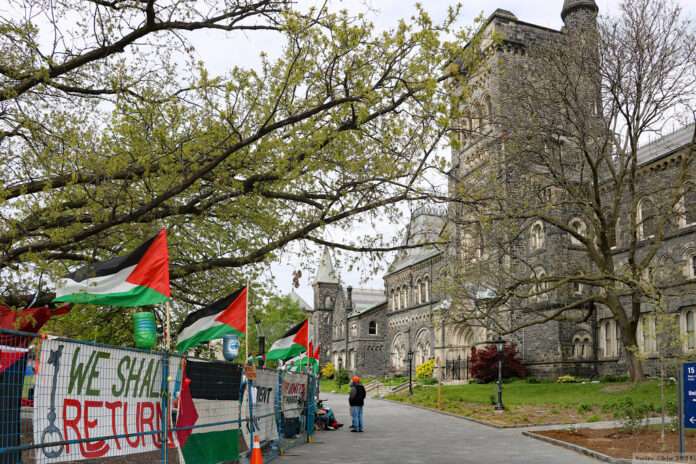
Violent protesters attacked participants at a “Combat on Campus” event attended by Toronto Metropolitan students and featuring IDF soldiers. Several participants were hospitalized with bleeding injuries caused by shattered glass.
Toronto Metropolitan students were attacked today in Toronto, while holding a peaceful event featuring Israeli soldiers, hosted by TMU SSI as part of the national “Combat on Campus” tour.
Minutes before the event began, a masked mob forced their way into a private venue,… pic.twitter.com/Ts2tZ1rS38
— StandWithUs Canada (@StandWithUsCA) November 5, 2025
Healing the mind: Israel’s next frontline is the battle for recovery
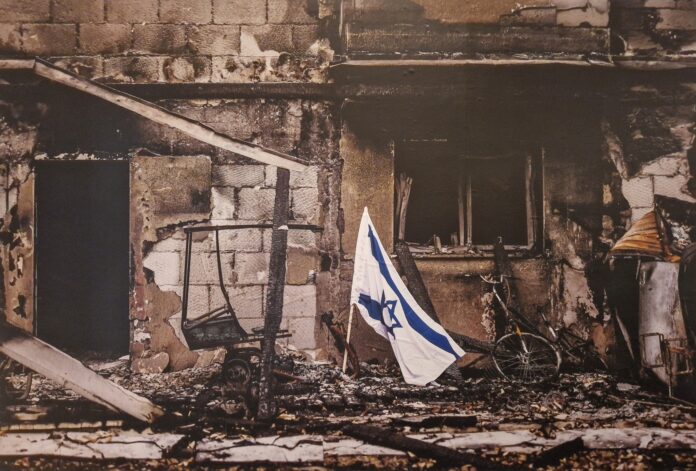
And 2025 is not over yet. The brief but searing 12-day Iran-Israel War in June has already deepened the national trauma.
Resilience in motion
This is why the way we organize care matters as much as care itself. In the fragile weeks surrounding the hostages’ return, Mahut Israel, a leading resilience organization, moved quickly.
From vision to practice
Founded in 1989, Mahut, meaning “essence,” has become a national framework for trauma preparedness.
Recognizing the unseen
Mahut’s initiative “Family Circle – We See You” meets the second and third circles of trauma, the families of survivors, victims, and hostages. Developed with the Jewish Agency, Bituach Leumi, and the Fund for Victims of Terror, it centers on recognition and the power of a supporting peer group.
From local roots to global reach
Through the Israel Trauma Coalition, Mahut’s approach has been shared internationally, from training clinicians in France after the 2015 Paris attacks to supporting resilience centers in Ukraine.
To secure long-term peace, fix Gaza’s schools
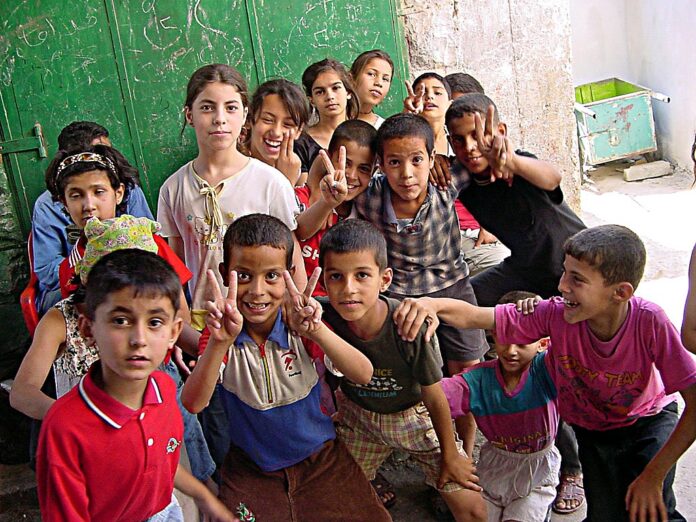
Every generation in Gaza grows up memorizing the language of martyrdom. Schools, summer camps, mosques and media channels work in concert to instill an uncompromising worldview: violence is virtuous, compromise is weakness and the annihilation of Israel is a sacred duty. Hamas’s rockets are the visible expression of decades of indoctrination of the next generation.
Gaza’s children are the victims of this violent ideology. Few parents in London, Paris or Washington would tolerate their child being taught that violence is noble or that neighbors are subhuman. Yet the international community has subsidized precisely that curriculum for Palestinian children — and then has acted shocked when violence perpetuates itself. It’s time for that to end.
Academic critics have long alleged that Western funding for education is just a thinly veiled cover for cultural imperialism. Such arguments badly overreach. After World War II, Germany’s education system was overhauled to remove Nazi propaganda while preserving German culture. Postapartheid South Africa reformed its curriculum to promote reconciliation. Postwar Japan replaced militarism with civic education. Defanging destructive ideologies is not imperialism, cultural or otherwise.
The scale of the problem today is well documented. A 2021 report by IMPACT-se, an education nongovernmental organization, found ample evidence of textbooks produced by the United Nations Relief and Works Agency containing militaristic themes alongside maps that erase Israel from the region. A 2019 UN Watch analysis identified over 100 UNRWA social media posts supporting militant groups. Another 2025 UN Watch report documents that more than 15 percent of UNRWA’s senior educators in Gaza are affiliated with Hamas or Palestinian Islamic Jihad. Other investigations have found that curriculum materials violate UNESCO standards and that schools have been used to store weapons. This is clearly a systemic problem.
UNRWA has operated for decades with minimal oversight. But each revelation produces the same response from the organization: acknowledgment of concern, promises of reform — and then business as usual once the cameras leave. The massacres of Oct. 7, 2023 were the gruesome cost of inaction. Several UNRWA employees may have participated in the violence. The agency responded by treating it as an isolated personnel issue rather than the logical endpoint of decades of hateful indoctrination.
The Trump administration is right to insist in its 20-point peace plan that “the values of tolerance and peaceful co-existence” are critical for long-term success. To ensure that hate does not take root again, reconstruction aid must come with nonnegotiable conditions: independent curriculum oversight by external auditors with direct access to materials and classrooms, teacher vetting for extremist affiliations and full donor transparency. When Western taxpayers fund schools, they have every right to insist those schools don’t teach children to become terrorists. Indeed, they have every obligation to do so. We now know what failure looks like.
The proper test of sincerity in rebuilding a decent society for Palestinians isn’t how much money we pledge. It’s whether we enforce the standards we would insist upon for our own children. Gaza’s children deserve schools that prepare them for life, not death. They deserve textbooks that teach them to build, not destroy. They deserve a brighter future.
Todd L. Pittinsky is a professor at Stony Brook University.


