Praying for Our Leaders

Life is full of transitions; the world is in constant flux. As we are in the middle of the Yomim Norai’im, with ROSH HASHANAH almost upon us, it is natural to think of our own personal destiny, as well as to wonder what the future of our People, and the Yishuv in Eretz Yisrael holds in store: Who will lead us? Will the leaders of yesteryear move on, and new ones arrive on the scene? In which direction will they take us?

This week’s parsha CONTINUES with the words ‘Vayeilech Moshe’! – “And Moshe went and spoke these words unto all Israel, and he said unto them: ‘I am 120 years this day and can no longer go out and come in’…”, (Devarim 31:1-2).

With these words the Torah describes how the Jewish People’s leader par excellence, Moshe Rabbeinu, relates to the realization that it is time for him to go, and for another leader (-Yehoshua) to take the lead. In response to the unspoken question as to where did Moshe ‘go’, the Ibn Ezra explains that as could be expected from a true leader, Moshe was primarily concerned with the wellbeing of his flock. As a result, Ibn Ezra writes, Moshe went to tell the People that he was about to die, in order to prepare them in advance, so that they should not be afraid of the necessary changes to come. Moshe ‘went’ to encourage the people to be accepting of Yehoshua’s leadership, and to loyally follow his directives “for he shall cause them to inherit the Land”. The Alsheich adds that Moshe wished to convey the message that in his passing the People should not feel as if they are losing an irreplaceable leader, since Hashem – the true ultimate leader – will always be with them.

The Kli Yakar explains that Vayeilech refers to actual walking. He writes that Moshe was aware that the words “I can no longer go out and come in” could erroneously be understood by the people as a statement pertaining to his own physical health and stamina. Therefore, Moshe demonstrates his vigour: ‘Vayeilach Moshe’ – Moshe ‘went’ – i.e. he walked briskly through the entire length and breath of the camp to demonstrate that he still had the physical ability to lead, however his time had come and he now lacked the Almighty’s permission to continue on in his role. The baton had to be passed on to the next in line.  When a leader moves on – and others rise to take their place – their legacy may be forgotten with time. A historical footnote that I recently came across, brings us back to the first Rosh Hashana celebrated shortly after the establishment of the State of Israel in 1948. The scene is the city of Rechovot. The shul is the city’s central synagogue and the Rabbi was Zvi Yehuda Meltzer, zt”l, the city’s Chief Rabbi.

Rabbi Meltzer, the son of the world renowned Rav Isser Zalman Melzer zt”l (and brother in-law of R. Aharon Kotler), had been inducted to the position of chief rabbi one year earlier. He had come to Rechovot after having served as Rabbi of Pardes Chana where he had founded Midrashiyat Noam and the Kletzk Yeshiva. Coming to Rechovot he founded Yeshivat HaDarom – (Both Yeshivot Noam and HaDarom combined secular studies with Limuddei Kodesh, religious studies). Rabbi Meltzer’s independent and out-of-the-box approach, may have influenced his son-in-law, Rav Yehuda Amital zt”l (-of Yeshivat Har Etzion), who – amongst other things – breathed life into Rav Zvi Yehuda Meltzer’s belief that army service should be combined with Yeshivah learning, perfecting the model of the Hesder Yeshiva.

Three months after the founding of the State of Israel, as Rav Zvi Yehuda Meltzer zt”l rose to deliver his Rosh Hashana Drasha he was faced with a predicament: Should he deliver his prepared words emphasizing Teshuva and related topics, or should he first acknowledge the illustrious guest who had walked into the shul – Rechovot resident, and president of the nascent State of Israel – Prof. Chaim Weizman z”l. Although Weizman had been appointed to the position two days after the founding of the state, he had been delayed abroad and only stepped foot in the independent state, and arrived in his home in Rechovot, a few short days earlier. As Rabbi Meltzer stood up and headed towards the podium, a thought flashed through his mind, and thus he began: “During all the years in Galut, as Jews turned to Hashem their thoughts and prayers were always clouded by the primal and urgent fear of what the non-Jewish host nation may be plotting against them. Thus their prayers were focused – first and foremost – on a plea for compassion from the nations”. Rav Meltzer zt”l continued by saying that we no longer live in Galut, and here in Eretz Yisrael we are no longer ruled over by others. “Today”, he continued, “we are blessed to be in the presence of our own President, whose very existence symbolizes our ability to serve Hashem with a ‘Lev Shalem’, with a complete and pure heart; a heart unclouded with fear”. When asked how Prof. Weizman had responded to these words, R. Meltzer answered that the president’s eyes “welled up with tears”.The central figures in this historical vignette, have long gone from this world. – Worthy others have taken over their roles. As we pray to Hashem on this year’s Yamim Noraim, we pray that today too we be granted true leaders; leaders whose primary concern is the welfare and best interest of their people. We pray that we be granted an additional year of good health, and be allowed Latzeit Velavo – to come and go in the Holy Land, completing G-d’s will and finding favor in his eyes.


RABBI YERACHMIEL RONESS was born and raised in Montreal, Canada. After serving as a congregational Rabbi and as a Hillel Director in New York City, he made Aliyah in 1983 with his wife Dina and their five young children.

Ever since, Rabbi Roness has dedicated his life to promoting Aliyah. First, as Rabbi of the Jewish Agency’s Absorption Centers, and subsequently as the executive director of the Aloh-Naaleh organization.

This article was taken from Rabbi Roness’s new book: Aloh Na’aleh – Eretz Yisrael and Aliyah in the Weekly Parshah.  The book is for sale on Amazon.
It’s On: Hezbollah Fires at Samaria, Akko, Haifa, Galilee, Golan Heights

Welcome to the Third Lebanon War, readers. The Israeli government has not yet declared it officially, but it is clear we’re already there.

Israeli forces launched a massive wave of airstrikes Monday against Hezbollah targets throughout southern and eastern Lebanon, with secondary explosions and flying rockets making it clear that indeed, weapons and ammunition were being stored at the sites.

In response, Hezbollah fired dozens of rockets and suicide drones at Israeli targets in various communities throughout the Galilee and Golan Heights, including Tzfat (Safed) and its surrounds, and then at Carmel and the Haifa suburbs known as the “krayot”, Yagur and Kfar Hasidim, as well as the coastal city of Akko, the Jezre’el Valley and into the Samaria region.

Red Alert incoming rocket sirens were activated in Ariel, Karnei Shomron, Salfit, Alei Zahav, Peduel, Emanuel, and Elkanah, all in Samaria, including several that are just east of Tel Aviv.

The terrorists may have been aiming for Ben Gurion International Airport in Lod, not far from the area, but the wide range of rocket fire indicated they were aiming at civilian communities as well.

At least one long-range rocket landed in Salfit, next to the Samaria city of Ariel. Several more rockets landed in the Emanuel industrial zone.

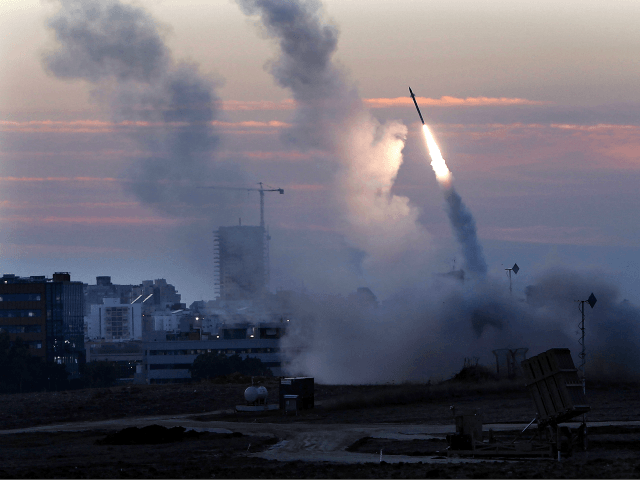
Iron Dome interceptions were seen taking down rockets over the port city of Haifa.

The rocket fire aimed at Samaria was carried out at a range of about 100 kilometers (around 60 miles), making it clear Hezbollah had broken out its longer-range missiles for the task.

“Following the sirens that sounded in the area of the northern Golan Heights, approximately 25 projectiles were identified crossing from Lebanon into Israeli territory. The IDF Aerial Defense Array successfully intercepted a number of projectiles. Fallen projectiles were identified in the area,” the IDF said.

“Following the sirens that sounded in the areas of the Upper Galilee and the Haifa Port, approximately 15 projectiles were identified crossing from Lebanon into Israeli territory. The IDF Aerial Defense Array successfully intercepted a number of projectiles. Numerous fallen projectiles were identified.

“Following the sirens that sounded at 5:12 pm in the area of Samaria, approximately 10 projectiles were identified crossing from Lebanon into Israeli territory. Fallen projectiles were identified in open areas.

“Following the sirens that sounded at 5:20 pm in the areas of the lower and central Galilee, approximately 30 projectiles were identified crossing from Lebanon into Israeli territory. Fallen projectiles were identified.”

Additional rockets were launched by the Iranian proxy at 5:41 pm, at 6:05 pm, and a five-minute long barrage that began at 6:56 pm.

Following a barrage at 7 pm, Magen David Adom (MDA) medics were deployed to treat a man injured by shrapnel in the Upper Galilee, who arrived at a local clinic in Kiryat Bialik — one of the krayot suburbs of Haifa. After treating the 23-year-old victim at the scene, the medics took him to Rambam Medical Center where he was listed in fair condition with a head injury.

Rocket barrages continued with a particularly large volley of 25 missiles fired at central Haifa at around 7:40 pm, targeting the Yemin Orde Youth Village, a hotel on Carmel, and the western side of the northern port city, among other areas.

Adding up all the attacks, nearly 200 rockets were fired at Israel from Lebanon on Monday by nightfall.

Earlier in the day, a house in the community of Givat Avni took a direct hit — but the family living within was unharmed, because they entered their safe room and properly locked the window and door.

“We heard a siren; I took my daughter and we entered the safe room. Within ten seconds there was a crazy explosion, and I realized the rocket hit my house. It’s a miracle we’re alive,” Dudi Yitzhak told reporters.

Five Israelis sustained shrapnel wounds at the Golani Junction. In addition, paramedics and EMTs from the Magen David Adom (MDA) emergency medical response organization treated a 59-year-old man in Lower Galilee for shrapnel wounds to his lower limbs and a 25-year-old man who was injured while racing for a safe space. Three others were treated for severe anxiety following the attack as well.

Israel is quite right to pre-empt an onslaught, and act accordingly

Amid the drama of Israel’s devastating booby traps and precision air strikes against Hezbollah, it is easy to lose sight of what is really at stake. With ex-diplomats and academic experts filling the airwaves with warnings against a conflagration in the Middle East, some readers may believe their claims that Israel is responsible for anything and everything that its sworn enemies inflict upon the region.

The truth is more or less the opposite. The Israel Defence Force is determined to defeat Hezbollah, like Hamas before it, solely because these terrorist organisations pose a lethal threat to its own civilians. Too many in the West have played down the relentless rocket bombardment of northern Israel by Hezbollah, but the displaced populations of entire cities such as Kiryat Shmona cannot ignore it. Would we tolerate the forced evacuation of, say, Dover?

Retaliation is necessary to deter such attacks – and it is also legitimate, even under a strict interpretation of international law. Targeting terrorists by detonating their pagers and walkie-talkies is both proportionate and precise.

Israel would be justified in acting in self-defence even if it were openly pitted against hostile states such as Iran. However, Hezbollah and Hamas are not state actors, but illegitimate terror networks bent on indiscriminate murder. They, like their Iranian sponsors, are driven by a genocidal ideology, one which seeks to transform the ancient religion of Islam into a death cult.

Moreover, by striking back at these fanatics, Israel strengthens Jewish people in the global diaspora who suffer from the scourge of anti-Semitism. Indeed, the sight of terrorists getting their comeuppance should give heart to those who love freedom and democracy everywhere.

What, though, about the danger of a full-scale war in Lebanon, which could spread elsewhere? Escalation cannot be ruled out, especially if Iran unleashes its hellhounds. Hezbollah is believed to possess some 150,000 missiles, enough to inflict mass casualties by overwhelming Israel’s Iron Dome defence system.

Hence Israel is quite right to pre-empt such an onslaught. Rather than calling for ceasefires that help the terrorists to regroup, Britain and other allies should applaud Israel’s decisive action – for it is the only path to peace.

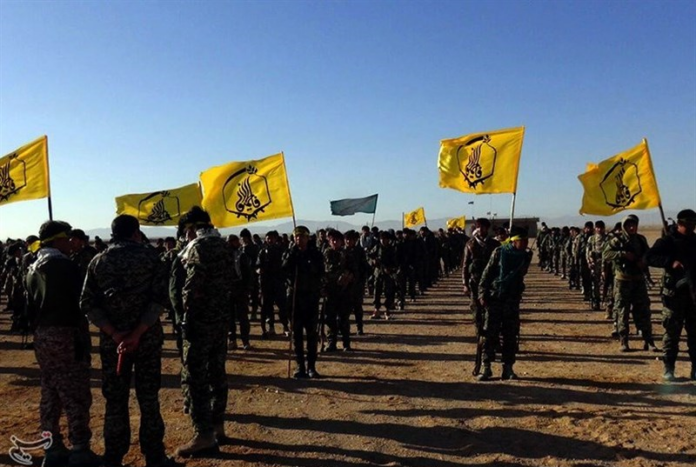
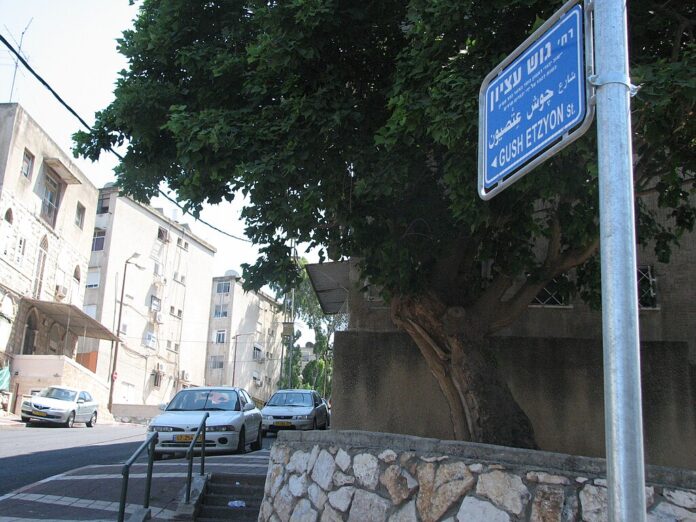
Fatah’s military arm claims shooting on Gush Etzion community

The Al-Aqsa Martyrs’ Brigades , the military arm of the Fatah movement led by Palestinian Authority (PA) chairman Mahmoud Abbas, claimed responsibility for a shooting attack on the community of Carmei Tzur in Gush Etzion.

A statement published by the Al-Aqsa Martyrs’ Brigades organization reads, “In response to the crimes of the Zionist enemy against our Palestinian people in the Gaza Strip and the West Bank and as part of the ‘Al-Aqsa Flood’ campaign (the October 7 attack), and with the help of Allah and his success, our fighters this evening succeeded in attacking with machine gun fire the settlement of Carmei Tzur, which was established on the lands of the village of Beit Ummar.”

The message concluded with the slogan, “This is a revolution until victory, until victory. The Al-Aqsa Martyrs’ Brigades, the military arm of the Fatah movement.”

In another statement, the terrorist group said that its members exchanged fire with IDF forces operating in the Balata camp in Shechem (Nablus), and threw a high-powered explosive device at a military vehicle. Terrorists from the Al-Aqsa Martyrs’ Brigades fired at an IDF position on Mount Gerizim on Saturday night.

In Tubas, terrorists from the Al-Aqsa Martyrs’ Brigades exchanged fire with an IDF special force that entered the town and encircled the home of a wanted terrorist. In this incident, too, the terrorists threw explosive devices at the Israeli force.

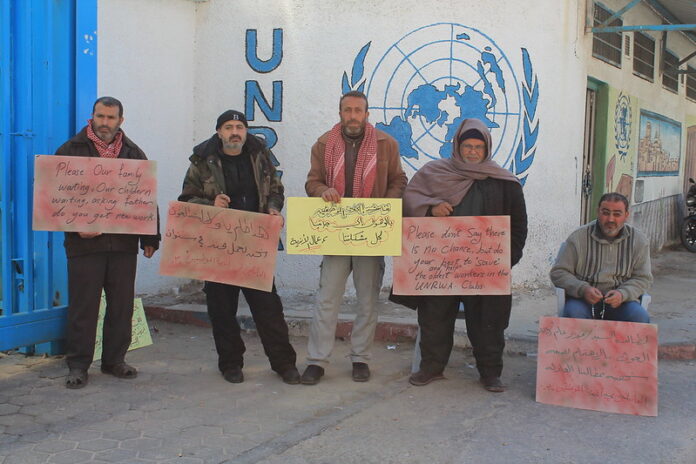
UNRWA demands immunity for employees implicated in October 7th massacre

In an official document submitted to the US court, the UN, backed by the US Department of Justice, claims that UNRWA employees who participated in the October 7th massacre be granted immunity from prosecution.

A full 10% of UNRWA employees are affiliated with a terror group, and at least 12 UNRWA employees participated directly in the October 7 massacre: Six were part of the wave of terrorists who breached the border fence and participated in the assault, two helped kidnap Israelis, two were tracked to sites where scores of Israelis were massacred, and other coordinated logistics for the attack – including the procurement of weapons.

In the document submitted to a US court, it is claimed that the UNRWA employees who participated in the massacre have immunity: “Since the UN has not waived their immunity in this case, its subsidiary organization, UNRWA, continues to enjoy absolute immunity from prosecution, and the lawsuit should be dismissed,” reads UNRWA’s response document.

The US Department of Justice added: ”The plaintiffs’ complaint does not present a theory under which the United Nations waived its immunity. Therefore, since the UN has not waived their immunity in this case, its subsidiary organization, UNRWA, continues to enjoy absolute immunity from prosecution, and the lawsuit against the defendant UNRWA should be dismissed due to the lack of subject matter.”

Israel has for some time pursued action against the UNRWA both domestically and abroad, including court cases and promoting legislation to have the organization dissolved. Along with state actions, groups of Israelis have been lobbying against the UNRWA privately. Since the massacre, the IDF has killed UNRWA workers in its anti-terrorist operations, stressing that they were either involved in the massacre or were aiding Hamas in the fighting in Gaza.

Questions for US Presidential and Congressional Candidates concerning a Proposed Two-State Solution

1. Will you demand that that the Palestinians finally ratify the “Declaration of Principles for Peace” signed on the White House lawn in 1993?

2. Will you demand that the Palestinians finally cancel their charter for the extermination of the Jewish State?

3. Will you demand that the Palestinians cancel their unprecedented law which mandates a salary for life for anyone who murders a Jew?

4. Will you demand cancellation of the new PA and UNRWA curriculum, based on Jihad, martyrdom and “right of return by force of arms”?

5. Will you demand the removal of all weapons from PA and UNRWA schools?

6. Will you insist that UNRWA dismiss employees affiliated with Hamas, Islamic Jihad or Fatah?

7. Will  you introduce UNHCR standards to advance resettlement of fourth- and fifth-generation refugees from the 1948 war who have spent seven decades relegated to refugee status? Current UNRWA policy is that any Arab refugee resettlement would interfere with a purported “right of return” to pre-1948 Arab localities.

8.   Will you demand an audit of donor funds that emanate from 68 nations for the PA and UNRWA, with little transparency?

9.   Given the active participation of the Palestine Security Force (PSF) in the current war, will you demand that the US cease its support of the PSF?

Hezbollah Pager Operation. A few personal thoughts.

Finland’s president defends decisions to buy Israeli arms, not recognise Palestinian state

HELSINKI, Sept 18 (Reuters) – Finland’s President Alexander Stubb defended his country’s decision to buy arms from Israel despite the war in Gaza, saying it had no link to Finland’s unwillingness to recognise an independent Palestinian state at the present time.
Finland is acquiring, opens new tab a ground based, high altitude, missile defence system called David’s Sling from Israel. Helsinki considers the system a high priority for its own defence due to neighbouring Russia’s ongoing missile attacks on civilian and military targets in Ukraine.

The Epic Attack on Hizbullah Terrorists across Lebanon

An ingenious and unprecedented attack against thousands of operatives of the Hizbullah terrorist organization using exploding pagers was carried out in a dozen Hizbullah centers in Lebanon. Israel is preparing for the organization’s revenge response.

The United States is working through diplomatic channels to prevent regional escalation. Iran will determine the nature of Hizbullah’s response. The successful operation does not currently change Israel’s strategic situation.

Read More.

Washington’s View of Gaza Truce Does Not Align with Israel’s Security Interests

EXECUTIVE SUMMARY: The US has spent months trying to pressure Israel into a long-term ceasefire with Hamas that would serve American interests by reducing the danger of regional war that could drag in the US. But Washington’s view of a ceasefire in Gaza and subsequent regional de-escalation fails to address three of Israel’s critical security needs: to ensure the IDF’s freedom of operation in Gaza to prevent Hamas from regrouping; to counter Hezbollah’s massive military-terrorist infrastructure and stop its 11-month-long assault on northern Israel; and to thwart Iran’s nuclear ambitions, which are intended to provide a protective cover to the entire jihadist Iranian axis.

Read More