Czech
Czech French
 German
 Hebrew
 Noruegan
 Russian
 Spanish
 Swedish
 Polish
 Portuguese




World Cup Winner
Although the Mondial FIFA World Cup competition has only just started, Iran has already emerged as the undisputed winner.
You may well ask how Iran can be declared the winner when the first rounds have not even been completed.
The simple and undisputed fact is that having been allowed to compete in the first place is a win for the Islamic Republic. This is a rogue regime that persecutes and executes its sportsmen and women for protesting against human rights abuses, and yet is still permitted to take part in international sports competitions. Instead of being expelled from FIFA for gross acts of terror, Iran is treated as an honoured member of the international sporting fraternity.
Those who prefer to give Iran a clean bill of health are following in the footsteps of all those administrators and Olympic officials who in 1936 closed their ears and eyes to the persecution of Jews in Germany. They allowed the Berlin Games to proceed and pretended that the Nazi regime’s campaign of Jew hate had nothing to do with sport.
The acquiescence of the rest of the world to this latest travesty of the MOU is merely another indication of the pathetically weak state of resolve by democratic nations and the rampant hypocrisy that is a standard feature of current international relations.
Iran has already won because it has outmaneuvered and outplayed the United States at every stage of this conflict.
It also has the support of friendly allies who, in turn, have managed to ingratiate themselves with the US President. Thus, Qatar, which supports and funds Hamas terror acts, is far from a neutral referee, while Pakistan and Turkey are like linesmen who never see any sort of infringement by the Iranian team.
These three facilitating “mediators” are united by a hatred of Israel, which in the present climate of international double standards and hypocrisy is a sure winner.
The actual World Cup competition is a sideshow compared to Trump’s 80th birthday celebrations and the 250th anniversary of American Independence.
Iran’s rush to nuclear blackmail status and its declared intention to eradicate the “Zionist entity” combined with support and funding of proxy terror groups are inconvenient irritants which threaten to upset the celebrations. That is why we witnessed an indecent rush to manufacture a “deal” at any cost.
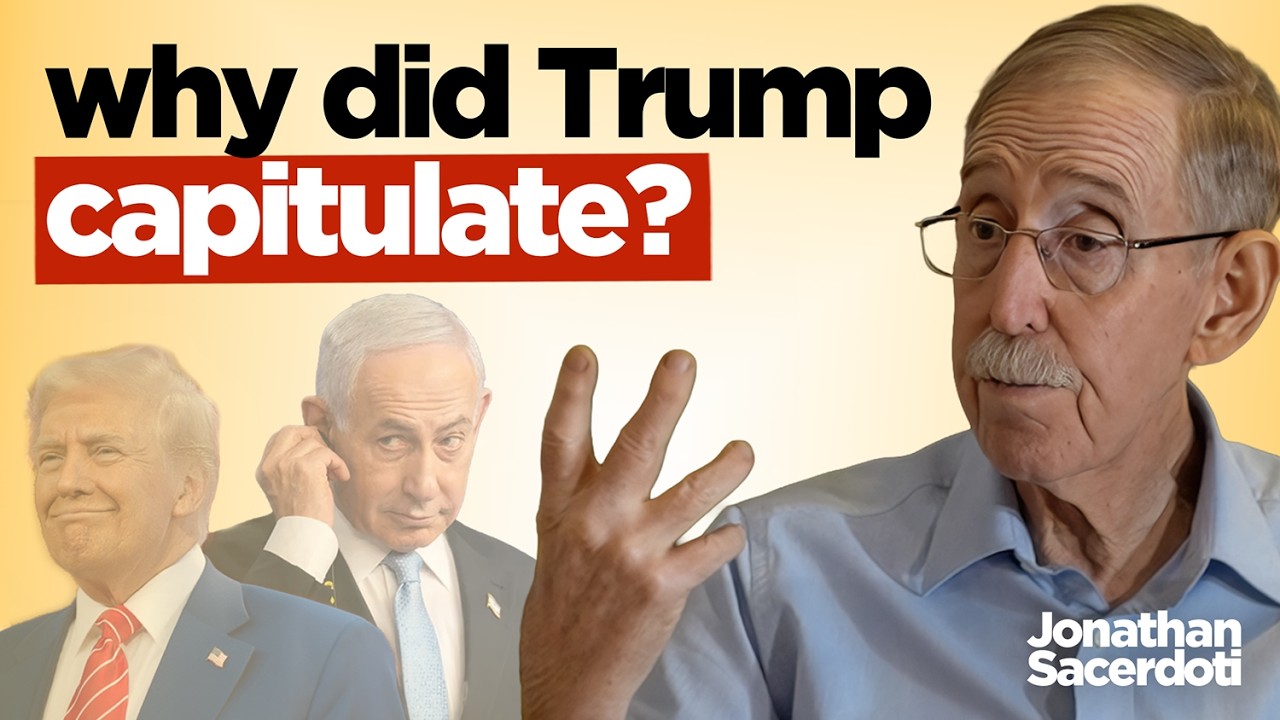
How does one deal with a narcissist whose ego is so huge that it threatens to explode and spew tsunamis of delusions?
One way is to try to flatter the person in the hope that it will create a friendly atmosphere. This is a delicate balancing act that sooner rather than later runs aground when the narcissist loses patience, and others offer more tangible goodies.
Another tactic is to make offers so generous that they cannot be refused. Nations awash with oil money find they can make a significant impression.
At some stage, it becomes imperative to stand one’s ground, and then the question arises as to whether a confrontation is necessary or a complete capitulation is advisable.
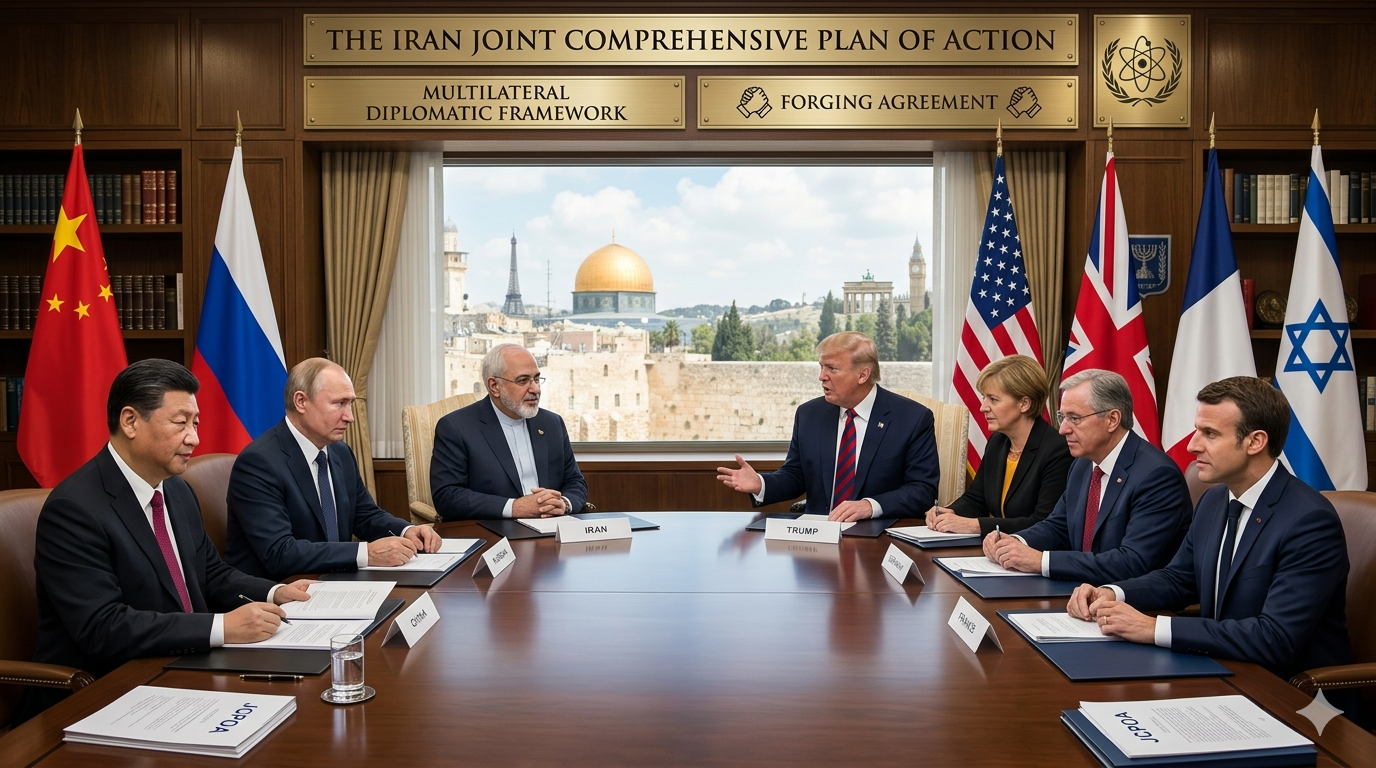
This is the situation that Israel now finds itself in, as Munich mark two is touted as the coming of the messianic age.
The extent of a total detachment from reality is exemplified by the rhetoric from Trump and Vance, as well as all those who never wanted to seriously confront Iran in the first place. It reminds me of the scenes of adoring crowds welcoming Chamberlain back from Munich in 1938, waving a piece of paper bearing the signature of the German Führer. An illusion of peace for our time and no further conflict, heralding an era of international fraternity, mesmerised the adoring multitudes.
Churchill’s warnings of duplicity and future catastrophe were denounced as warmongering incitement.
We all know what disasters followed. Do we want to repeat the same folly?
Israel’s northern communities are threatened on a daily basis by the Iranian proxy terror group, Hezbollah. Despite a fake ceasefire, drones and missiles are fired at civilians and the IDF discovers hidden bunkers and tunnels stocked with weapons.
When Israel decided to defend its citizens, Trump made this statement: “Israel has the right to defend itself against threats BUT the attack it was responding to was very small and meaningless. Nobody was hurt, injured or killed and should not disrupt this important process. This is a special day when we are so close to a peace deal with Iran. This could be the beginning of a long and beautiful peace. Let’s not blow it.”
In other words, Israel must not do anything which might jeopardise a mythical peace with a regime dedicated to Israel’s demise.
Vance chimed in with a claim so whacko that one has to wonder what they are smoking in the White House. He said: “IF Iran honours the deal it will change the Middle East for 50 years.” Note he used the prefix “if” because it is a given that, like Herr Hitler, the Iranian supreme leader and the IRGC have no intention of adhering to any scrap of paper containing their worthless signatures. The only way that the Middle East will change for the better is IF the Islamic jihadists are replaced and a new Iranian Government affirms a commitment to peace with Israel and disavows terror proxies.
Where does this emerging deal leave the long-suffering and subjugated citizens of Iran? Those who were promised and looked forward to liberation from the jihadist mullah regime have been sold down the river. The students, women and minorities being arrested, persecuted and executed are cruelly abandoned by a US President who promised to liberate them and now disclaims any interest in regime change. They will now face redoubled oppression, and the rest of the world will do exactly what it did to the Jews as the Shoah progressed. They will be ignored and marginalised.
Trump reiterates that only his brilliant strategy can prevent the Iranians from acquiring nuclear weapons.
Look at the track record of U.S. presidents who made the same claims about North Korea.
In 1994, Bill Clinton negotiated an “agreed framework” that promised to freeze and ultimately dismantle North Korea’s nuclear weapons programme in exchange for normalised relations and energy assistance.
In 2005 George W. Bush called North Korea part of an “evil axis” and his administration pursued talks which resulted in a joint statement seeking verifiable denuclearization of the Korean Peninsula.
In 2012, Barack Obama tried to take a firm line with sanctions. He touted a “Leap Day Deal”, which collapsed almost immediately when North Korea continued its nuclear and missile testing.
During Donald Trump’s first stint as President from 2017 to 2021, he warned North Korea of “fire and fury” but then pivoted to direct diplomacy. His meeting with the North Korean dictator was peddled as a mutual “love affair” as he promised that North Korea could have a “great power” without nuclear weapons. Needless to say, all this blathering came to nothing.
Joe Biden tried enforcing sanctions against North Korea, which failed because its allies managed to circumvent them. He then tried to reassure South Korea and Japan of the USA’s ironclad support.
North Korea ignored all these diplomatic moves, and the end result has been an oppressive regime armed to the teeth with nuclear weapons and missiles capable of threatening not only its neighbours but also the USA. South Korea and Japan are held hostage to nuclear blackmail. Support from Washington is meaningless because, well before any sort of help might be forthcoming, North Korea will have fired its nuclear arsenal.
This litany of failures and deceitful duplicity must be a warning signal for Israel and those Gulf States being menaced by Iran. It should also serve as a warning to Taiwan and South Korea, which assume that the USA will rush to their aid as soon as hostilities commence.
The IAEA has already admitted that it has no way of guaranteeing that Iran will not cheat its way to nuclear weapons status.
Trump, Vance, Whitkoff and Kushner have no clue how they are going to enforce the destruction of Iran’s enriched uranium.
Iran is going to get millions, if not billions, of dollars from unfrozen accounts. Hezbollah, Hamas and the Houthis will hit the jackpot and have the means to rearm, restock and regroup.
Sanctions will be cancelled with all and sundry lining up to trade and fill the coffers of the Islamic Republic with a bounty of cash.
Once Trump leaves the White House in over 2 years’ time, the next administration will undoubtedly not be willing to confront Iran in any meaningful manner.
We live in perilous times where the lessons of history are being ignored, and Jews once again face existential challenges.