Liberal Judaism is doomed if it won’t fight anti-Zionism

American Jews are facing an unprecedented crisis in their history. The post-Oct. 7 surge in antisemitism has fundamentally altered the existence of the community in ways that few foresaw in their entirety and that even now many have yet to fully come to terms with. Yet some of the leaders of Reform Judaism—the largest Jewish religious denomination in the country, with which approximately one-third of the community affiliates or identifies—are still pretending that they can continue business as usual.

But fortunately, at least one person of influence within the Reform movement disagrees. And as troubling as the drift away from support for Zionism as a fundamental aspect of Jewish identity may be, the warnings of Rabbi Ammiel Hirsch about the consequences of this destructive trend illustrate that the fight over this among liberal Jews and Reform Judaism isn’t over.

A clarion call to defend Jewish peoplehood

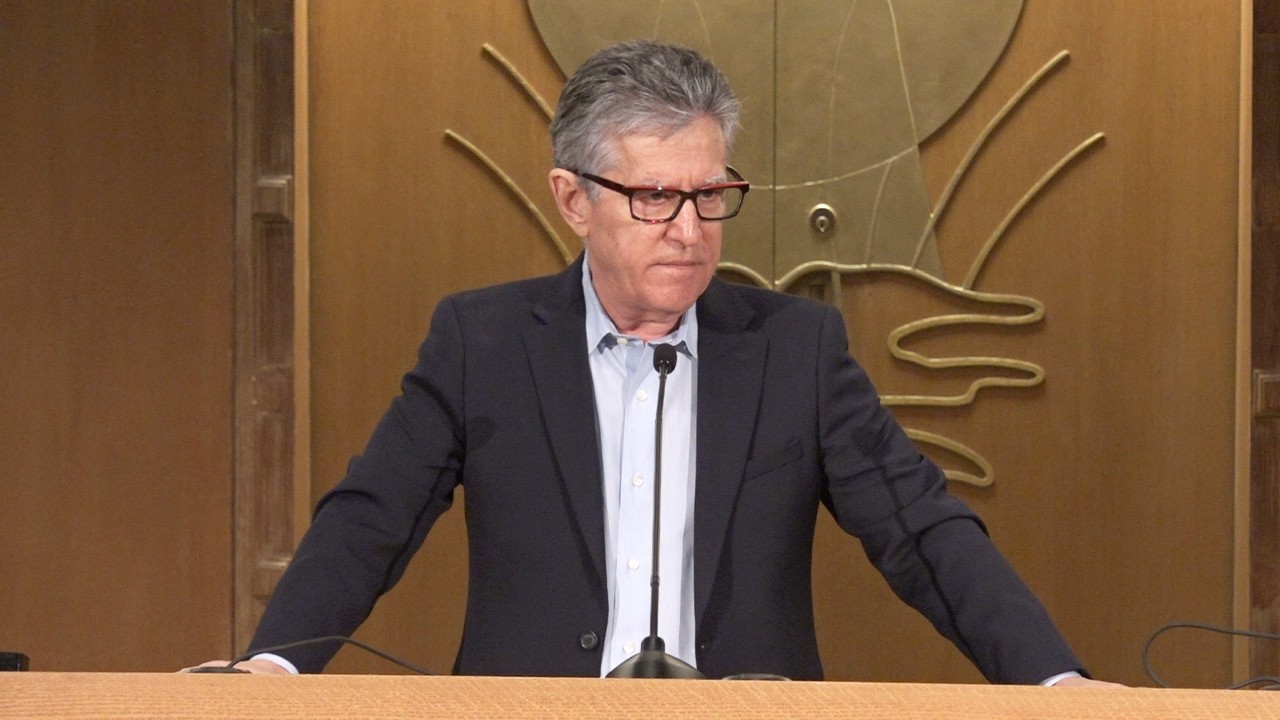
Hirsch’s synagogue, the Stephen Wise Free Synagogue in New York City, a historic institution within Reform Judaism, sponsored a conference this week on “Re-Charging Reform Judaism.”

The speech he delivered should be required listening for everyone who cares about the future of American Jewry, whether or not they are part of the Reform movement. In his address, he issued a clarion call for Reform Jews, as well as American Jewry as a whole, to re-embrace the centrality of Jewish peoplehood and Zionism in their identity and beliefs.

In particular, he called out Reform seminaries for admitting and ordaining avowed opponents of Zionism as rabbis and cantors. That development is not only a potentially fatal blow to the future of his movement, but one that undermines the connection between American Jews and the half of the global Jewish population who currently live in Israel.

As inspiring and timely as his address was, I’m far from sure that his message is resonating as much as it should not only among other Reform rabbis and leaders, but also among their members and the liberal political environment in which they all operate. The problem is not just that some among those who identify with the liberal denominations—Conservative Judaism has the same problem with anti-Zionism among students at its seminaries—are abandoning support for Israel in the face of the tsunami of delegitimization and blood libels being hurled at it by their fellow liberals and progressives.

It’s that they, and even some of their leaders, don’t understand that it is the liberal values they claim to revere and tend to guide their political choices that are under assault from anti-Zionists, who have taken over the educational and journalistic institutions they still look to for guidance.

The fate of Reform

The first thing that needs to be understood is the importance of the debate within the Reform movement and among liberal Jews, and how that relates to prospects for American Jewish life in the 21st century.

There are some within the Orthodox movement, where rates of assimilation and intermarriage are far lower, who adopt an attitude of indifference about what goes on within the liberal denominations. Such people are not merely triumphalist about what they believe is the inevitable dominance of the Orthodox because of shifting demographic trends that favor them. They also tend to write off the importance of the mass of non-Orthodox Jews as essentially irrelevant, not only from a religious point of view but as insignificant in the fight against the antisemitic efforts to isolate and destroy Israel.

And it is equally unfortunate that many in Israel, where the liberal denominations are viewed by most as alien to their experience as Jews and who tend to take little account of American Jewish views as a general practice, mimic this disdain.

They are wrong to do so and not only because the Talmudic principle of Kol Yisrael arevim zeh bazeh—“All Jews are responsible one for another”—dictates that they should care deeply about the potential disintegration of portions of the Jewish community that don’t share all of their beliefs or politics.

A vibrant American Jewish community that is connected to and deeply supportive of Israel is crucial to the battle to defend the Jewish state at a time when it remains under siege. If Israel can only rely on the Orthodox or those who are politically conservative—the segments that are most likely to be supportive—that is a disaster.

According to the most recent accurate surveys, at present, only a bit more than one-tenth of American Jews identify as Orthodox. And only about a third vote for anyone but Democrats. Those numbers are likely to grow in the coming years as the Orthodox share of the population expands, and as increasing numbers of former liberals abandon the left and the Democrats because of their complicity in mainstreaming antisemitism and the demonization of Israel.

But even if we accept the most optimistic assumptions about those changes, the majority of American Jews will likely remain Democratic voters for the foreseeable future. An even larger number will either be affiliated with the liberal denominations or join the fastest-growing sector of American Jewry—the group demographers call “Jews of no religion,” who are unaffiliated and have given up any sense of belonging to the Jewish people.

Suffice it to say that if most of them are lost to the Jewish collective, that’s bad for Israel and the future of a shrinking American Jewish community. It’s also a catastrophe for all Jews when realizing that the number of them today is still far smaller than the number of those alive on the eve of the Holocaust nine decades ago.

Universalism v. particularism

As Hirsch warns, American Jewish movements that eschew support for Zionism and the concept of Jewish peoplehood that is critical for the maintenance of a Jewish community are bound to fail and ultimately collapse.

At the heart of the debate among liberal Jews is the perennial question of what takes precedence within Judaism: universalism or particularism. All Jewish movements acknowledge that both play important roles in the Jewish worldview. Notions of Jewish justice are not restricted to application among Jews; they are about how everyone should be treated. However, Judaism and Jewish identity are nothing without a Jewish people, and the particularist elements of Judaism, including the connection to the land of Israel, are necessary to preserve that people.

Among many progressive Jews, the balance has tipped toward universalism in a way that is oblivious of or even deliberately destructive of Jewish peoplehood and the importance of the Jewish state.

The elevation of the liberal conception of social justice to preeminence among many in Reform or even as the sum total of their ideas of Judaism is deeply problematic. The concept of tikkun olam (“repairing the world”) has become a catch-all phrase that takes it out of context and has become merely a Jewish fig leaf on left-wing political views, regardless of their consequences for the Jews, let alone for society. In the name of this idea of universalism, some Jews don’t just unfairly condemn Israel but embrace a twisted version of Judaism that opposes its existence.

As Hirsch eloquently put it, “We cannot succumb to those who preach a false philosophy of Jewish universalism that camouflages disdain for Jewish particularism under the guise of a sometimes sweeping, self-righteous, sanctimonious and suffocating misunderstanding of tikkun olam.”

Missing the point

Hirsch remains politically liberal and embraces the social-justice agenda rooted in universalist values. But he believes that “a Jewish universalism that is unmoored from Jewish particularism isn’t Jewish.” It’s just a left-wing view of the world. And as we have seen since Oct. 7 and even before that, such a worldview is prepared to tolerate all nationalism and ethno-states (including the sick Palestinian Arab fantasy of an Islamist and Judenrein state that would replace Israel) except the one Jewish state on the planet.

Other Reform rabbis, including the titular leaders of the movement, also say they want to strike a balance between universalism and particularism. Two of them, Rabbi Jonah Pesner, the director of the Religious Action Center of Reform Judaism, and Rabbi Josh Weinberg, the president of ARZA, the association of Reform Zionists, wrote what seemed like a response to the conference hosted by Hirsch before its opening. But in their insistence that they should not be asked to choose between their liberal politics and their Jewish loyalties, they are missing the point about the current dilemma faced by their adherents.

No one is asking liberal Jews to give up their positions on abortion or any other progressive shibboleth they adhere to, whether or not they are integral to the defense of Jewish interests or undermine them, as arguably their stands on immigration do.

What we do have a right to expect of those who represent leading Jewish institutions is not to acquiesce in efforts to redefine Jewish life in a way that marginalizes or eliminates core beliefs like those about Israel and Jewish peoplehood, as anti-Zionists are doing. They should be willing to forthrightly condemn those who might be their partisan allies on non-Jewish issues, but who have succumbed to the toxic progressive ideologies that are the foundation of contemporary antisemitism, such as critical race theory, intersectionality and settler-colonialism.

And that is something that all too many liberal Jewish leaders and rabbis have failed to do.

The Mamdani test

A perfect illustration of this in the last year correlates to the election of Zohran Mamdani, an open anti-Zionist whose entire career has revolved around his belief in the elimination of Israel, as mayor of New York City. Hirsch was among the most articulate of those warning Jews that they must wake up to the danger of normalizing someone whose worldview is opposed to the security of half the world’s Jews and how this will impact their lives as well. But all too many Jewish liberals were not willing to stand up and oppose Mamdani.

Indeed, the equivocal stand of Rabbi Rick Jacobs, the head of the Union of Reform Judaism, at the time was typical of the moral cowardice of many on the Jewish left. His neutrality about Mamdani was not merely an appalling abdication of his responsibility to the Jewish people. It reflected a belief on the part of all too many Jewish liberals that their ties to the political left were just as important as those to their fellow Jews, especially the people of Israel.

Faced with the fact that many liberals have been seduced by the pro-Hamas propaganda being mainstreamed by the media outlets to which they look for information, such as The New York Times, Jacobs wouldn’t take sides. He and others like him said that the opinions of those who supported anti-Zionism or were neutral about it were just as valid as those who stood up for the Jewish people.

Instead, he should have asserted, as Hirsch now does, that “anti-Zionism is a monstrous ideology that contravenes every liberal principle we hold dear.”

Zero tolerance for antisemitism, which is, in principle and practice, indistinguishable from anti-Zionism, wouldn’t have forced Jacobs or anyone else to change their views about domestic issues or to become cheerleaders for President Donald Trump, the democratically elected government of Israel, Prime Minister Benjamin Netanyahu or the Israeli right. But it should have obligated Jacobs to do better than to say that the pro- and anti-Mamdani stands were morally equivalent.

At stake here is more than a split in the Reform movement.

The war on the West

As Hirsch noted, the reaction from traditional allies on the left, as well as academia and the liberal press to the mass slaughter of Jews on Oct. 7, “revealed the rot inside our most cherished Western institutions.” Indeed, as many conservatives have been saying for years, it’s not just the Jews who are under attack. It is, as Hirsch affirmed, “the entire philosophy of western liberalism that is under assault” from the red-green alliance that seeks Israel’s destruction.

If your response to the monstrous blood libels about “genocide” or “apartheid” being committed by Israel—let alone the indefensible claims by The New York Times about Israelis training dogs to rape Palestinian prisoners—is to seek to find common ground with both sides, then your moral compass, as well as your Jewish sensibilities, are no longer functioning.

In the late 19th century, Reform Judaism adopted the Pittsburgh platform that essentially sought to expunge much of Jewish particularism from Jewish life. By 1938, as the impending catastrophe in Europe loomed on the horizon, they moved away from that stand. Indeed, in that era, the two most important leaders of American Zionism were reform rabbis: Stephen Wise and Abba Hillel Silver. Ultimately, Reform enthusiastically embraced Zionism.

Yet its seminaries, like those of the Conservative movement, have now adopted the same kind of neutrality about anti-Zionism that Jacobs had about a mayor who eggs on mobs that target Jewish citizens and synagogues.

I believe that Hirsch is right when he notes the cost of this to Reform will be as grievous as it is to the Jewish people as a whole. Referencing Reform’s history on Zionism, he was right to issue this warning to his movement:

“If the North American Reform movement in word or deed by action or silence becomes in fact or even by perception, an anti-Zionist or anti-particularist movement that cares only or mostly about universal concerns unanchored in or unmoored from the centrality of Jewish peoplehood, most American Jews will abandon us as they would have in the 20th century had history not forced us to come to our senses.”

The good news is that it is still possible for Jews to reach across denominational or partisan lines to work together. As Hirsch points out, the rabbis who were prepared to stand up against Mamdani found they had more in common with those who shared that stand from other movements than they did with those with similar backgrounds who were neutral or supportive of an open anti-Zionist.

That’s the example that other liberal Jews must take to heart if they are to adequately respond to the current crisis. The Palestinian Arab murderers, rapists and kidnappers of Oct. 7 didn’t care about the political opinions of their Israeli victims. Liberals who think this has nothing to do with them are blind to the threats facing every Jew today, including them.

Those who think staying in sync with their allies on the left is more important than fighting antisemitism are harming their own futures as much as they are encouraging those who seek the genocide of the Jews of Israel. Hirsch’s fierce commitment to Jewish peoplehood should make him a hero to all Jews, regardless of whether they agree with him on how to practice Judaism or politics in America. If more liberals don’t heed his warnings, the cost of their abandonment of principle and their people will be felt by everyone in the Jewish world.

Chumps

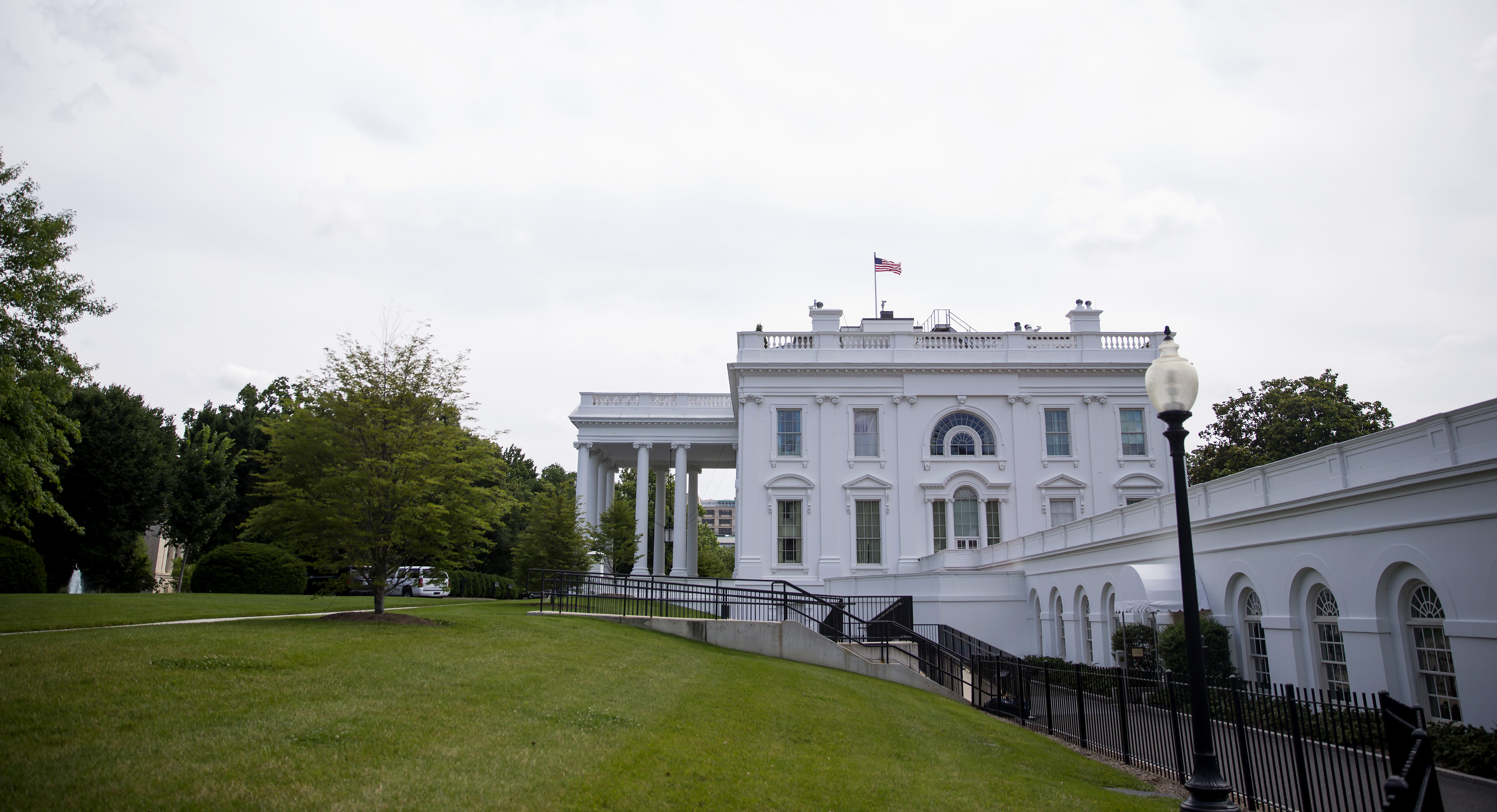
WASHINGTON, DC - JUNE 8: The exterior of the White House is seen before U.S. Vice President Mike Pence speaks during an Infrastructure Summit Working Luncheon June 8, 2017 in Washington, DC. (Photo by Eric Thayer/Getty Images)

Listening to the rhetoric emanating from the White House, the media, and sundry foreign ministries, one cannot help but feel that something rotten is being cooked up.

The definition of a “chump” is someone who is a sucker, gullible or easily deceived.

Unfortunately, this more than adequately sums up the prevailing scenario as far as deals with Iran are concerned.

One of the main problems with politically negotiated deals is the fine details and secret protocols that never see the light of day. Too often, deals touted as “fantastic” and”historical” contain secret clauses that, when inevitably revealed, prove disastrous.

When one of the protagonists, usually the one who brags the most, asserts that he alone knows how to make a deal, one should be wary of the outcome.

Currently, we are on tenterhooks as every day brings hourly updates on a supposed deal being hammered out between Iran and the United States.

Trump, who believes that he is no chump, blows hot and cold, alternating threats of dire consequences with expressions of euphoric expectations. Claiming that he never makes “bad deals” and that “Bibi will do whatever I tell him”, the situation lurches from the sublime to the ridiculous.

In the midst of this entire frenetic verbal onslaught, there are some hard, cold realities that need to be addressed.

The fact that there is a stunning silence from the Israeli political establishment at the moment is a sign that nobody wants to upset things before the inevitable “deal of the millennium” is revealed.

Historical precedents, however, give us several clues as to where we may be heading, and the omens do not look good. Remaining silent in the face of potentially disastrous outcomes is not a recipe for satisfactory results. Anticipating a fantastic future when dealing with those who are consummate liars is an exercise in self-deception.

Unfortunately, history is littered with such fruitless endeavours.

Jews have been more often than not at the receiving end of failed agreements and deals, and it has cost us dearly.

Iran is a rogue regime that oppresses its own citizens, exports terror via proxy groups and is dedicated to the elimination of Israel. To further these aims, it has developed a vast array of ballistic missiles and drones, engaged in clandestine nuclear activity, threatened all those who stand in its way and bullied all those who oppose it.

Iran receives support from the world’s non-democratic axis of evil and is protected from censure and condemnation by the corrupt United Nations. This organisation has been subverted by the very nations whose human rights abuses are on a par with those in Iran.

Proof that the UN is now beyond any sort of redemption is the fact that Iran is elected or appointed to committees dealing with human rights and disarmament.

As an added bonus, a legion of useful idiots in most democracies, from universities, the media, academia and misinformed masses, have been brainwashed to march and demonstrate loyalty to the Islamic Republic. At the same time, they spew vicious incitement against their own country and, of course, Zionists.

Iran has revived piracy as a means to terrorise international shipping, and together with its proxy Houthis in Yemen, now openly flouts freedom of navigation.

It is against this background that Iran, boosted by a hefty dose of jihadist fanatic ideology, sees Trump seeking to negotiate some sort of deal which will not only incentivise increased terror but also guarantee international immunity.

One of the intriguing aspects of the current negotiations is the contradictory reports emanating from American and Iranian sources. Almost on an hourly basis, statements claim “amazing” progress towards some sort of understanding to end hostilities. This is almost immediately followed by counterannouncements by Iranian officials.

One minute, Trump triumphantly proclaims that Iran’s nuclear ambitions will be thwarted. Two minutes later, an Iranian spokesperson flatly denies that the subject of uranium and nuclear possession is even on the agenda.

It is these “ping pong” tactics that, for seasoned observers, should be ringing warning bells. Those touting Trump’s negotiating skills believe that it is all part of some grand and magnificent strategy that will, at the end of the day, produce the deal of the millennium.

More earth-grounded and realistic commentators see an entirely different pattern developing.

The favourite strategy employed by the Iranian Mullah regime is to agree, deny, and envelop the talks in a fog of confusion. Dragging things out for as long as possible has always been a successful strategy. Either the opposite side will, as a result of domestic or international pressure, surrender to long drawn-out and inconclusive bartering, or they will lose patience and go for a quick fix.

Either way, the resultant deal will be full of holes and unenforceable conditions.

The other alternative is to hold out long enough to ensure that the democratic process in your opponent’s country removes him/her and replaces them with someone more amenable to appeasement and deceit.

The Iranian Islamists are master champions when it comes to employing these tactics.

A brief prognosis of what could transpire if this deal is consummated will expose the dangerous, life-threatening repercussions that are sure to detonate.

Freedom of navigation

Who will enforce transit of vessels through the Strait of Hormuz? How will Iran be prevented from extorting tolls and using the funds to pay for terror activities? Does anyone actually believe that the Europeans will enforce unimpeded navigation?

Economic sanctions

Iran’s economy is in free fall. Releasing frozen funds would be a lifeline for the regime and a sign that its opponents’ resolve is weakening. Rewarding deceit and deception is a sure recipe for renewed appeasement. Short of a full-scale ground invasion and saturation bombing, economic strangulation remains the only viable way to enforce complete capitulation and regime change.

Proxies

Hamas, Hezbollah, Houthis and other terror groups are sustained and financed by Iran. If their funding is severed, they will rapidly collapse. If a deal enables Iran to continue acting as its patron, uncontrollable instability and terror will reign supreme. Weak appeasers in the EU and elsewhere will find that terror erupting in their countries will be sponsored by these groups.

Missiles and Drones

Within a very short space of time after the signing of any deal, full-scale production of missiles and drones will be underway. The ability to reach Europe, the UK and the USA is already achievable, and Iran will be poised to threaten not just the Gulf States and Israel but also countries further afield.

Nuclear ambitions

Iran has years of experience at subterfuge and evading international scrutiny. They have amassed a large quantity of enriched uranium and have secret underground sites still to be discovered. The much vaunted American bombing of facilities has, despite Trump’s bombastic claims, failed to destroy them. Failure to seize the buried uranium and permanently disable the covert nuclear material will be catastrophic. Who exactly is going to do this? Who will supervise to make sure that clandestine work on nuclear bombs is not renewed? Who will ensure that missile development is not part of a nuclear strategy? In the past, the IAEA was effectively neutered when Iran expelled its inspectors, destroyed cameras and monitoring equipment and banned any inspections. If the Iranians are allowed to once again get away with ducking and diving and pulling the wool over the eyes of the international community, the results will be disastrous. Who will ensure that China, Russia, North Korea or Pakistan will not secretly deliver nuclear technology and material?

Human Rights

Any deal which leaves the Mullahs free to execute, imprison and torture their own citizens and enables the regime to persecute women and religious and ethnic minorities is not worth the paper it might be written on.

International legitimacy

Allowing Iran to be a valued member of international organisations while at the same time it vows to annihilate Israel demonstrates hypocrisy and double standards on a grand scale.

Mediators

Embracing the likes of Israel-hating Turkey and terror-funding Qatar as “mediators” with Iran is a flawed strategy and a recipe for a suspect outcome.

It could be that talk of a deal is just so much hot air. On the other hand, if it materialises and fails to address the above-mentioned challenges, it will go down in history as another Munich-type act of folly.

Waving a piece of paper and claiming it brings peace in our time will be a fatal exercise of lethal futility.

The Inversion of “Terror”: The Ideological Architecture Behind the EU’s Settler Sanctions

Europe’s Blind Spot

In his 2009 book “Blandt Kriminelle Muslimer” (“Among Criminal Muslims”), Danish psychologist Nicolai Sennels described years of clinical work with young Muslim inmates at Copenhagen’s Sønderbro facility. His central finding was that standard Western rehabilitation frameworks failed because they presumed equality between the individual and society. Sennels argued many of his subjects held a different premise: a cultural and religious sense of inherent superiority over Western host societies, where equality is not the norm—a society or person either commands authority or is subjected to it.

Sennels’s observations create discomfort in Europe’s dominant intellectual framework. He notes a cultural-supremacist dimension within Islamist movements. This dimension is not the product of Western oppression and does not respond to Western accommodation. The framework cannot name it because it codes Muslim populations as oppressed. Anything contradicting that coding is filtered out, reframed, or attributed to the host society’s failure. This is the blind spot. It connects the EU’s paralysis at home to its moral inversion abroad. They are the same phenomenon.

The Framework That Replaced International Law

That framework is postcolonial ideology. It did not emerge from European foreign ministries. It emerged from the post-war academy and reached international institutions through a generation of activists, advisers, and staff trained in its categories. Its lineage runs through Frantz Fanon, Jean-Paul Sartre, and Edward Said. These three figures transformed how Western elites think about violence, legitimacy, and the non-Western world.

Fanon, in “The Wretched of the Earth” (1961), argued that anti-colonial violence is not just instrumental but also psychologically cleansing. It is a means by which the colonized recover their humanity. Sartre, in his preface to that book, extended the argument. He said violence by the colonized against the colonizer is not a crime to be judged, but a historical necessity to be understood. Said’s “Orientalism” (1978) supplied the epistemological move that completed the structure. He recast Western scholarship on the Middle East as an instrument of domination. This move disqualified the analytic categories—terrorism, jihad, religious supremacism—that Western observers had used to describe the region.

The result was a binary that replaced liberal categories. The world split into oppressors—Western, capitalist, colonial, and, by extension, Jewish-Israeli—and the oppressed, whose violence became resistance. Within this binary, asking “Is this act terrorism?” is impossible.

This framework entered international law through the United Nations in the 1960s and 1970s. The Soviet bloc, the Arab states, and the Non-Aligned Movement built a General Assembly majority. They translated postcolonial theory into resolutions. UNGA Resolution 1514 (1960) declared a universal right to end colonialism. Later resolutions extended that right to the means of pursuing it. These changes effectively exempted designated “national liberation movements” from the international prohibitions against political violence that applied to everyone else. The 1974 platforming of Yasser Arafat at the General Assembly—in military uniform, with a holster at his hip—was the public ratification of the shift. Terrorism, when committed by the correctly coded actor, was now a legitimate form of political expression.

Everything in international institutions follows this inherited framework: the 2016 UN Human Rights Council database of businesses linked to Israeli settlements, the steady expansion of that list, and now the EU’s May 2026 sanctions. The framework makes the equivalence between Hamas and Israeli civic organizations feel coherent to officials who adopt it. Hamas is branded as resistance; Israeli settlers are branded as the leading edge of the last colonial project. The empirical record of what each actually does is processed through that filter.

The Problem Europe Cannot Name

This is where the framework meets the facts on the ground in Europe itself. For two decades, Europe has absorbed a wave of Islamist terror and unassimilated migrant crime that “oppressor-oppressed” cannot process. The Bataclan, Nice, Berlin, Manchester, the Samuel Paty beheading, the Vienna shootings, the Brussels football attack, and the Eiffel Tower stabbing. The grooming-gang scandals across northern England that local authorities ignored for a decade out of fear of being called racist. The no-go neighborhoods in Malmö and the Paris banlieues, where the state’s monopoly on force has quietly lapsed. The surge of antisemitic assaults has made Jewish life untenable in parts of France and Sweden. None of this fits a framework in which Muslim populations are coded only as oppressed, so none of it can be named for what it is.

What cannot be named must be displaced. Europe’s political class cannot confront the cultural-supremacist dimension Sennels documented inside its own cities. So, they project the category of “extremism” onto a target the framework permits: Israeli civilians in Judea and Samaria. The May 2026 sanctions are a mechanism. By placing Hamas and four Israeli civic organizations on the same list, the EU creates symmetry. This lets European officials denounce “extremism” in the abstract—without ever having to identify the specific extremism degrading their own societies.

The cost of the displacement falls in both directions. Israel is asked to absorb the moral burden of a crisis that is not its own. Europe loses, with each round of projection, the conceptual tools it needs to confront its actual crisis. A continent that cannot distinguish a Jewish farmer in Area C from a Hamas operative in Gaza will not be able to distinguish, when the moment requires it, between a citizen and a jihadist in its own cities.

FAQ

What is described as Europe’s “blind spot”?

The article defines it as the inability of European political and intellectual systems to recognize or openly discuss forms of cultural or religious supremacism within Islamist movements because those groups are primarily viewed through an “oppressed minority” framework.

How does the piece connect postcolonial theory to international institutions?

It argues that ideas originating in post-war academic thought gradually entered organizations such as the United Nations through activists, diplomats, and political movements, eventually influencing international law and policy debates surrounding colonialism and political violence.

Why are the EU sanctions discussed in the article significant?

The article presents the sanctions as an example of what it sees as moral equivalence between Hamas and certain Israeli civic organizations, arguing that this reflects the broader ideological framework criticized throughout the piece.

Is The PLO-PA Using International Donor Funds to Finance “Pay-For-Slay”?

History Repeats Itself

The answer is simple, albeit difficult for the PA’s donors – most importantly, the European Union – to accept.

The PA was established as a result of a series of agreements collectively known as the Oslo Accords. The collective term encompassed several major agreements, each adding another layer to the arrangements between Israel and the PLO.

The agreements started with the Declaration of Principles, signed in September 1993. That agreement was then followed by the Protocol on Economic Relations, signed in April 1994, and the Agreement on the Gaza Strip and Jericho Area, signed in May 1994. Soon after, pursuant to the agreements, Israel transferred control of designated parts of the Gaza Strip and the city of Jericho to the control of the PLO. The next major agreement, the Interim Agreement on the West Bank and the Gaza Strip, was signed in September 1995.

While written agreements accumulated and Israel retreated from ever-expanding areas, another clear pattern emerged.

Despite having made concrete commitments, the PLO never saw itself as bound by them.

Thus, for example, a November 1995 report of the United States General Accounting Office to the Chairman, Committee on International Relations and the House of Representatives, already exposed what would soon be a consistent reality.

The report examined the PLO’s ability to support the PA, the new Palestinian governance body created by the accords.

Detailing estimated funding requirements, the report addressed, inter alia, three ostensible anomalies – one a governance issue, and the other two clear breaches of the agreements.

From a governance perspective, the report questioned why the PLO-PA mechanisms required the employment of 9,000 civil servants to replace the 1,600 employees of the Israeli civil administration.

More worryingly, the report questioned why the PLO-PA police force, which at the time was capped at 9,000 people, had already grown to over 18,000.

Using International Donations to Fund “Pay-For-Slay”

The report referenced one international mechanism established to help the PLO-PA cover expenses. Of the trust funds set up for this purpose, the World Bank’s Holst Fund was the largest and served as a central repository for donors wishing to disburse pledges through the Bank.

The report notes that, despite being dedicated to other purposes, the PA violated its grant agreement with the World Bank by spending $2 million of Holst funds on martyr payments. As noted above, martyr payments are a foundational element of the PLO-PA “Pay-for-Slay” policy.

The use of international donations to fund “Pay-for-Slay,” again through World Bank mechanisms, occurred repeatedly.

The EU Only Funds the PA Teachers

In theory, the EU restricts most of its direct aid to the PA for the purpose of delivering key public services, including the payment of teachers’, civil servants’, and healthcare workers’ salaries. By limiting the use of the EU funds for the payment of salaries to ostensibly legitimate employees, the EU is making its piecemeal effort to distance itself from funding “Pay-for-Slay.”

What the EU fails to recognize is that funding is fungible. By shouldering the onus of paying the PLO-PA’s ostensibly legitimate employees, the EU removes that burden from the PLO-PA and allows it to use its remaining funds to pay the terror rewards. Within that context, the EU also ignores the fact that it is the PLO-PA teachers who are the ones teaching the PLO-PA curriculum, which is recognized by the EU as antisemitic. Thus, while theoretically avoiding participation in “Pay-for-Slay,” the EU is merely funding the people who have brainwashed and indoctrinated generations of Palestinian to hate Israelis and seek their murder, and to hate Israel and seek its destruction.

Either way, the reality is clear. Since the signing of the Oslo Accords in 1993, the PLO-PA has used, and continues to use, both directly and indirectly, international donor funds to finance its “Pay-for-Slay” policy.

Announcing the Stefan Moldovan Prize for 2026

We are pleased to announce the solicitation of titles for the 16th annual Stefan Moldovan Prize for Israeli Security Studies. This prize has previously been awarded to authors of outstanding Israeli security works in the Hebrew language, but since last year have expanded to include works published in English.

The Trustees of the Stefan Moldovan Foundation have allocated an additional $5,000 (USD) to commemorate Mr. Moldovan, a Holocaust survivor, who throughout his life demonstrated a strong commitment to the security of the State of Israel.

We invite you to submit high quality titles (published since 2023) that make a direct contribution to the security of Israel. Suitable works include those concerning military issues, news media and security, global politics, and social media all having an impact on the security of Israel. The ceremony for the awarding of the 2026 Moldovan Prize will take place in Israel on October 13, 2026, and winners will be welcome to address the audience in Jerusalem, either in person or via Zoom. The Stefan Moldovan Prize Committee will, in addition to awarding the prize, promote the winning book on various media outlets.

Kindly attach a short bio of the author as well as a description of the book, and send 1 pdf file per title to ron@psyopil.org and two hard copies per title no later than July 15, 2026 to:

Dr. Yehuda Shalem
11 Shimon Street
Ofra, Israel 9062700. Most Sincerely,

Dr Ron Schleifer
Chairman of the Prize Committee


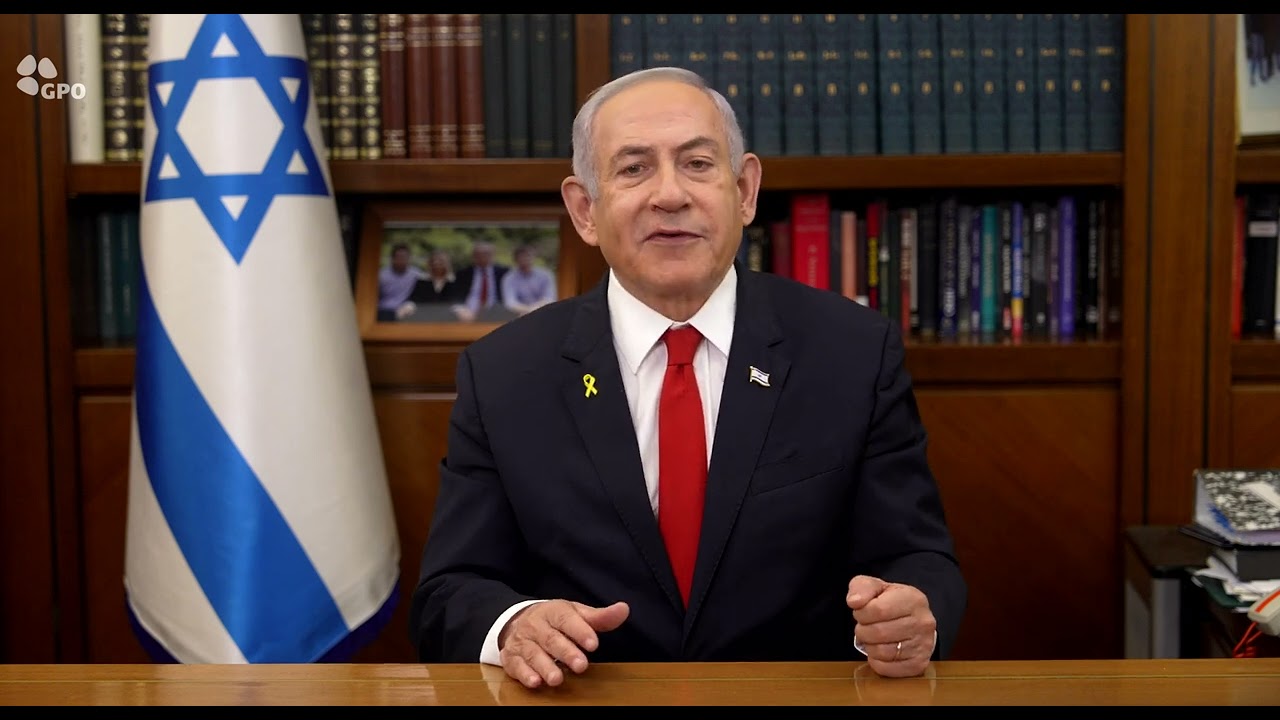
Must Watch: Prime Minister Netanyahu On The Failure Of The Iranian Regime

Very few Western leaders can claim that they set a clear goal to be achieved that seemed unachievable, and yet they accomplished their goal in a major way following 30 years of persistence. That is exactly what Benjamin Netanyahu seems on the cusp of achieving through his leadership of Israel’s decades-long battle against Iran.

Before Benjamin Netanyahu formally entered politics, he set up an institute that was founded on the principles of how to successfully win the war against terrorism. In the 1970’s, the most common mode of terrorism that the world faced was airplane hijackings. Israel’s position on this issue was established as a leader in this battle following two successful Israeli raids on hijacked airplanes. In one of them, Benjamin Netanyahu took part, and in the other, his older brother, Yoni, led the attack and was killed in the successful rescue operation.

Bibi figured out by then that his ticket towards entering Israeli politics would best come as an international spokesman for Israel with a specialty in combating terrorism and national security. He nearly always mentioned Iran as the head of the snake while all of Israel’s battles around its borders were with Iran’s proxies. He said time and again that Israel could never leave its eyes off of the main target Iran. He pushed hard for stiff US sanctions against Iran, coupled with dogged preparedness for a military response to any threat that Iran posed.

Bibi even managed to get through eight years of an Obama administration and four years of a Biden administration that walked back so many of the sanctions that held back Iran from getting closer to nuclear capability.

Netanyahu is not ready to bow out of the world stage. He wants to be remembered as the Prime Minister who ensured Israel’s safety for decades to come by reshaping the Middle East for a future of calm and prosperity. Every week, it is looking more and more like he will accomplish his goal.

The four reasons why we can’t move on from a blood libel

On May 11, The New York Times published Nicholas Kristof’s astonishing compendium of charges that the State of Israel is deliberately raping Palestinian Arab prisoners not just by the usual means of such crimes but by training dogs to sexually assault them. In the week since then the question hanging over both the newspaper and its critics is what, if any, consequences would there be for publishing a 21st-century blood libel.

As far as the Times is concerned, the answer is none. And given the applause this piece of journalistic malpractice generated from its core readership, the unlikelihood of a threatened libel suit being successful, coupled with the dismal turnout for a demonstration outside of its offices in Midtown Manhattan, they have some reasons to believe that they are right.

Unrepentant and unembarrassed

The article sparked outrage from those who pointed out the lack of credible evidence to back up this astonishing charge, which the newspaper, as well as its liberal and leftist readers, largely ignored. It also prompted cheers from Israel-bashers and antisemites everywhere, who view it as something they could place alongside the false accusations about the Jewish state committing “genocide” and creating mass starvation in the Gaza Strip, as well as practicing “apartheid” at home.

During the days that followed the article’s publication, hopes that the paper’s management would issue some sort of clarification or correction about it proved vain as they stood by Kristof, without giving any more reasons for readers to trust them than he did. So, as far as the nation’s largest newspaper is concerned, those who are angry about its shoddy reporting and normalization of classic tropes of antisemitism should just move on.

And with the publication of all of three letters-to-the-editor on May 18—none of which even mentioned the dogs, which was the most shocking and offensive element—senior Times management is trying to tell us that the matter is closed.

Are they right?

Those in charge at the Times likely assume that journalism is now a business where stories rarely last more than a single news cycle. They also know that readers—even many in their audience, who are largely made up of credentialed elites steeped in leftist doctrines—have become so immersed in nonstop social-media feeds that their attention spans are short.

Under the circumstances, they have likely come to the conclusion that even if they are aware of how wrong their actions have been, they won’t have to answer for Kristof.

While those responsible for one of the worst moments in the Times’ long reportorial history may think that is so, that won’t happen. And it won’t happen for four reasons.

Legal jeopardy

The first is that Israel’s government is likely to follow up on its threat to sue the newspaper, even if most legal experts think that such an effort would be a waste of time. There is a genuine danger of embarrassing and damaging revelations for the newspaper in any legal proceeding, regardless of whether it would be successful.

On the face of it, the chances of Israel being able to sue and win a libel lawsuit are slim to none. Under the “actual malice” standard that governs U.S. law that stems from The New York Times v. Sullivan Supreme Court legal precedent, it is very difficult to win such cases. The three-part test that any public figure suing for libel must satisfy is to prove knowledge of falsity, reckless disregard for the truth and an intent to cause harm. That has proved nearly impossible to satisfy in most cases. And it’s unlikely that a foreign leader like Israeli Prime Minister Benjamin Netanyahu or an individual country could even get a U.S. court to consider such a lawsuit.

Nevertheless, some legal experts have pointed to reasons why the Times may still be in trouble.

George Washington University Law School Professor and Fox News legal analyst Jonathan Turley points out that while the Jewish state is unlikely to be able to sue the Times and Kristof for libel, soldiers who were implicated in the story may be able to do so.

Mark Goldfeder, CEO of the National Jewish Advocacy Center and a law professor at Touro Law School, writing in National Review, agrees. But he thinks Israelis need not sue in American courts. He believes that they can sue the Times in an Israeli court, though not for libel.

By holding them accountable under a civil-law charge of “injurious falsehood” and “negligent publication,” they can create a viable case. Doing so will mean an opening that will allow Israelis to go to the federal district court in New York City, and then “compel evidence production from a U.S. entity for use in foreign litigation.” As he notes, “A properly framed application does not ask the court to adjudicate the case; it simply asks the court to order the Times to produce the factual basis for one published allegation.” It stands a chance of forcing compliance.

In either instance, the result would mean that the Times and Kristof would have to produce the evidence it claims to hold, how it obtained that evidence, and other information and communications that might undermine its credibility. Even if that doesn’t lead to a win in court, the resulting revelations will likely be extremely damaging for the news outlet and possibly be of greater importance to its reputation than the ludicrous accusation of dog rape would be to Israel.

Even left-wing journalists remain unconvinced

The second reason why this isn’t going away has to do with questions being raised by journalists about what happened at the Times.

What we’re learning is that some liberal journalists who share the negative view of Israel, demonstrated by Kristof and the editors who enabled him, are asking questions about how this story was produced. To put it mildly, the way the paper handled it was fishy. Doubts about their decisions are being voiced not only by conservative critics but also reportedly by members of the paper’s notoriously woke news staff.

As veteran media reporter Dylan Byers writes in Puck, some Times reporters don’t understand why a charge of such magnitude and dubious provenance was only published in the paper’s opinion section and not on the news pages.

Many readers of the Times have pointed out with justice that there is no longer any real difference between opinion and news there, let alone the church-state divide that once existed between the two prior to the publication taking a hard-left turn in the last generation. Many who work at the newspaper think that there should be such a division, at least in principle. And if there is, the failure of management to allow its news staff to do their own investigation into Kristof’s tall tales of dog rape makes the whole thing even more suspicious.

Regardless of what you think of Israel—and few at the Times aren’t hostile to it—the failure of the paper to either break the claims as news or to advance the story with further reporting that doesn’t fall under the label of opinion calls into question its credibility. And that’s something, as Byers reports, that has not gone unnoticed in its offices on 42nd Street.

Even if lawsuits don’t create discovery that unravels the allegations, the ferment within the media organization could bode ill for the editor who must be deemed primarily responsible for this atrocity.

Kathleen Kingsbury became editor of the Times’ opinion section in 2020 in the wake of its scandalous retraction of an op-ed by Sen. Tom Cotton (R-Ark.). That retraction was forced by a newsroom mob that revolted against the publication of a view they didn’t favor. The result was the firing of veteran editor James Bennet for allowing a conservative opinion on its pages. He was replaced by Kingsbury, a woke writer who clearly sees no distinction between journalism and leftist activism.

By exposing the newspaper to the sort of unflattering scrutiny brought on by Kristof’s smears, Kingsbury may wind up paying the price for the paper’s dropping of traditional journalistic ethics and commonly accepted rules about publishing far-fetched claims. Times publisher A.G. Sulzberger—a member of the fifth generation of his family to serve in that capacity and two generations removed from anyone in it who was nominally Jewish—may believe that appealing to the hard left is good business. But once readers start learning more about how Kristof’s claims were published, Sulzberger might start looking for a scapegoat for this mess. And Kingsbury is first in line to walk the plank.

They’ve gone too far this time

There is a third reason why this controversy is far from dead. Despite the ineffectual nature of the public protests, the blood libel finally disillusioned many of those in the Jewish community who were still ready to continue to view the Times as “the paper of record,” despite its troubling record of bias against Jews and Israel.

The newspaper crossed a line with its absurd story about dogs being trained to rape human beings. That cannot be ignored or undone, and going forward will color the debate not only about this newspaper’s credibility but that of the mainstream liberal media that it exemplifies.

Until now, liberals who had not gone completely over into the anti-Zionism and open antisemitism that has become normalized by the Times could try to claim that its coverage was still fair, despite abundant evidence to the contrary.

But the dog-rape charge is so ridiculous and utterly without substantiation—animal trainer after animal trainer have attested to the improbability and impossibility of it happening—that only someone already drenched in both Jew-hatred and woke ideas about journalists not having to prove their allegations could believe it.

The fact that the only two mild criticisms of its story to be published as letters failed to mention the rape canard makes it obvious that any vestigial belief in minimal standards there is gone. Many on the left may cling to the Times, since it validates all of their pre-existing prejudices and opinions. That every news story reads more like opinion than what would have been considered news at the newspaper a generation ago may also appeal to them. But what Kristof and his editors have done is make it harder than ever to maintain the fiction that the Times is anything but a left-wing rag and undeserving of the respect it once earned.

As much, if not more than its sins of the past—like Walter Duranty’s 1932 Pulitzer Prize-winning denials of Joseph Stalin’s terror famine in Ukraine—Kristof’s rapist dogs will be thrown in the faces of its employees long after the columnist is forgotten.

‘Suicidal empathy’ exposed

The fourth reason why the discussion of this particular story won’t go away is that it has exposed a critical failing within the Jewish community about the way it responds to attacks.

The instinctual identification by many Jews with those locked in conflict against the State of Israel is nothing new. Yet some are still willing to think that the proper response to a dog-rape libel is to assume that where there’s smoke, there’s fire. All that does is help those who seek Israel’s destruction and Jewish genocide. Anger about this will at least (or at least, ought to) fuel a discussion that ought to change the way we discuss the information war against the Jews.

The newspaper was counting on not just cheers from those who are ready to believe any lie about Israel, no matter how despicable. They were also relying on responses from those labeling themselves as “liberal Zionists,” as well as other Jews whose ties to Israel are far more tenuous, who speak up to shift the attention from the paper’s misconduct or Palestinian crimes to investigations of the Israeli prison system. And that’s exactly what some writers at left-wing publications, like The ForwardJTA and Haaretz, essentially did.

By accepting the story as credible enough to justify treating its charges as plausible, such people are practicing what the Canadian psychologist Gad Saad calls “suicidal empathy.”

In this manner, they help to flip the script from the documented outrages committed by Palestinian Arabs, including the widespread and horrific acts of sexual violence and murderous brutality that happened on Oct. 7, 2023, to one about dubious allegations. And in so doing, they validate a false narrative about moral equivalence between the two sides.

Though some may be well-meaning, those who prioritize sympathy for the side that started the current war (and all those that preceded it between Jews and Arabs) and lost it—bringing great suffering to their people—aren’t so much being fair-minded or kind. Rather, they bolster terrorists and undermine efforts to defeat them and to defend Israelis, all while virtue-signaling their self-righteousness.

Some are also using the Times story as a cudgel with which to beat Netanyahu and Israeli Minister of National Security Itamar Ben-Gvir, whom they oppose for other reasons, for their alleged indifference to prison abuses on their watch.

It’s true that Israeli military prisons may be no better than those in other countries. Maybe they’re worse. But also understand that the large number of Palestinian prisoners who were captured post-Oct. 7 after committing unspeakable atrocities, in addition to other terrorists caught in Gaza, are not only deserving of contempt from civilized persons. Their propensity for violence has made these facilities unsafe for themselves and those Israeli reservists who have been given the unpleasant job of guarding them. They are equally a great danger to each other, which is one more aspect of his story, among others, that Kristof chose to ignore in a quest to point a finger and demonize Israelis.

As for Ben-Gvir, he is popular on the far right and despised by centrists and the left. But he appealed to a far larger group than only his voters when he vowed that the Oct. 7 criminals weren’t going to be given privileges or anything more than the bare minimum required by law. To scapegoat him or treat his attempts to keep this problem under control as a reason to diminish outrage about Kristof’s lies is wrong. Nor should it divert any attention from his libelous charges or the documented use of rape by Palestinian Arabs, as the Times clearly intended.

By crossing over from debatable accusations to blood libels, Kristof has similarly exposed both the futility and the intellectual bankruptcy of those Jews who have internalized so much of the post-Oct. 7 surge in antisemitism around the globe. But they also expose themselves as failing to realize the implications of their foolish stands. Instead of validating these positions, the fallout from Kristof’s writing will further discredit them.

For all these reasons—and even if the Times never owns up to the betrayal of its obligation to report the truth—the controversy and the debate about Kristof and his mythical rapist dogs will linger in the public imagination in ways the writer never intended for many years to come.

Jonathan S. Tobin is editor-in-chief of JNS (Jewish News Syndicate). Follow him: @jonathans_tobin.

Your people are my people

The Festival of Shavuot has often been described as the “orphan Annie” of all the Chagim.

In the Diaspora, its two-day observance often passes off without much fanfare and with services sometimes struggling to gather a minyan for communal prayers.

It was only after we made Aliyah that this Chag became more meaningful and assumed a much greater significance.

First of all, in Israel, it is a one-day observance.

One cannot escape Shavuot’s culinary connections. Every supermarket and food store is bursting with dairy products which are a feature of this day and newspapers and magazines abound with recipes from every ethnicity. Takeout shops temp customers with exotic dishes of every description.

A unique feature of Shavuot, which has become very popular in recent times, is all-night learning. These days it encompasses every conceivable subject and is structured for all age groups and backgrounds. The variety of these lectures and discussions is amazing. They usually commence late in the evening on the eve of the holiday and, in many cases, continue in stages until dawn the next day.

Vatikin services (i.e. prayers at sunrise) are popular. In Jerusalem, pilgrimages to the Kotel add a Biblical feel because Shavuot is one of the three pilgrimage festivals on which our ancestors travelled up to Jerusalem and the Temple.

In the early days of the State many non religious Kibbutzim adapted this Chag’s agricultural roots and turned the day into a collective celebration for all its members.

Shavuot has deep roots as an ancient agricultural and pilgrimage festival, marking the culmination of the seven-week grain harvest (beginning with barley on Passover and ending with wheat on Shavuot). It is biblically celebrated as Chag HaBikkurim (the Festival of First fruits), where farmers brought the first of their harvests—specifically the “Seven Species” of the Land of Israel—to the Temple in Jerusalem.

These days, most of the secular Kibbutzim have abandoned their antipathy to religious customs. The few that still cling to secular socialist ideology continue to mark Shavuot in some way.

Once Shavuot is over, the Israeli wedding scene takes off in earnest.

The period from Pesach, during the counting of the Omer, restricts wedding festivities. These are gradually eased after Lag B’Omer and following Shavuot there are no days (except Shabbat) when the sounds of wedding music and festivities cannot be heard up and down the length and breadth of the country.

This year in particular, there is an added sense of urgency surrounding wedding celebrations.

Chatanim (grooms), in many cases, are on reserve duty, and therefore marriages must take place when they are home on leave. At the same time, with a fragile ceasefire tottering and Trump blowing hot and cold, nobody has the faintest idea when or if the Iranian threats will go to another round. With Hezbollah ignoring any ceasefire and explosive drones causing deaths and casualties, planning celebrations of any description is an exercise fraught with uncertainty.

Another important part of Shavuot is the fact that it is the anniversary of the receiving of the Torah at Mount Sinai. The Ten Commandments are recited during the morning reading of the Torah on this day.

The dramatic events at Mount Sinai when all the Tribes accepted the constitution and guide for future life in perpetuity is a pivotal point in the history of transitioning from a collection of Hebrew ex slaves to the People and then the nation of Israel.

Many tend to forget or deliberately overlook the fact that the final objective was the establishment of Jewish sovereignty in the Land which had been promised generations previously. This aspect of the Festival should be reinforced in the light of today’s delegitimisation campaigns.

Finally, but in my humble opinion, most importantly, Shavuot reminds us of one of the most renowned converts ever to join the Jewish People.

The story of Ruth (Megillat Ruth) is read in morning services every year at this time.

Her determination to join her mother-in-law, Naomi, as she travelled back to Judea is a story of grit, determination and complete loyalty.

Ruth, who was a childless non-Jewish widow, epitomises a sincere desire to throw her lot in with a small nation and a faith facing daily challenges and threats.

We know from the recorded events that eventually Ruth not only joined the Jewish nation but also became the great-grandmother of King David.

Shavuot is the perfect time to recall all those who have sincerely embraced Judaism over the millennia and willingly accepted its mitzvot but also did so despite knowing that being part of Jewish destiny carries with it a risk.

This risk has always been present, and it has resurfaced with a vengeance today.

Declaring one’s loyalty to a faith and national destiny historically targeted for persecution and vile attention takes a great amount of courage.

In the current toxic climate, all those who join us are indeed worthy of praise and support.

That is why it is so important to tell their story and to welcome their long, and often torturous, journey.

It was in this vein that many Israeli newspapers and media outlets used this occasion to recall and retell the stories of many converts from different countries who have joined the Jewish People and nation in recent times.

Many have rejoined us while defending Israel from the current scourge of hate and terror, and in some cases, they have fallen “Kiddush Hashem” defending the Jewish nation.

Many are returning to Judaism after millennia of exile and dispersion from far and distant lands. This ingathering of the dispersed is one of the miracles of modern Israel.

As the Hebrew prophets foretold, the exiled remnants of Israel and Judea would one day return to their homeland. Crusades, inquisitions and pogroms could not extinguish an eternal connection to their historical origins.

When UN official (Francesca Albanese) can have the chutzpah to tell Germany to free itself of the guilt of the Holocaust and casts aspersions on the “Chosen People,” this is the perfect time to reinforce our commitment.

When the New York Times can recycle ancient blood libels, now is the time to fight back.

“Your People shall be my People and your God will be my God.”

Melissa Chen on China’s Quiet Plan for World Dominance | Prager U

Geopolitical analyst and China expert Melissa Chen and PragerU CEO Marissa Streit break down how the Chinese Communist Party is waging a quiet war against the United States, not through armed invasion, but through influence, leverage, and sowing division through social media. They examine how China uses trade, technology, and cultural platforms like TikTok to shape American behavior, and why decades of U.S. policy helped empower the CCP. Melissa explains why failing to recognize the threat of the CCP could have lasting consequences for the future of the West.

Watch Video

Chapters

0:00
From Singapore to the West: Why Melissa Chen chose freedom

02:33
Why China and America can’t peacefully “share power”

04:34
The CCP’s fear of Western ideas and “spiritual pollution”

07:16
How China uses economics as a weapon against the U.S.

11:14
The truth about “free trade” and how the system was exploited

17:32
TikTok, “China-maxxing,” and modern propaganda

23:48
What China really means by a “shared future”

28:38
Why Americans misunderstand authoritarian regimes

35:06
Iran, global conflict, and China’s bigger strategy

52:16
Why America can’t openly confront China—and what happens next

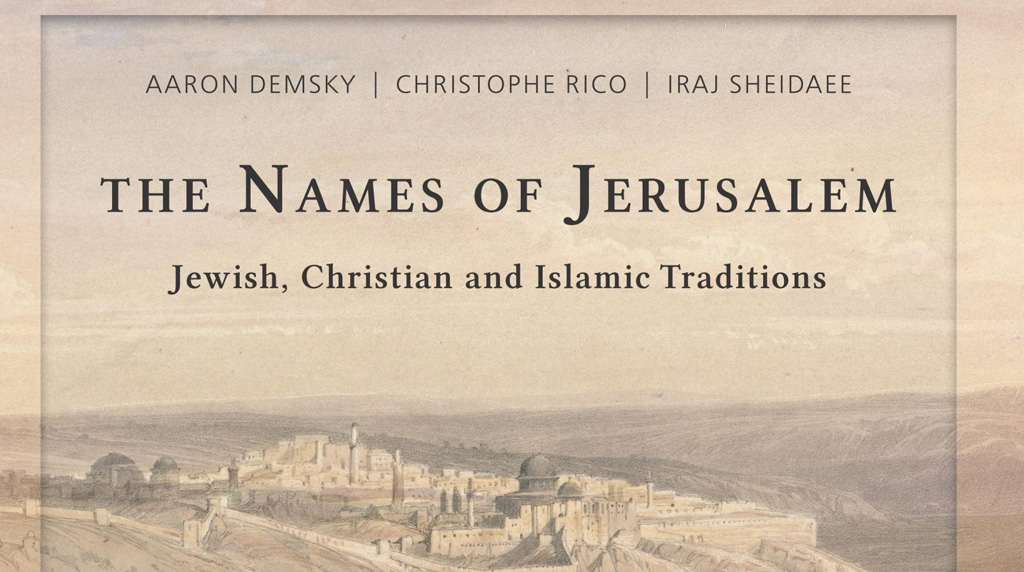
The Names of Jerusalem: Jewish, Christian and Islamic Traditions

As Jerusalem continues to be at the center of global attention, a new study conducted by Polis – The Jerusalem Institute of Languages and Humanities examines a rarely discussed dimension of the city: its names. Across Jewish, Christian, and Islamic traditions, the names of Jerusalem are not merely descriptive — they reflect distinct theological, historical, and cultural visions of the city.

In The Names of Jerusalem: Jewish, Christian and Islamic Traditions, three renowned scholars (Aaron Demsky, Christophe Rico, and Iraj Sheidaee) analyze the etymology, linguistic and historical development, and symbolic meaning of the names Salem, Jerusalem, Hierosoluma, Moriah, Zion, Ilia, Beit il Maqdis and al-Ǫuds in Hebrew, Greek, Latin, and Arabic.

“Names are not neutral labels,” the authors note. “They encode theological claims and collective memory. Understanding how different traditions name Jerusalem sheds light on how they understand it.”

At a time when public discussions about Jerusalem often focus on geopolitics and territory, this book offers a complementary perspective: how language itself shapes perception, identity, and religious meaning. By tracing the linguistic and historical development of the city’s names, the study highlights both shared heritage and enduring differences among traditions.

Published by Polis Institute Press, the volume is designed to be accessible to both specialists

and a broader readership interested in the cultural and religious significance of Jerusalem.

Availability

More information: https://www.polisjerusalem.org/resource/the-names-of-jerusalem/

Purchase: https://www.amazon.com/dp/SC57CS8200

Media inquiries, review copies, and interview requests: Polis Institute Press Email:

press@polisjerusalem.org

ISBN:  978-965-7698-20-4

Copyright © Polis – The Jerusalem Institute of Languages and Humanities (Registered Association 580539591).

price: $32.46