Czech
Czech French
 German
 Hebrew
 Noruegan
 Russian
 Spanish
 Swedish
 Polish
 Portuguese




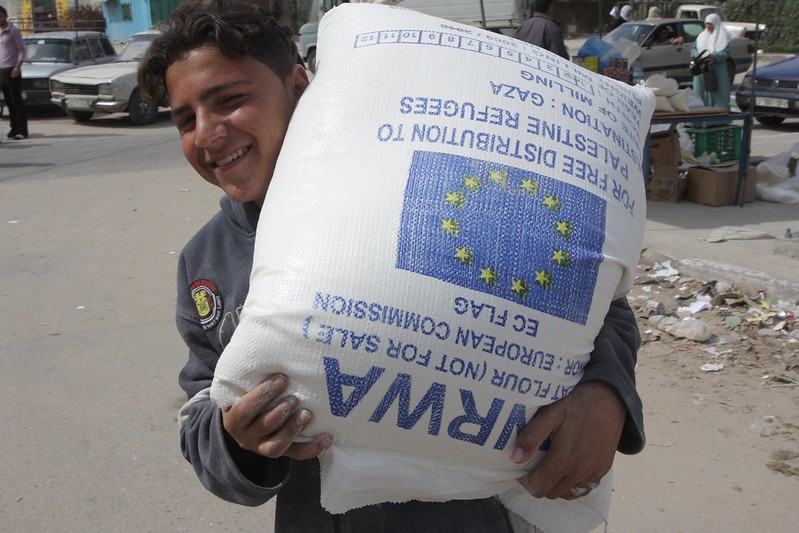
“Gaza Is Starving,” a headline in The New Yorker declared in early January 2024, pushing a harrowing narrative that took hold during the first six months of the war. In March, The Washington Post asked: “Is Gaza Heading Into Famine?” A headline in the Post the next day answered: “Israel’s War on Hamas Brings Famine to Gaza.”
In April 2024, Samantha Power, director of the United States Agency for International Development (USAID) for the Biden administration, became the first senior U.S. official to declare that famine in Gaza had begun. She cited a report published by an independent, United Nations–affiliated monitoring system, called the Integrated Food Security Phase Classification Global Initiative (IPC).
First developed in 2004 with backing from the UN, the IPC has become the global gold standard for food security analysis. Using a data-driven, evidence-based, five-phase scale that ticks up as food supplies run low, the IPC is designed to shield the humanitarian goal of having enough to eat from the political pressures of war. Today, a famine is declared only when the IPC’s data about a region shows that at least 20 percent of households have run out of food, at least 30 percent of children are acutely malnourished, and two people out of every 10,000 are dying each day from starvation.
In 20 years, just four famines have been confirmed by the IPC: Somalia in 2011, South Sudan in 2017 and 2020, and Sudan in 2024. A confirmed famine in Gaza, as Power told Congress was happening, would have been a historic catastrophe and the first to occur outside continental Africa. Power’s statement bolstered claims that Israel was using starvation as a weapon of war, and that the U.S. government was therefore complicit in an alleged war crime.
But there were serious problems with Power’s sensational testimony. Foremost among them: The IPC never declared a famine in Gaza. The report she cited was a projection of possible outcomes, not a conclusive finding. The next month, USAID issued its own analysis alleging that famine was underway, an indictment so serious that it required confirmation from an independent board of global experts known as the Famine Review Committee (FRC).
The FRC, which functions as the IPC’s final authority and quality control check, rebuked the USAID analysis, calling its conclusions insupportable. The failures were stunning.
Private sector food deliveries, such as trucks contracted to commercial warehouses, were left out of the agency’s estimates of the total food supply in north Gaza. As a result, as much as 82 percent of the “daily kilocalorie requirement” in northern Gaza last April wasn’t counted. In the same month, USAID’s famine monitor also left out 940 metric tons (2 million pounds) of flour, sugar, salt, and yeast donated by the UN to bakeries in north Gaza, enough to make about 1,400 metric tons (3 million pounds) of bread.
Famine—like genocide, fascist, and dictator—is a word susceptible to rhetorical abuse that can dilute and even invert its meaning.
When asked about erasing the bakery donations, USAID’s internal famine-monitoring network justified the decision on the grounds that bread from those bakeries had been sold rather than given away for free.
It was never in doubt that the Israel-Hamas war brought immense human suffering to Gaza, including from food shortages. But USAID depicted a world that had little in common with reality.
North Gaza actually had 10 times more food last April than USAID had claimed. These findings should have been big news. As aid shipments increased, a famine had been averted.
But a troubling thing happened to the FRC report: Its conclusions were ignored or went unnoticed by news organizations—and other UN officials made it sound like nothing had changed.
Food insecurity is not the only gauge of the war’s toll that now looks shakier than it did at first. Gaza’s Hamas-run health ministry recently deleted at least 3,400 deaths, including more than 1,000 children, from its lists of civilians killed by Israeli air strikes, according to nonprofit news watchdog HonestReporting.
The health ministry’s own statistics chief said some of the reported deaths had actually been from natural causes, or were people found to be in prison or missing. Yet the Hamas-run health ministry remains a go-to news source, despite significant errors found in its casualty reports by independent monitors.
USAID’s Famine Early Warning Systems Network was suspended in January when the Trump administration moved to close USAID and fold it into the State Department.
There were many hints that the headlines about famine in Gaza last year weren’t quite right. On social media in March 2024, one food importer showcased a tractor trailer full of frozen chicken, and a chef in Rafah advertised his plates of chicken and rice. One Gaza City restaurant showed off its racks of stuffed rotisserie chickens about two weeks after Power’s testimony.
Journalists can peruse a social media archive of life in Gaza compiled by Jacqui Peleg, an Israeli-British citizen who speaks Arabic and has been scraping YouTube, Telegram, TikTok, and other sites since 2018.
Posting on X under the name Imshin, Peleg has gained nearly 80,000 followers who are curious about the conflict’s complexities and skeptical of media narratives. After watching Gazans posting their new BMWs and Mercedes-Benzes on Instagram for years, the opening of an upscale car dealership in August 2023 didn’t surprise her. “I just watch Gazans talk to each other,” she told me. “I’m not a journalist. I’m just watching and sharing.”
Last June, the FRC’s panel of independent experts released a follow-up report reaffirming famine was a serious risk in Gaza but saying that “available evidence does not indicate that famine is currently occurring.”
That same week, Reuters ran an elaborately produced feature which, along with ghoulish cartoon simulations of a dying child, strongly implied that a famine was underway in Gaza. An erroneous CNN headline said: “Children Are Dying of Starvation in Their Parents’ Arms as Famine Spreads Through Gaza.”
Clear messages from the UN last summer might have helped. Instead, 11 independent UN officials, led by Michael Fakhri, the special rapporteur on the right to food, said in July that an “intentional and targeted starvation campaign” by Israel “has resulted in famine across all of Gaza.” The denunciation was covered around the world. Fakhri couldn’t be reached by The Free Press.
In August 2024, the FRC confirmed that an actual famine was killing people in Sudan. Famine persisted in five regions of Sudan and was expected to spread to five more by this May, the report found. It barely made the news.
To help make sense of all this, I talked to Nicholas Haan, who designed the food-insecurity classification system that became the IPC. Haan serves as a volunteer on the FRC, was one of the authors of the report that rebuked the USAID analysis, and is the lead technical adviser in a UN effort to replicate the IPC in areas such as health, hygiene, and shelter.
Famine—like genocide, fascist, and dictator—is a word susceptible to rhetorical abuse that can dilute and even invert its meaning. “My goal was to take famine from being a rhetorical word and make it a technical term,” Haan told me. When the IPC uses the word famine now, “we mean famine.”
IPC owes its success during the past two decades to the fact that it works. And because it works, nefarious governments and armed groups have tried to sabotage it. Reuters reported last year that when the ruling junta in Myanmar detained several food researchers, the IPC was forced to remove its reports about the country from the internet. In Yemen, Houthi forces hijacked the IPC process in 2023 to exaggerate food shortages and compel aid shipments that were then stolen by the Iranian-backed militia.
“Political actors, for their own reasons, will manipulate information. It’s a truism,” Haan told me. The best response, he said, is for the IPC to uphold its standards and the clarity of its messaging. “The most important, powerful, and necessary tool to achieve this is truth. When you give up truth, you’ve given up all moral standing to end suffering.” He wouldn’t comment on the famine declaration by Fakhri and the other UN officials.
Since the ceasefire in Gaza collapsed and Israel resumed its offensive, the UN’s undersecretary for humanitarian affairs has apologized to Gazans for being “unable to move the international community to prevent this injustice.” Over the weekend, the UN refused to accept a U.S.-Israeli plan to deliver aid directly to civilians. On Tuesday, a senior Hamas official accused Israel of waging a “hunger war.”
The famine storyline in Gaza is like the proverbial bell that cannot be unrung. In September, ProPublica inaccurately said, “The UN has declared a famine in parts of Gaza.” When I asked if the reporter who wrote the article had read the FRC’s reports from last summer, a ProPublica spokesperson said it stands by the reporting, citing statements by UN officials who aren’t part of the IPC process and an FRC follow-up report in November. But that report, like the others before it, warned of “a strong likelihood” of famine, not that famine had begun.
The New Yorker has published roughly 20 interviews that referred to famine or starvation in Gaza—and three that addressed the IPC system and the FRC’s authoritative role. In all that reporting, The New Yorker never mentioned the FRC’s rejection of USAID’s analysis or its no-famine verdict.
As Haan and his FRC colleagues wrote about USAID’s slippery numbers last year, “High uncertainty is compounded through several layers of assumptions.” So many unthinkable tragedies have occurred since Hamas’s massacre on October 7, 2023, but a famine in Gaza isn’t one of them.
Michael Ames is an investigative journalist and co-author of American Cipher: Bowe Bergdahl and the U.S. Tragedy in Afghanistan. He is writing a book about former Fugees rapper Pras Michel.