Czech
Czech French
 German
 Hebrew
 Noruegan
 Russian
 Spanish
 Swedish
 Polish
 Portuguese



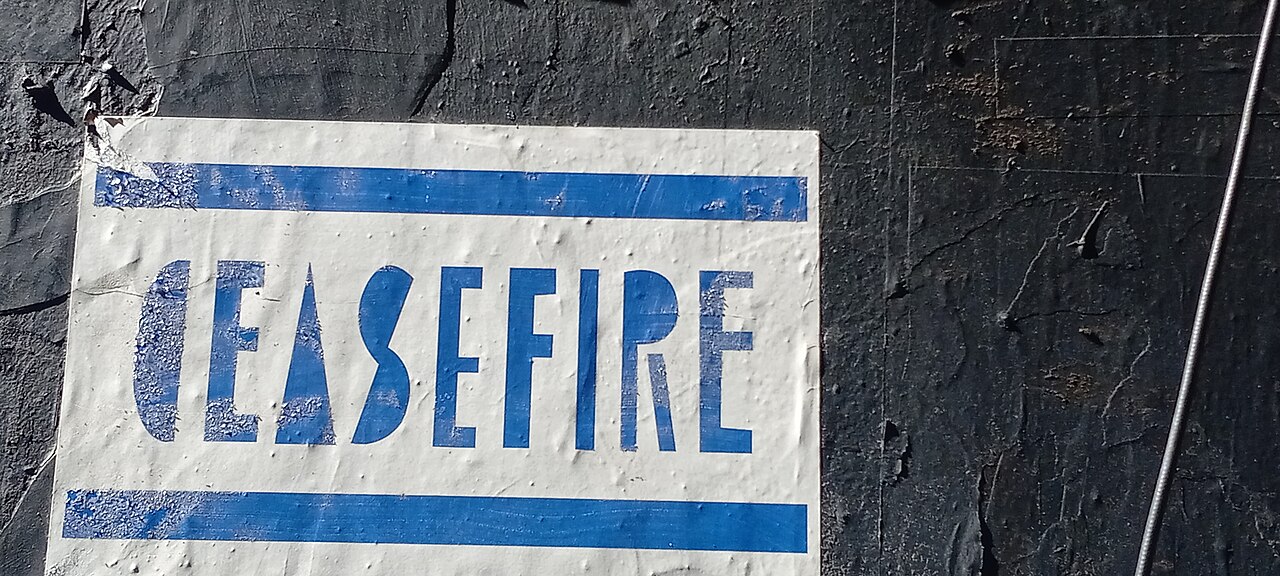
Over the next weeks and months, Israel will be pressured by the US into accepting a ceasefire.
However, before agreeing to a ceasefire, fundamental issues must be brought to the forefront to show that the war conducted by the Palestinians and their Iranian allies is far from over.
- The official Voice of Palestine, operating on Israel government radio and TV frequencies, continues its daily incitement.
- The Palestinian “Pay for Slay” law continues, mandating a salary for life for anyone who killed a Jew.
- The PLO charter places the Palestinians in a permanent state of war until all Jews have been expelled from all areas that had been Mandatory Palestine.
- The PLO has now spawned a new Palestinian constitution, which does not recognize the right of any Jews to live anywhere in Palestine.
- The Palestinian-designated Jew-free areas include all of the territory which today constitutes the state of Israel.
- The Palestinian war curriculum continues to educate all Palestinian children to live a life of permanent war with the Jews, until all Jews are expelled from Palestine.
- UNRWA transforms generous humanitarian aid into cash for arms training to prepare the next generation for war. Sixty-seven nations pour 1.6 billion dollars into UNWRA for humanitarian services. UNRWA hosts five million descendants of Arabs who left Israel in the wake of the 1948 war and remain in 58 “temporary” refugee camps under the premise and promise of the right of return to Arab villages that existed before 1948
In sum, no ceasefire can be implemented in the Middle East until each of these issues is resolved.
One must always keep in mind that the ceasefire that the Palestinians offer: a hudna to stop firing, a term which is too often misconstrued to mean a “truce” or a “cease fire.”
A hudna connotes no more than a temporary respite and does not remotely resemble either a “truce” or a “cease fire.”
Here, then, are four terms now in use in the Arabic understanding of what a cease fire connotes:
- Hudna: a tactical pause intended only for rearmament,
- Tahida: a temporary halt in hostile activity which can be violated at any time
- Hudaybiyyah:No fighting for 10 years: invoking after the “treaty of Hudaybiyyah” in 628 AD
- Sulch: a total cessation of hostile activity
The reality is that a hudna, tahida or hudaybiyyah do not compare to the mu’ahada treaty of peace that Egypt signed with Israel in 1979, or the mu’ahada treaty of peace that Jordan signed with Israel in 1994.
The authoritative Islamic Encyclopedia (London, 1922) defines “hudna” as a “temporary treaty” which can be approved or abrogated by Islamic religious leaders, depending on whether or not it serves the interests of Islam, and that a “hudna” cannot last for more than 10 years.
That Islamic Encyclopedia ads that the Hudaybia treaty is the ultimate “hudna.”
When our news agency sent a crew to monitor Yassir Arafat speeches after the Oslo peace accords , the PLO leader constantly proclaimed that the Oslo accords were like the Hudaybia treaty.
No one listened.