‘Why do we need judicial reform?’ An architect behind the proposal explains

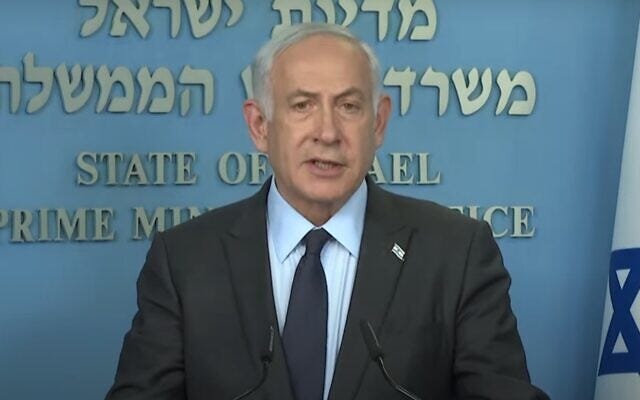
Professor Moshe Koppel, one of the architects of the Netanyahu government’s judicial reform program, spoke to JNS last week about why the reform is needed and what it’s really about.

Contrary to the claims of its opponents, who say that it will strip Israel of its checks and balances, judicial reform will restore the checks and balances that have been stripped away by a court system that has arrogated powers beyond its purview, said Koppel, chairman of the Kohelet Policy Forum, a Jerusalem-based think tank that seeks to “broaden individual liberty and free-market principles in Israel.”

“The problem is that all the checks and balances that exist in other [Western, democratic] countries do not exist in Israel,” he said. “The [Supreme] Court can do whatever it wants…. Judicial reform is trying to rein in the court.”

Secondly, the Supreme Court turned the attorney general into “the long arm of the court within the government,” so now the attorney general can “push the government around on its behalf,” Koppel said.

The judicial reform has five parts, he said. The first addresses the issue of the attorney general. The reform makes clear that the role of the attorney general is that of an adviser. “The attorney general is not the boss of the government,” Koppel said.

Justice Minister Yariv Levin, in unveiling the “first stage” of the reform plan on Jan. 4, said that legal advisers are “advisers, not deciders, who represent the government and not their personal positions.” He called for an end to the “subjugation of the government to an unelected rank.”

Moshe Koppel, chairman of the Kohelet Policy Forum. Photo by Rivka Kovalsky.

Said Koppel, “The government should hear the advice of its lawyer and then decide whether it wants to take that advice, or doesn’t want to take that advice, just like anybody else in the world who has a lawyer.”

There have been instances where the attorney general has refused to represent the government in a case, while refusing to allow the government the right to hire private counsel, leaving the government without legal representation to defend itself in court. The reform will allow the government to hire its own counsel in such an event, Koppel said.

The second part of the reform concerns the way judges are appointed. Appointment of Supreme Court justices currently requires the approval of seven out of nine members of the Judicial Selection Committee. As three are justices they effectively have veto power. “It causes the court to be too homogeneous,” Koppel said. The reform will change the composition of the panel. There are discussions about how to do it, “but the short version is you want the judges to have less influence over the appointment of new judges.”

The last three parts of the reform address ways in which judges can weigh in on legislative and governmental decisions.

One addresses the judicial pretext of “reasonability,” whereby judges overturn laws and administrative decisions based on whether they consider them “reasonable” or not. The pretext is vague enough that opponents of reform (at least in its current form) agree that it shouldn’t be allowed.

On Feb. 12, Israeli President Isaac Herzog said in an address to the nation, “An unrestricted use of the pretext of reasonableness could become the basis for a disproportionate entry of the judicial authority into the exclusive territory designated for the executive and legislative branches.”

Koppel said the “reasonability” pretext was first used in a court case in 1981 by then-Supreme Court Justice Aharon Barak. Barak, who went on to become president of the court from 1995 to 2006, is widely considered by Israel’s right wing as responsible for the “judicial revolution” that the current government seeks to correct.

Quasi-constitutional status

The fourth part of the reform would ensure that the Supreme Court can’t invalidate basic laws, which are considered to have quasi-constitutional status in Israel. The first bill of the judicial reform package to go up for a vote in the Knesset plenum addressed this problem.

Those in favor of judicial reform argue that the court should have no right to strike down basic laws given that the court claims to derive its authority from basic laws, which the judges say are equivalent to a constitution (and have done so ever since Barak declared it to be the case in 1995). In effect, the court is claiming the right to strike down the constitution.

The fifth and final part of reform addresses the issue of how the Supreme Court can strike down laws. The reform would regulate the court’s ability to do so, requiring for example that all 15 Supreme Court justices sit on a case and that legislation be struck down by a special majority. Before, as few as three justices, selected by the court president, could strike down a law, Koppel said.

Some reform advocates view granting the Supreme Court the right to strike down laws as a concession. They argue that the court has no right to overturn legislation.

Koppel said that the reform package also includes an override clause that gives the Knesset a second chance should the court strike down a law. The Knesset could override court decisions and re-legislate laws struck down by the court, Koppel said.

The override clause is the “most controversial part” of the reform. “It is in fact an unusual thing, and it is the thing in this law that frightens people the most,” he said.

“You can imagine the government, the Knesset, passing some crazy law, and then the judges would say, ‘That really is crazy.’ Sometimes the judges are right [though] it’s unusual,” he said. “And then they strike something down and the Knesset can come back with 61 [votes] and…override it and it scares people.”

Koppel said some aspect of the override might be removed, or tempered, in negotiations (so far, the opposition has refused to engage in negotiations).

In any case, “at least four and a half out of five parts of this reform are no-brainers,” he said.

Stripping Terrorists of Citizenship Does Not Go Far Enough

The decision on Wednesday, February 22, 2023 to pass a law to strip Arab-Israeli terrorists of their citizenship for receiving financial rewards from the Palestinian Authority is a deep moral mandate that should have been established decades ago.

Prime Minister Benjamin Netanyahu’s government seemed to have reached its limit after Israeli Arabs gave a “hero’s welcome” to a terrorist who was released after serving a 40-year prison sentence for kidnapping and murdering an Israeli soldier in 1983. He was part of the PLO-run Palestinian Authority multi-million dollar “Pay-For-Slay” criminal operation, which pays salaries and benefits to terrorists and their families. According to Palestinian Media Watch, the “Palestinian Authority Martyrs Fund” paid out around $150 million in 2020 alone.

The new law, of course, has been denounced as racist by members of the Arab Knesset. It strips terrorists who receive PA stipends of Israeli citizenship. It also gives the Israeli government the power to deport terrorists to the Palestinian Authority-controlled West Bank, as well as prevent their reentry into Israel.

My concern is that the law does not go far enough. I have argued for years that not only terrorists should be stripped of citizenship, but so should any citizen who participates politically in any aspect of the Palestinian Authority’s mandates and ideologies. Those who endorse “terror” by any physical or ideological association with the PA are enemies of the state.

The regional hostilities towards Israel in the Middle East are such that the Jewish state must take all threats seriously. It must work for a coalition of forces to neutralize them. Given Fatah and Hamas’s genocidal aspirations toward Israel and universal Jewry and – in the case of Hamas – of establishing a global caliphate, a moral goal would be to reverse the potential sovereignty of every Palestinian movement in the region. It ought to get Jordan to re-revoke its citizenship status of the Palestinian majority in Jordan. Such terrorists regarded as suitable for deportation to the “West Bank” could be deported to Jordan.

On the other hand, a people that overwhelmingly approves of terrorist leaders cannot be made to become citizens of any civilized country such as Israel.

The Palestinian terror war Fatah launched after the 2000 Camp David Peace Summit and unilaterally accepted by the Palestinian people places them in a precarious position. Whatever actions Israel or any of her allies takes against them in a war against terror are their responsibility and are moral. No moral or political distinctions must be made between Fatah, Hamas, and the people who elect and or support them. No constituted people responsible for the election and appointment of terrorist actors can or should be entrusted with the moral responsibility of possessing citizenship. They constitute a national security threat to Israel because a core feature of their identity is a commitment to destroying Israel and Jewry.

The issue of deporting such terrorists to the West Bank – that is, to Judea and Samaria, regardless of whatever portion of it is Arab-governed – is irrelevant and untenable. One cannot deport Arab terrorists to a region that, properly speaking, is the legitimate land of the Jewish state of Israel. No one would speak of deporting a criminal from the state of Idaho to the state of Illinois. The notion is preposterous. Such a person would still be a threat to American citizens.

Such Arab-Israeli terrorists are still, properly speaking, occupying Israeli territory. Judea and Samaria were legally recaptured during the 1967 Six-Day War, and Arabs living there are war refugees, or, war settlers, living on reclaimed Jewish and Israeli land. Their presence in Judea and Samaria is still a national security risk to the noble Israeli pioneers in that region re-founding and developing their holy land. Netanyahu has yet to carry through on his promise made years ago to annex Judea and Samaria. Deportation in this context makes little sense, even in the absence of a successful annexation.

As enemies of the state, they and all who support a terrorist organization like the Palestinian Authority cannot remain anywhere close to the territorial confines of Israel; nor should they be deported to Gaza. It would be reckless and irresponsible of Israel to increase the terrorist population of that region when part of Israel’s domestic and foreign policy ought to be aimed at decimating Hamas and its population of recruited civilian terrorists.

Israel, of course, a model of benevolence and often misguided altruism, is still often too lenient on terrorists. The state in some way still harbors a moral responsibility for its sworn enemies. Along with the forthright and moral decision to denude terrorists of their citizenship and bar their entrance into Israel, Israeli leadership would best disabuse itself that it has any moral responsibility for the welfare and well-being of any terrorist.

Terrorism stems from regimes. Deporting and stripping individual terrorists of Israeli citizenship is fighting the battle piecemeal.  A comprehensive approach would be to delegitimize and criminalize the source from which terrorists receive their funding and stipends to conduct acts of terrorism: the Palestinian Authority. Since the establishment of the Palestinian Authority in 1994, Judea and Samaria (the West Bank) have enjoyed joint rule by Israeli military government and the Palestinian Authority with around 98 percent of the Palestinians living in areas under jurisdiction of the PA. In such areas, the PA has destroyed the freedom Palestinians enjoyed under Israeli rule and their economy through kleptocracy, corruption, nepotism, and authoritarian forms of governance subject to none of the checks and balances that characterize Israel’s Knesset.

It is difficult, though, for Israel to defeat the terrorist regime of the Palestinian Authority when the Biden administration is a direct sponsor and supporter of Palestinian terrorism. It is guilty of such ethical malfeasance in that in 2022 alone it gave $316 million to the Palestinian Authority. These funds are issued in the guise of humanitarian aid. The truth, however, is that much of these funds is diverted to sponsor terrorist activities including but not limited to “Pay-for-Slay” operations. The dollars are used to pay terrorists and to support their families.

American taxpayers ought to be outraged that they are forced to finance the families of terrorists while our cities are ravaged by homelessness, failing schools, and underpaid police officers.

Until and unless Israel approaches the Palestinian Authority as the United States approached Nazi Germany and imperial Japan with a view to vanquishing them totally, all will be treated to a cyclical and predictable sequence of events as has been occurring in Israel since its re-founding in 1948 and, more particularly, since the creation of the Palestinian Liberation Organization (PLO) was established by the Arab League in May of 1964.

Doing the same thing repeatedly and expecting different results is properly said to be a definition of insanity. Israeli leadership is not insane; it is just misguidedly altruistic, and it has chosen to look for the better angels in the souls of its declared enemies where there is only evil.  The Israeli law stripping terrorists of their citizenship is predicated on such persons having a permanent residence outside of Israel. They would not be allowed back into Israel. But why the concern for murderous terrorists to have the privilege of having a permanent residency status outside of Israel? What gives such persons the right to live in any civilized country? What part of their agency can contribute to the moral dimension that comes with being part of a moral-political community?

Matters of punishment, like matters of war, cannot be taken seriously unless they are affixed to moral ideas and ideals. Terrorists, like carjackers and household burglars, are not the concern of those victimized. They are one’s existential antipode, and inimical to one’s life.

The appropriate punishment for terrorists is not to unleash them into some other society after they have been stripped of their citizenship. The goal is to carry the latter to its logical terminal point: to render terrorists completely stateless. Such, I believe, is one small step towards making the punishment commensurate with the crimes committed.

IRS allows PFLP terrorists to fundraise through leftist nonprofit

Rabbi Eitan Shnerb was hiking to a spring with his son Dvir and his daughter Rina when the bomb went off. For a moment, as he described it in the hospital, everything went black. Then, badly wounded, he saw that the two teenagers were bleeding.

Rabbi Shnerb was a trained paramedic. He saw that Rina, his 17-year-old daughter, had absorbed most of the blast. He kissed her on the forehead. And then he turned his tzizit, the biblical garment that Orthodox Jewish men wear, into a tourniquet for his 19-year-old son to stop the bleeding.

Dvir told his father that he couldn’t breathe and passed out. His daughter was already dead.

How Taxpayer Funds Are Flowing to a Group Bankrolling Anti-Netanyahu Protests

Israeli Prime Minister Benjamin Netanyahu Associated Press

The U.S. government has been funneling taxpayer money to the left-wing group bankrolling protests against Israeli prime minister Benjamin Netanyahu, according to Israeli funding documents reviewed by the Washington Free Beacon.


The documents indicate that, since 2020, Foggy Bottom has sent over $38,000 to the Movement for Quality Government (MQG), the Israeli nonprofit stoking nationwide anti-Netanyahu protests that have seen protesters clash with police and target Netanyahu’s family members. MQG is seeking to takedown Netanyahu’s government over his support for major reforms to the Israeli supreme court that would significantly limit its power. The organization petitioned Israel’s Supreme Court earlier this year to oust Netanyahu, claiming he is unfit for office due to ongoing investigations into allegations of political corruption and bribery.

Click here to read full article. 

Recycling

When one thinks of recycling, the generally accepted definition is the process of collecting and processing materials that would otherwise be thrown away as trash and turning them into new products.

Michael Kuttner

As Israel is yet again admonished to cease the so-called “cycles” of violence, it seems that the above explanation is nowadays most apt.

After millennia of the same old obsessive fetish about Jews and their supposed malign influence on humanity, it would be logical to think that in the twenty-first century of the civil calendar, these lies and myths could be consigned to the trash. Instead of being discarded and turned into a new and more enlightened reincarnation, unfortunately, they are recycled, albeit in an increased toxic version.

The annual commemoration of the events surrounding the saving of Persian Jews from genocide is upon us.

It is astounding how despite the passage of time, we are still currently faced with the same calamitous challenges and identical machinations. Whether it is plots to eliminate the nation State of the Jews or the age-old virus of virulent collective hate, the aims remain the same.

Every year as we celebrate Purim, the lessons of those events become starker and more relevant. Unfortunately, even when the signs and omens stare us in the face, there are still far too many who refuse to acknowledge the dangers.

Last night at a social event I happened to speak to a friend of mine who made aliyah about four decades ago from South Africa. He was recently back there visiting relations, and he recounted how the country has seriously deteriorated. There are daily power cuts, the water supply is intermittent at times, and crime has skyrocketed. The Government has adopted a virulent anti-Israel policy and, in fact, has these days moved closer to China and Russia. Inevitably the rhetoric about Israel must, at some stage, impact the South African Jewish Community. Past experience should teach us that what follows will not be good for the Jews.

My friend told me with a sense of incredulity that when he asked young Jews why, given the prevailing winds, they did not leave, the responses floored him. Where else, they responded, could they replicate the “wonderful” lifestyle they currently enjoyed? If this is not a recycling of past errors of judgment, I don’t know what else it is. The end result will inevitably be a rerun of historic disasters as the collective hate against Israel inevitably rebounds onto local Jews.

As I mentioned in my last op-ed the Islamic holiday of Ramadan is almost upon us. In past years without fail and as predictable as a Swiss cuckoo clock, this holy period is hijacked by Islamic fanatics in order to perpetrate terror outrages. Once upon a time, Israel’s existence and policies were the excuses for murder and mayhem but now the jihadist hatred of “non-believers” has equal billing.

Thanks to the mendacious hypocrisy and spineless reactions of the international community, the voices of moderate Muslims and interfaith activists are drowned out. All the terror-sponsoring nations and groups need to hear is a condemnation of Israel for actively resisting such mayhem. Sure enough, as is the case every year, Israel has again been admonished by all and sundry to show restraint and not engage in any provocative actions. The clear message is that any subsequent Ramadan murders and outrages are the fault of the victims because they refused to buckle under in the first place.

Thus it has always been, and so it is again this year.

In actual fact, the terrorists never needed to wait for Ramadan as an excuse to murder Jews. It is open season all year around. The trouble is that nobody remembered to tell the UN Secretary-General or his officials or any of the myriad of knee-jerk political commentators and politicians who lose no opportunity to collectively warn Israel.

The EU High Representative for Foreign Affairs pompously pontificated that the “use of force must be in full respect of international law.” He may be a “high” representative, but whatever he is smoking has certainly addled his brain.

The UN Special coordinator for the Middle East Peace Process (a misnomer if ever there was one) for the umpteenth time exclaimed that he was “deeply disturbed by the continuing cycle of violence.” The obsession with some sort of moral equivalence between murderers and their victims plays right into the hands of the perpetrators.

Once again, the UN Secretary-General managed to display his uncanny ability to skewer Israel. Speaking at a pro-Palestinian event at the UN, he warned against “provocations at Jerusalem holy sites and escalating violence in the West Bank.” In case his message was not clear enough as to who was really responsible, he “decried settlement activity and called for more support for Palestinians.” For the benefit of those still in doubt as to the guilty party, he added that “the situation in the occupied (sic) Palestinian territory is at its most combustible in years. The situation in Jerusalem/Al Quds is becoming more fragile amidst provocations and acts of violence in and around the holy sites. It radiates instability across the region and beyond.”

There you have it in a nutshell. Jews wanting to visit and pray at Judaism’s holiest site are basically responsible for acts of terror that ensue. Not to be outdone, Bernie Sanders blasted Israel for “demeaning the Palestinian people.” Following the same old recycled script, the White House tells us that we must “de-escalate tensions.”

The only additional accusation that our terror-supporting “partners” needed to hear was the affirmation of Israel’s original sin expressed by Jews. Sure enough, this materialised quicker than you can eat Hamantaschen. US Jewish progressives, supported by the likes of J.Street, Peace Now and the New Israel Fund, took to the streets with banners reading “no democracy with occupation” and similar slogans. Their Israeli counterparts followed suit.

Is it any wonder, therefore, that bitter and frustrated Israeli Jews riot after yet more terror attacks? While mob violence and vigilante mayhem cannot be condoned, it is not hard to understand why the accumulated anger was bound to boil over sooner rather than later. Kowtowing to international hypocrisy, political hot air and a refusal to deal firmly once and for all with those who seek our demise have all culminated in a rising tide of rage.

The US State Department has issued a travel advisory and demanded that Israeli authorities arrest and punish the perpetrators of the revenge attack on the Arab village from where the terrorist murderers of two Jewish brothers originated. It is precisely this sort of pompous interference in our affairs that roils many Israelis.

Of course, the authorities will investigate and arrest those responsible. That is what any responsible democratic country would do without having to be prompted.

With mass shootings in the US occurring almost daily, what would be the reaction if Israel issued travel advisories and demanded stern action from the US authorities?

There are several pertinent points to highlight.

Where are the demands for Abbas and his security forces to arrest and deal with the terrorists who are educated and inculcated with Jew hate courtesy of PA schools, media and officials? Why do Biden, Blinken and colleagues not demand the immediate cessation of “pay to slay” stipends for terrorists and their families? Why does the US continue to send millions of US taxpayers’ money to UNRWA?

The spectacle of the German Government lecturing Jews about moral behaviour is worthy of a special Purim shpiel on its own.

Also disseminating skewed reports are the likes of the NY Times, Washington Post, Guardian and others. Taking their cue from our own ultra-left and post-Zionist media, our brethren living in exile and the general public believe it is the whole story.

Instead of recycling failed pious pronouncements, how about actually tackling the root causes? Deal seriously with terror-supporting nations and entities so that their ability to foster murder is eliminated.

That will definitely remove the so-called cycles of violence once and for all.

Perhaps it may also eliminate the endless cycles of idiocy we are forced to face on a daily basis.

Michael Kuttner is a Jewish New Zealander who for many years was actively involved with various communal organisations connected to Judaism and Israel. He now lives in Israel and is J-Wire’s correspondent in the region.

Special Report: the Palestinian Education System Praises the Terror Attack in Neve Yaakov

On January 27th, Friday night, there was a terror attack in Jerusalem (Neve Yaacov) in which seven people were murdered and three injured. The terrorist, Alkam Hayri, was a 21-year-old Palestinian from East Jerusalem. He drove to the neighborhood, and after the Sabbath Eve services at Ateret Avraham synagogue he opened fire at the people outside the synagogue and those nearby.

Special-Report-the-Palestinian-Education-System-Praises-the-Terror-Attack-in-Neve-Yaakov-1-1

The Palestinian Nakba: Failure to Dismantle the Jewish State

In November 2022, IAM reported that “(Hebrew U) Amos Goldberg Continues Comparing the Palestinian Self-Inflicted Nakba to the Holocaust of the Jews by the Nazis.”

Professor Amos Goldberg, a Hebrew University Holocaust researcher, and Dr. Bashir Bashir of the Van Leer Institute, Jerusalem, co-authored a 2018 book that contends “the Shoah [Holocaust] and the Nakba are two interlinked catastrophes.” According to them, when a Palestinian is asked about the Holocaust, he often brings up the Nakba, “the displacement of Palestinians associated with the founding of the state of Israel.” Goldberg and Bashir have “developed a concept aimed at promoting dialogue about these two interlinked national traumas.”

According to Goldberg and Bashir, The “Shoah was, in terms of its scale, not comparable with any other event that as such is considered singular.” But since “the Holocaust has become the ultimate symbol of evil… any attempt to connect it even loosely with other chapters of the history of violence is quickly suspected of being an attempt to trivialize the Holocaust.” They argue, “while the Shoah is over as an historical event and the Jewish people have, despite the trauma, been able to get back on its feet again, the Palestinians are to this day, in a position of political, military, economic, and cultural weakness because of the consequences of the Nakba.” This “asymmetry in the national catastrophes of both peoples from a moral point of view: the Palestinians were not to blame for the Holocaust, but the Israelis were responsible for the displacement and flight of the Palestinians and for their discrimination in Israel and oppression in the Occupied Territories.” The “rapprochement between Israelis and Palestinians, who both see themselves as victim communities, is made more difficult above all because the Shoah and the Nakba are used equally to legitimize national claims.” They wish to integrate the catastrophe of the other into one’s own narrative without abandoning the “ultimate claim to justice.”

As IAM explained, an event hosting Goldberg and Bashir titled “Understanding the pain of the others.” by the Goethe institute in Tel Aviv and the Rosa Luxemburg Foundation was supposed to take place on November 13, 2022, but a week earlier, Goethe institute postponed the event.

According to the Goethe Institute, “The public discourse that has developed in Germany and Israel in the run-up to the event has made it impossible to carry out the event appropriately. Since we are expecting disruptions to the event, we cannot guarantee a safe implementation of the panel discussion at this point. The important topic of remembrance culture cannot be addressed in the way it needs to under these circumstances. The Goethe-Institute and the Rosa Luxemburg Foundation have therefore decided to postpone the event.”


Dani Dayan, the chairman of Yad Vashem, announced that the event would be canceled entirely.


However, disregarding the protest, the event took place in Germany on February 2, 2023. The Einstein Forum at the University of Potsdam held the roundtable discussion.


The speakers included Bashir, Goldberg, and Charlotte Wiedemann. According to the invitation, “In her book Understanding the Pain of Others, the author Charlotte Wiedemann pleads for a new inclusive memory culture that promotes solidarity instead of competition among victims. Doing justice to the victims of colonial crimes and their descendants does not call into question the specificity of the Shoah. On the contrary: the importance of human rights for all is a central lesson from the Holocaust. But tragically, Holocaust memory has not brought us much closer to such universal values. In their co-edited volume The Holocaust and the Nakba: A New Grammar of Trauma and History Amos Goldberg, Bashir Bashir, and the contributors to the volume explore the possibility of creating a shared language for discussing the memories of two entangled, but entirely different historical events: the genocide of European Jews and the displacement of Palestinians. At the center of this new language is the concept of empathic unsettlement which challenges the mutual denial of the suffering of the Other, recognizes the political asymmetries in Israel-Palestine, and gives rise to an egalitarian binationalism.”

The following day, Francesca Albanese, UN Special Rapporteur oPt, wrote on Twitter: “‘Understanding the Pain of Others: The Holocaust, the Nakba and German Memory Culture’- An outstanding event yesterday night at the @einsteinforum , in Potsdam. I was deeply moved by it, & the eloquence & strength of the speakers on such a sensitive topic.”

As IAM indicated, efforts to equate the Holocaust and the Nakba are insidious cases of propaganda to demonize the Jewish state.

Goldberg, a Professor of Holocaust Studies, should know well that Jews had no choice when loaded on trains to be murdered in extermination camps. On the other hand, the Palestinians made their own choice, albeit flawed. The Palestinian leader, Mufti Haj Amin al Husseini, a Nazi collaborator, ordered the riots of 1936-39, where numerous Jews were killed. His ultimate goal, which he discussed with Hitler in Berlin, was establishing extermination camps in Palestine. The British victory over the Nazis in El Alamein spared the Jews in Palestine the fate of their European brethren.


In 1947, when the United Nations voted to divide Palestine into two states – a larger one for the Palestinians and a smaller one for the Jews – the Palestinians made another flawed decision. They rejected the Partition Proposal and – together with their Arab Allied States started a war against the new Jewish states, which they lost.

It is easy to understand why the Palestinians would want to minimize their responsibility. It is more difficult to explain why Goldberg would spend much of his academic career producing propaganda-like literature to this effect. Unfortunately, he is not the only one. IAM has repeatedly pointed out that radical academic activists have used the lax rules of academic freedom to write about topics that further their political agenda. The Israeli taxpayer who supports the universities deserves better.


Understanding the Pain of Others. The Holocaust, the Nakba and German Memory Culture
Podiumsdiskussion
Donnerstag, 2.2.2023, 19:00h

Bashir Bashir, Amos Goldberg, Charlotte Wiedemann

Understanding the Pain of Others
The Holocaust, the Nakba and German Memory Culture

Gesprächsleitung: Susan Neiman, Potsdam

Live im Einstein Forum. Das Tragen einer medizinischen Maske wird empfohlen.
Auch im Live-Stream via Zoom (hier registrieren)

In her book Understanding the Pain of Others, the author Charlotte Wiedemann pleads for a new inclusive memory culture that promotes solidarity instead of competition among victims. Doing justice to the victims of colonial crimes and their descendants does not call into question the specificity of the Shoah. On the contrary: the importance of human rights for all is a central lesson from the Holocaust. But tragically, Holocaust memory has not brought us much closer to such universal values.
In their co-edited volume The Holocaust and the Nakba: A New Grammar of Trauma and History Amos Goldberg, Bashir Bashir, and the contributors to the volume explore the possibility of creating a shared language for discussing the memories of two entangled, but entirely different historical events: the genocide of European Jews and the displacement of Palestinians. At the center of this new language is the concept of empathic unsettlement which challenges the mutual denial of the suffering of the Other, recognizes the political asymmetries in Israel-Palestine, and gives rise to an egalitarian binationalism.
This debate was originally scheduled to take place in the Goethe Institute Tel Aviv but was cancelled due to political pressure.


Charlotte Wiedemann
 is a journalist and author. She has published numerous books on international topics, most recently Den Schmerz der Anderen begreifen. Holocaust und Weltgedächtnis (2022). Afflicted by silence in her own family, she has followed debates about German responsibility for National Socialism for four decades.

Bashir Bashir
 is associate professor of political theory at the Open University of Israel and senior research fellow at the Van Leer Jerusalem Institute. His research interests are: democratic theory, nationalism and citizenship studies, liberalism, decolonization, and reconciliation. His most recent publication is The Arab and Jewish Questions: Geographies of Engagement in Palestine and Beyond (2020).

Amos Goldberg is associate professor of Jewish History and Contemporary Jewry at the Hebrew University of Jerusalem. For decades he has researched Holocaust memory at the intersection of history, critical theory, and literature. His publications include Trauma in First Person: Diary Writing during the Holocaust (2017) and his co-edited volume Marking Evil: Holocaust Memory in the Global Age (2015).

===============================================

https://www.youtube.com/watch?v=4bs-JNnCv-k

Bashir Bashir, Amos Goldberg, Charlotte Wiedemann: Understanding the Pain of Others

Einstein Forum
3.29K subscribers

Feb 5, 2023

Understanding the Pain of Others: The Holocaust, the Nakba and German Memory Culture In her book »Understanding the Pain of Others«, the author Charlotte Wiedemann pleads for a new inclusive memory culture that promotes solidarity instead of competition among victims. Doing justice to the victims of colonial crimes and their descendants does not call into question the specificity of the Shoah. On the contrary: the importance of human rights for all is a central lesson from the Holocaust. But tragically, Holocaust memory has not brought us much closer to such universal values. In their co-edited volume »The Holocaust and the Nakba: A New Grammar of Trauma and History« Amos Goldberg, Bashir Bashir, and the contributors to the volume explore the possibility of creating a shared language for discussing the memories of two entangled, but entirely different historical events: the genocide of European Jews and the displacement of Palestinians. At the center of this new language is the concept of empathic unsettlement which challenges the mutual denial of the suffering of the Other, recognizes the political asymmetries in Israel-Palestine, and gives rise to an egalitarian binationalism. This debate was originally scheduled to take place in the Goethe Institute Tel Aviv but was cancelled due to political pressure. Chair: Susan Neiman, Potsdam Charlotte Wiedemann is a journalist and author. She has published numerous books on international topics, most recently »Den Schmerz der Anderen begreifen. Holocaust und Weltgedächtnis« (2022). Afflicted by silence in her own family, she has followed debates about German responsibility for National Socialism for four decades. Bashir Bashir is associate professor of political theory at the Open University of Israel and senior research fellow at the Van Leer Jerusalem Institute. His research interests are: democratic theory, nationalism and citizenship studies, liberalism, decolonization, and reconciliation. His most recent publication is »The Arab and Jewish Questions: Geographies of Engagement in Palestine and Beyond« (2020). Amos Goldberg is associate professor of Jewish History and Contemporary Jewry at the Hebrew University of Jerusalem. For decades he has researched Holocaust memory at the intersection of history, critical theory, and literature. His publications include »Trauma in First Person: Diary Writing during the Holocaust« (2017) and his co-edited volume »Marking Evil: Holocaust Memory in the Global Age« (2015).

Francesca Albanese, UN Special Rapporteur oPt
@FranceskAlbs
“Understanding the Pain of Others: The Holocaust, the Nakba and German Memory Culture”- An outstanding event yesterday night at the

, in Potsdam. I was deeply moved by it, & the eloquence & strength of the speakers on such a sensitive topic. Recording available.

Einstein Forum
@einsteinforum·
Feb 2
Bashir Bashir, Amos Goldberg, Charlotte Wiedemann: Understanding the Pain of Others twitter.com/i/broadcasts/1
69.3K

Views

Filippo Passerini
@f_passerini94
Replying to

and

there is not room at all ever to even think of equiparating the nakba with the holocaust. no. way. ever.

Francesca Albanese, UN Special Rapporteur oPt
@FranceskAlbs
If you took the time to listen to the event & the speakers you would realize that no one here or there is trying to equate anything. As Professor Goldberg masterfully said, it is about understanding the nexus between the two tragedies as key to understand ‘the pain of the other’.
============================================
https://www.jpost.com/israel-news/article-722205

German event comparing Holocaust to ‘Nakba’ canceled after Yad Vashem intervenes

The planned panel faced stark criticism from the Israeli Foreign Ministry and Jewish organizations.

Published: NOVEMBER 13, 2022 03:16

The German state-funded Goethe Institute pulled the plug on a slated Sunday event in Tel Aviv that draws a line of connection between the Holocaust and the Palestinian “Nakba,” Yad Vashem chairman Dani Dayan announced on Friday.

Nakba (catastrophe) is the term Palestinians use for their defeat and exile at the hands of Israeli forces during the 1948 War of Independence.

Dayan wrote on Twitter: “At the end of our in-depth conversation, [Goethe Institute Board chairman Mr. Johannes] Ebert assured me that the event will not take place. Wise decision.”

Earlier today, I spoke at length with the Chairman of the Board of the worldwide Goethe Institute Mr. Johannes Ebert. At the end of our in-depth conversation, Mr. Ebert assured me that the event will not take place. Wise decision. https://t.co/O60L0CYtQM

— Dani Dayan (@AmbDaniDayan) November 11, 2022

When The Jerusalem Post queried the institute on Monday, Jessica Kraatz Magri, a spokeswoman for Goethe, told the Post that the organization “postponed the event” until Sunday and provided an updated link to the discussion. The event was sponsored by left-wing German political party Rosa Luxemburg Foundation (RLS).

Foreign Ministry, Jewish and Zionist organizations express outrage at planned panel

Following a hailstorm of criticism on Wednesday about the event just as Jews around the world were commemorating Kristallnacht, Goethe stuck with its postponement.

The Foreign Ministry called for the cancellation of the event and expressed “shock and disgust” after the original announcement, calling it “blatant contempt of the Holocaust” and a “cynical and manipulative intent to create a connection whose entire purpose is to defame Israel.”

Dayan tweeted prior to the event that it “constitutes intolerable distortion of the Holocaust. Holding it on the anniversary of the November Pogrom (‘Kristallnacht’) is unforgivable.”

The event planned by the German cultural institute @goetheinstitut in Israel constitutes intolerable distortion of the Holocaust. Holding it on the anniversary of the November Pogrom (“Kristallnacht”) is unforgivable. pic.twitter.com/T1ifmEwVqc

— Dani Dayan (@AmbDaniDayan) November 8, 2022

Israel’s Ambassador to Germany Ron Prosor told 103FM Radio that the event is “an attempt to make an inappropriate comparison at the expense of Holocaust survivors.” He added that “if it wasn’t ironic it would be tragic. This must not become an accepted discourse under the pretense of ‘holding a civilized discussion.’ It’s not.”

Alrun Kaune-Nüßlein, the director of political communication for RLS, told the Post that “we try to enable a debate between different democratic and emancipatory positions, as it corresponds to the tasks of an institution for social analysis and political education. As a left-wing institution in and from Germany, dealing with the numerous Nazi mass crimes – and in particular the murder of six million Jews – is central to us. Relativizing the Shoah is unacceptable for the Rosa Luxemburg Foundation,” she said.

“We regret that the date of the event caused irritation. We are therefore postponing the event to November 13, 2022.”

Journalist at center of panel has faced criticism for anti-Israel views

At the now-canceled event, journalist Charlotte Wiedemann was set to discuss her book Grasping the Pain of the Others with Bashir Bashir, associate professor of Political Theory at the Open University of Israel; Amos Goldberg, associate professor of Holocaust History and director of the Research Institute for Contemporary Judaism at the Hebrew University of Jerusalem; and Inge Gunther, a journalist covering Israeli and Palestinian affairs.

Wiedemann has faced criticism for her attacks on Israel’s existence. She wrote in the left-wing German daily newspaper taz: “There is no need to agree on the extent to which the founding of the State of Israel was also an act of settler colonialism.”

The left-wing and pro-Israel weekly paper Jungle World criticized the author for her pro-Iran regime views. Danyal Casar wrote that “Charlotte Wiedemann can nowhere see such an opposition in the taz.” Wiedemann wrote that ‘there is no opposition’ which could take responsibility in Tehran if the current system implodes.”

Tzvi Joffre contributed to this report.

SWC Condemns Murder of Two Brothers in Huwara by Palestinian Terrorist

Leading Jewish Human Rights NGO Reiterates Call for US and Other Donor Nations to Demand Palestine Authority Revoke Law that Financially Rewards Terrorists and Their Families

JERUSALEM – Monday, February 27, 2023 ­– The Simon Wiesenthal Center (SWC) condemns yesterday’s cold-blooded murder by a Palestinian terrorist of two young Israeli brothers on the main road of the Arab town of Huwara. The brothers, who were shot in their car, lived in a nearby Jewish Community in Samaria. This is the latest murders of Israeli civilians including two Jewish children runover by a Palestinian terrorist two weeks ago.
Rabbi Abraham Cooper, Associate Dean and Director of Global Social Action for the SWC, issued the following statement:
“We mourn the latest innocent victims of Palestinian terrorists and the lurid celebrations of these killing on social media and on the streets of Arab communities. The SWC also deplores the attack on Huwara by a number of Jews last night, during which arson fires were started, destroying buildings and injuring Palestinian civilians. Israel is a democratic society and anyone who breaks its laws should and will be held fully accountable.
The SWC reiterates its call for the US and other donor nations to demand that Palestine Authority revoke its law that financially rewards terrorists and their families with financial rewards for the murder of Jews and that they demand, once and for all, that UNRWA finally and totally remove from its curriculum the veneration of Palestinian terrorists.”
Rabbi Abraham Cooper is currently in Jerusalem to speak at the Global Coalition for Israel, which brings together 200 Jewish leaders from dozens of countries.

For further information contact the Center’s Communications department at pressinquiries@wiesenthal.com, join the Center on Facebook, or follow @simonwiesenthal for news updates sent directly to your Twitter feed. Media can also contact James Lambert, Vice President at Rubenstein Public Relations, at jlambert@rubensteinpr.com or at 212-805-3024.

Israel was hit by 5,000 Palestinian terror attacks in 2022. It has to defend itself

Jalal Abukhater’s article (There’s no cycle of violence in Jerusalem – only Israel’s lethal oppression of my people, 7 February), published days after a Palestinian terrorist murdered seven innocent people at a synagogue in Jerusalem on Holocaust Memorial Day, subordinates the value of Israeli lives.

Palestinians and Israelis are both suffering, and this pains me. This is precisely why the article illustrates a problem in the wider discourse – the denial of, and refusal to accept, Israeli suffering. In 2022, Israelis suffered from over 5,000 Palestinian terror attacks, including car-rammings, shootings, stabbings and bombings targeting innocent men, women and children on the streets of Israel. This is the reality on the ground. On 10 February, for example, a Palestinian drove his car into a crowded bus stop, killing three people, including two brothers aged six and eight. Just imagine you or your loved ones falling victim to such abhorrent terror on your way to work. This is precisely why Israel’s counter-terrorism apparatus exists, because without it I dread to think how many more zeros would be added to that 5,000 total.

Israel has shown its desire for peace with the Palestinians throughout the years, including several attempts to sign peace agreements in 1993, 2000, 2008 and 2014 and we continue to reach out for peace. However, violence is rife. Just this month, three Palestinian teenagers carried out three terror attacks targeting Israeli civilians. This does not happen in a vacuum. Unfortunately, Palestinian incitement is embedded within the society from a young age. Textbooks at schools, social media and Palestinian Authority policy are all geared towards violence against innocent Israelis. I am hopeful that there will be peace. For this to happen, there must be recognition from the Palestinian leadership that incitement and violence must end.

Orly Goldschmidt
Spokesperson
, Embassy of Israel to the UK

… as 2023 gathers pace, and you’re joining us from Mexico, we have a small favour to ask. A new year means new opportunities, and we’re hoping this year gives rise to some much-needed stability and progress. Whatever happens, the Guardian will be there, providing clarity and fearless, independent reporting from around the world, 24/7.

Times are tough, and we know not everyone is in a position to pay for news. But as we’re reader-funded, we rely on the ongoing generosity of those who can afford it. This vital support means millions can continue to read reliable reporting on the events shaping our world. Will you invest in the Guardian this year?

Unlike many others, we have no billionaire owner, meaning we can fearlessly chase the truth and report it with integrity. 2023 will be no different; we will work with trademark determination and passion to bring you journalism that’s always free from commercial or political interference. No one edits our editor or diverts our attention from what’s most important.

With your support, we’ll continue to keep Guardian journalism open and free for everyone to read. When access to information is made equal, greater numbers of people can understand global events and their impact on people and communities. Together, we can demand better from the powerful and fight for democracy.

Whether you give a little or a lot, your funding is vital in powering our reporting for years to come. If you can, please support us on a monthly basis from just $2. It takes less than a minute to set up, and you can rest assured that you’re making a big impact every single month in support of open, independent journalism. Thank you.

Information Request on UNRWA

RESPONSE SENT TO A  MEMBER OF THE UK PARLIAMENT FOLLOWING  A  REQUEST AS TO WHAT UNRWA POLICY QUESTIONS SHOULD BE ASKED OF THE UK GOVERNMENT APPLICABLE TO ANY UNRWA DONOR NATION

David Bedein
Director

23 February 2023

To: A Senior Parliamentary Assistant to …

House of Lords SW1A 0PW Parliament

Dear Ms.

I am pleased to respond to your request to suggest questions about UNRWA to raise in the UK Parliament.

Context: The UK is a major donor to UNRWA and can influence UNRWA policy.

https://www.unrwa.org/how-you-can-help/government-partners/funding-trends

The following questions, in bold, challenge UK lawmakers to ask UNRWA to act in accordance with the values of the United Nations.

1.  In 2017, UNRWA introduced a textbook which features a woman named  Dalal el Mugrabi – whose terror squad commandeered a civilian bus and murdered more than 30  passengers, including 13 children – as a role model for UNRWA pupils. In the new UNRWA text, Dalal is portrayed in full terror garb, followed by a lesson plan which presents her life story for adulation and emulation. Why does the UK not ask for the removal of this and other such texts taught at United Nations schools?

https://israelbehindthenews.com/2021/11/30/dalal-al-mughrabi-a-murderous-terrorist-as-a-role-model-in-palestinian-authority-schoolbooks-used-by-unrwa-2/

2. UNRWA contracts for exclusive use of Palestinian Authority schoolbooks in Judea, Samaria, Jerusalem and Gaza. Like all UN agencies, UNRWA administers its schools under the UN slogan of “Peace Begins Here.” PA education, however, runs schools based on the ideology of the Palestine Liberation Organization, which is “the conquest of Palestine by force of arms”. In another new text, UNRWA pupils are taught to sing a song which encourages children to “exterminate the usurpers” after the Arabs return to control of Palestine Why does the UK not ask UNRWA to instead offer a curriculum based on peace and reconciliation?

https://israelbehindthenews.com/2014/04/07/the-u-n-s-child-death-cult-education/

https://israelbehindthenews.com/wp-content/uploads/2022/05/Jews-in-Palestinian-Authority-Schoolbooks-in-UNRWA-Use.pdf

https://www.terrorism-info.org.il/en/?s=GROISS

3. El Kutla youth clubs in UNRWA schools, affiliated with Hamas, inspire pupils with the mantra of the armed struggle from a young age. https://israelbehindthenews.com/2022/02/11/new-research-hamas-operation-of-unrwa-youth-clubs-in-unrwa-schools/

Why does the UK not ask UNRWA to demand that youth clubs on UNRWA premises cease and desist from violent incitement?

https://israelbehindthenews.com/2022/03/08/hamas-islamic-bloc-in-unrwa-schools-in-the-gaza-strip-activities-modus-operandi/

4. UNRWA now presents 125 new maps in their schools with Arab names that delete the Jewish names of all Jewish communities. Meanwhile, Israel is wiped off the UNRWA maps. Since Israel is a member state of the United Nations, why does the UK not insist that Israel be included on UNRWA maps?

https://israelbehindthenews.com/2022/09/24/revealing-maps-the-palestinian-vision-as-taught-in-unrwa-schools/

5. UNRWA schools in Jenin and in Gaza have become virtual arsenals. Why does the UK not ask for a weapons and ammunition inspection of UNRWA facilities?

6. At this point in time, UNRWA holds out the “right of return” as the only option for the future of 6.7 million descendants of Arab refugees from the 1948 War who dwell as “refugees for perpetuity” in the indignity of 59 “temporary” refugee camps since 1949. However, the UNHCR, which protects the rights of refugees all over the world, has enforced the most important human right for all refugees to be settled in permanent homes, with dignity.

Why, then does the UK not endorse a plan for Arab refugees for the voluntary resettlement of UNRWA residents who wish to leave the squalid conditions of UNRWA refugee camps?

7. In light of the continued incitement at UNRWA facilities, the US and UNRWA signed an accord in July 2021 that requires UNRWA to eradicate incitement from its educational system as a condition for funds. When UNRWA refused to make such changes in the UNRWA curriculum, the US placed funds for UNRWA education in escrow. Would the UK also condition funds for UK education until UNRWA makes the relevant changes in its schools?

8. Hamas, defined by the UN as an illegal terrorist group, dominates some UNRWA facilities.

Since the UK defines Hamas as a terrorist group, why does the UK not demand the removal of Hamas from UNRWA?

Following murders committed by thirteen- and fourteen-year-old children from UNRWA, along with the widespread militarization of Palestinian Arab youth, will the UK seek to stem violent indoctrination of UNRWA youth, which violates the UN statute on the rights of the child?

https://www.terrorism-info.org.il/app/uploads/2023/02/E_039_23.pdf

9. UNRWA schools are often adorned with murals of “martyrs” who died while killing Jews. Will the UK ask UNRWA to remove these murals?

https://israelbehindthenews.com/wp-content/uploads/2021/11/UNWRA-OCT-21-02.jpg