Czech
Czech French
 German
 Hebrew
 Noruegan
 Russian
 Spanish
 Swedish
 Polish
 Portuguese



The Center for Middle Eastern Studies (CMES) at Harvard University will host on March 30, 2023, Prof. Nadera Shalhoub-Kevorkian, chair in Law, Institute of Criminology-Faculty of Law, The Hebrew University; and Chair in Global Law, Queen Mary University of London.
The invitation states, “Her research focuses on trauma, state crimes and criminology, surveillance, gender violence, law and society. She studies the crime of femicide and other forms of gendered based violence, violence against children in conflict ridden areas, crimes of abuse of power in settler colonial contexts, surveillance, securitization and social control. As a resident of the old city of Jerusalem, Shalhoub-Kevorkian is a prominent local activist. She engages in direct actions and critical dialogue to end the inscription of power over Palestinian children’s lives, spaces of death, and women’s birthing bodies and lives.”
The CMES homepage directs the reader to “Readings and Digital Resources on Palestine,” a list of readings on Palestine gathered by Rosie Bsheer and Cemal Kafadar, CMES core faculty members. The reading list aims to “contextualize current events in Palestine,” offering “analyses and histories of expulsion, occupation, settler colonialism, forced evictions, home demolitions, and annexation that situate the current struggle as part of the ongoing Nakba of 1948 and in relation to the Naksa of 1967. These resources also point to the myriad attempts to control knowledge production on Palestine and to silence critical speech that attempts to humanize Palestinians.”
The Center’s one-sided list of readings includes: “Fayez Abdullah Sayegh, Zionist Colonialism in Palestine, Vol. 1 (Beirut, Lebanon: Research Center, Palestine Liberation Organization, 1965). Walid Khalidi, From Haven to Conquest: Readings in Zionism and the Palestine Problem Until 1948 (Institute for Palestine Studies, 1971). Fouzi Al-Asmar, To Be an Arab in Israel (Institute for Palestine Studies, 1978). Rosemary Sayigh, The Palestinians: From Peasants to Revolutionaries (Zed Press, 1979). Edward W. Said, The Question of Palestine (Vintage, 1992). Nadia Abu El-Haj, Facts on the Ground: Archaeological Practice and Territorial Self-Fashioning in Israeli Society (University of Chicago Press, 2002). Rafi Segal and Eyal Weizman, A Civilian Occupation: The Politics of Israeli Architecture (Verso, 2003). Sara Roy, Failing Peace: Gaza and the Israeli-Palestinian Conflict (Pluto Press, 2006). Ussama Makdisi and Paul A. Silverstein, Memory and Violence in the Middle East and North Africa (Indiana University Press, 2006). Omar Jabary Salamanca, Mezna Qato, Kareem Rabie, and Sobhi Samour, “Past is Present: Settler Colonialism in Palestine,” Settler Colonial Studies 2.1 (2012). Shira Robinson, Citizen Strangers: Palestinians and the Birth of Israel’s Liberal Settler State (Stanford University Press, 2013). Jasbir Puar, “Rethinking Homonationalism,” International Journal of Middle East Studies 45.2 (2013), 336-39. Ella Shohat, On the Arab-Jew, Palestine, and Other Displacements (Pluto Press, 2017). Tareq Baconi, Hamas Contained: The Rise and Pacification of Palestinian Resistance (Stanford University Press, 2018). Rana Barakat, “Lifta, the Nakba, and the Museumification of Palestine’s History,” Native American and Indigenous Studies 5.2 (Fall 2018), pp. 1-15. Sherene Seikaly, “How I Met My Great-Grandfather: Archives and the Writing of History,” Comparative Studies of South Asia, Africa, and the Middle East 38.1 (May 2018), p. 6-20. Ussama Makdisi, Age of Coexistence: The Ecumenical Frame and the Making of the Modern Arab World (University of California Press, 2019). Matthew Hughes, Britain’s Pacification of Palestine: The British Army, the Colonial State, and the Arab Revolt, 1936–1939 (Cambridge University Press, 2019). Noura Erakat, Justice for Some: Law and the Question of Palestine (Stanford University Press, 2019). Rashid Khalidi, The Hundred Years’ War on Palestine: A History of Settler Colonialism and Resistance, 1917–2017 (Metropolitan Books, 2020). Seth Anziska, Preventing Palestine: A Political History from Camp David to Oslo (Princeton University Press, 2020).”
Clearly, Harvard’s Center for Middle Eastern Studies was hijacked by Palestinian and pro-Palestinian advocates, providing anti-Israel bias. As can be seen, the first monograph on the reading list is Zionist Colonialism in Palestine, published by the Palestinian Liberation Organization research center in Beirut. The author, Fayez Abdullah Sayegh, was born in 1922 in Kharaba, Mandatory Syria; as a child, the family moved to Tiberias, and he went to school in Safed. He joined the Syrian Social Nationalist Party in 1938 and was later expelled. In 1949, he earned his Ph.D. in philosophy, with a minor in political science, from Georgetown University. Sayegh worked for the Lebanese Embassy in Washington, DC and at the United Nations. He taught at several universities, including Yale, Stanford, and Macalester College, as well as at The American University of Beirut – his alma mater and the University of Oxford. Sayegh founded the Palestine Research Center in Beirut in 1965. That year, the Center published his historical study entitled Zionist Colonialism in Palestine.
Nothing on the CMES reading list acknowledges that the Palestinians and their Arab allies were belligerent and attacked the Jewish Yishuv. They lost the war between November 30, 1947, and July 20, 1949, which they started. As a result, the Palestinian Nakba in 1948 and Naksa in 1967 were the outcomes of their own making. Moreover, during this period, both Jordan, which occupied the West Bank, and Egypt, which occupied the Gaza Strip, did not find the Palestinians meritorious for independence.
Shalhoub-Kevorkian, who wrote in the past about the “Honor Killing” in Palestinian society, where family members kill the daughter of the family because she is independent, switched her focus to blaming Israel for the “unchilding” (that is, “the authorized eviction of children from childhood for political goals”) of Palestinian children, who are fighting against the Israeli security forces. Stone-throwing, knifing, and shooting are among the Palestinian children’s methods.
Equally important, her switch to writing on settler colonialism is equally egregious. The settler colonialism in Palestine began during the Ottoman Empire era and lasted 402 years.
Contrary to Shalhoub-Kevorkian and CMES assertion, the Jews received the right to establish their national home in their ancestral homeland in Palestine from the League of Nations in 1922. Britain was appointed the executor of this decision. At this time, Transjordan was created for the Arabs in Palestine. The CMES at Harvard University should teach facts, not false.
The CMES has a long history of catering to Palestinians. In one infamous case, it received a donation from the Alawi Foundation, a regime’s charity that specialized in tarnishing Israel in American universities. In return, it hosted as a visiting scholar Ali Akbar Alikhani from the Faculty of Worlds Studies at the University of Tehran, an anti-Semite and a propagandist for the regime. Alikhani suggested that criticisms of the modern Israeli state are immaterial given the “historical violence of Zionism… Israel is a country that from its inception was based on force, coercion and oppression of others.” Among Alikhani’s “academic” sources was the notorious Holocaust denier Roger Garaudy.
An Ivy League University such as Harvard should provide its students with a marketplace of ideas, not one-sided propaganda.
Jerusalem: Examining Settler Colonialism and Undoing Colonial Knowledge Production
Date:
Location:
The WCFIA/CMES Middle East Seminar is pleased to present
Nadera Shalhoub-Kevorkian 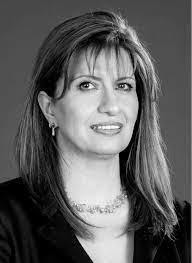
Lawrence D Biele Chair in Law, Institute of Criminology-Faculty of Law, The Hebrew University of Jerusalem; and Chair in Global Law, Queen Mary University of London
Discussant: M. Brinton Lykes, PhD, Professor of Community-Cultural Psychology and Co-Director of the Center for Human Rights and International Justice, Boston College
Nadera Shalhoub-Kevorkian is the Lawrence D. Biele Chair in Law at the Faculty of Law-Institute of Criminology and the School of Social Work and Public Welfare at the Hebrew University of Jerusalem and the Global Chair in Law- Queen Mary University of London. Her research focuses on trauma, state crimes and criminology, surveillance, gender violence, law and society. She studies the crime of femicide and other forms of gendered based violence, violence against children in conflict ridden areas, crimes of abuse of power in settler colonial contexts, surveillance, securitization and social control.
Shalhoub-Kevorkian is the author of numerous books among them “Militarization and Violence Against Women in Conflict Zones in the Middle East: The Palestinian Case Study” published in 2010; “Security Theology, Surveillance and the Politics of Fear”, published by Cambridge University Press, 2015. She just published a new book examining Palestinian childhood entitled: “Incarcerated Childhood and the Politics of Unchilding”, and a new edited book entitled: Understanding Campus-Community Partnerships in Conflict Zones”, and is currently co-editing two new book on the sacralization of politics and its effect on human suffering, and Islam and gender based violence.
She has published articles in multi-disciplinary fields including British Journal of Criminology, Feminist Studies, Ethnic and Racial Studies, State Crime, Violence Against Women, Social Science and Medicine, Signs, Law & Society Review, International Journal of Applied Psychoanalytic Studies. As a resident of the old city of Jerusalem, Shalhoub-Kevorkian is a prominent local activist. She engages in direct actions and critical dialogue to end the inscription of power over Palestinian children’s lives, spaces of death, and women’s birthing bodies and lives
Contact: Liz Flanagan
Readings and Digital Resources on Palestine
Rosie Bsheer, Assistant Professor of History, and Cemal Kafadar, Vehbi Koç Professor of Turkish Studies, both core faculty members of the Center for Middle Eastern Studies, recommend the following English-language materials and resources to contextualize current events in Palestine. These resources offer analyses and histories of expulsion, occupation, settler colonialism, forced evictions, home demolitions, and annexation that situate the current struggle as part of the ongoing Nakba of 1948 and in relation to the Naksa of 1967. These resources also point to the myriad attempts to control knowledge production on Palestine and to silence critical speech that attempts to humanize Palestinians.
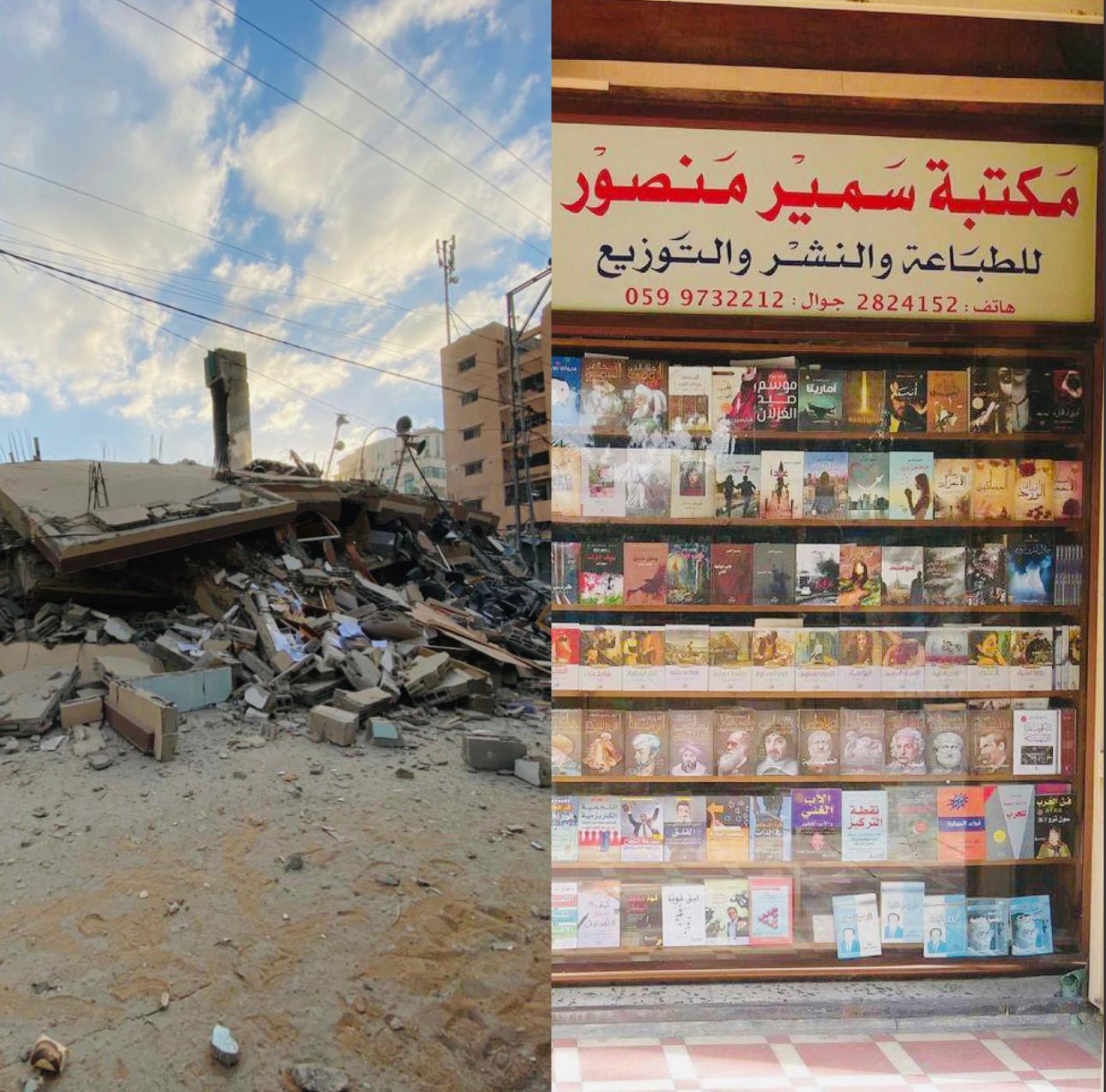
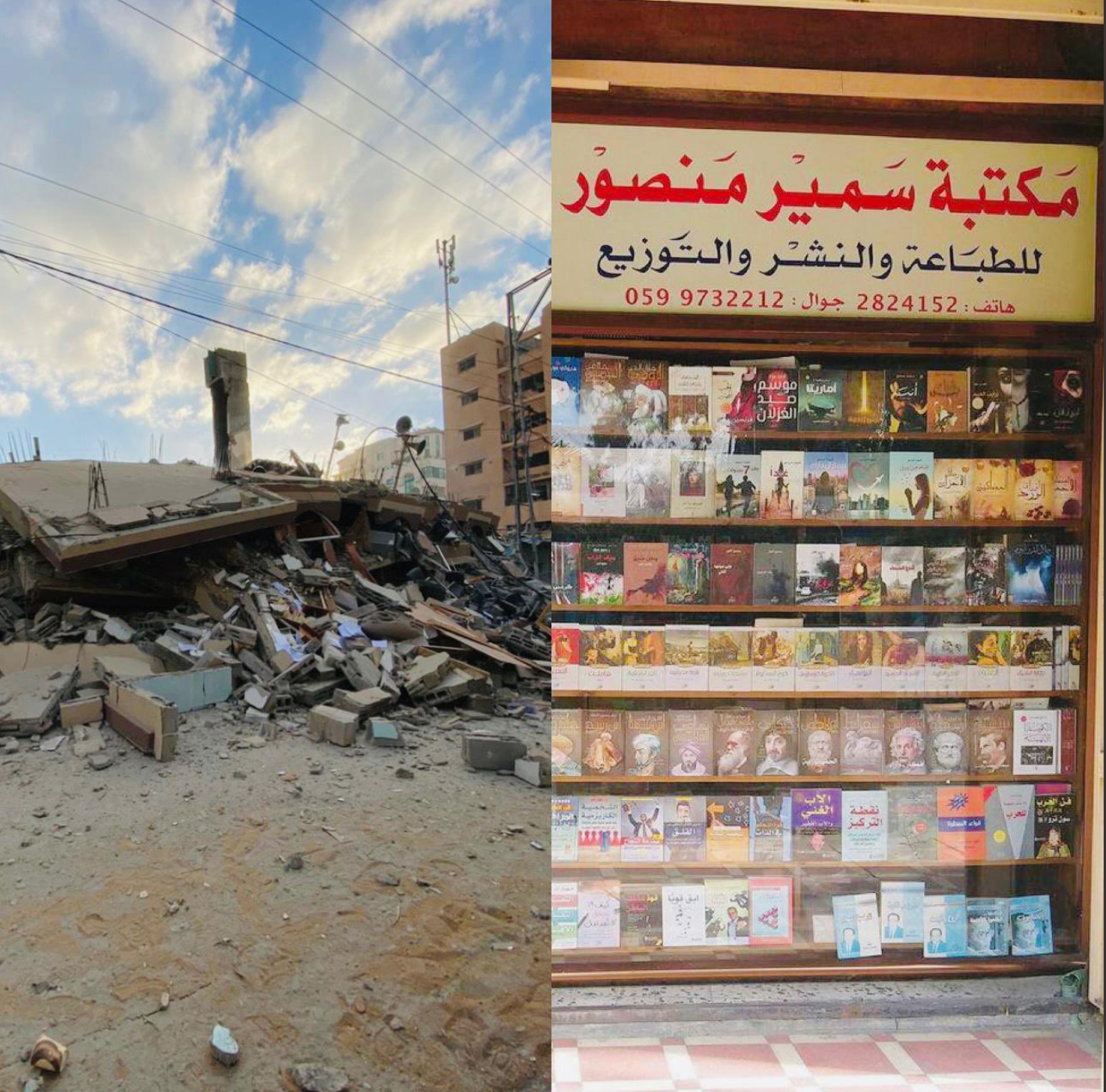 Samir Mansour Bookshop in Gaza, Before and After Israeli attack, May 18, 2021. Credit: @samirbookshop
ACADEMIC READINGS
Fayez Abdullah Sayegh, Zionist Colonialism in Palestine, Vol. 1 (Beirut, Lebanon: Research Center, Palestine Liberation Organization, 1965).
Walid Khalidi, From Haven to Conquest: Readings in Zionism and the Palestine Problem Until 1948 (Institute for Palestine Studies, 1971).
Fouzi Al-Asmar, To Be an Arab in Israel (Institute for Palestine Studies, 1978).
Rosemary Sayigh, The Palestinians: From Peasants to Revolutionaries (Zed Press, 1979).
Edward W. Said, The Question of Palestine (Vintage, 1992).
Nadia Abu El-Haj, Facts on the Ground: Archaeological Practice and Territorial Self-Fashioning in Israeli Society (University of Chicago Press, 2002).
Rafi Segal and Eyal Weizman, A Civilian Occupation: The Politics of Israeli Architecture (Verso, 2003).
Sara Roy, Failing Peace: Gaza and the Israeli-Palestinian Conflict (Pluto Press, 2006).
Ussama Makdisi and Paul A. Silverstein, Memory and Violence in the Middle East and North Africa (Indiana University Press, 2006).
Omar Jabary Salamanca, Mezna Qato, Kareem Rabie, and Sobhi Samour, “Past is Present: Settler Colonialism in Palestine,” Settler Colonial Studies 2.1 (2012).
Shira Robinson, Citizen Strangers: Palestinians and the Birth of Israel’s Liberal Settler State (Stanford University Press, 2013).
Jasbir Puar, “Rethinking Homonationalism,” International Journal of Middle East Studies 45.2 (2013), 336-39.
Ella Shohat, On the Arab-Jew, Palestine, and Other Displacements (Pluto Press, 2017).
Tareq Baconi, Hamas Contained: The Rise and Pacification of Palestinian Resistance (Stanford University Press, 2018).
Rana Barakat, “Lifta, the Nakba, and the Museumification of Palestine’s History,” Native American and Indigenous Studies 5.2 (Fall 2018), pp. 1-15.
Sherene Seikaly, “How I Met My Great-Grandfather: Archives and the Writing of History,” Comparative Studies of South Asia, Africa, and the Middle East 38.1 (May 2018), p. 6-20.
Ussama Makdisi, Age of Coexistence: The Ecumenical Frame and the Making of the Modern Arab World (University of California Press, 2019).
Matthew Hughes, Britain’s Pacification of Palestine: The British Army, the Colonial State, and the Arab Revolt, 1936–1939 (Cambridge University Press, 2019).
Noura Erakat, Justice for Some: Law and the Question of Palestine (Stanford University Press, 2019).
Rashid Khalidi, The Hundred Years’ War on Palestine: A History of Settler Colonialism and Resistance, 1917–2017 (Metropolitan Books, 2020).
Seth Anziska, Preventing Palestine: A Political History from Camp David to Oslo (Princeton University Press, 2020).
FICTION / POETRY
Emile Habibi, The Secret Life of Saeed: The Pessoptimist (1974, 2001).
Sahar Khalifeh, Wild Thorns (Interlink Books, 1976).
Ghassan Kanafani, Men in the Sun and other Palestinian Stories (Lynn Rienner, 1999).
Susan Abulhawa, Mornings in Jenin (Bloomsbury, 2010).
Mahmoud Darwish, In the Presence of Absence, trans. Sinan Antoon (Archipelago Books, 2011).
Basma Ghalayini (ed.), Palestine +100 Anthology: Stories from a Century after the Nakba (Commapress, 2019).
Ibtisam Azem, The Book of Disappearance (Syracuse University Press, 2019).
HUMAN RIGHTS REPORTS
Al-Haq, Annual Report on Human Rights in the Occupied Palestinian Territories, 1989.
UN Economic and Social Commission for Western Asia (ESCWA), Israeli Practices towards the Palestinian People and the Question of Apartheid, 2017.
UN Committee on the Elimination of Racial Discrimination, Concluding Observations on the Combined Seventeenth to Nineteenth Reports of Israel, 2019.
Al Mezan Center for Human Rights, Joint Submission to the United Nations Special Rapporteur on the Situation of Human Rights in the Palestinian Territories Occupied Since 1967, 2020.
Human Rights Watch, A Threshold Crossed: Israeli Authorities and the Crimes of Apartheid and Persecution, 2021.
B’Tselem, A Regime of Jewish Supremacy from the Jordan River to the Mediterranean Sea: This Is Apartheid, 2021.
MAINSTREAM MEDIA
Mohammed El-Kurd, “Tomorrow My Family and Neighbors May Be Forced From Our Homes by Israeli Settlers,” The Nation, November 20, 2020.
Noura Erakat and Mariam Barghouti, “Sheikh Jarrah Highlights the Violent Brazenness of Israel’s Colonialist Project, The Washington Post, May 10, 2021.
“Israel v Palestine Conflict,” Last Week Tonight with John Oliver, S08E12, May 16, 2021.
Nora Erakat, interview by Becky Anderson, CNN, May 18, 2021.
Nimer Sultany, “Peaceful Coexistence in Israel Hasn’t Been Shattered – It’s Always Been a Myth,” The Guardian, M