Contrasts

A reader of J-Wire commented to me that it was left-wing socialists who had settled and developed what was then Ottoman-ruled and later British Mandated Palestine.

This indisputable fact set me thinking about the similarities and contrasts in today’s Israel insofar as left-wing socialists are concerned.

At the same time, I confirmed something which should be common knowledge but, unfortunately, is still not. That is, the enduring delegitimisations of any Jewish presence here by those endlessly touted as our only hope as “peace partners.”

It has also led me to compare what was then and what is now concerning some of our religious leadership.

The vast majority of chalutzim (pioneers) who made aliyah at the end of the 19th Century and the beginning of the 20th Century were dedicated nationalists and socialists escaping from the pogroms of Eastern Europe. Some were communists, and the rest spanned the left-wing spectrum, including social democrats. What they all had in common, however, was a burning desire to re-establish the Jewish homeland and establish a society based on social equality and a haven from Jew hate.

Subsequent waves of aliyah from the putrid pogroms of Europe increased the number of socialist settlers. Their establishment of collective and communal villages, draining of malarial swamps and rejuvenating a barren landscape undoubtedly contributed to the solid foundation for the State in waiting.

A couple of very important factors are generally overlooked.

A very large number of these Russian, Ukrainian, Polish and other Eastern European olim had been educated in religious schools with some of them even having attended Yeshivot. Although they may have rejected or dropped out of any sort of religious observances, they nevertheless were keenly aware of and knowledgeable about Judaism and Jewish history. The likes of Chaim Weizmann, David Ben Gurion, Yitzhak Ben Zvi, Zalman Shazar and countless others not only had a solid grounding in Jewish subjects but also had a great understanding of the vital role that tradition must play in the future independent nation.

At the same time, perhaps as a result of experiences in their “old countries”, these socialist leaders harboured an intolerant attitude to anyone who did not join their left-wing political cause. Thus, when Mapai (the forerunner of today’s Labour Party) and its left-wing allies constituted the ruling coalitions from 1948, official discrimination, unacceptable by today’s standards, was enforced. If you were not a paid-up socialist, you were not permitted to join the Histadrut, which in turn meant that you were unable to obtain gainful employment. That also meant that you could not join the socialist-dominated health fund.

Israel’s first socialist Prime Minister refused to allow the reburial of Ze’ev Jabotinsky in the country because he represented in the view of the leftwing everything that was evil and fascistic. Every time that Menachem Begin, the Leader of the non-socialist Opposition stood up to speak in the Knesset, Ben Gurion walked out of the chamber. The disdain that the European-dominated elitist socialist parties had for olim from Sephardic and Arab communities eventually resulted in the victory of the non-socialist left parties in 1977.

The howls of outrage and predictions of imminent doom which poured forth on the accession of Begin and his nationalist right-wing allies are reminiscent of what we are currently experiencing. It is ironic that the self-proclaimed standard bearers of democracy and liberal values still seem unable to accept the validity of anyone but themselves as being rightfully elected by the voters.

The biggest contrast is that, unlike their predecessors of a bygone era, today’s left-wing leadership and many of their followers appear bereft of any meaningful knowledge of Judaism, tradition and history. Large numbers have also become infected with the post-Zionist virus so beloved by current international leftwing groups. Like the Jewish Communist lemmings who continued to slavishly venerate Stalin long after his crimes were exposed, our current crop of leftist devotees continue to fantasise about the doves of peace supposedly hovering over Ramallah and Gaza. Ha’aretz, the flagship newspaper of the left hosts post and anti-Zionist contributors and recently dismissed an op-ed writer who dared to express a right-wing contrary opinion.

Shades of the dubious totalitarian socialist past now prevail.

One of the worst aspects of leftist amnesia is the inability and refusal to recognise raw hate even when it is thrown in their face. The old-time moderate socialists of Mapai at least knew what they were up against. They had no illusions and acted against Arab terror whenever necessary. Their partners on the extreme left at the time either fantasised about an illusory brotherhood of man, a messianic vision of a Communist Garden of Eden or as in the case of Reform Rabbi Magnus and his followers, a binational State.

Unfortunately, many of the present adherents of the left have drifted so far from the Zionist vision of a Jewish State which inevitably leads to the denial of the PLO agenda to eliminate our presence.

In November 1919, the Arab newspaper Al-Istiqlal al-Arabi, based in Damascus, editorialised that “our country is Arab, Palestine is Arab, and Palestine must remain Arab.”

In 1920 the 3rd. Arab Congress rejected the Balfour Declaration as “a violation of international law and of the rights of the indigenous population.”  A prominent Arab nationalist proclaimed: “the Balfour Declaration was made by an English foreigner who had no claim to Palestine. It was addressed to a foreign Jew (Lord Rothschild) who had no right to Palestine.”

In 2023 the international community’s paragon of peace and tolerance, President for life Abbas, proclaimed: “Britain’s 1917 Balfour Declaration was aimed at getting rid of the Jews in Europe and establishing the so-called Jewish National Home in Palestine.”

Only those whose ideology is totally detached from reality would still embrace this purveyor of lies and inciter par excellence. Yet unbelievably, they continue to advocate pies in the sky, which, if ever enacted, would spell our demise and doom.

Surveying the religious leadership landscape, one is also left with a sense of frustration when comparing the situation of yesteryear with that prevailing today.

Rav Avraham Kook was the first Ashkenazi Chief Rabbi of pre-State Israel and is generally considered to be the father of religious Zionism. He was Charedi, but this did not stop him from reaching out to non-religious and even anti-religious individuals. He had no problems visiting the most extreme socialist and secular Kibbutzim and having a dialogue with them. He stated that these pioneers were engaged in holy work restoring the Holy Land. Despite strong criticism from ultra-religious groups, he continued his outreach. His legacy can still be felt today.

Chief Rabbi Yitzhak Halevi Herzog, in addition to his rabbinical qualifications, also studied at the Sorbonne and London University where he received his doctorate. His dissertation was on the origin of “techelet”, the Biblical blue dye. Having served as Chief Rabbi of Ireland and being instrumental in rescuing Jewish orphans after the Shoah, he had the skills to communicate and deal with modern challenges.

Chief Rabbi Shlomo Goren was a Religious Zionist Rabbi and Talmudic scholar who was considered a foremost authority on Jewish Law. He founded and served as the first head of the Military Rabbinate of the Israel Defence Forces. As such, he was able to communicate and dialogue with soldiers from all sectors of society.

These three are just a small sample of the type of leadership which is missing today. The Chief Rabbinate may be led by very learned individuals, but their lack of secular exposure and an inability to interact with those whose outlook is different means that the extremists prevail. Instead of asserting strong moderation and slapping down outrageous behaviour, they remain mute and stuck in a time warp.

Two recent examples demonstrate the dire situation.

The Shas religious party in the Knesset tried to introduce a law that would have fined and jailed women who were, in their eyes, “immodestly” dressed at the Kotel. After a public uproar, this attempt was slapped down by the PM. Interestingly, a leading Charedi newspaper also ridiculed the idea, which indicates how ludicrous and out of touch it was in the first place.

The Chief Rabbi of Safed stated that the recent devastating earthquake in Turkey and Syria “was a divine judgment.” Once again, this completely unhinged assertion attracted an avalanche of condemnation.

Although there have been numerous critical comments by moderate Rabbis, I have yet to read any such reactions from the Chief Rabbinate. This highlights the cataclysmic contrast between our top religious leadership of former years with those of today.

Two Talmudic pearls of wisdom succinctly sum up the pathetic state of those who mouth inanities.

“Just as you are obligated to speak when your words will be heeded, you must remain silent when you know your words will be ignored.”

“Silence is beautiful for wise people; it is all the more beautiful for fools.”   

The Truth Behind the Palestinian ‘Catastrophe’

Israel will soon celebrate the 75th anniversary of its independence. Around the same time, Palestinians will stage their annual Nakba Day, the official commemoration held every year on May 15 to protest Israel’s creation. The marking of this supposed “catastrophe” (nakba) will surely be a key feature of the elite media discussion of Israel’s anniversary. As such, it will represent an ongoing public-relations triumph for the Palestinians—and a victory for deceit and disinformation.

For the past quarter century, leaders of the Palestinian Authority have been insistent that their people were innocent victims of a historically unprecedented crime in 1948, a crime that is frequently mentioned in the same breath as the Holocaust. Their account is an example of the phenomenon called the “big lie.” Indeed, it is perhaps the most persistent big lie of the past 75 years. But attention must be paid, since this putatively solemn act of national remembrance will likely be used to launch violent demonstrations against the Jewish state.

The Nakba narrative depicts the founding of Israel as a catastrophe that resulted in the dispossession of the land’s native people. Yasser Arafat, then the president of the PA, invented Nakba Day on May 15, 1998, just as Israel was celebrating its 50th anniversary. From his West Bank headquarters, Arafat read out marching orders for the day over PA radio stations and public loudspeakers:

The Nakba has thrown us out of our homes and dispersed us around the globe. Historians may search, but they will not find any nation subjugated to as much torture as ours. We are not asking for a lot. We are not asking for the moon. We are asking to close the chapter of Nakba once and for all, for the refugees to return and to build an independent Palestinian state on our land, our land, our land, just like other peoples.

Listen and Subscribe to the Commentary Podcast


Nine Palestinians were killed that day. Hundreds more (including some Israelis) died during Nakba Day riots over the subsequent quarter century.

Yet it wasn’t the deadly violence that made the first Nakba Day historically significant. Rather, at a time when the 1993 Oslo peace accords remained in force and still offered an opportunity to achieve a “two-state solution” to the conflict, Arafat decided to weaponize the Palestinian narrative into a declaration of permanent war against Israel. The key element of his Nakba Day speech was his claim that there were 5 million Palestinian refugees who had a sacred “right of return” to their homes in Jaffa, Haifa, and dozens of formerly Arab cities, towns, and villages in Israel.

In three-plus decades as Palestinian leader, Arafat failed to accomplish anything constructive for his people. But Nakba Day did advance his goal of prolonging the glorious struggle against Zionism. The PA now claims there are 7 million refugees. Arafat’s successor, Mahmoud Abbas, is just as adamant that the conflict must go on and on until all the refugees are granted the right to return to their former homes in Israel. Abbas even offered an updated version of the Nakba last summer when he publicly declared, in Germany, that the Palestinians had suffered the equivalent of “50 Holocausts” at the hands of the Jews.

Hundreds of thousands, if not millions, of Palestinians will express their rage over Israel’s existence by joining Nakba Day riots in May. We can also expect an upsurge of support for the 25th annual Nakba commemoration from the international leftist coalition that celebrates the Palestinians as unique victims of Western racism, colonialism, and Zionist perfidy. In street demonstrations and on college campuses, activists will be chanting the slogan that sums up the final goal of the Nakba narrative: “From the river to the sea, Palestine will be free.”

The Nakba has even entered the halls of the U.S. House of Representatives through a resolution authored by Congresswoman Rashida Tlaib and endorsed by six of her Democratic Party colleagues. The resolution calls on the U.S. government to “commemorate the Nakba through official recognition and remembrance” and to “reject efforts to enlist, engage, or otherwise associate the United States Government with denial of the Nakba.”

Their fellow members of Congress need not worry about the danger of Nakba denial. The problem is the reverse. All too many perfectly sensible people, including quite a few liberal Israelis, seem willing to ignore the deadly implications of the Nakba narrative for fear of being accused of insensitivity to another people’s suffering.

If “nakba” merely means catastrophe, then the word is a fitting one. Unquestionably, Palestinians suffered a terrible human tragedy in 1948. Around 700,000 men, women, and children lost their ancestral homes, and Palestinian civil society disintegrated. The refugees dispersed to the Jordanian-occupied West Bank, the Egyptian-occupied Gaza Strip, and neighboring Arab countries. Ninety percent have since passed away, but around 2 million of their progeny languish in dismal refugee camps. After 75 years, this giant remnant should be resettled in new housing and compensated for their losses. Resettlement is exactly how every other refugee catastrophe after World War II (including a total of 13 million refugees in Europe alone) was solved.

But the Nakba has more than one meaning. The version now promoted by Palestinian leaders and their supporters assigns exclusive blame for the 1948 catastrophe to the Jews, while proposing an absurd remedy that would mean suicide for the Jewish state. And that is actually what the Palestinian narrative means now.

Supporters of Israel are often asked to prove their decency by acknowledging the reality of the Nakba. There’s no reason to shrink from that challenge. What’s needed is a serious forensic examination of the various Palestinian narratives, their truths, falsehoods, and their hatreds. The place to begin that inquiry is with the very first Nakba text, published in Beirut 75 years ago.

II.

ON AUGUST 5, 1948, not quite three months after the new state of Israel was invaded by five Arab armies, a short volume titled Maana al-Nakba (later translated as The Meaning of the Disaster) appeared in Beirut to popular acclaim. The author was Constantine K. Zurayk, a distinguished professor of Oriental history and vice president of the American University of Beirut.

Zurayk was the wunderkind of the Arab academic world. Born in Damascus in 1909 to a prosperous Greek Orthodox family, he was sent off at 20 to complete his graduate studies in the United States. Within a year he had obtained a master’s from the University of Chicago. One year later, he added a Ph.D. in Oriental languages from Princeton. He then returned to Beirut and the American University.

Zurayk soon became one of the leading advocates of the liberal, secularist variant of Arab nationalism. After Syria won its independence in 1945, he was chosen to serve in the new nation’s first diplomatic mission in Washington, D.C., and also served with the Syrian delegation to the United Nations General Assembly.

Zurayk’s book reflected the sense of outrage among the Arab educated classes over the 1947 UN partition resolution and the creation of the Jewish state. Zurayk’s anger was even more personal, since he had participated in the UN deliberations on the Palestine question. His 70-page book then became a reference point for future pro-Palestinian historians and writers. Yoav Gelber, a prominent Israeli historian of the 1948 war, cited Zurayk’s work when he told me he didn’t think there was much new in Arafat’s 1998 Nakba Day declaration. “The Nakba was at the basis of the Palestinian narrative from the beginning,” Gelber said. “Constantine Zurayk coined the phrase in 1948.”

In previous writings about the Israeli–Palestinian conflict, I wasn’t able to comment on Zurayk’s book. A limited-edition English translation of Maana al-Nakba appeared in Beirut in 1956, but it was never published in the United States. It was only recently that I found a rare copy in a university library and finally read the real thing.

It was not what I expected. The Meaning of the Disaster actually isn’t about the tragedy of the Palestinian people. According to Zurayk, the crime of the Nakba was committed against the entire Arab nation—a romantic conception of a political entity that he and his fellow Arab nationalists fervently believed in. And, it turns out, Zurayk was no champion of an independent Palestinian state.

In an introductory paragraph, Zurayk writes about “the defeat of the Arabs in Palestine,” which he then calls “one of the harshest of the trials and tribulations with which the Arabs have been afflicted throughout their long history.” Zurayk’s only comment about Palestinian refugees is that, during the fighting, “four hundred thousand or more Arabs [were] forced to flee pell mell from their homes.” (All italics added.)

Zurayk predicted that all Arabs would continue to be threatened by international Zionism: “The Arab nation throughout its long history has never been faced with a more serious danger than that to which it has today been exposed. The forces which the Zionists control in all parts of the world can, if they are permitted to take root in Palestine, threaten the independence of all the Arab lands and form a continuing and frightening danger to their life.”

The Arabs also faced the immense power of Western imperialism, according to Zurayk, but this would prove merely a “temporary evil.” On the other hand, “the aim of Zionist imperialism is to exchange one country for another, and to annihilate one people so that another may be put in its place. This is imperialism, naked and fearful in its truest color and worst form.”

Zurayk not only insists that Jews have no national rights in Palestine, but he denies the historic connection between the Jewish people and the ancient land of Israel. “The Zionist Jews who are now immigrating to Palestine,” he writes, “bear absolutely no relation to the semitic Jews.” To buttress this fake history, Zurayk dredges up the discredited theory that the Eastern European Jews were descended from Khazar tribes that converted to Judaism in the eighth century.

Still, Zurayk is left to wonder how the combined Arab armies, far outnumbering the Jews, could have allowed the Zionists to achieve their military objectives in Palestine. His answer, rife with anti-Semitic canards and conspiracy theories, is worth quoting at length:

The causes of this calamity are not all attributable to the Arabs themselves. The enemy confronting them is determined, has plentiful resources, and great influence. Years, even generations, passed during which he prepared for this struggle. He extended his influence and his power to the ends of the earth. He got control over many of the sources of power within the great nations so that they were either forced into partiality toward him or submitted to him.

Zionism does not only consist of those groups and colonies scattered in Palestine; it is a worldwide network, well prepared scientifically and financially, which dominates the influential countries of the world, and which has dedicated all its strength to the realization of its goal, namely building a national home for the Jewish people in Palestine.

Zurayk’s liberal, secular version of nationalism was partly nurtured in the United States, where he lived for several years. But there’s nothing liberal about Zurayk’s understanding of Jews and Zionism. His observations about American Jews might have been written in the 1930s by Henry Ford or Father Charles Coughlin:

No one who has not stayed in that country [the U.S.] and studied its conditions can truly estimate the extent of this power or visualize the awful danger of [Zionism]. Many American industries and financial institutions are in the hands of the Jews, not to mention the press, radio, cinema and other media of propaganda, or Jewish voters in the states of New York, Illinois, Ohio and others which are important in presidential elections, especially these days when the conflict between Democrats and Republicans is at a peak.

Not content with depicting Jews as devious manipulators of power and wealth, the secularist Zurayk also ventures into the realm of theology to offer his readers a grotesque slander of Judaism. “The idea of a ‘chosen people,’” he writes, “is closer to that of Nazism than to any other idea and [in the end] it will fall and collapse just as Nazism did.”

Zurayk was celebrated by his academic peers as a great scholar who prophetically urged the Arabs to modernize and embrace science. Those values supposedly distinguished his views from retrograde Islamism. But it’s hard to see how an Islamist could have gone much further in demonizing the Jews and Zionism.

Following his Nakba book, Zurayk’s academic career prospered. He eventually became rector of the Syrian University in Damascus and held appointments as a visiting professor at Columbia University, Georgetown University, and the University of Utah. Zurayk also served a five-year term as president of the International Association of Universities. In 1988 the State University of New York Press published a Festschrift in Zurayk’s honor, with essays by 18 leading Arab scholars. The volume contained hardly a word about his scandalously anti-Semitic book Maana al-Nakba—a book that is not about the Palestinians at all.

III.

CONSTANTINE ZURAYK’S fiction that the “Arab nation” suffered the Nakba didn’t survive for long. In the June 1967 Arab–Israeli war, three Arab states again attempted to undo Zionism. When they failed and lost even more territory to Israel, the Arab coalition to destroy Israel fell apart. Two of those countries eventually signed a separate peace with the Jewish state. Pan-Arab nationalism was dead.

The meaning of the Nakba had already changed as Palestinian activists and historians began depicting the events of 1948 exclusively as a tragedy for their own people. In the mid-1950s, Aref el-Aref, a noted Palestinian journalist, historian, and mayor of East Jerusalem during the Jordanian occupation, published a six-volume history of the Palestinian struggle titled The Nakba of Jerusalem and the Lost Paradise. Many more Nakba books with an exclusively Palestinian focus were published over the next four decades, including several highly praised novels.

The most influential of those volumes, particularly for audiences in the West, was Edward W. Said’s The Question of Palestine, published in 1979. Said, a popular Columbia University English professor and a member of the Palestinian National Council, was something of an icon in liberal intellectual circles because of his earlier book, Orientalism. In that work, Said framed the history of colonialism in the Arab and Islamic world within a system of Western racialist thought.

In The Question of Palestine, the author argued that the game was stacked against the native Palestinians in favor of the white Zionists, because of the same dominant racist ideologies. Said denounced “the entrenched cultural attitude toward Palestinians deriving from age-old Western prejudices about Islam, the Arabs, and the Orient. This attitude, from which in its turn Zionism drew for its view of the Palestinians, dehumanized us, reduced us to the barely tolerated status of a nuisance.”

“Certainly, so far as the West is concerned,” Said continues, “Palestine has been a place where a relatively advanced (because European) incoming population of Jews has performed miracles of construction and civilizing and has fought brilliantly successful technical wars against what was always portrayed as a dumb, essentially repellent population of uncivilized Arab natives.”

This was a harsh and distorted view of the Zionist movement. Still, Said was somewhat constrained relative to later declarations by Palestinian leaders comparing the Nakba to the Holocaust. What the early Nakba studies did have in common was an indictment of the Jews for dispossessing the Palestinians, while finding no fault at all on the Palestinian side. Several Israeli revisionist historians and “post-Zionist” pundits also endorsed aspects of the Nakba narrative.

Yet that narrative was rebutted by other historians of the Israel–Palestinian conflict. That is how scholarly controversies usually play out in open societies. In the United States, for example, fierce debates have periodically erupted over various revisionist interpretations of American history, including the work of Charles Beard in the 1930s and of the radical historian Howard Zinn in the 1980s. More recently, the New York Times’ 1619 Project, a new counternarrative of the American founding, has set off a contentious scholarly dispute.

It is in totalitarian societies that national narratives are enforced by the ruling government. Until the mid-1990s there could not have been an officially endorsed Palestinian narrative, because the Palestinians had no governmental institutions. Ironically, it was an audacious diplomatic initiative taken by the Israeli government in pursuit of peace with the Palestinians that had the unintended effect of creating an officially approved Nakba narrative.

In January 1993, Israeli representatives made secret contacts with high-ranking officials of the Palestinian Liberation Organization (PLO) in Oslo, Norway. The discussions blossomed into what became known as the Oslo process, and by September of that year, it culminated with the famous handshake on the White House lawn between Yasser Arafat and the Israeli prime minister, Yitzhak Rabin.

At the time, Arafat was stranded in Tunis, far from Palestine and in a very precarious position. Along with his PLO cadres, he had been expelled from Jordan in 1970, thrown out of Beirut by Israel’s army in 1982 and then again kicked out of Tripoli, Lebanon, by the Syrians. Arafat’s reputation was in tatters among many Arab governments because of his decision to support Sadam Hussein’s invasion of Kuwait. That led to a huge cut in the financial support the PLO was receiving from the Gulf states.

In signing the Oslo accords, the Rabin government threw Arafat a lifeline. Political controversy later erupted in Israel and elsewhere over the wisdom and practicality of the peace agreements. For the purpose of our argument here, however, it’s sufficient to note that the document signed by Rabin and Arafat represented a fairly straightforward political deal, a quid pro quo of sorts.

In part one, Arafat was rescued from his Tunis exile and installed in the West Bank to run a Palestinian government for the first time ever. That was the quid. After an interim period of five years, final-status negotiations were expected to bring the Palestinians an independent state that would in turn recognize Israel. That should have been the quo.

Unfortunately, Arafat pocketed all his benefits (i.e., his triumphant return to Palestine and installation as PA president) up front. When he then reneged on his obligations to Israel, there was no fail-safe mechanism to return to the former status quo. Arafat’s weaponized Nakba narrative became a self-manufactured excuse to break the Oslo agreements without suffering any penalty.

IV.

IN THE SPRING of 1998, as Israel was preparing to celebrate the 50th anniversary of its birth, Arafat and his lieutenants were holding conversations about that upcoming event as well as another pressing issue for the Palestinians. The end of the five-year interim arrangement was approaching, which meant final-status negotiations were supposed to start.

Arafat was under conflicting pressure from two internal factions over the refugee issue. The dominant group was sometimes referred to as the “outsiders,” because they had spent the years since 1948 in exile. Salman Abu Sitta, a member of the Palestine National Council, an original refugee and one of the most active members of the outsider faction, had been urging Arafat never to give up on the right of return. In early 1998, Abu Sitta drafted a public letter to Arafat about the refugee issue that was co-signed by dozens of prominent Palestinians. It said in part:

We absolutely do not accept or recognize any outcome of negotiations which may lead to an agreement that forfeits any part of the right of return of the refugees and the uprooted to their former homes from where they were expelled in 1948, or their due compensation, and we do not accept compensation as a substitute for return.

One of the signatories was Edward Said, by now a true believer in the most extreme version of the Nakba narrative and the right of return. In an interview with Israeli journalist Ari Shavit, Said berated Arafat for even thinking he “can sign off on the termination of the conflict.” He went on: “Nor does he have the right to do so on an occasion provided by Bill Clinton at Camp David.” The distinguished university professor living comfortably in Morningside Heights was now urging his fellow Palestinians trapped in miserable refugee camps for the past half century to continue fighting in immiseration until victory.

Yet there was also a more moderate faction within the PA, including those who had never left Palestine as refugees. Some had served as local officials during the period of the Jordanian occupation of the West Bank. One of their leaders was Sari Nusseibeh, president of Al-Quds University and Arafat’s principal representative in Jerusalem. In his memoir, Once Upon a Country, Nusseibeh describes a meeting with Arafat and Mahmoud Abbas on the issue of the refugees’ right of return. Nusseibeh recounts the following exchange with Abbas:

Nusseibeh: You have to level with us. What is it you want, a state or the right of return?

Abbas: Why do you say that? What do you mean by either/or?

Nusseibeh: Because that’s what it boils down to. Either you want an independent state or a policy aimed at returning all the refugees to Israel. You can’t have it both ways.

No other Palestinian leader has acknowledged in such stark terms that when the Nakba narrative includes the right of return, it kills any chance for peace as well as for an independent Palestinian state. The return of the refugees was a deal breaker for Israel, but also for the Clinton administration that helped broker the Oslo accords.

A reluctant Arafat was finally dragooned by President Clinton to go to Camp David in 2000 for the final-status negotiations, but the outcome was a foregone conclusion. The PA president stormed out of the meeting after turning down a generous offer for an independent state. According to Clinton adviser Dennis Ross, in order for the Camp David summit to have succeeded, “the Palestinians had to give up their ‘right of return’ to Israel.”

After Camp David, the Clinton and Bush administrations continued to press Arafat to reconsider his position. Instead, the PA president doubled down. In his 2004 Nakba Day speech, he made his commitment to the refugees’ right of return even more explicit: “The issue of refugees is the issue of the people and the land, the cause of the homeland and the cause of the entire national destiny, no compromise, no compromise, no settlement, but a sacred right of every Palestinian refugee to return to his homeland, Palestine.”

Another round of peace negotiations took place four years later, this time directly between Israel’s Prime Minister Ehud Olmert and the PA’s President Mahmoud Abbas. They held 35 one-on-one meetings in Jerusalem over a span of seven months. At the last session on September 16, 2008, Olmert offered Abbas an independent Palestinian state with its capital in East Jerusalem. He showed Abbas a proposed map of the borders of the two states that, through territorial swaps, would give the Palestinians almost 100 percent of the territory of the West Bank and Gaza held by the Arabs before the 1967 war. Olmert agreed to allow a token number of refugees to enter Israel on humanitarian grounds but said the agreement had to end all Palestinian claims about the right of return.

Abbas said he would consider the offer and return in a few days with his answer. But he never came back, and the negotiations abruptly ended. In an interview I conducted with Olmert a few years later, the former prime minister made it clear that the sticking point for Abbas was the right of return.

Abbas refused to accept any responsibility for the failure of the peace talks. After Olmert’s proposed map became public, Abbas claimed his hands were tied because the refugees would settle for nothing less than the right to return. How, he asked plaintively, could he turn against his own people? Left unsaid was the fact that Abbas (like Arafat before him) was responsible for spreading the Nakba lies and hatred into the refugee camps, which then sparked the militancy among the Palestinian masses who, he claimed, prevented an agreement with Olmert.

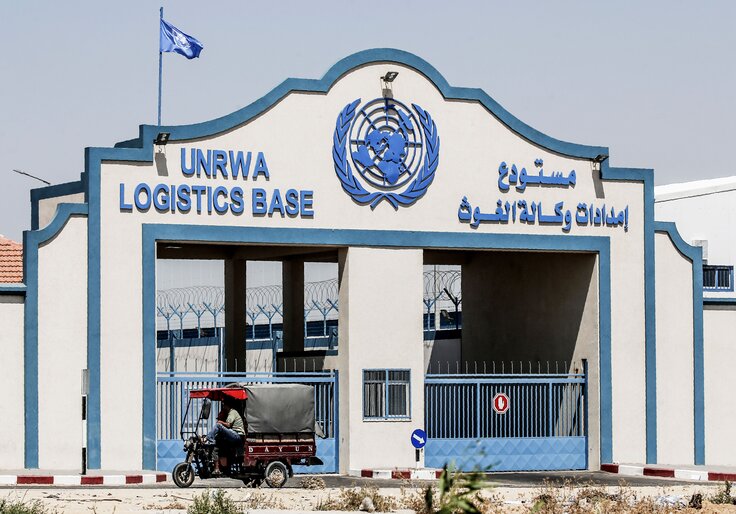
The refugee camps in the West Bank and Gaza have become the permanent places of residence for more than 2 million Palestinians. They are administered by the United Nations Relief and Works Agency (UNRWA) established by the UN in 1949 to take care of what was expected to be a temporary humanitarian crisis. Instead, the vast network of UNRWA camps became permanent, a state within a state. After the Oslo accords, Arafat’s PLO was able to take over the camps, albeit under the continuing legal umbrella of UNRWA.

In a video produced by the Center for Middle East Research, children at an UNRWA summer camp can be seen singing martyrdom songs and praising suicide bombers. An UNRWA teacher promises a classroom of children as young as 10: “We will return to our villages with power and honor. With God’s help and our own strength, we will wage war. And with education and Jihad we will return.” Speaking to the camera, a teenage girl announces, “I dream that we will return to our land and with God’s help [Abbas] will achieve that goal and we will not be disappointed.” 

Abbas knows that day will never come. Instead, his government’s Nakba narrative guarantees that the Palestinian teenager will remain trapped in her refugee ghetto for decades to come. For the PA president, though, there are many benefits in perpetuating the impossible dream. It provides him with a tale of unprecedented victimhood and a seemingly just cause to champion in the international arena. It also certifies his militancy within Palestinian politics, where militancy is the coin of the realm.

To sum up, Yasser Arafat and Mahmoud Abbas revised Constantine Zurayk’s original claim that Zionism committed its crimes against the entire “Arab Nation.” But they also revived Zurayk’s big Nakba lie that “the aim of Zionist imperialism is to annihilate one people so that another may be put in its place.” By continuing to promote this hateful narrative, the Palestinian leaders signaled, and continue to signal, that the struggle is not merely about the consequences of the June 1967 war. It also means that Israel’s struggle for independence and legitimacy is not yet over.

V.

ISRAEL AND ITS SUPPORTERS have not been very effective in countering the Palestinian war of narratives. To some extent this is understandable. The Jewish state still faces existential threats on its borders—rockets from Gaza, long-range missiles and underground attack tunnels from Hezbollah in the north, Iranian drones from the Golan Heights, and, of course, a potential nuclear Iran. Compared with those imminent physical dangers, the Nakba tends to be dismissed by many well-meaning and patriotic Israelis as just words and a story. Yet among all the nations of the world, it is the Jewish people who should have the most acute understanding of the power, for good and evil, of words and stories and, yes, national narratives.

On the other hand, a considerable number of Israelis on the left do take the Nakba seriously and literally, even going so far as to urge their government to accept responsibility for the great injustices committed against the Palestinian people in the 1948 war. Supposedly such an admission of guilt will help bring about reconciliation and peace with the Palestinians. The most influential purveyor of this apology approach to the conflict with the Palestinians is Haaretz, Israel’s liberal newspaper, which enjoys an international reputation that ignores its tiny readership in Israel.

Haaretz has been publishing a regular series of articles endorsing various aspects of the Nakba narrative. Subscribers to the digital English edition even receive special email alerts whenever another story about the misdeeds of Israel’s army in 1948 appears in the paper. And in a parallel to the New York Times’ 1619 Project, Haaretz also proposes that the Nakba be taught in Israel’s schools as a counterweight to the flawed “patriotic history” in the current school curriculum. Haaretz’s editor in chief, Aluf Benn, made the argument in a lengthy article in January 2021.

Benn begins in a mournful tone as he evokes the symbols and memories of the Nakba that haunt the area where he now works and lives. “I drive through the land and see the traces, the sabra hedges that marked the plot borders in the ruined villages,” Benn writes, “the lone house that remained on the hill near Route 4, the arches decorating the facades on Salameh Street near the Haaretz building. I drive and wonder for how long will Jewish society in Israel ignore these memories.”

Benn then gets to the practical point: “It’s time to stop being afraid and to tell the truth. Israel arose on the ruins of the Palestinian community that lived here before 1948. We must talk about the Nakba, not only in Palestinian memorial processions to the villages of their fathers and mothers … but in high school classes and in university lecture halls.” Haaretz’s editor justifies including the Nakba in the school curriculum with this high-minded principle: “A country must not run from its past, even when it’s not pleasant to deal with and raises difficult moral questions.”

There’s quite a bit of moral arrogance in that declaration of moral principles. The assumption here is that courageous Israeli journalists like Benn are prepared to face the reality of the Nakba, whereas almost everyone else is afraid of the truth. Actually, what Haaretz wants taught in the schools is not the truth about the 1948 war, but rather elements of the official Palestinian narrative about that event.

The real-world effect of Haaretz’s proposed education reform would be demoralizing for the Jewish state, without producing any of the benefits the paper promises. Israeli teenagers would be taught to feel guilty about the allegedly brutal acts committed by their grandparents and great-grandparents during the 1948 War of Independence. At the same, time the Nakba narrative force-fed to teenagers in the Palestinian refugee camps will continue to produce revenge-seeking Jihadis. If that sounds like hyperbole, consider Haaretz’s response to a recent Palestinian terrorist attack in the center of Tel Aviv.

On April 7, 2022, a 27-year-old Palestinian named Raad Hazem, born and raised in the Jenin refugee camp, decided this would be the day to put his Nakba education to use. He crossed the border into Israel, picked up some weapons on the way, and managed to get to Tel Aviv’s Dizengoff Street by evening. He sat for a while on a bench outside the Ilka Bar, where young Israelis were enjoying the night out. He then stood up, pulled out two rifles, and started shooting indiscriminately. Three Israeli Jews, including two young men almost exactly Hazem’s age, were killed. Hazem got away but was later hunted down and killed by police in neighboring Jaffa.

Haaretz’s editorial board saw nothing in this incident that made them question their promotion of the Nakba narrative. However, the paper’s leading columnist, Gideon Levy, weighed in three days later to announce that because of Hazem’s lifetime of suffering in a refugee camp, his murder rampage was actually understandable.

“Hazem wanted to live the life of his victims,” Levy wrote. “He didn’t have even the smallest chance. He too would have wanted to study neuroscience or mechanical engineering, or to coach kayaking. He too would have wanted a happy hour…. But he was born into a reality from which it is impossible to escape into the worlds of his victims on Dizengoff. He couldn’t even get to Dizengoff the direct way, imprisoned as he was in his refugee camp, prohibited from entering Israel. He probably never saw the sea and certainly not a kayak.”

This was written while the families of the three murder victims were still observing shiva, the traditional seven-day mourning period. Levy tortured the families some more by declaring that “there is no place as militant, armed and brave as the Jenin refugee camp.”

Haaretz can’t excuse itself from Levy’s obscenity with the standard claim that he’s just one writer among many at a newspaper that’s famously tolerant of all opinions. In fact, Levy is the paper’s star columnist. Twice a week he is featured in the premier spot on the editorial page. And he also writes a long report every weekend chronicling the latest injustices committed by Israel in the occupied Palestinian territories.

Haaretz’s editorial shrug about the murders on Dizengoff Street finally made it clear to me (I was living a few blocks from the murder scene at the time) that no one should take anything the paper says about Nakba education seriously. Ditto for the other groups and individuals who opine about the moral imperative to face up to the Nakba. All the Nakba truth seekers should be ignored until they acknowledge the truths about the intentions and actions of the Palestine and Arab leaders during the 1948 war.

A process of real truth-telling might begin by paying attention to Constantine Zurayk’s pioneering 1948 book, The Meaning of the Disaster. It’s the Rosetta stone of Nakba rejectionism and anti-Semitism, yet almost no one who now comments on the Nakba, including Haaretz journalists, is aware of what that book says about the Jews. So if Haaretz really wants Israelis to recognize the reality of the Nakba, I have a modest proposal for the editors: Publish a Hebrew translation of Maana al Nakba (remember, it’s only 70 pages) and distribute it widely, including to the country’s teachers, instructional institutions, and age-appropriate students. Then let’s see what effect this has on the national conversation Haaretz wants to have about the history of the conflict with the Palestinians.

The Israeli left’s version of the Nakba is all about one side, the Israeli side. Rarely discussed are the wartime deeds of the two most notorious Palestinian leaders, Haj Amin al-Husseini and Fawzi al-Qawuqji. Both were Nazi collaborators who spent World War II in Germany providing political and military services to the Hitler regime. In their 2010 book, Nazi Palestine: The Plans for the Extermination of the Jews, German historians Klaus-Michael Mallmann and Martin Kuppers documented that if the Nazis had prevailed at the battle of El Alamein and conquered Palestine, al-Husseini would have been flown home to supervise a Final Solution for the Jews of Palestine.

Al-Husseini was sought as a war criminal in Yugoslavia but escaped to Egypt in 1946 and was then elected chairman of the Arab Higher Committee, the political body representing the Palestinian Arabs during the postwar period. Al-Qawuqji was appointed by the Arab League to the position of field commander of the Arab Liberation Army, the Palestinian irregular military force that fought alongside the five invading Arab armies. In the event of an Arab victory in 1948, the two leaders planned to carry out a real Nakba for the Jews of Israel. Not just a wave of refugees, but mass murder.

In early 1948, there was a foretaste of the massacres and expulsions planned for the Jews. It was perpetrated by the British-officered Jordanian Arab Legion in the area around Jerusalem. The most searing description of that episode of the war was written by the late Israeli novelist, Amos Oz, a leader of the peace movement. In his classic memoir, A Tale of Love and Darkness, Oz reflects on the War of Independence as he experienced it in Jerusalem:

All the Jewish settlements that were captured by the Arabs in the War of Independence, without exception, were razed to the ground, and their Jewish inhabitants were murdered or taken captive or escaped, but the Arab armies did not allow any of the survivors to return after the war. The Arabs implemented a more complete “ethnic cleansing” in the territories they conquered than the Jews did…. The settlements were obliterated, and the synagogues and cemeteries were razed to the ground.

Oz also cites statements made by two Arab leaders promising a murderous ending for the Jewish state. Azzam Pasha, the secretary general of the Arab League, vowed in early 1948 that “this war will be a war of extermination and a momentous massacre which will be spoken of like the Mongol massacres and the Crusades.” And, according to Oz, “the Iraqi Prime Minister, Muzahim al-Bajaji, called on the Jews ‘to pack their bags and leave while there was still time,’ because the Arabs had vowed that after their victory, they would only spare the lives of those few Jews who had lived in Palestine before 1917.”

As Israel’s 75th anniversary and the 25th Nakba Day approach, we ought to be highlighting Amos Oz’s words as well as all the documentary evidence revealing the murderous intentions in 1948 of the Arab invaders and their Palestinian allies. Israelis should never apologize for winning the War of Independence and avoiding another Holocaust. While continuing to extend a hand of peace to the Palestinians, we must honor those young men and women who served in that unavoidable war and made the miracle of modern Israel possible.

Photo: Heinrich Böll Foundation

We want to hear your thoughts about this article. Click here to send a letter to the editor.

New Report: Overwhelming Evidence of Ties between NGOs and the PFLP

In our new 80-page report, Clear and Convincing: The Links between the PFLP and the European Government-funded NGO Network, we present overwhelming, publicly available evidence of ties between seven Palestinian “human rights” NGOs and the PFLP terror organization.

The report, which expands on our earlier research, thoroughly debunks the claims of European governments and other funders, claiming that there was “no substantial information” to justify the Israeli designation of the NGOs as terror fronts.

We identified over 60 NGO officials with clear links to the PFLP: some convicted for planning and/or executing terrorist activity, and three currently standing trial for their involvement in the terror attack that killed 17-year-old Rina Shnerb.

We also highlight the five financial institutions that shut down online donations and accounts of PFLP-linked NGOs.

The report was widely shared, including with foreign ministers of the European governments that funded these NGOs in the past. In letters to these officials, NGO Monitor President Gerald Steinberg called on the European governments to stop their “abuse of taxpayer funds” and “act responsibly” were published in The European Conservative, JNS, Qualita (French) the European Jewish Press, Miff, Algemeiner, Cleveland Jewish News, and Channel 14 News (Hebrew).

NGO Monitor Contributes to the Diaspora Ministry
Annual Report on Antisemitism

NGO Monitor’s research was featured in the Ministry of Diaspora Affairs’ Annual Antisemitism Report, released this month. The report was presented at the Knesset during a high-level discussion featuring MKs and representatives from allied organizations. NGO Monitor President Gerald Steinberg was among the keynote speakers, stressing how anti-Israel NGOs, through their European donors, exploit the framework of human rights and international law. He gave several examples of European-funded NGOs expressing blatant antisemitism and leading the fight against adopting the IHRA definition.

In his opening remarks, Minister of Diaspora Affairs Amichai Chikli singled out the work of NGO Monitor. Amit Efrati, Deputy Director General for Combating Antisemitism, noted that NGO Monitor’s research contributed to “one of the most significant chapters in the report” as it “is the one that points out the European funding given to civil society organizations that promote antisemitic discourse rhetoric and practice.”

NGO Monitor at the British House of Lords

NGO Monitor’s Director of Communications Itai Reuveni presented on a panel, organized by the Henry Jackson Society and ELNET UK, at the British House of Lords in late January. The event, The Politics of Antisemitism, examined the factors leading to the rise in antisemitism in the Western world. Itai pointed out that “one of the most prominent players laying the ground to antisemitic sentiments are no other than groups who claim to promote human rights, some are even funded by European governments. Those NGOs, not only are refusing to protect Jews as a minority, and refusing to define antisemitism as a human rights issue, but also actively promoting antisemitism.”

IMPACT

New Report Exposes HRW’s Commitment to Promoting Antisemitism

We released a new report, HRW and Antisemitism: Sins of Commission and Omission, in response to HRW’s campaign to pressure the American Bar Association (ABA) against including the IHRA definition in an antisemitism resolution.

This document highlights the hypocrisy of Human Rights Watch (HRW) in attempting to influence discussions of antisemitism, noting the history of systematically ignoring hate crimes against Jews, instrumentalizing antisemitic attacks, advancing antisemitic tropes, and leading opposition to measures to fight antisemitism – particularly the IHRA working defintion. Read the full report here. Our research was featured in an article in the Jerusalem Post.

Harvard’s Reversal on Roth

NGO Monitor was widely quoted in articles about Harvard Kennedy School’s reversal of its decision to deny a fellowship position to former HRW head, Ken Roth. We supported the institution’s initial decision to reject Roth due to his long history of demonizing and delegitimizing Israel, which has contributed to the rise of antisemitism, including against Jewish students on university campuses.

Our statement affirming support for the Harvard’s original decision was quoted in numerous publications including AP News, The Washington Post, Jewish Telegraphic Agency, JNS, Times of Israel, The Jewish Chronicle, ArutzSheva, Ynet, The Jerusalem Post, The Boston Globe, The Hill, Breitbart, Algemeiner, and World Israel News.

NGO Monitor’s Vice President Guest Speaker in Florida

NGO Monitor Vice President Olga Deutsch presented at the B’nai Aviv synagogue in Florida, addressing the current state of antisemitism alongside Rabbi Adam Watstein. Many members of the local community attended the event, titled “The Ugly Face of Antisemitism Today.” During her talk, Olga discussed how antisemitism and anti-Zionism intertwine, the politicization of human rights, and how the community can take a proactive stance.

Special Report: the Palestinian Education System Praises the Terror Attack in Neve Yaakov

On January 27th, Friday night, there was a terror attack in Jerusalem (Neve Yaacov) in which seven people were murdered and three injured. The terrorist, Alkam Hayri, was a 21-year-old Palestinian from East Jerusalem.

He drove to the neighborhood, and after the Sabbath Eve services at Ateret Avraham synagogue he opened fire at the people outside the synagogue and those nearby.

Following this attack, the Palestinian schools across the Palestinian Authority and the Gaza Strip, conducted special “educational” activities glorifying the terrorist and his actions. This is a regular reaction, seen in Palestinian schools after terror attack against Jews in Israel. After the last attack, students and teachers from kindergartens and schools took part in the celebrations which included handing out sweets, parades, ceremonies, and even putting on school plays which imitate the attack and encourage others to follow this path. Below are several notable examples of the activities that took place in Palestinian educational institutions following the attack.

Special Report – the Palestinian Education System Praises the Terror Attack in Neve Yaakov (1) (1)

Prime Minister Benjamin Netanyahu and his Wife Sara Pay a Condolence Call on the Paley Family in the Jerusalem Neighborhood of Ramot

Prime Minister Benjamin Netanyahu and his wife Sara, this evening (Tuesday, 14 February 2023), paid a condolence call on the Paley family at their home in the Jerusalem neighborhood of Ramot, where two members of the family – Yaakov, 6, and Asher, 8 – were murdered and another civilian, 20, were intentionally run over by a terrorist. The father of the two murdered children, Avraham Noah Paley, remains hospitalized in serious condition at Hadassah-Ein Kerem Hospital.

The mother of the family, Hannah Devorah Paley, told the Prime Minister and his wife how her two young children were buried, one after the other, and said that they are supported by the people of Israel and that faith is what is sustaining them. The Prime Minister and his wife said that faith helps one to overcome the disaster and added that entire people of Israel embraces them in their sorrow.

When Hannah Devorah showed a picture of the boys, Prime Minister Netanyahu told her: “I would like your permission to put the picture in my office. This tragic story will help me explain to those who would save the world the difference between the people of Israel and our enemies. While our enemies murdered these two souls, our forces were in Türkiye saving lives.”

Family members told the Prime Minister and his wife about the condition of the father of the family, who is still sedated and on a respirator in hospital. The family members asked for prayers for Avraham Noah, the son of Yehudit. The Prime Minister and his wife wished him a swift and complete recovery.

Attached photo credits: Amos Ben-Gershom (GPO)

When Terrorism Pays in Cash

Murder can be an all-too profitable endeavor for Palestinian terrorists. Despite pretensions to being a normal governmental organization, the Palestinian Authority doles out hundreds of millions of dollars to terrorists and their families. As Israel stares down another wave of terrorist violence, we cannot lose sight of the factors that fuel this escalation. The PA’s continued incentives to commit heinous crimes should not be ignored.

Ramallah keeps its prisoners and “martyrs” highly satisfied. The PA grants an allowance of as much as $3,500 a month to those held in Israel’s prisons for having murdered Jews. The allocation becomes a lifetime entitlement if the prison sentence runs more than five years. The PA celebrates the work of its “martyrs” by paying an allowance of around $500 a month to the family of a deceased terrorist. This comes on top of an initial lump-sum payment of $1,700. These are eye-popping amounts on the West Bank, where the annual GDP per capita sits at around $3,000. Terrorism can be a more lucrative profession than being a doctor or the head of a small business!

Notwithstanding the criticism the “pay-for-slay” program has drawn—and regular Palestinian promises of reform—the PA continues to cut hefty checks to those responsible for the most recent massacres of Jews. Khairi Alqam, who last week shot seven dead at a Jerusalem synagogue before he was neutralized, has secured his passage to heaven and his family’s ascent into the Palestinian upper class. He carried out his attack on International Holocaust Remembrance Day and took the lives of several children. The adolescent who opened fire on two random passersby the next day near Jerusalem’s City of David was taken alive—he will draw a monthly salary for the duration of his prison term. Those payments can add up: just ask Karim and Maher Younes, the murderers of Avraham Bromberg. The cousins, who were recently released, have received $1.2 million since the beginning of their incarceration in 1983. Surely, they will live out their golden years in great comfort.

The PA’s subsidies for terror are a moral outrage, spurring further violence and rewarding fanatics. The PA has attempted to defend the indefensible, claiming that Hamas would step in to provide the funds were the PA to ever turn off the tap. But this excuse is weak tea; funding murder is always wrong, no matter the reason. Nothing could do more to showcase the PA’s moral degeneracy and inaptitude as a partner for peace.

Recently, the international community has started to catch wise to the PA’s misdeeds. In 2018, the U.S. Congress passed the Taylor Force Act—named after an American veteran slain by a Palestinian terrorist—to compel the Palestinian Authority to stop funding this carnage. The law prevents direct U.S. foreign aid from going to the PA so long as the “pay-for-slay” program continues. The PA has lost out on hundreds of millions in funds from the American government.

America cannot lose its nerve on this issue. U.S. Secretary of State Antony Blinken visited both Jerusalem and Ramallah on his trip to Israel this week. We can only pray that he raised the matter of the terrorist slush fund with PA President Mahmoud Abbas. We also hope that the Biden administration will not backslide on enforcement of the Taylor Force Act, which some falsely criticize as unduly hamstringing the PA. Since 2018, the PA has spent over $1 billion on payments to terrorists and their families. In parallel, as a direct result of its “pay-for-slay” policy, the PA has lost billions in foreign aid. The lives of millions of Palestinians would have been greatly improved had those monies been used for better purposes. Not a dime of American money—nor for that matter, those of our Western allies—should go to the PA until it discontinues this obscene program.

William Daroff became the Chief Executive Officer of the Conference of Presidents of Major American Jewish Organizations on February 1, 2020. In that capacity, he is the senior professional guiding the Conference’s agenda on behalf of the 53 national member organizations, which represent the wide mosaic of American Jewish life. Follow him at @Daroff.

The views in this article are the writer’s own.

Letter to US Ambassador Tom Hides

StewartKM@state.gov

Following the two murders today, PA law  provide a salary for life for the family of the killer.

Will the US Demand that the PA cancel that law?

https://israelbehindthenews.com/2017/01/11/incentivizing-terrorism-palestinian-authority-allocations-terrorists-families/

today’s murders

https://www.israelnationalnews.com/news/367260

USAID Boasts of Funding Antisemitic Charity in Gaza Linked to Designated Terrorist Organization

The U.S. Agency for International Development (USAID), which is part of the State Department, has boasted of providing taxpayer funding to a Palestinian charity linked closely to the designated terrorist organization Hamas.

A USAID August 2022 “news update” celebrates the construction of a “USAID-funded Unlimited Friends Association [UFA] educational and community center in Gaza.” As noted by USAID, the American Near East Refugee Aid (Anera), a prominent Washington D.C. charity with offices across the Middle East, “built” the center.

According to a previous study by the Middle East Forum, UFA is aligned with senior Hamas leaders, works to reward the “families of martyrs” in Gaza with cash handouts, and promotes violently anti-Semitic rhetoric across its social media pages.

UFA officials hand out checks to young Palestinian children of “martyrs.”

UFA’s cash handouts are part of the group’s “Orphan Sponsorship Program.” In since-deleted videos published by the group, the charity’s officials defined orphans to include the children of those killed while resisting “the ongoing slaughter against the Palestinian people.”

The charity regularly hosts events financially benefiting “the families of martyrs and prisoners.”

Such work is carried out in open collaboration with Hamas. UFA has organized events and invited to its offices prominent Hamas figures such as Mustafa Sawwaf, who calls “Israel’s disappearance … a necessity [according to] the Koran”; as well as Mohamed Abu-Shkian, a senior Hamas leader who praises the “strikes of the mujahideen” and leads events in Gaza lionizing slain terrorist operatives.

Mohamed Abu-Shkian, a senior Hamas official, visits UFA’s offices.

In addition, UFA openly advertises projects funded by U.S. charities in prominent Hamas literature and boasts a certificate of support from Ummah University, an institution in Gaza directly controlled by Hamas’s “Interior Ministry.”

Collaboration with Hamas appears to continue today. In 2022, multiple Hamas-aligned media outlets, including the terrorist group’s own daily newspaper, Felesteen Newspublished details of job vacancies at UFA; not as advertisements, but as news stories.

Hatred for Jews permeates UFA’s efforts. In 2013, the charity published a social media post stating: “We ask God to drive away the anguish of the heroic prisoners in the Nazi Zionist jails and to free Al-Aqsa Al-Sharif from the filth of the most dirty Jews.”

UFA officials continue to promote such rhetoric. In April 2021, UFA director Jomaa Khadoura called on his own Facebook page for God to “cleanse Al-Aqsa from the impurity of the Jews.”

UFA appears not just to be an occasional partner of American Islamism, but an important outpost. UFA director Khadoura himself claims to have served as an employee of Baitulmaal USA, a wealthy Islamist 501c, and one of UFA’s major partners.

Eight American charities identified by the Middle East Forum in 2017 as UFA donors have since continued to fund the Gaza-based group. The logo of Islamic Relief, a global Islamist charity established by figures from the Egyptian Muslim Brotherhood, appears in dozens of recent photos published by UFA on its social media pages.

UFA director Jomaa Khadoura calls for the Al-Aqsa Mosque to be “cleansed” from the “impurity of the Jews.”

Recently, Islamic Relief appears to have taken over as the major sponsor of UFA’s “orphan sponsorship program,” with UFA fundraising videos indicating Islamic Relief’s Canadian branch is a leading donor.

A UFA photo showing Islamic Relief Canada’s funding of its work.

Another American Islamist charity, United Hands Relief, published a video just a few weeks ago, celebrating its involvement with the “UFA Education Center in Gaza.”

Meanwhile, UFA officials have recently visited the Jordanian offices of American terror-tied Jamaat-e-Islami charity Helping Hand for Relief and Development, to discuss future joint programs.

In 2017, Helping Hand partnered with designated terrorist organization Lashkar-e-Taiba in Pakistan. USAID is currently the subject of a congressional investigation over its funding for Helping Hand for Relief and Development, as a result of FWI’s reporting.

The “USAID-funded Unlimited Friends Association educational and community center in Gaza” was, according to USAID itself, “built by Anera,” a major American charity founded in 1968, also known as American Near East Refugee Aid, which claims to provide humanitarian aid in Palestine, Jordan and Lebanon.

On its website, Anera states that it ensures donations do not reach “parties like Hamas” because its “local staff evaluates our partners.”

FWI found that one of these local staff is Anera’s “Gaza project coordinator,” Ibrahim Najjar, who has shared propaganda videos of speeches by the late Muslim Brotherhood President Mohamed Morsi (set to stirring music), expressed support for the “brave prisoners” in Israeli jails, and is an advocate for reconciliation between Hamas and Fatah.

A leading activist with the Palestinian People’s Party, Najjar has also warmly posted images of the Hamas founder Sheikh Yassin, while expressing support for “national unity,” accompanied by a picture of a leading member of the Palestinian Peoples’ Party tending to the terrorist leader.

Anera staff member Ibrahim Najjar posts images of Hamas founder Sheikh Yassin, encouraging his own political party’s collaboration with the terrorist group.

When contacted for comment, Anera’s media spokesman Steve Fake told FWI: “Anera follows the highest standards in vetting all of our partners and beneficiaries, including UFA. They are put through US and international database security checks (OFAC and Sam.gov). Our vetting includes all key staff and board members of an organization to verify there is no known or suspected connection to terrorist designated organizations. And all Anera staff are subject to the same screening.”

Fake claimed that USAID had explicitly approved UFA as a suitable partner: “Anera and USAID will not fund anyone who does not pass those checks. Anera received UFA’s vetting clearance from USAID when we started working on the project you reference.”

Anera offered no comment on the evidence of antisemitism or Hamas connections presented by FWI. Instead, Fake threatened: “Please note that any link, claim or innuendo that suggests Anera is funding terrorists will ensure contact from our lawyers.”

Anera and Western Islamist charities are not UFA’s only partners. Other Western donors have begun to fund the group. UFA lists Belgium charity Culture Action Europe and French charity Humanity & Inclusion as supporting partners, all in collaboration with the German government.

Cliff Smith, director of the Middle East Forum’s Washington Project, explains “USAID’s due diligence, to the degree it does any due diligence, is simply to check groups against the terror designated list. Certainly, terror designated groups should not get money. But formal terror designation is slow and inconsistent, and merely not being designated should not be sufficient to receive USAID funds. Here, USAID ignored clear signs of radicalism and terror partnerships, and that’s a significant problem.”

Smith added: “That USAID is willing to fund a group that works closely with a designated terrorist organization certainly gives Islamist 501c organizations and other Western governments the confidence to do the same.”

Despite USAID’s claims to have funded UFA, the organization’s name does not seem to be present in data published by usaspending.gov, a government-run website responsible for tracking all monies handed out by the federal government.

Spending data does reveal USAID funding provided to Anera for a “Palestinian Community Infrastructure Development (PCID) program,” but those same federal records reveal no mention of any sub-grantee or partner.

The federal government’s spending database reveals over $168 million of funding for Anera since 2008.

Cliff Smith observes: “These federal bureaucratic practices hamper transparency efforts since the government does not consistently list the ultimate beneficiaries of American largesse. What are researchers and journalists missing when they look into these groups, all because of bureaucratic ineptness?”

FWI reached out to USAID for comment, but we received no response.

No Media Coverage

Israel – is easy to be proud of and for a variety of very good reasons.

While many of the countries that surround her would like to see her demise….in the long run it would be to their disadvantage – as well as for other countries around the world.

Countries such as Rwanda, India, Mexico, Congo, Chad, Sudan (Darfur) Malawi, and Haiti have benefitted from Israel’s expertise in most difficult times. Additionally, following the devastating earthquakes in Japan, Israel was one of the first countries to send aid.

The list continues…

Israel efforts also included relief to New Orleans after Hurricane Katrina, and her first response aid in the wake of the 2004 tsunami with 60 tons of international aid to Indonesia saved many lives, and 82 tons of relief to Sri Lanka alone. So many countries have benefitted from Israel’s’ unwavering humanitarian assistance to assist others…politics aside.

No other country can dispatch search and rescue teams and field hospitals as fast and effectively as Israel!!!

The efficient, swift Israeli Rescue and Search Team (FIRST) is an Israeli NGO that sends search and rescue teams to disaster zones around the world-never

The media chooses to ignore Israel’s role in helping others, and chooses to pretend that her valuable talents and willingness to help others is discounted.

No other country dispatches search and rescue teams and field hospitals as fast and effectively as Israel. In spite of being ignored, she never wavers from putting humanitarianism first.

Israel is providing medical and search-and-rescue assistance to Turkey & Syria….humanitarian aid after they suffered earthquakes……….

IF quakes caused devastation in Israel…which countries would come to her aid