Hostile Press: The New York Times vs The State of Israel

It’s almost embarrassingly easy to find headlines that reflect anti-Israeli bias in The New York Times.

“At Least 2 Dead as Driver Rams Bus Stop in East Jerusalem”, reads a laconic headline describing a deadly terror attack in the Ramot neighborhood.

The subheading – “A man drove a car into a group of civilians outside an Israeli settlement in what the police described as a terrorist attack. A 6-year-old was among those killed” – elaborates a bit, but leaves the reader with a geographical question – did the incident happen in East Jerusalem, or was it near an Israeli settlement?

Click here to read full article. 

The Palestinian Authority donor machine

When it comes to humanitarian aid to the Palestinian Authority, transparency does not exist.

The result is a rich Palestinian elite, which builds exclusive neighborhoods around Ramallah, leaving thousands of shoddily constructed apartments without services for the rest of Palestinian society.

Yasser Arafat set the tone for the PA when he arrived in Gaza in 1994. Arafat took control of every contract and investment, using donor money to build a secret $1 billion portfolio, including investments in Coca Cola, a Tunisian cellular phone company and venture capital funds in the US and Cayman Islands.

Arafat stole $1 b. in tax revenue relayed by Israel for Palestinian workers. The money went to Arafat’s personal account in Israel’s Bank Leumi in Tel Aviv.

Some $100,000 a month went to Arafat’s wife, Suha, living in Paris. Arafat was estimated by US investigators to be worth between $1 b. and $3 b.

Within three years of the PA’s establishment, Palestinian auditors found that 40% of the PA budget, $326 million, was misappropriated, a figure that rose to $700 m. a decade later.

Not one Western government objected. This set the tone for theft at all levels in the PA. PA officials paid themselves high salaries and skimmed from others.

Under Arafat’s successor, Mahmoud Abbas, nepotism reached every level of civil service. Officials, often related to Abbas, commanded salaries of $10,000 per month, more than 10 times that of ordinary civil servants, and opened secret accounts in Jordan with money received in bribes.

The difference between Abbas and Arafat: Instead of stealing from the PA, Abbas employed his two sons, Tareq and Yasser, to set up businesses that dominate foreign investment, building a consortium called Falcon, which took over Palestinian commerce.

Abbas has pumped at $890,000 into Falcon, with branches in Jordan and the United Arab Emirates and a monopoly on the sale of US cigarettes.

Then there is Al Mashreq Insurance Co., operating 11 branches in the PA with a worth of $35 m., headed by Yasser Abbas.

In all, the wealth of Abbas’ sons is estimated at $300 m.

Mohammed Dahlan, a challenger to Abbas, asserts that he received $1.4 b. from Arafat’s personal finances after the latter’s death in 2004. Dahlan asserts that Abbas concealed $600 m. of this fund. Mohammed Rashid, economic adviser to Arafat, reckons that Abbas’s embezzlement reaches $100 m.

Abbas fosters his own elite, builds palaces and approves construction of closed communities for his supporters around Ramallah. One such community is known as the “Diplomatic Compound,” where Abbas approves construction of a shopping mall under his control.

In 2011, Abbas’s adviser, Majdi Khaldi, asked $4 m. from Bahrain for that community. The PA ensured the feasibility of the project by transferring public land at 60% of its market value.

Khaldi approves the entry of PA officials, security commanders and members of Fatah to the “Diplomatic Compound.”

Abbas uses a multi-million-dollar palace under PA security control. Unauthorized visitors, particularly television crews, are threatened with arrest.

Abbas involves loyalists in business deals, such as Mohammed Mustafa, former deputy prime minister in the PA until 2015, appointed head of the Palestinian Investment Fund, linked to Abbas, which holds 18% of Arab Palestinian Investment Corporation (APIC).

Abbas controls the PIF and chooses all of its directors.

By 2009, Mustafa was appointed chief executive officer of one of the two cellular phone companies in the West Bank, Wataniya Mobile. PIF owns 34% of Wataniya’s shares.

Mustafa is allegedly involved in tax evasion and money laundering, as documented in the Panama Papers. Yet Abbas grants Mustafa protection from prosecution.

In February 2016, Palestinian Legislative Council member Najat Abu Bakr demanded an investigation of Abbas’s Governance Minister Hussein Al Araj. Abbas threatened Abu Bakr with arrest, who fled to a PLC building for safe haven. The matter was silenced.

Abbas has fought against corruption of his rivals – mainly Dahlan, who often calls for Abbas’ resignation. A PA court sentenced Dahlan in absentia to three years in prison on charges of embezzling public funds in 2007.

However, in 2010 , Dahlan and his wife were granted citizenship in Montenegro. Two years later, Dahlan served as liaison between Serbia and UAE Vice President Mohammed Bin Zayed Al Nahyan, crown prince of Abu Dhabi. Not long after, Dahlan was also granted citizenship by Serbia, allowing him safe passage throughout Europe.

The fortunes of Abbas and Dahlan have played a role in the succession battle for the Palestinian leadership. At 84, Abbas seeks to protect the his sons’ economic empire. Abbas sought to groom PA chief negotiator Saeb Erekat as his successor but was opposed by the PLO Executive Committee – a blow to Abbas, who rewarded loyalty in the committee, where members receive a stipend of $30,000 a month as well as a luxury car and VIP privileges.

Abbas has instead offered the mantle turned to a trusted aide – intelligence chief Majid Freij, deputy of Abbas. Yet the opponent of both Erekat and Freij has been Jibril Rajoub, former PA security chief.

The sentiment of Palestinians is that the PA is corrupt. From 1,200 Palestinians polled, 95.5% – or virtually everybody – declared there was rampant corruption in the Abbas regime.

PA corruption manifests itself in the black market, money laundering, human trafficking and profits accrued from foreign bank accounts – activities deemed secret until a new ruler emerges.

Western governments confirm embezzlement of their aid to the PA.

In 2013, the European Union determined that the PA mismanaged €2 b. between 2008 and 2012. The European Court of Auditors found that PA civil servants receive monthly salaries without reporting to work while tens of thousands of others actually working were not even paid. Brussels acknowledges it does not press the PA to reform the civil service.

The US State Department has done little better, continuing to withhold release of its reports of PA embezzlement.

US Aid has blindly provided the PA with over $5 b. over the last 25 years. Washington has consistently paid PA debts to private companies, bypassing concern over Abbas’ fiscal responsibility and priorities.

Instead, US taxpayers have ended up paying companies controlled by Abbas’ sons. Abbas’ Sky Advertising even won a contract from the US to improve the image of the United States in the PA.

From 2005 through 2009, Tareq and Yasser Abbas received at least more than $2 m. in contracts and subcontracts, most of them from the United States Agency for International Development (USAID). The agency will not release contracts to Abbas’s sons and has redacted key pieces of information, including executives and employees involved in the contracts.

Western donor humanitarian funds have one purpose: to act as a political resource for Abbas and his supporters.

The notion that humanitarian aid to the PA reaches the Palestinian Arab people has no basis in reality.

The first step for any effort to ameliorate this situation would be to ask for conditions for aid to the PA, requiring accountability and transparency and the right to protect Palestinian whistleblowers.

At this point, no one in the world advocates such a change in policy.

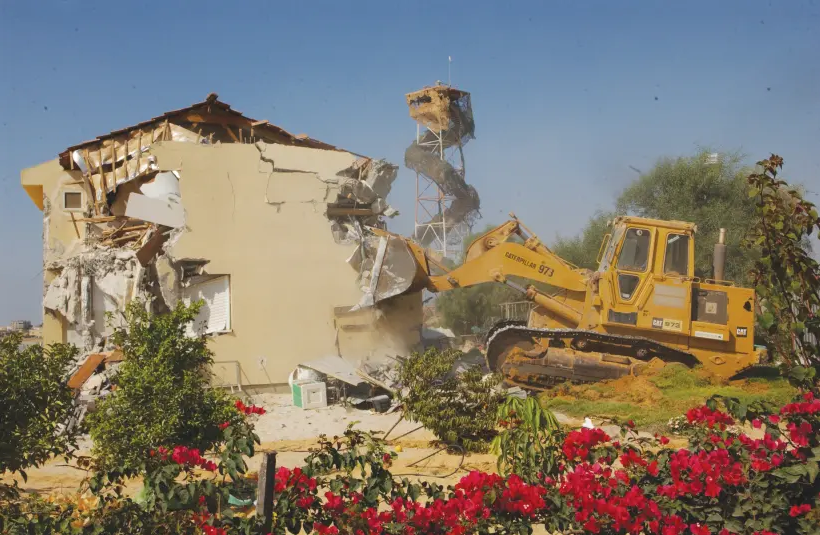
Education system commemorates Gush Katif: A dark chapter in Israeli history

This week, the education system set aside a day to commemorate the uprooting of Gush Katif, a significant event in Israel’s history.

In December 2003, Prime Minister Ariel Sharon announced the disengagement plan, a unilateral exit and deportation of the residents of Gush Katif and northern Samaria. This move went against Sharon’s entire worldview before that. Sharon was known as the great builder of settlements, and only in the 2003 elections did he oppose any unilateral withdrawal.

As a young student at the Technion during those days, I founded the “TA KATOM” and participated in many protest actions. The traumatic events of the Gush Katif uprooting taught me two crucial lessons. First, the left’s talk about human and individual rights and the rule of law is just a hoax to dig into. The High Court judges who are calling out today about the potential harm to minorities if the reform of the judicial system is passed mobilized with full vigor to the order of the predatory Sharon government. They made sure to enforce police violence, mass arrests, arresting 14-year-old girls until the end of the proceedings just because they participated in a protest, providing backup for stopping buses of demonstrators, and more. Everything was done without the High Court and without B’Tselem, without human dignity and freedom.

The great mystery of Sharon’s decision, the “Father of the Settlements,” to carry out the act has not yet been resolved, but it is not unreasonable to assume that there is a connection between it and his understanding of the mindsets in the legal and enforcement systems. The media, the watchdog of democracy, was then revealed in all its hiddenness. The Media presented the victims as divisive, described the protest as a rebellion, the resistance as violence, and the demand for a referendum by a prime minister who took irreversible steps against his express promise as anti-democratic.

The phrase “Itroog” was born then in the famous statement of Amnon Abramowitz: “I think that Sharon should be protected as much as ETROG (Citron)… In my opinion, he should be protected, not only from political flags, but also from legal flags.” The understanding that a fundamental change must be made in the State of Israel and not just winning the elections outlined the way for me to continue.

The second lesson that I learned is understanding the power of long-standing propaganda. Propaganda that turned the settlers into real enemies and created legitimacy for the destruction of their enterprise without any qualms of conscience. Whatever the reasons that led Sharon to take the course he did, executing such a radical action as the violent expulsion of entire families from their homes was a violation of their rights to protest and the silencing of all criticism. To carry out such a move, the entire system needed to be mobilized, from officers and lawyers to the soldiers and policemen in the field. This required full commitment from the system and could only be achieved through years of demonization.

One of the most striking aspects of the Gush Katif episode was the way in which the settlers were demonized in the lead-up to the expulsion. For decades, they were portrayed in the media and in public discourse as extremist, messianic, violent, and a burden on both Israel’s security and economy. This long-term propaganda campaign had a profound impact on the way the Israeli public perceived the settlers and their cause.

As a result of this demonization, those who opposed the settlers came to view them as a real enemy, and the majority of Israeli society accepted the legitimacy of their deportation. This is a powerful reminder of the ways in which today’s ideas can shape tomorrow’s actions, and the importance of understanding long-term processes and the power of propaganda.

For many, the destruction of the homes in Gush Katif was a tragedy, one that continues to be felt deeply. The area was once a paradise for pioneers and believers, a place where Israelis from all walks of life came together to build a better future. The fact that it was ultimately destroyed in such a violent and traumatic way is a testament to the enduring power of propaganda and the need for vigilance in the face of those who seek to demonize and dehumanize others.

As we reflect on the events of August 2005 and the lessons that can be learned from them, it is clear that we must remain vigilant in the face of propaganda and the demonization of others. We must strive to understand the long-term processes that shape our society and take action to counteract those forces that seek to divide us.

The legacy of Gush Katif is one that will be felt for generations to come. We must honor that legacy by working together to build a better, more inclusive future for all Israelis, one in which we recognize the inherent dignity and worth of every individual, regardless of their background or beliefs.

The Third Man

We know the news: On Feb. 20, U.S. President Joe Biden made an unannounced visit to Kiev where lots of people took his picture with his Ukrainian counterpart. Biden relayed more promises of aid and then left for Poland, where he made a speech that attacked Russian President Putin.

Click here to click full article. 

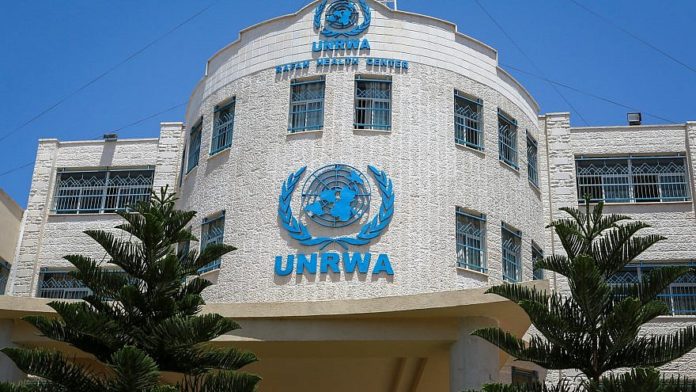
Six Policy Challenges, to Guide UNRWA Policy Reform

  1. Cancel the new UNRWA curriculum which incorporate principles of Jihad, martyrdom and an “right of return” by force of arms, in UN schools which are supposed to promote the UNRWA slogan of “Peace Starts Here.”
  2. Cease paramilitary training in all UNRWA schools UNRWA should demonstrate commitment to UN principles for “peace education”.
  3. Insist that UNRWA dismiss employees who are affiliated with Hamas in accordance with laws on the books in Western nations, which forbid aid to any agency that employs members of a terrorist organization.
  4. Insist that UNRWA cancel its contract with “youth ambassador” Mohammad Assaf to travel the world encouraging violence. Would this not be the appropriate time for donor nations to ask that UNRWA cancel that contract with a harbinger of war?  
  5. Ask for an audit of donor funds that flow to UNRWA This would address widespread documented reports of wasted resources, duplicity of services and the undesired flow of cash to Gaza-based terror groups, which gained control over UNRWA operations in Gaza over the past 18 years.
  6. Introduce UNHCR standards to UNRWA to advance the resettlement of Arab refugees, after 67 years. Current UNRWA policy is that refugee resettlement would interfere with the “right of return” to Arab villages that existed before 1948.

Ben-Gvir to run anti-incitement task force to counter Palestinian violence

Prime Minister Benjamin Netanyahu announced on Sunday that he has appointed Minister of National Security Itamar Ben-Gvir to lead a task force to fight Palestinian incitement.

Joining Ben-Gvir at the task force will be investigators, police officers and prosecutors.

It will work in full coordination with the Ministry of Justice and officials from the Israel Security Agency (Shin Bet), the IDF and the National Cyber Directorate.

Ben-Gvir has laid stress on efforts to counter incitement. In early January, shortly after taking office, he ordered police to take down PLO flags flown in public spaces.

“We will fight terrorism and the encouragement of terrorism with all our might,” he said.

The minister has also cracked down on the preferential treatment of Palestinian terrorists in Israeli jails, ordering the closing of prison bakeries and limiting their shower time.

The moves resulted in a threatening letter sent by Palestinian security prisoners to Ben-Gvir and the press, warning of violence if their conditions worsen.

“If they touch our conditions—blood will be spilled,” the letter said.

“With steps against the security prisoners, he [Ben-Gvir] is going to set the region on fire…. We will respond to him with a war of liberation,” the letter states.

Ben-Gvir also promised to push through a fivefold increase in weapon permits in the wake of the late January attack by a Palestinian terrorist that killed seven people at a synagogue in Jerusalem.

Ben-Gvir directed the Firearms Licensing Department to increase the number of new permits issued from roughly 2,000 to 10,000 per month.

Israel has much more stringent gun laws than the United States and obtaining a license is a difficult process despite much of the population being familiar with firearms due to the near-universal compulsory military service.

In most cases, civilians may only carry pistols, and licenses are mainly dependent on completing firearms training. Most individuals can own only a single handgun and be in possession of no more than 50 bullets.

Iran ‘mapping’ Jews in diaspora for kill squads

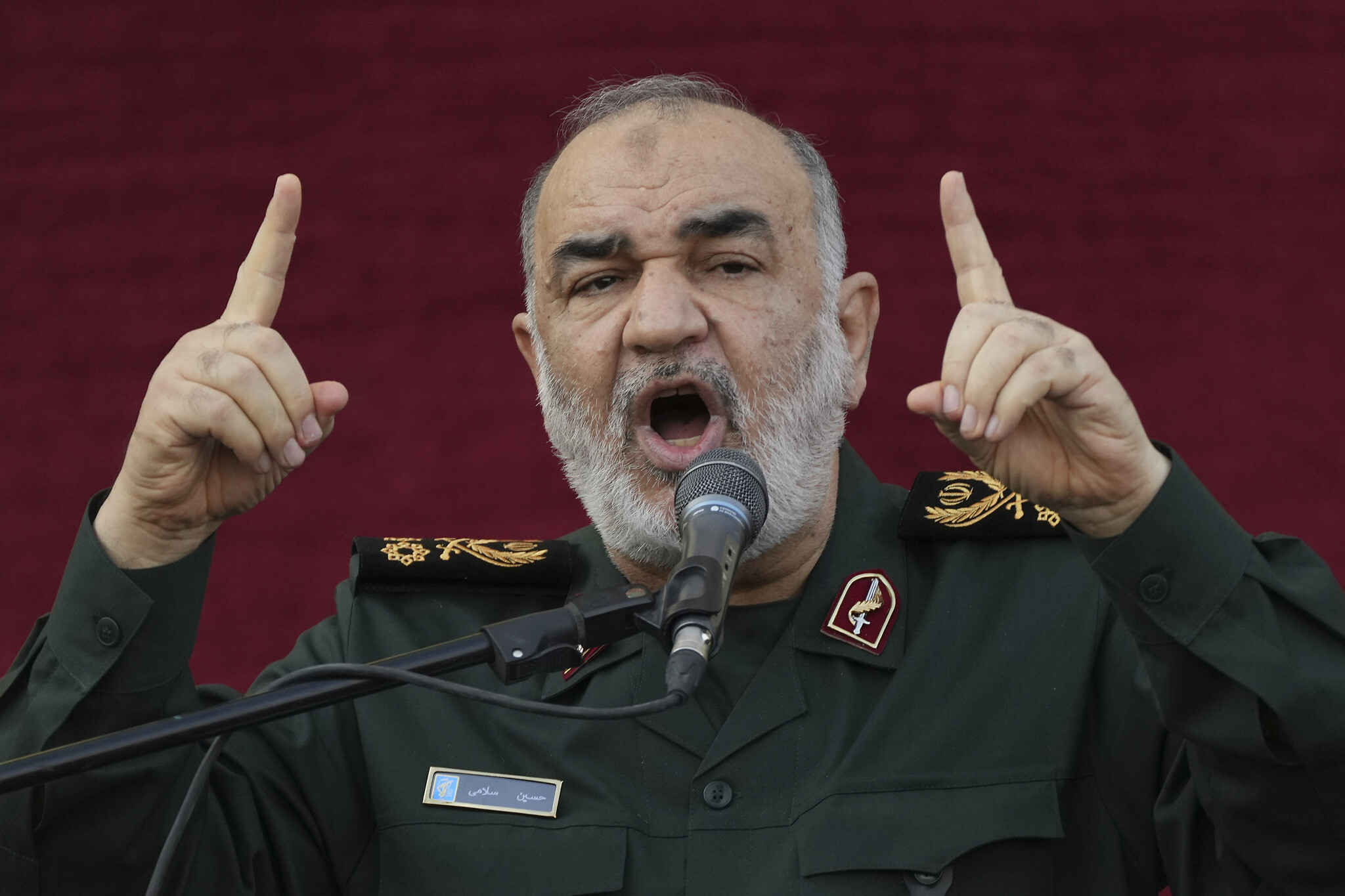
Iran's paramilitary Revolutionary Guard commander Gen. Hossein Salami addresses during the funeral ceremony for five members of the Guard killed in Syria, whose remains were recently recovered, in Tehran, Iran, Thursday, Aug. 4, 2022. Salami hailed the return of the fighters' remains and the survival of Assad's government. "We wanted the (Assad's) system to remain but the U.S., Europe and the Arab world did not want it. Now see who remains in the country," Salami declared. (AP Photo/Vahid Salemi)

Iran has been “mapping” the Jewish diaspora for an assassination campaign that will be triggered if Israel attacks its nuclear facilities, a Jewish woman who met Ayatollah Khamenei has told the JC.

The chilling plan, disclosed at a high-level meeting in Tehran, involved identifying key Jewish figures and determining “how to strike and where”.

The hit squads would be deployed if Israel ever attacked Iran, she was told, so “the diaspora would have a very nasty surprise”.

The revenge plot was revealed to Catherine Perez-Shakdam, one of the few Westerners to be granted an audience with Iran’s Supreme Leader, Ayatollah Ali Khamenei.

Khamenei only seemed scared of one thing  — an Israeli attack, she said, adding: “He believes Netanyahu’s threats and he knows that, for now, Israel is militarily superior. ”

She also met Qasem Soleimani, the terrorist mastermind killed in a US attack three years ago, and Ebrahim Raisi, the country’s hardline president.

Unbeknown to the despotic regime, Ms Perez-Shakdam, a Middle East analyst and research fellow at the Henry Jackson Society think tank who contributed to pro-Iranian websites and the Russian propaganda TV channel, RT, was also a Jew.

She said she gained the high-level access via the man she called “Iran’s Dr Goebbels”, the late-Nader Talebzadeh, who led propaganda campaigns and cultivated her as a friend and ally.

It was at a closed event he organised in Iran that she said was told of the plan “to identify all the prominent NGOs run by Jews, who was doing what in each business sector, the important rabbis. They wanted to figure out their influence and where they lived with their families in order to target them.” Talebzadeh, she said, was explicit that the mapping was preparation for murder to make “the diaspora pay a price”.

In November MI5’s director general Ken McCallum said ten Iranian assassination plots had been foiled in the UK in the space of a year, although he did not say whether Jews had been targeted.

The revelations will increase the pressure on the government to follow the US and proscribe the Iran Revolutionary Guard Corps (IRGC) as a terrorist organisation.

A spokesperson for the Community Security Trust said: “We have known for many years that Iran is involved in plotting terrorism against Jewish communities, but it is utterly chilling to have it spelled out in such clear detail. When people ask why Jewish schools and synagogues need security, this is a large part of the answer.”

How The Palestinians Lost Their Way – OpEd

Although the 55-year-old Israeli occupation cannot be justified under any circumstances, Palestinian leaders have greatly contributed to its disastrous continuation. Their misguided policies over the years have tragically subjected four generations to a life of misery and hopelessness in pursuit of a delusional goal of destroying Israel

Righting the Wrong

For the past 75 years, the Palestinians have raised four generations of aspiring youth who, like their counterparts in Israel and other advanced countries, dream of growing and flourishing while making their own mark by contributing to their community’s and their country’s prosperity and growth.

They have failed not because they are incapable, or less talented, or unworthy of success: they have failed because their leaders failed them. Palestinian leaders failed them due to their shortsightedness, misguided policies, and unwillingness to accept Israel’s ineliminable reality. As such, they have played directly into Israel’s hands by threatening its very existence, which provided Israel with the rationale and justification for continuing the debilitating occupation.

Ironically, during the 75-year-old conflict between the two sides, Israel became a global power, a leader in every sphere of science and technology, with a powerful economy and formidable military, while millions of Palestinians are still languishing in refugee camps.

If this does not demonstrate the utter moral and political bankruptcy of the Palestinian leadership, I don’t know what does. Thus, their insolvent policy only compounded their youth’s despondency and despair for which they conveniently blame Israel, giving rise to militancy and violence against a country with which they must coexist.

From the onset of the Israeli-Palestinian conflict in 1948, the Palestinian leadership adopted a policy of resistance and confrontation against Israel. Even at times of relative calm, the persistent denunciation of Israel on various issues, especially in connection with the Palestinian refugees, Jerusalem, and the Israeli settlements provided a constant reminder to every Palestinian youth that Israel is the obstacle that hinders their progress and shatters their dreams.

That is, the Palestinian leadership linked the fortunes and the future well-being of their youth to the destruction of Israel. As such, successive Palestinian generations condemn Israel for their misfortune which is constantly reinforced not only due to lack of genuine efforts on the part of the Palestinians to find solutions, but also because the longer the conflict persisted, the more it became intractable. At the present, the two sides are further apart than they were 30 years ago when the Oslo Accords were signed.

Indoctrination in schools

The indoctrination of Palestinian youth begins from a very young age in schools; it is one of the most potent ways to sway the minds of the young and get them to believe whatever they are taught. In essence, Palestinian schools have become in part laboratories for anti-Israeli disinformation both through the teachers and textbooks. For example, in history books Israel is depicted not only as an occupying power that must be resisted, but as having no right to exist at all.

In geography books, the 1967 borders are not delineated, and in Palestinian maps the ‘state of Palestine’ covers the entire landmass from the Mediterranean to the Jordan River. In the studies of Palestinian refugees, the blame is placed squarely on Israel for causing the catastrophe, al-Nakba, which is being inculcated in the mind of young pupils. The continuing occupation only reinforces what these young students are misled to believe.

As Mark Twain observed in his autobiography, “When even the brightest mind in our world has been trained up from childhood in a superstition of any kind, it will never be possible for that mind, in its maturity, to examine sincerely, dispassionately, and conscientiously any evidence or any circumstance which shall seem to cast a doubt upon the validity of that superstition…”

To be sure, in schools the Palestinian people are portrayed as being the victims of a brutal power. The misinformation and the selected truth about the conflict with Israel passes from one generation to the next, and today Palestinian youths view Israel the way their parents have, as an irreconcilable enemy to be resisted at all costs.

Brainwashing through public acrimony

Whereas the anti-Israel schooling is poisoning the minds of the young, it continues to be reinforced by the Palestinian leaders’ acrimonious public narrative against Israel. The day-to-day public denunciation of Israel further resonates in the minds of the young and they become increasingly in tune to resistance, rather than reconciliation. This state of mind is further bolstered, especially when they hear from extremist Palestinians leaders, such as Hamas, and the media about Israel’s ruthlessness which will not end until Israel is soundly defeated.

Moreover, disunity between extremist groups such Hamas and the more moderate Palestinian Authority makes it impossible for the latter to moderate its public acrimonious narrative against Israel, fearing being accused of appeasing the Israelis. Indeed, rather than preparing the public for the inevitability of peaceful coexistence and engaging in constructive public dialogue, they are poisoning the political atmosphere by promoting the belief that only the destruction of Israel would liberate the Palestinians from the bondage of occupation, allow them to reclaim the land, and restore their national pride and dignity.

Failing to invest in nation-building

The Palestinian leadership’s dismal failure to dedicate itself to nation-building made it impossible for hundreds of thousands of young people to find respectable employment, which kept them deprived of decent wages to support themselves and denied them a dignified life. Tens of thousands of young Palestinians cannot pursue higher education because more often than not they are forced to find menial jobs to help feed their families.

Thus, idleness and the lack of any prospect for a better and more productive life radicalizes many Palestinian youths who become disposed to join militant groups where they are embraced, feel respected, and are rewarded for their willingness to join the fray against Israel. Basically, they escape from their imprisonment in a life of despair as they are lured to go to a ‘new prison’ where they presumably find meaning to their lives.

As Aldous Huxley cogently stated, “It is perfectly possible for a man to be out of prison and yet not free—to be under no physical constraint and yet to be a psychological captive, compelled to think, feel and act as the representatives of the national State, or of some private interest within the nation, want him to think, feel and act.”

Exaltation of martyrdom

Many young Palestinians who feel left out without any prospect of living a normal and productive life often search for a greater meaning to their lives and are swayed to believe that they can find in death the salvation that eludes them when they are alive. Martyrdom is glorified, especially when the cause for which they sacrifice themselves is for the good of the entire Umma (nation).

The Quran makes many references to martyrdom including the following: “Think not of those who are slain in Allah’s way as dead. Nay, they live, finding their sustenance in the presence of their Lord; They rejoice in the bounty provided by Allah….” (3:169).

The problem here is that the Palestinian leadership, especially the extremists, do not preach for peaceful coexistence; instead, they praise acts of violence and terrorism against Israel, and honor the perpetrators’ courage and valor in sacrificing themselves for the greater cause of national liberation.

Thus, for a multitude of young Palestinians, killing Israeli Jews and ridding themselves of the occupation has become a holy mission as if it were sanctioned by Allah. They seek martyrdom because they truly believe what they are told that they will rejoice in heaven instead of continuing to be humiliated and mortified on earth.

Missing opportunities to make peace

From the time Israel was established in 1948, the Palestinians missed many opportunities to make peace. The late Israeli foreign minister Abba Eban put succinctly when he stated: “the Palestinians never missed an opportunity to miss an opportunity,” a fact that prevented a multitude of young Palestinians from enjoying the fruits of peace and becoming constructive players in nation-building who are able to take pride in their achievements.

Starting with their refusal to accept the UN partition plan in 1947, the Palestinians have indisputably missed a number of opportunities, but it will suffice to name only a few. Following the Six Day War in 1967, the Palestinians turned down Israel’s offer to return all the territories captured in war in exchange for peace (with the exception of the final status of Jerusalem). In 1977, the Palestinians rejected the invitation to join the Israeli-Egyptian peace negotiations which could have resulted in in an Israeli-Palestinian peace along with the Israeli-Egyptian peace agreement signed in 1979.

At Camp David in 2000, the Palestinians missed another historic opportunity and walked away the last minute when a comprehensive agreement was afoot. The most violent uprising—the Second Intifada—that began a few months later stunned the Israelis who concluded that Palestinians are simply not interested in peace. And finally, in 2007-2008 the Palestinians once more walked away from negotiations, this time over a disagreement in connection with percentages of land swaps.

Since then, largely under Netanyahu’s and Abbas’ leadership, no substantive peace negotiations have taken place, and sadly a fourth generation of Palestinians is now flagging between corrupt dictatorial leadership, self-destructive extremism, and no prospect for any meaningful life. Neither the Palestinian Authority nor Hamas have any plans or strategy that will bring an end to the most destructive conflict to which they have subjected their youth for 55 years and counting.

This is how the Palestinians lost their way. As they continue to revel in the illusion that they can destroy Israel, they in fact are sowing the seeds of their own destruction. It’s time to wake up before they forfeit the next generation’s chance to live in peace and realize their dreams and aspirations to prosper in their own country, which they richly deserve if only given the opportunity.

*Dr. Alon Ben-Meir is a retired professor of international relations at the Center for Global Affairs at NYU. He taught courses on international negotiation and Middle Eastern studies for over 20 years.

Chip Roy leads house effort to cut funding to anti-Israel U.N. office

This is legislation we  endorse   in the US, Canada. the UK , Germany, Sweden and Israel-
 
Simply put,  donations  to UNRWA must  be tied to a directive for  UNRWA to cut all ties with terrorism..
When our new movie is screened in each legislative body, the young faces of UNRWA terror will speak for themselves.
The Israel security establishment expects an Islamist  Palestinian Arab rebellion to  commence. during the third week of March, at the dawn of  Ramadan.
That is when  we will launch our movie , to be screened in each legislative venue, portraying   young UNRWA faces   determined to foster bloodshed in 59 “temporary” UNRWA  camps. home to 6.7 million descendants of Arab refugees , who have absorbed the UNRWA mantra of the “Right of Return by Force of Arms”..

Contrasts

A reader of J-Wire commented to me that it was left-wing socialists who had settled and developed what was then Ottoman-ruled and later British Mandated Palestine.

This indisputable fact set me thinking about the similarities and contrasts in today’s Israel insofar as left-wing socialists are concerned.

At the same time, I confirmed something which should be common knowledge but, unfortunately, is still not. That is, the enduring delegitimisations of any Jewish presence here by those endlessly touted as our only hope as “peace partners.”

It has also led me to compare what was then and what is now concerning some of our religious leadership.

The vast majority of chalutzim (pioneers) who made aliyah at the end of the 19th Century and the beginning of the 20th Century were dedicated nationalists and socialists escaping from the pogroms of Eastern Europe. Some were communists, and the rest spanned the left-wing spectrum, including social democrats. What they all had in common, however, was a burning desire to re-establish the Jewish homeland and establish a society based on social equality and a haven from Jew hate.

Subsequent waves of aliyah from the putrid pogroms of Europe increased the number of socialist settlers. Their establishment of collective and communal villages, draining of malarial swamps and rejuvenating a barren landscape undoubtedly contributed to the solid foundation for the State in waiting.

A couple of very important factors are generally overlooked.

A very large number of these Russian, Ukrainian, Polish and other Eastern European olim had been educated in religious schools with some of them even having attended Yeshivot. Although they may have rejected or dropped out of any sort of religious observances, they nevertheless were keenly aware of and knowledgeable about Judaism and Jewish history. The likes of Chaim Weizmann, David Ben Gurion, Yitzhak Ben Zvi, Zalman Shazar and countless others not only had a solid grounding in Jewish subjects but also had a great understanding of the vital role that tradition must play in the future independent nation.

At the same time, perhaps as a result of experiences in their “old countries”, these socialist leaders harboured an intolerant attitude to anyone who did not join their left-wing political cause. Thus, when Mapai (the forerunner of today’s Labour Party) and its left-wing allies constituted the ruling coalitions from 1948, official discrimination, unacceptable by today’s standards, was enforced. If you were not a paid-up socialist, you were not permitted to join the Histadrut, which in turn meant that you were unable to obtain gainful employment. That also meant that you could not join the socialist-dominated health fund.

Israel’s first socialist Prime Minister refused to allow the reburial of Ze’ev Jabotinsky in the country because he represented in the view of the leftwing everything that was evil and fascistic. Every time that Menachem Begin, the Leader of the non-socialist Opposition stood up to speak in the Knesset, Ben Gurion walked out of the chamber. The disdain that the European-dominated elitist socialist parties had for olim from Sephardic and Arab communities eventually resulted in the victory of the non-socialist left parties in 1977.

The howls of outrage and predictions of imminent doom which poured forth on the accession of Begin and his nationalist right-wing allies are reminiscent of what we are currently experiencing. It is ironic that the self-proclaimed standard bearers of democracy and liberal values still seem unable to accept the validity of anyone but themselves as being rightfully elected by the voters.

The biggest contrast is that, unlike their predecessors of a bygone era, today’s left-wing leadership and many of their followers appear bereft of any meaningful knowledge of Judaism, tradition and history. Large numbers have also become infected with the post-Zionist virus so beloved by current international leftwing groups. Like the Jewish Communist lemmings who continued to slavishly venerate Stalin long after his crimes were exposed, our current crop of leftist devotees continue to fantasise about the doves of peace supposedly hovering over Ramallah and Gaza. Ha’aretz, the flagship newspaper of the left hosts post and anti-Zionist contributors and recently dismissed an op-ed writer who dared to express a right-wing contrary opinion.

Shades of the dubious totalitarian socialist past now prevail.

One of the worst aspects of leftist amnesia is the inability and refusal to recognise raw hate even when it is thrown in their face. The old-time moderate socialists of Mapai at least knew what they were up against. They had no illusions and acted against Arab terror whenever necessary. Their partners on the extreme left at the time either fantasised about an illusory brotherhood of man, a messianic vision of a Communist Garden of Eden or as in the case of Reform Rabbi Magnus and his followers, a binational State.

Unfortunately, many of the present adherents of the left have drifted so far from the Zionist vision of a Jewish State which inevitably leads to the denial of the PLO agenda to eliminate our presence.

In November 1919, the Arab newspaper Al-Istiqlal al-Arabi, based in Damascus, editorialised that “our country is Arab, Palestine is Arab, and Palestine must remain Arab.”

In 1920 the 3rd. Arab Congress rejected the Balfour Declaration as “a violation of international law and of the rights of the indigenous population.”  A prominent Arab nationalist proclaimed: “the Balfour Declaration was made by an English foreigner who had no claim to Palestine. It was addressed to a foreign Jew (Lord Rothschild) who had no right to Palestine.”

In 2023 the international community’s paragon of peace and tolerance, President for life Abbas, proclaimed: “Britain’s 1917 Balfour Declaration was aimed at getting rid of the Jews in Europe and establishing the so-called Jewish National Home in Palestine.”

Only those whose ideology is totally detached from reality would still embrace this purveyor of lies and inciter par excellence. Yet unbelievably, they continue to advocate pies in the sky, which, if ever enacted, would spell our demise and doom.

Surveying the religious leadership landscape, one is also left with a sense of frustration when comparing the situation of yesteryear with that prevailing today.

Rav Avraham Kook was the first Ashkenazi Chief Rabbi of pre-State Israel and is generally considered to be the father of religious Zionism. He was Charedi, but this did not stop him from reaching out to non-religious and even anti-religious individuals. He had no problems visiting the most extreme socialist and secular Kibbutzim and having a dialogue with them. He stated that these pioneers were engaged in holy work restoring the Holy Land. Despite strong criticism from ultra-religious groups, he continued his outreach. His legacy can still be felt today.

Chief Rabbi Yitzhak Halevi Herzog, in addition to his rabbinical qualifications, also studied at the Sorbonne and London University where he received his doctorate. His dissertation was on the origin of “techelet”, the Biblical blue dye. Having served as Chief Rabbi of Ireland and being instrumental in rescuing Jewish orphans after the Shoah, he had the skills to communicate and deal with modern challenges.

Chief Rabbi Shlomo Goren was a Religious Zionist Rabbi and Talmudic scholar who was considered a foremost authority on Jewish Law. He founded and served as the first head of the Military Rabbinate of the Israel Defence Forces. As such, he was able to communicate and dialogue with soldiers from all sectors of society.

These three are just a small sample of the type of leadership which is missing today. The Chief Rabbinate may be led by very learned individuals, but their lack of secular exposure and an inability to interact with those whose outlook is different means that the extremists prevail. Instead of asserting strong moderation and slapping down outrageous behaviour, they remain mute and stuck in a time warp.

Two recent examples demonstrate the dire situation.

The Shas religious party in the Knesset tried to introduce a law that would have fined and jailed women who were, in their eyes, “immodestly” dressed at the Kotel. After a public uproar, this attempt was slapped down by the PM. Interestingly, a leading Charedi newspaper also ridiculed the idea, which indicates how ludicrous and out of touch it was in the first place.

The Chief Rabbi of Safed stated that the recent devastating earthquake in Turkey and Syria “was a divine judgment.” Once again, this completely unhinged assertion attracted an avalanche of condemnation.

Although there have been numerous critical comments by moderate Rabbis, I have yet to read any such reactions from the Chief Rabbinate. This highlights the cataclysmic contrast between our top religious leadership of former years with those of today.

Two Talmudic pearls of wisdom succinctly sum up the pathetic state of those who mouth inanities.

“Just as you are obligated to speak when your words will be heeded, you must remain silent when you know your words will be ignored.”

“Silence is beautiful for wise people; it is all the more beautiful for fools.”