 Czech
Czech French
 German
 Hebrew
 Noruegan
 Russian
 Spanish
 Swedish
 Polish
 Portuguese





Have you had to interact with someone who doesn’t share your values and who also holds an openly anti-Israel position? If so, what was that experience like? In this live session, we will present Francisco Gil-White’s perspective, with the aim of providing tools to approach these kinds of situations in an informed and strategic way.
Arab-Israeli Expert: Hamas Set A Dangerous Trap (What the West Must Do Now)
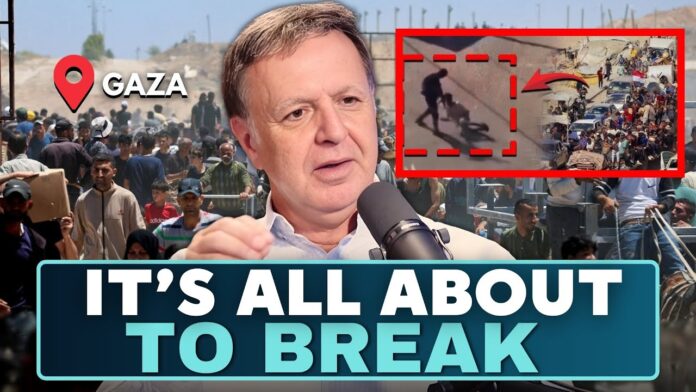
As the ceasefire crumbles, Gaza’s war moves underground…literally. Hamas terrorists are trapped in their own tunnel networks, abandoned by leadership and starving beneath the rubble. But surrender is not an option in the world of jihad. Dan Diker and Khaled Abu Toameh expose the stunning reversals of fortune, the regional power plays from Qatar and Turkey and how Hamas is losing its grip both in the tunnels and on the streets of Gaza. Is this the beginning of Hamas’s collapse or the ignition point of a Palestinian civil war?
A Response to the “This Is the Story…on Gaza” Ben Rhodes NYT Opinion piece
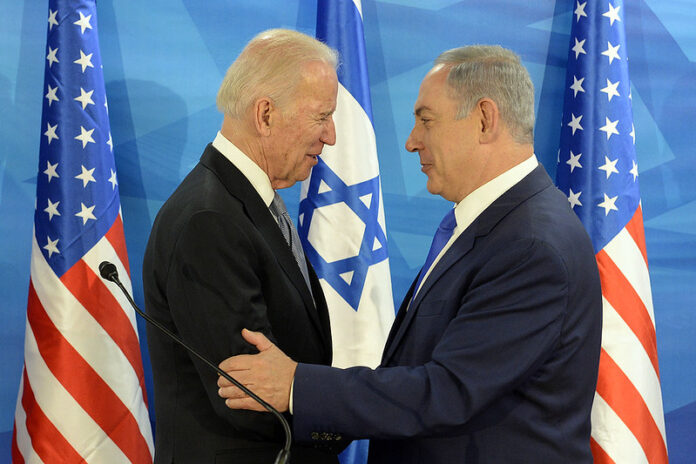
Having more time to think about this only increases how appalling the New York Times opinion piece, “This Is the Story of How the Democrats View It on Gaza,” by Ben Rhodes truly is for Israel, for the United States, and for anyone who cares about the truth. A feature-length essay of more than two thousand words about Gaza should meet the most basic journalistic standards. This one does not. It repeats misinformation, inserts falsehoods, and advances a moral narrative that bears no resemblance to the laws of war or the realities of modern conflict. Worse than the errors are the implications. If these arguments are taken seriously inside Washington, they threaten not only Israel’s security but America’s.
The author claims that supporting Israel’s right to defend itself and to conduct military operations to retrieve unlawfully taken hostages makes Democrats hypocrites when defending a rules-based order, racial equality, and democracy. This is false. An explicit condition of the rules-based order since 1945 is that sovereign nations may defend themselves after an armed attack. It is the most basic tenet of the U.N. Charter. Israel did not choose this war. It was launched against Israel on October 7 when Hamas executed a large-scale cross border assault that killed more than 1,200 people and kidnapped more than 250. Any democratic state, including the United States, would have responded with immediate and overwhelming military force to achieve their goals as quickly as possible. That is the standard the author refuses to apply to Israel.
The piece repeats claims that no source should publish. It asserts that top Israeli leaders described Palestinians in Gaza as human animals living in an evil city and that Israel cut off access to food and water while bombarding Hamas fighters and civilians alike. The truth is clear and well documented. The statements in question, made by Israel’s Defense Minister two days after October 7, referred to Hamas, not to Palestinians. They described a siege of Hamas positions in Gaza City before a major urban operation. Critics may inaccurately argue that Israel permits too high a civilian death toll as collateral damage while targeting Hamas, but only the uninformed or the deeply biased believe Israel intentionally targets civilians. These accusations are false, and to pretend the facts are ambiguous is not analysis. It is distortion.
The argument that President Biden gave Israel unconditional support is also false. The administration held up key arms shipments, including large diameter munitions and other vital equipment. It pressured Israel for months not to enter Rafah even though Hamas leaders and Israeli hostages were there. No one in the region believes Israel has enjoyed unconditional American backing, especially not Israeli soldiers who have been forced to adapt operations in real time because of delayed or restricted U.S. support.
The article relies on an emotionally charged but morally incoherent equivalency. It argues that if one believes a Palestinian child has equal dignity to an Israeli or American child, one cannot support the Israeli government while hiding behind platitudes about peace. This argument is appalling. It ignores the most fundamental distinction in the laws of war. There is a clear difference between a baby kidnapped by Hamas and murdered with bare hands and the tragic death of a child in urban combat who is being used as a human shield by Hamas. The laws of war do not judge outcomes alone. They judge intent, precautions, proportionality, distinction, and military necessity. Israel has taken more measures to reduce civilian harm than any military in history, including layered warnings, evacuation corridors, daily pauses, roof knocking, safe zones, and an unprecedented combination of precision fires and restrictions on ground maneuver that often put its own soldiers at greater risk to protect civilians. I have studied and documented urban warfare for decades. No other military has attempted to do what the IDF has done in Gaza.
The author also invokes the biggest lie of this war, the claim that Israel is committing genocide. There is no genocide in Gaza. Israel has no intent to destroy in whole or in part the civilian population of Gaza. It sought to destroy Hamas as a military and political organization while doing more to feed, house, vaccinate, provide medical care, and prevent harm to the civilian population than any nation in history. Wanting to destroy your enemy is not genocide. It is war. War is not illegal, and in some cases it is necessary. Although the author cites the claims of misguided human rights groups, academics, and a biased United Nations commissioned study, there are many more academics, military professionals, and legal experts who have clearly stated that Israel’s actions in Gaza do not meet any standard for genocide.
Every nation, including the United States, has faced the moral dilemma of civilian deaths in a legitimate war of self-defense. Nations must prioritize their own citizens and their own survival. That is not hypocrisy. It is a foundation of the laws of armed conflict. I wonder what the author would say about the urban operations of World War Inor the U.S. campaigns in Seoul, Hu, Fallujah, Mosu, and Raqqa. The moral argument in the article collapses the moment it is applied to any conflict other than Gaza. That reveals its purpose.
It is designed to delegitimize Israel’s right to wage a lawful war and to delegitimize any American support for that war, not to explain the rules-based order. It also
rewards the strategy of using civilians, protected sites, and dense urban terrain as shields.
One of the most alarming parts of the piece is not its factual errors but its worldview. As an American citizen, it is frightening to read such naive beliefs from someone who once served as a deputy national security adviser to the President. The author suggests that supporting Israel’s war of self-defense violates democratic values. If that view guided U.S. decision making during a crisis, we would invite disaster. In any major threat to the United States, a future President will face the decision to use force in defense of ourselves or our allies such as countries in NATO. The logic promoted in this piece implies that America should respond to mass casualty attacks with inaction or with a form of moral self-negation that no state can survive.
The truth is the opposite. American security, democratic legitimacy, and the rules-based order depend on the willingness and capability of free nations to defend themselves. Supporting Israel as it fights a terrorist army that hides behind civilians, embeds in schools and hospitals, and openly seeks genocide is not hypocrisy. It is consistent with every principle the United States has upheld in its own wars. The NYT piece misunderstands the facts, misrepresents the law, and advances a moral argument that collapses under the weight of reality.
Israel is fighting a war it did not start, under legal constraints no enemy of ours has ever respected, while trying to rescue hostages brutally taken from their homes. That is the reality. Everything else in the article is rhetoric designed to obscure what both Israel and America know to be true. Supporting an ally in a lawful war of self-defense is not a betrayal of our values. It is an expression of them.
John Spencer is the Executive Director of the Urban Warfare Institute
He is the coauthor of Understanding Urban Warfare
Learn more at www.johnspenceronline.com
Substack: https://substack.com/@spencerguard
The views expressed in this article are the writer’s own.
Questions To The CMHR Re: The Nakba Exhibit And The Need To Put On A Concurrent Exhibit On Jewish Indigeneity To The Land Of Israel

Below are my media inquiries to the CMHR as Editor of the Winnipeg Jewish Review relating to the need for a parity exhibit on Jewish indigeneity to the land of Israel to run concurrent with the Nakba Exhibit. Below are also questions relating to the scope of the Nakba Exhibit itself.
1. Will the CMHR put on a concurrent “parity exhibit” to run concurrently with the Nakba exhibit, about the Jewish people’s indigeneity to their ancestral homeland in Israel given their enduring biblical, religious and historical connection, as proven by indisputable archaeological evidence? The Jews who have been in the land of Israel since antiquity have had the same language, have worshipped the same G-d, and on the same land, in the same country, as they did over 3000 years ago. Is that not a true indigenous people?). The exhibit ought to include the modern rise of Zionism in Europe, and t include the expulsion of approx. 750,000 Jews from surrounding Arab States and North Africa who were absorbed by the state of Israel, as well as some 70,000 Jews who were expelled from their homes in 1948 in the Old City of Jerusalem and nearby environs. [Note that in the Holocaust gallery of the Museum there is absolutely no reference whatsoever to Israel, such that the first time that Israel is being referred to in an exhibit is in a Nakba exhibit. The Holocaust gallery is not a “parity exhibit” at all.]
2. Since Canada’s longstanding position has been in favour of “two states for two peoples” why is it that the CMHR sees fit to put on an exhibit about one side of the equation, the Palestinians, without the need for a concurrent “parity exhibit” about the other side of the equation, the Jewish people who are an indigenous people to the land of Israel?
3. Does the Museum acknowledge that Jews, like all other peoples have a right to self-determination in their ancestral homeland (Canada’s long standing position), and if so will the Museum put on a concurrent parity exhibit as described above?
4. Why would the CMHR be preferring the stories and artifacts of one people on this same land over the stories and artifacts of both people in this land? Telling the narratives of both sides together concurrently would be the only way to foster real dialogue and understanding between both sides, would it not ?
QUESTIONS RE: THE SCOPE OF THE NAKBA EXHIBIT
A.) THE ROLE OF THE MUFTI OF JERUSALEM AND ATTEMPTED GENOCIDE OF JEWS
5. In 1937, the British Peel Commission had to decide to recommend the creation of two states, one Arab and one Jewish or one bi-national state. When Hajj Min Al Husseini, the Mufti of Jerusalem and President of the Supreme Muslim Council, the undisputed leader of the Arabs under British Mandatory Palestine the testified before the Peel Commission he was asked whether the 400, 000 Jews living there could remain in an Arab majority state. When the Mufti answered that they could not, it became clear to the Peel commission it could not recommend that the Jews live in a bi-national state as the Mufti would expel them. Specifically, Lord Peel asked the Mufti “Since you demand the establishment of a national government in Palestine, what will you do with the 400,000 Jews already living there?” When the Mufti’s answers were evasive, Lord Peel asked again”: Does His Eminence think that this country can assimilate and digest the 400,000 Jews now in the country? The Mufti answered “No.” Will the CMHR be showing the Mufti’s testimony on this point before the Peel commission in its Nakba exhibit?
6. Since Hajj Min Al Husseini, the Mufti of Jerusalem was the undisputed leader of the Palestinian Arabs leading up to 1948, will the CMHR be including in its Nakba exhibit the fact that the Mufti had an alliance with Adolf Hitler? Further will the CMHR be putting forth testimony from any Palestinian Canadian who believes that the Mufti of Jerusalem’s alliance with Hitler led the Jews living in the Holy land to understand that if the Mufti had his way, their fate would be the same as the fate of the Jews during the Holocaust? [Specifically the US Holocaust Memorial Museum website refers to the Mufti’s first meeting with Hitler on Nov 28,1941 meeting between the Mufti and Hitler in which Hitler stated the only German goal “at that time would be the annihilation of Jewry in Arab space under the protection of British power?”]
7. Research by Hillel Cohen of the Hebrew University of Jerusalem has shown that prior to the State of Israel being established about 20% of Palestinians were willing to accept the Peel Commission plan for the partition of Palestine in 1937 , which called for a Jewish state. They were represented by Raghib al-Nashashibi, who became Mayor of Jerusalem in 1920, and who was willing to accept the Peel Commission plan, and secretly favoured a union with Transjordan. The Nashashibi clan opposed the extremism of the Mufti of Jerusalem, Hajj Amin Husseini. However, as Cohen relates, the extremists of the Palestinians had the upper hand and terrorized the moderates. Cohen writes, “The message was clear: anyone who leaned towards compromise or disputed Hajj Amin’s leadership was a traitor whose life was forfeit.” (Hillel Cohen, Army of Shadows; Palestinian Collaboration with Zionism at 64 and 122). Will the CMHR be putting forth Cohen’s research showing that the Mufti and his followers terrorized the moderates in Palestinian Arab society? And will the CMHR be including in the exhibit the narrative that had the Palestinians leading up to 1948 preferred the moderate leadership of the Nashishibi clan over the Mufti’s leadership, they would have had a state a very, very long time ago?
B) TESTIMONIES IN THE NABA EXHIBIT
8. Will the CMHR be putting forth the testimony of any Canadian Palestinian whose family supported the position of the Nashashibi clan as opposed to the leadership of the Mufti of Jerusalem and acknowledges that the Mufti’s extremist leadership lead to the lack of a Palestinian state? [Note: Oren Kessler’s new book Palestine 1936: The Great Revolt and the Roots of the Middle East Conflict, which details how the Mufti led the Palestinian Arabs into defeat and misery in 1948).
9. Will the CMHR be presenting the pain and suffering of the followers of the Nashishibi clan who were terrorized by the Mufti and his followers?
10. Will the CMHR be putting forth the testimony of any Palestinian who is of the view that the abiding cause of the Nakba was the result of Palestinian and Arab leadership rejecting the UN resolution calling for the establishment of both a Jewish state and a [Palestinian] Arab state, which meant there would be war. Will it be showing that Canada voted in favour of the 1947 Partition Plan? [Had the UN partition Resolution been accepted by Palestinian Arab leadership at the time, there would have been no 1948 Arab-Israel war, and no Palestinian refugees]
11. Will the CMHR be presenting any testimony of a Palestinian Canadian that 1948 war was “a jihad” or “-an Islamic holy war” as well as a territorial and political war? Will the CMHR be referring to any documentation as referred by historian Benny Morris that the central element in the war was an imperative to launch jihad and to uproot the infidel Jews from the area?
12. Will the CMHR be putting forth the voice of any Canadian Palestinian who acknowledges that their family and other Palestinian Arabs perceived the 1948 war as an accident that would be swiftly rectified, since the demographic balance of power favoured the Arab states and would enable them to triumph in the long term?
13. Will the CMHR be putting forth the lived experience of any Palestinian Canadian who agrees with Canada’s position since 1947, calling for a two-state solution a State of Palestine alongside the State of Israel?
14. Will the CMHR be putting forth the opinion of any Palestinian Canadian or anyone else in the exhibit that Jews who have had continuous presence in the Holy land for 3000 years are an indigenous people to that land ? Or will the exhibit’s narrative be that Palestinians are an indigenous people, without saying anything about Jews being an indigenous people? And if not, will this not leave the impression that only Palestinian Arabs are an indigenous people? (Note: In 1947 the UN partition plan called for a Jewish and Arab state not a Palestinian state).
C) ROLE OF HAMAS
15: Will the CMHR Nakba Exhibit deal be presenting testimonies or other information regarding the current War in Gaza?
16. Specifically, will the CMHR be including the actions of Hamas, Palestinian Islamic Jihad, and individual Gazans who perpetrated the Oct 7 attacks in the exhibit, as they set off the current chain of events that led to the war?
17. Will any of the Palestinian Canadians giving testimony in the Nakba exhibit be condemning Hamas’s attacks, as per the position of the government of Canada, and/or state that Hamas can have no role in any future governance of Gaza, also Canada’s position?
18. Will the CMHR be putting forth the testimony of any Palestinian Canadian who denounces the Oct 7 attacks, or whose families have been terrorized by Hamas?
19. Will the Nakba exhibit include the Canadians who are in Hamas, as per the report of Global News indicating some 450 people with assorted roles in Hamas have ties to Canada? https://globalnews.ca/
Rhonda J. Spivak has a Bachelor of Arts with Distinction in English and History and an L.LB from the University of Manitoba. She practiced constitutional law in the Department of Justice of Manitoba for close to a decade. She received her call to the Israeli Bar in 1996 after articling at the Association for Civil Rights in Jerusalem where she acted on behalf of both Arabs and Jews living in Israel. She has travelled extensively in both Israel and the West Bank and has conducted many interviews of both Jews and Arabs living in Israel as well as Palestinians living in the West Bank.
How Henry Kissinger Orchestrated the Yom Kippur War

Aleichem Books, Grass Valley, California
Print ISBN: 978-965-93042-4-0
Digital (eBook) ISBN: 978-965-93042-5-7
Table of Contents
Foreword
Preface
Introduction
Part I – The Gathering Storm
- Seeds of Deception
- The Calm Before the Orchestrated Storm
- The Machiavellian Maestro
- The Summit Conspiracy
- The Staged War Blueprint
- The Price of Illusion
Part II – The Web of Intrigue
- Washington’s Web of Silence
- Sadat’s Theatrics and the Hidden Hand
- Moscow’s Shadow Games
- The Betrayal of Warnings
- Israel’s Blindfolded Guardians
- The Secret Accord
- The Kissinger–Dayan Channel
- Orders from the Oval Office
- Messages Lost—or Concealed?
Part III – The Orchestrated War
- October 6, 1973: The Trap is Sprung
- Confusion in the Command Centers
- A War Meant to Wound, Not Win
- The False Resupply Promise
- Superpowers on the Chessboard
- A Cease-Fire Written in Deceit
- The Puppet-Masters of Peace
Part IV – Aftermath and Reckoning
- The Secret Diplomacy of Dependence
- The Price of American Favor
- The Disinformation Campaign
- The Silencing of the Whistleblowers
- The Paper Victory
- The Manipulation of Memory
- Revelations from the Shadows
- The Reckoning and the Warning
Epilogue – Unmasking the Legacy
Foreword
At the time of the “publication” of his book, HaKesher HaM’ruba, Doron Hakimi used a pseudonym: Hai Doron.
Why is “publication” in quotes and why did Doron use a pseudonym? His and his children’s lives had been threatened: He must withdraw his book from circulation and keep his mouth shut. He had kept quiet now for four and a half decades.
Besides the ever-so detailed accounts he documents in his book, the fact that his life was threatened points to the authenticity of Doron’s accounts. Why would he, now in his 80s, be agreeable to release his book now, and to disclose his real name?
The reason is the same reason that I also decided to release my own disclosures about the Yom Kippur War Surprise (Deceit of an Ally): those guilty of deceiving Israel back in 1973 are no longer alive or if they are, they’re in a hospice or old-age home. It is venerable history.
History, yes, but does it have any relevance to current events today? Until October 7, 2023, I would have answered “Clearly, no!” The natural question many ask is, “Was what happened on that unforgettable October 7th day a variation-on-a-theme of what happened 50 years prior on October 6th?
I refer to Doron’s closing words in this book:
The designers of Israeli policy must know that the Jewish people, and especially the State of Israel, have very few true friends around the world and they must strive for peace and prosperity with all the means at their disposal and as quickly as possible, towards its absolute and and unshackled independence in the future for the benefit of future generations.
Doron’s prophetic words could not be timelier, especially with the Trump 20-point Gaza plan unfolding precisely at this very fluid time, October 2025.
Bruce Brill
Preface
With the end of the 1973 Yom Kippur War, and following the bitter outcry that arose among the people after the unexpected security setback, I saw in myself a national duty to thoroughly investigate and discover the actual circumstances that brought the State of Israel, which has one of the best intelligence services in the world, to the military setback upon the outbreak of the Yom Kippur War.
After about four years of collecting material within and outside Israel, my close friends and I concluded, at the end of 1977, that we should organize and publish our discoveries in order to shed light on the dark affair called the Yom Kippur War.
At this opportunity I would like to thank from the bottom of my heart all those friends who played a large and incalculable part in obtaining the information and even those people who knowingly or unknowingly helped me to obtain the essential information for the purpose of writing the book.
Introduction
A principle set forth by the sages of Israel says: “He who comes to kill you, arise and kill him.” However, because of the evolution of the Jewish people among the peoples of the world and because of the hatred of the Gentiles that always burned in the souls of the Jews, the Israelites forgot the laws of their ancestors and fled in exile from the Gentiles who tormented them, abused them, deprived them of their rights and even killed many of them.
As a result of the Jews fleeing from the Gentiles’ abuse, the awareness slowly penetrated the consciousness of the Gentiles in the Diaspora, that the Jews are an inferior people, a cowardice people lacking in resourcefulness; thus, the Jews became the people richest in derogatory epithets, and even their human image became, in the eyes of many, to be subject to doubt.
The events of the Holocaust further strengthened the doubt of the humanity of the Jews.There were even those who believed that the victims of the Holocaust went like sheep to the slaughter. Many asked in bewilderment, how did six million people fall without a hint of defensive reaction? How did they surrender their lives to the hands of their murderers?
However, these and similar questions will never be given a proper answer. Because we did not face that holocaust, but we must not forget that great nations were trampled before the Nazis despite their impressive armies. And here the question arises, what was available to the Jews to rise up against the Nazis, considering their hostile environment, which in many cases strengthened the hand of their Nazi murderers.
Yet, there was actually a positive outcome of the Holocaust:
The Holocaust awoke the Jewish people from a two-thousand-year slumber and instilled in them the realizations that their lives in the Diaspora had come to an end and they must return to the homeland of their ancestors and there be rebuilt.
The Holocaust even verified the verse, that in every generation the Jewish people are in grave danger and in order to continue to exist, they must change their way of life and adopt the teachings of their ancestors and a devotion to national purpose.
Sometimes it seems as if a divine hand desired the Holocaust: to bring about the return of the Israelites to their homeland and to their national Jewish consciousness that had almost disappeared and been forgotten in exile. Without the lesson of the Holocaust, the Jewish hope that had been upon his lips for two thousand years, “Next year in Jerusalem,” would not have been fulfilled.
Twice we returned to our homeland in similar circumstances, and each time the price was very dear.
Peace education now
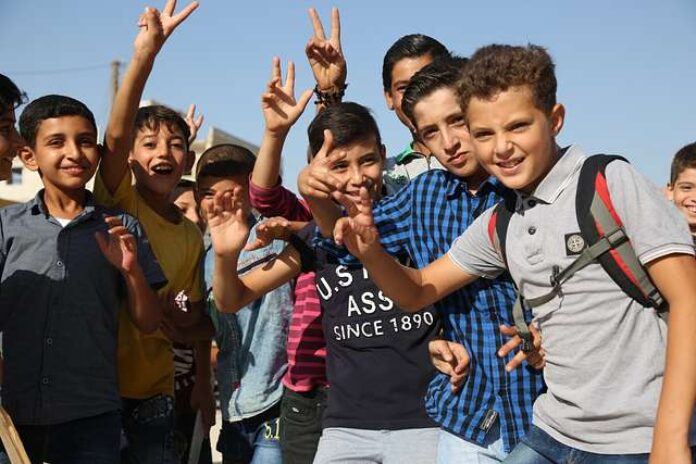
President Trump’s Gaza peace plan, adopted by the UN Security Council on November 17, 2025, includes references to a reformed Palestinian Authority that would be able to regain control over the Gaza administration…write David Bedein and Arnon Groiss.
This could serve as a pathway to Palestinian self-determination and statehood.
Earlier this year, on September 12, the UN General Assembly approved by a large majority a French-Saudi Arabian initiative promoting the two-state solution to the Israeli-Palestinian conflict, which actually suggests the establishment of a Palestinian state.
Peaceful resolution of the Israeli-Palestinian conflict is a worldwide goal and is also the main core of the 1993-95 Oslo Accords, on which the PA’s very existence is based. The ongoing effort to upgrade its status from an autonomous entity to that of a state needs, therefore, some clarification as to what extent it is committed indeed to the idea of peace with Israel. Because, if it is not, any such move would raise Israel’s suspicions, cause counteractions and increase instability in the region.
An attempt to answer this question has been made in a study in which the references to the conflict in over two hundred PA schoolbooks and teachers’ manuals of the latest editions were examined. The criteria of analysis used were UNESCO’s guidelines.
The decision to use this particular source material was based on the assumption that schoolbooks are the most reliable indicator of the ideals a society would aspire to instil in the younger generation. If such books are issued exclusively by the government, as is the case with the PA, they also best reflect the deeper beliefs of that government regarding its political aspirations. In clearer wording: the PA’s attitude to the idea of peace with Israel is best shown in its textbooks.
The Oslo Accords and the subsequent establishment of the Palestinian Authority are documented in the books. Most interesting is a letter appearing there that was sent by Yasser Arafat, Chairman of the Palestine Liberation Organization (PLO) to Yitzhak Rabin, Prime Minister of Israel, prior to the signing of the Declaration of Principles (the initial agreement signed within the Oslo process) in September 1993, in which the PLO recognized the right of the State of Israel to live in peace and new security, accepted the UN Security Council’s resolutions Nos. 242 and 338, committed itself to the peace process in the Middle East and to peaceful resolution of the conflict between the two parties, declared that all the basic issues related to the permanent situation would be solved through negotiations, condemned the use of terror, as well as other violent actions, confirmed that the articles appearing in the Palestinian National Covenant that denied Israel’s right to exist were no longer valid, and took upon itself to present the necessary amendments within that Covenant to the Palestinian National Assembly in order to officially approve them.
This text is self-explanatory and could have served as a firm basis for peace education. Unfortunately, this is not the case. The entire PA curriculum is tuned to war. The motto is liberation from occupation, but the liberation struggle is violent and terror-involved – in clear contradiction to the commitment to non-violence in Arafat’s letter.
Moreover, the liberation of Palestine covers the country in its entirety – contrary to Arafat’s recognition of Israel’s right to exist. Cities inside Israel within its pre-1967 boundaries, such as Jaffa and Acre, are to be liberated specifically. In fact, the Palestinian students learn at school that Palestine is the only sovereign state in the country, and that sovereign Palestine has been under Zionist occupation since 1948. Israel’s pre-1967 territory is phrased “the territories occupied in 1948”. Accordingly, Israel is rarely mentioned by its name and is rather referred to as “the Zionist occupation”. It goes without saying that Israel, within its pre-1967 territory, is absent from all maps.
It should also be noted that Israel’s 7-million Jewish citizens are presented as foreign colonialists and the cities they built, including Tel Aviv, are missing from the map. Their history in the country since antiquity is denied, as is the existence of their holy places there, including the Wailing Wall in Jerusalem, the last remnant of their ancient temple. The Jews’ national language, Hebrew, is erased – literally – from a coin of the British Mandate era before 1948 reproduced in a mathematics textbook.
Both Israel and the Jews are demonised to a point that presents them as an existential threat to the Palestinians within the current conflict, which contradicts any move towards peace with them. Jews are further demonised as enemies of Islam from its early days, as the Devil’s aides, and as enemies of God’s prophets, which makes them automatically enemies of God Himself in the eyes of young Palestinian students who mostly come from traditional environments. Thus, the liberation of Palestine from Zionist occupation becomes religious in character, with the traditional Islamic ideals of Jihad and Shahadah (martyrdom) also involved.
The PA schoolbooks rarely deal with the question – what should be done with the surviving Jews after the liberation of Palestine from “Zionist occupation”. But an Islamic religious textbook brings within this context a traditional text speaking of the eventual annihilation of all Jews.
To conclude, any involvement of the PA in the Gaza administration, and, certainly, any future step toward the recognition of the PA as a state on the road to peaceful resolution of the conflict, should be pre-conditioned by changing its afore-presented educational line from a belligerent one into a decisive commitment to peace with Israel, exactly as it appears in Arafat’s letter to Rabin. The field of education has indeed been mentioned in the context of the needed reforms. The following are suggested specific changes:
- Inclusion of Arafat’s letter to Rabin in a number of textbooks of various grades in order to assert the PA’s strategic goal of peaceful resolution of the conflict with Israel.
- Use of the letter as a basis for the official recognition of the State of Israel on the part of the PA, to be expressed in all relevant textbooks, that is, showing the State of Israel within its pre-1967 boundaries on all political maps.
- Traditional Islamic ideals that carry a belligerent character, such as Jihad and martyrdom, should be disconnected from the current conflict and be left as part of past Islamic history.
- Current geographical reality should be reflected in the books, i.e., Tel Aviv and other main Jewish cities should appear on the map.
- Falsification of historical objects, such as British Mandatory coins and stamps, should be avoided.
- Recognition of the Jews’ history and holy places in the country and elimination of all materials expressing religious bigotry against them.
- Elimination of all materials exalting terror.
Arnon Groiss is an Israeli researcher and expert on Iranian state ideology, particularly Iran’s sponsorship of terrorism through entities like the Islamic Revolutionary Guard Corps (IRGC)
David Bedein is an American-Israeli investigative journalist and director of the Middle East Centre for Near East Policy Research (also known as Israel Behind the News). He specialises in exposing alleged ties between the United Nations Relief and Works Agency (UNRWA) and Palestinian terrorist groups like Hamas and Islamic Jihad.
PA demands return to Resolution 181 borders
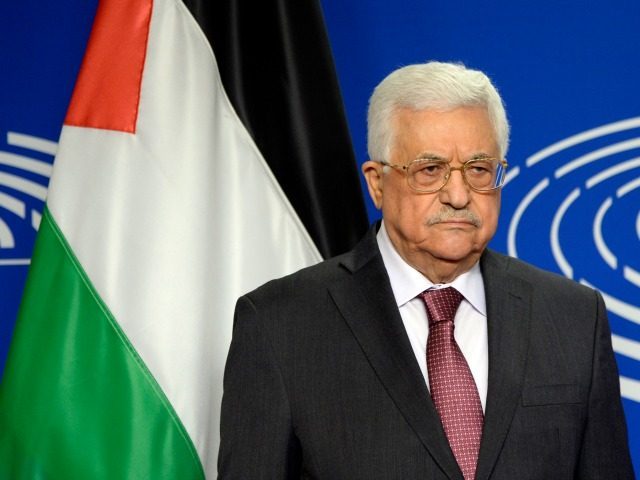
Seventy-seven years after the UN decision on the partition of the land, the UN has declared the anniversary of the vote the “Day of Solidarity with the Palestinian People.” The Palestinian Authority is exploiting the day to demand the return to the
The PA’s official news agency WAFA said on the occasion of the day that “the Palestinian people have not yet realized their incontestable rights.”
The list of demands includes the establishment of an independent and sovereign Palestinian state within the 1967 borders, recognition of East Jerusalem as the capital, and the Palestinians’ right of return to their homes and property from 1948.
Since 2012 Palestine has been recognized at the UN as a “non-member observer state”, and in 2015 the Palestinian flag was raised at the organization’s headquarters in New York and at missions around the world.
Reflections; Four months before the Oct 2023 war

David Bedein Talk at the OU Israel Center June 20 2023
A challenge awaits Rabbi Yehuda Kaploun, President Trump’s special Envoy to Monitor and Combat Antisemitism:

Three fundamentals of Saudi funded PLO education are
- De-Legitimization of the State of Israel’s existence and of the mere presence of Jews in Israel which includes denial of their history and the very existence of any Jewish holy places .
- Demonization of Israel and Jews –, which carries grave implications as far as the Jews’ image is concerned in the eyes of any Palestinian child
- Absence of any advocacy for peace with Israel. Instead, Saudi funded PLO textbooks call for the violent struggle for the liberation of the country in its entirety, including Israel’s territory within its pre-1967 boundaries. This struggle is given a religious character, and terror constitutes an integral part thereof – with the accompanying meaning that the killing of Jews is to be encouraged.
This our latest report, in English and Hebrew:
“Israel, Jews and Peace in Schoolbooks and Teachers’ Guides Used in UNRWA Schools in Judea, Samaria, East Jerusalem and the Gaza Strip”
https://www.terrorism-info.org.il/app/uploads/2024/05/E_114_24.pdf
This is the time for Rabbi Kaplounm, a follower of Chabad, to invoke the warnings of Rabbi Menachem Mendel Schneerson, ”the Rebbe, who posited that these issues represented an existential threat to Israel which constituted a matter of “Pikuach Nefesh” a matter of life or death for the Jewish people.
Faulty Follies

As a long time fan of Fawlty Towers and the Life of Brian satirical series I was looking forward to the impending Israel visit of John Cleese.
We had tickets for his originally scheduled show, which was then scuttled by the outbreak of the Iran war and subsequent missile barrages.
His rescheduled appearances in Tel Aviv and Jerusalem were sold out, and the stage was set for memorable evenings of vintage British wit. It was set to be a great night out with Israelis of Anglo background. Interestingly, I also heard of some sabras who were going to be there. Presumably, they were familiar with the subtle and not-so-subtle British satire, which was such a prominent feature of John Cleese’s acts.
It was therefore like a bolt out of the blue when, for the second time, it was announced that Cleese would not be coming to Israel and that all his booked performances had been cancelled.
The reason for this cancellation, according to the promoter’s announcement, which was subsequently confirmed by Cleese himself, was “security.”
Strangely, there has been no clarification as to exactly what threats have compromised security, causing this visit to be cancelled.
The war against Iran has ceased.
There is a so-called ceasefire in Gaza.
No missile barrages from Hamas, Hezbollah, Iran or the Houthis are occurring.
What exactly constitutes a security risk has not been explained.
If it is suggested that Cleese could be in physical danger by visiting Israel, I would submit that he is more at risk of personal injury on the streets of London, Birmingham and Manchester.
He has adamantly asserted that his Israeli performances are “postponed” rather than “cancelled.”
As the mystery deepened, Basil’s (alias John Cleese) social media comments surfaced, offering a clue to the real reason for his sudden cancellation.
It seems that he, like many others, has become infected by the rapidly spreading virus of Zionist/Israel dysfunctional syndrome.
Less than a month after the 7 October 2023 pogrom, he posted this comment: “don’t ask me to take sides between Hamas and the Israeli Government.” Don’t mention the war, especially the worst massacre of Jews since the Shoah, seems to have been his reaction. Anyone who, after that horrendous event, didn’t feel able to “take sides” must be morally unbalanced.
He referred on Oct. 29, 2023, to the Jewish state having the “most right-wing ‘government’ in Israeli history,” which is “kept in power by tiny groups of Judaic fundamentalists” and Hamas as “equally fanatical terrorists.”
After these revelations, Cleese frantically tried to backpedal.
He claimed that his Israel visit was only “postponed” not cancelled and that he would be willing to perform free of charge in the future. His assertion that he was “hugely fond of Israelis” and loves Israeli audiences reminds me of those boycotters who maintain that “some of their best friends are Jews.” Apparently, it’s only the “Judaic Zionists” who are beyond the pale.
It seems evident that the excuse of “security” refers to threats emanating from BDS supporters, which, despite denials, was a factor in his pulling out from performing in Israel. He won’t be coming back anytime soon, if at all.
Meanwhile, more faulty follies abound.
President Macron once again hosted the President for life of the PA, Abbas, in Paris.
This time, he described him as “a prince of peace.”
I know that we are getting close to Christmas, but this accolade is stretching reality fairly thin. However, given the adoration showered upon him by the “wise men” of the EU and the UN, one can expect the collective international chorus to burst into one of the most famous lines from the “Life of Brian.”
HE’S THE MESSIAH!!!!
The Pope has already given him his blessing as a peacemaker.
In today’s cockeyed world, anything is possible.
In this vein, consider the following developments.
A statement issued by the US, Qatar, Egypt, the UAE, Saudi Arabia, Indonesia, Pakistan, Jordan and Turkey stated that the Gaza peace plan is the only sincere path to Palestinian statehood and regional stability.
On the heels of this hallucinatory vision is a report that Hamas is stockpiling weapons in various sympathetic countries for future use against Israel. Concurrently, it seems that the US is “wobbling” on disarming and dismantling Hamas. According to Trump’s envoy, Witkoff, a Hamas official told him that the terror group “would disarm.”
If all this sounds like an episode of Fawlty Towers or the “Life of Brian”, you would be correct in your assumption.
If you are still searching for some sanity among a sea of international irrationality, this next piece of news will not help in the slightest.
The Australian Ambassador to Israel recently addressed a gathering in Israel. He touched on the dramatic rise of anti-Jewish hate and incitement in Australia.
According to him, this hate was “linked to growing objections to Israel’s policies which are widely shared. Sadly there is antisemitism but one cannot place the blame on the country’s Muslim community. We hope that now the war is over, calmness can prevail and that Australians – all Australians, including the Jewish community can enjoy the right to worship, gather and celebrate in dignity.”
Noble sentiments indeed, but they are indicative of how large sections of the rest of the world misrepresent the tsunami of incitement now raging against Israel and Jews worldwide.
The anti-Zionist haters couldn’t care less that the missiles have stopped flying and a temporary ceasefire with Hamas is in place. The hate slogans shouted by the demonstrators and university ignoramuses have very little to do with “Palestinians” who are suffering under the brutal regime of terror groups.
All these various individuals and groups unite with jihadists in advocating the elimination of Israel as the nation-state of the Jewish People. Their sole and main agenda is the disappearance of the “Zionist entity.” That is why the absence of actual conflict will not diminish in any way the level of hate against Jews in the Diaspora.
Neo Nazis and their ultra-right-wing colleagues will still peddle their conspiracy theories and other hate libels regardless of any developments in the Middle East. Holocaust denial and revisionist histories are gaining larger adherents as time passes.
Media, social and mainstream alike, are generating ever greater incitement and disinformation, which in turn targets Jews.
The Muslim community in Australia now represents more than 3% of the population and is Australia’s second largest religious group after Christianity. Even if only a minority are jihadist followers, their demographic increase, combined with the radicalisation of a generation inculcated with lies about Jews, guarantees a fraught future.
What is true for Australia is the same for Europe, Scandinavia, the UK, the USA, Canada, South America, South Africa and even NZ.
Political cowardice in the face of these threats will embolden those threatening Jewish communities. Empty rhetoric by politicians will not stem the tide.
Hatred of Jews is an incurable and endemic condition.
A commentary I read last week for Shabbat “Chaye Sarah” summed it up perfectly.
“Abraham said I am a foreigner albeit a resident.” This is a rich description of the persistent state of the Jews – we are never fully at home in exile, we are always foreigners, even in our home country.
We have a choice of passive submission as in the failed past or determined and unapologetic proactive action


