What Have We Not Yet Grasped About the Strategic Implications of Gaza’s Underground Challenge

The long duration of the campaign in the Gaza Strip, the difficulty in achieving a decisive outcome, and the immense scale of Israeli forces involved—all stem directly from the unique underground challenge in this arena. This has significant implications, not only for the current state of the war in the Gaza Strip but also for the situation that will emerge after the war.

Fighting Hamas in the Gaza Strip—Past and Present 

It is widely acknowledged that the IDF’s lack of preparedness for the underground challenge in the Gaza Strip was one of its most significant failures before and during the war that broke out on October 7, 2023. Israel’s campaign targeting Hamas’s tunnel network and infrastructure during Operation Guardian of the Walls in May 2021 ultimately proved far less effective than initially celebrated. In response to Hamas’s offensive tunnels into Israeli territory, Israel constructed a subterranean wall along the border at an immense cost—yet this did not prevent Hamas’s above-ground attack. The IDF did not prepare for conquering the Gaza Strip, nor for confronting Hamas’s defensive underground tunnels—the core of the organization’s military doctrine. The tactics and means the IDF did prepare did not withstand the test.

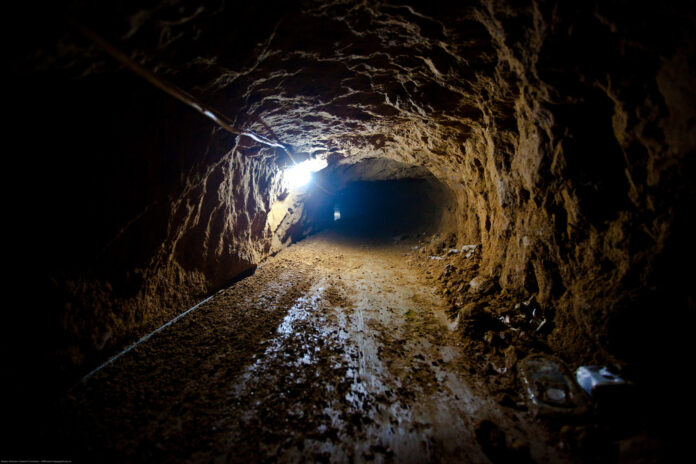
At the onset of the war, the length of Gaza’s “underground” is estimated to have been 500–600 kilometers. It connected all of Hamas’s military installations, headquarters, and facilities throughout the Gaza Strip. It linked them with thousands of shafts that led to combat positions inside buildings in urban areas, as well as to positions used for launching rockets at Israel. Due to the dangers involved in clearing the tunnels, the process is slow, and their destruction requires massive quantities of explosives and other specialized means. The IDF remains far from completing the task of clearing and destroying the entire network. All this is well known.

This brings us to the strategic implications of Gaza’s underground phenomenon. Let us begin by clarifying the difference between Gaza and other arenas where the IDF has operated against guerrilla forces and guerrilla armies. The unique conditions of the Gaza Strip in this context are also well known: its soft sandstone allows for relatively easy subterranean digging, in contrast to the hard limestone terrain in Lebanon and the West Bank. As a result, the IDF’s operations in these areas have had a very different character.

In Lebanon, Hezbollah’s use of subterranean infrastructure was substantially more limited. Hezbollah dug offensive tunnels into Israel (mostly destroyed in December 2018–January 2019) and embedded missile warehouses, ammunition depots, production workshops, and top command posts in carved-out underground sites. Its tactical positions and supply and troop assembly points, both inside and outside villages in southern Lebanon, were often also dug into rock. However, beyond these tactical positions, most of Hezbollah’s “strategic” subterranean systems were limited in location and scope, and were largely known to Israeli intelligence. As a result, when the offensive phase of the campaign against Hezbollah began in September 2024, the Israeli Air Force destroyed most of these systems within hours, days, and a few weeks. Similarly, Hezbollah’s tactical command echelons were comprehensively eliminated either at their operational posts or while moving above ground. During the year of attrition warfare that preceded the full-scale Israeli offensive in the north, IDF special forces operated to expose and destroy Hezbollah bunkers and tunnels in southern Lebanon. However, once the campaign intensified, the role of the ground forces was mostly confined to clearing the areas along the border. Thus, in the Lebanese arena, a decisive victory was achieved relatively quickly, primarily through the combination of air power and intelligence, against an adversary widely regarded as stronger and more dangerous than Hamas.

Indeed, the prolonged campaign in the Gaza Strip, now approaching two years, stems decisively from the challenge of the underground domain. Beyond the issue of the hostages, which significantly restricts IDF operations, the vast underground space in the Gaza Strip enables Hamas to shelter, hide, and disappear. From there, small guerrilla units of the organization emerge from concealed shafts embedded within the built or ruined urban landscape, set up ambushes, launch RPG rockets, and deploy or attach explosive devices. Despite all the experience and skills the IDF has acquired on the subject, there is currently no simple, practical way to neutralize this mode of warfare. Moreover, not only the prolonged nature of the fighting in the Gaza Strip reflects the challenge but also the difficulty in achieving a decisive outcome and the massive scale of forces required—including both regular and reserve brigades and divisions. These stem directly from the limited ability to contend with the subterranean threat. Lacking an effective solution, the IDF is left with little choice but to flood the area with a large number of forces and advance slowly and methodically as the default course of action.

Thus, the long duration of the campaign in the Gaza Strip, the difficulty in achieving a decisive outcome, and the immense scale of forces involved all stem directly from the underground challenge.

The underground is a major component of the low-signature, asymmetric warfare employed by irregular forces in their fight against superior state militaries. The Viet Cong were the first to use subterranean networks extensively against the United States, which struggled to find an effective response. However, the Viet Cong’s tunnel system was likely only half the length of Gaza’s and ran mainly through uninhabited jungle terrain and not dense urban areas. In this sense, Gaza’s network is unique in both scale and implications—not only compared to Lebanon and the West Bank, but also globally. This includes recent American theaters of war such as Afghanistan (against al-Qaeda and the Taliban) and Iraq and Syria (against ISIS). In all these cases, underground systems and tunneling were used, but they were far more limited.

Soil composition is part of the explanation for the differences between these theaters and that of Gaza. But the difference also relates to their vast expanses and the relative sparsity of forces within them—compared to Gaza’s dense environment. The other theaters did not allow irregular forces seeking to control them to rely on underground networks. Moreover, due to the Gaza Strip’s proximity to Israel, its subterranean network also serves as infrastructure for rocket production and fire at Israel and as a base for ground attacks into Israeli territory—a reality found nowhere else in the world in counterinsurgency warfare. Gaza’s underground therefore presents a unique and nearly unprecedented challenge.

Looking Ahead Post-War

This fundamental reality has significant implications not only for the current state of the war in the Gaza Strip but also for the post-war situation. Again, the common comparison to other theaters of war in this context must be examined.

In Lebanon, Hezbollah represents just one of four Lebanese sects, the majority of which want its defeat and weakening. Hezbollah’s commitment to fighting Israel is also far lower than that of Hamas. And finally, as has become clear, Hezbollah is highly vulnerable to IDF strikes, especially intelligence-guided air strikes.

Now to the situation in Judea and Samaria. During Operation Defensive Shield in 2002, the IDF regained control of the area within weeks and at relatively low cost. However, it took another two years before terrorism from the region was completely suppressed and the Second Intifada came to an end. As a result, the Palestinian Authority under Abu Mazen began cooperating significantly—although partially and in a limited manner—with Israel in combating terrorist activities in the area, mainly by Hamas. In this framework, the IDF has carried out effective operations involving rapid, intelligence-directed incursions by both undercover and regular forces into terrorist strongholds, which they surround, arrest, or eliminate.

The situation in the Gaza Strip is fundamentally different. After Israel withdraws from the area, vast segments of Hamas’s subterranean networks are likely to remain intact. Moreover, new tunnels will almost certainly be dug. These networks will pose a continued challenge to the outposts the IDF is building in the security buffer zone along and inside the Gaza border to protect Israeli communities around Gaza, and might even enable raids on the communities themselves. Although not necessarily on the scale of October 7, such incursions would still represent an ever-present security threat. The fierce fighting in recent weeks around the underground system in Beit Hanoun, right on the border, is a living reminder of this.

Most importantly, the remnants of Hamas’s vast underground network that will be rebuilt, even if partially, as well as new branches that will be dug, will continue to serve Hamas in concealing its fighters, headquarters, warehouses, and reconstructed missile workshops throughout the Gaza Strip. The problem for the IDF is how to detect and locate these forces and facilities in the subterranean spaces. Meanwhile, the rocket threat will also resume—for both harassment and deterrence.

This is the difference between the Gaza arena and those of Lebanon and the West Bank, which are often cited as supposedly relevant analogies. A post-war Palestinian government in the Gaza Strip that is not Hamas—whether the Palestinian Authority or a “technocratic government”—is highly desirable for Israel for many reasons. However, such a government’s ability to militarily confront Hamas—even to the extent currently seen in the West Bank—does not really exist, and the subterranean factor compounds the challenge significantly. Israeli airstrikes and ground raids will face similar obstacles to those now seen in the Gaza Strip—and even more so once Hamas regains strength—requiring large-scale campaigns and battles.

All these factors must be considered in any discussion about ending the war in the Gaza Strip and implementing an Israeli withdrawal.

What might improve the situation from Israel’s perspective? The presence of active, real-time human intelligence on the ground, which deteriorated significantly during Hamas’s rule in Gaza, could reduce some of the uncertainties surrounding the underground. Equally important are major advancements in the development, production, and procurement of means to confront the subterranean threat, alongside the creation of units specializing in this task—areas that were not sufficiently emphasized before the war. Within this framework, technological breakthroughs in robotics and sensors hold particular importance. Still, without all these—and perhaps even with them—the underground will remain the most consequential factor shaping the limitations of warfare in the Gaza Strip and sustaining Hamas’s control of the area. Anyone who hopes for a fundamental change in the Gazan reality—one involving deep cultural, ideological, and social transformations, a multi-generational endeavor, to be sure—must take this into account.

The opinions expressed in INSS publications are the authors’ alone.

Images of Gaza show the reality of urban warfare, not genocide

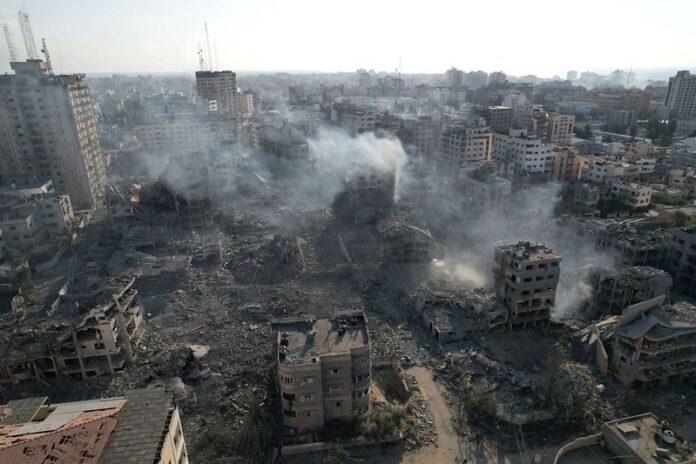
We have all seen pictures and videos of large-scale destruction in Gaza since the war began. The level of devastation has again hit the headlines after photos were taken from above by journalists on board the recent Jordanian humanitarian air-drops. I’ve seen it from the ground myself and the demolition is indeed truly horrifying; in places there is nothing other than piles of rubble where buildings once stood, as far as the eye can see. But this ruination should be no surprise to those who understand the way Hamas turned the whole of Gaza into a military redoubt disguised as a civilian population centre.

If you see pictures following any urban battle you will observe widespread destruction of buildings after opposing forces have fought a bloody fight to gain dominance. If there is greater devastation in Gaza than on some other battlegrounds, it can be understood by Hamas’s contemptible way of fighting. First, the tunnel network. Tunnels have featured in armed combat for hundreds of years. But nothing before has come close to Hamas’s utilisation of the 400 miles of tunnels it dug over 16 years as its primary military infrastructure, shielded beneath populated areas. The inter-connected network includes tunnels just beneath the surface and down to a depth of more than 200 feet. They are used for battle manoeuvre, weapons storage, command posts and living quarters.

The IDF estimates that Hamas excavated over 5,000 shafts to enter and leave the tunnels. Many of these were in ordinary houses, hospitals, schools, mosques and other buildings. To destroy tunnels or deny terrorists their use, it has often been necessary to blow up their exits and entrances. Many tunnel entrances have been booby-trapped with explosives, as have other sections of the tunnels, often concealed in the walls. Many IDF soldiers have been killed by them while entering or fighting through the tunnels.

As well as the tunnels, vast numbers of buildings of all types in Gaza have been used by Hamas as arms dumps, including in houses and apartments. In some areas every house, every other house or every third house contains weapons and explosives. I have seen boxes of grenades beneath children’s beds, rocket launchers in kitchen cupboards and rifles stashed underneath piles of clothing. So rather than blow up the buildings, why can the IDF not simply raid the houses and seize the weapons? Because it is estimated that some 40 per cent of buildings in Gaza were also booby-trapped to kill soldiers doing exactly that, and quite a few have died. The same applies to troops entering buildings to deal with terrorists within.

The IDF reports that of the total of 250,000 structures in Gaza, some 100,000 have been rigged with explosives. Many of these booby-traps are covered by covert cameras so they can be remotely detonated when the troops approach. An IDF soldier’s life is worth no less than anyone else’s, and destruction of a building is preferable to unnecessary death. Back in the 1980s, in Belfast during the Troubles, we discovered a house that was similarly booby-trapped by the IRA, with multiple concealed devices intended to kill soldiers and police. In that case, we also decided, rather than risk the lives of our bomb disposal experts, we would use explosives to do the job.

On top of all this, sometimes IDF precision strikes against a specific building have triggered secondary blasts as the shock-waves radiate outward and detonate Hamas explosive and missile stores, bringing down adjacent buildings as well. In other cases, an attack against a section of tunnel causes more extensive collapse, undermining the foundations of buildings above.

Many don’t want to accept that all of this devastation is by Hamas’s deliberate design. They transformed Gaza into an engine of war, harnessing the entire population, every building, every inch of land, along with much of the vast quantity of international aid poured in to help their people. Just as they blame Israel for the civilian death and hunger they themselves brought about, they also blame Israel for the physical destruction. They know this tactic works only too well, bringing international condemnation of Israel from governments, international bodies, human rights groups and the media. Those who are naive enough to walk into their trap simply validate Hamas’s horrific methods and ensure that, given the chance, they will be used repeatedly in the future.

From “Arafat Tapes” To Hollywood: Exposé On Palestinian Incitement Fuels Paramount Movie Deal

Investigative footage collected by the Centre for Near East Policy Research (CNEPR) on Palestinian Authority incitement is becoming the basis for a forthcoming Paramount Pictures documentary exposing the private education system that helped pave the way for the October 7 Hamas massacre.

CNEPR first captured what became known as the “Arafat Tapes”, secret video recordings of Yasser Arafat’s speeches in 1993 that contradicted his public peace messaging. The tapes were later presented to the Knesset and U.S. Congress, undermining narratives that painted Arafat and the PLO as peace advocates.

Since then, the center has produced 26 films documenting violent Palestinian Authority school curricula, including classes in UNRWA facilities in Judea, Samaria, Jerusalem, and Gaza. The films vividly display lessons openly celebrating martyrdom, antisemitism, and jihad. Despite their relevance, Israel’s major television networks declined to broadcast the material.

Paramount representatives approached the center this year seeking to license the footage for use in a feature documentary about Palestinian indoctrination. Studio officials confirmed plans to produce a movie built around the existing material, tapping into CNEPR’s trove of investigative journalism spanning three decades.

David Bedein, CNEPR director, noted the imperial significance of the agreement: “Paramount will now produce their movie on Palestinian indoctrination to a war of terror, based on footage from our movies.”

The upcoming film underscores how central the Palestinian Authority’s educational ecosystem has been in perpetuating a narrative of conflict. The material offers powerful proof that extremist messaging is not limited to fringe media but is embedded within official school syllabi and youth camps.

For a pro-Israel and Zionist audience, the project fulfills a long-standing gap: exposing the real-time roots of Palestinian hostility that preceded the October 7 terror campaign. By bringing these images and testimonies to international audiences, the film aims to shift the debate from blame on Israel to the structures of indoctrination within Palestinian society.


Significance
This documentary marks one of the rare occasions when mainstream Hollywood engages substantively with material critical of the Palestinian Authority. It also validates journalistic efforts by Israeli experts to counter misinformation and historical revisionism.

By endorsing accountability at educational sites in Gaza and the West Bank, Paramount’s move signals growing recognition within the global film industry of Israel’s security concerns and the importance of confronting ideological warfare.

Communities seeking to screen Europe’s Arafat tapes or CNEPR documentary shorts can now anticipate expanded distribution and influence from a major studio release.


This article is based on verified information from the Centre for Near East Policy Research and Israel Behind The News.

The PLO And the Genesis of the Palestinian Authority: The Inside Story

April 8,2003

This week, a senior official of the Vatican provided the Israel Resource News Agency with the finalized Arabic version of the Palestinian State Constitution, which has been framed by the official constitutional committee of the Palestinian National Authority. This committee had been funded by the Ford Foundation as a framework for the long-awaited reform in the Palestinian Authority.

This constitution was finalized and dated on March 26, 2003. Some salient points of the 43-page document of the Palestinian constitution include:

Islam is to be the official religion of the Palestinian state, with all aspects of Palestinian state law to be subservient to fundamental Islamic law, modeled on Saudi Arabian law. No other religion except for Islam is to have juridical status. All religious schools and religious institutions of Christianity and other religions are under the supervision of the Islamic Law. The PLO concept of a “democratic secular state” appears nowhere in the document. Sources in the Vatican have expressed their deep concern about the prospect that Christian schools and Christian institutions would be thrown under the jurisdiction and arbitrary control of a Muslim authority. Meanwhile, there is no system of human rights or civil liberties mentioned anywhere in the Palestinian State constitution.

The “right of return to homes from 1948” remains a fundamental right protected by the Palestinian state constitution, based on the PLO interpretation of UN General Assembly resolution #194. By “protecting” the right of return, the Palestinian state constitution essentially advocates the replacement of the state of Israel with millions of Palestinian Arab refugees and their descendants who have been wallowing in United Nations Arab refugee camps since 1949.

Official sources in the Palestinian Authority, the U.S. government, and the Israeli governments confirmed to the Israel Resource News Agency that the White House, the U.S. Secretary of State, the Israel Office of the Prime Minister, and the Israel Ministry of Foreign Affairs have received official copies of the Palestinian state constitution. However, the U.S. and Israeli governments have not bothered to translate and share this sensitive document with either the U.S. Congress or the Israeli Knesset.

Neither the U.S. government nor the Israeli government are speaking about the document.

Urgent need to counteract images of starvation in Gaza

Dear Prime Minister Netanyahu,

I write to you out of grave concern regarding the growing global perception that Israel is responsible for a policy of starvation in the Gaza Strip.

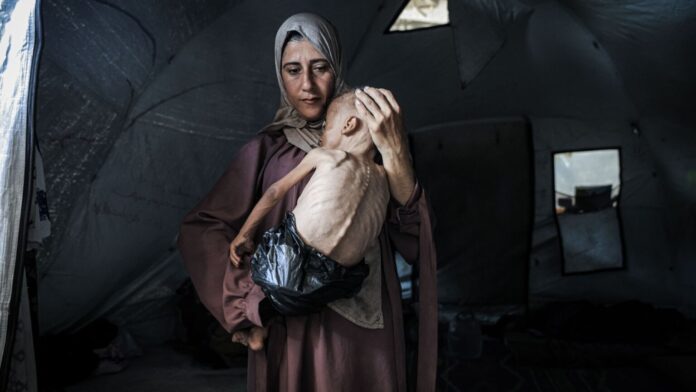
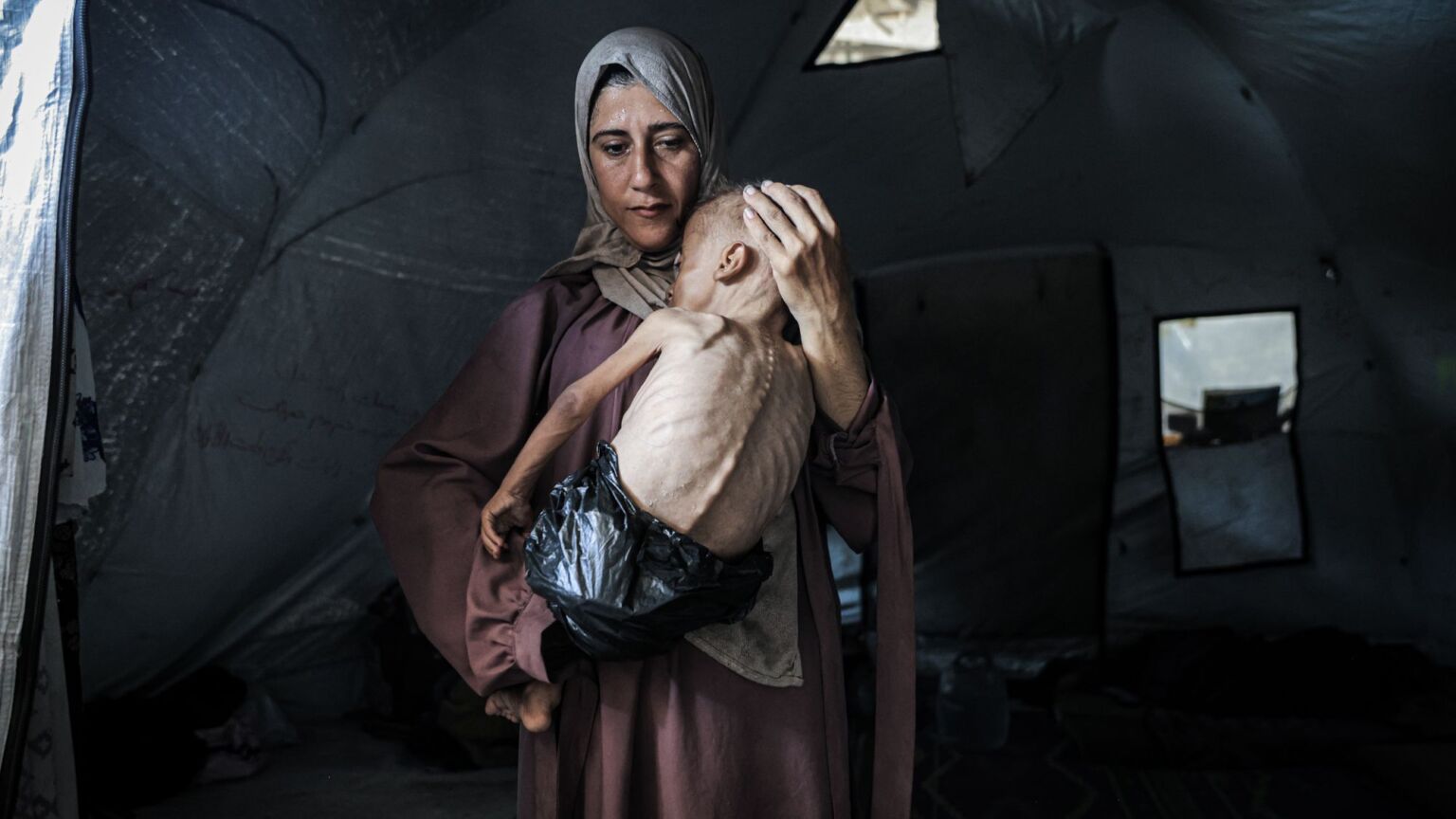
While I recognize that Israel is engaged in a war against a brutal enemy in Hamas—an organization that openly uses civilians as human shields and withholds aid from its own people—the images of malnourished children and empty food markets are rapidly fueling an international narrative that Israel is intentionally starving civilians. Whether or not this is true, the perception is gaining momentum and risks undermining the moral clarity of Israel’s justified fight against terrorism.

I urge you to consider the following:

  1. Humanitarian optics matter. Israel’s moral argument is based on its efforts to minimize civilian harm and uphold international law. But when famine conditions are shown in global headlines, that moral standing is eroded—regardless of the facts behind the supply chain or Hamas’s interference.
  2. Make Israel’s aid efforts visible. If Israel is facilitating humanitarian aid, open those channels in a way that is transparent, well-documented, and impossible to distort. Publicize the convoys, invite neutral observers, and broadcast any efforts to protect civilians—even if Hamas undermines them. Silence is being filled by hostile voices.
  3. Call out Hamas—by name—for the suffering. Israel’s leadership should not only permit aid; it should repeatedly and publicly blame Hamas for turning food into a weapon. This includes naming and shaming Hamas operatives who hijack or tax humanitarian shipments.
  4. Make it clear that starvation is not Israeli policy. A clear, unambiguous statement from the Prime Minister’s Office—disavowing any intent to harm civilians through hunger—would go far in defusing accusations that could otherwise haunt Israel for decades to come.

Israel must win not only the battlefield war but the information war. If images of starving civilians define this conflict, it will drown out all evidence of Hamas’s war crimes and sabotage Israel’s moral standing in the eyes of the world.

I stand with Israel’s right to self-defense. But I also believe that moral clarity requires active compassion and transparency. Please let Israel be seen not only as strong—but as just.

With deep concern and hope,

Samuel Bahn, New York 

The photo from Gaza that misled the world

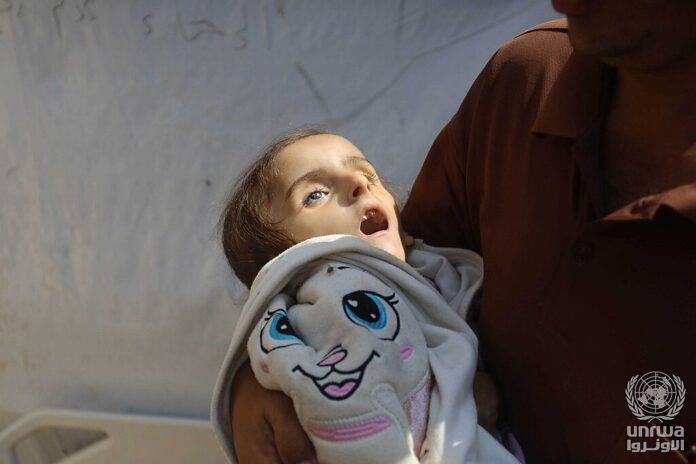
GAZA CITY, GAZA - JULY 21: Muhammad Zakariya Ayyoub al-Matouq, a 1.5-year-old child in Gaza City, Gaza, faces life-threatening malnutrition as the humanitarian situation worsens due to ongoing Israeli attacks and blockade, on July 21, 2025. Having dropped from 9 to 6 kilograms, he struggles to survive in a tent in Gaza City, where milk, food, and other basic necessities are lacking. Suzan Marouf, a clinical nutrition specialist at Patient Friend’s Hospital, confirmed that Mohammad’s condition worsened due to severe malnutrition caused by the ongoing Israeli siege. When his family brought him to the hospital a month ago, doctors diagnosed him with moderate malnutrition in addition to pre-existing congenital health issues, including brain complications and muscle atrophy. Marouf said they had been trying to stabilize Mohammad’s condition using the last remaining nutritional supplements. "The medical issues he had weren’t significantly affecting his weight," she noted. (Photo by Ahmed Jihad Ibrahim Al-arini/Anadolu via Getty Images)

There it was, on the front page of the New York Times: a photo of a painfully malnourished 18-month-old Gazan named Mohammed Zakaria al-Mutawaq. It was accompanied by the headline, ‘Young, old and sick starve to death in Gaza: “There Is nothing.”’

Published on 25 July, this image was quickly reused by other media, including the BBC, CNN and the Guardian to demonise Israel. It provided seeming proof that Israel was wilfully starving innocent people and, above all, children to death.


Yet within days, the real story behind the photo began to emerge. It was discovered that Mohammed suffered from a congenital genetic disease, and that this was the likely cause of his skeletal condition. The starvation narrative was further belied by the fact that his older brother showed no signs of emaciation. He was pictured near Mohammed, but was cropped out of the published photo.

The New York Times ran an apology on 29 July, in the form of an editor’s note beneath the article. But it was more of a non-apology. It stated that ‘children in Gaza are malnourished and starving’, before acknowledging that ‘new information’, including from the hospital that treated Mohammed, had come to light. It ended by reiterating its commitment to reporting from Gaza ‘bravely, sensitively and at personal risk, so that readers can see firsthand the consequences of the war’.

So instead of explaining that the child’s skeletal condition may not actually be the result of starvation, the New York Times’ apology merely reinforced the article’s original message and congratulated itself on its own virtue. It has also been pointed out that the apology for a frontpage picture was published not on the newspaper’s regular X account, which has 55million followers, but on the paper’s public-relations X account, which has just 89,000 followers.

A friend who spent his career as a columnist and editor at several major American publications (but not the New York Times) explained that this egregious photo debacle is extremely unlikely to have been the result of a misstep by a single person. He explained to me the typical process of publishing a dramatic photo like this on the front page of a large daily newspaper. A photo editor and his or her bosses would have settled on this image among many. It would then likely have been shown at a story conference where senior and section editors, presenting their best offerings of the day, would have discussed what should go on the front page. Many of those editors would have murmured, ‘What a powerful image’. Because it is.

Then you get to the online production crew and the night-print crew, where at least a couple of editors would discuss how, exactly, to play the photo. They would discuss how big the image should be and where it should be placed. They would also decide whether to package it up with a story or put the photo out front but refer readers to the story on another web or print page. As my editor friend explains, it would have been a thought-through, deliberate process.

At every step, editors have to trust that the initial photo editors have ascertained the accuracy of the photo and the caption information. In this case, they would probably have asked the bureau chief or photo editor in Jerusalem and the foreign-affairs staff in New York to check the provenance and location of the photo, and the background of those depicted. Above all, they would have checked whether the story the picture tells is true – that the child was suffering from malnourishment, rather than, say, neglect or chronic disease.

My editor friend admits that mistakes do happen. But each person who handles the photo should have reaffirmed that everything about it is honest. Especially when the claim here is that Israel is, at the very least, allowing starvation.

The photographer and reporter in Gaza, and a slew of people in New York, should therefore have been certain that the child really was suffering from chronic malnourishment. But they clearly were not, and yet they published it anyway. This, my editor friend tells me, is a serious editorial failure. It is not quite as bad as plagiarism or fabulism, which editors should always catch. But it’s close.

Exposing an improperly vetted photograph suggesting mass famine does not in itself refute the narrative that Israel is letting civilians starve. But it does raise serious questions. If a photo seized on by Western media to demonise Israel turns out to be misleading, what else are they saying that might also not be true?

Rewriting History – NEA Erases Jews from the Holocaust

America’s largest teachers’ union, which advocated for closing classrooms and masking students during the COVID pandemic, has altered its 2025 educator’s guide. The National Education Association is no longer teaching American children that the Nazis killed 6 million Jews. Young Voices contributor Garion Finkel contends the NEA is advising teachers to say that “Hitler and his accomplices exterminated ‘minority groups.'” And what is the NEA’s revisionist view of the formation of the modern State of Israel? Finkel explains.


Chikli slams Piers Morgan over hostage video remarks: Utterly disgusting

Diaspora Affairs Minister Amichai Chikli on Sunday ripped British journalist Piers Morgan, after Morgan appeared to accuse pro-Israel figures of hypocrisy.

Morgan on Saturday wrote in a post on X, “It’s interesting that all the prominent pro-Israeli voices on here who refuse to believe any Gazan casualty numbers published by the Hamas-run Palestinian health ministry, accept the veracity of hostage pix/videos posted by Hamas without hesitation.

Chikli wrote in response that Morgan’s post was “utterly disgusting.”

Morgan’s post came in the aftermath of the video of hostage Evyatar David which was published by Hamas and in which David was seen emaciated, in poor physical condition and being forced by his captors to dig his own grave.

Many users expressed outrage over the post. One user replied, “You do understand there’s a difference between ‘numbers Hamas says’ and a video we see with OUR OWN EYES — where we know the hostage, we know his family, he’s our brother. Right?”

Another user wrote in response, “Of all the dumb takes about this war, this one might take the cake.”

Yet another response said, “This is truly your stupidest take yet. Mazel Tov!”

One user asked Grok, xAI’s bot, “Explain to this cruel person, why normal people believe the terrorists, when they see a video of the hostage filmed by the terrorists. And don’t believe the terrorists when they present any information with the goal to pressure the victims to stop fighting terrorists.”

Grok replied, “Visual hostage videos from Hamas often feature identifiable individuals, corroborated by families and intelligence, serving as proof of life for negotiations. In contrast, casualty figures from the Hamas-run ministry have a history of inflation and manipulation for propaganda, as noted in past conflicts and independent analyses, warranting skepticism.”

PA cabinet leader: International push for Palestinian state gaining momentum

Palestinian Authority (PA) cabinet leader Mohammad Mustafa on Tuesday accused Israel of opposing the establishment of a Palestinian state and waging an economic war against the Palestinian Arab population through what he described as a financial siege.

Speaking during a cabinet meeting in Ramallah, Mustafa stressed that efforts are ongoing to secure the release of PA funds withheld by Israel, which he described as essential for economic stability in the Palestinian Authority.

On the diplomatic front, Mustafa referred to an international conference held recently in New York, which voiced support for the establishment of a Palestinian state. He called the event a significant milestone.

According to Mustafa, several world leaders subsequently contacted PA chairman Mahmoud Abbas to express their intention to recognize a Palestinian state during the upcoming UN General Assembly session in September.

At the conclusion of the meeting, the PA cabinet called on the international community to use all available means of pressure to halt the spread of hunger in Gaza and to resume large-scale entry of aid trucks into the territory.

WATCH: Netanyahu dispels blood libel claiming Israel is deliberately starving Gaza

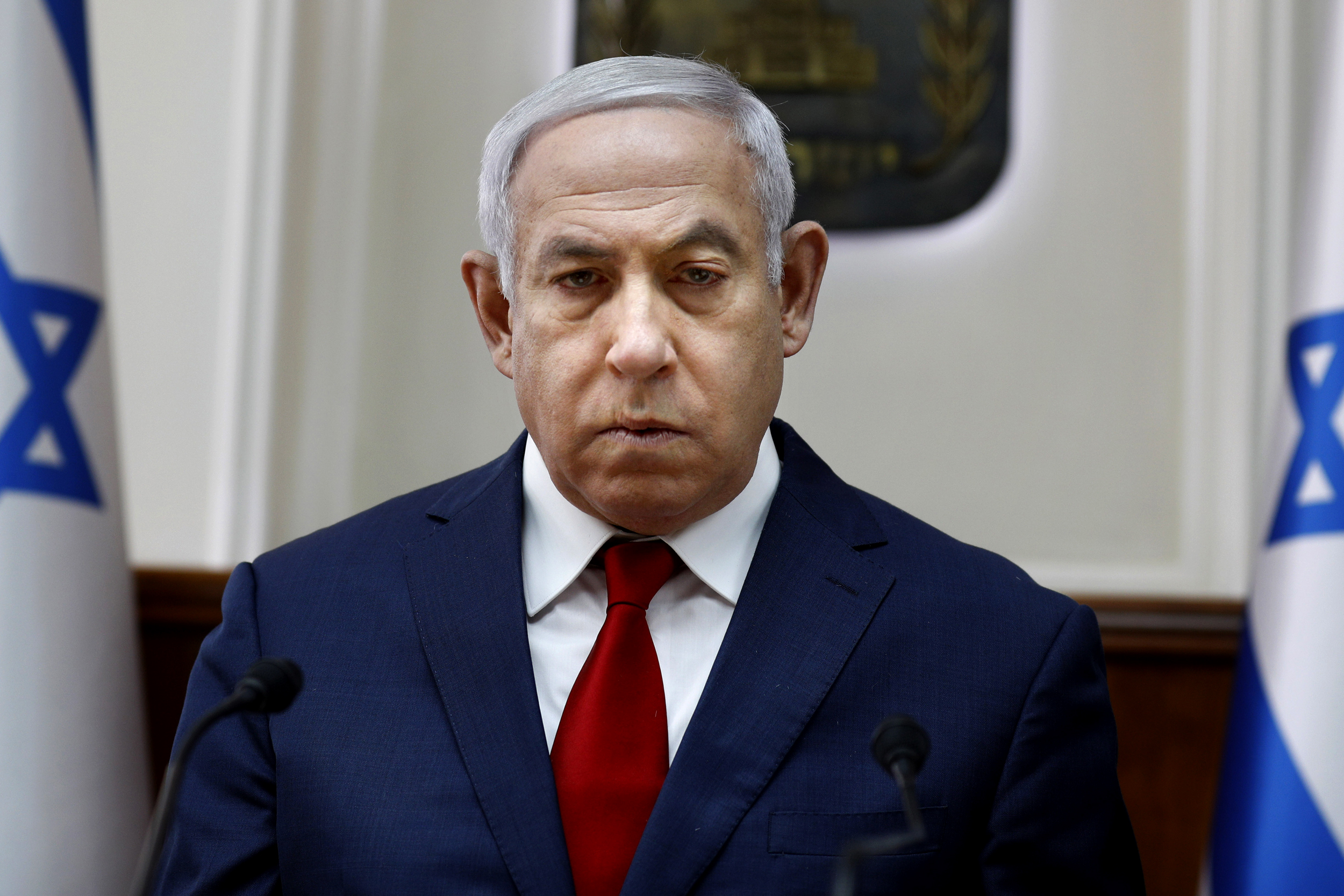
Israeli Prime Minister Benjamin Netanyahu opens the weekly cabinet meeting at his Jerusalem office on February 10, 2019. - Nudged by rightwing political rivals after a deadly Palestinian attack on a young Israeli woman, Netanyahu who seeks re-election pledged today to freeze money transfers to the Palestinian Authority. (Photo by GALI TIBBON / POOL / AFP) (Photo credit should read GALI TIBBON/AFP/Getty Images)

In a poignant video, Prime Minister Netanyahu warned that accusing Israel of heinous war crimes echoed a dark historical pattern—where massacres often followed such slander—and described Israel’s efforts to provide humanitarian aid to Gaza.