No one asks these Palestinian Arab engineers if they will refrain from incitement

Palestinian engineers employed by Nvidia (Courtesy)

Nvidia Corp., the US gaming and computer graphics giant that acquired Israel’s Mellanox Technologies Ltd. for $7 billion, will employ 100 Palestinian engineers who are working as subcontractors at Mellanox as salaried workers.

The engineers, working in the Palestinian cities of Hebron, Rawabi and Nablus, were formerly employed as outsourced contractors, Eyal Waldman, Mellanox co-founder, said in a Facebook post published in Hebrew, English and Arabic on Wednesday. The workers from Gaza will remain subcontractors, for the time being, he wrote.

“First and foremost, this is a historic moment and an unprecedented achievement for the Palestinian workers,” he wrote. “It is their commitment, their professionalism and their excellence, that has led to the completion of this historic moment, in which a leading international high-tech company directly employs personnel in the Palestinian Authority.”

Palestinian engineers employed by Nvidia (Courtesy)

Nvidia Corp., the US gaming and computer graphics giant that acquired Israel’s Mellanox Technologies Ltd. for $7 billion, will employ 100 Palestinian engineers who are working as subcontractors at Mellanox as salaried workers.

The engineers, working in the Palestinian cities of Hebron, Rawabi and Nablus, were formerly employed as outsourced contractors, Eyal Waldman, Mellanox co-founder, said in a Facebook post published in Hebrew, English and Arabic on Wednesday. The workers from Gaza will remain subcontractors, for the time being, he wrote.

“First and foremost, this is a historic moment and an unprecedented achievement for the Palestinian workers,” he wrote. “It is their commitment, their professionalism and their excellence, that has led to the completion of this historic moment, in which a leading international high-tech company directly employs personnel in the Palestinian Authority.”

“We set out 10 years ago with a small team of only five people, we’ve weathered through criticism, we went through military conflicts and operations, and along the way it was clear to us that the joint professional work comes first. The daily positive interactions between Palestinian and Israeli teams have repeatedly demonstrated the immense potential inherent in a respectful discourse between people and the ability to put aside opinions and perceptions and unite together in one common goal,” Waldman wrote.

Eyal Waldman, left, founder and CEO of Mellanox, and Jensen Huang, the founder and CEO of Nvidia Corp., at a press conference in Yokne’am, Israel, on March 25, 2019 (Shoshanna Solomon/Times of Israel)

The Palestinian teams “play an integral part in the company’s success story,” Waldman wrote. “What began as an economic and efficient outsourcing solution, soon became a professional fraternity and a beacon for the ability to maintain a healthy and respectful discourse between peoples.”

Mellanox outsources some 100 software development jobs to Palestinians via ASAL Technologies, a Palestinian tech company it partnered with seven years ago. ASAL was based in Ramallah but is now located in Rawabi, a new West Bank city in an area controlled by the Palestinian Authority. Rawabi hopes to become the center of an emerging Palestinian high-tech economy.

All of the subcontracted engineers in the West Bank will now be salaried workers at Nvidia, Waldman said in phone interview with The Times of Israel. The firm is now looking to see how the additional 20 engineers subcontracted in Gaza can also become part of Nvidia staff, he said.

This change of status is “very significant” for the workers, Waldman said in the interview. It will open new opportunities for them within Nvidia, he said, giving them certain rights and offering them a variety of roles within the US firm, including relocation.

“They become part of the big company, and this opens them very many economic, professional and personal opportunities,” he said.

After the acquisition by Nvidia, the Palestinian engineers working as subcontractors at the Israeli firm were reportedly poised to share a $3.5 million payout at completion of the deal. Mellanox offered the Palestinian engineers it outsourced in the West Bank and Gaza Strip stock options, even if they were not permanent staff.

Mellanox has been outsourcing programming jobs to Palestinians in the West Bank since 2010 as part of Waldman’s push to improve relations between the two sides of the Palestinian-Israeli conflict. Israel also suffers from an acute shortage of engineers and programmers, and the Palestinians offer Israel based firms a growing pool of talent that they can tap into, instead of hiring in India or Ukraine.

Large multi-nationals in Israel, including Cisco, Microsoft, HP and Intel, already outsource to Palestinian companies in West Bank.

In his Facebook post, Waldman called on other Israeli and international companies to employ Palestinian workers. “In these days when polarization, hatred, nationalism and violence ware taking up more and more space in our country, in our regions and our world, let us find the power to see the good, the right, the humane, the innovative, the conciliatory and the tolerant which exist in both sides and in every one of us,” he wrote.

Real reason Israel had to launch pre-emptive strike against Iran

Israel and Iran are not “trading blows” as some have phrased it. Israel is dealing strategic devastation on Iran, eliminating much of the terrorist regime’s military top brass and key nuclear scientists , and attacking nuclear weapons sites, air defence systems, and offensive drone and missile capabilities.

Meanwhile Iran is lashing out with drones and ballistic missiles, fired into Israel’s population centres, deliberately killing and wounding civilians in places like Tel Aviv, the most densely populated city in the country. Here, for the last two nights I have heard ballistic missiles roar overhead and seen Israel’s impressive air defences knock some of them out of the sky.

Those missiles that did get through told a terrifying story. What if just one of them had been armed with a nuclear warhead? Vast numbers would have been killed. That’s why Israel had to launch this pre-emptive assault on the Islamic Republic. Israeli intelligence and the International Atomic Energy Agency both saw that Iran was on the cusp of obtaining nuclear weapons capability.

Had they been allowed to get to that point we must assume they would use them in pursuit of their frequently declared intent of destroying Israel. That Jerusalem has nuclear weapons would not have deterred them.

The fanatical ayatollahs in Tehran wouldn’t care how many of their own people were sacrificed in pursuit of their religious duty of annihilating the Jewish state. As for the rest of the world, it should be grateful to Israel because a nuclear armed Iran would have threatened us all.

The ayatollahs have repeatedly shown their unbridled thirst for violence before, including killing British soldiers in Iraq and Afghanistan and attempting terrorist attacks in our country.

All wars are terrible but sometimes they have to be fought to prevent an even worse evil.

Colonel Richard Kemp is a former senior British Army commander

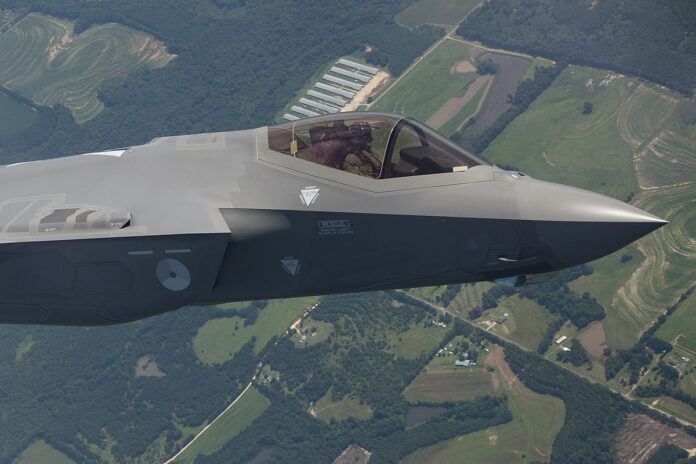
Ankara watched Israel’s Iran attack: 200 jets in 6 waves, local support

Israeli warplanes launched a major airstrike on Iran in the early hours of June 13. The attack targeted military and nuclear facilities, killing Iran’s Chief of General Staff Mohammad Bagheri, Revolutionary Guards Commander Hossein Salami, and 6 scientists involved in Iran’s nuclear program. The Natanz nuclear reactor was also hit. Reports claim Airospace Forces Commander Amir Ali Hajizadeh was killed as well.

Israeli Prime Minister Benjamin Netanyahu declared the attacks would continue “as long as necessary.”

Türkiye condemned the attack “in the strongest terms.” Sending condolences to Iran because of the loss of lives, President Tayyip Erdoğan said, “Netanyahu and his gang of massacres” must be stopped.

Turkish Foreign Ministry stated that this “provocation” was a “clear violation of international law,” serves Israel’s “strategic destabilization policy in the region”. Ministry urged Israel to immediately halt its “aggressive actions that could lead to larger conflicts” and called on the international community to “act urgently” to prevent the war from escalating.

Turkish Ministry of National Defense monitored the attack from start to finish, with a source stating that “all necessary measures were taken.”

200 aircraft in 6 waves

According to sources who spoke to YetkinReport anonymously, Ankara tracked Israel’s attack on Iran minute-by-minute starting from midnight on June 12. Ankara’s monitoring and assessments can be summarized as follows:

• The first Israeli aircraft took off toward Iran at around 1 a.m. on June 13, followed shortly by a second wave.
• After the first two waves advanced through Syrian airspace and then retreated, Ankara’s crisis center assessed this as a “deception operation,” predicting the main attack was imminent. The primary assault followed shortly after.
• The first reports of explosions in Iran emerged around 4 a.m. Israeli jets utilized Syrian and Iraqi airspace during the attack.
• According to the crisis center, Israel’s operation, codenamed “Rising Lion,” involved nearly 200 aircraft in 6 waves.

Local intel Support

Ankara’s technical assessments indicate Israel received internal support within Iran for targeting:

• The Chief of General Staff, Revolutionary Guards Commander, and six nuclear scientists were killed at their locations. Some were struck in specific apartments, reminiscent of Israel’s operation to kill Hamas leader Ismail Haniyeh in a Revolutionary Guards guesthouse in Tehran.
• Such an operation would be impossible without intelligence support from within Iran. Precise confirmation of targets’ locations and laser designation for airstrikes was required.
• This suggests Israel, likely through MOSSAD or other means, had high-level intelligence support within Iran. The Iranian air defense system’s failure to respond to the airstrikes indicates it was neutralized through electronic warfare, possibly with external assistance.
Notably, two days before the attack, the opposition group People’s Mujahedin of Iran revealed details of a new nuclear program Iran allegedly concealed from the U.S.

Objective: Regime Change

Ankara believes the attack’s goal extends beyond destroying Iran’s nuclear program or forcing compliance with U.S. demands. The assessment is as follows:

• Israel, backed by Zionist lobbies, seeks to leverage the support it received during the Gaza conflict from the U.S. and some Western European countries for its Iran strategy. This opportunity aligns with the Trump administration’s desire to shift focus from the Middle East to the Pacific and counter China.
• No country in the Middle East is likely to go beyond political condemnations or diplomatic efforts to stop Israel’s attack on Iran. Saudi Arabia and Gulf states, despite public criticism, are privately content with Iran’s weakening, especially after the regime change in Syria.
• Israel’s targeted killing of 6 nuclear scientists and strikes on facilities like Natanz cannot fully dismantle Iran’s nuclear program, as key facilities are 50-60 meters underground, with only surface structures hit. These strikes aim to demoralize the public and erode trust in the regime. The killings of the Chief of General Staff and the Revolutionary Guards Commander directly target the regime.
Thus, the attack’s primary objective appears to be destabilizing Iran’s Islamic Republic regime. Ankara estimates that if Iran does not comply with U.S. demands, the U.S. may intervene directly. Indeed, Trump has threatened that “subsequent attacks will be more severe” if Iran does not reach an agreement.

Iran poses an existential threat to Israel. Could Netanyahu be his country’s Churchill?

Over the decades, it became a cliché that, after a terrorist attack, an Israeli spokesman would come on television and say, in the tone of someone who means business, “Israel will know very well how to respond.” Usually, this was true.

After the Hamas atrocities of October 7 2023, it was not true. The shock of the sheer evil of the massacres was compounded by the shock of Israel’s failure to foresee them. That failure made it harder for Israel to react appropriately and fast.

But the other effect of October 7 was to teach Israel no end of a lesson. Ever since its foundation in 1948, it had always said it faced existential threat; yet here was that threat proved in the most bestial way, and it had not been ready.

Israel’s repeated, wide-ranging and successful attacks on Iran’s installations and key military leaders in the small hours of Friday morning and again on Friday night follow the logic of the lesson Israel has re-learnt. In particular, the Israeli air force has displayed the greatest effectiveness since its heroic Operation Focus in the 1967 Six-Day War. Israel knew very well how to respond.

The phrase “existential threat” is bandied about. In a vague sense, the entire world faces existential threats, from nuclear weapons and, some say, from climate catastrophe. But targeted, active existential threat – an enemy trying to wipe you out – is much less universal. In the world just now, only two UN-recognised nations face it. They are Ukraine and Israel.

Vladimir Putin denies that Ukraine is a nation at all. His imperial version of history proves this to his satisfaction, so he feels free to use any amount of violence to return Ukraine to “the Russian world”. It is not racist: after all, he thinks Ukrainians are Russians. But it is ravenously tyrannical: obliterate the Ukrainian state and subjugate its people.

The violent opponents of Israel go one better – or rather, worse. They want not only to destroy the state of Israel, but also to kill all the Jews who inhabit it. In living memory, Jews learnt about that. I was about to call it “lived experience”, but the phrase froze on my lips: most died.

Here in Britain, when the militant Gaza marches, so indulged by our police, surge through our streets, opinions vary. A minority, chiefly Muslim, supports them. Most people find them irksome, disruptive, aggressive. For Jews, it is much more serious than that. When the marchers shout about a free Palestine, “From the river to the sea”, Jews know which river, and which sea. The slogan offers the people of the Jewish state no nation, no room, no life.

Ever since its revolution of 1978-9, Iran has put this destruction at its heart. “Death to Israel” is the constant cry from the ayatollahs’ pulpit, and because Iran is a theocracy, that is not just the aspiration of perverted religion, but a policy. It is why Iran wants the nuclear bomb.

So whereas Western powers undoubtedly do not want a nuclear Iran, seeing it as a menace to regional peace, they regard this as just one of the trickier questions of international relations. It is even, from a diplomatic view, rather exciting. Officials preen themselves on dealing with difficult people: how clever they felt when they concocted with Iran the Joint Comprehensive Plan of Action (JCPOA), now deceased. For them, the question is not existential. For Israel, it is.

For a long time now, Iran has been the principal orchestrator of global and regional attacks on Israel. Even for Hamas, which is Sunni not Shia, it has been a key backer. With Hezbollah, it has been, in effect, the commander, as it is for the Houthis in Yemen and numerous militias in Iraq.

For just as long, and especially under the premiership of Benjamin Netanyahu, Israel identified Iran as its greatest external threat, but the difficulty was to inspire in friends of Israel the necessary sense of urgency. Especially with the administrations of Barack Obama and Joe Biden, the United States could always find a reason to stall Israeli efforts to stop the Iranian nuclear programme dead.

But the after-effects of October 7 changed everything. In April last year, by which time it had at last made progress against Hamas in Gaza, Israel decided to hit back at Hezbollah’s attacks as well and killed two Iranian generals in their country’s embassy in Damascus.

The Iranian Revolutionary Guard Council (IRGC) and Hezbollah then launched Iran’s first ever direct attack on Israel. It was called Operation True Promise, but its results were feeble. Virtually all Iranian drones were interdicted and there were scarcely any casualties. A second Iranian attack in October was a bit more successful but still, overall, a failure.

In July, Israel was able to kill the Hamas political leader, Ismail Haniyeh, when he was the honoured guest of the Iranian regime in Tehran. In September, with its famous blowing up of their pagers, Israeli killed dozens of Hezbollah leaders in Lebanon and Syria; shortly afterwards, it assassinated the Hezbollah leader Hassan Nasrallah in Beirut. It was also helpful that, before Christmas, president Bashir Assad had fallen in Syria.

The hits were the result not only of prodigious technological precision, but also of the most careful, long-term Mossad penetration of Iran, whose IRGC and wider regime have become more corrupt. The fact that Israel’s attacks succeeded showed that Iran, far from being invincible, had become decadent.

Why not leave it there, then? Why not let Iran stew in its own juice until its people finally muster the courage to overthrow it? Here again, the issue is existential threat. Israeli intelligence recently reported a new Iranian sprint to get the bomb while negotiations were in progress. The International Atomic Energy Authority, usually so reticent, this week announced that Iran had achieved new nuclear capacity in breach of its commitments. Iran itself boasted of its advances. The situation is a bit like Germany’s development of V2 rockets in 1944: it was losing the war, but its power to attempt a desperate last throw made it deadly dangerous.

Historians will debate – indeed they are already debating – how exactly we reached this point. Did Iran deduce that Donald Trump, under the influence of anti-Israel Maga types, was being less hawkish than it had expected? Did it therefore judge that he would block an Israeli attack, and conclude it could get away with proliferation? Did Netanyahu, with a similar worry the other way round, feel the need to force the hand of a hesitating White House? Or was Trump’s recent show of reluctance a coordinated feint which gave Israel the advantage of surprise? It is not clear, though we do know that he was aware of Israel’s intentions.

But what does seem clear is that Israel is winning by prosecuting its long-term existential aims rather than seeking an unavailable peace process. Coverage in the West is obsessed by the idea that Israeli behaviour is the product of Netanyahu’s cynical selfishness in clinging to power. He is certainly intensely controversial within his own country, but not in relation to Iran.

It is that existential point again. Most Israelis agree who their greatest enemy is. Who are we to say they are wrong? For decades, Iran has been their Goliath. Netanyahu, aged 75, is no David. But he must by now have some claims to be their Churchill. He has seized the moment to insist on national survival.

Israel’s war of retribution

The operation carried out by Israel in the early morning hours of June 13 had been planned since November. If it had not been put into action, Israel would have paid with its life since it looked like Iran had nuclear bombs ready and thousands of ballistic missiles prepared to deliver them and destroy the small Jewish homeland.

The turning point came quickly, but the direction and the lies had been evident for years.

Those who understand extremist Islam know that its adherents cannot give up their eschatological mission through a political negotiation, not even with U.S. President Donald Trump. In his statements, he showed a sense of reality when he warned Iran to make a deal, but they refused.

Just like the prodigious operations undertaken by Israel to win the 1967 Six-Day War, which was built over years of preparation by the Israeli army and the Mossad—knowing that it was the fundamental aim of Egypt and Syria to destroy Israel—the attack was again prepared down to the smallest detail. As always, it’s the circumstances that compel action. The training was not only technical, but of heart and soul, to face the impossible some 1,200 miles away.

In that land, in 2006, Iranian President Mahmoud Ahmadinejad, who combined the brutal oppression of his people with a Shi’ite mystical project to destroy the Jewish people and dominate the world, as he declared even at the United Nations, organized an international cartoon contest mocking the Holocaust. It was followed by an international conference to deny the Holocaust.

Billions of dollars, spent at the expense of the starving Iranian people, were invested in building the ultimate weapon to destroy the Jews.

Meanwhile, an iron ring was forged to strangle Israel at its borders and in its streets through terror. The Iranian masses, enslaved by the regime, shouted daily, “Death to Israel.” Hamas received the plans and weapons for Oct. 7, 2024; Hezbollah got the missiles and its very existence. Tehran exported hatred of Jews to the streets and universities of the world.

If anyone in this world polluted by lies against Israel is still capable of recognizing the truth, they will understand that a new era is here and breathe a sense of relief as evil has found someone willing to fight it.

Iranian friends, many of whom have good relations with the Jews, are grateful and hope that this finally marks the end of one of the most cruel and repressive regimes of women, dissidents and homosexuals.

Before the 1979 Iranian Revolution, problems between members of the multi-ethnic country and the Jewish people were nominal. It was the leader of the revolution, Ruhollah Khomeini, who decided to ally with the antisemitic, anti-American Communist forces, defining Israel as “a colonial imperialist state.” Other Iranian leaders, Ali Khamenei and Ali Akbar Hashemi Rafsanjani, repeated the aim to destroy Israel as a partner of America’s “global arrogance.”

Israeli Prime Minister Benjamin Netanyahu noted that since last year, it had become clear that while Trump was initiating talks with the Iranian regime, its leaders continued to push for enriching uranium. Its dream was not only destroying Israel but of dominating the world with a nuclear weapon in fanatical hands.

The Hamas-led terrorist attacks in Israeli communities on Oct. 7, 2023, led many to proclaim the end of the Jewish state. Hamas pointed the way with premeditated slaughter. Hezbollah attempted to follow suit on Oct. 8, launching rockets and missiles at Israel’s northern communities. The pager and walkie-talkie operation Israel facilitated last September against Hezbollah operatives, coupled with the assassination of both Hamas and Hezbollah senior leadership, led to the expulsion of Bashar Assad in Syria. The tide began to turn.

On June 13, Israel’s fight for its survival through autonomous decisions and a surprise military operation has restored the pride and, hopefully, future safety of this tiny country.

In Israel, people woke up in the middle of the night. This time, they were asked to be more prepared than usual to go down two floors instead of one, if possible. There are no wars without a price.

But this war may be the one that changes the face of the region. If Israel’s strength holds and if the Americans remain with them, even through negotiations, it may bring about a peace that says the era of attacking Israel is over, and that Israel no longer has to fight every day to survive.

Israel can see what Europe can’t: the Devil

“The cleverest ruse of the Devil,” wrote Baudelaire in 1864, “is to persuade you he does not exist.” More than 160 years later, great swathes of Leftists, Israelophobes and Western leaders appear to have fallen under this spell when it comes to the regime in Tehran.

Sir Keir Starmer delivered the usual message of pacifism on behalf of Britain. It matched that of Ursula von der Leyen and the other centrist fundamentalist European leaders, all of whom are equally addicted to the numbing opium of appeasement.

Instead of seeing a resolve for victory, we were subjected to repeated demands for “de-escalation” and “diplomacy”. Having so loudly decried the Iranian threat in recent months, even placing it in the highest category of the new foreign influence register, the Prime Minister seemed unable to connect the synapses.

By the time Israel was driven to attack, the international community had not imposed snapback sanctions on Iran. Britain even disgraced itself by refusing to help with Israel’s defence. The Ayatollah could be launching nuclear bombs at all the major cities of the West in a sulphurous haze, and David Lammy would still extol the virtues of jaw-jaw.

In central Tehran, there is a clock counting down to September 9, 2040, the date of Israel’s destruction as prophesied by the Ayatollah. The regime has enriched uranium to a level only required for military uses. When Khamenei gives speeches, the crowd chants: “Death to America! Death to England! Death to the hypocrites and the infidels! Death to Israel!” Until yesterday, Iran’s scientists could produce 15 nukes within days.

Khamenei’s pet theology lusts after the apocalypse. Triggered by the obliteration of Israel, this cataclysm will supposedly herald the arrival of the “Mahdi” to lead Shia forces to global victory. These are the convictions that drive actual Iranian foreign policy. De-escalation and diplomacy are laughable, yet this is what Israel has suffered since the Obama era. When Jerusalem was forced to act, you’d have thought the West would rally. But no. Israel was the bad guy.

We have seen this movie before. When Jerusalem destroyed Saddam Hussein’s nuclear programme in 1981, the world was appalled. “A clear violation of… the norms of international conduct,” the United Nations huffed. Two decades later, the White House quietly acknowledged that the Jews had done everybody a favour.

We may see a similar change of heart by 2045, but there will be much danger before then. Starmer and the Europeans don’t realise how outdated they sound in this new, perilous world. As Vasily Grossman put it in Life and Fate: “Only yesterday you were sure of yourself, strong and cheerful, a son of the time. But now another time has come – and you don’t even know it.”

Their era has passed. This is Israel’s century. While dogs of war bark globally and instability grips America, the countries that will thrive will be those with conviction in their values and the courage and resilience to defend them. “The world will never pity slaughtered Jews,” observed Menachem Begin. “The world may not necessarily like the fighting Jew, but the world will have to take account of him.”

With Russia and China sharpening their knives, we must not only take account of the fighting Jew but also follow his lead. Just look at Ukraine. First, however, we must accept what our grandparents learned the hard way. The Devil exists. It makes no sense to appease him.

Will Labour actually act on the Casey grooming gang report?

as the government really U-turned on grooming gangs? Six months after resisting a national inquiry into the crimes committed against young girls by men of predominantly Asian heritage, ministers have announced one. But Yvette Cooper’s statement to MPs this afternoon about the exact nature of that inquiry suggested the government had executed something a little wobblier than a U-turn.

The Home Secretary told the Commons that Louise Casey’s rapid review had recommended a national commission – with statutory inquiry powers – which will direct and oversee the local inquiries into grooming gangs that are already underway. It would not be ‘another overarching inquiry of the kind conducted by Professor Alexis Jay’, added Cooper. ‘Its purpose must be to challenge what the audit describes as continued denial, resistance and legal wrangling among local agencies.’ While it would be time-limited, the Home Secretary later told Reform MP Richard Tice that it would take around three years.

There will need to be quite a sustained storm to ensure that there is real change in policy

Is this a full public inquiry? Not quite. And it’s not quite a U-turn. But it’s enough of one for ministers to claim that they are taking grooming gangs as seriously as the row at the start of the year demanded. Detailing Casey’s ‘disturbing’ findings, Cooper said the law had

Ended up protecting [perpetrators] instead of the victims that they had exploited, deep rooted institutional failures stretching back decades where organisations who should have protected children and punished offenders looked the other way.

She added that ‘blindness, ignorance, prejudice, defensiveness and even good but misdirected intentions all played a part in this collective failure’. None of these findings are particularly new or surprising, other than the need for better data, particularly on ethnicity. On that, Cooper said Casey’s review had found the following:

In the local data that the audit examined from three police forces, they identified clear evidence of over-representation among suspects of Asian and Pakistani heritage men, and she refers to examples of organisations avoiding the topic altogether for fear of appearing racist or raising community tensions.

Given there is little that is new in what Casey highlighted, a more important question than what sort of volte-face ministers have executed is whether the new inquiry will lead to real changes. Cooper told MPs that further action was being taken to implement the recommendations of the seven-year inquiry from Jay. The recommendations from Casey included expunging the criminal records of those who had been convicted for child prostitution while their abusers walked free. The National Crime Agency will also launch a new criminal operation into grooming gangs which will develop a new operating model for police forces nationwide to ensure grooming gangs are always treated as serious and organised crime.

Both Cooper and Tory leader Kemi Badenoch spent considerable portions of their respective speeches pointing out that they had been working on this for years and arguing that the party on the other side of the Chamber had done nothing. Both of them had a furious tone as they railed against the injustice of it taking so many years for too few victims to get justice.

Badenoch – who would not normally, as leader of the opposition, respond to a statement from a secretary of state – also asked for details on what changed Keir Starmer’s mind from ‘thinking this was dog-whistle politics’. She also spent a fair chunk of time defending the Conservative record on tackling the sexual exploitation of children – something Cooper then used the report to try to repudiate.

Cooper and Badenoch also fought over whether Labour MPs had really voted against a national inquiry at the start of the year, as Badenoch claimed, or whether they were rejecting a Tory attempt to wreck the Children and Wellbeing Bill at second reading.

MPs representing areas where grooming gangs have already been uncovered, such as Paul Waugh in Rochdale, were not happy with Badenoch’s characterisation of their voting records. Waugh complained early on in the backbench responses that he felt a ‘cold fury’ while listening to the Leader of the Opposition.

That cold fury is presumably fuelled in part by the local opprobrium whipped up against MPs over that mischaracterisation of how they voted. Indeed, it was a national storm of opprobrium over a mischaracterisation that led to grooming gangs going from just one of many issues to being the dominant political story at the start of the year. Without that storm, it is unlikely Casey would have been given the audit or that there would be a national inquiry.

Given the poor record of all governments in following up the findings of all kinds of inquiries, there will need to be quite a sustained storm to ensure that there is real change in policy, not just a different sort of announcement to the one ministers intended to make when this row first surfaced earlier in the year.