 Czech
Czech French
 German
 Hebrew
 Noruegan
 Russian
 Spanish
 Swedish
 Polish
 Portuguese





With growing talk of expanding the Abraham Accords, Israel and the U.S. are eager to bring Saudi Arabia into the fold. But history demands a closer look. Why do powerful regimes collapse in the blink of an eye? What critical lessons from history must Israel heed before making peace? This video offers four key lessons Israel must consider before moving forward, drawing from past upheavals—from the Russian Czars to the Shah of Iran. Monarchies like Saudi Arabia may be far more fragile than meets the eye, and the Rebbe’s cautions provide guidance to Israel as it navigates this important relationship.
Weekly Commentary: We Can’t Let Hostages Trump Victory

Only a few brave leaders have openly shared the painful truth: it is highly
likely that we cannot defeat Hamas if we continue to rule out military
operations which might possibly endanger hostages.
This is probably the first war in the history of the world in which a
country chose a long drawn-out conflict with huge losses both in casualties
and economic costs by severely restricting operations in order to avoid
endangering hostages.
To be clear: its only human for emotions to trump logic in the extended
family which is the very nature of our Jewish State.
That’s why, over a decade ago, the Shamgar Commission on hostages
recommended that Israel’s decision makers not meet with hostage families.
I desperately hope that In the coming days our leaders have the intestinal
fortitude to do the right thing for the country and move quickly to defeat
Hamas on the ground.
I’m going to share a brutal political assessment: If we quickly smash Hamas
– even at the cost of dead hostages – this issue it NOT going to determine
the outcome of the next elections.
If the next elections take place AFTER the war ends, the parties will battle
over the central question “who can guaranty our children’s future?”.
Those are questions relating to education, housing and the economy –
including the continuation of current policies which encourage able bodied
men to intentionally choose poverty for their families.
The Mideast has changed. The fighting isn’t over yet, but Israel has already won
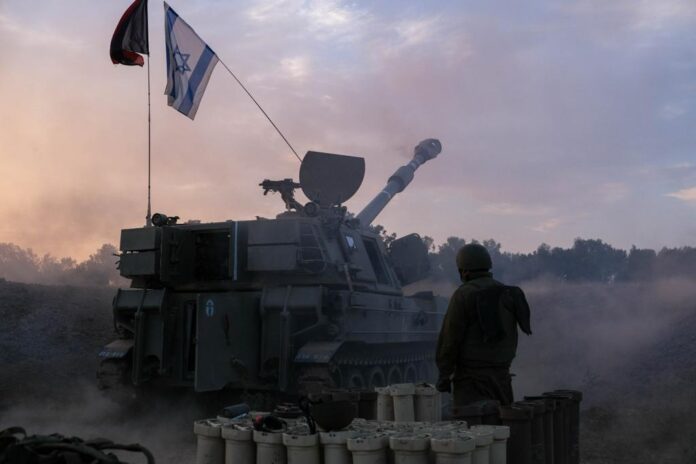
n the regional arena, Israel has already won the war that started on October 7, 2023. While the fighting is not over yet, a confrontation with Iran is potentially dangerous and there is no sustainable “solution” available in Gaza, the balance of power in the Middle East shifted dramatically in favour of the Jewish state and its de-facto Arab allies.
The radicals have never been more humiliated, isolated, vulnerable and intimidated and the moderate, stability-seeking Arab regimes have only rarely felt more self-assured and surreptitiously grateful for the Israeli resolve in fighting their common enemies.
For decades, from the mid-1950s to the 1970s, the radicals used to dominate the “Arab World”. Gamal Abd-al Nasser created a messianic movement, encompassing politically aware Arab elites and “masses”, stretching “from the (Atlantic) Ocean to the (Persian) Gulf”, enthusiastically backing the aggressive anti-American and anti-Israel policies of Egypt’s charismatic president.
Following three major confrontations with Israel – in 1967, 1969/1970 and 1973 – President Anwar Sadat realised that Egypt could no longer sustain perpetual war. In 1979, Sadat signed a separate peace treaty with Israel, practically abandoning all the Arab radicals who were committed to the “liberation of Palestine” from the Jews. In the absence of Egyptian leadership and the failure of the Assad dynasty in Syria and Iraq’s Saddam Hussein to replace it, all-Arab “liberation” wars essentially ended half a century ago. The 1994 Jordanian-Israeli peace treaty and the 2020 Abraham Accords consolidated this strategic reality.
The emergence of the Iranian threat following the 1979 Islamic Revolution provided the radicals with an alternative regional power leadership for the struggle against Israel, but the strategic environment was fundamentally different from that of the 20th century. The Arab component of this radical camp included only one significant state – Syria – and even that was torn apart by a savage civil war. The rest were mere remnants of the once-mighty Arab coalition, militarily potent and dangerous, but politically and nationally marginal: Hamas in Gaza, Hezbollah in Lebanon, the Houthis in Yemen and Shiite militias in Iraq and Syria.
Much more important than their marginality, these dedicated foes of Israel – Iran and its proxies, the Muslim Brotherhood and the Houthis – are also the most dangerous enemies, regionally and domestically, of most Arab states and their regimes.
Since October 7, Israel has devastated in Gaza the only Arab state-like entity controlled by the Muslim Brotherhood. The IDF also reduced Hezbollah from an intimidating strategic threat, practically in control of Lebanon, to a major nuisance, fighting a rearguard battle for its position in Beirut and in the South. And Israel’s Air Force exposed the supreme vulnerability of Iran’s most-defended sites. Israel’s unique missile-defence system, assisted by the American Central Command, in coordination with Arab Gulf States and Jordan, demonstrated the structural limitations of Iran’s only strategic response to Israeli deep-penetration raids. All this directly led to the collapse of Assad’s regime in Damascus, immediately followed by the utter destruction of its military hardware.
In Cairo, Amman, Riyadh, Abu Dhabi, and Rabat, Arab leaders could not afford to infuriate their populaces by openly celebrating the dramatic weakening of their regional deadly enemies and giving Israel the well-deserved credit for inflicting the required blows. However, they know that sustainable Israeli resilience, strategic power, determination and tenacity in the struggle against common radical enemies are indispensable for their own regional welfare, sometimes even their existence. Whereas America is immeasurably more powerful, Israel, in their experience, is an infinitely more trustworthy and dependable partner in this ongoing struggle. Israel is unlikely to engage in appeasement of the mullahs in Tehran, as President Barack Obama did, or try to save the savage Houthi rebels in Yemen from the Saudis and the Emiratis, hoping to pacify them with humanitarian aid, as President Joe Biden did.
Arab leaders, particularly in the Gulf, were deeply impressed by Israel’s demonstrated ability to do what they themselves craved: to consistently deepen and widen its alliance with the United States, even during unfriendly administrations, while, at the same time ignoring and even openly rejecting ill-advised directives from Washington on critical issues of national security.
Capitulating only to Biden’s obsession of delivering humongous “humanitarian” aid to Hamas in all the wrong times and locations, Israel consistently rejected his pressure of prematurely stopping the war in early 2024. Yielding to these demands would have turned the war against the regional radicals into a defeat for Israel and most Arab states. It would have restored Hamas in Gaza, prevented Hezbollah’s defat in Lebanon and precluded the exposure of Iran’s strategic vulnerability.
The war is not over. The crucial question of Iran’s nuclear quest and hegemonial ambitions is still to be determined. The objective of consolidating an American-led regional structure incorporating Israel, Saudi Arabia and other Arab states is somewhat more difficult in the immediate future, even when it is far more desirable and possible in the mid and long range. In Gaza, there can be no constructive alternative to Hamas and protracted clashes are inevitable. In Lebanon, Hezbollah will at least partially recuperate. In Syria, a prominent and hostile Turkish position could present Israel with a serious threat.
The Middle East as a whole, however, has taken a major turn in the last year and a half – a turn for the better, for a change. The radicals are much weaker. Consequently, the mainstream stability-seeking Arab states are more confident. Israel is exhausted, but much safer, and even the Americans are somewhat more realistic. The region is still volatile and a lot depends on containing Iran, but the chances to avoid a catastrophe are better than they have been in a long time and everybody recognises Israel’s indispensable contribution.
Dr Dan Schueftan is head of the International Graduate Programme in National Securities Studies at Haifa University, who has published extensively on Mid-East history and politics
The Nakba Narrative is Nonsense

In the years since Israel’s rebirth in 1948 a narrative has taken root, a narrative that portrays well-armed and financed Jewish immigrants overrunning peaceful Palestinian villages, brutally expelling Palestinians from their homes and their country, a narrative summed up in the Arabic word nakba, or catastrophe. In contrast, Israelis view their War of Independence as a battle of the few against the many, a battle forced on a beleaguered Jewish community by Palestinian militias and the invading armies of five Arab states, leading to competing “narratives” about that period which lie at the heart of the Arab-Israeli conflict. If, as is believed almost uniformly throughout the Arab world, Israel was born in original sin, if the Jews really did ransack placid Palestinian villages, murdering children in front of parents and parents in front of children, and expelling whoever was left, then Palestinian hatred for Israel and Jews would be understandable, as would their fundamental refusal to really make peace with Israel.
Though this Palestinian narrative is credulously accepted by many Europeans and an increasing number of “progressive” Americans, it is nonetheless wrong and contradicts basic historical facts. Israel was not born in original sin – with a few justified exceptions there were no expulsions (for one of the justified expulsions, Lydda and Ramle, click here), nor was there any policy of harming innocents, on the contrary. Thus, even as early as 1937, in a letter to his son Amos, Israel’s founding father David Ben Gurion wrote:
We do not wish and do not need to expel Arabs and take their places. All our aspiration is built on the assumption – proven throughout all our activity … that there is enough room in the country for ourselves and the Arabs.
Ten years later, even after much violence and conflict, Ben Gurion’s core beliefs about living in peace with the Arabs had not wavered:
In our state there will be non-Jews as well – and all of them will be equal citizens; equal in everything without exception … The attitude of the Jewish state to its Arab citizens will be an important factor – though not the only one – in building good neighborly relations with the Arab states. (speech, Dec 13, 1947)
Despite the Jewish community’s attempts to live peacefully with their neighbors, the primary leader of the Palestinians, the Grand Mufti, Haj Amin al Husseini, chose to make common cause with the Nazis, declaring through his spokesman that the Arabs’ goal was “the elimination of the Jewish state.” (Larry Collins and Dominique Lapierre, O Jerusalem, (1st edition) p 400)).
The Mufti spent much of World War II in Nazi Germany where he urged the accelerated extermination of the Jews in meetings with Hitler and Himmler, helped organize Bosnian Muslim SS units that committed grave war crimes against Serbian Christians and Jews, and made numerous pro-Nazi propaganda broadcasts to the Arab world. For example, in a broadcast from Germany on March 1, 1944, Husseini urged Arabs everywhere to commit genocide against the Jews:
Rise as one and fight for your sacred rights. Kill the Jews wherever you find them. This pleases God, history and religion. This serves your honor. God is with you. (Jeffrey Herf, Nazi Propaganda for the Arab World, p213, Yale University Press, 2009)
After the war Husseini was indicted by Yugoslavia for war crimes, but escaped prosecution by fleeing to Egypt, which gave him sanctuary. (For details on the Mufti’s life and activities see The Mufti of Jerusalem Haj-Amin el-Husseini and National-Socialism, by Jennie Lebel, Cigoya Stampa, 2007; The Mufti and the Fuehrer, Joseph Shechtman, Thomas Yoseloff Publisher, 1965.)
The Mufti’s actions directly implicated the Palestinian movement in the Holocaust, but the Jews still tried to reach an accommodation with their Arab neighbors. When the United Nations in 1947 passed a resolution to partition the Palestine Mandate (or what was left of it, since most of the original territory had been lopped off by Britain to create the entirely Arab state of Trans-Jordan) into a Jewish and an Arab state, the Jews supported the plan, despite being deeply disappointed with how little land they would receive. The five Arab states in the UN all denounced the resolution (UNGA 181), voted against it, and together with the Palestinian representatives vowed to go to war to kill it.
At the UN in May of 1948, just weeks prior to partition, Israel’s representative Abba Eban once again urged all parties to support the world body’s proposal and to avoid war, “… much suffering and grief can still be avoided by seeking the way back onto the highway of the partition resolution.” (New York Times, May 2, 1948.)
Unfortunately for all involved, the Arabs ignored Eban, and launched a brutal war against the Jews, in which more than one percent of the Jewish population was killed. Expecting an easy victory, the Arabs were surprised to meet stiff resistance, and when the Arab armies began to fall back from their initial victories (an Egyptian armored column had penetrated up the coast to within 21 miles of Tel Aviv), the Palestinians panicked and began to flee, thus creating the Palestinian refugee problem that endures to this day.
Were those Palestinian refugees expelled? It’s indicative that the largest group of Palestinian refugees, about 10 percent of the total, who came from the mixed Arab-Jewish city of Haifa, were not expelled. On the contrary, as Benny Morris (a so-called revisionist historian much cited by Israel’s critics) documented, the Palestinians who fled Haifa did so against pleas from their Jewish neighbors and a British general that they stay put:
Under British mediation, the [Israeli leadership agreed to a ceasefire], offering what the British regarded as generous terms. But then, when faced with Moslem pressure, the largely Christian leadership got cold feet; a ceasefire meant surrender and implied readiness to live under Jewish rule. They would be open to charges of collaboration and treachery. So, to the astonishment of the British and the Jewish military and political leaders gathered on the afternoon of 22 April at the Haifa town hall, the Arab delegation announced that its community would evacuate the city.
The Jewish mayor, Shabtai Levy, and the British commander, Major-General Hugh Stockwell, pleaded with the Arabs to reconsider … but the Arabs were unmoved … (Morris, 1948 and After, p 20)
A few days later, the Histadrut, the Israeli labor union, published its own appeal to the Arab residents of Haifa:
Do not destroy your homes … and lose your sources of income and bring upon yourselves disaster by evacuation. The Haifa Workers Council and the Histadrut advise you for your own good to stay and return to your regular work. (Morris, The Birth of the Palestinian Refugee Problem Revisited, 2004; p 206)
Had the Palestinians accepted partition, a Palestinian state would have been created side-by-side with Israel in 1948, and there wouldn’t have been a single Palestinian refugee. How then can Israel be blamed for the Palestinian refugee problem?
Tragic as this Palestinian refusal to accept statehood in 1948 was, it was no fluke. In accord with Abba Eban’s famous saying that the “Arabs never miss an opportunity to miss an opportunity,” Palestinians again refused statehood at least twice after 1948. In the summer of 2000 US President Bill Clinton hosted intense peace talks at Camp David between Palestinian leader Yasir Arafat and Israeli leader Ehud Barak, culminating in a comprehensive peace plan known as the Clinton Parameters.
Despite the vast concessions the plan required of Israel, Prime Minister Barak accepted President Clinton’s proposal, while Arafat refused, returned home, and launched a new terror campaign against Israeli civilians (the Second Intifada).
Despite the violence, Prime Minister Barak continued to negotiate to the end of his term, culminating in an Israeli proposal at Taba which extended the Clinton proposal. Barak offered the Palestinians all of Gaza and most of the West Bank, no Israeli control over the border with Jordan or the adjacent Jordan Valley, a small Israeli annexation around three settlement blocs balanced by an equivalent area of Israeli territory that would have been ceded to the Palestinians. As chief US negotiator Ambassador Dennis Ross put it in a FoxNews interview:
… the Palestinians would have in the West Bank an area that was contiguous. Those who say there were cantons, completely untrue. It was contiguous… And to connect Gaza with the West Bank, there would have been an elevated highway, an elevated railroad, to ensure that there would be not just safe passage for the Palestinians, but free passage. (Fox News, April 21, 2002)
According to Ambassador Ross, Palestinian negotiators working for Arafat wanted him to accept the Clinton Parameters, but he refused. In response to Brit Hume’s question as to why Arafat turned these deals down, Ross said:
Because fundamentally I do not believe he can end the conflict. We had one critical clause in this agreement, and that clause was, this is the end of the conflict.
Arafat’s whole life has been governed by struggle and a cause. Everything he has done as leader of the Palestinians is to always leave his options open, never close a door. He was being asked here, you’ve got to close the door. For him to end the conflict is to end himself.
Despite the rejection of the Clinton plan, and the bloody Palestinian suicide-bombing campaign that ensued, Israel again tried to make peace with the Palestinians in 2008. After extensive talks, then Israeli Prime Minister Ehud Olmert met with Palestinian President Mahmoud Abbas and presented a comprehensive peace plan, going beyond even the Clinton proposal. Olmert’s plan would have annexed the major Israeli settlements to Israel and in return given equivalent Israeli territory to the Palestinians, and would have divided Jerusalem.
Numerous settlements including Ofra, Elon Moreh, Beit El and Kiryat Arba would have been evacuated, and Hebron would have been abandoned. Tens of thousands of settlers would have been uprooted. Olmert even says preliminary agreement had been reached with Abbas on refugees and the Palestinian claim to a “right of return.”
Olmert recounted much of this in an interview with Greg Sheridan in the Australian newspaper:
From the end of 2006 until the end of 2008 I think I met with Abu Mazen more often than any Israeli leader has ever met any Arab leader. I met him more than 35 times. They were intense, serious negotiations.
On the 16th of September, 2008, I presented him (Abbas) with a comprehensive plan. It was based on the following principles.
One, there would be a territorial solution to the conflict on the basis of the 1967 borders with minor modifications on both sides. Israel will claim part of the West Bank where there have been demographic changes over the last 40 years…
And four, there were security issues. [Olmert says he showed Abbas a map, which embodied all these plans. Abbas wanted to take the map away. Olmert agreed, so long as they both signed the map. It was, from Olmert’s point of view, a final offer, not a basis for future negotiation. But Abbas could not commit. Instead, he said he would come with experts the next day.]
He (Abbas) promised me the next day his adviser would come. But the next day Saeb Erekat rang my adviser and said we forgot we are going to Amman today, let’s make it next week. I never saw him again. (Nov. 28, 2009)
And this is not just a self-serving claim by Olmert – Abbas, in an interview with Jackson Diehl of the Washington Post, confirmed the outlines of the Olmert offer and that he turned it down:
In our meeting Wednesday, Abbas acknowledged that Olmert had shown him a map proposing a Palestinian state on 97 percent of the West Bank — though he complained that the Israeli leader refused to give him a copy of the plan. He confirmed that Olmert “accepted the principle” of the “right of return” of Palestinian refugees — something no previous Israeli prime minister had done — and offered to resettle thousands in Israel. In all, Olmert’s peace offer was more generous to the Palestinians than either that of Bush or Bill Clinton; it’s almost impossible to imagine Obama, or any Israeli government, going further.
Abbas turned it down. “The gaps were wide,” he said. (May 29, 2009)
Ha’aretz published Olmert’s map, showing a Palestinian state on the West Bank and Gaza with a free passage route to connect them. The map, which also showed the Israeli territory that would have been swapped with the Palestinians in return for annexing some Israeli settlements to Israel, is reproduced below:
In spite of the clear reality that the Palestinians have repeatedly run away from a negotiated peace and statehood, and have caused most of their own problems, it’s a testament to the power of endlessly repeated propaganda that so many in the West, including an increasing number of “progressive” Americans, act as if Israel caused the Palestinian refugee problem, as if Israel refuses to make peace, and as if Israel stands in the way of a Palestinian state.
The Palestinian nakba narrative is a potent myth, a massive collection of blatant falsehoods intended to stand history on its head, and turn the victim into the perpetrator. Increasing Western acceptance of these falsehoods accomplishes nothing except to encourage the Palestinians to keep rejecting compromise and peace, guaranteeing more suffering and death, for the Israelis but especially for the Palestinians themselves.
Trump’s lifting of Syria sanctions solidifies Iran’s regional defeat
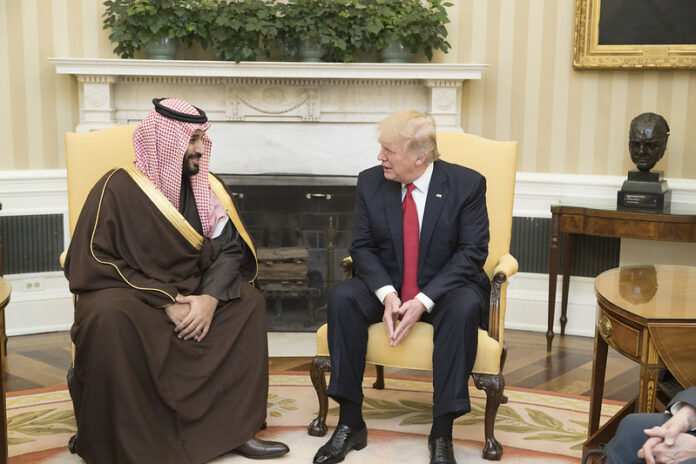
While in Riyadh on 13 May, US President Trump announced that he was lifting sanctions on Syria, and then followed that up on 14 May by meeting Syrian President Ahmed al-Sharaa, who flew quickly to Riyadh to extend his gratitude. While Trump was light on details about how the lifting of sanctions would unfold, he stated that he wanted to give Syria “a chance at greatness”.
The move settled a bitter dispute within the US government, sealed a rift between the US and Israel on one side and America’s Arab, Turkish, and European allies on the other, and most important, has arguably blocked any realistic chance of Iran exploiting a weak, divided Syria to restore its “Shiite Crescent.” The historic impact of this decision, following and culminating the series of defeats Iran and its proxies have suffered, and the closing of ranks of the international community on the Middle East, cannot be overstated.
While Israel appears isolated given its aggressive approach to the al-Sharaa government (and its Turkish sponsor), cracks in its position have been appearing for some time, including deconfliction discussions with the Turks on Syria in Azerbaijan, and more positive statements by the hard-line Israeli foreign minister on Syria in recent days. But most importantly, by reducing Iran’s options in Syria, and presumably allowing the Israeli military to draw down on at least one front, Trump’s decision could boost Israel’s security as well as that of everyone else in the region.
Nevertheless, there is still hard work to be done, beginning with a meeting in Türkiye this week between the US secretary of state and the Syrian foreign minister. There is no indication when the sanctions will be formally lifted by Congress, which, unlike a presidential waiver that Trump could do quickly, can take time. Initial responses from Congress to the president’s announcement have been positive, but details are important.
Meanwhile, the US still has Hay’at Tahrir al Sham (HTS), al-Sharaa’s organisation, on the terrorism list, and Syria as a whole listed as a state sponsor of terrorism. Finally, the US has not officially recognised the new al-Shaara government and the US list of demands passed in Brussels to the Syrian foreign minister, Asaad al-Shaibani, remains in discussion. The meeting of al-Shaibani and Marco Rubio on 15 May will likely focus on the status of those demands.
Trump also pressed al-Sharaa to sign the Abraham Accords and thus recognise Israel
Laundry list
They include a laundry list of security issues, requesting Damascus assist in recovering missing Americans, help resolve outstanding chemical and other weapons of mass destruction issues from the Assad regime, deal with the Islamic State (IS), both on operations, as well as with the detainees at al-Hol and other camps in the northeast, authorise US counter-terrorism military operations anywhere in Syria, and act against a long list of terrorist and militant organisations, starting with the IRGC and Hezbollah, but including various Palestinian groups long residing in Syria.
Finally, Damascus must avoid oppression against minority groups, ensure a diverse government, and weed out foreign jihadists from the senior ranks of the Syrian security forces. President Trump also pressed al-Sharaa to sign the Abraham Accords and thus recognise Israel.
By all accounts, the Syrian response so far to this fairly long set of demands has been mixed, with some already underway, and some—from formally green-lighting US military operations to removing key foreign military leaders, which present Damascus with complicated security and diplomatic issues— that still need to be worked out carefully with Washington. The Abraham Accords may be a step too far at the moment, but al-Sharaa appears interested in adopting the 1974 agreements between Syria and Israel.
And despite Trump’s bold decision, there are enough details to hammer out, and enough second thoughts about al-Shaara and HTS within Trump administration ranks, to hold off on celebrations. In particular, when the dust clears from the announcement, commentators will wonder who will wind up with the most influence over the new Syrian government, its original sponsor, Türkiye, or Saudi Arabia, and now, critically, the US. And once again, Israel still has cards to play, vis-à-vis rival Türkiye, with the Druze in the south, but also perhaps now with al-Shaara.Russia factor
Finally, there is the question of Russia. The fall of Assad was a tremendous geostrategic blow for Moscow, particularly given the fact that in 2019, then-Secretary of State Mike Pompeo offered Putin a compromise solution to the Syrian quagmire, which he rejected at the time.
For its part, Moscow has been talking with Damascus about retaining its bases near Latakia, and despite the wartime enmity between Russia and Syria’s new rulers, both sides are pragmatic, and supposedly, the talks may bear some fruit. And apparently, various sources have indicated that neither Türkiye nor Israel are particularly interested in the Russians leaving, as both see Russia as a potential ally in Syrian politics, and both (particularly Ankara) have other important security, diplomatic, and economic interests with Moscow that Turkish President Recep Tayyip Erdoğan does not want to upset over a secondary issue like Syria bases.
But now that Trump has embraced the new Syria, his position vis-à-vis the Russians will carry much weight, and could well become a pawn in the critical Ukraine negotiations Washington is strongly supporting.
$400bn price tag
The World Bank has estimated that 14 years of war have generated over $400bn in damage to infrastructure and the economy. Almost half the population has fled their homes—half of them (six million plus) as refugees to neighbouring countries and Europe. Absent the lifting, or at least the waiving of the crushing American “Caesar” sanctions, little aid will be able to flow due to fears of legal action, if not by the current, then some future, US government.
Furthermore, while they can facilitate one-time delivery of assistance and development funds, presidential waivers alone will not permit long-term investment by the international business community, which is the most important and effective way to rebuild the country. Firms need predictability, and a temporary waiver will not provide the needed level for serious financial commitments.
But finally, taken with other recent dramatic developments, not just the regional defeat of Iran, but the near destruction of IS and the recently announced dissolution of the PKK, the reintegration of Syria could open the door to a new, prosperous, peaceful Middle East.
The Sanity of John Fetterman

Lt. Gov. John Fetterman listening to speakers. Pennsylvania State Police (PSP) Commissioner Robert Evanchick confirmed today that Trooper Martin F. Mack III, 33, and Trooper Branden T. Sisca, 29, were struck and killed by a driver earlier this morning on I-95 south in the area of milepost 18 in Philadelphia City, Philadelphia County. A male pedestrian was also struck and killed at the same time.
Philadelphia, PA – March 21, 2022
Let us ponder the strange similarities linking the striking stories of Warder Cresson and John Fetterman. Ostensibly these two individuals, whose lives are separated by more than a century, have nothing to do with each other. Yet both embody, in their own way, archetypal American tales, in that they reflect the bonds between this country and the Jewish people and the way these bonds have endured despite the efforts of some to undo them.
Warder Cresson’s 19th-century tale has already been told in these pages (“The Forgotten Proto-Zionist,” December 2019). The first person appointed American consul to Jerusalem, he was born a Quaker and proceeded as an adult to join the Shakers, an ecstatic form of Christianity. He then embraced Mormonism, then adopted the teachings of Seventh-day Adventists and then the teachings of the frontier Restorationist movement. After embracing these four different denominations—all of which had been created in America within decades of each other—Cresson set sail for the Middle East, ultimately returning from Jerusalem an Orthodox Jew, predicting a Jewish return to the Holy Land.
It was at this point that the woman he had married before his departure had him declared legally insane, utilizing the declaration to seize control of Cresson’s property. The application of lunacy to Cresson seemed solely based on his conversion to Judaism; in contrast to his many other previous conversions, it was only a love for the Jewish people that was considered crazy. Cresson, in turn, sued, instigating a multiyear trial in which he had to litigate his sanity, ultimately establishing, in his attorney’s words, that “the only charge left with which to accuse my client is that he became a Jew.” He emerged from his battle victorious and returned to Jerusalem, establishing as a legal principle that concern for the Jewish presence in the Holy Land does not mean that one has lost his mind.
I thought of the Cresson case when New York magazine issued its recent article that ominously proclaimed: “John Fetterman insists he is in good health. But staffers past and present say they no longer recognize the man they knew.” The implication, of course, is that the senator, a stroke victim who struggled with depression, has lost control of his faculties. A brief study of the piece reveals that even as Fetterman seems far healthier than he was when he ran for office, there is one new feature of his public life that alarms those who once embraced him: his support for Israel since October 7. Fetterman’s former chief of staff gives the game away in his own quoted comment: “Part of the tragedy here is that this is a man who could be leading Democrats out of the wilderness. But I also think he’s struggling in a way that shouldn’t be hidden from the public.” Is Fetterman well enough to lead, or isn’t he? Like Warder Cresson’s wife, Fetterman’s disgruntled former staffer seems to assume that a concern for the Jews in the Middle East means he is no longer fit to serve as a Democratic senator.
The New York article was followed by a Politico piece informing us that “few fellow Democrats have rushed to Fetterman’s defense after an explosive article in New York magazine reported that current and former staffers are seriously concerned about his mental and physical health.” There is, of course, an obvious explanation for this, and it tells us more about Fetterman’s fellow Democrats than about him. Meanwhile, as I type, a new hit piece on Fetterman has just dropped—a report issued by Axios noting that Fetterman has missed votes on the floor. The article runs under the hysterical headline “Fetterman Doubts Explode into Capitol Hill Firestorm.” To paraphrase Cresson’s attorney, the only charge left with which to accuse the senator is that he cares about murdered Jews.
Yet there are millions of people who are utterly unperturbed by Fetterman’s embrace of Israel and his present political persona. This multitude happens to be…the Pennsylvanians who elected him in the first place. The senator continues to enjoy high poll numbers among his own constituents; apparently, if Fetterman is crazy, then they don’t want their senators to be sane. It is not the denizens of Pennsylvania who are bothered by Fetterman’s support for Israel, but rather the media—a media that assured us that President Biden was fine when he clearly was not and that now inform us that one of the few public figures speaking with moral clarity about the Middle East has lost his mind.
Warder Cresson and John Fetterman represent uniquely American stories, both highlighting the special history of the relationship between this country and the Jews. Cresson’s religious journey reflected how the 19th century featured the founding of new forms of faith in America and the freedom felt by Americans to openly embrace them. The Second Great Awakening’s explosion in religious devotion drove many of the events of the decades to come, including the rise of the abolition movement, as well as a heightened American interest in the Middle East and an embrace of the Jewish return to the Holy Land.
Meanwhile, Fetterman’s own political journey on Israel has become part and parcel of a new chapter in American Jewish history. In May 2024, he received an honorary doctorate from Yeshiva University, and then, strikingly, he joined Yeshiva’s rabbis and students on stage in a dance, as a Jewish song celebrating Judaism played over the loudspeakers. At National Review, Natan Ehrenreich, a Yeshiva alumnus, described how the commencement ceremony embodied an “Only in America” moment and how the political leaders who have stood with Israel—such as Fetterman and Speaker of the House Mike Johnson—reflected the uniqueness of the United States.
Fetterman gave a fantastic speech with several memorable moments. But even more remarkable was his joining Yeshiva’s students to dance to the song “Geshmak to Be a Yid,” which literally means “delicious to be a Jew,” though “delicious” doesn’t really capture the essence of the Yiddish term geshmak — it’s used to refer to something fun or pleasurable but nonetheless profoundly meaningful….
Yes, there is antisemitism in America. Yes, it is worrying. Yes, it must be addressed to secure the future of American Jewry. But Mike Johnson and John Fetterman remind us of a fact that has forever been true and remains so: America is exceptional. For Jews, one can even say it’s geshmak.
It is just this that Fetterman’s critics cannot stand about America. That is why, ironically, Fetterman’s choice to stand with the Jewish people is driving them crazy.
Pulitzer Prize Official Mocked Juror For Questioning An Anti-Israel Writer’s Award

A Pulitzer Prize administrator mocked a conservative journalist and member of its nominating jury for questioning why the group gave an award to an anti-Israel journalist who downplayed Hamas’s October 7, 2023 attack on Israel.
Eliana Johnson, editor-in-chief of the Washington Free Beacon, was invited this year to serve on the five-member jury for the Pulitzer Prize’s National Reporting award. But after the Pulitzer’s Commentary award went to Palestinian poet Mosab Abu Toha — who objected to the media describing an Israeli victim of the October 7 massacre as a hostage — Johnson had questions.
As she wrote in the Free Beacon this week, Johnson asked Pulitzer Prize administrator Marjorie Miller several questions about the prize, most notably, whether or not “members of the Pulitzer board themselves aware of Abu Toha’s public statements?”
The statements in question had to do with Emily Damari, who was taken hostage at Kibbutz Kfar Aza on October 7 and held by Hamas for 471 days.
“How on earth is this girl called a hostage? (And this is the case of most ‘hostages’),” Abu Toha wrote just before the Pulitzer deliberations began. “This is Emily Damari, a 28 [year-old] UK-Israeli soldier that Hamas detailed [sic] on 10/7… So this girl is called a ‘hostage?’ This soldier who was close to the border with a city that she and her country have been occupying is called a ‘hostage.’”
“Imagine for a moment a Pulitzer going to an extremist Israeli settler poet who had minimized and mocked the suffering of civilians in Gaza; who put ‘Palestinian’ or ‘innocent civilian’ in quotation marks the way Abu Toha does ‘hostages,’” Johnson wrote. “You can’t, because it would never happen.”
In response to Johnson’s query, Miller — whose social media accounts are littered with pro-Kamala Harris and anti-Trump posts — delivered what Johnson called a “non-response response about the board’s commitment to recognizing ‘excellence in reporting.’”
Johnson then began querying other members of the Pulitzer committee, prompting Miller to allege that Johnson’s emails violated the confidentiality agreement she had signed upon joining the jury.
Miller ended her email by noting that, while jurors are selected “for their character, expertise and integrity…Unfortunately, we occasionally misjudge.”
“She and her colleagues have misjudged, starting with the minor issue of what the confidentiality agreement actually says,” Johnson noted.
“As part of providing my services to the Pulitzers, I agreed not to discuss deliberations over the National Reporting category, nor to reveal the finalists before the winner was announced,” Johnson wrote. “I did not agree to refrain from reporting on a separate category in which I had no role.
“The Pulitzer board’s position that any reporter who participates on one of its many juries is prohibited from doing any reporting about the organization itself—even when one of its awards has become an international news story—is preposterous.”
Other jurors on the board with Johnson included Zeba Khan, the founder of Muslims for Obama; Jon Allsop, who has accused the Israel Defense Forces of deliberately targeting journalists; and Julia Preston, who has stated that President Donald Trump is “an existential threat to our democracy.”
Damari slammed the Pulitzer board, saying they had rewarded a voice that denies truth, erases victims, and desecrates the memory of the murdered.
“How to use language is precisely a journalist’s job—and a poet’s, too,” Johnson noted. “It’s not outlandish, then, to believe that Abu Toha meant exactly what he said and said exactly what he meant: No mercy for the men, women, and babies Hamas kidnapped on Oct. 7.”
Echoes of a disastrous past

Students of history will recognise current developments as yet another disastrous rerun of past failed political objectives.
How many times can the same old mistakes, misconceptions and dead-end policies be repeated?
Endlessly, it seems, with the certainty of similar disastrous results.
The number of non-Jewish students learning about history, ancient and modern, is decreasing annually. As a result, the present and upcoming generations know little or nothing of past events, which resulted in disaster for Jews in particular and humanity in general.
One has only to observe current trends to discern which dead-end cul-de-sac things are hurtling down.
Facing up to rapidly emerging threats requires determined leadership and unflinching courage if we are not to succumb to the inevitable toxic fallout.
Identifiable threats mutated from previous centuries include such maladies as isolationist politicians, deal brokers, Jew haters and deniers of reality.
Each one of these incurable conditions has resurfaced with a vengeance and threatens to engulf all those targeted.
Isolationist policies seem to have been a standard feature of American foreign diplomacy since the founding of the Republic. Its basic premise was “non involvement in European and Asian conflicts and non entanglement in international politics.”
This aversion to foreign intervention meant that in the First World War, the USA initially refused to take sides. From 1914 until April 1917, young men from Britain and the Empire and France fought and died in large numbers. The only reason that the USA finally entered the conflict was because of American ships being targeted by German submarines and an intercepted telegram which implied that Germany was about to attack the US via Mexico. There is no doubt that the US entry in the war hastened its eventual end.
However, it did not eliminate isolationist tendencies. President Wilson’s creation of the League of Nations, which was embraced by most other nations, was rejected by US legislators, and America never joined this organisation. The strength of the isolationist lobby meant that the League was hobbled right from the start. It also constrained FDR in his efforts to become more involved internationally.
The rise of Italian Fascism and German Nazism went unchallenged as US isolationists and British appeasers refused to face up to the looming threats. Concurrently, these policies also prevented desperate Jewish refugees from finding a safe haven and doomed most of them to certain death. When war was eventually declared in 1939, the UK and France stood alone. With the collapse of the French only Great Britain stood against German domination of Europe. Despite the destructive Blitz and Japanese victories in Singapore, Hong Kong and elsewhere, the USA refused to become involved.
It was only after Pearl Harbour that the USA belatedly entered the scene. One speculates as to what might have happened had the Germans successfully invaded Britain. Would the US have recognized its Nazi occupation and tried to reach a “deal” with the Nazis?
This background is important to remember because it has a direct bearing on what is transpiring in our time. The isolationists in Washington have once again resurfaced and are influencing how the USA responds to today’s threats and challenges. Vice President Vance, when asked about the conflict between Pakistan and India, replied that “it is none of our business.” The fact that his boss subsequently brokered a fragile ceasefire seems to imply some sort of disconnect at the top.
Coupled with a desire to disconnect from defending free democracies is a rediscovered enthusiasm for making deals. Unfortunately, these so-called deals can easily end up selling allies down the river and enabling aggressors and terror sponsors to continue their nefarious activities.
President Theodor Roosevelt was spot on when he stated “speak softly and carry a big stick – you will go far.”
The current incumbent in the White House has taken the opposite approach. Bluster and bombastic threats have been followed by reversals and flip-flops. Punitive tariffs one day and backpedal the next. Warnings to Hamas that the gates of hell will open if all Israeli hostages are not released followed by no consequences when that did not occur. Hamas says that “we were advised to give Trump a gift – in return he will give us back a better one.”
One solitary hostage is released, and Washington claims a victory. Where are the threatened consequences if all the hostages are not released? They are nowhere to be seen. The Houthis engage in piracy. The USA bombs Yemen and then abruptly stops, claiming that the terrorists will cease targeting US vessels. The only problem is that they continue to fire missiles at Israel, knowing that they are safe from US retaliation.
Shifting red lines on preventing Iranian nuclear weapons capabilities now abound. Originally it was “cease” and “dismantle” or else dire results would ensue. Now there is talk of “civilian” nuclear power for a country which is awash in oil. Immediate compliance has been replaced by endless negotiations designed to deceive and delay.
Claims that the Ukraine/Russia conflict could be solved in a day turn out to be an illusion. Back in 1938, Chamberlain told the Czechs to relinquish the Sudetenland to Hitler. We all know where that ended. Today, Trump is telling the Ukrainians to relinquish Crimea to Putin.
During the last outburst of appeasement and isolationist frenzy, the democracies of Europe were abandoned and sacrificed, leading to the tragedies of the Shoah.
Given the current US frenzy to make “deals” one wonders what the leaders of Taiwan, South Korea and other threatened countries must be thinking. The northern part of Cyprus is illegally occupied by Turkey, a NATO member and Tibet lost its sovereignty a long time ago to the Communist Chinese. The most surreal piece of news recently was the announcement that France and Poland are going to sign a mutual defence pact, which would guarantee that if either country were attacked, the other would come to its aid. Obviously, the Poles have had a major lapse of memory because the last time they signed up to such an arrangement in 1939, neither Britain nor France saved them from German aggression. Relying on the French in particular is a lost cause given their track record.
The other noxious echo from the past, which is now rampaging worldwide, is, of course, Jew hate. Ostensibly driven by opposition to Israel, but in actual fact incubated and reincarnated by humanity’s oldest virus, this plague has now become a pandemic.
Swedish Jews who once felt secure now find themselves questioning whether they can continue to call Sweden home. Faced with a rising tide of hate, the latest reports maintain that 80% of Jews feel very pressured and threatened.
A Norwegian hotel has emailed Israeli tourists that “we have to boycott you” because the hotel’s employees‘ union has decided to ban Israeli travellers.
An Israeli couple was kicked out of a Naples restaurant for being “Zionists.”
The editor of a Dutch Jewish newspaper admitted that she is very pessimistic about the future of Jews in Europe. In the face of increased Jew hate in the Netherlands, the silent majority have chosen to remain silent once again. This is in a country where 75% of its Jewish citizens were rounded up, betrayed and deported to their deaths during the Shoah.
Eurovision is being held in Switzerland this week. Jews have been advised that if they attend, they should be careful not to wear anything that might identify themselves as Jews and definitely should not speak Hebrew. Who in their wildest nightmares would have imagined this scandalous situation, reminiscent of pre-Shoah Germany and Austria, would once again become the norm?
In Wellington, the Capital of New Zealand, graffiti appeared on a wall with the message reading “I hated Jews before it was cool.”
Condemnation of this hateful message followed, but there was one jarring and disgraceful response from a trustee of The Helen Clark Foundation, a self-styled “think tank” created by the former Prime Minister of NZ. Her husband is a trustee and professor. His tweeted response to this graffiti was that “you reap what you sow.” In other words, Jews are responsible for being hated because, presumably, of what Israel is doing to protect its citizens.
This classic leftist defence of Jew hate in projecting all sins onto the evil Zionists is a perfect example of how far the poisonous pus of hate has penetrated the addled minds of even the most so-called educated sectors of the population.
This is definitely an eerie echo of the past now revived.
It is therefore amazing that, given all the available evidence, there should still be many who continue to deny the obvious.
It is time to hearken to the words of Psalm 146 – “put not your trust in princes (mortals) in whom there is no help.”
Hamas Praises Murder of Pregnant Israeli Mother After Terrorist Attack in West Bank

Hamas sparked global outrage after lauding the murder of a pregnant Israeli mother of three — shot in the West Bank on her way to the hospital to give birth — as “historic,” amid a surge in violence and ongoing efforts by mediators to reach a ceasefire in Gaza.
Shortly after the shooting terrorist attack near the West Bank town of Bruqin, Abu Obaida, spokesperson for the Qassam Brigades — the military wing of the Palestinian terrorist group — issued a statement praising the assault.
“We commend the heroic shooting operation near Bruqin, west of Salfit, carried out by the brave members of our people in the West Bank,” Obaida said.
“We call on our people to rise up against the occupation in defense of Al-Aqsa, to confront the aggression in the West Bank and its refugee camps, and to support their steadfast brothers and sisters in Gaza,” he continued.
On Wednesday, a Palestinian terrorist opened fire on Israeli vehicles in the northern West Bank, fatally wounding a pregnant woman and injuring her husband as they made their way to the hospital to deliver their baby.
After the attack, the 30-year-old woman, identified as Tzeela Gez, was quickly transported to Petah Tikva’s Rabin Medical Center in critical condition. Despite doctors’ efforts to save her, she was pronounced dead early Thursday morning.
With an emergency C-section, doctors managed to deliver her baby, who is now in stable condition but continues to fight for his life.
According to the hospital, her husband Hananel, who was driving the car, sustained minor injuries after his condition was initially reported as serious.
Gez’s funeral took place at Jerusalem’s Givat Shaul Cemetery at 5.30 pm on Thursday.
Israel’s Foreign Ministry condemned the attack and described Hamas’s celebration of the murder of Gez — who was in her ninth month of pregnancy — as “sickening” in a statement posted on the social media platform X.
United States Ambassador to Israel Mike Huckabee also condemned the assault, saying it “shows Hamas is proud to stand behind cold-blooded murder.”
“The savage & uncivilized contempt for a pregnant woman & her baby reveals what Israel is fighting [for],” the American diplomat said.
The savage & uncivilized contempt for a pregnant woman & her baby reveals what @Israel is fighting as per report from @IsraelMFA that show Hamas is proud to stand behind cold-blooded murder. https://t.co/GJIkHYBdBF
— Ambassador Mike Huckabee (@GovMikeHuckabee) May 15, 2025
The Israel Defense Forces (IDF) announced an intensive search for the terrorist who fired on multiple vehicles, with Chief of Staff Lt. Gen. Eyal Zamir vowing to bring the perpetrators to justice.
“This is a difficult and painful attack in which an Israeli civilian was killed on her way to a delivery room,” Zamir said in a statement. “I share in the deep sorrow of the family.”
“We are engaged in broad fighting against terror in Judea and Samaria [the West Bank] and we will continue,” the statement read. “We will activate all our tools, and we will reach the murderers to bring them to justice.”
Israeli Prime Minister Benjamin Netanyahu also condemned the shooting, saying he was “deeply shocked by the horrific terrorist attack.”
“This abhorrent incident precisely reflects the difference between us, who desire and bring life, and the reprehensible terrorists, whose goal is to kill us and destroy life,” the Israeli leader said in the statement released by his office.
אני מזועזע עמוקות מהירצחה של צאלה גז, זכרה לברכה, בפיגוע המחריד בשומרון.
צאלה, שהייתה בהריון מתקדם, עשתה דרכה עם בעלה חננאל לחדר לידה בזמן שהמרצחים ירו בהם באכזריות.
האירוע הנתעב הזה משקף בדיוק את ההבדל בינינו – חפצי ומביאי החיים – לבין המחבלים השפלים שמטרת חייהם היא להרוג בנו… pic.twitter.com/jkWr5K2Ge1
— Benjamin Netanyahu – בנימין נתניהו (@netanyahu) May 15, 2025
Israeli Defense Minister Israel Katz extended his condolences to the Gez family and offered prayers for the newborn baby’s recovery.
“We will continue to fight terror with great force” in all areas of the West Bank and “will not allow it to raise its head,” he said in a statement.
Tectonic Shift: Why Bibi Is Saying No to American Military Aid
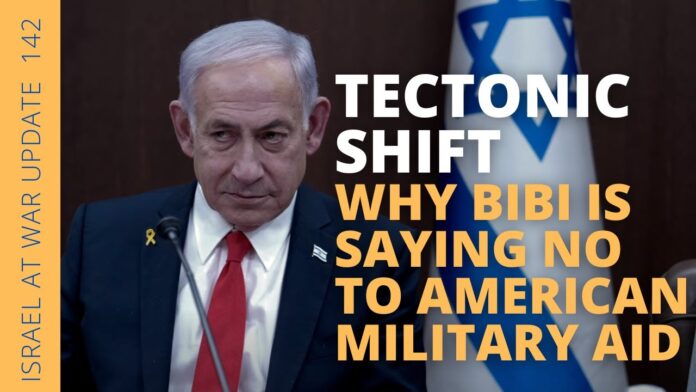
Something big is happening behind the scenes—and the media is totally missing it.
Don’t trust the scary headlines about Trump or Israel right now, because when even Netanyahu is signaling an end to American military assistance, it means the ground is moving beneath our feet.


