 Czech
Czech French
 German
 Hebrew
 Noruegan
 Russian
 Spanish
 Swedish
 Polish
 Portuguese



Former Australian ambassador to Israel Dave Sharma now a Liberal Party senator grilling Foreign Minister Penny Wong and DFAT representatives about UNRWA on Thursday Feb 25th
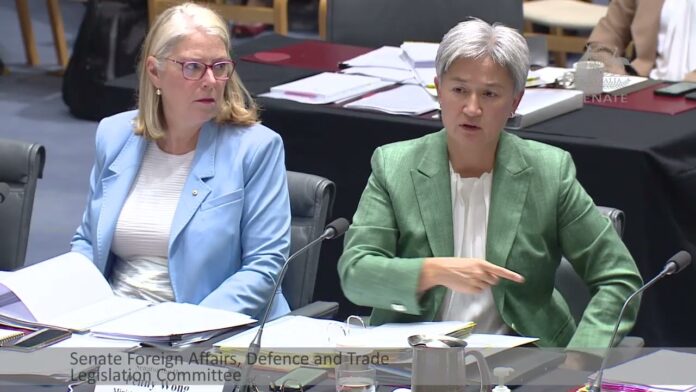
Former Australian ambassador to Israel Dave Sharma now a Liberal Party senator grilling Foreign Minister Penny Wong and DFAT representatives about UNRWA on Thursday Feb 25th
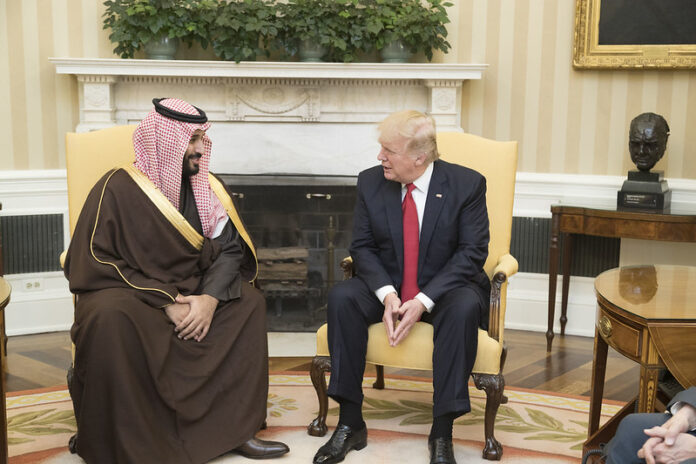
A month into the fragile ceasefire, Gazans are experiencing a brief respite from violence and the continuing release of Israeli hostages and imprisoned Palestinians. But debate over the future of Gaza reflects the agendas of states with a stake in the ongoing crisis — rather than the grim day-to-day reality Gazans face on the ground.
Once the ceasefire got underway, Gaza faded from the headlines — until Trump reignited the debate when he declared that the U.S. would occupy Gaza, relocate its residents, and transform it into a “Riviera of the Middle East.”
“We’re going to take it,” he proclaimed just last week. “We’re going to hold it.”
This is an outcome not even the Israeli government believed it could achieve. Although early in the war, it had broached the idea that Egypt and Jordan could accept some Gazan refugees, the government headed by Prime Minister Benjamin Netanyahu had settled on a policy of internal displacement for the Palestinians, moving large sectors of the population within the enclave to facilitate the IDF’s mapping and destruction of tunnels and to carry out attacks on remaining Hamas fighters.
Trump cut to the chase. If Hamas is going to be eliminated from Gaza, everyone has to go. No more whack-a-mole. Trump’s remarks handed Netanyahu a convenient “day-after” plan, something missing from his bomb-first, plan-later approach to Gaza. Trump’s framing of his pitch – that wholesale transfer was the only feasible way to relieve Palestinian suffering – was deceptively cunning.
To those repulsed by the prospect of adding to the Palestinian diaspora, the real damage of Trump’s gambits is not that it will become reality but rather that it has diverted attention from efforts to develop a genuine post-war strategy. Or has it?
Perhaps, as Prof. Gregory Gause recently argued, Trump’s threat serves a different purpose. By proposing to expel Palestinians from Gaza, Trump is making an intentionally provocative move to pressure Gulf Arab states — especially Saudi Arabia — into funding Gaza’s reconstruction and normalizing ties with Israel. According to Gause, such a gambit mirrors Netanyahu’s 2020 threat to annex parts of the West Bank. This ultimately led to the UAE normalizing relations with Israel partly in exchange for pausing the annexation plan.
Whether this is truly Trump’s strategy matters less than the fact that rebuilding Gaza — and starting soon — is essential for any meaningful negotiations or a sustainable end to the conflict, let alone a comprehensive peace agreement. More fundamentally, it is essential to averting a humanitarian catastrophe and the multigenerational degradation of Palestinian society.
While many Gazans are critical of Hamas as corrupt or ineffective, they have largely supported armed struggle against Israel and embraced the genuine belief that Palestine will eventually emerge victorious. The wholesale destruction of Gaza risks strengthening this maximalist mentality among Gazans, who may now feel they have little left to lose.
Allowing Gaza to fester in its present squalor and destruction would be a grave mistake, although, for Israel, this is probably not an issue. It can keep Gazans from penetrating its territory directly from the enclave and maintain tight control over ports of entry. Hamas might reconstitute to some extent, but God help the leader who sticks his head above the parapet.
Furthermore, many Israelis likely also share the Gazan view that there is little left to lose, and armed confrontation is the sole pathway to eventual victory.
But if you rule an Arab state in Gaza’s proximity, you must expect that some Gazans, radicalized by the recent war and eager for revenge, will escape the cauldron to safety in your cities. Egypt faced this challenge for nearly 20 years, losing a president to assassination in the process. Jordan suffered from it in 1970-1971, and Lebanon, in turn, from the mid-1970s onward. It was the Saudis’ turn in the early 2000s, following America’s on 9/11. Rebuilding Gaza, therefore, is an essential investment in the political and social stability of neighboring states.
The Saudis are particularly vulnerable because the Crown Prince’s 2030 plan – an ambitious thrust by the Kingdom toward global integration and regional leadership – hinges on a stable security environment. And his political survival presumably hinges on maintaining civil order in his own country.
However, the Saudi stake is also potentially positive. Intervening constructively to stave off a cataclysm in Gaza would underscore Mohammed bin Salman’s claim to a leadership role at home and abroad. The Arab Summit slated for March 4, which has already prompted Egypt to put forward its own reconstruction proposal, would provide the ideal venue to make good on this claim.
While the Saudis would have to walk back or discreetly veil their demand that normalization with Israel and participation in the reconstruction of Gaza would require Israel’s commitment to a political horizon for Palestinians, the Israelis would have to finalize a ceasefire agreement. No one, including Saudi Arabia, is going to embark on reconstruction while Israeli combat operations are ongoing. A bold Saudi offer to begin work would, therefore, challenge Israel to declare an end to the fighting.
In responding to a question about the UAE’s reaction to Trump’s Gaza plan, the Emirates’ ambassador to the U.S., Yousef Otaiba, noted that it was “difficult,” adding that he did not know where things would land. A widely-shared clip that was edited made it appear that Otaiba endorsed Trump’s Gaza plan as the only option, but in the original footage, it is clear that he was referring to Trump’s broader Middle East plan which remains unclear.
Since his remarks, UAE President Mohammed bin Zayed Al Nahyan, according to the country’s national news agency, told Secretary of State Marco Rubio that Abu Dhabi “reject[s] any attempts to displace the Palestinian people from their land.”
Nevertheless, where were other more appetizing proposals?
There are none because the Israelis have, from the outset, rejected a role in reconstructing Gaza; the Saudis have hidden behind the demand that, at a minimum, Israel take tangible steps toward Palestinian statehood, an outcome that the Israeli government emphatically rejects. Moreover, the Palestinian Authority lacks the capacity and resources to act. Under Biden, the White House pressed for a day-after plan, but the Israelis, flexing their muscle within the American body politic, found they could disregard the request with impunity.
Thus, at this juncture, the Saudis are the only potentially effective player capable and, in theory, incentivized to act.
We have no way of knowing whether the Trump administration has systematically engaged the Crown Prince on its hypothetical threat — or should we say bluff? — to dump millions of impoverished Palestinians into fragile neighboring states if the Kingdom fails to step up to the plate and start to rebuild Gaza. And, moreover, sign a treaty with Israel. What is known is that the hour is late, and the task is great.
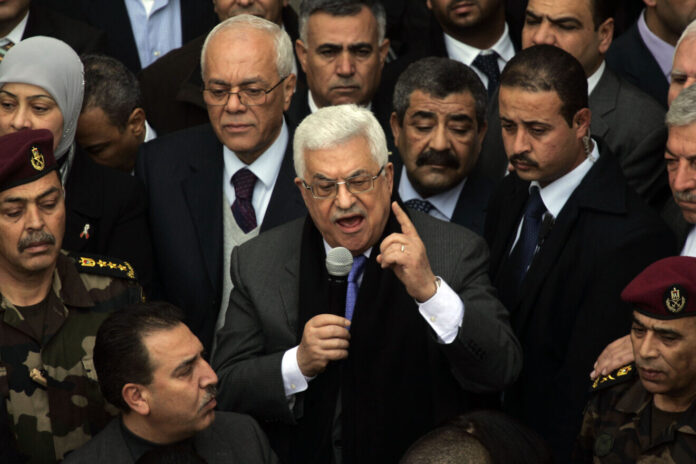
In a speech to Fatah’s Revolutionary Council on Feb. 20 in Ramallah, Palestinian Authority President Mahmoud Abbas reaffirmed his commitment to ensuring that terrorists imprisoned in Israel and the families of so-called “martyrs” continue to receive financial benefits. This stance implicitly contradicts the reforms he announced on Jan. 26, which proposed changing the mechanism for paying salaries to imprisoned terrorists and the criteria on which these “pay-to-slay” payments would be based.
Abbas had earlier declared that responsibility for addressing the needs of imprisoned terrorists and the families of “martyrs” would shift from the P.A.’s Commission of Detainees and Ex-Detainees Affairs and the Foundation for the Care of Martyrs and Wounded Families to the newly established Palestinian National Institution for Economic Empowerment. He further asserted that payments would be determined based on family needs and principles of justice rather than by the length of a prisoner’s sentence. The latter criteria effectively linked the payments to the severity of the terrorist acts committed.
Abbas’s remarks align with additional clarifications from Fatah officials, who have repeatedly stressed that these reforms will not affect terrorist salaries in any way. Meanwhile, Israeli officials have dismissed the PA’s move as yet another deception intended to mislead the international community while continuing the reprehensible practice of paying salaries to terrorists. Notably, Abbas’s comments at the Fatah Revolutionary Council were addressed exclusively to a Palestinian audience and were not part of his official statements reported by Palestinian media. This suggests that the PA is sending a double message: projecting an image of reform to Western audiences while reassuring Palestinians that nothing has changed.
Abbas’s maneuver has also been criticized by Hamas and Palestinian Islamic Jihad, and even by Qadoura Fares, head of the P.A.’s Commission of Detainees and Ex-Detainees Affairs. In response, Abbas promptly dismissed Fares and appointed Raed Arafat Abu al-Humus—formerly in charge of the commission’s international relations—as his replacement. Notably, Abu al-Humus sits on the board of trustees of the Institution for Economic Empowerment, which will now oversee payments to both imprisoned and released terrorists.
From the outset, there were ample reasons to doubt the sincerity of the P.A.’s reforms to the system of financial support for terrorists:
Although Israel is not fooled by what appears to be mere window dressing, Abbas may still achieve some of his objectives. The Trump administration has responded positively to the P.A.’s maneuver, even though it has not explicitly stated that the changes warrant lifting U.S. sanctions on the P.A.—which remain in place due to its continued payments to terrorists.
Under U.S. law, direct financial aid to the P.A. is prohibited as long as it continues these payments and fails to repeal the law that enshrines them. Nonetheless, Abbas’s move appears to have generated goodwill within the new administration, potentially boosting the P.A.’s chances of being included in plans for post-war governance in Gaza. European governments may also view the reform favorably, although they have never regarded terrorist salaries as a sufficient reason to cut aid to the P.A. in the first place.
Originally published by the Jerusalem Institute for Strategy and Security.

The furore encircling the BBC’s recently aired, then pulled, documentary: Gaza: How to Survive a Warzone, is not dying down. Now Kemi Badenoch has joined the fray, calling for an inquiry into how it came to feature the son of a senior Hamas figure, passing him off as just an ordinary Gazan kid.
“It is well known that inside Gaza the influence of the proscribed terrorist organisation Hamas is pervasive,” Badenoch wrote in a letter to BBC boss Tim Davie, seen by the Daily Mail.
How could any programme from there be commissioned, without comprehensive work by the BBC to ensure that presenters or participants were – as far as possible – not linked to that appalling regime?
Would the BBC be this naïve if it was commissioning content from North Korea or the Islamic Republic of Iran?
She has called for “a full independent inquiry to consider this and wider allegations of systemic BBC bias against Israel”, adding: “Such an investigation must consider allegations of potential collusion with Hamas, and the possibility of payment to Hamas officials.”
The Campaign Against Antisemitism was equally excoriating. It held a rally on Tuesday night outside Broadcasting House, calling on the public to join it in telling BBC bosses: “Britain has had enough.”
In a statement, the organisation said: “For over 16 months, we have watched our national broadcaster provide ever more sympathetic coverage to a proscribed terrorist organisation, hiding behind claims of impartiality. But there is nothing impartial about giving credibility to the claims of terrorists.”
David Collier too, the investigator who uncovered the true identity of Abdullah Ayman Eliyazouri, the principal narrator of the documentary, had harsh words for ‘Auntie’.
According to Collier, Abdullah is “Hamas royalty”, grandson of Ibrahim al-Yazouri who was a founder of Hamas, son of Dr Ayman Al-Yazouri, Deputy Minister of Agriculture in Hamas-run Gaza.
Revealing the links, Collier commented:
The child of Hamas royalty was given an hour on a BBC channel to walk around looking for sympathy and demonising Israel. … The current hierarchy at the BBC has turned a once respected state broadcaster into a propaganda outlet for a radical Islamic terror group.
The naïvety, stupidity and arrogance of our media has long been apparent. It has allowed Palestinian propagandists to turn our legacy channels into foolish outlets blindly spouting Hamas lies 24/7.
Collier is right, the problem has long been apparent.
Suggestions that the BBC is biased in its coverage of the Israel-Palestine conflict are nothing new. For decades now, both sides of the conflict have accused the BBC of taking their opponents’ side. This is not the first time flash points have been reached.
2004 saw the BBC come under fire repeatedly for perceived bias against Israel. Time and again that year its journalists were accused of taking sides. One, Barbara Plett, admitted in a BBC report to crying when she saw the helicopter carrying terminally ill Palestinian leader Yasser Arafat leaving his compound in the West Bank. Following a slew of complaints from the public, BBC governors admitted her reaction “unintentionally gave the impression of over-identifying with Yasser Arafat and his cause”.
Impartiality is no easy matter in Israel/Palestine, where even nouns are divisive. Spend some time there and you’ll discover that every feature of the landscape has at least two names, sometimes more. The land west of the River Jordan can be the West Bank, the Occupied Territories, or Judea and Samaria, depending upon who you’re talking to. None of these terms are neutral. The noun you opt for will immediately reveal your political biases. Who, then, could the BBC turn to for assurances that its reporting in the region was as impartial as its charter dictates it must be? The man BBC bosses chose was Malcolm Balen, an independent experienced television executive.
According to a 2007 report in the Independent, Balen was adept at walking those fine lines.
He [Balen] ruled on tricky questions such as the word BBC correspondents should use to describe the long chain of fences and walls that the Israelis were erecting along the West Bank, to keep out suicide bombers. Palestinians call it the ‘apartheid wall’. To the Israelis it is simply a ‘fence’. On Mr Balen’s advice, the BBC settled on the word ‘barrier’.
Balen duly set to work, watching hundreds of hours of footage over a one year period. His findings were set down in a 20,000 word report… the results of which have never been seen by the public.
Some licence fee payers, though, were curious, like Steven Sugar, a commercial solicitor from Putney. In 2005, he put in a Freedom of Information request to see the report. His request was turned down. Although as a public body the BBC does fall under FOIA rules, it is allowed to withhold information required for “purposes of journalism, art or literature”.
“A very large proportion of the Jewish community felt rightly or wrongly that the BBC’s reporting of the second Palestinian intifada or uprising that broke out in 2000 was seriously distorted,” he said. “I myself, as a member of the Jewish community, felt that and was very distressed by it. Now I don’t know whether it is important to see this report or not. Instinct says that if they don’t want to give it to me it may be important.”
Sugar was never to see the report. He died in February 2011 having challenged the BBC all the way up to the House of Lords and then back through the High Court. His widow, Fiona Paveley, picked up the baton to take the case to the Supreme Court in 2012, but was ultimately ruled against.
“Independent journalism requires honest and open internal debate free from external pressures. This ruling enables us to continue to do that,” the BBC said in a statement at the time.
But the BBC’s intransigence over the matter has long raised eyebrows. By 2007, the corporation had already racked up £200,000 in legal fees to fight Sugar, prompting David Davis MP to ask: “What could possibly be in this report that could possibly be worth £200,000 to bury? What is it they feel is so awful in this report?”
Five years later, a new Freedom of Information Act request revealed that the sum total had risen to £332,780.47, nearly a third of a million pounds – excluding in-house legal hours and Value Added Tax.
Journalist Raheem Kassam, who filed that request, commented at the time: “The BBC is guilty of thoroughly indefensible actions in hiding the Balen Report. If there is nothing to be afraid of, the BBC should stop wasting taxpayers’ money immediately and hand over the report.”
By now, of course, the findings are long out of date – and were never entirely secret to begin with. As long ago as 2007 the Standard had noted:
If BBC executives had hoped for a clean bill of health they were to be disappointed. Balen’s findings, given highly restricted circulation at the end of 2004, were frightening.
Although they were kept secret, elements leaked out, including Balen’s conclusion that the BBC’s Middle East coverage had been biased against Israel.
Independent analysts have since taken it upon themselves to conduct reviews of the BBC’s output on the Middle East conflict. Last year, respected international litigator Trevor Asserson hired a team of lawyers and data analysts to comb through the BBC’s output in the first four months of the Israel-Gaza war, from October 7th 2023 through to February 7th 2024. They used AI to scan almost nine million words gathered from reports on television and radio, in English and in Arabic. The results were damning.
“The findings reveal the BBC has materially breached its obligations in both its English and Arabic-language content, raising serious concerns about the BBC’s role as a trusted news source,” the report states.
They found that sympathy for the Palestinians vastly outweighed sympathy for the Israelis, even in the days following the October 7th massacre. Hamas was nearly 12 times more likely to be referred to as a “health ministry” than it was as a “proscribed terror organisation”, and while Israel was accused of war crimes 592 times in BBC reporting, Hamas was accused of the same just 98 times.
“That is the situation with English broadcasts; in Arabic, it’s much worse,” Asserson told Israel Hayom. “Our examination of the headlines on the BBC Arabic website found that even on October 7th, the day of the massacre, the content showed sympathy for the Palestinians, not Israelis.”
He added: “It’s disgraceful; the BBC in Arabic is no different from anti-Israel regime mouthpieces like Al Jazeera or Iran Times.”
For its part, the BBC dismissed the report entirely, waving it away with claims that the AI used to conduct the analysis was an “unproven” technology. Yet its response is at odds with its reasoning for not releasing the Balen report – in court, it successfully argued that the report was required for journalistic purposes as it was used to help shape output on the conflict and ensure even-handedness. If the BBC truly is interested in preserving its integrity and ensuring commitment to the highest standards of journalism, shouldn’t it be interested in new technologies which can better help it confront its own biases?
And still, the allegations of biased reporting continue to come thick and fast, prompting even BBC insiders to call for some accountability within the corporation.
Responding to the Gaza documentary controversy, former BBC Director of Television Danny Cohen called the film a major crisis for the BBC’s reputation, adding: “The BBC’s commitment to impartiality on the Israel-Hamas war lies in tatters.”
Cohen is right. If the British public can’t trust the BBC on this topic, why should we trust it on others? After all, Jewish licence fee payers are not the only group ever to have accused the BBC of bias.
If the corporation wishes to begin to rebuild trust in its brand, if it wishes to get its house in order, it would do very well to start by releasing the Balen Report and finally, after two long decades, own up to its own failings on the matter.
Donna Rachel Edmunds is a British-Israeli journalist, formerly in-house with Breitbart, based in London, and then the Jerusalem Post, based in Jerusalem. There she specialised in the radicalisation of the Palestinian people by their own leaders.
Stop Press: Gary Lineker has mounted a defence of the now-pulled BBC documentary Gaza: How to Survive a Warzone in a letter to BBC boss Tim Davie. The letter, signed by 500 television industry figures, claims: “This broad-brush rhetoric assumes that Palestinians holding administrative roles are inherently complicit in violence – a racist trope that denies individuals their humanity and right to share their lived experiences.”
Benjamin Anthony is the CEO and Co-Founder of The MirYam Institute, an organization that specializes in substantive, policy-focused briefings on matters relating to Israel, the United States of America and the relationship between the two countries, with a particular focus on the alliance between the militaries of both nations. Watch this video with part of the interview with Benjamin Anthony.
Benjamin is a combat veteran of service in The Israel Defense Forces and participated in Operation Swords Of Iron (2023-), Operation Protective Edge (2014), Operation Pillar Of Defense (2012) and The Second Lebanon War (2006). His military service continues to inform his policy outlook.
He is a regular commentator in the international media on matters relating to Israel’s security and provides frequent analysis on Fox News, CNN, News Nation, BBC, BBC WORLD, Bloomberg, Sky News, I24 and more. (0:33 – 38:41)
David Bedein is the Director of the Center for Near East Policy Research which is dedicated to proactive, investigative research and the publication of well-documented data on the core issues of Israeli-Arab relations, in order to provide insight into the complex reality of Israel for decision makers, journalists and the general public.
To this end, the Center for Near East Policy Research commissions top-flight journalists, film makers, academics and researchers to produce investigative reports and documentary films on Israeli-Palestinian relations, the Palestinian Authority and the Palestinian Liberation Organization (PLO), the media and schools of the Palestinian Authority, Palestinian Authority security force and the United Nations Relief and Works Agency for Palestinian Refugees (UNRWA), with the focus in our interview being on the latter. (38:47 – 57:36)

I have spent my career in Jewish communal life. I’ve worked in politics, philanthropy and the institutions that were supposed to ensure Jewish security. And I have to be honest: I am angry.
For decades, our organizations raised and spent billions to fight antisemitism. We were told we were making progress. That we had a plan. That the programs, the initiatives, the partnerships — they were working.
They weren’t. They failed. And now, we are at an inflection point.
Eighteen-year-old registered voters are now five times more likely to have an unfavorable view of Jews than 65-year-olds. The most educated generation in history is also the most openly hostile to us. And when Hamas committed the worst massacre of Jews since the Holocaust, it took all of 24 hours for much of that generation to side with the killers.
That didn’t happen by accident. It happened because, while we spent decades reassuring ourselves that we were doing the right things, our enemies were playing offense. They built their infrastructure. They trained young activists. They took over academia and grassroots movements. They defined the conversation while we sat at roundtables and congratulated ourselves for securing a vague, symbolic statement of support from this or that coalition partner.
And where are those partners now? Now that Jews are being beaten in the streets? Now that Jewish students are being hounded off their own campuses? Now that anti-Zionism, the thinly veiled modern form of antisemitism, is not just tolerated but openly encouraged?
Nowhere.
Jewish institutions spent billions on “fighting antisemitism,” and this is where we are. So I have to ask: Where did all that money go?
It went to reports that no one read. Conferences that changed nothing. Trainings that were too timid to call Jew-hatred what it was. Initiatives that bent over backwards to avoid offending the very people we needed to stand up to. Bureaucracies that prioritized prestige over impact. Organizations that raised money in the name of safety but spent it on vanity projects and dinners with politicians who offered empty promises.
The world has changed, and our institutions haven’t.
That has to end now.
We need an entirely new strategy for Jewish security. One built on power, not pleading. One that is proactive, not reactive. One that recognizes that if we are going to fight this fight, we must be ready to win it.
We need to stop funding failure. Any Jewish organization that claims to fight antisemitism must prove what impact it actually had. What battles did it win? What institutions did it shift? What policies did it change? If the answer is “not many,” then why does that organization still exist? If a Jewish institution was designed to function in a time when antisemitism was subtle, when it was confined to whispers in polite society, then it is not built for the moment we are in now.
We need to stop investing in organizations that refuse to stand with us. If a university tolerates open antisemitism, we should not give it a cent. If a civil rights group will not defend Jewish students, we should not pretend they are an ally. If a political movement demands our silence in exchange for a seat at the table, we should walk away from the table and build our own.
We need to embrace unapologetic Jewish strength. We must fight antisemitism with legal action, political power and social pressure. That means funding lawsuits against institutions that tolerate antisemitism. It means supporting candidates who will defend Jewish rights, regardless of party. It means building media platforms that can push back against lies, instead of hoping others will do it for us.
We need to change how we educate our own. For too long, we have outsourced Jewish identity to institutions that have diluted it into something passive and weak. That has to change. Young Jews need to be raised with pride in their people, with an unshakable understanding of Zionism, with the confidence to push back against the lies they will inevitably encounter.
Most importantly, we need accountability. Jewish institutions do not get to fail this spectacularly and keep going as if nothing happened. Donors need to stop writing blank checks to organizations that cannot justify their existence. Boards need to demand real impact, not just PR wins. And leaders who spent years telling us that their strategies were working — when they clearly weren’t — must either adapt or step aside.
We are at an inflection point. If we don’t change course now, in 20 years we’ll be having the same conversations — except in a world where it is even more dangerous to be Jewish.
I take responsibility for my part in the failures that got us here. I believed in many of these strategies. I defended them. I helped implement them. And now, I see the results. That is why I am doing everything I can to correct it.
Jewish leadership is not a social club. It is not a networking opportunity. It is not a stepping stone to a career in the private sector. It is not a jobs program for do-gooders. It is a responsibility. And if those who hold that responsibility cannot rise to this moment, they need to get out of the way for those who can.
Our enemies aren’t afraid to fight. It’s time we stopped being afraid, too.
Joe Roberts is the executive director of the Jewish Federation of Tulsa.

I write in the shadow and continuing pain of the mass atrocities perpetrated by Hamas and its collaborators on October 7th — murder, rape, torture, mutilation, pillaging and burning — culminating in the cruel and violent abduction of 251 hostages into torturous Hamas captivity, of which 94 hostages remain 475 days later.
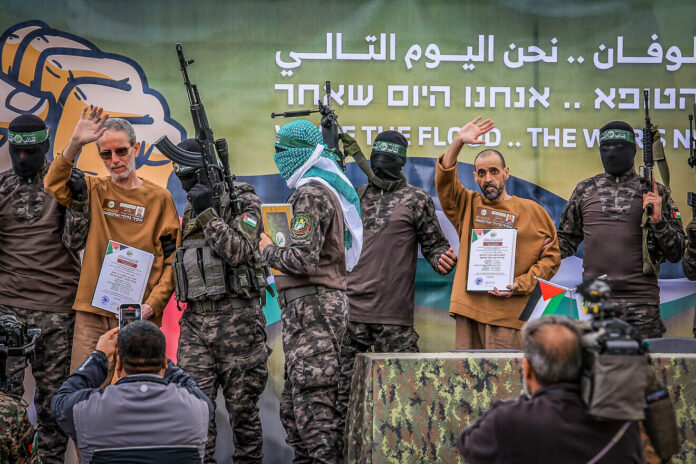
I write also in the moving moment of the release of three Israeli hostages. Romi, Doron, and Emily — “our daughters” from the family of hostages — taunted and tormented by howling mobs of Hamas supporters, as they were transferred to the custody of the Red Cross, the first time the international aid organization had seen them in their 470 days of captivity. And on the eve of the impending release on Saturday of four more female hostages, as well as details regarding which of the some 30 remaining hostages are still alive.
It is the first stage of a three-stage process towards the release of 94 more hostages in exchange for the continued release of close to 2,000 security detainees and terrorists, many with blood on their hands. The asymmetry of paradigms — rescue and recovery of hostages, versus freeing for convicted mass murderers — rewards terrorist criminality and extortion while incentivizing further acts of terror and bloodshed.
In announcing the agreement, Hamas leaders reiterated, yet again, their intention to commit the heinous crimes of October 7th over again. The mass murderers being released to secure the return of innocent civilians taken hostage could be the architects or perpetrators of the atrocities Hamas proclaimed their intention to commit again.
Simply put — if past be prologue — more than acquiescence to extortion, this asymmetry not only rewards and incentivizes, but entrenches, rather than removes, Hamas. Indeed, the previous release of over 1,000 terrorists in the Gilad Shalit exchange included Yahya Sinwar and other murderous Hamas leaders who went on to perpetrate the horrors of October 7th. The international community should be combatting, rather than indulging, such asymmetry and its attending acts of extortion and incentivization of terror.
No country should be put in such a painful and impossible position, and every country should have condemned this dangerous paradigm from its inception.
From the Israeli and Jewish people’s perspective, it reflects the commitment to the redemption of captives (pidyon shvuim) as a supreme principle, for which transgressing the Sabbath is even permissible (as when the Israeli cabinet met on Shabbat to authorize the agreement); as well as the Covenant of Fate, between the Israeli government and its people that mandates the rescue of its people as itself being a supreme value. The community of democracies must stand steadfast against Hamas and the terrorist exploitative extortion of these values.
The global condemnations of Israel, coupled with the indulgence of Hamas’s ongoing “rejectionism” of a negotiated hostage-ceasefire agreement — including Hamas’s demands to release mass murderers in exchange for civilian hostages — only prolonged the painful process, and the pernicious paradigm that underpinned it. In not condemning Hamas’s outrageous demands, the international community delayed both the release of hostages and a ceasefire agreement, and thereby contributed to the suffering of Palestinians and Israelis alike.
A hostage release and ceasefire could have likely been achieved earlier — and many lives and universes been saved — had the world held Hamas accountable, and more clearly and unequivocally called for the release of the hostages as a stand-alone imperative and international legal obligation.
Indeed, I advocated in support of the framework agreement for a hostage release and humanitarian ceasefire immediately following the first agreement at the end of November 2023. I continued to reaffirm it, and then supported the framework agreement proposed in May by then-US president Biden and supported in Israel, but rejected by Hamas. As well, I supported former US Secretary of State Antony Blinken, when he spoke of the “fierce urgency of now” in his August reformulation of the agreement, and, as Secretary Blinken mentioned in recent public statements, Hamas was emboldened by the “daylight” created with Israel and the giving of a free pass to Hamas.
Accordingly, in the immediate aftermath of these “barbaric acts which outraged the conscience of mankind,” as the UN Declaration on Human Rights characterized the mass atrocities of the Holocaust, and where October 7th has been characterized as the worst day in Jewish history since the Holocaust, our Raoul Wallenberg Centre for Human Rights, which I chair, developed an advocacy plan for the release of the hostages. I also co-authored a piece with our hostage legal team lead Brandon Silver calling for the “immediate” and “unconditional” release of the hostages as “a stand-alone imperative,” irrespective of where one stands on the Israeli-Palestinian conflict, or any other consideration.
In particular, we characterized the urgency of the release of the hostages as a “humanitarian imperative” of the first order, given the violent abduction of babies, children, women, wounded, the infirm, and the elderly, Holocaust survivors amongst them. Those taken captive included the most vulnerable of the vulnerable, and they languished in Hamas captivity, where 98 hostages, about half of whom are believed to no longer be alive, remain in horrific conditions 15 months later. Their kidnappings posed a moral imperative of the first order, grounded in the foundational principle of humanity, and the inhumanity of their tortuous captivity. It is a legal obligation of the first order, as every day that hostages remain in captivity is an ongoing crime against humanity. It is also an international legal obligation of the first order, given that the hostages also include nationals from over 30 countries, whose abduction constitute war crimes, crimes against humanity, and mass atrocities constitutive of acts of genocide.
The Raoul Wallenberg Centre for Human Rights has been serving as pro bono counsel to hostage families, and has been engaged with them since late October 2023. What follows is a narrative of the sequence and substance of our involvement and advocacy, which also serves as a looking glass into the run-up of the hostage-ceasefire agreement, finally concluded on January 17th.
First, in the days following the genocidal attack on October 7th, we mobilized and began pursuing diplomatic, judicial and legal advocacy strategies on an international level to secure the release of the hostages. We called on all those involved to prioritize bringing them home. Accordingly, we also established a Hostage Advocacy Task Force, where the imperative of hostage release became a priority on our Wallenberg Centre’s “Pursuit of Justice” agenda.
Second, we led high-level delegations of hostage family members to capitals around the world, including the United States, Canada, and the European Union. These delegations featured meetings with world leaders, expert officials, testimony in legislatures and engagement with the media, the whole to focus global attention and action on Hamas atrocities — and the need for the immediate and unconditional release of the hostages.
Third, during our engagement, we sought to remind the international community that Hamas is not only a terrorist organization under US, Canadian, and international law; it is an antisemitic, genocidal terrorist army and statelet — not because I say so, but because Hamas says so, in its founding charter of 1988 and since. Indeed, it has sworn to commit October 7th mass atrocities “again and again and again.” This constitutes incitement to genocide that is a standalone breach of the Genocide Convention, and where the State Parties to the Genocide Convention are required to “prevent and punish” these acts of genocide.
Fourth, early on, our RWCHR had proposed an international action coalition of states against hostage-taking, to develop a critical mass of advocacy for this purpose. While such a standing mechanism was regrettably not established, it should still be pursued to help ensure the implementation of the present hostage-ceasefire agreement and protect against future hostage-taking.
Fifth, our advocacy, combined with expert legal submissions and sanctions appeals, led to the designation of terrorist entities and their leaders and the seizure of their assets globally. In particular, our RWCHR also pursued justice and accountability — and pressure on the hostage-takers — via strategic litigation. In particular, we sought to ensure that evidence of Hamas atrocities and hostage-taking crimes were presented to international bodies, such as United Nations Special Rapporteurs and the International Criminal Court. We engaged with the Chief Prosecutor of the International Criminal Court, including hosting him for a visit to the crime scenes and sites of the hostage-taking in Israel, and filing a 1,000 page brief against Hamas leaders on behalf of hostages at the ICC in the Hague.
Sixth, in partnership with Hostage Aid Worldwide, we hosted world leaders on the heels of United Nations High-Level Week on combatting global hostage taking. UN Secretary General Guterres delivered a keynote address where he belatedly, but unequivocally, condemned Hamas hostage-taking and echoed calls for the immediate and unconditional release of their captives. The Ambassadors of the US, UK, Germany, and Argentina similarly spoke out, moderated by Canadian Ambassador and UN Economic and Social Council President Bob Rae and with opening remarks by the Canadian Foreign Minister. Joint statements of likeminded countries were published, sending an important message to perpetrators.
Regrettably, while we proposed at the time the international action coalition referenced above, such a standing mechanism was not then established.
Now that a deal has been secured – and assuming it holds through the first three stages -Israel should, in concert with the US and Arab allies, put a strategy in place for “the day after” – which has arrived.
First, Israel should frame a strategy for the governance of Gaza based on the seven “Ds” – the Disarming of Hamas; the Dismantling of its terrorist infrastructure; the Demilitarization of Gaza; the Deradicalization of the genocidal ideology; De-escalation of conflict zones in the region; the Deployment of a civil government administration for the protection and governance of the security, health and well-being of its inhabitants; and the Development and rehabilitation of the Gazan infrastructure.
Second, a state commission of inquiry should also be formed, which would improve Israeli governance by addressing the failures of October 7th, and thereby also provide important healing for the people and public of Israel. It would also further strengthen the complementarity legal principle in the ICC Statute – that the ICC will not substitute its judgement where there exists, as in Israel, an independent judiciary that reviews compliance with international law; thereby protecting Israel in the international legal arena and facilitating the withdrawal of ICC arrest warrants.
Third, Israel should not embark on yet another judicial overhaul which polarized, divided and weakened Israel, while Iran and its terrorist proxies Hamas and Hezbollah were thereby aided and abetted in their criminal planning and preparation of the mass atrocities of October 7th. To paraphrase Einstein, insanity is repeating the same action over and over again and expecting a different result.
Fourth, Israel should initiate prosecutions of Hamas terrorism on October 7th so that a Nuremberg-like legal process can be implemented and the evidence and documentation of the horrors of October 7th can be secured and acted upon.
Finally, as part of “the day after” which is now, Israel should frame a “political horizon” for a pathway to peace with the Palestinians, expansion of the Abrahamic Accords, and normalization with Saudi Arabia.
As the hostage deal unfolds, the international community must ensure that Hamas is held accountable to its commitments, for the sake of both the Israeli hostages and Gazan civilians. Every life is a universe and must be safeguarded, and there is now an historic opportunity to build a brighter future for all. We must seize it for the sake of our common humanity.
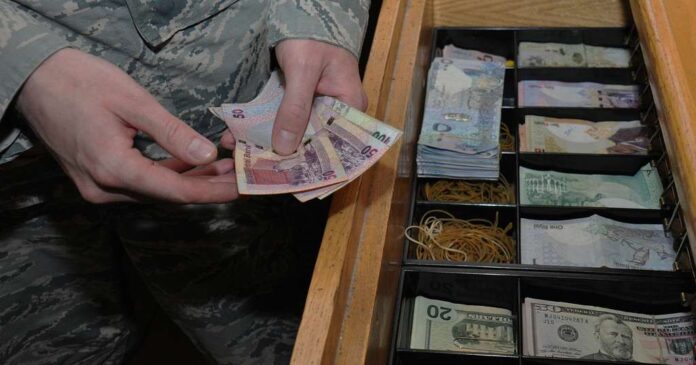
THE QATARI MONEY BEHIND ADVISERS TO FAMILIES OF GAZA HOSTAGES: Some of the families trying to free their loved ones held hostage by Hamas in Gaza are getting advice from individuals and entities that have received funding from Qatar, Daniel reports — an unusual arrangement given Qatar’s role as one of the chief mediators between Hamas and Israel and that the country is home to Hamas’ political leadership.
— As hostage families work to keep their relatives in the news and urge the Qataris to get Hamas to release them, a consultant working for the Qataris, Jay Footlik, has also met with the families in both Washington and Israel to prep them for their meetings with Qatari officials and also help organize them, according to two people familiar with the matter.
— Footlik’s consulting firm ThirdCircle Inc. has been registered under FARA since 2019 to help arrange trips to Qatar for American elected officials on behalf of the Qatari Embassy, which pays the firm $40,000 per month, according to filings with the Justice Department.
— Footlik, a former special assistant to former President Bill Clinton and liaison to the American Jewish community, told PI his work with the hostage families began because he had a long-standing relationship with Israeli businessperson Eytan Stibbe, who asked for his assistance since Footlik had relationships with Qatar.
— He said that he then contacted Qatari ambassador Meshal Al-Thani and asked if he would meet a relative of several of the Israeli hostages, Avichai Brodutch. Al-Thani immediately agreed and soon asked Footlik to help facilitate direct communication with hostage family members who wanted to meet with Qatari officials, he said.
— “Since that initial meeting with Avichai Brodutch, we have been working tirelessly, really around the clock, at the request of Israeli families being held to meet with Qatari officials, and I’m proud of the work that I’m doing. If it saves even one life, it’s all worth it,” he said in an interview. “The Qataris have been instrumental in working with the U.S., the Israelis and others to secure the release of the first 109 to come out, and I think it’s natural to come back to ask them to continue to use their relationships to try to bring everybody home.”
— The hostage negotiating group Richardson Center for Global Engagement, which the late New Mexico Gov. Bill Richardson founded, has also received significant amounts of money from Qatar. Mickey Bergman, the vice president of the center, has also been a frequent adviser to many of the families and has reportedly advised them to not criticize Qatar.
— The Richardson Center said the partnership began in Qatar with an initial contribution in 2019 of $900,000 that helped the organization increase its capacity and get more hostages home. That same level continued for 2020 before declining; the last donation was $250,000 in early 2023.
— “The Richardson Center is a nonprofit organization and works on behalf of families at their request and at no cost to them. Beginning Oct. 8, we’ve been approached by dozens of families to assist them in getting their loved ones,” Bergman said in an interview, adding that its relationship with Qatar had been disclosed and is “one of the pillars of our strategy about why we can help them.”
— One family member of a hostage said they’ve found Bergman — who is close to State Department hostage envoy Roger Carstens — to be very useful in working hard to advocate for their relatives’ release. The person also said that he’s been transparent about the center’s funding.
Happy Wednesday, and welcome to PI. Send lobbying tips: coprysko@politico.com. And be sure to follow me on the platform formerly known as Twitter: @caitlinoprysko.
LOTS OF YELLING, LITTLE PROGRESS: “Senators lit into the CEOs of Meta, X, TikTok, Snap and Discord on Wednesday morning, attacking them on their ability to keep kids safe from sexual exploitation online and drug sales on their sites — as well as the mental health impact of their immensely popular platforms,” our Rebecca Kern, Ruth Reader and Mohar Chatterjee write.
— “By midday, however, the grilling had started to reveal the manifest challenges to any kind of fix. The apparent bipartisan consensus about the problem — both Republican and Democratic senators took aggressive shots at the companies — masks larger issues in Congress moving any kind of new rules forward. The industry has largely opposed any new laws aimed at protecting kids, and CEOs offered at best partial support for multiple bills currently stalled in the Senate.”
FIRST IN PI — ACCOUNTABLE LAUNCHES OVERDRAFT CAMPAIGN: Liberal watchdog group Accountable.US is coming to the defense of the Biden administration’s new proposal to rein in fees charged by banks for overdraft services. The group is launching a digital ad buy that begins tomorrow and will run through February criticizing the banking industry’s protestations of the proposed CFPB rule.
— The ads will be served up to smartphones, tablets and laptops within a certain radius of the Capitol and Union Station, and Accountable.US plans to project it onto the headquarters of the Consumer Bankers Association next week, urging viewers to “be a bank lobbyist’s worst nightmare” and read up on the practice.
— The ads will direct viewers to a landing page that highlights a recent report from Accountable.US in which the group found overdraft fees brought in at least $2.3 billion last year for the 10 largest banks who still charge them. The initial buy is five figures, but could expand, the group said.
FLYING IN: “The companies and crews digging ditches and laying fiber optic cable to expand the nation’s broadband networks are calling on Washington to address immigration reform in order to address a shortage of workers,” our John Hendel reports.
— “The Power & Communication Contractors Association will visit lawmakers and agencies in Washington, D.C., this week to make the case for legislation that would create a path allowing undocumented workers to help perform these key tasks. Twenty-five association members will be on the Hill to discuss the difficulties they’re facing in finding workers to build out the nation’s broadband network.”
— “Association CEO Tim Wagner told POLITICO he believes the U.S. is short by hundreds of thousands of workers needed for construction in the coming years,” a shortage that comes “as the Biden administration is set to dole out more than $42 billion in broadband infrastructure grants to all the states to support the buildout of internet networks,” on top of other projects.
— The trade group “will focus this week’s lobbying in favor of a bipartisan immigration bill called the Dignity Act, H.R. 3599 (118), which the group supports due to its provisions giving a path for undocumented immigrants to work in the country,” and will be “targeting meetings with Hill offices who have not co-sponsored the legislation, according to Wagner.”
PATAGONIA’S NEW PATH: “A little more than $3 million to block a proposed mine in Alaska. Another $3 million to conserve land in Chile and Argentina. And $1 million to help elect Democrats around the country, including $200,000 to a super PAC this month. Patagonia, the outdoor apparel brand, is funneling its profits to an array of groups working on everything from dam removal to voter registration,” according to The New York Times’ David Gelles and Ken Vogel.
— “In total, a network of nonprofit organizations linked to the company has distributed more than $71 million since September 2022,” an influx of giving made possible by “an unconventional corporate restructuring in 2022, when Patagonia’s founder, Yvon Chouinard, and his family relinquished ownership of the company and declared that all its future profits would be used to protect the environment and combat climate change.”
— “Patagonia and the Chouinards set up a series of trusts, limited liability corporations and charitable groups designed to protect the independence of the clothing company while distributing all of its profits through an entity known as the Holdfast Collective,” which received an initial dividend from the company of $50 million in 2022, and another, undisclosed sum, last year. “Each year going forward, Patagonia will transfer all the profits it does not reinvest in the company to Holdfast.”
— But “for a group that is distributing so much money, the Holdfast Collective has so far managed to remain largely under the radar, unknown to several philanthropy experts and Democratic fund-raisers who were asked about it.”
LIVE NATION DOUBLES ITS LOBBYING OUTLAYS: “Live Nation Entertainment more than doubled its federal lobbying spending to $2.4 million in 2023 from $1.1 million in 2022 as it navigated legislative and regulatory efforts to break up its power in the live entertainment and ticketing industry,” The Hill’s Taylor Giorno reports.
— “The lobbying blitz comes on the heels of the infamous Taylor Swift ‘Eras Tour’ presale that crashed Ticketmaster in November 2022, which prompted congressional scrutiny of the ticket vendor’s parent company.”
— “It’s no secret we’ve stepped up our advocacy efforts this past year. More than ever, Congress is focused on ticketing policies, and there is an unprecedented amount of lobbying going on by ticket resellers and competitors attempting to use legislation to protect ticket scalping and deceptive sales practices to advance their own competitive interests,” Dan Wall, Live Nation’s executive vice president of corporate and regulatory affairs, told The Hill.
IT COMPANIES LAUNCH NEW COALITION: A quartet of government IT stakeholders has launched a new coalition aimed at increasing competition and diversifying cloud providers and IT infrastructure used by the federal government. The Small Business Multi-Cloud Coalition comprises software providers Aretec and Westwind Computer Products and industry consultancies ATX Defense and Daston.
— The coalition wants the government to shift away from single cloud providers toward a multi-cloud approach that could help rivals (both big and small) compete with behemoths like Amazon Web Services and spark improvements and efficiency in cloud offerings. The coalition will also advocate for “harmonizing cybersecurity and risk management compliance while prioritizing modern cybersecurity strategies.”
SPOTTED: At Brownstein Hyatt Farber Schreck’s annual fundraising dinner for the NRSC at Altria’s D.C. office, per a PI tipster: Senate Minority Leader Mitch McConnell (R-Ky.), NRSC Chair Steve Daines (R-Mont.), Sens. Marsha Blackburn (R-Tenn.), John Boozman (R-Ark.), Bill Cassidy (R-La.), Susan Collins (R-Maine), Kevin Cramer (R-N.D.), Deb Fischer (R-Neb.), Bill Hagerty (R-Tenn.), John Hoeven (R-N.D.), Cynthia Lummis (R-Wyo.), Markwayne Mullin (R-Okla.), Pete Ricketts (R-Neb.), Mike Rounds (R-S.D.), Eric Schmitt (R-Mo.), Rick Scott (R-Fla.), Dan Sullivan (R-Alaska), John Thune (R-S.D.), Thom Tillis (R-N.C.), Tommy Tuberville (R-Ala.), Roger Wicker (R-Miss.) and Todd Young (R-Ind.); and Norm Brownstein, Will Moschella, Brandt Anderson, Rosemary Becchi, David Bernhardt, Geoff Burr, David Cohen, Steve Demby, Leah Dempsey, Bill Duhnke, Will Dunham, Emily Felder, Jon Hrobsky, Charlyn Iovino, Joe Jaso, Greta Joynes, Melissa Kuipers Blake, Marc Lampkin, Doug Maguire, Elizabeth Maier, Bill McGrath, Brian McGuire, Tripp McKemey, Lauren Mish, Travis Norton, Ed Royce, Preston Rutledge, Adam Steinmetz, Jon Towers, Mark Warren and Ari Zimmerman of Brownstein along with other friends and clients of the firm.

Mrs. Karoline C. Leavitt
Press Secretary
The White House
Deas Mrs, Leavitt,
As a US journalist who has covered Middle East policies since 1987 in Jerusalem, I am now writing an in depth piece on the US Middle East envoy, Steve Witcoff.
My question to you is whether Mr. Witcoff was vetted for a conflict of interests because of his extensive investments in Qatar, the nation that sponsors Hamas.
By way of introduction, members of the US Congress who know and respect my work over the past 35 years include Senator James Risch and Rep. Chris Smith.
Thank you. God bless you in your new position.
Cordially Yours,
David Bedein
IsraelBehindTheNews.com
US tel. 215 240 4919


