‘UNRWA teachers… saying things like ‘slaughter them all’ and teaching this to students’
The United States and other Western states are poised to pledge more funding to the UN agency for Palestinian refugees – UNRWA – against the backdrop of a recent report that found educators from the agency were promoting violence and antisemitism online.
Human rights organization UN Watch submitted its findings on Thursday ahead of a funding conference for UNRWA, where countries are expected to pledge hundreds of millions of dollars.
In its latest report, the NGO cited over 20 new examples of UNRWA teachers and staff in the West Bank, Lebanon, and Jordan supporting terrorist groups, violence against Jews and Israelis, and antisemitism on social media.
“We are exposing Facebook posts that show how UNRWA teachers call for the murder of ‘filthy Zionists,’ saying things like ‘slaughter them all’ and ‘not one should be left over,’ and teaching this to students,” Hillel Neuer, UN Watch executive director, told i24NEWS.
Neuer’s agency further urged funders – including Germany, Britain, and the European Union – to stop paying for UNRWA teachers “who teach to murder Jews.”
One case in the report named Lebanese teacher Elham Mansour, who posted on Facebook: “By Allah, anyone who can kill and slaughter any Zionist and Israeli criminal, and doesn’t do so, doesn’t deserve to live. Kill them and pursue them everywhere, they are the greatest enemy… All Israel deserves is death.”
The staff members are added to a list of more than 100 UNRWA educators who were exposed by UN Watch last year.
“We know when donor states demand change, they can accomplish something. We want to see teachers of antisemitism fired. The UNRWA needs to make it public,” Neuer said.
Israel’s envoy to the United Nations launched a fresh attack on Thursday upon UNRWA, the refugee agency solely dedicated to the Palestinians that was charged in a recent independent report with inciting antisemitism.
“Not only does UNRWA not help resolve the Israeli-Palestinian conflict, it causes enormous damage, incites hatred and terrorism and perpetuates the conflict, all under the auspices of the UN, which buries its head in the sand and refuses to see reality,” Israel’s Ambassador to the UN, Gilad Erdan, said in a statement on Thursday.
Arab terror against Israelis has been a constant presence for an extended period, with different “waves” of violence characterized, among other features, by various means of attack.
A combination of motivational “fuel” and environmental “triggers” determines when and how a particular attacker may choose to act.
Terrorist behavior can be understood as having different layers or levels, which produce “waves” of violence when triggered and acted upon.
Jewish and Arab Israelis differ in their perceptions of the threat represented by the general Israeli Arab population, resulting in lower perceptions of personal security among Jewish Israelis.
While some Arab sources condemn terror activity, others are more ambivalent, and others consciously incite and promote violence.
Clearly, social media and social networks have significantly increased the perception and presence of Arab anti-Israel incitement. They also cultivate a culture of Palestinian victimhood which adds psychological fuel to justify terror activity.
Social networks have also expanded the environments of individuals previously considered “lone wolves” to where they now enjoy widespread support in both the real world and in a “virtual” world.
Ultimately, the source of Palestinian terror activity lies in an ideology of rejectionism, with the intransigent refusal to come to terms with the existence of a Jewish state resulting in a culture of non-acceptance of the reviled Jewish “other.”
The extended virtual social environment of would-be Palestinian terrorists now means that, in reality, they are members of a more extensive “pack” rather than solo operators. This reality presents a significant challenge that calls for a proactive cyber campaign to counter terror.
In an address to the nation on March 30, 2022, Prime Minister Naftali Bennett stated that Israel is “experiencing a wave of murderous Arab terrorism.”1 And, as was common during previous waves, media reports contribute to the impression that the current wave may somehow be different from previous waves. In reality, while environmental factors relating to political, economic, or social factors may indeed be different, the common psychological denominator motivating and driving terrorist attackers, described by Yossi Kuperwasser as the “pillars of Palestinian national identity,”2 remains the same. As such, the “fuel-trigger” mix discussed in previous studies3 may include different “triggers,” but the psychological or ideological “fuel,” namely the intolerance of Israelis as the “other” and a willingness to act on that intolerance, remain the same.
So, while the picture may appear to be different, with different actors and different scenes, the storyline is essentially consistent. And while the factors related to the challenges presented by unorganized terrorists (often referred to as “lone wolves”) may be similar, the proliferation of social media coverage and social network incitement contribute to explaining why these actors choose a particular time to go into action.
What exactly is a “wave” of terror?
Media reports have accurately noted that the current series of attacks are among the deadliest since the Second Intifada from 2000 to 2005.4 But while the difference may be in the result, i.e., more deaths, the actual behavior in the field is not different from what many Israelis, especially those who live in Judea and Samaria, have been experiencing for years.
According to data compiled by “Rescuers Without Borders,” attacks against Israelis have been ongoing and steady for many months. The perceptual difference is that while most of the recent deadly attacks took place in Israel “proper [the pre-1967 boundaries],” most of the other attacks occurred either in Jerusalem or over the Green Line in Judea and Samaria. Take, for example, actions taken in December 2021. Data show 22 victims of stoning attacks, five more from shooting attacks, two from car-ramming, and five others from stabbings, with another seven attacks in Jerusalem.5 In January 2022, Rescuers Without Borders recorded over 400 attacks with 24 injured.6 A look at the daily register of events7 shows attacks routinely taking place that result in damage to both property and person. As noted by Israeli U.N. Ambassador Gilad Erdan, these incidents occur daily but are met with widespread silence.8 Moreover, these data do not even begin to take into consideration the sporadic terror activity, including incendiary balloons that were released in Gaza and sent into Israeli fields.
Screen shot of data compiled by “Rescuers Without Borders” from attacks against Israelis in December 2021.
A model for understanding terror “waves”
Imagine a house with a solid basement or foundation and several floors and levels above it. Terror activity among Palestinian Arabs has a basic “basement” or foundational baseline of constant threat, and different levels are exhibited at other times. At the base is a solid and steady presence among at least part of the population that not only supports terror activity, but actually engages in “baseline” behavior that includes confrontation from a distance and use of generally primitive yet potentially lethal weapons. This activity includes stone-throwing or the use of Molotov cocktails thrown at Jewish Israeli vehicles and buses in Judea and Samaria or the use of incendiary balloons flown into Israeli territory from Gaza.
The next level involves opportunistic use of “cold” but lethal weapons in direct, frontal attacks. This would include knifings and car-ramming targeting Jewish Israelis, especially in Judea and Samaria and in east Jerusalem. The transition to “hot” weapons and attacks inside the pre-1967 Israel is next, with shooting attacks being the most common method. While the transition to “hot” weapons includes the suicide/homicide bomber or the use of rockets or IEDs, these operations, while certainly an example of a different level of terror, are most often not a classical “lone wolf” situation because of logistic and planning issues and accomplices needed to transport them to the attacks.
Are more Arabs leaning toward terror?
Prime Minister Bennett specifically described the current wave as “Arab” terrorism. In the sense that Arabs are indeed the ones committing the attacks, that impression is accurate. But impressions can be misleading. The problem of ideology and mindset of an unorganized terrorist remains a challenge not because of the large number of Arabs who are potential terrorists but precisely because of the relatively low number of those who climb from the basement of basic violence to the second or the third floor of the terror house, making it challenging to identify the actual attackers. Despite the resultant horrific deaths, the recent hot weapons attacks referred to by Bennett involve only a handful of incidents committed by only a handful of attackers, while the “cold” weapons attacks noted earlier by Erdan involve many attacks by many attackers. A recent survey by N12 News9 brings to light the challenges to public confidence when reality and perception do not coincide.
The N12 survey asked Jewish and Arab Israelis their feelings regarding whether the perpetrators of the recent attacks are generally representative of Israeli Arabs. The results here point out the divide between Jewish and Arab Israelis concerning their views of each other and their views regarding terror.
Forty-four percent of Jewish Israelis felt that the Arabs who murdered Jews were representative of the general Arab population. However, with the Israeli Arab population, the results were markedly different, with only 13% feeling the attackers were representative of the general Arab population (and only 5% feeling they “greatly” represent the general Arab population).
Illustrations (Hebrew) from the N12 survey of attitudes among Jewish and Arab Israelis toward Arab terrorism.
This finding likely contributes to the other significant data in this survey, the finding that one-third of the Jewish population has doubts regarding personal safety/security. Even if one considers the more optimistic estimates of the Israeli Arab population, there are likely tens of thousands of Israeli Arabs who could be regarded as potential terrorists by a considerable part of the Jewish population. Add to this the numbers of Palestinian Arabs living inside the Green Line illegally or with work permits, and the actual numbers, even if relatively low, represent a significant threat.
Predicting terror activity
With so many potential terrorists, what determines if any particular individual will move from “believer” to “actor”? Here is where the unorganized would-be terrorist is nurtured by the perceived group support to which they are exposed. The organized hate indoctrination and incitement join with social media and social networks that provide the fuel and incitement to attack. These dangerous elements represent the community support system that extends far beyond one’s real social environment.
Our past studies10 have demonstrated that ideology is affected by one’s social environment. To the degree that one lives in an environment where terror activity is valued, sanctioned, and admired, any such activity by an individual is reinforced, making the behavior more likely to be modeled by others and repeat itself in the future. However, at least theoretically, should such activity be discouraged, devalued, and ostracized, that activity is less likely to be imitated by others.
Witness the reactions by various communities to the recent attacks. In the Israeli Bedouin town of Hura, home of the perpetrator of the Beersheba stabbing attack of March 22, 2022, that killed four, there was substantial “wall to wall” condemnation, with even special sessions in local schools to reinforce the unacceptability of such behavior.11 Contrast this to the widespread positive reaction to the event by terror groups on social media and social networks,12 demonstrating the possible break between the terrorist’s real world and his virtual world. For those living in the “real” world in Hura, turning to terror is a low probability, but for those whose life is centered in the virtual world of destructive social networks, terror activity is much more likely.
Negative reactions to the Hadera attack of March 27, 2002, were less forceful and demonstrated a different response. Although publicly condemning the shooting attack that killed two and wounded 12 perpetrated by two Umm al-Fahm residents, the Umm al-Fahm municipality also offered condolences to the attackers’ families.13 This is the same town where thousands participated in the funeral of three terrorists involved in a July 2017 incident in Jerusalem.14 Here, the reinforcing social environment extended into the real-life of the attackers, making the social support system for terror action much more concrete and actual.
As far as Palestinian Arabs (contrary to Israeli Arabs) are concerned, the social support of their virtual world is extensive. A recent report by the Meir Amit Center notes how Palestinian social media is “rife” with anti-Israel incitement. Referring to WhatsApp, TikTok, and Instagram, the report states: “They are probably one of the reasons young Palestinians have carried out terrorist attacks, copying what they have seen on the social media.”15 But there is also a “real world” support of terror activity that Palestinian Arabs are exposed to in their immediate social environments like schools, mosques, and public statements made by Palestinian Arab officials that serve to incite, promote, and ultimately reinforce terror activity.
One of many such examples is the following Palestinian report, translated by Palestinian Media Watch:
“Yesterday [April 10, 2022,] PA Prime Minister Muhammad Shtayyeh participated in the [Ramadan] fast-breaking meal with female fighter (sic) Um Nasser Abu Hmeid (i.e., mother of terrorists responsible for at least 10 murders; see note below) at her home in Ramallah, in the presence of Ramallah and El-Bireh District Governor Laila Ghannam.”16
Advancing terror activity from one level to another (from believer to perpetrator) is something that can (and is) being done by such activities, the timing of which is decided by Palestinian officials and organizations. Such activities may occur in “real-time” but are subsequently reflected in social media, providing a virtual audience for potential individual terrorists to act on the messages being promoted. The increase in terror activity seen subsequent to such Palestinian activities and pronouncements is not a coincidence.
For example, read the statement made by Hamas leader Yihya Sinwar17 specifically calling Palestinians to “carry out lone-wolf attacks; Israeli-Arabs should prepare their guns, cleavers, axes, knives.” Less than a week later, on Israel Independence Day, two such “lone wolves” mentioned by Sinwar did, in fact, carry out a fatal attack in Elad using axes and knives.18
The following illustration from the Meir Amit Center19 shows the various “ups and downs” or “waves” of significant terror activity (a significant attack is defined as involving shooting, stabbing, a vehicular attack, the use of IEDs, or a combination of the above; stones and Molotov cocktails thrown by Palestinians are not included) coinciding with specific events (e.g., May 2021, Operation Guardian of the Walls; March 2022, pre-Ramadan).
Significant Terrorist Attacks since January 2020
In fact, these “waves” are consistent and repetitive, as documented by additional data compiled by the Israeli Ministry of Foreign Affairs.20
The virtual “pack”
The extensive presence of social media in the lives of potential terrorists creates a virtual support system that buttresses or, in the case of those where support in their real lives is minimal, supersedes their actual social environments. As a result, while they may be “lone wolves” when they carry out their actions, their behavior is actually more like a pack wolf, acting in concert with other members of the pack occupying a common virtual world. From a psychological perspective, while the fuel (i.e., motivation) to attack the “other” is constant, the “trigger” that determines when such an attack will take place is only a matter of what and how any potential terrorist interprets what they see on their personal cyber feeds and how the pack signals an attack.
While social media support for terror attacks is common in attacks against Israelis and Jews, it is not limited to them. The recent “lone wolf” attack in the New York City subway system is suspected of having been perpetrated by an individual with a broad and long social media presence.21 This, in essence, was his “real world,” and his activity and presence in this virtual social environment may have served to reinforce his behavior. A racially motivated terror attack in Buffalo, New York,22 was also perpetrated by a supposed “lone wolf” with an active social media presence who reportedly permitted a small group to join his private chatroom about 30 minutes before his fatal attack.23 In both cases, the perpetrators thus virtually socialized with their larger “pack.”
The fuel or motivation for terror activity has been part of Islamist and Palestinian ideology for some time. For example, the canard of “Al-Aqsa is in danger” has been used for decades and revived whenever a reliable and proven method to incite the Arab public is needed.24 Notwithstanding the understandable perception that recent attacks represent a new “wave,” the reality is that the number of attacks and the hateful anti-Israel ideology behind these attacks have been a constant in Palestinian Arab life for years. While real-life conditions and efforts by Arab leadership and society can undoubtedly influence and modify the frequency of terror activity, the addition of the amorphous cloud of social media allows lone wolves, even as a small minority of their society, to receive virtual support to act out and conduct attacks that can have effects far beyond the influence of any real-life situation they may be living in. This support can even take place after an attack as well. The ease with which perceived “lone wolves” can be “adopted” post-attack by others is exemplified by a fatal shooting attack on a security guard in the town of Ariel, thought by Israeli security forces to be a “lone wolf” type attack, only later to have responsibility claimed by Hamas, retrospectively creating a support system for the perpetrators and proactively creating a future support system for potential attackers.25 Added to the praise provided for specific attacks, even while not directly claiming responsibility,26 these actions create a system of post-event reinforcement that further raises the probability that others will carry out similar attacks.
Image from Arab-language social networks showing a banner saying “Happy (Israel) Independence Day” with an ax tearing through it.
The widespread employment of social media to incite and support terror has been recognized of late and expressed in related posts on various social media27 and noted specifically by those following Palestinian Arab media28 to include widespread use of WhatsApp groups.
What creates the “pack”?
The late terrorism expert and psychiatrist Jerold Post referred to the concept of “when hatred is bred into the bone” as explaining much of the social psychology of individual terrorists that creates a collective identity that is primary in determining socially accepted behavior.29 This conceptualization would also apply to today’s unorganized individual Palestinian “lone wolf” and help understand the mentality behind the brutal nature of some of the attacks (such as taking an ax to a random victim). According to Post, individual terror activity is not a result of some personal psychological defect or illness. In fact, Post argues that terror organizations screen out emotionally unstable individuals and that their members “are neither depressed, severely emotionally disturbed, nor are they crazed fanatics.”30 When Jerold Post refers to a “virtual community of hatred” created in cable news and the Internet, it would include any motivated individual that has access to these sources as being a potential terrorist. When a society, such as much of Palestinian society, sanctions and supports behavior associated with violence toward Israelis, a culture of hatred is created.
In Palestinian society, group psychology can determine individual behavior. What is sanctioned by the group becomes the standard for the individual. A prime example is the longstanding policy of the Palestinian Authority of financially supporting (and thus rewarding) terror behavior, including the behavior of unorganized individual terrorists.31 Therefore, any such individual action, even if not planned or officially sanctioned in advance, is effectively reinforced and incentivized by the group and becomes accepted as the norm. When added to the background messages of incitement common in Palestinian society and Arab-language social networks, the triggers for individual terror activity are set.
Eliminating unorganized individual terror in a society where such behavior is culturally acceptable would require a change in the relationship between the cost of such behavior and the benefit of abstaining from it. Currently, as pointed out by Kan 11 News correspondent Gal Berger,32 there is a well-oiled mechanism of Palestinian incitement, denial of the “other,” and cultivation of hatred that fits in squarely with the collective identity Post alludes to that can account for why individuals carry out organized terror attacks.
The role of “victimhood”
In many politically progressive circles, “victim blaming” is considered taboo. Originally applied to incidents involving sexual abuse,33 avoiding victim blaming has extended well beyond that to politically perceived “victims” as well. Defining the “victim” often takes place in a vacuum, where the perceived weaker party is automatically granted privileged status, leading them to be considered less responsible for any behavior they engage in that is ostensibly a reaction to their victimhood. The Palestinian narrative has taken advantage of this internally and externally and has cultivated a victimhood scenario where Israel is accused of mistreating prisoners34 and children,35 desecrating Al-Aqsa,36 engaging in apartheid,37 and carrying out massacres against Palestinians.38 These repetitive messages, where the truth is often clouded or distorted, result in a “big lie” mechanism impacting the Palestinian and Israeli Arab populations and potentially any sympathetic outside observer as well.
The quick rush to judgment after the death of Palestinian-American journalist Shireen Abu Akleh,39 when the respected Washington Post carried a headline that promoted the Al-Jazeera claim that she was intentionally targeted by the IDF (“American reporter killed by IDF, network says; IDF calls for inquiry”)40 is a prime example of a questionable victimhood paradigm adopted by a major news source. The Washington Post all but definitively blamed Israel by stating, ”based on video the Post filmed in Jenin, Abu Akleh and other journalists identified as press would likely have been visible from the IDF convoy’s position.”41 This was followed by media investigations by both CNN42 and the New York Times.43 CNN also assigned blame to Israel, writing that this was a “targeted attack” on the journalists. The Times report seemingly left the question of intentionality open, stating, “The Times found no evidence that the person who fired recognized Ms. Abu Akleh and targeted her personally. The Times was unable to determine whether the shooter saw that she and her colleagues were wearing protective vests emblazoned with the word Press.”44 Notwithstanding the still open question of which side is responsible for the death of Abu Akleh, the definitive assignment of intentionality to Israel (either by direct blame or strong suggestion) became a narrative that followed the Palestinian script. For the Palestinians, the actual facts surrounding the death of Abu Akleh became irrelevant as the opening narrative of Abu Akleh being a victim “assassinated in cold blood”45 became a truth that, true to a longstanding pattern, resulted in public disorder and confrontation with Israeli forces in Jerusalem46 that were broadcast prominently in the virtual world of social media.
Poster on the Fatah-Jenin Facebook page praising the “hero” of the Bnei Brak terror attack of March 29, 2022.
Maintaining this narrative is essential to Palestinian leadership, to the point of photoshopping any images of captured Palestinian terrorists to make them appear smiling and beaming with pride instead of forlorn and dejected.47 The terror activity is not only justified by the sense of victimhood, but it is also the way to overcome the impotence that comes with it and transform it into a feeling of omnipotence. This can be seen in other features that characterize Palestinian and Israeli Arabs these days, such as harassing Jews in public48 and challenging the security forces in sensitive friction locations (in Jerusalem,49 in Israeli universities,50 and in the mixed Jewish-Muslim cities,51 among other places).
As the virtual world of social networks expands, individuals not only are fed the fuel for action, but also can, in many cases, anonymously feed others and stir them into action. One recent example of the proliferation of “fashion statements” consistent with the “virtual pack” are t-shirts emblazoned with images of M16 rifles, like the one used in the Bnei Brak attack.52 A clothing store manager in Ramallah reported that he sold 12,000 of the shirts in a week. “The demand is terrifying,” he said.53
The popular M16 t-shirt for Palestinian youth. (PMW)54
With no borders, no controls, and no policing, the individual living in the virtual world of social networks operates within a limitless arena of whatever culture they choose. For many Palestinian Arabs, this virtual world of hate mirrors the society and environment they were raised in and still live in that, as explained by Kuperwasser and Lipner,55 does not accept the presence of a Jewish state anywhere within the area of Mandatory Palestine. As long as these worlds continue to exist as is, the motivation for unorganized terror activity will be present. Consequently, as also noted by counterterrorism expert Ely Carmon, a proactive and direct cyber campaign targeting the virtual world of terror is required to deal with the problem.56
The lone wolf is now, more than ever, a member of a dangerous and virtually invisible pack of wolves.
View of the United Nations Relief and Works Agency (UNRWA) building during a strike in Rafah in the southern Gaza Strip, on July 26, 2018. Photo by Abed Rahim Khatib/Flash90 *** Local Caption *** אונר"א
עזה
בניין
שביתה
However, it lacks context:
1. US has frozen US funds for UNRWA education because UNRWA will not change its texts, as US-UNRWA accord of July 2021 has mandated
Today in New York, top donor states to
gather for UNRWA pledging conference
GENEVA, June 23, 2022 — As the U.S. and other Western states gather today at the United Nations in the presence of Secretary-General Antonio Guterres to pledge funding for the UN agency that runs schools and social services for Palestinians, a watchdog group urged them to stop funding hundreds of UNRWA teachers and other employees who call to murder Jews.
Over 120 UNRWA educators and staff have been found to promote violence and antisemitism on social media, according to the latest report in a series published by the non-governmental organization UN Watch, an independent human rights monitoring group based in Geneva.
Entitled “UNRWA’s Teachers of Hate,” today’s report uncovers 20 new cases of virulent UNRWA staff incitement which violate the agency’s rules and stated values of zero tolerance for racism, discrimination or antisemitism.
UN Watch submitted the report today to EU foreign affairs commissioner Joseph Borell, and U.S. Ambassador Linda Thomas-Greenfield, whose governments are among the top funders of UNRWA, and to UN Secretary-General Antonio Guterres and UNRWA chief Philippe Lazzarini.
UN Watch is calling on the agency’s major funders—including the U.S., Germany, the UK and the European Union—to ensure that none of their combined $1.2 billion of donations to UNRWA will fund teachers of hate, and to hold the agency accountable to its own standards and commitments.
As revealed in today’s report, UNRWA staff stationed in the West Bank, Lebanon and Jordan are publicly inciting antisemitism and terrorism.
Among the educators who have used their personal social media channels to propagate hate:
UNRWA West Bank computer teacher Nihaya Awad endorsed Hamas rocket attacks on Israeli civilians after last year’s war and encouraged Palestinian terrorists’ exploitation of child soldiers, in a May 21, 2021 post on Facebook. This was only two months after one of UNRWA’s directors, Gwyn Lewis, sent Ms. Awad a certificate of appreciation for her “fantastic efforts” as a “best performer” in UNRWA education. “We are proud that you are part of the UNRWA team,” wrote Lewis on March 23, 2021.
UNRWA Lebanon teacher Elham Mansour last month, on May 11, 2022, posted on Facebook that “By Allah, anyone who can kill and slaughter any Zionist and Israeli criminal, and doesn’t do so, doesn’t deserve to live. Kill them and pursue them everywhere, they are the greatest enemy….All Israel deserves is death.”
Two months ago, on April 15, 2022, this UNRWA teacher posted a message on Facebook addressed to “you filthy Zionists” in which she called on “the men of resistance” at the Al Aqsa mosque in Jerusalem to “slaughter each and every one of you and toss you into the garbage heaps, because you are filthy, you contaminate any land you are in.”
Last year, on May 14, 2021, Ms. Mansour wrote: “Israel is evil. . . fight them and kill them, chase them everywhere, every corner, every street, our greatest enemy is Israel, death and destruction to you…”
Notably, Ms. Mansour’s posts are liked by several other UNRWA teachers, as was the case with many of the antisemitic UNRWA posts exposed in our prior reports. This underscores how the problem of UNRWA employing staff who propagate antisemitic hate and incitement is not merely due to “a few bad apples,” as UNRWA has claimed. The antisemitic poison is systemic.
UNRWA Jordan teacher Hana’a Daoud posted a photo of masked Hamas terrorists holding submachine guns and called on Muslims to “fight against the Jews, until a Jew will hide himself behind a stone or a tree, and the stone or the tree will say: ‘O Muslim, there is a Jew behind me, come and kill him.’”
These teachers of hate were funded last year by state donations to UNRWA including $338 million from the United States, $177 million from Germany, $118 million from the European Commission, $54 million from Sweden, $40 million from the UK, $32 million from Switzerland, $30 million from Norway, $28 million from France, $28 million from Canada, and $27 million from Netherlands.
UN Watch’s report documents 20 new cases of antisemitic incitement that it captured from UNRWA employees’ public pages alone, all celebrating and promoting violence, even among young children.
The report only examined a sample of Facebook users who publicly identified themselves as UNRWA employees, and therefore UN Watch estimates that the number of UNRWA staff who incite violence and hatred includes hundreds if not thousands among the agency’s 30,000 staff.
Comment by UN Watch
UN Watch further reveals that despite its numerous prior requests and submission of detailed evidence, UNRWA has failed to fire teachers who incite to racism and terrorism.
“UNRWA should therefore be considered complicit in its staff members’ misconduct, says UN Watch executive director Hillel Neuer.
“Around the world, educators who incite hate and violence are removed. Yet UNRWA, despite proclaiming ‘zero tolerance’ for incitement, systematically employs preachers of anti-Jewish hate and terrorism.
“We call on the governments that fund UNRWA, as they gather at the United Nations to announce new pledges, to declare that they will stop enabling a system that teaches new generations of Palestinians to hate and murder Jews.”
“Let us be clear: the problem is not the social media posts, but rather the unconscionable employment of teachers who preach antisemitism and terrorism.”
“The U.S., EU, Germany, UK, Canada and other donor states cannot morally send more money to UNRWA until it shows a genuine commitment to basic norms of education in its schools. This means the agency must publicly condemn UNRWA employees who incite terrorism and antisemitism, remove them from their positions, and create an independent and impartial investigation of all of its staff.”
UNRWA’s response to previous cases exposed in the past was to deny or downplay the problem, and to attack the messenger. Only when pressed by donors did UNRWA carry out a small number of investigations which led to a handful of temporary staff suspensions.
“A mere slap on the wrist to teachers of hate only sends the message that it’s business as usual. Instead, those who incite to racism or murder should be fired, under a zero tolerance policy, just as the UK government banned a teacher from the classroom for life over an antisemitic Facebook post,” said Neuer.
UN WATCH APPEAL TO MEMBER STATES FOR OVERSIGHT AND ACCOUNTABILITY
On the occasion of the Ad Hoc Committee of the General Assembly for the Announcement of Voluntary Contributions to UNRWA, United Nations, 23 June 2022
On the occasion of today’s international pledging conference for UNRWA, we appeal to the U.S., EU, Germany, the UK, France, Canada and other donor states to exercise their duty of oversight by demanding basic accountability from the agency.
They should ask UNRWA why it continues to employ teachers of hate as documented in today’s new report.
In addition, they should request information from UNRWA as to what if any UNRWA actions were taken in wake of last year’s UN Watch report, which called for UNRWA to fulfill its promise of “zero tolerance” by dismissing any UNRWA teacher who glorifies antisemitic hatred or terrorism. To date, however, we have not received any direct response from UNRWA.
A. Reported UNRWA Suspension of 6 Employees for Inciting Antisemitism
According to reports in Al Jazeera and The New Arab, UNRWA last year suspended a handful of employees, placing them on paid leave, pending an investigation into the findings of UN Watch’s report that documented incitement of antisemitism and terrorism.
UNRWA media advisor Adnan Abu Hasna said that employees against whom allegations were proven would be subject to “graduated penalties according to the case, such as warning, dismissal or other administrative procedures,” reported Al Jazeera.
Confusingly, however, no statement was ever published on the UNRWA website. For UNRWA donors to properly follow-up on this report, they need to request clarifications by UNRWA Commissioner-General Philippe Lazzarini of the following:
1. Of the 113 UNRWA teachers and other staff identified in Annex A of our report for glorifying antisemitism or terrorism, which, if any, have been suspended?
2. If indeed only six of the 113 perpetrators have been suspended, Mr. Lazzarini should be asked to identify which of the 107 UNRWA teachers and staff listed in Annex A are still employed by UNRWA. For example, we need to know about:
· Ghanem Naim Ghoneim, UNRWA teacher who venerates Hitler
· Ahmad Fareed Sultan, UNRWA teacher who glorifies terrorists
· Ibrahim Sabbagh, UNRWA teacher who incites terrorist violence
· Mudalalah Louz, UNRWA school principal who calls to destroy Israel · Mohammad Alsayyed, UNRWA head teacher who celebrates abduction and murder of Israelis
· Omar Asaad, UNRWA employee who glorifies Hitler
· Hatem Asaad, UNRWA employee who praises terrorists
· Mohamad Fahed, UNRWA employee who endorses murder of Jewish boys · Mohamed Alhallaq, UNRWA teacher who glorifies terrorist groups
· Tarek Abu Ghazaleh, UNRWA employee who celebrates murder of rabbis · Hussam Khattib, UNRWA teacher who endorses murder of Israeli civilians · Mohamed Soliman, UNRWA teacher who glorifies Hitler and stabbings
3. Why were the suspended employees placed on paid leave?
4. What criteria determine whether an UNRWA employee who incites antisemitic hatred or terrorism receives a warning, dismissal or other disciplinary measure
5. Given that UNRWA proclaims “zero tolerance” for “hatred, incitement to violence or discrimination” and a “zero-tolerance policy” for “any deviation from UN principles,” why are teachers found to have publicly incited antisemitic hatred and terrorism not being permanently removed from the classroom?
6. Does UNRWA have a vetting procedure in place to prevent the hiring of teachers who promote antisemitic hatred, violence or discrimination, and if so what is it?
7. When the UN Human Rights Council president made the unprecedented move of cutting off UN Watch’s testimony on UNRWA incitement, was this censorship preceded by a request or other communication from UNRWA?
B. Defaming Those Who Uncover UNRWA Misconduct
Member States should firmly reject UNRWA’s contradictory approach toward independent efforts of oversight and accountability, including reports that document racist teachers employed by the agency.
On the one hand, in wake of UN Watch’s latest report, UNRWA stated that it “takes each allegation seriously”; “has immediately launched a thorough investigation”; is “concerned” that “some of the posts violate our rules and policies”; and pledged “immediate administrative or disciplinary action” should misconduct be found. Moreover, UNRWA stated that “oversight and accountability of any organization is vital” and that the agency “welcomes future opportunities of assessment.” (UNRWA statement on United Nations Watch allegations, 8/5/2021).
On the other hand, on several occasions—in his own capacity as Commissioner-General—Mr. Lazzarini has resorted to ad hominem attacks on the human rights work of United Nations Watch. On June 30th, for example, he told UNRWA’s donor states that reports documenting UNRWA staff incitement to violence or antisemitism constitute “irrational allegations,” and he characterized this form of oversight and accountability as “political attacks that seek to undermine [UNRWA’s] legitimacy as a way to erode the rights of Palestine refugees”—from which UNRWA needed to be “shielded” by donor states. (Commissioner-General’s opening statement to UNRWA Advisory Commission, 6/30/2021)
Likewise, following UN Watch’s latest report documenting incitement to antisemitism and terrorism by 113 UNRWA teachers and other staff, UNRWA’s initial response was to lash out and falsely defame this human rights group as “an organization with a deep history of unfounded and politically-driven assertions against the Agency.” (UNRWA statement on United Nations Watch allegations, 8/5/2021) Not one example of such “unfounded” or “politically-driven” assertions has ever been provided.
Less than two weeks later, Mr. Lazzarini reported to the UN General Assembly that UNRWA faced “intense politically motivated attacks” which he said “sought to question its mandate, its relevance and the integrity of its staff” primarily through “attacks on the quality of the education that Palestine refugee children receive.” (Commissioner-General’s report to the General Assembly, 8/18/2021)
In practice, it would seem that UNRWA is refusing to engage with the extensive research and documentation of UN Watch which demonstrates UNRWA’s failure to apply its purported “zero tolerance” policy toward teachers who incite racism and violence, while at the same time seeking to kill the messenger by maliciously defaming UN Watch for providing a minimal form of oversight that UNRWA itself has failed to exercise.
This report documents systematic incitement to antisemitism and terrorism by teachers, school principals and other staff at the United Nations Relief and Works Agency (UNRWA), and calls on its major funders, including the U.S., Germany, the UK and the European Union, to finally hold UNRWA accountable to its own rules and commitments.
1. (a) In this Law, “genocide” means any of the following acts committed with intent to destroy, in whole or in part, a national, ethnical, racial or religious (hereinafter referred to as “group”), as such:
(1) killing members of the group;
(2) causing serious bodily or mental harm to members of the group;
(3) inflicting on the group conditions of life calculated to bring about its physical destruction, in whole or in part;
(4) imposing measures intended to prevent births within the group;
(5) forcibly transferring children of the group to another group.
(b) In subsection (a), “child” means a person under eighteen years of age.
2. A person guilty of genocide shall be punishable with death; provided that if he committed the act constituting the offence under circumstances which, but for section 6, would exempt him from criminal responsibility or would be a reason for the offence, and he tried to the best of his ability to mitigate the consequences of the act, be shall be liable to imprisonment for a term of not less than ten years.
3. (a) A person guilty of any of the following acts shall be treated like a person guilty of genocide:
(1) conspiracy to commit genocide;
(2) incitement to commit genocide;
(3) attempt to commit genocide;
(4) complicity in genocide.
(b) The terms “conspiracy”, “incitement” and “attempt” in subsection (b) shall be construed with reference to the provisions of the Criminal Code Ordinance, 19361).
(0) For the purpose of subsection, (a)(4), a person shall be deemed to have taken part in genocide if he is so deemed under section 23(l)(b), (e) or (d) of the Criminal Code Ordinance, 1936.
4. A person guilty of an offence under this Law shall be punished whether he is a legally responsible ruler, a member of a legislative body, a public official or a private individual.
5. A person who has committed outside Israel an act which is an offence under this Law may be prosecuted and punished in Israel as if he had committed the act in Israel.
6. The provisions of sections 16, 17, 18 and 19 of the Criminal Code Ordinance, 1936, shall not apply to offences under this Law.
7. The provisions of Part I of the Criminal Code Ordinance, 1936, shall apply to offences under this Law insofar as this Law does not otherwise provide.
8. Notwithstanding anything contained in any other Law, in considering the extradition of a person charged with, or convicted of, genocide or any of the acts enumerated in section 3(a), the plea that the offence with which such person is charged, or of which he has been convicted, is an offence of a political character shall not be entertained.
9. The Minister of Justice is charged with the implementation of this Law.
10. This Law, which is consequent upon the Convention on the Prevention and Punishment of Genocide (2) adopted by the United Nations General Assembly on the 7th Kislev, 5709 (9th December, 1948), signed on behalf of and, in accordance with a decision of the Knesset, ratified by the State of Israel – shall come into force on the date of its publication in Reshumot and shall remain in force whether or not the Convention comes into or remains in force.
DAVID BEN-GURION Prime Minister
PINCHAS ROSEN Minister of Justice
CHAIM WEIZMANN President of the State
_______________
* Passed, by the Knesset on the 11th Nisan, 5709 (29th March 1950), and published in Sefer Ha-Chukkim No. 42 of the 20th of Nisan 5710 (7th April 1950), p. 137; the Bill and an Explanatory Note were published in Hatza’ot Chok no. 27 of the 23rd Kislev, 5710 (14th December 1949), p. 37.
1) P.G. No. 652 of the 14th December, 1936, Suppl.. I, p. 285 (English Edition).
2) Kitvei Amana No. 5 of the 15th Kislev, 5710 (6th December 1949), p. 66.
Jurisdiction: This law gives Israeli courts jurisdiction for genocide committed outside Israel in the same way as if the crime were committed within Israel.
I am currently reading a most interesting book which reveals in graphic detail the shameful behaviour of the US Administration in particular and other nations in general prior and subsequent to the election of the Nazis in Germany.
The book is entitled “All the frequent troubles of our days” and as the front cover blurb explains it is “the true story of the American woman at the heart of the German resistance to Hitler.” The author, Rebecca Donner, is a relative of the woman concerned and her brilliant revelations are backed up by letters and documents hitherto unseen.
Why am I recommending that everyone should read this book?
If you are paying any attention to what is happening at present you will become eerily aware that the same sordid events that accompanied the rise of Jew-hate in Germany, Europe, the UK and the USA in the 1930s are once again rampaging and increasing.
However, it is not just the worrying phenomenon of Jew/Israel hate which has resurfaced but the same ineffectual, deliberate denial and too little too late countermeasures which are being recycled from the dregs of past failures.
There is also something else that carries with it the stench of the same political hypocrisy so clearly articulated in this “must read” book and which characterized the failed (non) efforts to support and save the doomed Jews of Europe.
These factors include:
A refusal by far too many potential victims to recognize imminent threats.
An apathetic and generally disinterested attitude by the general population.
A barrage of non-stop delegitimization facilitated by the media.
The double standards of democratic countries which spouted meaningless slogans and then stood idly by.
The deliberate hostility and hardly suppressed animosity of Foreign Ministries and their representatives to help Jews in distress and danger.
The complete failure by international bodies to combat and thwart Jew-hate.
The refusal of democracies to stand up to bullies and human rights abusers.
As events in the 1930s make clear the few brave and honest souls who stood up to tyranny and helped Jews were eventually themselves sacrificed on the altar of indifference.
One of the glaring similarities highlighted in the book and so apparent today was the refusal of the Roosevelt Administration and State Department to believe and act on the alarming reports being transmitted from their own ambassador in Berlin. In fact the more that the US Ambassador sounded the alarm about what was happening to not only Jews but also opponents of the regime and the more he warned Washington of the German preparations being made for war, the greater the sense of denial enveloped officials.
No amount of first-hand evidence of the gathering storm was sufficient to dispel the pervasive mood of appeasement and total disinterest in doing anything about it. Unfortunately, a submissive American Jewish leadership that viewed FDR as a latter-day messiah contributed to the total failure to prevent subsequent catastrophe.
If we fast forward to today and bearing in mind the stark evidence revealed in this book, we should start to get a sense that we have been down this dead-end path previously.
The third-largest political party in the current South African Parliament has declared that “Israel is an evil State which must be destroyed as a matter of urgency.”
The main Jewish newspaper in South Africa has been expelled from the country’s main press body for failing to apologise and withdraw its criticism of a recently published cartoon in the South African printed media about BDS which it described as antisemitic.
One would think that these two examples in addition to other manifestations of knee-jerk anti-Israel rhetoric might be enough to galvanize the country’s Jews to question their mid to long-term future in the country. The signs are loud and clear just as they were back in Germany and the rest of Europe prior to the Shoah. Ignoring the obvious and hoping that the “good times” will continue is a doomed strategy.
Just ask the Jews who stay in Russia and Ukraine today. The Moscow Chief Rabbi has fled to Israel because of his opposition to the Russian invasion of its neighbour. Quite correctly, he felt unsafe living in a country which treats dissenting citizens as a threat and deals with them accordingly.
What are the remaining Jews in Russia and Ukraine waiting for?
Today, unlike in the recent past, there are several options for Jews fleeing for their lives. Some have opted to seek a haven in Germany which is analogous to leaping from the frying pan into the fire. A German Jewish leader stated last week that “right-wing extremism is endangering the Community.” Given recent history this revelation should not come as any surprise yet for far too many Jews the Fatherland still offers an illusory haven.
As Iran and North Korea with the tacit support of China and Russia, thumb their collective noses at the rest of the world and march resolutely forward towards nuclear blackmail, the democracies dither and desperately seek to accommodate those whose agenda is plain and simple.
What are Biden and others waiting for?
Don’t recent similar scenarios clearly point how this is going to end if current appeasement continues?
Following the latest UNHRC display of obsessive anti-Israel syndrome, twenty-two countries have issued a statement condemning the one-sided targeting of the Jewish State. Take note that of 193 UN member nations only 22 could be gathered together to point out the obvious, namely that Israel, the nation-State of the Jewish People is being selected for permanent sanction.
Notably missing from this list was Australia although its Ambassador did express diplomatic reservations about the obsessive one-sided condemnation. One wonders why given these verbal comments Australia did not formally sign on to the statement. Are they hoping to have “a bob each way?”
New Zealand of course was once again missing in action but by now this comes as no surprise.
We no longer have the luxury of hoping that inaction and myopia will make dangers vanish. Read the book I mentioned at the beginning of my op-ed and see how misplaced naivety can be lethal.
Michael Kuttner is a Jewish New Zealander who for many years was actively involved with various communal organisations connected to Judaism and Israel. He now lives in Israel and is J-Wire’s correspondent in the region.
David Bedein ist Gründer und Direktor des Bedein Center für Nahostpolitik-Forschung in Jerusalem, das seit 1987 Recherchen über das Palästinenserhilfswerk UNRWA betreibt, um die Öffentlichkeit darüber zu informieren, wie dessen Gelder, Schulen und Strukturen von palästinensischen Terrororganisationen für ihre eigenen Zwecke missbraucht werden.
Am 14. März 2022 sandte er eine E-Mail an Oliver Owcza, den Leiter der deutschen Vertretung in den Palästinensischen Autonomiegebieten. Darin schrieb er:
„Eure Exzellenz, das Bedein Center for Near East Policy Research hat das Vorhandensein massiver Waffen in UNRWA-Einrichtungen festgestellt. Das zeigen mehrere Dokumentarfilme, die das Bedein Center allein im letzten Jahr produziert hat. [Links zu den Websites waren beigefügt; Anm. Mena-Watch.]
Das Bedein Center stellt Ihnen als Diplomat einer UNRWA-Gebernation eine Frage. Werden Sie als UNRWA-Gebernation die UNRWA bitten, eine Inspektion aller Einrichtungen durchzuführen, um tödliche Waffen zu entfernen?“
David Bedein erhielt keine Antwort. Daraufhin stellte ich dieselbe Frage der Pressestelle des Auswärtigen Amts. Aus dem Auswärtigen Amt heißt es:
„Der von Ihnen genannte Vorfall, den Sie einer UNRWA-Einrichtung zuordnen, ist dem Auswärtigen Amt nicht bekannt. Deutschland steht in permanentem Austausch mit UNRWA.“
Eine Nichtantwort, die typisch ist für das Auswärtige Amt, wann immer es um palästinensischen Terrorismus geht (siehe auch hier und hier). Ich sprach darüber über Zoom mit David Bedein.
„Recht auf Rückkehr mit Waffengewalt“
Stefan Frank (SF): Herr Bedein, Sie haben sowohl dem deutschen Repräsentanten in Ramallah als auch dem Auswärtigen Amt Videoaufnahmen zugesandt, die zeigen, wie in Einrichtungen der UNRWA Kriegswaffen präsentiert und sogar abgefeuert werden. Ist das korrekt?
David Bedein (DB): Das ist richtig. Gestern wurde uns mitgeteilt, dass in genau vier Wochen ein neues Sommertrainingsprogramm zur Waffenausbildung von Kindern von UNRWA-Schulen beginnen wird.
SF: In welchen Einrichtungen findet es statt?
DB: Diese Übungen werden auf offenen Flächen unweit der UNRWA-Schulen durchgeführt. Die Personen, die das Programm durchführen, sind Lehrer und Schüler von UNRWA-Schulen.
SF: Steht das Gebiet, in dem die militärische Ausbildung stattfindet, rechtlich unter der Kontrolle der UNRWA?
DB: Schwer zu sagen. In früheren Filmen, die Sie ja kennen, von 2017 und 2018, fand sie tatsächlich vor der Kulisse von Bildern und Insignien der UNRWA statt. Als wir letzten Sommer filmten, sahen wir weder das UNRWA-Emblem noch die Flaggen der Vereinten Nationen. Aber im Januar haben wir UNRWA-Kinder mit Waffen gefilmt, in einem UNRWA-Flüchtlingslager in der Nähe von Bethlehem.
SF: Das Gebiet für die Militärübungen grenzt an die UNRWA-Schulen?
DB: Es ist direkt daneben. Der Drill findet nicht in den Schulen selbst statt, denn nachdem wir diese Filme mit Aufnahmen aus den Jahren 2017 und 2018 im Deutschen Bundestag und bei den Vereinten Nationen gezeigt haben, gab es viele Rückmeldungen, dass so etwas nicht passieren sollte.
Ich prognostiziere, dass die militärischen Übungen im Juli wahrscheinlich nicht vor Emblemen der UNRWA stattfinden werden; aber wenn wir die Schüler dann interviewen und fragen werden, woher sie kommen, werden sie – wie jeden Sommer – sagen, dass sie aus UNRWA-Schulen kommen. Sie werden uns auch erzählen, was sie in UNRWA-Schulen lernen: das, was sie „Recht auf Rückkehr mit Waffengewalt“ nennen.
Die jüngsten sind neun Jahre alt
SF: Was ist in den Videos zu sehen, die Sie der deutschen Vertretung in Ramallah und dem Auswärtigen Amt vorgelegt haben?
DB: Wir haben drei Videos eingereicht: Eines von 2018, in dem die Kinder mit Waffen marschieren. Man sieht Ausbilder der UNRWA, die ihnen die Idee des „Rechts auf Rückkehr“ mit den Waffen beibringen. Dann gibt es die Aufnahmen vom Sommer 2021, in denen Tausenden von Kindern aus den UNRWA-Lagern, rekrutiert in den UNRWA-Schulen, der Umgang mit automatischen Waffen beigebracht wird. Sie geben Kindern – die jüngsten sind neun Jahre alt – automatische Waffen, in dem Wissen, dass sie sie benutzen werden. Das dritte Filmmaterial, das wir zur Verfügung gestellt haben, stammt vom Januar dieses Jahres, dem „Fatah-Tag“ im UNRWA-Flüchtlingslager Deheishe. Man sieht wiederum Kinder mit Waffen.
SF: Was sagen Sie der deutschen Bundesregierung?
DB: Wir haben der Bundesregierung und anderen Geberländern eine ganz einfache Frage gestellt: Werden Sie als UNRWA-Gebernation die UNRWA auffordern, eine Inspektion aller Einrichtungen durchzuführen, um tödliche Waffen zu entfernen?
Gestern – das ist ein Zufall – erhielt ich eine Pressemitteilung von der Sprecherin der UNRWA, die sagte, dass sie mehr Geld für das UNRWA-Lager Dschenin brauche, das natürlich in letzter Zeit eine Brutstätte terroristischer Aktivitäten gewesen ist. Die Meldung erwähnte keine Regulierung der Gelder: Es kann in bar kommen und der Zweck ist fraglich. Meine Botschaft an die deutsche Wählerschaft lautet daher: Schauen Sie, was mit den UNRWA-Geldern passiert, schauen Sie, ob sie für militärische Zwecke verwendet werden.
SF: Das Auswärtige Amt gibt an, mit der UNRWA in Kontakt zu stehen und keine Kenntnis von Waffen in UNRWA-Einrichtungen zu haben.
DB: Es weicht meiner Frage aus: Werden Sie eine Untersuchung durchführen, um zu sehen, ob es Waffen gibt? Das ist die Frage. Wenn es keine Kenntnis hat, bedeutet dies, dass es keine Untersuchung durchgeführt hat. Wenn es eine Untersuchung durchgeführt und gesagt hätte: „Wir haben nichts gefunden“ – das wäre interessant. Aber zu sagen, dass es kein Wissen habe, bedeutet, dass es keine Untersuchungen durchgeführt hat.
Die Bundesregierung, die der wichtigste Geldgeber der UNRWA ist, hat nicht überprüft, ob es Waffen in UNRWA-Einrichtungen gibt. Die UNRWA bekommt sehr viel Geld von der Bundesregierung und deutschen Parteistiftungen wie der Friedrich-Ebert-Stiftung, der Konrad-Adenauer-Stiftung, der Heinrich-Böll-Stiftung, der Rosa-Luxemburg-Stiftung oder der Hanns-Seidel-Stiftung. Sie alle sollten überprüfen, was mit dem Geld passiert.
Erfolg bei der US-Regierung
SF: Haben Sie Kontakt zu den genannten Stiftungen aufgenommen?
DB: Ja. Ich fragte, ob sie überprüft hätten, ob das Geld, das sie schickten, für Waffen, für terroristische Zwecke verwendet wurde – keine Antwort.
SF: Sie haben ähnliche Anfragen in anderen europäischen Ländern und in Nordamerika gestellt. War das erfolgreicher?
DB: Ich hatte Erfolg bei der US-Regierung: Die US-Regierung gibt das Geld für die Bildung nicht frei, bis sie die Zusicherung hat, dass die Bildung überwacht und überarbeitet wird. Das heißt, die US-Regierung hat das Geld zwar zugeteilt, aber sie wird es nicht freigeben, weil der US-Kongress Rechenschaft darüber verlangt, was mit dem Geld geschieht. Die Vereinigten Staaten gaben also das Geld, stellten aber auch eine Bedingung: dass die UNRWA es nicht verwenden darf, bis sie den Vertrag erfüllt. Die Vereinigten Staaten und UNRWA haben im Sommer 2021 nämlich vereinbart, dass sie die Nutzung der Einrichtungen für terroristische Zwecke nicht zulassen werden.
Es ist sehr wichtig, sowohl die eingehenden humanitären Gelder als auch die eingehenden Bildungsgelder zu überwachen. 58 Prozent des UNRWA-Budgets fließen in die Bildung. Wenn Sie jetzt die Kinder in der Militärausbildung sehen, das ist Teil des Bildungssystems.
SF: Hatten Sie bei Ihren Bemühungen um eine Kontrolle der Gelder für die UNRWA irgendwelche Erfolge in Europa?
DB: Überhaupt keine. Das EU-Parlament hat bestimmte Empfehlungen zur Überarbeitung der Schulbücher ausgesprochen. Die Europäische Kommission, die die EU vertritt, hat jedoch keinerlei Anfragen an die UNRWA gerichtet. Während also das Europäische Parlament sehr sensibel auf unsere Fragen reagiert, lassen die EU-Entscheidungsträger nicht zu, dass sich etwas ändert.
„Tribut zahlen an Terroristen“
SF: Welcher ist Ihrer Meinung nach der Hauptgrund, warum es der EU und der deutschen Regierung widerstrebt, die Verwendung europäischer Steuergelder für die Finanzierung des palästinensischen Terrorismus und die Ermordung von Juden zu stoppen? Ist es Faulheit oder der Wunsch, diese Dinge unter den Teppich zu kehren?
DB: Es ist ernster. Das Auswärtige Amt strebt wirtschaftliche Beziehungen zur Palästinensischen Autonomiebehörde (PA), zur PFLP und zur Hamas an. Es ist alles eine Frage der Ökonomie, und sie wollen nicht, dass irgendetwas ihr Geschäft mit der PA stört. Ihre Politik lautet: Solange das Geld fließt, wird es Frieden geben. Für diese Annahme gibt es natürlich keine Basis in der Realität.
SF: Sehen Sie einen Zusammenhang dazu, wie europäische Regierungen in den 1970er Jahren palästinensische Terrororganisationen bezahlten? Damals zahlten Länder wie Deutschland und die Schweiz viele Millionen D-Mark und Schweizer Franken Löse- und Schutzgeld an die PFLP und andere Terrororganisationen, um nicht selbst ins Visier der Terroristen zu geraten.
DB: Es sind sehr große Ähnlichkeiten. Als ehemaliger Amerikaner kenne ich dieses Konzept als „Tribut zahlen an Terroristen“. Und davon reden wir. Tribut zahlen und wegschauen, wenn sie etwas falsch machen. Es wäre das Einfachste für die deutsche Regierung, die ein Büro in Ramallah hat, sich alle Flüchtlingslager in Judäa/Samaria, Gaza, Jerusalem anzusehen und zu schauen, was dort los ist. Und bei der Menge an Waffen – wir sprechen von Schusswaffen für 30.000 Kinder – ist es nicht schwierig, herauszufinden, wo diese Waffen aufbewahrt werden.
SF: Sollte dies nicht auch ein wichtiges menschenrechtliches Anliegen der Bundesregierung sein?
DB: Selbstverständlich. Es ist eine Verletzung der Rechte von Kindern, die von der UNO geschützt sind. Es gibt sehr strenge UN-Gesetze gegen die Bewaffnung von Kindern unter fünfzehn Jahren. Und wenn Sie sich die Filme ansehen, da sind Kinder, die sicherlich jünger als fünfzehn Jahre sind und eine militärische Ausbildung mit Waffen erhalten. Wir werfen der deutschen Bundesregierung vor, einen gewaltsamen Aufstand zu schüren. Sie kann nicht sagen, dass sie nicht wisse, was los ist. Dies geschieht in der Öffentlichkeit. Schaut sich die deutsche Regierung wenigstens an, was in Dschenin passiert?
Einen Schritt weiter als die Nazis
SF: Was können deutsche Bürger tun, die nicht wollen, dass ihr Steuergeld für Kinderbewaffnung und Terrorismus verwendet wird?
DB: Ich empfehle, dass sie das Thema der Waffen, der Hetze und der Indoktrination in UNRWA-Schulen und UNRWA-Flüchtlingslagern beim Auswärtigen Amt, beim Bundeskanzler, bei allen Parteien im Bundestag zur Sprache bringen und um eine vollständige Bewertung bitten. Nichts leichter, als diese Frage zu stellen.
Das Waffentrainingsprogramm für UNRWA-Kinder beginnt in der ersten Juliwoche. Werden sie zusehen, was in den UNRWA-Camps passiert? Der Kontext ist, dass die Palästinensische Autonomiebehörde, die diese Waffen liefert, die erste Entität in der Geschichte der Welt ist, die jedem, der einen Juden ermordet, eine Gehaltszahlung anbietet. Das hatten die Nazis nicht. Die Palästinensische Autonomiebehörde ist einen Schritt weiter als die Nazis. Die Nazis versuchten zu verbergen, was sie taten. Die Palästinensische Autonomiebehörde, die UNRWA, die Hamas tun alles, um publik zu machen, was sie tun. Hier ist nichts geheim.
Und das Wichtigste: Deutschland kann als größter Geber von UNRWA die Rehabilitation und Neuansiedlung dieser Menschen fördern, die seit 1949 in Flüchtlingslagern leben.
SF: Wo kann man sich über dieses Thema informieren?
DB: Wir haben eine deutschsprachige Website, auf der man weitere Informationen zum Thema UNRWA finden kann. Ich betone, dass wir privat finanziert werden. Wir bekommen von keiner Regierung auch nur einen Cent. Wer spenden will, tut dies bitte, auf der Website erfährt er, wie das am einfachsten geht.
Nearly three decades after its establishment, the Palestinian Authority (PA) has failed to fulfill its historic national goal as a platform for the full implementation of Palestinian independence and the establishment of a viable state “with Jerusalem as its capital.” Despite the flickers of hope for reform, especially during Salam Fayyad’s tenure as prime minister, the PA is advancing nowhere; it offers no prospect of real change in the political, economic, or social situation. Israel, meanwhile, for lack of a better alternative and owing to political imperatives of its own, is locked into conflict management mode with no fresh political thinking to help break the stasis in relations. Thus, the PA in its present form is grounded in its failed function, increasingly loses the remnants of the legitimacy in the eyes of the Palestinian public and fails the test of controlling its destiny.
It can be asserted that the basic drivers for the PA’s failure to fulfill its mission can be found in the PA’s own conduct.
There are indications—not least in opinion polls and in the latest elections in the Birzeit University student body, as detailed below—that Hamas is effectively positioned as a political alternative. True, Hamas is not part of the PLO: although the official definitions and powers of the PLO as the sole representative of the Palestinian people have not yet changed since its inception and over the years, the PA has pushed the PLO, in effect, out of the center of national activity and has become the most prominent political factor in the Palestinian system. Thus, as senior PLO officials have joined the PA leadership—in fact, the PLO chairman is also the PA president—the center of gravity of the Palestinian people has clearly shifted to the PA territories, making the Fatah–Hamas rivalry (or alternatively, disintegration along sub-regional lines) potentially central to the Palestinian future.
This situation has made the role of the Palestinian diaspora marginal and has even removed its ability to influence agenda in the PA territories. In fact, the clear expectation of realizing independence and establishing a state lay at the door of the PA, and not of the PLO. The manifest weakness of Mahmud Abbas’s leadership—and the PA’s failures in the field of governance—thus pose for Israel, and the world, a poor but inevitable choice between sub-optimal conflict management, the alternative of localized centers of power, or the dangerous rise to dominance of more radical elements.
Although the verdict on the PA’s failure to fulfill its mission is clear and decisive, the question still arises as to why this has happened. Of course, circumstances external to the PA’s own conduct—including the inability of Israel to determine the possible outlines of a permanent status agreement—cannot be overlooked. Nevertheless, it can be asserted, based on the evidence of the last 28 years, that the basic drivers for this failure and the reasons why it cannot easily be undone can be found in the PA’s own conduct.
Chose to use the “divide and rule” method.
PLO chairman Yasser Arafat in the Gaza Strip, 1994. Photo credit: Reuters
Five main reasons, or rather, one cardinal reason and four auxiliary ones, can be adduced as an explanation (and as indicators of the difficulties that lie ahead). The main cause of failure, which can be presented as having inevitably caused the other four, can be identified in the failure of the Palestinian leadership—first of Yasser Arafat and then Mahmoud Abbas, each in his own distinctly different way—to carry out the necessary transition from a revolutionary movement, a national liberation organization that was also characterized by many as a terrorist organization, to a real and painstaking process of state-building. This would have required a change in the aspects of consciousness, organization, and political behavior, which did not come about; the political conduct of the PA and the Palestinian leadership in the institutional, economic, and social dimensions did not significantly change from the days of exile in Tunisia. These dimensions, in turn, feed:
The deep domestic split between Fatah and Hamas, with the latter using the PA’s weakness to present a political alternative;
The growing political distance between the Gaza Strip and the West Bank and increasingly also the loss of central control in parts of the West Bank;
The lack of agreed-upon social and political mechanisms for managing disagreements, as the result of which the PA’s public legitimacy is further eroded;
Under the circumstances, Abbas finds it difficult to assert authority, and voices for the leader’s resignation are increasing.
Thus, Fatah, as the hegemonic movement, is losing its grip and public support as Hamas strengthens at its expense. Public frustration is growing and translating into protest and even violence and the loss of the PA’s monopoly on organized violence, thus shortening its path to a semi-dysfunctional existence paradoxically kept alive by Israeli interventions on the ground.
It should be borne in mind that the PLO, self-defined as a revolutionary movement and a national liberation organization (“heir to the Vietnamese in their prime”), began its path in total opposition to the very existence of the State of Israel and advocated the armed struggle for the liberation of the Palestinian homeland, especially as reflected by the declaration of Palestinian independence in November 1988. Over time, the organization moderated its positions, and, in signing the Declaration of Principle in September 1993, the PLO agreed to establish a Palestinian state alongside the State of Israel—based on the 1967 borders—while keeping open other demands. However, despite the changes in the organization’s positions, the signing of the Oslo Accords and the establishment of the PA, Arafat continued to act as head of the PLO and to his last day rarely acted as a head of state. His conduct was always characterized by a duality of statesmanship and striving for an agreement, alongside cultivating an ethos of resistance and liberating the entire homeland.
More than 17 years after his passing, the message implicit in Arafat’s actions back then still feeds expectations about the temporality of the agreements, marking them as mere tools and a prelude to the establishment of a Palestinian state from the river to the sea. Attempts to posthumously reform the management of the PA’s daily routine, which was not at all conducted like a state-in-being, repeatedly failed. Although national institutions and government ministries were established, a state bureaucracy developed and services were provided to the citizens, Arafat made sure to keep all centers of power in his hands; in this problematic respect, Abu Mazen has retained his legacy.
The Palestinian Authority opted for a strategy of internationalizing the conflict, assuming that it could mobilize the international community to force Israel to establish a Palestinian state.
It should be said that while Arafat chose to tilt intelligence and security organizations against each other—using “divide and rule” methods—to prevent any organization or person from gaining too much power, Abu Mazen has allowed for the creation of a more centralized command structure under Majid Faraj. But neither he nor Fayyad as prime minister could undo the impact of the PLO’s corruption and nepotism imported into the PA.
As for the use of violence, there is a distinction but not necessarily a difference. Faced with failure to develop the economy and build civil society, Arafat ended his last years under siege in the Muqata in Ramallah, in the midst of a Palestinian terror war against Israel. Even if there are those who claim that Arafat did not initiate the Second Intifada, there is no denying that he did not prevent it, that he rode on the back of the tiger, and later even fed the tiger through the armed Tanzim (the forces loyal to Fatah), which he had nurtured over the years, As even the security forces were drawn into the fighting, the PA and Palestinian society came to the edge of the abyss of oblivion. Mahmud Abbas did warn against this outcome (in an essay in 2002, huzimna, “we have been defeated” [implicitly, by our own folly]). Although Abbas did avoid a similar descent into all-out conflict, he never fully disowned the “martyrs,” and the ambiguity continues to undermine prospects for resumed diplomatic progress (as does also the shift in Israeli opinion, another legacy of this bitter period between 2000 and 2005).
One specific result of this conduct and of the lack of Palestinian governance weakened the Palestinian position even further. During his years as PA chairman, Arafat managed to preserve (to some extent) the Palestinian veto power against the normalization of relations between Israel and the Arab states until the conflict was resolved as he would see fit. But even in Arafat’s era, Arab leaders increasingly grew tired of being held—in their own eyes—hostages to the Palestinian cause, when relations with Israel could serve important national interests. Consequently, following the signing of the Abraham Accords in September 2020, the Palestinian leadership found itself on the margins of the relevant Arab spectrum.
Thus bereft of one of its more potent strategic assets and increasingly shorn of its legitimacy due to failures of governance, the PA leadership could have opted for a more cooperative course toward Israel: but here is the grip of a maximalist ideology, characterized by a demand for absolute justice in the form of exercising the right of return and establishing a Palestinian capital in East Jerusalem while denying the Jewish heritage in Jerusalem and the legitimacy of any Israeli historical, religious, and national claims. This was translated into reluctant and stubborn conduct and the rejection of all policy initiatives, including Prime Minister Olmert’s proposal to Abu Mazen in September 2008.
Following the rise of Benjamin Netanyahu as prime minister in 2009, the Palestinian leadership eventually decided to abandon direct negotiations with Israel. Alternatively, the PA opted for a strategy of internationalizing the conflict, assuming that it could mobilize the international community to force Israel to establish a Palestinian state without the Palestinian side having to pay the price of mutual national recognition and of having to acknowledge Israeli security needs. Recourse to the International Criminal Court and the International Court of Justice in The Hague, as well as the UN General Assembly’s decision to recognize Palestine as a non-member state, came to replace the need for a practical compromise with Israel in the eyes of Abbas and Ereikat. Furthermore, President Obama’s decision in December 2016 to allow UNSCR 2334 to pass without a US veto may have also fed these expectations; however, his critical attitude toward Israeli policies faded with President Trump’s entry into the White House. Thus, the failure of the Palestinian leadership to understand the new mindset of the US and of much of the Arab world led to a complete severance of dialogue with the Trump administration.
The PA was unable to reverse the decision to move the American embassy to Jerusalem. American support for the PA and for UNRWA was drastically cut. The Abraham Accords further signaled the loss of Palestinian influence over regional affairs. These were the PA’s difficult hours, which became even more difficult due to the severe rivalry with Hamas. In turn, this fed—and was further exacerbated by—a dangerous acceleration of the PA and its leadership’s eroding public legitimacy, to the point of the public’s widespread demand for Abu Mazen’s resignation.
The Palestinian leadership found itself on the margins of the relevant Arab spectrum. The Abraham Accords Signing Ceremony in Washington. Photo credit: Gripas Yuri/ABACA via Reuters Connect
A poll in December 2021 conducted by the Palestinian Center for Policy and Survey Research led by Prof. Khalil Shikaki illustrates this point well. 71% of the Palestinian public stated they were dissatisfied with PA Chairman Abu Mazen’s performance, and 74% want him to resign. The poll also indicates that had elections been held for the presidency of the PA, Hamas candidate Ismail Haniyeh would have defeated Abu Mazen by 58% to 35%, respectively, and in the Palestinian parliamentary elections Hamas would have won a majority against Fatah, by 38% to 35% respectively.
Another alarming indication is the results of the last student union elections at Birzeit University held in May 2022 where Hamas won handily. This result is perceived as meaningful at the national level and demonstrates the popularity of Hamas as well as the sense of disappointment with Fatah and the Fatah-led PA. The results shocked Fatah leaders: Some Fatah branches and offices closed their doors, and local leaders spoke about the need to reconsider the political options. Many consider the Hamas achievement at Birzeit as a turning point.
Meanwhile, Hamas has demonstrated its competence since May 2021, by openly seeking to establish a deterrent equation vis-à-vis Israel by including East Jerusalem, the West Bank, and the Arab citizens of Israel in its new rules of the game, in addition to the Gaza Strip itself. Indeed, Hamas has positioned itself as the defender of Jerusalem and as a valid alternative to Fatah in leading the PA. With the latter, rather than the PLO (to which Hamas does not belong) in the leading role determining the future of the Palestinian people, the Hamas leadership in Gaza has become the center of gravity of the Palestinian system.
Hamas’s rising popularity, which has crossed Gaza’s borders and reached the West Bank and the streets of Israeli Arab towns, is being used to sustain the pressure on both Israel and the PA, without descending into another all-out round of fighting in Gaza itself. Hamas is using the current terror campaign facing Israel since March 2022 to advance its strategic position in the Palestinian arena. Hamas leverages the sensitivity of Haram al-Sharif (the Temple Mount compound), improves its organizational capacities among the Palestinian Jerusalemites, and has demonstrated impressive capabilities in setting the national and regional agenda. It has derailed some of Israel’s diplomatic achievements and destabilized the entire system by using Jerusalem in a well-organized cognitive campaign as a generator for recruiting and motivating the masses.
All this locks the PA itself ever deeper into the conceptual failure, which has stemmed from misidentifying global and regional trends. This was demonstrated recently when Jibril Rajoub—a key Fatah figure—paid a visit to Damascus seeking President Assad’s support. Meanwhile, Hamas leaders—with a nod to Iran—have expressed support for the Houthis in Yemen. This conduct is a slap in the face of Arab leaders belonging to the pragmatic Sunni camp, which they perceive as an act of treason that undermines any progress in their relations with both the PA or its alternatives.
The PA, which failed to read the global and regional map and continued to adhere to the internationalization strategy while deepening the rift and disconnect with Israel and the US, has also failed to change its ways regarding the other reasons that have led to its failure. As a result, the Palestinian economy has continued to falter and its dependence on the Israeli economy is still complete; civil society has remained paralyzed and persecuted; and state institutions continue to be characterized largely by dysfunction saturated with corruption and nepotism. In fact, when Palestinian Prime Minister Salam Fayyad tried to end the Palestinian dependence on Israel, working to strengthen the institutional foundations of the PA during his tenure in 2007–2013, he was eventually ousted by Abu Mazen and the veteran Palestinian leadership.
The recent moves of the PLO Chairman and PA President Abu Mazen, such as postponing the elections that were supposed to take place in May 2021, his decision to appoint the PLO Minister of Civil Affairs Hussein al-Sheikh as the PLO head of negotiations with Israel, and his unwillingness to comply with the demands of the PFLP (Popular Front for the Liberation of Palestine) and the DFLP (Democratic Front for the Liberation of Palestine) regarding the conditions for convening the Palestinian National Council of the PLO further deepen the paralysis in the Palestinian system. The recent reconciliation moves in Algeria have also raised eyebrows, as the rift with Hamas has not been healed but rather has widened.
Abu Mazen’s willingness to hold meetings with Israeli Defense Minister Benny Gantz, as well as approve meetings of senior PA leaders with other Israeli ministers, does not basically change the PA’s gloomy outlook. In practice, these attempts are perceived as an attempt by Abu Mazen to cling to the horns of the altar and ensure his survival with Israeli assistance: in effect, opting—as does Israel—for conflict management. Not surprisingly, Abu Mazen’s moves are depicted by Hamas and his political rivals, as well as by many in the Palestinian public, as despicable cooperation with the occupier further feed Hamas’s efforts to leverage the Jerusalem question as a tool of delegitimizing such “collaboration.”
All this lends gravity to the fact that Abu Mazen has failed to establish agreed-upon mechanisms for the day after his departure. A bitter rivalry between Fatah officials who see themselves as worthy to step into his shoes therefore promises a difficult and probably violent struggle for succession, further exacerbating tensions with both Hamas and Israel. In fact, Abu Mazen’s departure from the Palestinian arena voluntarily or out of necessity, under natural circumstances, is no longer very far away, but there is no reason or hope for a real change of direction. The destination—nowhere, toward collapse or at best fragile conflict management—has long been marked, and the PA is walking toward it with its eyes closed. We will not be able to determine with certainty what the fate of the PA will be when it gets there: whether it collapses into the arms of Israel; whether it continues to exist and operate as it has since its inception, having a complex interaction with the Israeli military and intelligence services; or whether the West Bank will disintegrate into small and autonomous entities.
In any case, the historic failure of the PA and its leadership has become a painful paradox for the Palestinian people. In fact, the PA, which was established as a platform for the realization of independence and the establishment of a Palestinian state, has over the years become a platform that keeps the Palestinian people in limbo. The price is, of course, paid first and foremost by the Palestinian people. But the PA’s slide to nowhere can lead to sudden and disruptive “non-linear” developments—which may take a toll on Israel and its neighbors—and this will also affect regional security and stability.
Hence, Israel—which now counts, for the purposes of conflict management, mainly on the (somewhat improved) Palestinian security forces under Majed Faraj and on the existing pattern of security cooperation—must calculate its steps wisely and plan ahead for all eventualities. Israeli leaders must bear in mind that they may have very limited impact on the coming succession struggle, and if any player comes to being perceived as having been backed by Israel (say, if Marwan Barghouti would be released from jail so he can contend), that player would become all the more motivated to prove in action that he is no stooge. In terms of both intelligence collection and analysis, as well as operational capability, Israel needs to be ready to act in a timely manner in such a way as to minimize the potential for harm.
This year, the United States rejoined the United Nations Human Rights Council. It did so to try to advance fundamental values, strengthen multilateralism and address political corruption. But Exhibit A of this corruption is the UN’s unparalleled misuse as a propaganda tool against Israel.
Within the Human Rights Council, the permanent agenda features one item on Israel, another on all other 192 member states. Its “experts” include a bureaucrat dedicated to highlighting alleged wrongdoings against Palestinians — but not wrongdoings against Israelis. One-third of its emergency sessions have focused not on regimes like North Korea’s but on Israel, the Middle East’s only pluralistic democracy.
This reality reflects simple political realities. The UN includes nearly 60 Muslim states but only one Jewish state.
The seats reserved for Israel’s delegation are pictured during the 76th Session of the U.N. General Assembly, Tuesday, Sept. 21, 2021, at United Nations headquarters in New York. (EDUARDO MUNOZ/AP)
The UN established its open-ended commission after Hamas again initiated hostilities with Israel last year. A jihadist group that rules the Gaza Strip, Hamas openly pledges Israel’s destruction. Yet the Human Rights Council launched its inquiry after condemning Israel in advance, without so much as mentioning Hamas. It appointed commissioners exclusively known for strident preexisting positions on Israel. To call this a kangaroo court is to risk insulting marsupials.
The result is already apparent. A first report, just released, simply promulgates the UN’s corpus of overt anti-Israel prejudice. After exploring past UN documents’ take on the Palestinian-Israeli conflict, the commission says “the findings and recommendations relevant to the underlying root causes were overwhelmingly directed towards Israel.” No kidding.
The commission claims that “Palestinian and Israeli stakeholders” alike identified Israel’s “perpetual occupation” as “the one common issue” behind the conflict. In this panel’s simplistic universe, expected to cost taxpayers millions of dollars annually,relentless Palestinian violence — and rejection of sweeping overtures for two-state coexistence in 1947, 2000 and 2008 — does not register as a “root cause.”
The commission also claims “Israel has no intention of ending the occupation.” The panel seems unfamiliar with Israel’s sacrifice of territory for peace with Egypt and Jordan, its reported offers of territory even to Syria and its painful surrender of land to the Palestinians. It also seems unaware of Israelis’ dramatically worsened security following their total withdrawal from a security zone along the Lebanese border in 2000 and pullout of all soldiers and settlements from Gaza in 2005.
Nor does the commission even feign interest in Palestinians’ endemic dehumanization of Jews, denial of their equal legitimacy and glorification of violence.
There is talk of Israeli “structural discrimination,” but not a word about the Palestinian Authority’s death penalty for selling land to Jews, or the top Palestinian leader’s railing that Israelis “desecrate” Jerusalem with “their filthy feet.”
There is talk of Jewish “settler violence,” when lethal attacks by “settlers” are both rare and consistently denounced by Israel. But there is zero criticism by name of Hamas — and no mention of Islamic Jihad, Hezbollah or their sponsor, Iran.
There is talk of past “Gaza conflicts” — labeled as if the conflicts didn’t involve indiscriminate bombardments upending the lives of millions within Israel.
There is talk of Israeli actions deemed “collective punishment…aimed at pursuing Israeli political objectives.” But no description of Palestinian actions as collective punishment motivated by political objectives.
The report even reaches for utterly unsubstantiated suggestions of “sexual and gender-based violence” against Palestinian women, without so much as paying lip service to Israeli women targeted with Palestinian sexual violence, or to Israeli women impacted by anti-Israel violence generally.
Similarly, the report cynically references “Palestinian children detained by Israel” — conjuring up wantonly imprisoned toddlers, not 17-year-olds incited to grievous violence — with no mention whatsoever of harm and trauma inflicted on generations of Israeli children of all backgrounds.
And all this by a commission of inquiry led by the UN’s top former human rights official, Navi Pillay. Not content with a mandate of unprecedented scope, her commission has already exceeded those terms by repeatedly referencing the “occupied Syrian Golan,” the critically strategic plateau that has enjoyed decades of calm, prosperity and freedom thanks to Israel. For that alone, Pillay should be removed from her position.
Her commission’s persecution of Israelis hinders genuine peacemaking — not to mention the UN’s purported impartiality in upholding human rights.
Mariaschin is the CEO, and Michaels is director of UN and intercommunal affairs, at B’nai B’rith International
 Czech
Czech French
 German
 Hebrew
 Noruegan
 Russian
 Spanish
 Swedish
 Polish
 Portuguese



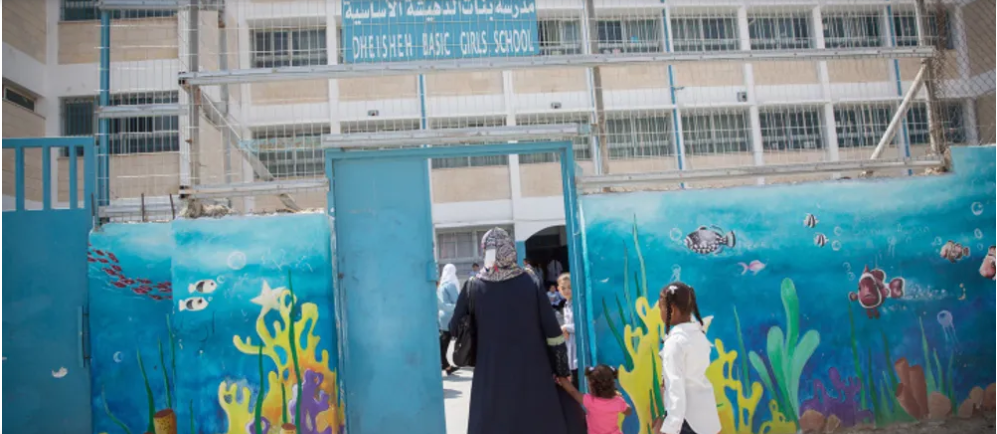
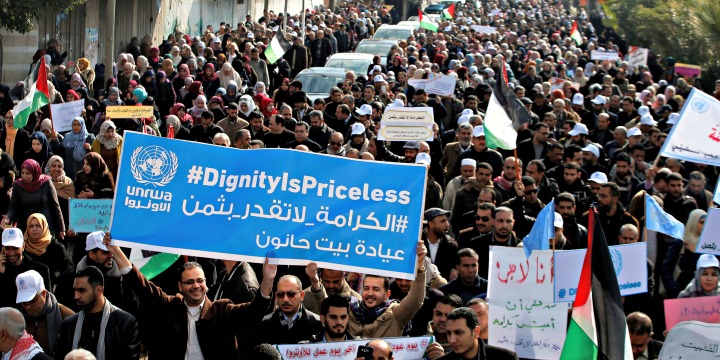
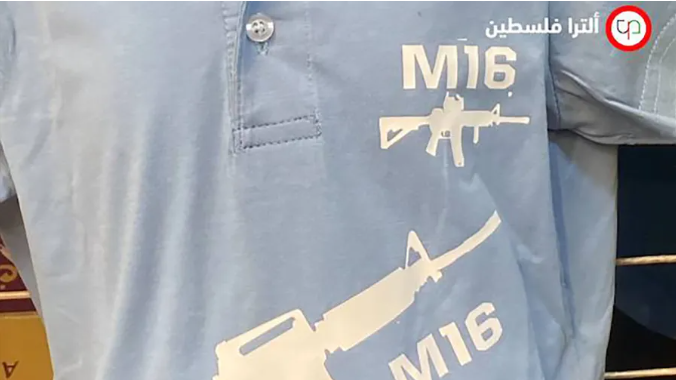


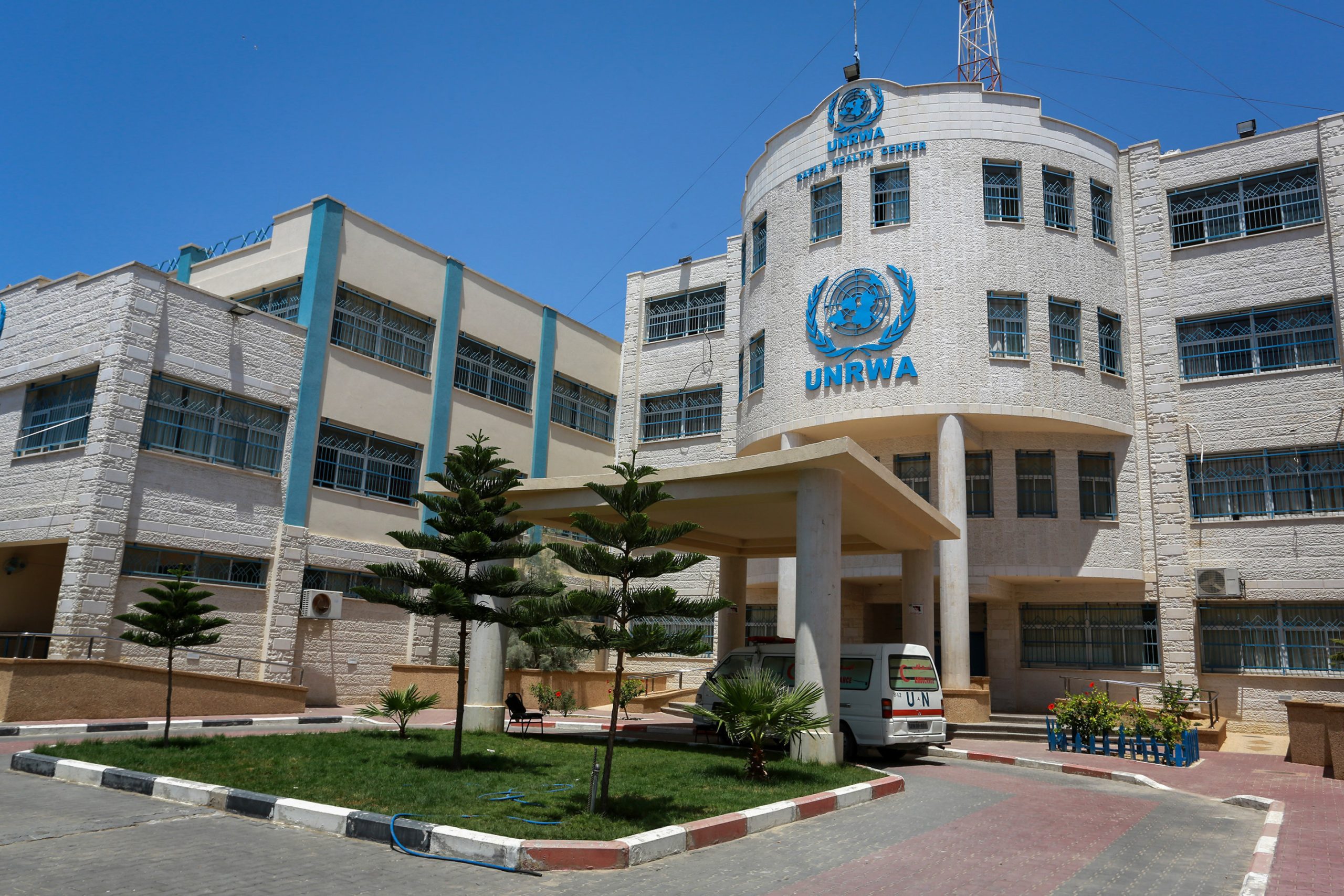

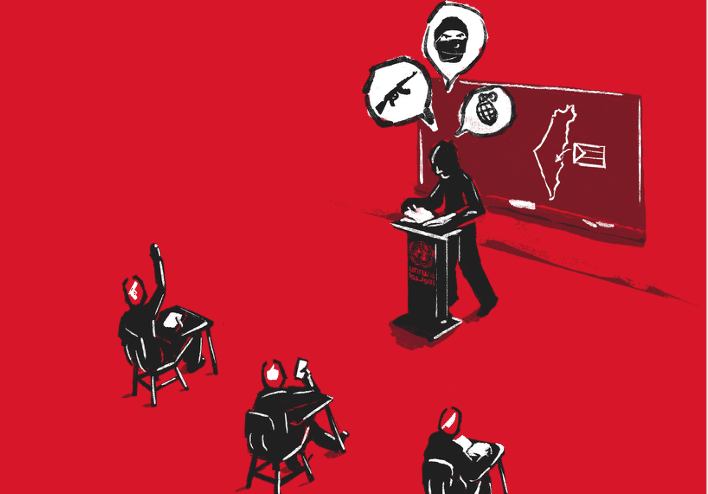

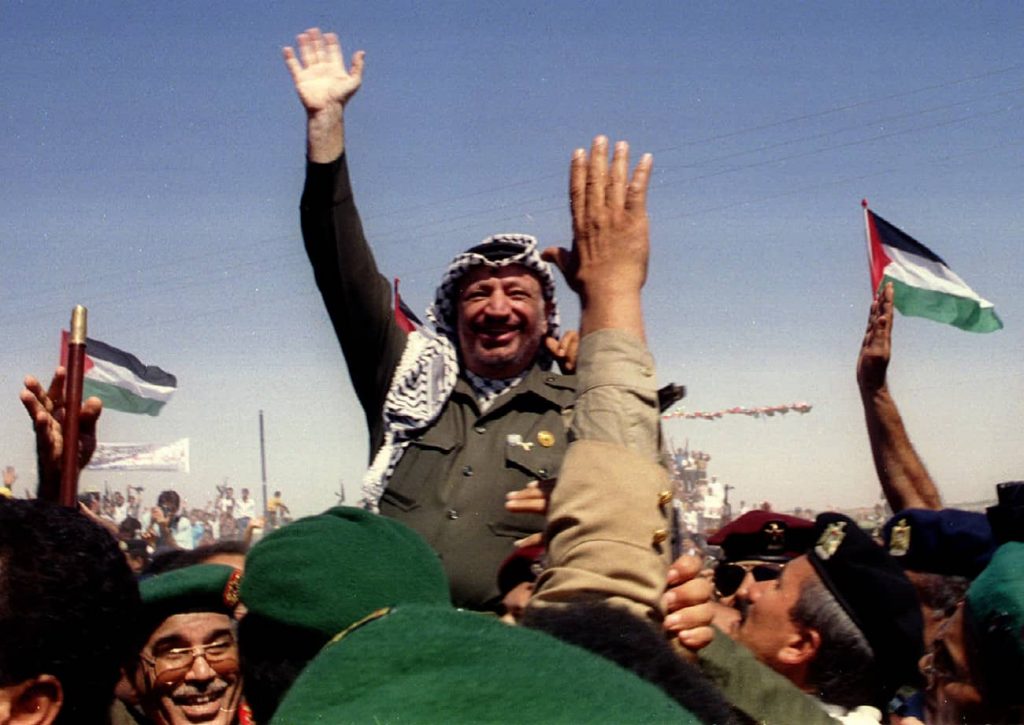
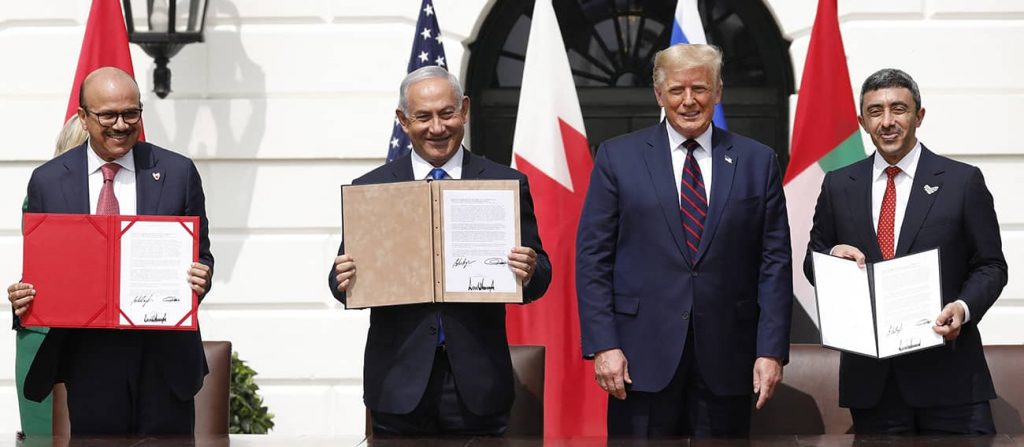
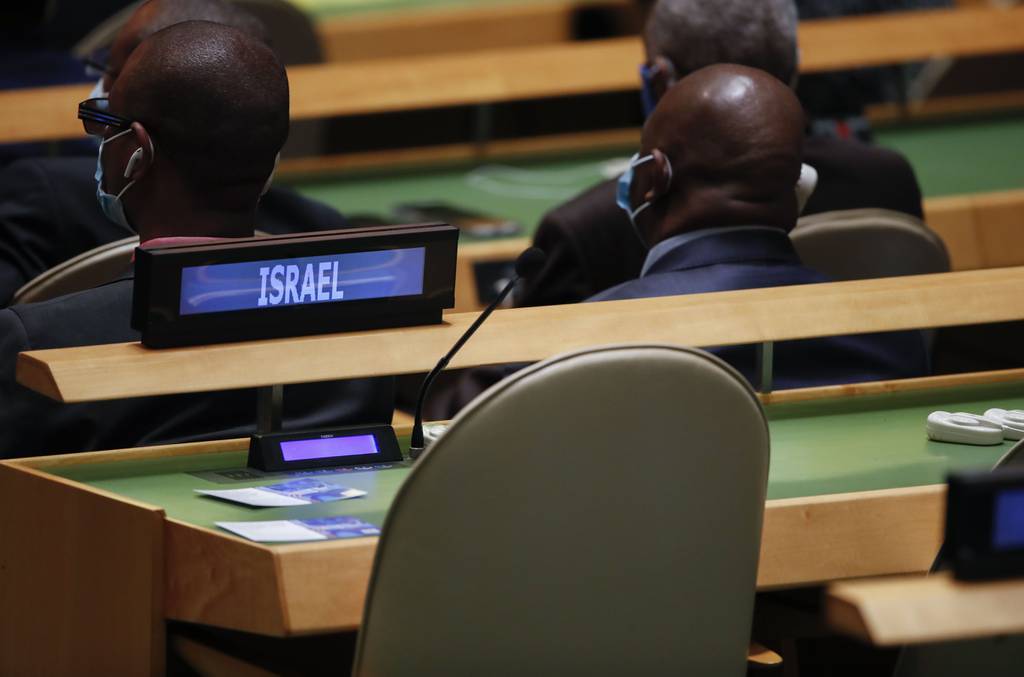
:quality(70)/cloudfront-us-east-1.images.arcpublishing.com/tronc/XBN3HNEBHOCYVLVIYRA6IMX7MM.jpg)


