Peace delegates from Israel hold summit at International Civil Rights Center and Museum

Peace delegates from Israel as a part of an international grassroots organization called Sharaka visited North Carolina and Atlanta, Georgia on March 21-25 to engage with other leaders who work towards social change.

Sharaka, which means ‘partnership’, was founded by young leaders from Israel and the Arabian Gulf in order to turn the vision of “people-to-people peace” into a reality. The Sharaka delegation is made up of people, who hail from countries that were part of the Abraham Accords.

The Abraham Accords is a joint statement between the State of Israel, the United Arab Emirates and the United States, reached on August 13, 2020. The Abraham Accords between Israel, the UAE, Bahrain and Morocco have opened the door to a new era of cooperation, friendship and partnership opportunities between businesses and individuals that were previously unthinkable.

The statement marked the first public normalization of relations between an Arab country and Israel since that of Jordan in 1994. The accords are named after Abraham to emphasize the shared origin of belief between Judaism and Islam, both of which are Abrahamic religions that adopt the belief of the worship one God, as told in the Holy Scriptures Book of Abraham. The Abraham Accords currently has 120 agreements from surrounding countries and that count is rising.

The group came to share the groundbreaking work that is already being done between all countries, new opportunities on the horizon and what it means for America and the rest of the world.

“What this delegation is trying to do is engage in people-to-people diplomacy. Start the conversation,” said Samantha Von Indie, director of academic affairs with the Consulate General of Israel to the Southeast.

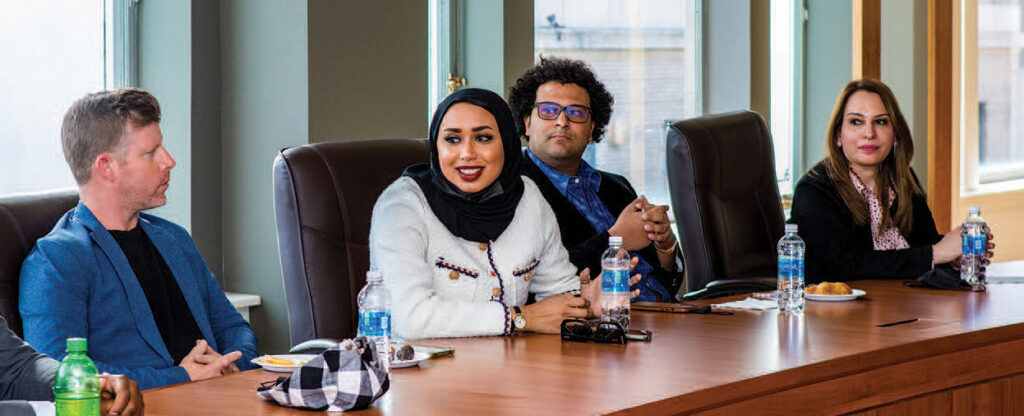
The group spent a few hours at the International Civil Rights Center and Museum in downtown Greensboro, where they participated in a guided tour and then held an intimate group discussion with the museum’s director, Jon Swaine; museum scholar in-residence, Dr. Will Harris and local community and religious leaders, Ivan Canada, NCCJ Executive Director; Rabbi Andy Koren, senior rabbi of Temple Emanuel; Rev. Alan Sherouse, senior pastor of First Baptist Church in Greensboro and Deonna Sayed, a Greensboro author.

“I know for me being here specifically, simple acts can change a lot. We must always know history so that it doesn’t repeat itself. I think it’s very important to share our experiences and share what we saw today, so it doesn’t happen again,” said Fatema Al Harbi, Sharaka Gulf Affairs Director and delegation coordinator from Bahrain.

Dr. Najat Al Saied, delegation head, media and academic affairs advisor, Sharaka member, professor and columnist noted that there is a connection between the Civil Rights Movement in America and the Abraham Accords in the fight for peace and justice.

“It was so inspirational to see these pictures. The Abraham Accords is not only a peace agreement, but it is also a movement. A movement that started a new kind of history,” she said. “Sharaka means partnership in Arabic. We don’t want this for it only to be confined to government relationships. We also want to approach people-to-people relationships. That is what peace truly means,” she added.

The delegation is working on bringing additional groups of people from diverse backgrounds to build a cabinet that allows for learning across geopolitical perspectives on topics such as militaries, security and IT (information technology) and even to collect opinions on why people may be against the Abraham Accords.

“Diversity is not in only race in religion, but even in different types of opinions,” said Dr. Al Saied. “There is a direct analogy between our movement and what we’ve seen here in the Civil Rights Movement.”

The museum’s principal scholar in residence, Dr. Will Harris said the museum believes in not only telling our individual stories, but our stories as a community.

“The stories that we decide to tell constitutionally should not just be about the individuals, there’s been a great emphasis recently to focus on my story and your story individually and much less about cultivating the story of us together. Here at the museum, we try to add to the previous focus on combating injustice and undoing the negative and talk about moving forward. What does that vision look like from the community perspective?”

The group also discussed the contrast in relationships that are happening between the first generation of peacemakers from 20 years ago and the new generation of peacemakers now.

Haisam Hassenein, foreign affairs and Middle East analyst and scholar and Sharaka member, shared that although there have been sensitive relations between Muslims and Jewish people in the Middle East for decades, religious acceptance is being seen in the younger generations.

“It’s more common nowadays to look on social media and see Jewish and Arab people dressed in their traditional clothing and able to walk down the street together in Saudi Arabia. For the first time you have a Jewish presence going back, talking about it openly, meeting with Arab Muslims on Arab soil. More work needs to be done, but at least it’s a start. Right now, we’re learning,” said Hassenein.

Sharaka delegates also advocate peace through cultural community programs that can bring people together in an engaging and entertaining way.

Greensboro’s NCCJ Executive Director Ivan Canada talked about ANYTOWN, the 35-year-old community program that teaches high school students from various backgrounds about diversity and acceptance and touches on topics such as race, religion, socioeconomic status, sexual identity and orientation.

“Students are really learning and being exposed to these concepts in a way that is self-reflective for themselves to think about who am I in this world. And for marginalized students, I think it provides a sense of pride that they don’t feel in a lot of spaces that they occupy in their schools. This program is the spark that gets many of them thinking, how I, as a teenager or as an individual, can play a role in social change.” said Canada.

Anat Sultan-Dadon, the consulate general of Israel to the Southeast, based in Atlanta encouraged people to speak about peace in the ways that relate to you. She added that seeing the museum’s lunch counter for the first time was remarkable.

“Knowing and learning about the history becomes different when you see it with your own eyes, where it took place, where these courageous young men stood up for equality, was remarkable to see,” she said.

The delegation wrapped up its visit to Greensboro with a meet and greet with U.S. Rep. Kathy Manning at her downtown office.

“I’ve been to Israel many times over the last few years. I’ve seen how the country has developed and how it has struggled to create the right situation for its people. The brave things that these countries involved are doing together, can set an example for other countries in the region to join in, and really change the way people view the Middle East,” said Manning.

Before making a stop in Greensboro, the delegation met with Tracey Burns, deputy secretary of diversity, equity, accessibility and inclusion, under the N.C. Department of Natural and Cultural Resources in Raleigh. Then they joined city leaders for a “Tree of Peace” planting ceremony in East Durham Park with Mayor Pro Tem Mark A. Middleton. The City of Raleigh also issued a proclamation naming March 21 as “Sharaka Day.”

“Anti-Semitism is still here, racism is still here, and that is why it’s important to work together. This delegation is about peace, and the mutual learning that is happening in reshaping the Middle East. It is important that we bring all sides together because through learning from one another, it’s really how we can affect change together,” said Sultan-Dadon.
 

Passover road map

It may in the end have taken forty years to get here but the road map couldn’t have been clearer.

In the first recorded use of a GPS, the Hebrew slaves left Egypt guided by a cloud during the day and a pillar of fire during the night.

Their destination was not a secret and this in my opinion is the core meaning of Pesach. We should by all means remember the miracles which accompanied the exodus but too often these days many tend to sideline the real purpose of this epic journey.

From servitude and oppression to receiving a constitution at Mount Sinai and then onwards to the Promised Land – these are the historical events that each generation should be internalizing.

Back then there were lots of Hebrews who despite everything refused to join their brethren and preferred to remain in Egypt where according to them “the food was tasty and plentiful.” Why leave everything behind and set out on a journey to an unknown land via a hostile environment and with many challenges on the way? Better to stay even if the ruling authorities accused you of being subversive and life was one long grind every day of the week.

That was the thinking of those who stayed and of some who desired to turn back when the going got tough.

No doubt Moshe and Aaron had to deal with their fair share of critics who threw cold water on the very notion of travelling to a faraway country that had been promised to their founding Patriarchs and Matriarchs as an eternal inheritance.

I guess we could call them the first recorded group of anti-Zionists.

Amazingly we can witness the same sort of twisted reasoning today as enunciated by a host of groups all of whom echo more or less similar rhetoric and happily dish up dirt on our restored independence.

On the one hand, we have an assortment of extreme Charedi sects who deny the validity of our return to Israel. In their interpretation of reality, we are supposed to wait for the Messiah and as he has not yet arrived we are forbidden to reclaim sovereignty. This is a theological argument that I doubt Moshe and Aaron had to deal with. History has unfortunately taught us or should have taught us, that while the Messiah tarries, the Jew-haters of this world carry on with their work. Countless religious Jews were doomed to destruction precisely because they waited in vain for salvation during the Shoah years.

On the other hand, we have an assortment of individuals and groups which span the assimilation spectrum and see no reason to either identify or support a collective Jewish identity. In addition, there are also those, who like their predecessors at the time of the Exodus, feel that Jewish life can be adequately and safely practised even in countries where we are not that welcome. Within this group are many who fervently support the restored Jewish homeland and nurture an aim to perhaps join their brethren one day. Next year in Jerusalem remains a pious hope for some and a meaningless mumble for others.

A news item caught my attention the other day. Just in time for Passover, it has been reported that a Jewish Congregation in Chicago declared itself to be “anti Zionist” after a vote of congregants and its Board and with the Bracha (blessing) of its “rabbi.” This particular spiritual leader explained that “Judaism belongs in the Diaspora.” In fact, he went on to proclaim that “Israel has increased antisemitism and the country was created at the expense of another people.”

This deliberate falsification of history is mind-boggling and even more so when it comes from the mouth of a spiritual leader. Ignored, in a grotesque effort to justify an incredible decision, is the inconvenient fact that the Arabs of mandated Palestine were offered more than one opportunity to have their own country but rejected these offers in favour of trying to wipe out the Jewish inhabitants. Also ignored is the fact that there has never ever been an Arab sovereign presence in the territory concerned with Jerusalem as its Capital. In addition according to the San Remo Agreement endorsed by the League of Nations and subsequently confirmed by the UN (prior to 1947) all the territory from the Mediterranean to the Jordan River (and actually beyond) is legally designated for Jewish settlement and sovereignty.

Claiming that Judaism belongs in the Diaspora as a reason to hoist the anti-Zionist banner is inane especially when one realizes that most of the mitzvot revolve around the Land of Israel. However, I suppose that a “rabbi” and congregation who don’t accept them as a valid component of Judaism wouldn’t really care.

I can imagine these Chicago dropouts telling Joshua and King David that battling the Amalekites, Canaanites and Philistines were forbidden. After all, according to their present-day logic, defending Jews against those who plot to deny them their homeland is forbidden. Remaining at the mercy of Diaspora rulers must be far more preferable.

Moshe and Aaron confronted Pharaoh and gave him plenty of opportunities to change his mind about letting the Hebrews leave. It was only after a series of warnings that finally the last plague ensued and precipitated a hasty departure.

Contrast this with today’s pathetic performance in the face of the current Ramadan murderous mayhem.

When Abdullah of Jordan and our own assorted collection of leftist politicians all prostrated themselves at the feet of the President for life, Abbas, in the futile hope that he would prevent violence, they demonstrated a pathetic lack of understanding as to how terror supporters behave. After Abbas issued a patently transparent and insincere “denunciation” of the murder of Jews, he was showered with congratulations and lauded for his “honesty.”

Anyone with even the slightest hint of common sense should have known that the real agenda was being broadcast to the masses. The Supreme Shari’ah Judge and advisor to Abbas let the cat out of the bag (as disclosed by PMW): https://palwatch.org/page/31033

Instead of trying to placate and “buy off” the chief terror instigators and obtain worthless plaudits from the hypocritical international community, our befuddled leaders should have taken note of how Pharaoh was defeated. It’s not as though Abbas and the Palestinian Arabs haven’t been given umpteen chances.

The plagues of economic deprivation, refugee status, brutal oppressive and corrupt governance and a multitude of other self-inflicted afflictions will only get worse unless and until the promoters of terror are eliminated.

The best response that we can make this Pesach is to strengthen the Jewish presence in all parts of our restored homeland and to make “Next Year in Jerusalem” a practical reality.

Chag Sameach.

PA making terror payments to hundreds of Israeli citizens

Those receiving the benefits are serving prison terms for carrying out or assisting terrorist operations, or acting against Israel in other ways, according to Israel’s defense establishment.

The Palestinian Authority is disbursing stipends worth thousands of shekels to hundreds of Israeli citizens involved in terrorist operations, and to their relatives.

Click here to read full article. 

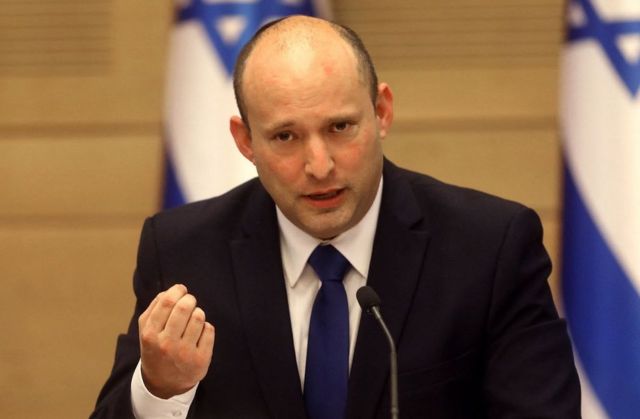
On the eve of Passover 2022, Four Questions to Israel Prime Minister Naftali Bennett. Journalist Inquiry

On the eve of Passover 2022, Four Questions to Israel Prime Minister Naftali Bennett.

Journalist Inquiry

Have been commissioned to write a feature on the latest study of Palestinian Authority textbooks, authored by Dr. Arnon Groiss, who has perused all 1000 PA school books that the Palestinian Authority has issued,ever since the PA began to publish their own textbooks on August 1, 2000:

That study can be found at: https://israelbehindthenews.com/wp-content/uploads/2022/03/Jews-in-Palestinian-Authority-Schoolbooks-in-UNRWA-Use.pdf

Dr. Groiss concludes that PA education is based on three principles:

1. De-legitimization of Israel’s existence and the Jews’ very presence in the country, including the denial of their history and the existence of any Jewish holy places there.

2. Demonization of both Israel and Jews, also religiously – with serious implications regarding the Jews’ image in the eyes of children

3. Absence of any call for peace with Israel. Instead, PA education advocates a violent struggle for the liberation of the whole country, including pre-1967 Israel. This struggle is given a religious color. Terror is an integral part thereof, with the accompanying meaning of encouraging the murder of Jews

Therefore, posting four questions to the Israel Prime Minister, on the eve of Passover:

1. Will you reinforce the mandate of COGAT , the Israel Civil Administration, which is supposed to check PA textbooks before they are put in use and has not been doing so of late.

2, Will the Prime Minister ask COGAT to issue a proper review of the texts used by the PA and UNRWA

3. Will the Prime Minister ask for removal of PA texts which laud Dallal El Mugrabi, the woman Arab terrorist who commandeered an Israeli civilian bus in 1978 and murdered 35 Jewish passengers.

4. Will the Prime Minister condition humanitarian aid to the PA on a revision of PA education?

Weekly Commentary: Apply Torts Ordinance Article 12 to Recover From The PA

Weekly Commentary: Apply Torts Ordinance Article 12 to Recover From The PA
All Compensation to Terror Victims

Dr. Aaron Lerner 14 April 2022

This week it was reported the Supreme Court of Israel ruled that the payment
by the Palestinian Authority of stipends to terrorists and their relatives
constitutes the “expression of consent” referred to in Torts Ordinance
Article 12 thus enabling terror victims and their families to sue the
Palestinian Authority for compensation if the terrorist responsible for the
attack or the terrorist’s family received a stipend from the Palestinian
Authority.

But Justice Yitzhak Amit went considerably further than that.

In Paragraph 53 of his decision, Justice Amit notes that the State of Israel
can apply Torts Ordinance Article 12 to have the Palestinian Authority
indemnify it for any and all payments which the Government or The National
Insurance Institute makes to victims of terror under the Victims of Hostile
Acts Law in terror incidents in which the terrorist was identified and
received a stipend or their family received a stipend from the Palestinian
Authority.

The Government of Israel could readily streamline this operation,
systematically checking, terror incident by incident, to see if the
perpetrator was identified and in turn if the terrorist or the terrorist’s
family received a stipend from the Palestinian Authority. Armed with this
information, the Government of Israel could sue in Israeli court to recover
from the Palestinian Authority the payments it made to the victims to date
as well as ongoing payments. As the collector of VAT and customs duty for
the Palestinian Authority for cargo destined to the Palestinian Authority,
the Government of Israel has easy access to Palestinian Authority funds when
the Israeli courts rule on these cases.

Given the straightforward nature of the proceedings, it would be reasonable
to expect a unification of cases so that ultimately there would be one
fortnightly or monthly lawsuit.

Justice Amit noted repeatedly in his decision that the previous Attorney
General declined to share his opinion in the case, but that doesn’t mean
that Gali Baharav-Miara has to follow his example.

Its time for justice.

________________________________________
IMRA – Independent Media Review and Analysis

Since 1992 providing news and analysis on the Middle East with a focus
on Arab-Israeli relations

Website: www.imra.org.il

For free regular subscription:
Subscribe at no charge: imra-subscribe@imra.org.il
Unsubscribe: imra-unsubscribe@imra.org.il

For free daily digest subscription:
Subscribe at no charge: imra-subscribe-digest@imra.org.il
Unsubscribe: imra-unsubscribe@imra.org.il

IMRA is now also on Twitter

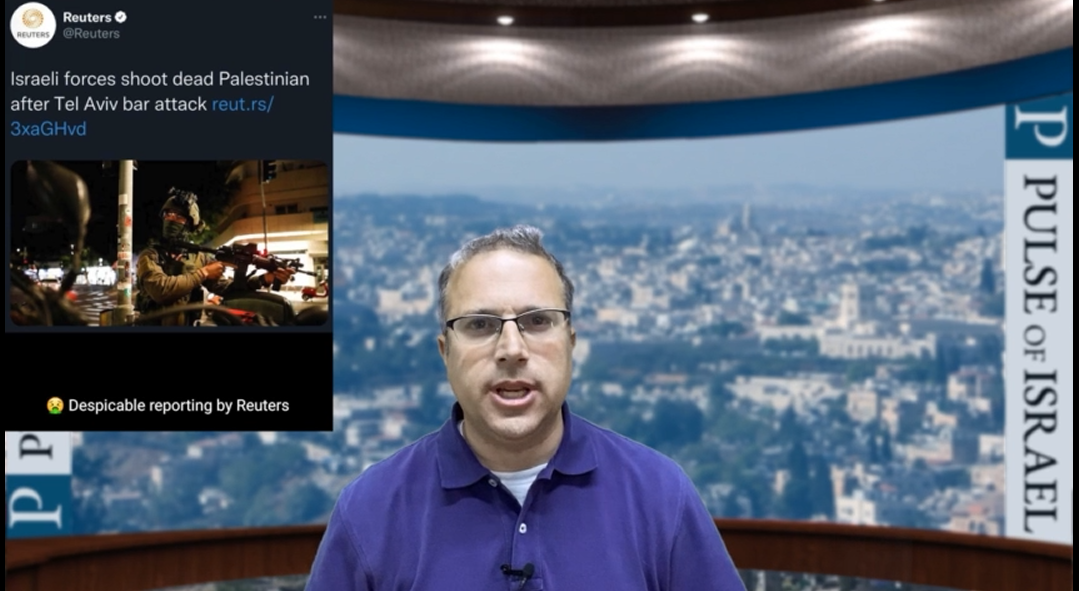
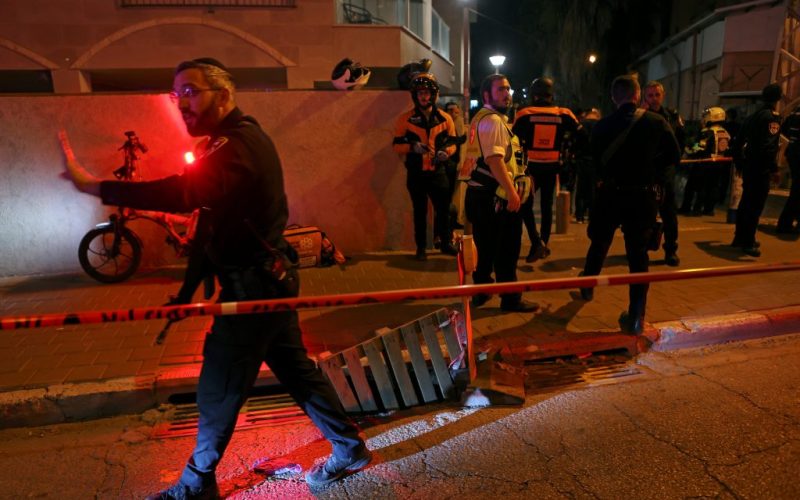
Inmoral & misleading reporting on terror attacks against jews

Inmoral & misleading reporting on terror attacks against jews

Employee at USAID Contractor Celebrated Terrorist Attack Against Israeli Civilians

Just hours after news broke that a Palestinian terrorist gunned down several Israeli civilians last week, an employee for one of the U.S. Agency for International Development’s (USAID) top contractors took to Twitter to celebrate the attack.

Click here to read full article 

European Donors to UNRWA are shown a 1 January Video of Fatah Armed Demonstration in UNRWA Camp

Paris – The Wiesenthal Centre has forwarded the content of a report from the Bedein Center for Near East Policy Research, to the European Commission and to Foreign Ministers of major donor countries to the UNRWA (United Nations Relief and Works Agency for Palestine Refugees in the Near East), including, Austria, Belgium, Denmark, France, Germany, Ireland, Italy, the Netherlands, Spain, Sweden, Switzerland and Turkey.

In this report, the Bedein Center explains it has had six meetings with the office of the UN Secretary General, Antonio Guterres, regarding “the fate of 5.3 million Palestinian refugee descendants”… “UN Secretary-General Staff made clear that donor nations to UNRWA are to be responsible for any indiscretions which occur in UNRWA.”

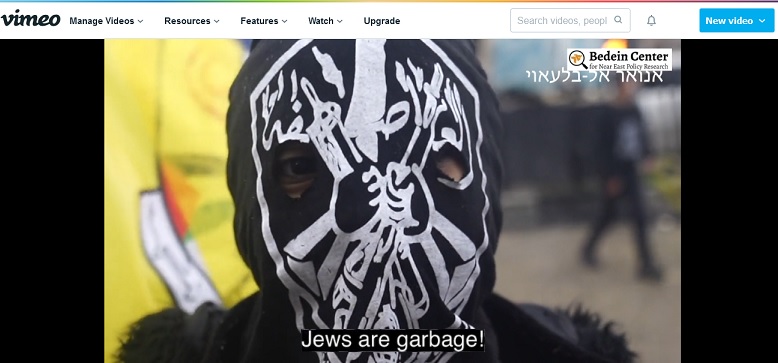
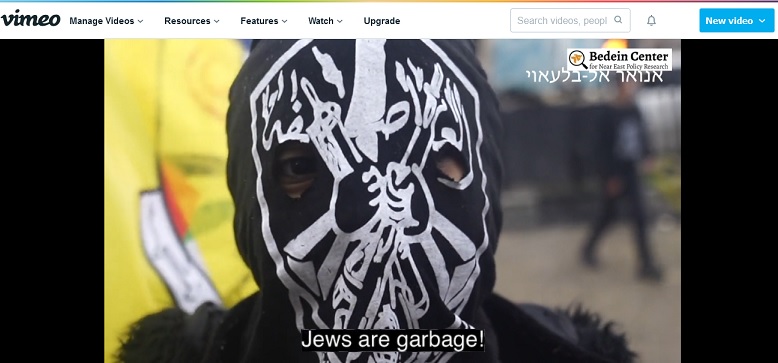
On 1 January, the Bedein Center filmed the celebrations of “Fatah Day” in the UNRWA refugee camp of Deheishe, where a procession of  heavily armed militants was taking place. See link on Vimeo: https://vimeo.com/662065506


Screengrab from the 2-minute video… excerpt of the interview of a child.

The Bedein Center has addressed a question to the Consulates and other representatives in Ramallah of the funding states: “…whether your country will take action to ask UNRWA to disarm Deheishe, in order to save lives of men, women and children, who live in the cramped conditions of a refugee camp?”

Wiesenthal Centre officials – Rabbi Abraham Cooper, Associate dean and Director for Global Social Action, and Dr. Shimon Samuels, Director for International Relations – have raised these questions with the above country officials and the European Commission.

For further information contact Dr. Shimon Samuels at csweurope@gmail.com, join the Center on Facebook, or follow @simonwiesenthal for news updates sent directly to your Twitter feed.

The Simon Wiesenthal Center is one of the largest international Jewish human rights organizations with over 400,000 member families in the United States. It is an NGO at international agencies including the United Nations, UNESCO, the OSCE, the OAS, the Council of Europe and the Latin American Parliament (Parlatino).

He returned to Jaffa and died

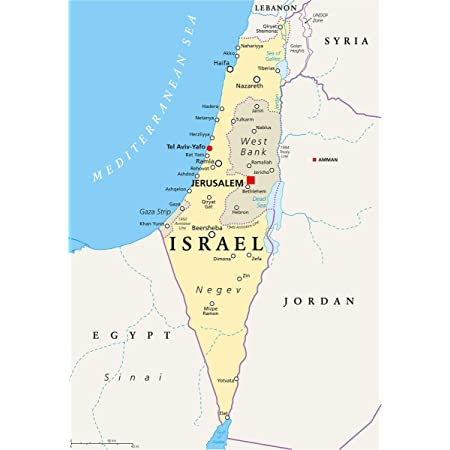
The story of Raad Hazem’s recent attack killing three Israelis serves as a perfect microcosm of our lives as Palestinians and our history living under occupation. Jaffa, Tel Aviv, Jenin refugee camp, Dizengoff Street, are all names raised in the course of the story, and these are not just the names of geographical places. In fact, when we look deeply into Raad’s story we find it is the story of all Palestinians.

Raad, which is Arabic for “thunder”, was born in Jenin refugee camp, one of the 19 Palestinian refugee camps in the West Bank, run by the United Nations Relief and Works Agency for Palestine Refugees (UNRWA). The camp was established in 1953 within the boundaries of the Jenin municipality, and most of its residents are from the Carmel area in Haifa and the Carmel Mountains. These residents and their descendants were displaced during the 1948 war known as the Nakba.

Raad lived in the camp and experienced many scourges over and over again, the source of which was always the occupation. The most painful of these was when he was seven years old in 2002 when Jenin camp was invaded and completely destroyed by the occupation. From April 3-17, 2002, twenty years ago, the occupation government and its army launched a massive attack on the Jenin refugee camp, resulting in at least dozens of casualties and 13,000 homeless as well as massive damage to homes and infrastructure. According to a United Nations report, the occupation army killed at least 52 Palestinians in the attack, and in return the Palestinian resistance was able to kill 23 soldiers of the occupation army.

Raad was a child at the time. He lived and saw the massacre in front of him in all its details. He saw how sixty Merkava tanks entered the camp. He saw armored bulldozers destroying homes and buildings in order to open and widen the camp’s corridors in order for the tanks to enter the camp.

Raad saw how the buildings were leveled to the ground, he witnessed the displacement of families, he saw dozens of martyred children of his generation under the rubble, and he watched his house being flattened and destroyed by the bulldozer.

Two months later, on June 23, 2002, the occupation government began building the apartheid wall. Raad grew up as the wall grew before his eyes. Raad grew up with the army’s incursions into his neighborhood and his house. Raad grew up and saw the arrest of his father. Raad grew up with his father handcuffed in a small cell in one of the occupation prisons, and handcuffed in a large prison behind this apartheid wall. Raad grew up deprived of freedom of movement, suffering at military checkpoints from long waits and humiliating searches. The occupation army forced him to take off his clothes, soldiers searched him naked in public, forced him to walk long distances, and prevented him from reaching his university. Raad is now grown up and the apartheid wall now surrounds him, and barriers always remind him that there is an occupation that deprives him of his most basic human rights.

Raad studied computer science and specialized in it, and yet at the age of 29 nothing had changed in his life. The occupation continues, the apartheid wall is expanding more and more, and he is imprisoned behind it. He grew up and remained deprived of seeing the sea, or knowing the meaning of freedom and returning to his original homeland.

On April 7, 2022, this handsome brown young man crossed through a hole in the apartheid wall, and he crossed into the territory occupied in 1948, where the occupation established its alleged state. The creation of this state was possible only after ethnically cleansing and demolishing hundreds of villages, displacing hundreds of thousands under coercive conditions, and massacring scores of innocent people.

The apartheid wall had separated Raad from his original city, Shefa-Amr, the city in which his father and grandfather were born. Even though the city is only a one-hour drive from Jenin refugee camp, Raad and his family have been prevented by the occupation from returning to it, or even visiting it.

Raad arrived in Jaffa, which the occupation and the world call “Tel Aviv.” He saw the sea for the first time in his life. He walked between its streets and its villages. “Tel Aviv” was built on the ruins of seven villages that surrounded Jaffa, the largest of them is the village of Mu’nis. The village and its people were besieged for weeks by the Zionist gangs, some of its residents were killed and the rest were forcibly displaced. The occupation built on its ruins and on the remains of its residents, Tel Aviv University.

Raad continued his journey in Jaffa, walking through villages and in their neighborhoods whose names had been erased under the city. He walks saying: Here is the Saqia, here is Al-Jamasin, here is Abu Kabir, here is Salameh, here is Sumail, here is Sheikh Munis, here is Al-Manshiya, here is Saruna, here is Al-Safiriya, here is Abbasieh, here is Arab Al-Sawalmeh, here is Fajjah, here is Kafr Anah, here is Al-Hamidiyah, here is Yazur, here is Khayriah, here is Pyyar El Adas, here is Arsouf, here is Haram. Here is Jaffa. Jaffa was inhabited by more than 100,000 Palestinian people including Raad’s ancestors who were displaced towards the sea. Some of them survived, and many of them drowned. Some of them were massacred in their homes and were killed by the Zionist gangs at that time. As for their homes, they were inhabited by Jewish immigrants, those Jews who came to Palestine fleeing European countries, during the First and Second World Wars, and those escaping the Nazis and the evil treatment they were subjected to by the Europeans.

Raad knew well that within these villages and neighborhoods there was one neighborhood located north of Jaffa, whose name is now “Tel Aviv”. This area was where the first Zionist settlement was built on April 11, 1909, 39 years before the Nakba and five years after Herzl’s death. This is Jaffa, and this is the Tel Aviv neighborhood; at first it was just rented houses, on Palestinian lands, then the neighborhood turned into a street that includes a larger number of houses, with a Jewish majority, then the streets increased and turned into a neighborhood that became a mini-city for the immigrant Jews. They called it “Tel Aviv”. With the days immigration to it increased, until the year of the Nakba came, and the Zionist gangs invaded the city of Jaffa and destroyed all the villages and neighborhoods around it. This is how Tel Aviv, which we see today and the whole world sees, was built. This is the reality of Tel Aviv in 2022. Tel Aviv has buried hundreds of Palestinian bodies under its skyscrapers.

Thus, according to the hypocrisy of the world, thunder came from the “terrorist” Jenin camp to the innocent, white “Dizengoff” Street. In Jenin and in the camp there is no white skin and no blue eyes for the world to see, even though it has been invaded by the occupation for 74 years. In Jaffa, there are no blue eyes to convince the world of the justice of its cause, which began in 1948, even though the blood of its people was spilled at the hands of occupiers who invaded it long before Russia invaded Kyiv. There are no blue eyes, no white skin and light hair in Palestine for the blond Western conscience to see what has happened, and what is happening.

Raad chose to see Jaffa free, even if just for a few hours. Jaffa, which lived through an occupation like the occupation of Ukraine, but the difference is that the occupation of Jaffa took place when scenes were depicted in black and white, while Russia’s occupation of Ukraine is today in color.

Thunder lived his freedom for one day in Jaffa and died.

This is Raad who lived in the camp and returned to Jaffa and died.

Source: https://mondoweiss.net/2022/04/he-returned-to-jaffa-and-died/

Joseph’s Tomb