Teachers and students affected by anti-Palestinian racism, report into schools shows

www.montecruzfoto.org

Students have been told Gazans “deserved what they got” and a Sydney teacher was “forced out [of] his job” for wearing a traditional scarf in what researchers say are increasing instances of anti-Palestinian racism in schools across Australia.

The Australia Palestine Advocacy Network (APAN) released its first national register report on Friday to examine “the climate of fear, censorship, intimidation and punishment” experienced by students, teachers and members of the school community.

The report analysed the testimonies of 84 respondents over a four-month period between March and July 2024, including witness accounts and lived experiences from the Palestinian diaspora and allies.

It captured tensions in Australia in the months after October 7, 2023, when Hamas launched its attack on Israel, prompting retaliation that escalated into war.

Families reported students were experiencing racial violence that went ignored by educators, including a Year 2 Victorian child told by a Jewish student they “can’t wait to help the IDF (Israeli Defense Force) go kill Palestinians”, and another Palestinian student “physically attacked” after speaking Arabic.

According to the report, a Palestinian teacher was also banned by a principal from wearing her grandmother’s keffiyeh after a complaint, a primary school teacher was called a “terrorist” for also wearing the cultural scarf, and a casual staff member said their shifts were cut after donning a pro-Palestinian badge.

APAN found some schools were disciplining students and teachers for discussing the situation in Gaza or displaying symbols of Palestinian solidarity.

The research analysed wider experiences of verbal and physical vilification in face-to-face interactions and social media posts.

Co-author of the report and anti-racist education academic, Ryan Al-Natour, said the recorded instances had taken a “profound” toll.

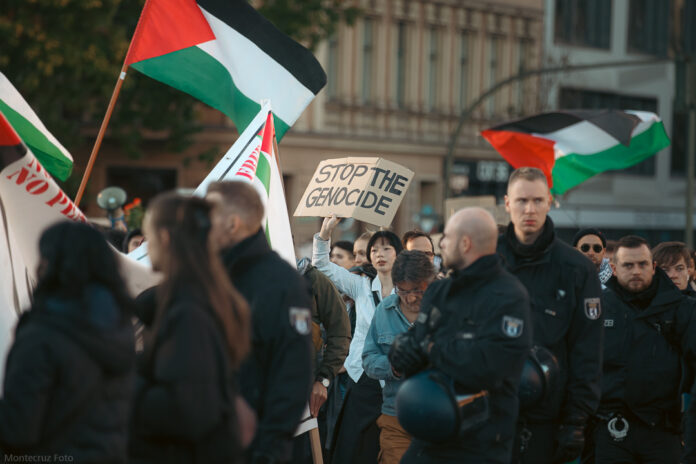
“There is a huge contradiction happening here, whereby educational institutions are boasting about cultural diversity within Australian education, but at the same time, silencing those who want to speak out against … the genocide currently happening right now,” Dr Al-Natour said.

Man in selfie wearing a "Free Palestine" shirt
Dr Al-Natour said anti-Palestinian racism in schools was becoming “widespread”.  (Supplied)

Last week, the United Nations Human Rights Council found Israel had demonstrated “genocidal intent” in Gaza, following the same conclusion from major human rights groups and genocide scholars.

Dr Al-Natour said the number of people who participated in the report was a “reflection of how many people actually knew about the register” rather than the total number of anti-Palestinian racism cases in Australian schools.

“What we can see is that [instances] … are becoming widespread and quite frequent across Australian educational institutions,” he said, based on what APAN in the year since the data was collected.

‘Embedded, subtle, covert little bits of racism’

Rumzi Hajaj from Sydney’s eastern suburbs said his primary school-aged child had experienced “covert” racism in the playground.

Mr Hajaj, whose grandparents survived the mass displacement of Palestinians in 1948, said he felt disheartened a teacher tapped the then-nine-year-old on the shoulder for having a Palestinian badge on their backpack.

“[The staff member] said, ‘Oh be careful walking around with those on your back, you might upset someone’,” he told the ABC.

Mr Hajaj said being told a cultural symbol was offensive was confusing to his child, who then chose not to wear Palestinian clothing for Harmony Day like they usually did.

“A small comment like that can have such a big effect on a child,”

he said.

“These embedded, subtle, covert little bits of racism, they’re designed to be seemingly innocuous, but on the other hand, they’re designed to have an effect.

“It’s a deliberate effort to tell Palestinian kids that they should suppress their identity, that they shouldn’t be proud of who they are.”

Dr Al-Natour, who is also Palestinian, said the experiences he had heard were “awfully familiar”.

“Unfortunately, anti-Palestinian racism is unbelievably prominent,” he said.

“Students and educators, they often reported that they were feeling extremely anxious, fearful, they were dehumanised, but they were also very, very exhausted.”

Students ‘hungry to know’ about world events

Sydney high school teacher Chris Breen said APAN’s findings were “just the tip of the iceberg”.

The spokesperson for Teachers and School Staff for Palestine said anti-Palestinian racism was “quite a widespread problem in New South Wales schools” — the state where more than half of the report’s responses came from.

Mr Breen said the activist group had also heard of a student reprimanded for drawing a Palestinian flag on their hand and about 10 schools that had banned Palestinian colours from Harmony Day.

“I’ve taught students who’ve got family who were killed in Gaza and the schools have set up nothing to help those students,” he said.

Mr Breen said students were “hungry to know” about the war, but were being told by educators “they’re not allowed to talk about it”, often interpreted as instructions trickled down from principals.

“It makes teachers nervous about what they say in the classroom,”

he said.

Call for ‘national coordinated approach’

Mr Breen would like to see more support for students and staff who “have suffered discrimination” in the school environment.

“I think they should look at compensation for lost earnings for teachers, in particular, who have lost work or had career progression halted,” he said.

Dr Al-Natour said APAN wanted educators and students to feel confident when wearing Palestinian symbols, in appropriate circumstances.

He called for education departments, internal policies and schooling authorities to develop strategies to combat not only racism but also how to approach the Israel-Gaza war.

“As students and educators, we do have the right to discuss current events,” he said.

“But unfortunately, there is a racist exception when it comes to approaching the topic of Palestine in schools.”

Race discrimination commissioner at the Human Rights Commission, Giridharan Sivaraman, said there needed to be a review into complaint-handling mechanisms in schools.

“We don’t have a national coordinated approach to tackling racism in high schools and primary schools,”

he said.

“We need to improve racial literacy of students and of teachers and of principals and of the departments that administer these schools.

“Without that, we will constantly be at the margins and not actually tackling racism at its source.”

The ABC reached out to Federal Education Minister Jason Clare for comment.
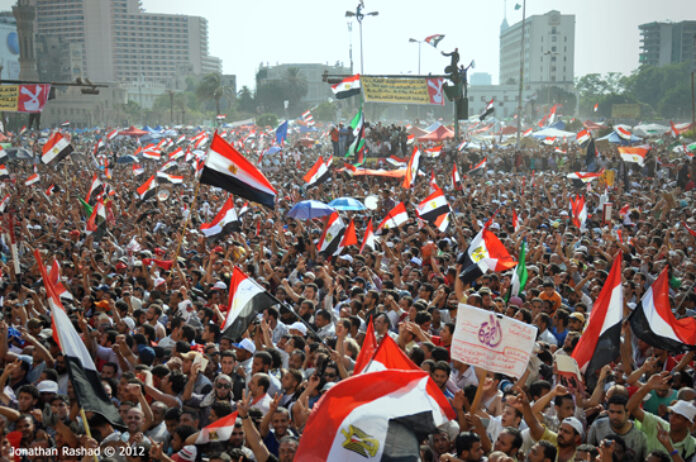
Dangerous times

The Gaza war has dominated headlines, but it obscures a more enduring peril: the rise of Sunni and Shia radical Islamists and their convergence, bolstered by radical left movements.

Hamas embodies this convergence. Though rooted in the Muslim Brotherhood – a transnational Sunni organisation – Hamas enjoys the backing of Shia Iran, undermining the notion of an immutable Sunni-Shia enmity. Iran sponsors Hamas as one of their network of Shia militias, while Qatar, steeped in Brotherhood ideology, has become Hamas’s largest financial patron. The result is a movement at once Sunni and Shia, Islamist and radical leftist, united above all by hostility to the West.

Coupled in a ‘red-green alliance,’ Islamist groups – particularly the Muslim Brotherhood, Iran and Qatar – together with radical leftist currents such as Marxists, communists and anarchists, have opportunistically mobilised in rallies. These factions and their followers have remained largely unchallenged by the mainstream media.

A Capital Research Center report, Marching Towards Violence, warns that, ‘the backbone of the current protest movement is Hamas.’ The campaign is steadily becoming more violent and criminal, often demanding America’s destruction. More than 150 ‘pro-terrorist’ groups have joined rallies in the United States. Many support Hamas while also endorsing Hezbollah, Yemen’s Houthis, and Shia militias in Iraq and Syria – all part of Iran’s proxy network. Directed by the Revolutionary Guard and its extraterritorial Quds Force, Iran’s proxies have caused havoc regionally and worldwide, including antisemitic terror attacks in Australia.

At the forefront of the protests is Students for Justice in Palestine, boasting more than 250 campus chapters across the US and Canada. In Britain, Palestine Action became notorious after members broke into RAF Brize Norton, sprayed red paint into the engines of military aircraft and damaged infrastructure, causing more than £30 million in damage. The group has been designated a terrorist organisation by the UK.

A network of organisations is affiliated with the Brotherhood’s ideology. These include the Muslim Students Association and SJP, with links to the Council on American-Islamic Relations (Cair). The largest Muslim advocacy organisation in the US, Cair grew out of the Islamic Association for Palestine, itself grounded in the Muslim Brotherhood.  Cair has been proscribed by the UAE.

Founded in 1928 by Hassan al-Banna after the fall of the Ottoman Empire, the Brotherhood seeks to revive a global caliphate to unify Muslims under sharia law. Al-Banna argued that the greatest threat to Islamic society came from contact with Western culture and secularism. Initially, he emphasised grassroots preaching and welfare work, but later some ideologues embraced violence.


Sayyid Qutb, the Brotherhood’s leading thinker in the 1960s, maintained that secular, decadent Muslim governments and societies must be destroyed by offensive jihad. His writings inspired al-Qaeda and Isis.

The late Yusuf al-Qaradawi, one of the Brotherhood’s most prominent modern scholars, predicted that Islam would triumph over the West ‘not by the sword but by preaching and ideology.’

Today, despite being banned in Egypt, Jordan, Saudi Arabia, Bahrain, the UAE and Russia, the Muslim Brotherhood remains the most influential Islamist movement. Funded by Qatar and Erdogan’s Türkiye, it maintains worldwide reach through political parties, NGOs, charities, universities and student networks. Qatar was the largest foreign donor to US universities well before the Gaza war, and its state media platform, Al Jazeera, has become a global megaphone for Brotherhood ideology.

At first glance, Islamist radicals and Marxists are ideological opposites. One seeks theocracy, the other atheism. Yet they share hostility to liberal democracy, free markets and Western culture. This explains why Western activists march beside groups that call for sharia punishments, oppression of women, persecution of minorities and execution of dissidents and gay people.

There is little outrage on campuses when Iran jails women for refusing the veil, or when Hamas glorifies suicide bombings. Universities enriched by Qatari money rarely teach the triumphalist and supersessionist doctrines of Islamist thought, or the dhimma laws that imposed second-class status and special taxes on Christians and Jews. Nor do they revisit the history of Nazi and Soviet influence on Islamist ideology, or the imperialist expansion of Iran’s revolution, rooted in jihad, clerical rule, and the aspiration for an apocalypse to induce the return of the Hidden Imam.

At the same time, the massacres by Hamas in Israel on 7 October 2023, and by other jihadis in Syria against Druze, Christians and Alawites, and across Africa, are ignored or erased.

Some on the left even celebrate the current moment as the culmination of their ‘long march through the institutions,’ begun against the West in the 1960s, and now bearing fruit with the prospect of creating a new world order.

Hamas, meanwhile, has reaped symbolic victories. Recent pledges by Western governments to recognise a Palestinian state are presented as triumphs for ‘resistance’. Each diplomatic gain strengthens its brand, encourages recruitment, and could elevate Hamas to being the pre-eminent jihadist organisation. Terror, instead of being punished, appears rewarded.

Western governments have too often chosen appeasement over confrontation. Instead of strengthening moderate Muslims at home and abroad, they empower extremists. Such weakness emboldens radicals to press for concessions and increases long-term risks of jihadist violence.

Affluent Western activists, intoxicated by virtue signalling, imagine themselves partners in a shared project. In reality, they are boosting the political strategies of extremists for whom Gaza is an expedient battleground. Essentially, Western activists are sleepwalking through Islamist tunnels towards an illusory vision of power their allies will never share.

They might remember Ayatollah Khomeini’s idealistic and devoted leftist allies, who were slaughtered in mass executions once they had helped him seize power and served their purpose.

The spectre of Islamist extremism already looms over Europe. Reports suggest police have lost control of some 900 no-go zones, where parallel societies enforce their own codes of conduct, and authorities are reluctant to confront the ideology behind them. Internationally, state-sponsored terrorism from Iran remains a scourge.

Both radical Sunni and Shia Islamist ideology and activism are spilling into the public square with formidable support from the Muslim Brotherhood, Iran, Qatar, and the radical left.

Unless this nexus, which aims to reshape Western politics is firmly confronted, the threat could swell into a militant torrent –  one that will not end with Gaza.

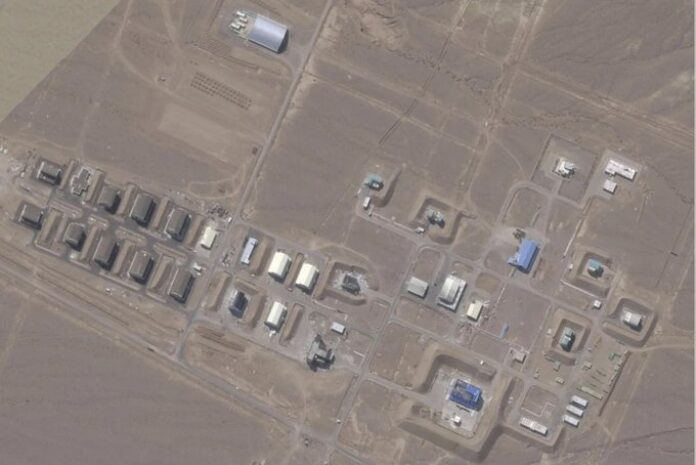
Iran builds underground missile factories in Yemen as Houthis train for invasion from Jordan

Security officials say the Houthi rebel movement in Yemen has made significant advances in recent months, developing longer-range missiles and explosive drones and moving much of its production and storage underground — a shift that has prompted Israel to intensify operations against Houthi infrastructure far from its borders.

The warning, issued by military and intelligence officials, came after Thursday’s large-scale Israeli air raid on Sanaa that the military said dropped more than 65 munitions on Houthi command and weapons-storage sites in Operation Moving Package. The strikes followed a drone strike on the southern resort city of Eilat that wounded more than 20 people.

Officials say the pattern in Yemen mirrors an Iranian model adopted by Tehran’s regional allies: establish fortified, indigenous weapons industries — often dug into mountains or deserts — so groups are not dependent on foreign shipments. The model, officials say, aims to produce heavier, more accurate missiles and low-flying, hard-to-detect explosive drones.
“The threat is evolving: the Houthis are not only launching rockets and drones, they are building resilient production and storage capabilities,” a senior military official said, speaking on condition of anonymity under military rules.

Israeli intelligence has also been watching what it describes as a Houthi plan to train militias for a large-scale incursion modeled on Hamas’s Oct. 7 attack on Israel. The program, nicknamed in some reports “Tuffan al-Aqsa” or “Jerusalem Flood,” allegedly includes local militia recruitment and courses to practice mass-infiltration tactics that could originate from neighboring countries, officials said.

Analysts say the training takes place in Yemen, but they assess that any actual operation would likely be launched from Jordan or Syria to obscure its origins. “This is an idea beyond anything they have attempted before,” a military official said.

The assessments have prompted stepped-up Israeli intelligence collection and new task forces focused on Yemen. Military intelligence (AMAN) has created teams of analysts directed at locating Houthi command centers and weapons production sites, officials said. Those units have already produced what the military called “initial successes” in mapping Houthi infrastructure.

The strikes on Sanaa came about a month after an earlier Israeli operation targeting Houthi infrastructure and followed an attack on a Houthi cabinet meeting in Sanaa that Israeli intelligence assessed had failed to eliminate two principal targets — the Houthi chief of staff and defense minister — even as several lesser ministers and the government’s head were killed, according to Israeli assessments shared with media.
U.S. and international pressure on Houthi financing and arms transfers has continued. The U.S. Treasury this month sanctioned more than two dozen entities accused of channeling funds to the Houthis. Israeli officials said those steps, together with targeted strikes and internal Houthi developments, could help weaken the group over time.

IDF officials have said the operations are designed to prevent a future in which the Houthis possess thousands of accurate, long-range missiles that could threaten Israel and regional stability. “We do not want the Houthis to become a strategic, long-range missile threat,” one senior military official said. “That is why we are acting now to disrupt their centers of gravity.”

The Houthi movement, which is backed by Iran, has launched waves of drones and missiles toward Israel and shipping lanes in the Red Sea since the Gaza war began. Israel says its strikes in Yemen are intended to stop those attacks and to protect Israeli and international maritime traffic.

Analysts caution that degrading Houthi capabilities is difficult. Iran-style indigenization of weapons programs — tunneling production facilities into mountains and deserts and training local engineers — makes strikes and interdictions more complicated, they say. Israeli forces have in recent years carried out operations in Syria and elsewhere to try to halt similar efforts by Tehran and its proxies.

Israeli leaders argue a sustained campaign against the Houthi threat is necessary even if a ceasefire in Gaza is reached, saying the group’s stated goal of destroying Israel makes it an enduring security risk despite its geographic distance.

“We will not accept a situation in which the Houthis one day field thousands of precise missiles,” an Israeli official said, summarizing the government’s rationale for continuing operations.

However, another cautioned, “The more we hit their ports and stop weapons from Iran, the more they expand independent production.”

Qatar’s wealth facilitates hatred – patronizes terror

We are revisiting an old theme given the recent media prominence the oil rich Gulf State of Qatar has been receiving of late for rather obvious reasons. Qatar could and should offer so much to global unity and worthy causes. Instead, her wealth is used, by design to ensure disunity and continuing hatred to achieve a goal of Shia Islamic dominance. Knowingly or unknowingly, the morally bankrupt in western democracies assist in this objective.

‘Radix malorum est cupiditas’ as cited in Timothy’s New Testament first epistle, 6:10-14 and latterly in in the epigraph to the Pardoner’s Prologue in Chaucer’s late 14th century Canterbury Tales. Meaning, greed or the love of money is the root of all evil, how true that has been of human nature since time immemorial and endorsed in current society. Qatar, through its wealth from oil production is one of the most influential actors, if not the most influential on the global political stage as nations, organizations and individuals prostrate themselves in the hope and expectation of personal enrichment, irrespective of the objectives of the Qataris.

We have seen African nations, charities, companies, celebrities in the arts, culture and sporting world, political leaders from all democracies and media outlets allowing themselves to be corrupted, driven by greed and ego having orgasms over the spraying of dollars by racist, Arab slavers into their pockets. Nauseating as it is to the morally decent, the morally indecent will continue to prosper in this process irrespective of the damage being done to civilization and the wellbeing of the planet in which we all live.

If the Qataris had no money, no nation nor country would bother with the ugly, totalitarian theocratic Gulf State. No democracy would treat them with the respect they so ill deserve. They would simply be excrement on the shoes of the European Union, the African Union, ASEAN and the South American block. But Qatar’s mega wealth buys influence to the point of determining political and military strategy. It determines what tens of millions of us are told and how issues are presented. And if the greedy mob play along with the Qatari political manipulation they will continue to be rewarded. The tiny Jewish state of Israel is the one beacon of light in this world of financial greed, bucking the trend and challenging the evil emanating from this demonic nation that is Qatar.

If Dreyfus were on trial today, the puppets doing the bidding of Qatar would have been the mob finding Dreyfus guilty and baying for his blood whilst Israel would have been the courageous Emile Zola. Qatar has been aggressively promoting its evil through many channels especially media where the state owned AL Jazeera has been peddling antisemitism, mocking Hindu and Judeo-Christian values, and promoting extreme Shia Islamism for decades. I believe similar to the Iranian and Russian propaganda media TV channels, RTTV and Press TV, Al Jazeera should be banned from western democracies for the vile propaganda it spreads. Many Arab countries, paradoxically including the Palestinian Authority have at times banned and still do, Al Jazeera for Shia extremism. The fear of the west losing various revenue streams encourage the continuation of this Goebbels type output that has facilitated global antisemitism.

Running parallel with AJ’s promotion of antisemitism is the amount of money being poured into western universities and colleges, by Qatar not only influencing the curriculum but ensuring those responsible for the curriculum are of similar political and religious ideology to the funding nation. At least in Trump’s USA, a challenge and a strong one at that has begun to emerge ensuring those responsible for racist output are dealt with.

The Trump Administration have allowed themselves to be drawn into the tangled, financial web weaved by the Qataris. Acceptance of Air Force 1 and the US military base stationed in Qatar assisted the duplicitous Qataris in their objectives under the pretense of being an impartial actor between the Israelis and Hamas. The Israelis certainly did not believe them and despite the guarded public criticism, the US Government is also very much aware of Qatar’s influence within their domestic politics. Trump is no fool and fully understands Qatari provocation and influence within US academia.

The world of celebrity and sport shamed themselves by their connections to the Qataris. Thousands of slave laborer from Bangladesh, Pakistan, Indonesia and other third world countries died whilst working in an unsafe environment and in atrocious living conditions during the construction of stadiums that hosted the last FIFA World Cup. This made no difference to the sporting authorities nor the celebrity leeches who enjoyed receiving millions of dollars to promote, spread propaganda but most of all to keep their lips sealed regarding the atrocities inflicted on the slave laborer responsible for the places in which they were enjoying themselves.

Radix malorum est cupiditas – how true today as it was in biblical times. Human nature will never change. The morally corrupt will wallow in their shame and the morally decent will live to shame and expose them. Qatar be damned.

Time Has Come To Fulfill The Mitzvah Of Pidyon Shevuim — Freedom For A Captive On Rosh HaShana

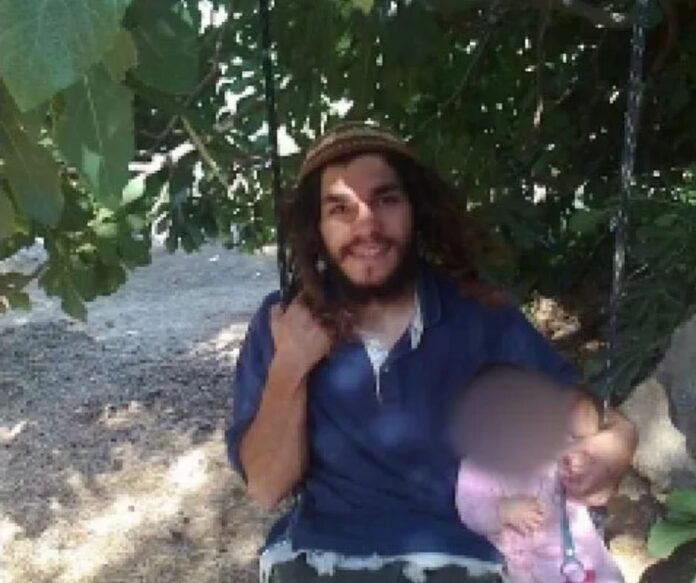
Supporters of Amiram Ben-Uliel maintain his confession was extracted under duress and press for his release; Israeli courts have upheld his conviction. (Photo: Courtesy.)

I write this as both a journalist and a Jew for whom the mitzvah of Pidyon Shevuim, the redemption of captives, is not abstract law but a living obligation. The case of Amiram Ben-Uliel, now more than ten years in detention and for nearly nine years held in conditions his advocates describe as solitary and extreme, demands sober public scrutiny and moral action.

The essential facts are straightforward and have been reported widely. Ben-Uliel was indicted for the 2015 arson attack in the West Bank village of Duma that killed an 18-month-old child and his parents. In 2020, a court convicted him of three counts of murder and related charges and later sentenced him to multiple life terms. Israeli courts, including an appeal panel of the Supreme Court, have upheld the conviction and the sentences.

At the same time, the case is marked by deep, unresolved questions that go to the heart of justice and to Jewish moral duty. Ben-Uliel and his supporters assert that his conviction rests principally on a confession obtained after harsh interrogations by the General Security Service, known as the Shin Bet.

Human rights groups, legal analysts and advocacy organizations have raised alarms about the use of “special measures” or coercive interrogation techniques in this and related cases. Those critics argue that confessions obtained under such conditions are unreliable and that courts have established a dangerous precedent by admitting them.

The Supreme Court judges who reviewed Ben-Uliel’s appeal wrote that they had “no doubt” about his guilt after viewing the confession and related evidence. Yet the court also acknowledged the exceptional and troubling circumstances surrounding some of the interrogations. The tension is evident: a court affirming a conviction while expressing unease about the means by which part of the case was developed.

Critically, the Duma case did not rest on eyewitness identification that placed Ben-Uliel at the scene. Reports from the time show that there were no direct eyewitnesses who identified him committing the act, and at least some local accounts suggested competing lines of suspicion. Supporters say those alternative leads were not thoroughly pursued once the investigation focused on Jewish suspects. Courts and prosecutors have rejected those arguments and found the broader evidentiary picture sufficient.

For nearly a decade, Ben-Uliel’s supporters say he has endured extreme isolation. Multiple reports and advocacy groups have documented his restricted conditions: limited hours outside his cell, separated visits, and very constrained contact with family and counsel. These are not merely administrative details. Prolonged isolation carries profound physical and psychological costs and, when paired with allegations of coercive interrogation, raises serious rule of law concerns.

What should observers who love Israel and its moral standing do? First, insist on due process and judicial transparency for all citizens. The legitimacy of Israel’s legal system depends on perceived fairness. When courts allow evidence obtained under controversial methods to stand without full, publicly available explanations, the credibility of verdicts is harmed in the eyes of many, both within Israel’s broad center and among those who defend Israel abroad. Legal remedy in Ben-Uliel’s case has, for now, been exhausted in the courts.

Second, families, community leaders, and diplomats who truly uphold Jewish and Zionist moral values can take practical and immediate steps. I urge those who believe in justice to raise Ben-Uliel’s case respectfully with Israeli diplomats and consular officials, to request fuller disclosure about interrogation methods, and to press for review mechanisms that protect both security and due process.

On Rosh HaShana, the Jewish New Year, communal attention naturally turns to prayer, repentance, and acts of charity. The ancient duty of Pidyon Shevuim calls us not only to prayers but to concrete advocacy for the freedom of captives whose treatment is in doubt.

Finally, a sober reminder. Serious crimes must be investigated and punished. The Dawabsheh family endured an atrocity that shocked many Israelis. If the courts are correct, the state was right to prosecute and convict. If, however, the conviction relied on evidence that was elicited through means inconsistent with justice, then we are obliged as a people and as a democracy to say so and to seek correction. Silence in the face of procedural questions corrodes the moral capital Israel needs to stand for law and for Jewish values.

On Rosh HaShana the tradition urges us to open the book of life with hearts renewed. For those who accept the possibility that Amiram Ben-Uliel’s confinement reflects not only punishment but also potential miscarriage, the mitzvah of Pidyon Shevuim remains urgent. Redemption of captives is both a communal obligation and a test of our commitment to justice.

I call on rabbis, community leaders, diplomats, and citizens who cherish Israel to examine the facts, press for full transparency, and, where appropriate, act to redeem a captive whose supporters say was wrongfully confined.

— David Bedein, Jerusalem

Palestine recognition would reward terrorism and contradict international law

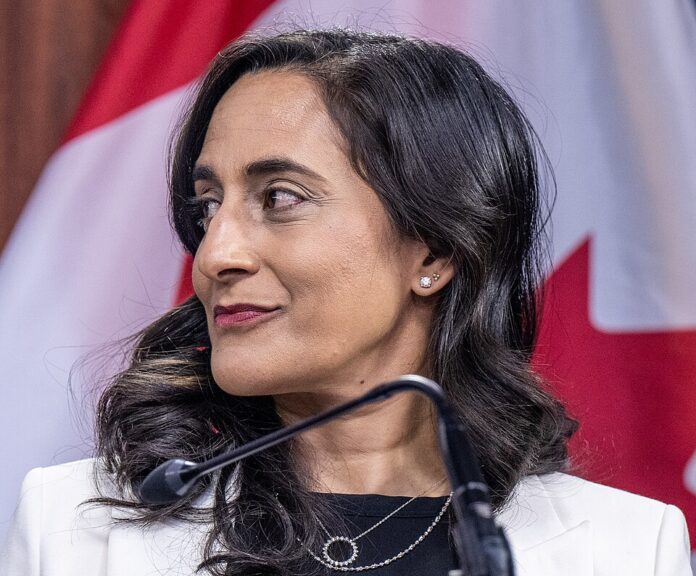
Canadian Defense Minister Anita Anand address media members during a joint press conference with Secretary of Defense Lloyd J. Austin III at the Pentagon, Washington, D.C., April 28, 2022. (DoD photo by U.S. Air Force Tech. Sgt. Jack Sanders)

In a Sept. 16 interview, Canada’s Foreign Affairs Minister Anita Anand said that Ottawa would recognize a Palestinian state at the UN next week despite its failure to implement any of the conditions and demands set forth in Prime Minister Mark Carney’s July 30 announcement of Canada’s recognition plan. This is a mistake, which would regrettably reward terrorism, make peace less likely and contradict the longstanding international legal frameworks for recognizing statehood and for resolving the Israeli-Palestinian conflict. There is a better way.

In a July 30 announcement, Carney said Ottawa’s “intention” to recognize was “predicated on the Palestinian Authority’s commitment” to fundamentally reform its governance, hold general elections “in which Hamas can play no part,” and demilitarize the Palestinian state. None of these commitments have been implemented.

Carney also demanded that Hamas immediately release all hostages, disarm, and “play no role in the future governance of Palestine.” None of these demands have been met.

Anand explained that recognizing Palestine doesn’t mean full diplomatic relations, and that Canada will “need to see reforms coming into place before any normalization of relations occurs.” But Palestine already has a diplomatic mission on the driveway in Ottawa, listed as the Palestinian General Delegation by Global Affairs Canada. Similarly, Canada already has a diplomatic mission on Elias Odeh Street in Ramallah, headed by Graham Dattels, listed by Global Affairs Canada as “Representative of Canada to the Palestinian Authority.”

Canada has long prided itself as a leading proponent of international law. Yet, recognition under the current circumstances would contradict the longstanding international legal frameworks for recognizing statehood and for resolving the Israeli-Palestinian conflict

The international legal criteria for statehood require that a nascent state have a) a permanent population; b) a defined territory; c) a government with effective control over that population and territory; and d) capacity to enter into relations with other states.

The European Council (EC) added several additional non-binding criteria in its 1991 guidelines for recognizing new states in Eastern Europe and the former Soviet Union. These include prospective states providing their citizens “the rule of law, democracy, and human rights.”

The Palestinian Authority (PA), which the three Western countries plan to recognize, has had no control over the Gazan part of its territory since 2007 when Hamas seized power there in a bloody coup. Gaza contains over 40 per cent of the purported Palestinian state’s population. The PA thus lacks the capacity to ensure the Palestinian population abides by any agreements it enters into with other states.

As for the EC criteria, PA President Mahmoud Abbas is currently in the twentieth year of the single four-year term to which he was elected in 2005 (subsequent presidential elections have been cancelled). In addition, the respected Freedom House has for years given both the PA and the Hamas regimes worse scores for political rights and civil liberties than nearly any other government on earth.

The Carney government’s approach is more constructive than that of France (unconditional recognition) and the U.K. (which perversely pledged to recognize unless Israel agrees to a unilateral ceasefire). All three governments should withhold recognition at least until Carney’s commitments and demands have been met.

One of us (Irwin Cotler) has personally met with PA President Mahmoud Abbas and his aides many times over the years. They have repeatedly promised that they would abolish the pay-for-slay program and move towards demilitarization and deradicalization. Regrettably, those promises have largely gone unfulfilled.

The long-established “land for peace” legal framework for resolving the Israeli-Palestinian conflict, established by UN Security Council Resolution 242 and the Oslo Accords, provides that Palestinian statehood can only come as part of a negotiated solution to the conflict, in which Israel receives peace in return. Recognizing Palestine as a state under the current circumstances would torpedo that framework.

Hamas is emboldened to continue holding hostages and obstructing a ceasefire, and the PA has no incentive to take concrete steps towards peace when Western leaders recognize Palestinian statehood without Israel receiving peace in return.

As the German government has rightly explained, recognizing Palestinian statehood now would be “counterproductive,” because the requirements have not been met, and such recognition would undermine efforts to reach a negotiated solution to the conflict. Denmark’s Prime Minister Mette Frederiksen similarly called for recognition to wait until it “benefits a two-state solution” and a “democratic Palestinian state can be secured without the influence of Hamas.” Frederiksen also expressed concern that recognition now would be perceived as a “reward” for Hamas.

Britain, Canada, and France recognizing Palestine as a state should be paused until both Hamas and the PA take the actions necessary to ensure that a Palestinian state both meets the traditional international legal criteria for statehood and fulfills the Palestinian side of the “land for peace” legal framework for ending the Israeli-Palestinian conflict.

Prior to recognition, Hamas must release the hostages and disarm. Also prior to recognition, the PA must fundamentally reform its governance, hold general elections without Hamas, gain control of Gaza, and demilitarize the Palestinian territories. Recognition must wait until the PA demonstrates that it is both determined and able to implement an agreement that provides both it and Israel with lasting peace and security.

If Israeli-Palestinian peace is to be achieved, recognition of a Palestinian state must be the end result of a negotiated peace agreement, not a reward for terrorism.

Irwin Cotler is the international chair of the Raoul Wallenberg Centre for Human Rights (RWCHR), a former minister of justice and attorney general of Canada and has been involved in Israeli-Palestinian peace-building for over 50 years.

Article content

Orde Kittrie is a law professor at Arizona State University, senior fellow at the Foundation for Defense of Democracies, and former legal and policy official at the U.S. State Department.

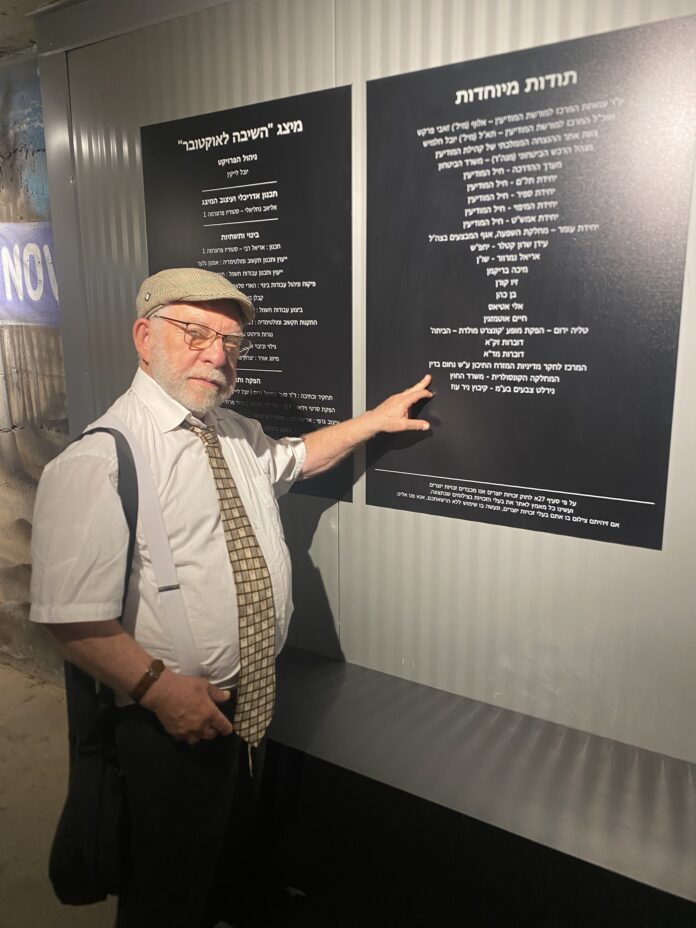
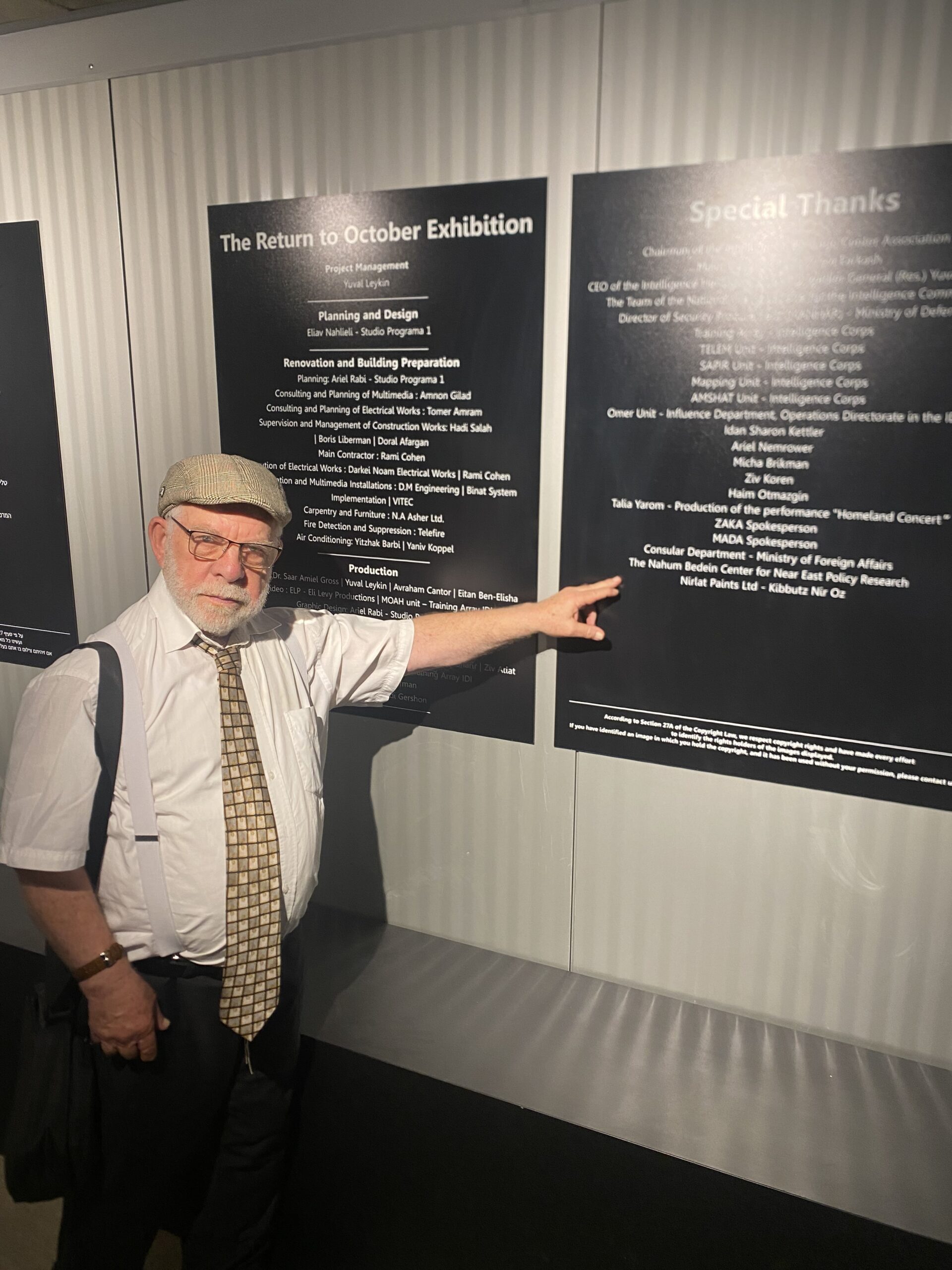
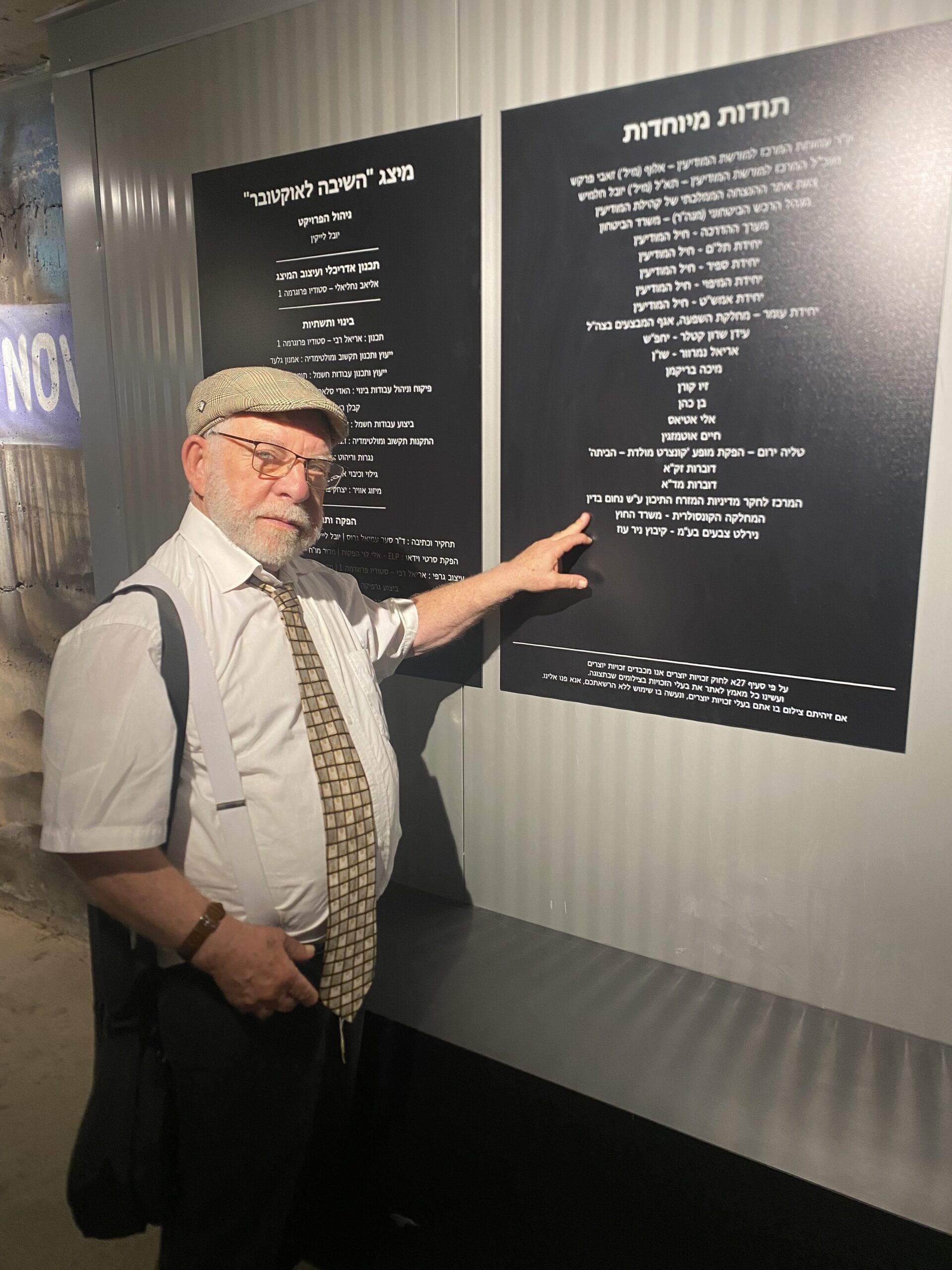
Official exhibit to mark the Oct. 7,  2023

The Government of Israel has established an official exhibit to mark the Oct. 7,  2023

Massacre , using movies, textbooks and documents, crediting our center.

Located at The Meir Amit Intelligence and Terrorism Information Center  Opens on Oct. 8, 2025

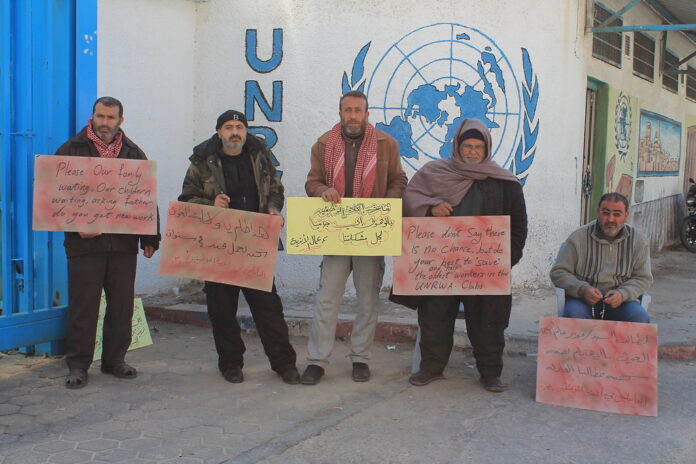
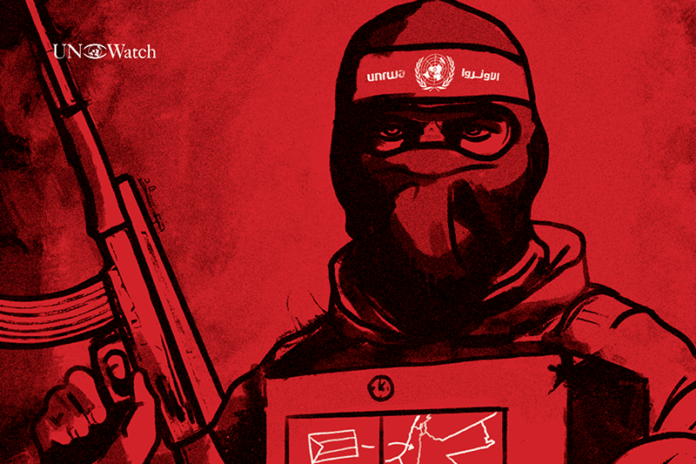
UNRWA schools ‘hijacked by Hamas,’ watchdog report warns

A leading independent watchdog organization published a report this work on how the Hamas terrorist movement took control over the education system in Gaza and Lebanon from the United Nations Relief and Works Agency for Palestine Refugees in the Near East (UNRWA).

The watchdog group — UN Watch — titled its 220-page report “Schools in the Grip of Terror: How UNRWA Allowed Hamas Chiefs to Control Its Education System.”

According to the report, “These case studies show in detail how Hamas has hijacked UNRWA’s education through its domination of the local UNRWA staff unions, particularly the teachers’ sectors of the unions, enabling Hamas to control UNRWA schools — the physical facilities, teachers, and curriculum — including by preventing the agency from implementing changes to de-radicalize the curriculum, blocking efforts by UNRWA to discipline staff for inciting antisemitism and jihadi terrorism, and placing Hamas operatives in senior educator positions in schools.”

A State Department spokesperson told Fox News Digital, “The Administration has determined UNRWA is irredeemably compromised and now seeks its full dismantlement along with the return of remaining unspent funds. Other U.N. agencies and other more effective international partners are more than capable of stepping in to provide essential lines of support.

“As stated in President Trump’s February 4 Executive Order regarding ending funding or reviewing support for certain U.N. and international organizations, ‘UNRWA has reportedly been infiltrated by members of groups long designated by the Secretary of State (Secretary) as foreign terrorist organizations, and UNRWA employees were involved in the October 7, 2023, Hamas attack on Israel.”

The spokesperson concluded, “President Trump and Secretary Rubio have long stated that Hamas will never govern Gaza again. That includes institutions they have infiltrated to sustain their power and influence.”

Telling examples of Hamas control over UNRWA’s education system are, according to UN Watch, the expulsion of Matthias Schmale, a senior member of UNRWA’s international staff who headed the agency’s Gaza operation in 2021 because he issued an apparent pro-Israel remark in a media interview.

UN Watch alleged “it took less than 10 days” for UNRWA’s Palestinian leader on the ground, Amir Al-Mishal, then head of the UNRWA Gaza Staff Union, who coordinated with his predecessor Suhail Al-Hindi, to oust Schmale.

Suhail Al-Hindi publicly appeared with Hamas terrorist leaders for many years while working for UNRWA, UN Watch wrote. UNRWA refused to fire Al-Hindi. The U.S. and Europe have classified Hamas as a foreign terrorist organization.

UN Watch accused UNRWA of failing to dismiss “Fateh Sharif, who had served for years simultaneously as the head of the UNRWA Lebanon Teachers’ Union and as a senior leader of Hamas in Lebanon.”

Hillel Neuer, executive director, UN Watch, said, “For years governments have been writing billion-dollar checks to UNRWA believing they were investing in peace and tolerance. Our investigation reveals the shocking truth: UNRWA’s classrooms have been hijacked by Hamas and turned into incubators of hate. Donor states must confront the reality that they are financing terror by proxy.”

The scandal-plagued UNRWA has bounced from one corruption and terrorism scandal to the next over the years, including aiding Hamas terrorists in the mass murder of Israeli Jews and Americans.

Fox News Digital reported in 2024 that former Israeli Defense Minister Yoav Gallant said Israel has evidence that dozens of individuals employed by UNRWA participated in the massacre of more than 1,200 people on Oct. 7, 2023, in southern Israel.

In August, Fox News Digital obtained a U.S. State Department public assessment to Congress, stating, “The administration has determined UNRWA is irredeemably compromised and now seeks its full dismantlement.”

Juliette Touma, a spokeswoman for UNRWA, told Fox News Digital that, “This report is part of a disinformation campaign that this organization, the so-called UN watchdog, has been launching against UNRWA for years now. Their reporting is full of unsubstantiated claims and clearly aims at destroying the agency which, at its heart, has provi[ded] education and health care in place where no one else actually wants to work with a group of people that is one of the most vulnerable in the region.”

Touma dismissed the report, claiming, “By the way to say most cases referred to in the report as new are not new. 90%, if not more, are already known to us.he vast majority have been found as unsubstantiated.”

The U.S. government stopped funding UNRWA because of its support for Hamas terrorists.

Schools in the Grip of Terror – UNRWA Report

“Most people who are engaged in underground organizations try not to have their involvement known publicly,” said Stéphane Dujarric, spokesperson of United Nations Secretary-General Antonio Guterres, when asked why the UN employed for decades a Hamas terror chief who oversaw 2,000 teachers at UNRWA, the United Nations Relief and Works Agency