Iran destroys World Food Security

A vegetable stall at Borough Market in London, UK

Introduction

1. The development for the need for fertiliser for food production.

In the Bible it is laid down the agricultural regulations applying in the land of Israel to ensuring that the fields retain their potency to produce food- one year in seven the fields and vineyards should not be tended by the farmers but allowed to grow wild – a period of rest for the land.

As agriculture developed around the world a system of field rotation ensued -each year one out of three fields was left fallow. This was followed by a crop rotation system where one of the three fields was used to grow leguminous crops that in growing returned nitrogen to the soil, thus ensuring that every three years each field received additional nutrients. As time passed this system was surpassed by the addition of manure to the fields that increased the crop yield.

Around the late 1880’s besides adding manure the fields were enriched with Chilean nitrate extracted from the Atacama Desert and this lasted till around the 1920’s when the the production of synthetic ammonia by fixation of air by the Haber Bosch Process commenced.

2. Current fertiliser production

In this Haber Bosch process atmospheric nitrogen was combined with hydrogen over an iron catalyst, the hydrogen together with carbon dioxide and carbon monoxide was derived from the steam reforming of hydrocarbons (liquid or gaseous) over a nickel catalyst at high temperatures and pressures, followed by a Water Gas Shift reaction over an iron or copper catalyst where the carbon monoxide produced was reacted with steam to produced additional carbon dioxide and hydrogen – this is the basic process employed today. The nitrogen nowadays is derived from Cryogenic Air Separation plants operating at pressure. Additionally, by combining the ammonia with carbon dioxide under high pressure and moderate temperatures results in a higher grade nitrogen containing fertiliser, urea, is produced.

As such, many ammonia and urea plants were established world wide based on this Western technology. The processes involved required significant energy both for compression and thermal heating. With the availability of natural gas in the mid to late 1980’s over naphtha or even coal as a feedstock ,the cost of the products decreased and consumption increased bringing with it greater yields to the agricultural sector and a more reliable source of fertilisation over natural methods. Nearly every country had its own production facilities that ranged from 150 tonnes per day in the third world to 1000 tonnes per day in the developed world.

3. Fertiliser production in Gulf States

In the 1980’s the rich Gulf oil producing companies slowly embarked on a course of action that would change both world plastic and fertiliser production. It was decided that instead of just exporting crude oil as had been the case since the 1920’s where the overseas purchasing countries would refine and the subsequent downstream petrochemical processes produced raw materials for plastics production, the Gulf would instead engage in large scale refining enlarge their petrochemical industries to enable them to produce added value products like the building blocks for plastics as well as plastics, organic carbon based compounds and solvents. With very large scale modern production units that were more efficient, this enabled them to undercut the overseas prices production, increasing their added value as the crude oil raw material was available cheaply at their doorstep whilst they also forced increase in crude prices as OPEC restricted crude production to maintain higher market prices. Slowly ,but surely, they then extending this to the production of ammonia and urea fertilisers in mega sized modern efficient plants, but of course as the local market demand was small due to arid conditions they exported at a lower price than countries could produce in their own old inefficient plants, thus enabling them to dictate the price on the world market thereby becoming major international export players and leaders.

4. Impact of natural gas exploration and production in the Gulf.

As the large. Scale exploration and production of natural gas took hold in the Gulf, much of which was sour ( containing hydrogen sulphide and organic sulphur compounds known as mercaptans), these had to be removed before liquifaction, since these impurities that could result in corrosion as well as odorous and poisonous gases had to be removed because they were polluting during combustion. This resulted in the production of vast quantities of solid sulphur and soon the Gulf states became major exporters – some for use in the production of the main economic indicator sulphuric acid and sulphur products, some also used in agriculture.

5. Major exporters of fertilisers

Export of fertilisers is confined to a few major players on the tonnage level.

The primary exporters are China, Russia, Gulf and Turkey. In 2024 the Gulf exported 34 percent of the world’s traded urea and 23 percent of ammonia in terms of nitrogen fertilisers, as well as 50 percent of the world’s sulphur and 17 percent of phosphates. In 2024 the tonnage of supply from the Gulf, sulphur accounted for 20 million, urea 17.5 million, phosphates 5 million and ammonia 3.4 million.

6. Knock on effects of the closure by Iran

To compound the problem of inability to export from the Gulf by the closure by Iran of the Straits of Hormuz, China, Russia and Turkey have exacerbated the problem by imposing restrictions on their exports. Further, like the car industry, the fertiliser Industry operates on a just in time basis as storage is costly. The only country that maintains any storage is China that holds 50 percent of the world’s inventory in case of local famine.

7. The crunch

The spring planting season in the Northern hemisphere is reaching its peak time in April and May, whilst in the Southern hemisphere is starting the winter planting season. As the industry operates on a just in time supply it is doubtful if they will have sufficient quantities of fertilisers to ensure maintaining crop yields, resulting ultimately in famine throughout the world. The shortage has resulted in excessive world prices and this is exacerbated by the shortage created in crude oil exports from the Gulf that has also seen wild rises in prices of refined products such as diesel. This double whammy will ultimately result in much higher food prices as well as a shortage causing near famine conditions in the world’s poorer countries producing food insecurity not seen for many generations.

A Lost Tribe in India Makes Its Exodus to Israel

IM000033.JPG

Of all the world’s tribes, the B’nei Menashe are as lost as they come.

A few thousand can be found in a far corner of India, at the kibbutz of Ma’oz Tzur, where a subtropical breeze blew past the mezuza at Shimon Ngamthenlal’s door recently. He shuffled about his bamboo hut, tending to a collection of writings about Judaism, printed in English and Hebrew. In the background, women on woven stools were chopping foraged greens for his family’s lunch — Southeast Asian, and just about kosher.

This lonely outpost in India’s remote northeast, flush against Myanmar, is home to a community that believes itself to be one of the Ten Lost Tribes of Israel, the children of a tribal patriarch, Manasseh, who were dispersed almost three millenniums ago. There are about 10,000 of the B’nei Menashe spread between the Indian states of Manipur and Mizoram and, increasingly now, Israel itself, 3,600 miles to the west.

For generations, they have been teaching their children how their ancestors wandered from the ancient Middle East across Asia to find refuge in the jungle. They are more interested in their religion than in arguments about their historical origin.

“We have faith in the Torah,” said Mr. Ngamthenlal, his face framed by payot, the sidelocks worn by some Orthodox Jewish men. An aliyah, or homecoming, is finally in their sights. “We have good faith in the Israeli government. They promised that all the B’nei Menashe will go to Israel by 2030,” he said. “We all have our passports ready.”

Nearly half the community has already moved to Israel, piecemeal, since the 1990s. But on Thursday, with Operation ‘Wings of Dawn,’ Israel itself will fly about 250 more of the Menashe, via Delhi, to Tel Aviv. The rest are to follow soon after.

Some of the earliest groups made their homes in places like Hebron in the West Bank and in Israeli settlements in Gaza, before 2005. In November last year, the Israeli government agreed to help the remaining 5,800 or so immigrate en masse, including 1,200 this year, and is covering some of the cost.

Benjamin Netanyahu, Israel’s prime minister, has called the funding “an important and Zionist decision that will also strengthen the North and Galilee” regions of Israel, parts of which were taking rocket fire from Hezbollah fighters in Lebanon last week.

Israel is eager to replenish a work force that has been thinned out by the wars that began with the Hamas attack of Oct. 7, 2023. Israelis called to military duty or displaced by rocket attacks, Palestinians from the West Bank barred from their regular work and a reduced flow of migrant labor from countries like Nepal and Thailand have hurt the economy.

The Menashe themselves insist on putting faith first. Benjamin Haokip, another resident of the Manipuri kibbutz, said, “We follow Judaism, and here we cannot follow all our customs.” Some prayers require a minyan or quorum, which is hard to find in the hills. Others require knowledge gained through cultural experience and foodstuffs that can’t be found locally. “We want to go to Israel for our religion,” he said.

The principal appeal of moving is to worship among fellow Jews in Israel, Mr. Haokip said, even if it is not the only reason. Manipur’s lush hills are in one of the poorer parts of India. The state’s per capita economic activity was worth about $1,200 a year, according to data for 2023-24, the most recent available. Israel’s is more than $55,000.

“We want to go to Israel, 90 percent for our religion, but yes, other things are better there, too — like education,” Mr. Ngamthenlal, the Hebrew teacher, said.

Most of the Menashe in India work on family farms or as day laborers. Their kin who have made it to Israel tend to drive trucks or work in construction and factories. Most urge those still in India to join them.

Jessica Thangjom, a Menashe who lives in Israel, works for an organization that helps others from the tribe make the leap. “Transitioning” is the tough part, she wrote in a message. To go from their agrarian lifestyle “to a technologically sophisticated environment is not an easy journey.”

In Manipur, the Menashe are classified as a Kuki people. The languages they speak belong to the Tibetan-Burmese family and conventional anthropology traces their roots back to what is now Chinese territory. Most Kukis first converted to Christianity early in the 20th century, under the influence of American missionaries.

It was in the 1970s that a couple of maverick Israeli anthropologists visited northeastern India and observed that some of their pre-Christian customs resembled Judaic practices. The Kuki chants had a familiar music, their folk tales seemed to recall the escape from Egypt and, in times of calamity like earthquakes, they called out a local phrase that sounded like “Manasseh!” That was how they came to be regarded as the Menashe.

Among those convinced were the family of W.L. Hangshing, a retired income-tax official in New Delhi who serves as the president of the B’nei Menashe Council of India. His father migrated to Israel years ago and lived his last years there. Mr. Hangshing acknowledged that the historical evidence available to support his community’s claim can seem thin, but the dispersion of the Menashes was so ancient, “you won’t find any trace of it now, not even in D.N.A.” (Some lost tribes have established a thread of genetic inheritance, including the Lemba of southern Africa.)

“We’re called the Lost Tribes, and lost means lost!” said Mr. Hangshing. Scientists who have sought biological proof of ancestry were misguided, he said: “Only God can do that.”

His fellow tribe member, Mr. Haokip, 37, said family elders had told him the tribe was from Israel. A few other small communities in India better documented attestations of their Jewish descent, but the Menashe have transmitted their beliefs strongly.

Across Manipur’s central valley from the kibbutz, another community of Menashe lives in the town of Kangpokpi. The drive between the two places should take less than four hours — in peacetime. But in May 2023, Manipur was split along jagged lines by terrible bloodletting between Kukis and the majority Meitei people who inhabit its lowlands. It remains violent: This month at least five people, including two children, were killed along the road from Churachandpur.

“After the Kuki-Meitei violence, life has become more difficult,” said Mr. Haokip, who came with his wife and children to the kibbutz after being driven from their homes by mob violence.

For the three years since, it has been virtually impossible for either group to make the same journey across the lowlands. Kukis said that the hatred between the groups is too fierce and there have been tit-for-tat killings for years.

Daniel Hangshing (a distant relation of W.L. Hangshing) lives hardly a block from a synagogue in Kangpokpi. To prove his suitability for emigration to Israel he had to bring his whole family on a two-and-a-half-day voyage, by taxi and train, to a neighboring state to meet with rabbis. “There they talked to us through an interpreter who came from Israel, for 40 minutes,” he said.

This Mr. Hangshing isn’t a frequent visitor to the temple in his own neighborhood, though the children of his extended family go often and he practices a Sabbath ceremony at home every Friday. He is firm in his beliefs: “India is our birthplace, and Israel is our destiny. That is our promised land. We have to go there.” He is learning Hebrew on the Duolingo app.

So, the Hangshings will be leaving one war-torn territory, crisscrossed by no-go zones, for another. Daniel Hangshing said: “We know that Israel is a place in turmoil, but we have to go there and die there. We are not bothered about the war.”

A correction was made on

April 24, 2026:  An earlier version of this article misidentified the ancient leader of the B’nei Menashe. He was Manasseh the tribal patriarch, not Manasseh the king of Judah.

Hari Kumar covers India, based out of New Delhi. He has been a journalist for more than two decades.

Alex Travelli is a correspondent based in New Delhi, writing about business and economic developments in India and the rest of South Asia.

From a dream to miraculous reality

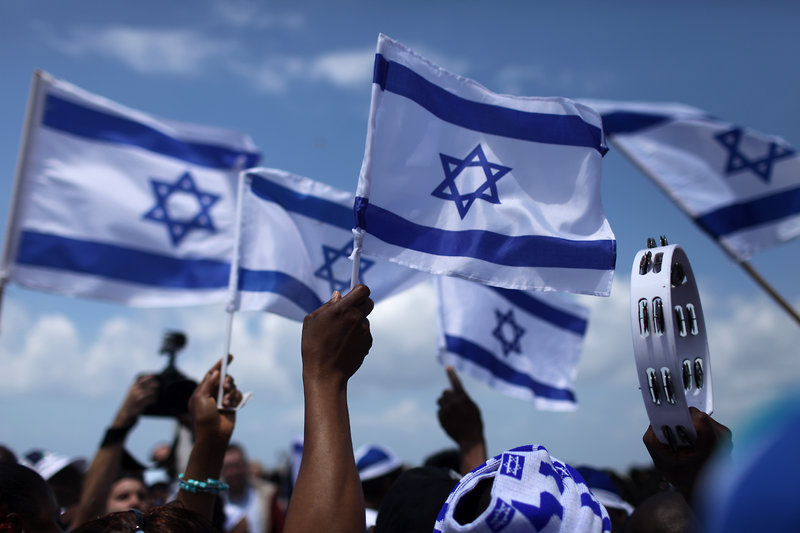
After two thousand years of praying for and dreaming about a return to Zion the Jewish nation was reborn on 5 Iyar 5708 corresponding to 14 May 1948.

This week, Israel celebrates its 78th anniversary of independence.

As usual, for 24 hours prior to this day, Israelis will pay tribute to the members of the IDF who have fallen in conflicts since 1948 and civilians murdered and wounded in acts of terror. According to the latest data, 30,000 Israelis have been killed in wars, military operations, and terror attacks since the establishment of the state in 1948. Total casualties—including wounded—exceed 100,000.

The murderous mayhem carried out by those who oppose any shape or form of Jewish sovereignty in our ancestral homeland did not start in 1948. It blossomed as soon as the Zionist movement was born.

One of the biggest lies to have been foisted on an ignorant world was the fable that once upon a time there had existed an independent Islamic Palestinian nation with Jerusalem as its Capital. These collections of historical make believe have become so embedded that trying to counter it with facts is a losing proposition.

Hijacked by jihadist fanatics the legitimacy of any sort of Jewish historical presence is now challenged by the UN and its motley assortment of members.

At one stage there was a slim possibility of co-existence but with the assassination of moderate Arab leadership and the ascendency of Islamic extremists the stage was set for a murderous scenario.

Peace treaties with Egypt and Jordan have not trickled down to the masses who are still bombarded with anti-Israel slanders. The Abraham Accords are a rare cause for optimism but one wonders whether they will survive the onslaught from jihadists and the inevitable end of the Trump Presidency.

Following the horrendous years of the Shoah, many Jews believed that finally the world would have learnt its lesson and that Jew hate would disappear from the face of the earth.

We all know now that this was a forlorn hope. The hate merely hibernated for a very short period of time and then mutated into an equally virulent plague.

Nevertheless, a mere three years after the end of the war the Jewish State came into being. Not a single survivor could have imagined in their wildest dreams that from the deepest pits of inhumanity this event would jump start a miraculous revival.

One of these miracles was the decision by the virulent Jew hater, Stalin, to instruct the Soviet delegate at the UN to vote for the partition plan.

Another miracle was a rejection by all the Islamic UN members of the partition plan. Their rejection of any Jewish sovereign nation living in peace alongside an Arab country and their stated intention to annihilate the Jews of Mandated Palestine laid bare their real aims.

The next miracle was the proclamation of statehood by David Ben Gurion in the face of opposition from many quarters and with a certainty that a war of unequal forces was inevitable. Despite all dire predictions, the outgunned and outnumbered defenders managed to hold off the invading Arab armies and eventually push them back.

This war of independence took a staggering toll in death and casualties, but for the first time since the revolt against the Romans and the Warsaw Ghetto uprising, Jews were actually fighting back against their oppressors.

This spectacle of fighting Jews shocked those who hitherto believed that Jews were easy prey. It also sowed the seeds of resentment, which very soon germinated into the sprouting of a new crop of noxious hate, which in turn morphed into an updated version of the ancient plague.

Between 1948 and 1967, the Hashemite Kingdom of Jordan illegally occupied Judea, Samaria and half of Jerusalem. It carried out ethnic cleansing of Jews, destroyed cemeteries and synagogues, and forbade Jews from praying at the Kotel. None of these acts attracted any international condemnation, even though these areas had been allocated by the San Remo Agreement for Jewish settlement. It was only when they were liberated in 1967 that the wrath of the UN descended on Israel and the myth of a “Palestinian” entitlement was born.

Another miracle was the ingathering of Jews from many countries where they were no longer tolerated. The absorption and integration of Jewish refugees who fled from Islamic violence was a massive undertaking. Subsequent waves of olim from the former Soviet Union and its subjugated empire have also benefited Israel’s development.

One of the greatest miracles has been the transformation of Israel from a struggling and impoverished country with hyperinflation into a world powerhouse of innovation and a currency which has never been stronger. As we celebrate nearly eight decades of sovereignty, Israelis have every right to feel pride at what has been achieved.

There are of course many problems still to be tackled and successfully overcome.

After two thousand years of statelessness, it takes a long period of adjustment to solve each and every challenge.

Ensuring a solid Jewish foundation while at the same time preventing Judaism from becoming fossilised in a shtetl time warp takes time and needs patience. It also requires a revamped Chief Rabbinate that can meet the challenges of a modern State. Defending the country must become an essential component of citizenship, especially in the face of mounting threats.

As the only real democracy in the region, the rule of law and civil liberties must be safeguarded. Those who seek to undermine the country cannot be entitled to receive the benefits from the State.

Israel is the only country in the world whose legitimacy is still challenged and which is under threat of censure, condemnation and sanction by countries that are members of the United Nations. This reality, therefore, demands a cohesive response from all sectors of Israeli society. Some statistics will give you a sense of how the country has made spectacular progress since 1948.

  • Israel’s population now stands at 10.2 million people. This growth has been driven by a combination of high birth rates and immigration. In the past year, approximately 177,000 babies were born, and 21,000 olim chose to settle in the country. While other countries, especially Europe have a declining birth rate, Israel by contrast is heading in the opposite direction.
  • 76% of the population is classified as Jews; 21.1% are Arabs and approximately 2.9% are foreign nationals.
  • Israel continues to stand out as a relatively young country compared to other developed nations, with about 27 percent of its population made up of children and teenagers, and only around 13 percent aged 65 and older—figures that point to continued growth and vitality.
  • Health indicators have also improved steadily over the years. Life expectancy has risen by nearly two decades since the state’s founding and now stands at 81.1 years for men and 85.5 years for women.
  • From a historical perspective, the figures highlight extraordinary growth since the founding of the state in 1948, with the population expanding more than twelvefold.

About 45% of the world’s Jewish population now lives in Israel.

With the unstoppable rise in hate guaranteed to continue, Israel will still be, despite the enemies arrayed against it, the only place where being Jewish is not a badge of shame and where Jews do not have to cover up, deny or be invisible.

The miracle of the Promised Land’s rebirth is one of the wonders of our times. We should all feel privileged to be part of this exciting fulfilment of Biblical prophecy.

Michigan Democrat criticizes party for nominating Hezbollah-supporting regent candidate

Rep. Kristen McDonald Rivet (D-MI), a Democrat representing a swing district in Michigan, condemned the state party for nominating an attorney who expressed support for Hezbollah for the University of Michigan Board of Regents, as well as other harassment and divisive tactics delegates targeted at pro-Israel candidates at the party convention last weekend.

She argued that such activity and decisions will ultimately help Republicans in the November midterm elections.

“What I saw on the MDP Convention floor is deeply troubling — for what it says about who we are, how we win, and whether we will be able to meet this urgent moment,” McDonald Rivet said on X on Tuesday, emphasizing that, coming from the only Trump-won district held by a Democrat in the state, she “know[s] how hard it is to win.”

She said that while she is “excited” to run alongside “many” of those nominated, “the Convention nominated others with extreme positions and records — like calling Tucker Carlson ‘a real one,’ Hezbollah leaders ‘martyrs,’ or amplifying Qasem Soleimani — that are out of step with my values and those of Democrats across our state.”

Her comments are a reference to Makled, who has run on an anti-Israel platform and had an endorsement from the SEIU labor union pulled over past social media posts expressing support for Hezbollah. Makled’s nomination ousted Jewish regent Jordan Acker, who was repeatedly harassed and had his home vandalized by anti-Israel demonstrators.

McDonald Rivet said she was also concerned that “too much of the behavior we saw on the floor is not acceptable.” Pro-Israel candidates and those supporting them, including a supporter of Acker and Rep. Haley Stevens (D-MI), faced aggressive boos at the party convention, to the extent that Abdul El-Sayed, the far-left Senate candidate who many of those vocal demonstrators are supporting, called out their behavior.

“We don’t name-call. We don’t belittle and bully. We don’t shout people down. We don’t make them feel unwelcome or unsafe based on who they are,” McDonald Rivet said. “We reject all forms of hate, including both antisemitism and Islamophobia.”

She said that the Democrats “will never beat MAGA by practicing their division.” She pointed to comments by Michigan Republicans celebrating the chaos and welcoming Jewish Democrats into the fold as proof that the events at the convention will “[make] it much, much harder for us to win back power this November” and make Republicans’ “jobs easier.”

“On Sunday, we saw a troubling step in the wrong direction. But it isn’t too late to course correct. Michigan Democrats, we can’t afford any less,” she concluded.

McDonald Rivet called for the Democratic Party to come together around a “unifying agenda” and to create spaces where everyone feels “respected, liked, and welcome.”

Degel Menashe

Degel means a flag in Hebrew, and our name of “Menashe’s Flag” derives from the account in the book of Numbers of how, when the twelve tribes of Israel camped around the tabernacle in the desert, each flew its own standard. The emblem on that of the tribe of Menashe, according to Jewish tradition, was the re’em or oryx, a long-pronged antelope known for its strength and beauty.

View More

Red alerts today

In the past week, there were 141 red alerts, and a total of 23770 in the past month

Visit Website

Post-October 7 reality proves – Israel is not the Middle East’s Sparta

As the dust begins to settle from recent fighting in Iran and Lebanon, a clearer picture is emerging of what has materialized from promises in Israel to reshape the Middle East since Oct. 7, particularly during Operation Roaring Lion.

All of Israel’s enemies have absorbed an unprecedented blow, and the security reality has improved compared with the situation two and a half years ago. However, none of the three central adversaries — Iran, Hezbollah and Hamas — has been eliminated in line with the spirit of a “total victory,” and the axis and the idea of “resistance” have not disappeared.

This is, in effect, a new-old Middle East. In Syria, the Assad regime has fallen, but its successor is not friendly toward Israel. Turkey is strengthening its regional position and presenting a growing challenge to Israel. The Arab world is not rushing to align itself with Israel despite a shared stance against the Iranian threat. On the contrary, Arab states are expressing suspicion in the face of Israel’s display of power and continue to make clear — particularly Saudi Arabia — that normalization will not take place without progress on the Palestinian issue, which Israel continues to avoid, much as it did before Oct. 7.

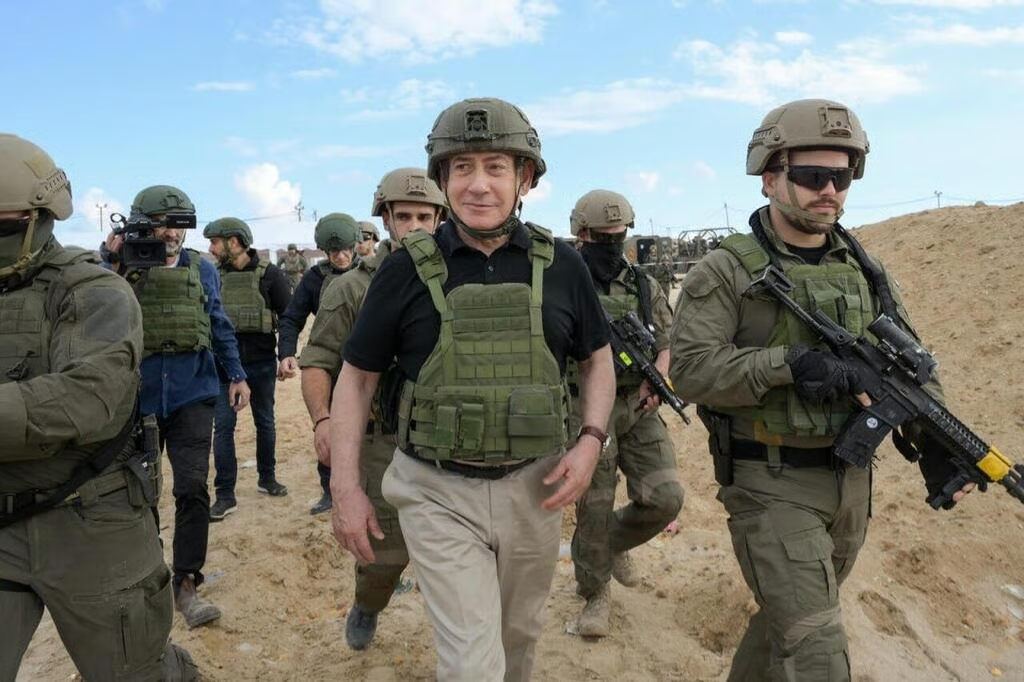
The war has brought Israel into proportion. It has demonstrated dramatic military capabilities and achievements, but has also exposed the limits of power, chief among them deep dependence on the United States — and more precisely on President Donald Trump — both in advancing military efforts and in determining the timing and framework for ending the fighting. The precedent set in Gaza is now repeating itself in Iran and Lebanon: Prime Minister Benjamin Netanyahu promised total victories, likened the conflicts to World War II and the enemy to Nazis that must be eradicated, and sought to conduct campaigns without time limits. Ultimately, Trump dictated the end of the fighting and set arrangements under which the adversaries remained dominant forces.

Israel is not Sparta or an all-powerful Middle Eastern Popeye. This has become evident with the end of the war in Gaza — which was effectively imposed following a failed attack in Qatar — and with the shelving of the vision of emptying Gaza of Palestinians and establishing a Mediterranean riviera. It is now also evident in the inability to disarm Hezbollah or bring about regime change in Tehran, alongside the ongoing need to ensure that efforts to neutralize the nuclear program are realized.
Vision, boldness and ingenuity are foundational principles of the Zionist project. However, when driven by fantasies, they can cause significant damage. Israel must recognize that in the eyes of much of the world, its image is not that of a just underdog, but of a powerful giant striking constantly and everywhere, amid growing questions about judgment and moral values, including in relation to developments in the West Bank.
A sense of collective unease has emerged. It does not stem from military outcomes, as Israel has achieved clear victories in all arenas while demonstrating technological and intelligence superiority. Rather, it arises from the sharp gap between promises, slogans and illusions and the reality on the ground, along with the overuse by decision-makers of absolute terms — mainly military — such as decisive victory and decapitation, or the ongoing tallying of dismantled units and destroyed weapons. These concepts may fit conventional warfare but not current conflicts.
The gap reflects flawed situational assessment and a lack of deep understanding of the nature of the adversary. It also underscores the cost of dismissing calls for a coherent strategy and a political component. More direct and sober discourse between leadership and the public might have prevented the buildup of unrealistic expectations.
At the same time, it is notable that decision-makers who present themselves as pragmatic and as correcting the failures of Oct. 7 — claiming to understand what influences Arabs and how they think and promoting the idea that Israel will forever live by the sword — are the same figures advocating for utopian ideas of total victory. They maintain a belief in the ability to engineer consciousness through deradicalization and to uproot ideology through economic measures — concepts rooted in pre-Oct. 7 thinking — exemplified by the failed GHF initiative in Gaza, which many now prefer to forget.
This pattern highlights a broader problem: a reluctance to investigate past failures leads to their repetition, causing further damage that also goes unexamined. This reflects a flawed culture that has taken hold since Oct. 7, allowing decision-makers to avoid acknowledging mistakes or taking responsibility.
If and when a future leadership undertakes a thorough review of the war and the roots of the Oct. 7 failures — possibly including the formulation of an updated national security doctrine — several conclusions should guide it. Among them: in the current reality, adversaries cannot be entirely eliminated or decisively defeated, and the struggle against them is a long-term campaign; a strategic military achievement cannot be realized without a political dimension; cultivating distant allies or fringe groups is not a substitute for close ties with neighboring states; holding territory alone is not a guarantee of long-term security; and the Palestinian issue cannot be avoided indefinitely.
Finally, the analysis calls for internal reflection. The campaign since Oct. 7 may be among the most successful in military terms, but it has been marked by a shallow public discourse within Israel, an unprecedented subordination of arguments and actions to political considerations, a collective attachment to fantasies — some with messianic undertones — and the suppression of criticism and complex thinking under accusations of lack of patriotism.
There is a sense of nostalgia not only for a less divided society, but also for leaders such as former Prime Minister Levi Eshkol — described as gray and hesitant — who, after the victory of the Six-Day War, when Israel was in a state of euphoric triumph, was able to caution that the bride is beautiful, but the dowry is problematic.
After two and a half years of difficult war, the conclusion is that complex truths are preferable to rhetoric saturated with illusions.
 
Dr. Michael Milshtein is head of the Forum for Palestinian Studies at the Dayan Center at Tel Aviv University

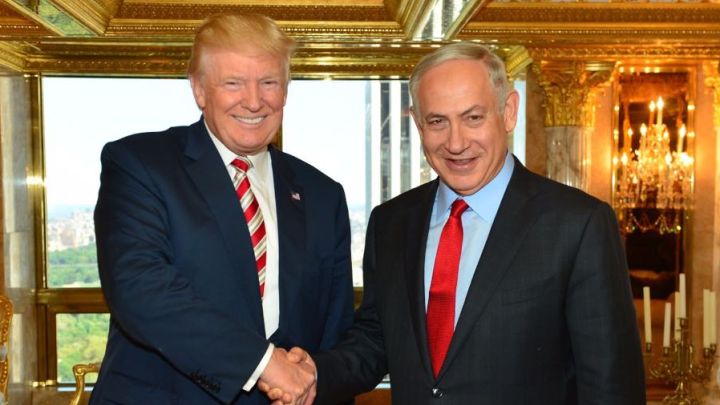
Second thoughts: Trump as the as recipient of the Israel Prize?

President Trump, with all that he has done for Israel as an ally during wartime. , remains the primary diplomatic supporter of Qatar which the US Department of Education has documented as the leading foreign funder of US education .

Yet According to ISGAP, the Interdisciplinary Research Center dedicated to the Academic study of antisemitism, Qatar remains the prime funder of anti-semitic, anti-israel and pro-terror groups in the billions. Qatar has no problem acknowledging its role as a key funder of this rampant international indoctrination against Jews.

Now President Trump has been nominated for the Israel prize , awarded each year on ISRAEL INDEPENDENCE DAY.

The Israel government criteria for the Israel Prize are clear:

A candidate typically must…

  • Be an Israeli citizen (rare exceptions exist)
  • Demonstrate exceptional achievement in their field

Made a significant contribution to Israeli society, culture, science, or national life

  • Possess a body of work with long-term impact (not just one success)

However, Trump has not yet to show leadership in the fight against antisemitism – the plague now affecting Jews around the world – with Qatar as its main backer. If Trump was a true friend of Israel, he would do well to fight Qatar and not to declare it as its most US trusted ally.

As a gesture of good will, Trump could insist that Qatar cease and desist from its trades against the Jewish state. That includes Qatari funding of Jihadi education.

The Israel Prize ceremony on Israel Independence day could provide the perfect opportunity to remind the US President of the American government commitment , since the 1993 Oslo Peace accords, signed on the White house law, which obligates the Palestinians to cancel the PLO charter of total war with the Jews. Each US president has ignored that commitment. Perhaps Donald Trump, as a recipient of the Israel Prize, would now honor that American commitment?

A futile exercise

A “futile exercise” is an action, attempt, or endeavour that is completely pointless, useless, or unlikely to succeed.

It describes a task that wastes time and effort because it produces no results or fails to achieve its intended goal.

This definition succinctly sums up frantic attempts to engage the Islamic occupiers of Iran in a meaningful dialogue with the aim of somehow preventing their jihadist agenda from acquiring nuclear weapons and terrorising all those who oppose it.

One had only to look closely at who was actually pushing for these “negotiations” to realise that the whole exercise was a charade from the very beginning.

Pakistan has promoted itself as the latest knight in shining armour, aiming to bring peace and goodwill to the world. In the process, it hopes to gain the White House’s appreciation and earn credit for its seemingly sincere endeavours. In reality, this nuclear-empowered Islamic nation is far from the peaceful dove it strives so valiantly to portray. Apart from the fact that it poses a threat to India, its fanatical obsession against the Jewish State should automatically disqualify it as any sort of “neutral” mediator.

Pakistan does not recognise Israel as a legal country with any right to exist. Its defence minister recently declared that Israel is a “genocidal country” and a “curse for humanity.”  Coming on the eve of Yom Hashoah (Holocaust Remembrance Day), this foul language exposes their real agenda. After an uproar from Jerusalem, the statement was deleted from social media, but of course, by then the message was perfectly clear.

Only habitual Jew haters and complicit followers would be fooled into believing that Pakistan is any sort of suitable facilitator of peace and goodwill. The images of Vance and Trump tolerating this Pakistani hypocrisy are jarring.

Another so-called mediator is Turkey, whose anti-Israel credentials certainly qualify it for this coveted position.

Erdogan, the latter-day Ottoman sultan, has described Israel’s Prime Minister as the “Hitler of our times.” He has also expressed the belief that Turkey could invade Israel at any time it desires. These expressions of “goodwill” certainly make him a natural “neutral” and seeker of peaceful relations.

Without a shadow of a doubt, the fact that Pakistan and Turkey are embraced by the Iranian Islamic regime tells you all you need to know about the lunacy of the situation.

The fact that the Americans are also so easily bewitched makes one wonder where it will all end up. There are already whispers of further “talks” to extend the ceasefire and no doubt dangle more concessions.

Any student of history can tell you that negotiating with tyrannical regimes is a lost cause and can only end in disastrous results.

By their very nature, deceiving and lying are standard negotiating tactics employed to delay and defy. Iran has been masterful at using these tools for the last five decades.

They have learnt that democracies with no backbone, appeasers and weak-kneed politicians can be lulled into believing that peace can be purchased.

The Mullahs of Tehran have seen how North Korea was able to bluff its way to nuclear status and continues to threaten murderous mayhem. If North Korea can successfully continue to literally get away with murder, then why can’t Iran do the same?

Just as Hitler took advantage of the democracies’ craven desire to avoid confrontation in the face of evil, the Mullah regime is following the same scenario. Starmer of the UK declares that freedom of the Strait of Hormuz is important, but then in the next breath refuses to do anything other than mouth inane platitudes.

The bottom line is that the Iranians know all they have to do is shlep out the drama for as long as possible.

Doing that guarantees certain probabilities.

Causing economic mayhem will cause the craven EU, UN and others to surrender and agree to Iranian demands.

Political mayhem in the American midterms will start an isolationist revolt in the Republican Party, and the campaign against Iranian terror will unravel. Suggestions of a five-year moratorium on Iranian nuclear development are an indication of possibly kicking the problem down the road again. With the prospect of a new US administration in two years’ time being distinctly cool on Israel, the Iranians have everything to play for in their strategic duplicitous agenda.

Oppression and executions in Iran will increase, and the Islamic regime will survive and continue its deceptive march towards nuclear terror status and terror proxy patronage.

Each and every so-called ceasefire will be used to rearm and reorganise for the inevitable next round. The longer the ceasefires drag on, the more opportunities there will be for deception and evasion. Pulling the wool over the eyes of democracies desperate for an easy way out is an old tactic guaranteed to produce the desired results from all those befuddled by reality.

Despite this clear and well-worn path of deception, there will still be voices advocating “dialogue and diplomacy” as the only way forward. Protesters will be out in force, and Christian religious leaders will remain silent or complicit in the face of impending disaster.

This week, Jews worldwide gathered to commemorate the Shoah and its catastrophic impact.

Most of the world has tuned out as far as the lessons of those years are concerned and this is what makes current developments so dangerous for Israel and Jewish Communities in the Diaspora.

Of course, some politicians will make all the right noises proclaiming their fervent desire to combat Jew hate in its latest incarnation, but their annual exhortations will fall on increasingly deaf ears.

A failure to actually tackle the rising scourge, combined with continual condemnations of Israel as a facilitator of “genocide” and an “illegal occupier” among other cardinal sins, steadily reinforces in the minds of an ignorant and ill-informed public negative connotations and stereotypes.

Countries such as Spain and Ireland are leaders of the anti-Israel pack. The former, under its current leftist coalition, is reverting to age-old libels and basically branding the Jewish State as a pariah of the international community.

Ireland, meanwhile, wallows in anti-Israel policies. Its one-sided obsession has now resulted in a Dublin fundraising event for Magen David Adom being cancelled. Apparently, according to Irish supporters of the PLO, Israel’s first responders are guilty of “genocidal” policies. Anyone who knows anything about MDA would realise that this is just another slanderous accusation, but for those already conditioned to think the worst about Zionists, it is the gospel truth.

Starmer, Carney and Macron all profess friendship, but their rhetoric, almost on a daily basis, against Israel merely reinforces the negative perceptions among a public already saturated with poisonous and pernicious accusations.

On Yom Hashoah, the sirens wailed, and most Israelis stood in silent memory of the six million Jewish martyrs murdered by the German Nazi regime and its not inconsiderable band of willing accomplices. The German Chancellor chose the eve of this event to berate Israel for allowing Jews to live in Judea and Samaria. When Israel’s Finance Minister slammed this attempt at telling Jews where they cannot live he was pilloried for being “undiplomatic.”

Unfortunately, being diplomatic has seldom helped Jews in the past.

To top off another vintage week in international double standards and raging hypocrisy, a report in the London Jewish Chronicle must win first prize.

It encapsulates precisely why Iran feels confident that it can outsmart and outfox all those who believe that talks, dialogue and diplomacy are the only way to usher in an era of eternal love and peace.

Dozens of countries, including the United Kingdom, have made the mind-boggling decision to nominate Iran to join a UN committee responsible for shaping policy around human rights, despite the Islamic Republic last year carrying out the largest number of executions in almost four decades.

Iran will become a new member country on the UN’s Committee for Programme and Coordination after being selected by the body’s Economic and Social Council, which comprises 54 nations, including the UK, Australia, France and Canada. The US was the only country to object, on the basis that Iran along with Cuba and Nicaragua, which were also elected to the committee – were “unfit.”

The committee is scheduled to meet next month when it is due to discuss gender equality and women’s empowerment, human rights, disarmament and terrorism prevention.”  

A more blatant example of an exercise in futility would be hard to find.

Palestinian Authority security forces are ‘building offensive force for surprise attack’

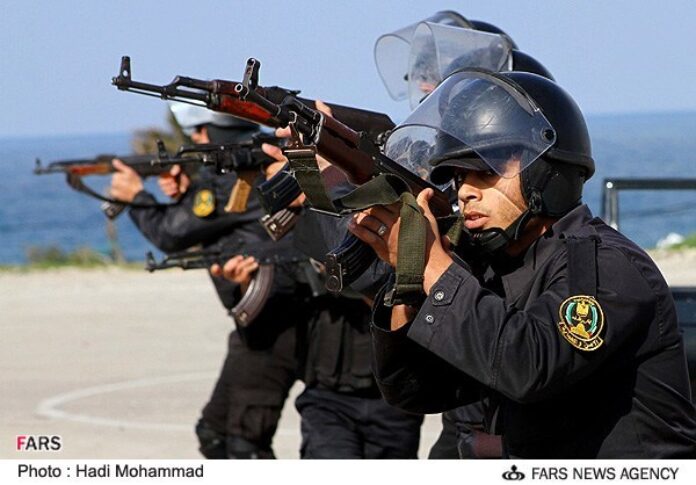
A new investigative report by the Regavim Movement warns that the Palestinian Authority Security Forces (PASF) function as a “shadow army” capable of posing a major threat to Israel, prompting calls from officials and security experts for an urgent review of the findings.

According to the March 24 report, “The Writing is on the Wall (of Jericho),” the Palestinian Authority is developing what Regavim describes as a “terror army in the heart of the state,” capable of launching a surprise attack on Israel on a scale far greater than the Oct. 7, 2023, Hamas assault.

“At any moment, the Palestinian Authority Security Forces may mobilize against us, and the events of Oct. 7 will seem like a walk in the park in comparison,” Naomi Linder Kahn, director of the International Division of Regavim, told JNS on Tuesday.

According to the report, the PASF has evolved far beyond its intended role as a civilian police force under the 1995 Oslo II framework, which capped its size at 30,000 personnel equipped primarily with light arms for law enforcement duties.

Regavim alleges that the force now numbers approximately 65,000 combat-trained personnel, including individuals with past terror convictions, and possesses weaponry suited for offensive operations, including grenade launchers, machine guns, armored vehicles and armor-piercing munitions.

The report also reveals that P.A. personnel have received advanced military training abroad, including officer and command training in Russia; armored, tank and artillery instruction in Pakistan; and tactical parachuting training in Egypt and Italy.

According to Regavim, training facilities in Jordan and Jericho—described publicly as centers for civilian policing—conduct exercises that include live-fire from high-speed all-terrain motorcycles, urban-warfare drills, and breaching operations involving explosives, capabilities the group says are indicative of preparations for combat rather than law enforcement.

“Every inch of the State of Israel is in danger, and we demand that the State of Israel act swiftly and decisively to prevent the nightmare scenario for which the Palestinian Authority has been training its troops for decades,” Kahn said.

The cover of the new Regavim report on the Palestinian Authority Security Forces, March 2026. Credit: Regavim.

‘A clear and present danger’

Yisrael Ganz, governor of the Binyamin Regional Council and chairman of the Yesha Council, described the report as “a wake-up call,” warning that the PASF represents “a clear and present danger.”

Ganz urged the Israeli government and security establishment to carefully review the findings and ensure that the security of residents in Binyamin, and of all Israeli citizens, relies first and foremost on the Israel Defense Forces operating with full freedom of action throughout Judea and Samaria.

“At the same time, the council is working and will continue to work to strengthen security components in the communities and to increase readiness on the ground, in full coordination with security authorities,” he added.

Lt. Col. (res.) Maurice Hirsch, director of the Initiative for Palestinian Authority Accountability and Reform at the Jerusalem Center for Security and Foreign Affairs and former director of military prosecution for Judea and Samaria, told JNS the PASF should be viewed as a fully developed army.

He noted that approximately 6,000 terrorists participated in the Oct. 7 Hamas-led massacre and warned that what he described as “the P.A. terror army” is significantly larger and better trained.

“If Israel does not take immediate steps to dismantle the terror army, the next massacre, which will be much greater in scale, is just a matter of time,” Hirsch said.

A longtime security official from the Binyamin region, who requested anonymity, suggested the PASF could also be deployed internally by the Palestinian Authority to confront Israeli civilians entering Palestinian Authority-controlled areas following terror attacks.

He warned the findings could signal the potential for widespread escalation in Judea and Samaria, including the possibility of another full-scale intifada.

A Regavim spokesperson added that statements by P.A. officials expressing aspirations to “return” to Israeli cities, including Haifa, Jaffa, Tiberias and Beersheva, undermine the perception of the Palestinian Authority as a moderate partner.

“Relying on the Palestinian Authority as a partner or subcontractor for security in Judea and Samaria, or as a legitimate alternative for the ‘day after’ in Gaza, paves the way for the next disaster,” the spokesperson said. “Israel’s security must rest solely on its own strength and sovereignty.”