Iranian ‘Sleeper Cells’ Poised to Strike in Canada?

Calls are growing for Canada to start taking the threat posed by Iran seriously.

Among them is the Centre for Israel and Jewish Affairs, which is urging Public Safety Minister Gary Anandasangaree to secure Canada from further infiltration by Iranian agents and agitators, and to ban the glorification of terror in Canada.

“It’s really important that while things seem to be wrapping up with a ceasefire in terms of the current hostilities between Israel, the United States and Iran, that Canadians understand that the threat from Iran extends beyond its nuclear and missile programs,” said CIJA interim president Noah Shack. “(Iran’s) export of terrorism endangers global security and puts Canadians at risk, both abroad and here at home, and there are real public safety concerns in Canada when it comes to the Iranian regime that are in sharp relief right now.”

Former federal justice minister Irwin Cotler — himself the subject of a foiled Iranian assassination plot — told The Globe and Mail this week he fears the Iranian regime may have activated “sleeper cells” to carry out acts of violence within Canada.

Previous news reports have suggested that as many as 700 people affiliated with the Iranian government or Iran’s Islamic Revolutionary Guard Corps may be in Canada.

That also includes Iran’s funding of terrorist groups worldwide, including Hezbollah in Lebanon and Palestinian terrorists, such as Hamas, as well as indications of Iranian money funding far-left and extremist pro-palestinian groups in Canada.

While flags of the Iranian regime are common sights at Canada’s anti-israel rallies, last weekend’s pro-iran demonstration in downtown Toronto — sponsored and supported by public service unions like CUPE and OPSEU — featured troubling language from participants, ranging from flags and signs supporting the continued attacks and eventual destruction of Israel to people holding photos of Iran’s supreme leader Ayatollah Ali Khamenei.

“If I were a member of one of these unions, I’d be asking some tough questions — is my union representing my interests or are they standing up for a vile, theocratic dictatorship that brutally oppresses its own people while spreading death and destruction around the world?” Shack said. “There’s an urgent need for a gut check about who’s leading these unions and what are they doing to actually represent their members.”

Putting Egypt and Turkey on notice

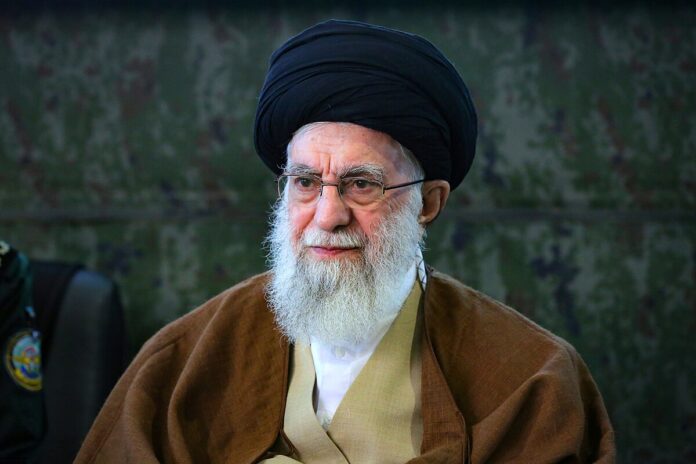
Ayatollah Ali Khamenei, the supreme leader of the Islamic Republic of Iran, published back in 2011 his book entitled “Palestine.” In explicit detail, the leader of Iran laid out his vision of how to destroy the “Zionist entity” phase by phase. Make life in Israel miserable and unbearable with daily terror from the Palestinians in Judea and Samaria, from Hamas in Gaza, and from Hezbollah in Lebanon creating a never ending instability militarily, politically, economically, and culturally thereby threatening the national cohesion of the State of Israel. The final goal in his book ends with the dispersion of the Jews to their previous countries from which they fled or immigrated. It was no surprise that when the Iranian ballistic missiles began raining on Israel ten days ago, Palestinians everywhere celebrated and danced in the streets and on their rooftops, handed out sweets to passersby, and cheered on the destruction and havoc caused by these bus size ballistic missiles with 1.5 ton warheads. Yet despite this apocalyptic Islamist fantasy, and as the temporary ceasefire brokered by President Trump between Iran and Israel goes into effect, Ayatollah Ali Khamenei is holed up in some descript bunker in the north of Iran with his immediate family, cut off from the world, exhausted and consumed with his hatred of the Jews and the State of Israel, wondering about the moment when Israel will decide to finish him off.

The Iranian regime’s stated goal from its inception has been the total annihilation of the State of Israel. This is not a slogan, but a cornerstone of Iranian religious, political, and military doctrine. Iran and its current regime leadership are indeed an “existential threat” on the State of Israel, having her nuclear arsenal and capabilities destroyed by Israel literally at the last moment. The Iranian plan to surround and coordinate an attack on the State of Israel with terror proxies; Hamas terror organization in Gaza, Palestinians in Judea and Samaria, Hezbollah terror organization in Lebanon, the Houthis terror organization from Yemen, Syrian Army, culminated in a barbaric and savage attack on Israel on October 7th, with thousands sadistically murdered, wounded, and taken hostage. Yet, from that dark day, from the depths of unfathomable suffering, when Israel was caught unprepared for the murderous onslaught, and arising from this painful low point, we can today proudly raise our heads after destroying Iran’s nuclear capabilities that endangered the continuing existence of the State of Israel, after destroying the Hamas terror organization, after destroying the Hezbollah terror organization, after destroying the Syrian Army. The political and military leadership of all these enemies have been eliminated one by one and at times in clusters.

In the aftermath of the ten day war between Israel and Iran, Israel’s decision makers must calibrate their thinking about how to deter future adversaries whom despite being perceived as deterred, were able to coordinate an offensive initiative, rooted in the element of surprise, and inflict death and destruction on a local level, and severely weaken Israel’s strategic capabilities and dominance in the Middle East. Israel launched Operation “Rising Lion”, to roll back the Iranian threat to Israel’s very survival, but no less to send a very specific lesson to future adversaries such as the nations of Egypt and Turkey. Both of these nations have quietly abetted and provided political and strategic support to the very same terror proxies trained and funded by the Islamic Republic of Iran.

Egypt and Israel signed a historic peace agreement in March 1979 to end hostilities and normalize relations. It marked the first treaty of its kind between an Arab country and Israel. The peace agreement between Egypt and Israel was viewed at the time as having reshaped the history of the Arab-Israeli conflict for the better. Yet for the past two decades, Egypt’s claim to de-escalate and bring an end to the conflict between Israel and her neighbors would be much more believable and credible had they neutralized and prevented the construction of hundreds of underground tunnels between the Gaza Strip and the adjacent Sinai Peninsula, the eastern border of Egypt. These tunnels some large enough to allow motor vehicles to pass through, enabled Hamas to import arsenals of weapons and unlimited materials to enable the construction of an underground military capacity that clandestinely threatened the State of Israel.

Although Egypt is a poor country, with a low GDP per capita rating, with tens of millions of Egyptians forced to live in cemeteries or boxes as a substitute for a home; Egypt has built up the strongest army among the Arab nations of the Middle East with over: 5,000 tanks, hundreds of advanced fighter warplanes and helicopters, over 100 naval vessels and submarines, and an estimated one million soldiers in uniform. A study by the Jaffee Center for Strategic Studies reported that Egypt’s air force has undergone the most significant modernization of any military in the Arab world. “From the point of view of weapon systems,” the author concluded, “the military-technological gap between the Egyptian and Israeli Air Forces is gradually narrowing.” In addition, the “Egyptian Air Force’s increasing confidence is reflected in its acquisition of aircraft for deep-penetration strikes into enemy territory.” Egypt now has some of the most sophisticated U.S.-made weapons, including Abrams tanks, F-16 fighter planes, and Apache attack helicopters. Western intelligence agencies are aware of and have leaked details that Israel – the country Egypt signed a peace treaty with – is the “enemy” in all of Egypt’s war games.

Turkey, one of the few countries in the world that most Americans do not visit, probably in response to the 1978 movie “Midnight Express” , portraying Turkey for what it is, a backward, sadistic, and corrupt nation.

Despite its 85 million citizens, Turkey has failed to position itself as an influential regional power. The current Islamist government’s new policy, which is premised on Neo-Ottomanize (a return to the Ottoman Empire’s glory days,) registered a series of stinging diplomatic failures in recent years. Yet Prime Minister Erodgan and his party have reinforced their political status within Turkey through the daily scapegoating of Israel in the “best” of Islamic tradition. Only recently Turkey expelled the Israeli ambassador, suspended defense contracts with Jerusalem, announced legal action against senior Israeli figures in European courts, threatened to bring the dispute before the international court and “take measures for freedom of maritime movement in the Mediterranean” including positioning her Navy so as to interfere with the free movement of Israeli shipping and mining expeditions in the Mediterranean Sea. Turkey has been a dominant and strategic partner to Hamas and her leadership enabling terror leaders to operate, coordinate, fund, and train terrorists in Turkey.

The epilogue to the current period ending with the total humiliation of Iran; militarily, technologically, and politically while exposing her true capabilities as nothing more than a “paper tiger”, and nothing close to the regional superpower the Iranians have falsely claimed. The lesson should not be lost on the nations of Egypt and Turkey. Both nations have large populations of poor and uneducated citizens, allowing them to become just another Islamic nation that can be overthrown at any time.

US to give $30m to Gaza Humanitarian Foundation despite violent and chaotic rollout of food distribution

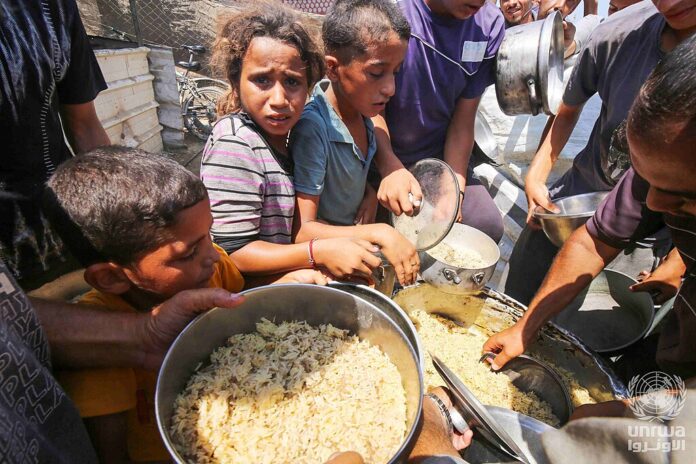
The Trump administration has authorised a $30m grant to the controversial Gaza Humanitarian Foundation, making the US a direct backer of an aid organisation that is closely linked to private security contractors and has been accused by critics of “politicising” the distribution of humanitarian aid in Gaza.

According to a document seen by the Guardian, the state department has already disbursed $7m to GHF, a US- and Israeli-backed aid organisation that has been given preferential access to operate in Gaza because it says that it can deliver millions of meals to starving people without that food falling into the hands of Hamas.

But its rollout has been chaotic, with Israeli forces killing hundreds of people near distribution centres policed by private military contractors and Israeli soldiers, resignations by senior leadership who have said the humanitarian organisation’s mission was “politicised”, and reports of close ties and collaboration with the Israeli government.

Insiders said that the application for the grant was rushed through the state department unusually quickly, especially for a first-time applicant that should undergo an audit to receive USAID funding.

“It was pushed through over the technical and ethical objections of career staff,” a source told the Guardian.

The state department decision to issue the grant was first reported by Reuters.

The state department refused to confirm or deny the reports. “We are not going to comment on internal deliberations,” a state department spokesperson told the Guardian. “We are constantly looking for creative solutions to get aid into Gaza without it being looted by Hamas, and GHF stepped up.”

Sources told Reuters that GHF may be given $30m each month to help fund its operating costs in Gaza. The grants appeared to be rushed through USAID, which is in the process of being rolled into the state department in a major shakeup of US aid disbursement abroad.

In a letter sent on Monday to GHF and the affiliated Safe Reach Solutions and UG Solutions, advocates from 15 international human rights organisations warned that private contractors operating in Gaza in collaboration with the Israeli government risk “aiding and abetting or otherwise being complicit in crimes under international law, including war crimes, crimes against humanity, or genocide”.

Top Democrats have also criticised GHF. In a letter to Marco Rubio, the secretary of state, obtained by the Guardian, the Massachusetts senator Elizabeth Warren said that support for GHF “marks an alarming departure from the professional humanitarian organizations that have worked on the ground, in Gaza and elsewhere, for decades”.

The Iran Israel war is technically over — but the real story is just beginning…

The war is technically over — but the real story is just beginning. In this explosive episode of The Tom Nash Report, we break down the ceasefire between Israel and Iran, who really won, who lost big, and what’s likely coming next. From backdoor diplomacy to Trump’s tactical strike theater, this was a geopolitical chess game where every player walked away claiming victory… but not all of them deserve it.

No Discussions of Cease Fire with Iran

After a torrent of Iranian ballistic missile attacks hit  Israel, Iran  only  agreed to a hudna  to stop firing, a term  misconstrued to mean a  “cease fire.”

hudna connotes no more than a temporary respite and does not remotely resemble either a “truce” nor a “cease fire.”

Indeed, there four terms now in use in the Arabic realm in this context:

  • Hudna: a tactical pause intended only for rearmament,
  • Tahida: a temporary halt in hostile activity which can be violated at any time
  • Hudaybiyyah: No fighting for 10 years: invoking after the “treaty of Hudaybiyyah” in 628 AD
  • Sulch: a total cessation of hostile activity

The reality is that a hudna, tahida or hudaybiyyah do not compare to the mu’ahada treaty of peace that Egypt signed with Israel in 1979, or the mu’ahada treaty of peace that Jordan signed with Israel in 1994.

The authoritative Islamic Encyclopedia (London, 1922) defines “hudna” as a “temporary treaty” which can be approved or abrogated by Islamic religious leaders, depending on whether or not it serves the interests of Islam, and that a “hudna” cannot last for more than 10 years.

That Islamic Encyclopedia mentions the Hudaybia treaty as the ultimate “hudna.”

Arafat often  referred to a hudna in his speeches when he would refer to the Oslo accords. In the words of the Islamic Encyclopedia:

The Hudaybia treaty, concluded by the Prophet Muhammed with the unbelievers of Mecca in 628, provided a precedent for subsequent treaties which the Prophet’s successors made with non-Muslims. Muhammed made a hudna with a tribe of Jews back then to give him time to grow his forces, then broke the treaty and wiped them out. Although this treaty was violated within three years from the time that it was concluded, most jurists concur that the maximum period of peace with the enemy should not exceed ten years since it was originally agreed that the Hudaybia treaty should last ten years.

A real truce was achieved at the end of World War I, on the eleventh hour of the eleventh day of the eleventh month of 1918.

hudna, tahida or hudaybiyyah would not have ended the hostilities in World War I or in any war

Happy days are not here again.

Tragically, the US and Israel governments promote  a false notion that a hudna is a cease fire.

European initiative to impose sanctions on Israel sucessfully blocked

Jerusalem succeeded Monday in Brussels at thwarting a move to impose sanctions on Israel – in response to the fighting in Gaza – which did not result in a decision, after several key European Union countries expressed opposition to the initiative.
Spain, Ireland and Slovenia led the initiative to implement measures, including the suspension of the “association agreement” between Israel and the Union, however Germany, Italy, Austria, Hungary, Croatia, Romania, Lithuania, Greece and other countries stood in opposition.

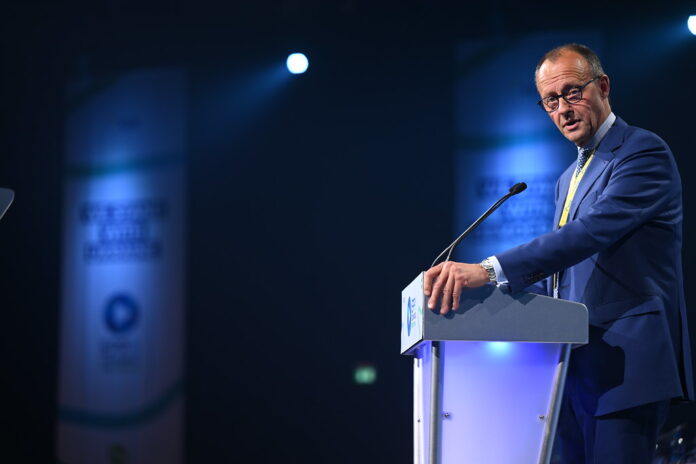
Germany’s Merz sees no reason to criticise Israeli, US attacks on Iran

DAVID PLAS PHOTOGRAPHY

German Chancellor Friedrich Merz said on Monday that there was no reason for him to criticise attacks by Israel and the United States on Iran.
“There is no reason for us, or for me personally, to criticise what Israel started a week ago, nor is there any reason to criticise what America did last weekend,” Merz said at an event organised by the BDI German industrial lobby group.
“Yes, it is not without risk, but leaving it as it was wasn’t an option either,” he added.
Merz said it was evident that Iran was on a path to creating a nuclear weapon.
“The evidence that Iran is continuing on its path to building a nuclear weapon can no longer be seriously disputed,” he said.

Eleven days in Israel history

History will remember these eleven days as one of the greatest diplomatic and military achievements in Israel’s history.

This morning’s murder of the four civilians in Be’er Sheva leaves a bitter taste in the mouth, just as the murder of 25 peaceful civilians who paid with their lives, and the thousands left homeless or severely affected, does.

But in terms of results, the nuclear threat that loomed over Israel — one that would have certainly led to the Jewish state’s destruction — has been eliminated.

Because a regime willing to target civilians with conventional explosives would have done so without hesitation using a nuclear missile. And it was accomplished without a single aircraft being downed, with all our planes returning safely to base — contrary to all forecasts.

The number of casualties on the home front was 97% lower than initial estimates, thanks to the practical dismantling of the ballistic missile system, which will take years to rebuild.

Those who experience a miracle don’t always recognize it as such, especially not in the hours when survivors are still being searched for under the rubble. But with time, the historical significance of what happened here will become clear. And so will the fact that Israel stood firm on the Begin Doctrine: never to allow any country to acquire nuclear weapons — even if it’s a regional power brought to its knees.

In Lebanon, I held the same view. Back then too, there was bitterness and resentment — stemming from ceasefires in the past that served only to strengthen the enemy and close our eyes to reality.

It took a month for everyone to understand.

This time, I believe it won’t take that long.

Did Trump’s strike pay off? New images show Iran’s nuclear ambitions in ruins

US strikes on Iran may have set the country’s nuclear programme back by several years, according to preliminary expert analysis.

Donald Trump’s claims that Iran’s nuclear sites had been “completely and totally obliterated” were likely to be an overstatement, serving and former US military officials said – but it is probable that all three facilities targeted suffered extensive damage.

Under best-case assessments, Iran’s capacity to enrich uranium has been severely degraded, if not destroyed. But the country’s existing stockpiles of uranium enriched to near weapons grade – enough to fuel 10 nuclear bombs – is thought to have survived.

Understanding the extent to which the US has damaged Iran’s nuclear programme is a vital in determining whether the strikes were a one-off or merely the opening salvo of a wider conflict.

America’s B-2 stealth bombers and cruise missiles struck Iran’s three most important nuclear sites: Fordow, Natanz and Isfahan. If the strikes succeeded in destroying centrifuge halls at the facilities, it would prevent Iran from further enriching its uranium stockpiles to a purity of 90 per cent – something it has not done so far, according to UN inspectors.

Satellite images of convoys leaving all three sites in recent days support Iran’s claims that it moved its 400-kg stockpile – much of it previously held at Isfahan – to a secret underground location shortly before the strikes.

But the damage inflicted elsewhere would still make it difficult to turn the uranium into a bomb.

Even if Iran had retained its fissile material, it would be “like having fuel without a car”, said Ronen Solomon, an Israeli intelligence analyst.

“They have the uranium – but they can’t do a lot with it, unless they have built something we don’t know about on a small scale.”

That is not beyond the realm of possibility. Iran succeeded in keeping its Fordow facility a secret for seven years before it was dramatically exposed, by Barack Obama, Gordon Brown and Nicolas Sarkozy – then the leaders of the US, UK and France – at a joint press conference in 2009, following a joint intelligence operation.

Fordow

Of the three sites attacked, Fordow was by far the most important.

The last-known site developed by the Iranians was deliberately designed to withstand aerial attack.

An “engineering marvel”, in the words of one Western official, its main centrifuge halls lie buried up to half a mile inside a mountain.

Not only does a layer of solid rock act as a natural shield impervious to most bombs, but additional artificial layers of reinforcement are also believed to have been added.

The GBU-57 Massive Ordnance Penetrator bunker-busting bomb – 12 of which the US dropped on Fordow – is capable of penetrating 60 metres of standard concrete before exploding.

But Iran is believed to have reinforced the centrifuge halls at Fordow with ultra-high performance concrete (UHPC), which can withstand six times the amount of pressure of normal concrete – up to 30,000lb per square inch. If Iran used the best quality UHPC, Fordow would have been significantly harder to destroy.

Given that the site is underground, it remains difficult to assess the scale of the damage yet, with both Iranian and US officials saying they are still conducting evaluations.

Natanz

Above-ground facilities at Natanz, Iran’s largest enrichment site, had already suffered extensive damaged by Israeli strikes, as shown by satellite imagery.

The destruction of the site’s electric substation may have knocked out power, potentially damaging centrifuges by causing them to spin out of control, according to the International Atomic Energy Agency, the UN’s nuclear watchdog.

Natanz also housed an underground centrifuge hall thought to have been the target of two US bunker-busters. The site was additionally struck by cruise missiles fired by a US submarine in the Arabian Sea.

Isfahan

Much of Iran’s mostly highly enriched uranium is thought to have been stored at the nuclear research and production centre near the city of Isfahan, the ancient capital of Safavid Persia.

International inspectors verified the fuel was there a fortnight ago, but satellite imagery suggests Iran may have moved it in recent days.

Israel had previously struck laboratories and three other buildings at the facility. The US did not use bunker-busters on Isfahan, which is thought to be mostly above ground, and instead attacked with cruise missiles.

The strikes are thought to have damaged six additional buildings, including a fuel rod production facility.

Overall assessment

A fuller picture of overall damage may emerge in the coming days, with experts urging caution about attaching too much credibility to the US president’s more optimistic pronouncements or to Iran’s defiant claims that its nuclear capacity remains largely intact.

Clionadh Raleigh, the head of the Armed Conflict Location and Event Data Project (ACLED), a conflict-monitoring group, warned that although the strikes might alter the timeline of Iran’s nuclear programme, they would do little to alter its ultimate trajectory.

“The regime’s broader power and intentions are likely to remain intact,” said Ms Raleigh.

“Iran’s military and intelligence systems are designed and built to survive. The structure is deeply layered and resistant to collapse. Even if key infrastructure is destroyed, the system adapts – and in some cases, becomes more dangerous in the process.

“There’s no evidence that the strikes will permanently end Iran’s pursuit of nuclear capabilities. What they may do is shift the timeline.”

Others were less cautious. Mick Mulroy, a former Pentagon official who served in the first Trump administration, told The New York Times that the US strikes will “likely set back the Iranian nuclear programme two to five years” – an assessment shared by Jason Brodsky of United Against a Nuclear Iran, a US-based pressure group.

The setback stems not only from the strikes themselves. Repairing the damage will be far harder following the assassination of more than a dozen nuclear scientists in the past 10 days, Israeli officials said.

“Several of the eliminated scientists had spent decades advancing nuclear weapons, constituting a significant part of the Iranian regime’s plans to annihilate the State of Israel,” one official said.

“These scientists had diverse professional expertise and extensive experience.”