“What I’ve Learned from 12 Years in Britain” – Rabbi Dweck on Antisemitism, Extremism and Identity

Rabbi Joseph Dweck has spent over a decade as Senior Rabbi of Britain’s oldest Jewish community. Now, as he prepares to leave the UK and move to Israel, he joins Jonathan Sacerdoti for an unflinching conversation about antisemitism, extremism, identity, and the moral decline of Western civilisation.

In this moving and courageous interview, Rabbi Dweck reflects on his years in Britain, the backlash he faced for challenging orthodox norms, and the deep dangers he sees in a society that has lost confidence in itself. From Islamist threats to cultural appeasement, from Jewish pride to political cowardice, he explores what Britain must do to recover – and what Jews must do to survive.

He also opens up about his infamous controversy over homosexuality, the costs of candour in religious leadership, and his growing fear that we are no longer willing to call evil by its name.

Watch if you want to understand Britain’s Jewish future, the ideological crossroads of the West, and why Rabbi Dweck believes it’s time to reclaim faith, identity, and courage.


End to Indoctrination

Two weeks ago, a friend asked where do we go from here.
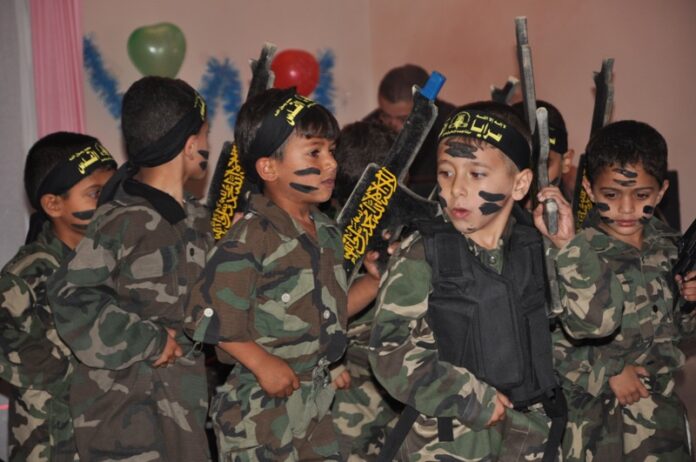
The answer must be a clear resolve to stop the weapons of mass instruction, to demand an end to Arab education which indoctrinates a new generation to murder Jews .
Arab indoctrination to murder is not on the agenda.
 Not for Saudi Arabia. Not for the US. Not for Israel. Not for any Jewish organization.
I think back to a seminal moment, in December 1969 when I was at The University of Wisconsin.
Reconstructionist Rabbi Mordechai Kaplan convened a conference of students from across the US , commencing the conference with a call to stop sudden infatuation with the PLO.
He began by reciting the PLO charter which has never been changed, and mentioned the derivative of the PLO charter :
The 1945 covenant of the Arab League of nations; the basis of Arab education ever since.
SAUDI ARABIA IS TODAY THE KINGPIN OF THE ARAB LEAGUE OF NATIONS,

We Need to Talk About the ‘Hilltop Youth’

Following a meeting between state prosecutors and the police, it was decided on Thursday that charges cannot be filed against the “hilltop youth” arrested for clashing with Israeli soldiers in the West Bank last Shabbat.

The prosecution concluded that the evidence presented is insufficient to indict the teenagers and does not support the IDF battalion commander’s narrative of the incidents in question.

After the publication of a video from the time of the incident, the battalion commander was summoned to the police station for further testimony.

Following a consultation Wednesday night between a special investigation team and the Jerusalem district prosecutor’s office, it was decided that the two remaining teenagers in custody should be released.

The teens were represented by Attorney Daniel Shimshilashvili of the Ḥoneinu legal aid organization.

“Our claims, which we made from the very first day, were proven to be true,” Shimshilashvili said.

“I suggest that all those who accused and published false claims about the youth come and apologize to them for the great injustice done to them. These are good boys, most of whom are set to serve in the IDF.”

For much of the past week, Israel’s news cycle has been dominated by efforts to incite the public against the hilltop youth subculture.

This came following a series of incidents, including one last Friday night in which a 14-year-old Jew was shot by Israeli security forces.

The accounts of the incident provided by the soldiers and teenagers involved sharply contradicted.

The army claimed that the youths had attacked soldiers in order to resist an evacuation from what had become a closed military zone.

The teens, by contrast, said that the battalion commander initiated the violence, used unnecessary force, and repeatedly threatened to kill them. They also reported that security forces fired live ammunition in their direction and even arrested a medic for attempting to treat the boy who had been shot.

While both sides released videos to corroborate their claims, the IDF video was less convincing. Yet the local and foreign press had carefully framed the incidents as a phenomenon of “Jewish terrorists” violently targeting Israeli soldiers.

Public figures demanded harsh crackdowns on the entire hilltop youth subculture. Nearly every government minister and lawmaker across the spectrum condemned the teenagers and called for swift action against them.

Journalists spent the week arguing that these kids are a threat to the state – to the entire Zionist enterprise – and that they should be treated no different from Palestinian threats.

Even national-religious politicians, municipal leaders of West Bank Jewish communities, and rightist social media influencers had come out against the teenagers.

But given the fact that a 14-year-old boy was wounded by live gunfire, shouldn’t the primary instinct have been to scrutinize the army’s version of the incident more closely?

Why did everyone blindly accept the army’s narrative and rush to condemn the teenagers?

Are we concerned that questioning the IDF’s account of such incidents would open the door to us challenging its credibility on other fronts?

Or could it be that some have an interest in inciting Israeli society against the hilltop youth (or even West Bank Jews more broadly)?

We need to be honest with ourselves.

Had something similar happened to a youth at an anti-government protest on Kaplan street in Tel Aviv, we would justifiably see round-the-clock press coverage and the burden of proof would be on the security forces.

But when a Palestinian teenager is injured in comparable circumstances, the overwhelming majority of Israelis side with our soldiers and assume that the teen had it coming.

This is largely due to the fact that Palestinians are perceived by the overwhelming majority of Israeli society to be part of an enemy collective that threatens our existence. Whether right or wrong, the fact that Jews and Palestinians have been locked in conflict for over a century makes this understandable.

But when it comes to the hilltop youth, could it be argued that Israelis view – or are being conditioned to view – this group more similarly to Palestinians than to politically active Israeli teens in Tel Aviv?

If so, why?

We shouldn’t blindly accept the claims of the hilltop youth as true. We shouldn’t blindly accept the claims of the army as true. But the proper response to these incidents shouldn’t have been incitement against an entire subculture but rather calls for a professional investigation to uncover the truth.

The 14-year-old who had been shot was released from the hospital to his home on Thursday. The bullet that had been removed from his body was transferred to Israel’s military police, which has now opened an investigation into the actions of the battalion commander. But this is barely receiving a fraction of the media attention that had been given to the story when it was about “Jewish terrorists” attacking the IDF.

The way in which the incidents of the past week were approached by the army, the media, and political figures across the spectrum is dangerously irresponsible. It can only serve to increase tensions and further reinforce the image many members of this subculture have of themselves as an oppressed group in Israeli society.

In fact, one could be forgiven for suspecting that at least certain public figures are less concerned with calming tensions than with weaponizing the incidents to incite the Israeli public against the youth.

Are the ‘Hilltop Youth’ a Threat to Zionism?

It’s no secret that Israel’s dominant institutions often target and vilify the hilltop youth.

This romantic counterculture of idealistic teenagers living organic Jewish lives off the grid in the mountains where our people’s early history unfolded is often presented to the public as a prime example of society drifting too far from the values of the state’s Zionist founders.

When it comes to Israel’s broader cultural conflict between forces of Western liberalism and a resurgent ancient Jewish nationalism (for lack of a better term), our elites rarely miss an opportunity to use the hilltop youth as a caricature to delegitimize the entire camp seeking to move Israeli society in a more deeply Jewish direction.

These teenagers represent a Jewish national consciousness far deeper and more authentic to the region than Zionism was able to produce and they serve as a clear example of Israel’s more tribalist and traditional forces gaining strength at the expense of the state’s westernized ruling class.

Most Israelis, including the national-religious sector, are principally opposed to extra-legal Jewish violence – against Palestinians and even more so against our own soldiers. But it’s also important to understand that because these kids have a tenuous relationship with the state and the army, many see themselves as responsible for their own security and experience themselves as punching up when attacking Palestinians (especially when the attack is a response to Palestinian violence).

The hilltop youth isn’t a monolithic group.

Some are troubled thrill seekers engaging in a dangerous game of adventurism. Others are impatient idealists rushing to advance the Jewish liberation struggle beyond its stagnated Zionist stage. And others still simply seek to live as authentic a Jewish life as possible in the mountains where our early history took place.

It’s generally unwise to cause an ideological group to feel like a persecuted minority. The abusive behavior of Israeli security forces toward the hilltop youth will likely only harden and further radicalize Judean teenagers. Not only the extreme cases of youth being imprisoned without charges and “aggressively interrogated” but also the thousands of other examples of young people seeing themselves as living under a system in which they have no democratic protections.

Are these youth a threat to the Zionist vision of Israel as a liberal outpost of Western civilization? Probably. But societies evolve. And no matter how much the press demonizes them or how much our security forces try to intimidate or hurt them, the hilltop youth subculture is likely to continue growing.

Model for a Postcolonial Jewish Identity?

If we were to examine all of the different Jewish communities in Israel and in the Diaspora today, we could argue that the hardline national-religious sector in the Judea and Samaria regions – with all of its various flavors – is the group that most closely resembles precolonial Judean society prior to the Roman destruction of our civilization.

If we were to take this examination a step deeper, we could argue that the hilltop youth – the young West Bank Jews who herd livestock and farm the land and refuse to live according to modern nation-state or settler-colonial structures and attempt to take responsibility for their own security needs (with mixed results) – have built communities and a way of life that appears to be an almost caricaturish recreation of ancient Israelite society.

It’s important to note that the hilltop youth isn’t the only model for what a decolonized Jewish identity can look like. And the goal of Jewish decolonization work shouldn’t be to become romanticized caricatures of our precolonial ancestors.

But it’s nevertheless easy to argue that this subculture has reached a more advanced stage of decolonization than any other group in the Jewish world.

The Solution

The “tribe” of Israeli society that the hilltop youth represent has tremendous revolutionary potential. But it needs to be properly channeled in such a way that advances Jewish national interests..

The best way to put a stop to the violence is not to make that violence a pretext for the persecution or suppression of the entire subculture, but rather to change the roles Palestinians and the Israeli state play in their narrative.

As counterintuitive as it might seem, the “Jewish extremists” – including the hilltop youth – may represent the sector of Israeli society most capable of successfully reconciling with our neighbors.

First of all, because they’re not coming with a colonial mentality. They don’t see themselves as “civilized westerners” fighting “violent savages” but rather as a local tribe engaged in conflict with other tribes.

When it comes to the Jews and Jewish communities in the territories, there are two spectrums. One is the extent to which they live according to settler-colonial structures. The other is how violent they are.

These spectrums are actually inverted. The most violent are the least “settler” and those actually living as “settlers” here are generally the least violent.

Unlike the Jews living in walled communities with full military protection, the hilltop youth live without walls and fences. They distrust the army and they see themselves as responsible to deter any security threats on their own. While at present, this may lead to more acts of extra-legal Jewish violence, in the longterm it could lead to reconciliation and a healthier relationship dynamic than the Zionists could ever achieve.

In addition to the fact that they share many core values and cultural norms with their Palestinian neighbors, the hilltop youth also share many experiences of oppression. Police violence, demonization in the Israeli press, administrative detention, aggressive interrogations, and politically motivated house demolitions.

The “tribe of Shimon” is the sector of Israeli society best equipped to change our relationship with the Palestinians – and the broader Arab world – for the better. It’s therefore in our interest to make them Israel’s face to our neighbors in the region. The challenge will be figuring out how to most effectively put them in this role.

Inescapable

We currently face a situation that cannot be escaped, ignored, or avoided.

On all fronts, the enemies of Israel and the Jewish People are clearly identifiable as they vent their hate and chant their slogans.

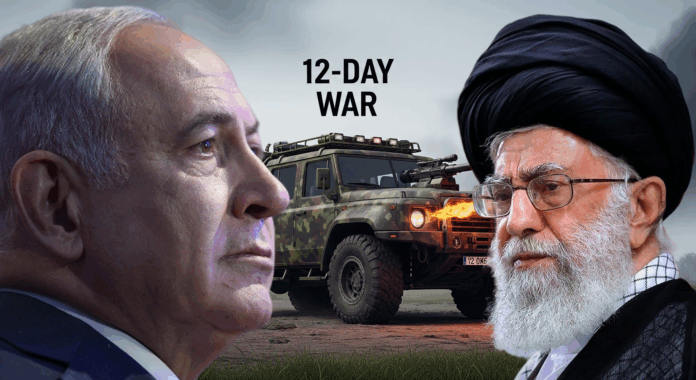
The twelve-day campaign to thwart Iranian genocidal plans and the still ongoing war against their proxy, Hamas, is only one part of a multi-pronged effort to neutralise and destroy jihadist terror.

An equally threatening spectre of potential threats against Diaspora Jewish communities looms on every continent.

Whereas in Israel almost every Jewish citizen, except for the hopelessly befuddled lemmings of the extreme left, recognises the dangers, the same cannot be said for large swathes of Jews in the Diaspora.

Life for Jews as a minority group in various countries has always been fraught with uncertainty. In regimes where democratic values were a fiction, they survived only at the whim of whoever ruled at that moment. At any given period, they could be tolerated or persecuted, depending on the political and often religious agenda of the time. Pogroms, expulsions and ghettos occurred in a regular cycle yet despite these clear manifestations of intolerance, Jews either returned to the scenes of the crime or recreated shattered communities.

Many fled to the “golden medina” of America or washed up on the shores of the United Kingdom. Some even made it to the relative safety of South Africa, Australia and New Zealand. Unfortunately, however, far too many remained on the blighted continent of Europe, where millions were to be eventually murdered at the hands of those poisoned by Jew hate and incitement.

The lucky minority who found sanctuary in the USA and UK faced discrimination, but eventually democratic and liberal forces enabled them to take an equal place in those societies.

Where equal rights were granted, Jews rapidly became loyal citizens and contributed far in excess of their small numbers to the welfare and advancement of their adopted countries.

The virus of Jew hate never completely disappeared, and as in previous centuries, it did not take much to reawaken its potent force.

The malign effects of ignorance can now be seen and felt as the memories of the Shoah are fading fast, and a generation has arisen which knows nothing of Jewish history or the contribution that Jews have made to civilisation and religion.

Virus mutations mean that the ancient delegitimisation and derangement symptoms are now transferred onto Israel. The nation State of the Jewish People has become the repository of all that is evil and menacing in today’s warped world.

There still remains a residual community in Iran of some nine to ten thousand Jews. They cite various reasons for not having escaped when they had the chance. It is a familiar theme such as business considerations, material comfort, loyalty to the country and a belief that they can “weather” all challenges. No doubt a naïve thought that “it will all blow over” and that “exaggerated threats” can be ignored featured in their decision to remain in the Islamic Republic of Iran.

They make the same fatal mistakes as other Jewish leaders and communities of previous generations in other places. They believe that their safety will be assured if they demonstrate their solidarity with the Islamic Mullahs, proclaim their undying solidarity and loyalty with the masses and pillory Israel and Zionists. The spectacle of Iranian Jewry’s religious and lay leaders marching in solidarity with screaming mobs demanding Israel’s extinction is a classic case. Hoping that the crocodile you are feeding will not devour you at the end of the day is a proven failed tactic.

So it is proving at this very moment.

Reports of widespread roundups of Jewish families in Iran and accusations of them being either in cahoots with Mossad or sympathetic to Israel should come as no surprise. It is yet further proof of how a grossly misplaced and blinkered aversion to reality can precipitate dangerous and fatal illusions.

The selection of a progressive socialist democrat candidate for the upcoming New York mayoral elections is another case in point. His anti-Israel and anti Zionist credentials are impeccable. His selection is another example of how the US Democratic Party is sliding towards the lunatic left. Jewish Americans who genetically vote for the Democrats generally dismiss this as an “aberration” and prefer to hallucinate that there is nothing to worry about. Even worse is their blindness as to likely future electoral implications. The sight of Bernie Sanders and Chuck Schumer, as well as other Jewish politicians, joining the bandwagon careening left is another indication of how far the detachment from reality has taken hold.

Increasing numbers of US, UK and European Jewish university students report feeling threatened and intimidated. The resultant ballot box impacts will become more evident as the intimidating individuals increases. Their violence against Jews, Zionists, and anti-Israel hysteria will reach unprecedented levels. As more brain-addled students graduate, they will take their acquired Israel-hate prejudices into the political arena. In no time, the resultant effluent will pollute and threaten democratic societies.

A recent survey revealed that half of young Americans support Hamas. Scenes from the recent UK Glastonbury music festival which looked more like a Hitler youth rally, shows how far the rot has already penetrated.

One can already see the beginning of this insidious infection in many democracies where a coalition of leftist ideologues and green deniers of Jewish sovereignty co-operate in sanctioning, divesting and delegitimising. Even so-called liberal and semi-conservative parties are not immune to succumbing in the face of this onslaught.

The question that then arises is how local Jewish communities should react.

Do they shut their ears and eyes and, like those in Iran and elsewhere, hunker down, join the anti-Israel mobs and hope that the nightmare will dissipate? Do they pretend that “it can’t happen here” and thus remain while the cauldrons of hate become increasingly volatile? Do they assimilate in the vain hope that the haters will overlook them and instead pick on the visible Jews? Do they try to disassociate themselves and their communities from anything to do with Israel and pretend that Judaism and Israel are not one and the same?

All these strategies have been tried in the past and all have ended disastrously. Are those communities facing rising hate and violence and witnessing demographic realities of the electoral process, doomed to a bleak future? The stark fact is that a decreasing Jewish population and a rapidly rising jihadist-supporting electorate spell danger in the near and not-so-long-term future.

I listened to an interview recorded a week ago between Radio NZ and a spokesperson for the New Zealand Jewish Council. To say I was horrified would be putting it mildly.

The first question posed related to Israel being bombarded by Iranian missiles and the Jewish communities’ reactions. Imagine my shock when the spokesperson’s first response was to assert ”that Judaism and Israel are two different things”. This is the same sort of language spouted by the Iranian Jewish spokespersons to prove that the Jewish State has nothing to do with the Jewish religion. In actual fact, Judaism and the Jewish People’s march to sovereignty are very much intertwined.

Instead of stressing this, the spokesperson then compounded his initial faux pas by energetically attempting to distance NZ Jews from what was occurring. His frantic attempts to create some sort of moral equivalence between Iran, which is dedicated to Israel’s obliteration, and Israel’s response to thwart it became more embarrassing as the short interview continued. His comparison of Iran’s agenda to wipe out Israel with Donald Trump’s desire to make Canada part of the USA was ludicrous and quite frankly disconnected.

Instead of a robust defence of Israel’s dismantling of Iranian genocidal ambitions and preventing its proxy in Gaza from murdering Israelis, he repeated that NZ Jews held a variety of opinions and that suffering on all sides was equally bad. He expressed mystification as to why NZ Jews should be blamed for what the Israeli Government was doing. After all, he plaintively asserted, loyal Jews such as himself supported “not getting involved” and condemning violence by all sides in the conflict.

Not one word was uttered about the Israeli kidnapped hostages still being held in tunnels in Gaza, and whose continued incarceration is the reason that Hamas and its supporters are still being targeted.

If, as he asserted, Judaism has nothing to do with Israel, why do Synagogue services include, in addition to a prayer for the welfare of the country, a prayer for Israel and one for the men and women who defend it?  Is the representative of the NZ Jewish Council suggesting that these prayers should be deleted? After all, if, as he claimed, Judaism and Israel are two different and presumably unconnected things, that is the logical next step.

In the late 1980s, the NZ Anglican Church sanitised the psalms of King David and removed all reference to Zion, Israel and Jerusalem. That is the consequence of distancing Judaism from Zion.

In June 1967 Nasser’s genocidal aim of developing rockets with the help of Nazi German experts and driving all Israeli Jews into the sea was thwarted by swift Israeli action. The response of the NZ Jewish community was prompt, loud and unapologetic. It issued unequivocal support for Israel, organised emergency meetings and raised funds via the United Israel Appeal. Young men and women volunteered and joined thousands of other Jews from around the free world in travelling to Israel and helping out on kibbutzim and in essential industries.

NZ abstained at the UN and refused to join the Arab and Soviet condemnations of Israel.

What a difference fifty-eight years can make.

Today, the NZ Government votes against Israel at the UN at every opportunity.

Today, there is no United Israel Appeal in NZ and instead of a robust communal support for Israel’s war against terror nations and their supporters, there is silence or attempted equivocation. Even worse, there is a frantic attempt to dissociate from any solidarity with Israel in case it attracts negative consequences.

The reality is that those who hate Israel consciously or subconsciously also hate Jews. No amount of denial by the haters and self-haters can change this evident fact.

Apparently, that salient truth has yet to be recognised.

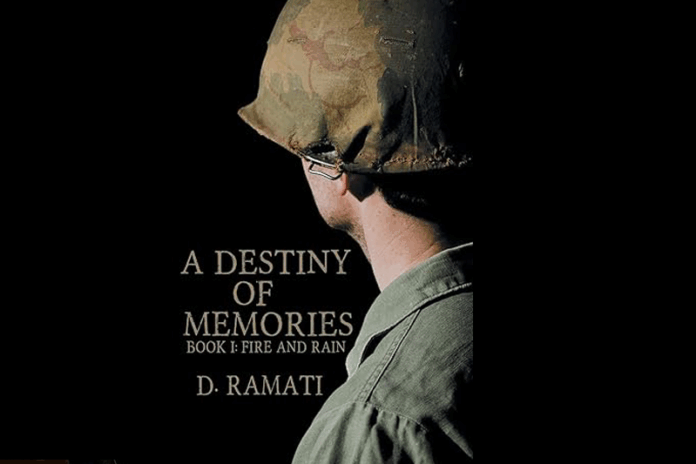
Review of “A Destiny of Memories”

This evocative submission dives deep into the psyche of a Vietnam War veteran, exploring memory, trauma, and identity. The narrative captures the juxtaposition of a soldier’s life in battle with his return to civilian life, offering a poignant reflection on the enduring impacts of war. Through its detailed prose, the work invites readers to share in the protagonist’s inner turmoil and emotional journey.

Overview

“A Destiny of Memories” is an introspective narrative focused on Brad Hill, a United States Marine Corps veteran returning home from the Vietnam War. The work centers on themes of betrayal, survival, and the haunting memories of combat that persist long after a soldier leaves the battlefield. Although the story is fictional, it is grounded in the harsh realities faced by many Vietnam veterans, effectively capturing the psychological scars left by war. The text both complements and challenges historical narratives, asking readers to consider the personal cost of national conflicts.

Relevant References

Including a clear literature review helps reviewers quickly see what’s new and why it matters, which can speed up the review and improve acceptance chances. The following references were selected because they relate closely to the topics and ideas in your submission. They may provide helpful context, illustrate similar methods, or point to recent developments that can strengthen how your work is positioned within the existing literature.

Long, Jerome H. “Reflections on A Soldier’s Story: For Blacks, A War Within the War.” Film & History, 1995, doi:10.1353/flm.1995.a395846.

Ross, Matthew. “Haunted by the Ghosts of Pickett’s Charge: Echoes of the Civil War in Two Novels by Vietnam Veterans.” Southern Cultures, University of North Carolina Press, 2015, doi:10.1353/scu.2015.0013.

Loeb, Jeff. “MIA: African American Autobiography of the Vietnam War.” African American Review, Saint Louis University, 1997, doi:10.2307/3042186.

Doyle, Robert C. “Stolen Valor: How the Vietnam Generation Was Robbed of Its Heroes and Its History.” Journal of American & Comparative Cultures, Bowling Green State University, 2000, https://www.questia.com/…/stolen-valor-how-the-vietnam….

“Ordinary Lives: Platoon 1005 and the Vietnam War.” Choice Reviews Online, Association of College and Research Libraries, 1999, doi:10.5860/choice.37-1734.

“War Veteran as Victim and Victimizer in Bill Cain’s 9 Circles.” Journal of Literature, Languages and Linguistics, 2020, doi:10.7176/jlll/67-06.

Vincent, Jonathan. “Fighting for Real: Truth and American War Memory.” American Literary History, Oxford University Press, 2023, doi:10.1093/alh/ajad073.

Stéfani, Anne. “Unexampled Courage: The Blinding of Sgt. Isaac Woodard and the Awakening of President Harry S. Truman and Judge J. Waties Waring by Richard Gergel.” Journal of Southern History, Southern Historical Association, 2020, doi:10.1353/soh.2020.0150.

Strengths

The narrative excels in portraying the inner world of a Vietnam veteran, drawing readers into a visceral experience of the protagonist’s emotions. The imagery used is vivid and compelling, enhancing the reader’s ability to visualize both the combat scenes and the introspective moments. The historical context, interwoven with personal stories, enriches the text’s authenticity and emotional depth. Moreover, the work captures the stark contrasts between the expectations and realities of war, a theme that resonates deeply given the historical context of the Vietnam War and its aftermath.

Major Comments

Methodology

The narrative structure predominantly uses a third-person omniscient point of view, which effectively conveys the protagonist’s inner conflict and emotional landscape. However, the transitions between past and present experiences are sometimes abrupt, potentially confusing the reader. It might be beneficial to implement more seamless transitions or clearly marked separations between different time periods to enhance the narrative flow.

Thematic Depth

While the story effectively delves into personal trauma and the socio-political ramifications of war, it could benefit from a broader exploration of the protagonist’s interactions with others post-war. Introducing additional characters who represent various perspectives on the conflict and its impact on American society could provide a richer thematic canvas.

Minor Comments

Formatting and Organization

The manuscript would benefit from clearer chapter demarcations. The text is interspersed with large blank spaces which can disrupt reading continuity. Consider revising for more uniform spacing and consistent formatting for headings and sections, which would improve overall readability.

Terminology and Language

Certain military terms may not be immediately accessible to all readers. A brief glossary or occasional footnotes regarding specific military jargon could aid in comprehension and enhance reader engagement.

Reviewer Commentary

This work touches on the complex interplay between personal experiences and broader historical narratives, inviting contemplation on the long-term effects of military conflict on soldiers. It has potential interdisciplinary relevance, intersecting literary analysis, historical discourse, and psychological studies of post-traumatic stress disorder. Ethically, the text encourages reflection on how societies honor veterans and address the psychological scars left by war.

Summary Assessment

“A Destiny of Memories” presents a poignant exploration of a Vietnam veteran’s internal struggles as he returns home, shedding light on the enduring effects of war. The narrative contributes to conversations about historical memory, patriotism, and the fracturing effect of conflict on personal identity. While the work would benefit from some structural refinements, its thematic richness positions it as a compelling piece within war literature. With thoughtful revisions, it could serve as a powerful catalyst for discourse on veterans’ experiences and historical remembrance.

The narrative’s power lies in its evocation of the personal costs of war, prompting readers to grapple with the realities soldiers face both on and off the battlefield. It stands as a testimony to the resilience of those who have endured the frontlines, urging us to remember and learn from these stories.

Is the Palestinian Authority fit to rule Gaza?

The idea of reinstalling the Palestinian Authority in Gaza as part of a suggested solution meant to end the current war there has raised some serious questions.

One might wonder, first and foremost, whether the P.A. is capable of maintaining real control, bearing in mind that it previously ruled there and was ousted by Hamas in a military coup in 2007.

Moreover, the P.A. itself is overwhelmingly corrupt and barely maintains control in what it calls the “West Bank” (Judea and Samaria). One could even suggest that the P.A.’s very existence there relies to a large extent on the massive Jewish presence in many areas there—civilian settlements and military forces.

Perhaps it would be possible to bring the P.A. back into power in Gaza under the same conditions, bearing in mind that Hamas managed to take control of the Strip only after it had been cleared of its Jewish population and IDF forces in 2005.

Furthermore, if it is intended to use the P.A.’s control of Gaza as a prelude to advancing the two-state solution—and assuming that Hamas will cease to exist as an adversary (something that is difficult to see today)—there is another obstacle that should not be ignored; namely, the P.A.’s ideology regarding Israel, which is not fundamentally different from that of Hamas.

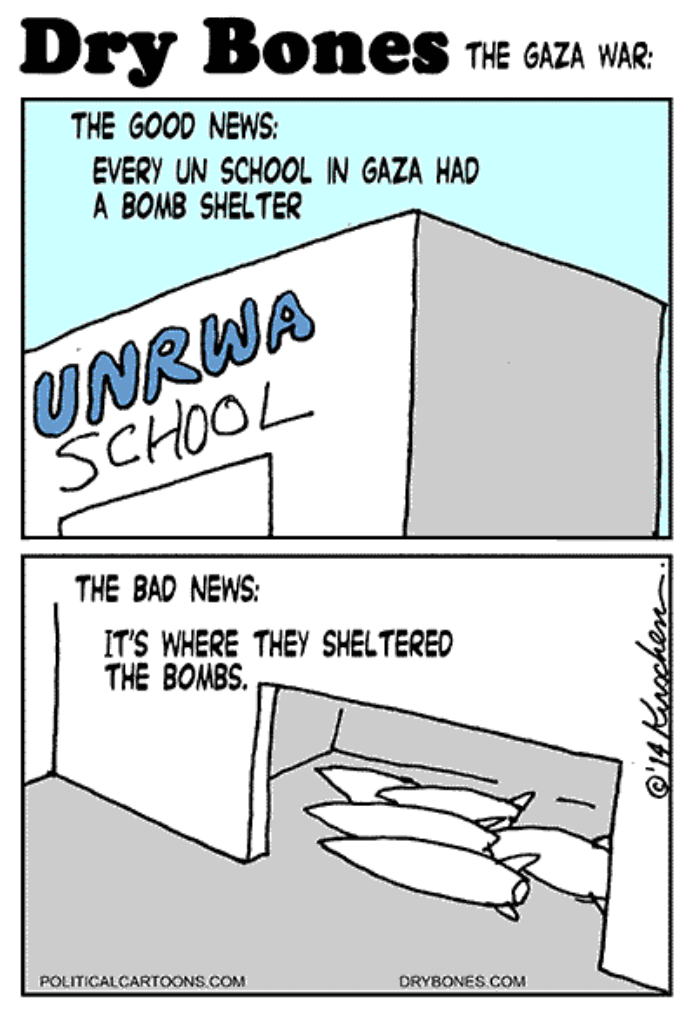
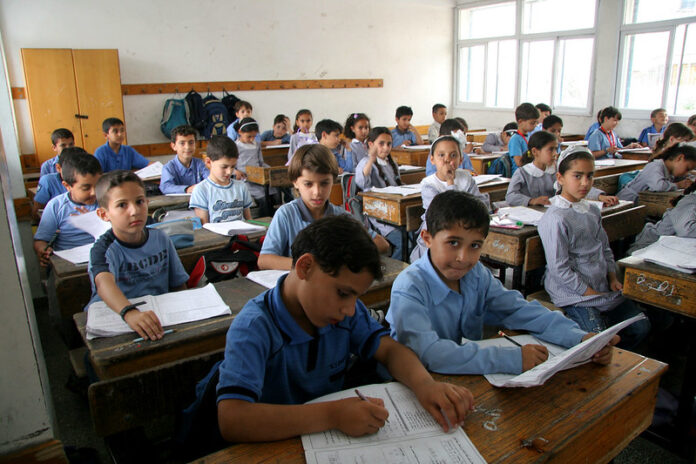
Since 2000, I have been studying the attitude to Israel, Jews, and peace in the PA textbooks, which are also taught in all schools in the Gaza Strip, including those run by the U.N. Relief and Works Agency for Palestine Refugees (UNRWA). I have examined more than 1,000 textbooks and teachers’ manuals, assuming they constitute the clearest indication of how the P.A. strives to educate its younger generations.

The findings of this research activity reveal three fundamental principles as far as Palestinian textbooks address the conflict:

  1. Delegitimization of the existence of the State of Israel and the very presence of its more than seven million Jewish citizens: Israel does not appear on any map while “Palestine” is presented as the sovereign state in the region that has been under occupation since 1948. In this context, the phrase “Zionist occupation” replaces the phrase “State of Israel” in most references to the conflict. The Jews in Israel are presented as a foreign colonial population and their cities, primarily Tel Aviv, do not appear on the map. Their history in their ancient homeland is denied, as is the existence of places sacred to them there. The Western Wall in Jerusalem, for example, is presented as a Muslim holy site exclusively.
  2. Demonization of both Israel and the Jews: The latter are attributed with annihilationist intentions against the Palestinians and are alleged to have committed massacres against them under the influence of Jewish religious thought. Jews are demonized as well outside the context of the conflict. They are portrayed as traitors since the early days of Islam and as enemies of God’s prophets, which carries, in effect, a death sentence against them, in the eyes of students coming from a traditional society.
  3. Indoctrination for a war of liberation from occupation, which includes the territories of the State of Israel within its pre-1967 borders: Such a struggle is given a religious nature, and terrorism is made an essential part thereof. There are even isolated references that make the extermination of the Jews part of the liberation process.

An up-to-date presentation of materials taught in recent years in UNRWA schools (grades one-10), in addition to details about the researcher, scope of the research and methodology, can be seen here.

It should be emphasized that the textbooks for grades 11 and 12 are no better, and I have included two examples in my study: One is taken from an Islamic religious textbook, and the other from a Christian religious one (used by Christian students in the Palestinian education system).

As long as this educational format remains in place, there seems to be no chance for a peace settlement between the P.A. and Israel. On the contrary, placing the P.A. as a governing entity in Gaza would open the door to renewed radicalization there.

MEDIA RELEASE: Controversy Erupts Over Legitimacy of Arizona Governor Katie Hobbs’ Reasons for Vetoing Arizona House Bill HB2867: The Antisemitism in Education Act

On June 10, 2025, Arizona Governor Katie Hobbs sent to Arizona House Speaker Steve Montenegro a letter describing her reasons for vetoing the bipartisan ANTISEMITISM IN EDUCATION ACT, which had passed the Arizona House and Senate.  In her letter, the governor summarized her objections to the bill by stating, “Unfortunately, this bill is not about antisemitism; it’s about attacking our teachers.” With her veto message, Governor Hobbs enclosed only one document, a June 6, 2025 letter sent to her by Lori Shepherd, Executive Director of the Tucson Jewish Museum & Holocaust Center.  In deciding to veto the bill, the governor placed great reliance on Shepherd’s interpretation of the bill’s language.

The Antisemitism In Education Act was introduced by Arizona House Representative Michael Way, and it had both Republican and Democratic cosponsors when it passed the House. Senator J.D. Mesnard sponsored a significant amendment which was adopted by the Senate, which then passed the bill.

While HB2867 was still in the legislative process, Representative Way discussed with Governor Hobbs’ staff holding a meeting with her, or with her staff, to explain in detail the need for this antisemitism bill and how it would operate in practice. The governor’s staff declined to meet with him. Later in the process Senator Mesnard also requested a meeting with the governor or her staff, with a delegation to include Senator Mesnard, Representative Way, a Democratic cosponsor of the bill in the House, and the author of the bill, constituent Michael Goldstein. The governor’s staff also declined Senator Mesnard’s request, stating that there was no interest in such a meeting, and that it would not accomplish any changes in the Executive Department’s thinking.

HB2867 was drafted by Representative Way’s constituent Michael Goldstein, who after thoroughly analyzing Executive Director Shepherd’s letter to the governor and comparing it to the bill’s actual language, had this to say:

Shepherd’s analysis of the antisemitism bill I researched and drafted, and the conclusions she sent to the governor, were faulty in the extreme.   What HB2867 says, and the way it would operate in practice, are exactly the opposite of the interpretation Shepherd sent to the governor, who then based her veto decision on the inaccurate information provided. After my thorough analysis of her letter to the governor, I concluded that Shepherd either may not have read the bill at all, may have read it only in a cursory manner, or having read it, may not have understood it.  Alternatively, Executive Director Shepherd may have purposely chosen to misconstrue the bill’s plain language. There is no indication that she did any research at all into the legislative record which contains the documents filed in support of the bill in the House and Senate.  From the public record, including her LinkedIn page, Director Shepherd appears not to have the education, experience, or self-study to understand the historical context of the bill’s purpose or what it actually says. It cannot be discounted that for political or ideological reasons unrelated to the actual language of the bill, Director Shepherd may have wanted Governor Hobbs to veto it.  I have sent an open letter to Lori Shepherd with my analysis of the letter she sent to Governor Hobbs, and I concluded my letter with a request that she communicate to the governor that she is withdrawing from the governor’s consideration the letter she wrote to her on June 6, 2025.

Mr. Goldstein’s full open letter to Lori Shepherd is attached to this Media Release.

Regarding Governor Hobbs’ veto, the bill’s sponsor, Representative Michael Way, wrote:  @MichaelWayAZ 

In her most disgraceful veto yet, Governor Hobbs struck down a bipartisan bill to stop antisemitism in Arizona schools. I am deeply disappointed by her decision—paying lip service to opposing antisemitism while backing away from a law with real teeth. Instead of standing with Jewish students and faculty, she sided with those who promote hate and hostility on campus. This bill was aimed at prohibiting the teaching of egregious and blatant antisemitic content. To suggest that it threatened the speech of most Arizona teachers is disingenuous at best. House Republicans acted to confront antisemitism—Hobbs’ veto protects it. I will continue to stand with the Jewish community in Arizona and in my district to ensure taxpayer dollars are never used to fund violent political indoctrination.

Speaker of the House Steve Montenegro concurred: @SteveMontenegro

Katie Hobbs has issued hundreds of misguided vetoes to date, but THIS one bolstering the hateful teachings of antisemitism in public school classrooms takes the cake. Every child deserves a quality education free of the abhorrent rhetoric that promotes hostility toward our Jewish communities. This veto is beyond the pale, and the House WILL proceed with a veto override before this session adjourns.

The parents of Arizona’s K-12 and higher education students will not forget that for at least the next two years, the governor’s veto has left their children at risk for continued indoctrination into antisemitism in their classrooms, and for harassment and intimidation on school premises.

Michael S. Goldstein, Esq.
Legislative Consultant
Phone/Text (216) 209-2600
Queen Creek, Arizona

Axis of hypocrites

The existing axis of evil has sustained a major blow in its hitherto unchallenged march towards imposing its malign machinations on intended victims.

Following Israel’s decision to confront the major threat of a nuclear-armed Iran, a new coalition of hypocrites has been exposed.

They are an exclusive club of serial appeasers who think that one can reason and make agreements with the world’s worst terror regime. The thought of actually standing up, actively confronting and thwarting it, sends shivers down their collective quivering spines.

There are several categories of axis members with varying degrees of hypocrisy, but they all have one uniform factor in common. They are united in their condemnation of Israel’s decisions to eliminate Iran’s existential threats, as well as its determination to defend itself and its refusal to succumb in the face of evil intent.

These serial abusers of Israel come in a variety of disguises and can be easily identified as they perform their rituals of sanctimonious sermons and ineffective invective.

They collectively suffer from a collapse of moral backbone, a degenerative desire to appease bullies, genetic tendencies to hate Jews or are just plain dumb. Any one of these afflictions guarantees them membership in an exclusive club called the United Nations, where they are free to strut and vent their frustrations with the Jewish State.

One category consists of countries with democratic and human rights credentials. One would think that these individuals might at least have some understanding of the challenges that Israel faces. Surrounded as Israel is by some of the world’s worst abusers of both civil rights and democratic values, it should have been natural for these democracies to see the obvious.

Unfortunately, having learnt nothing from past historical failures, they prefer to prattle nonsense. Demanding that Israel should “negotiate” and engage in diplomatic dialogue with a regime dedicated to the eradication of Jews and Zionists is a demonstration of their lack of reality.

Those who have joined this choir of the totally detached fail or, more likely, deliberately refuse to acknowledge that regimes which bully, lie and renege on signed agreements can never be trusted. Despite this simple fact of life being endlessly proven over the years, knee-jerk appeasers refuse to budge. They deliberately shut their eyes and close their ears to the facts staring them in their faces.

Rather than face down rogue regimes, the preferred alternative is claiming a moral equivalence between the abuser and the abused.

After Israel inevitably strikes back against those plotting and attempting to carry out their nefarious designs, the guardians of democracy scream “de-escalate” and “dialogue,” as though there is something serious to actually talk about.

I would like to put a simple question to these politicians.

Would they have shouted and demanded the same diplomatic dialogue and de-escalation when Nazi Germany and Imperial Japan launched their genocidal wars? Would they have demanded that those fighting against Nazism and Fascism desist and cease so that “meaningful” discussions could be held?

If the answer to these questions is no, then those articulating this nonsense today in the face of jihadist machinations and murderous intent are first-class hypocrites of the highest order. How on earth can a jihadist terror state be thwarted other than by dismantling its terror infrastructure? This inevitably means regime change, such as occurred in Germany, Italy and Japan at the end of hostilities in 1945.

Another identifiable axis is those countries that have an endemic problem with Jews. Whether it is as a result of past inquisitions, pogroms, ghettos or crusades, the lingering after effects still exert their toxic influence. Despite their apparent rejection of past crimes, their current hypocritical animosity towards Israel has a recurring pattern of selective sanctimonious rhetoric.

The French are particularly adept at selective Jew condemnations. They have had plenty of practice, right from the Dreyfus scandal to collaboration with the round-up and deportation of French Jews to Auschwitz. The attempted scuttling of missile boat deliveries in 1969 and the shameful building of a black “ghetto” wall to shut off Israel’s booth at the Paris air show is proof of Gallic chutzpah. Israel destroyed the gates of Evin prison in Tehran, where Iranian civilians are tortured and incarcerated for opposing the regime. Macron denounced this and once again revealed his true face.

The Irish and Spanish Governments are further examples of unmatched hypocrites leading the Europeans in sanctions, boycotts and moves at the UN to censure Israel.

Not to be forgotten are those jihadist groupie countries whose hardcore anti-Israel theological agendas ensure an automatic majority at the UN and associated entities. These nations, whose patron is the Islamic regime of Iran, pose a serious threat not only to Israel but indeed to all Western liberal democracies. Unfortunately, some in the West have already thrown in the towel and are in the process of being subverted.

The French Government is a classic example. It has been advised to promote an anti-Israel and pro-Islamic policy “in order to placate a growing Muslim population and electorate.” This reality, plus a lucrative economic situation with Iran, no doubt accounts for the current French hypocrisy.

Similar trends in other Western democracies should be warning signals for Jewish communities as to what can be expected.

Meanwhile, the original axis of Communist China, Russia and North Korea and their acolytes, Turkey and Yemen, are watching and waiting. Unsurprisingly, they denounce Israel as it tackles Iranian genocidal plans. The worst part is that the rest of the world pretends not to hear and thus silently acquiesces to this charade.

President Trump has arranged a “ceasefire” between Iran and Israel.

The problem is that, subsequent to this proclamation, Israel was subjected to six barrages of missiles from Iran, which caused the death of five Israelis when one smashed into a residential building in Beersheba.

Trump then posted this “victory” message:

“The world and the Middle East are the real winners. Both countries will see tremendous love, peace and prosperity in the future. They have much to gain, and still much to lose if they deviate from the path of righteousness and truth.” The president concluded the post with the statement that “the future of Israel and Iran is boundless and full of great promises. God bless you both!”

I do not know what hallucinatory concoctions they are drinking in Washington, but this proclamation must rank alongside the “peace in our time” Chamberlain exaltation issued after Munich.

If there had been regime change in Iran, Trump’s vision of a glowing future would have been totally correct.

As it stands now, with the Islamic Mullah regime intact and its appetite to acquire weapons of mass destruction becoming more voracious than ever, the only glowing future will be Iran developing its hidden pile of uranium.

They have already announced a victory parade to celebrate their survival.

Reconstruction and rearming will rapidly follow, as well as increased repression of all those whom it deems to be Israeli agents and opponents of its Islamic death cult policies.

Anyone who thinks that this ceasefire heralds the dawn of a new age is fooling themselves. The can has merely been kicked down the road.

The spineless appeasers will cheer because now they can get back to doing business with Iran.

The Taiwanese, South Koreans and Ukrainians should be worried because if this latest American “triumph” is repeated with China, North Korea and Russia, their futures look bleak.

The USA abandoned the Afghans to the mercy of the Taliban and this opened the way for the subjugation of women and promotion of jihadist ideology.

Trump abruptly stopped bombing the Houthis, which has enabled them to continue to menace shipping in the region and pose a continuing threat.

The same fatal mistake has now been repeated with Iran and no amount of window dressing and fake claims to the contrary can prevent the Iranians from future cheating.

It is a classic case of snatching defeat from the jaws of victory once again.