Deradicalizing Gaza Before ‘the Day After’

or Americans like me, who’ve known their country at war only in the Middle East, one of the most interesting things about World War II is the lack of a postwar insurgency. After the Nazis and imperial Japanese surrendered, groups of disaffected soldiers did not lead violent campaigns to restore the defeated regimes (an end-of-war coup attempt in Japan failed rather quickly). The occupations of Germany and Japan were peaceful. Both countries became reliable American allies in short order. Hundreds of thousands of the defeated regimes’ erstwhile supporters––including senior officials, including war criminals––escaped serious punishment, rejoined society, and sometimes gained political influence. And still the peace was kept.

How did the populations that had supported and fought for the Axis regimes get moderated? It would be good to know, because Israeli Prime Minister Benjamin Netanyahu says he wants to do in Gaza what the Allies did in Germany and Japan. Netanyahu wants to destroy Hamas and then to purge Gaza of whatever allowed Hamas to rule Palestinians and murder Israelis. Netanyahu wants deradicalization.

Netanyahu’s critics say what he proposes is impossible, because Hamas cannot be destroyed, because Hamas is an idea. This objection to Netanyahu––as the essayist James Wood wrote about much formalist criticism––is both obviously right and obviously wrong. Of course ideas cannot be destroyed. Ideas are abstract. One might as well try to destroy the number 3.

But politically speaking, ideas can certainly be destroyed, just as they can be weakened, or die peacefully, or be resurrected. Imperialism was destroyed in Japan. Baathism was destroyed in Iraq. Communism died (without war) in Russia. Nazism was destroyed in Germany.

Hamas’s bellicose Islamism might––might––be destroyed in Gaza. Not necessarily because Gazans stop believing, deep down, that Hamas has noble ideals. Rather, because Hamas’s ideals are deprived of the instruments of political power––armed militants, and popular support for armed militants. Such things have happened before; they could happen again.

World War II cases are good laboratories in which to see how it’s done.

First, for ideological reasons: Paul Berman argued persuasively in his 2003 classic Terror and Liberalism that both 20th century totalitarianism and Hamas-style Islamism are death cults dedicated to the glory of peoples long repressed by outside forces (Berman was mainly interested in communism and fascism, though it seems his analysis applies to late imperial Japan as well).

Second, for domestic political reasons: the Japanese imperialists, the Nazis, and Hamas all benefited from popular legitimacy when their wars began. The latter two had even won elections, and Hamas was more popular in Gaza two months into the current war than it was beforehand.

Lastly, for military reasons: the imperial ambitions of Germany and Japan were defeated on the battlefield and discredited on the home front. Millions of German and Japanese civilians, especially in cities, were put out of their homes by Allied airpower. Today, Hamas’s command structure is largely disabled and half of its fighters are dead. Gaza, which is very urban, has been devastated by eleven months of bombing, artillery, and demolition, and most Gazans are displaced.

What the Allies did physically to Germany and Japan was astounding. So is what Israel has done to Gaza since October 7th of last year. Many analyses of the Gaza war focus on the civilian death count. As far as it goes, this is not objectionable. Wartime civilian deaths should always be lamented, whether or not the civilians are subjects of the regimes that started the war. And I will say something later about the morality of military methods that kill large numbers of people.

But the effect of such methods on those who survive also deserves our attention. Military losses and urban destruction can improve political cultures. Populations can abandon the aims that motivated them very recently to support aggressive wars and the regimes that start them. Deradicalization need not wait until the proverbial ‘day after.’ It begins earlier, as civilians are persuaded of the futility and costliness of the aims of those who rule them.

Hitler’s Thousand Year Reich and the Japanese-led Greater East Asia Co-Prosperity Sphere died in military defeats. By war’s end, Germany had lost the four million kilometers of territory it controlled at its wartime zenith. Over three million German soldiers had been killed. Tens of thousands of airplanes and tanks had been put out of commission. When Germany surrendered, the Wehrmacht still had thousands of men officially under arms, but they were no longer coordinated, and were often too young, too old, too poorly-equipped, or too poorly-trained to fight a conventional war well.

Japanese losses in World War II were not as bad as Nazi ones. Japan’s home islands were free of Allied troops when the imperial government surrendered, and hundreds of thousands of troops remained in Japan proper and in Japan’s Asian colonies. But more than two million Japanese soldiers had been killed by war’s end, the Japanese navy had been disabled, Japan’s merchant marine could no longer supply Japan’s import-dependent economy, and Japan’s key island possessions had been conquered.

The German and Japanese surrenders officially ended the imperial programs of the wartime regimes. But these programs not only died; they have stayed dead since. The wars changed the Axis countries politically. Violent crime was bad in Germany and Japan right after the war––people were hungry and it took time to reimpose civil order. But neither Allied occupation had to contend with serious political violence or even serious peaceful campaigns to restore the Axis regimes.

A post-Hitler Nazi party or insurgency likely wouldn’t have found the needed popular support (and the same goes, mutatis mutandis, for Japan). For the German and Japanese peoples hadn’t suffered military defeat only in terms of body bags from the front and low rations. They had lost their homes, their streets, their comfort, and their civilian relatives to urban destruction brought on by their regimes’ failed wars. Military defeats showed the Axis projects to be futile. Bombing made the projects costly for Axis civilians. At war’s end, they complied peacefully with Allied occupations and then formed governments friendly to Allied governments. In great measure, the German and Japanese peoples were deradicalized by the war itself.

The mechanics of wartime deradicalization seem to be as follows. Civilians who are promised safety and glory see that the regime they once supported, whether from hope or from fear, cannot provide either. Official propaganda about eventual victory is belied by the lived experience of bombing: deprivation and homelessness and horrendous noise. Civilians may continue to go to work––thus supporting their regime’s industrial base––but their attention increasingly turns to immediate material needs. They care less about political matters. They just want the war to stop. As it becomes clear that the demise of the regime ruling them is a condition of peace, they comply with an alternative.

An early, albeit partial, instance of wartime deradicalization was the British Royal Air Force’s destruction of Hamburg. During the last week of July 1943, the RAF killed over forty thousand people, destroying a third of the homes and much of the industry. The material destruction had political results. The Nazi writ within Hamburg was, for a time, weakened. The survivors’ desire to avoid death and get food and shelter repressed all other instincts, including the instinctive deference to authorities in a police state. “The powerful and their officials had partly vanished from the face of the earth,” wrote the German writer Hans Erich Nossack in The End, his short memoir of the bombing. “But wherever they still led a spurious and, as it were, tolerated existence, they would yield as soon as someone bristled in protest.”

Hamburg was an early proof of a concept that British officials had formulated a few years earlier: that German morale might be severely impaired from the sky. This view was adopted by Allied civilian and military leaders throughout the war. It was vindicated not only in Germany but in Japan. To be sure, neither Axis regime was defeated by aerial bombing of cities. German industrial production actually increased during much of 1944, even as Allied military advances were putting German victory out of reach. Military historian Robert Pape argues persuasively in Bombing to Win that Japan’s maritime losses were far more important to the Japanese surrender than aerial destruction. Nor did bombed-out German or Japanese civilians rebel and demand surrender.

What bombing did was persuade civilians that their regime’s aims could not be pursued at a price acceptable to them. Axis military losses were accompanied by weakened standing at home, easing the way for peaceful occupations, and making a postwar Axis recrudescence a political loser among the very civilians it would’ve relied upon for political success.

It’s important to note that an adversary’s political culture can be altered in wartime even after the chances for the adversary’s military success are negligible. The worst period of air raids against Germany was the early months of 1945, when it was fairly clear the Allies would win. But it was only on March 2, 1945, two months before surrender, that Propaganda Minister Joseph Goebbels notes in his diary that criticism directed “at the Fuhrer personally” had begun to appear in letters to Berlin. Goebbels, who benefited from a Reich-wide intelligence network, sensed the airborne reason for the criticism. The German-Jewish writer Victor Klemperer quotes Goebbels’ broadcast to the Reich that same day: “We are strained to the utmost, the terror attacks have become almost unbearable––but we must stay the course.” Privately, Goebbels was not sanguine about the Reich’s chances. Two days after the broadcast, his diary extenuated the welcome German civilians were giving to allied soldiers on the western front: “these people have been totally worn down by the air war.”

Similar entries appear throughout Goebbels’ diary in the war’s final months, and the Allied Strategic Bombing Survey provided more general postwar evidence for Goebbels’ wartime diagnosis. The Allies were curious about the effects of their air campaigns on the German war effort. While the material effects of urban destruction to the Allied war effort were not what the Allies hoped, the political gains were substantial. The theme of hundreds of interviews was the elimination of Germans’ “faith in the prospect of victory, in their leaders and in the promises and propaganda to which they were subjected … If they had been at liberty to vote themselves out of the war, they would have done so well before the final surrender.”

Like German cities, the Japanese home islands were subjected to near-constant bombing during the last months of the war. As in Germany, the worst bombing occurred after Japan’s military position was fairly hopeless. Japanese air defenses failed to stop American bombers from making 30% of the urban population homeless and killing hundreds of thousands of civilians. In his surrender speech to his subjects, Emperor Hirohito deplored the American use of “cruel bombs” against civilians, a reference to the nuclear attacks against Hiroshima and Nagasaki in August 1945. But the postwar American Strategic Bombing Survey found that conventional bombing––experienced by more Japanese, more cumulatively destructive––had done enormous work to reduce morale even before Hiroshima. Two-thirds of Japanese thought by late summer that their country could not win the war––over half of those attributed their hopelessness to the destruction of Japanese cities, and 43% said the cessation of air raids was the best part of their postwar circumstances. In his comprehensive history of postwar Japan, Embracing Defeat, historian John Dower describes the political effects of the destruction observed by American occupation authorities: they “encountered a populace sick of war, contemptuous of the militarists who had led them to disaster, and all but overwhelmed by the difficulties of their present circumstances in a ruined land.” Early American visitors to Japan noted the peaceability of a population previously led very recently, by myths of racial supremacy and imperial dreams, into a brutal war in east Asia. The foreign service officer detailed as the political advisor to the American occupation authorities observes the following about his first five months in Japan: “these sentiments were confirmed over and over … ‘no deploring the surrender; no castigating the American enemy.’” The enemy was simply “too strong to resist” (emphasis mine).

Skeptics about the political utility of bombing note that bombed-out populations pretty much never rebel against their regimes. In Bombing to Win, Robert Pape writes (quoting the Strategic Bombing Survey) that “far from generating collective action against the government, bombing made people ‘more and more obsessed with finding individual solutions to their own severe and urgent personal problems.’” Dr. Fred Iklé, Undersecretary of Defense for Policy during the Reagan Administration (among other distinctions), writes in a related vein in his excellent monograph The Social Impact of Bomb Destruction. Iklé notes that civilians in wartime are poorly organized for the kinds of collective political action that the Allies hoped to induce; wartime governments are often secluded and occupied by other matters, and so less susceptible to popular influence than they are in peacetime.

But depriving civilians of their collective, political consciousness has political uses all its own. Any regime (or terror group) will have a core of fighters and supporters that will loyally carry on the struggle no matter what. But for many others, the desire to feed one’s family, find shelter, and sleep can overwhelm erstwhile support for the regime and its cause. These others may well be the majority of the population, and detachment from collective political concerns is precisely what will moderate them. The population’s compliance can then be won by a new regime that satisfies their immediate material needs, even if that new regime is sponsored by a government until recently at war with the population’s former regime. Axis civilians were made needy through bombing. Peaceful compliance with the Allies became a good alternative to supporting violent resistance to the Allies, even if compliance amounted, in the famous words of Hirohito’s surrender speech, to “enduring the unendurable and suffering the insufferable.”

Applying these lessons to the Gaza war can be difficult, because popular empirical pictures of Israeli operations are always muddied by sympathy for (contradictory) Palestinian interpretations of the conflict. Every Israeli military operation is now described both as a new form of brutality and as just the latest episode in a century of brutality. But while the standard moral analyses of Israeli actions are mistaken, the current war in Gaza is indeed new in the history of Israel’s conflict with Palestinians.

From after its victory in the Six Day War of June 1967 until October 6th, 2023, Israel conducted a frequently interrupted though never abandoned counterinsurgency against Palestinian militants in Gaza and the West Bank. Israel’s aims were always limited to reducing terrorism. Palestinian politics generally was neglected, to say nothing of Palestinian culture and other “root causes” of Palestinian terrorism.

Since October 7th of last year, Israel has undertaken something it has never tried before: a war of Palestinian regime change. Israel is doing a remarkable job given its political constraints. As of this writing, Hamas’s Gaza leadership is hiding or dead. The majority of Hamas battalions, including in the southernmost city of Rafah, have disintegrated into gangs loosely coordinated by higher-ups. More than 17,000 militants fighters have been killed––an absolute number and a proportion of Hamas’s fighting force never matched in previous Israeli operations.

No Palestinian enclave has ever been in worse physical shape. More than 20,000 Gazan civilians have been reported killed (the oft-cited statistics about Gaza’s war dead, about 40,000 as of this writing, include militants). During the brief 1967 war, in which Israel captured the West Bank from the occupying Jordanians, few buildings suffered damage. In 2014, during the most extensive of previous Israeli operations in Gaza, fewer than 7,000 buildings were destroyed.

The United Nations Satellite Center has tracked the destruction of Gaza’s buildings during the current war. No part of the strip has been untouched by Israel’s campaign of aerial and ground-based demolition proceeding, during eleven months, from north Gaza, down through Gaza city and Khan Yunis, and most recently into Rafah, on the Egyptian border. As of early July, more than 100,000 buildings have sustained at least moderate damage, including nearly 46,000 that have been fully destroyed. Things have no doubt gotten noticeably worse in the intervening two months.

Hamas’s military defeats and the ongoing destruction of the strip’s buildings have been been accompanied by a decline in political standing. This did not happen immediately. Two months into the war, only northern Gaza had sustained heavy damage, political pressure had begun to build on Israel to stop, and it looked like Hamas might survive as the strip’s predominant power. According to the much-cited Palestinian Center for Policy and Survey Research (PCPSR), a larger percentage of Gazans supported Hamas, in December 2023, than did so just before the war, in September 2023.

But Hamas’s standing in Gaza had declined quite a bit by March, after the bombing campaign had substantially damaged all parts of the strip north of Rafah, to which Hamas’s few remaining organized battalions had retreated. This change was originally not registered in the March PCPSR poll; according to documents recently released by the Israeli Defense Forces, Hamas defrauded the PCPSR into inflating its standing in Gaza. The un-doctored PCPSR results show that from December 2023 to March 2024, Gazans’ support of the October 7th attack declined from 57% to 31%; support for Hamas declined from 42% to 25%; and satisfaction with Hamas leader Yahya Sinwar declined from 52% to 22%. Perhaps most encouragingly of all, support for armed resistance declined from an absolute majority of 56% to 28%. By March, more than two-thirds of Gazans favored either political negotiations or non-violent resistance to Israel to achieve Palestinian aims.

Hamas’s tampering with the March PCPSR poll suggests that the group’s June poll––which was pretty bullish on Hamas––is not to be trusted. But two other polling services (whose results do not appear to have been tampered with by Hamas), Arab World for Research and Development and the Palestinian Institute for Social and Economic Progress, put Gazan support for Hamas’s postwar governance in the single digits as of early summer, when Israel had commenced with the main part of its bombing and ground invasion of Rafah.

It is instructive to compare the sentiments of Gaza Palestinians with those of West Bank Palestinians, whom Hamas has never ruled. Across all three Palestinian polling services, Hamas and its leaders and policies––for instance, the October 7th massacre––are routinely between ten to thirty percentage points more popular among West Bank Palestinians than they are among Gazans. What accounts for this intriguing difference? It cannot be Hamas’s military position, for that is the same no matter where you live. The likeliest factor is the effects of Hamas’s policies on Palestinians. West Bank support for Hamas should be understood as a luxury belief, far more popular among those Palestinians who live free from the costs of Hamas’s decisions.

Of course, there is more to measuring morale than polls. Anyone who reads the coverage of daily life in Gaza is familiar with the desperate lassitude pervading the strip. Gazans have moved around for months, with only what they can carry, from home, to cousins, to tent camps, to the streets. They are exhausted from the carnage and the noise. While Israel has permitted an enormous amount of aid to enter the strip, Hamas steals much of it. Retreating Nazi soldiers likewise competed, sometimes violently, for food with German civilians. Like the Nazis and like the Japanese imperial government, Hamas ran a police state, in which dissent was highly risky and severely punished. But for months, it’s been common for major Western outlets to print harsh criticisms of Hamas from Palestinians still in Gaza. Palestinians know that it is Israeli airstrikes that have killed their family members. But perhaps because they are sick of Hamas’s attempts to profit politically from their deaths, many Palestinians are now declaring that Hamas is to blame for the desolation of Gaza. Such declarations are the beginning of political wisdom, a sign that Palestinians may abandon the militants who’ve ruined their lives.

In the hopes of keeping the discussion empirical, I have bracketed the normative questions raised by destroying an adversary’s cities, preferring to focus on the political effects of such destruction. Some of these normative questions are difficult, but some of them are not. Indiscriminate killing of civilians is always morally wrong. The evidence suggests the Allies were sometimes guilty of such killing, including in the nuclear attacks against Hiroshima and Nagasaki.

But the Israelis have not only refrained from killing civilians on purpose––they have tried to reduce civilian deaths. The political results that the Allies intended to achieve in Germany and Japan have been approximated in Gaza as an effect of a morally just Israeli policy. Millions of leaflets, text-messages, and advanced warnings––including evacuation orders––have preceded Israeli airstrikes throughout Gaza. Such measures are the longstanding practice of the Israeli Air Force, and they are no doubt responsible for the extremely low ratio of civilian-to-combatant casualties. Israel’s airpower is uncontested––it could have killed five as many civilians and destroyed five times as many buildings had it wanted. But Israel has no desire to duplicate the RAF’s firestorm in Hamburg, which killed twice more German civilians in a week than have been killed in Gaza in eleven months.

The toll on Gaza’s civilians and buildings is explained, not by Israel intentionally targeting civilian infrastructure, but by Israel’s ambitious war aims, by Gaza’s highly urban environment, and by Hamas’s strategy of increasing Palestinian deaths. It is impossible, with current technology, to fight a war of regime change in densely-populated cities without large numbers of civilians dying. Of course, Gazans might’ve been evacuated for the duration of military operations, but Israel’s Western allies were opposed (too many Palestinians leaving Gaza for safety might’ve made Palestinian statehood in Gaza less likely after the war). Hamas made things far worse for civilians and infrastructure with its longstanding practice of hiding fighters and supplies near large numbers of Palestinians civilians, hoping that images of destruction and death would pressure on Israel to stop its campaign.

The battle for Palestinian public opinion gets less attention in the postwar planning debate than military matters, institutional arrangements, economic benefits, and the like. Unfortunately, this attention deficit afflicts many people who claim to have high regard for what ordinary Palestinians think. My theory about the omission is this: Hamas was reasonably popular with Gazans not only on October 6th but on October 7th. The kidnappings were celebrated across the strip (and in the West Bank), just as militancy against Israel has long been celebrated by Palestinians everywhere. Palestinian extremism is not only an elite project but a popular one. This is an uncomfortable thought for any liberal who hopes for Palestinian self-rule.

But the consequences of the thought are straightforward. Israel’s current campaign makes a moderate Gaza more likely, not less. Destroying Hamas not only deprives Islamists of the ability to rule––it proves the futility of armed resistance to Israel, a condition for peace. The destruction of buildings not only deprives Hamas of its hideouts. It also gives ordinary Palestinians strong reasons to shun groups planning to replicate Hamas’s behavior.

Alas, even destroying Hamas––and much of Gaza in the process––will probably not completely deradicalize Gazans. These problems never have purely military solutions. After World War II, Allied occupations managed the transition to moderate governance (and school systems, media environments, etc.) that decisive, devastating defeats had made possible. Certainly, a Gaza in which support for violent Islamism is as verboten as support for Nazism was in postwar Germany remains far in the future.

A noteworthy obstacle to moderate Palestinian governance is the lack of much precedent for it, and so let me now acknowledge one limit of comparisons between Gaza and the Axis countries. The constitution of the post-World War I Weimer Republic was quite liberal, and Weimer-era politicians like the Christian Democratic Chancellor Konrad Adenauer helped rehabilitate Germany after the war. Japan, too, had some prewar experience with peacefully competitive politics, and Emperor Hirohito’s imprimatur helped Americans and Japanese build a better, postwar Japan.

But for a hundred years, Palestinians have been led either by out-and-out Islamists like Hajj Amin al-Husseini––a wartime guest of the Third Reich––and like Hamas, or by better-marketed militants like Palestinian Authority chiefs Yasser Arafat and Mahmoud Abbas. Whatever their many and intriguing differences in background, in style, in rhetoric, in dress, and in political method, Palestinian leaders have shared certain broad commitments: to brutalizing their domestic opponents and to terrorizing Jews. One supposed exception was Salaam Fayyad, whose prime ministership of the Palestinian Authority was moderate enough to end his career in Palestinian politics prematurely. Fayyad moved to America, where he has made it as a lecturer at Princeton. Perhaps under the influence of his new employer, Fayyad recently called for incorporating Hamas into the PA.

Israel and whatever Palestinian partners it can find will have their work cut out for them. The military campaign against Palestinian militants in Gaza is by no means over. It may go on for many more months, as Israel weeds out the remnants of Hamas (and smaller groups) block by block, tent by tent, tunnel by tunnel. A long-term Israeli military presence will be needed to protect non-Hamas Palestinian leaders after main hostilities calm down. In line with regional custom, those leaders will probably not be elected. The good news is that Egypt, Saudi Arabia, Oman, and the United Arab Emirates are all, to varying degrees, competently ruled by leaders who aren’t selected––let alone by popular vote––from their subjects’ wish lists. Pessimists will note that the governance of largely-Palestinian Jordan can be called “competent” only very charitably. I concede the point. But postwar Gaza, unlike the Hashemite monarchy, will have the benefit of the regular involvement of the Israeli Defense Forces, which will have just given ordinary Gazans very strong reasons to prefer the new regime to the return of extremists.

The postwar work will be hard, but not impossible. The Palestinians are now suffering as never before for their leaders’ viciousness. The leaders themselves are in dire condition, with more killed every week. The Hamas movement looks like a losing, destructive, and pathetic cause. Palestinians know it, more or more each day.

The prospects for decent Palestinian governance look better than ever.

The warped and deadly prism of ISM

Aysenur Eygi, an American-Turkish dual national, was shot and killed during a demonstration in Samaria on Sept. 6. Palestinian, Turkish and human rights organizations allege that the Israeli Defense Forces shot her intentionally while she was protesting “Israeli land grabs.”

To this day, 22 years after her death, Rachel Corrie’s parents and anti-Israel activists claim an Israeli bulldozer ran her over intentionally. She was protesting in Rafah, Gaza, where the Israel Defense Forces were destroying Hamas tunnels.

By signing up, you agree to receive emails from JNS and allied pro-Israel organizations.

In 2010, art student Emily Henochowicz joined friends at a Palestinian demonstration in Jerusalem to protest the Israeli Navy stopping the Turkish flotilla attempting to break Israel’s blockade of Gaza. Israeli border police blocked the demonstration.

Henochowicz was hit in her head by a tear gas grenade and lost an eye. She and demonstration organizers claimed the police intentionally fired the grenade directly at her.

What did the three women also have in common? They were recruits to the radical, anarchist, anti-Israel International Solidarity Movement. They were passionate and careless newbies to real-life Palestinian demonstrations (not the U.S. campus camping experience), and they were unwitting cast members used by the ISM agitprop “producers” present at all three incidents.

ISM productions and producers

When Corrie was severely injured after carelessly “playing chicken” with a bulldozer, one of the ISM members did not rush to her aid. Ghoulishly, he fluttered around, taking pictures.

Without realizing it, in an interview, “Joe Smith” detailed the role of ISM’s producers. His real name: Joseph Carr, a self-proclaimed anarchist and an agitprop specialist who had all of the press contacts and numbers readily at hand to launch a press campaign just 30 minutes after her death. Here is an excerpt from an affidavit that appeared on The Electronic Intifada site:

I was doing interviews non-stop, starting 30 minutes after [Corrie’s] death, all the way until midnight, and then starting again at 6 am and continuing all day today. I literally would never hang up the phone, just switch to an incoming call on call waiting. When I did finally get a second to breathe, I’d have like 30 missed calls. Anyway, it was a bit therapeutic I think, telling the story over and over, and interviews make me feel [as if I was doing something] important [in the aftermath]. All this thing is a media event now, so we must continue a campaign as hard as possible before the new and bigger tragedy, the Iraq war, begins. The few hours I had off last night between midnight and 4 am was spent organizing today’s events, press conferences, live TV/radio interviews, a demonstration, and the beginnings of the traditional Palestinian 3-day ceremony…

(By the way, I took the pictures you may have seen of her standing with the megaphone in front of the bulldozer and the ones of her friends helping her.)

Mr. Smith/Carr was an anti-Israel propagandist producer par excellence. Could anyone top his act today?

Yes, Jonathan Pollak, a founder of the direct-action group Anarchists Against the Wall, a frequent participant in anti-Israel protests and a “trainer” for ISM who ensures the volunteers get into trouble, sometimes fatally.

Palestinians and friends of American-Turkish ISM volunteer Aysenur Eygi pay their respects outside the morgue at Rafidia Hospital in Nablus in Samaria, Sept. 8, 2024. Photo by Nasser Ishtayeh/Flash90.

Who Is Jonathan Pollak?

Pollak was perhaps the most quoted witness to the death of Eygi, providing interviews to many newspapers and broadcast networks. Incredibly, Pollak is also on the staff of the Israeli Haaretz newspaper.

The ISM production team immediately went into action, volunteering interviews, posting a Wikipedia page dedicated to Eygi, providing a graduation photo of her wearing a keffiyeh and releasing videos of her dying moments. The ISM staff followed the Rachel Corrie playbook.

Pollak claimed, “What happened today [Eygi’s death] is no accident. … The shot was taken to kill. … It was an intentional killing … because she was an American citizen.”

U.S. President Joe Biden, Vice President Kamala Harris, and both the secretaries of state and defense echoed the ISM’s charge against Israel.

Jonathan Pollak, founder of Anarchists Against the Wall, is seen in the Jerusalem Magistrate’s Court, arrested during a protest, Jan. 15, 2020. Photo by Yonatan Sindel/Flash90.

The anarchist admitted that Eygi had arrived in Israel several days earlier and that it was the first protest the inexperienced woman had joined. CBS reporter Elizabeth Palmer asked Pollak, “Essentially, you are asking [volunteers] to be human shields.” Pollak responded firmly, “No! They are participating in the struggle for human liberation.”

Pollak put the shooting in the context of Israel’s “genocide.” He told his own paper, Haaretz, that the soldier who shot the activist “did it because he knows he can get away with it. The context is the escalating violence and genocide in Gaza.”

Pollak is true to his agitprop. In 2010, he also charged that he witnessed Israeli border police firing a tear-gas grenade directly at 21-year-old American student Emily Henochowicz. Unfortunately for him, a video showed that the projectile ricocheted off of a cement barrier before hitting her.

ISM volunteer Emily Henochowicz, Aug. 5, 2010. Source: Screenshot via Democracy Now/YouTube.

Moreover, Henochowicz suggested in an interview in 2010 that Pollak may have been the catalyst for the border police shooting tear gas at the protesters:

DEMOCRACY NOW: What happened just in the period before the Israeli soldiers began firing their tear-gas canisters?

HENOCHOWICZ: Well, Jonathan Pollak climbed up on this fence and put a Palestinian and Turkish flag up at the checkpoint.

Why ISM is dangerous to volunteers and other living things

The International Solidarity Movement depends on “internationals” serving as human shields. As Pollak told CBS News, “They are not human shields; they are participants in the struggle for human liberation.” (It sounds like something I once saw on a Viet Cong poster.)

A Vietnamese man gives a victory flag to a Palestinian man (1972). Credit: Public Domain.

Most ISM “volunteers” are in the territories for only several weeks. They are quickly thrown into the front lines, where, as human shields, they become PR assets. They cannot learn the basics of language, the legal rules of civil disobedience, history or the essentials of living in political and military minefields.

The following are ISM’s recommendations to volunteers on how much time to spend “volunteering for peace.” Finding oneself in a West Bank donnybrook is a prescription for trouble.

“Two weeks is the minimum time commitment; longer is much better to ensure consistency, relationship-building, and skills honed and passed on to new volunteers. We suggest a minimum of a three-week stay to better integrate into the work, help with relationship-building, and ensure consistency across our volunteer group, although two weeks is acceptable if necessary.”

Ask Emily, Rachel or Eygi. American citizenship, good intentions and parents’ credit card are no guarantees that you won’t be “pimped out” as a shaheeda martyr.

Hamas Is Weakened, But a Prolonged Guerrilla Conflict Looms

israel has made significant progress toward degrading Hamas, but one should not assume that these tactical successes will create a benign environment for a Gaza stabilization mission in the near term. Campaigns against jihadist groups elsewhere in the world suggest that the more likely outcome is a prolonged, low-level guerrilla conflict in which Hamas sustains enough instability and local control to hinder reconstruction.

Israel Has Decimated Hamas Military Forces

At the outset of the Gaza war, the Hamas army—the Izz al-Din al-Qassam Brigades, built with Iranian sponsorship—consisted of 5 brigades organized in 24 battalions. By last month, the Israel Defense Forces had “dismantled” 22 of these battalions, according to the Prime Minister’s Office. In mid-July, the IDF stated that it had killed “half” of the group’s military leadership, including 6 brigade commanders, over 20 battalion commanders, and about 150 company commanders (these figures likely indicate the killing of new commanders who replace eliminated ones). If accurate, this assessment suggests severe disruption to a whole generation of Hamas tactical leaders—a blow that no fighting force can easily sustain. In total, the IDF spokesperson stated that Israel has “eliminated” more than 17,000 Hamas members since the start of the war, while a U.S. intelligence assessment from May estimated that the group had lost 30-35% of its fighters (though without providing precise numbers). According to the CIA, Hamas military commanders have been pushing their leader, Yahya al-Sinwar, to accept a ceasefire deal, further indicating substantial military pressure on the group.

In addition to inflicting manpower losses, Israel has upped the pressure by capturing the Philadelphia Corridor, a major Hamas smuggling and supply route along Gaza’s border with Egypt. Last month, IDF officials claimed that about 80% of the more than 150 Hamas tunnels beneath the corridor were “neutralized,” another major blow if true (though see the next section for more on the wider Gaza tunnel network). The IDF has also systematically dismantled the group’s weapons manufacturing capacity, drying up its internal rearmament efforts.

One recent report disputed Israel’s claims about heavily degrading Hamas and asserted that its battalions are recovering by cobbling together fighters, either by merging battered units or recruiting new fighters. Yet such actions could just as plausibly indicate a force struggling to generate fighting power as one rebuilding its strength. Merged units would remain severely degraded and exhausted, and most new fighters would likely be untrained individuals who were either coerced by Hamas threats or enticed by the group’s control of aid distribution. At the same time, Hamas probably does retain enough fighters to serve as a basis for reconstitution if left to their own devices.

Where Hamas has attempted to reconstitute, Israel has more easily defeated its forces the second time around. For example, after its March raid on Gaza City’s al-Shifa Hospital—an important Hamas headquarters—the IDF stated that more than 200 Hamas fighters were killed and hundreds more captured over the two-week operation, compared to two IDF combat deaths. In contrast, Israel’s initial operation to clear al-Shifa in November was more arduous, involving weeks of preparatory intelligence gathering and bombardment, encirclement of the hospital compound, and sequenced raids on each section preceded by advance warnings to evacuate civilians. Most Hamas fighters fled at the time, preventing the IDF from inflicting major manpower losses. Yet dismantling tunnels, command centers, and other military infrastructure at the hospital enabled Israeli forces to operate more effectively in the surprise March raid.

Going Underground? Lessons from Other Conflict Zones

Despite its severe military degradation, Hamas has largely maintained its grip over Gaza’s population and sought to expand its shadow governance capabilities. Coupled with its surviving fighters and infrastructure, these efforts may enable the group to impede stabilization and reconstruction initiatives well into the future.

Past cases of jihadist persistence give an idea of how Gaza’s near future might look (notwithstanding significant differences in theater size, group capabilities, ideologies, etc.). In Iraq, the United States and its partners needed eight grueling years of fighting to defeat the insurgency led by al-Qaeda’s local affiliate. In tandem with the Sunni tribal “Awakening,” Iraqi and American military forces killed numerous jihadist fighters and leaders while ousting the group to the desert. Yet terrorist attacks never went down to zero, and insurgents maintained a sizable clandestine presence in some areas. After U.S. forces withdrew in 2011, Iraqi government policies steadily eroded the country’s security forces, marginalized Sunnis, and disarmed the tribes. These and other factors created a permissive environment for the jihadists to return as the Islamic State (IS) and occupy large parts of Iraq and Syria beginning in 2014.

Another U.S.-backed campaign ensued to wrest this territory back. By 2016, IS had begun reverting to an insurgent posture, and this strategy bore deadly fruit well after the group lost its last bit of territorial control in Iraq a year later. In 2018, the group claimed 1,470 attacks in Iraq, increasing to 1,669 in 2019. IS also retained the ability to conduct mass-casualty terrorist attacks, including a 2021 suicide bombing that killed 32 people in Baghdad. With crucial U.S. support, Iraqi federal forces and Kurdish Peshmerga units gradually brought attacks down to 141 in 2023.

In Syria, IS lost its last stronghold in March 2019 but still carries out significant operations today. Attacks on Syrian military convoys occur regularly, and hundreds of IS fighters tried to seize al-Sinaa Prison during a multiday battle in January 2022. In some areas, IS extorts local residents to raise funds and exerts some level of territorial control. The first half of 2024 saw double the IS attack claims in Syria and Iraq compared to the same period in 2023, even as the group’s numbers have dwindled to “approximately 2,500” fighters overall in both countries (down from tens of thousands just a few years ago).

Another telling example comes from Somalia, where the al-Qaeda affiliate al-Shabaab has continued to operate in Mogadishu. By the end of 2011, Somali and African Union forces had ousted the group from major population centers with support from the United States and other countries. Yet it still controlled much of the country’s southern and central rural areas and was even able to conduct substantial operations in the capital, from targeting high-profile figures to raising funds and recruiting. In 2017, al-Shabab conducted one of the deadliest terrorist attacks in history, killing more than 580 people with a truck bomb in Mogadishu. Other relevant examples of jihadist persistence can be found in the SahelAfghanistanEgypt, and elsewhere.

Hamas will likely follow a similar path. The organization has shown an ability to carry out small-scale guerrilla attacks even with reduced numbers, hide among the civilian population, and navigate its massive tunnel network. Although many tunnels have been destroyed, Israel has underestimated the extent of this dense network before, updating its initial estimate of 250 miles of tunnels to 350-450 miles in January after military operations uncovered more branches (for comparison, New York City’s subway tunnels stretch 248 miles). Deep enough to shield fighters from heavy bombs and at some points wide enough to move vehicles through, these tunnels substantially increase both the group’s survivability and its ability to ambush Israeli forces. In May, U.S. intelligence estimated that some 65% of Hamas tunnels remained active, reflecting the slow, painstaking efforts required to destroy this subterranean infrastructure.

Meanwhile, senior Hamas official Khaled Mashal recently urged Palestinians to return to “martyrdom operations” (i.e., suicide bombing), evoking the five-year intifada that erupted in 2000 and killed more than 1,000 Israelis. The group has also continued firing rockets from Gaza, including 537 incidents in June-August according to data from the Israel Security Agency.

Policy Implications

The IDF has made significant progress against Hamas, but sustaining these gains and securing a postwar stabilization mission will require a long military campaign. As Israel, the United States, Arab partners, and other actors consider the future order in Gaza, they should assume that Hamas remnants will retain the ability to undermine the mission and strive to reassert full control over Gaza—just as jihadist efforts persist in Iraq, Syria, Somalia, and elsewhere.

In recent months, various candidates have been floated for an international stabilization effort—for example, the Arab League has called for a UN peacekeeping force, while Emirati ambassador Lana Nusseibeh has called for a “temporary international mission.” Yet none of the countries that would presumably be involved in such missions are likely to sign up while Gaza is still torn by violence. Moreover, failure to impose an enduring defeat on Hamas may allow the rise of younger fighters who are currently gaining valuable combat experience, setting the stage for more arduous battles in the future.

So far, Israel appears to be the only actor willing to do the hard fighting that removing Hamas from power necessitates. Yet Israeli leaders may not have the political will to maintain this military pressure for much longer. Officials have already indicated that the IDF may revert to smaller raids on targets of opportunity, as with the March operation at al-Shifa Hospital. They have also ruled out implementing any Israeli governance mechanisms to challenge Hamas’s political dominance in Gaza. Accordingly, other actors—whether the United States and its allies, some coalition of Arab states, the Palestinian Authority, or a combination—will need to take on some of these burdens.

Ido Levy is an associate fellow with The Washington Institute’s Military and Security Studies Program and a PhD student at American University’s School of International Service.

Media Promote Bogus UN Report Claiming Hamas Has No Ties to UNRWA

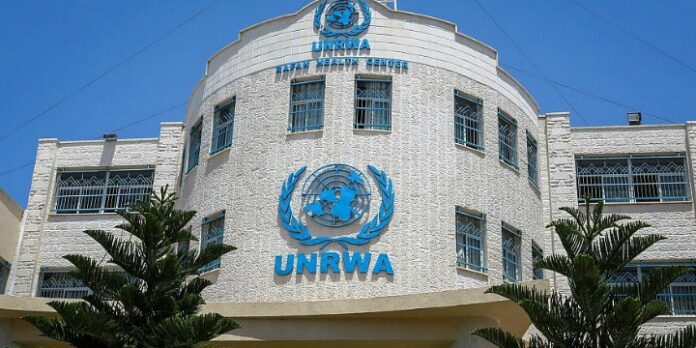
View of the United Nations Relief and Works Agency (UNRWA) building in Rafah in the southern Gaza Strip. Photo: Abed Rahim Khatib / Flash90.

NPR recently broadcast an article asserting the lie that Israel has been “spreading false information about UNRWA,” referencing the United Nations agency responsible for Palestinian “refugees.” Yet, Israel has presented voluminous evidence that UNRWA is a front for the Hamas terror group.

In fact, it’s the UN that’s lying about UNRWA, and now its lies are being covered up by NPR and other mainstream media.

Indeed, back in April, The New York Times parroted the bogus claims of an “independent” review that exonerated UNRWA of having ties to Hamas, with the headline, “Israel Hasn’t Offered Evidence Tying Many U.N. Workers to Hamas, Review Says.”

Wrong.

The State of Israel has presented extensive lists of terrorists connected to UNWRA, as well as examples of overlapping funding, governance and facilities, indicating that UNRWA has been thoroughly infiltrated by Hamas operatives and loyalists. While this evidence was presented to UNRWA High Commissioner Phillipe Lazzarini, he and the review panel simply ignored it.

The review cited by both NPR and the NYT is highly suspect, since it was commissioned by U.N. Secretary General Antonio Guterres, who is operationally responsible for UNRWA activities. Guterres called UNRWA a “lifeline of hope and dignity”—lofty praise for an organization that has utterly failed for 75 years to help Palestinians rise above their dependent refugee status. To the contrary, the agency has cynically fostered and perpetuated Palestinian victimhood.

Most egregiously, the panel that conducted the probe on behalf of the UN’s Office of Internal Oversight Services (OIOS) lacked the mandate to investigate the presence of Hamas among its staff—which should have been the very subject of the investigation. In fact, by the UN’s own admission, the review was only designed to ease the concerns of donors. These two facts were somehow omitted by NPR, the NYT and other media.

Furthermore, the probe was led by a former French foreign minister, Catherine Colonna, presenting another major conflict of interest, since Colonna approved French support of millions of euros for UNRWA.  Also participating in the probe were three organizations whose executives have expressed extreme animosity towards Israel, accusing it of “genocide” and “apartheid.”

Despite these major flaws, following publication of the OIOS findings, the media were quick to absolve UNRWA and turn the tables by attacking Israel. Major media ran headlines such as “Report says Israel has not provided evidence of widespread militancy among UNRWA staff” (Washington Post) and “Israel has yet to provide evidence of Unrwa [sic] staff terrorist links, Colonna report says,” (The Guardian).

In truth, UNRWA and Hamas are virtually indistinguishable. No wonder Israeli Foreign Ministry spokesman Oren Marmorstein said that “Hamas has infiltrated UNRWA so deeply that it is no longer possible to determine where UNRWA ends and where Hamas begins.”

Guterres’s “probe” hides the complicity of UNRWA with Hamas.

According to UN spokesperson Chris Gunness, the investigation’s real purpose was to “provide the donors with further cover if that’s what they need within their own internal constituencies to resume funding for UNRWA.”

Indeed, Colonna, who headed the OIOS panel, said the purpose of the review was to “enable donors” to “regain confidence . . . in the way UNRWA operates.” In other words, the panel’s goal was to prove UNRWA’s innocence. So much for revealing the truth about terrorist infiltration.

Israel presented overwhelming evidence of UNRWA’s corruption and integration with Hamas.

This evidence included a list of 100 terror operatives employed by the agency, as well as intelligence indicating that over 10% of senior UNRWA educators in Gaza were members of Hamas or Islamic Jihad.

Israel also revealed proof that over 30 UNRWA facilities contained terrorist infrastructure, such as tunnel shafts powered by UNRWA electricity. Hamas even operated a high-end server farm directly under—and connected to—UNRWA’s Gaza headquarters. Lazzarini—and the media and the panel and donor countries—had this information, but all chose to suppress it.

The OIOS probe was fundamentally flawed from the outset.

It was designed to avoid exposing UNRWA’s corruption and staffed by those likely to support the collaboration of UNRWA and Hamas. For starters, the investigation was led by Colonna, who herself helped establish France as UNRWA’s fourth largest donor, also a founding board member of the UN agency.

The review also included organizations whose executives expressed extreme anti-Israel bias: the Michelsen Institute, whose senior staff and board members have accused Israel of “genocide” and “apartheid;” the Raoul Wallenberg Institute, whose executive director also accused Israel of apartheid; and the Danish Institute for Human Rights, whose communications director accused Israel of “illegally occupying” Palestine for 70 years.

The media lied and covered up the Hamas-UNRWA marriage.

The Washington PostReutersThe Guardian, NPR and The New York Times all joined the effort to hide UNRWA corruption. Their headlines claimed Israel provided no evidence of UNRWA’s ties to Hamas, when in fact the Israeli government provided massive evidence—and reporters were able to see much of it on the ground. In parroting the OIOS report’s false claims, these media again demonstrated despicable journalistic practices and outright bias against Israel.

The Washington Post said UNRWA “has mechanisms in place to prevent its facilities from being misused for political or military purposes.” Really? Then why are UNRWA facilities being used as terrorist bases?

The Associated Press even asserted that “Israel did not express concern about [UNRWA] staff.” Seriously? In fact, for years Israel has expressed outrage about Hamas’s infiltration of UNRWA’s ranks, but the media have refused to cover it.

Indeed, the media have every interest in hiding the reality that Hamas and UNRWA are virtually inseparable. This truth would destroy their newsrooms’ false narrative that the agency is a benevolent humanitarian organization, doing its best to serve desperate, needy Palestinian victims of Israel’s aggression.

Both the U.N. and the media are disguising the truth that Hamas and UNRWA are inextricably intertwined. They simply don’t want donor nations—and the public—to know the shameful truth. If citizens of donor countries, like the U.S., were to see proof that their tax dollars are funding barbaric terrorism, they would surely insist on slashing UNRWA’s funding.

Low Expectations

It pays not to have any great expectations where solidarity, support and sympathy for Israel are called for.

As past and recent events have amply demonstrated, dead Jews elicit momentary gestures of tribute but admonitions and critical condemnations rapidly replace these fleeting acts. Almost without any pause, the victims are blamed, and the perpetrators are elevated into innocent targets of Israeli vindictive revenge seekers.

Some still live in eternal hope that the light of truth and justice will shine and that the majority of the international community might finally reset its moral compasses.

Unfortunately, given a bleak historical record and current examples of mass hypocrisy, the chances of any manifestations of honest solidarity have reached rock bottom.

A brief survey covering the latest outbreaks of knee-jerk antipathy and mass expressions of double standards should more than adequately reveal the sordid squalor seeping from the depths and now contaminating international discourse.

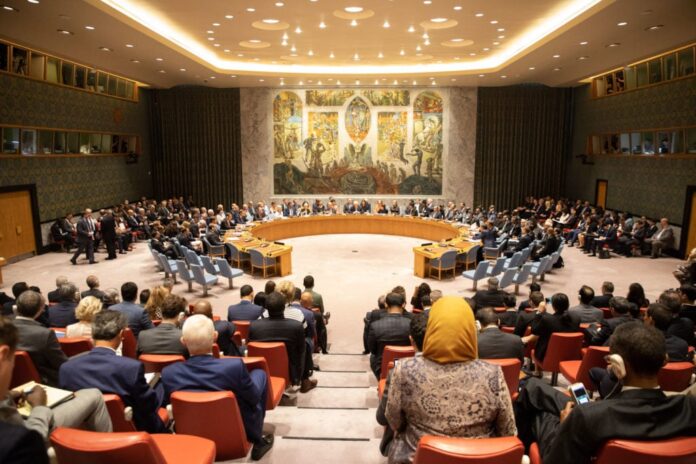
The United Nations Security Council met last week in a solemn conclave. It had been shamed into convening by the Israeli Ambassador after having ignored the plight of the kidnapped Israeli hostages since 7 October. For eleven months, it has refused to condemn Hamas or even refer to them as a terrorist organization. Unsurprisingly, given the composition of the Council, it was decided at the last moment to also include on the agenda the subject of “innocent” Gaza civilians.

This last-minute addition should have rung warning bells because it was obvious to all but the hopelessly biased that the ground was being prepared for yet another UN Israel bashing exercise. Hope springs eternal in the addled minds of those who live in some sort of parallel universe and who still dream of great expectations from an organization so morally corrupt that it has long outlasted its use-by date.

True to a preordained script that has been successfully acted out on every previous occasion, what followed was not only predictable but surpassed all past performances of mendacious double standards and hypocritical posturing.

Bear in mind that the original reason for the meeting was to discuss the hostages and the terror acts of Hamas and its supporters.

The Director of Operations and Advocacy for the UN’s farcical humanitarian branch set the tone by claiming “torture and sexual violence of thousands of Palestinians taken into detention by Israeli forces.”  Note how torture and sexual violence were neatly transferred from the non-mentioned Hamas onto Israel. No proof, of course, was offered for this accusation because, like the blood libels of old, it only takes one sentence for the lies to multiply and spread.

If you think that was bad enough, you haven’t seen anything.

The deputy Russian representative went one better. He asserted that “there were alarming reports of mass graves of dead Palestinians with traces of torture and the removal of internal organs.” Obviously having read the Russian forgery “Protocols of the Elders of Zion” this delegate had no problem in regurgitating the lies and fables contained in that discredited publication.

Unbelievably, not one ambassador seated at the Council objected to this heinous untruth because everyone had been warned beforehand by the Chairman that no interruptions were permitted. Thus, lie after lie was allowed to be articulated and of course subsequently to be spread via the media.

You can be sure that someone claiming to be Jewish, a relative of a Holocaust survivor or an anti-Zionist will always surface when it is time to delegitimize Israel. Their contributions are used to highlight the illegitimate nature of Jewish sovereignty.

Sure enough, on this occasion, a representative of far-left NGO, B’Tselem, had been invited to sponsor the delegitimization of Israel. She excelled at slandering the homeland of the Jews by claiming, among other things, that “since Israel was founded, its guiding logic has been to promote Jewish supremacy over the entire territory under its control.” For good measure, she likened Israelis to Nazis conducting crimes against humanity, “an apartheid regime running a network of torture camps.”

This NGO, incidentally, receives funding and support from many sources, including the New Israel Fund.

Next in line was the UN Security Council representative of Guyana. In a classic case of rewriting historical facts, she maintained that the whole problem of Palestine goes back to 1948 when “Israel first violently rejected the two state solution.” This blatant piece of revisionist falsehood elicited no protest from the assembled diplomats. As anyone who has read the records of the UN debates in 1947 and 1948 would know, it was the Arab delegations which rejected the proposed plan for an Arab and Jewish State. In fact it was the Arabs decision to launch a war of annihilation against any sort of Jewish sovereignty which laid the foundation for the situation we face today.

None of these realties, however, mean anything in the “Alice in Wonderland ” atmosphere that prevails at the United Nations.

The British ambassador parroted the new line, now the Labour Government’s prevailing mantra in London. With nary a hint of embarrassment, she proclaimed, “my Foreign Secretary took the decision to suspend certain UK arms export licenses to Israel this week. This decision in no way undermines our unwavering commitment to Israel’s security.”  One can only remain amazed at this astounding display of so-called British solidarity and the hypocrisy which accompanies it.

It was left to the Swiss UN ambassador to demonstrate exactly what passes for duplicitous diplomacy these days.

Remember that this Security Council meeting was originally called to address the execution by Hamas of the six Israeli hostages and the continuing bondage of the remaining ones.

Instead of a unanimous censuring of these terrorist acts and a demand that Hamas be condemned by the UN this is what she had the audacity to spout: “We urge the Israeli authorities to bring to justice all perpetrators of violence against civilians.”

The Israeli representative tried to lay bare the gruesome and horrific situation faced by families of the kidnapped Israelis and to demand that the UN act accordingly.

This, of course, was an exercise in utter futility as those gathered around the table were totally disinterested in either the truth or motivated to do anything to help.

Rubbing salt into the open wound was the fact that the US ambassador left the hall prior to the Israeli delegate’s response. This sent a powerful message to all present and watching of the Biden Administration’s lack of support for any meaningful action.

Not only does this whole farce highlight the dubious advantage of being a UN member nation, but it also throws yet another spotlight on international media. Reporting the negative and condemnatory statements against Israel and ignoring the real intended subject of the gathering once again helps to spread gross disinformation. Even worse was the non-reporting of the whole meeting and its twisted agenda.

Needless to say, social media had a great time spreading slanderous lies, which fell on fertile ground.

Those who harbour no great expectations of truth and justice emanating from the UN and the media were not disappointed.

With another round of UN “narishkeit” (Yiddish for pure foolishness) against Israel due in the coming sessions, one must wonder how much longer we are prepared to put up with this nonsense.

Harris’ support for Palestinian state rewards terrorism, experts warn

Vice President Harris’ endorsement of a Palestinian state during and prior to her debate with former President Trump would further destabilize the Middle East and bring about additional terrorism, according to Israeli and American experts.

During Tuesday’s presidential debate on ABC, the Democrat presidential candidate reiterated her support for a two-state solution: “I will always give Israel the ability to defend itself, in particular as it relates … to Iran and any threat that Iran and its proxies pose to Israel. But we must have a two-state solution where we can rebuild Gaza, where the Palestinians have security, self-determination and the dignity they so rightly deserve.”

The two-state solution means an independent Palestinian state on Israel’s borders that encompasses the West Bank territory (known in Israel by its biblical name of Judea and Samaria) and the Gaza Strip. Biden faced intense criticism in February for ignoring the outbreak of Palestinian terrorism in Judea and Samaria while singling out Israeli residents of the region for sanctions.

Trump’s former ambassador to Israel, David Friedman, told Fox News Digital, “After Oct. 7th, the two-state became a dead letter. A Palestinian state between Israel and Jordan will destabilize both countries and bring only additional terror and misery.”

Friedman, who authored the new book, “One Jewish State: The Last, Best Hope to Resolve the Israeli-Palestinian Conflict,” added, “Vice President Harris should stop parroting failed theories and trying to force a square peg into a round hole. She should empower Israel to reach a just and workable solution on its own and not interfere in matters where she is neither competent nor well-informed.”

In early September, Friedman blasted Biden on Fox News’ “Your World” for creating rifts within Israeli society.

Jonathan Conricus, a senior fellow at the Foundation for Defense of Democracies who served in the Israel Defense Forces (IDF) for 24 years as a combat commander and spokesperson, told Fox News Digital, “The so-called two-state solution may have been possible to implement 31 years ago, but four straight Palestinian rejections of Israeli peace offers have made it clear that the current Palestinian leadership does not aspire to end the conflict and achieve peace. Palestinian rejectionism has also eroded the political support for the peace process in Israel, since it has become abundantly clear that the Palestinian leadership does not seek peace.”

According to Conricus, “Polling of the Palestinian population in Gaza and Palestinian Authority-controlled areas shows clear popular Palestinian support for Hamas, signaling that the Palestinian population supports the genocidal vision of annihilating Israel through jihad, as demonstrated by Hamas on Oct. 7. Global leaders would do well to listen to the two parties to the conflict to understand how the situation has changed and adapt diplomatic solutions to current possibilities. And whatever the outcome of the Oct. 7 war that Hamas waged against Israel, giving Hamas the ultimate prize of statehood would be devastating for regional stability and peace and for American global standing. Terror must not be awarded with statehood.”

oel Rubin, former deputy assistant secretary of state and Democrat strategist, told Fox News Digital, “The two-state solution is on life support right now, but just because this is a difficult moment to envision a peaceful endgame between Israel and the Palestinians that’s rooted in diplomatic compromise, that does not mean it should not be the goal. After all, Israel fought multiple existential wars with Egypt and then, only years after the Yom Kippur War, concluded a peace deal that has held and provided Israel with deep security along its southern border for more than four decades. That is what a two-state solution is all about: Ending the conflict between Israel and the Palestinians in a manner that provides stability and security for the long haul.”

Rubin, who is a longtime Jewish community activist, added, “We have seen it achieved with Arab states. There is no reason that it can’t be done with the Palestinians as long as the political will is there, extremism is rooted out and security arrangements are solid. So, for Vice President Harris to make this a priority is an inherently pro-Israel position, one that seeks to provide Israel with the long-term security and stability that it still clearly does not have.”

In late August, Harris noted her endorsement of a Palestinian state in an interview with CNN. She said, “I remain committed since I’ve been on Oct. 8 to what we must do to work toward a two-state solution where Israel is secure and in equal measure the Palestinians have security and self-determination and dignity.”

The Harris campaign did not respond to multiple Fox News Digital press queries.

Harris and Biden have provided significant funding for the Palestinian Authority (PA), which is led by Mahmoud Abbas. The PA president is considered by some to be a moderate when compared to the Iranian regime-backed Hamas leadership. Abbas, however, supports stipends for convicted Palestinian terrorists and their families regarding the infamous “pay for slay” system that might mean the PA compensates Hamas terrorists.

Fox News Digital reported in November that many of the newly released convicted Palestinian terrorists who were part of a swap that secured the freedom of some Israeli and foreign hostages held by the terrorist movement Hamas could receive U.S. funds via the PA.

Itamar Marcus, director of Palestinian Media Watch, an Israeli-based organization researching Palestinian society, told Fox News Digital at the time, “The American and European funding boosts the Palestinian Authority budget by $600 million. The Palestinian Authority pays the salaries of imprisoned terrorists and the family members of the martyrs, and the amount comes to $300 million a year.”

Last month, Abbas, according to a translation by the Middle East Media Research Institute, told the Turkish Parliament that “America is the plague, and the plague is America” and “We implement Shari’a law: victory or martyrdom.”

The 88-year-old Abbas, who has clung to power since he took over the presidency of the PA in 2008, has been embroiled in antisemitism and Holocaust-distortion scandals over the years.

In 2022, Fox News Digital reported that Abbas delivered a tirade against Israel in Berlin, where the Holocaust – the mass extermination of European Jewry – was organized, claiming the Jewish state carried out “50 holocausts.”

UNRWA at war 2024 – Hebrew

The Israel-Hamas ‘War of Iron Swords’ was born in the UNRWA classroom, as decades of education to genocide revealed to the world on October 7, 2023. The Hamas takeover of UNRWA can no longer be denied.

BBC breached own guidelines 1,553 times on Israel, says new report

The BBC violated its own editorial guidelines 1,553 times during the four-month period beginning October 7, 2023, repeatedly downplaying Hamas terrorism and presenting Israel as an aggressor, according to an analysis released over the weekend and reported by the Telegraph.

“The findings reveal a deeply worrying pattern of bias and multiple breaches by the BBC of its own editorial guidelines on impartiality, fairness and establishing the truth,” the report said.

British lawyer Trevor Asserson, who runs Israel’s largest international law firm, Asserson Law Offices, and who has long campaigned against BBC bias, led the research.

He launched an organisation last week called Campaign for Media Standards to expose bias across UK media.

Asserson was joined by a team of about 20 lawyers and 20 data scientists. Artificial intelligence was also used to analyse nine million words of BBC output.

According to the report as described in the Telegraph, some journalists used by the BBC to cover the current Israel-Hamas war previously showed sympathy for Hamas and even celebrated its terrorism.

Jeremy Bowen, the BBC’s international editor, excused Hamas’s terrorist acts and Lyse Doucet, the BBC’s chief international correspondent, downplayed the October 7 attacks on Israel, it claimed, according to the Telegraph.

Researchers also analysed the BBC’s coverage of the four months following October 7 to assess its portrayal of war crimes.

“Hamas members filmed and publicised themselves committing acts which appear to constitute war crimes,” the report said, including the taking of hostages, wilful killing or murder, torture or inhuman treatment and rape or sexual violence.

But despite this, the report’s analysis of BBC coverage found that Israel was associated with war crimes four times more than Hamas (127 versus 30), with genocide 14 times more (283 versus 19) and with breaching international law six times more (167 versus 27).

The report censured especially the public broadcaster’s BBC Arabic channel, describing it as one of the most biased of all international media outlets in its coverage of the Gaza war.

It noted 11 cases in which BBC Arabic featured reporters who had previously made public statements in support of terrorism and Hamas.

Danny Cohen, a former BBC executive, said that there was an “institutional crisis” at the national broadcaster. He called for an independent inquiry into its Gaza war coverage.

The Campaign Against Antisemitism and the National Jewish Assembly also called for an independent review, The Telegraph said.

Sir Oliver Dowden, shadow deputy prime minister, said, “The BBC is one of the premier news services in the world, and to hear that standards may be slipping in such a severe way like this, risks tarnishing the reputation of our news service.

“Serious questions should be asked as to why this has been allowed to happen, and license-fee payers should expect to see the BBC stick to its own editorial guidelines,” he said.

Following the October 7 massacre, the BBC was condemned for failing to call Hamas members “terrorists.” In late October the BBC said it would describe Hamas “where possible” as a “proscribed terrorist organisation.”

However, the report was said to have found that Hamas was described as a “proscribed,” “designated” or “recognised” terrorist organisation just 409 times (3.2 per cent) out of 12,459 mentions over the four-month period.

Greg Smith, a Conservative Party member serving as both transport and business minister in the shadow government, said: “We knew in the aftermath of October 7 that the BBC was struggling to call a terrorist a terrorist.

“There are now clear grounds for Ofcom [the Office of Communications] and the Department for Culture, Media and Sport to use every tool they have in their arsenal to bring about greater compliance with the rules around neutrality and fair coverage in the BBC charter,” he said.

The BBC said it would “carefully consider” the report, which has been submitted to its director general, chairman and other board members, but a spokesman for the corporation has already criticised the research.

A BBC spokesman said: “We have serious questions about the methodology of this report, particularly its heavy reliance on AI to analyse impartiality, and its interpretation of the BBC’s editorial guidelines. We don’t think coverage can be assessed solely by counting particular words divorced from context.
“We are required to achieve due impartiality, rather than the ‘balance of sympathy’ proposed in the report, and we believe our knowledgeable and dedicated correspondents are achieving this, despite the highly complex, challenging and polarising nature of the conflict.

“However, we will consider the report carefully and respond directly to the authors once we have had time to study it in detail.”

The BBC also denied allegations against its staff: “We strongly reject the claims that our reporters ‘celebrated acts of terror’ and we strongly reject the attack on individual members of BBC staff, all of whom are working to the same editorial guidelines.”

Lord Ian Austin, a former Labour Party minister, accused the BBC of “high-handed arrogance” for its ongoing dismissal of criticisms regarding its impartiality.

Lord Stuart Polak, honorary president of the Conservative Friends of Israel, said: “There’s a clear pattern. Other broadcasters have also made errors, but the BBC keeps getting it wrong. It’s shameful, it’s wrong and what’s worse — the BBC knows it.”

Austin said that after spending decades defending the BBC, he is now “convinced” that its coverage of the war “fails to meet the standards of impartiality and independence on which its public funding is based,” The Telegraph reported.

‘UNRWA at War’: New film shows U.N. agency teaching kids to kill in Judea and Samaria

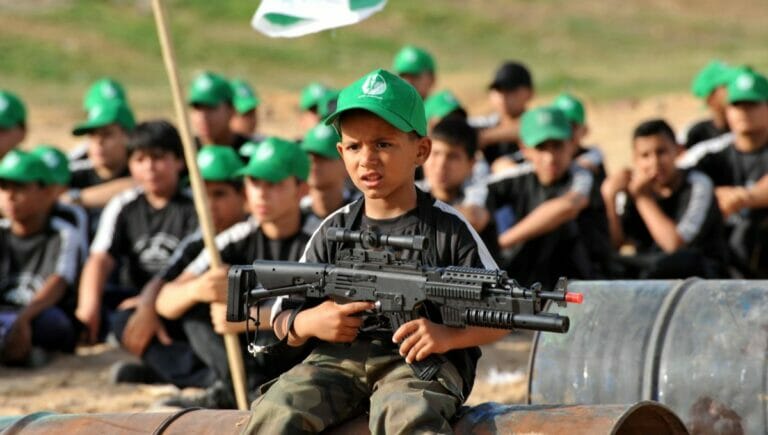
A child wields a machine gun in a clip from 'UNRWA at War'. Screenshot.

Revelations by Israel’s government about the United Nations Relief and Works Agency have shattered the group’s carefully cultivated image as a humanitarian organization, revealing it to be no less than an arm of Hamas in Gaza. However, little light has been thrown on UNRWA’s identical role in Judea and Samaria.

A new film, “UNRWA at War,” focuses on the educational side of UNRWA’s activities, in which children are taught not just to hate, but to kill. Just as it did in Gaza, UNRWA is inculcating children with the same genocidal creed in Judea and Samaria, only in this case for Fatah, the controlling party in the Palestinian Authority.

The roughly 20-minute film was released by the Jerusalem-based Center for Near East Policy Research on Sept. 1 and is available online.

The center’s director, David Bedein, told JNS that the movie shows what’s happening in Bethlehem. “That’s the next place they [the terrorists] are going to break out,” he said.

When could such an attack take place? “It could be as soon as tomorrow,” he said.

The film shows that terrorists, such as Dalal Mughrabi, a Fatah member who participated in the 1978 Coastal Road massacre in Israel, in which 38 Israeli civilians, including 13 children, were murdered, are routinely held up as heroes and role models in UNRWA schools. Images of Mughrabi and other terrorists adorn the schools’ walls.

In the film, Arab students in Judea and Samaria, products of UNRWA schools, speak of Mughrabi with reverence.

“She’s like my sister, like my mother. She’s part of our people,” says a boy from the Al-Amari refugee camp east of Ramallah. A girl of about six, also from Al-Amari, says, “Dhalal Mughrabi is a Palestinian martyr. She fought against the Jews. She blew them up.”

Bedein, who has been sounding the alarm regarding UNRWA for decades, describes the indoctrination the kids are receiving as “murder education.” UNRWA, he said, is a “machine” that produces genocidal children in a “cookie-cutter” manner.

Kutaiba Hatab, 15, attends the UNRWA Boys School in the Jalazone refugee camp north of Ramallah in Samaria. Asked in the film what he’s taught about the right of return, he says, “To fight, and to keep fighting, until Palestine is liberated!” He goes on to state that when he grows up, “I’ll be a jihadist and fight for Allah!”

“Do you hate Jews,” an interviewer asks Rada Abu-Hatab, 12, an UNRWA student in Jenin. “Yes, a lot,” she answers. “I want to fight and become a martyr and ascend to heaven with Allah!”

Mohammed Mahmud Khalil, an UNRWA student from Ein Arik, an Arab town near Ramallah, says, “What is the solution to Jerusalem? To kill the Jews. We’ll get rid of the Jews … With Allah’s help, I will become a holy warrior.”

All the children connected the Hamas invasion of Oct. 7 to the right of return, characterizing the gruesome attack as an effort to liberate the land from the Jews.

“Oct. 7 is related to the right of return because Hamas reconquered part of our land that was taken by the occupiers,” says Osama Belashe, an UNRWA student from Jalazone. “In school our teacher taught us we have to return. Even if Israel gives us compensation [to stay here] we have to return.”

For Bedein, the most important thing the film documents is that at UNRWA, children receive military training. In previous films, Bedein has shown that these training camps were set up near Israel Defense Forces bases.

He worries that Israel has been slow to adapt to the post-Oct. 7 reality. “They’re making the same mistake they made last October, not paying attention to the preparations for war in the UNRWA camps,” he said.

However, he sees signs of awakening, noting a recent Israel Army Radio report that the military intended to investigate military training at UNRWA camps.

And next week, Bedein is to present his findings to a Knesset committee. “People who did not take me seriously over a period of 36 years are now taking me seriously,” he said.

Incompetence, or willful blindness, on the part of the Israeli authorities, is a recurring theme for Bedein.

He said the Foreign Ministry has a special division dedicated to overseeing UNRWA, yet its representatives were oblivious regarding the weapons held at UNRWA camps. He brought them to the Askar camp bordering Nablus (Shechem) to show them. “They had no idea about the guns,” he said.

Moreover, Israel never exercised what oversight it had, he said. “Israel has the power to veto anything in Palestinian education. What we learned from Oct. 7 is that they weren’t doing it,” he added.

“Back in the 1980s, I began this conversation with how humanitarian supplies were sold in the open market and with no supervision,” Bedein said. “And they [Israel] didn’t make any changes. There was no oversight. To say they’re not doing their job is an understatement,” he added.

Although many have argued for doing away with UNRWA, according to Bedein that’s not a realistic solution. The organization is too embedded in the territories and in the United Nations, and the General Assembly would never accept it, he argued. However, he continued, it is possible to change UNRWA from within by pointing out the absurd situation and demanding change.

“The theme of UNRWA education is ‘peace starts here,’” he said. “How could it possibly be that a U.N. social work agency would be using their education system to prepare kids for war?”

Bedein has put together a five-point plan for changing UNRWA from within:

1. Cancellation of the new UNRWA curriculum based on jihad.

2. Disarmament of UNRWA schools and cessation of paramilitary training.

3. Dismissing UNRWA employees affiliated with Hamas, Islamic Jihad and Fatah.

4. Resettling fourth- and fifth-generation refugees from the 1948 war rather than keeping them in perpetual refugee status.

5. Demanding an audit of donor funds.

He has met five times with Antonio Guterres, the U.N. secretary general, whom he said is open to his proposals.

While UNRWA was always corrupt, it wasn’t always the way it is now, he said.

Even the children going through the schools, while they spoke of “their homes in Jaffa,” didn’t talk about going back and killing everyone in Jaffa as they do now, he said.

“The change took place after 1992 when the PLO was put in charge by [then-Foreign Minister] Shimon Peres,” he said. “UNRWA was handed over to the PLO.”

Bibi’s Flawless Two Minute Speech