Czech
Czech French
 German
 Hebrew
 Noruegan
 Russian
 Spanish
 Swedish
 Polish
 Portuguese




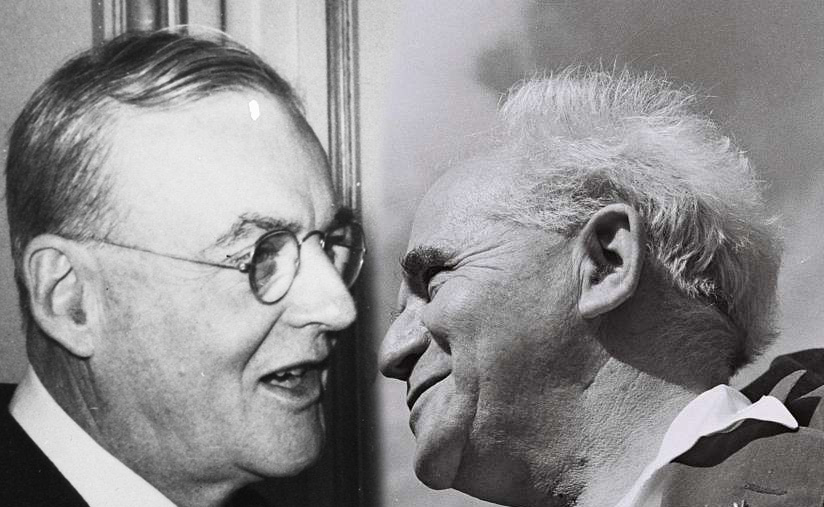
A well-known exchange, between David Ben-Gurion and U.S. Secretary of State John Foster Dulles in 1954, captures something most people still don’t understand.
Dulles reportedly challenged Ben-Gurion, asking how Israel could claim to represent one people after 2,000 years of exile, scattered across continents, cultures, and languages. It’s a fair question, if you think a nation is defined only by land.
Ben-Gurion’s response reframed everything. He suggested that Dulles go out and find ten American children and ask them simple questions about the Mayflower, who was the captain, how long was the journey, what did they eat. Most wouldn’t know.
Then he said, go find ten Jewish children, anywhere in the world, and ask them who took the Jews out of Egypt, how long it took to reach the Land of Israel, what they ate in the desert, and what happened when they reached the sea. And you will get answers.
Not because of trivia, because of memory. Because across continents, languages, and centuries, the Jewish people carried the same story, told the same way, around the same table, year after year.
A nation is not only geography. It is continuity. It is shared narrative. It is ritual lived in real time.
Empires rise and fall on power. The Jewish people endured on memory.
That is what nationhood looks like when it is built not only on land, but on memory.