 Czech
Czech French
 German
 Hebrew
 Noruegan
 Russian
 Spanish
 Swedish
 Polish
 Portuguese



Für Deutsch, siehe unten_________________________________________________________ Creating a Platform for Investigative Reporting:Raising funds to document Palestinian educational and recreational activities on location and in real time.Our movies on Palestinian Education find here.Please see here an overview of the investigative work we have done regarding UNRWA over the past 20 years.More at www.israelbehindthenews.com_________________________________________________________ Aufbau einer Plattform für investigative Berichterstattung:Spendenaufruf für die fortlaufende Dokumentation von palästinensischen Bildungs- und Freizeitaktivitäten vor Ort und in Echtzeit.
Real-time reporting from inside Palestinian Education
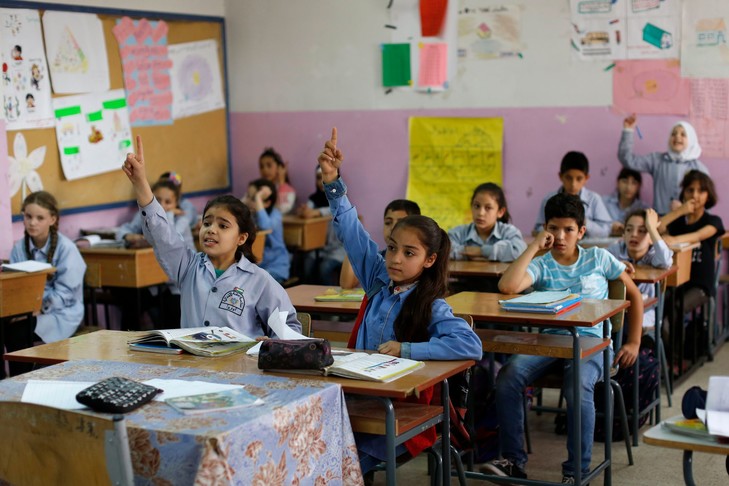
In this Tuesday, May 22, 2018 photo, Sarah, center, a Palestinian refugee from Syria participates in an English lesson at the Jafna Elementary school, run by the U.N. Agency for Palestinian Refugees, UNRWA, in the eastern Bekaa Valley town of Taalabaya, Lebanon. Sarah has come a long way since she arrived in Lebanon after fleeing Syria’s civil war five years ago, and is now a star student at an elementary school run by UNRWA, which also provides trauma counseling. But those services, and the thousands of children who rely on them, now face an uncertain future, as the U.S. threatens to cut funding. (AP Photo/Hassan Ammar)
The Palestinian Authority’s Long-Awaited Peace Education
Jewish history changed yesterday. 25 nations gathered in Qatar to plan deployment of their armed forces in Gaza.
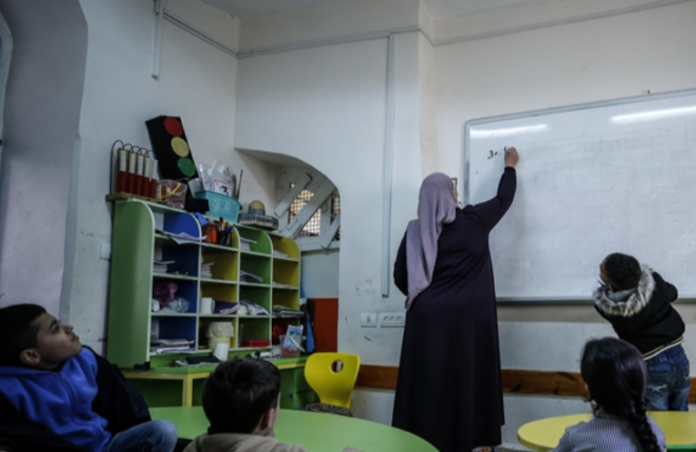
Our crew is in place to cover the Gaza schools-using the Palestinian Jihadi curriculum. The Palestinian Authority’s Long-Awaited Peace Education
No hint of anti incitement school reforms – as promised to US ambassador Huckabee
We will document everything.
New Evidence Shows UNRWA Working Closely with Hamas
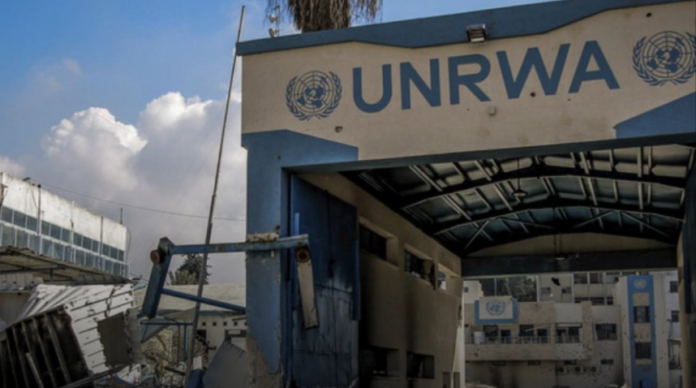
The United Nations Relief and Works Agency, known as UNRWA, detailed the scope of its work in Gaza on Tuesday. But evidence has emerged that the organization works closely with the Hamas terror group.
The United Nations Relief and Works Agency, known as UNRWA, detailed the scope of its work in Gaza on Tuesday. But evidence has emerged that the organization works closely with the Hamas terror group.
UNRWA's report claims that it has rehabilitated its education system and now… pic.twitter.com/IW5b9K3Ho8
— CBN News (@CBNNews) November 26, 2025
After the Murders of Jews on the first day of Chanukah in Australia

Usually being right about something, especially when everyone told you that you’re wrong, is very satisfying.
Not now.
Not in this case.
I’ve never been sadder about being right than I am right now.
I have been in bed most of today trying to digest it, trying to make sense of it. But I can’t. None of us can.
There is no making sense of it.
There is one thing though that we have to internalize and it’s extremely hard to accept.
This didn’t happen in a vacuum.
The terrorists weren’t the only ones who pulled those triggers.
Albanese pulled the trigger too.
Starmer pulled the trigger.
Mamdani pulled the trigger.
Carney pulled the trigger.
The BBC and CNN, they pulled the trigger too.
Iran pulled the trigger. Qatar pulled the trigger.
The UN pulled the trigger and Amnesty pulled the trigger.
The ICJ pulled the trigger and South Africa pulled the trigger.
Sky News pulled the trigger and the Guardian pulled the trigger.
Candace pulled the trigger and Tucker pulled the trigger.
All of these people, and many others, they have blood on their hands.
Those who tolerated the chants to globalize the intifada got a Hanukkah present today. The intifada was globalized.
Those who allowed terrorist flags to wave in their streets saw the result of their decision today.
What is appalling is how all of these morally bankrupt individuals decided to issue their fake condemnations today declaring how there’s no room for antisemitism in their streets.
Talk about pouring salt on a wound. They welcomed antisemites to their streets! With a red carpet!
They loaded the bullets into those guns and now they act surprised when those bullets end up in the heads of Jewish children and Holocaust Survivors?!
Do me a favor, Mr. Mamdani, let’s skip the act.
Here’s what you really want to do. You want to celebrate.
I suggest you do that.
Take off the mask, Mr. Albanese, and announce a national day of celebration in Australia. You got what you wanted when you decided to ban Jews from entering your country.
Starmer, remember that fake state that you decided to recognize and fabricate history? Well, when you reward terror, you receive more terror. So save the condemnations and award the families of the terrorists today. Reward them like you rewarded Hamas.
Don’t bother issuing any fake condemnation, UN. Save your fake tears. Keep your thoughts and prayers to yourself. No one wants them and no one believes them.
This didn’t happen in a vacuum and guess what. I’m sorry to be the one to say this (again!), but this won’t be the end of it.
Tragically, I don’t even think this will be the worst of it.
Tomorrow, CNN will continue to vilify the only Jewish state. The BBC will do whatever they can to avoid calling this attack what it is. The Guardian will run some piece about Islamophobia and Sky News will do verbal gymnastics to avoid calling the terrorists Muslims and the victims, Jews.
So, no, this won’t be the end of it.
Tomorrow, the tolerance for Jew hatred will return. The fake tears will be wiped away and the chants of ‘Gas the Jews’ and ‘Hitler was right’ will once again be heard throughout the west.
I have some bad news.
It’s over.
Jews are no longer welcome. The days of comfort for Jews in the west are over!
Sure, it might not have hit full force in Teaneck or in Miami, not yet anyway.
The west has spoken and Jews are not welcome anymore.
Whether the Jews of the diaspora realize that and internalize it is a different story but the good times are over.
Some people will read this and call me an alarmist. They are the same people who told me on October 5th, 2023, when I said something big is coming and Israel will be at the center of it, that I am creating hysteria.
They are the same people who told me a few months ago when I said a mass casualty event is around the corner and it’ll happen at some Jewish gathering, that I am not a prophet and I should shut up.
I’m not a prophet but I have eyes and I’m using those eyes when so many around the world are wearing a blind fold.
So, to my brothers and sisters in the diaspora, and I don’t care where in the diaspora you are, I will say it again and I will say it a million times, no matter how many of you attack me, ridicule me, and block me.
COME HOME!!
“This isn’t Europe before the Holocaust. Stop comparing.”
YES. IT. IS!
It’s EXACTLY Europe before the Holocaust.
I know no one wants to hear that but you know who else wouldn’t have wanted to hear that? The Jews in Europe before the Holocaust.
You know what they would have said? You know what they DID say?!
“It won’t happen here.”
“It doesn’t affect me.
“Stop believing the media. It’s not that bad.”
“I’m not running away. I’m not letting them win. This is my country. I refuse to surrender and flee.”
I grew up wondering how the Jews of Europe didn’t see the writing on the wall. I think we all did.
I no longer wonder. I see it right before my eyes.
So, I’ve heard all the excuses.
“Oh, Israel is much better?! You had 10/7!”
Yes, yes we did. And we learned from our mistakes. Now we repair. Now we build. Now we write the story of the future of our people.
“It’s not so easy to just pick up and come!”
No, it’s not. No one said it was easy. But it’s necessary. It is literally life and death at this point.
“You’re creating hysteria! Stop it!”
I’m creating hysteria? So you don’t think that the events of today warrant hysteria? Then, what does?
I am devastated to say that the message I’ve gotten over and over throughout the day from survivors of today’s attack was “You were right. We need to get out of here.”
Please, please follow through. Please don’t let this pass and be forgotten as just another event.
Please learn from today that you are not welcome.
If your child was amongst a group of peers who treated him/her the way you are being treated, you’d tell your child to find new friends, to get out of that group.
Take your own advice. Get out.
For now, we mourn the dead, we pray for the injured, but we can’t stop there. This didn’t happen in a vacuum. This isn’t an isolated event.
This isn’t the end of it, sadly it’s just the beginning.
Our enemies are celebrating today. Some are doing it publicly, and some are doing it in their hearts but if you think today’s massacre won’t “Inspire” them to try and repeat it, I’m sorry, but you’re not paying attention.
Today it happened in Sydney. Tomorrow it’ll happen in the UK or Canada. It’ll happen in the US too.
We don’t pay attention to the every day occurrences. The synagogues being vandalized. The Jews being harassed on the subway. The Jewish businesses being damaged.
But all those events led to today and today will lead to other events.
It’s not stopping. It never has. Open a history book if you want to know what’s coming. It’s gonna get worse and fast.
So, please, fight the urge to push back on this, take your head out of the sand, open a history book, and for God’s sake, make an exit plan.
If it’s not today, then tomorrow and if not tomorrow, in a year from now. But please, it’s time to accept that you’re no longer welcome anywhere besides Israel.
Here you are welcome with open arms.
Sure, we have our challenges and we could use your help overcoming them.
You had a really nice run in the west. We all did. But it’s over.
The future of the Jewish people is in one place and one place only.
They say From the River to the Sea, Palestine will be free.
We should all respond to them with From the River to the Sea is the only place Jews will be.
It’s time.
If I offended you, I am not sorry. Sometimes, it’s not fun to hear the truth but it needs to be said and you better start listening.
Come home. We need you here. We need you, and you need us.
Come here and help us build the future of the Jewish people.
To all our enemies who pulled the trigger today, congratulations. Enjoy your accomplishment, but know this, your joy will be short lived. You will pay and pay big.
You will be held accountable for every life lost today. And you will go down in history alongside the worst of them. History will never forget your role and neither will we.
You will join the very popular club of nations who came after the Jews. They are all footnotes in the book that tells the story of the remarkable and the resilient Jewish nation.
We’ll mourn today. But we’ll also build. We’ll get back up and we’ll survive. We’ll continue to thrive as a people and we will flourish in the face of your historic crimes.
You will be long gone and we will watch you perish.
Am Yisrael Chai isn’t just an empty phrase. It’s a historical reality and if you don’t believe me, ask yourself how many Babylonians you know.
You’ll join them soon.
Am Yisrael Chai!
Chanukah is the holiday of light. We are a bright light in your dark world.
Today; we light Hanukkah candles alongside the memorial candles for our fallen.
We have a lot of practice. We now how to mourn and then we know how to continue moving forward.
Don’t forget what Hanukkah was. It was a war we were not going to win. We were done. And here we are celebrating.
Today is a dark day. Tomorrow we will shine our light again.
Am Yisrael Chai.
Don’t forget it, you fools!
To my brothers and sisters, we got this. I know that feels impossible right now, but we do.
Just please come home.
We are waiting for you and can’t wait to welcome you at Ben Gurion airport with open arms and a shawarma.
Qatar accuses Israel of colonialism, apartheid, propaganda, and foreign manipulation -all of which Qatar specializes in

For years, Qatar has positioned itself as a neutral mediator and champion of human rights in the Middle East. Its state-funded media apparatus, Al Jazeera, broadcasts a steady stream of accusations against Israel while the emirate’s diplomats shuttle between Western capitals preaching moderation. Yet a sober comparison reveals an uncomfortable truth: every accusation Qatar levels at Israel describes Qatar itself with far greater accuracy. It is a matter of tu quoque, but in spades.
The Myth of Jewish Control Versus Qatari Reality
Anti-Israel activists frequently invoke the old canard that Jews control governments, wealth, and key institutions. Meanwhile, Qatar has quietly assembled one of history’s most concentrated portfolios of foreign influence and ownership.
Qatar operates as an absolute monarchy where political dissent is crushed, where wealth is hoarded, but not earned, by one family.
Consider London. Qatar owns more real estate in the British capital than the British royal family. The emirate holds major stakes in Heathrow Airport (20 percent), The Shard (95 percent ownership, Western Europe’s tallest building), the entire Harrods department store, Canary Wharf properties, and the Olympic Village. Its portfolio contains percentages of multiple Premier League football clubs, including Paris Saint-Germain outright. Qatar Holding, the investment arm of the state’s sovereign wealth fund, controls assets worth over $450 billion globally.
In the United States, Qatar has inserted itself into elite universities through donations that shape research agendas, hiring decisions, and campus politics. Between 2001 and 2021, Qatar gave American universities at least $4.7 billion, with much of it undisclosed until recently. Carnegie Mellon, Georgetown, Northwestern, Texas A&M, and Cornell all operate Qatar-funded campuses in Doha, where academic freedom takes a back seat to the host country’s sensitivities.
This represents real, concentrated influence backed by state money and coordinated strategy. Nothing in the Jewish or Israeli world approaches this level of systematic foreign ownership and control.
Political Influence: Who Really Buys Power?
Critics routinely claim that Israel manipulates American foreign policy through lobbying and campaign donations. The facts tell a different story.
Qatar operates one of the most expensive foreign lobbying operations in Washington. Since 2017, Qatar has spent approximately $250 million on lobbying and public relations in the United States. The emirate retains multiple firms simultaneously, including powerhouses like Brownstein Hyatt and Sonoran Policy Group. It pays former senior officials, cultivates think tanks, and funds academic centers that reliably produce Qatar-friendly analyses.
The results are visible. Qatar has systematically purchased favorable media coverage and cultivated influential voices. In 2019 and 2020, a Qatari royal invested approximately $50 million in Newsmax, the pro-Trump conservative outlet. Following the investment, Newsmax employees reported being explicitly told by management to “soften” coverage of Qatar and avoid criticizing the emirate’s human rights record. “We were told very clearly from the top down, no touching this,” one staffer revealed.
More recently, Foreign Agents Registration Act documents revealed that Qatar paid the firm Lumen8 Advisors $180,000 per month to facilitate a March 2025 interview between Tucker Carlson and Qatar’s prime minister. While Carlson has denied receiving direct payment from Qatar, the arrangement exemplifies how the emirate uses intermediaries to secure favorable platform access and messaging. Conservative figures, from Carlson to various social media influencers, have emerged as defenders of Qatar, presenting the emirate as either a victim of unfair criticism or a benevolent actor misunderstood by the West.
Compare this to AIPAC, whose entire annual budget hovers around $100 million and whose donors are American citizens making individual choices. Qatar’s influence operation is state-directed, massively funded, and designed to purchase outcomes rather than advocate for shared values.
Bankrolling Terror While Playing Peacemaker
Perhaps no charge against Israel rings more hollow than accusations of supporting extremism, especially when those accusations come from Qatar.
Qatar directly finances Hamas. This is not speculation or propaganda but a documented fact acknowledged by U.S. officials. Since 2012, Qatar has funneled an estimated $1.8 billion to Gaza, much of it directly supporting Hamas’s governing apparatus, salaries, and infrastructure projects. The emirate hosts Hamas’s political leadership in luxury in Doha, providing them with diplomatic protection and a platform for international engagement.
Qatar is the only country on earth that bankrolls a designated terrorist organization responsible for the Oct. 7, 2023, massacre of 1,200 Israelis while simultaneously maintaining full diplomatic relations with the United States and housing the largest American military base in the Middle East. This arrangement would be called “playing both sides” if we were being generous. A more accurate description would recognize it as state sponsorship of terrorism with a diplomatic veneer.
When Qatar positions itself as a “mediator” between Israel and Hamas, it is mediating between a democratic state and a terrorist organization it funds. This is like an arsonist volunteering to mediate between firefighters and the building he set ablaze.
The Al Jazeera Information Weapon
Israel stands accused of spreading propaganda and hiding truth. Yet no Israeli media outlet, not even those with clear political orientations, operates with the discipline, reach, or state direction of Al Jazeera.
Al Jazeera functions as an arm of the Qatari state. It does not operate independently. Its editorial line follows the interests of the ruling Al Thani family with precision. During the Arab Spring, Al Jazeera championed uprisings in Libya, Syria, and Egypt while maintaining radio silence about any dissent in Qatar itself or in allied Gulf monarchies.
The network shapes narratives across the Arab world, Europe, and increasingly in the United States through AJ+, its social media subsidiary designed for Western audiences. Its reach and editorial discipline exceed every Israeli media outlet combined. When Al Jazeera broadcasts accusations against Israel, it does so as an instrument of state policy, not as independent journalism.
There are, of course, many Israeli periodicals that often support the government of that country, but sometimes not. Often, their coverage is mixed. However, there are also dozens, if not scores of them, that are bitter critics of Benjamin Netanyahu in particular and of the Likud Party in general. When can this be truly said of Al Jazeera and Qatar?
Systematic Violation of Individual Rights
Critics claim Israel mistreats vulnerable populations. The comparison with Qatar’s treatment of migrant workers reveals who actually engages in systematic rights violations.
Qatar built its glittering modern skyline through systematic breach of contract and property rights. A 2021 investigation by The Guardian found that at least 6,500 migrant workers from India, Pakistan, Nepal, Bangladesh, and Sri Lanka died in Qatar during the decade of infrastructure projects leading to the 2022 World Cup. The actual number is likely far higher, as many deaths were attributed to “natural causes” without proper investigation.
The Qatari system operates through state-sanctioned coercion. Workers had their passports confiscated upon arrival, a direct violation of property rights that eliminated their freedom of movement and ability to leave. They entered into employment contracts that were then systematically breached by employers who delayed or withheld agreed-upon wages. They were denied access to independent legal recourse or arbitration when contracts were violated. When workers died, their families received minimal restitution for the breach of contract that led to the unsafe working conditions.
This represents systematic violation of individual liberty, property rights, and contract enforcement at a scale Israel has never approached. Yet Qatar faced minimal consequences, hosting the World Cup on schedule while lecturing others about human rights.
The Real Apartheid: Qatar’s Tiered Citizenship System
Israel faces relentless accusations of apartheid despite its Arab citizens voting, serving in parliament, taking positions as doctors, lawyers, professors, engineers, and holding positions on the Supreme Court. They even have their own political parties, with representation in the Knesset. Qatar, meanwhile, operates an actual apartheid system that would make the architects of South Africa’s racial hierarchy blush.
Approximately 90 percent of Qatar’s population consists of non-citizens with no political rights whatsoever. Children born in Qatar do not acquire citizenship by birth. Even after 25 years of continuous residence, foreigners almost never receive citizenship, with applications capped at just 50 per year for a population of nearly three million.
But the discrimination extends beyond non-citizens. Qatar’s 2005 nationality law creates a formal two-tier citizenship system dividing Qataris into “native” citizens (those whose families settled before 1930) and “naturalized” citizens. This distinction perpetuates through generations, with children of naturalized citizens inheriting their parents’ second-class status regardless of where they were born.
The restrictions on “naturalized” Qataris are extensive and codified. They cannot vote or run for office in Shura Council elections. They cannot work in many government positions for five years after naturalization. They cannot apply for housing loans until 15 years after naturalization. Unlike “native” Qataris, they cannot receive government housing grants or funds to purchase land. Their citizenship can be revoked more easily than that of “native” citizens.
Non-citizens face even harsher restrictions. They cannot own property except in designated zones. They cannot open businesses without Qatari partners. They have no access to subsidized healthcare, education, or government benefits, for which they pay through taxation. They cannot vote or participate in politics. The government caps citizenship applications at 50 annually while maintaining a population where fewer than 10 percent hold citizenship.
Women face additional discrimination under Qatar’s nationality laws. Unlike men, Qatari women cannot transmit citizenship to their foreign husbands or children. A Qatari woman married to a non-Qatari man can only apply for residency for her family, not citizenship, creating families where mothers are citizens but their children are not.
Compare this to Israel, where Arab citizens constitute 21 percent of the population, vote in every election, serve in the Knesset, sit on the Supreme Court, teach at universities, and practice medicine in hospitals. Israeli Arabs own property, operate businesses, and enjoy full legal equality. No such comparison is possible in Qatar, where the overwhelming majority of residents have no rights, and even citizens are divided into legal castes.
Yes, it cannot be denied that Israel, too, has a system with two different levels of rights. Jews from abroad can become citizens, but this does not apply to non-Jews from elsewhere. Israel is, after all, a Jewish state. However, Arabs in Israel are treated far more decently than they would be if they were to emigrate to Israeli neighboring countries. This is demonstrated by the almost total lack of emigration on the part of these peoples. As for homosexuals, there are gay parades in Israel, but not anywhere else in the Middle East. Queers for Palestine, yes, actually, there is such an organization, is rather an anomaly, since if these folk were to ever visit Qatar, they would be summarily put to death. Their very existence dramatically illustrates the widespread lack of knowledge about this so-called civilized nation.
When Qatar or its defenders accuse Israel of apartheid, they are projecting their own systematic discrimination onto a democratic state with far greater equality.
The Colonial Project Qatar Won’t Acknowledge
Israel is routinely condemned as a colonial project imposed by outside powers, an accusation that ignores 3,000 years of continuous Jewish presence in the land and the democratic institutions Israelis built.
Qatar itself is a British creation. The Al Thani family was placed in control by British colonial administrators who drew lines in the sand and designated rulers. Unlike Israel, Qatar has no functioning democracy. Citizens cannot vote to change their government. Political parties are banned. The immense wealth generated by natural gas belongs to one family, which distributes it according to dynastic priorities rather than democratic accountability.
The state’s current borders, its ruling family’s authority, and its very existence as a separate entity rather than part of Saudi Arabia or another neighbor, all flow from British imperial decisions. Yet Qatar faces no criticism for its colonial origins or its authoritarian structure, while Israel fought free from the British mandate in order to build a parliamentary democracy with competitive elections and an independent judiciary, is condemned as illegitimate.
The Diplomacy of Duplicity
Israel is accused of moral hypocrisy, of claiming high standards while acting otherwise. But Qatar’s diplomatic strategy makes Israeli conduct look transparent by comparison.
Qatar sells liquefied natural gas to anyone with money. It maintains close relations with Iran, the world’s leading state sponsor of terrorism. It funds groups designated as terrorist organizations by the United States, the European Union, and numerous other countries. It plays all sides simultaneously while presenting itself as neutral.
The emirate hosts both the largest American military base in the region and the leadership of Hamas. It brokers deals between the Taliban and Western governments while funding Islamist movements across the Middle East and North Africa. It positions itself as a victim of a blockade by neighboring Arab states while those same states cite Qatar’s support for extremism as justification.
Qatar has elevated duplicity to the level of state strategy.
The Israeli Response: Precision Versus Capitulation
Qatar’s role as Hamas’s patron came into sharp focus in September 2025, when Israel assassinated five Hamas leaders in Doha. The operation killed Khalil al-Hayya’s son and other negotiators, along with a Qatari security officer. Media coverage was revealing. The New York Times characterized the strike as “brazen,” as if Israel’s surgical targeting of terrorist leaders represented greater aggression than Qatar’s years of hosting them.
The criticism revealed a telling double standard. Israel stands accused of using excessive force in Gaza, with critics pointing to high civilian casualties among the roughly 70,000 Gazan deaths in the conflict. Yet when Israel employs the precision its critics claim to demand, eliminating specific Hamas leadership with minimal collateral damage, the operation is condemned as a violation of Qatari sovereignty. The message appears clear: Israel may defend itself neither wholesale nor retail, neither with conventional military operations nor with targeted strikes.
Israel is entitled to achieve a decisive victory over organizations committed to its destruction. The Allied powers in World War II did not forego targeting Nazi leaders because some were engaged in diplomatic discussions. They pursued total victory and unconditional surrender. The notion that Israel alone must negotiate with terrorists who refuse to lay down their arms, who reject surrender, and who continue attacks while claiming to negotiate, represents a standard applied to no other nation facing existential threats.
Qatar’s role in hosting these leaders was not neutral mediation but active participation in Hamas’s war effort. A truly neutral broker does not provide years of comfortable residence, diplomatic protection, and billions in financial support to one side. Qatar was not mediating between equals but enabling Hamas’s continued operations while shielding its leadership from consequences.
The analogy is straightforward: if a supposedly neutral country hosted Nazi leaders during World War II, providing them sanctuary, funding, and diplomatic cover, Allied strikes against those leaders would have been justified acts of war, not violations of neutrality. Qatar’s relationship with Hamas operates on the same principle. The emirate cannot claim neutral status while serving as Hamas’s patron, banker, and safe haven.
The Projection Problem
The gap between Qatar’s carefully managed image and its actual conduct is wider than anything the emirate tries to project onto Israel. When Qatar condemns Israel for behavior that Qatar itself practices on a larger scale, it engages not in moral criticism but in psychological projection.
Israel, for all its flaws and policy disputes, operates as a democracy where citizens can vote leaders out of office, where courts check executive power, where a free press criticizes government daily, and where minority communities participate in political life. Qatar operates as an absolute monarchy where political dissent is crushed, where wealth is hoarded, but not earned, by one family, where foreign workers have no rights, and where state interests dictate all public discourse.
The next time Qatar or its media arms level accusations at Israel, observers should ask a simple question: Which country does this description actually fit? The answer, more often than not, will be the accuser rather than the accused.
Disbelieving

There have been far too many times in the long and convoluted history of the Jewish People when stark reality has been denied.
It is a normal human reaction to try to avoid unpleasant situations, but our experiences over the millennia should have trained us by now to read the early warning signs and act accordingly.
Yet, here we are eighty years after the end of the worst genocide against Jews since the times of the Crusades and Medieval pogroms, facing an undeniable revival of all the old libels and accusations.
Whether it is the collective sins of the world’s sole Jewish sovereign country or the communal guilt of Diaspora communities and individuals, the end results are the same. The evidence is crystal clear, yet amazingly, there are still Jews who prefer to pretend that it’s all overblown and over hyped.
Others prefer to fantasise that if Israel were to surrender and, better still, disappear, the hate and incitement would miraculously abate.
A common refrain heard by those who try to communicate the dangers currently arising is that they are alarmists who delight in promoting a sense of negativity. Isn’t it preferable, the deniers chorus, to concentrate on the “good news” instead of harping on about apocalyptic predictions?
The trouble is that “apocalyptic” predictions have a nasty habit of hitting us head-on if we do not take preventative action in good time. Ignoring warning signs has proven deadly for most Jews in the past and is certainly not an option today.
A brief summary of the latest looming challenges should serve as a wake-up call to all those who prefer to bury their heads in the sand.
Thanks to a long-term bombardment of revisionist ideology, the notion that the latter-day Palestinians are entitled to statehood has been accepted as holy writ. Despite irrefutable evidence that these latter-day terrorist enablers are in no position to govern such an entity, the international community insists that they be given the legitimacy to proceed. Contrary to all historical facts and agreements, Jewish deniers of reality have also jumped on the “two state solution” illusion bandwagon. They embrace something which will never eventuate. That is, a “reformed” PA which promotes democratic values, human rights and an acknowledgement that Jews have indigenous rights.
If the evidence to the contrary was not so glaringly obvious, one could even understand the deniers for conveniently overlooking reality.
A report issued by IMPACT-se recently examined 290 textbooks and teaching booklets used in Grades 1-12 in PA schools, including UNRWA educational institutions.
The findings show that the materials continue to encourage hatred, anti-Semitism and political violence. Jews are portrayed as liars, corrupt, devil’s helpers or bloodthirsty monsters. The texts promote the complete dehumanisation of Israelis. Jihad and being rewarded in paradise are mentioned.
Israel is not mentioned at all. Its names disappear from maps, its borders are not marked and cities such as Tel Aviv and Haifa are removed. Instead, “Greater Palestine” from the Jordan River to the Mediterranean Sea is taught.
The report notes that even after years of pressure from the EU, no substantive reform of the contents has been implemented. New books for 2025-2026 continue to replicate the same inciting material including books produced after 7 October massacre.
If this evidence is not sufficient to disqualify the Ramallah-based kleptocracy from statehood, take a look at the following survey of the PA-controlled media.
A new study issued by the Jewish People Policy Institute reveals that one fifth of the opinion columns in the official PA newspaper “Al-Hayat Al –Jadida contain antisemitic content.
Denying Zionism was a common theme. This includes the denial of the very existence of the “Jewish People,” claims of Jewish control over the global economy and American elites as well as comparisons between Israel and Nazism, Crusaders and various colonial entities.
Zionism is almost always presented as a colonial movement and the source of “Palestinian” suffering.
Given these clear and unambiguous PA-sponsored realities, one can only marvel at the continued advocacy by the majority of UN members, including Australia and New Zealand, for any sort of independent terror-promoting entity in the heartland of Israel.
The plain and unvarnished truth is that the days of partitioning what is left of the original land set aside by international agreement is well and truly gone. Rewarding those who in 1947 rejected the very idea of independence and who preferred to destroy Jewish sovereignty since then is a non-starter. Their continued flirtation with a denial of Jewish legitimacy disqualifies them entirely.
Meanwhile, on the Gaza and Lebanese fronts, cold, hard facts keep popping up. The dawn of an era of peace on earth and goodwill to all has evaporated like the mirages of the desert, contrary to the overly euphoric expectations of certain politicians.
A leading member of Hamas has declared that “we will not disarm, give up control of Gaza or accept international oversight.” Undeterred by this clear declaration of intent, Washington trumpets its plan to establish a “peace board” to rule Gaza. The chances of this leading to Hamas’s demise are close to zero, but the “disbelievers” of reality continue to hallucinate.
The Lebanese Government has admitted that Hezbollah will not disarm without agreement from Iran. We all should know that the likelihood of this occurring is nil.
An international security report this week advised that Hamas will attack Europe in the next six months. Europe is already semi-conquered by the forces of Jihadist ideology, and its ability to forestall the inevitable is fast vanishing. The lessons for the continent’s remaining Jewish communities are crystal clear. Unfortunately, those who disbelieve uncomfortable developments prefer to fiddle while the tsunami of hate gathers pace.
Those who believe that the UN represents humanity’s only hope for peace will have been heartened by the General Assembly’s approval of yet another resolution demanding Israel hand back the Golan to Syria.
At the same time, the UNGA extended the mandate of UNRWA. This ensures that the more than five million Arabs registered as refugees will grow ever larger. It also means that the taxpayers of Australia and New Zealand, among others, will continue to support the hate indoctrination of students and the hosting of Hamas in UNRWA facilities.
Uncomfortable facts may upset “disbelievers”, but there is no escaping the inevitable fallout.
This week marked the 84th anniversary of the Japanese attack on the American naval base at Pearl Harbour.
It is worthwhile to spend a moment reflecting on that event and learn any lessons that might have resulted.
Britain and its allies had been fighting the conquering forces of Nazi Germany and Fascist Italy for more than two years, while the USA stood aloof. A combination of Chamberlain’s appeasement policies and American isolationist ideology had allowed Nazi Germany to triumph in Europe and seal the fate of millions. It is quite likely that had imperial Japan not attacked Pearl Harbour, the US would not have eventually joined the battle.
The current international situation bears an eerie resemblance to those historical events.
An abject failure by the democracies to confront and combat the rising tide of jihadist fanaticism is nothing less than appeasement.
Rising forces within the US Democratic and Republican parties to disengage from Israel and revert to isolationist policies are a throwback to discredited stances of the past. Today’s terror masters realise that attacking weak and vulnerable parts of the world will result in rhetoric rather than military action.
They know that delegitimising Israel and accusing it of multiple crimes is a guaranteed recipe for success in world forums. They can see that the American public is becoming weary of involvement in international interventions and senses an air of increasing disengagement in Washington.
Pearl Harbour was a belated wake-up call for the USA of that time to get serious and join the fight against the evil that was threatening humanity.
Today’s challenge is clear.
Do we try to accommodate the new evil threatening our societies or are we prepared to confront and defeat it?
Believe it or not, time is running out fast.
Michael Kuttner is a Jewish New Zealander who for many years was actively involved with various communal organisations connected to Judaism and Israel. He now lives in Israel and is J-Wire’s correspondent in the region.
The West is sleepwalking into a Jewish exodus
The West will not lose its Jews in one dramatic moment. It will lose them through a slow drip of insult, a steady rise in fear, and a growing sense of no longer belonging.
The West is sleepwalking toward the loss of its Jewish citizens in what may be the most absurd chapter in the Jews’ long history of tragedy.
Unlike previous moral cataclysms, this undoing comes not from a single tyrant or ideology, but from the corrosion of a civilization that has forgotten how to protect the people who built so much of it.
Even as a fragile and tentative ceasefire holds in Gaza, Jews in the West are discovering that the nations they defended, enriched, and profoundly shaped have become increasingly inhospitable and — in some places — borderline unlivable.
The question is well past whether Jewish persecution could happen again in the West. It is happening. The mechanisms are unmistakable, the patterns familiar, and the implications dire and permanent.
If you want to understand what will make Jews leave, look at the police. Western governments vowed “Never Again” after the Holocaust, and for a good while they meant it. Even a hint of antisemitism would bring the fuzz to your door. Today, police stand and watch mobs chant for Israel’s destruction, call for the genocide of its people, harass visibly Jewish citizens, and drive antisemitic intimidation deep into urban life.
In London, Melbourne, Paris, Amsterdam, Toronto, and elsewhere, Jews report the same dismal experience: they call the police about an antisemitic threat and see no action taken. They are told harassment is “protected speech,” that antisemitic assaults are “difficult to prove,” and that even death threats must be understood in the “context of global politics.”
Hypothetical concerns are fretted over while Jewish victims’ very real dangers are dismissed.
The police are trapped in a pseudo-academic hallucination — trying to maintain “balance.” They now believe their job is to enforce the law only if it does not risk upsetting violent constituencies. This makes Jews expendable, because defending them risks confrontation. So the police retreat, and Islamists and other grotesque antisemites advance.
As history shows, and as we shall sadly see again soon, civilizations that cease defending their Jews reveal a deeper societal decline. It is a lesson the West refuses to learn or, for some reason, is now incapable of learning.
The ultimate test of a society’s tolerance is whether someone visibly Jewish can walk down the street without fear. In too many Western capitals, the answer has become “no.”
Jews are again donning caps instead of kippot (plural for kippah), dressing generically with no cultural markers, and avoiding even a tote bag with Hebrew on it. When a minority must erase itself to move safely through a city, its civil rights have already been eroded.
This is not normal or acceptable, and it is certainly not “different this time.” Those who insist the present situation is unique because Jews are now merely one minority among many in a multicultural, multireligious mosaic are suffering from an acute condition called being completely wrong.
Jews are also losing confidence in the West because they see their children facing new barriers. University campuses, supposedly cathedrals of inquiry but increasingly idiot factories, have become the most ideologically hostile environment for Jews since Europe in the 1930s. Jewish students report being spat on, stalked, doxed, barred from student government, forced to renounce Zionism to avoid assault, and having to run the gauntlet of masked activists chanting for their genocide just to get to class.
University responses have been so timid and banal they may as well be written in invisible ink. The fear of appearing pro-Israel has spooked administrators into a sympathetic freeze. They will protect every minority except history’s most persecuted one.
In a generation or two, universities will wonder why Jewish enrollment dropped, why Jewish philanthropy evaporated, and why Jewish academics quietly left as though it were a mystery. They will not admit that campuses became laboratories for legitimizing antisemitism and that academia somehow mistook targeting Jews for “social justice.” The impact will be vast: More than 60 percent of Western Jews attend university, compared to approximately 37 percent of the general population.
Beyond universities, Jews are losing faith in the West because of a corrosive (and rarely discussed) creep toward informal segregation in retail and service sectors. Jewish customers report being refused service. Hebrew on clothing invites insults. A mezuzah hanging from a rideshare mirror leads to cancellations.
In workplaces, discrimination is subtler but equally malignant. It is acceptable to be Jewish only if you do not defend Israel, call out only Right-wing Jew-hatred, and politely accept being labeled a “colonizer,” “oppressor,” and “white-adjacent” — whatever that means — while not challenging the fabricated distinction that Israel is somehow separate from Jewish identity.
Perhaps the most chilling development, and one many Western liberal Jews still fail to grasp, is the emergence of policies targeting dual nationals who served in the Israel Defense Forces. A growing number of countries are drafting measures allowing them to investigate, prosecute, or sanction their own Jewish citizens simply for fulfilling Israel’s compulsory military service — despite no evidence, or even suggestion, of wrongdoing.
This is unprecedented. It is the bureaucratic reclassification of Israeli dual nationals as presumptive war criminals. It is a modernized expression of the ancient antisemitic assumption that the Jew is inherently guilty. No country threatens Korean dual nationals for serving in the South Korean army. Or Greeks, Singaporeans, Swiss, or Finns. Only dual Israeli citizens are targeted. That is world-class racism.
Many fortunate Jews remain unaware of how severe antisemitism has become. Partly because they are living their lives, raising children, and trusting institutions; partly because the news media treats the issue with perfunctory boredom. Jew-hatred is reported like the weather — something that apparently happened somewhere.
There is no moral outrage, no systemic analysis or cultural reckoning. When Jews express frustration, they are accused of exaggeration or attempting to suppress criticism of Israel. Jewish fear is not treated as a real problem.
Even after the Hamas-led massacre of October 7, 2023 (the largest massacre of Jews since the Holocaust), large parts of Western culture did not pause. They doubled down on hating Jews and castigating Israel. The official response has been to appoint antisemitism envoys and tell Jews: “We hear you, but let’s talk about Gaza.”
A significant factor that may propel Jews toward the exits is that Western politicians, not creatures of high integrity even in good times, have learned that condemning antisemitism is safe and costless so long as it is vague and no action is taken. Confronting antisemitism, stopping the mobs, challenging the activists, and disciplining antisemitic bureaucrats all carry electoral risk, something politicians fear more than moral disgrace. Political classes treat Jewish safety as a public-relations issue to be managed, not a civil-rights obligation to be enforced.
There is also a growing political calculation that Jews are demographically irrelevant, especially compared with Muslim voters, with the U.S. being the only partial exception. Islamists and Far-Left activists are larger and louder blocs, so leaders choose numbers over decency.
Given all this, it is unsurprising that Jews across the West are asking: Do we have a future here? Should we encourage our children to stay? Is Europe safe? Is North America safe? Is Australia safe? Is South Africa safe? Should we move assets abroad? Should we obtain an Israeli passport as insurance? These are not hypothetical questions. Jewish emigration from France, Belgium, Sweden, and the UK has already accelerated. The U.S. is behind Europe, but rising too.
The West will not lose its Jews in one dramatic moment. It will lose them through a slow drip of insult, a steady rise in fear, and a growing sense of no longer belonging. A key question is whether today’s Diaspora Jews will repeat the mistake of their forefathers and wait for catastrophe before acting. The tremors before the earthquake rumble louder each day.
If Western nations lose their Jewish communities, they will forfeit things they never realized Jews had given them: parts of their moral compass, their historical memory of totalitarianism, a large portion of their intellectual class, and history’s finest early-warning system of civilizational decline.
Throughout history, how a society treats its Jews predicts its future with unerring accuracy. Antisemitism is a symptom of broader decay that putrefies its way into a society’s core. Western civilization will not fall because its enemies are strong, but because it is abandoning the people who held the line when others looked away.
Jews will not turn on the West; they will quietly leave, taking with them their culture, innovation, generosity, reverence for law, belief in democracy, and their disproportionate contributions to science, medicine, the arts, finance, technology, journalism, literature, and public life.
They will leave because a civilization that will not defend its Jews will defend next to nothing. The West — much of it confused, cowardly, morally exhausted, and presently self-absorbed — may not even notice the loss until it is far too late.
Why There Won’t Be a Palestinian State in Our Lifetime

When German Chancellor Friedrich Merz visited Yad Vashem, he not only bowed his head in memory of 6 million murdered Jews, he delivered a message to millions of living Jews—in Israel and across the Jewish Diaspora. Under Merz’s leadership, Germany is reiterating its commitment to confront antisemitism, support Israel’s right to self-defense, and reject policies that weaken Israel’s security. Germany’s unofficial arms embargo against the Jewish state during the height of the Israel-Hamas war has ended, and in a remarkable twist of history, Berlin has turned to Jerusalem with a multibillion-dollar purchase of the Iron Dome system. In the 21st century, the Jewish state’s cutting-edge technology will be safeguarding tens of millions of German lives.
Merz had another message: While ruling out a Palestinian state in “the foreseeable future,” he reiterated, “Our conviction is that the prospective establishment of a Palestinian state alongside Israel offers the best prospect for the future.”
For many observers, the German leader’s measured words hardly raised an eyebrow. After all, it was French President Emmanuel Macron and UK Prime Minister Keir Starmer who took the lead in endorsing and recognizing a Palestinian state in the midst of the brutal struggle against Hamas, and while the terrorists still held Israeli hostages—alive and dead.
In fact, before October 7, 2023, a two-state solution was openly pushed within Israel. That dream went from life support to DOA on the day when Palestinian terrorists sought out Israeli peacemakers living in kibbutzim adjacent to Gaza and executed them in their homes.
Israelis watched in horror as the connections between Hamas and the UN Relief and Works Agency (UNRWA) unfolded, including video evidence of participation in the kidnapping of Israelis and a UNRWA teacher who held an Israeli hostage in his home. UNRWA facilities had terror tunnels and infrastructure under their buildings. It took years and billions to construct the massive underground city of terror, yet there is apparently no evidence that UNRWA teachers, employees, or their bosses ever reported the construction to UN Secretary-General António Guterres. More than 60 donor nations funded a war curriculum that inculcated generations of Palestinian children with genocidal hatred for their Jewish neighbors. The very word “Israel” never appeared on a map in a textbook. Lobbying by the Wiesenthal Center in world capitals from Tokyo to Berlin to at least independently review the education of millions they were underwriting was for naught.
The broader issues still revolve around one question: Who are the Israelis supposed to negotiate with—the Palestinian Authority (PA)? That corrupt institution will not hold fair elections because Hamas would win and the PA would lose its global ATM of foreign aid. What officials do not pocket themselves largely goes to “pay-to-slay” salaries for Palestinian murderers and stipends for their families. These payments are not symbolic—they are a top-line, structured budget item. One hundred and sixty of the released terrorists exchanged for Israeli hostages left Israeli jails as millionaires. Hamas unleashes mass terror, and the PA rewards the murder and mayhem and financially incentivizes violence.
Beyond the cash, PA officials and PA-controlled media routinely glorify terrorism, portraying killers as national heroes. Textbooks promote antisemitic tropes and erase Jewish history from the region.
Reality for Israelis is that there is no public support to trust the current Palestinian leadership, whether in Ramallah, Gaza, or Doha. What is left of Hamas promises to spawn more October 7-style attacks until the Jewish state and the Jewish people’s destiny are obliterated.
If Germany wants to play a constructive role toward a peaceful future in the Holy Land, it should stop mouthing old platitudes written in the heady days of the Oslo Accords and start tying future support for Palestinian projects to full transparency and to people—including teachers, journalists, health care providers, and yes, politicians—who are openly pro-peace.
There is more. There are Palestinians who reject the hate, violence, and terrorism. Berlin should empower projects run by them, not by recycled Hamasniks who don three-piece suits.
UN Human Rights Day

Nahum Bedein Center for Near East Policy Research seeks to transform current lethal UNRWA education into a prime focus of UNRWA donor nations.
Will share documentation with diplomats, journalists, academics and families whose loved ones were murdered by Arabs indoctrinated by UNRWA to kill Jews, with an unprecedented incentive of a salary for life for anyone who takes the life of a Jew.
As comprehensive investigations look info the cause of the current war, the goal is to ensure that UNRWA “education” be examined and that the new US peace advisory council insists that all nations support legislation to remove Palestinian laws that provide financial incentives to kill Jews. Each UNRWA donor nation will be asked to remove school curricula, programs and posters that enflame Arabs to murder Jews.
Let’s get real about Gaza stabilization
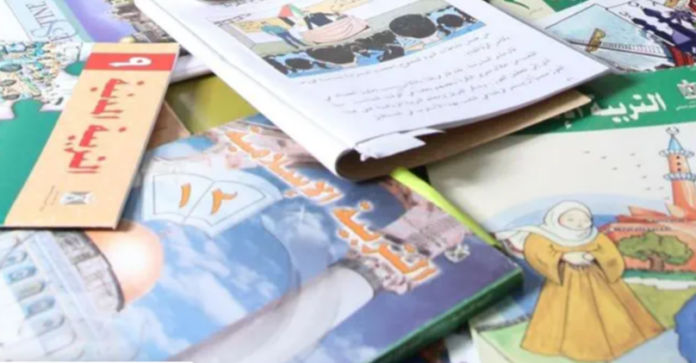
In the “stabilization” process in Gaza, designed to facilitate a terror-free Gaza entity, both the US and Israeli governments have announced that their purpose is to allow the Palestinian Arabs to establish an entity which is free from the dictates of a terror regime.
However, our news and research agency, which has covered Gaza for 38 years, has confirmed from Israeli intelligence sources and from top Palestinian Arabnsources, that the new makeshift schools the US now facilitates in Gaza use the same Jihadi curriculum and the same Jihadi teachers that the PA supplies for UNRWA.
There is no plan to disarm or conduct weapons inspections of UNRWA schools and UNRWA medical clinics, which have been proven to store munitions.
What I witnessed as a guest lecturer at the US Army Centcom base for the stabilization process was that UNICEF was delegated to assume a key role in the Gaza schools, which would lead an objective observer to assume that UNRWA is out of the picture.
UNICEF does not carry a reputation for incitement and indoctrination except for its mendacious decisions about World Heritage sites in Israel. However, UNICEF is allowing the Jihadi curriculum to continue. We have learned from Our Gaza crew that the children n Gaza will be taught by the same teachers and within the same Palestinian Arab school system that the UNRWA, the PLO and Hamas have provided since the PA school curriculum was put in place in 2000
Under normal circumstances, we would dispatch a TV crew to film these facilities in Gaza, as we have done over the years.
However, the US and Israel have given strict orders to not allow reporters to cross the border into Gaza.
Therefore, the Israeli and world media is in the dark about what is really transpiring in Gaza.
We have come up with a solution, which is to hire top journalists who live in Gaza to provide immediate, hands-on coverage of the improvised Gaza schools and what they are teaching there now.
We expect our Gaza crew to provide footage for five days of news coverage, which our experienced Arabic-fluent news team in Jerusalem can turn into an instant movie to screen for US and Israel media outlets. This way the world will know the actual message that the stabilization process is fostering for the next generation of Palestinian Arabs.
We will be able to pay them, assuming we raise the money, because the new efficient ATM machines installed throughout the rubble of Gaza allow for efficient bank transfers for journalists, schools, corporations – or killers.


