When Hamas turned its guns on us Gazans, the ‘pro-Palestinian’ chorus fell silent

neighbour in Gaza suffers from Alzheimer’s. He has been displaced four times during this war. He no longer remembers the events of October 7 or how it began. Yet one memory survives: the “victories”. Recently he smiled and said, “We’ve won every time – what’s new about this one?”

In a city of ruins, his fading mind holds the clearest thought of all: that every so-called victory ends in the same destruction, the same slogans, the same silence.

Gaza today stands on the edge of exhaustion. Streets once filled with life have become corridors of dust. The last Israeli hostage once held by Hamas has returned home; the movement had claimed their captivity served the dream of a state “from the river to the sea”. What remains instead is a population stripped of safety and shelter still declaring triumph over devastation.

The pattern is familiar. Each round of war brings the same outcome – destruction followed by proclamations of glory. The rhetoric of resistance grows louder as the prospects for ordinary people shrink. In the absence of accountability or reconstruction, the illusion of victory becomes the only product left to sell. Behind this theatre stands a network of regional sponsors that treat Gaza’s tragedy as a means of influence.

Iran, Qatar and others have turned conflict into an arena of investment and ideology. For some, it is leverage; for others, a business. Militias are managed like franchises, funded and promoted as brands. Every escalation becomes another match in the league of regional power – an event that entertains outsiders while Gazans live with the consequences.

Inside Gaza, the struggle is not only with Israel but within. Many who once kept silent now ask whether mere endurance should still be called loyalty. Hamas senses this unease. Its security forces monitor conversations and suppress dissent, fearing obedience is slipping away from the population it claims to defend. The siege is as much political as physical.

Repression is the regime’s primary instrument: surveillance, arrests, intimidation and unspeakable scenes of public executions and torture. Just as Hamas live-streamed the atrocities of October 7 to terrify Israelis, it makes use of video recordings of its brutality against alleged enemies within to strike fear into ordinary Gazans. A careless word can brand someone a traitor, a blasphemer, or a rival to be eliminated. And it works: Hamas is gradually reasserting control over areas beyond the reach of the IDF.

Meanwhile, the world’s sympathy flows easily, but moral clarity does not. Where are the protestors who for two years claimed to care for Gazans, now that footage of Hamas’s cruelty against its own people floods social media? Are the activists who filled the streets of Western cities and all those human rights organisations truly for us Palestinians – or simply against Israelis?

On Hamas Telegram channels the group pronounces that they won’t disarm. They see the ceasefire as merely time to rebuild to restart the next war. It already broke the deal, attacking IDF positions, prompting deadly retaliation.

Humanitarian concern is necessary, but without political honesty it becomes another ritual that sustains the cycle. Viewing Gaza purely as a battlefield between two sides ignores the internal oppression that prolongs its suffering.

Real peace requires more than ceasefires or aid. It demands dismantling the economic and ideological machinery that profits from endless conflict – from regional patrons to local rulers who depend on despair to maintain power.

The vision of a Gaza governed by civilians rather than militants is not naïve; it is the minimum condition for recovery. A society that values education, opportunity and safety over martyrdom could, for the first time in decades, begin to resemble a normal community rather than a permanent front line.

The longing for normal life now outweighs the appetite for heroic slogans. People want to wake up without fear, to rebuild without permission, to live without being told that survival itself is victory.

Over the rubble, banners of triumph still flutter. Yet beneath them, the truth endures – one that even an old man with fading memory can still recall: those who have lost everything cannot celebrate defeat disguised as victory.

Moumen Al-Natour is a lawyer from Gaza, Founder of the We Want to Live movement, a former political prisoner of Hamas, and president of the Palestinian Youth Organization for Development

Hamas has 20,000 armed terrorists, hundreds of rockets, IDF estimates

Palestinian members of the marine unit of the al-Qassam Brigades, the armed wing of the Hamas movement, take part in an anti-Israel parade in Rafah, in the southern Gaza Strip on July 13, 2015. Photo by Abed Rahim Khatib / Flash90 *** Local Caption *** çîàñ
òæä ôìñèéðé
ôìùúéðé
ôìùúéðàéí
îöòã
ðù÷
öåììðéí

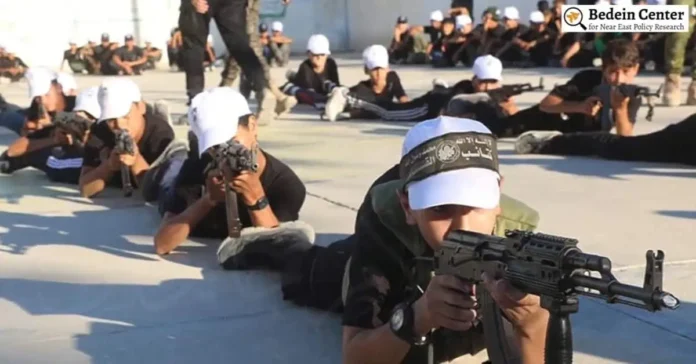
More than two years after the Hamas invasion of Israel on October 7th, Hamas still has roughly 20,000 men under arms in the Gaza Strip, the Israeli military estimates.

According to a report published Tuesday morning by Channel 14, a recent Israeli intelligence assessment of Hamas has determined that the terror group likely has about 20,000 armed terrorists divided into six brigades, which are further subdivided into 24 battalions.

Prior to October 7th, 2023, Hamas is believed to have had as many as 40,000 armed terrorists in Gaza, including 20,000 highly trained members of the Izz ad-Din al-Qassam Brigades, Hamas’ military wing.

Hamas now is operating with roughly half as many men under arms as it had prior to October 7th, 2023, and its surviving 24 battalions are at varying levels of effectiveness.

In some cases, Hamas battalions in parts of Gaza have been forced to operate in isolation since the end of the previous ceasefire, in March.

Three rising Democratic stars to appear alongside Hamas lovers at anti-Israel conference in America’s ‘jihad capital’

The readiness and combat effectiveness of some Hamas battalions has likely further been degraded by the loss of experienced terrorists and their replacement by younger, poorly trained recruits.

The Israeli military estimates that after two years of war and thousands of rocket attacks, Hamas still has an arsenal of hundreds of rockets, with a small number of rocket launchers capable of firing short and medium-range projectiles.

Prior to the start of the war, estimates placed the number of rockets in Hamas’ arsenal in the tens of thousands.

In addition, the report said that Hamas likely has thousands of rocket-propelled grenades, along with thousands of bombs and thousands of AK-47 assault rifles.

Perhaps most concern, however, is the survival of much of Hamas’ underground infrastructure, with more than half of the group’s terror tunnels believed to still be intact.

The IDF intel assessment also determined that morale inside of Hamas appears to be low, following the elimination of much of the group’s senior leadership and a decline in Hamas’ command-and-control capabilities.

While Hamas’ overall offensive capabilities have been greatly diminished, the assessment found, the terror group still possesses some limited abilities to infiltrate into Israeli territory.

Experts urge Trump to ban terror-linked UN agency from his Gaza peace plan

A Qatari Role in a Post-War Gaza Would Mean the Restoration of Hamas Power

Qatar’s financing of the U.S.-designated terrorist organization Hamas was the sine qua non for the group’s capability to carry out the October 7, 2023, massacre in southern Israel. The September 9, 2025, Israeli airstrike on Hamas leaders in Qatar, even if botched, reflects that Israel’s political leadership and its security and defense establishment have internalized that lesson of Qatari terror-finance in Gaza.

The Qatari regime pumped at least $2 billion into the coffers of Hamas over the last decade leading up to the October 7, 2023, massacre.

In late September talks with the White House regarding President Donald Trump’s twenty-point plan to end the war in Gaza, Israel’s government insisted that the Qatari regime should have no role in the “day after” the Gaza war ends.
The Qatari regime pumped at least $2 billion into the coffers of Hamas over the last decade leading up to the October 7, 2023, massacre. Hamas used the largely unregulated funds to purchase weapons and build its extensive tunnel system; Israel continues to destroy the over 300 miles of terrorist tunnels in Gaza.

Trump recognized the danger posed by Qatar during his first administration, when he said, “Qatar has been a funder of terrorism at a very high level” and announced that “the time has come to call on Qatar to end its funding … and its extremist ideology.”

The second Trump administration has been more tolerant toward Qatar, and Washington is advocating for Doha to have a role in Gaza Strip reconstruction. The Israeli news outlet Ynet reported on a compromise formulation between the United States and Israel, though neither side is detailing their agreement. By admitting Qatar back into Gaza, however, Israel would be doubling down on a security blind spot that enabled Hamas’s attack.

Qatar’s sponsorship of Hamas terrorism has become a hot-button issue within Israeli politics. Knesset members of Prime Minister Benjamin Netanyahu’s Likud party seek to pass legislation designating Qatar as a “terror-supporting state.” After the military strike in Doha, Netanyahu declared, “I say to Qatar, and all nations who harbor terrorists, you either expel them or you bring them to justice. Because if you don’t, we will.”

In late September, Nir Barkat, a Likud party member and the minister for Economy and Industry, who expressed support for the anti-Qatar Knesset bill, told the German Bild that “Qatar is a wolf in sheep’s clothing” and the “biggest engine of antisemitism in the world.”

Qatar’s goal since the October 7, 2023, massacre has been to ensure that Hamas survives as a movement.

The Israel Defense Forces strike against Hamas in Doha has not led to a change in the Qatari regime’s behavior. Qatar has not evicted the Hamas terrorist leaders from its territory, and it continues its soft-power operation in the media to incite anti-Americanism and Islamist terrorism against Israel. In late September, Jaber Salem Al Harmi, editor-in-chief of the Qatari state-controlled Al Sharq news outlet, shared a video depicting Trump as a devil holding a pitchfork. Qatar’s newly appointed defense minister, Saoud bin Abdulrahman Al Thani, once posted a tweet stating, “We are all Hamas.”

Qatar’s goal since the October 7, 2023, massacre has been to ensure that Hamas survives as a movement. After the worst single-day slaughter of Jews since the Holocaust, Qatar’s regime refused to condemn Hamas and blamed Israel instead. “The Ministry of Foreign Affairs holds Israel solely responsible for the ongoing escalation due to its ongoing violations of the rights of the Palestinian people,” the Qatari government declared that same day.

Qatar sought to stop Israel’s war, declaring that it seeks to “prevent these events from being used as a pretext to ignite a new asymmetric war against Palestinian civilians in Gaza.” Qatar’s use of money to reconstruct Gaza could mean material and cash funneled to the remaining vestiges of Hamas and Palestinian Islamic Jihad, with the goal toward enabling them to rebuild their terrorist organizations.
Israel should not make the same mistake twice by trusting Qatar or, indeed, any regime whose goal is the expansion of Muslim Brotherhood ideology.

American-Israeli sues PA, PLO after wife and newborn son killed in attack

A federal lawsuit filed in the Southern District of New York seeks justice for American citizens harmed in Palestinian terror attacks, focusing on dual American-Israeli citizen Hananel Gez, who survived a deadly shooting near Jerusalem earlier this year. The case, filed under the US Anti-Terrorism Act, names the Palestinian Authority (PA) and the Palestine Liberation Organization (PLO) as defendants.

Gez was critically injured in May 2025 while driving his pregnant wife, Tzeela, to the hospital to give birth to their son. Palestinian terrorists opened fire on their car, killing Tzeela instantly. Their baby, Ravid Haim Gez, was delivered in an emergency operation but died fifteen days later from his wounds. Gez, who sustained serious injuries, later underwent surgery to remove shrapnel from his chest.

According to the 64-page complaint, the attack was carried out as part of a broader campaign of violence encouraged and funded by the PA and PLO through their “Pay for Slay” program – a system of government payments to terrorists, those injured in attacks, and the families of those killed while carrying them out. The suit alleges that this policy created a financial incentive to murder Jews, Israelis, and Americans.

The filing states that the family of the terrorist who killed Tzeela and Ravid Gez and injured Hananel Gez has received thousands of shekels in reward payments from the PA since June 2025. The plaintiffs argue that such payments constitute direct material support for terrorism under U.S. law.

The lawsuit also includes Stuart Force, whose son Taylor, a U.S. Army veteran, was murdered by a Palestinian terrorist in Tel Aviv in 2016. Both families seek compensation and a judicial order to dismantle the Pay for Slay program, which they say fuels ongoing violence.

Hananel Gez’s complaint describes enduring severe emotional trauma alongside lasting physical injury. It emphasizes the need for accountability, stating that American citizens targeted abroad by terrorism deserve justice in US courts.

The plaintiffs are represented by attorneys David Schoen, the National Jewish Advocacy Center, and co-counsel from Holtzman Vogel.

The Day After: A Humanitarian Solution to an Uninhabitable Gaza

Gaza today lies in ruins. United Nations and World Bank assessments describe it as “uninhabitable.” Most homes and health facilities have been damaged or destroyed. A joint UN–World Bank report estimates about $50 billion is needed to restore Gaza’s infrastructure—and decades could be required. Even clearing the tens of millions of tons of debris could take some 15 years. Families struggle to survive amid destroyed infrastructure and scarce medical care.

Regarding the hundreds of thousands of now homeless Gazans, Sir John Sawers, former head of MI6 and UK ambassador to the UN, said urgently, “The extremely dire conditions in Gaza must be addressed.”

Something beyond talk is needed. About the talking-versus-doing syndrome, Herbert Hoover, U.S. president from 1928–32, said: Words without actions are the assassins of idealism.”

Hoover’s life was a testament to action. During World War I, he headed the Commission for Relief in Belgium (1914–1917), feeding 10 million people and carrying out postwar reconstruction. In 1917, he served as U.S. food administrator. Following the war, he became Director-General of the American Relief Administration (ARA) from 1919 to 1923, overseeing large-scale famine relief in Central and Eastern Europe, including the Soviet Union. In 1927, as Secretary of Commerce, he successfully resettled 325,000 Americans rendered homeless by the Mississippi River flood.

A Quaker, Hoover passionately believed in peace, was appalled by the human costs of war, and devoted his life to public service. Even in his grandest projects, he kept the worth of the individual paramount. His title, the Great Humanitarian,” was well deserved. During Europe’s next war, Hoover, then in his 70s, established the Polish Relief Commission, feeding 300,000 children in occupied countries. In 1946, President Truman asked Hoover to serve as a special food advisor, assessing global shortages and coordinating strategies to alleviate famine. His approach reminds us that large-scale humanitarian crises demand immediate, practical action, not just rhetoric.

Hoover’s concern extended to Palestinian Arabs. In December 1945, he submitted a plan to the Anglo-American Committee of Inquiry on Palestine, proposing a process by which both Jews and Arabs could benefit materially, potentially helping settle the Palestine question while providing ample Jewish refuge. Hoover described it as a constructive humanitarian solution,” and the committee agreed it merited careful study.

He proposed that Iraq serve as the site for voluntary resettlement of Arabs from Palestine, offering immediate relief and long-term benefit. By 1949, over a half million Palestinians were living as refugees following the 1948 Arab-Israeli War, and Hoover wrote the White House that they are in a deplorable condition.” He noted that Iraq could absorb them, strengthening its economy and providing a permanent solution for the displaced.

Two decades ago, when Iraq had been decimated by war, sanctions, and conflict, such a resettlement plan would have been feasible—and beneficial. Today, with hundreds of thousands of homeless Gazans, it is striking that, despite shared language, religion, and culture, Arab nations have not offered to take in their brethren. Some of these nations, particularly in the Persian Gulf, are among the richest in the world.

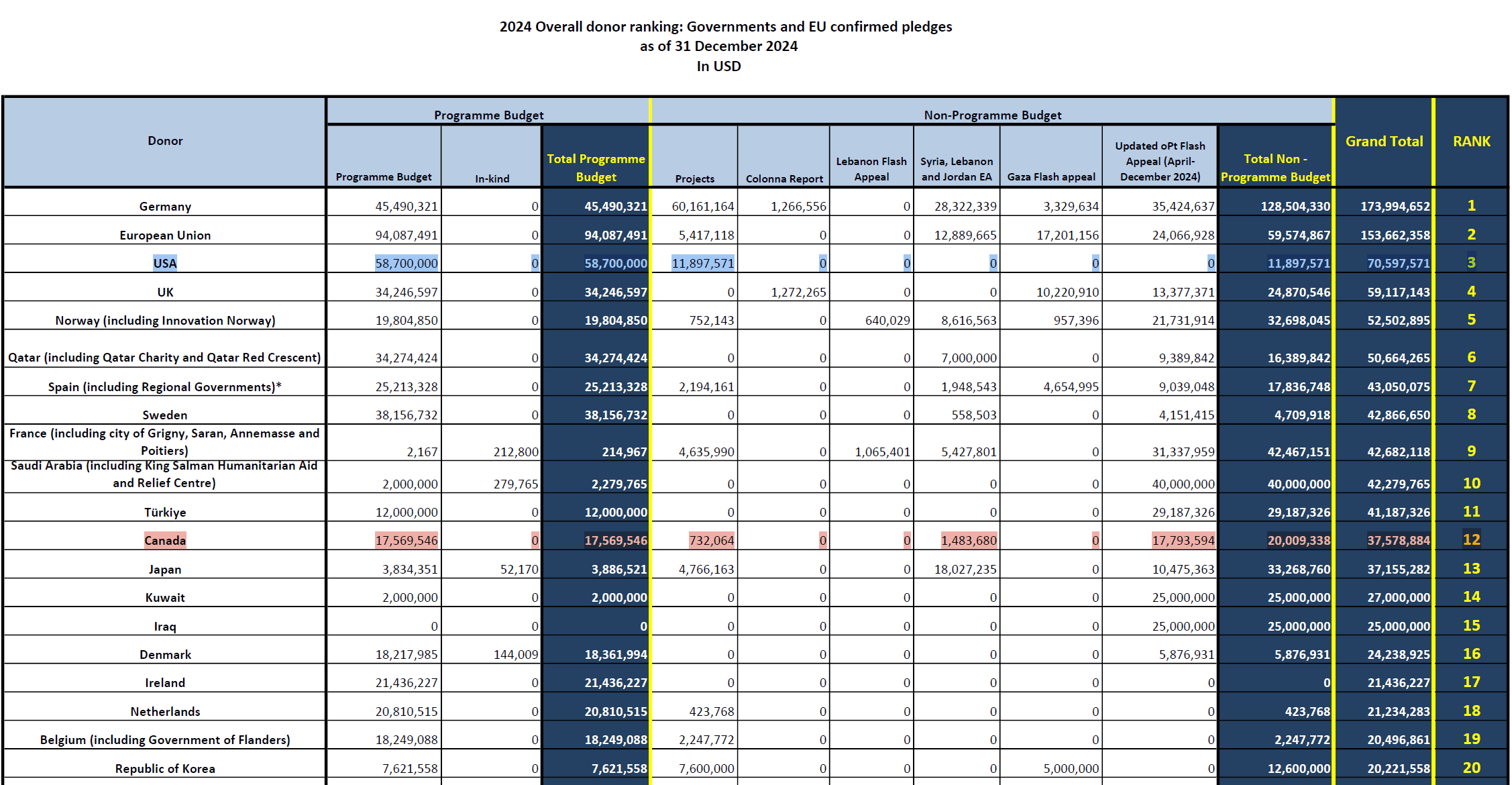
Consider Qatar, a major supporter of Hamas and over 30 times the size of the entire Gaza Strip. Qatar’s population is 85% non-Arab expat workers. It would be remarkable if Qatar opened its borders to Gazan resettlement—providing humanitarian relief while simultaneously blessing its own society. The world cannot afford to wait while words substitute for deeds.

What are Qatar and the world waiting for? Words without actions, as Hoover warned, are the assassins of idealism

Temple Mount: Problem and Solution

The Temple Mount in Jerusalem is more than merely a point of contention. It has been a major flashpoint that has initiated major conflicts and mass killings of Muslims and Jews for decades:

  • Over a hundred years ago in April 1920 Nebi Musa Riots erupted in large measure due to Moslem fears of Jewish encroachment on the Temple Mount and the Wailing Wall, with four Arabs and five Jews killed and 18 Arabs and over 200 Jews injured. As bad as that seemed, it was merely the precursor for what followed later that decade:
  • In August 1929, disputes over access to the Western Wall resulted in Arab riots with 116 Arabs and 133 Jews being killed, including the massacre of the Jewish community of Hebron.
  • Although the 1936 riots which lasted several years were not directly triggered by the Temple Mount issue, much incitement inflamed the situation by imams claiming that Jewish immigration into Palestine endangered the Muslim holy site of Al Aksa Mosque on the Temple Mount.
  • In 1969 an Australian Christian tourist tried to set Al-Aqsa on fire which sparked widespread violence throughout Israel.
  • “Black Monday,” The Al Aqsa Massacre on October 8, 1990. When the Temple Mount Faithful planned to lay a cornerstone for the Third Temple on the Temple Mount, violent conflict resulted in shooting and riots throughout the country.
  • In late September 1996, the opening of a tunnel near the Western Wall of the Temple Mount triggered riots that lasted days.
  • On 28 September 2000, Ariel Sharon’s visit to the Temple Mount was seen as provocative, setting off the Second Intifada which resulted in 4300 lost lives.
  • From September 27, 2000, clashes between Moslem worshippers and Israeli security in and around the Temple Mount continued for days due to restrictions imposed at Al-Aqsa.
  • After two Israeli policemen were killed by armed assailants on the Temple Mount in 2017, Israeli security decided to put a metal detector at the entrance, resulting in violent protests.
  • Rumors of Jews planning to sacrifice a goat on the Temple Mount resulted in conflict. Muslims barricaded themselves in Al-Aqsa and police stormed Al-Aqsa in April 2023.
  • The October 7, 2023 massacre was labeled “The Al-Aqsa Flood,” where now tens of thousands have fallen in two years or war.

Not only is it clear the Temple Mount issue has triggered conflict and agony, but the frequency of these flashpoints has been increasing over the years. And it is no wonder: much of the incitement has emanated from the Jerusalem WAQF.

The tradition of inflammatory pronouncements began with the Grand Mufti of Jerusalem early in the 20th Century, but continued into the 21st Century. The previous WAQF head, Ekrima Sa’id Sabri, made starkly inciteful pronouncements around the turn of the century and beyond accusing the Jews of preparing to destroy Al-Aqsa.

After his appointment as WAQF Head in 2006, Muhammed Ahmad Hussein has publicly stated that suicide bombings could be considered “legitimate resistance.” There is a plethora of examples of call-to-arms sermons from Temple Mount imams in the past couple decades resulting in violence on the mount and beyond.

Is there any hope on the horizon for a reversal from this seemingly universal Muslim antagonism toward the “devious Jew” to peaceful accommodation with the Jewish Abrahamic brother?

One member of two WAQFs, namely the Islamic Waqf Council in Jerusalem and the Jerusalem Endowments Council (Jordanian Waqf), was Dr. Mahdi Abdul Hadi. His rich resume includes earning his PhD in Peace Studies from University of Bradford, UK.

Before his death 15 January 2025, I spoke with him about the problem of this seemingly endless incitement and conflict. While the vast majority of Palestinian Arabs believe the Jew have devious, hidden intentions with respect to control of the Temple Mount, the WAQF could easily neutralize this prime cause for anger and hate and become the prime-mover for peaceful accommodation with the Jews instead of being the prime source of this incitement. He spoke to the idea of the WAQF inviting the Jews to share the Temple Mount and build Solomon’s Temple there anew.

Dr. Mahdi Abdul Hadi said, however, that there is a “slight problem” in initiating this innovative invitation to the Jews: the knowledgeable doctor noted that the Israeli Chief Rabbinate formally prohibits Jews from ascending the Temple Mount. In respect of this official Jewish rabbinic prohibition, it would be undiplomatic, Dr. Abdul Hadi stated regretfully, to begin the process of presenting a public invitation to the Jews: according to proper protocol, the prohibition would need first to be rescinded.

Say, the Israeli Rabbinate responds favorably to Dr. Abdul Hadi’s observation and officially reverse their decades-long prohibition of Jews ascending the Temple Mount, the next question is, what then? Would Al-Aqsa need to be dismantled and replaced?

In fact, a Muslim scholar supports this very idea (“godsholymountain.org’ Website), which sees the mosque presently there alongside a Third Temple,

So, the knotty stumbling block to the Jews rebuilding the Third Temple and by so doing engendering world peace for generations is, oddly, Israel’s Chief Rabbinate.

 Even if the Chief Rabbinate is not forthcoming with an affirmative response, the simple fact that the WAQF made the offer would neutralize all Arab underlying suspicion of “scheming Jewish intentions” regarding the Temple Mount.

Bruce Brill is an independent journalist and former U.S. National Security Agency Middle East analyst (1972-74), Head of the American friends of the Jerusalem Temple Mount (1987, 88), and Executive Director of the Islam-Israel Fellowship (1999-2002). He has been published in Jerusalem PostWashington TimesChristian Science MonitorMidstreamJewish Spectator, and Jerusalem Report.

US Defense Pact Gives Terror-Sponsoring Qatar an Insurance Policy

A recent executive order issued by United States President Donald Trump that dramatically upgrades the U.S.’s defense commitment to Qatar provides a dangerous “insurance policy” to a state that is a primary supporter of global terrorism, including Hamas, Al-Qaeda and ISIS affiliates, observers in Israel have warned.

The executive order, signed on Sept. 29, states that the U.S. “shall regard any armed attack on the territory, sovereignty, or critical infrastructure of the State of Qatar as a threat to the peace and security of the United States,” committing Washington to take all necessary measures to defend it.

The move is seen as part of the broader architecture of the Gaza hostage deal, which Doha supports, and comes after an Israeli Air Force strike targeting senior members of Hamas’s political bureau on Sept. 9.

Professor Boaz Ganor, president of Reichman University and founder of the International Institute for Counter-Terrorism, told JNS that this defense pact is a significant price that Israel is being forced to pay.

He described Qatar as “a terror-supporting state that overtly or indirectly supports the most extreme elements among the Muslim Brotherhood (of which Hamas defines itself as its military arm), and global jihad elements supporting Al-Qaeda and ISIS.”

Ganor described Qatar’s long-standing dual policy of simultaneously courting the West while fueling extremism, stating, “Qatar has always tried to enjoy both worlds—to get closer to the Western world and its leader, the U.S., in various activities ranging from hosting the large American airbase on its territory [Al-Udeid airbase] to huge investments in various Western countries, including the purchase of or donation to popular institutions such as football clubs, sports clubs, research institutes and universities.

“On the other hand, Qatar transferred large sums of money to terrorist organizations such as Hamas and used its popular propaganda arm in the Arab world —Al Jazeera in Arabic —to encourage radicalization and incite against elements hostile to the Muslim Brotherhood, primarily various Arab leaders and Israel, and Al Jazeera in English to spread the Islamist narrative among Western countries.”

On Oct. 10, U.S. Defense Secretary Pete Hegseth said during a meeting at the Pentagon with this Qatari counterpart, Saoud bin Abdulrahman al-Thani, that the U.S. Air Force Base at Mountain Home, Idaho, would host Qatar F-15 jets and pilots, to “enhance our combine training [and] increase the lethality, interoperability,” according to a report in Air Force Times.

Ganor assessed that the new pact is a direct outcome of the Israeli airstrike in Doha, which was unsuccessful in killing Hamas leaders, and Trump’s desire to use Qatar as the central lever to pressure Hamas into accepting the hostage deal. He warned that this move “grants Qatar an insurance policy to continue its dangerous policy.”

He added that the pact should be conditioned on Qatar’s refraining from passive or active support for terrorist organizations and assistance to radical Islamist activity around the world, or else it could provide “a tailwind for global Islamist terrorism throughout the world.”

Noa Lazimi, a researcher specializing in international relations at the Misgav Institute for National Security and Zionist Strategy, told JNS, “The importance of this step must be understood against the backdrop of Qatar’s considerable investment in recent years in the modernization of its air force, as part of a comprehensive policy to strengthen its military capabilities.

“According to an in-depth monitoring report by MEMRI [Middle East Media Research Institute], about a decade ago, Doha’s air fleet consisted of only 12 fighter jets in total (of which 9 were operational). Today, following an accelerated strategy of armament, the fleet has been dramatically expanded due to purchases from the U.S. and a number of European countries.”

This expansion is not just in hardware but also in operational know-how, Lazimi added, with Qatar gaining experience through multinational joint exercises, including air training with hostile countries like Turkey and Pakistan.

“This raises the fear that Qatar will serve as a bridge for transferring advanced Western technologies and tactics to elements hostile to Israel, such as Iran, Turkey, Pakistan, and others,” she cautioned.

While Qatar’s requests for the advanced F-35 fighter jet have so far been refused, Lazimi said that this could change. “If the trend of tightening relations between Washington and Doha continues, and in accordance with economic and other considerations, the scenario in which the U.S. sells F-35 aircraft to Qatar should not be ruled out, a step that Israel must oppose due to the damage to its competitive military advantage against the countries of the region,” she concluded.

This contradictory American policy towards Qatar is not new. A June 15, 2017 report by CBS News noted that President Trump was simultaneously authorizing the sale of over $21 billion in U.S. weapons to Qatar while berating the country for “sponsoring terrorism at the highest levels.”

The report detailed the signing of a $12 billion deal for 36 F-15QA fighter jets, a sale that was first authorized under the Obama administration but championed by Trump, who had told the Qatari emir he was going to sell Qatar “big, beautiful weapons.” This occurred even as the American president was publicly stating that “the nation of Qatar has unfortunately been a funder of terrorism.”

The new defense pact, detailed in an executive order published by the White House, solidifies Qatar’s status as a key strategic partner, locking it into the American security orbit.

Shin Bet chief David Zini: “What is this ‘West Bank’?

Incoming Shin Bet chief David Zini held an introductory meeting with the agency’s coordinators, during which he rebuked one of them for using the phrase “West Bank,” i24News reported. During the meeting, one of the coordinators explained one of the measures the Shin Bet uses “in the West Bank,”

in his words. Zini interrupted him and made clear that from now on the agency’s terminology is changing. “What is this ‘West Bank’? From now on you erase that expression from your lexicon – there is only Judea and Samaria,” he said.

Legislation in the Knesset to try Gazan

Justice Minister Yariv Levin announced on Thursday that he is advancing legislation in the Knesset to establish a special criminal tribunal to try Gazans accused of carrying out massacres and atrocities on October 7, 2023, in a process that could result in death sentences being handed down to those convicted.

The tribunal will be able to try the dozens of Gazans captured in Israel between October 7 and October 14, 2023, suspected of being Hamas operatives for crimes listed under Israel’s 1950 Law for the Prevention of Genocide, which is based on the 1948 Genocide Convention, which can carry a death sentence.

In a joint statement to the press made together with Knesset Constitution, Law and Justice Committee chairman MK Simcha Rothman, and committee member MK Yulia Malinovsky of the Yisrael Beytenu opposition party, Levin stated that advancement of the bill was now possible following the return of all the living hostages kidnapped by Hamas on October 7 and held in Gaza since then.