 Czech
Czech French
 German
 Hebrew
 Noruegan
 Russian
 Spanish
 Swedish
 Polish
 Portuguese





President Trump – Let Israel save the Druze!

Mark Zell is VP, Republicans Overseas, & the Chairman of Republicans Overseas Israel. An iInternational lawyer, he describes the current situation below.
Here is what he wrote:
I met today with a senior Israeli Druze leader and former IDF commander who is well informed about the current situation in Suweida — the principal Druze area in southern Syria. He reports:
1. There are about 800,000 Druze living in southern Syria.
2. Highway 110 which connects Suweida and its environs has been cut off by Syrian security forces preventing needed humanitarian aid from reaching the Druze communities.
3. The highway leading from Israeli controlled territory in Syrian Golan to the Druze communities is under the control of Syrian security forces who are preventing essential supplies from reaching the Druze communities.
4. The main bakery for the Druze communities in Umm el-Zeitun has been captured by Syrian security forces who are attempting to starve the Druze of Suweida and environs to death after murdering well over 1000 Druze civilians.
5. The Druze hospitals in Suweida were attacked by Syrian security forces who murdered the entire medical staff and all patients. Their bodies are still lying in the hospital. Attempts to remove the bodies and restore operations of the hospital have been hampered by Syrian snipers who are still in place.
6. Some 35 Druze villages on the ridge from Damascus to Suweida have been occupied by Syrian security forces who are said to be systematically destroying the Druze inhabitants despite the so-called ceasefire.
7. The Trump Administration is said to be preventing the IDF from taking action to clear the highways leading to the Druze communities in the Suweida province. Without IDF intervention or an agreement providing for the withdrawal of Syrian security forces from the key access points, the 1000-year old Druze communities will be utterly destroyed.
8. There is an 800-man US military force not far from Suweida which, if redeployed, would enable medical facilities and essential humanitarian aid to reached the beleaguered Druze population.
9. For various reasons access to the Druze communities through Jordan is not feasible.
10. The failure to remove Syrian security forces from southern Syria constitutes a critical military threat to Israel (and Jordan)
11. If President Trump does not green light the IDF to clear southern Syria of hostile Syrian security forces (which include some 30,000 non-Arab mujihadeen from Afghanistan and Iraq) or fails to allow the US forces already in Syria to provide medical assistance and humanitarian to the Druze communities, the Syrian security forces and their allied militias will wipe out the Syrian Druze in their entirety.
Republicans Overseas Israel together with the Jewish and non-Jewish citizens of Israel call upon President Trump and his Administration to let Israel protect the amazing Druze of Syria and the other minorities in southern Syria and prevent their annihilation by Syrian security forces.
Please, President Trump, @POTUS don’t turn a blind eye to the destruction of our Druze brothers and sisters. Please don’t let October 7th happen again — this time in Syria.
Dr. Aaron Lerner heads IMRA – Independent Media Review and Analysis, since 1992 providing news and analysis on the Middle East with a focus on Arab-Israeli relations.
UN official compares Israeli actions in Gaza to Nazi crimes
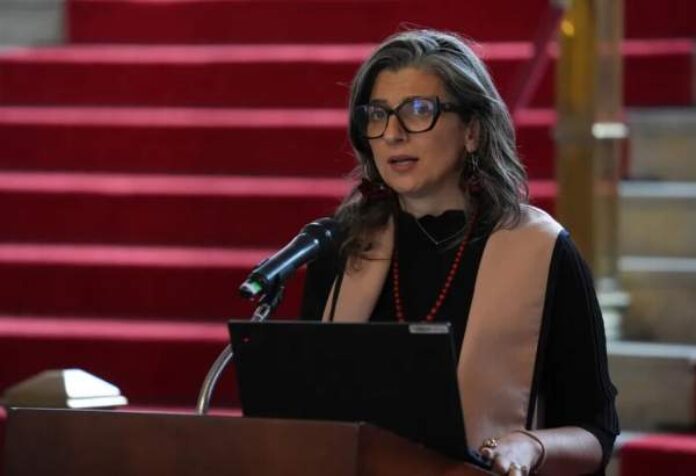
“My generation was taught Nazism was the greatest evil; and it was; and colonial crimes should’ve not been omitted,” Albanese stated on X.
“Today, she continued, a state (Israel) starving millions/shooting children for sport, shielded by democracies & dictators alike, is the new abyss of cruelty.”
The UN official concluded her remarks with a question: “How will we survive this?”
Earlier, a disabled Palestinian man, Mohammed al-Sawafiri, died after his health deteriorated due to severe hunger caused by Israel’s blockade.
Also on Sunday, the Ministry of Health in Gaza said on Telegram that Israel’s starvation policy has so far led to the deaths of 86 Palestinians, including 76 children, due to malnutrition and lack of humanitarian aid, which has been blocked from entering Gaza since October 2023.
Syria’s new dawn is already a nightmare
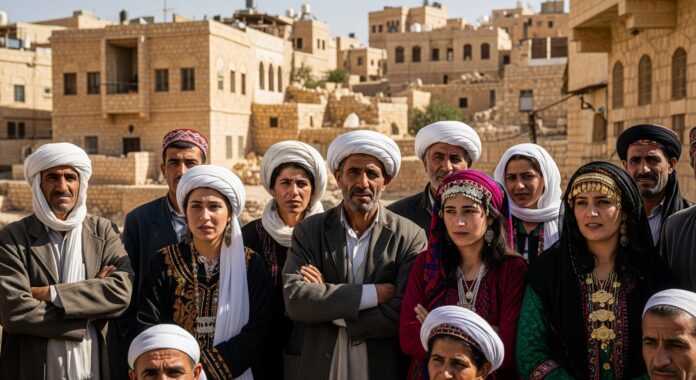
Fighting has engulfed the Druze-majority city of Sweida in southern Syria, leaving over 200 people dead. This week, Druze villages have been overrun by Syrian regime forces and allied Islamist militias under the guise of ‘restoring order’, only for those forces to unleash executions, looting and arson upon Druze neighbourhoods. According to the Syrian Observatory for Human Rights, 92 Druze were killed (including 21 civilians executed by government troops) in the space of a few days. In one incident, an 80-year-old Druze sheikh had his moustache, a symbol of honour, forcibly shaved by invading fighters. He was reportedly killed shortly afterwards. This is, it appears, the dark reality of ‘national unity’ under Syria’s new rulers.
The Druze of Sweida are not the only minorities being targeted. In March, on Syria’s Mediterranean coast, over a thousand Alawite civilians were slaughtered in sectarian pogroms. Jihadist militants of Hayat Tahrir al-Sham (HTS) and the Turkish-backed Syrian National Army rampaged through Alawite villages, committing mass murder and revenge killings. A Reuters investigation found that nearly 1,500 Alawite men, women and children were killed between 7 and 9 March by Sunni fighters in Alawite areas.
The violence was ostensibly triggered by a short-lived rebellion of loyalists to former Syrian dictator Bashar al-Assad, but the response descended into outright collective punishment. There have been killings, looting and arson targeting Alawites at 40 separate sites at least. Nor were the perpetrators rogue outlaws – they included at least a dozen factions now under the command of Syria’s new government. Many of these are notorious Islamist militias, who have long been under international sanctions for prior atrocities. Graffiti scrawled on a ransacked Alawite home declared: ‘You were a minority and now you are a rarity.’ The intent was nothing less than ethnic cleansing.
The Syrian regime in Damascus, led by interim president Ahmed al-Sharaa (better known as Abu Muhammad al-Jolani), a former ISIS and al-Qaeda member, denies any policy of targeting Alawites. But it is impossible to ignore the regime’s fingerprints on these crimes. Reuters has traced a chain of command from the Alawite massacres in March straight to men serving alongside Sharaa. Orders from Damascus to crush the ‘remnants’ of Assad’s old regime were interpreted on the ground as a licence to exterminate Alawites. Sharaa’s government claims to be investigating these crimes, vowing punishment ‘even among those closest to us’, but impunity reigns. No one has been held to account for March’s bloodbath, and now a similar atrocity is unfolding against the Druze.
The optimism that met Syria’s new Islamist-led regime last year now appears deeply misguided. When HTS and other insurgents ousted Bashar al-Assad’s dictatorship, Sharaa’s ascent to power in December was greeted by many Western leaders and media figures as a fresh start. The jihadist warlord was feted by the commentariat, even cosied up to by the likes of Alastair Campbell and Rory Stewart on their The Rest Is Politics podcast. But for Syria’s minorities, the regime change has meant a change in the costumes of the rulers rather than a change in their character. Sharaa insists he seeks to ‘unite’ Syria. In practice, his rule has been marked by sectarian score-settling and broken promises.
The most recent bloodshed followed a familiar pattern. In Sweida, militias struck a deal with Sharaa’s forces to enter the city peacefully. As soon as troops moved in, they indulged in savage practices: summarily executing civilians, looting homes and humiliating elders. Sharaa’s office issued a statement decrying unspecified ‘unfortunate violations’ in Sweida and promising to hold those responsible to account. This is almost a replay of the regime’s response after the Alawite massacres in March, when Sharaa similarly condemned ‘shameful acts’ and vowed justice. Back then, as now, officials claimed the bloodletting was carried out by unruly militias beyond the government’s direct command.
This excuse is wearing thin. If these Islamist militias are truly outside Sharaa’s control, then he is either unable or unwilling to rein in his own allies. Both possible scenarios bode ill for Syria. If the president is too weak to stop genocidal violence by forces fighting under his banner, then Syria remains a patchwork of warlords with no real peace. If instead he quietly endorses or tolerates these pogroms, then his government is complicit in crimes against humanity, merely continuing Assad’s legacy of brutality under a different flag. Sharaa’s ‘inclusive’ government has proven to be cold comfort for those not aligned with his jihadist base.
Amid this bloodshed, Israel has initiated a military intervention to defend Syria’s Druze community. Beginning on Wednesday, the Israel Defence Forces (IDF) targeted Syrian troops in Sweida, and struck the Syrian military headquarters in the centre of Damascus. Jerusalem took a firm stance: leave the Druze alone, or face the consequences. Unlike the hollow threats we hear so often from Western countries, Israel’s warning was supported by force. Israeli strikes destroyed Syrian tanks and vehicles near Sweida and targeted over 160 sites in Syria this week. The IDF has also moved two divisions to the Israel-Syria border in case a broader confrontation ensues.
Israel’s intervention is not purely altruistic. From Israel’s perspective, the Syrian regime’s deployment of armed forces into southern Syria posed a direct threat to its border. Furthermore, the Druze community within Israel, an Arabic-speaking minority that serves conspicuously in the IDF, has close kinship ties to the Syrian Druze. The outrage within Israel over the Sweida massacres quickly turned into protests blocking highways. Hundreds of Israeli Druze even crossed into Syria to defend their brethren. Israeli prime minister Benjamin Netanyahu, facing internal controversies, seized an opportunity to appear tough and decisive. Launching airstrikes in support of the Sweida Druze has proven popular domestically, earning him political points while signalling strength.
Israel’s actions also reflect a broader strategic purpose. Its strikes near Damascus were initially seen as a ‘performative escalation’ – warning shots rather than conclusive strikes. The aim is deterrence: to signal to President Sharaa that any attempt to unify Syria by force, especially by moving armed units into the south, will be met with Israeli firepower.
Some observers argue that Israel simply prefers a weak and divided Syria. By attacking Sharaa’s forces, Israel limits the new regime’s ability to establish control. However, regardless of Israel’s motivation – a mix of realpolitik and solidarity with the Druze – the fact remains that Israeli airstrikes probably saved many Druze lives this week by stopping the advance of sectarian killers.
Israel at least seems to understand what kind of regime it is dealing with in Syria. The contrast with the UK here could hardly be more stark. Barely two weeks before the Sweida massacre, UK foreign secretary David Lammy was in Damascus, shaking hands with President Sharaa and pledging £94.5million in aid to support Syria’s ‘long-term recovery’. With great fanfare, the UK re-established diplomatic ties with Syria after 14 years. Lammy spoke of ‘renewed hope’ and an ‘inclusive and representative’ transition.
Washington has been equally eager to embrace Syria’s post-Assad regime. US president Donald Trump lifted sanctions on Syria in June, and even praised Sharaa as an ‘attractive, tough guy’. He also floated the idea of Syria joining an expanded Abraham Accords peace framework, therefore recognising Israel. The logic was simple: bring Syria in from the cold, peel it away from Iran’s orbit, and declare the 14-year civil war resolved.
That aspiration is now in tatters. The massacres of Druze and Alawites cast grave doubt on the new Syrian government’s credibility and intentions. For all the talk of a fresh start, Syria’s interim rulers have shown a grim continuity with the past: intolerance of dissent, reliance on sectarian militias and a propensity for violence. The West’s willingness to overlook HTS’s jihadist pedigree in exchange for a quick diplomatic win now looks not just cynical, but also dangerously naïve.
Sharaa’s cabinet is literally teeming with individuals and factions under terrorism and human-rights sanctions. Did London and Washington really believe such actors would morph overnight into guarantors of pluralism and human rights? With scattered revenge killings of regime loyalists, crackdowns on minority communities, early signs of trouble were already there, but many Western policymakers and media outlets downplayed them. The result is that Western nations are now awkwardly complicit. British aid and American rapprochement have effectively helped legitimise a government whose associates have now butchered over a thousand men, women and children based on their sect. How will these same leaders credibly condemn atrocities elsewhere when they stayed mum on Syria’s? It is a staggering moral failure.
These events have sobering implications. Regionally, Syria’s ‘new dawn’ is revealing itself as just another nightmare. And far from unifying the country, Sharaa’s reliance on hard-line Islamist forces is deepening its fractures. The Druze, long wary of both Assad and Sunni extremism, may now conclude that they have no place in the new Syria, potentially sparking an exodus or armed self-defence. The Alawites, who already feel betrayed and endangered, could turn to desperate measures, perhaps even inviting foreign protection or forming insurgencies. Sectarian bloodshed on this scale risks reigniting a cycle of vengeance that could unravel the fragile peace achieved. In Lebanon next door, where Druze and Alawite communities also exist, the spillover of sectarian tensions is an ominous possibility. Israel’s direct strikes on Damascus also mark a dangerous escalation, and serve as a reminder that Syria’s war can at any moment ignite regional conflagration.
As the Druze and Alawite tragedies have shown, there is nothing ‘inclusive’ or ‘reformed’ about Sharaa’s new regime.
Andrew Fox is a former British Army officer and an associate fellow at the Henry Jackson Society, specialising in defence and the Middle East.
How the confession was extracted – transcript of Amiram’s statement about the police interrogation after the confession was taken from him by force: 2015

Question: What do you have to say about the suspicions against you and after consulting with a lawyer?
Answer: First of all, I’m glad you’re giving me a platform to give my side of the event. I want to retract the confession I gave during the Shin Bet interrogation. The confession was extracted from me by force and through aggressive means, and I will elaborate. First, I was arrested violently almost four weeks ago. Although I did not resist, they shackled my hands and feet and laid me down on the floor of a vehicle… Afterwards, they took me into the interrogation facility and interrogated me for hours at a time, day and night. They handcuffed me to a chair by both hands and feet, with my hands behind my back. During the first week, my legs were also shackled. I was deprived of a great deal of sleep. There were times when they interrogated me for almost three days straight. They wouldn’t let me sleep through the night and told me I’d better start talking, because if not, by this time tomorrow I’d definitely start talking. That’s how they kept interrogating me until the following evening.
They gave me two hours of rest and then brought me back in for further interrogation. Four tough and intimidating interrogators entered the room and asked me if I wanted to talk. I maintained my right to remain silent, and an interrogator named William slapped me and said, That’s it, it’s over. You don’t know what a Shin Bet interrogation is. You can’t remain silent and I’d have to start talking. When I continued to remain silent, he wrapped my hands in bandages like bracelets, then handcuffed me with short handcuffs behind my back. He spun me around on the chair and together with another interrogator, forced both my legs under the chair legs and sat me in a position where my back was tilted backwards at a 45-degree angle. I tried several times to straighten up, but they didn’t let me, until after about half a minute, when I simply collapsed backward from exhaustion.
I screamed in pain. My shoulders hurt, my legs, my chest hurt, with especially unbearable, inhuman pain in my lower back. They continued abusing me in this way and ignored my screams. They chatted casually among themselves. From time to time they lifted me up and brought me back down, grabbing me by the shirt. They yelled at me that they were my nightmare and that they would crush my bones. After about twenty minutes I could no longer bear the horrible pain and suffering, and I begged them to stop. I confessed to everything they wanted, all just to end the torment and torture.
Later in the interrogation, when I didn’t give them the answers they wanted, they resumed torturing me on the chair. They used two other methods: they sat me on a chair with my back pressed against a table and my hands cuffed behind my back. They stretched my arms out across the table, which caused severe pain in my shoulder, arms, and elbows. They also made me stand in a position where I had to crouch on the tips of my toes, with my hands cuffed behind my back – a position impossible to maintain for more than half a minute. I kept collapsing onto my back, but they didn’t care and repeatedly forced me back into that position. That was the only reason I agreed to cooperate with them. They raised their hands against me, slapped me, all this after many hours of sleep deprivation and complete isolation from any normal person. All these things caused me to confess to acts I never committed – things I never did – the murder and arson in the village of Duma. I never did those things. I have no connection to them whatsoever. I’ll also add that throughout the rest of the interrogations, they forced me to cooperate while threatening that if I didn’t cooperate in the way they wanted, they would resume the torture.
A brief excerpt from the minor A.’s testimony before the judge describing how his confession was extracted
They tortured me all night. I screamed and cried, and they laughed. I told them: Kill me, just don’t do this to me. ’ I beg you, Your Honor, I can’t take it anymore” (the suspect is crying). Blindfolds, slaps, being forced backward. They stick fingers under my chin and lift it forcibly. My neck hurts and I can’t breathe. They press on my ribs, grab the shoulder muscle, dig their fingers into the muscle. They shake me, scream, curse, and humiliate me. They punch my calves while my back is arched, and that makes the pain worse, until I break and ask, What do you want me to confess to?
Authorization of the Supreme Court that Ben Uliel was subjected to torture. 2022
Judges: Izsak Amit, Yosef Elron, Shaul Shohcat
On 17 December 2015, at 23:40, a “necessity investigation” began, which continued until 7:00 the next morning (hereinafter: the first necessity investigation). During this investigation, “special measures” were applied to the appellant. Shortly after the use of these measures began, the appellant admitted to carrying out the Duma attack. It should be noted that, according to the respondent, the timing chosen for implementing these special measures was based on the results of investigations involving the minor on 15 December 2015 and 16 December 2015, which significantly increased the suspicion of the appellant’s involvement in the attack.
Approximately three hours after the end of the first necessity investigation, the appellant’s interrogation resumed and continued until around 15:00. During this interrogation, the appellant repeated his confession, even though no “special measures” were used. The respondent did not request to admit as evidence the results of this interrogation or those of the first necessity investigation

What Hamas Taught Mamdani: Lessons in Populist Propaganda and Totalitarian Takeover
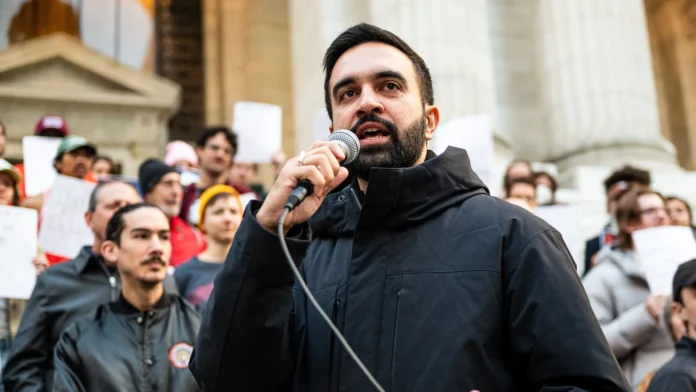
Zohran Mamdani’s 2025 campaign for New York City mayor, framed as a progressive crusade for economic justice, bears conspicuous similarities to Hamas’s 2006 electoral campaign in the Palestinian legislative and presidential elections. Both Mamdani and Hamas’s campaigns leverage populist economic grievances to mask radical ideological agendas, blending reformist rhetoric with revolutionary objectives. Hamas’s victory in the 2006 Palestinian legislative elections, built on promises of economic reform and anti-corruption, offers a playbook that Mamdani appears to follow, consciously or not, in his bid to remake New York—a radical structure anchored in communist and Islamist worldviews. This convergence is not merely tactical but ideological, reflecting the broader dynamics of the Red-Green Alliance—a coalition of far-left socialism and radical Islamism that threatens pluralistic societies with dystopian outcomes.
Hamas’s Economic Promises: A Template for Populism
Hamas’s 2006 campaign under the “Change and Reform” banner promised economic independence, poverty reduction, and infrastructure development. Their manifesto outlined disengaging from Israel’s economy, issuing a Palestinian currency, and reforming fiscal policies to combat unemployment and stabilize prices. These pledges resonated with Palestinians disillusioned by Fatah’s corruption, securing Hamas’s electoral success.
Similarly, Mamdani’s platform appeals to working-class New Yorkers struggling with the rising costs of essentials like chicken, rice, and milk, proposing radical solutions such as city-owned bodegas and fare-free transit. These policies, while pitched as progressive, echo the inefficient, state-controlled systems of the Soviet Union, representing a regressive step toward centralized economic control rather than genuine reform.
Economic Intifada as Political Warfare
Hamas’s economic promises were a gateway to broader political warfare, using socioeconomic grievances to build legitimacy while advancing a radical Islamist agenda. Mamdani’s campaign mirrors this approach, employing what can be termed an “economic intifada” to destabilize New York’s governance structures. His proposals—rent strikes, budget justice, and public ownership of grocery stores—are not just policy goals but tools to erode centrist coalitions and challenge capitalist frameworks. Like Hamas, Mamdani cloaks his agenda in the language of justice, appealing to the oppressed against the powerful, yet his policies risk undermining the economic foundations of a pluralistic city.
Ideological Radicalism Behind Reformist Rhetoric
Hamas’s 2006 platform combined economic populism with uncompromising rejectionism, delegitimizing Israel while promoting an Islamic state. Mamdani’s campaign similarly blends economic reform with ideological extremism. His full-throated support for the Palestinian cause, often veiled in democratic socialist rhetoric, aligns with Hamas’s narrative. In a 2017 rap track titled “Salaam,” performing as Mr. Cardamom, Mamdani expressed “love to the Holy Land Five,” referring to the leadership of the Holy Land Foundation, convicted in 2008 for funneling over $12 million to Hamas. This drew sharp criticism, with former Governor Andrew Cuomo calling it “disgusting” and raising concerns about Mamdani’s ties to Hamas-linked figures.
Mamdani’s visit to the Islamic Society of Bay Ridge during his 2025 campaign further underscores this alignment. The mosque’s imam, Sheikh Muhammad Al-Barr, has praised Hamas fighters and called for Israel’s annihilation. Mamdani’s social media posts from the visit sparked controversy, highlighting his association with radical Islamist sentiment. These actions suggest an ideological kinship with Hamas’s rejectionist stance, repackaged for a New York audience under the guise of social justice.
Globalizing the Intifada
Mamdani’s campaign reflects Hamas’s strategy of “globalizing the intifada,” a call to extend the Palestinian campaign of violence and subversion worldwide. His long-standing support for the Boycott, Divestment, and Sanctions (BDS) movement, evident since his 2014 advocacy at Bowdoin College and his 2021 push for local candidates to back BDS, situates New York’s local battles within a global anti-American, anti-imperialist, and anti-Zionist framework. In 2021, he introduced a state bill to bar New York charities from donating to Israeli settlement organizations, a move critics labeled “purely antisemitic.” In a June 2025 interview with The Bulwark, Mamdani defended the slogan “globalize the intifada” as symbolic of Palestinian human rights, stating, “That is not language that I use … any incitement to violence is something that I’m in opposition to.”
To be clear, the phrase “globalize the intifada” is a call to violence and terror, rooted in the bloody history of the First and Second Intifadas, which involved suicide bombings, lynchings, and attacks by PLO and Hamas terrorists, resulting in the killing of more than 1,000 civilians. “Globalize the intifada” has been chanted at pro-Hamas rallies together with slogans like “From the river to the sea Palestine will be free.” It explicitly advocates spreading violence and terror globally, not peaceful protest. Unlike terms like “muqawama silmiya” for peaceful resistance, “intifada” evokes jihad and the Islamic notion of martyrdom and armed direct actions, carrying the same dangerous and deadly implications as phrases such as “globalize the intifada.” Mamdani’s refusal to condemn the phrase outright drew criticism from the U.S. Holocaust Memorial Museum and Jewish leaders, signaling his alignment with radical narratives.
This mirrors Hamas’s post-October 7, 2023, strategy, which co-opted global far-left discourses, particularly on American campuses like Columbia University, to fuel anti-Israel sentiment and accusations of genocide at the International Criminal Court and International Court of Justice. Mamdani’s campaign similarly seeks to remake New York as a battleground for these global struggles, aligning with the Red-Green Alliance’s fusion of socialist and Islamist ideologies.
The Red-Green Alliance: A Shared Ideological Axis
The Red-Green Alliance unites far-left socialism and radical Islamism in a shared anti-Western, anti-capitalist, and anti-Zionist agenda. Both ideologies reject liberal democratic values, seeking revolutionary change through populist mobilization. Mamdani’s ties to this alliance are evident not only in his own actions but also through his father, Mahmood Mamdani, a member of the Gaza Tribunal’s advisory council, a UK-based group supportive of BDS and sympathetic to suicide bombers. In his 2004 book Good Muslim, Bad Muslim, the elder Mamdani wrote, “Suicide bombing needs to be understood as a feature of modern political violence rather than stigmatized as a mark of barbarism.” This intellectual framework, which normalizes extremist tactics, informs Zohran Mamdani’s political posture, blending socialist rhetoric with support for radical causes.
Parallels with Hamas’s 2006 Campaign
The parallels between Mamdani and Hamas are striking:
Economic Populism: Hamas promised subsidies and anti-corruption measures; Mamdani offers city-run bodegas and free transit, both exploiting economic discontent to gain support.
Political Radicalism: Hamas rejected bipartisan politics and security cooperation with Israel; Mamdani delegitimizes centrist governance and security institutions, framing them as tools of oppression.
Ideological Intransigence: Hamas’s anti-Israel stance mirrors Mamdani’s anti-Zionist rhetoric, both cloaked in narratives of resistance and liberation.
Mamdani is merely updating Hamas’s template for New York, replacing religious nationalism with intersectional socialism but maintaining a destabilizing posture that challenges democratic norms.
The Destructive Legacy of Radical Ideologies
The Red-Green Alliance’s blend of socialism and Islamism, though packaged as progressive, is inherently destructive. Hamas’s rule in Gaza since 2006 has turned the region into a dystopian landscape of violence and poverty, with Gazans themselves blaming Hamas for their suffering. Mohammed Attalah of Beit Lahia told CNN on March 26, 2025: “Our demand is that Hamas does not represent the Palestinian people. This chaos that they have created is enough.”
Mamdani’s vision for New York risks a similar trajectory, prioritizing ideological purity over practical governance. His proposal for city-run grocery stores, for instance, recalls the Soviet Union’s inefficient food distribution systems, a regressive policy dressed as progress. The radical extremism of both socialism and Islamism, when unchecked, leads to societal decay, as evidenced by Gaza’s ongoing crisis.
Zohran Mamdani’s 2025 mayoral campaign is not merely a bid for office but a case study in political warfare, drawing lessons from Hamas’s 2006 electoral strategy. By blending economic populism with ideological radicalism, Mamdani seeks to globalize the intifada, targeting New York’s civic, economic, and social foundations. The Red-Green Alliance’s destructive ideas, while well-packaged, threaten pluralistic democracy with dystopian violence and destruction, as seen in Gaza. New Yorkers must recognize this campaign for what it is: a totalitarian takeover dressed in the garb of reform.
Sources:
Hamas Election Manifesto (2006) https://www.hamascase.com/volume-i/06_hamas-manifesto/
Miller, Tim, and Cameron Kasky. “Zohran Mamdani: FYPod Crossover.” The Bulwark Podcast, 17 June 2025, https://www.thebulwark.com/p/zohran-mamdani-fypod-crossover.
NBC News. (2025) Asked to condemn the phrase ‘globalize the intifada,’ Mamdani says mayors shouldn’t ‘police speech.’ Available at: https://www.youtube.com/watch?v=ggV2SeiGrVw (Accessed: 15 July 2025).
New York Post (12 July 2025) Mamdanis dad part of anti‑Israel group sympathetic to suicide bombers. Available at: https://nypost.com/2025/07/12/us-news/mamdanis-dad-part-of-anti-israel-group-sympathetic-to-suicide-bombers/ (Accessed: 15 July 2025).
Shorr, T. (2024) Palestinianism and the Red‑Green Alliance: Similarities in the Ideology and Practice of Marxists and Islamists. Jerusalem Center for Public Affairs. Available at: https://jcpa.org/article/palestinianism-and-the-red-green-alliance/ (Accessed: 15 July 2025).
From Arafat to Paramount
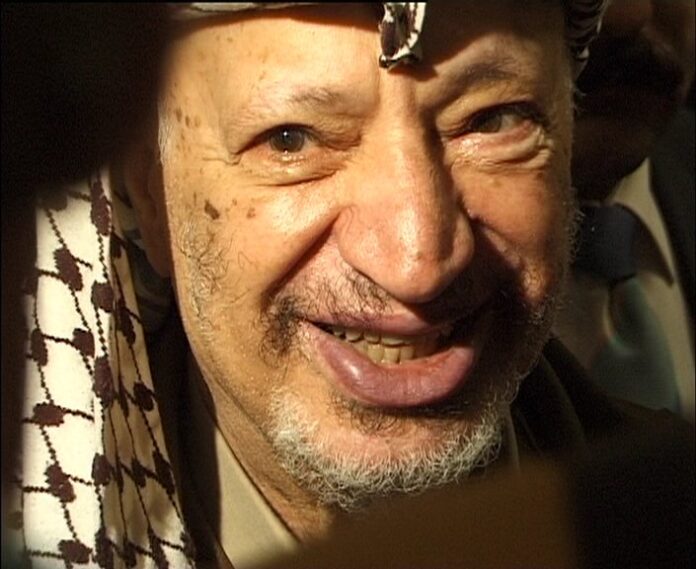
In September 1993, while on IDF Reserve duty in Har Eval overlooking Nablus, the IDF distributed its monthly newsletter to the troops.
There was a surprising feature this time, describing a new peace profile of PLO leader, Yassir Arafat.
The IDF newsletter described peace initiatives that Arafat was engaged in.
Found this to be a surprising development.
Called an Arab journalist to verify the story.
The Arab journalist was just as befuddled .
Asked him if could dispatch a TV crew to follow Arafat around and film him as he spoke to his people.
It was not long before a dozen clips recorded Arafat’s speeches which people in Israel were not aware of, although they were screened on the new Palestinian TV channel, the PBC, which hardly presented a persona of peace.
And so began a new cottage industry, “the Arafat tapes”.
Eventually screened in the Knesset and the US Congress, which caused much consternation to the circles which sought to buttress the image of Arafat and the PLO as harbingers of peace.
However the death of Arafat in 2004 and the creation of the Palestine Authority recognized by 135 nations ,did nothing to diminish incitement which our TV crews continued to film, especially their schools and their summer camps .
By summer 2024, had produced 26 movies filmed on location in UNRWA facilities in Judea, Samaria, Jerusalem and Gaza, where the violent PA curriculum was being used.
Although these movies could be easily accessed, Israel’s four tv stations will not feature these movies, even though these films provided the living proof of preparations for the current war.
Along came Paramount pictures.
Their representative in Israel asked if they could purchase footage to these films
Paramount pictures will now produce their own movie on Palestinian indoctrination to a war of terror, based on footage from our movies, which can be viewed at: https://www.cfnepr.com/205640/Movies
Curses – ancient and modern
It is amazing how very often the weekly Torah portion that we read in Synagogues on Shabbat contains startling messages so highly relevant to our current situation.
This past Shabbat, Jewish communities around the world read the portion entitled BALAK.
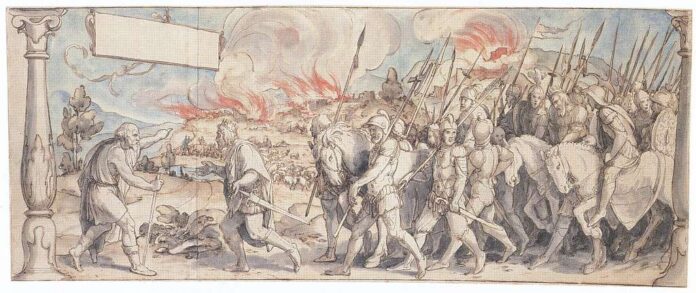
It narrates the frantic efforts of a local warlord and leader to find and convince the leading non-Jewish prophet of his time to issue curses against the Israelites. The tribes were approaching the end of their forty-year trek from Egyptian slavery to the Promised Land. They had already defeated many opponents who had attempted to bar their way.
Balak was no fool.
He realised that conventional military tactics were unlikely to be successful against a battle-hardened group determined to reach their objective. Based on reports he had received, the Israelite tribes seemed, in his words, to be like an ox devouring everything in its path.
A radically different plan of action was therefore needed.
What better way to counter the seemingly supernatural force helping Moses and Joshua than by employing the services of the most famous prophet? If he could be convinced to employ curses against this menacing nation, perhaps they would be stopped in their tracks and prevented from advancing.
The power of cursing an entire People should not be underestimated.
Although reluctant at first, Bilaam was induced with bribes and rewards to publicly curse the Children of Israel and thus frustrate their eventual entry to Canaan.
Things don’t always work out the way intended, and at the end of the day, Bilaam felt compelled to bless the Israelite tribes. This dramatic change did not go down too well, and he was dismissed in disgrace.
Balak refused to give up and devised another strategy. Tempting the weary Israelite men with the prospect of a “fun time” with pagan women turned out to be more successful for a short time until even this ploy was aborted.
The Torah portion ends with the Israelites opposite Jericho, poised to conquer that strategic city and ready to establish sovereignty in the Land promised to the Patriarchs.
As I followed this reading, I couldn’t help but notice the eerie similarities with current developments unfolding before our eyes. Other worshippers also recognised the signs of the times as they continue to develop.
The ancient script, over three thousand years old, is sending us a clear message from the dawn of our history.
Once again, the power of cursing is being employed by individuals, groups and nations in an endeavour to defeat and frustrate the Jewish People.
The same techniques of defaming and besmirching are being utilised to undermine the legality of a Jewish sovereign presence in Judea, Samaria and Jerusalem. Deliberate lies are spread about having any legal presence in the Land, with “from the river to the sea” becoming the national anthem of the slanderers and liars.
A fake history, creating a fake nation, claiming a fake right to Eretz Israel, has become the accepted narrative of the international community. Like Balak of old, today’s political leaders parrot the same mindless rhetoric. Having failed to prevent the return of the Jewish nation, they now concentrate on delegitimising its presence.
When Balak and his designated spokesperson, Bilaam, were strutting the world stage, the power of cursing others was confined to a relatively small audience. Today’s cursers have access to technology that spreads their vile utterances to millions at the flick of a switch.
Whereas once these purveyors of incitement and hate only represented themselves, the current crop recruits multinational organisations to their malign cause.
The United Nations and its associated bodies are the standard bearers of all those whose main aim in life is to smear Israel and consign it permanently to the “sin bin” of sanctioned outcasts. If one were to look for a modern-day successor to the Biblical Balak, one needs to look no further than Francesca Albanese. Her sole passion and task in life is to curse Israel at every conceivable opportunity.
At a recent meeting of the misnamed UN Human Rights Council, the following poisonous curse spewed forth: “Israel is responsible for one of the cruelest genocides in modern history.” The assembled delegates erupted in rapturous applause.
Unlike in the Torah narrative, this woman’s curses are endorsed by other political players. It makes no difference whether they repeat the same lies or whether they mumble other inanities. Curses can be cloaked in diplomatic deceit. Kowtowing to ICC arrest warrants against Israelis, rewriting history by claiming non-existent Jewish connections to Jerusalem, Judea, and Samaria are all part of modern-day efforts to deny Israel’s legitimacy.
Many try to cloak their enmity or ignorance behind a veneer of supposed friendship. President Macron loves to show his Gallic hypocrisy at every opportunity. He is working overtime to give birth to “Palestine” in the heart of the Jewish State. His claim that this will guarantee peace in the region is delusional, but no doubt will resonate with France’s fast-growing jihadist residents.
At the same time that he condemns Israel for its “crimes”, he lauds the establishment of the state of New Caledonia. Of course, this territory will still be a colonial possession of France, which “acquired” it in the 1800s. This exquisite piece of hypocrisy is naturally ignored by the mobs baying against supposed Israeli “colonial” crimes.
The number of professional associations and groups jumping on the curse Israel bandwagon grows apace.
The latest lemming to do so is the British Medical Association, which has decided to boycott Israeli doctors. Given the dire situation of the NHS, one can only shake one’s head at the idiocy of this decision. Taken to its logical conclusion, presumably, the BMA will now also boycott all Israeli medical devices and technology that help to save lives and treat diseases.
Likewise, America’s largest teachers’ union has voted to sever all relations with the Anti-Defamation League because of its “support” for Israel. This means that teachers will no longer use any resource issued by the ADL, and presumably, this is a boycott of teaching about Jew hate. Ignorance of and support for Jew hate in American schools will increase from its already abysmal level.
In Germany, the Protestant Church Assembly has just taken place. Taking pride of place at this gathering was a large map of the “holy land” with Tel Aviv missing. During its proceedings, massive anti-Israel bias was promoted. This modern-day version of cursing the Jewish connection to the Promised Land was amazingly subsidised by the German authorities to the tune of eleven million Euros.
Just as some Israelites at the time of Joshua strayed and embraced pagan practices, today’s self-flagellators delight in demeaning Israel and its war against terror. The media and haters love nothing more than the spectacle of dissident Jews joining those who dish dirt against their fellow compatriots. Nothing has changed over the millennia.
The burning question is why Bilaam, at the end of the day, balked at cursing the Israelites and instead ended up blessing them? What changed his mind, and could the same scenario happen with the current crop of cursers?
One has to remember that Bilaam was a leading prophet or seer of his generation. As such, even though he was a pagan, he was still able to see that there was something special about the Israelite tribes. He was receptive, albeit at first reluctantly, to seeing the error of his ways. At the end of the day, he switched sides. His blessings ended up ironically becoming part of our prayers as we enter the synagogue.
Nobody can truthfully claim that those who curse Israel and Jews today are on an equal footing with Bilaam. They are neither prophets nor seers, and their closed, bigoted minds preclude any sort of belated revelation. It is therefore futile to expect any sort of contrition or acknowledgment of guilt for propagating mistruths.
Ironically, however, or perhaps by some divine intervention, a shattering confession has surfaced. As reported in the Jerusalem Post, an Iranian official claimed that during the recently concluded 12-day war, Israel had received help from a mysterious source. According to this spokesperson, Israel had been helped by “occult forces and supernatural spirits.”
Who would believe it?
Here is an Iranian official admitting that behind Israel stands a force of supernatural dimensions. This revelation validates the Balak/Bilaam episode and the Jewish People’s direct connection with a “higher authority.”
We are certainly living in wondrous times.
The rabbi who knew the real reason for Arik Sharon’s “Disengagement”
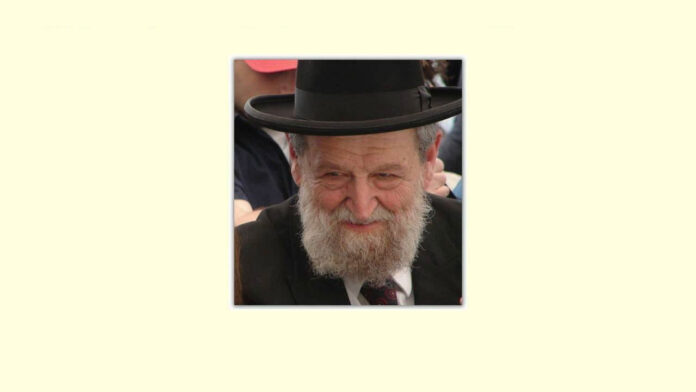
The death of the Chief Rabbi Emeritus of Haifa, Rabbi Shaar-Yashuv Cohen, brings to mind the most stirring episodes in the history of the modern State of Israel.
Rav Shaar-Yashuv Cohen, wounded in the battle for the Old City in Jerusalem, was the last Jewish civilian who left the Old City as it fell, carried on a stretcher into captivity…And Rav Shaar-Yashuv Cohen, who served as the deputy Mayor of Jerusalem in 1967, was given the honor of being the first civilian allowed to enter the Old City in Jerusalem at the time of its liberation during the six day war.
Yet there is yet another mission to Jerusalem which was little known.
In August, 2005, Rabbi Shaar-Yashuv Cohen traveled to Jerusalem to attempt a last minute plea for then Prime Minister Ariiel (Arik) Sharon to reconsider his plan to retreat from Gush Katif, which involved Israel’s obliteration of the 21 Jewish communities there, including 325 thriving Jewish farms and 86 synagogues and Jewish study centers. Rav Shaar-Yashuv Cohen told me at the time that the rapport between Arik Sharon and himself had lasted since his days of captivity in the 1948 war and that Rav Shaar-Yashuv was the only Rabbi who was ready to speak with him at the time.
Sharon gave a clear answer to the rabbi: “This is what the US is demanding that I do and I must do it.”
It did not matter that half of the 9,000 Jews who live in Gush Katif had nowhere to go, and that their relocation plans were still up in the air.
It did not matter that the Israeli government cannot offer more than two containers to each family to help them remove their possessions.
It did not seem to matter that the experts in Israel’s security establishment are warning that the result of Israel’s hasty retreat will be the creation of a new Islamic terror base.
Rav Shaar-Yashuv Cohen heard Sharon making it clear that he was under pressure from the US government and that is that, and that the myth of an autonomous Israeli policy in this regard had nothing to do with reality.
Indeed, one of the common assumptions was that the Sharon government’s plan to expel Jews from Gaza and northern Samaria, and unilaterally hand the area over to an independent Palestinian entity, had been an entirely autonomous Israeli decision.
But the US government was behind it all along.
In meetings with concerned American citizens, Danny Ayalon, Israeli ambassador to the US at the time, clearly stated that Sharon’s Retreat Plan was part of an overall Israeli-American agreement.
In late June, 2005, Ayalon met with representatives of the Orthodox Union, one of the largest contingents of American Orthodox Jews, and told them clearly that “Prime Minister Sharon is left with no choice. He is doing exactly what the US expects him to do.”
In an interview with the Jewish Journal of Greater Los Angeles, published on June 22nd, 2005, Ayalon reversed earlier Israeli government statements, saying that Israel does not expect the Palestinian Authority (PA) to dismantle terrorist infrastructure until after the planned expulsion. He mentioned that ending terrorism and anti-Israel incitement had been conditions Israel had demanded from the PA before carrying out the plan; however, Ayalon indicated that the agreement with the US was more important than an agreement with the PA.
The Israeli ambassador said, “Disengagement has to be viewed in the context of Israel-United States relations…. This pullout did not follow an agreement with the Palestinians, but it followed something which is much more important, an agreement with the United States. Disengagement is something that creates a common agenda between us and the United States.”
In the final interview given by Benyamin Netanyahu before his resignation from the Sharon government, he indicated that the current policy pursued by the government of Israel should be perceived as a threat to the security interests of the US and of all Western countries, since it created a terror base in Gaza, and since the Palestinian Authority incorporated the Hamas and other Palestinian terrorist organizations instead of dismantling them.
Yet, the directive of the US State Department remained unaltered: Prime Minister Ariel Sharon must dismantle and withdraw any and all Israeli presence from every Jewish community in the Katif district of Gaza by mid-August.
When Israel did go ahead with the retreat of the IDF and the expulsion of the Jewish communities from Katif and the Northern Shomron, Rav Shaar-Yashuv Cohen told me that he wanted to tell the world that this policy was implemented as a the result of a clear dictate to Arik Sharon issued by the government of the United States. This was not meant as rationalization for Sharon’s policy.
Few people want to hear the warnings of Rav Shaar-Yashuv Cohen that Israeli policy is often dictated from Washington.


