 Czech
Czech French
 German
 Hebrew
 Noruegan
 Russian
 Spanish
 Swedish
 Polish
 Portuguese




THIS BAN IN STILL IN FORCE
Fires Latest Update
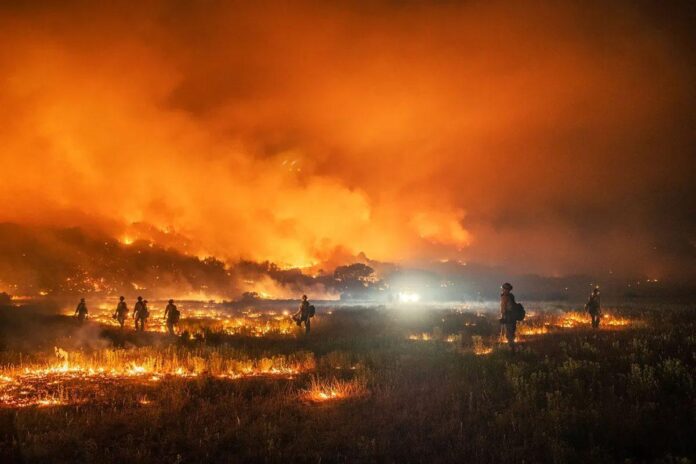
We are just following up to keep you updated on the emergency situation unfolding near Jerusalem. The wildfires continue to rage out of control, we have a long night ahead. The fires erupted earlier today in at least five different locations, and while the exact cause has not been officially confirmed, some reports now indicate that Palestinians ignited these fires on land adjacent to Jewish farms. What is clear is that this crisis is escalating fast—stoked by scorching heat and fierce winds that are driving the fires deeper into populated areas.
So far, approximately 3,000 acres have been scorched. Over 160 firefighting crews and 12 aircraft are battling to contain the fire fronts surrounding Jerusalem. Zaka Tel-Aviv teams are on the ground, working alongside first responders to help evacuate residents, provide urgent medical support, and assist in any way possible to protect lives. Our volunteers are confronting unimaginable heat and danger, yet they remain focused on the mission: to bring people to safety and offer compassionate care amid the chaos.
Educating for Terror
In “Grim Lessons from Phase One of the Israel-Hamas Hostage Deal,” the Hoover Institute’s Peter Berkowitz discusses a new book by Eyal Tsir-Cohen, a former member of Israel’s negotiating team with Hamas: The Untold Story: How We Lost in the Negotiations Despite the Military Victory in Gaza. Among the key mistakes made by Israeli planners, according to Tsir-Cohen, was the assumption that as the fighting intensified, a rift would develop between Hamas and the general Gazan population.
That never happened to any great degree, and for one simple reason: Israeli planners and negotiators failed “to appreciate how thoroughly Hamas jihadi spirit is woven into the fabric of Palestinian society and how tightly bound it is to Gazans’ identity.” Referring to Hamas’s ability to recruit new young Gazans to replace Hamas fighters killed by Israel, Tsir-Cohen concluded, “There is truly no bottom to the barrel of terrorism.”
Frankly, it is a bit surprising that any Israeli would be surprised by the depths of the hatred directed at us. Just read the words (from Palestinian Media Watch) of one of the October 7 terrorists, as he called his parents in an ecstatic, almost drug-induced, state to describe the murder of ten Jews with his own hands:
Terrorist son: Hi, Dad, I’m talking to you from [Kibbutz] Mefalsim, open my WhatsApp and see all the killed people. Look how many I killed with my own hands! Your son killed Jews!
Father: Allahu Akbar! May Allah protect you.
Terrorist: Dad, I’m talking to you from a Jew’s phone, I killed her and killed her husband. With my own hands I killed ten!
Father: Allahu Akbar.
Terrorist: Dad, ten with my own hands! Dad, open WhatsApp and see how many I killed, Dad … Dad, I’m inside Mefalsim, Dad I killed ten! Ten! Ten with my own hands, Dad! Their blood is on my hands! Honestly, ten with my own hands….
Mother: I wish I was with you.
Terrorist: Mom, your son is a hero. Kill, kill, kill! Kill them! …
Terrorist’s brother: Mahmoud, where are you?
Terrorist: I’m inside Mefalsim. I killed ten, ten with my own hands! I’m talking to you from a Jew’s phone.
Terrorist’s brother, Ala: You killed ten?
Terrorist: Yes, I killed ten, by Allah … I was the first [to get in] by Allah’s grace and help. Lift your head , Dad, lift your head. Inside the [Jewish] town. See on WhatsApp the ones I killed!….
Come back? There’s no coming back! It’s victory or martyrdom. My mother gave birth to me for the sake of the religion….
The vast majority of Israelis have long since given up on the two-state delusion precisely out of recognition that another generation of Palestinian children has been whipped into a frenzy of hatred of Jews and the desire to eradicate them from every inch of Israel. The residents of the communities surrounding Gaza were among the last holdouts. But the nightmare visited upon them has cured them as well.
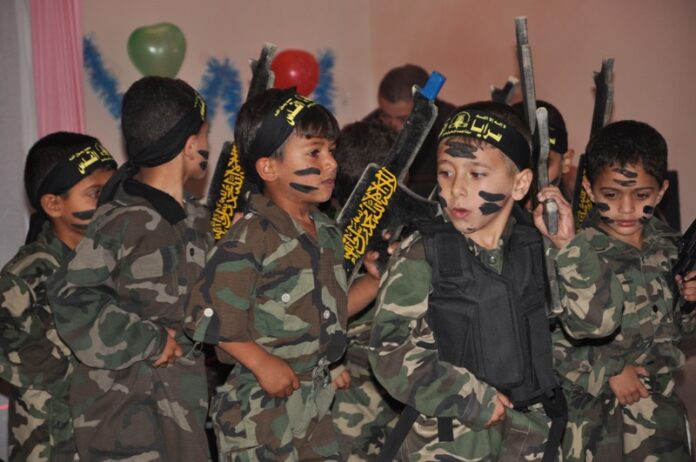
The hatred is inculcated pervasively — in mosques, in summer camps, at home, and in schools. The Palestinian Authority (PA), for instance, instructed preachers in its mosques, in the weeks just prior to October 7, to stress the duty to kill Jews wherever they are to be found.
DAVID BEDEIN of the Center for Middle East Policy Research has been focused on the Palestinian educational system for decades. Not long after his arrival as a new oleh in Israel in 1970, just three years after the reunification of Jerusalem in the Six Day War, he had an opportunity to meet with Jerusalem’s legendary Mayor Teddy Kollek. He asked Kollek what had been the most traumatizing aspect of the war for him, and the former replied without hesitation that it had been the discovery of Palestinian schoolbooks and how they indoctrinated children for a war to eliminate Israel.
At the outset of the Oslo process in 1993, there was a general expectation in Israel that there would be a dramatic revision of Palestinian textbooks, in light of the “peace process” that had been launched. Foreign Minister Shimon Peres announced that the Palestinian Authority had created a peace curriculum. The Israeli civil administration claimed the same. But in his meetings with Palestinian Authority educational officials, Bedein was repeatedly told no such curriculum had been adopted.
On August 1, 2000, PA education minister Naim Abu Hummus provided Bedein with four sets of the first 14 textbooks produced by the Palestinian Authority. He gave one set to Archbishop Pietro Sambi, the papal nuncio in Jerusalem, and another to Jack Patwa, the international chairman of the Anti-Defamation League. The archbishop, who read Arabic, was shocked to find that the new textbooks were silent with regard to promoting peace. Those textbooks became standard in the PA, Hamas-run schools, and those under the auspices of UNRWA.
As the number of PA-produced textbooks increased, Bedein raised funding in the hundreds of thousands of dollars to translate them into a number of languages, under the direction of Dr. Arnon Groiss, former head of the Israel Broadcast Authority’s Arab language division. To date, all 226 textbooks currently in use in PA, Hamas, and UNRWA schools have been translated, and Dr. Gross and Bedein have given numerous briefings on the content to members of Congress, the German Bundestag, and the British, Canadian, and European parliaments.
It is fair to say that the general parameters of the Palestinian educational materials are now known, due in large part to the work of the Center for Middle East Policy and other groups such as Palestinian Media Watch and MEMRI. Among the 26 videos produced by the Center on UNRWA-run schools and summer camps, many could serve as dress rehearsals for the Simchas Torah slaughter.
The Trump administration has once again cut off funding of UNRWA, at least in part because of the continued incitement in the textbooks used in its schools. After a 2017 meeting with UN secretary-general Antonio Guterres, his staff declared that it was unacceptable that UNRWA schools should use texts glorifying Dalal al-Mughrabi, the leader of the 1978 coastal road massacre in which 38 Israeli civilians, including 13 children, were killed after the terrorists hijacked and blew up a bus. (Mughrabi herself threw a Jewish child into the flames.) The textbook was removed for a while but later reemerged quietly.
Still, there is a lot more that Bedein would like to see done with his material. The 2024 annual report of the Palestinian Academic Society for the Study on International Affairs lists 135 countries that donate to Palestinian education. Not one conditions that aid on a cessation of the promotion of the elimination of Israel.
Bedein is not only critical of foreign governments. After a recent briefing for representatives of the European Parliament just before Pesach, a number of those briefed wondered aloud why the Israeli government never brings up the subject of educational incitement, but rather emphasizes the autonomy of the Palestinian educational system. Finally, Bedein would like to see more Jewish groups make use of his materials in their lobbying of public officials. Only the Simon Wiesenthal Center has done so to date in a consistent fashion.
THOSE MATERIALS are indeed shocking. They not only delegitimize Israel; they remove Israel entirely from their maps and replace it with some fictional entity called the State of Palestine. Any Jewish connection to the land is denied, as is the historicity of Jewish holy sites, such as the Beis Hamikdash or the Kosel. As a teacher’s guide for sixth-grade social studies puts it, “The [occupier] has built for himself an artificial entity that derives its identity from fairy tales, legends, and fantasies, and tried in various ways to create living material evidence for these legends… but in vain.”
There is no suggestion that Jews also have a connection to the land, or even that the land might conceivably be divided one day. On the issue of whether Palestinians could ever accept UN Security Resolution 194, which contemplates the return of some refugees to their former homes, the grade ten teacher’s guide is clear: The teacher should instruct his class, “I do not accept it because it affirms the existence of a homeland for the Jews in Palestine.”
Above all, the textbooks emphasize that the goal of Palestinian nationalism is the total elimination of Israel, and that the drive to do so is the product of a religious war between Muslims and Jews. The teacher’s guide to high school geography asserts, “Palestine has been occupied since 1948, not 1967.”
The struggle between Jews and Palestinians is repeatedly described as a religious war. Jihad, defined as G-d’s cause “for the liberation for the homelands from the occupation’s contamination,” is encouraged. “G-d urges the believers to jihad and its financing and warns them against being occupied with worldly life,” urges a ninth-grade Islamic education course. In one poem taught in seventh grade, Jews are portrayed in explicitly satanic terms: “Where are the horsemen [who will ride] to the Al Aqsa Mosque to liberate if from the fist of infidelity, from the Devil’s aides.”
All the world’s communities and races suffer along with the Palestinians from the Zionists and their racial discrimination, “as they claim to be G-d’s chosen people,” says another textbook. The highest grades in a unit on the massacres allegedly perpetrated by the Jews in 1948 are only for those who identify Jewish religious thought as the driving force behind the massacres.
The poems children are taught to sing emphasize the all-or-nothing nature of the war to be fought with the occupier. “To Haifa, to Jaffa, to Al Aqsa, to the Dome of the Rock,” goes one ditty for second-graders. The next year, the schoolchildren are taught to sing: “I swear I shall sacrifice my blood in order to water the land of the noble ones. And remove the usurper from my country and exterminate the defeated remnants of the foreigners.” The Jews must be eliminated in toto.
Terrorism is celebrated as martyrdom. After a four-page unit on the aforementioned Dalal al-Mughrabi, students are required to write a report about her, and the deeds of terror that “have made her memory eternal.” Violent struggle against the oppressor is everywhere celebrated.
A chant for first-graders reads in part: “With my determination, my fire and the volcano of my revenge… /In the wind’s storm and the weapon’s fire…/ Palestine is my revenge and the land of steadfastness…/ By the oath under the flag’s shadow/ By my people’s determination, and by the pain’s fire/ I shall live as a fidai and I shall continue as a fidai/ And I shall die as a fidai until I return.” (A fidai is a self-sacrificing person, and today refers almost exclusively to terrorist members.)
The terror, of course, is fully justified by the perfidy of the Jews, who have based their entity on “terror, extermination, and colonialization.” A ninth-grade social studies curriculum bids the students to compare what the Jews did to Palestinians to what Rome did to Carthage and the Mongol hordes to those they conquered. Among the points of comparison are “the destruction of villages, massacres, causing emigration, and forced plunder.
“A Letter by a Palestinian Girl to the Children of the World” plaintively asks, “Why did they slaughter my childhood in front of me and murder the roses in the fields? Why did they kill the butterflies in our gardens and scare the birds away? Why did they hide the sun, spread darkness and block the roads?”
Even math problems emphasize the depravity of the Jews: “The number of martyrs during the First Intifada was about 1,392. The number of the Al-Aqsa Intifada reached 4,673. What is the total number of martyrs?”
The constant reiteration of these messages in every class from first grade through high school hardly sounds like a “peace curriculum,” nor does it augur well for the prospects of peace between Israelis and Palestinians, in this generation or the coming one. —
(Originally featured in Mishpacha, Issue 1059. Yonoson Rosenblum may be contacted directly at rosenblum@mishpacha.com)
Elections in Canada: A Referendum on UNRWA

As Canadians cast their votes in the April 28 parliamentary election, a pressing foreign policy issue hovered over the Ottawa electorate:
Canada’s continued funding of the United Nations Relief and Works Agency for Palestine Refugees (UNRWA) – with no conditions attached.
That decision reflected a troubling Canadian willingness to disregard mounting evidence linking UNRWA to Hamas, a designated terrorist organization responsible for the murder and abduction of civilians.
Canada’s relationship with UNRWA has long been marked by ideological inconsistency.
In 2010, Canadian Prime Minister Stephen Harper suspended funding to UNRWA following the release of a study by the Center for Near East Policy Research, funded by the European Parliament, exposing the Hamas takeover of the UNRWA employee union and the UNRWA teachers’ association. The study raises serious concerns about UNRWA’s ability to remain impartial, and independent from extremist influences.
View that study:
https://israelbehindthenews.com/library/pdfs/UNRWA%20in%20Gaza%20and%20Terrorist%20Organizations%20A%20Cooperative%20Relationship.pdf
Harper’s decisive action in 2010 reflected the government’s decision to counter terrorism and ensure that Canadian taxpayer dollars were not supporting radical agendas.
However, in 2015, when Canada’s Liberal Party assumed power, the government of the new Liberal Prime Minister Justin Trudeau reinstated UNRWA funding, despite the fact that Hamas held control of the 30,000-strong UNRWA unions. This funding continued until Ottawa again suspended UNRWRA funding following the October 7, 2023 terrorist attacks.
That suspension, however, proved short-lived.
In early 2024, the Trudeau government resumed funding for UNRWA, despite evidence presented to the Canadian government indicating that UNRWA employees directly participated in the October 7 massacres.
This decision reflected a disregard for Canadian values and the wellbeing of one of its closest democratic allies,
The Hamas-led assault on October 7 left over 1,200 dead in Southern Israel and more than 250 kidnapped.
Following the attack, Israel intelligence revealed that at least 12 UNRWA employees were directly involved, while that the vast majority of 30,000 UNRWA staff continued their affiliation with Hamas.
The idea that individuals connected to terrorist organizations could operate within an entity funded by Canadian taxpayers seemed unconscionable.
Despite these revelations, Prime Minister Mark Carney reaffirmed unconditional support for UNRWA during the April UNRWA policy parliamentary debate, arguing that continued Canadian funding for UNRWA was necessary for humanitarian purposes.
Carney failed to acknowledge UNRWA’s well-documented refusal to maintain neutrality.
Carney’s move raises questions about whether the Canadian government has been knowingly turning a blind eye to UNRWA’s continued ties to Hamas terror.
Neither the Canadian Embassy in Tel Aviv nor the Canadian Representative’s Office in Ramallah would respond to press inquiries on the matter of continued funding for UNRWA.
Such a lack of transparency deepened concerns over Canada’s unwillingness to engage with legitimate questions about accountability and oversight.
In contrast, Canadian Conservative Party leader Pierre Poilievre pledged to end Canadian funding to UNRWA and pursue a foreign policy grounded in security, transparency, and accountability.
His approach resonated with Canadians who believe that tax dollars should not be used to support terrorism under the guise of humanitarian aid.
The debate over UNRWA funding underscores a broader moral divide in Canadian politics.
Indeed, UNRWA transformed the Canadian election into a referendum on whether Canada would endorse a government that overlooks troubling evidence of terrorist involvement or support a new leadership committed to defending democratic values.
The outcome of this election has profound implications—not only for Canada’s international credibility but also for its moral commitment to peace and justice.
On April 28, Canadian voters had a chance to choose a path that upholds the principles of truth, security, and moral clarity—and put an end to complicity in the perpetuation of violence.
Israel will not forget about hostages or destroying Hamas, Dermer tells JNS
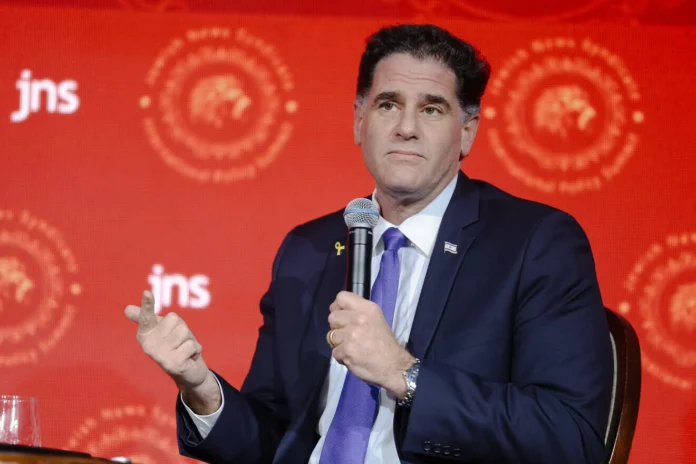
The Israeli government will finish the war against Hamas and return the hostages, Strategic Affairs Minister Ron Dermer declared at the JNS International Policy Summit in Jerusalem on Monday night.
“There are people you’ll meet in Israel who say, you know, forget about the hostages, just finish the war. And the people who say, finish, you know, forget about the war, just return the hostages,” Dermer told JNS CEO and Israel Bureau Chief Alex Traiman during an interview.
“We’re not going to do that. That’s not where Prime Minister [Benjamin] Netanyahu is. It’s not where I am,” said Dermer, who has led the indirect negotiations for a hostage deal with the Hamas terrorist group in Gaza in recent weeks.
“I think we have to work on achieving those goals, and we’ve gone pretty far, and what will happen the ‘day after’ in Gaza is a discussion—lots of discussions we’ve had behind the scenes,” he added.
However, 12 months from now, Jerusalem’s seven-front war across the Middle East will be “over,” he declared, adding, “Israel will have won.
“I think you will see many peace agreements that either have been forged or will be forged in the coming years of President Trump’s presidency,” Dermer predicted.
“But the key to that, and this is important to remember, is victory. In the Middle East, when you win, when you’re strong, that’s what attracts others,” he said.
“You never want to have daylight with the United States if you can afford not to have daylight,” Dermer said of Jerusalem’s relations with the American administration. “It’s never a good thing, because it sends a message to Israel’s friends and Israel’s enemies when we are aligned with the United States.
“A public disagreement is never in your interest unless you have a vital national interest, where sometimes you have to air that. Otherwise, you try to resolve these things behind the scenes,” Dermer said. “And I think in Trump’s first term, that’s exactly what happened.
“I think it’s important to understand that Israelis would love to see the war end—every Israeli. Anyone who has a son, a brother, a nephew, a niece or a daughter in the army wants the war to be over,” he said.
According to Dermer, “That’s not the real question. The real question is: Do you end the war with a victory or with a defeat? Do you accept the terms of those who committed the atrocities of October 7, or not?
“We are going to dismantle Hamas’s military capabilities and end its rule in Gaza. We will ensure that Gaza can never again pose a threat to the State of Israel. And we are committed to bringing all our hostages home. These are the goals we have set, and we fully intend to achieve them,” vowed Dermer.
Noa Argamani wears yellow dress in touching hostage tribute for Time 100 red carpet

Former Hamas hostage Noa Argamani wore a stunning yellow maxi dress to the Time100 Gala in New York on Saturday in a touching tribute to those still held by the terror group.
Argamani has become one of the most prominent figures in Israel and around the world in recent months, using her public platform to convey one clear message—the urgency of bringing all the remaining hostages home.
The 27-year-old was included in Time Magazine’s list of the 100 most influential people in the world for 2025 as a result of her tireless advocacy.
Her dress, created by Israeli designer Eli Tala, was sewn in just three days before her flight to New York and conveyed her powerful message with elegance and style.
Yellow has become the global symbol for the struggle to return all hostages, including Argamani’s partner, Avinatan Or, who has been held captive by Hamas for 569 days.
The couple’s abduction, including footage of a screaming Argamani being ripped from Or’s arms and driven away to Gaza, has become one of the most enduring images of the October 7, 2023 terror attacks.
Her gala dress, a chic one-shoulder design, was made of satin fabric in a soft, refined yellow shade that shimmered under the bright lights of the red carpet.
The cut was classic A-style – fitted at the top and gradually widening toward the skirt, creating a flowing and sophisticated look.
Argamani’s participation in the prestigious event placed her alongside US President Donald Trump, Argentine President Javier Milei, billionaire Elon Musk and Hollywood stars like Scarlett Johansson and Blake Lively.
The Time100 Gala is one of the most significant events on New York’s calendar, bringing together icons, leaders and influencers from all industries around the world for an evening of dialogue and celebration. For Argamani, it was another opportunity to remind the world that the struggle to return the hostages continues, and that those still in captivity must not be forgotten.
Speaking at the gala, she pledged to continue her efforts to secure their release, saying: “Until my boyfriend and all the remaining hostages are home, I will not heal. I will keep fighting as much as I can to bring everyone home.”
It comes after she became the first former hostage to address the UN when she gave testimony to its Security Council in February.
During her evidence, Argamani said that she and Or had been “living in a nightmare” and urged her own government to ensure the full release of all remaining hostages.
Speaking before the collapse of the most recent ceasefire, she said: “The deal must go on in full… my partner and many other hostages are only supposed to be released in the second stage of the deal.
“I know what it [feels like] to be left behind, or watch other hostages being released to their families… I can’t even begin to explain the feeling of being the one who was left behind.
“But I can tell you this is exactly how the hostages are feeling today – abandoned by the world.”
‘I saw what radical Islam looks like’: Saudi blogger Loay Alshareef dismantles Hamas’ lies
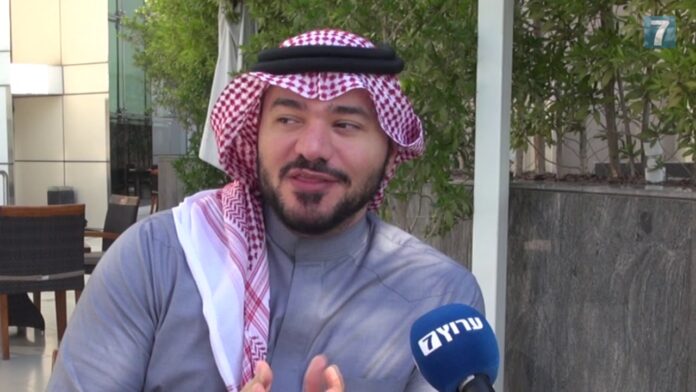
“I’ve received death threats online, thank God they haven’t translated into actual death threats yet,” Loay Alshareef, the Saudi blogger who has become one of the prominent Arab voices defending Israel, shared. “But you know what? I used to be on the opposite side. I saw what radical Islam looks like. I know how it poisons the heads, minds, and hearts of Muslims, and I’m not going to be intimidated in any way.”
This is Alshareef’s third visit to Israel, following a brief 24-hour visit during Ramadan. This time, invited by the Jewish Statesmanship Center, he came to explain to the institute’s graduates how to address the burning issues in the Arab world, in the new order in the Middle East after a year and a half of war that has completely transformed the region.
Alshareef, wearing a tailored suit and speaking with a distinct Arabic accent, has been one of the leading voices supporting Israel since the outbreak of Operation Strength and Sword. For his hundreds of thousands of social media followers, he explains in both Arabic and English how anti-Zionist activists and terrorist organizations, led by Hamas, inject propaganda and hatred of Israel into public discourse, flooding networks with what he calls “the big lie” about Israel.
“Until I was 20, I was the quintessential mainstream Arab-Muslim in the Muslim world – radical against Jews, anti-Jewish, anti-Israel, anti-everything related to most non-Muslims, especially Jews and Christians,” Alshareef recounted. “The indoctrination in schools throughout the Middle East was so radical that it completely shaped my worldview.”
“Did everyone think like you?” I asked. “Most did,” he responded. “Thank God things have now changed dramatically in Saudi Arabia, and the United Arab Emirates also has a wonderful ministry of tolerance. Many people have left radicalism behind, but it still maintains its influence on so many people across the region.”
Alshareef’s current visit lasted five days, during which he toured the City of David, where Jerusalem became the capital of the people of Israel, and Masada, where Jews fought to the death for their faith and nation. “Masada is proof of how Jews survived and fought back against those who wanted to destroy them. It’s very important that people know the history of Masada and the Jewish rebellion against those who wanted to take the most important thing about the Jewish people – their identity.”
“The Jews never tried to expand and conquer,” Alshareef emphasized. “They never wanted to take other people’s land, as Al Jazeera and other radical Muslim Brotherhood media channels claim. Jews have always fought for this land with its known boundaries.”
The highlight of Alshareef’s visit was a conference at Psagot Winery, organized by the Jewish Statesmanship Center. “The college is a leading intellectual institution, working to train a new generation of Israeli leaders with breadth of knowledge and a clear Zionist vision,” Ben Basson, an alumnus of the institution, explained about the idea behind the institution. “We provide participants with in-depth theoretical and practical training, aiming to empower young men and women with potential influence, working in government, security, education, and society, and equip them with ideological and practical tools to deal with the challenges facing the State of Israel.”
Basson added that “the annual alumni conference is a central event that brings together hundreds of college graduates working in key positions in the public arena in Israel. The theme of this year’s conference is ‘Israel’s Strategic Position in the New Order in the Middle East,’ featuring keynote speeches, panel discussions, and strategic conversations about regional trends and their impact on Israel.”
Addressing “the big lie”
Alshareef has strong feelings about how Israel has been portrayed globally over the past year and a half. During his first visit, he toured the kibbutzim near the Gaza border and witnessed firsthand what Hamas did. “I saw the savage attack carried out by the barbaric terrorists of Hamas. They didn’t attack soldiers. They call what they did ‘resistance.’ In what dictionary is kidnapping a toddler considered resistance in war? Attacking and killing people at a music festival is resistance?
“Of course, it’s not resistance. It’s an act of barbarism and terrorism that must be condemned. And I believe those who don’t condemn Hamas enough give them the power to continue. After October 7 happened, many people rushed to condemn Israel instead of Hamas, even before Israel responded. As much as they hate Israel’s existence, they prove to the world how antisemitic they are.”
When I asked whether he understood Hamas’ position and what he thought about their motives before October 7, Alshareef responded forcefully, “Hamas is the armed wing of the Muslim Brotherhood – a radical Islamic group. We need to understand that there’s a difference between spiritual Islam, which is like praying five times a day, going through the month of Ramadan, going to Umrah, to Hajj, performing the rituals of Islam, and radical Islam that believes in a military approach to conveying its message and controlling.
“You can’t talk to Hamas,” he stated firmly. “Hamas initiates an apocalyptic war in which millions on both sides must die, so that a disappeared imam will appear again. And that’s something crazy that the world shouldn’t accept. Israel is fighting Hamas and radical Islam on behalf of the world, and the world should appreciate what Israel is doing.”
Alshareef emphasized that he wants the war to end, but according to him, Hamas, not Israel, can end it. “This is a war that Israel didn’t ask for, didn’t want, and didn’t start. That’s something very important for people to note. This war could have ended yesterday if those who started the war had ended it. I support ending this war with a complete victory and defeat of Hamas, so we don’t reach another round and another war. This event must end absolutely.
“Hamas started this war because they truly believe in erasing Israel, they truly believe in killing Jews for God so they can go to heaven,” Alshareef said angrily. “The Hamas charter calls for the destruction of Israel. Hamas didn’t launch the attack on October 7 because they believe in peace. Even when Hamas leaders say they want a state on the 1967 borders, it’s temporary – they want a temporary state until they have enough power to destroy Israel. And they say it out loud in Arabic, but in English they say something else.”
Throughout the interview, Alshareef repeatedly mentioned Al Jazeera, which he referred to as a media body that pushes propaganda. “Al Jazeera is a Hamas supporter. When I was young, they convinced me that Abdullah Azzam and bin Laden were heroes,” he said. “When the October 7 attack happened, I didn’t understand why people were angry about people being attacked in America.
“After all, the US is the tyrant of the world. That’s what Al Jazeera told us; it made us believe that many terrorists were heroes. I understand and respect freedom of speech, but there’s a difference between freedom of speech and incitement. Al Jazeera engages in incitement. It’s deadly and dangerous and needs to be fought back against.”
Abraham Accords 2.0
The main message Alshareef wanted to convey at the conference is that peace with Arab countries is possible, contrary to what terrorist organizations try to project. “Hamas wants to prove to you that Muslims and Jews are enemies. Arabs and Israelis will never get along. And I want to deliver the opposite message – Arabs and Israelis will get along. Muslims and Jews are not enemies.”
Alshareef believed that the moderate Gulf states can play a significant role in the region’s future after the war ends. “Mohammed bin Salman is a person not only trusted by Saudis but also Arabs and most Muslims. He wants there to be a stable Middle East, a Middle East where there are no more wars. He’s a great leader who seeks peace and will make it happen with God’s help.”
As the interview concluded, I asked Alshareef how he manages to remain optimistic despite the difficult situation. “I’m very optimistic,” responded Alshareef with a smile. “The Middle East needs a strong America to promote more peace, and after four years of an administration that failed to promote peace, now there’s an administration that can do it.”
“I believe that the Abraham Accords 2.0 will be even better than the first generation. I know the situation looks grim now, but I’m optimistic that the future will be better. The war that’s currently being fought brings people together. Hamas and radical Islamists are fighting to separate people, while we are fighting to bring Muslims and Jews, Arabs and Israelis, closer together. We are good, we are fighting the good fight, and God is on our side.”
The Saudi blogger ended the interview with a sentence in fluent Hebrew: “I hope this dream will come true. With God’s help, peace between all peoples in the Middle East.”
Hamas claim that 70pc of Gaza dead are women and children ‘demonstrably false’
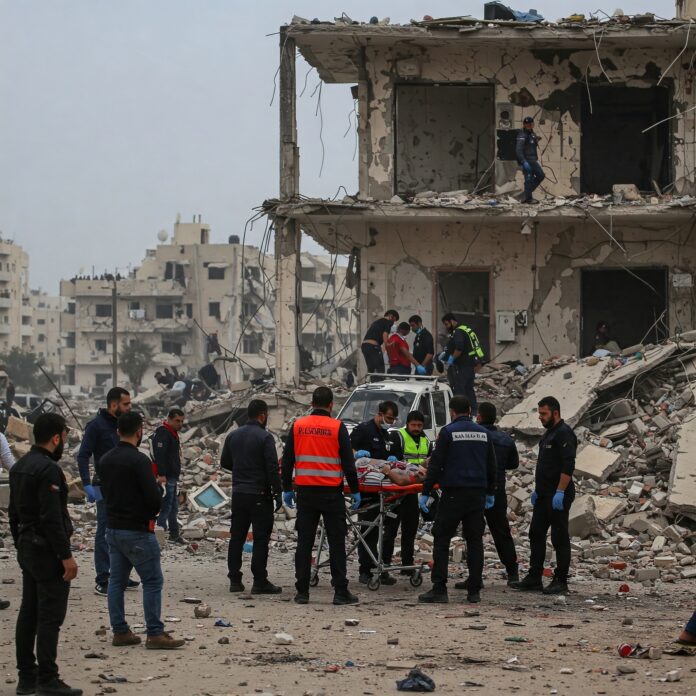
Claims by Hamas that 70 per cent of casualties in the Gaza conflict are women and children have been dismissed as “demonstrably false” in a new report.
The report by the Henry Jackson Society, a think tank, undermines claims that Israel’s armed forces have been responsible for the indiscriminate killing of innocent civilians during the conflict.
Its findings are in contrast to assertions by Gaza’s Hamas-run government that the Israel Defense Forces (IDF) has deliberately targeted women and children.
The Henry Jackson Society claims that the IDF has generally managed to avoid disproportionately harming civilians, even though many thousands have been killed.
In the report, Prof Lewi Stone and Prof Gregory Rose said that claims made by the Gaza ministry of health of a 70 per cent casualty rate for women and children among the 51,000 Palestinians it says have been killed since Oct 7 2023 are inconsistent with its own underlying hospital casualty figures.
They found that Gaza hospital records and lists of the deceased showed that, since the start of the conflict, women and children have accounted for 51 per cent of deaths overall, and that in the past year the rate of civilian casualties has fallen to below that figure.
Citing the example of the bitter fighting over Khan Younis during the first quarter of last year, the report found that although women and children comprised 75 per cent of the city’s population, they accounted for 34 per cent of deaths.
Numerous warnings were issued by the IDF for civilians to leave Khan Younis before its troops began their search for Hamas combatants.
Profs Stone and Rose also found that of 11,224 people killed since October last year, 76.3 per cent (8,565) were male and 23.7 per cent (2,659) were female. Of these, 58 per cent were men of fighting age.
Their report stated: “The reduced proportion of women and children casualties indicates increased Israeli avoidance of Gazan civilian harm since Oct 7 2023. This data shows the opposite picture to what one would expect from the narrative of Hamas and its allies, who alleged indiscriminate killing.”
They said the Hamas government media office had “painted a lurid picture of indiscriminate killing of women and children by Israel, supposedly supported by the ministry of health but often inconsistent with its datasets.
“The Hamas government media office curated the data to spin media-ready versions that inflated women and children’s deaths to levels that gave the deceptive impression of indiscriminate Israeli attacks on women and children.”
The two academics claimed that the ministry, many of whose directors are Hamas appointees, has manipulated its own hospital data.
They said: “[ministry of health] MoH ‘dashboard’ infographics and public statements were demonstrably false when compared to its own datasets. For example, its repeated publishing of a 70 per cent women and children casualty rate that was inconsistent with its detailed hospital-sourced datasets.”
The report comes after Israel admitted that “professional failures” had led to the killing of 15 emergency workers in Gaza last month. An inquiry into the incident by the IDF found a series of failings, including “operational errors” and a “breach of orders”.
Fourteen emergency workers and a UN worker were killed on March 23 after a convoy of Palestine Red Crescent Society (PRCS) ambulances, a UN car and a fire truck came under fire by the Israeli military.
During Israel’s military response to the Oct 7 attacks, thousands of innocent civilians have been killed and injured, and survivors’ daily existence has been made unbearable.
But Stone and Rose said their work “identifies extensive statistical anomalies, glaring inconsistencies, and a concerted effort by Hamas to inflate the number of civilian deaths – particularly among women and children – while systematically omitting combatant fatalities, especially amongst its own operatives.
“These manipulations have been cynically designed to distort the civilian-to-combatant casualty ratio and weaponise public opinion against Israel.”
The IDF claimed to have killed about 20,000 fighters from Hamas and other groups at the start of this year.
The report stated, however, that no Gazan casualties were identified as combatants by the ministry of health. It added that adult male deaths, which it said were strongly indicative of combatant status, had been routinely excluded or under-reported by the Hamas-run government “to suit propaganda ends”.
Prof Rose, an honorary professor of law at the University of Wollongong, in Australia, said: “Hamas has waged not just a physical war but an information war, and far too many in the West have fallen for it.
“It is imperative that our media, policymakers, and institutions treat data emanating from terrorist organisations with the scepticism and scrutiny it so obviously requires.”
Prof Stone, a professor of mathematical epidemiology at Royal Melbourne Institute of Technology, added: “Manipulated statistics have real-world consequences. When international bodies, human rights organisations, and even Western governments make policy on the basis of falsified data, they are, wittingly or not, advancing the aims of a terrorist organisation.”
The Gaza ministry of health has denied either falsifying casualty figures or later removing names from lists of those killed.
Zaher al-Wahidi, an official with the ministry, said this week: “The health ministry works towards having accurate data with high credibility. In every list that gets shared, there is a greater verification and revision of the list. We cannot say that the health ministry removes names. It’s not a removal process, rather, it is a revision and verification process.”
In reverse of a longtime stance, US says UN Palestinian refugee agency isn’t immune from lawsuits
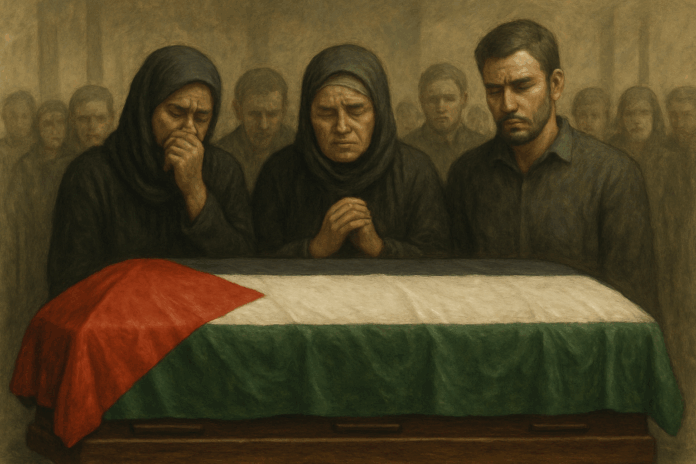
The Trump administration has decided that the U.N. agency for Palestinian refugees is not immune from being sued, reversing the U.S. government’s longstanding position that the organization was protected from civil liability.
The Justice Department revealed its new stance in a letter it filed in federal court in New York on Thursday as part of a lawsuit that aims to hold the agency, known as UNRWA, accountable for the Oct. 7, 2023, deadly attack on Israel by Hamas. The change in position underscores the hardened perspective toward the agency under the Trump administration following allegations by Israel that some of the agency staff was involved in the Hamas rampage.
The lawsuit, filed by families of some of the victims of the massacre, alleges that UNRWA had aided Hamas by, among other things, permitting weapons storage and deployment centers in its schools and medical clinics and by employing Hamas members. Lawyers for UNRWA have called the lawsuit “absurd” and have said in court filings that the agency was immune from liability as a “subsidiary organ” of the United Nations.
The previous US stance protected the agency
In a statement Friday, UNRWA spokesperson Juliette Touma said the Justice Department filing reversed the U.S. government’s “longstanding recognition that UNRWA is a subsidiary body of the General Assembly and an integral part of the United Nations, entitled to immunity from legal process.” She said the agency would continue to make its case before the court and “will consider whether any other action is appropriate with respect to the letter.”
The Justice Department acknowledged in its 10-page letter that though its position had been that UNRWA was shielded from litigation, “the Government has since reevaluated that position, and now concludes UNRWA is not immune from this litigation.”
“The complaint in this case alleges atrocious conduct on the part of UNRWA and its officers. Of course, such allegations are only the first step on a long road, where plaintiffs will be required to prove what they have alleged. But UNRWA is not above that process — nor are the bulk of the remaining defendants,” the letter states. “The Government believes they must answer these allegations in American courts. The prior Administration’s view that they do not was wrong.”
The letter was signed by Jay Clayton, the new U.S. attorney in Manhattan, and another lawyer in the office, as well as Yaakov Roth, the acting assistant attorney general in charge of the Justice Department’s civil division.
The agency has assisted Palestinians since the 1940s
UNRWA was established by the U.N. General Assembly in 1949 to provide relief for Palestinians who fled or were expelled from their homes before and during the 1948 Arab-Israeli war, which followed the establishment of Israel, as well as their descendants, until there is a political solution to the Israeli-Palestinian conflict.
The agency provides aid and services — including health and education — to some 2.5 million Palestinian refugees in Gaza and the occupied West Bank and east Jerusalem, as well as 3 million more in Syria, Jordan and Lebanon. Since the Israel-Hamas war, it has been the main lifeline for a population reliant on humanitarian aid in Gaza.
Israel alleged that 19 out of UNRWA’s approximately 13,000 staff in Gaza took part in Hamas’ attack in southern Israel, which killed about 1,200 people and set off the war in Gaza.
UNRWA said it fired nine staffers after an internal U.N. investigation concluded that they could have been involved, although the evidence was not authenticated or corroborated. Israel later alleged that about 100 other Palestinians in Gaza were Hamas members, but never provided any evidence to the United Nations.
“When the World Closed Its Doors, the Dominican Republic Opened Its Arms”
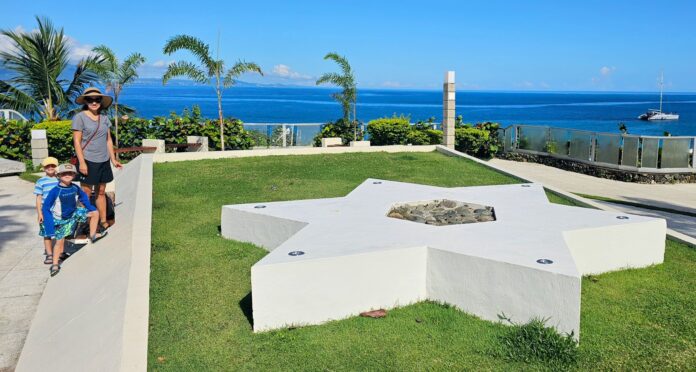
On the golden sands of Alicia Beach, where the Caribbean’s turquoise waves crash against the shore, I found myself caught between two worlds: the vibrant life of the Dominican Republic today and the desperate voyage of the few hundred Jews who, in 1940, first set foot here as refugees from Nazi terror. It was Yom HaShoah – Holocaust Remembrance Day – and in this unlikely corner of the globe, I was reminded that, amid the world’s indifference, one nation dared to open its doors.
In July 1938, representatives from 32 countries gathered at Évian-les-Bains, France, summoned by President Franklin D. Roosevelt to confront the mounting Jewish refugee crisis. Delegates spoke eloquently of compassion, yet each returned home to tighten immigration quotas, bound by economic anxieties or political calculations. Only one government rose above reticence: under Rafael Trujillo, the Dominican Republic pledged to accept up to 100,000 Jewish refugees—an offer inspired in part by a sense of humanitarian responsibility in the wake of the 1937 Parsley Massacre, and by a belief that welcoming European immigrants could spur economic development and cultural exchange.
In practice, just 700 to 800 souls made the arduous journey, most settling in Sosúa, a nascent agricultural colony on the island’s northern coast. Each family received 33 hectares of land, cattle, mules, horses, and a modest loan to cultivate a new life. Though the fields yielded little in those first years—unforgiving soil, unpredictable rains, and isolation tested their resilience—the seeds of community and hope took root. Today, descendants of those settlers still walk Sosúa’s streets, named in tribute to pioneers such as Elbarote and others whose names quietly line the signposts.
Standing before the large sculpture of a Magen David at the memorial on Alicia Beach—an Israeli flag unfurled beside the Dominican standard—I closed my eyes and pictured those first boats, their silhouettes emerging through the palm fronds. How surreal to think that here, where tourists now bask under the sun, refugees fleeing the horrors of Europe first glimpsed sanctuary. The gentle Caribbean breeze carried the echoes of their gratitude and the weight of the world’s shame.
The following day, we traveled south to Santo Domingo’s main synagogue, where the Israeli embassy had draped its blue-and-white banner and diplomats from the United States and Germany filled the pews alongside members of the Jewish community. The ceremony opened with the lighting of candles, after which Isaac Lalo, president of the Centro Israelita, stepped to the podium:
“On behalf of the Centro Israelita, I express our profound gratitude to the government and people of the Dominican Republic. While many nations closed their doors, this country had the courage and humanity to offer refuge to Jews fleeing for their lives. We will never forget.”
Lalo’s voice carried across the sanctuary, bridging past and present. He spoke of lehakir tovah—the obligation to recognize and remember kindness—and vowed that every year the community would honor this historic act of compassion.
Next, Israeli Ambassador Raslan Abu Rukun addressed the gathering:
“Our responsibility is to learn, educate, and work together against all forms of hatred and racism. This year’s commemoration feels even more urgent. Since the horrific massacre of October 7, we have witnessed an alarming rise in antisemitism—loud, visible, often disguised as ‘justice.’ But at its core, it is the same age-old hatred.”
His words struck a chord beyond the walls of the synagogue. In a world where the shadows of bigotry persist, the Dominican Republic’s example from 87 years ago still shines as a beacon.
Finally, Adi Rabinowitz Bedein—founder and director of the Network for Innovative Holocaust Education—presented the results of a recent survey shared with over 200 Holocaust educators from 28 countries:
“94% of our members say antisemitism today creates unique challenges for Holocaust educators, and 85% find it increasingly difficult to teach the Holocaust without addressing contemporary antisemitism. Only 54% have encountered barriers when discussing today’s political realities, and just 44% feel supported by existing Holocaust remembrance organizations in meeting these challenges.”
Her data underscored that remembrance must be active, not passive: education must evolve to confront the hatred of our own time.
As the ceremony concluded with the solemn cadence of El Maleh Rachamim, I thought back to that breezy afternoon at Alicia Beach. There, in the heart of a tropical paradise, I had seen how memory and gratitude can transform a place. The Dominican Republic’s singular act of moral courage in 1938 reminds us that—even when the world looks away—individual nations, communities, and leaders can stand against injustice. On Yom HaShoah, from a seaside memorial to a capital synagogue, that lesson resonates louder than ever.


