 Czech
Czech French
 German
 Hebrew
 Noruegan
 Russian
 Spanish
 Swedish
 Polish
 Portuguese



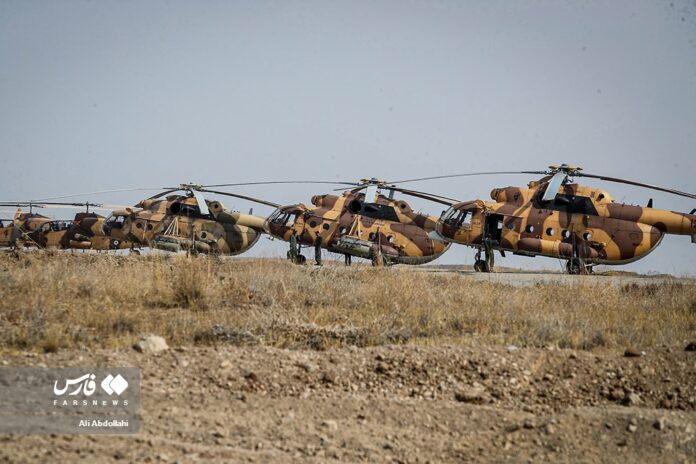
⭕️The IDF dismantled the air defense situation room of the IRGC Air Force, responsible for the aerial situational assessment and to defend Iran’s airspace.
Additionally, the Israeli Air Force struck air defense systems, a site used to manufacture & launch ballistic missiles,… pic.twitter.com/DYNKhz03e3
— Israel Defense Forces (@IDF) March 7, 2026
From the Israel Defense Forces
On Iran Attacks, J Street Is Beyond the Pale

Echoes of some of the very darkest periods of recent Jewish history reverberated in the statements made by anti-Zionist Jews over the weekend of the initial phases of joint U.S.-Israel strikes on Iran.
That outside-the-pale groups Jewish Voice for Peace and IfNotNow would attack Israel and America for bombing Ayatollah Ali Khamenei’s regime should come as no surprise. But the fact that J Street, which claims to be “pro-Israel, pro-peace, pro-democracy,” would sound almost the same as them does much to validate what its critics have been saying about the D.C. pressure group for years.
“We are appalled by President Trump’s reckless decision to launch a war of choice against Iran, explicitly seeking regime change,” blared a statement issued by J Street while Israeli fighter planes were still in the air. The organization said its press release was in response to U.S. President Donald Trump’s decision to commence military action in coordination with Israeli Prime Minister Benjamin Netanyahu.
What must be called out here is J Street’s specific highlighting of Netanyahu in its statement. That’s because the full spectrum of the prime minister’s political opponents in Israel strongly support the decision to degrade Iran at its weakest point in memory. All of them.
J Street’s criticism of Netanyahu and the “military action” of the Jewish state stands in stark contrast to the leadership of Israel’s left, including politicians featured by the agency as speakers at its annual conventions and that it very much wants to be seen as being allied with.
If J Street doesn’t have any Israeli political leaders who agree with its views, then how exactly is it “pro-Israel?”
Merav Michaeli addressed the 2018 J Street conference and tweeted on March 1 that Israel had achieved “tremendous successes” against Iran.
Yair Golan appeared at the J Street conference in 2022 and posted on X on Feb. 28: “Eliminating Khamenei is a dramatic and significant step. Israel’s security forces, together with the American forces, have once again demonstrated intelligence superiority and impressive operational capability. I salute you.”
Former Israeli Prime Minister Ehud Olmert is a longtime critic of Netanyahu and was scheduled to speak at the J Street conference that started on Feb. 28. On Newsmax that day, he told his audience that “this has been the focus of Israeli policies for more than 20 years now…. Now (that Trump) took this action, and I hope it will be successful, and it will last until it is done.”
Michaeli, Golan and Olmert are not outliers. Benny Gantz, Naftali Bennett, Gadi Eizenkot and Yair Lapid are all leaders of parties that run against Netanyahu’s Likud Party, and consistently condemn him and his policies. And every single one of them has tweeted enthusiastic support for Netanyahu and the attacks against the Islamic Republic. Not one of these top Israeli politicians sounds anything at all like J Street.
The organization’s repeated criticism of Israeli actions of self-defense – and now, its opposition to the elimination of a nuclear threat – raises real and significant questions about its priorities. This isn’t a minor policy disagreement. It’s a fundamental divergence on how to ensure the safety and survival of the Jewish state. When American Jewish organizations weigh in on matters of life and death for Israelis, there is an obligation to speak from a position of real knowledge.
“Iran does not present an imminent threat that requires launching a ‘preventive’ war,” J Street claimed in its Feb. 28 news release, and no Israeli political leaders are saying the same thing. Why is J Street on the same side as JVP and IfNotNow, and not Israel’s left-leaning parties?
That’s the real takeaway here. J Street is not what it claims to be and perhaps never has been.
Israeli President Isaac Herzog strongly supports the attacks on Iran, tweeting: “I congratulate the IDF and the U.S. Army on the bold joint operation ‘Roaring Lion’ against the Iranian threat. This is a dramatic and historic step, and I thank the president of the United States, Donald Trump, and Prime Minister Benjamin Netanyahu for the decision in the hope that it will bring historic change for us and for the entire Middle East.”
Let’s remember that Herzog is a former chairman of Israel’s Labor Party.
Once again, this underlines how J Street has positioned itself far outside the mainstream Jewish community. And it reminds us why both of the major Jewish umbrella organizations (the Conference of Presidents of Major American Jewish Organizations and the American Zionist Movement) have rejected it.
These important umbrella groups understand that J Street is extreme and stands for nothing but its own radical political agenda.
In the Eye of The Storm

NASA 2071127 82.4F
I had already determined the topic of my op-ed this week but as so often happens dramatic events dictate otherwise.
This past Shabbat was one of the special ones leading up to Purim and Pesach where we read an extra Torah portion. On this occasion it is the reading for Shabbat Zachor. This word means remembrance and it relates specifically to recalling the deceitful deeds of the Amalekites.
This tribe heard about the liberated Hebrews making their way across the Sinai desert towards the Promised Land. They had heard about the escape from Egypt and how the mighty Egyptian army and Pharaoh had been vanquished. Believing that this multitude posed a threat, the Amalekites determined to attack, aiming at first to kill those most vulnerable, namely the elderly, young and sick.
As we know from the narrative their plan to destroy the Hebrews failed thanks to the determined fight back by Joshua and his army and also with help from Hashem.
This important episode in the exodus story was deemed so important that it was decreed that henceforth on an annual basis the perfidious event should be recalled. Not only recalled, but it also was intended to be a warning for future generations.
The unrestrained hate and enmity exemplified by the Amalekites’ desire to wipe out the Hebrews would be carried forward to future generations of Jew haters
We are therefore mandated to remember this every year. In fact we are told to not only remember but also take steps to make sure that this evil never succeeds.
Recalling this just prior to Purim is therefore very relevant because Haman who plotted to exterminate the Jews of Persia is traditionally believed to be a descendant of the Amalekites.
The reading of this portion of the Torah took a dramatic turn last Shabbat as we prayed in our local air raid shelter minyan. The sky was filled with the noise of multitudes of Israel air force planes which is something not usually heard on a Shabbat.
At the precise moment when we read about the Amalekite episode the military forces of the Jewish State were on their way to counter the nefarious designs of the current Iranian plotters against Israel.
We did not know at the time but it soon became clear as home front warnings were issued that a major campaign was under way.
How symbolic that this should all commence on Shabbat Zachor and at the precise moment that in prayer gatherings all over the country we were reading the commandment to remember to thwart the devious ambitions of our enemies.
It had been previously reported that the Americans expected Israel to lead the charge against the mullah regime. Without a doubt Israel was always going to be blamed by the hypocrites of the world for whatever transpired. This time and for perhaps the first time since the Presidency of Harry Truman there is a President in the White House who is prepared to confront the modern incarnation of Haman and his followers.
Since last Shabbat morning and as I write these lines we have, like everyone else in Israel, been woken up during the night and day by alerts and sirens. Israel has the most sophisticated alert system whereby the Home Front Command can alert and update each and every person with a mobile phone when incoming missiles and drones are detected. Alerts give you time to get dressed if necessary and prepare to enter either a safe room or communal air raid shelter.
This early warning system details exactly where and when threats are expected and it means that by the time the sirens blare forth one is ready to seek shelter. The alert sounds are so loud and strident that it is impossible to miss and ignore. For those who are hearing impaired the mobile phones light up with flashing lights and vibrations.
Unlike Israel and the USA who target military and security sites the Iranians fire off missiles and drones into the midst of civilians and in this latest round their indiscriminate victims include friends and foes alike.
The celebration of Purim this year has been surreal. As we read about the events of ancient Persia and how the genocidal plot to kill all the Jews was thwarted, the recitation was accompanied by alerts warning us of incoming missiles from today’s Jew haters in Islamic Iran.
In fact in the process of writing this op-ed I have had to seek shelter innumerable times as missile and drone alerts erupted.
Predictably, all those who were silent while the Iranian authorities massacred their own citizens, have now burst into life. All of them articulate a common theme which reveals their true agenda and prejudices.
Instead of cheering the possible impending liberation of Iranians from jihadist oppression these critics condemn the USA and Israel for having the “chutzpah” to actually act rather than pontificate.
The likes of former NZ Prime Minister, Helen Clark and her coterie of “elders” whose use by date has long expired, complain that international law has been breached. They maintain that in the perceived absence of an imminent threat the attack on Iran is illegal and must be condemned. Obviously these luminaries are oblivious to reality or more likely they are so blinded by their genetically induced hatred of Israel and Trump that they refuse to see what is obvious. The same malady afflicts most on the political left, the Greens and in NZ also the Maori Party.
Since 1979, Iranian leaders and officials have made no secret of their ultimate goal which is the total destruction of Israel. Towards that end they have spent decades and billions of dollars in building and constructing the very means to achieve their ambitions. This has included the funding and arming of proxy terror groups and the building of underground facilities where illicit nuclear development is being pursued. In addition they have manufactured and developed missiles capable of delivering weapons of mass destruction as well as drones. These drones have been exported to Russia and are being used to kill Ukrainians.
Do any of the “elders” and others realize what all these developments signify? They have only one purpose and that is to achieve the means to destroy Israel and blackmail other countries. The ability to do so is all part of the Iranian Mullahs’ plan to wipe out “unbelievers” and hasten the coming of Islamic domination.
Within the last few days, Steve Witkoff, one of the American negotiators, revealed that the Iranian representative boasted that his country had enough enriched uranium to be able to manufacture eleven nuclear bombs. When one realizes that the Iranian missile and drone capabilities together with their declared aim of “nuking” the “illegal Zionist entity” is almost ready to activate, one can understand why firm action was required.
The “elders” and others, including all delusional politicians, media critics and haters, believe that diplomacy and talks will achieve peace and a dismantling of the weapons. These hallucinatory individuals have obviously learnt nothing from history. They remain oblivious to the fact that kowtowing to bullies, tyrants and dictators and appeasing their voracious appetites has never succeeded in averting genocidal ambitions.
Look at who is cheering on the despotic Iranian regime and issuing hypocritical condemnations of Israel & the USA and you will understand exactly how futile any sort of negotiation would be. China, North Korea, Russia and other assorted UN members together with the UN Secretary General and the Pope are joined together in an unholy alliance.
There is ample proof that a direct and imminent threat exists and that all those bleating about a breach of international laws are acting like lambs being led to their ultimate slaughter.
The Jewish People have been down this dead end road too many times in the past. Most, except for the pitiful few self loathers, are not prepared to fall for this charade again.
Most Israelis know that kicking the can down the street only makes the threats and dangers greater.
They appreciate that there is a President in the White House who despite everything is prepared to act. His predecessors allowed the Islamic Republic to cheat their way to nuclear status and to be in a position to complete a “final solution.” Not since Harry Truman have we seen such resolute resolve to act rather than hide behind false rhetoric.
The world will be a better place if regime change can be achieved and the long suffering Iranians released from their four decades nightmare. The terror proxies will be defanged and hopefully human rights restored.
What better time for this to occur than at Purim?
I do not know who writes the Australian Prime Minister’s messages to the Jewish community but his latest one is full of incredible hot air.
Contrary to his assertions I cannot find any message in the Book of Esther which makes me feel “uplifted with a message of generosity and kindness”. His belief that “hate can be fought by pride and joy” is another pie in the sky delusion.
Instead of pontificating nonsense he and others like him should take note of the wise words of the late Rabbi Moshe Hauer, who penned these memorable lines:
“Purim is connected to Yom Kippurim, the Day of Atonement. As Jews we believe firmly that people can change, that they can turn the page on past evil deeds, and when they do, we forgive and even embrace them. But for the unrepentant who do not turn the page and remain committed to their evil designs, for the Haman’s of then and now, we can make no more tragic mistake than to forgive them and forget.”
This is the real Purim message as we confront Iran and its willing partners.
The attack on Gail’s by the anti-Israel mob is twisted beyond belief

The activists’ official justification seems to be some convoluted connection between the bakery’s current majority owner and Israel. But I can’t be alone in wondering if their true motivation is rather different. Gail’s was founded by the Israeli baker Gail Mejia. It was then turned into a chain – and a hugely successful one – by the Israeli entrepreneur Ran Avidan.
Neither Mejia nor Avidan are associated with the business anymore. But I’m not sure that would make a blind bit of difference to the frenzied Israel-haters of the noisy activist class. To them, the very fact that Gail’s was founded by someone from the Jewish state they love to hate would be enough to damn it as toxic, morally unclean, and a chain that all good people must boycott.
In either case, they see Gail’s as being stained by the blackest of original sins – a connection with the Jewish homeland.
Rarely has the bigotry of the bourgeois haters of Israel been so graphically on display. If Gail’s was sending delicious sweet treats to IDF soldiers in Gaza, maybe a protest would make sense. That would also make me pop in there more often, to show my support for Israel’s existential war against the Jew-hating terrorists who dream of destroying it.
But as far as I know, it isn’t doing that. Its main crime is apparently that a citizen of the Jewish nation founded it. To rage against a bakery on that basis is to make a spectacle of your own swirling prejudices and irrational hatreds.
The mob stepped up its cruel campaign with this week’s attack in the dark of night. They hurled projectiles at the windows of the Archway Gail’s. In deep red they daubed that foul cry: “Reject corporate Zionism.” Their graffiti also pleaded with the people of Archway to “boycott” this allegedly demonic cafe.
Everyone familiar with the horrors of the mid-20th century will find this attack profoundly unsettling. It felt to me like a woke Kristallnacht. The smashing of windows and hollers for a boycott, all because 30 years ago someone from the Jewish homeland set it up.
We need to talk about the ancient animus that fuels today’s frenzied boycotting of any institution or individual that has a link with Israel. Among the self-righteous activist set, it is de rigueur to ring-fence one’s life from the wares and art of that apparently unholy nation. You prove your virtue in polite society by shunning everything that comes out of Israel. Its fruit, its books, its films, its musicians – you touch none of it, lest the Israel pox should rub off on you.
Hence we see students fuming like a medieval mob whenever an Israeli representative is invited to their campus. And hotheads wearing the Palestine flag like a pashmina smashing Israeli produce in the supermarket aisles so that no poor soul will be ailed by such tainted goods.
Or witness the ceaseless protests outside Erev in Notting Hill, a restaurant founded by Israeli chefs. Listen, if you spend your time wailing for the boycott and closure of cafes and restaurants whose only sin is that Israeli Jews founded them, then you are not one of the good guys.
Making moral cleanliness dependent on one’s willingness to boycott Israel is twisted beyond belief. The old fascists wanted to make Europe Judenfrei – the new lot want to make it Israelfrei. Different words, same vile bigotry.
My advice? Go to Gail’s. Get a cake. Don’t let these losers win.
Pray for the Jews of Tehran and New York
There is a scene in the Torah that feels almost uncomfortably contemporary.
Sdom is about to be destroyed. The decree is sealed. The angels are standing inside Lot’s home telling him to leave.
And he hesitates.
Rashi explains that he lingered because of his wealth. He was calculating what he would lose. His holdings. His assets. His financial security. A city moments away from annihilation, and he is thinking about liquidity.
It’s easy to shake our heads at Lot. It’s harder to admit how much we resemble him.
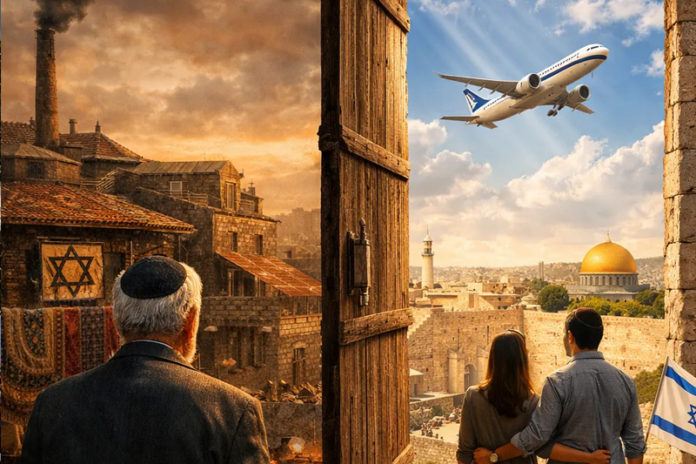
For nearly eighty years, something unprecedented has existed in Jewish history: a sovereign Jewish state in Eretz Yisrael with open gates. An army. A functioning economy. Infrastructure. An airport with daily departures. Organizations like Nefesh B’Nefesh guiding Jews through the process. Flights on El Al ready to carry families home.
This is not mystical abstraction. It is operational reality. And yet millions remain comfortably in exile.
Chazal tell us that during Yetziat Mitzrayim, only a minority left. The Midrash famously teaches that 80% of the Jews remained in Egypt, unwilling to abandon the familiarity of their environment. Slavery was brutal, but it was structured. Predictable. The desert was unknown.
Sometimes bondage feels safer than freedom.
Persian Jews have their carpet businesses, their silversmith shops, their intergenerational trades woven into the bazaars. American Jews have their nursing homes, their diamond exchanges, their law firms, their portfolios. Entire communal identities built around industries that became pathways to success.
Different continents. Same psychology.
We tell ourselves: this is how we survive. This is how we secure our children’s future. This is where our sustenance comes from.
But the Torah has already dismantled that illusion.
Lot wasn’t denying danger. He wasn’t philosophically confused. He simply could not detach from the machinery of his parnassah. He confused the vessel with the source.
We speak fluently about bitachon. We declare that Hashem sustains all living beings. We teach that parnassah is decreed from Above. Yet when geography enters the conversation, our faith tightens.
“Yes, Hashem provides… but salaries are higher here.”
“Yes, Hashem provides… but the market is stronger here.”
“Yes, Hashem provides… but my investments perform better in this country.”
At some point, intellectual honesty demands the question: do we believe our sustenance comes from carpets and diamonds, from nursing homes and stock exchanges, or from the Ribbono Shel Olam?
Hishtadlus is real. The Torah never endorses passivity. You work. You build. You calculate responsibly. But hishtadlus is the vessel, not the source. Vessels crack. Markets implode. Regimes shift. Industries evaporate. Jewish history is filled with once-dominant professions that disappeared overnight.
Exile trains us to anchor security in environment. Redemption demands anchoring security in Hashem.
There is another brutal pattern we rarely acknowledge: we almost always figure it out too late.
Before revolutions, there are speeches. Before expulsions, there are warnings. Before borders close, there are rumors. There is always one more school year to finish. One more promotion. One more reason to postpone.
Windows in Jewish history do not close gradually. They slam.
For nearly eighty years, the gates of Eretz Yisrael have been open in a way they were not for two millennia. No angels dragging us. No sealed borders forcing urgency. Just an open invitation.
That kind of patience from Heaven should not be mistaken for permanence.
When we daven for Jews in places like Iran, we should do so with full hearts. They are ours. Their vulnerability is ours. But we should also hear the echo. The same comfort that keeps Jews rooted in Tehran is the comfort that keeps Jews rooted in Manhattan.
Slavery can feel stable. Exile can feel sophisticated. Bondage can masquerade as success.
The question is not whether Hashem can provide parnassah in Eretz Yisrael.
The question is whether we trust Him enough to step into the unknown before the known collapses.
Eighty percent once chose the familiarity of Egypt over the uncertainty of redemption.
History does not linger over their grandchildren.
Hashem has opened a window. No one knows how long it will remain open.
The real risk may not be leaving behind a familiar trade. The real risk may be assuming the illusion will last forever.
October 7 revealed why Two-State Solution won’t work, what will actually protect Israel – opinion
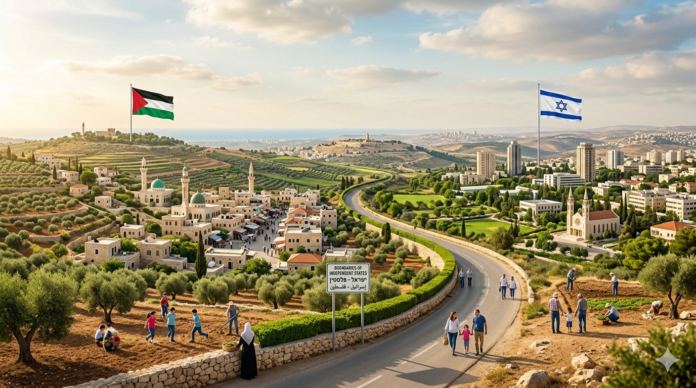
The government’s full conception was wider in scope and inherently political. According to this view, the split between Hamas rule in Gaza and the Palestinian Authority in the West Bank prevents the emergence of unified Palestinian representation, thereby thwarting any possibility of meaningful diplomatic negotiations.
With its back to the wall, Iran has used the ‘Doomsday weapon’ against its neighbors
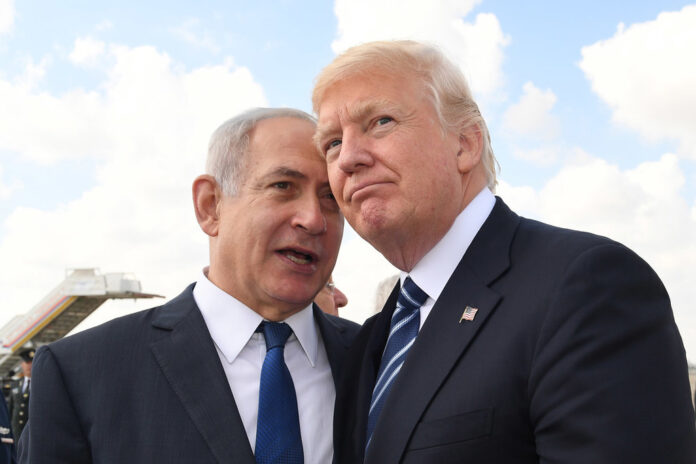
The Iranian regime has its back to the wall and senses its end is approaching. Only this can explain the decision to attack oil facilities in countries across the Gulf – a type of doomsday weapon.
As far as is known, the American Incirlik Air Base in Turkey – more or less the only country in the region that still gave some support to the ayatollahs – has not been attacked. Thus far, at least one oil facility has been targeted. The facility belongs to the world’s largest oil company, the Saudi “Aramco,” in Ras Tanura. Operations at the facility were halted immediately to prevent damage and fires, and a decision was made across all Gulf states – Oman, the UAE, Saudi Arabia, Bahrain, Qatar, and Kuwait in the north – for a dramatic reduction in the activity of all oil and gas facilities, including pumping, transmission, refining, and liquefaction. All militaries are diverting the bulk of their defense capabilities to the oil facilities, and since last night, aircraft from Britain and France stationed in the area have joined them, following a decision reached Sunday in Europe.
Who will join the US and Israel?
An Arab diplomat familiar with military coordination told Israel Hayom that intelligence and operational cooperation among all countries is improving under American leadership, and that joint exercises and experience from the June war are aiding this.
According to the official, Iran has attacked civilian targets in the Gulf states from the first moment and not just American bases, and it continued during the night with more strikes on oil facilities and infrastructure. The defense forces of the Gulf states managed to intercept most of the missiles and UAVs, the official said, noting that the UAE was the most targeted country.
That same Arab diplomat added that the decision made Monday at the Gulf Cooperation Council allows each of them to decide on joining American and Israeli forces in counterattacks against Iran, strikes that will focus on missile and UAV launch sites. According to the source, there is no decision yet on a retaliatory strike against Iranian oil facilities, but if the Iranian fire on Gulf facilities continues, this is certainly an option.
Alertness in Europe
The CENTCOM war room, which coordinates activities between regional militaries, has added all regional countries to the battle picture, including Cyprus, which was also attacked, as well as Greece, France, and Italy. The British were in the picture from the first moment and even participated in the interceptions of missiles and UAVs launched toward Israel and Cyprus while they passed over Jordanian soil. On Monday, an Iranian UAV hit the British base at Akrotiri in Cyprus. Representatives of the German military were also added to the circle of information recipients, in anticipation of the possibility that the German Air Force may be involved later.
The European decision was made both due to Iranian attacks on British and French bases in the Gulf, due to attacks on the Gulf states, and to prevent excessive damage to oil and gas facilities and the tankers carrying them, which could greatly increase their prices and primarily harm Europeans.
Why Trump Bombed Iran
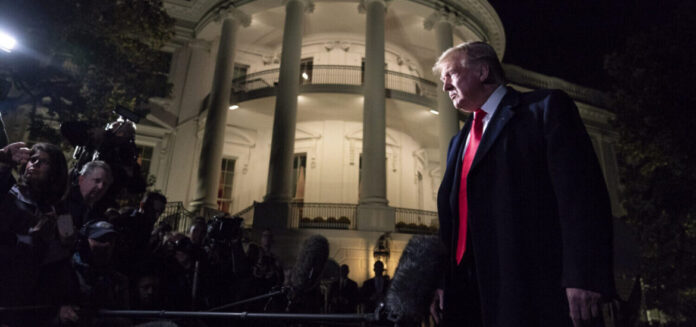
President Trump Departs for NYC
More:
President Donald J. Trump talks to members of the press on the South Lawn of the White House Saturday, November 2, 2019, prior to boarding Marine One to begin his trip to New York City. (Official White House Photo by Joyce N. Boghosian). Original public domain image from Flickr
Early Saturday morning U.S. East Coast time, the United States and Israel launched a major combined air operation against Iran to, in President Donald Trump’s words, “prevent this very wicked, radical dictatorship from threatening America and our core national security interests.” Within hours, Iran’s 86-year-old supreme leader, Ayatollah Ali Khamenei, was dead, as was much of the country’s senior leadership. Many Americans, meanwhile, found themselves asking, Why?
There is still a lot we don’t know about the immediate prelude to the attack. Questions abound about whether the United States really had intelligence that Iran was “two weeks” away from a nuclear weapon and when and how the decision to attack was made. But the short answer to the question of why is that Trump is making a long-overdue correction to decades of a flawed U.S. Iran policy instigated by Barack Obama that transformed the globe into a more dangerous and more unstable place than it has to be.
Since its inception in 1979, the Islamic Republic of Iran has been, both in ideology and in action, an enemy of the United States. Its founding act was the kidnapping of hundreds of Americans, and since then, it has killed Americans and sought to subvert U.S. interests whenever and however it can. Washington tolerated these provocations for a mixture of good and bad reasons. Policymakers had other priorities; they feared regional instability or a military quagmire, or they convinced themselves that the Iranians, despite their fanatical rhetoric about the United States as “the Great Satan,” were rational actors who could be bargained with. Especially after the failure of U.S. nation-building efforts in Iraq and Afghanistan, which inadvertently strengthened Tehran’s hand in the region, Iran came to be seen as a problem the United States would have to live with, for good and for ill.
Trump assessed that the United States’ tolerance of the regime’s bad behavior was creating danger that America, and the globe, could no longer afford.
Under Obama, however, the United States conceived of a far more ambitious solution to the Iran question. In that administration’s view, Iran was not in fact an enemy of the United States—it was a potential partner that had been misunderstood. The United States, according to this view, had long acted as a high-handed “imperialist” power in the Middle East, aligning itself with the forces of “reaction” in the region, including the Gulf monarchies and Israel, which inflamed Muslim opinion through its oppression of the Palestinians. The original sin of U.S. imperialism was seen as the root cause of the region’s instability.
To fix this, the theory went, Washington should recognize Iran’s aspirations as legitimate so that the mullahs would come to feel they had a stake in maintaining the regional order. American allies, in turn, would have to learn to “share the neighborhood” with Iran. This was the basic logic of the 2015 Iran nuclear deal and the Middle East “realignment.” The central conceit was that if the United States could put the issue of Iran’s nuclear weapons program to one side, then it could move forward with transforming Iran into America’s partner in administering the Middle East.
Theoretically, this meant that Washington would strike the pose of a neutral mediator between Iran and America’s allies. In reality, however, the United States and its allies were much stronger than Iran. Engineering a stable balance thus required tilting toward Tehran—propping it up with financial resources while restraining U.S. allies from taking their own steps to check Iran’s growing regional power.
As Michael Doran and Tony Badran wrote at the time, the scheme was “just clever enough to be stupid on a grand scale.” Its fatal flaw was in misunderstanding Iran’s motivations. The mullah’s terror regime had no interest in becoming a responsible junior partner in a U.S.-led regional condominium; rather, it wanted what it had always wanted and had said it wanted over and over, which was to destroy the U.S.-led order in the region, wipe Israel off the map, and overthrow the Gulf Arab states in a global Islamic revolution to be headquartered in Tehran. When the United States offered it financial inducements and diplomatic and military breathing room, Iran simply pocketed these concessions and used the proceeds to build out its regional terror empire and push its advantage wherever it could. The wages of this policy, in Obama’s first term, were the brutal civil war in Syria and the rise of ISIS, which was motivated in part by radical Sunni fear of rising Iranian power.
Trump attempted to reverse this policy during his first term with his campaign of “maximum pressure” against Iran, which, combined with his efforts to formalize the Israeli-Sunni alliance via the Abraham Accords, largely succeeded in quieting the Middle East and rolling back the Iranian advance. When Biden entered the White House in 2021, however, he restored the Obama policy of Iran realignment—which became even more dangerous as Iran integrated itself into an axis alongside the United States’ other major adversaries, China and Russia, which shared Tehran’s goal of breaking the U.S. position in the Middle East. Iranian power reached its high-water mark on Oct. 6, 2023, when Iranian proxies stretched from Iraq to the Red Sea and hemmed Israel in on all sides through what had come to be known as the “Ring of Fire.”
In the sort of irony common to history, the United States’ accommodating policy allowed Iran to build a fearsome regional empire. This made the Oct. 7 attacks possible, which in turn is what ultimately resulted in the regime’s downfall.
Tehran’s Palestinian proxy, Hamas, launched what it thought would be the final battle to drive the Jews into the sea. Instead, Israel destroyed the main elements of Iran’s empire one by one, even as the Biden administration sought to end the fighting in a doomed effort to put Humpty Dumpty back together again. Finally, last June, Israel turned to Iran itself—this time joined by the United States. But Trump, wary of a prolonged war and still hopeful that military pressure might bring Iran to the negotiating table, kept U.S. participation to a minimum and called an end to the Israeli campaign before the job could be finished.
Over the past nine months, the administration tried and failed again to convince the Iranian regime to negotiate a peaceful surrender. In mid-February, Trump issued a two-week deadline to reach an agreement—which loomed overhead this past week. “Trump got on the phone Thursday with his two envoys, Steve Witkoff and Jared Kushner,” according to The Washington Post this morning. “They told him the talks had gone badly: Tehran wasn’t willing to end its nuclear enrichment or dismantle its missile program.” According to other accounts, the United States offered Iran “free nuclear fuel forever.” The Iranians said no. The deadline arrived and the strikes began.
We do not yet know about the larger aims of the operation, what’s next for Iran and the broader Middle East, or how, if at all, the attack on Iran fits into a broader U.S. global strategy. What seems clear is that Trump had assessed that the United States’ tolerance of the regime’s bad behavior was creating danger that America, and the globe, could no longer afford. “America’s prosperity—the dollar’s status as a reserve currency, US stewardship of the productive sectors of the global economic system, etc etc—depends on effective power projection,” as Lee Smith explained it on X. “Letting a group of weak thugs take Americans hostage, kill American soldiers, fire rockets at aircraft carriers, and us not doing much of anything about it—let alone letting them get nuclear weapons—sure makes it look like we can’t project power very effectively.”
It’s a handicap of this moment that very dramatic events happen in a landscape of disaggregated, often untrustworthy media, both from the decrepit old legacy space as well as the new “Wild West” of conspiracy-brained independent media—making it unusually hard for people to understand what they’re looking at. Viewers of Rachel Maddow, for example, were treated to hair-on-fire hysterics. “In terms of pure rational deduction of what he’s doing here, we can basically rule out all of the reasons he has said he’s doing it,” she intoned, appearing on the verge of tears. Meanwhile, The New York Times was busy outperforming what its best satirists predicted, by publishing a respectful, almost admiring obituary for Khamenei—a man who butchered 30,000 of his own people just last month.
At the same time, so-called independent voices spent the day whipping up their own fever dreams about how this all clearly reflects nefarious Jewish control of the world’s richest and most powerful country, rather than the patently obvious opposite idea (namely, that “it’s actually pretty good to have an ally that has the best intelligence in the world, is able to win their own wars, and regularly takes out anti-American terrorists.”) Add social media on top of this, and the whole situation grows even worse: Since one’s feed is determined by what and who one already follows, it’s virtually impossible for a civilian to get historically informed, rational views on what’s happening.
All of which is to say, proceed with caution when imbibing the news this week. We’ll be here to help as much as we can.
Park MacDougald is senior writer of The Scroll, Tablet’s daily afternoon newsletter.
Strategic Proposal: The “Statehood vs. Refugee Status” Referendum
Objective: To force a diplomatic “checkmate” by requiring the Palestinian population to choose between sovereign statehood and the perpetual status of “hereditary refugees.”
1. The Core Legal Paradox
International Law: According to the UN’s own logic, a citizen of a sovereign state cannot simultaneously be a “refugee” with a “right of return” to another state.
The Proposition: Israel should formally call for a UN-monitored referendum among Palestinians: “Do you accept a sovereign state within the 1967 borders in exchange for the permanent termination of all refugee claims and the dissolution of UNRWA?”
2. Exposing the “Proxy Entity” (The “LDNR” Analogy)
If the Palestinian leadership or population rejects statehood under these terms, it proves they are not a national liberation movement, but a destructive proxy (similar to the “Donetsk/Luhansk People’s Republics”).
A “No” vote officially deconstructs the “occupation” narrative: Israel cannot “occupy” a nation that formally refuses to exist as a state in favor of eternal war.
3. Dismantling the UNRWA Scam
Hereditary Status: UNRWA is the only agency where refugee status is inherited (even by adopted children). This is a demographic weapon, not a humanitarian mission.
The Choice: The referendum forces the international community to choose: either they support a Palestinian State (ending the conflict) or a Refugee Nation (perpetuating the conflict). They cannot fund both.
4. Shifting from Defensive to Offensive Diplomacy
Breaking the Inertia: Instead of defending against “apartheid” or “genocide” accusations in the ICJ, Israel takes the moral high ground by offering the very thing the UN claims to want (Two-State Solution).
The Win-Win for Israel:If they say YES: The “Refugee” issue is legally dead; UNRWA is abolished.
If they say NO: The world sees that the goal is not “liberation,” but the destruction of Israel.
5. Strategic Impact
This initiative targets the Western taxpayer. It simplifies the conflict to a clear choice: “We offered them a country; they chose to remain professional refugees to keep the war going.”
Purim portents

According to the Oxford dictionary, a portent is “a sign or warning that something, especially momentous or calamitous, is likely to happen.”
As we approach this year’s celebration of Purim, which commemorates the defeat of a genocidal plan to wipe out the Jews of the ancient Persian Empire, it seems like déjà vu is returning all over again.
This past Shabbat’s main topic of conversation in synagogues, apart from the weekly portion of the week, was speculation as to when, not if the Jew/Zionist/Israel haters of Iran will be confronted.
One of our neighbours, a former resident of Melbourne, suggested in the spirit of Purim (the Festival of Lots) that we should organise a Melbourne Cup-style sweepstake guessing the date “the balloon might go up.”
Although the international mainstream media delights in portraying negative generalisations, it would be grossly inaccurate to describe the mood among worshippers as one of doom and gloom.
Nobody is minimising or dismissing the unfolding situation, but at the same time, resilience and faith in the ultimate outcome are to the fore. There is a general determination by most to weather the impending storm, and this is where the historical events of Purim play a crucial part.
We have frequently been in this situation before, during our long and torturous experiences with the forces of hate.
The most recent occurrence was during the Gulf War, which started in August 1990. Saddam Hussein fired Scud missiles at Israel, and there were fears that they might contain chemical weapons. Sealed rooms and gas masks provided elementary protection but, in hindsight, were mainly psychological rather than truly effective precautions.
Our oldest son made Aliyah (one year ahead of us) during this time and arrived at Ben Gurion airport as the rockets started flying. His arrival in Israel included receiving a gas mask and being interviewed by a journalist who wanted to know why this “mad Kiwi” was immigrating to Israel in the midst of a war. As he arrived, tourists and others were heading in the opposite direction.
In what many people still today view as a “sign from above” the war ended on 28 February 1991 which happened to be the day of Purim.
The dictator of Iraq, who had vowed to murder all Israelis, was defeated, although his poisonous jihadist hate and incitement still lingered and eventually mutated to infect other countries.
The annual festivities surrounding this Jewish observance are a sharp reminder that nothing much has changed since the time that Haman and his cohorts plotted and schemed to destroy all Jews living in the lands ruled by Persia.
There are similarities and differences that make today’s looming confrontation very relevant.
Although the Purim saga took place in the 5th Century BCE, it is amazing how some of the events resonate in our own era.
The Jewish community of Persia at that time lived in a bubble of complacency, believing that their future was secure and that their place in society was guaranteed.
They had the opportunity of returning to Judea. In 538 BCE, Cyrus authorised the Jews to return to their ancient homeland. However, only a very small minority took the opportunity to do so. The majority elected to remain in the Persian Empire, thus creating the first voluntary Diaspora community.
Life was comfortable, and economic prospects were much better. The challenge of dangerous travel to Judea and the economic prospects there presented seemingly insurmountable difficulties. For the majority of Jews, staying put and enjoying the “good life” was much more preferable.
The furthest thought from the minds of those Persian Jews was the possibility that one day there would be a situation whereby their seemingly safe and secure existence might be threatened.
Imagine, therefore, the dismay, shock and trauma which suddenly developed when a rabid Jew hater by the name of Haman was appointed Prime Minister. King Ahasuerus, the head of state, was more interested in enjoying a lavish lifestyle and had no interest in looking after the welfare of his subjects. Haman and his followers were therefore free to pursue their Jew hating incitement and policies.
It is notable how easily and quickly the delegitimisation of the Jews was able to spread unchecked throughout the empire. A once “lucky country” for the Jews rapidly deteriorated into a life threatening situation.
Fortunately, a Jewish leader arose who grasped the dire situation facing the community. He devised a plan to subvert the evil influence and intentions of Haman and his colleagues. Taking advantage of the King’s weaknesses, he arranged for Esther to infiltrate the court, and the rest is history.
It is noteworthy that in the end, the Jews were permitted to defend themselves and thwart the nefarious genocidal plans from being implemented. Haman and his gang of followers were defeated and we have celebrated this every year since that time.
The lessons of these past events are relevant today.
The question is whether we will learn from them and act accordingly.
Currently, we face a regime in modern-day Persia that is plotting to destroy the restored Jewish nation. The Islamic usurpers of Iran are following the same agenda.
Where are today’s Mordechai and Esther, and who will be able to thwart the evil designs of the latest crop of Jew haters?
Like their ancestors of old, those Jews who remained in Iran after the fall of the Shah now find themselves in dire peril. Instead of fearless leadership, the community is now hostage to life-threatening fanatics, and any sign of opposition is fatal. Jewish leaders, religious and lay, are forced to denounce Israel and Zionists and pledge allegiance to a regime that oppresses its citizens.
Once again, those who refused to act in time have found themselves trapped and targeted. They have no possibility of defending and saving themselves. They cannot fight back and can now only look to salvation coming from other sources.
We currently await further developments, which may or may not determine whether there will be a Purim-like outcome.
The rapid descent of ancient Persian Jewry from valued members of society to pariahs and scapegoats has startlingly clear implications currently for Diaspora communities and Israel.
We are witnessing the same phenomena being enacted.
Countries that were perceived to be safe havens for Jews have changed with alarming rapidity. Places that once offered economic security have all of a sudden deteriorated to an alarming extent.
Societies which provided law and order and personal safety have faced increasing crime and lawlessness.
Political parties in democratic nations have steadily been subverted by rabid anti-Israel and anti-Jewish policies.
Lax border controls have allowed a major influx of populations from Jew hating societies. This, in turn, has had major implications in those countries where elections can be determined by ethnicity.
Jews on every continent are facing the negative ramifications of all of the above, and as so often has been the case in the past, they are in many cases, endangered.
Israel, as the resurrected nation state of the Jewish People, is the target of humanity’s longest surviving virus.
Like the Jews of Shushan and the Persian Empire, Israelis can and do fight back against the rising tide of incitement and hate. Elsewhere, this battle is a losing proposition because the countermeasures are usually ineffective and half-hearted. Relying on promises and guarantees of safety in the face of changing demographic realities has proven to be a failure.
Educating the masses who don’t want to be confused by facts and are increasingly influenced by social media and AI scams is a frustrating exercise.
The lessons from that dark era are lost as the Shoah recedes from memory and its unique Purim-like plot to eliminate Jews is diluted by revisionists.
Zionaphobia has become the standard stance of a rapidly growing sector of the population.
Unlike previous generations, however, we have the means to combat this plague.
Will we internalise the experiences of Purim and act before it is too late?


Smashed windows. Shards of glass on the street. Hostile graffiti in blood-red paint. And that most chilling of slogans: “Reject corporate Zionism.”
No, I am not describing a scene from 1930s Europe but rather an attack that took place in Archway in North London this week. Once again a mob of anti-Zionist imbeciles has roughed up a branch of Gail’s, the upmarket bakery chain. It opened on Junction Road near Archway Tube station last week and was instantly besieged by the usual keffiyeh clowns yelping about Israel’s “genocide”.
The preening fools of the cult of Israelophobia gathered outside the bakery to unfurl a vast banner saying “Boycott Israel for Genocide and War Crimes in Gaza”. Busy patrons hoping to pick up a sausage roll or a honey cake for their morning commute will have rightly wondered what a high-end bakery in North London has got to do with Israel’s war against the anti-Semites of Hamas.