Debunking the Genocide Allegations: A Reexamination of the Israel-Hamas War (2023-2025)

Hebrew version 
view Executive Summary – pdf

The following study offers a thorough historical exploration and a quantitative-statistical analysis of the allegation that the State of Israel committed genocide against the Gazan population following the October 7, 2023, massacre. Specifically, we address the claims that Israel intentionally starved the Gazan population, that IDF ground forces deliberately massacred civilians, and that the Israeli Air Force (IAF) carried out indiscriminate bombings, failing to distinguish between combatants and civilians and conducting disproportionate strikes.

The goal of this study is to carefully assess both primary and secondary sources in order to draw independent conclusions about the factual aspects of the conflict. This process involved reviewing testimonies, primary sources, and the methodology of data collection utilized by organizations and researchers promoting the genocide allegation, as well as conducting statistical analysis and distinguishing between narratives promoted by various parties and verified facts. The purpose of our investigation is to identify the factual events that occurred, not to engage in legal or ethical discourse. While discussing the war’s legal and ethical implications is important, we firmly believe such discussion must be grounded in a solid foundation of facts to be meaningful as well as relevant.

Our focus on factual analysis in no way diminishes or ignores the severe human suffering in Gaza, nor does it seek to downplay the rhetoric or policy failures of the Israeli government. However, as we demonstrate throughout this report, subordinating factual analysis to the advocacy of a specific policy or ethical position undermines our ability to understand the facts needed to shape informed policy and ethical conduct. Therefore, we have made every effort to avoid taking any stance or offering recommendations that are not rooted in a comprehensive factual analysis.

This research is structured into eight chapters, each addressing different aspects of the Israel-Gaza conflict:

  • Chapter 1 examines accusations of the deliberate starvation of Gaza’s civilian population.
  • Chapter 2 addresses the lack of sufficient context for understanding Israel’s military actions during the war, particularly the challenges of urban warfare. We focus primarily on Hamas’s “human shields” practice and overall strategy, recognizing that war is shaped by reciprocal measures taken by all parties involved. Thus, the actions of one side to the conflict cannot be assessed without considering those of its adversary.
  • Chapter 3 provides an in-depth analysis of claims regarding deliberate killings of civilians.
  • Chapter 4 investigates allegations that Israel systematically violated the principles of distinction and proportionality in its strikes on the Gaza Strip.
  • Chapter 5 critically reviews Gaza Health Ministry (GMOH) data and manipulations. While recognizing the uncertainty of the available figures, we offer a speculative scenario for how these manipulations skewed the actual gender and age distribution of casualties, and draw conclusions as to plausible combatant-civilian casualty ratios.
  • Chapter 6 explores the capability of UN agencies, humanitarian organizations, and major media outlets to assess humanitarian crises in closed societies under oppressive regimes such as Hamas-controlled Gaza. It draws a comparison to Iraq under U.S. sanctions between 1991 and 2003, and explores the inability of said organizations to pierce the heavy-handed humanitarian deceptions of the Iraqi regime.
  • Chapter 7 evaluates the ability of UN agencies and human rights organizations to credibly distinguish between civilians and combatants among war casualties in contexts marked by manipulation and politicization within closed or controlled societies. This chapter includes findings from a comparative analysis of the 2002 Battle of Jenin, the 2006 Lebanon War, and previous conflicts in Gaza.
  • Chapter 8 analyzes the methodologies used by UN agencies, human rights organizations, and affiliated journalists and researchers that have led to recurring analytical failures, as well as the lack of subsequent insights or corrective action, even when these failures were eventually acknowledged by the same organizations.

EXPOSING Qatar’s Double Game: Ally or Enemy of Israel?

Netanyahu’s DC visit appears to have collapsed after a secret second meeting with Trump, leading Steve Witkoff to cancel his Doha trip and Netanyahu’s team to quietly exit Washington. At the same time, ceasefire talks with Hamas fell apart over demands for a permanent truce, increased aid, early prisoner swaps, and a full IDF withdrawal from Gaza. Meanwhile, a long-delayed U.S. shipment of armored bulldozers has arrived in Israel, boosting IDF ground operations. In southern Gaza, a soldier from Yitzhar was killed in a Hamas ambush while operating heavy machinery—terrorists attempted to kidnap him, but he resisted and was fatally shot before Israeli troops intervened.


Kicking the can

Most of the problems we face today are as a result of them having in the past been “kicked down the road” for someone else to confront.

The explosion of jihadist terror networks and regimes is just one example of how procrastination, appeasement and a refusal to face up to facts have now resulted in the current tsunami of hate threats. Fear of confronting evil head-on and preferring to pretend a supine surrender will buy peace has proven to be a recipe for disaster.

Jew and Israel hate, now one and the same, has exploded worldwide. It was always present, but with a diminishing exposure to Holocaust education, the general population is now easy prey to being brainwashed with all the latest conspiracies about Jews. The same brainwashing technique that produced a generation of devoted Hitler Youth and provided an army of willing executioners is being replicated today.

Universities and professional associations are rapidly being subverted in the same way.

Most of the media are complicit, as their long track record demonstrates, in distorting, misreporting and accusing. The end result is a steady diet of horror stories and blatant mistruths, which inevitably leave an indelible stain against Jews and Israel.

Political leaders who in the past were experts at “kicking the can down the road” are replicating these days as they once again prefer hot air rhetoric to actually tackling hate head-on.

Back in the 1930s, Jews in Germany thought that they could buy safety by distancing themselves from the “ostjuden” – the Jews from Poland and the east who were more visibly Jewish. This, of course, did not work because to the haters, all Jews were anathema.

Likewise, today, some communal leaders in Diaspora communities think they can placate the haters if they distance themselves from their brethren in the Jewish State.

It states in Kohelet, “there is nothing new under the sun”, as a closer look at some of these current threats will prove only too well.

For years and over many American Administrations, the rise of Islamic terror regimes and their supporters was treated as something that could be safely ignored. Israel’s warnings were noted and then quickly buried. Only after American lives were lost or US interests threatened did the penny drop, but even then, half-hearted responses did not solve the problem.

A standard feature of democracies’ responses is a total lack of understanding as to what constitutes jihadist aims and the role religious fanaticism against infidels plays in Islam. The US State Department’s bias and naïve beliefs that ideological hate can be transformed with dollar bounties failed to recognise the futility of such a transformation. European and UK spinelessness combined with commercial interests and inbuilt appeasement have resulted in the mess we face today.

How many people realise that France and Germany have extensive financial and commercial involvements with Iran?

After years of looking the other way and refusing to take action, we are now faced with a US President who seems intent on addressing the situation.

The question, of course, is whether he is capable of succeeding where others have failed. Can “deals” do the trick? Israel has suffered as a result of rotten deals in the past. Israel has been deceived by so-called deals. The agreement to safeguard maritime navigation for Israeli ships pre-1967 turned out to be a worthless document when Nasser blockaded the Tiran Straits. Likewise, Presidential pledges by previous incumbents to prevent Iran from acquiring nuclear capability and the means to deliver them were nothing but window dressing and an excuse not to take practical action.

The burning question of the moment is whether Trump is able to do what no other President has been able to do previously?

His quick “in and out” bombing of nuclear sites is touted as a game changer, but mystery surrounds its results. Israel did the dirty work of degrading Iran’s air defences and other facilities. Mossad’s brilliant activities on the ground contributed to an astounding success. Iran’s retaliatory missile responses caused damage and fatalities, but the fact remains that 99% of drones were shot down, and the majority of missiles were intercepted. Israel took action when it became apparent that the rest of the world preferred rhetoric and duplicitous diplomacy to actual preventative action.

Trump talks of deals with Iran. Iran hints it might be open to talks, but that is a tactic that they have successfully employed before with disastrous results. If they can deceitfully use this strategy as a ruse to rearm, reconstruct and rebuild, then nothing will be achieved. It is already reported that the Chinese are supplying replacement missiles. Without punitive sanctions and ultimate regime change, the Iranian Mullah regime will redouble its efforts to reach nuclear capability. Its aims and ambitions have not changed one iota. The destruction of the “Zionist entity” remains its primary objective.

Any deal that does not ensure that this can never happen is just another worthless piece of paper.

Any deal that does not secure the immediate release of all hostages held by Hamas is likewise worthless. There cannot be any talk of reconstruction until Hamas is totally removed and those who wish to leave Gaza are enabled to do so. Too many innocent Israeli civilians and IDF soldiers have been killed. Leaving the perpetrators in place is unthinkable.

It is time to remember the warning issued by Golda Meir when she declared that “you cannot make peace with someone who has come to kill you.”

If Obama and Arafat could be awarded the Nobel Peace Prize, the suggestion that Trump can be nominated is not so outrageous. The fact that Israel has written and nominated him is bound to doom his prospects because Israel is anathema as far as most international groups are concerned.

If one wants to witness political huffing and bluffing in action, look no further than what is transpiring in many countries as mindless mobs rampage and cause mayhem.

In the United Kingdom, every weekend in London is disrupted by screaming and threatening demonstrators. Hurling the vilest epithets against Israel, Zionists, Jews and anyone who supports them, without doubt, generates further hate and incitement. Violence is not far behind. Police passivity in the face of these blatant expressions of pure evil has been a standard feature. In recent times however faced with rising criticism a more robust response has been forthcoming.

After a painful period of trying to avoid upsetting jihadist supporters, the UK Government finally banned “Palestine Action.” Their defiant intention to intensify anti-Israel activities will prove whether the authorities are serious about arresting and prosecuting them. The next question, of course, will be whether the courts pass meaningful sentences or merely issue slaps on the wrist.

Left-wing Labour MP, together with knee-jerk Zionist haters from other parties, have already condemned the attempt to ban hate marches. Corbyn and his friends are working hard to condemn, sanction and boycott Israel. Lammy, the Foreign Secretary, declares his intention to further punish Israel if it does not surrender in Gaza.

Where the UK goes, so it seems, does the Australian Federal Labour Government follow. Well, not quite, because it has yet to implement complete bans against inciting groups or take firm action to squash the rising tide of Jew and Israel hate.

The response has been full of righteous rhetoric and plenty of political hot air, in the face of unprecedented attacks against Israeli/Jewish business premises and arson attempts against synagogues. The promise to create yet more committees to study the problem is a classic way for politicians to kick the can down the road while actually doing nothing.

Who needs more committees when there are already sufficient tools available to tackle the problem?  If existing laws are not strong enough to deal with the epidemic of Jew hate, then introduce legislation that will address the challenge. Empower the police and security services to act. Instead of hand ringing and pathetic blathering about social cohesion and Islamophobia, take off the kid gloves and ban the worst offenders. Deport the worst inciters or make sure that the courts pass meaningful punishments for those making inciting sermons and advocating death. Nip assaults against communal premises in the bud by taking firm action instead of letting the offenders escape and then appealing to the public for help.

The jihadist agitators can discern weakness, which is why in Australia and elsewhere they take pride in redoubling their efforts. Establishing a Holocaust museum in Canberra is all very nice, but it is not going to deter the haters and all those whose minds are irredeemably poisoned by an incessant torrent of lies.

The diabolical situation that now exists in universities and beyond is a direct result of years of refusal to act.

Kicking the can is a fatal dead end.

Get serious before the situation becomes uncontrollable. Instead of futile hand ringing, take off the gloves.

Impressive or miraculous?

26 juli 2015, Ferryvlucht van Fort Worth AB Texas naar Eglin AB Florida...JSF F-35 met Registratie AN-1, tailnummer F001 Werd 24 juli 2015 door Lokheed Martin overgedragen aan Nederland..Om 11:07h Texaaanse tijd word de eerste JSF overgevlogen van Fort Worth AB naar Eglin AB...26 juli 2015, Ferryvlucht van Fort Worth AB Texas naar Eglin AB Florida...JSF F-35 met Registratie AN-1, tailnummer F001 Werd 24 juli 2015 door Lokheed Martin overgedragen aan Nederland..Om 11:07h Texaaanse tijd word de eerste JSF overgevlogen van Fort Worth AB naar Eglin AB....Foto: Eerste Nederlandse vlucht F-35 AN-1

Warplanes of the State of Israel flew close to 400 sorties over Iran with 600 aerial refueling connections during Operation Rising Lion. Not a single jet faltered or fumbled along the way, none had technical difficulties, not a single jet was hit by enemy fire, and not a single pilot was injured or fell into enemy hands.

Is that enormously impressive or outright miraculous?

IAF attack and surveillance drones flew an additional 1,100 sorties into Iran, and only eight drones were lost in the campaign. Together, the jets and drones successfully struck over 900 targets in Iran with 4,300 munitions, including nine nuclear sites, six airports and air bases (including Mashad Airport in eastern Iran which is 2,400 kilometers away from Israel), and 35 missile and air defense production facilities.

All the strikes were executed flawlessly, and not a single Iranian defensive system or guard force managed to interdict these operations.

IDF commandoes and Mossad agents operated inside Iran or from bases just across Iran’s borders, launching UAVs and secret weapon systems to neutralize Iranian abilities and target Iranian military and intelligence leaders. Not a single Iranian defensive system or guard force discovered these Israeli boots-on-the-ground in real time nor managed to interfere with these operations. All undercover Israeli soldiers and agents returned home to Israel safely.

In classic military assessment, such flawless performance and perfect results are statistically impossible. Unheard of. Unprecedented. Hard to believe.

So again, I ask, is this (merely) wildly impressive or wholly miraculous?

Over 14 days, Israel was able to neatly demolish 80 Iranian surface-to-air missile systems, 70 radars, 15 Iranian warplanes, 200 of Iran’s estimated 400 missile launchers, and 800 to 1,000 of Iran’s estimated 2,000 ballistic missiles. In both quantity and speed of execution, this exceeded IDF planning and expectations, and again, not a single Iranian defensive system managed to interdict these operations.

Israel also assassinated 30 senior Iranian military and IRGC officers, hundreds of Basij personnel, and 11 top scientists who were key knowledge-holders in Iran’s nuclear enrichment and weaponization colossus.

All this, of course, demonstrates deep intelligence penetration and matchless Israeli military planning, enormous professionalism, and supreme heroism. But given the improbabilities of it all, given the absoluteness of the accomplishment, given the power of the punch – might it also necessarily point to support from a Supreme Hand in the heavens?

NOW CONSIDER Iran’s attacks on Israel. On June 12, the night before the war, at the cabinet meeting convened to approve Operation Rising Lion, the IDF estimated that between 400 to 800 Israeli civilians could be killed in Iranian missile assaults. According to some reports, Israeli leaders were warned that if the war extended beyond two weeks and Iran was able to fire all its 2,000+ missiles into Israel including the two-ton versions, the death toll could rise to 4,000 Israelis.

In the end, Iran managed to fire about 600 missiles at Israel in 18 barrages, but 87% were intercepted by Israeli and other defensive systems. Another 1,200 Iranian drones were launched into Israel, but 99% were downed by defensive systems.

In cold military terms, such high interception rates of enemy missiles and drones are almost statistically impossible. Certainly unparalleled. Successful beyond belief.

So, is this just fantastically impressive or also spectacularly miraculous?

Unfortunately, 50 missiles and one drone broke through Israeli defensives, killing 29 Israelis, wounding 3,500 more, destroying 2,300 homes in 240 buildings, and leaving 16,000 Israeli civilians homeless. All Israelis suffered through more than 600 enemy attack alerts (more than 12,000 alarms across the county in all), sleep deprivation, economic and social dislocation, and plenty of trauma. Enemy missile fire struck a central military base, a key Israeli oil refinery, and one of the country’s top scientific research institutions.

But given how bad it could have been, how much worse it was expected to be, how devastating an enemy nuclear strike on Israel might have been, God forbid – it is hard to shake the feeling that the Heavens were in on the protection plan for Israel too.

In short, the statistics are totally triumphant, miraculously so. They are not logical unless you calculate something lofty and exalted beyond the mundane math.

THE MASTERFUL Israeli assault on Iran has restored Israel’s deterrent power and blessedly improved its strategic situation, especially after the failures of October 7, 2023. More importantly, Israel’s victories in Operation Rising Lion will perhaps point to something grander than the natural order, driving the way to spiritual conclusions.

By this I mean that maybe the miracles bestowed upon Israel in the recent war will assist people to perceive Providence at work. Perhaps the supernatural victories will lead citizens of the world to ponder the Jewish People and the State of Israel as repositories of eternal truths and as generators of moral purpose.

After all, if you permit that Israel’s victories are not just impressive, but Divine, everything changes. As one ditty going around the internet this week (hazily attributed to Allister Heath of the Daily Telegraph) declares: “Once you admit that Israel’s survival is Divine, your moral compass has to reset. Your (secular) assumptions about history, power, and justice collapse. If the ancient, hated nation of Israel is somehow still chosen, protected, and thriving – then maybe God isn’t a myth after all.”

Again, given the threats arrayed against Israel, and given Israel’s wonderous recent victories, can one deny the stark, palpable intervention of God, alongside Israel’s own prowess?

Can the genocidal gutter-chant “from the river to the sea, Palestine will be free” hold out against the defiant demonstration of Providential Power on behalf of the State of Israel? I do not think it can.

THE LATE Lord Rabbi Dr. Jonathan Sacks taught that the chronicles of humanity are nothing less than a drama of redemption, in which the fate of nations reflects their loyalty (or otherwise) to covenant with God.

For Jews in particular, he argued, this imposes tremendous responsibility to do things right because they are reputationally associated with the Creator; they are mandated to create “Kiddush Hashem” – a sanctification of God’s name in the world.

Non-Jews also have understood Jewish history this way. Sacks quotes the Russian Marxist thinker Nikolai Berdayev (The Meaning of History, 1936), who late in life came to the conclusion that the script of Jewish history bears the mark of God’s hand.

Berdayev: “The survival (of Jews) is a mysterious and wonderful phenomenon demonstrating that the life of this people is governed by a special predetermination, transcending the processes of adaptation expounded by the materialistic interpretation of history. The survival of the Jews, their resistance to destruction, their endurance under absolutely peculiar conditions and the fateful role played by them in history: all these point to the particular and mysterious foundations of their destiny.”

I think that Rising Lion indeed is a “peculiar and fateful” moment in history, a moment for spiritual introspection not just strategic recalculation.

The victories of Rising Lion, categorically impressive and exceptionally miraculous, ought to point beyond themselves to something grander than the natural order – to the attentive hand of God in our world.

How Dare Israel Win a Defensive War!

Imagine reading the following headline: “Man shoved onto subway tracks survives, but at what cost?”

This is how the media handles the story every time Israel outwits its enemies and lives to fight another day.

The latest version comes from Michael Shear in the New York Times, though it is entirely representative of the general theme of postwar reporting on Israel, to say nothing of the social-media “influencers” forced to find some way to cope with another successful Israeli defense of its sovereignty.

The Times headline is: “The Cost of Victory: Israel Overpowered Its Foes, but Deepened Its Isolation.”

Translation: The losing side is resentful of the victors.

The headline’s claim doesn’t even hold up. Israel had the use of Syrian airspace for its attacks on Iran, and Jerusalem and Damascus are in negotiations over burying the hatchet completely. Flying over the Arab world to take out Iran’s air defenses is a sign not of isolation but of integration.

That quibble aside, there is a larger problem with this conceit. Take this paragraph from Shear’s piece:

“Mr. Netanyahu’s relentless and unapologetic military response to the Oct. 7, 2023, Hamas-led attack that killed 1,200 people and took 250 people hostage has cemented the view of Israel as a pariah, its leadership accused of genocide and war crimes, and disdained by some world leaders. In opinion polls globally, most people have a negative view of Israel.”

The first thing to note about that paragraph is that this characterization of Israel’s standing was the same as it was before the war, even though the Times portrays it as a result of the war.

A quick search, for example, shows the Times warning of Israel’s “pariah” status—using that exact word—for nearly 20 years.

Israel’s leadership “accused of genocide and war crimes”? Welcome to the party, pal. Was this article written in 1982 or 2025? The answer is: yes. Most of Israel’s bad press is made of 100 percent recycled material.

Israel’s government is “disdained by some world leaders”? As if that’s a new development. The president of France disdaining the Jewish state is what we call “the status quo.”

I will go one step further: All those things were said after Oct. 7, 2023 and before Israel went into Gaza. This point is crucial, because the genocide accusations were leveled after Hamas carried out an explicitly genocidal attack on the Jewish state. Israel is punished for weakness and punished for strength. So it might as well choose the latter, right?

Support for Israel, the Times warns, “has become a fiercely contentious issue in Congress, the subject of angry debates and protests on college campuses and fuel for a surge in antisemitic incidents in the United States and around the world.”

So what I’m reading here is that when an Egyptian man in Colorado burned alive an 82-year-old Jewish woman, it’s on Israel’s head—not the man who murdered her, not the mouth-foaming activists and politicians yelling “globalize the intifada” and other slogans encouraging people to burn Jews alive, and not the city, state or country that didn’t protect her.

Another way of saying this: How dare the Jews survive! Our survival only causes the world to keep trying to kill us!

And again, those masses gathering on college campuses around the country (and the Western world) waving Hamas and Hezbollah flags? They were mobilizing the moment—and I mean the moment, the very second—the Hamas attacks were carried and while the attacks were still ongoing and therefore long before Israel had formulated a response of any kind.

Then we’re told that Israel’s “violence has strained the good will of the country’s allies and neighbors.” Reminder that before Oct. 7, 2023, Israel’s neighbors included Hezbollah and Bashar al-Assad’s Syria. I’d love to see the author’s personal list of acts of goodwill performed by Hezbollah and Assad.

After that, the article goes back to blaming Jews for attacks on them, telling us that “many Israelis now feel threatened while abroad, even as they are more secure at home.”

Well if they just feel threatened I suppose it’s not much to worry about. But perhaps it is, in the words of the band Boston, more than a feeling? Perhaps it is, say, a pogrom in Amsterdam, the city where Anne Frank hid in an attic?

At this point we’re about a quarter of the way through the Times article. The rest is just these nonsense points repeated ad nauseum.

All of this is because Israel fought a defensive war. Well actually, it’s because Israel won a defensive war. And its enemies and critics are struggling to cope.

The Song That Avi Piamenta Didn’t Get to Release

A song that the beloved flutist and singer Avi Piamenta had worked on but never got to release was shared by his family following his untimely passing this past Friday.

Piamenta, 69, was part of the Piamenta Band with his late brother Yosi Piamenta, a talented guitarist. Together, they wrote and recorded many joyous and soulful tunes.

Their personal story of becoming baalei teshuva and turning into dedicated Chassidim of the Rebbe was often reflected in their concerts and demeanor, which exemplified ahavas Yisroel and belief in Moshiach.

The song “Soon You’ll Understand” reflects that. Recently written in English by Piamenta, it discusses the current exile and how the hardships are part of the plan to bring the final redemption.

“He worked on it for a very long time,” a family member told COLlive.com. “He put his everything into it. Obviously, English wasn’t his first language. It was very meaningful to him, and he was very proud of it.”

“He was planning to put it out,” the relative added. “Until then, he ran it through AI to hear what it would sound like. And he never got around to put it out.”

COLlive presents the song in memory of Avraham Ben Yehuda.

VIDEO: Avi Piamenta – Soon You’ll Understand

LYRICS:

When you were afraid, I was holding you
When you felt alone, I stood beside you
When you asked, “Where are you?” I stayed still
Because my love ran deeper than your will

You thought I was gone, but I was near
Every silence, I was right here
You saw a wall, but I was the space
Making room for light, not just a place

And soon you’ll understand
There was no bad from my hand
What felt like pain was too high to see
What broke you down was building you free
You’ll look back and finally know
It was love, disguised below
And I never left you, not for a beat
Not in the dark, not in defeat

Every tear you cried, I cried it too
What touched your heart went through Mine too
You walked through fire, I walked with you
What crushed your strength, I carried through

They told you to wait, I waited too
Longing for the day I could reveal to you
That everything you feared was grace
Just wearing a deeper face

And soon you’ll understand
There was no bad from my hand
The night you hated was the way
To reach the light you’ll see today
And I never left you, not for a breath
I was inside your every step

I haven’t returned to my royal gate
Because I promised — I’d wait
I won’t wear my crown or rise above
Until I bring you back, with love

So my dear G-d, if this is the time
Please let it be gentle, let it shine
Let the good come clear, let the pain be gone
Let Moshiach walk in with a song
No more shadows, no delay
Let it be soon… maybe today

Zoom Administrator Wanted

Seeking to hire someone to administer zoom seminars in any language

Contact: dbedein@israelbehindthenews.com

A New Palestinian Offer for Peace With Israel

The idea of a two-state solution for Israel and the Palestinians has never seemed more futile than in the months since Oct. 7, 2023. But maybe that opens the door to a new way of achieving peace.

“We want cooperation with Israel,” says Sheikh Wadee’ al-Jaabari, also known as Abu Sanad, from his ceremonial tent in Hebron, the West Bank’s largest city located south of Jerusalem. “We want coexistence.” The leader of Hebron’s most influential clan has said such things before, as did his father. But this time is different. Sheikh Jaabari and four other leading Hebron sheikhs have signed a letter pledging peace and full recognition of Israel as a Jewish state. Their plan is for Hebron to break out of the Palestinian Authority, establish an emirate of its own, and join the Abraham Accords.

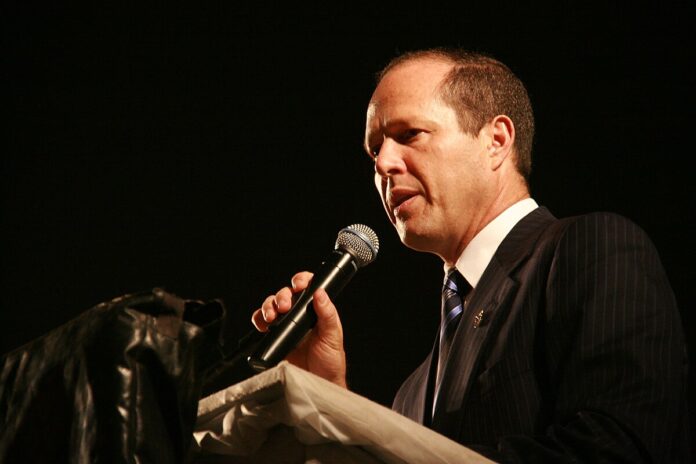
The letter is addressed to Israeli Economy Minister Nir Barkat, a former mayor of Jerusalem, who has brought Mr. Jaabari and other sheikhs to his home and met with them more than a dozen times since February. They ask him to present it to Prime Minister Benjamin Netanyahu and await his reply.

“The Emirate of Hebron shall recognize the State of Israel as the nation state of the Jewish people,” the sheikhs write, “and the State of Israel shall recognize the Emirate of Hebron as the Representative of the Arab residents in the Hebron District.” Accepting Israel as a Jewish state goes further than the Palestinian Authority ever has, and sweeps aside decades of rejectionism.

The letter seeks a timetable for negotiations to join the Abraham Accords and “a fair and decent arrangement that would replace the Oslo Accords, which only brought damage, death, economic disaster and destruction.” The Oslo Accords, agreed to by Israel and the Palestine Liberation Organization in the 1990s, “have brought upon us the corrupt Palestinian Authority, instead of recognizing the traditional, authentic local leadership.” That would be the clans, the great families that still shape Palestinian society.

The sheikhs propose that Israel would admit 1,000 workers from Hebron for a trial period, then 5,000 more. Sheikh Jaabari and another major sheikh say Mr. Barkat has told them this number will grow to 50,000 workers or more from Hebron. Work in Israel is a valuable source of income for Palestinian communities, which have had little development of their own under Palestinian Authority rule, but most permits were suspended after Oct. 7. The sheikhs’ letter pledges “zero tolerance” for terrorism by workers, “in contrast to the current situation in which the Palestinian Authority pays tributes to the terrorists.”

Mr. Barkat says the old peace process failed, so “new thinking is needed.” He has been working with the knowledge of his Israeli government to explore possibilities with the sheikhs. A senior Israeli source says Mr. Netanyahu has been supportive but cautious, waiting to see how the initiative develops. The timing may be out of his hands now that Sheikh Jaabari is extending the olive branch in public.

With their bold move, the sheikhs expect to swing Israeli public opinion to their side. “Nobody in Israel believes in the PA, and you won’t find many Palestinians who do either,” Mr. Barkat says. “Sheikh Jaabari wants peace with Israel and to join the Abraham Accords, with the support of his fellow sheikhs. Who in Israel is going to say no?”

The 48-year-old Sheikh Jaabari often cites his illustrious ancestors, but his actions are guided as much by his view of the future. “There will be no Palestinian state—not even in 1,000 years,” he says. “After Oct. 7, Israel will not give it.” A second major Hebron sheikh, who signed and declares his loyalty to Sheikh Jaabari, agrees: “To think only about making a Palestinian state will bring us all to disaster.” (The other sheikhs spoke anonymously for their safety.)

I watched videos of Sheikh Jaabari and another sheikh signing the letter and reviewed documents elaborating on the plan made with Mr. Barkat, which includes the creation of a joint economic zone on more than 1,000 acres near the security fence between Hebron and Israel. The sheikhs expect it to employ tens of thousands.

A document in Hebrew lists the Hebron-area sheikhs who have joined the emirate initiative. The first circle has eight major sheikhs, who together are believed to lead 204,000 local residents. The second circle lists 13 more sheikhs, who lead another 350,000. That makes a majority of the more than 700,000 people in the area. Both circles have sworn allegiance to Sheikh Jaabari in this matter, an Israeli associate of the sheikh witnessed. Those clan members also include many of the Palestinian Authority’s local foot soldiers. The sheikhs expect them to side with family.

“I plan to cut off the PA,” Sheikh Jaabari says. “It doesn’t represent the Palestinians.” The clans governed their own localities for hundreds of years, he says. Then “the Israeli state decided for us. It brought the PLO and told the Palestinians: Take this.” Yasser Arafat’s PLO had been exiled to Tunisia, after being chased out of Jordan and Lebanon, when the first Oslo Accord in 1993 installed it in the West Bank. This was called the peace process, but the sheikh says he never saw any peace from it.

“There is an Arab proverb,” Sheikh Jaabari says: “Only the village’s calves plow its land. This means that a person who lives for decades outside—what does he know about where the springs of water in Hebron are located? The only thing you”—the PLO—“know about Hebron is collecting taxes.”

Four other Hebron sheikhs, whom I interview separately over Zoom, are even more strident. “The PLO called itself a liberation movement. But once they got control, they act only to steal the money of the people,” one major sheikh says. “They don’t have the right to represent us—not them and not Hamas, only we ourselves.”

“We want the world to hear our pain,” another sheikh chimes in. “The PA steals everything. They even steal our water. We don’t have water to drink.” They make do, they say, only because Mr. Barkat got the mayor of the Israeli settlement Kiryat Arba to build a water pipe connecting to central Hebron. The sheikhs say they mostly get along with the settlers and that many Palestinians used to earn good money in the settlements.

The settlers will find much to like in the plan, which breaks from the Oslo Accords’ scheme to divide the land. While the Hebron sheikhs would gain territory, so would the settlers, from the open land in what’s known as Area C. But how much, and where? Could it turn into a land grab?

These are key details that the letter merely says must be negotiated. They contain the potential for explosive disagreement. Then again, the sheikhs’ letter mentions conversations with Yossi Dagan, the settler leader for Samaria. He says he supports and has worked on the plan, and that issues of land can be worked out between people of faith who want peace. Mr. Dagan says he first met Sheikh Jaabari 13 years ago: “His father was a courageous leader who put his people first, and the son is the same.” The sheikhs also met Israel Ganz, who leads the settlement council, and with whom Mr. Barkat has worked on potential maps.

Mr. Barkat says people around the world ask Israel, “You’re against the two-state solution, and you’re against the one-state solution, so what the hell are you for?” The answer he found, about five years ago, was the emirates solution. It’s the brainchild of Mordechai Kedar, a scholar of Arab culture at Israel’s Bar-Ilan University. Mr. Kedar brought Sheikh Jaabari to Mr. Barkat and watched the partnership bloom.

“You’ve seen the letter?” Mr. Kedar exclaims. That means it’s really happening. For 20 years, he’s been trying to sell the idea of Palestinian emirates, with the West Bank’s seven culturally distinctive cities run individually by their leading clans. He first met Sheikh Jaabari’s father, Sheikh Abu Khader, 11 years ago. “To gain and earn trust, you have to sit with a man,” Mr. Kedar says. “That means to speak with him in his own mamaloshen”—the Yiddish term for mother tongue—“in Arabic.”

He says failing states in the Arab world—Lebanon, Syria, Iraq, Sudan, Yemen, Libya—are conglomerates of ethnic, religious and sectarian groups, with modern states imposed flimsily on top. Successes—Kuwait, Qatar, Oman, Saudi Arabia and the seven emirates of the U.A.E.—are each controlled by one family. “Al-Sabah owns Kuwait. Al-Thani owns Qatar. Al-Saud owns Saudi Arabia,” he says. “Dubai has very little oil, but it’s run by one family, al-Maktoum,” so it can thrive.

The idea of the PLO and the Palestinian Authority was to supplant traditional clan and religious loyalties with a national Palestinian identity. “It failed,” Mr. Kedar says, “and the proof is Hamas,” which puts radical Islam first. Underneath it all, the clan system survived: “Somebody from Hebron—not only will he not move to another West Bank town because he will be viewed as a foreigner, but even in Hebron he will not move to another neighborhood that belongs to another clan.”

Hebron’s clans are particularly strong. “Hebron is much more traditional, much more conservative, especially compared to Ramallah,” Mr. Kedar says. “Hebron will be the test case for this idea of the emirates.” He, Mr. Barkat and the sheikhs all expect Hebron to lay the groundwork for change in other West Bank cities, perhaps next in Bethlehem, refashioning Israel-Palestinian relations.

“Organizations like the PLO and Hamas try to construct their legitimacy on Jew-hatred and hatred of Israel. But the clans are legitimate by definition,” Mr. Kedar says. “They don’t need an external enemy to frighten everybody to come under the aegis of an illegitimate ruler.”

The Ramallah-based Palestinian Authority “can’t protect us, it can’t even protect itself,” Sheikh Jaabari says. His fellow sheikhs warn that the PA could allow an Oct. 7-style terrorist attack on Israel, after which they expect the West Bank to look like Gaza, their great fear. But a prominent Hebron sheikh says: “If we will get the blessing of honorable President Trump and the United States for this project, Hebron could be like the Gulf, like Dubai.”

That’s more or less how Mr. Trump laid out the options for the Middle East in his May 13 speech in Saudi Arabia. Do you want to be like Iran or like the Gulf? The sheikhs have made their decision.

But will their plan get off the ground? The first five sheikhs were ready to move at the end of Ramadan, after signing the letter on March 24, Mr. Barkat says. They complain that he asked them to wait for months because Israel was busy, first in Gaza, then in Iran. Mr. Barkat reminds Israeli officials that the sheikhs have put their lives in peril and operate on a timeline of their own. Now, he says, Israel must protect them: “The PA is the problem, and they are the solution.”

Many more sheikhs have joined the initiative since March, and the leaders are confident they have the Palestinian Authority outmanned and outgunned. “The people are with us,” one sheikh says. “Nobody respects the PA, nobody wants them.” The only reason to wait for Israel “is because it protects the PA.”

That’s the problem. If the sheikhs’ illegally armed men take to the street, will the Israel Defense Forces and Shin Bet security agency stand against them? If so, it would be the triumph of habit over reason, Mr. Barkat says. “Since Oslo, 30 years ago, the Israeli security services have been instructed to work with the PA. It’s all they know.”

The Shin Bet declined to comment. Political and security sources, however, say that the agency views the authority as critical in the fight against West Bank terrorism, and has opposed the sheikhs’ plan internally. Worries abound of potential violence or anarchy in other West Bank cities, where sheikhs aren’t prepared. The IDF also has raised concerns.

Many in Israel’s security establishment believe West Bank clans are too fragmented to govern or to fight terrorism. “How do you deal with dozens of different families, each of them armed, each under its own control?” asks retired Maj. Gen. Gadi Shamni, who led IDF Central Command from 2007-09. “The IDF would be caught in the crossfire—it would be a mess, a disaster.” Mr. Shamni rejects the idea that “the national aspirations of Palestinians will disappear and you can deal with each tribe separately.” In his view, “there is no way to control the West Bank and manage life there without the central authority.”

Retired Brig. Gen. Amir Avivi, founder of the Israel Defense and Security Forum, disagrees. He says the Palestinian Authority is the central incubator of terrorism, via school indoctrination and pay-to-slay salaries to terrorists. He also suggests the Shin Bet may change its mind when David Zini, the right-wing general nominated by Mr. Netanyahu, soon takes over the agency.

Mr. Avivi has met Sheikh Jaabari several times and judges him serious, especially after rallying so many other sheikhs to his side. He adds, “If Israel’s position is that the PA can’t be allowed to rule in Gaza because they’re terrorists and they’re corrupt, why are they OK to rule in the West Bank?”

The sheikhs say they can remove the PA from Hebron in a week, or a day, depending on how aggressively they move. “Just don’t get involved,” a leading Hebron sheikh advises Israel. “Be out of the picture.” They believe Mr. Trump’s support can clinch it with Mr. Netanyahu.

They also say they’re capable and motivated to fight terrorism. “We know who makes problems and who doesn’t,” one says, “because we live in our land.” Ideology and extremism are threats to the tribal loyalty and economic pragmatism on which the sheikhs’ power depends.

A cynic could say the sheikhs disdain the Palestinian Authority for extracting rents that they would prefer for themselves. But consider the competition. An Israeli associate of the sheikhs shows me a video of the Palestinian Authority governor of Hebron, Khaled Doudin, complaining in a Jan. 4 speech that the sheikhs’ men fire at them but not at Israel.

Palestinian Authority security forces are already unwelcome in the sheikhs’ neighborhoods and would risk their lives if they appeared there without prior Israeli coordination. In 2007, Palestinian police shot and killed a teenage member of the Jaabari clan. The sheikh’s father asked for the shooter to be turned over. When the Palestinian Authority refused, the sheikh’s men took over its police station, burned 14 jeeps and held 34 officers hostage, according to an article in Israel’s Yedioth Ahronoth newspaper. The clash ended only when President Mahmoud Abbas backed down, declaring the boy a martyr and paying his family lifetime compensation. Ever since, the PA has held less sway in the area.

Asked if he is worried his vision of coexistence with Israel will be called a betrayal of the Palestinian people and their cause, Sheikh Jaabari scoffs. “The betrayal was done in Oslo. You forgot, but I remember—33 years of it,” of false promises, violence, theft and poverty, even as billions of aid dollars poured in from the West. “I believe in my path,” the sheikh says. “There will be obstacles, but if we confront a rock, we will have iron to break it.”

Mr. Kaufman is a Journal editorial-board member. Yonah Jeremy Bob contributed reporting from Hebron.