Czech
Czech French
 German
 Hebrew
 Noruegan
 Russian
 Spanish
 Swedish
 Polish
 Portuguese




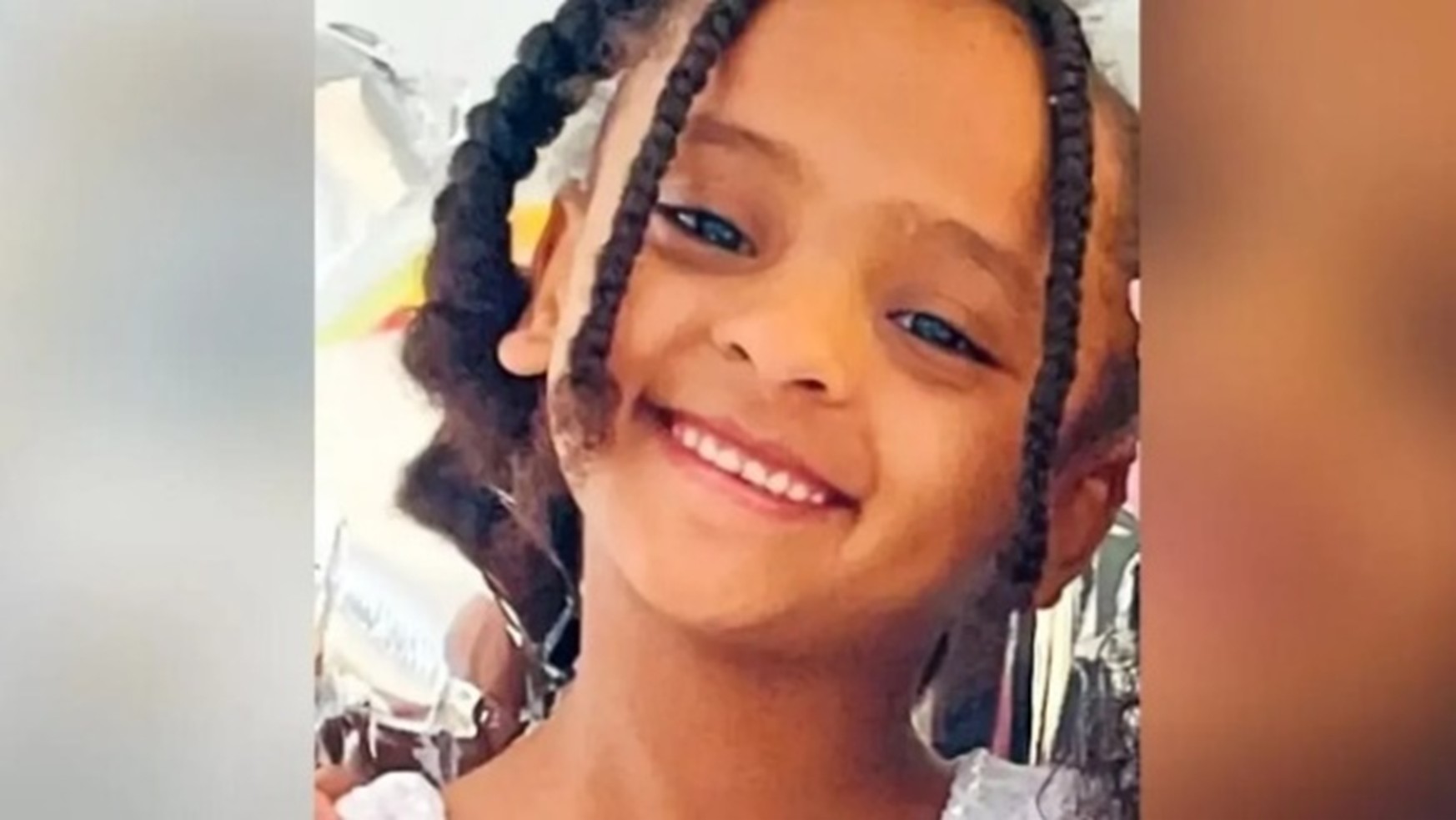
On 25 February 2024, nine‑year‑old Haymanut Kasau disappeared from the Jewish Agency absorption center in Safed after going out to distribute election flyers, and as of early 2026 the State of Israel has not determined what happened to her. This prolonged failure is not only a tragic investigative shortcoming; it exposes systemic weaknesses and responsibility gaps across police, ministries, and parliamentary oversight.
- National‑level authorities: government, security agencies, police HQ
At the top of the hierarchy stands the Israeli government and security apparatus. Politically, the Prime Minister only became visibly engaged very late: reports note a meeting with the family roughly two years after the disappearance, followed by an announcement that the internal security service (Shin Bet) would be authorized to assist the search. Operationally, this means that for almost two years, the case remained essentially a police matter, despite early calls from the family and MKs to treat it as an abduction of national importance. The failure at this level lies in the delay in escalating the case to the highest investigative and intelligence capabilities, not in the lack of such tools.
Within the police hierarchy, Superintendent Shmuel Lerman, head of the national Missing & Impostors unit, represented headquarters in Knesset hearings and became the symbol of the institutional response. In November 2024, when confronted with the Kiryat Malakhi balcony testimony, he confirmed only that “a testimony was taken” and that “additional directions are being examined.” He provided no concrete timetable, operational detail, or measurable commitments, even as MKs criticized the fact that weeks and months pass before fresh intelligence is processed. A senior police source later admitted openly that “in the final analysis we have failed so far in the mission,” while insisting that “every rumour and shred of gossip” had been checked. That admission is important, but it does not repair the core failure: headquarters did not turn repeated warnings from the family and Knesset into an early, clearly defined, time‑bound escalation plan.
The eventual transfer of the file to Lahav 433, the elite national crime unit, came only in December 2025—about 21 months after the disappearance—following a status meeting between the Police Commissioner and the Northern District. The commissioner then announced that Lahav 433 would re‑examine all material collected by the Northern District, but this was described as a new beginning rather than a continuation of a high‑priority national investigation. The need to “start over” so late is itself evidence that earlier work had not been consolidated at the appropriate level. The decision to bring in the Shin Bet only in February 2026—two years after the fact—compounds this delay and suggests that the government and police HQ did not initially internalize the possibility of a sophisticated kidnapping or organized‑crime scenario.
- Regional and local police: Northern District, Safed sub‑district, Kinneret crime unit
Below headquarters, responsibility lay with the Northern District and local investigative units. From the outset, Safed police treated the case as a high‑effort missing child investigation: searches started the night she was reported missing; a helicopter was eventually deployed; over 1,800 volunteers joined combing operations; and a dog unit searched the absorption center building and surroundings. Yet crucial hours were lost: a helicopter was only sent about 40 hours after the disappearance, with police later explaining they had to wait for IDF air‑authorization during wartime conditions. This may be procedurally understandable, but for a nine‑year‑old missing in a mountainous area, it is operationally disastrous and represents an early failure of prioritization.
Chief Inspector Amir Samnia of the Kinneret crime‑fighting unit appears as the regional operational figure responsible for the case when he reported to the Knesset Aliyah & Absorption Committee. Regarding the Kiryat Malakhi witness, he stated that when a local officer reached the witness’s home, the man was found injured and later hospitalized at Beilinson Hospital, and that a statement had been taken. However, there is no public record of a comprehensive search operation in that neighbourhood tied specifically to the balcony claim: no documented canvass of nearby apartments, no published details of CCTV pulls around the time and location, no evidence of a rapid “freeze” of that address as a potential holding site. Even allowing for secrecy in ongoing investigations, the complete absence of any described concrete action beyond “we took a testimony and examined directions” strongly suggests that this lead was not maximized in a timely manner.
Similarly, another powerful lead emerged about six months after the disappearance: the testimony of a friend of Haymanut who told her parents and then MKs that “a man with peyot (side‑curls) grabbed Haymanut, put her on his back, and ran” and that this man tried to abduct her as well. Police responded in the media that this version “was checked and ruled out,” without explaining which investigative checks were performed— such as line‑ups, child‑friendly forensic interviews with independent experts, checks against known suspects, or targeted searches in relevant religious communities. For a case that might involve a serial abductor, the failure to transparently detail thorough testing of the only direct child eyewitness is a serious red flag. Whether the police work was actually poor or merely poorly communicated, the public and parliamentary record shows an investigative culture that answers criticism with generic assurances rather than with verifiable methodological rigor.
The Northern District also received criticism for the overall tempo of intelligence processing. In an April 2025 Ynet investigation, a senior officer described an elaborate system in which every rumour and testimony is re‑checked by alternative “examiner” teams from other districts and even by police‑college trainees, precisely to avoid missing a critical link. Yet in the same article, the case is still at a standstill: no suspect, no body, and no decisive scenario. The existence of multiple re‑review layers, combined with no result, is itself an indication that the early, local investigative stages may have failed to capture and exploit time‑sensitive leads such as vehicle movements, cell‑tower data, and witness memories before they degraded.
- Ministries and quasi‑state bodies: Aliyah & Integration Ministry, Jewish Agency
The Ministry of Aliyah & Integration and the Jewish Agency sit in a more indirect but still important tier of responsibility. The Jewish Agency runs the Safed absorption center where the child lived, coordinated with the family, and offered a large reward for information—raising it over time to hundreds of thousands of shekels. The ministry, for its part, issued statements of concern and worked with the Agency but did not lead the investigation. Their main failure, as highlighted by activists and later by the Knesset committee, is not operational but structural: the absorption center, home to a vulnerable, recently arrived Ethiopian family, lacked an adequate layered security and child‑protection regime—door controls, CCTV coverage beyond immediate entrances, and clear protocols for minors going out to distribute flyers on election day. This did not cause the disappearance, but it created the environment in which a high‑risk situation could emerge without immediate detection.
- Parliamentary oversight: MK Oded Forer and the Aliyah & Absorption Committee
MK Oded Forer, as chair of the Knesset Aliyah, Absorption and Diaspora Affairs Committee, became the key oversight figure. In August and November 2024 he held hearings on the case, heard the father’s disclosures about the “man with peyot” testimony and the Kiryat Malakhi balcony witness, and called the handling of the case a scandal. He demanded the creation of a commission of inquiry headed by a judge and ordered follow‑up sessions specifically to track how leads like the Kiryat Malakhi evidence were being pursued. In this sense, Forer used the tools at his disposal to highlight the failures.
Yet structurally, the committee did not manage to translate its criticism into binding operational change. No judicial commission was established in 2024–2025; the case was not moved to Lahav 433 or backed by Shin Bet until more than a year after the first Knesset hearings. Forer’s failure is thus one of limited efficacy: he articulated the problem clearly but did not succeed in compelling the executive to act at the necessary level and speed.
- Private investigator and civil society: Judith Khalifa and the Kiryat Malakhi witness
At the bottom of the formal hierarchy but central in practice stand the family, private investigator Judith Khalifa, and the Kiryat Malakhi witness. Khalifa’s office brought forward two critical pieces of information from that witness: first, that he overheard men discussing “what was done with the girl,” and later that he saw a girl on a balcony in Kiryat Malakhi throwing or splashing water and shouting, “I am Haymanut Kasau.” These details were passed promptly to the police, but according to the father and Khalifa, it took about two weeks for officers to reach the witness—by which time he was already injured and ultimately hospitalized at Beilinson. Khalifa justifiably argued in the Knesset that if the case had been formally defined as a kidnapping, police would have had more legal and practical tools to act quickly on that lead, including phone‑location measures and a more aggressive search grid.
Khalifa’s limitations are less about wrongdoing and more about structural weakness: as a private actor, she cannot compel state agencies to prioritize a lead. Later, Ynet reported that the same witness was considered by relatives and police to be unreliable, “someone who tends to invent stories,” and that even rumors he had been poisoned were checked and medically disproved. That may be an accurate assessment of his reliability; however, in a context where no other strong post‑disappearance sighting exists, the combination of delay, his subsequent hospitalization, and the lack of a clearly documented search operation around the balcony address leaves a persistent sense of a lost opportunity. The system failed to treat this as a potentially critical time‑sensitive lead until it was largely stale.
In sum, the failure to find Haymanut Kasau so far appears less as the result of a single intentional act of sabotage and more as the cumulative effect of delayed escalation, procedural thinking, weak inter‑agency prioritization, and a reluctance to fully re‑orient the investigation around the strongest abduction scenarios. At every level—government escalation, police HQ strategy, regional operational follow‑up, ministerial environment, parliamentary enforcement, and private‑public interface—decisions that might have been defensible in isolation combine into a chronology that left critical leads under‑exploited and allowed time to erode the chances of saving a nine‑year‑old girl.
- The 40‑hour helicopter lagas an early operational delay.
- Police did not collect CCTV footage promptly from the absorption centre and the surrounding streets. As a result, some footage was no longer available by the time investigators requested it, a delay representing institutional neglect.
- The lack of transparent methodological workon the “man with peyot” testimony as a form of dismissal.
- The two‑week delayin reaching the Kiryat Malakhi witness and the absence of visible, intensive operations around that balcony as a combined delay‑plus‑downgrade.
- The non‑use or non‑redeployment of dog unitsto the Kiryat Malakhi area despite a concrete sighting claim.
- The 21‑month waitto transfer to Lahav 433 and the two‑year wait for Shin Bet involvement as strategic, high‑level delays in escalation.
Put together, these points support a thesis of systemic, repeated “slow‑walking” and premature downgrading of abduction‑oriented leads.
Leads from independent sources, which were not followed thoroughly:
1. Yossi Eli’s investigation
- What Yossi Eli’s investigation shows (TikTok/TV piece)
Yossi Eli’s investigation “The disappearance failure of Haymanot is exposed: the suspect car and the CCTV” is a TV report.[13tv.co][youtube]
- CCTV timeline on the night she disappeared
- There are six CCTV cameras in the absorption center in Safed where Haymanot lived.
- 18:53 – Haymanot leaves the absorption center and walks to the yard with a friend.
- 18:56 – She is filmed playing with her friends.
- 19:00 – A boy from the center brings leaflets; he, Haymanot and a friend go back inside together. This is the last time she appears on camera.
After 19:00 she is never seen again on any camera.[13tv.co]
- The suspect Ford next to the absorption center
- About three weeks after Haymanot disappeared, a volunteer named Doron finds a Ford car parked next to the absorption center.
- He notices several very suspicious things:
- The car has been painted with a brush.
- The front wheels are off‑road/“terrain” wheels, the rear wheels are normal – two wheels were changed.
- The headlights were replaced.
- The rear door is physically screwed shut from the outside with metal screws and a plate.
In the investigation, the private investigator literally says about this car: “Look, the door is closed with screws from the outside… this is a kidnapping car.”
- Earlier attempted abduction in a light‑blue car
- A 9‑year‑old friend of Haymanot tells the investigators: a light‑blue car previously stopped next to them.
- The driver was religious, with a beard and a large hat, and could not run well.
- He shouted at the girls to enter the car and said: “Get in or I will take you.”
- The girls refused and ran away.
This story explains why the Ford, which was originally light blue and then repainted, is seen by the investigators as deeply suspicious.
- How the investigation describes the police failures
- Yossi Eli’s piece says the car “slipped under the nose of the police” for a long time.
- Doron reports the car to the police; he “raises all the red flags” for them.
- The investigation shows that police even filmed the same Ford a month earlier during mounted searches (police on horses) near the absorption center, but the car was not seized or fully forensically examined at that time.
- Only after the TV investigation airs does the police summon the owner for questioning and decide to check the car for fingerprints and DNA – and even then, the investigators say it is probably too late to get good evidence from it.
- Police official response (as shown in the TV item)
At the end of the TV investigation, Channel 13 shows the official written response of the Israel Police:[13tv.co][youtube]
- They say the search for Haymanot started at about 08:30 the next morning, that the event was reported at 10:01, and that police arrived at 10:15.
- They say the girl’s testimony about the earlier attempted abduction was examined thoroughly and rejected, in light of other evidence.
- They say the suspect car was checked already in the first days, the car holder gave a detailed statement, and his involvement was ruled out.
- They add that dozens of people seen on CCTV were identified, and that people presented in the report as possible suspects were in fact civilians who came to help in the search.
- The lawyer of the car owner says his client has nothing to do with the case and accuses the journalists of negligence.
- What the follow‑up article says (“After the investigation: the suspect car will be seized”)[13tv.co]
It adds one new, clear fact:
- After Yossi Eli’s televised investigation, the Nazareth Magistrate’s Court approved the police request to seize (confiscate) the suspect Ford for examination.
The article then repeats the same main points from the investigation:
- The Ford was found about three weeks after the disappearance, right next to the absorption center in Safed.
- It had been repainted with a brush; two wheels and the front headlights were changed; the rear door was screwed shut from the outside.
- A friend of Haymanot told police about the earlier encounter with a light‑blue car whose driver tried to force them to get in.
- The same police response is quoted again: the car was already checked earlier, the owner was questioned, and his involvement was ruled out.
- One‑sentence overall meaning
- Yossi Eli’s investigation (also in TikTok form) shows CCTV from the night Haymanot disappeared and a highly suspicious Ford near the scene; it argues that the police reacted too slowly and did not seriously act on this car and on a prior attempted abduction in a light‑blue car.
- The follow‑up article reports that only after this investigation did a court allow police to formally seize the suspect Ford, while the police publicly insist that they had checked the car and the driver already and found no connection.
2. Kidnapping attempt in Beersheva
Haymanut’s friend was the victim in a serious attempted kidnapping in Beersheba; this man was briefly treated as a major suspect in Haymanut’s abduction, but police later announced there is no evidentiary link between the two cases. [mako.co.il][ynet.co.il]
- Who is the Beersheba victim and what happened
- The girl in the Beersheba incident is Haymanut’s friend from the Safed absorption center; her family later moved from Safed to Beersheba.
- According to reports, she recognized in Beersheba the same man she had known from Safed, a neighbour and friend of her parents.
What the attempt in Beersheba looked like (from CCTV and her testimony):
- The suspect, a 63‑year‑old man from Beersheba, comes to her home or apartment building and enters the flat.
- He asks for water, then, according to the girl, touches her, hugs her, locks the door and grabs her hand so she cannot leave.
- She manages to escape, screams, and goes to a neighbor who calls the police.
In an interview, she says about him: “I knew him from Safed, everyone knows him there,” and states that he tried to pull her and take her out of the house.
- Her previous testimony about Haymanut’s disappearance
- This same girl had already given a statement to police in the Haymanut case while they still lived in Safed.
- In that statement, she said that on the day of Haymanut’s disappearance or close to it, the two girls were in a playground near the absorption center in Safed.
- According to her, two men with ultra‑Orthodox appearance and tzitzit came there; she says she stepped away briefly, and when she returned, Haymanut was gone.
- Other versions reported in the media (and in earlier Channel 13 material) say she connected at least one man she saw in Safed with the same man she later saw in Beersheba.
Thus, from the investigators’ point of view, this girl created a bridge between:
- a suspect man connected to Safed and her family;
- the disappearance of Haymanut;
- a new, filmed attempted kidnapping in Beersheba.
- How the Beersheba case was investigated and why it became a lead
- After the Beersheba attempt was publicized, police announced they were checking a possible link between this case and the disappearance of Haymanut.
- The case was assigned to Lahav 433, the national major‑crimes unit, reflecting that it was treated as a high‑priority and potentially strategic lead.
- The suspect was arrested, and the Rishon LeZion Magistrate’s Court extended his detention several times.
- In hearings, the police and prosecution argued that there was reasonable suspicion that he was not only responsible for the indecent assault/attempted kidnapping in Beersheba, but possibly also involved in Haymanut’s abduction from Safed about 1.5–2 years earlier.
- How and why the link was ruled out
- As the investigation progressed, police told the court that no direct evidence was found tying this suspect to Haymanut’s disappearance.
- According to Israeli media and a Jerusalem Post summary, police eventually stated that the evidentiary link between the Beersheba suspect and the Safed case had “significantly weakened.”
- A representative of the police told the Rishon LeZion Magistrate’s Court that his suspected involvement in the Haymanut case was ruled out, even as they continued to investigate him for the Beersheba assault/attempted kidnapping.
- Reasons given in open sources are generic: absence of supporting forensic or corroborating evidence and inconsistencies between initial suspicions and what was actually found in checks of his movements, phone data, and other intelligence (exact technical details are under gag order).
- The court accepted clearing him in relation to Haymanut but kept him in custody for the Beersheba case based on strong evidence of indecent acts and assault and fear of obstruction of justice.
- Geography: Kiryat Gat, Beersheba, and “southward leads”
- Safed (Tzfat) is in the north. From there, many investigative and media speculations looked at possible southbound movement if a kidnapper drove with a vehicle.
- Kiryat Gat lies on Route 40 between the center and the south of Israel; Beersheba is further south on the same axis (Route 40 / Route 6 connections). Driving distance between Kiryat Gat and Beersheba is about 30–35 km, roughly 20–25 minutes by car under normal conditions.
- In various discussions of “southern leads,” commentators and investigators noted:
- If an abducted child were transported from the north toward the south, the Kiryat Gat–Beersheba corridor is a natural line of movement.
- The fact that a key witness from Safed later relocated to Beersheba, and that a serious attempted kidnapping occurred there, seemed to support the idea that attention should not focus only on the north, but also on migration and mobility patterns of potential suspects and community members (Safed → southern towns, including Beersheba).