 Czech
Czech French
 German
 Hebrew
 Noruegan
 Russian
 Spanish
 Swedish
 Polish
 Portuguese



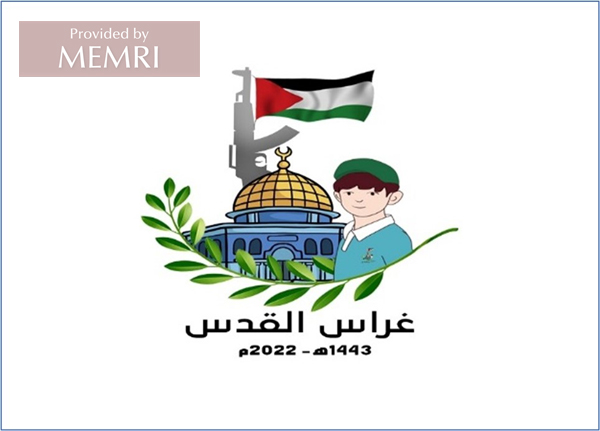
As in previous years,[1] this year too the Hamas movement in Gaza is operating summer camps for children and teens that inculcate an extremist ideology championing jihad and armed struggle against Israel, and also provide the campers with practical training in weapon use and other military skills. This year’s 500 summer camps, launched on July 23, are called “Saplings of Jerusalem,” and are attended by about 100,000 boys and girls of various ages. Their main opening ceremony was held at the Asda amusement park, built at the site of a former Israeli settlement. Muhammad Farawneh, a member of the camps’ central committee, said at the ceremony that holding it at that spot, “on soil that has been freed of the contamination of the occupation, is a sign that all of the [Palestinian] land will one day be regained.”[2] The chair of the summer camp committee in Gaza’s central district, Muhammad Abu Mahmoud, said at the opening ceremony in his district that the name “Saplings of Jerusalem” was chosen “to stress our deep-rooted rights in Jerusalem, and [convey] that the generation of liberation will continue to bear the banner until the occupation is removed from all of our occupied Palestinian land.”[3]
A Biden error on refugees
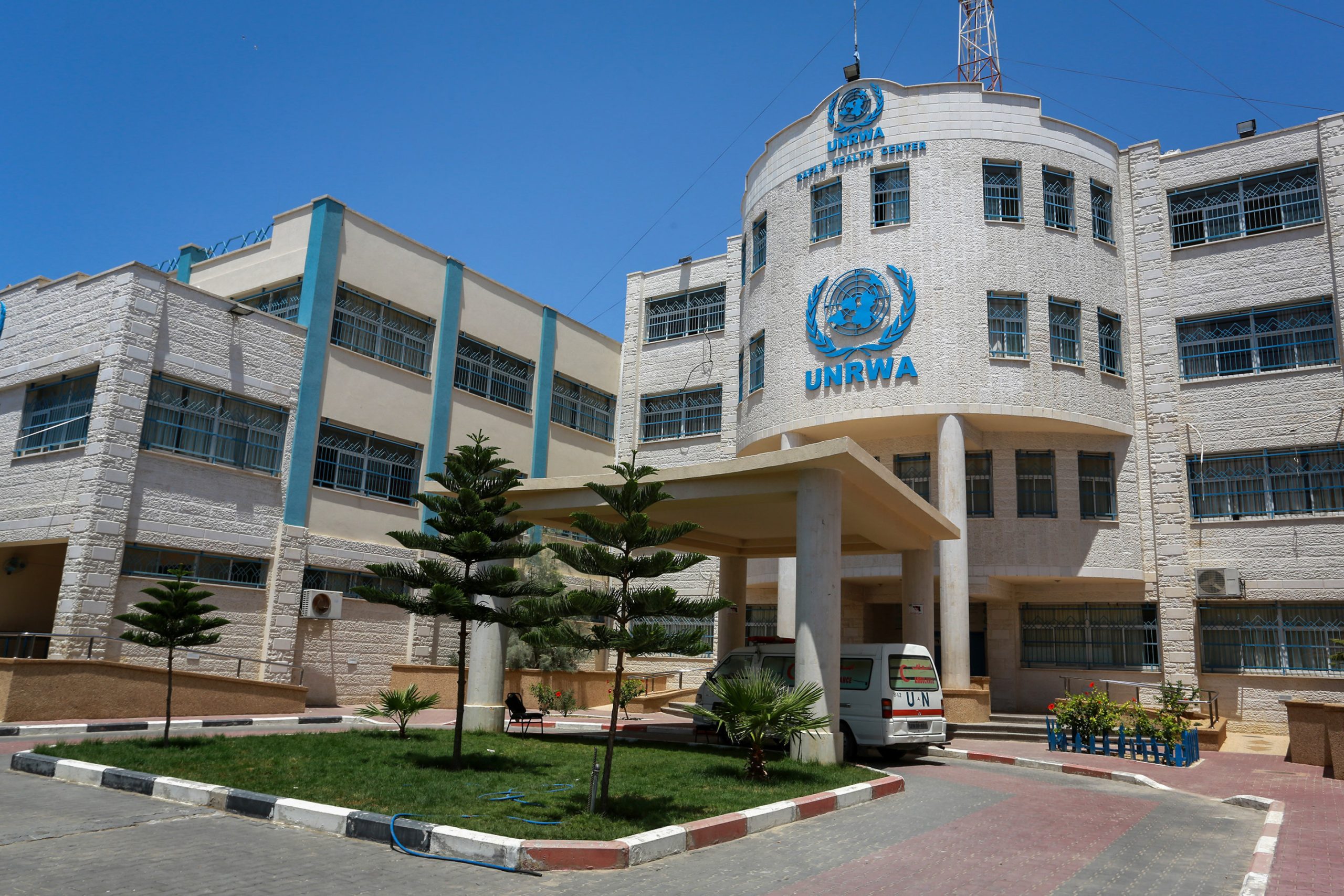
View of the United Nations Relief and Works Agency (UNRWA) building during a strike in Rafah in the southern Gaza Strip, on July 26, 2018. Photo by Abed Rahim Khatib/Flash90 *** Local Caption *** אונר"א
עזה
בניין
שביתה
US President Joe Biden earned deserved modest praise for his visit to Israel and Saudi Arabia in mid-July, restoring confidence in core Middle East alliances. But the President made at least one major misstep: He pledged US$201 million (A$296 million) to the corrupt and bloated United Nations Relief and Works Agency (UNRWA), a step back into the failed policies of the past on a trip dedicated to continuing the forward progress made in the region in recent years.
Biden’s move was wildly out of step with the current global refugee crisis, sparked by Russia’s brutal invasion of Ukraine in February of this year. Nearly half a year later, the epicentre of the world’s refugee crisis today is unquestionably in Europe. UNRWA, by contrast, serves only a small segment of the Middle East. In fact, UNRWA is the only agency dedicated to serving one specific refugee population. For seven decades, the Palestinians have received special treatment, while the UN High Commissioner for Refugees is tasked with handling every other refugee problem on the planet.
Worse, UNRWA has adopted the unjustifiable policy of recognising the descendants of the original refugees from the 1948-1949 war with Israel. This means that the agency’s roster of dependents continues to grow each year, even as the number of original refugees continues to shrink because of their ageing population. In other words, UNRWA has ensured that its services will always be needed; the agency that originally had no more than 715,000 refugees from the first Arab-Israeli war now has 7 million clients. Under the current policy, that list will only grow.
Biden’s support for UNRWA is also odd given that the agency has been under fire in recent years owing to credible allegations of corruption, mismanagement and extremism, to name a few. A recent study on agency textbooks validated again the shocking extent of the antisemitism found in the materials that Palestinian students are required to learn.
It gets worse. The agency has a bloated roster of employees. Its payroll is a whopping 30,000 or more. And UNRWA has been increasingly infiltrated by members of radical groups, primarily the Iran-backed Hamas terrorist group that runs the Gaza Strip. Terrorists are believed to hold jobs as teachers and administrators within the agency’s bureaucracy, thanks to poor vetting and oversight procedures. Hamas has cynically wielded UNRWA facilities as shields to protect its underground commando tunnels that were deliberately built beneath or alongside the agency’s buildings. Hamas and other militant groups have a history of firing unguided rockets at Israel from sites adjacent to UNRWA buildings for similar reasons. It’s a practice commonly known as “human shields”, which is recognised as a war crime in the United States and the UN, among others.
Supporting an organisation so deeply beset with problems is a glaring misallocation of American and United Nations resources at any time. But it’s especially egregious when those resources are sorely needed elsewhere as the refugee crisis in Ukraine spirals out of control.
By one conservative estimate, 7 million Ukrainians are internally displaced as a result of the war. No fewer than 5 million refugees have already fled Ukraine. The UN predicts a total of approximately 8.35 million refugees by the end of this year. According to one British House of Commons report on Ukraine, “29% of Ukraine’s 44 million population (12.8 million people) have been forcibly displaced within the country or beyond it. The UN Refugee Agency (UNHCR) said it is the fastest growing refugee crisis since World War II.”
Poland, Moldova, Hungary, and Slovakia are among the front-line states in this crisis. They will need significant international assistance to absorb the massive numbers of refugees streaming across their borders. The President’s decision to throw more money at UNRWA is downright bizarre in this context.
A responsible policy would be to divert some of these resources, if not most of them, to the escalating refugee crisis gripping Europe.
Throwing good money after bad at the UN is nothing new, of course. The massive refugee crisis stemming from the civil war in Syria should have prompted a shift in policy. The same goes for the internal displacement of Yemenis from that country’s civil war, prompted primarily by the Iran-backed Houthi terrorist groups. But those crises may soon pale in comparison to the misery from the war in Ukraine.
With an acute refugee crisis already underway, coupled with a food scarcity predicted to hit next year, the time has come for a shift in global refugee policies. UNRWA sits at the top of the list of agencies that divert funds from needy refugees worldwide.
Donors from the Arab world have reportedly curtailed support to UNRWA in recent years, even before the Ukraine crisis. So have Britain and Austria. The result has been a scramble at the UN to make up the shortfall – without giving thought to why there’s a shortfall in the first place. In fact, the message is unmistakable: The world’s confidence in this agency has fallen.
For now, the damage is done. Biden is not likely to reverse course. In fact, his allocation of funds to UNRWA looks like he is doubling down on this controversial policy. His own State Department recently hired Elizabeth Campbell, formerly UNRWA’s Washington lobbyist who notoriously helped disseminate bigoted education lessons to Palestinians via agency textbooks.
The Russian invasion of Ukraine has already highlighted what the United Nations can’t do: It has little to deter Vladimir Putin’s war machine. But the UN can and should continue to coordinate refugee relief; it’s an area in which it has demonstrated relative competence. As the Ukrainian refugee crisis worsens, the Biden Administration should conduct a review of its refugee assistance policies, with an eye toward optimising them. Congress can play an important role in spurring this oversight. Better efficiency is urgently needed. So is purging hate and vitriol. This should not inhibit assistance to the refugees who need America’s help the most. Neither should it mean an end to assistance programs that support Palestinians. But it should prompt a long-overdue review of the efficacy of the refugee initiatives America supports, with the goal of much-needed change.
Dr. Asaf Romirowsky is Executive Director of Scholars for Peace in the Middle East. Dr. Jonathan Schanzer is Senior Vice President for Research at the Foundation for Defense of Democracies. The article originally appeared in the Washington Examiner. Reprinted by permission of the authors, all rights reserved.
Israel Uncensored: Finding Loopholes to Fund the PA

While Israel’s government cabinet yesterday decided to deduct tax revenues for the PA as long as they continue to fund their “pay to slay” program, in which terrorists are rewarded for murdering and injuring Jews, experts are saying the money is still being creatively handed over the PA in the form of “loans.” On today’s Israel Uncensored with Josh Hasten, Josh argues that if Israel is going to take the international community to task for its funding of the PA and turn a blind eye to their pay to slay program, then Israel should end the hypocrisy and also stop funding the PA terrorists in suits.
<
The lethal indoctrination of children in Palestinian education
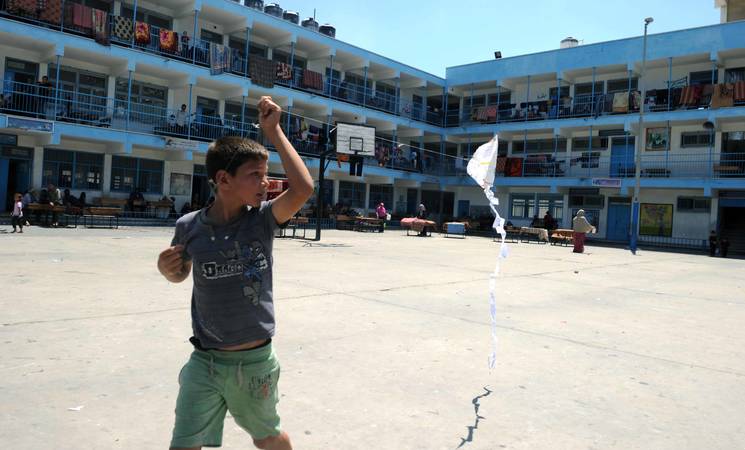
Signaling yet another unfortunate reversal of Trump-era policies, President Joe Biden was in Bethlehem on July 15 to affirm U.S. support for the long-aggrieved Palestinians.
During his meeting with Palestinian Authority chief Mahmoud Abbas, Biden said that “Palestinian refugees deserve to live in dignity, to see their basic needs addressed and to have hope for the future.” One remedy for their woes, he said, is U.S. aid, namely, “an additional $201 million for the U.N. Relief and Works Agency for Palestine Refugees (UNRWA) to continue delivering critical services to Palestinian refugees in the West Bank, Gaza, Jordan, Lebanon and Syria.”
UNRWA, a U.N. organization dedicated solely to Palestinian refugees, has been the subject of much scrutiny and criticism, which is why in 2018 the Trump administration eliminated further funding for the controversial agency. That was a good move, since UNRWA, established when some 400,000-700,000 Palestinians became refugees in 1948, has perversely served as a political and diplomatic weapon that has kept the Palestinians stateless, as if preserved in amber, and is used as a hammer with which to bludgeon Israel. This is done by blaming the Jewish state for the conditions in which these refugees, as well as millions of their descendants, now find themselves.
Maintaining the Palestinian refugee problem as a scab on the Middle East body politic is UNRWA’s principal role. Its influence on Palestinian culture and society, however, is also profound, particularly since some 58% of its $1 billion annual budget is allocated to educational programs.
UNRWA’s mission statement purports to offer a “quality education for Palestine refugees … for the teaching and learning of human rights, conflict resolution and tolerance.” But UNRWA’s schools have been conclusively shown to be incubators of hatred in which Palestinian children are taught to loathe Zionism, Israelis and Jews; question the very existence and legitimacy of the Jewish state; justify jihad and terror against Israel; strive for martyrdom in the name of jihad; and commit to a life of resistance, aggression and terror against the allegedly criminal Zionist regime.
How UNRWA’s schools are used to indoctrinate Palestinian children is revealed quite clearly in a just-released study by the organization IMPACT-se, entitled, “Review of 2022 UNRWA-Produced Study Materials in the Palestinian Territories: Selected Examples.” The report audited textbooks used in UNRWA schools and found that children are being taught a false narrative that makes them the perennial victim of a usurping colonial occupier—the defiling Jew. Liberation, the narrative claims, can only be obtained through a prolonged struggle. “Resistance” to occupation, which is defined as the very existence of a Jewish state, is declared mandatory for all Muslims. Terror and martyrdom are portrayed as an integral and noble part of the effort.
The report notes, for example, a fifth-grade text called “Hurray for Heroes,” which “praises Palestinian militant figures such as Izz al-Din al-Qassam and Dalal Mughrabi, known for leading violent operations against Jewish civilians; both are presented as positive role models. The UNRWA material requires students to read the text and identify the Palestinian ‘heroes,’ while suggesting: ‘we all hope to be like those heroes.’”
An UNRWA booklet designed to teach numbers to third-grade students directs “them to a specific exercise in a P.A. math textbook which asks students to choose the correct number of martyrs in the First Intifada from a list of suggested numbers.” Martyrdom, of course, is portrayed as a noble aspiration. Eighth-grade study cards reinforce this same perverse aspiration, “featuring themes of jihad, martyrdom, prison and conflict.”
A sixth-grade study card, the report found, “utilizes militaristic, nationalistic and violent imagery to teach Arabic grammar principles which encourage jihad and martyrdom. Such examples include phrases like ‘We shall defend the motherland with blood’; ‘The Palestinian died as a martyr … to defend his motherland’; ‘The resistance fighter attacked the Enemy’s position.’”
The IMPACT-se report mirrors revelations of the toxicity of UNRWA teaching materials in a 2020 report by Dr. Arnon Groiss of the Meir Amit Intelligence and Terrorism Information Center, entitled, “Israel, Jews and Peace in Palestinian Authority Schoolbooks and Teachers’ Guides.” This report examined some 400 textbooks and more than 100 teachers’ guides published by the Palestinian Education Ministry from 2013 to 2020.
While the familiar narrative among diplomats and on the Arab “street” has long voiced support for the notion of “two states, Israel and Palestine, living side by side in peace,” the reality is that maps in textbooks used by Arab children do not even show Israel. In other words, the Jewish state does not exist as either a geographic or political entity. So, the idea that children or their parents have been raised to think that reconciliation is possible is a fantasy, something that apologists for the Palestinians regularly ignore.
“In none of the P.A.’s schoolbooks has any call for the resolution of the conflict peacefully, or any mentioning of coexistence with Israel, been found,” Groiss wrote. “The ‘Zionist enemy,’ according to the description appearing in the schoolbooks, is wholly evil and constitutes an existential threat to the Palestinians, who are depicted as the ultimate victim, with no shared responsibility for the conflict.”
“Moreover,” the report noted, “Israel itself is taught to be completely illegal and illegitimate.” It adds, “The name ‘Israel’ has been replaced most of the times by the epithet ‘the Zionist occupation.’”
“The struggle against the State of Israel has thus become a struggle against Zionism that is perceived as a mythical and a wholly evil entity, which creates feelings of fear and hatred,” the report states.
The Groiss report concludes that the lessons in the texts encourage and perpetuate both a justification for terror and the likelihood that it will continue to be used. “Reference to terror is more explicit in the newer schoolbooks,” the report noted. “Terrorist operations perpetrated throughout the years of conflict with Israel are presented as heroic actions in the framework of the ‘revolution,’ ‘resistance’ and ‘self-sacrifice’” (emphasis added).
The report made it clear that incitement and the teaching of hate, both in classrooms and on the Arab street, must be curbed. Educators must make authentic changes in the social, cultural and moral messages being taught to Arab children. If this does not happen, the Palestinian cause will be eternally hobbled by its blind loathing of the Jewish state.
As long as Palestinian children cling to the impossible fantasy of destroying Israel, they have condemned themselves to further generations of disappointment, disillusionment and tragedy. And as long as UNRWA and the P.A. use their schools as incubators for hatred and indoctrination, Palestinian intransigence and hostility toward the Jewish state will never disappear.
Richard L. Cravatts, Ph.D., a Freedom Center Journalism Fellow in Academic Free Speech and President Emeritus of Scholars for Peace in the Middle East, is the author of the forthcoming book The Slow Death of the University: How Radicalism, Israel Hatred and Race Obsession are Destroying Academia.
Fatah summer campers in the Nablus district undergo military training
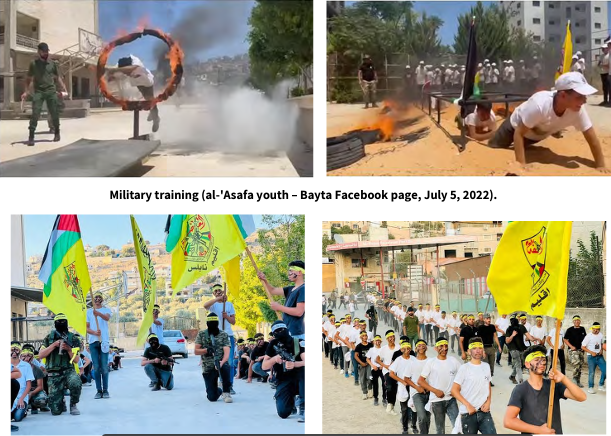
The Nablus branch of Fatah recently held summer camps for children and adolescents in the village of Bayta, south of the city. Videos of camp activities posted to the Palestinian social media showed the youth, some of them armed with rifles, undergoing military training, including urban warfare tactics, hand-to-hand combat and negotiating obstacle courses. They were trained by operatives of the Palestinian security forces and local armed Fatah operatives, who remained masked for the pictures.
E_121_22 Fatah summer campers in the Nablus district undergo military training
What is UNRWA?
1. WHAT IS UNRWA?
- IN WHAT ARE THE FUNDS OF THAT PROGRAM BEING INVESTED?
WHAT IS THE “RIGHT TO RETURN” THAT THEY TEACH IN THESE SCHOOLS?
WHAT IS HAMAS AND WHAT DO THEY PROPOSE?
WHO ARE THE MAIN FUNDERS OF UNRWA
TOP 20 GOVERNMENT DONORS IN 2021*
| Donor | Contribution US$ * |
| USA | 338,400,000 |
| Germany | 176,979,810 |
| EU | 117,653,367 |
| Sweden | 54,240,009 |
| Japan | 50,510,511 |
| UK | 40,104,619 |
| Switzerland | 31,648,928 |
| Norway | 29,988,568 |
| France | 27,958,309 |
| Canada | 27,614,551 |
| Netherlands | 27,007,706 |
| Denmark | 21,139,515 |
| Turkey | 20,471,544 |
| Spain (including Regional Governments) | 17,720,114 |
| Qatar | 17,000,000 |
| Italy | 15,804,547 |
| Belgium (including Government of Flanders) | 13,901,370 |
| Kuwait (including Kuwait Fund for Arab Economic Development) | 11,500,000 |
| Finland | 10,697,045 |
| Ireland | 10,659,208 |
* Includes total contributions made toward all programmes. Contribution data is accurate as of 31 December 2021. Click here (PDF) to see all government contributions. |
|
TOP 20 NON-GOVERNMENT DONORS IN 2021*
| Donor | Contribution US$ * |
| UNRWA USA National Committee | 4,874,806 |
| Rahmatan Lil Alamin Foundation | 3,181,013 |
| Islamic Relief USA | 2,500,000 |
| UNRWA Spanish Committee | 1,861,827 |
| Muslim Hands UK | 1,842,901 |
| Khalifa Bin Zayed Al Nahyan Foundation | 1,500,000 |
| Muslim Hands France | 600,316 |
| International Islamic Charitable Organization (IICO) | 500,000 |
| Foundation to Promote Open Society (FPOS) | 414,885 |
| Mercy USA for Aid and Development | 350,000 |
| DanChurch Aid | 300,000 |
| Hasene International e.V | 276,294 |
| St. John Eye Hospital | 251,333 |
| Norwegian Refugee Council | 208,491 |
| IDB | 200,000 |
| Fondation MKS | 154,000 |
| Handicap International | 138,136 |
| RKK, Japan | 124,470 |
| The Royal Health Awareness Society, Jordan | 104,096 |
| Kuwait Red Crescent Society | 100,000 |
* Includes total contributions made toward all programmes. |
|
- WHAT IS THE MISSION OF THE NAHUM BEDEIN CENTER FOR NEAR EAST POLICY RESEARCH IN THIS SITUATION?
The Center is calling attention to the humanitarian plight of the Palestinian refugees in UNRWA-administered refugee camps with a suggested reform of UNRWA policies, to adopt standards of the United Nations High Commissioner for Refugees (UNHCR) criteria used for refugee rehabilitation worldwide. A
When later is already too late
Far too frequently, especially in Jewish lives, postponing difficult decisions can have dire consequences.
We have found over the millennia to our recurring cost that ignoring warning signs and hoping that clearly identifiable threats to our existence will somehow pass us by and disappear is a recipe for disaster somewhere down the track.
Despite such repeated examples, it is unfortunately still a fact that today in 2022, the same mistakes are still being replicated with the same old consequences.
These thoughts came to mind as I read about the latest attempts by Russian authorities to ban the work of the Jewish Agency and its likely negative impact on the emigration of Russian Jews to Israel.
Concurrently there is also now a growing sense of alarm among Ukrainian Jewish communal leaders over the long-term future of communities in that country.
At the same time, there is a rising tide of Jew hate not only in Europe but also in other parts of the world where Jews hitherto imagined that they were secure and safe from such manifestations of the ancient plague.
All this reminded me of the interesting discussion last Seder night when we had a most interesting dialogue with the parents of a Jewish Russian young lady. The parents had just made their exodus from St Petersburg a mere two weeks prior to Pesach to join their daughter here in the Promised Land. In Russia, they had a reasonably comfortable existence, good jobs and an apartment of their own. Having grown up during the anti-religious days of the former Soviet Union their knowledge of Judaism was zilch and their attachment to Israel was a complete void. Their situation was no different to most Russians who had Jewish parents and grandparents but who had learnt from bitter experience to hide their ethnicity if they wanted to have decent employment, education and future prospects.
So what changed for them and countless others?
The experience their daughter had on a program in Israel for Russian youth started a metamorphosis from estrangement to positive identification. On her return to Russia, the spark of Jewish consciousness which had been ignited gradually grew stronger and the realities of life in Russia hit home so that after a while she decided that, for various reasons, Israel was the place where she could more adequately fulfil her life and bring up a family.
Apart from a now much better-informed knowledge about Jewish traditions, the truth dawned that living in a democratic country was far preferable to the precarious life one faced these days in places where freedoms could vanish. Her parents, meanwhile, were ambivalent about leaving their own “good” life behind for another country. After all, with no jobs lined up and having to learn a strange new language, it seemed overwhelmingly daunting.
What changed their minds?
The war in Ukraine and all its attendant manifestations of negative portents, especially for Jews, made all the difference. As they explained to us while we sat around the table reciting the story of the Exodus from Egypt, a ritual that they had never witnessed previously, the spectre of another Iron curtain descending suddenly seemed frighteningly real. They realised that the omens looked bleak and that postponing a decision might mean that one day without warning, the gates might slam shut and the old ghosts of past State-sponsored discrimination would return.
Thus, they made Aliyah, leaving behind an unsold apartment and financial assets, good jobs and what had originally seemed a good life. They, like so many before them, arrived in Israel with some trepidation. At least they were reunited with their daughter and a grandson and were safe in the knowledge that, as Jews, they were home in every sense of the word.
How far-sighted and intelligent their decisions proved to be is now highlighted by the latest news whereby the Russian authorities are seeking to close down the work of the Jewish Agency, which in turn will put the emigration of Jews to Israel at risk. Is this a first step towards restricting Jews from leaving for any country and is it a straw in the wind for other dubious actions? Already the Chief Rabbi of Moscow has had to flee because he opposed the Russian actions in Ukraine. What is next on the list in a country with a long history of targeting Jews?
Is this another case of too many Jews having missed an opportunity to relocate?
Ukraine is another perfect example of how after millions of dollars were spent on resurrecting dead communities, the prospect of it all going down the drain now seems almost inevitable.
A recent report revealed that lay and religious leaders in Ukraine are bewailing the serious situation which they now have to confront. After thirty years of rebuilding devastated Synagogues and communal institutions, funding Jewish schools and painfully re-establishing a semblance of Jewish life and identification, this has now all come crashing down. It is almost impossible to ascertain exactly how many Jews called Ukraine their “homeland” prior to the Russian onslaught but estimates by aid and relief organisations put the number at anything between 50,000 to 200,000. For three decades, religious & secular groups such as Chabad and other outreach NGOs provided millions of dollars in an attempt to revive long shattered communities.
The sixty-four thousand dollar question that now needs to be asked is whether, given the dismal experiences of past Russian and Ukrainian Jews, the time has arrived to depart permanently. In fact, is it already too late, or is there still a small window of opportunity before the Iron curtain once more descends? Already over 25,000 Ukrainian Jews have made Aliyah. It is almost impossible for military-age men to leave now, and of course, there are large numbers of elderly and impoverished people seemingly stuck in limbo.
It’s another classic example of “later” being too late.
Meanwhile, in Hungary, where an estimated 75,000 to 100,000 Jews live, whiffs of the old Jew hate are arising from past recent depths. The Hungarian Prime Minister’s speech and his warning about the dangers of “mixed races” should start alarm bells ringing because in the not-so-distant past this was exactly the same rhetoric that consigned Hungarian Jews into the hell of Auschwitz.
What will it take for Hungarian Jews to wake up from their self-induced delusions and realise that their long-term future is as precarious as it always has been? No amount of klezmer music festivals and ethnic food fairs can disguise the fact that sooner rather than later, Jews along with other minorities, will be scapegoats for failed economic and political policies.
There are other countries, too numerous to enumerate, where serious thought must be given to the immediate future.
Kicking the can down the road has never been a recipe for success.
The guardian on the “Dark Side” of Israel’s constant baby boom

An article in the Guardian (“The women who wish they weren’t mothers: ‘An unwanted pregnancy lasts a lifetime’”, July 16) provides stories of “women from across the world who felt pressured to have children”, in the context of the US Supreme Court overturning of Roe v Wade.
The article (an edited extract from the book ‘Undo Motherhood’ by Diana Karklin) included one story from Israel, which opened thusly:
Here, a woman who doesn’t want to have children is a threat to the social order. The reasoning goes: in order to have a bigger population than the Arabs, you need to have more Jewish babies. If you aren’t a mother, you are betraying your homeland.
The message conveyed by the quote seems clear: there’s immense social pressure put upon Israeli women to have children, motivated, in large measure, by the racist attitudes towards Arabs. This may be the opinion of one Israeli, but it also comports to the Guardian’s narrative of the Jewish state, one that doesn’t even remotely resemble reality.
First, based on comparative analyses and surveys, Israel ranks very high in the area of gender equality – which measures women’s participation in political and corporate leadership, gender wage gaps, legal support, maternity leave, etc. Further, any understanding of Israeli social phenomena relating to women must take into account their agency: As such, anyone who lives in the country, or has spent a serious amount of time here, would also know that, by and large, Israeli women are empowered, confident and make their own decisions – often independent of others’ expectations or other outside social factors.
Nonetheless, let’s address some of these externalities.
First, while in Haredi communities, motherhood is indeed seen as religious duty, the reason why Israel has the highest fertility rate in the OECD (at 3.1 children per women) is likely based on many factors. These include: an efficient healthcare system which prioritises pre-natal care, thus producing very low infant mortality rates; heavily subsidised fertility treatments and in-vitro fertilisation, paid maternity leave; workplaces which adopt family friendly policies, and subsidized pre-school which has results in a higher enrollment rates than the OEDC average.
As such, Israel often ranks relatively high on lists of the best countries to raise a family.
But, there are likely other non-economic reasons why Israel is at odds with demographic trends in Western countries, such as the continued downward shift of fertility to levels far below the 2.1 “replacement level”. After all, many EU countries have health benefits for mothers and expecting mothers that exceed what Israel offers, yet have a birthrates half of that of the Jewish state. (In fact, Israel is the only developed country where, over the last 20 years, fertility has increased from an already high level.)
Israeli academic Barbara Okun, a specialist on Israeli demography, has listed some of these non-economic factors: “a family system in which parents provide significant financial and caregiving aid to their adult children; relatively egalitarian gender-role attitudes and household behaviour; the continuing importance of familist ideology and of marriage as a social institution”.
Okun also mentions, as one additional possible non-economic factor, “the role of Jewish nationalism and collective behaviour in a religious society characterized by ethno-national conflict”. However, contrary to the framing of the Israeli quoted in the Guardian, the role of the Holocaust, as well as the existential threat to the state’s existence by hostile Arab neighbors for the first several decades of statehood, in influencing Israeli decisions to have children, seems understandable, and indeed quite rational.
Let’s also remember that, in the context of high fertility as an ethno-national goal, it was none other than Yasser Arafat who reportedly boasted about “the womb of the Palestinian woman,” as the “strongest weapon against Zionism”.
But, now we’ll add one more possible factor for the country’s high fertility rate: Israeli happiness.
The most recent world happiness report ranked Israel 9th happiest country in the world, a ranking that’s similar to that of previous years. Though this strikes some as counter-intuitive, it actually makes sense if you understand the word “happiness” in a broader sense: finding meaning in your life, enjoying the freedom to express your religious and/or ethnic identity unencumbered by de facto or de jour restrictions, and a confidence in the imperative of your state’s national endeavor.
As such, there is some research that suggests that people who are happier tend to have more children than those who aren’t. The article by the British Psychological Society included this:
“data showed that people who reported more happiness at the first time point tended to have more children at the second time point. This…survey also had the advantage that it looked at different forms of happiness. Life satisfaction, more positive emotions, and more purpose and meaning in life were all independently associated with having more children, even after accounting for other factors like income, age and gender.
The current studies suggest that children may not only serve as a source of happiness, but happiness itself is linked to future reproduction.”
Finally, is it at least somewhat true that there are social pressures put upon Israelis to have more children? Well, yes and no.
To recount an experience that’s likely not unique in Israel: this writer was registering for a pension some years ago, when the pension rep asked, while going through the necessary paperwork, ‘how many children do you have’? At the time, I had one, and told him so. His response: ‘Oh, you need to have more!’. I laughed, and cateogorised the chutzpah of a man who I didn’t know as simply an ‘Israeli moment’ – Israelis (who often, for better or worse, treat everyone as if they’re part of their extended family) being far more likely than people in other countries to ask personal questions and give completely unsolicited advice to complete strangers.
So, yes, there was ‘pressure’, but not in any serious way. The pension rep didn’t follow up with threatening phone calls or texts to make sure I followed his advice, accuse me of being insufficiently Zionist or report me to authorities. I didn’t face the prospect of being socially ostracised or losing my job if I insisted on having only one child, or none at all. Israel is, after all, a liberal democracy where, despite strongly pronatalist policies and attitudes, individuals are free to make their own decisions regarding family, children and other purely personal matters which belong outside the civic arena.
Feds investigate USC student’s complaint of anti-Semitism

The U.S. Department of Education will investigate the University of Southern California after a Jewish student claimed she resigned from student government because she endured harassment over her pro-Israel views.
The probe by the department’s Office for Civil Rights stems from a complaint by the Jewish advocacy nonprofit Louis D. Brandeis Center alleging the university in Los Angeles “allowed a hostile environment of anti-Semitism to proliferate on its campus,” the center said in a statement Tuesday.
The complaint was filed on behalf of Rose Ritch, who stepped down as student body vice president in August 2020. Ritch said she resigned following a campaign to remove her over her alleged lack of commitment to racial justice amid the national outcry over George Floyd’s killing and the Black Lives Matter movement.
Ritch said she faced hateful comments on social media over her support for Israel. The complaint alleges USC failed to protect Ritch from harassment.
USC said in a statement Tuesday that it has “made a number of commitments” to combat anti-Semitism, including developing partnerships with national organizations such as the Anti-Defamation League, the Jewish Federation and the American Jewish Committee.
“We are continuing to take these steps to further build on the welcoming environment we have created for our Jewish community. We look forward to addressing any concerns or questions by the U.S. Department of Education regarding this matter,” the university statement said.
Ritch wrote in a 2020 Newsweek op-ed that some of her fellow students launched an impeachment campaign because she was “a Jew who supports Israel’s right to exist as a Jewish state — i.e., a Zionist.”
“I was told my support for Israel made me complicit in racism, and that by association, I am racist,” Ritch wrote.
USC failed to speak out publicly in support of Ritch and did not condemn or even acknowledge the harassment that she faced, the Brandeis Center said in its complaint.
“Through its silence and inaction, the University tolerated the discriminatory harassment directed at Ms. Ritch, thus emboldening it and leaving Ms. Ritch vulnerable to the negative effects of the hostile environment that the harassment created at USC,” the complaint said.
This article originally appeared on Visalia Times-Delta: Feds investigate USC student’s complaint of anti-Semitism


