Why ignore UNRWA in Gaza war reporting?
Coverage of the current Gaza war ignores a prime cause of violence: UNRWA, hosting 31% of Gaza residents, confined to “temporary” refugee camps, against their will, under the premise and promise of the only goal held out by UNRWA; The right of return to Arab villages that existed before 1948.
593,163 Gazans dwell in the eight UNRWA Gaza refugee camps, out of a total of 1.9 million Gaza residents (31 percent of Gaza): Beach refugee camp, (85,628); Bureij (more than 43,330); Deir al-Balah (more than 25,569); Jabalia (nearly 113,990): Khan Younis (87,816); Al-Maghazi (31,329); Nuseirat (more than 80,194) and Rafah (125,304)
stats gathered by “Camera”
Dispatched a crew this summer to cover the armed UNRWA summer camps which indoctrinate the next generation for war. New movie on UNRWA now in production.
Prime funders of UNRWA summer “education” are Saudi Arabia, Germany, Turkey and Qatar.
These are the articles that should follow :
https://twitter.com/EinatWilf/status/1548368229369724930
https://www.arabnews.com/node/2140411/middle-east
https://www.nationalreview.com//israel-is-the-bad-guy-in-the-eyes-of-the-media-once-again/
When Deterrence Becomes Just a Word
Deterrence — the act of deterring especially deterring a nuclear attack by the capacity or threat of retaliating.
Since Israel’s unilateral withdrawal in 2005, the Gaza Strip has turned into the leading military foe of the Jewish state. There have been at least a dozen mini- and full-fledged wars in which Israel, with one of the most powerful militaries in the world, was unable to defeat the Iranian-aligned Hamas and its allies. With each confrontation, the Iranian proxies have grown stronger and Israel weaker.
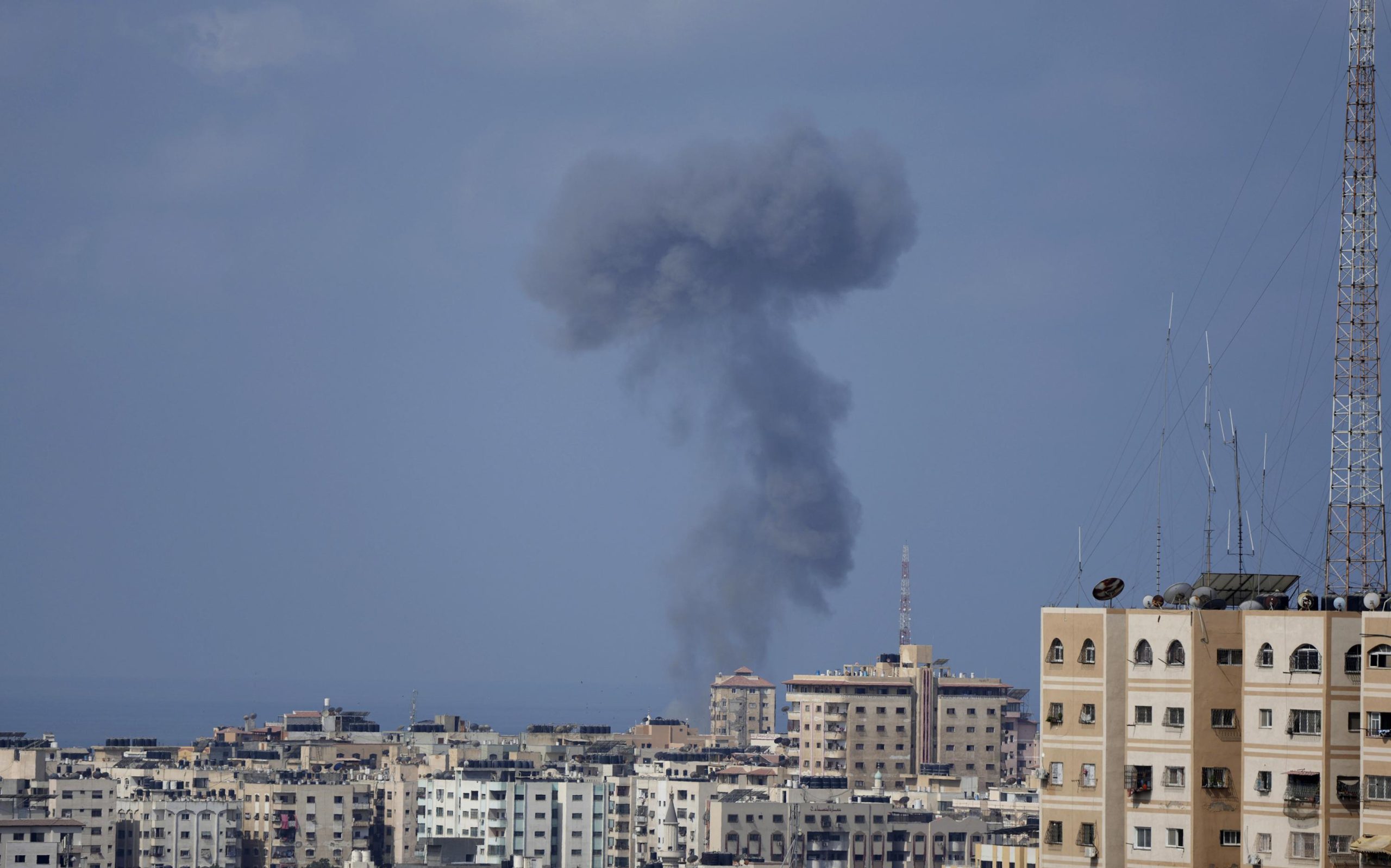
Last week, the Iranian-sponsored Islamic Jihad fired more than 1,000 missiles and rockets in a little more than two days, many of them reaching deep into Israel. The projectiles struck Israel’s biggest cities, including Jerusalem, Tel Aviv and Beersheba, overcoming Israel’s air force and Iron Dome defense system. As in previous conflicts, Israel refrained from ground operations in the Gaza Strip, thus leaving its huge missile and rocket infrastructure intact.
“Iran orchestrated everything that happened inside and along the Gaza borders,” Yoni Ben Menachem, a leading Israeli analyst, said in a report for the Jerusalem Center for Public Affairs. “Ziad Al Nakhalah, the Islamic Jihad leader, visited Teheran’s leaders and ran the campaign in coordination with the Iranian Revolutionary Guard.”
Israeli leaders, facing an election, pleaded for an Egyptian-arranged ceasefire and then declared victory. They claimed that the military had prevented Jihad strikes and even killed its entire leadership.
“In the future, if necessary, we will carry out preemptive strikes to protect the citizens of Israel, its sovereignty and infrastructure,” Defense Minister Benny Gantz said. “This holds true to every front, from Teheran to Khan Yunis,”
The mentor is China
If Iran has a mentor, it is China. Over the last 20 years, a patient Teheran has developed the military capabilities of the Palestinians in the Gaza Strip, defying Israeli threats to recapture the area. IRGC has expanded the range of Hamas and Jihad rockets and missiles from eight to at least 160 kilometers, sufficient to reach every major Israeli city. The Iranians have developed attack drones and balloons that could bomb Israeli communities. They have formed a network of tunnels that would allow the Palestinians to capture entire communities near the Gaza Strip.
“During its wars in Gaza, Hamas morphed from an irregular adversary to a hybrid one with qualities that only state actors possessed previously,” the Rand Corp. said in a report in 2017.
Israel’s guarantees
To prevent Israel from recapturing the Gaza Strip, Iran uses its allies in Europe and the United States to restrain the Jewish state. For its part, Israel has pledged to Washington and Cairo to preserve the Hamas regime and refrain from ground operations in Gaza, thus ensuring that Palestinian missile wars could last weeks or even months.
Iran has a strategic vision: using the Gaza Strip for a multi-front war against Israel. In the fog of war, Hamas and Jihad have tested weapons for firepower, range and accuracy. So far, the Palestinians have shown they could fire salvos of up to 100 projectiles and reach any strategic facility, particularly the nuclear complex in the southern city of Dimona.
The big day will come when Iran unleashes a much larger proxy — Hizbullah. Based in Lebanon and Syria, Hizbullah commands an arsenal of more than 200,000 missiles and rockets, greater than most conventional militaries. Drawing lessons from Hamas and Jihad, Hizbullah has been training to fire salvos of up to 1,000 missiles and rockets that could destroy major Israeli cities within minutes. It has developed an air defense network in coordination with Syria and bolstered by Russia, which deployed its advanced S-300 air and missile defense system near the Lebanese-Syrian border.
Israel’s victory claims aside, Hamas and Jihad casualties play no role in Iran’s strategy. Teheran regards the Palestinians as little more than cannon fodder, preserving Hizbullah for the big war. The Jihad commanders Israel killed in the latest round are easily replaceable because IRGC directly controls operations in the Gaza Strip.
Complacency
So, what has Iran achieved in the latest round? Teheran, preparing for the removal of Western sanctions, proved it determines stability in the region. IRGC, in what will have repercussions throughout the Middle East, tested its new command and control assets that maintain direct contact with the Gaza Strip.
Perhaps most important is that Israel has become complacent, its citizens resigned to missile strikes on their cities and dependent on the international community to restore temporary quiet. Therefore, an obedient Israel bolsters Hamas and increases shipments of goods, including concrete, steel and electronics, required by military forces in Gaza. The entry of 14,000 Gazan laborers in the Jewish state has become sacrosanct. In other words, Iran pays no price in its war with Israel
“Hamas emerged intact, and the benefits Israel gives it and its image as the leader in the Palestinian system were not eroded,” Israel’s Institute for National Security Studies said.
Así funciona la fachada humanitaria para terroristas islámicos que financia Biden
Hace pocas semanas el presidente de los EE. UU., Joe Biden, visitó Israel. En su paso, anunció la donación de 200 millones de dólares a UNRWA en una conferencia de prensa en Belén. Esto representa una contradicción a la política implantada por el expresidente Donald Trump que había cortado el financiamiento a este programa, ya que se catalogó como una fachada humanitaria que vehicula financiamiento directo a grupos terroristas islámicos.
Estos grupos terroristas son aliados de dictaduras en Hispanoamérica y organizaciones políticas de izquierda, los cuales han facilitado su entrada en el continente mediante privilegios logísticos, territoriales, de inteligencia y financieros. La presencia de estos grupos en la región ha sido catalogada por varios centros de investigación como una amenaza a la estabilidad y la seguridad de los países americanos.
Para saber un poco más de este contexto, hemos consultado a David Bedein, quien dirige desde 1987 el Center for Near East Policy Research en Jerusalén. Este Centro ha realizado investigaciones en torno al manejo de los fondos en UNRWA, el modelo educativo implantado, los campamentos de verano a niños y adolescentes, cómo los grupos terroristas se han incorporado a UNRWA y el rol de la Autoridad Palestina en este contexto.
En sus respuestas podemos percibir que esta situación de protección y expansión del terrorismo islámico en nuestra región debería ser un tema que preocupe a los gobiernos americanos, a sus organizaciones políticas y a los organismos multilaterales.
¿Qué es UNRWA?
UNRWA es la Agencia de Naciones Unidas para la población refugiada de palestina en Oriente Próximo, fomentada en diciembre de 1948 a raíz de la guerra árabe-israelí —de 1948—, cuando siete ejércitos árabes invadieron el naciente Estado de Israel. UNRWA fue fomentada por la resolución 194 de la ONU para establecer campamentos de refugiados temporales para cualquiera que haya perdido sus hogares a raíz de la guerra de 1948.
Aunque 13 comunidades judías fueron destruidas en esa guerra, lo que resultó en la dislocación de toda su población, ningún judío solicitó asistencia de UNRWA confiando en cambio en fuentes judías de filantropía. Al mismo tiempo, UNRWA ofreció servicio a los —aproximadamente— 500.000 árabes que se habían quedado sin hogar, como resultado de la guerra. La resolución 194 de la ONU estableció 59 campos de refugiados árabes palestinos temporales bajo los auspicios de UNRWA. Estas instalaciones de refugiados «temporales» han estado allí desde entonces.
¿En qué son invertidos los fondos de ese programa?
UNRWA invierte en la salud, la educación y el bienestar de los 6,7 millones de personas que se identifican como familiares de refugiados árabes de la guerra de 1948.
¿Qué es el «derecho a retornar» que ellos enseñan en las escuelas de UNRWA?
El «derecho a retornar» representa el tema singular de la educación de UNRWA, inculcando la noción para todos sus estudiantes de que tienen el derecho incuestionable de regresar a las aldeas y vecindarios específicos que dejaron tras la guerra de 1948. UNRWA no ofrece a la población de refugiados otra opción para su futuro. El ‘derecho a retornar por la fuerza de las armas’ representa el tema de los grupos terroristas árabes que operan en la UNRWA.
¿Qué es Hamas y cuál es su propósito?
Hamás representa al grupo terrorista islámico que quiere imponer un régimen árabe islámico en toda Palestina. Hamás es una fuerza a tomar en cuenta dentro de UNRWA.
¿Quiénes son los principales financistas de UNRWA?
UNRWA es financiada por 63 países. Para el año 2021 Estados Unidos, Alemania y la Unión Europea encabezan la lista de donantes con aproximadamente 338 millones, 176 millones y 117 millones de dólares, respectivamente. Para encontrar en detalles cuáles son los países que hacen donaciones y desglosado por partidas en el siguiente enlace de la unrwa.org: government_and_eu_pledges_overall_ranking_1.pdf
¿Cuál es la misión del Center for Near East Policy Research ante esta situación?
El Centro está llamando la atención sobre la difícil situación humanitaria de los refugiados palestinos en los campos de refugiados administrados por UNRWA con una reforma sugerida de sus políticas, para adoptar los estándares de los criterios del Alto Comisionado de las Naciones Unidas para los Refugiados (ACNUR) utilizados para la rehabilitación de refugiados en todo el mundo.
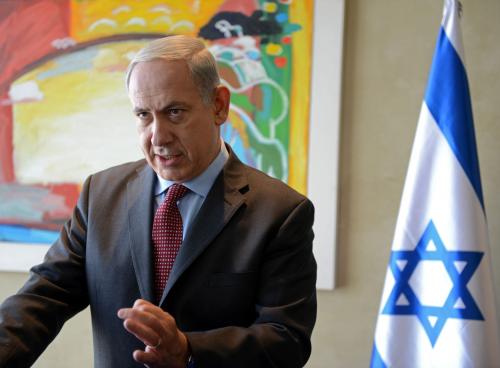
Netanyahu has this to say about Islamic Jihad
Although Islamic Jihad has agreed to a ceasefire at 11:30 pm, the struggle between Israel and the terror leaders controlling the Gaza Strip, whether they are Hamas or Islamic Jihad is a long term one.
צפו בראיון המלא בפוקס ניוז >> pic.twitter.com/PI8QkF4669
— Benjamin Netanyahu (@netanyahu) August 7, 2022
Former Prime Minister Netanyahu told Fox News “This is a civilizational struggle. We will win.”
The former prime minister has been supportive of the IDF’s current campaign in Gaza. He met with Israel’s caretaker Prime Minister Yair Lapid today to get a security briefing and pledged his full support. According to reports, Netanyahu gave Lapid some advice from his own experience.
Islamic Jihad has been firing non stop since just before nightfall on Friday night after Israel attacked and killed one of its leaders. As the fighting has raged, Israel has successfully eliminated most of Islamic Jihad’s leadership.
In reaction to some of the false reports that Israel purposely killed civilians, the former Prime Minister explained that “the difference between Israel and the terrorists is that the terrorists hid behind civilians while firing on civilians.”