Half of all Jews now live in Israel and that is a source of strength

I was recently asked by Westminster Synagogue to speak on the future of Judaism. I told them that, as someone who has written about history, I find it difficult enough to find out what happened in the past, let alone to discern what is going to happen in the future.
But perhaps the best way of trying to discern the future is to look at the past, as Nye Bevan, founder of the National Health Service, used to say. Why look at the crystal ball when you can read the book? So it is worth comparing the position of Jews today with that of a hundred years ago.

In 1922, there were 14,400,000 Jews in the world. The centres of Judaism outside the United States were in central and Eastern Europe — Berlin, Warsaw and Budapest.
There seemed grounds for optimism. In 1922 the League of Nations, predecessor of the United Nations, awarded Britain the Palestine British mandate. This was as significant as the Balfour Declaration of 1917 since it confirmed the legitimacy of Britain’s promise of a national home for the Jews. That meant a part of the world in which Jews could live as of right. There would be a Jewish majority, to be built up through immigration. “The wandering Jews”, The Times had declared in April 1920, “will at last have a home”.

But the depression of 1929 dashed that optimism, since it led to the intensification of antisemitism east of Germany, except for Czechoslovakia, and the spread of antisemitism under Hitler westwards to the Rhine.

By 1939, the world Jewish population had increased to almost 17 million. But Jews on the Continent faced a precarious future. Many sought to emigrate, but most countries closed their doors. Jews were not welcome. And in 1939 the British government in its White Paper severely limited immigration into the national home, proposing to end it entirely, well before a Jewish majority had been achieved. That seemed to mark the end of the Balfour Declaration.

In Chaim Weizmann’s mordant words, the world was now divided between countries in which Jews were not allowed to live and countries which they were not allowed to enter.
By 1945, after the Holocaust the world’s Jewish population had fallen to around 11 million.

Today it is just over 15 million. Jews have not made up the losses of the Holocaust. There are now around one-and-three-quarter million fewer than in 1939. Between 1939 and 2022, by contrast, the population of the world has increased by around 250 per cent. In the absence of the Holocaust, given a natural increase of population, there would perhaps have been a world Jewish population of 40 million.

Some predicted that the enormity of the Holocaust would mean that antisemitism would finally disappear. It has not done so. Indeed, the European Union has found that 38 per cent of the continent’s Jews have considered emigrating because of it. Antisemitism has even appeared in Britain, hitherto one of the few countries in Europe to have escaped this disease, in Jeremy Corbyn’s Labour Party. And, although Labour was heavily defeated in the 2019 election, survey evidence indicates that, amongst graduates, it led the Conservatives by 14 per cent. You would be more likely to meet Corbynites at Oxford or Cambridge than in your local pub.

Is there a cure for antisemitism? I doubt if there are any strategies or arguments that have not already been tried and failed.

Over 100 years ago, in September 1920, Albert Einstein addressed a meeting of the Central Society of German Citizens of the Jewish Faith — a revealing label — in Berlin. “I have,” he said, “received your invitation to a meeting which is to discuss the question of combating antisemitism in university circles. I would gladly come, did I believe in the possible success of such an undertaking. But in the first place the antisemitism and the servile attitude among Jews themselves must be fought by means of enlightenment. There must be more worthiness and independence in our own ranks. Only when we have the courage to regard ourselves as a nation, only when we respect ourselves, can we gain the esteem of others.”

Einstein was drawing attention to the fact that Zionism was not just a matter of external liberation, of freedom from antisemitism; it was also a doctrine of internal liberation, of self-determination. Only in a state with a Jewish majority would Jews be free to preserve their identity without having to look over their shoulders for fear of causing offence. Both Herzl and Weizmann disliked Jews who submerged their personalities to “fit in”, something they found demeaning as well as futile.

In 1948, Zionism triumphed and the state of Israel was born.

Following the Holocaust and the creation of Israel, the geographical balance of the world Jewish population has altered radically. In Palestine in 1939, there were only around 450,000 Jews — three per cent of the world’s total. Today the largest number of Jews — nearly seven million, almost 50 per cent of the world’s Jews — live in Israel. The great centres of Jewish life in pre-war Europe — Berlin, Warsaw and Budapest — have disappeared. The centres of Jewish life now are Jerusalem and New York.

Until the foundation of Israel, Jews, in the words of the great British Jewish historian, Lewis Namier, suffered from too much history and not enough geography. But the creation of Israel has enabled Jews to determine their own future. Winston Churchill was one of the few in Britain to perceive the significance, telling the House of Commons in January 1949: “The coming into being of a Jewish state in Palestine is an event in world history to be viewed in the perspective, not of a generation or a century, but in the perspective of 1,000, 2,000 or even 3,000 years”.

For in 1948, Jews emerged from powerlessness. This has already had, and will have in the future, a great effect on world politics. Remarkably, both Zelensky and Putin were prepared to accept Israeli PM, Naftali Bennett, as mediator in the Ukraine war. Had anyone predicted in 1922 that a Jew would be asked to mediate between Russia and the Ukraine, he would have been regarded as deranged.

The future of Judaism, therefore, is now very largely bound with the future of Israel, a genuine national home to which, thanks to the Law of Return, all Jews can enter; and recently, many Jews from Ukraine, Russia and Belarus have taken advantage of this law to emigrate there.

That is a stark contrast with the 1930s and 1940s when Jews who sought to leave central and eastern Europe found it difficult to secure admittance. They were, in the words of a Foreign Office official in 1939, “surplus Jews”. Today, however, there is a secure refuge for Jews — for all Jews, not just religious Jews.

For, despite the growing strength of the charedim in Israel and the influence of rabbis, Israel remains fundamentally a secular and not a religious state.

Zionism, to the extent that it was a response to antisemitism in Europe, was not primarily a religious movement. The Nazis did not inquire whether Jews had attended synagogue before sending them to camps. Israel must not, therefore — indeed cannot — become a religious state. Sadly, a hardline view of Judaism seems to have entrenched itself at the highest levels of state power there, imposing itself on the large secular element in the population. In the United States, by contrast, there is a much greater pluralist flourishing of Jewish life. Israel must do more to recognise all denominations of Judaism, and also those who do not belong to any denomination at all but still identify as Jewish.

At the recent celebrations of the 74th anniversary of independence, then-Israeli PM Naftali Bennett reminded Israelis that the two previous Jewish kingdoms had not survived to reach their 8th decade. The kingdom of David and Solomon had split in two after internal disputes. The Hasmonean regime, the regime of the second temple, lasted just 77 years, before internal conflicts led to Roman occupation.

Jews, Bennett declared, were now being given a third chance. They must be careful not again to squander it by too narrow a conception of what Judaism is.

Of course the only real answer to the question of the future of Judaism is that no one really knows, since that future remains to be written. But now that there is a Jewish state, Jews will play a predominant part in writing write it. For they are now subjects as well as objects of history, authors of their own destiny.

Vernon Bogdanor is Professor of Government, King’s College, London and a member of the International Advisory Council of the Israel Democracy Institute. This article is based on a talk given at Westminster Synagogue


IDF reveals Hamas tunnel networks under Gazan civilian neighborhoods

The Israel Defense Forces on Wednesday exposed a number of Hamas tunnels under civilian sites in the Gaza Strip, including one in the Tafah area of Gaza City located next to a franchised Pepsi bottling factory, and another running next to an UNRWA elementary school that acts as a shelter for some 2,500 people, according to the IDF.

The tunnels pass under “buildings that are essential for civilian life, in the knowledge that a strike on those targets will be provocative. If the tunnels collapse, hospitals, mosques, universities, or factories will collapse with them,” said the IDF.

A weapons storehouse and the entrance to a tunnel were also found in the homes of two Hamas operatives, said the IDF. One of the homes is located next to an UNRWA medical clinic which serves some 15,000 people in the area, according to the military.

“The locations in which this infrastructure was uncovered paints a very severe and sad picture, in which exploitation and lack of humanity are a modus operandi,” said the military. “The enemy is hiding infrastructure for the next war under the noses of the innocents, thereby placing them, against their will, at the front of the next conflict.”


Murder Accountabilty

image.png

 
Matan Tziniman, six years old, murdered by Arabs on July 26, 2022. 
 
Palestinian Authority statute legislates: Murder a Jew, Receive a salary for life.
 
 
When you see Matan’s picture, will you demand that funds to the  PA be conditioned on the repeal of that law?
 
So far, no government in the world has made that demand. That includes Israel.
 
The time has come to transform PIKUACH NEFESH – saving a life-into a campaign issue.


Unpacking the Transmission of Holocaust Trauma

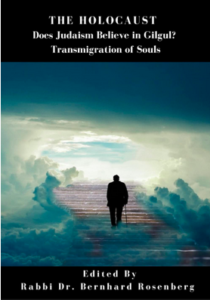
The author of The Holocaust: Does Judaism Believe in Gilgul? Transmigration of Souls begins with a wonderful quote from the famed psychologist Carl Gustav Jung:

“Rationalism and doctrinairism are the diseases of our time; they pretend to have all the answers. But a great deal will yet be discovered which our present limited view would have ruled out as impossible. Our concepts of space and time have only approximate validity, and there is therefore a wide field for minor and major deviations. In view of all this, I lend an attentive ear to the strange myths of the psyche and take a careful look at the varied events that come my way, regardless of whether or not they fit in with my theoretical postulates.” (Memories, Dreams, Reflections)

Children of Holocaust survivors often grapple with the legacy their parents left them. As more of the older generation passes the torch to the next generation, how do we make sense of the greatest tragedy of Jewish history?

For those of us who have grown up in traditional Jewish homes where our parents did their best to give us a proud Jewish identity, how do we make spiritual sense of the Holocaust without sounding trite or superficial? Regardless of the denominational histories of our families, the questions remain the same: What does our faith in God and in faith mean in a generation that is still picking up the ashes of trauma and memory?

The Holocaust: Does Judaism Believe in Gilgul? Transmigration of Souls

Like Jacob in the Bible, our collective Judaic psyche is wrestling with God. The good news is this is not the first time Jews have grappled with loss and disorientation. According to Josephus, the Romans murdered nearly 2 million Jews in their conquest of Judea and Jerusalem. Yet, despite the loss of 6 million, our people remain poised and are surviving against the odds.

As a rabbi and a teacher of Judaic texts, I have marveled at the books written about this subject. In my own writings, I have tried to put the pieces together.

One of the most interesting books I have read in recent years on this topic is Rabbi Dr. Bernhard Rosenberg’s new thought-provoking book. On the surface, Rabbi Rosenberg’s fusion of the Holocaust and reincarnation might seem like he is trying to yoke a donkey and an ox together. What could be more incongruous? The Holocaust is a daunting subject to write about whether one approaches it from a historical or a theological perspective. The belief in reincarnation is also a challenging topic—especially since it is primarily an Eastern religious belief; yet it resonates throughout much of the Kabbalah.

Chief Sephardic Rabbi of Israel Ovadiah Yosef, the leader of Israel’s biggest ultra-Orthodox political party, shocked the Jewish world when he said on Aug, 6, 2000, that the 6 million Jews who perished in the Nazi Holocaust died because they were reincarnations of sinners in previous generations. Yosef called the Nazis “evil” and the victims “poor people,” but he concluded that the 6 million “were reincarnations of the souls of sinners, people who transgressed and did all sorts of things which should not be done. They reincarnated to atone. After all, people are upset and ask why was there a Holocaust? Woe to us, for we have sinned. Woe to us, for there is nothing we can say to justify it,” he said. “It goes without saying that we believe in reincarnation,” continued Yosef. “It is a reincarnation of those souls. Our teacher, R. Isaac Luria, [a.k.a., “Ari”] said that there are no new souls in our generation; all the souls were once in the world and have returned. “All those poor people in the Holocaust we wonder why it was done. There were righteous people among them. Still, they were punished because of sins of past generations.” According to Yosef, the concept of reincarnation anticipates the objection that apparent innocents—children and pious elders—were among the Holocaust’s victims. This could only be due to sins that these souls committed from a previous lifetime.

Rabbi Rosenberg assembled several fine Jewish writers and rabbis who discussed the topic. I must confess that I was surprised when he asked me to contribute some of my thoughts on this topic.

The more I thought about the topic, the more I began to wonder: Can the trauma of the Holocaust be someone mysteriously transmitted to a new generation? We all carry the genetic histories of the human race, but could psychological or spiritual traits also be transmitted to the next generation?

There is much about trauma and genetics we do not know, yet surprisingly, some evidence indicates that trauma may be genetically transmitted. For example, in 2013, a controlled experiment with mice allowed researchers to answer this question. A study found an intergenerational effect of trauma associated with scent. Martha Henriques noted that the researchers blew acetophenone – which has the cherry blossom scent through the cages of adult male mice. The researchers zapped their feet with an electric current at the same time. Over several repetitions, the mice identified the smell of cherry blossom with pain.

Shortly afterward, these males were bred with female mice. When their pups smelled the scent of cherry blossom, they became more jumpy and nervous than pups whose fathers hadn’t been conditioned to fear it. To rule out that the pups were somehow learning about the smell from their parents, they were raised by unrelated mice who had never smelt cherry blossom. The grandpups of the traumatized males also showed heightened sensitivity to the scent. Neither of the generations showed greater sensitivity to smells other than cherry blossom, indicating that the inheritance was specific to that scent. This sensitivity to cherry blossom scent was linked back to epigenetic modifications in their sperm DNA. Chemical markers on their DNA were found on a gene encoding a smell receptor, expressed in the olfactory bulb between the nose and the brain, which is involved in sensing the cherry blossom scent. When the team dissected the pups’ brains, they also found a greater number of neurons that detect the cherry blossom scent than control mice.

It is an interesting question that certainly pertains to the children and grandchildren of Holocaust survivors or virtually any people who have suffered PTSD. Yet, as the psychiatrist Ian Stevenson pointed out, there are ample cases where the recollection of a past life does not have any genetic connection. Ian Stevenson has written over 600 articles on the subject based on his experiences working with Hindu children who had a recollection of past life memories.

The subject did come up, and here is the second part of that discussion, but this time, it is the Dali Lama himself who offered a more detailed answer to the original question:

The question that interested me was whether or not the Holocaust might be attributed ro the doctrine of karma, i.e., the Jews faced punishment for past life sins that had to be burned off through the Holocaust…  Rabbi Zalman Schacter and several of his followers posed this question to the Dali Lama and several of his lieutenants, who answered in the affirmative.

Frankly, I am astonished that Reb Zalman did not challenge the Dali Lama and his followers. Perhaps they did not want to seem as though they were impolite guests. But fortunately, other leading Buddhist thinkers took issue with the Dali Lama.

In short, I feel glad to have been a part of this literary project. I think the readers will find the subject matter intriguing, if not a bit controversial.

Once again, I extend kudos to the author for writing, Does Judaism Believe in Gilgul? Transmigration of Souls.
*

Rabbi Dr. Michael Leo Samuel is spiritual leader of Temple Beth Shalom in Chula Vista. He is the author of Rediscovering Philo of AlexandriaMaimonides’ Hidden Torah Commentary, and The Forgotten English Torah Commentator (2022). He may be contacted via michael.samuel@sdjewishworld.com

Dr. Pascale Falek, Policy Officer of the E C* Coordinator on” combating Antisemitism” issued a misleading statement in private correspondence on 27 July , 2022

[*European Commission” = policy arm of the EU]

“The EU does not fund Palestinian textbooks. It has funded an independent study on these textbooks against defined international benchmarks, based on the UNESCO standards on peace, tolerance and non-violence in education. On the one hand, the study showed the analyzed textbooks adhere to the UNESCO guidelines on Human Rights Education, and generally promote political pluralism and stress cultural, social and religious values that support coexistence…”

Response:

Dr. Arnon Groiss refutes the so called “independent” study of PA texts

Comments on the 2021 Georg Eckert Institute’s Report on Palestinian Textbooks

Concerning the notion that “EU does not fund Palestinian textbooks”, the EU provides a multi –year grant to UNRWA which spends 58% of the $1.6 billion dollar UNRWA budget on education, knowing full well that UNRWA funds PA education, especially the textbooks!

The same misleading notion has been spread in the the British Parliament, which pulled funds out of the PA education line and placed the same funds in UNRWA education.

The Silence of the European Coalition for Israel

Attn: Press query of ECI, the European Coalition for Israel
 
The respected Globes business newspaper confirms in its July 22, 2022 weekend edition that the EU has transferred new funds to PA and UNRWA education, with no conditions.
 
That has occurred despite the fact that the EU knows that the  PA/UNRWA curriculum indoctrinates the next generation to engage in full scale war against the Jews.


Full disclosure; Dr. Arnon Groiss, who has reviewed close to 1,000 texts used by the PA/UNRWA schools,  ever since the PA began to issue its own textbooks in 2000,has  briefed  officials of the European Commission in Israel about the current UNRWA curriculum, which incorporates all text books used by the PA.
 
Questions: 
 
1. What protest does the ECI plan in response to this action?
 
2. Will ECI at least ask that the  EU demand the removal of the textbook which praises the murderer Dalal El Mugrabi and presents her as a role model for all  students to emulate?
 
 
Thank you.
 
David Bedein, CEO
 
NO RESPONSE RECEIVED

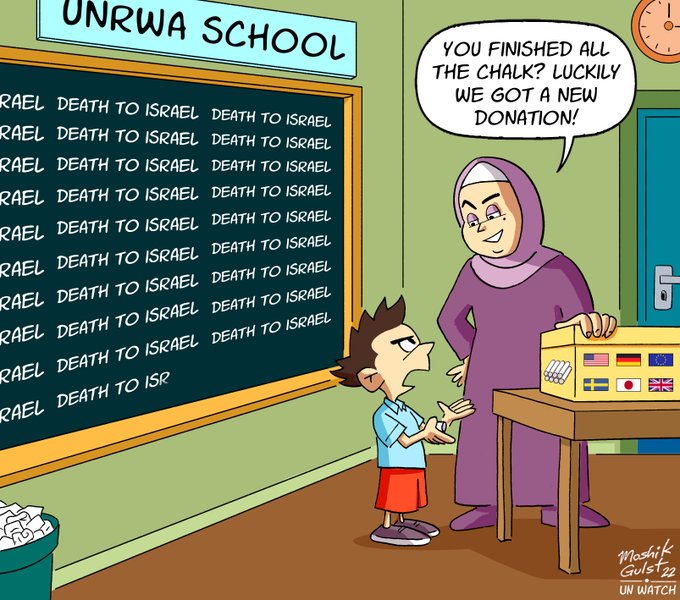
UNRWA suspended 6 teachers & staff for inciting to murder Jews.

UNRWA suspended 6 teachers & staff for inciting to murder Jews. We exposed 120. Not 1 has been fired. Our report: http://unwatch.org/exposed-un-teachers-call-to-murder-jews

New Book on Anti-Israel Advocacy in Canada

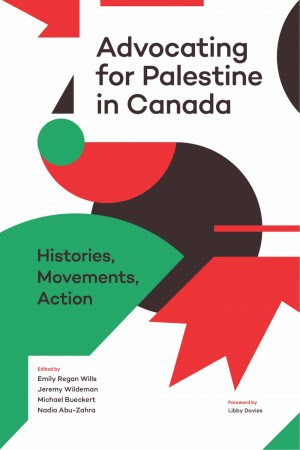
Several Canadian scholars co-authored a new book Advocating for Palestine in Canada Histories, Movements, Action. 

As has been the norm in pro-Palestinian academic circles, the book and its review are mostly focused on attacking Israel rather than discussing Palestinian issues.

The review proclaims the book to be “a valuable and positive examination of the Palestinian solidarity movement located in Canada. It highlights… efforts to disguise Israeli transgressions against human rights and demonstrates that there is an ongoing and growing solidarity and understanding of Palestinian interests in a peaceful equitable solution to Israeli colonial-settlerism.”

In the book, “advocacy may result in personal attacks from pro-Zionist organizations working from the top down. In Canada that top-down starts with the government of Justin Trudeau, down through the media (much of which is owned by the Asper family who strongly supports Israeli objectives), continuing on down through a powerful variety of pro-Israeli NGOs to the identities of a white, Christian, conservative base within the populace.”

The first chapter, “The Elephant in the Room” discusses the colonialism, and racism the author encountered as “cobbled together through some combination of Zionist historical narrative and contemporary Israeli propaganda… This has helped Israel enjoy widespread and institutionalized impunity while committing violations of international law on an ongoing basis.”

The chapter “Zionist Loyalty and Euro-Jewish Whiteness” discusses how the Jews in Canada maintain a position of eternal victim to an “ascent…into whiteness by permission… Pro-Palestianism is not tolerated by an institutional Jewish community which strives for acceptance in white settler societies like Canada which are incontrovertibly racist in both their colonial histories and contemporary exclusionist postures and structures.”

The chapter “Singled Out” talks about the new antisemitism, that Israel “may not be unique after all but is like that experienced by other states” such as South Africa.

The chapter “Israel Apartheid Week” (IAW) discusses the problems and successes of Israeli apartheid week and its associated boycott, divestment, and sanctions activism. the IAW examines similarities between settler colonialism in Palestine and “Turtle Island” (North America). As recognized elsewhere, “pro-Israeli attempts at censorship and oppression have only encouraged popular dissent and creative interventions in support of Palestine.”

The chapter “Two Jews, Three Opinions” Cites recent Canadian polls, which “undermine the legitimacy of the Canadian government’s claims to be acting on behalf of Jews when it sides with Israel.”

The chapter “Knowing and Not Knowing – Canada, Indigenous Peoples, Israel and Palestine” examines Canadian history of racism, ethnic cleansing, and genocide and its – mostly – similarities with Israel-Palestine. Violence and dispossession are still elements of current Canadian society against its indigenous people.

The chapter “Canadian Media and Pro-Israel Bias – An Insider’s Perspective” examines media and its alleged pro-Israel bias. Journalists are unwilling to do their “role in dissuading the public from working to hold Israel to account.” They should “give readers the tools to combat the pro-Israeli Bias.”

The chapter “Palestinian Solidarity Work in Canada” looks at the “intersectionality with other groups working against racism and other societal concerns.”

The final chapter, “Campus Palestine Activism in Ottawa from the 1970s to the 2010s”, compares “two universities and the different levels of activism through the author’s experiences. The activism derives from Arab student movements, anti-war interests (vis a vis the Gulf wars), the rise and fall of the Oslo process, and the renewed attacks on Gaza after the 2006 elections. The BDS movement is currently becoming more active as the “now dysfunctional PLO and discredited PA.” Focusing on international law through the BDS movement, the recognition very recently of the apartheid nature of Israel, and the discussions around the vague and poorly stated IHRA definition of anti-Semitism.”

The book concludes that the Palestinian solidarity movement “is at its core an inclusionary movement closely linked to anti-apartheid, anti-colonial, and anti-racist values, resonating with people seeking social justice and basic human rights.”

Intersectionality, as IAM repeatedly pointed out, is a fashionable academic movement that postulates that all minorities should speak against the alleged misdeeds of the oppressors. Since the Palestinians are considered a “minority,” all other minorities should form a coalition to target Israel, their alleged oppressor.

Clearly, the book cares little about real Palestinian issues like the tyrannical rule of Hamas and Palestinian Islamic Jihad in Gaza and the corruption and mismanagement of the PLO rule in the West Bank led by the octogenarian Mahmoud Abbas.  The incessant attacks on Israel do little to help the Palestinians who live under brutal or inept rules.

The book authors are shackled by the ideological dogmas of intersectionality and the social justice movement to acknowledge that the Abraham Accords have created momentum toward peace and prosperity in the Middle East. According to reports, the Palestinians were given a choice to join Israel and Arab countries such as UAE, Morocco, Egypt, Jordan, Sudan, and others to create a more prosperous future. Hopefully, they will make this choice.

https://fernwoodpublishing.ca/book/advocating-for-palestine-in-canada

Advocating for Palestine in Canada

Histories, Movements, Action

Edited by Emily Regan WillsJeremy WildemanMichael Bueckert and Nadia Abu-Zahra  Foreword by Libby Davies  

PAPERBACK $26.00

EPUB $25.99

PDF $25.99

Are you a student?

Why is it so difficult to advocate for Palestine in Canada and what can we learn from the movement’s successes? This account of Palestine solidarity activism in Canada grapples with these questions through a wide-ranging exploration of the movement’s different actors, approaches and fields of engagement, along with its connections to different national and transnational struggles against racism, imperialism and colonialism. Led by a coalition of students, labour unions, church groups, left wing activists, progressive presses, human rights organizations, academic associations and Palestinian and Jewish community groups, Palestine solidarity activism is on the rise in Canada and Canadians are more aware of the issues than ever before. Palestine solidarity activists are also under siege as never before. The movement advocating for Palestinian rights is forced to contend with relentless political condemnation, media blackouts, administrative roadblocks, coordinated smear campaigns, individual threats, legal intimidation and institutional silencing. Through this book and the experiences of the contributing authors in it, many seasoned veterans of the movement, Advocating for Palestine in Canada offers an indispensable and often first-hand view into the complex social and historical forces at work in one of our era’s most urgent debates, and one which could determine the course of what it means to be Canadian going forward.

Download excerpt

REQUEST EXAM COPY

CONTENTS

  • Foreword (Libby Davies)
  • Introduction (Emily Regan Wills, Nadia Abu-Zahra, Michael Bueckert and Jeremy Wildeman)
  • Anti-Palestinian Racism: A Personal Account (Nyla Matuk)
  • Campus Palestine Activism in Ottawa from the 1970s to the 2010s (Hassan Husseini)
  • Israeli Apartheid Week: Popular Dissent, Creative Intervention (Rana Nazzal)
  • Two Jews, Three Opinions: Jewish Canadians’ Diverse Views on Israel- Palestine (Diana Ralph)
  • Canadian Media and Pro-Israel Bias: An Insider’s Perspective (Davide Mastracci)
  • A SWOT Analysis for Palestinian Solidarity Work in Canada (Thomas Woodley)
  • Knowing and Not Knowing: Canada, Indigenous Peoples, Israel and Palestine (Michael Keefer)
  • Singled Out: South Africa, Israel and Accusations of Unfair Criticism (Michael Bueckert)
  • Zionist Loyalty and Euro-Jewish Whiteness: Untangling the Threads of a Lethal Complicity (Sheryl Nestel)
  • Conclusion (Nadia Abu-Zahra, Michael Bueckert, Jeremy Wildeman and Emily Wills)

AUTHORS

Emily Regan Wills

  • University of Ottawa
  • Emily Regan Wills is an associate professor of comparative politics at the University of Ottawa. She is the co-director of the Community Mobilization in Crisis project, which develops and implements innovative multilingual digital pedagogical tools for teaching community mobilization skills in the Middle East and elsewhere.

Jeremy Wildeman

  • University of Ottawa, HRREC
  • Jeremy Wildeman is a Fellow at the Human Rights Resource and Education Centre (HRREC), University of Ottawa. He is a scholar of international relations, Middle East politics, Canadian foreign policy, human security and development aid.

Michael Bueckert

  • Canadians for Justice
  • Michael Bueckert is Vice President at Canadians for Justice and Peace in the Middle East (CJPME), a national advocacy organization based in Montreal. He has a PhD in Sociology with a specialization in Political Economy from Carleton University; his dissertation explored the opposition to boycott movements.

Nadia Abu-Zahra

  • University of Ottawa and Carleton University
  • Nadia Abu-Zahra is an Associate Professor and Joint Chair in Women’s Studies at the University of Ottawa and Carleton University, and a member of the University of Ottawa’s Human Rights Research and Education Centre, Centre for Research on Educational and Community Services, and Centre for International Policy Studies.

Libby Davies

  • Libby Davies has been a social activist for 45 plus years and began as a community organizer in Vancouver’s Downtown Eastside in 1972. She was elected to Vancouver City Council for 5 consecutive terms, 1982-1993. As the Member of Parliament for Vancouver East for six consecutive terms, 1997-2015, she became NDP House Leader, (2003-2011) and Deputy Leader (2007-2015). Libby continues to be an outspoken advocate for human rights, housing, peace, and social justice. She was awarded the Order of Canada in 2016.
  • Libby was appointed to the board of governors of Vancouver Community College in 2018, and serves as Vice Chair. She is also a board member and Vice Chair, of the Portland Hotel Community Services Society (PHS).
  • She is the author of “Outside In: A Political Memoir” (May 2019, published by Between The Lines, Toronto) and is a frequent public speaker on progressive transformative change and its relationship to politics. Libby is currently writing a new book.
  • ==================
  • https://www.palestinechronicle.com/advocating-for-palestine-in-canada-histories-movements-actions-book-review/

Advocating for Palestine in Canada: Histories, Movements, Actions – Book Review

  • July 14, 2022 ArticlesCommentaryReviews
  • Advocating for Palestine in Canada – Histories, Movements, Actions. (Photo: Book cover)
  • By Jim Miles
  • (Advocating for Palestine in Canada – Histories, Movements, Actions. Ed.: Emily Wills, Jeremy Wildeman, Michael Beuckert, Nadia Abu-Zahra. Fernwood Publishing, Halifax/Winnipeg, 2022.)
  • Different groups advocate for Palestine from a variety of perspectives while developing several common themes. Advocating for Palestine contains nine presentations looking at Palestine from the viewpoint of students, Jewish activism, indigenous issues, being Palestinian-Arab in Canada, and Zionism and Euro-Jewish whiteness. Several themes are common to all the discussions.
  • The book starts with fear from a global perspective, recognizing that advocacy may result in personal attacks from pro-Zionist organizations working from the top down. In Canada that top-down starts with the government of Justin Trudeau, down through the media (much of which is owned by the Asper family who strongly supports Israeli objectives), continuing on down through a powerful variety of pro-Israeli NGOs to the identities of a white, Christian, conservative base within the populace.
  • This fear is connected to “a broader project of liberation from all forms of systemic injustice”, an “anti-racist movement” with “people of all backgrounds who are critical of the globalized Israeli military-industrial complex and its link to global militarism.” On the other side of fear is “in transforming fear into solidarity, in seeing ourselves as in relation to one another, we can build those futures [of a free Palestine and world] in the present.”
  • The first essay “The Elephant in the Room” discusses the unseen internalized colonialism that permeates Canadian society and the author’s recognition as to how it affects her encounters within different social situations. Most of the racism she encounters includes “highly educated scholars, professional writers, journalists, newspaper columnists, clergy and the like.”
  • This racism is “cobbled together through some combination of Zionist historical narrative and contemporary Israeli propaganda, in combination with the sheer laziness of media commentators who could not …decolonize their viewpoints….This has helped Israel enjoy widespread and institutionalized impunity while committing violations of international law on an ongoing basis.”
  • The essay “Zionist Loyalty and Euro-Jewish Whiteness” discusses how the Jew “must be understood as simultaneously under attack and as the beneficiaries of racial privilege.” Jews in Canada maintain a position of eternal victim to an “ascent…into whiteness by permission,” a combination of Holocaust memorials and contemporary positioning within the western world today. “Pro-Palestianism is not tolerated by an institutional Jewish community which strives for acceptance in white settler societies like Canada which are incontrovertibly racist in both their colonial histories and contemporary exclusionist postures and structures.”
  • The essay “Singled Out” talks about the new antisemitism, being essentially how Israel is singled out but with comparisons to South Africa showing that criticizing Israel “may not be unique after all but is like that experienced by other states.” The ‘new’ standard is composed of demonization (negative attacks), double standards (other countries do it to), and delegitimization (right to exist) as the new currents of antisemitism. However, activism does focus on a particular target and in this case on a state “which refuses to be held accountable.”
  • “Israel Apartheid Week” [IAW] discusses the problems and successes of Israeli apartheid week and its associated boycott, divestment, and sanctions activism. In Canada, the IAW examines similarities between settler colonialism in Palestine and “Turtle Island” (North America). As recognized elsewhere, “pro-Israeli attempts at censorship and oppression have only encouraged popular dissent and creative interventions in support of Palestine.”
  • The Jewish community’s values are examined in “Two Jews, Three Opinions”. Citing recent Canadian polls, it is found they “undermine the legitimacy of the Canadian government’s claims to be acting on behalf of Jews when it sides with Israel.” The author concludes “Neither public opinion nor a significant proportion of Jewish Canadians share our government’s uncritical support of Israel.”
  • Canada is an example of British colonial settlerism that compares readily to the colonial settlerism in Palestine. The essay “Knowing and Not Knowing – Canada, Indigenous Peoples, Israel and Palestine” examines Canadian history of racism, ethnic cleansing, and genocide and its – mostly – similarities with Israel-Palestine. Contemporary events still uphold our “enacted values” which are “for the most part those of the corporate and security-state interests that have guided public policy.” Violence and dispossession are still elements of current Canadian society against its indigenous people.
  • The media and its pro-Israel bias is critically examined in “Canadian Media and Pro-Israel Bias – An Insider’s Perspective.” CanWest Global Communications owns a disproportionate share of Canadian media and its original owner Israel Asper maintained a strong pro-Zionist bias (now within family control). The CBC, supposedly independent of government, carries the Trudeau government pretense of balance while extolling the virtues of Israel while ignoring Israel’s ongoing settler-colonialism in Palestine. The word Palestine is not allowed to be used by CBC broadcasters.
  • “The core journalistic function of informing the public,” the “unwillingness of journalists to address the power imbalances” and the resulting “role in dissuading the public from working to hold Israel to account” when exposed will hopefully “give readers the tools to combat the pro-Israeli Bias.”
  • The problems and successes of Canadian activism are presented in “Palestinian Solidarity Work in Canada.” From the discussion of strengths and opportunities the “PSM must try to keep its focus on human rights and international law.” Part of that is the intersectionality with other groups working against racism and other societal concerns.
  • The final essay focuses on “Campus Palestine Activism in Ottawa from the 1970s to the 2010s”, comparing two universities and the different levels of activism through the author’s experiences. The activism derives from Arab student movements, anti-war interests (vis a vis the Gulf wars), the rise and fall of the Oslo process, and the renewed attacks on Gaza after the 2006 elections. The BDS movement is currently becoming more active as the “now dysfunctional PLO and discredited PA” have been abandoned.
  • Political rhetoric/programs have transformed to one that is more directed at international law through the BDS movement, the recognition very recently of the apartheid nature of Israel, and the discussions around the vague and poorly stated IHRA definition of anti-Semitism.
  • In their conclusion the editors state, “the Palestinian solidarity movement as described in this book is at its core an inclusionary movement closely linked to anti-apartheid, anti-colonial, and anti-racist values, resonating with people seeking social justice and basic human rights.”
  • “Advocating for Palestine in Canada” is a valuable and positive examination of the Palestinian solidarity movement located in Canada. It highlights the government, corporate, and media efforts to disguise Israeli transgressions against human rights and demonstrates that there is an ongoing and growing solidarity and understanding of Palestinian interests in a peaceful equitable solution to Israeli colonial-settlerism.
  • – Jim Miles is a Canadian educator and a regular contributor/columnist of opinion pieces and book reviews to Palestine Chronicles. His interest in this topic stems originally from an environmental perspective, which encompasses the militarization and economic subjugation of the global community and its commodification by corporate governance and by the American government.

Advocating for Palestine in Canada

Histories, Movements, Action

Edited by Emily Regan WillsJeremy WildemanMichael Bueckert and Nadia Abu-Zahra  Foreword by Libby Davies

PAPERBACK $26.00

EPUB $25.99

PDF $25.99

Why is it so difficult to advocate for Palestine in Canada and what can we learn from the movement’s successes? This account of Palestine solidarity activism in Canada grapples with these questions through a wide-ranging exploration of the movement’s different actors, approaches and fields of engagement, along with its connections to different national and transnational struggles against racism, imperialism and colonialism. Led by a coalition of students, labour unions, church groups, left wing activists, progressive presses, human rights organizations, academic associations and Palestinian and Jewish community groups, Palestine solidarity activism is on the rise in Canada and Canadians are more aware of the issues than ever before. Palestine solidarity activists are also under siege as never before. The movement advocating for Palestinian rights is forced to contend with relentless political condemnation, media blackouts, administrative roadblocks, coordinated smear campaigns, individual threats, legal intimidation and institutional silencing. Through this book and the experiences of the contributing authors in it, many seasoned veterans of the movement, Advocating for Palestine in Canada offers an indispensable and often first-hand view into the complex social and historical forces at work in one of our era’s most urgent debates, and one which could determine the course of what it means to be Canadian going forward.

Download excerpt

REQUEST EXAM COPY

CONTENTS

  • Foreword (Libby Davies)
  • Introduction (Emily Regan Wills, Nadia Abu-Zahra, Michael Bueckert and Jeremy Wildeman)
  • Anti-Palestinian Racism: A Personal Account (Nyla Matuk)
  • Campus Palestine Activism in Ottawa from the 1970s to the 2010s (Hassan Husseini)
  • Israeli Apartheid Week: Popular Dissent, Creative Intervention (Rana Nazzal)
  • Two Jews, Three Opinions: Jewish Canadians’ Diverse Views on Israel- Palestine (Diana Ralph)
  • Canadian Media and Pro-Israel Bias: An Insider’s Perspective (Davide Mastracci)
  • A SWOT Analysis for Palestinian Solidarity Work in Canada (Thomas Woodley)
  • Knowing and Not Knowing: Canada, Indigenous Peoples, Israel and Palestine (Michael Keefer)
  • Singled Out: South Africa, Israel and Accusations of Unfair Criticism (Michael Bueckert)
  • Zionist Loyalty and Euro-Jewish Whiteness: Untangling the Threads of a Lethal Complicity (Sheryl Nestel)
  • Conclusion (Nadia Abu-Zahra, Michael Bueckert, Jeremy Wildeman and Emily Wills)

AUTHORS

  • Emily Regan Wills

    University of Ottawa

    Emily Regan Wills is an associate professor of comparative politics at the University of Ottawa. She is the co-director of the Community Mobilization in Crisis project, which develops and implements innovative multilingual digital pedagogical tools for teaching community mobilization skills in the Middle East and elsewhere.

  • Jeremy Wildeman

    University of Ottawa, HRREC

    Jeremy Wildeman is a Fellow at the Human Rights Resource and Education Centre (HRREC), University of Ottawa. He is a scholar of international relations, Middle East politics, Canadian foreign policy, human security and development aid.

  • Michael Bueckert

    Canadians for Justice

    Michael Bueckert is Vice President at Canadians for Justice and Peace in the Middle East (CJPME), a national advocacy organization based in Montreal. He has a PhD in Sociology with a specialization in Political Economy from Carleton University; his dissertation explored the opposition to boycott movements.

  • Nadia Abu-Zahra

    University of Ottawa and Carleton University

    Nadia Abu-Zahra is an Associate Professor and Joint Chair in Women’s Studies at the University of Ottawa and Carleton University, and a member of the University of Ottawa’s Human Rights Research and Education Centre, Centre for Research on Educational and Community Services, and Centre for International Policy Studies.

Biden blunders on refugees

President Joe Biden earned deserved modest praise for his visit to Israel and Saudi Arabia last week, restoring confidence in core Middle East alliances. But the president made at least one major misstep: He pledged $201 million to the corrupt and bloated United Nations Relief and Works Agency, a step back into the failed policies of the past on a trip dedicated to continuing the forward progress made in the region in recent years.

Biden’s move was wildly out of step with the current global refugee crisis, sparked by Russia’s brutal invasion of Ukraine in February of this year. Nearly half a year later, the epicenter of the world’s refugee crisis today is unquestionably in Europe. UNRWA, by contrast, serves only a small segment of the Middle East. In fact, UNRWA is the only agency dedicated to serving one specific refugee population. For seven decades, the Palestinians have received special treatment, while the U.N. High Commissioner for Refugees is tasked with handling every other refugee problem on the planet. Worse, UNRWA has adopted the unjustifiable policy of recognizing the descendants of the original refugees from the 1948-1949 war with Israel. This means that the agency’s roster of dependents continues to grow each year, even as the number of original refugees continues to shrink because of their aging population. In other words, UNRWA has ensured that the services will always be needed; the agency that originally had no more than 715,000 refugees from the first Arab-Israeli war now has 7 million clients. Under the current policy, that list will only grow.

Click here to read full article.

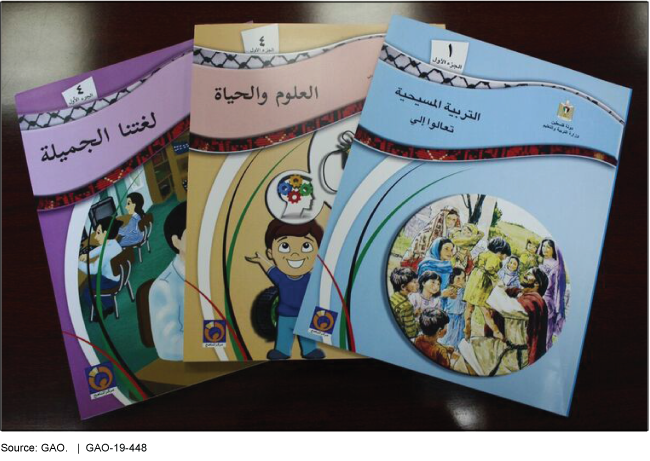
Please confirm if UNRWA will remove these books from its syllabus

Tamara Alrifai

UNRWA Spokesperson

Mobile: +962 (0)79 090 0140
 
Dear Tamara.
 
We read with interest your statement of zero tolerance for incitement in UNRWA education


In that context, will UNRWA remove any of the texts referred to in the following article?


Thank you,
 
David Bedein [WHY NO RESPONSE?}