‘Operation Breaking Dawn’ was a mixed bag

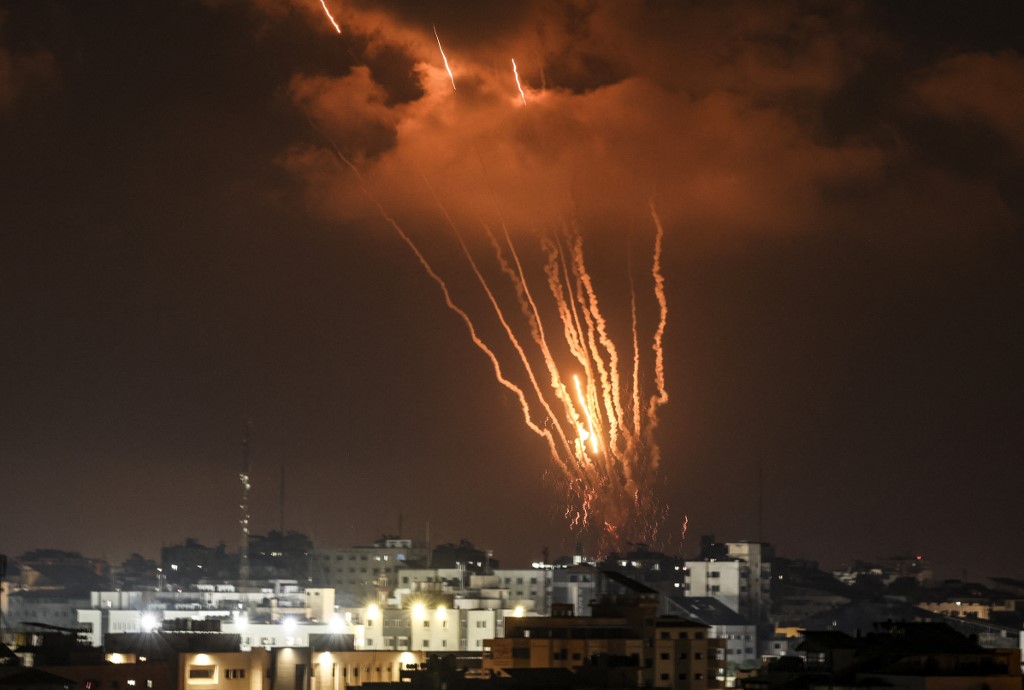
A picture taken on August 5, 2022, shows Palestinian rockets fired from Gaza City in retaliation to earlier Israeli air strikes. - A senior militant from Islamic Jihad was killed in an Israeli air strike on the Gaza Strip today, prompting the militant group to warn Israel has "started a war".A child was among those killed in the strikes, the enclave's health ministry said, while Israel's military estimated 15 were dead. (Photo by MAHMUD HAMS / AFP)

As we look back over the past few weeks, it is exceedingly important to avoid drawing hasty conclusions about the outcome of Israel’s brief conflict with Palestinian Islamic Jihad (PIJ) in Gaza. When we ask whether anything truly changed, we must guard against conclusions based on superficial impressions.

The first question to ask is whether “Operation Breaking Dawn” signals that Prime Minister Yair Lapid, usually noted for his naiveté, has grown in office.

The operation did see some astounding successes. Lapid and Defense Minister Benny Gantz talked tough and followed through. Israel did not only take out PIJ installations but also decimated the PIJ leadership. Lapid was on board for this and should get the credit. However, the situation is not quite as simple as it appears.

For example, how much credit should Lapid actually get for the successful outcome of the operation? There are two security/military elements that fell into place during the conflict. One was the extraordinary intelligence provided by the Shin Bet. The other was the remarkable accuracy of our missiles, which made it possible to execute pinpoint hits on PIJ leaders.

The plan to execute the PIJ leadership took several months to refine. It was most certainly being shaped before Lapid became prime minister, and quite likely before his predecessor Naftali Bennett took office.

In a democracy, the political echelon makes the military decisions. Lapid and Gantz met the challenge when the possibilities were presented and gave the order to go ahead with the plan. But Lapid did not go to the IDF and request a plan for hitting PIJ. It was the reverse: The IDF informed him of what they were now capable of. Clarity on this is important.

In the euphoria of the first days after the operation, it was said that PIJ was finished for some time to come. But I see a great deal of uncertainty. Arabs have an honor-shame culture and do not tolerate defeat particularly well. Thus, there is the possibility of a PIJ strike to restore their sense of honor. Certainly, PIJ might simply make a good deal of noise and not follow through. But if they are to attack again, they require a rationale, which will most likely be the terms of the ceasefire that ended the operation.

According to PIJ, Israel agreed to release two prisoners: Khalil Awawdeh, a hunger-striker, and Bassem al-Sa’adi, whose detention in Jenin triggered the escalation. Israel adamantly insists that there was no such agreement. However, the Egyptians, who negotiated the ceasefire, said they would make their best effort to get the terrorists released. PIJ appears to see their release as the final phase of the ceasefire.

This week, a delegation from Egypt is due in Israel. It is imperative for Israel to stand up to Egyptian pressure and refuse to make concessions to keep Gaza quiet. To do so would significantly undermine recent achievements.

Lastly, we must consider the role Hamas played in the operation. Still smarting from its conflict with Israel in May 2021, Hamas preferred to avoid involvement. Israel was also reluctant to take on Hamas, so it carefully avoided hitting Hamas installations, which would have triggered a response.

Some analysts congratulate Israel for weakening PIJ without taking on Hamas. Others have criticized it, because Hamas, the strongest terror group in Gaza, has been further strengthened by the weakening of PIJ. The May 2021 ceasefire with Hamas stipulated that it was responsible for maintaining quiet in Gaza. Hamas failed to honor this commitment and Israel did not respond. Israeli policy in the past has been to hold Hamas responsible for any rocket fire from Gaza. Now this principle has been abandoned.

As for Lapid, the day after the operation ended, he sent a message to the residents of Gaza: “We also know how to provide work, livelihood and a life of dignity to anyone who wants to live in peace by our side. … The choice is yours.”

It appears, then, that Lapid has not changed. Having indirectly strengthened Hamas, does he really believe that the people of Gaza can overthrow their repressive leaders in favor of a life of dignity and economic advancement? Or perhaps he was speaking indirectly to the leaders of Hamas, fantasizing that he might persuade them to moderate in exchange for economic benefits, which he has already begun to increase.

It is certain that Hamas has not changed, whether Lapid understands this or not. Their reluctance to join the fight did not signal moderation but self-preservation. They are playing it smart, amassing their weapons and making plans for whenever the time is right.
Weekly Commentary: Policy Debate Over Honoring Rocket Launcher Human Shields Requires Data Not Released To Public

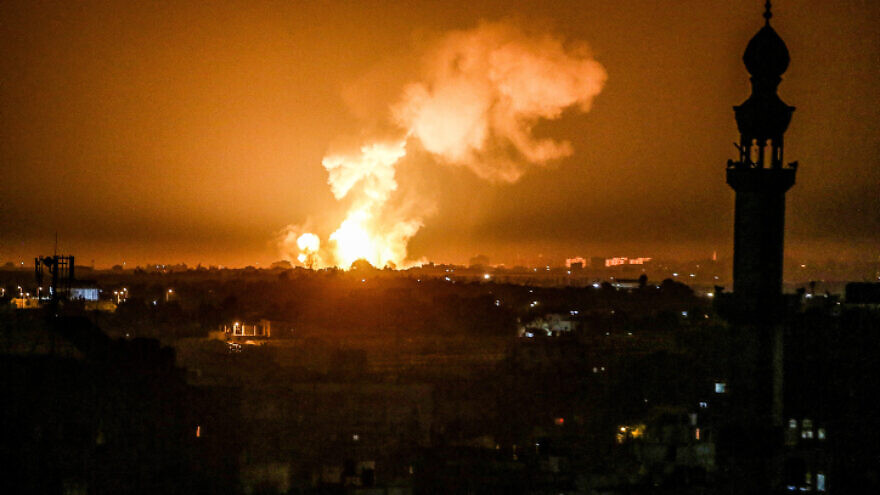
A ball of fire and smoke rises during Israeli airstrikes in Khan Yunis, in the southern Gaza Strip on January 2, 2022. Photo by Abed Rahim Khatib/Flash90 *** Local Caption *** ???
????? ???
????????
?????
????? ???????
??? ????
????

There is some basic information we need before seriously addressing whether
Israel should repeat the policy it followed in Operation Breaking Dawn of
not stopping rocket launchers who have civilians with them in future
clashes.

Israeli defense officials maintain that when we declined to attack someone
engaged in launching a rocket towards Israel because of the presence of
civilians that we could catch up with them when civilians were not around.

So we apparently have extremely rich data about the individuals who launched
rockets in Operation Breaking Dawn and can thus readily simulate what would
have happened if these individuals had been killed either before or after
they launched their first round.

I will take the two extreme cases:

#1 Each set of rockets was launched by a rocket team which only launched
that set, so killing that team would have only the possibility of stopping
that particular set of rockets being launched.

#2. All the sets of rockets launched in Gaza were launched by one rocket
team so that killing the members of that team as the first rockets were
being launched would have stooped all rockets launching against the Jewish
State from Gaza.

Of course the truth is somewhere between #1 and #2.

And while Hamas may not run its launching operations exactly as Islamic
Jihad does the lessons drawn from the simulation will certainly help to give
us an indication of just how much it “costs” us when we honor human shields.

The key consideration when considering ignoring the presence of human
shields protecting rocket teams is “proportionality” so the proper
estimation of the “benefit” of killing a rocket team is critical.

I suspect that we will find that killing one rocket team could have
prevented at least three additional rounds of launchings even during the
short duration of Operation Breaking Dawn.

Armed with the information from the simulation we might very well come to
the conclusion that in a conflict with Hamas, with it magnitudes greater
firepower, that the proper policy is to ignore the presence of human
shields protecting rocket teams.

________________________________________
IMRA – Independent Media Review and Analysis

Since 1992 providing news and analysis on the Middle East with a focus on
Arab-Israeli relations

Website: www.imra.org.il

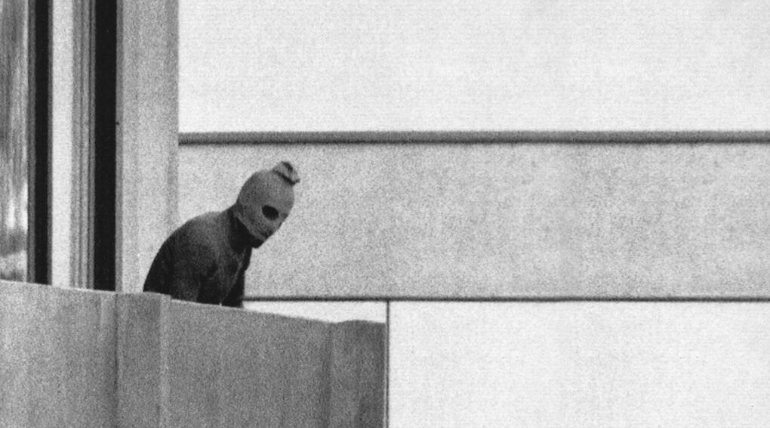
Abbas skirts apology for Munich attack, blames Israel for ‘Holocausts’

Palestinian President Mahmoud Abbas expressed no regret Tuesday for the deadly attack by Palestinian militants against Israeli athletes at the Munich Olympics half a century ago, countering that Israel had committed “Holocausts” against Palestinians over the years.

Click here to read full article


UN punishes official who slammed Palestinian terror group’s missile attacks into Israel

The United Nations last week disciplined an employee who works with Palestinians in disputed territories for her tweet condemning the Iranian regime-backed Palestinian Islamic Jihad (PIJ) and its “indiscriminate” missile fire into Israel.

The U.N. removed Jerusalem-based Sarah Muscroft from her post as the head of the United Nations Office for the Coordination of Humanitarian Affairs in the Occupied Palestinian Territory because she tweeted: “Relieved to see a ceasefire agreed ending hostilities impacting both Palestinians and Israeli civilians. Such indiscriminate rocket fire of Islamic Jihad provoking Israeli retaliation is condemned. The safety of all civilians is paramount—the ceasefire must be upheld.”

Israel’s ambassador to the world body, Gilad Erdan, on Sunday sent a letter to U.N. Secretary-General António Guterres requesting that Muscroft be reinstated.

AFTER ISRAEL HITS TERROR GROUP, UN SECURITY COUNCIL MEETS AS SOME MEMBERS REBUKE THE JEWISH STATE

“This norm effectively grants the Palestinian players and the local U.N. staff an ‘unwritten veto’ over U.N. statements, and stands in clear contradiction with the basic principles of objectivity and neutrality that the U.N. claims to hold,” wrote Erdan.

Palestinian activists launched a campaign to oust Muscroft, who responded by apologizing and deleting her Twitter account. “One of my previous tweets was ill-informed and I have deleted it” Muscroft wrote, adding “I sincerely apologize for my poor judgment. All civilians—everywhere—must be able to live in peace.”

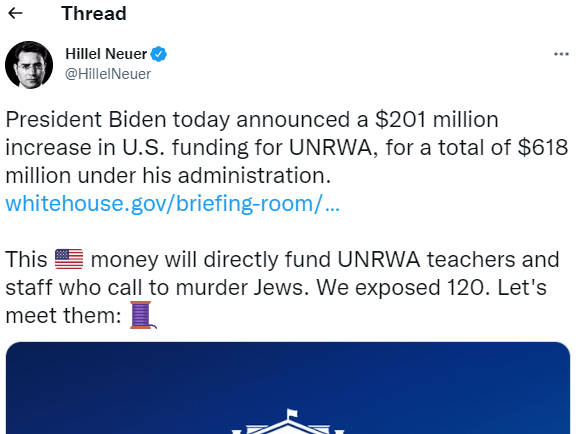
Hillel Neuer, the executive director of UN Watch, told Fox News Digital.

“Muscroft’s groveling apology—for having rightly condemned the Islamic Jihad terrorist organization firing 1,100 rockets aimed at Israel—failed to appease the angry mob. The U.N., which is notoriously slow to act in genuine cases of employee misconduct, rushed to delete her Twitter account, and then remove her from the post.”

Fox News Digital asked Muscroft’s employer the reasons for her reassignment and whether she would be reinstated. Jens Laerke, a spokesman for the U.N. office for the coordination of Humanitarian Affairs (UNOCHA), said only that she would “be assigned to a new role.”

Laerke continued, “OCHA has been present in the occupied Palestinian territory for the past 20 years, working to help meet humanitarian needs, guided by the humanitarian principles of neutrality, impartiality and humanity. Over 2 million people in the occupied Palestinian territory need assistance – they remain our only focus and priority.”

REPUBLICANS PUSH BACK AGAINST BIDEN MOVES TO FUND CONTROVERSIAL UN PALESTINIAN REFUGEE AGENCY

Neuer noted Muscroft’s case is not without precedent citing an example involving a United Nations Relief and Works Agency (UNRWA) employee. “Likewise, last year UNRWA’s Matthias Schmale said IDF strikes on Hamas were precise. Hamas protested, so UNRWA fired him. UNRWA Deputy Chief Leni Stenseth met with Hamas leader Yahya Sinwar, ‘affirmed her solidarity’ and called Schmale’s words ‘indefensible.”’

Neuer said “The UN’s message is crystal clear: any official who dares to publicly defy the false narrative of Hamas and Islamic Jihad will be removed.”

Palestinian Islamic Jihad is based in the Hamas-controlled Gaza Strip located on the southern border of Israel. The U.S. has classified PIJ and Hamas as foreign terrorist organizations.

UN COMMISSION’S ‘ANTISEMITIC’ MOVE PROMPTS DEMANDS FOR BIDEN TO DISBAND ANTI-ISRAEL GROUP

The U.N.’s alleged bias toward the Jewish state was also cited in Erdan’s letter. “We recently witnessed a clear case in which a U.N. official who clearly breached the principles of impartiality and neutrality required from a member of an HRC Commission of Inquiry used clear antisemitic vicious parlance, and yet still maintains his position.”

Israel’s ambassador continued “HRC [Human Rights Council] Commissioner Miloon Kothari’s interview, where he clearly stated that the Jewish lobby controls the social media, should have been met with a firm response that would have led to his resignation,” he said.

Erdan concluded that “While Israel supports constructive engagement with U.N. officials and agencies, we cannot accept such blatant double standards.”

Fox News Digital emailed the spokesperson for the U.N. secretary general for comment on whether Muscroft should be reinstated.

Alerta Pikuach Nefesh: Un enfoque estratégico

El objetivo: Organizar a los ciudadanos de conciencia de todo el mundo para desafiar las políticas que representan una amenaza para la vida de los judíos en Israel. Opinión.
El Rebe de Lubavich comentó cierta vez que las concesiones a la Autoridad Palestina, que trabaja bajo la égida de la Organización para la Liberación de Palestina, representan un asunto de Pikuach Nefesh, una amenaza para la vida humana.

Ha llegado el momento de lanzar una campaña estratégica de Pikuach Nefesh, para desafiar seis políticas que amenazan la vida de Israel.
Ninguno de estos desafíos es insuperable.

La Autoridad Palestina ha promulgado un estatuto sin precedentes que otorga un salario de por vida a cualquiera que asesine a un judío, y un salario de por vida a la familia de cualquiera que muera en el acto de asesinar a un judío.

La Autoridad Palestina adoptó esta política de honrar a quienes asesinan judíos en las primeras etapas del Proceso de Oslo, en octubre de 1993.
En agosto de 2015, la AP formalizó la ordenanza para otorgar automáticamente un obsequio monetario a cualquier árabe que asesine a un judío y un obsequio monetario a la familia de cualquier árabe muerto en el acto de asesinato o intento de asesinato de un judío.

1. Si bien la ley Pay For Slay ha sido ampliamente condenada, permanece en los libros y se aplica todos los días, y la Autoridad Palestina paga $ 1.1 mil millones a los terroristas y sus familias.

Fuente de los fondos: Donaciones humanitarias en todo el mundo.
Ha llegado el momento de organizar a las familias de los seres queridos que han sido asesinados y cuyos agresores ahora son honrados, para apelar a la conciencia de cada nación para exigir la derogación del “Pago por matar” como condición para cualquier ayuda a la Autoridad Palestina.

Dicha legislación, que recompensa generosamente el derramamiento de sangre judía, está
documentada en:

INCENTIVOS AL TERRORISMO: ASIGNACIONES DE LA AUTORIDAD PALESTINA A LOS TERRORISTAS Y SUS FAMILIAS.

2. Adoctrinamiento para la guerra, como se presenta en PBC TV, radio y redes sociales
Desde el inicio del Proceso de Oslo, en 1993, la Corporación de Radiodifusión Palestina (PBC), que opera en frecuencias propiedad de Israel, presenta contenido que incita a los árabes a declarar la guerra a los judíos. Para salvar vidas, debemos presionar al gobierno de Israel para que desconecte el PBC.

3. Escuelas de la Autoridad Palestina
Se suponía que el proceso de Oslo produciría el primer plan de estudios árabe palestino
independiente, uno que promovería la paz y la reconciliación. En cambio, nuestra revisión de más de 1000 libros de texto de la Autoridad Palestina entregados a la UNRWA muestra que el nuevo plan de estudios de la Autoridad Palestina adoctrina a una nueva generación hacia la guerra total contra los judíos, mientras deslegitima y demoniza la presencia misma de los judíos en la tierra de Israel Ahora es imperativo organizar a las personas de conciencia para educar a los formadores de opinión, políticos y al público en general sobre los mensajes asesinos que transmiten las escuelas de la Autoridad Palestina.

4. Fuerzas de Seguridad Palestinas
Uno de los principios fundamentales del proceso de paz, previsto en los acuerdos de Camp David de 1979 y firmado por Israel, EE. UU. y la OLP, era que la nueva entidad árabe palestina tendría una “fuerte fuerza policial” para protegerla de los terroristas.
Sin embargo, esa fuerza policial de la AP, conocida como PSF, la Fuerza de Seguridad Palestina, entrenada por Israel y EE.UU., ha incorporado organizaciones terroristas árabes que permanecen en estado de guerra total con Israel. Es fundamental contratar expertos en inteligencia para informar a los responsables políticos y al público en general sobre los peligros letales que acechan en las PSF.

LOS PELIGROS DE LA AYUDA ESTADOUNIDENSE A LAS FUERZAS DE SEGURIDAD PALESTINA

5. UNRWA, UNRWA que supervisa el bienestar de 6,7 millones de descendientes de refugiados árabes de la guerra de 1948, opera bajo el apoyo financiero y logístico de la ONU, las naciones donantes y el Estado de Israel, ubicados en 59 campos de refugiados árabes hasta que se alcance una “solución justa”. ” para aliviar su situación.
Sin embargo, los campamentos de UNRWA ahora están infestados de grupos terroristas que operan bajo la premisa de “El derecho al retorno por la fuerza de las armas”, sin ningún plan para reemplazar los campamentos de refugiados árabes con comunidades que vivirían en paz con Israel.

El personal del secretario general de la ONU se ha reunido seis veces con el personal del Centro Bedein y ha enfatizado que el único poder para cambiar la política de UNRWA recae en las naciones donantes.
Ha llegado el momento de organizar un grupo de trabajo que exponga la incitación de la UNRWA al genocidio, mientras promueve una solución humanitaria para reasentar a los refugiados árabes en condiciones de dignidad.

SEIS DESAFÍOS POLÍTICOS PARA GUIAR LA REFORMA POLÍTICA DE LA UNRWA

6 COGAT: la administración civil de Israel

COGAT: la administración civil de Israel, con el mandato de promover los intereses de Israel en Judea, Samaria y Gaza, permite que los árabes palestinos afiliados a grupos terroristas construyan en cualquier lugar, independientemente de la ley. COGAT facilita Pay for Slay, PBC, escuelas PA y UNRWA. Además, COGAT permite que prosperen las organizaciones terroristas árabes, mientras subyuga la vida judía en Judea y Samaria. Ha llegado el momento de organizar un grupo de trabajo para desafiar
las políticas de COGAT.

TIKKUN
Lanzar PIKUACH NEFESH ALERTA, producido en los idiomas de cada nación donante de la Autoridad Palestina, especialmente en las redes sociales, para hacer un llamado a los órganos legislativos de cada nación donante para que adopten políticas de las naciones donantes para proteger las vidas de los judíos en Israel.

UNRWA barn soldater

Filmad från insidan vid sommarlägret som Hamas hade ansvar för för barn i UNRWA 2021.


A new film about Shimon Peres whitewashes the consequences of his policies

This essay is dedicated to the 1,409 men, women and children who were murdered as a result of the Oslo process, which involved unilateral concessions to an unrepentant terrorist organization, a policy conceived by Israeli politician Shimon Peres, who died in 2016 at the age of 93.

Instead of falling into disgrace, Peres’s memory now basks in the glory of the new film “Never Stop Dreaming: The Life and Legacy of Shimon Peres,” slated for distribution by Netflix to 190 nations.

The Peres movie launch coincided with renovations to the Jerusalem Convention Center, to be renamed for Peres next August on the 100th anniversary of his birth. A “Peres Convention Center” will undoubtedly screen the new Peres movie with a transparent purpose: to promote the agenda of Shimon Peres.

Full disclosure: I knew Peres and worked for him as a foreign press aide during the 1992 Israeli election. I was later involved in news coverage of Peres for the Makor Rishon newspaper and periodicals abroad.

Viewers of the new film, especially those who live outside of Israel, cannot perceive the depths of distortion that its research team fell into, wittingly or unwittingly.

The movie begins with the state funeral accorded to Peres, who served as president, prime minister, foreign minister and defense minister of Israel. The movie claims that this was one of the largest funerals in Israel’s history, but did not mention that the Peres Center for Peace chartered buses to the event. Moreover, larger funerals were conducted for two assassinated Israeli officials, Prime Minister Yitzhak Rabin and Tourism Minister Rehavam Ze’evi, which needed no chartered buses.

The movie recounts the key role that Peres played in achieving a peace accord with Yasser Arafat and the Palestinian Liberation Organization, without mentioning the fact that the PLO never ratified the accord, even though Peres dispatched Deputy Foreign Minister Yossi Beilin to thank Arafat for allegedly doing so.

The movie also does not include the role that Peres played in convincing the public that the PLO had changed its covenant in order to remove the clause pledging to destroy Israel, which never happened.

While lauding Peres for receiving the Nobel Peace Prize, the film ignores well-publicized documentation that the Peres Center provided a member of the Nobel committee with a $1.2 million gratuity in order to secure the prize for Peres.

The movie does note that Peres lost his first bid for the Israeli presidency without mentioning the financial scandals that rocked the Peres Center and caused his defeat. Also ignored is the fact that Peres reassumed a cabinet position only after the Knesset Ethics Committee forced him to divest himself of holdings in the leading Palestinian Authority communications firm.

Even though Peres conceived of the ill-fated idea of arming PLO security forces, the movie does not mention that those PLO forces wound up absorbing terrorist groups that have attacked Israel.

This begs the question: Why did the producers of this movie not interview even one relative of those murdered by Arab terrorists as a result of the failed peace process conceived by Peres? Moreover, why did the movie’s producers not challenge the central idea of the Peres peace process: That you can create an incentive for the PLO to abandon terror?

Why did the movie not challenge the misrepresentations that Peres advanced? For example, on Jan. 1, 2000, Peres assured a Jewish media conference that the PLO had adopted an educational curriculum advocating peace. When I told Peres that our news and research agency had examined all P.A. schoolbooks and found that they contained not a word of peace, Peres stepped away from the microphone and said, “I know.”

Israel advocates will have to contend in the years to come with renewed sympathy and support for the policies conceived by Peres and promoted by this movie, which hallows the memory of a man who transformed the image of a lethal terrorist organization into that of an advocate of peace and reconciliation.

Nonetheless, Peres, Rabin and Arafat got the Nobel Peace Prize. A hard act to follow.

On the wall of my office hangs a composite picture of hundreds of people who were murdered by Palestinian terrorists during the Oslo process. Having covered many of their funerals, I feel an obligation to the families of the victims of the peace process to challenge the honor bestowed on Shimon Peres by this new movie. It leaves uninformed viewers assuming that Peres should be seen as a guardian of peace, not a protector of terror.

But the time has come to document the consequences of the policies Peres advocated and their human cost.

The Israeli City of Haifa in Palestinian Authority Textbooks Taught in UNRWA Schools

The PA textbooks taught in UNRWA schools (grades 1-10) in Judea, Samaria, East Jerusalem and the Gaza Strip present the city of Haifa, which is located within Israel’s pre-1967 territories, as a Palestinian city:

A lesson titled “Cities of Palestine” mentions the cities of Jerusalem, Gaza, Khan Yunis, Hebron, Ramallah, Nablus, Tulkarm, Jenin, and also Jaffa and Haifa (National Education, Grade 2, Part 1 (2015) p. 22).

Another book features a text in which a teacher asks the students to do research on Palestinian cities, and one of the students says that she will ask her grandmother to tell her about the city of Haifa. In that same book a question reads: “We will mention the names of the Palestinian cities that appeared in the text [Gaza, Hebron, Jericho – and Haifa]” (Our Beautiful Language, Grade 2, Part 1 (2016) pp. 114, 115, respectively; (2020) pp. 118, 119). Haifa also appears among the Palestinian cities in another assignment (Mathematics, Grade 2, Part 1 (2016) p. 91)

Both Gaza and Haifa are said to be port cities in Palestine (Geography of the Arab Homeland, Grade 9 (2015) p. 82, and see the assignment on p. 83: “An outline map of the Arab homeland will be distributed to the students upon which I will write the names of the Arab States and mark the ports of Haifa, Aden, Basra, Alexandria and Damam.”)

A lesson titled “Palestinian Cities” discusses in some detail, under the title “the Most Important Palestinian Cities”, a number of cities located in pre-1967 Israel: Haifa, Jaffa, Nazareth, Safed and Beer Sheba. In no place does this piece mention that these cities are now found inside Israeli territory (Geography of Palestine, Grade 7 (2014) pp. 81-85). On the contrary, an assignment on p. 86 specifies: “I will draw a map of Palestine and put on it the most important cities.” 

In the following assignment the student is required to put the name of a city – the Israeli city of Haifa in this case – in a sentence:                                                           “3. The city of …[Haifa]… is one of the Palestinian coastal cities.”                          (National and Life Education, Grade 2, Part 1 (2017) p. 81)

Caesarea, Haifa and Acre are mentioned among Palestine’s touristic sites (National Education, Grade 2, Part 2 (2015) p. 61)

The Palestinian city of Haifa was occupied in 1948, its Arab residents have left it and yearn to come back:

“-When was the city of Haifa occupied?                                                                          -Mention some Palestinian cities that were occupied in 1948.”                        (Teacher’s Guide, Arabic Language – Academic Path, Grade 10 (2018) p. 64) 

And in response to a question about Palestinian cities that were “occupied by the enemy” in that same year:                                                                                             “3. Haifa, Jaffa, Ashkelon, Acre.”                                                                     (Teacher’s Guide, Arabic Language, Grade 8 (2018) p. 212)

“We left Haifa with the intention to return and God is the [only] one who knows what will become of us.”                                                                                             (Reading and Texts, Grade 10, Part 1 (2015) p. 39)

“The teacher will tell a short story about our homeland Palestine: ‘My grandfather used to live in a nice village in [the vicinity of] Haifa. He worked in agriculture, loved the land and guarded it. On one sad day foreign faces came in order to drive my grandfather out of his land, burn the crop and force him to emigrate to distant lands’.” (Teacher’s Guide, Our Beautiful Language, Grade 2, Part 2 [2016] p. 53; Our Beautiful Language, Grade 2 (2018) p. 124)

A story titled “A homeland that resides within us”:                                              “Yasser and his sister Abir agreed to participate in a journalistic writing contest by writing an essay about Palestine.                                                                              Abir: ‘What will we write in the essay?’                                                                 Yasser: ‘We will write about the homeland that resides within us [while] we do not reside there.’                                                                                                              Abir: ‘And how would we write about a homeland that we cannot reach?’          Yasser: ‘We will ask grandfather and grandmother and the [other] elder people about Acre, Haifa, Jaffa, Safed and other places.’                                                              Abir: ‘And we will not forget to express our dream and right to return to our homeland and live there’.”                                                                                                          (Our Beautiful Language, Grade 2, Part 2 (2016) p. 6; (2020) p. 8) 

One of the sentences within an exercise following that story:                           “Yasser’s grandfather was living in the city of Haifa.”                                              (Our Beautiful Language, Grade 2, Part 2 (2016) p. 8; (2020) p. 9)

The Palestinian city of Haifa must be liberated:

“B. Haifa is awaiting its liberation.”                                                                      (Teacher’s Guide, Our Beautiful Language, Grade 4 (2018) p. 204)

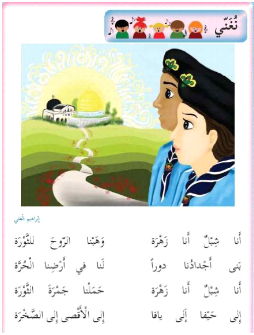
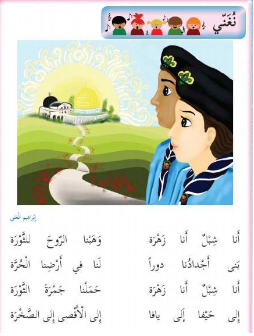
The supposed liberators are the youths of the Palestinian Al-Fatah organization, as said in the following hymn of the organization’s youth movement:                                      “I am a lion cub; I am a flower;   we gave [our] soul to the revolution                  Our forefathers built for us houses in our free country [in the future]                                      I am a lion cub; I am a flower; we carried the revolution’s ember                               To Haifa, to Jaffa, to Al-Aqsa [Mosque], to the [Dome of the] Rock”

(Our Beautiful Language, Grade 2, Part 1 (2016) p. 42; (2020) p. 44)

The notion of the return of the refugees’ descendants to Haifa while it is still under Israeli rule is presented as sheer lunacy, which makes us understand that it should take place after the elimination of Israel:

In a story appearing in a tenth grade Arabic Language textbook, the hero is arrested and sent back from Haifa to the West Bank by the Israeli police following his attempt to visit his father’s house in the city years after the latter’s departure in 1948. The ending sentence in the story, in which the hero agrees with the policemen who call him ‘crazy’, is the subject of the following question and answer in the corresponding teacher’s guide:                                                                                                             “6. Why did the writer describe himself as crazy at the end of the story?                       -Because the one, who is expelled from his homeland and is later content to return to it as a guest with the robbers who had seized it, is really crazy.”                      (Teacher’s Guide, Arabic Language – Academic Path, Grade 10 (2018) p. 199)

העיר חיפה בספרי הלימוד של הרשות הפלסטינית הנלמדים בבתיה”ס של אונר”א

בספרי הלימוד של הרש”פ הנלמדים בבתיה”ס של אונר”א (כיתות א’-י’) ביהודה, שומרון, מזרח ירושלים ורצועת עזה מופיעה העיר חיפה שבתחומי מדינת ישראל כעיר פלסטינית: 

בשיעור “ערי פלסטין” מוזכרות הערים ירושלים, עזה, ח’אן יונס, חברון, ראמאללה, שכם, טולכרם, ג’נין, וגם יפו וחיפה (חינוך לאומי, כתה ב’, חלק א’ (2015) עמ’ 22).

בספר אחר מטילה המורה על תלמידות לחקור על ערים פלסטיניות ואחת מהן אומרת כי תשאל את סבתה על חיפה. באותו ספר מופיעה שאלה: “נציין את שמות הערים הפלסטיניות שהופיעו בטקסט [עזה, חברון, יריחו, חיפה]” (שפתנו היפה, כתה ב’, חלק א’ (2016) ע”ע 114, 115, בהתאמה). חיפה מופיעה גם בין הערים הפלסטיניות במטלת מדידת הטמפרטורה בהן ביום ובלילה (מתמטיקה, כתה ב’, חלק א’ (2016) עמ’ 91).

חיפה ועזה הן ערי נמל בפלסטין (גיאוגרפיה של המולדת הערבית, כתה ט’ (2015) עמ’ 82 וכן מטלה בעמ’ 83: “מפה מדינית אילמת של המולדת הערבית תחולק לתלמידים ועליה אקבע את שמות המדינות הערביות ואת הנמלים חיפה, עדן, אלבצרה, אלכסנדריה, אלדמאם.”

תרגיל להשלמה ע”י התלמיד לפי חומר הלימוד בספר:                                                                 “3. העיר …[חיפה]… היא אחת מערי החוף הפלסטיניות.”                                                        (חינוך לאומי ולחיים, כתה ב’, חלק א’ (2017) עמ’ 81)

בין אתרי התיירות של פלסטין מוזכרות קיסריה חיפה ועכו (חינוך לאומי, כתה ב’, חלק ב’ (2015) עמ’ 61).

העיר הפלסטינית חיפה נכבשה בשנת 1948, תושביה הערבים עזבוה ומתגעגעים לשוב אליה:

“-מתי נכבשה העיר חיפה?                                                                                                        -ציין כמה ערים פלסטיניות שנכבשו ב-1948.”                                                                      (השפה הערבית – המסלול האקדמי, כתה י’ (2018) עמ’ 64)

ובתשובה לשאלה על ערים פלסטיניות אחרות שנכבשו ע”י האויב באותה שנה:                                  “3. חיפה, יפו, אשקלון, עכו.”                                                                                              (השפה הערבית, כתה ח’ (2018) עמ’ 212)

“עזבנו את חיפה בכוונה לשוב ואלוהים הוא היודע מה יהיה איתנו.”                                             (קריאה וטקסטים, כתה י’, חלק א’ (2015) עמ’ 39)

“המורה יספר [לתלמידים] סיפור קצר על מולדתנו פלסטין: ‘סבי היה גר בכפר יפה ב[סביבת] חיפה. הוא עבד בחקלאות, אהב את האדמה ושמר עליה. ביום עצוב אחד באו פנים זרות כדי לגרש את סבי מעל אדמתו, לשרוף את היבול ולאלצו להגר לארצות רחוקות”.                                                                                             (מדריך למורה, שפתנו היפה, כתה ב’, חלק ב’ [2016] עמ’ 53; שפתנו היפה, כתה ב’ (2018) עמ’ 124)

סיפור בכותרת “מולדת השוכנת בתוכנו”:                                                                             “יאסר ואחותו עביר הסכימו ביניהם להשתתף בתחרות [כתיבה] עיתונאית לכתיבת מאמר על פלסטין. עביר: מה נכתוב במאמר?                                                                                                  יאסר: נכתוב על המולדת השוכנת בתוכנו ואשר אנו איננו שוכנים בתוכה.                                   עביר: ואיך נכתוב על מולדת שאיננו יכולים להגיע אליה?                                                         יאסר: נשאל את סבא ואת סבתא ואת המבוגרים אודות עכו, חיפה, יפו, צפת ומקומות אחרים.           עביר: ולא נשכח להביע את חלומנו וזכותנו לשוב אל מולדתנו ולחיות בה.”                                (שפתנו היפה, כתה ב’, חלק ב’ (2016) עמ’ 6)

בין משפטי התרגול בעקבות הקטע:                                                                                       “סבו של יאסר היה חי בעיר חיפה.”                                                                                     (שפתנו היפה, כתה ב’, חלק ב’ (2016) עמ’ 8)

את העיר הפלסטינית חיפה יש לשחרר:

“ב. חיפה מחכה לשחרורה.”                                                                                                          (מדריך למורה, שפתנו היפה, כתה ד’ (2018) עמ’ 204)

מי שיבצע את השחרור הם צעירי הפת”ח. להלן שיר של תנועת הנוער של הארגון:                          “אני גור אריות, אני פרח, נתנו את הנפש למהפכה                                                               סבינו בנו בתים לנו בארצנו החופשית [בעתיד]                                                                         אני גור אריות, אני פרח, נשאנו את גחלת המהפכה                                                                     אל חיפה, אל יפו, אל [מסגד] אל-אקצא, אל [כיפת] הסלע” 

(שפתנו היפה, כתה ב’, חלק א’ (2016) עמ’ 42)

רעיון השיבה לחיפה תחת השלטון הישראלי מוצג כשיגעון, ומכאן אפשר להבין ששיבת הערבים לחיפה תתבצע רק לאחר סילוק ישראל: 

בסיפור המופיע בספר לימוד השפה הערבית של כתה י’ נעצר הגיבור ונשלח חזרה מחיפה לגדה המערבית ע”י המשטרה הישראלית לאחר ניסיונו לבקר בבית אביו בעיר, שנים לאחר עזיבתו של זה ב-1948. השוטרים מכנים אותו משוגע והגיבור מסיים את הסיפור בהסכמה לתואר זה. המשפט המסיים בסיפור הוא הנושא של השאלה והתשובה שלהלן במדריך למורה לאותה כתה:

“-מדוע תיאר הכותב את עצמו כמשוגע בסוף הסיפור?                                                                               -כי מי שמגורש ממולדתו ואח”כ שבע רצון מהשיבה אליה כאורח אצל השודדים שהשתלטו עליה הוא אכן משוגע.” (מדריך למורה, השפה הערבית -המסלול האקדמי, כתה י’ (2018) עמ’ 199)

Explain how a US adminstration that officially seeks peace by means of a two state solution (one Jewish, one Arab) keeps dumping money into the primary organization (UNRWA)

Explain how a US adminstration that officially seeks peace by means of a two state solution (one Jewish, one Arab) keeps dumping money into the primary organization (UNRWA)