 Czech
Czech French
 German
 Hebrew
 Noruegan
 Russian
 Spanish
 Swedish
 Polish
 Portuguese




Behind the scene with David Bedein – April 24, 2022
European parliament members condemn Palestinian Authority for anti-Semitic curriculum
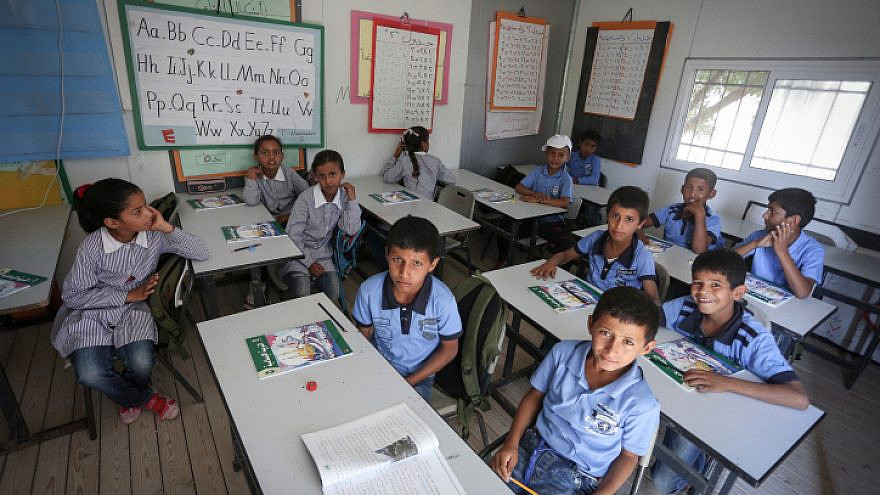
Despite Western calls for reform, the Palestinian Authority curriculum has ramped up its incitement in recent years, with school textbooks and other learning materials filled with anti-Semitism, calls for jihad, rejection of reconciliation and the delegitimization of Israel. So problematic is the content that, according to reports, it has led the European Union to freeze its funding to the P.A.
In fact, passing up an opportunity to explain the P.A.’s position, Palestinian Education Minister Marwan Awartani pulled out of a debate about the curriculum before the European Parliament’s Committee on Budgetary Control on April 20.
Marcus Sheff, CEO of the Institute for Monitoring Peace and Cultural Tolerance in School Education (IMPACT-se), a Jerusalem-based nonprofit that monitors educational materials around the world for extremist content, spoke at the Committee on Budgetary Control debate focusing on the P.A.’s new “study cards,” released in August.
Sheff told the committee that the study cards came to 10,000 pages, “roughly equivalent in size to a whole school curriculum,” and that they were “in some cases more violent and more inciteful than the curriculum that we’ve seen before.”
Describing them as “openly anti-Semitic,” he said the cards provide lessons that teach that Jews control the world, glorify suicide bombers and that those who kill infidels will go to paradise. “Newton’s laws of physics are still taught through a young girl using a slingshot. Eight-year-olds are taught math by counting martyrs. Girls are taught that to be equal with boys, they need to become martyrs,” he said, adding that a teachers’ guide “instructs educators to punish students for not connecting the Jewish religion with murder.”
Arik Agassi, chief operating officer of IMPACT-se, told JNS that he was surprised as one parliamentarian after another joined in criticism of the P.A., saying that given the E.U.’s history, he had rather expected them to criticize IMPACT-se. “We expected pushback. It was quite the opposite. They’ve had enough,” he said, noting that the European parliament has been aware of the incitement in Palestinian schools for years.
Sheff told JNS that the “most astonishing element” is that the E.U. Commission, “essentially the government of the European Union,” also said that it’s had enough and that it wasn’t going to hand over 200 million euros annually until the P.A. made “significant changes to the textbooks,” as the commission is now convinced that they “incite hatred, violence and are anti-Semitic.”
P.A. Minister of Foreign Affairs Riyad al-Maliki confirmed this development to Ramallah-based Sada News Agency in late March, saying E.U. funds have been frozen since last year, and that the E.U. Commission was divided over whether to apply conditions on the funds involving changes to the Palestinian curriculum.
However, in response to queries from JNS, the European Union would not say that funds to the P.A. had been frozen. Rather, an E.U. official reaffirmed the organization’s “long-standing commitment towards building the future state of Palestine.”
“The European Union continues to be the biggest donor to Palestine, and we hope to be able to announce a decision on future assistance and process the payment as swiftly as possible,” said the official.
‘A step in the right direction’
David Bedein, who runs the Center for Near East Policy Research and who has been covering P.A. curriculum issues for 22 years, said he is highly doubtful that any real change has taken place. “There’s nothing in the public record that says they have stopped money or that they will. We keep going to the horse’s mouth and asking. They refuse to give a straightforward answer. In fact, their statements say the opposite—that they continue supporting the P.A.,” he said.
“There’s a tendency to confuse the European Parliament and the E.U. While the parliament is the only directly elected body in the E.U., it’s not the one that determines policy and those at the top haven’t changed. The European Parliament is for Israel. The E.U. is not,” he said.
Bedein noted that unlike the European Union, the United States under the Biden administration has actually conditioned funds to the U.N. Relief and Works Agency for Palestine Refugees in the Near East (UNRWA), demanding that it make changes to what is taught in UNRWA-run schools. UNRWA has flat-out refused to change its textbooks, and so the Biden administration has held the money in escrow, said Bedein.
“That’s a step in the right direction,” he emphasized. “It could be that the E.U. will copy the U.S. approach. So far, it hasn’t happened.”
IMPACT-se’s Sheff and Agassi, however, expressed confidence that the funds to the P.A. have been frozen, pointing to comments during the debate by Henrike Trautmann, the E.U. Commission’s director for the southern neighborhood at DG NEAR (Directorate-General for Neighborhood and Enlargement Negotiations), which they described as the first confirmation from the European Union that all funds had been frozen over the curriculum issue.
Trautmann said: “On the question of conditionality on the funding of the Palestinian Authority as of 2021 … there has been a proposal to incentivize further progress on the Palestinian curriculum reform. … We obviously all agree that it would be good to continue the funding to the Palestinian Authority … but this, as you can see, also among the member states is a very, very hotly contended topic and currently we haven’t been able to finalize this process.”
“The European Union is famous for its diplomatic speech and for its lack of clarity in diplomatic issues,” said Sheff. “They will say to themselves, ‘We conduct our diplomacy directly bilaterally with the P.A., and it would harm our diplomacy with the P.A. to publicly say what everybody, including the P.A., is saying is a fact.’ ”
San Remo Conference: Catalyst for Jewish and Arab independence
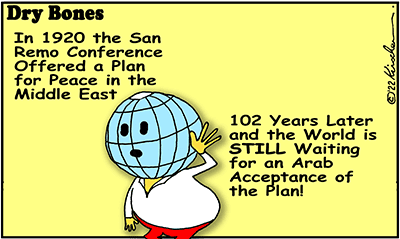
The San Remo Conference held on 24 / 25 April 1920 marked the beginning of self-determination for both the Jewish People after 3000 years of dispersion and the Arabs after 400 years of Ottoman rule.

Among those participating in the Conference – indicating its historic importance and the significant decisions it would be tasked with making:
- United States of America: Robert Underwood Johnson, American Ambassador in Rome;
- British Empire: The Right Hon. D. Lloyd George, Prime Minister; The Right Hon; the
Earl Curzon of Kedleston, Secretary of State for Foreign Affairs;
- France: Millerand, President of the French Council;
- Italy: Signor Nitti, Prime Minister (in the Chair);
- Japan: Matsui
The Minutes of the Meeting were headed:
MINUTES OF PALESTINE MEETING OF THE SUPREME COUNCIL OF THE
ALLIED POWERS HELD IN SAN REMO AT THE VILLA DEVACHAN
APRIL 24. 1920
However the agenda covered far more than Palestine – dealing with: –
“the question of mandates for those territories which had been Mandates formerly under Turkish domination and which it was proposed should, in the future be administered by the various Principal Allied Powers”
Those territories were identified as Mesopotamia and Syria as well as Palestine.
San Remo granted the Arabs independence in:
- Syria (estimated population 22 million) and
- Mesopotamia (estimated population 3 million)
comprising an area of 624000 km2 – 85% of the total area of these three territories:
The Conference resolved:
“that Syria and Mesopotamia shall in accordance with the fourth paragraph of article 22, Part I (Covenant of the League of Nations), be provisionally recognised as independent States subject to the rendering of administrative advice and assistance by a mandatory until such time as they are able to stand alone. The boundaries of the said States will be determined, and the selection of the mandatories made, by the Principal Allied Powers”
Mesopotamia gained independence in 1932 and Syria in 1946.
The Jews were initially allotted all of Palestine at San Remo –117000km2 – the remaining 15% of these three liberated Turkish territories – within which the Jewish National Home was to be “reconstituted” after 3000 years.
However 78% of Palestine east of the Jordan River (Transjordan) was whittled away for Arab independence by the time the League of Nations Mandate for Palestine was promulgated in July 1922 – leaving Jewish self-determination to happen in just 3% of the territories dealt with at San Remo.
Transjordan (today called Jordan) became independent in 1946.
The British Government’s 1921 Interim Report on the Civil Administration of Palestine recorded that hardly 700,000 people were living in Palestine west of the Jordan River– 560000 of whom were Moslems, 77000 Christians and 76000 Jews:
“a population much less than that of the province of Gallilee alone in the time of Christ * (*See Sir George Adam Smith “Historical Geography of the Holy Land”, Chap. 20.)”.
About 350000 non-Jews lived in Palestine east of the Jordan River:
The San Remo Conference unanimously agreed that the civil and religious rights of these existing non-Jewish communities in Palestine were not to be prejudiced by San Remo’s decisions and that the rights and political status enjoyed by Jews in any other country were also not to be affected –guarantees that were expressly included in the terms of the Mandate for Palestine.
The Arabs have never accepted that the decisions simultaneously made in relation to Mesopotamia Syria and Palestine at San Remo in 1920 were part of a plan that by 1922 offered:
- The Arabs: independence in 97% of the liberated Ottoman territories.
- The Jews: independence in the remaining 3%
The Jewish-Arab conflict will remain unresolved whilst the Arabs remain in their 102 years-old state of denial.
Noam Bedein reveals the secrets of Dead Sea
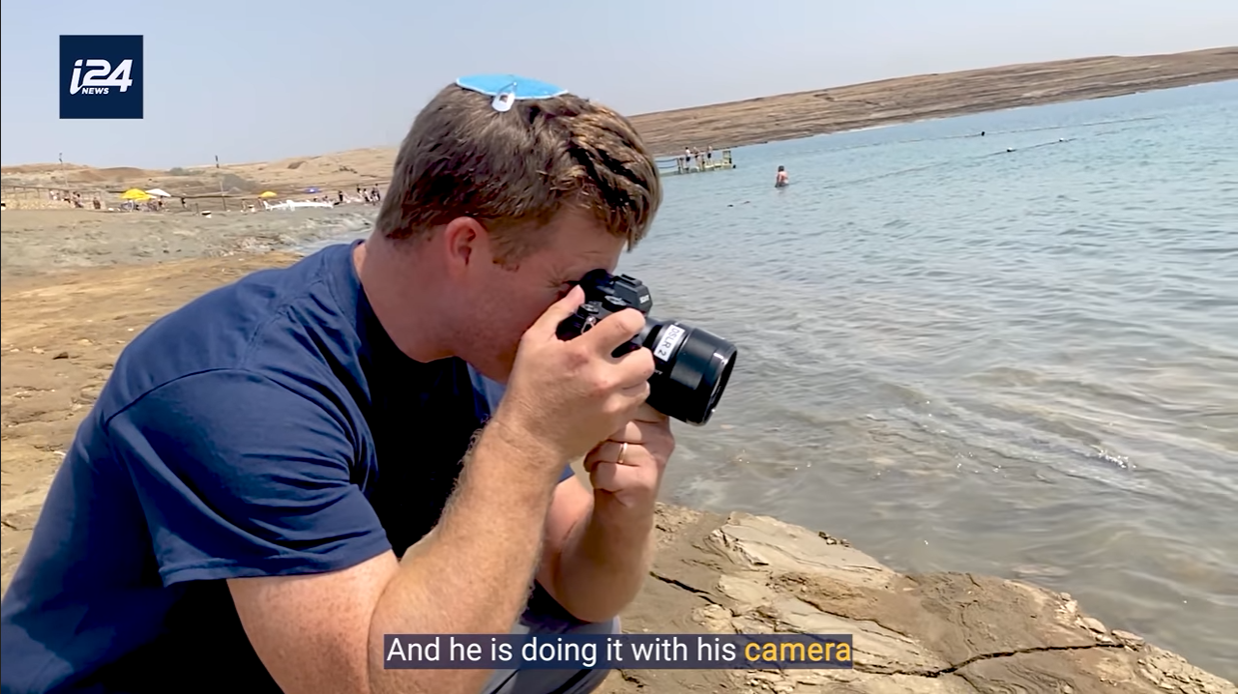
The Dead Sea is slowly disappearing due to human activity, but one Israeli photojournalist may have discovered amazing evidence of a Biblical prophecy materializing right now!
The majestic Dead Sea is one of the most beautiful places to visit in Israel with tourists and Israelis alike coming to benefit from the salty lake.
Unfortunately, the one-of-a-kind sea is in danger of disappearing due to mineral mining.
One Israeli photojournalist couldn’t simply stand by and watch the glorious salty sea die. Using his camera, he is on a mission to save the Dead Sea! And he may have discovered evidence of a Biblical prophecy coming to life before our very eyes!
Al-Ain, United Arab Emirates News Outlet, Features ISGAP’s “Follow The Money” Project
Al-Ain, United Arab Emirates News Outlet, Features ISGAP’s “Follow The Money” Project
Interview With Sen. Chris Murphy (D-CT); Interview With Israeli Prime Minister Naftali Bennett. Aired 1-2p ET
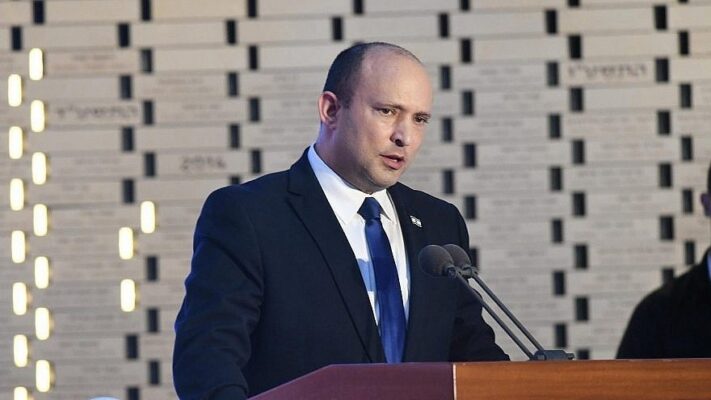
Aired April 20, 2022 – 13:00:00 ET
THIS IS A RUSH TRANSCRIPT. THIS COPY MAY NOT BE IN ITS FINAL FORM AND MAY BE UPDATED.
[13:00:20]
CHRISTIANE AMANPOUR, CNN INTERNATIONAL HOST: Hello, everyone, and welcome to AMANPOUR.
Here’s what’s coming up.
(BEGIN VIDEOTAPE)
AMANPOUR (voice-over): As clashes flare in Jerusalem, my exclusive interview with the Israeli prime minister, Naftali Bennett, whose
government hangs by a thread.
Then:
QUESTION: Mr. President, will you be sending more artillery to Ukraine?
JOE BIDEN, PRESIDENT OF THE UNITED STATES: Yes.
AMANPOUR: Ukraine’s allies pledge to send more weapons, but will it be enough and will they get there in time? I ask Senator Chris Murphy, leaving
Democrat on the Senate Foreign Relations Committee.
Plus: While the West campaigns to isolate Russia, we look at why many countries in the global south and beyond a staying on the sidelines.
And:
JUSTIN FENTON, AUTHOR, “WE OWN THIS CITY”: When complaints came in, those complaints were being discarded. They weren’t believed.
AMANPOUR: “We Own This City: A True Story of Crime, Cops, and Corruption.”
Michel Martin talks to author Justin Fenton.
(END VIDEOTAPE)
AMANPOUR: Welcome to the program, everyone. I’m Christiane Amanpour in London.
Clashes with Palestinians in Jerusalem have deepened the political crisis in Israel. Prime Minister Naftali Bennett’s fragile ruling coalition lost
its one-seat majority earlier this month when a member of his own party defected. Now it faces a new mutiny. The Arab Raam Party suspended its
membership in the coalition to protest the government’s handling of the clashes in Jerusalem.
And rockets have once again been fired between Gaza and Israel less than a year since the last crisis that left almost 300 people dead.
The Israeli prime minister is trying to hold his government together, all while attempting to negotiate and enter the war in Ukraine.
And Naftali Bennett joins me now for an exclusive interview from Tel Aviv.
Welcome back to our program, Prime Minister. Welcome to this first interview with us and the international TV, I think, as prime minister.
Not a great moment for you. Your government is hanging by a thread. Do you think you can remain prime minister?
NAFTALI BENNETT, ISRAELI PRIME MINISTER: Well, I think it’s vital for Israel to keep the stability and the success of this government.
Israel’s experiencing the highest growth in the advanced economies, better activity pretty much in every vector. But I want to tell you that our
government is a unique experiment. It’s the most diverse government in the history of Israel, religious and secular together, right and left, Arabs
and Jews.
And it transcends Israel itself. It’s an experiment in fighting polarization and having decent people that have different views working
together. And I’m convinced that the — that the members of this government and the Israeli public, for that matter, want it to succeed, which is why I
think it will succeed.
AMANPOUR: Well, then what are you going to do to ensure that it succeeds?
Because, as I said, one member of your own party defected. That was earlier. And now the Raam Party, the Islamist party, in fact, has suspended
its cooperation, not ended, suspended. What are you going to do to, I don’t know, change the situation that’s caused them?
And it is the reaction of the Israeli government to the clashes, Temple Mount, and elsewhere.
BENNETT: Well, first and foremost, I can tell you that all of the — my security decisions regarding actions on Temple Mount or with Gaza are not
political.
I take the decisions on the merit, what’s right for the security, what’s right to do. I’m not going to change that. I’m not going to change my
defense-related decisions because of political considerations.
I think and I expect all the members of the coalition to step up to the moment. We knew it was going to be hard. We knew that, when you put secular
and religious together, right and left, and Jews and Arabs together, there are going to be bumps in the road. But that’s the challenge.
And I think that there’s a unique opportunity for the first time ever in Israel, where there’s an Arab leader, Mansour Abbas, who is divorcing the
nationalistic elements from simply taking care of the Israeli Arabs. And I hope he steps up to the plate and his people.
AMANPOUR: You know, he might say the same about you and the government, hoping that you will step up to the plate as well.
There are something like 14 people on each side now, from the Israeli side and from the Palestinian side, who have been killed in these latest
clashes. And you say your defense and security policies are devoid of politics.
[13:05:12]
However, this is a picture that the world has gotten used to now. It’s constant cycle of killing, bloodshed, all sides really, really in
desperate, dire straits, collective punishment, and just numbers, huge numbers of dead regularly in Israel in 2022. So that’s the fact.
And there’s no — there doesn’t seem to be any attempt to negotiate an end to the actual conflict. I just wonder whether you’re spending any energy
and political capital, with this diverse coalition, to actually try to end this conflict?
BENNETT: Well, first of all, the way the facts were presented is not accurate.
Israel is peaceful. And about a month ago, unfortunately, a new wave of terror was thrown upon the Israeli public. We lost 14 people in four
different terror attacks in Be’er Sheva, Hadera, Bnei Brak, in Tel Aviv’s center, where Arab Muslim terrorists, some of them affiliated with ISIS,
just came with rifles and started shooting people on the street.
This is unacceptable. So I object to the notion of both sides. No. When they don’t attack us, we have no issues with them. But when they do attack
us, I have to fight back and hit them at their terror bases. And that’s what any leader would do. And that’s what I’m doing.
Now, regarding the broader picture, look I’m not going to take experiments on the security of the Israelis. Last time in Gaza, we did it about 15 or
16 years ago. We handed Gaza over to the Palestinians. We pulled back to the ’67 lines. We pulled out and expelled the Jews living in Gaza.
And what we got in return is hell, tens of thousands of rockets shot at us. I’m not in the business of playing experiments on the Israeli people. What
I will do and I am doing is people-to-people peace, bottom up, getting more jobs for Palestinians, better paid jobs, improving the economy. That’s what
I believe in.
And I have to say that the Palestinians are experiencing unprecedented prosperity.
AMANPOUR: The jobs issue that you have just said is jeopardized, because there has been a blockade against some towns leading into Israel. So,
Palestinians say that that doesn’t help them with the jobs.
But what I want to ask you is, when you say people to people, let’s just take what’s happening on the Temple Mount, Haram al-Sharif. When the world
sees and when Palestinians see and when your region sees Israeli soldiers inside that mosque, it creates a lot of tension, a lot of unease.
Why do you allow Israeli soldiers to go into that mosque?
BENNETT: Yes, well, Christiane, there you go again starting the story in the middle.
But the actual fact is that, last Friday, at about 5:00 in the morning, roughly 300 Palestinian rioters entered Temple Mount Mosque with
explosives, with stones. They began desecrating their own mosque, burning, throwing stones, and preventing about 80,000 decent Muslims from going to
pray.
My responsibility as prime minister of Israel is to provide freedom of prayer to everyone in Jerusalem, including Muslims, which is why I had to
send in policemen to remove the rioters. And it worked. Indeed, 80,000 Muslims went on later to pray peacefully.
So, when faced with violence, you have to act tough.
AMANPOUR: Mr. Prime Minister, you say there I go again. Clearly, there’s violence. We all watch it. We can see — we can see what happens.
But let me now quote your own — your own Israeli security people. Again, the context, the West Bank has been occupied since 1967. Settlers are
allowed to be there. It is a minority. I know that. But they’re there. And they are violent, this minority. And it is generally deemed illegal by the
rest of the world, the settlers in occupied territory.
But that’s a background to what I’m going to quote you.
Major General Yehuda Fuchs, who is the commander of your Israeli troops in the West Bank — is he not, Major General Yehuda Fuchs? He said in an
interview with “The New York Times” that he was concerned about what he called settler terrorism and was exerting a lot of effort to avoid it. He
said his job is to make sure both Israelis and Palestinians are safe.
[13:10:00]
So, if he says that, what is your response to that?
BENNETT: No, what you have been projecting is blatantly false.
AMANPOUR: Why do you say that?
BENNETT: The overwhelming majority — I will tell you why I say it, because it’s a lie, simply a lie.
AMANPOUR: No, sir, you can’t…
BENNETT: The overwhelming majority of the half-million Israelis…
AMANPOUR: You cannot say that to me. You cannot tell me I’m lying.
BENNETT: Let me finish.
Christiane, I can.
AMANPOUR: Mr. Prime Minister, I said a minority of extremists.
BENNETT: Well, you are misrepresenting the facts.
AMANPOUR: That’s what I said. That’s what I said.
BENNETT: Well, it’s a tiny minority.
AMANPOUR: That’s what I said.
BENNETT: A tiny minority.
And I object the symmetry that you’re trying to create here, because, out of a half-a-million of good Israelis, decent…
AMANPOUR: There’s no symmetry. I’m talking about your own generals.
BENNETT: Could I finish the sentence, Christiane?
AMANPOUR: Yes.
BENNETT: Out of half-a-million Israelis that are decent and law-abiding Israelis living in Judea and Samaria, there’s several hundred, perhaps even
less, who apply violence from time to time.
But who’s getting murdered? We’re seeing Palestinians murder Israelis. We’re not seeing Israelis murdering Palestinians. And that’s why there’s no
symmetry here.
And I also object. These are not occupied territories. They’re territories in dispute. And we have claimed to — our own place, as well as them. I get
it. No one’s going anywhere. We have to figure out how to live together. That’s my job, to provide security for Israelis, dignity for Palestinians.
I’m working on that very hard. And we’re succeeding. The problem is that the Palestinian leadership is totally corrupt, incompetent. So we have to
do the job because there’s no one to work with on the other side. And we have to take care. And, indeed, we’re adding jobs, better jobs. But at the
end of the day, my utmost responsibility is to provide security to the Israeli people.
AMANPOUR: I’m really sorry, but your own ministers from the past say that that’s not fair. There is a Palestinian Authority, which is a partner in
peace. However, we’re not going to conclude this today.
But I want to ask you about Ukraine. You have been mediating. You went to Russia. You talked to President Putin. You have spoken to President
Zelenskyy.
Can you tell me where those efforts are right now?
BENNETT: Well, at the end of the day, there needs to be a strong will, primarily of both sides, but I am at the service of President Zelenskyy at
which point he will want us to reenter serious mediation.
And, at the end of the day, he has to decide the fate of his own country. In various instances, he asked me to go and then meet the other side and
meet President Putin in order to solve local problems or try and achieve an end to the war.
I hope we will see an end to the war as soon as possible, but it’s not looking great.
AMANPOUR: It’s not.
And I believe, when you met Putin, he said defeat is not an option for him. And he was quite keen on pursuing, as we have seen since your visits, this
war.
But I do want to ask you, because it’s notable that, while Israel has condemned the invasion, you have not supported sanctions. You, yourself, do
not. I mean, you avoid criticizing Putin or Russia. You leave that to your foreign minister.
I wonder if that’s a posture you can still maintain after Bucha, after President Putin actually honored the units who are believed to have carried
out the atrocities against ordinary civilians in Bucha?
BENNETT: Well, actually, we have condemned Russia’s aggression many times. We voted at the U.N., together with the United States, to condemn Russia’s
actions.
Moreover, we’re actually doing stuff. Israel was the first country in the world to send a field hospital to Western Ukraine. This field hospital is
still operating. It’s treated thousands of Ukrainians in distress, saved lives. We’re sending over loads of airplanes to support Ukrainian
humanitarian areas. And we will continue to do so.
I’m also determined to not allow Israel to become a bypass to any form of sanctions. I will say that I know that, in order to mediate later at the
right moment, we do need to continue to preserve lines of communications with Russia as well. Otherwise, we won’t be able to mediate.
AMANPOUR: I see what you’re saying. And I know that you have a deal with Putin. You have said that Russia is our neighbor, because they control so
much of Syria. And you have a deal with him to bomb and take out whatever you consider enemy action inside Syria.
[13:15:04]
I guess my question is, is that local deal worth the bigger picture of what Russia is doing in Ukraine and threatening democracy in many parts of the
world, not to mention human civilian life?
BENNETT: Well, there is no deal.
Israel retains freedom of action in our area. We have an Iran who’s always trying to surround us and to build up more and more rockets that will
threaten Israel’s population centers. We’re not going to allow that to happen anywhere, including Syria. As I said, we’re very clear about
Ukraine.
We know and are part of the efforts, in fact, leading some of the efforts. I can tell you also Israel has accepted into our state thousands and
thousands of refugees, Jews and non-Jews alike, and we’re taking care of them. And, as I told you, we have treated thousands of patients on the
ground.
We were the first country to set up…
AMANPOUR: Right.
BENNETT: … the hospital, the field hospital, with the best of Israel’s medical staff, the best equipment. And I’m proud about that. And we’re
going to continue doing that.
AMANPOUR: Prime Minister Naftali Bennett, thanks for joining us.
Now, President Biden says the United States is speeding another $800 million in military assistance to Ukraine, including artillery. But what
about the tanks and combat planes the Ukrainian leaders are imploring the West to send? Germany’s Chancellor Olaf Scholz says that would be
escalatory.
So, will the West’s assistance be enough?
Senator Chris Murphy is in the Bosnian capital, Sarajevo, with a message to remain unified in the face of Russian aggression. And he is joining me now.
Senator Murphy, welcome back to our program.
SEN. CHRIS MURPHY (D-CT): Thanks for having me.
AMANPOUR: Can I just ask you, because I think you were listening to a little bit of the interview with the Israeli prime minister, he clearly
said he would not allow his country — I think he used the word to be a bypass to global sanctions.
Since the U.S., a key ally of Israel, is leading that, what is America’s reaction to that?
MURPHY: Well, we’re here in the Balkans to make clear to our friends and allies that you are not serious about helping Ukraine if you are not with
us on sanctions.
And we need to send the same message to Israel. If you are serious about delivering a message to Vladimir Putin that the butchering that is under
way in Ukraine is unacceptable, then you have to be sanctioning the Russian economy, along with the United States and Europe.
So I appreciate Prime Minister Bennett’s hopefulness about being a broker for peace between Ukraine and Russia. I think it is unlikely that Israel
will play that role. I think that they would be much more constructive if they joined us in our sanctions policy. And that’s, frankly, the message
that we brought to Sarajevo. That’s the message that our bipartisan delegation brought to Belgrade yesterday.
AMANPOUR: So let me ask you about that, because you are in the Balkans, which actually was the site of the last terrible war in Europe, with
hundreds of thousands of people killed, injured, the massacre at Srebrenica.
And, right now, you’re there while there is an attempt by one side, the Bosnian Serbs, backed by Serbia, which you have also visited, to again try
its separatist goals for Bosnia, trying to secede, trying to collapse the union and the peace that the United States led.
What have you learned from those leaders who you have talked to? Have you put them on warning?
MURPHY: Well, this is a very worrying time for Bosnia.
And I know that the world’s attention, rightly, is focused on Ukraine right now. But as Putin gets backed into a corner, he is going to look for other
places to try to score victories, and one of them may be Bosnia. Bosnia today is more fragile than it has been since the war.
You have the Serbian leader, President Vucic, threatening to withdraw from the coalition government and set up his own Serbian institutions. That
could easily lead to conflict. That could easily lead to violence, which would draw in Serbs — the Serbian state. It could draw in the Croatian
state, and this region could be back at war.
And so we did deliver a strong message to, frankly, all of the political leadership that this is not the moment for them to just list their
grievances to the global community. This is a moment for them to sit down and find a path to a workable federal state here.
[13:20:05]
The world may not be paying attention to Bosnia today. But I worry, if things continue to slide in the direction that we have been seeing over the
past several weeks, that the whole world could be focused on this region if violence breaks out.
AMANPOUR: And what was your message to President Vucic, who did get reelected in Serbia just a few weeks ago, around the same time that the
Hungarian prime minister got reelected?
I put them together because they’re considered part of what they call — at least Hungary does proudly — the illiberal democrats. And they — they
have played a pretty much on-the-fence game in regards to Russia, Ukraine, sanctions, et cetera.
I mean, did you get any satisfaction in your talks with the Serbian president?
MURPHY: Serbia and Hungary are in different places. Hungary is already in the European tent. Serbia isn’t, but aspires to be.
And so our message to President Vucic, someone who I have known for a long time, was also a simple one. If Serbia really wants to be part of Europe,
then it can’t be on the outside of U.S.-Europe sanctions against Russia. If it continues this outlier status, trying to play a game of neutrality,
there isn’t going to be an invitation from Europe.
So I really do believe that President Vucic wants his legacy to be the integration of Serbia into the European Union. But our message to him was,
the only way that happens is if Serbia joins us in our sanctions against Russia. And I can’t tell you if he made any commitments, but we had a
really good and candid dialogue.
AMANPOUR: At least they — at least they heard what the U.S. had to say.
Let me ask you now about the battlefield. Obviously, we all know that Russia has now got a second offensive, and it’s ramped up, and it’s started
heavily shelling the eastern Donbass region. Apparently, Americans assess, the U.S. intelligence and government, that so far they have made no
appreciable gains, Russia, in this second offensive.
But the window is tightening and the battlefield is shifting. How do you assess Ukraine’s possibility to hold out as this battlefield moves and
shifts in its character?
MURPHY: I think we are entering the decisive moments of this war.
It is absolutely extraordinary that we have arrived at this moment. I mean, we need to remember that, just a month ago, the estimates were that Kyiv
would be overrun in a matter of days. Now we are talking about a heroic stand and Russian ambitions being dramatically pared back.
I was glad to see the Biden administration step forward with another nearly billion-dollar aid package, I expect that Congress will be ready to
authorize additional aid when we return to Washington next week. And I think this is the moment for the United States and Europe to deliver to
Ukraine what it needs to be able to win these key battles.
AMANPOUR: OK, so that’s — that’s — I mean, you just said it, what it takes to win.
They believe now, and in all my interviews with their officials and with others, they need things that they’re not getting, not enough tanks — the
Germans have just said they don’t believe in sending that kind of stuff — and most definitely no combat aircraft, which they say they most definitely
need.
Is there any way to supply that without what you all don’t want to do, which is a deeper NATO involvement face to face?
MURPHY: Well, I think you have seen the Biden administration’s commitment dramatically increase to Ukraine as time has gone on.
In this latest package of assistance is included air assets like helicopters. I think there is just a practical limit to how much we can
deliver at one given time. And so I understand that President Zelenskyy’s job is to ask for the moon and the stars. He wouldn’t be doing his job as
president if he wasn’t asking for more than he could get.
But there is, I think, simply a practical limitation to how much we can authorize and deliver at any one time. But I — listen, I’m certainly open
to any requests that President Zelenskyy makes. It just isn’t simple to get all this equipment into Ukraine, get folks trained up on it in time for it
to be relevant on the battle space.
AMANPOUR: OK, so I understand the time and all of that, but they say they need combat aircraft.
And I’m not just saying Zelenskyy. I talked to their defense intelligence chief and others in the military sphere. They need them not just to get
Russia out of the air, but also to target those Russian forces inside Ukraine that are laying waste to civilians and civilian infrastructure.
[13:25:10]
And I’m just wondering whether you would be prepared to authorize that or to entertain that need and that necessity?
MURPHY: Well, I certainly am.
But, as you know, that’s a complicated question, because U.S. combat aircraft systems cannot be easily transferred into Ukrainian hands. They
simply aren’t trained on our systems. They need systems that other European partners have. And so that is a more complicated dynamic that, frankly,
involves more commitments from the Europeans than it does from the United States.
So I’m certainly willing to entertain that kind of transfer. It ultimately is, though, a transfer more likely to come from a European nation than it
is from the U.S.
AMANPOUR: Yes, I mean, I guess I ask because, actually, a European nation did offer their compatible aircraft. And that was turned down by the U.S.
You remember the Polish MiGs.
But I do want to ask you this now. Nearly — well, I mean, it’s close to 60 days since the war. February 24, it started. And I know that everybody was,
I don’t want to use the word scared, but worried, unclear about what steps Putin might take against NATO countries or non-NATO countries in his
backyard.
And you have heard me — well, you have heard the chancellor of Germany worry about escalatory steps by NATO. So I put this to President
Zelenskyy’s diplomatic adviser. Should one still be worried about what Putin might do beyond the Ukrainian battlefield? This is what he said to
me.
(BEGIN VIDEO CLIP)
IHOR ZHOVKVA, DEPUTY HEAD OF THE OFFICE OF THE UKRAINIAN PRESIDENT: It’s high time for the whole world community — and I think most of the world
community are on this track already — to start — to stop being afraid of Russian ultimatums, of being afraid of Russian blackmail and threatening.
We in Ukraine are brave. We do not fear of either Mr. Putin or Russian generals or ministers or whatever. We know how to fight them. We can fight
them. So, it’s high time for the world to be shoulder to shoulder with us.
(END VIDEO CLIP)
AMANPOUR: Do you agree with him? Do you think that initial fear worry about, what he calls, Putin’s blackmail and extortion may have subsided,
given what you have seen transpire?
MURPHY: Well, I just think you have to look at the actions of the Biden administration.
The Ukrainians don’t fear Vladimir Putin. They have shown that day after day in the theater of war. Joe Biden doesn’t fear Vladimir Putin. He’s
going toe to toe with him with an extraordinary commitment of military assets and assistance to the Ukrainians, backed up by an American people
who stand with Ukraine as well.
Listen, this is a hinge moment in world history. If Vladimir Putin gets away with the appropriation of a neighboring country, without a contest,
without a fight, then it is a message to other dictators and autocrats all around the world to try the same in their neighborhoods.
So I think Joe Biden has shown that he was the right president for the moment, that he has had the mettle and the courage to stand up to Vladimir
Putin. And I think you will continue to see remarkable commitments of American resources to the Ukrainian fight.
AMANPOUR: Senator Chris Murphy, thank you so much for joining us from Sarajevo tonight.
MURPHY: Thank you.
AMANPOUR: Now, when the United Nations General Assembly voted on a resolution demanding Russia stop its aggression against Ukraine, it did
pass overwhelmingly; 141 countries were in favor.
But the sanctions picture looks very different, as we have been discussing. While the West has been united in its economic campaign against Russia’s
move, beyond the alliance, very few nations have chosen to take part. In fact, many of the world’s largest countries, including China, India,
Brazil, Indonesia, they have all refused.
So, why are so many countries choosing to stay on the sidelines?
Trita Parsi is a foreign policy expert whose recent op-ed examines why non- Western countries tend to see Russia’s war very, very differently. And he’s joining me now from Washington
Trita Parsi, welcome back to the program.
(CROSSTALK)
AMANPOUR: You heard a very full-throated defense of Ukrainian defense from a key U.S. senator, and you have seen what the Biden administration has
done.
Why do you think, beyond this Western alliance mostly, that message is not being taken the same way? Why do they view it differently?
TRITA PARSI, QUINCY INSTITUTE FOR RESPONSIBLE STATECRAFT: Thank you so much, Christiane. It’s great to be with you.
Let me start off by saying that I think it’s quite clear that, when it comes to the issue of who started a war, who’s at fault, who’s the
aggressor, there is a pretty strong consensus, including in the global south, that Russia is the aggressor.
And there is opposition to this clear violation of international law and principles of sovereignty that Russia has committed.
But when it comes to going beyond that, there are numerous reasons. Of course, many of these countries are economically dependent or vulnerable to
Russian actions and there’s been a lot of focus that. What has been less focused on is that when the West frames this issue as a battle for the
future of the rules-based order, that’s when they lose a lot of the Global South, because the rules-based order, as we have had it for the last few
decades, has not been one in which they feel that they have gotten a fair shake. They see it as an order that the United States has been able to put
itself above international law, engage in international activities that they felt have been tremendously damaging to them and they’re not going to
make these costly sacrifices, particularly mindful of their economic vulnerabilities to Russia in order to help sustain that order.
So, it’s a paradoxical situation in which, I think, they’re rooting for Ukraine against Putin when it comes to the issue of territory and that war.
But when it comes to the issue of unipolarity versus multipolarity, they’re not siding with Biden to that one.
AMANPOUR: So, you said, they object and they are looking at, you know, certain issues. You said that the United States has done that kind of
viewed as hypocritical. Like what? Give us a little list.
PARSI: Oh, there is a long list of cases in which the United States is putting itself above international law, whether it is the invasion of Iraq,
the invasion of Libya, the stabilizing activities, the sanctioning of ICC judges, the United States is outside of several international treaties. We
saw what the Trump administration did with the World Health Organization, as well.
And this is not something that is just about the Trump administration. This has been going on for quite some time. Now, without a doubt, there’s a
tremendous amount of countries, of course, that have deeply benefited, particularly in Europe, from that order. So, it’s not a black and white
picture, but it’s a reality that a lot of other countries find themselves in a situation in which they view the United States has being extremely
powerful, not necessarily use that power very responsibly. And as a result, they do welcome a scenario in which they have options in which they can
counterbalance the United States when needed.
That’s not to say that they’re against the U.S. I think most of these countries want to have close relations with the United States. But when
they see how quickly the United States can, for instance, cut a country off of the international financial system as they did now with Russia,
justifiably, but nevertheless, extremely swiftly. This instills a degree of fear in these countries in which they want to have options to be able to
counterbalance that if they end up become — ending up on the wrong side of the United States.
This is not — this should not be particularly surprising. What I think is surprising is that we’re not recognizing it and we’re not adjusting our
message to the Global South for them to better be able to join this coalition but also give them promises that if this works out the way that
we want, there’s going to have to be an order that is going to be far more just, far more balanced, far less unilateral than what we have seen in the
last two and a half decades.
AMANPOUR: So, let’s just talk about that because one of those examples in — literally, in black and white, is the immigration example. So, many of
the Global South and elsewhere, particularly in war-torn countries in the Middle East say, hang on a second, you know, we had a war backed by Russia,
let’s say in Syria, and our refugees were practically blocked from Europe, except for a few countries, notably Germany. And now, all those countries
are taking the refugees from Ukraine.
Is there — I mean — you know, I mean, obviously, you can comment on that sort of double standard, if you like, but is there a way to change that
narrative and have a different kind of immigration policy that might actually, you know, not make so many countries feel that the U.S. and the
West is being hypocritical?
PARSI: I certainly think there is, and I think we do have to recognize that, of course, there is a racial dimension here when they see how
Ukrainian refugees have been welcomed with open arms in the millions and rightfully so mindful of what is happening there.
But just months ago, we were hearing that there’s absolutely no more room for refugees in Europe and particularly, we saw the situation in which
roughly 2,000 refugees from Iraq and Afghanistan were trying to get into Poland and they were held in the middle of winter at the border because
there was no more space. So, clearly, there is a double standard.
But I think we have to recognize this. Double standards always exist. We’re going to live in a world where there are no double standards. And it’s not
so that the Global South writ large cannot understand that there will be double standards.
What we’re asking them to do right now though is to make painful sacrifices in order to continue to engage in an order in which the double standards
exist. So, we are asking them to underwrite American exceptionalism and the double standards that come with that. We should not be surprised that
that’s not an easy sell to them.
[13:35:00]
If we pursued a much more restrained foreign policy that was far more interventionist, that far more respecting of international law, that did
not put the United States above it, I think we would be in a much different situation today when you have a nuclear power so flagrantly violating
international law through the invasion of Ukraine and we would have far greater receptivity in the Global South than we currently do.
AMANPOUR: So, despite the complaints about some of the justifiable double standards and hypocrisy, not least the allegations of, you know, the rich
north hoarding a lot of the, you know, COVID vaccinations which they promised to share and they clearly haven’t. You’ve got price hikes that
will come, you know, because of the sanctions, obviously, because of, you know, Ukraine and Russia are sort of the bread basket, particularly to
Europe. And Russia and China have taken the narrative that it was actually NATO and the West to blame for this war.
Put all that in context and accept it and then, ask, do they think that they would be better off if it was a China or Russia rules-based order, in
other words, if Russia wins here, what is the — you know, follow-through in some of those countries?
PARSI: So, that is not the option. That is not the choice. The choice is not between an order that is dominated by the United States and an order
that is dominated by Russia or even China. The alternative that is being perceived as being a reality is a multi-polar order in which the United
States will remain an extremely powerful, probably most powerful state.
AMANPOUR: Yes.
PARSI: But it will no longer have the maneuverability to act unilaterally without consequences in the manner that it has done in the last 20 years.
That’s the alternative and that’s the one that they find slightly more attractive.
AMANPOUR: Trita Parsi, thank you for putting it in that context.
PARSI: Thank you so much.
AMANPOUR: Now, as violent crime surges in the United States, the ongoing struggle between American law enforcement and the public remains in the
spotlight.
Justin Fenton chronicles the rise and fall of one Baltimore Police Department Task Force, that’s in his book “We Own This City.” And he is
joining Michel Martin to discuss crime, cops and corruption.
(COMMERCIAL BREAK)
MICHEL MARTIN, CONTRIBUTOR: Thanks, Christiane. Justin Fenton, thank you very much for talking with us.
JUSTIN FENTON, AUTHOR, “WE OWN THIS CITY”: Thank you so much for having me.
MARTIN: I’m guessing that if most people think about a scandal involving the police in Baltimore, they would think Freddie Gray because, of course,
you know, in April of 2015, this young man was apprehended by the police under sort of — for dubious reasons, he was, you know, put in the back of
a police van and later died a week later and his death set off, you know, days of unrest, of violence, of rioting, of looting.
But all of this was happening while a bigger story, I could argue, was taking place, one that I bet you outside of maybe the immediate area most
people don’t know anything about. We’re talking about the story that you write about in your book, “We Own This City,” about the gun trace task
force. How did it start?
FENTON: Really, it probably starts decades ago. I think one of the things this scandal has really underscore is it this behavior by police, and when
we’re talking about lying on official documents and conducting searches without warrants, stealing money, stealing drugs, this scandal revealed
that this has been going on for decades here. And we continue to find out new revelations to this day.
Just the last month there is a veteran sergeant who took the stand in a trial and outlined 20 years’ worth of stealing and lying and it had become
systemic here. And it was exposed not through the fallout of the Freddie Gray case or the civil rights investigation by the Justice Department that
followed, but by suburban drug investigators who sort of fell backwards into it. It’s a pretty interesting tale how it all unspooled.
MARTIN: So, give us the parameters of this. These were a group of cops supposedly in this elite unit tasked with getting guns and drugs off the
street, but in fact, they were robbing people of cash and drugs and even selling drugs themselves.
FENTON: Yes.
MARTIN: And while famously, none of the police officers involved in the Freddie Gray case were convicted, in fact, eight members of this particular
group all went to federal prison. So, how bad was it? Like, what is the scope of this conspiracy? How much money? How many people? How many drugs?
FENTON: The scope of the conspiracy is just as you said. Officers who just on a regular basis sort of built into the way they did their jobs were not
being watched, not being held accountable, not being investigated.
[13:40:00]
When complaints came in, those complaints were being discarded, they weren’t believed. In Baltimore and every other city, I would say, these
plain-clothes units, and I want to explain what that is briefly. You know, we think about, you know, undercover officers who might assume a different
identity. This isn’t what that is. These are officers who go out wearing hooded sweatshirts, jeans, a police vest and they drive around in unmarked
cars.
These officers are sent out by the police department to try to find crime to try to find crime, to try detect who might be carrying a gun, who might
have drugs, and they were, for years, given this leeway to work in a gray area — really not a gray area at all, because they’re breaking the law,
but that’s the way the department saw it, is that they were giving them this deference because they were asking them to find this crime, and these
officers were taking advantage of the deference.
MARTIN: They have different names for this kind of policing in different cities. I think in New York many people know what a stop and frisk. In
D.C., they call these jump out boys.
FENTON: Yes.
MARTIN: In Baltimore, what are they called?
FENTON: In Baltimore, they also call them jump out boys as well as knockers. As far as these knockers with the connotation being — you know,
beating people up, being rough with people. And yes, their trademark was to sort of drive up on corners, if there was a quick gathering of young black
men in a — in what’s considered a high-crime area, they would drive up and jump out of the car.
One of the tactics that was revealed by the officers who cooperated, one of the tactics they described was called door pops, where they would drive up
really fast, slam on the brakes and pop their doors. And if people started to run, they thought, OK. Well, that guy must have something. We’re going
to chase after them. So, they were sort of trying to coerce people into this stuff.
MARTIN: You could imagine where some people might say, well, you know, so what? I mean, these people are probably doing something bad and if they’re
trying to sort of interrupt it, intervene, you know, what’s so terrible? What’s the harm?
FENTON: Yes. So, I mean, what we often see with these kinds of traffic stops and these kinds of things is when they are successful. When the
police pull somebody over for not signaling, they smell marijuana, they a sort (ph) of movement and they search the car and they find a gun, and
that’s considered a success. The gun is, you know, displayed on social media or at a press conference and we look at how the police successfully
detected crime.
What I really got into with my reporting for this book was looking at all of the times they stopped people when they did not find a gun, and that
revealed lots of stops where people were pulling off of a gas station parking lot without a seat belt on, someone sitting in their car eating
lunch. A lot of stops where they went up to someone with no good reason, did not find anything and you don’t hear about them. So, you might hear
about them with people grumbling on the street or people speaking at a community forum, but those were the kinds of things that went on.
That the police described it as a numbers game. The more people they could stop in a night, the more likely they were. And to get those numbers, they
were not following the rules.
And I think to your first point about the fact that a lot of people that were violated here, were engaged in crime, that’s absolutely true. That’s a
large reason why it was not detected earlier. They would come across somebody with six kilograms of drugs, they would turn in five and steal the
sixth one. That’s not in anyone’s best interest, when they’re stopped with six kilograms of drugs, but the cops turn in five to say, actually I had
more.
Or if you have drug money, you know, $200,000. They’d turn in $100,000. You know, how can you account for that money? Who is going to believe you? Why
would you admit to having that? So, they definitely, definitely took advantage of that to get away with this.
MARTIN: When this group of cops was arrested, they found BB guns in their cars. Why did they have BB guns in their cars? That’s not an authorized
issue — you know, service revolver. Why did they have BB guns in their cars?
FENTON: Yes. The BB guns were being carried around in case they needed them to get out of a jam. There was one incident in particular in 2014
where we know that Sergeant Wayne Jenkins who would go onto become the leader of the gun trace task force, he was chasing somebody. The person was
fleeing. So, he knew we onto something.
He ended up running over the guy with his car. The man’s name was Dmitri Simon (ph). He ran him over with his car. But when he searched him, he
didn’t find anything. He didn’t find any guns. He didn’t find any drugs. And all of a sudden, he’s in a panic because he’s run over somebody, he’s
chased somebody who he had no basis for chasing. And so, he made a phone call and they dropped a BB gun on the scene and this was described by
officers as something that was used as sort of a cautionary tale to have a BB gun on you in case you get into such a jam.
And when you plant it, if you put it on the scene it would help to justify your actions and people will say, well, you know, he ran him over, but,
look, there was a gun found. And these BB guns can look very realistic. You know, they’re toy, but they look like real guns and they’re often used in
the city to carry out real robberies.
[13:45:00]
MARTIN: Do you hear what you’re saying here? I mean, you’ve been reporting on this for years. So, you’re, like, yes, they carry BB guns around to
plant on people. But do you hear what you’re saying here? And not only that, skimming drugs off of known drug dealers so that they could then sell
them. I’m guessing that maybe after the HBO show, which has been developed from your source material airs people will be aware of it. But I’m guessing
most people have no idea that this went on.
FENTON: Yes. I mean, to hear the revelations as they came out during the trial with the officers taking a stand one by one and explaining these
things, it was very — it was jaw dropping. You know, again, especially in the context of the fact that this was happening post-Freddie Gray, post —
you know, when the Justice Department is conducting a civil rights investigation of this department.
You know, the Justice Department is here. They are supposedly going on ride alongs and checking files that the public otherwise doesn’t have access to.
They’re reviewing reports and all of these kinds of things, and this was happening while they were here. They were completely undeterred. They were
completely unconcerned about being caught.
MARTIN: Tell me about Sergeant Jenkins, Wayne Jenkins, who is currently serving in federal prison who was really the center of all of this. Can you
tell me about him?
FENTON: Yes. Sergeant Wayne Jenkins, you know, is a white officer. He grew up in outside of Baltimore, in Eastern Baltimore County. Went to the
marines and then joined Baltimore Police Department. I focused on him in the book because, first of all, it just made perfect sense. He joins the
department in 2003 when the department is engaged in, you know, “zero- tolerance policing,” making a lot of arrests. The idea of being the more arrests you make the more you will pressure the community into not, you
know, committing crimes or violations.
So, he comes into a department that is steeped in that, and he becomes a part of that. He makes, you know, hundreds of arrests per year. And as the
department shifts into using — utilizing more plain-clothes units, as I described earlier, you know, he becomes a part of that, as well. And
Jenkins was viewed within the department as a hard charger. You know, some people described him as a cowboy but they also thought he was really good
at his job. They thought he was really good at getting guns, get an eye for it. And that was an image that he very much carefully cultivated.
As I looked through his e-mails, I requested e-mails from the police department and I saw how he regularly made sure that everyone in the
department, not just his bosses, not just his peers, but everybody got a mass e-mail every time Sergeant Jenkins’ squad got a gun off the street.
And he make — he would ask special favors directly from police department leadership. He received awards for his conduct.
And at the same time, there were plenty of red flags. There’s plenty of things that were going on that should have caused people to take a closer
look at him. His cases were being discarded at an incredible rate.
MARTIN: One of the points you make in the book is that short, yes, he had all of these arrests, but 40 percent of his cases were actually thrown out,
which is higher than the average. That should have raised a red flag. The fact that he was constantly cheating on overtime. The fact that he put in
for overtime while he was on vacation. Nobody noticed?
FENTON: Yes. You know, the police department operates in silos. There’s an operation side, which is every day there’s a new fight, there’s been a
shooting, there’s something that they need to respond to and they deploy their troops into these combat zones. And on the other side is the internal
affairs and personnel, and those hands were not talking to each other.
You know, internal affairs is failing to develop cases. Whereas the people on the operations side was saying, hey, if you’re not going to find him
guilty, then we’re not going to pull him off the street. If you can’t substantiate the case, you know, we’re going to keep sending him out there.
Now, there is officers like Daniel Herschel who absolutely was on full blast. I mean, he’d been written about in the newspaper multiple times.
He’s been a subject of a frontpage investigation by my colleague at the Sun, Mark Fuente (ph), in 2014 about repeated lawsuits, repeated claims of
abuse, nothing was done about it.
MARTIN: Why did they do it? I mean, we have this idea that people — you know, nobody starts a job like that wanting to be dirty, you know. That
somehow it gets good to them, right? But why? Did you ever figure out why? Why did they do it?
FENTON: I think it was easy money. I think that — you know, again, we send officers into somebody’s home and we tell them, you know, if you find
money that you suspect to be drug money, count it up and submit it. And if half of that ends up in evidence control, nobody is either (ph) wiser. I
think as far the overtime, same thing, the department made it available. They weren’t scrutinizing it. It was easy money.
MARTIN: Is it a Baltimore problem or is it a bigger problem than that?
[13:50:00]
FENTON: I think much of Baltimore’s problems are similar to other American cities, they’re just sort of on steroids. Everything is a little —
everything is worse here. Our challenges with poverty and drug addiction and crime are just, you know, exponentially worse but there are also
microcosms of what I believe is happening in every city.
And just like this scandal didn’t get the attention, I think, it deserved when it broke, there were similar scandals in Philadelphia and Detroit, you
know, sort of — I think a new wave of discoveries of officers behaving this way, and I think it can be happening in any other city where, you
know, officials are very focused on driving down crime, using police to do that and not holding them accountable.
MARTIN: Do these tactics drive down crime?
FENTON: If you listen to police officers who really believe in the work, they can articulate how clearing a corner, you know, in a high-crime
neighborhood is a good thing. It keeps people safe. They’re not going to get shot that night. But it also presumes that there is going to be a
shooting.
There really is this collateral damage about people who have these horrible negative encounters, minor encounters of escalating the deadly force, the
things that are just really not necessary, and in many ways may cost more problems than they solve. And so, we see a complete reversal right now in
Baltimore, from that zero-tolerance time period where our city of about 600,000 people had 110,000 arrests in one year.
Last year there were less than 10,000 arrests in Baltimore. The drug war in Baltimore, drug arrests are down some 92 percent from the peak 17 years
ago. There was about three people being arrested per day in Baltimore for drugs. Meanwhile, the 911 is ringing off the hook from residents in these
neighborhoods calling for police, asking them to do something about open- air drug dealing. So, I think —
And meanwhile, just to put a final point on that, our crime rate is about the same. We’re still experiencing 300 homicides a year. A very high rate
of robberies. But even with the 90,000 fewer arrests, it’s about the same. So, it’s a huge question of what do we want police to be. What are police
capable of? What do we want them to be and what other resources need to be brought to bear to really fix some of these problems?
MARTIN: How does any of this gets fixed? It seems like such sort of toxic circle?
FENTON: Yes. I mean, I say this hoping that I’m not being naive. But I think things are getting better. You know, we are into this federal consent
decree where the federal government and the judge are sort of overseeing reforms, and a lot is happening. There’s been a complete overhaul of like
all the department’s policies, ranging from use of force stops and searches.
And there are — there’s a team I just watched last night, that the client’s team had a community meeting where they were going — said they’d
been reviewing 550 uses of force and they’re reviewing not just the officer’s conduct, but how supervisors handled it, how it was investigated.
They’re taking note of the fact that supervisors are now — they seem to not just be signing off on these things but actually sending the reports
back with notes. They seem to be more invested in it.
So, I still think though to a certain extent a lot of officers feel as though they are not able to keep the city safe the way that they feel like
they should be able to. And that’s just, again, something that we’re trying to feel our way through.
It’s true. People don’t want to be harassed, they don’t want to be pulled over for minor violations and end up on the curb having their car stopped.
They don’t want to get beaten up. They don’t want these things to happen. And so, you know, you can’t do that, but the department is trying to
educate people on what officers can do and I think it’s an interesting moment in the city’s history and policing in general, really.
MARTIN: Your book became a sourced material for the HBO series of the same title “We Own This City,” what was that experience like for you? And do you
feel that the series — I don’t know, what are you hoping the series will accomplish?
FENTON: You know, I’m hoping that for the series — for people who experience this, it validates their experiences and that also, they learn a
little bit about how the police department works, how this stuff was allowed to go on. I hope that people who don’t believe this kind of thing
could occur will see that, you know, these things absolutely did occur and they’re worse than they probably could have imagined. And I hope there’s
just a greater understanding.
You know, the police department here, I think, tried to push this — they tried to sweep this under the rug. They tried to move forward. They tried
to say, that’s in the past. We’re not going to let it happen again. But that’s exactly how this went on for so many years. There was not enough
reflection, not enough trying to put in place protections. And I think that people need to see this and understand that it really happens and not let
these kinds of things happen.
Being a part of the show making process was great. I’m a journalist but I was invited into the writer’s room with the team that created “The Wire”
and other great shows, and just was there as a sounding board to throw out, you know, real-life incidents, dialogue, you know, show them videos of
these officers in action so they could make sure that the story they were telling was as true to life as possible.
MARTIN: Justin Fenton, thanks so much for talking with us.
FENTON: Thank you.
(END VIDEO CLIP)
[13:55:00]
AMANPOUR: And that’s it for now. Remember, you can always catch us online, Facebook, Twitter and Instagram. Thank you for watching. And don’t forget
our podcast. Good-bye from London.
(COMMERCIAL BREAK)
[14:00:00]
END
Earth Day 2022 – Annual Report on the Dead Sea Status
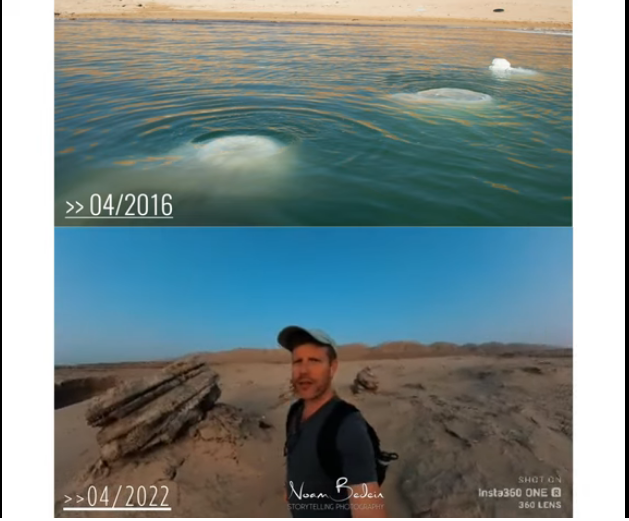
Israel’s National Water Authority and Israel Chemicals Ltd. are the addresses in Israel with the main power to influence the restoration of the Dead Sea. In the last year alone, the Dead Sea has lost more than 540 million cubic meters of water, equivalent to 219,000 Olympic swimming pools.
Earth Day 2022, marks exactly 6 years since the founder and director of The Dead Sea Revival Project, Noam Bedein started exploring in depth and documenting the decline of the Dead Sea’s water level. The changes in the landscape are very dramatic and yet incredibly beautiful. It’s an illusory beauty.
(50 seconds video on the dramatic drop in the water level of the Dead Sea in 6 years)
In order to stabilize and maintain the water level of the Dead Sea, 750M of cubic water is required. Freshwater and not salt water. Historically, the Jordan River has been the main source of water, providing over one billion cubic meters of water. Today, the flow of the southern Jordan River into the estuary of the Dead Sea reaches 10% of its natural flow.
How much is 750M cubic water? Israel’s five desalination plants, which together supply up to 75% of Israel’s drinking water, together reach 550M cubic meters of water.
The Dead Sea needs even more than that.
The natural water sources of the Dead Sea (the Jordan and the Sea of Galilee) are disconnected from each other. The historical flow of water does not reach the Dead Sea today.
Although last winter was considered the fourth consecutive year of a blessed rainy season that filled the Sea of Galilee – Israel’s national water lake, it does not affect the Dead Sea, as there is no flow to it.
The State of Israel allocates annual amounts of water from the Sea of Galilee and the Jordan River to its thirsty neighbor from the Kingdom of Jordan. In fact, the amount of water to Jordan has doubled this year, to 100 million cubic meters.
Why is there no demand from the National Water Authority to allocate water flow from the Sea of Galilee in order to stabilize the Dead Sea, the World Wonder shared with the Jordanians?
Where are the discussions about the conditions for opening the Degania dam of the Sea of Galilee for water flow in the Jordan River that is supposed to eventually flow into the Dead Sea, especially during rainy seasons when the water level is high?
The Dead Sea Revival Project, together with the residents of Kibbutz Kalia who live on the shores of the receding Dead Sea, call on the National Water Authority for a response.
Beyond that, we ask the Water Authority to be proactive and involve by all means as possible the main address that must take part in the solution – the Dead Sea Works, Israel Chemicals Ltd.
They are responsible for pumping up to 30% of the Dead Sea’s water, and exporting the rich minerals, using the water to fill the salt pools used by Ein Bokek tourism.
Israel Chemicals has the financial capacity to lead the ‘restoration of the historic flow to the Dead Sea’. It must also have a moral responsibility to do so, along with Israel’s tourism industry in the artificial Southern Dead Sea.
Dead Sea documentation for Innovative Cultural Preservation
A visual archive was built with over 25,000 photographs from recent years taken of our world wonder, showing fascinating life-rich hidden layers exposed at the lowest point on earth, revealed due to the sea level drop that is currently at the lowest level in recorded history.
Earth Day 2022, is the perfect time to use innovative tools to help preserve the ancient water treasure, and give people around the world a chance to own a digital artistic photo memory that testifies this magical water treasure.
Recently, 100 selected images were donated to OpenSea, the largest NFT (non-fungible token) market in the world, creating a digital art collection for the World Heritage Site, hoping to raise environmental awareness in the virtual universe gaining popularity- The Metaverse. The more virtual awareness it spreads, the closer the development of the physical infrastructure for the Arad Dead Sea Museum of Art.
All the subjects and landscapes in these photos are long gone.
Come and hold the momentary digital art of the Dead Sea-
https://opensea.io/deadseamuseum
Preordained script
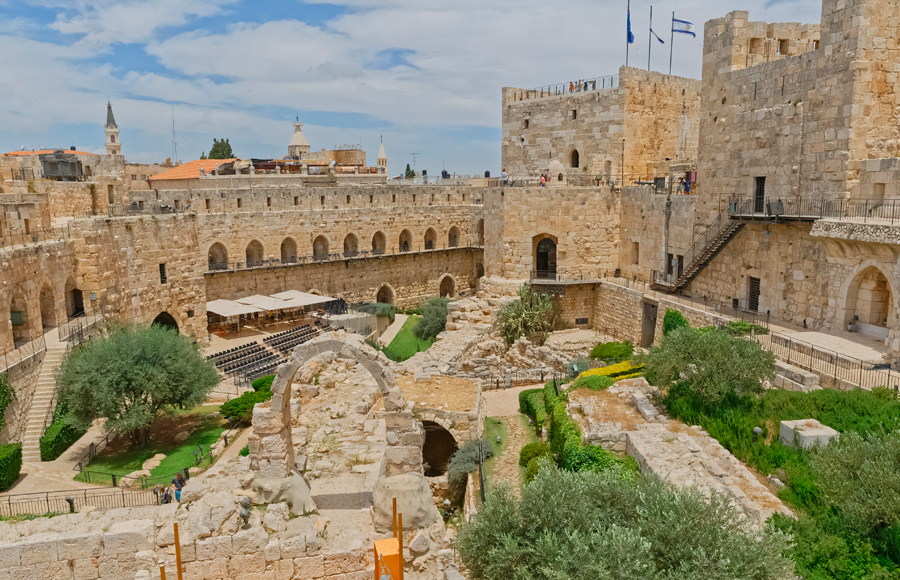
Quote: “The future is an unknown but a somewhat predictable unknown. To look to the future, we must first look back upon the past. That is where the seeds of the future were planted.” (Albert Einstein)
All politicians, so-called experts and commentators, media mavens, religious and lay spokespersons as well as politically left of field voters should be made to read and internalize this observation by Albert Einstein.
Every time, without fail, that violence and terror rear their ugly heads there is an outburst of incredulous naivety and outright hypocrisy following Israel’s response to protect its citizens. Despite all available evidence, the Israel bashers unite in a chorus of condemnatory self-righteousness, which is nauseating.
It is obvious that those who never learn from the past will also never learn from the current failed attempts at appeasing terror, inevitably sponsored by those who profess to have our best interests at heart.
Anyone, other than someone totally detached from reality, (and there are plenty of them), would have predicted the violence during Ramadan this year. One did not have to be any genius with prophetical faculties to foretell exactly the way that our “peace partners” would behave.
It is therefore with a sense of immense incredulity that we listen to those who should have known better express shock and surprise at the sequence of events as they unfolded this Passover, Easter and Ramadan period.
Let’s be clear and unambiguous right from the outset.
The mayhem initiated and sponsored by the usual suspects follows a well-worn script dating back to the early 20th century and has absolutely nothing to do with “occupation,” colonialism, apartheid or settlements. It has everything to do with an agenda that encompasses a denial of Jewish historical and legal rights to sovereignty and an Islamic version of religious tolerance which cannot tolerate Jews worshipping at their holy sites, denying in effect that these places have anything to do with Jews and uses jihadist violence to enforce its demands.
The amazing reality is that the responses to this behaviour also follow a well-worn script whereby instead of clearly exposing the warped thinking and actions of the perpetrators and firmly dealing with them the exact opposite takes place. The initial victims of murder and mayhem are expected to roll over and beg for understanding. Apologising for “original sins” is another favourite tactic by appeasers and turning the other cheek in the face of hate is advocated even though none of these pathetic responses has ever achieved a successful outcome.
Our past history should have taught us by now that weakness and meekness merely encourage bullies and terrorists. We should also have internalized the fact that the rest of the world loves dead Jews but hates Jews who fight back. Yet despite bitter experiences, we continue to face the wrath of the international community, the hypocrisy and double standards of friends and foes alike and the unquenched hostility of large parts of the Islamic world.
Yes – we have garnered some sort of tolerant understanding in certain places but the overwhelming denial in the Islamic world of Jewish authenticity in its own land is still the prevailing mantra.
A quick glance at current reactions to the ongoing Ramadan riots will illustrate that its business as usual as far as all the above scenarios are concerned.
Unreported in most cases was the hoarding of rocks and other lethal material in the Al Aqsa Mosque which the rioting mobs used to assault Jewish worshippers on the Temple Mount and at the Kotel below. The denial of freedom of worship by Jews at Judaism’s holiest site lies at the core of the situation. True to form and indicative of their extreme left thinking and secular views, politicians from Meretz (a coalition partner) and NGOs such as Peace Now as well as the Arab party (also a coalition partner), all chimed in claiming that Jews should not provoke the Muslims by exercising their right to worship. It’s almost unbelievable that self-loathers and those detached from their religious traditions should make common cause with Islamic extremists but that is the sad situation we face these days.
At no stage have the Israeli authorities banned worship for Muslims in the Mosque. They have however confiscated the amassed projectiles and arrested the instigators of terror. On the other hand, these same rioters attempt to prevent Jews from praying on Judaism’s holiest site which according to Abbas and PA/Hamas inspired lies never existed.
Given the known facts and cognizant of the same past incitements, one would imagine that the rest of the international community would see through the deliberate deceptions and react accordingly. No such luck of course because the knee jerk response has once again been totally oblivious to the truth.
Led by the liar in chief in Ramallah and with a supporting cast of UN hypocrites enthusiastically cheered on by a motley assortment of Jewish self flagellators the condemnations of Israel and Jews rained down from near and far. The monarch and PM of the Palestinian Arab majority nation of Jordan who self righteously tout themselves as the guardians of Islamic holy sites in Jerusalem, pontificated about the evil deeds being carried out by Israel. The irony of this garbage issuing forth from the leader of a country which illegally occupied half the city from 1948 to 1967 and banned Jews from praying at the Kotel, ethnically cleansed Jews and destroyed the Mount of Olives Cemetery was entirely lost by all concerned. There are still some innocent souls who believe that by keeping shtum we can gain the love and adoration of Abdullah. Obviously, the fact that he has thrown in his lot with the disseminators of slanderous mistruths escapes their capacity to discern reality.
What is equally appalling is the US Secretary of State praising Jordan’s role as “guardian of the Temple Mount.” We should by now be used to the inanities issuing forth from Washington but this latest inversion of the truth points to which way the noxious winds are blowing from an Administration that no longer can be relied on to confront terror-sponsoring nations.
Also joining the lynch mob are such democratic champions of human rights as Russia and Turkey and of course the usual collection of UN members. Astounding, but unsurprisingly, when PA inspired mobs attacked and burned Joseph’s Tomb, not once but twice, these same critics of Israel remained mute. Not a peep from the Vatican was heard nor any sound of fury issued forth from the usual suspects, whether Jewish or not. Contrast this with the barrage of denunciations when Jews try to pray at places that existed before either Christianity or Islam ever existed.
Amidst all this display of venomous vitriol, there has been a moment of cynical merriment.
At the so-called Seder hosted by the non-Jewish American Vice-President and the Jewish “second gentleman” where all the politically correct buttons were pressed it transpires that the wine served there was produced at a winery in Samaria. The delicious irony of those present drinking the fruit of the vine grown and bottled in territory which has been part of the Jewish homeland for millennia elicited hilarious mirth on the part of those of us living here and screams of utter outrage from all the boycotters on the left.
There is one mystery still to be solved.
Did the participants drink this wine while intoning “next year in occupied Jerusalem” or did they, like the Disney Channel erase our Capital and replace it with “next year in the Holy Land?”
Reflecting on current developments I can’t help recalling Winston Churchill’s brilliant explanation which succinctly sums up today’s cockeyed situation:
“Success is the ability to go from one failure to another with no less of enthusiasm.”
MK Aida Touma-Suleiman – Jews have no rights within Jerusalem since it is under occupation
MK Aida Touma-Suleiman – Jews have no rights within Jerusalem since it is
under occupation
Dr. Aaron Lerner 17 April 2022
In a live interview on the noon news program of Israel Radio Reshet Bet
Arab Joint List MK Aida Touma-Suleiman explained that Jews have no right to
pray inside Jerusalem since Jerusalem is occupied territory.
She went on to explain that this is not a question of religious rights but
rather the fact that Jerusalem is occupied territory.
________________________________________
IMRA – Independent Media Review and Analysis
Since 1992 providing news and analysis on the Middle East with a focus on
Arab-Israeli relations
Website: www.imra.org.il
הקשר בין כסף ואהבה הרב אריאל עמיצור מנבחרת היועצים של פרויקט ‘שניים בריבוע’: “בשיר השירים טמון הסוד להתנהלות כלכלית בחיי הזוגיות”

‘אִם־יִתֵּ֨ן אִ֜ישׁ אֶת־כָּל־ה֤וֹן בֵּיתוֹ֙ בָּאַהֲבָ֔ה בּ֖וֹז יָב֥וּזוּ לֽוֹ'(שיר השירים ח) נהוג בקהילות רבות לקרוא בפסח את מגילת שיר השירים. מגילת שיר השירים עוסקת בדוד וברעיה, במערכת יחסים של זוג אוהבים במשל, ובקשר בין עם ישראל לאלוקיו בנמשל.
המגילה מלאה בתיאורים רגשיים עזים ובתיאורי טבע מלבבים. אך מקומה של הכלכלה נפקד ממנה כמעט לחלוטין. אם ננסה לחלץ עמדה כלכלית מפסוקי שיר השירים, אז ההשקפה הכלכלית של המגילה מתומצתת בפסוק שבכותרת.
וזה המסר העולה ממנו: אהבה איננה בת השוואה לכסף. לא קונים אהבה בכסף ולא מאבדים אותה בגלל כסף. הסכמה של אדם לסחור באהבה תמורת כסף, אפילו תמורת כל הונו – מבזה אותו. והסיכום התמציתי של המסר הוא: אין שום קשר בין כסף וכלכלה לאהבה ולאמונה.
לאור זה ממש לא מובן התאור החשבונאי המובא בפסוקים הבאים בשיר השירים מיד לאחר מכן: כֶּ֣רֶם הָיָ֤ה לִשְׁלֹמֹה֙ בְּבַ֣עַל הָמ֔וֹן נָתַ֥ן אֶת־הַכֶּ֖רֶם לַנֹּטְרִ֑ים אִ֛ישׁ יָבִ֥א בְּפִרְי֖וֹ אֶ֥לֶף כָּֽסֶף: כַּרְמִ֥י שֶׁלִּ֖י לְפָנָ֑י הָאֶ֤לֶף לְךָ֙ שְׁלֹמֹ֔ה וּמָאתַ֖יִם לְנֹטְרִ֥ים אֶת־פִּרְיֽוֹ:
לשלמה היה כרם במקום שנקרא ‘בעל המון’, מקום שהיו בו כרמים רבים (אבן עזרא). שלמה לא טיפל בכרם בעצמו אלא מכר ל’נוטרים’ זכיונות לשמירה וטיפול בכרם יחד עם קבלת יבול הפירות שלו. כיוון שהכרם היה משובח ה’נוטרים’ שזכו בזכיון שלמו בתמורה סכום רב: 1000 כסף לכל נוטר. פי 5 משווי היבול שנותר בסוף לנוטרים! הרעיה קבלה כרם במתנה משלמה (מלבי”ם), אבל בחרה שלא להנות בעצמה מפירותיו. לכן הרעיה נתנה לשלמה את הערך של דמי הזכיון, ולאלו שמטפלים בכרם היא נתנה 200 כסף כשכר על עבודתם. אנו מקבלים בפסוקים האלו הצצה נדירה לספרי החשבונות של הדוד והרעיה. אבל מה החשבונאות הזו באה ללמד אותנו?
אנסה לשלב את התשובה למסר פשוט:
אהבה לא נערכת בכסף והיא בכלל לא בת השוואה אליו. אך אין המשמעות שאדם מאוהב פטור מלעסוק בכלכלה ובכסף. כי כדי לממש את חיי האהבה יש צורך לבנות את מסגרת החיים המתאימה להם, ולצורך כך צריך לחשב את המשאבים הקיימים ואת הצרכים ולחבר ביניהם באופן המאפשר לאהבה לבוא לידי ביטוי. בסופו של דבר אהבה צריכה לבוא לידי ביטוי ממשי ומוחשי, ולביטויי האהבה בחיים יש משמעות כלכלית. כמו עיסוק בניהול הרכוש המשותף של זוג אוהבים, כפי שמתואר בפסוק.
מה שנכון לדוד ולרעיה בשיר השירים נכון לכל אחד ולכל אחת מאיתנו. הכסף הוא לא הדבר החשוב ביותר בחיים. הדברים החשובים באמת בחיים הם חשובים יותר מכל הון שבעולם. התורה טובה מאלפי זהב וכסף, וזוגיות טובה וחיי אהבה במסגרת החיים המשפחתית במשל של שיר השירים, כמו גם הקשר בין הקב”ה לכנסת ישראל שבנמשל, שווים הרבה יותר מכל כסף שבעולם.
אבל זה לא אומר שניתן להתעלם מהכסף. אם אין קמח אין תורה, ואם אין כסף אין זוגיות ואין משפחה. מימוש של אהבה מגיע גם דרך הבדיקה המדוקדת של המספרים שבספרי החשבונות, המספרים שנכנסים והמספרים שיוצאים צריכים להתיישר עם האהבה כדי לאפשר לה להתבטא, ולהיות איתנו לעדי עד. נלמד משלמה המלך שהקדשת הזמן הזוגי למעבר משותף על חשבון הבנק ולשיח כלכלי משותף הם חלק בלתי נפרד מהאהבה, והמספרים צריכים להיות נוכחים בכל בית נאמן בישראל.
הרב אריאל עמיצור הוא מצוות היועצים של פרויקט ‘שניים בריבוע’ קהילת הזוגות של ערוץ 7 שצומחים יחד ומשדרגים את הקשר הזוגי. עדיין לא מנויים בפרויקט ‘שניים בריבוע’? הצטרפו בקלות בלחיצה כאן>>


