An Open Letter to the Israeli Public

The New Israel Fund spends millions in an attempt to influence Israeli laws and politics, and to undermine our Jewish democracy.
Our country faces many threats, from terrorism, to corruption, to political polarization.
One less talked about threat, albeit an existential one, is the nefarious influence of foreign funding on Israeli democracy. Millions of dollars are being paid to Israeli NGO’s in an attempt to influence our society, culture and laws. Supported by foreign donors, these Israeli NGO’s operate public relations campaigns and file frivolous lawsuits to pursue undemocratic and harmful agendas, and to re-make Israel according to adverse foreign interests.

One of the most hostile foreign funds is the aptly named New Israel Fund. Headquartered in the United States and funding over 900 Israeli organizations the organization has spent over $300 million to advance its nefarious agenda. The NIF operates like a destructive colonialist project whose goal is to attack the Jewish character of the state, and to disenfranchise Israeli voters. NIF-funded organizations therefore work to divorce Israel from the Jewish people, and undermine the ability of the Israeli public to govern themselves.

The NIF is also major donor to the racist, illegal and discriminatory “boycott, divestment and sanctions (BDS) movement” against Jewish and Israeli persons and businesses. At the same time the NIF funds international legal campaigns to prosecute Israeli soldiers and officials for war crimes. Now, the religious rights and freedoms of Jewish soldiers in the IDF are being perniciously attacked in a legal campaign spearheaded by organizations financially supported by the New Israel Fund (NIF).

Recently two NIF-funded organizations filed a petition to the Israeli Supreme Court asking the court to force the introduction of chametz on IDF bases during Passover. The NIF-funded petitioners, the Secular Forum and Hiddush, seek to overturn the longstanding IDF prohibition on food that is not Kosher for Passover. Their petition comically invents a “human right” to eat leavened bread on IDF bases for seven days. It’s hard to see the real harm being inflicted when any IDF soldier can walk ten meters, exit the base and eat as much bread as he wishes. This mere fact alone seems to give away the lawsuit as a frivolous one. But the more serious intention behind the Petitioners’ legal action is to create a false conflict in order to exploit and politicize the Supreme Court, foster division within Israeli society and create legal precedents nullifying any type of legislation that shapes the Jewish character of our state.

It goes without saying that the IDF is the only Jewish army in the world, whose purpose is to protect the only Jewish state in the world. Laws guaranteeing that IDF bases will observe the laws of Kashrut were enacted in order for all Jewish soldiers to be able to serve together. Before the policy, religious and secular soldiers were segregated, but when an all-religious platoon of soldiers was massacred, the situation was rectified by legislation guaranteeing that the IDF army would be a unified, not divided one. An army for all Jews, not some Jews.

It is Kashrut that allows the military to be an all inclusive one, as kosher food can be eaten by both Jews and non-Jews, Muslims, Druze and Christians. That is not the case with non kosher food, which can not be eaten by observant Jews. That the IDF accommodates Jewish practices is obviously a reflection of the Jewish character of the State. Recent polling shows that the majority of Israelis agree that IDF bases should abide by the laws of Kashrut, from which the prohibition against chametz on Passover derives. This was never an issue, until the NIF and the organizations it funds, filed their petition to the Supreme Court.

The Petitioners make up lies in order to give a false impression of urgency and seriousness to their case. They falsely allege that the IDF carries out specific searches for, and seizures of chametz. There is no such policy, nor any such searches. The allegation is made all the more ridiculous given that on a military base, soldiers are subject to search at any time, for any reason. The freedoms of soldiers on military bases are restricted in various ways due to the nature of military service. There is no “private domain” of a soldier while serving on a military base, as the Petitioners claim. And soldiers certainly don’t have the right to pick and choose what food is served to them in military kitchens.

Religious soldiers can not live and eat in a place where there is chametz on Passover. Introducing chametz on IDF bases would infringe on the religious freedoms of countless observant soldiers and would also discourage them from being present on their bases during Passover, or joining the military at all. The NIF-funded groups behind the petition to the Supreme Court are not secularists who believe in coexistence. They seek secular coercion by forcing the violation of Jewish law unto observant soldiers. They essentially ask the court to bring back archaic notions of cultural segregation and religious discrimination, by creating a two-tiered system where religious and non-religious Jews are treated differently, eat separately, live separately and God-forbid fight separately.

In any case of two competing interests, a court must weigh the harm felt by one side against the other. Here it is clear that accommodating the fictitious right to leavened bread for a small minority of soldiers seven days a year, would cause disproportionate harm to the religious rights of a majority of soldiers. Introducing chametz would also cause an undue burden to the IDF. The military needs to function and feed its soldiers in an efficient manner, not spend valuable resources on creating two kitchens, two barracks, etc. Weighing the harm done to so-called secularists who refuse to leave the base to eat their bread, against the harm done to the vast majority of IDF soldiers and the destruction of the fabric of a unified military, the answer is a no-brainer.

But this case is not really about the “human right” to eat leavened bread on an IDF military base. The issue is just too minor on its face. The case is part of a larger campaign to appropriate the cultural identity of the Jewish state and its institutions, undermine the democratic process and sow false divisions while they’re at it. The Jewish army is a kosher army and anyone who wants to change that wishes to change the basic character of the State itself. Petitioners admit that they want the IDF to be like other armies, where Jews and non Jews serve together absent the laws of Kashrut.

Perhaps they would like to see Israel become a Hebrew-speaking Belgium where kosher slaughter is prohibited, or a Hebrew-speaking France, where kosher products are negatively labeled? Yet it is up to the Israeli public to decide issues pertaining to the Jewish character of the state, not the court. The question of whether IDF bases should be kosher or not, is a matter for the Knesset (Israel’s legislative body) to decide, and should have never been taken up by the court in the first place.

Moreover, there has to be some demonstrable harm to merit the time of the Supreme court. I don’t know anyone who has suffered any monetary or psychological damages after being denied leavened bread for seven days. Ruling on a fake conflict makes a mockery of the court and turns it into a politicized arm of foreign-funded organizations. Next thing you know we will be seeing lawsuits asking the Supreme Court to recognize the right to drink chocolate milk with your steak dinner.

To be Jewish in the Jewish state is a basic civil right. To serve in the Israeli Defence Forces without being forced to violate Jewish law is also a basic civil right. The Lawfare Project is therefore proud to support a grassroots effort spearheaded by a group of Israeli nonprofits who represent the rights of the vast majority of observant Jewish soldiers. These non profits run schools that prepare twenty thousand Israeli students a year for their service in the IDF, including both religious and secular, male and female soldiers.

These nonprofits have filed a brief before the Supreme Court arguing that the fictional rights of a small minority of soldiers, should under no circumstance be used to violate the religious rights and freedoms of observant Jewish soldiers, most of whom serve in the IDF’s fighter units.

No other democracy in the world allows for unfettered foreign funding, especially that which seeks to influence the democratic processes and undermine the character of the state. In the United States, for example, the Foreign Agents Registration Act requires anyone who receives foreign funding, especially that which is aimed at influencing public opinion or laws, to register as a foreign agent and comply with reporting requirements. Some countries all out prohibit the use of foreign funds to influence legal campaigns and domestic issues.

Here it seems that organizations are using foreign funds to create systems of cultural appropriation and religious discrimination within Israel. The NIF has, and continues to spend millions of dollars in an attempt to influence Israeli laws and politics, and to undermine our democracy. The time is now for the Israeli people to stand up against foreign influences. Israel can exist as both a Jewish state and a democracy, but only if we continually work to protect it.
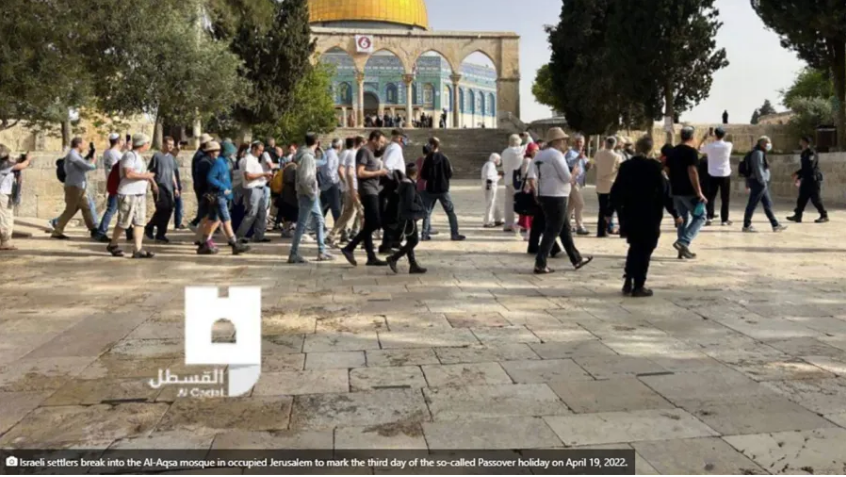
The Status Quo on Jerusalem’s Temple Mount Has Greatly Changed since 1967

Institute for Contemporary Affairs

Founded jointly with the Wechsler Family Foundation

Vol. 22, No. 10

  • The status quo on the Temple Mount in Jerusalem, as formulated by Israeli Defense Minister Moshe Dayan in 1967, no longer exists. In the 55 years since the Six-Day War, changes in the status quo have greatly improved the Muslims’ hold on the Temple Mount.
  • Muslims have inaugurated four new mosques on the Temple Mount since 1967: the Dome of the Rock, which originally was not built as a mosque; the El-Marwani Mosque, located underground in Solomon’s Stables; the “Ancient Al-Aqsa” Mosque, established in 1998 under the existing upper mosque; and the Gate of Mercy (Golden Gate) prayer area, set up and turned into a mosque in 2019.
  • The establishment of additional mosques on the mount stemmed from a new definition of the Temple Mount compound by the Muslims, who began to refer to all of the area as “Al-Aqsa” and to regard the entire mount as one great mosque. Until the Six-Day War, the compound as a whole was called “Al-Haram al-Sharif” (the Holy and Noble Place), and was defined differently from the Al-Aqsa Mosque.
  • In the first decade after the Six-Day War, Jews were allowed to enter the mount through the Chain Gate and the Cotton Merchants’ Gate, but today can only enter through the Mughrabi Gate. For two decades, Jews were allowed to visit for more hours of the day and at all parts of the mount, even the interior of the mosques. Today, Jews’ visits to the mount are much more limited in time and in the areas permitted.
  • While displaying flags is prohibited on the Temple Mount, in practice, the only flag not displayed there is Israel’s. Palestinian Authority, PLO, Hamas, and Hizb al-Tahrir flags can often be seen, while a small Israeli flag on the desk of an officer at the Temple Mount police station had to be removed following Muslim protest.
  • After a succession of changes to the status quo by the Muslim side, a change was also made on the Jewish side. For several years, on the eastern flank of the Temple Mount, with the permission and surveillance of the police, Jews have been praying in a “nondemonstrative” manner, without prayer shawls or prayer books.

Photographs curated by Lenny Ben-David

The status quo on the Temple Mount in Jerusalem, as formulated by Israeli Defense Minister Moshe Dayan in 1967, no longer exists, and many of its parameters have changed. Today, the reality on the mount is very different from 55, 40, or 30 years ago.

One of the explanations the Palestinians often give for the recurrent, long-standing riots and violence on the mount by the Muslim side is that Israel is violating and altering the status quo in ways that favor Israel and the Jewish side and harm Muslims. They call this an “assault on Al-Aqsa,” an “invasion of Al-Aqsa,” and most frequently of all, proclaim that “Al-Aqsa is in danger.”

Yet, a careful look at the changes on the mount during the 55 years since the Six-Day War reveals an opposite picture. The changes in the 1967 status quo, and in the arrangements that were made in its light, have greatly improved the Muslims’ status and hold on the Temple Mount.

At the same time, the new reality has eroded the status of Jews and Israel there. One recent change on the mount—quiet Jewish prayer on its eastern side, without external trappings such as prayer shawls, phylacteries, or prayer books—occurred only after numerous, often major changes that have dramatically altered the situation in the Muslim side’s favor. First, it is worth looking at the main features of the status quo put in place in 1967.

The Main Features of the Status Quo Designed by Dayan

  1. The Waqf, a branch of Jordan’s Ministry of Awqaf Islamic Affairs and Holy Places, would continue to administer the site and would be responsible for the religious and civil arrangements there.
  2. Jews would not be allowed to pray on the Temple Mount but would be able to visit it. This right to freedom of access was eventually anchored in Israel’s Law on the Preservation of the Holy Places.
  3. The Israel Police and the Shabak (Israeli Security Agency) would be in charge of security in the sacred compound, including its walls and gates.
  4. Israeli sovereignty and law would be applied to the Temple Mount as to the other parts of Jerusalem, where Israeli law was extended after the Six-Day War (a measure that was approved more than once by the Israeli Supreme Court).
  5. The display of flags of any kind on the Temple Mount would be prohibited.
  6. The essence of the arrangement, which was informal and remained unwritten, was to freeze the existing situation and create an unofficial division of the prayer areas between Muslims and Jews, whereby Muslims would pray on the mount and Jews at the Western Wall—the retaining wall of the Temple Mount compound, which derives its holiness from the mount and beside which Jews have prayed for centuries.

The Main Changes in the Status Quo since 1967 – Four New Mosques

The Dome of the Rock — This structure, which originally was not built as a mosque, was used as such by Muslims in the 1970s and 1980s, mainly on Fridays, and mainly for Muslim women who came to pray there.

The El-Marwani Mosque — In Solomon’s Stables, located underground on the southeastern part of the mount, the Waqf and the Northern Branch of the Israeli Islamic Movement established another mosque, the largest ever in the Temple Mount compound. This was done without authorization, to the severe detriment of the antiquities there.

The “Ancient Al-Aqsa” Mosque — Under the existing upper mosque, in 1998 still another mosque, “Ancient Al-Aqsa,” was established without authorization.

At the Golden Gate (or Gate of Mercy) — In the gate’s vicinity, in 2019 a prayer area was set up without authorization, and it turned into a mosque.


Interior of the Golden Gate and Jews in prayer
Interior of the Golden Gate and Jews in prayer. (1836 illustration by David Roberts)
Jews in prayer
Interior of the Golden Gate and Jews in prayer. (1836 illustration by David Roberts)


Paving — Considerable parts of the Temple Mount plaza were paved over the years, and they too serve as prayer areas for Muslims.

The expansion of the Muslims’ prayer areas and the establishment of additional mosques on the mount stemmed from a new definition of the Temple Mount compound by the Muslims, who began to refer to all of the all of it as “Al-Aqsa” and to regard the entire mount as one great mosque. They began to call the Al-Aqsa Mosque itself, which is on the mount’s southern edge, “Al-Jamia al-Kibli”—the Mosque of the Direction of Prayer (in the direction of Mecca, signifying Jerusalem was Muslims’ first direction of prayer).

Palestinian worshippers on the Temple Mount, praying to Mecca in the south. (Wafa News)

Until the Six-Day War the southern mosque was defined differently from the other parts of the compound and was called by its real name, Al-Aqsa; the compound as a whole was called “Al-Haram al-Sharif” (the Holy and Noble Place). But after the Six-Day War—as the Jewish-Muslim dispute over the mount intensified—the situation gradually changed and the Muslims applied the name “Al-Aqsa” to the whole compound, with all its buildings, streets, and walls.

Spatial and Temporal Restriction of Jewish Visits to the Mount

In the first decade after the Six-Day War, Jews were allowed to enter the mount through, among other openings, the Chain Gate and the Cotton Merchants’ Gate. But the Muslims closed these two gates to Jews, and today Jews can enter only through the Mughrabi Gate, which is located at the center of the Western Wall (on its upper level). All the mount’s other gates are open to Muslims only.


Painting of the Cotton Merchants’ Gate to the Temple Mount
“The Cotton Gate,” painting by Gustav Bauernfeind (1848-1904), a Christian German artist.
Detail of “The Cotton Gate”
Detail of “The Cotton Gate” by Gustav Bauernfeind (1848-1904)


For two decades after the Six-Day War, Jews’ visiting hours on the mount were more flexible, less formal, and included more hours of the day. In past years, Jews were also allowed to visit all parts of the mount, even the interior of the mosques, and they could visit on Shabbat.

Today, Jews’ visits to the mount are limited to Sunday through Thursday, three and a half hours in the morning and another hour in the afternoon. On Shabbat, they cannot visit at all, and visits inside the mosques also are not permitted. For religious Jews, who are now most of the Jewish visitors to the mount (and sometimes also for secular Jews), certain fixed routes and areas were established. In the past, these visits were accompanied by police officers and Waqf personnel; today they are accompanied by police officers only.

Restricting the Application of Israeli Law

In the wake of the Six-Day War, Israeli law was extended to the mount. Israel’s Antiquities Law was enforced much more effectively, with careful supervision. For several years Israel’s Planning and Building Law was also partially enforced on the mount, and overseers from the Municipal Inspection Division worked there.

The situation has been different, however, for many years. Overseers from the Jerusalem Municipality are not allowed to enter the mount. The Israel Antiquities Authority operates there in coordination with the Waqf and with police mediation. Sometimes the supervision is tighter, sometimes looser. As Shuka Dorfman, who was director-general of the Israel Antiquities Authority for 14 years, stated in his book Mitachat l’Pnei Hashetach (Beneath the Surface, 2014):

For years the chief decision-makers in the Israeli government did not deal appropriately with violations of the law and the enforcement of Israeli sovereignty on the Temple Mount…. This situation had major consequences for the Israel Antiquities Authority’s work on the mount. The authority is indeed responsible for safeguarding the Temple Mount’s antiquities, but unlike at other ancient sites, where it operates according to the law, precisely at the most important site for the Jewish world, it does its work in a limited way only.

The latest outcome of this loose supervision is that during the recent riots on the mount, dozens of ancient shards and pieces of masonry were used as obstacles in the path of Jews. Over the years, countless reports, official and unofficial, have highlighted the damage to antiquities on the mount from all eras, as I have discussed extensively on this website. Foremost, of course, was the use of bulldozers to excavate tons of relic-rich earth.

Palestinian rioters on the Temple Mount
Palestinian rioters on the Temple Mount. (Photo by Israeli Police)

Upgrading Jordan’s Status to Israel’s Quiet Partner in Administering the Mount

Originally, the status quo gave Jordan a role in administering the Temple Mount through the mechanism of the Waqf, which, as noted, is an arm of the Jordanian Ministry of Awqaf Islamic Affairs and Holy Places. But from the beginning of the 21st century, Jordan’s role on the mount greatly expanded. Formerly confined to managing religious affairs there and paying the salaries of the Waqf employees, Jordan now influences Israeli policy on the mount, and even regarding its walls and surroundings.

The first public acknowledgment of Jordan’s special status on the mount was made in the 1994 Israel-Jordan peace treaty. An article of this document gave Jordan precedence among the Arab actors at whatever time a comprehensive, permanent settlement is reached. In practice, for various reasons—including common security interests and an attempt to lessen the influence of radical Islamic elements such as the Northern Branch of the Israeli Islamic Movement—Israel decided to upgrade Jordan’s status on the mount even before the permanent settlement.

Thus, Jordan was given the task of renovating the mount’s southern and eastern walls when cracks and bulges appeared in them. Israel also allowed Jordan to veto a permanent replacement for the temporary wooden Mughrabi Bridge (which leads to the Mughrabi Gate), which was built after weather conditions and a mild earthquake caused the collapse of a dirt ramp leading to the gate.

Israel has also refrained for years, in the face of a Jordanian veto, from clearing out building debris and trash from behind tin sheets along the “little Western Wall” (the Western Wall’s continuation into the Muslim Quarter). In one instance, a discussion of the Temple Mount issue in the Knesset plenum was even deferred after a Jordanian request.

Little Kotel
The Kotel Hakatan, the little Western Wall, pictured in 1865.

The close coordination with Jordan on Temple Mount matters sometimes involves security as well—such as deciding whether Israeli security forces will enter the mosques when riots originate therein, to seize stockpiles of rocks and iron bars, or to make arrests. In recent years, the number of Waqf workers and guards funded and maintained by Jordan on the mount has grown by hundreds.

Ending the Prohibition on Flags on the Mount

The rule against displaying flags on the mount goes back to 1967. Yet, in practice, the only flags not displayed there are Israeli ones. The Palestinian Authority, PLO, Hamas, and Hizb al-Tahrir flags can often be seen there, sometimes even Islamic State flags, and the Israeli police take no real action. Yet, many years ago even a small flag on the desk of an officer at the Temple Mount police station was removed following Muslim protest. Recently, after riots on the mount in April 2022, a PLO flag was flown for days on the Dome of the Rock itself.

Palestinian flag on the Dome of the Rock
Palestinians hanging the Palestinian flag on the Dome of the Rock. (Al Quds)

Violence, Incitement, and Terror on the Mount

For years, the Muslim side has been accusing Israel of plotting to destroy the mosques on the Temple Mount and build the Jewish Temple in their place. These baseless libels have taken many forms. They were detailed in my book The “Al-Aksa Is in Danger” Libel: The History of a Lie, which the Jerusalem Center published in 2012.

In recent years, this libel has gone beyond lies and incitement to outbreaks of terror and violence, generating hundreds of attacks and attempted attacks over the years. That process is the focus of another book, Teror Al-Aqsa—m’Alila l’Dam (Al-Aqsa Terror—From Libel to Blood), that I wrote a year and a half ago.

Along with many terror attacks in Israel and in Judea and Samaria (including shootings, vehicular rammings, stabbings, and the throwing of countless stones and firebombs), and attempted attacks on the Temple Mount itself – most of them thwarted – riots organized on the mount have included attempts to harm police officers, Jewish visitors, and even Jewish worshippers at the Western Wall.

This onslaught of violence – which turns a place sacred to Judaism and Islam into an arena, a target, a pretext for violence and terror, and a means to an end—is part of the ongoing assault on the status quo to which Muslims pay lip service.

Quiet Jewish Prayer on the Eastern Temple Mount

After a succession of changes to the status quo by the Muslim side in the past 50 years, a change was also made on the Jewish side. For several years, on the eastern flank of the Temple Mount, with the permission and surveillance of the police, Jews have been praying, sometimes in a quorum (but without prayer shawls, phylacteries, or prayer books). These are referred to as “nondemonstrative” prayers, usually done in low voices orally or from texts uploaded to cell phones.

For years, Dayan’s original status quo had banned Jewish prayer on the mount but allowed Jews to visit. Indeed, for a long time the Jewish side exercised that right only to a very limited extent, leading Muslims to think Israel had forgone it completely. For many years, both Haredi and national-religious rabbis prohibited Jews from entering the mount, whether for prayer or visitation, on the basis of halakhah (Jewish religious law) which mapped sacred areas.

For the police, whose main concern was quiet on the mount, that stance was convenient and even ideal. Thus, the last prerogative the state of Israel left for Jews on the mount—the right to visit it—became largely theoretical. Few Jews ascended, mainly secular Jews for tourism purposes. It was not because of Muslim opposition at that time but because of the halakhic ban that so few Jews ascended the mount.

How, then, did the reality change to the point that Jews now pray on its eastern side?

This development stems from an increase of about 1,000 percent in the number of Jews who visit the Temple Mount each year. If a decade ago about 4,000 Jews visited the site annually, today that number is approaching 40,000.

This surge in Jewish visitors also occurred amid a growing demand by the Jewish public to visit its holy places, as well as a change in the rabbinical stance on Jews entering the mount: today close to a thousand rabbis permit it. The new state of affairs differs fundamentally from the sweeping prohibition by religious-Zionist and Haredi rabbis in the first three decades after the Six-Day War.

The spike in the number of Jewish visitors also reflects a change in the stance of the police, who have enabled and even encouraged (while Gilad Erdan was internal security minister) more visits to the mount by Jews. For several years the police have also succeeded to keep out the vocal and threatening Muslim men and women of the Murabitun and the Murabitat, offshoots of the illegal Northern Branch of the Israeli Islamic Movement that harass Jewish visitors to the mount.

When the Israeli Supreme Court was indirectly asked about allowing more Jews to visit the mount, it responded favorably. In 2017, attorney Iris Edri petitioned the court in the name of religious Jewish visitors to the mount. They complained of discrimination compared to nonreligious visitors, about being required to stand in a separate line and undergo various checks. Although the judges rejected the petition, for the first time they addressed the growing quantity of Jewish visitors to the mount, stating that “the numbers of Israelis visiting the Temple Mount in recent years speak for themselves, and prove the success of the police in implementing the right of access to the mount.”

This reference to “success” demonstrates that, even though the Supreme Court has repeatedly rejected petitions on Jews’ right to pray on the mount, in a broader sense, it views the right of access and visitation there positively and sees it as a worthy objective.

See also:

  • Nadav Shragai, “Hastatus Kvo b’Har Habayit: Shinui’im, Gormim, v’Talichim Nehlavim” (The Status Quo on the Temple Mount: Changes, Causes, and Related Processes), Jerusalem Center for Public Affairs, 2015.
  • Nadav Shragai, Teror Al-Aqsa—m’Alila l’Dam (Al-Aqsa Terror—From Libel to Blood), in the chapter “Hastatus Kvo c’Iyum Medumyan” (The Status Quo as an Imaginary Threat), 2nd ed., Jerusalem Center for Public Affairs and Sella Meir, 2022.

Behind the scene with David Bedein – Yom Ha´atzmaut

Behind the scene with David Bedein – Yom Ha´atzmaut

MODEL LETTER follow up questions after the murder in Ariel

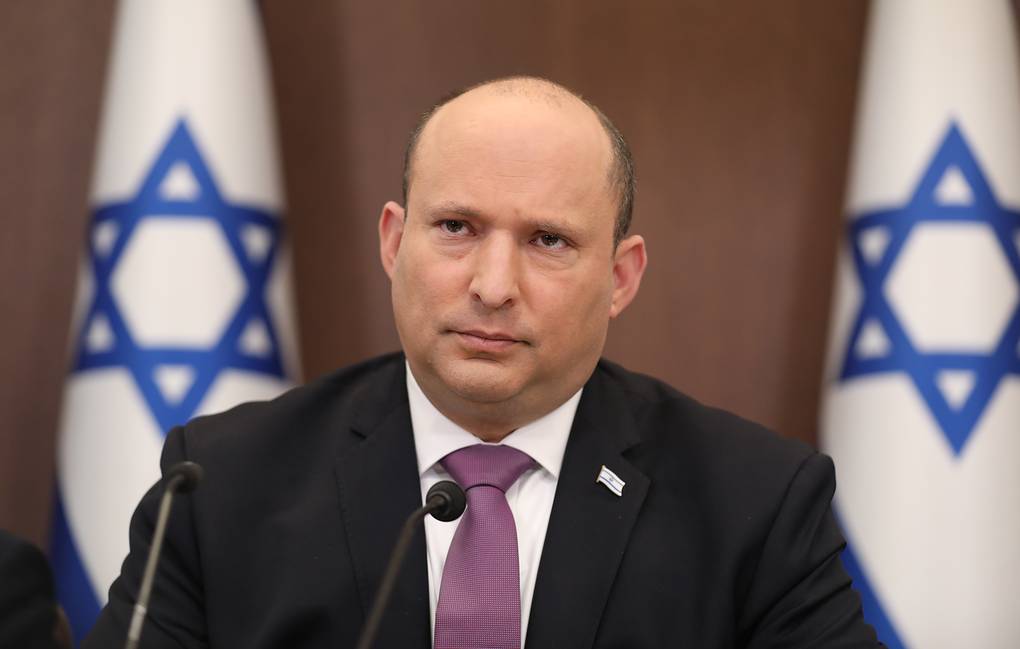
epa09788491 Israeli Prime Minister Naftali Bennett attends a cabinet meeting at the Israeli Prime Minister Naftali Bennett attends a cabinet meeting at the Prime Minister's office in Jerusalem, Israel, 27 February 2022. Bennett announced Israel will send humanitarian equipment to Ukraine in the next days. EPA-EFE/ABIR SULTAN / POOL

May 1, 2022

Inquiry to the Prime Minister of Israel. MEDIA@PMO.GOV.IL

Following yet another murder of a Jew by a “lone gunman”- this time in Ariel- will the PM demand that that Abbas and the PA repeal the PA statute that if you murder a Jew – you get a salary for life.

Will the PM demand the confiscation of the reward money handed over the murderers?

Will the PM demand the arrest of those who pay the murderers?


FDR, the Media & the Holocaust

Dr. Rafael Medoff is the founding director of The David S. Wyman Institute for Holocaust Studies and the author of more than 20 books about Jewish history and the Holocaust. His latest book is America and the Holocaust: A Documentary History, published by the Jewish Publication Society & University of Nebraska Press.

Judeophobia Recycled

Yom Hashoah this year is being commemorated by Jewish communities worldwide amidst the biggest upsurge of hate and incitement since the liberation of the concentration camps in 1945.

Once the full horror of the Holocaust years had been revealed it was generally believed by most that this descent into barbaric Jew-hate would finally and for once and all time be banished from the world.

Anyone with a sense of Jewish history who had internalized the lessons of the Passover experience retained a lingering doubt as to whether the world’s oldest surviving virus could actually be vanquished. For a short time, it seemed as though the haters had been driven into the undergrowth but unfortunately like poisonous seeds they were merely awaiting an opportune time to germinate (pun intended) again and spread their venom far and wide.

It hasn’t taken that long and we can already witness the toxic harvest appearing once again. Viruses mutate and this particular strain is no exception. It nowadays manifests itself in a variety of ways and has widened its infectious grasp from individual Jews to entire communities and finally to the nation-State of the Jews.

In the process, it has bypassed most attempts at inoculating today’s generation against its fatal symptoms and is proving especially resistant to whatever boosters are administered.

The alarming and irrefutable reality is that ignorance of the Shoah years and especially how the ground for genocide was prepared years before is at record levels. Hand in hand with this abysmal deficit of knowledge is the swallowing of delegitimizing lies and incitement against Israel which results in the growing acceptance of conspiracy theories and slanders.

What once was confined to isolated clusters of extremist haters has now morphed, thanks to social media and other vehicles of disinformation, to a much wider circle of believers. What was once upon a time the exclusive preserve of the extreme right has these days spread to the left of the political spectrum thus ensuring that Judeophobia and Israel phobia meld into one large group.

If there is one important lesson that history teaches us it is that keeping a low profile and remaining passive in the face of physical and verbal onslaughts will never guarantee that the haters will disappear or turn their attention elsewhere. We should also by now have realized that political posturing and assurances of goodwill are only as useful as long as expediency prevails. Once those spouting expressions of support see which way the wind is blowing they will abandon previous stances and either join the mindless mob or look the other way.

You only have to survey the current scene to see how this plays out.

Issuing touchy-feely expressions of solidarity without implementing policies designed to squash Judeophobia and Israel bashing at the UN are perfect examples of what transpires these days. Thus, bemoaning expressions of incitement against Jews while refusing to implement compulsory Holocaust studies in high schools encourages increasing ignorance and slanders against Jews and a black hole as far as understanding what happened. Likewise, professing solidarity with Israel and then voting against it at every opportunity reinforces the notion that there is something inherently evil and sinful about the country.

In tandem with these hypocritical acts is reluctance in too many instances of Jewish communal leadership, lay and religious, to rock the boat and raise their heads above the parapet. There is a time for quiet diplomacy but there is also an urgent need to expose the double standards and outright lies when the occasions demand it.

Surveying the current world scene confirms that not only have anti-Israel and anti-Jewish outbursts reached a new post-war record but that the time for decisive action rather than rhetorical reticence is urgently required.

In the “goldene medina” where the majority of Jews are either oblivious to the rising tide of hate or frantically trying to assimilate, it has been revealed that the “land of the free” has now reached the dubious distinction of achieving second place ahead of the entire continent of Europe in the number of reported anti-Jewish incidents. It also recorded more physical and verbal violence which one would assume might alarm most Jews. The Conference of Presidents of Major Jewish American Organizations issued a warning that the level of Jew hate is worse than most realize. Whenever I have raised the subject with those who still reside in the USA the prevailing response is either one of denial as to its severity or a claim that it only is a fringe phenomenon.

This brings back echoes of pre-1933 Germany where the Nazi agenda was dismissed as a passing and minor aberration of the lunatic fringe.

The United Kingdom recorded 2,255 anti-Jewish incidents in 2021, the highest in Europe. It’s not just the fascist right-wing groups that are responsible (as in pre-war Britain) but hate now encompasses swathes of the left, academics, universities and other sectors of society. An added component, common to most of Europe and the USA, are the increasingly radicalized Islamic youth and fellow travellers, who having been saturated with incitement against Israel feel vindicated in taking it out on Jews and their institutions. Anyone who has the “gall” to point this out is immediately condemned by the politically correct establishment. Thus, once again, denial of the scope of the problem is swept under the carpet.

France, where radicalized groups have reached menacing proportions recorded a 75% increase in anti-Jewish violence during 2021. It is no wonder therefore that in the elections just concluded a party that originally espoused anti-Jewish intentions attracted over 40% of the electorate’s votes. The nation which produced Vichy and willingly handed its Jewish citizens over to the Germans for deportation via the French railways to Auschwitz is today slowly but surely heading in an ominous direction. Many French Jews are voting with their feet but just as in the past most will hallucinate that “it can’t happen again.”

Denmark, in a belated effort to tackle rising anti-Jewish incidents, is launching an action plan making Holocaust education compulsory in primary and lower secondary schools & general upper secondary schools. With a recent survey in New Zealand revealing an appalling ignorance about the Shoah one has to wonder at the refusal to introduce a similar programme. At some stage in the near future when this ignorance turns to overt acts of hate those who remained silent and politicians who preferred to take no action will all wonder why it happened. As usual it will be a matter of too little too late.

Australia is not immune to the rising Judeophobia with a 35% recorded increase. Once upon a time “down under” was relatively free from such northern hemisphere contagions but unfortunately this is no longer the case.

Meanwhile back in Germany, where unbelievably 118,000 Jews now swear allegiance to the “fatherland,” the country’s domestic intelligence agency reports that anti-Jewish offences are continuing to rise and that those which come to light are only “the tip of the iceberg.” The head of the agency further commented that hate against Jews is “sometimes embraced by people in the middle of German society.”

Doesn’t this all sound eerily familiar? Shouldn’t it be ringing loud alarm bells? Haven’t we been down this dead-end road previously?

The North Rhine-Westphalia regional Government is appointing 22 prosecutors to combat rising hate and incitement against Jews. Somehow or other this rather anemic response is supposed to induce a feeling of reassurance that the authorities are serious in their campaign to rid the country of this latest return of the ancient plague.

The above examples are only a smattering of what we face collectively as we prepare to honour the memory of our six million martyrs. It has only taken 77 years for the scourge to strengthen and return.

The time has arrived, in fact, it is long overdue, when we need to challenge those who intone “never again” and then proceed to do nothing or even worse, join in the Israel bashing fiestas.

Unlike in the past, those who are the targets of violent hate, now have an option to find sanctuary elsewhere. The perpetrators of incitement must be held to account and this includes terror-supporting misnamed “peace partners” so beloved by the international community.

It’s about time that Israeli leaders expose all those who masquerade as proponents of tolerance and at the same time stoking the fires of hate.

This Yom Hashoah we need to replace slogans with meaningful action.

“Go fund me” link: Help family whose baby was born with a heart murmer

Update on Hallel Miriam Chana
After 6.5 hr long open heart surgery and 9 weeks in hospital, she has been released to home care. She continues to suffer from jaundice condition from her liver ( related to heart medication), feeding issues using special apparatus and other at- risk issues. Hallel Miriam Chana’s parents have four other young children and their 24/7 care for her impacts the whole family . She will begin various treatments and therapies out of the house.
Parents are still unable to work at their jobs as before.
All of this , has prompted the GO FUNDME campaign to help relieve the family of the financial burden. Any help is greatly appreciated.

https://www.gofundme.com/f/support-refua-shleima-to-hallel-miriam-chana

Lessons from Nazi Holocaust that can help guide a world in turmoil

This year’s Yom HaShoah – Holocaust Memorial Day – was observed yesterday. In Israel, a wailing siren brought everything and everyone to stand silently across the country. Traffic came to a halt as people remembered their loved ones and reflected on the weighty mantra of ‘never again.’

Jews from all over the world, led by the few remaining and aging survivors of the Nazi genocide, mourned their destroyed communities, and chanted the Kaddish for their families, murdered along with 6 million other European Jews systematically dehumanized, starved, worked to death, shot, and gassed.

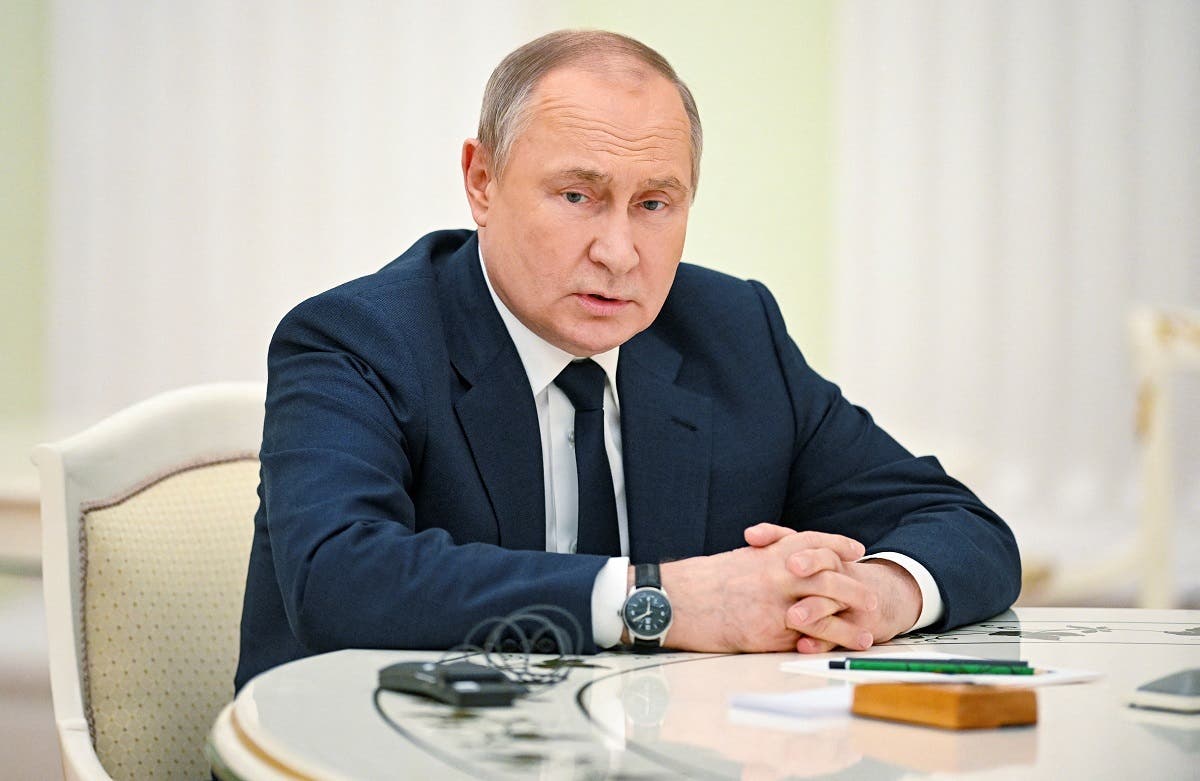
This year’s Yom HaShoah commemorations attracted wider attention around the world, largely due to images filling our TV screens and overloading social media platforms, emanating from the horrific and unprovoked invasion of Ukraine by Vladimir Putin’s Russian military.

Images of pregnant mothers targeted by Russian artillery, of mass graves of civilians, of dazed mothers and little children fleeing for their lives, conjure up images from World War II and the Nazi Holocaust.

In 2022, there is a growing realization that it’s time for 21st century generations to acknowledge two uncomfortable and largely forgotten lessons from the Shoah:

1. Evil exists.

2. Shutting your eyes and refusing to confront evil is only an invitation for evil doers to dig deeper into their bottomless bag of horrors.

Russian President Vladimir Putin attends a meeting with UN Secretary General Antonio Guterres in Moscow, Russia on April 26, 2022. (Reuters)

To be clear, Putin’s invasion is not Shoah II. There are no ghettoes, no concentration camps, or gas chambers.

This debacle started as a brutal land grab for territory of a smaller neighbor by Russia.

Starting in 1939, Hitler used the advent of World War II, to launch his war against the Jewish people. As the Fuhrer’s military swept across Europe, millions of Jews in their path, controlled no territory, had no military, posed no threat. They were simply citizens of countries that were captured by the Germans. An entire infrastructure of genocide rapidly followed German military conquest and victory.

Killing squads in territory captured in the former Soviet Union executed hundreds of thousands of Jews. Everywhere, there were roundups of Jews, forced labor, ghettos, systematic starvation and rampant disease. Then, after a decision made at the January 1942 Wannsee Conference, German know-how introduced industrialized mass murder by gas. Millions perished in death camps. And everywhere, from cultured France in the West to Ukraine and Lithuania in the East, the German Third Reich’s Final Solution of the Jewish Question was abetted and hastened by willing collaborators in every corner of the continent.

But in other ways, Putin’s invasion and the tactics of his military do evoke memories of the Nazis, specifically the Nazi Blitzkrieg. While Russia’s Ukraine ‘lightning war’ turned out to be anything but, you don’t have to be an expert to know that the world is daily witnessing horrific war crimes and crimes against humanity in Ukraine.

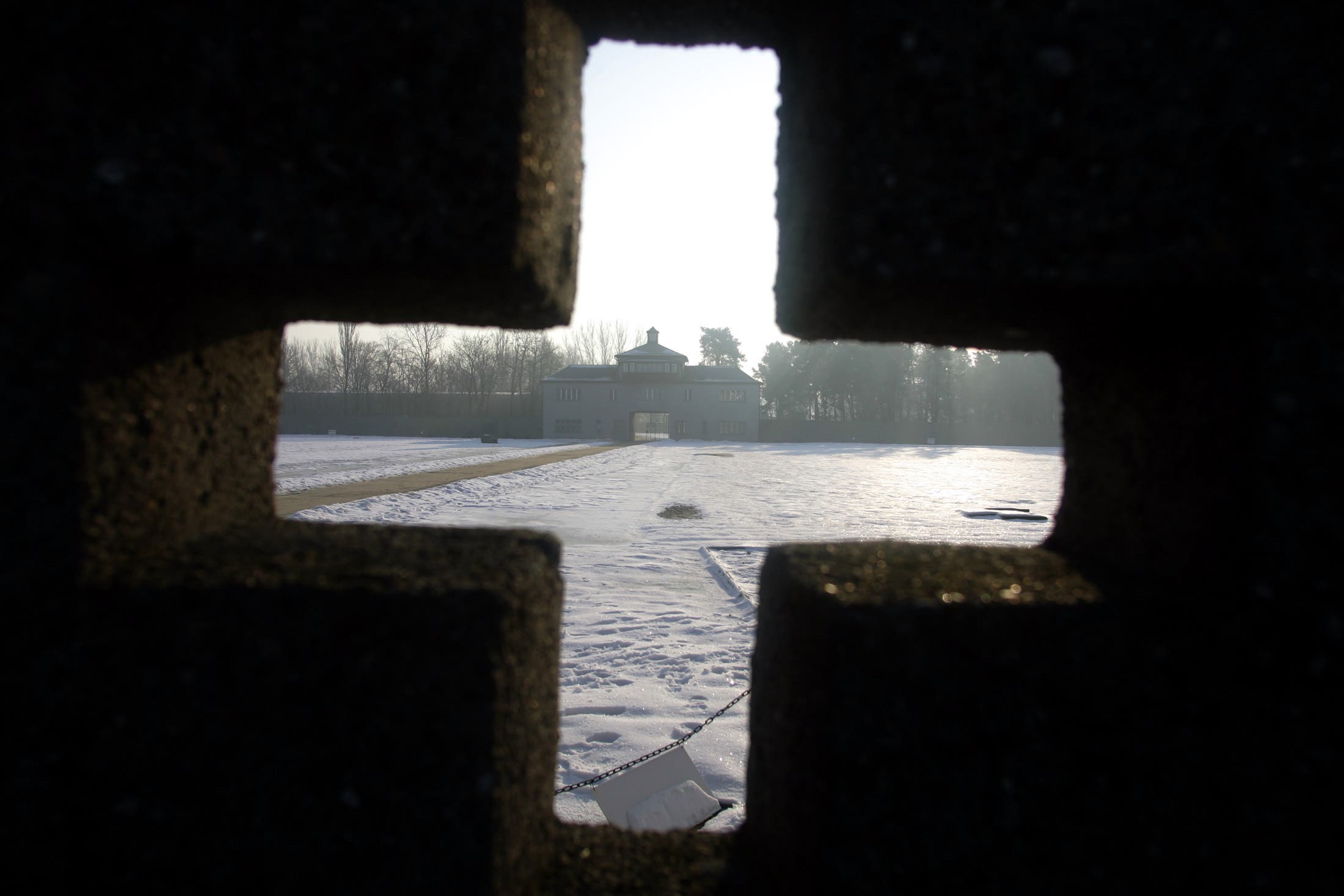
The entrance of the former Nazi concentration camp Sachsenhausen is pictured behind a sculpture near the German capital Berlin. (File photo: Reuters)

Here are 7 relevant lessons from the Shoah for today’s reality:

1. The road to Auschwitz was paved with words. Words have consequences. A full 20 years before he would launch World War II, Hitler, then a soldier about to be sent home after Germany’s World War I’s defeat, was asked to write a report about the Jews. In it, he wrote, the “final aim, however, must be the uncompromising removal of the Jews altogether.” A world, including Jews, simply wouldn’t take Hitler’s words or Mein Kampf, six years later, seriously. As Nazi hunter Simon Wiesenthal remarked: “Our first reaction to Hitler was Jewish jokes. By the time we understood that the threat was real, it was too late.

2. Catering to a tyrant’s ego only feeds the beast. The 1936 Berlin Olympics offered the one thing he couldn’t bully or threaten to get: international legitimacy. Despite his racist and draconian anti-Jewish laws and actions, the world showed up, largely on his terms. Hitler had his Games and glory. The 1940 Olympics never happened. Germany launched World War II, invading Poland in September 1939.

3. Apathy provides oxygen for evil doers. In July 1938, the nations of the world convened the Evian Conference to seek a way for hundreds of thousands of German and Austrian Jews to find refuge in other countries. The result? Excuses, not action. Hitler took it as a sign for him to deal with Jews as he saw fit. Their fate was sealed.

4. Burning Houses of Worship portends greater evil. On November 9 and 10th most synagogues in Germany and Austria were burned to the ground in an organized pogrom signaling the end of public Jewish life. Shortly after the extinguishing of Jewish lives by the Nazis would begin in earnest.

5. Never confuse academic rank with ethics or morality. On January 20, 1942, 15 top German officials—8 with PhDs, convened the Wannsee Conference. In 90 minutes, over drinks, all 15—including every PhD, voted to murder Europe’s Jews as cheaply and efficiently as possible.

6. Hope can outlive the heroic victims of tyranny. Seventy-nine years ago on the first night of Passover, the remnants of the Warsaw Ghetto rose up against their Nazi oppressors. Most of the Jews would perish. But the Jewish heroes there, partisan fighters in the forests, in other ghettos, and even in Sobibor and Birkenau death camps, proved that Jews—even those facing imminent death- Fought Back linking themselves to Jewish destiny forever.

7. Justice still matters. As soon as he was liberated by US soldiers at the Mauthausen Concentration Camp, Simon Wiesenthal became the Nazi hunter-with a single goal: to restore the concept of justice by bringing the perpetrators to trial. Trials would send a warning to future criminals that they too would be held accountable.

Back in 1980, the late heroic Holocaust Survivor and Nazi Hunter Simon Wiesenthal delivered a series of lectures in the Midwest. At each venue, he was asked—always by a younger person: “Could the Holocaust happen again?”

His response:

‘When a society combines hatred, plus a crisis, plus technology, anything is possible… Had the Nazi technologies [decades before cell phones and social media] existed back in 1492, no Jew would have survived in Spain, no Catholic in England, no Protestant in France.’

A few years later, Iraqi dictator Saddam Hussein, gassed 5,000 Kurds – his own citizens and fellow Muslims. The world’s reaction was tepid and indifferent. Said Mr. Wiesenthal, “Humanity should have learned by now that tyrants interpret the world’s silence as a warrant to do even more…”

Imagine how different the world would be today if Saddam had been put on trial then. Imagine how different tomorrow will be if the perpetrators of today’s mass atrocities would actually be held accountable, or not.

Professor Irwin Cotler on Yom HaShoah

Yom Hashoah – National Holocaust Remembrance Day – is a poignant and painful historical moment of remembrance and reminder – of bearing witness – of learning and acting upon the enduring and universal lessons of Holocaust remembrance, including;

  • Lesson One: The danger of forgetting – the imperative of remembrance – le devoir de memoir: of remembrance of horrors too terrible to be believed but not too terrible to have happened: of the Holocaust, as Nobel Peace Laureate and Holocaust survivor Professor Elie Wiesel would remind us again and again: “The Holocaust was a war against the Jews in which not all victims were Jews, but all Jews were targeted victims”; of the demonization and dehumanization of the Jew as prologue and justification for their mass murder; of the mass murder of six million Jews, 1.5 million of whom were children, not just as a matter of abstract statistics, but as we say at such moments, of remembrance: “Unto each person there is a name, each person is an identity, each person is a universe,” reminding us of the teaching — “hametzil adam ahat, ke’ilu hitzil olam kulo – that if you save a single person, it is as if you have saved an entire universe.” And so, the overriding first lesson: That we are each, wherever we are, the guarantors of each other’s destiny.
  • Lesson Two: The Dangers of Antisemitism of which the death camp Auschwitz – the most brutal extermination camp of the twentieth century – is both message and metaphor: 1.3 million people were deported to the death camp Auschwitz; 1.1 million of them were Jews. Let there be no mistake about it: Jews were murdered at Auschwitz because of antisemitism, but antisemitism itself did not die at Auschwitz. It remains the bloodied canary in the mineshaft of global evil today, toxic to democracies, a threat to our common humanity; and as we’ve learned only too painfully and too well, while it begins with Jews, it doesn’t end with Jews. Indeed, antisemitism is a paradigm for radical hate as the Holocaust is a paradigm for radical evil.
  • Lesson Three: The Danger of State Sanctioned Incitement to Genocide.  As the Supreme Court put it, “the Holocaust did not begin in the gas chambers – it began with words.” These, as the court put it, are the catastrophic effects of racism. These, as the court put it, are the chilling facts of history. It is this teaching of contempt, this demonizing of the other, this is where it all begins. In particular, incitement to genocide is not merely a warning sign of preventable tragedy; it is itself an international crime prohibited in the Genocide Convention. We have a responsibility to recognize, address, and redress this violation of the Genocide Convention.
  • Lesson Four: The Danger of Holocaust Denial and Distortion, Inversion and Banalization. Holocaust distortion is not only an assault upon history but an assault on memory and truth – a conspiracy to whitewash and cover up the worst crime in history.
  • Lesson Five: The Danger of Silence in the Face of Evil – where silence becomes complicit with evil itself – and the importance, the responsibility, to speak up, and stand up, and combat the conspiracy of silence.
  • Lesson Six: The Rescue of Raoul Wallenberg – the Responsibility to Pay Tribute to the Rescuers – the Righteous Among the Nations – of whom the Swedish non-Jew and Canada’s first Honourary Citizen, Raoul Wallenberg is metaphor and message. Raoul Wallenberg demonstrated how one person with the compassion to care, and the courage to act, can confront evil, prevail and transform history.
  • Lesson Seven: The Danger of Indifference and Inaction in the Face of Mass Atrocity and Genocide. In the face of such evil, indifference is acquiescence, if not complicity in evil itself. For years, we knew but did not act to stop the slaughter of the innocents in Syria, ignoring the lessons of history and mocking the Responsibility to Protect Doctrine. What makes the Holocaust, and genocides in Rwanda, Darfur, and more recently the Rohingya and the Uyghers, so unspeakable is not only the horror of the genocides – which are horrific enough – but that these genocides were preventable. Nobody could say we did not know. We knew but we did not act. The international community cannot be bystanders to such horror – we must act.
  • Lesson Eight: The Dangers of Impunity. If the twentieth century, and the first decades of the twenty-first century are the age of atrocity, they are also the age of impunity. Few of the perpetrators have been brought to justice; and so it is our responsibility to ensure that these hostis humanis generis – these enemies of humankind – are brought to justice, lest the culture of impunity incentivize more atrocity crimes.

May I close with a special word for the Holocaust survivors amongst us. For you have endured the worst of inhumanity, yet you somehow found, in the resources of your own humanity, the courage to go on, to build a family, to build a future, and to make an enduring contribution to each of the global communities in which you reside – and where we have all been your beneficiaries.

And so, may this Holocaust  Remembrance Day be not only an act of remembrance, which it is, but may it also be a remembrance to act – on behalf of our common humanity, and our universal values.

Irwin Cotler, International Chair of the RWCHR

Follow up questions to : TAU spokesperson ​​Noga Shahar

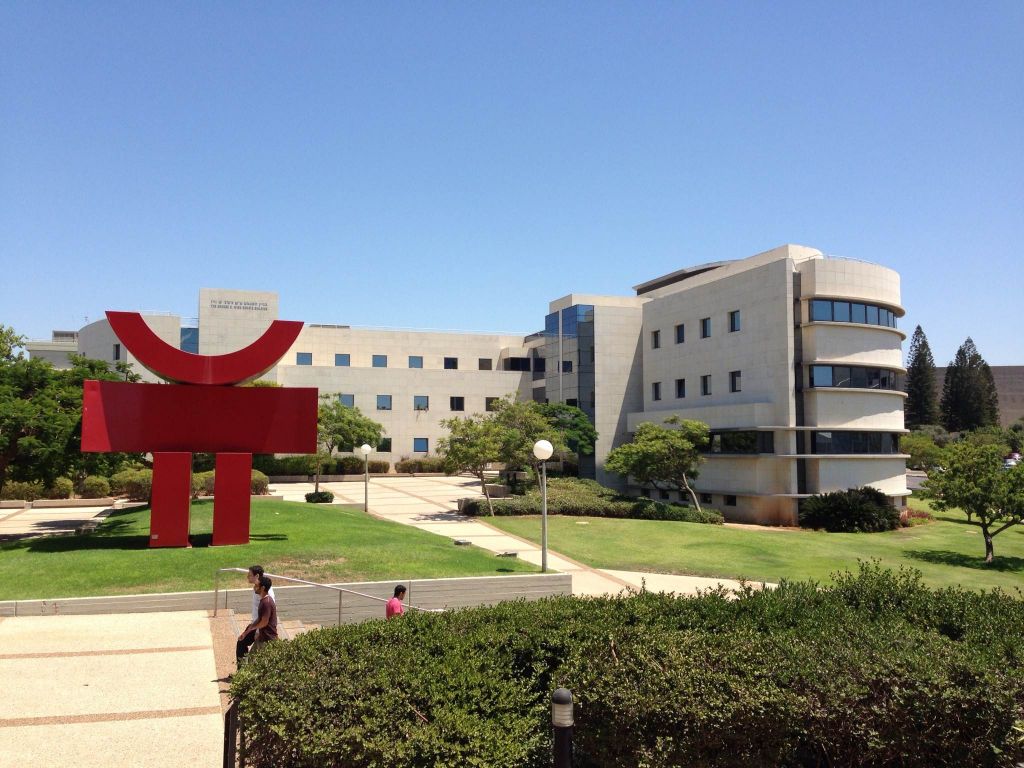
On April 27, 2022, Tel Aviv University issued its annual world wide report on anti-semitism: The report surveyed the anti-semitism in every place in the world, except for the Palestinian Authority.
I asked TAU spokesperson Noga Shahar, nogas87@tauex.tau.ac.il, from its annual world wide report on anti-semitism? Does TAU not know the extensive documentation of PA and UNRWA anti semitism: